
Brett Hetherington's Blog: "First thought:" My Substack page, page 49
August 15, 2015
"Swarms, floods and marauders:" the language of the [European] refugee crisis
 "...the ability to influence thought matters a great deal. George Orwell recognised this, inventing Newspeakto illustrate how, in one nightmare scenario, language could be used as an instrument of control.
 We’re not there yet, but if we want to maintain the ability to think clearly and independently about migration, there’s good reason to be wary of some of the vocabulary now being bandied about."
Read more from David Shariatmadari's article in the Guardian online.


August 7, 2015
Varoufakis in conversation with Claudi Pérez of El Pais
 A fascinating interview with the former Finance Minister of Greece, who (as usual) tells it how it is about Spain, Greece, Europe, the past, the present and the still uncertain future.
August 1, 2015
"Australian gay politician gets married in Spain"
"A prominent gay Australian politician married his long-time partner in southern Spain on Wednesday, two months after his country voted down a proposal to enact same-sex marriage legislation.
Ian Hunter, the social inclusion minister for the state of South Australia, said he was disappointed that his marriage to artist Leith Semmens won't be legal in Australia, but said the two decided they couldn't wait for their country to approve a gay marriage law.
"I thought, we were coming to Spain anyway, so why not get married while we could. Spain is leading the world with its changes to its laws, and Australia is still having the debate, as is France and the UK," he said.
Mayor [of Jun in Granada province] Jose Antonio Rodriguez officiated at the ceremony attended by more than a dozen friends and relatives.
In accordance with a local tradition, the couple kissed for 17 seconds, which were counted out loud by the guests.
Hunter is believed to be the first sitting member of an Australian legislative body to marry a gay partner.
The former scientist has long been a vocal advocate for gay rights, and a lawmaker in the ruling Labour Party in the South Australian state legislature since 2006.
He became a state Cabinet minister last year.The party's annual national conference in December 2011 reversed its opposition to gay marriage, but Prime Minister Julia Gillard remains opposed. Legislation which would have recognised same-sex marriages was defeated in the House of Representatives in September in a 98-48 vote.
While Gillard allows Labour lawmakers to vote however they choose on gay marriage legislation, opposition leader Tony Abbott, a staunch Roman Catholic, insisted lawmakers in his conservative Liberal Party reject it.
Opinion polls consistently show that most Australians support same-sex marriage.
Spain enacted its gay marriage law in 2005."
More at AP source here.
July 27, 2015
"More Europeans Migrate to Latin America Than Vice Versa, Study Finds"
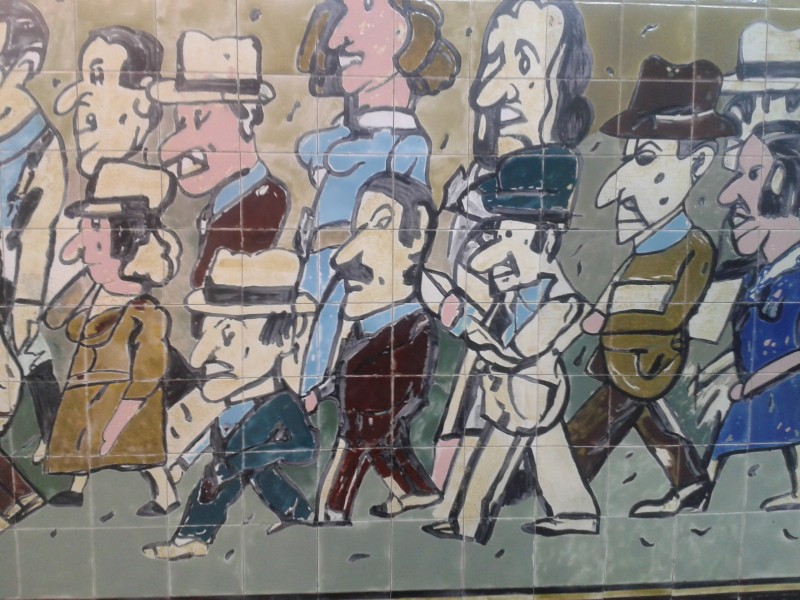 [“Leaving” Mural, by Antonio Segui, at Independencia station in the Buenos Aires metro, Argentina.
Photo: Rodrigo Borges Delfim]
"Contrary to popular belief, more Europeans are currently migrating from Europe to Latin America and the Caribbean than in the opposite direction.
This is the conclusion reached in a study published recently by the International Organisation for Migration (IOM), titled ‘Migratory Dynamics in Latin American and the Caribbean and between Latin America and the European Union’.
The document shows that more than 181,000 Europeans left their countries in 2012, in comparison with the 119,000 Latin Americans moving in the opposite direction. The data show a reduction of 68% in the latter flow compared to 2007, when the number of migrants moving from Latin America and the Caribbean to Europe stood at over 350,000 people, its highest level ever.
Spainis at the top of the list of countries with the highest number of citizens emigrating in search of new opportunities in Latin American states, with 181,166 emigrants to Latin America in 2012. It is followed by Italy, Portugal, France and Germany."
Read more at: Global Voices source.
July 19, 2015
"How Spain’s Chinese immigrants went from dishwashers to doctors"
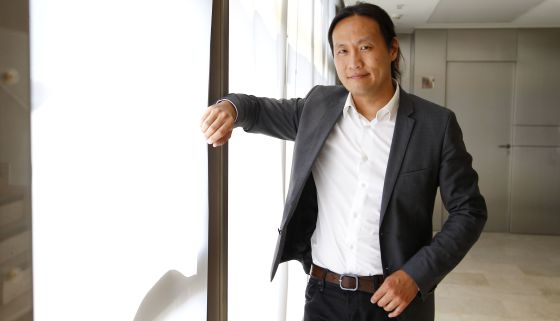 [Dídac Lee in Madrid on June 25. / LUIS SEVILLANO, El Pais.]Fascinating stories of modern Chinese-Catalans and Chinese-Spaniards: proof that Iberia is slowly becoming more multi-cultural, and maybe at a faster rate than people here think.
July 9, 2015
"Left-wing intellectuals of Europe: take on the challenge" says José "Pepe" Mujica
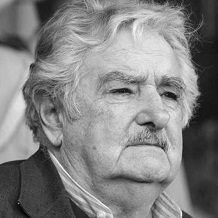 The most recent former President of Uruguay has published an article arguing that "European intellectuals must take the responsibility to change their social model before it turns into a catastrophe.
The trade union movement, the ideas of socialism, anarchism and communism, and all of the ideas of progress: all have their roots in Europe. It is in your continent that the first great popular movements – the main drivers of social change – emerged."
Read more here.
July 2, 2015
"Hard to believe" - My latest opinion column for Catalonia Today magazine
 "Remember, little children are not too little to go hell.”
These are some of the words that are included in a new picture book published by a Puritan organisation in the United States last month.
The book, whose title I choose not to state so that it is not given any further free publicity, is targeted at five to nine year olds and uses quotes and interpretation of lines from the bible to outline the usual nonsense about hell being a place of eternal fire where supposed sinners are “locked in [solitary] cages.”
In a note to parents at the back of the book, the author says:
“Some parents may be thinking that this kind of exhortation to children will give little ones horrible nightmares… It would be better for them to have nightmares now while you teach them about the realities of hell… than to wind up in the reality of the nightmare that is hell.”
Ignoring the obvious absurdity of such a place existing after death, writers such as Christopher Hitchens have questioned whether any good at all can come from terrifying children in this way.
Others, such as Greta Christina have called it “child abuse.”
Author Dan Arel has suggested “using a more Socratic method” of questioning children about what they already think as a better method of then exploring ideas about what happens to us when we eventually die.
Meanwhile in separate case of backwardness, a senior Vatican official has denounced the same-sex marriage referendum result in Ireland as a “defeat for humanity” after the country overwhelmingly voted to support it.
On the same day as the Irish vote, reports emerged that Taiwanese pop songstress Jolin Tsai's song and her music video “We're All Different, Yet The Same” had been banned from broadcast in Singapore. The video shows two women in a marriage ceremony kissing (with closed mouths) for about seven seconds.
Also recently, two judges in Argentina are still somehow sitting at the head of their courts, after saying that the rape of a six year old boy wasn’t too serious because he was “already gay”. They reduced the rapist's sentence, saying the boy was used to being abused and had “homosexual tendencies”.
In Australia (that far off country that I used to call home) their ultra-conservative Prime Minister Tony Abbott blocked both legislation and the possibility of a referendum on gay marriage.
In more encouraging news though, back on this side of the planet, Greenland’s Parliament has unanimously approved same-sex marriage and adoption.
MPs in the country, which has a population of 57,000, voted to adopt Danish laws on the issue, scrapping Greenland’s domestic partnership legislation, adopted from Denmark in 1996.
Also, a lesbian fleeing persecution (because of her sexuality) in her native Cameroon has now received asylum in Spain after a long legal battle.
Progress moves slowly - in fits and starts through the world - a world that calls itself modern.
I wish all readers a very enjoyable summer.
[This article was first published in Catalonia Today magazine, July 2015.]
June 27, 2015
"Sixto, Sitges and Camp Nou" - (An excerpt from my next book)
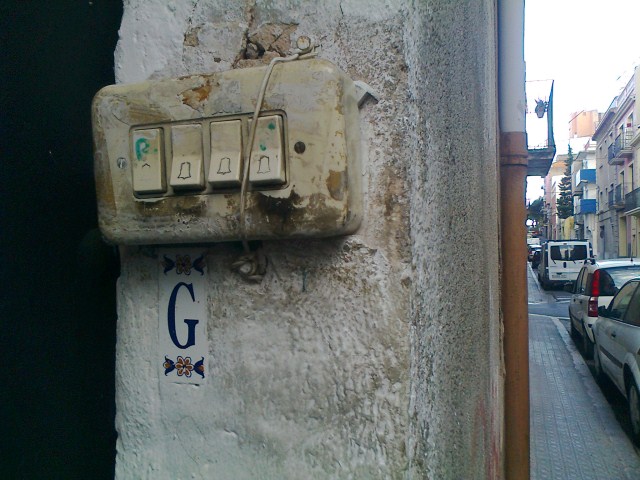 A friend of mine called Raúl Blanco’s father originally came from Cordoba. He told me that when his father (named Sixto, probably after one of the Popes) was seventeen he decided to try his luck finding work in Barcelona. Like a lot of the Spaniards at that time he was often living on little food - the 1940s and ‘50s were often called ‘the years of hunger’ - and he was prepared to risk what was then an illegal train trip due to the tight restrictions on travelling away from your home town. Sixto was told by his friends to stand in the open space between the two carriages of the train when it started slowing down before Barcelona, around Sitges on the Garraf coast and then jump off onto the ground. He should only do this when he heard the announcement for the stop at Sitges, he was warned.
 But Sixto did not hear the pronunciation of the town with a hard ‘g’ sound that he was accustomed to. Instead the soft “ch” of ‘Seetchas’ in the Catalan accent was used and when he soon arrived in Barcelona and got off the train that was supposed to take him to a bright new future he was arrested on the platform, thrown into jail for nine days then sent back to Cordoba. Sixto was not deterred for long. The next time he made sure that through his family he had arranged a work contract with former neighbours who would officially sponsor him and his employment. One of his first jobs was being a labourer on the Camp Nou, a new stadium for the city's beloved Barça football team. Like many of his so-called ‘immigrants’ he lived in the working class area of Hospitalet de Llobregat where with his wife (from the northern Burgos region) he went on to run a bar-restaurant.
His story is emblematic and typical of his generation of rural families, especially those from Andalusia, a region where the Socialist party has governed without losing office since 1982 and Cordoba itself was the first provincial capital to elect a Communist mayor. In King Solomon’s time Andalucia was called ‘Tarshish’ in Hebrew and was thought of as the legendary place of riches at the end of the world.
June 20, 2015
"If Greece falls..."
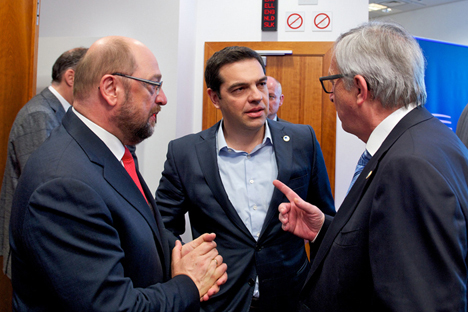 [Special meeting of the European Council on 23 April 2015. From left to right: Martin Schulz, President of the European Parliament; Alexis Tsipras, Prime Minister of Greece; Jean-Claude Juncker, President of the European Commission. Photo: European Council. Source: Flickr]
"As the Greek crisis continues, Steffen Vogel reportsthat a majority of German business leaders look upon a Grexit as a favourable option, according to a survey published last month in the German business daily Handelsblatt.
At the same time, Vogel draws attention to the political price of a Grexit, summed up best he says in the words of Reuters European affairs editor Paul Taylor: "If Greece falls, no one wants their prints on the murder weapon".
"That applies to the German government too", Vogel continues, "long held up on the international stage as an example of a party that is blocking a lasting solution to the crisis.
Some weeks ago, The Economist mocked Wolfgang Schäuble as an 'ayatollah of austerity', thus reversing the rationale upon which Berlin claims to be acting pragmatically.""
[Source: Eurozine.]
June 10, 2015
'COLOUR' in Barcelona
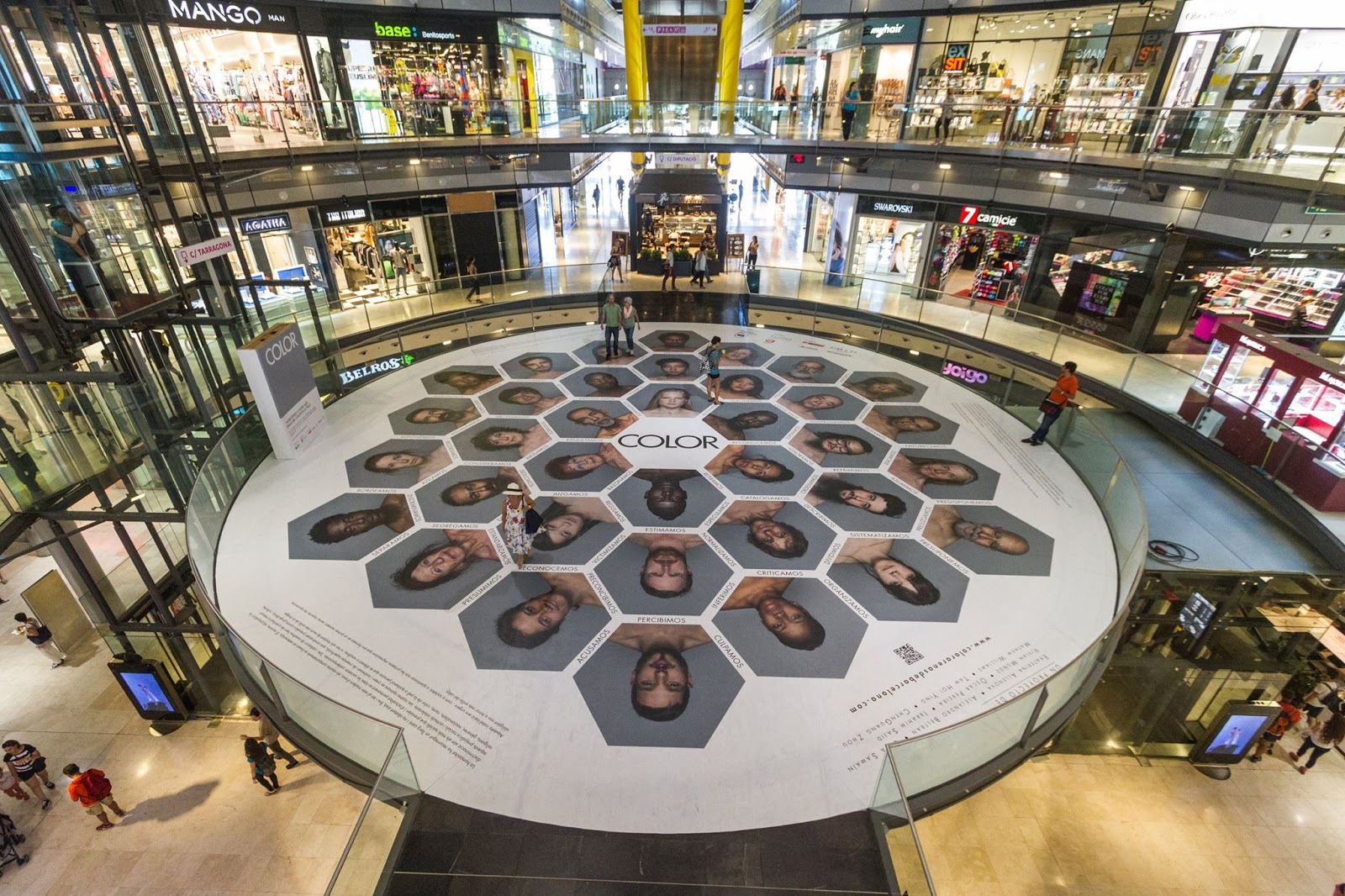 The photographic work of my friend Ibrahim Sajid is part of a new exhibition (until June 21) at Arenas, the former bullring at Gran Via de les Corts Catalanes, 373- on Plaçad'Espanya, Barcelona.
The concept of this international group project is stated as:
" Mankind has come a long way, yet even in today’s modern world, our behaviours are stereotypical. Racism, bias and discrimination are the social evils prevalent in all societies and each and every one of us plays a role in either contributing to or breaking down racial prejudice and intolerant attitudes.
Our opinions are created and nurtured by superficial beliefs, making us form biases against ethnicities, cultures, religions, gender, nationalities, races and color without even trying to see beyond.
This installation urges us, as a society, to question the first impressions we form at a glance, regardless of his or her appearance, forcing us to look beyond the colour."
"First thought:" My Substack page

For readers who like stimulating & original lit-bits on social & personal issues. From the mind of an always-curious author/teacher/journalist living long-term in Europe (Catalonia/Spain.)
- Brett Hetherington's profile
- 10 followers

