
Brett Hetherington's Blog: "First thought:" My Substack page, page 45
May 12, 2016



May 7, 2016
"East of interest" - My latest article for Catalonia Today magazine
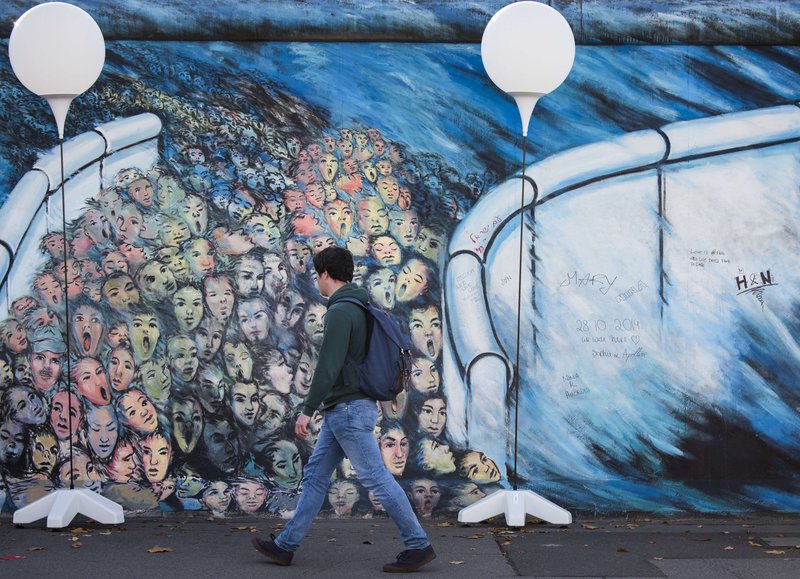 [A man passing by the “light border” installation along the remains of the Berlin Wall. Photo: AFP.]
 How little we know about the culture of that 'area of darkness:' Eastern Europe. Living within a few hundred kilometres of this region, most of us would be hard pressed to give the names of more than a handful of directors, actors or music groups from somewhere as close as the Czech Republic or even from the former East Germany. Communism blotted out an entire world of creative expression to those who lived in the so-called free West of Europe and tastes in cultural fashion have hardly reclaimed any of it. Reading Polish writer Agata Pyzik's recent ironically titled book "Poor But Sexy" helps to uncover some of what she calls the 'culture clashes' between the two sides of the continent. She argues that twenty five years after the fall of the Berlin Wall, Europe is as divided as ever. Only occasionally using too much post-modernist academic jargon, she makes the highly convincing case that the Western 'democratic' world has maintained an arrogant assumption that everybody wants to 'buy into' their capitalist belief systems. As well as this, she acknowledges that conservative political failures (including missed opportunities on the left) have meant that market forces and greed have also triumphed over social or collective responsibility in the East, just they clearly have triumphed in the West.But what Pyzik also does is give the reader a new insight into the arts in a part of the planet when all creative action had a political edge to it. Russian films of the post-war era obviously had a propagandist purpose (very often) but the Sots Art movement also got away with mocking 'unberaable, ritualised Soviet life' while simultaneously showing how the average person could attempt a normal existence among the ruins of the old world.As well as this, writers such as György Lukács used a kind of Brecht-like critical realism to 'inspire and activate the reader.' In his earlier book "Man Without Qualities" - a superb title - he largely rejects modernity, seeing 'the tragedy of the modern artist as someone who lost the ground under their feet.' Surprisingly, he views this as 'an advance rather than a difficulty.' Again and again in Eastern Bloc culture Pyzik points out examples of the contradictions and paradoxes of the kind that seem to me to be a big part of French thinking but are so often overly simplified into the black-and-white certainties of Iberian habits of mind. Another strength of this book is that it recognises the unheralded contribution of women in the East. It took the feminist film director Agnieska to accurately predict how female activism in Poland's Solidarity movement would be wiped from popular memory and when this is combined with how sexuality was restricted and banned in the movies across Communist nations, it is alarming how the idea of feminine purity was so dominant. In a patriarchal Catholic Poland 'full of open sexism' precious few women characters of equality got through to be seen. And in this book there are countless references to the culture from the West so that we are not lost in unfamiliar names. Everyone from David Bowie to Ken Loach to Art of Noise gets a mention. There are plenty of relevant comparisons with contemporary Eastern culture, Pyzik finds. She ends with the disturbing statement that the populace of Eastern Europe "so strongly believe we don't deserve the normal conditions of a social democracy that we hardly fight for it." Let's not make that same mistake in other parts of the planet.
[This article was first published in Catalonia Today magazine, May 2016.]
April 30, 2016
Spain tops poll on accepting Syrian refugees
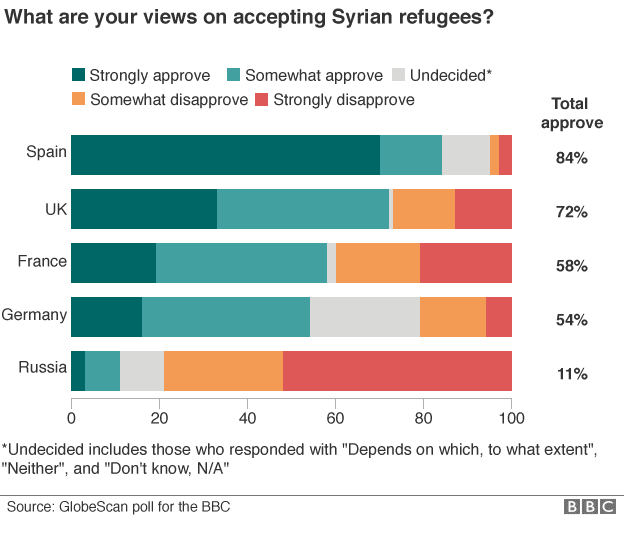 This poll is part of a fascinating wider international survey titled "Identity 2016" which also found that 'Global citizenship' is increasing at the expense of nationalism. To me, this is extremely encouraging.
"On the question of whether intermarriage was a welcome development" Spain and the UK were the countries most in favour.
Read more from BBC source here.
April 24, 2016
"Brutal Underground: Three [New] Metro Stations in Barcelona"
 [Europa – Fira metro station on the [now] completed L9 line in Barcelona.]A Barcelona architect gives his insightful views on the city's new underground line.
April 16, 2016
"Brussels rebukes Spain for failing to take in refugees"
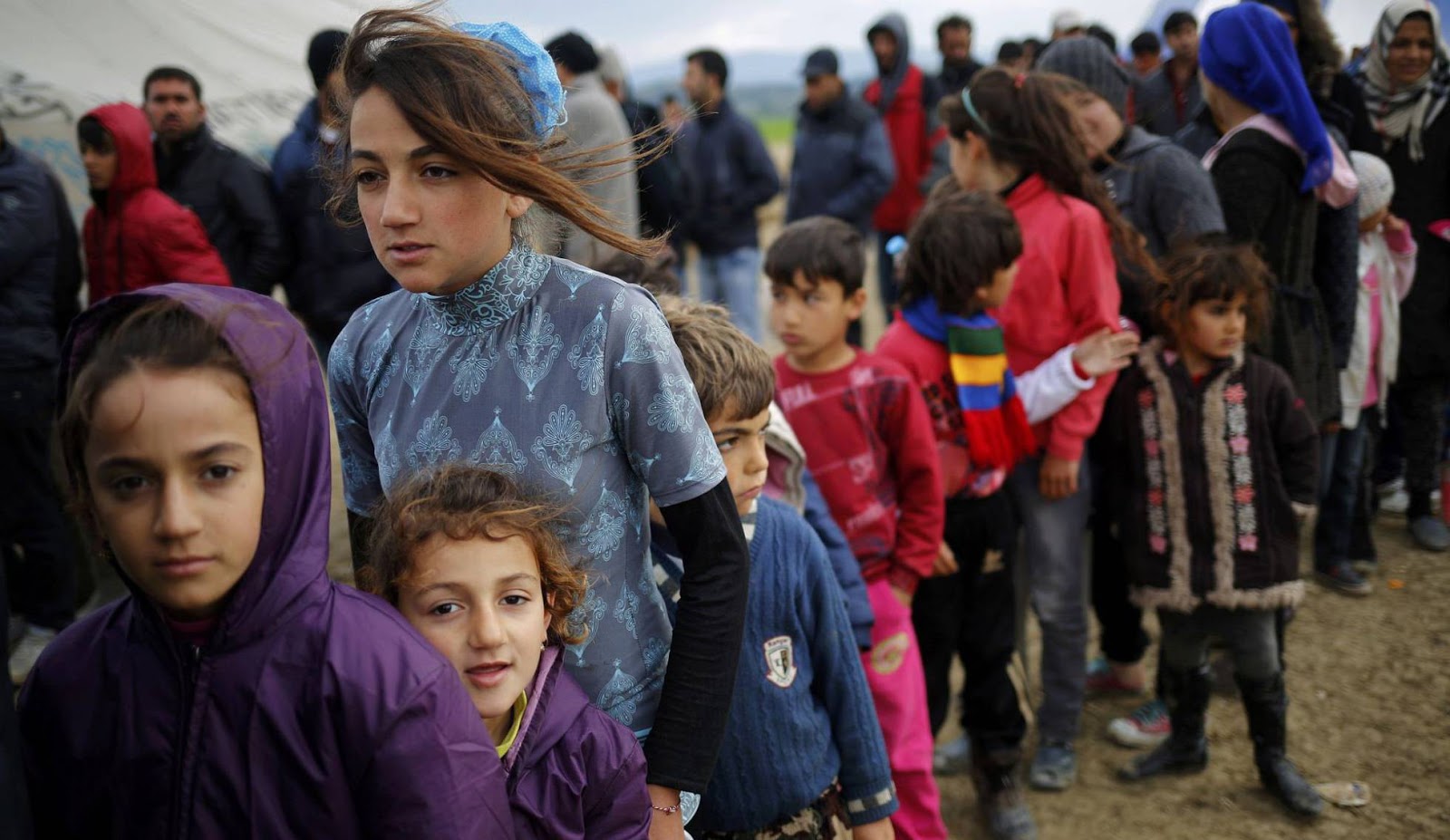 [Refugees and migrants wait in line for tea in a camp in Idomeni, on the border between Greece and Macedonia. STOYAN NENOV Reuters]
 Last week on Catalan (English language) TV, I called for the European Union to hold back financing for Spain if the national government did not immediately follow up on it's previous agreement to welcome significantly greater numbers of refugees than it had done.
"Spain has only taken in 18 refugees since September 2015, when European countries pledged to help people fleeing conflict in Syria.
In March, the Spanish government promised to speed up that rate by accepting 467 new refugees within that same month.
But a European Commission report shows that nearly two weeks after the deadline expired, not a single one of those 467 people has arrived on Spanish soil.
Several European institutions are rebuking Spain for these disappointing numbers, and talking about "a lack of willingness" on the part of the Popular Party (PP) acting administration. Acnur, the United Nations refugee agency, joined that chorus of critical voices in Congress on Tuesday."
More from El Pais source article (in English) here.
April 9, 2016
"From across the centuries" - An article about Shakespeare for Catalonia Today magazine
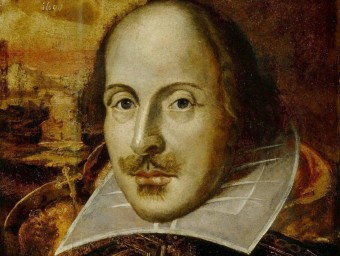
One of the greatest things about Shakespeare - one of the things I love most about his writing - is his rare ability to have his characters speak for themselves but also somehow show a more universal state of mind. His fiction is as real as it can get despite the fact that we are reading his words or hearing them said hundreds of years after he wrote his works.In Shakespeare's famous play Hamlet, the title character, the Prince of Denmark is depressed. His father has been murdered by an uncle and his mother has quickly remarried. Hamlet feels compelled to take revenge for his father's death but his new isolation and sadness cause him to be on the point of suicide. He says:"I have of late—but wherefore I know not—lost all my mirth, forgone all custom of exercises, and indeed it goes so heavily with my disposition that this goodly frame, the earth, seems to me a sterile promontory; this most excellent canopy, the air—look you, this brave o'erhangingfirmament, this majestical roof fretted with golden fire—why, it appears no other thing to me than a foul and pestilent congregation of vapors. What a piece of work is a man! How noble in reason, how infinite in faculty! In form and moving how express and admirable! ...The beauty of the world. The paragon of animals. And yet, to me, what is this quintessence of dust? Man delights not me. No, nor woman neither."To me this is one of the most moving of Shakespeare's passages. I first heard it performed by Richard E. Grant, playing an unemployed actorin the final scene of the superb film, "Withnailand I." Here, the character is seemingly making a balancing act in his mind, weighing up the good and bad of his species and the universe we inhabit. His judgement is a heavy one, as if mankind does not merit a place in the cosmos. Or is Hamlet just speaking for himself alone? That is another beauty of Shakespeare's writing. He is a poet and surely the greatest in the history of the English language. His words are open to many interpretations still (even after thousands of academics have picked them apart syllable by syllable) and this pliability gives his ideas a freshness that never dries up.As a wordsmith and creator of English, it's also generally accepted that no-one can be compared with Shakespeare. When he couldn't find a word to do the job he wanted he simply invented a new word and many of these words live on in the language today. His writing benefited from him also being an actor. Shakespeare knew how lines could be delivered and had an extraordinary ear for how their musical rhythm would be heard by audiences.[This article was first published in Catalonia Today magazine, April 2016.] (The Flower Portrait above was long thought to be a contemporary painting of the Bard, but a 2004 investigation found it to be a 19th-century forgery. / Photo: ARCHIVE.)
April 2, 2016
My latest appearance on The English Hour (El Punt Avui TV)
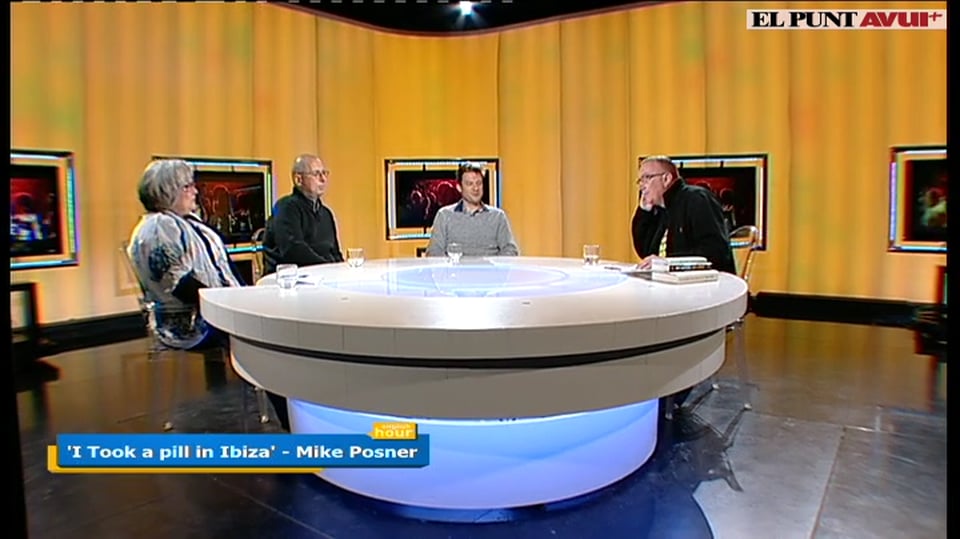 http://www.elpuntavui.tv/video.html?view=video&video_id=161065477tionLast Thursday I was a guest again on Matthew Tree's round table chat show, Our Finest Hour.
 We talked about the Spanish government's disgraceful rejection of Catalan proposals to welcome 4,500 refugees, the most recent ranglings over who might make up the next administration in Madrid and the role of multi-lingualism in Catalunya.
March 26, 2016
"France moves towards full ban on pesticides blamed for bee losses"
"French lawmakers approved plans for a total ban on some widely used pesticides blamed for harming bees, going beyond European Union restrictions in a fierce debate that has pitched farmers and chemical firms against beekeepers and green groups.
The EU limited the use of neonicotinoid chemicals, produced by companies including Bayer CropScience and Syngenta , two years ago after research pointed to risks for bees, which play a crucial role pollinating crops.
Crop chemical makers say the research blaming neonicotinoid pesticides is not backed up by field evidence and a global plunge in bee numbers in recent years is a complex phenomenon due to multiple factors."
Read more from source here.
March 19, 2016
Noam Chomsky Joins Democracy in Europe [DiEM25]
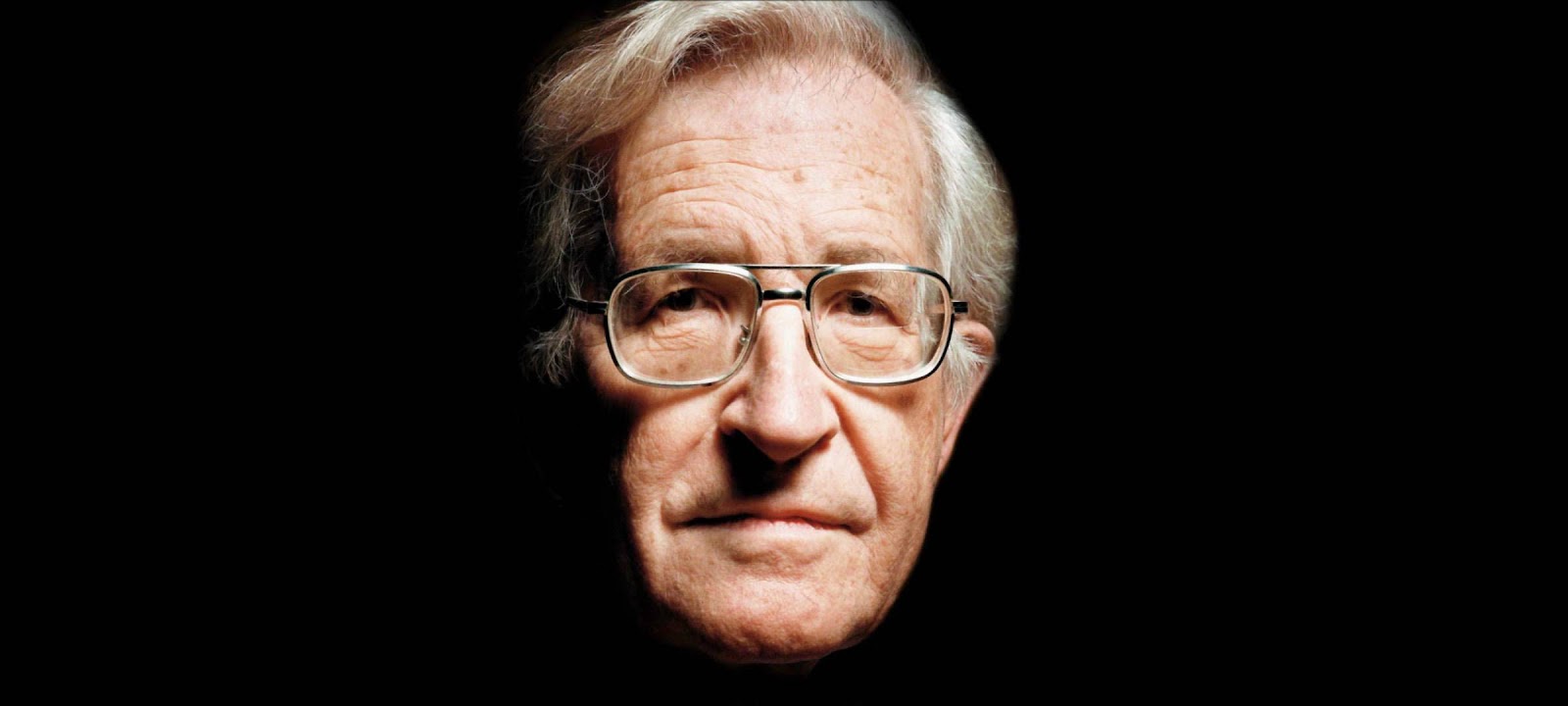 "Distinguished American linguist, philosopher and political activist, Noam Chomsky, has [this week] officially endorsed DiEM25, the Democracy in Europe Movement launched last month by Greece’s former Finance Minister, Yanis Varoufakis.
 “The formation of the European Union,” explained Chomsky, “was a highly encouraging step forward in world affairs, with great promise.” However, in view of the American scholar, the EU “now faces severe threats, from within, tracing in no small measure to the attack on democracy.”
Upon becoming the latest signatory of the movement’s Manifesto, Chomsky affirmed, “[DiEM25’s] Manifesto is a bold effort to reverse the damage and restore the promise, an initiative of great significance.”
Read more from source here.
March 12, 2016
"Refugees start arriving in Portugal...as government says “no” to closed borders"
 "Prime minister António Costa’s willingness to take as many as 10,000 refugees - instead of the 4500 established by EU quotas - is being demonstrated today as the European Council holds its emergency summit in Brussels on what is universally recognised as the 'worst refugee crisis since World War II'.
Hours before the summit got underway, 64 ‘mainly Syrians and Iraqis’ touched down at Lisbon’s military airbase (Figo Maduro) to be received by dignitaries before going on to various destinations around the country.
A number - particularly children - were so frail and ill from gruelling months of uncertainty and inhospitable conditions in Greece that they had to be immediately transported to hospital, writes Público.
Talking to journalists, Costa’s deputy Eduardo Cabrita said the latest 64 which have followed 65 Eritreans who have arrived since December are “mainly Iraqis and Syrians”, with women, children and families making up most of the numbers, plus a few single people.
Next week, more will start arriving on commercial flights, he explained.
For now, Portugal’s new arrivals will be given accommodation in 15 locations organised by social solidarity, church and refugee support organisations."
- See more at: http://portugalresident.com/refugees-start-arriving-in-force-in-portugal-as-government-says-%E2%9Cno%E2%9D-to-closed-borders#sthash.4F2AeWYt.dpuf
"First thought:" My Substack page

For readers who like stimulating & original lit-bits on social & personal issues. From the mind of an always-curious author/teacher/journalist living long-term in Europe (Catalonia/Spain.)
- Brett Hetherington's profile
- 10 followers

