
Brett Hetherington's Blog: "First thought:" My Substack page, page 43
September 18, 2016
"4 maps that [might] change how you see migration in Europe"
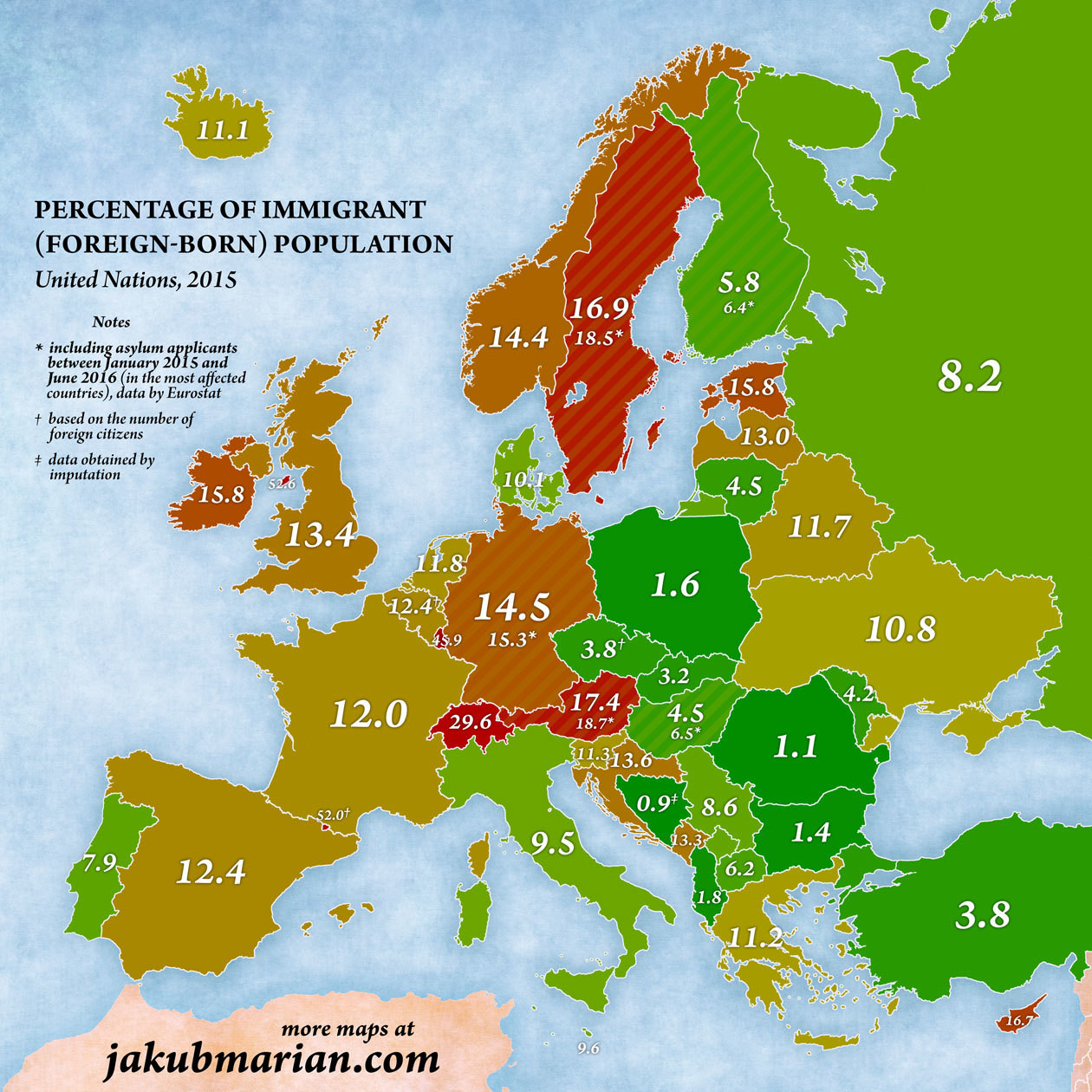 "Did you know that Polish people represent the highest percentage of the foreign-born population in Norway?
 Or that the largest proportion of immigrants to the Republic of Ireland hail from the UK?
These four maps, created by Jakub Marian, a Czech linguist, mathematician and artist, are based on a 2015 study by the United Nations on international migration.
They show European migration split into various numbers:
1. The percentage of the population of each country that is made up of foreign-born migrants
2. The most common country of origin for that number
3. Whether that number has gone up or down in the past five years
4. The immigrant populations that are expanding the most."
Read more from source here .


September 8, 2016
"On trust and the grape" - My latest opinion column for Catalonia Today magazine
 People trust each other where I live.
 I'm not talking about the kind of confidence where no one needs to lock their doors. I mean that where I live you don't see that look of suspicion in the eyes of a stranger that you consistently do in England, for example.
There seems to be a basic belief that the men and women next to you are not out to cheat you or somehow do you wrong.
And this is despite acts of terrorism, theft and selfish outlooks on daily display, in addition to a mainstream media that feeds on reporting crime.
Of course this unstated faith is regularly abused. Maybe routinely so. Yet it continues.
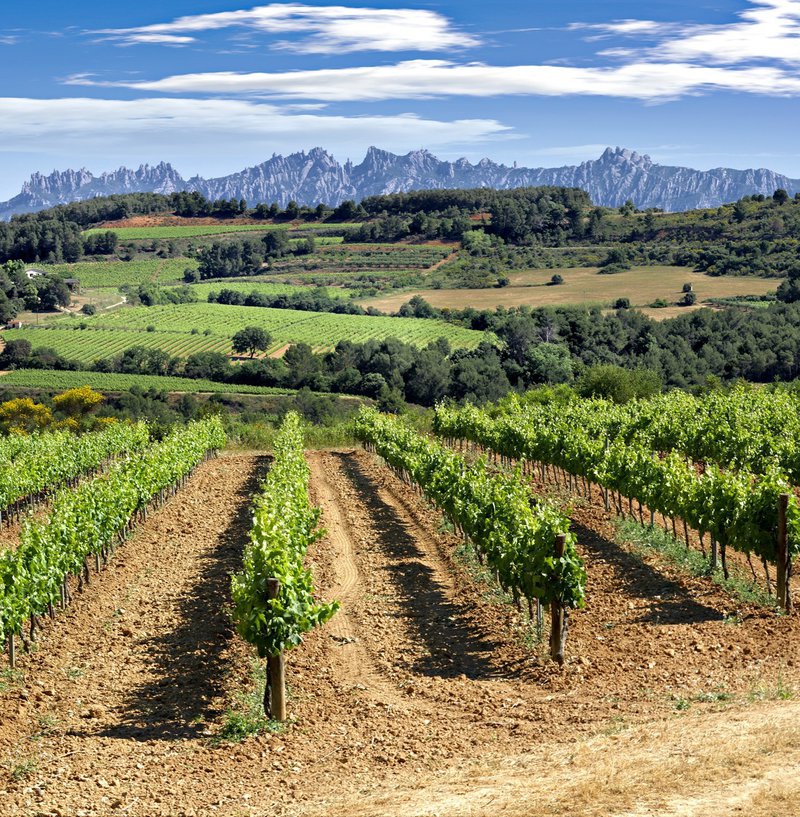
We used to live on the outskirts of Vilafranca del Penedès, a medium sized town of about 40,000 people in the agricultural interior of Catalonia. Behind our apartment building there are large grapevine plantations and paths running through them. Every day people walk there, jog, or take their dogs for exercise.
But there are no fences. It would be easy and cheap to put fences around these fields but nobody has felt this to be necessary. Thousands of euros of vineyards lie apparently unattended for short periods of time and these vines are of course unguarded.
If this was in, say Israel or near an English town would it be the same? My guess is no.
There are also no fences in the little village we have chosen to live in since moving a handful of kilometres away from Vilafranca. The grape is still the dominant feature in the landscape and our house looks onto fields of vines: verdant green in summer and bare brown after October.
I find it impossible to walk through these fields with their soothing geometrical lines and not feel better than I did before.
Maybe this is partly why the farmers I talk to seem to be a contented bunch. Despite absurdly low prices for their quality produce it's apparent that they enjoy what they do. I know several who voluntarily work into a very ripe old age, tending to the simplicity of cultivating plants in what the French call an industry of pleasure. Give a man a job that is he is satisfied with and he is halfway to being happy.
Recently though, the basic confidence that the average European has in those around him or her is sadly being tested and is also being shaken. Terrorism by fanatics, extremists and the ultra-marginalised is mainly responsible for this but so far Spain and Catalonia have resisted seeing right wing political parties as a possible answer to the various forms of random slaughter that have continued across the continent (and for that matter, much of the world.)
I suspect however, that all those healthy fields of green and red grapes will stay unaffected and untouched by the sadistic joy of small-minded egotists intent on mass-murder.
(This article was first published in Catalonia Today magazine, September 2016.)
September 3, 2016
"A Little-Known Perspective on the Life of Homeless People in France — Their Own"
 (Tents from charity ‘Les Enfants de Don Quichotte’ on the banks of the Canal Saint-Martin, Paris. From Wikipedia Creative Commons 2.0`)
"There are many preconceived ideas about the lives of the homeless in France. The most widespread amongst them are as follows:
“It's a declining trend in France.”The total number of homeless people in France (excluding refugees in the camps in Calais) is difficult to estimate, but the FNARS, a national organisation for social inclusion and re-insertion, estimates the figure to be between 150,000 and 240,000 people. The Fondation Abbé Pierre, a homeless charity based on the benevolence of its namesake, a 20th century Catholic priest, estimates that there are 50% more homeless people in France than three years ago — including 30,000 children.
“To be homeless is an active choice.”A study shows that only 6% of homeless people choose to live on the streets.
“The homeless don't work.”Many homeless people are employed on fixed-term or temporary contracts.
In an attempt to correct the narrative about the homeless, some homeless people in France over the years have told their stories in their own words on social media. Let's meet three of them: Stéphane, Francis and ‘SDF75′, who all have at one point offered insight into their lives on their respective blogs.
‘I am a computer programmer first and a homeless person second’
SDF75 explained why he wanted to create a different blog:
Read more from source at Global Voices here .
August 28, 2016
"The world's movement of people – in one map"
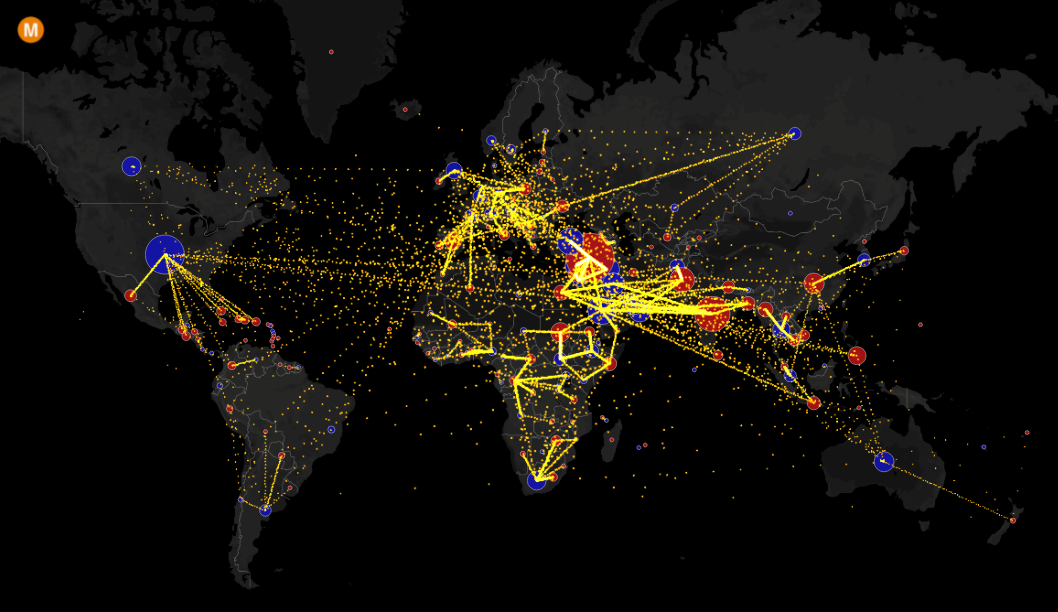
"The world is experiencing the biggest displacement of people since the Second World War, with more than 22 million displaced from their home countries. More than 1 million people arrived in Europe in 2015 alone.
This map, posted on metrocosm.com and based on estimates from the UN Population Division, gives a remarkable insight into the extent of global migration.
It shows the estimated net migration by origin and destination between 2010 and 2015. Each yellow dot represents 1,000 people, while blue dots indicate positive net migration, and red negative net migration."
Read more from source here.
August 23, 2016
"Welcome to Sunny Barcelona, Where the Government Is Embracing Coops, Citizen Activism, and Solar Energy"
 “When we moved into city hall, there were only paintings by men,” Barcelona Mayor Ada Colau tweeted in March, attaching a picture of her current office wall, which now featured portraits of eight prominent Catalan women—including the legendary anarchist leader Federica Montseny.
“Redecorating the walls, that was the easy change,” Colau’s second in command, Gerardo Pisarello, joked when we spoke with him in late June. “The other ones take quite a bit longer—they are more difficult and don’t just depend on us.” Pisarello’s office, too, features black-and-white photographs: one of a woman celebrating the proclamation of Spain’s Second Republic in 1931, and another taken at the country’s first LGBT protest after dictator Francisco Franco’s death in 1975, a demonstration that, as Pisarello proudly points out, happened in Barcelona.
Colau and her team were unexpectedly swept into the mayor’s office in May 2015. Barcelona en Comú (“Barcelona in Common”), the progressive political platform Colau and others founded less than a year before the elections, won by the narrowest of margins, with a mere 11 of the 41 seats in the city’s council. It was just enough to form a minority government.
Still, the BeC platform—a coalition that includes the Catalan branch of Spain’s new anti-austerity party Podemos, the United Left, and the Catalan Green Party—has faced a difficult challenge. Their aspiration is not just to alleviate the severe social and economic consequences of the Great Recession. They also want to reinvent how city government functions, from the ground up.
“I think what’s happening in Barcelona is unique,” Laura Roth, who teaches political science at the Universitat Pompeu Fabra and runs BeC’s neighborhood assembly for Ciutat Vella, says. “There are struggles everywhere. There are movements everywhere. Some are more democratic and others are less democratic. Some are more active and successful and others are less. But I think that there aren’t many movements today that are rethinking how to do politics.”
Read more from source at The Nation here.
August 14, 2016
"Europats:" citizen's representation across Europe

"EUROPATS is a new initiative to call for Full Rights for all European Citizens, to represent those Europeans who reside in other EU countries which are not their own; to ensure that their voices are heard and to champion their rights in Brussels as well as other centres of political influence at a national, regional and local level.
EUROPATS was started in June 2016 when the UK voted to leave the EU. EUROPATS stands for all disenfranchised Europeans living in the EU."
Read more from source here.
August 8, 2016
July 30, 2016
"The Hungry Years in Catalonia: An Interview with Peter Bush about 'Black Bread'"
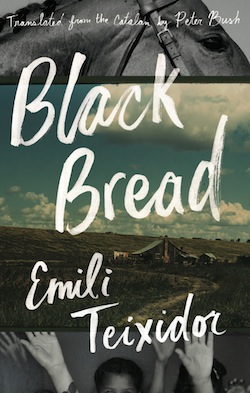 "Black Bread, one of the major novels of Catalan literature, makes its appearance in English in the Biblioasis International Translation Series this month, in a translation by Peter Bush. Series editor Stephen Henighan asked Bush about the narrative world of the novel’s author, Emili Teixidor, who grew up in rural Catalonia under fascist occupation."
Read text of interview here.
July 23, 2016
"In Andalusia, on the Trail of Inherited Memories"
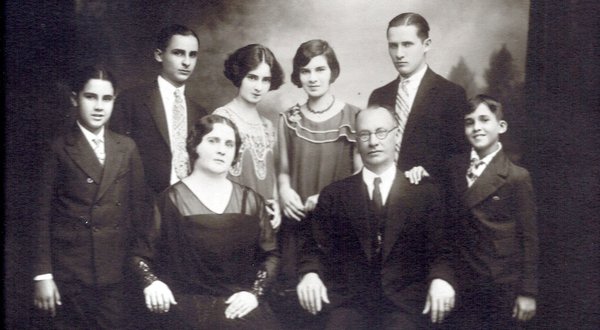 "ARCOS DE LA FRONTERA, Spain — I still wonder how I ended up living in a former medieval bordello on the brink of a sandstone cliff on the southern frontier of Spain.
It was 2008, the start of the Andalusian region’s economic meltdown, La Crisis, and anxiety spread like the Black Plague. But from the roof of my apartment in this ancient white pueblo, I plunged back in time.
The other world worried about bills, real estate values, tourism, lost jobs, the immediate future. In contrast, I retreated into my quest, hoping to take new stock of my identity by reclaiming ancestral memories, history and DNA clues that I believe had been faithfully passed down for generations of my family, the Carvajals.
They had left Spain centuries ago, during the Inquisition. That much I knew. We were raised as Catholics in Costa Rica and California, but late in life I finally started collecting the nagging clues of a very clandestine identity: that we were descendants of secret Sephardic Jews — Christian converts known as conversos, or Anusim (Hebrew for the forced ones) or even Marranos, which in Spanish means swine.
I didn’t know if my family had a connection to the white pueblo. But by living in its labyrinth of narrow cobblestone streets, I hoped to understand the fears that shaped the secret lives of my own family.
History is a part of daily life in the old quarter, where Inquisition trials were staged and neighbors spied on neighbors, dutifully reporting heretics — Christian converts who were secretly practicing Judaism. The former Jewish quarter, where white houses plunge down a steep, silvery lane, is still standing, though unmarked by any street sign. I wanted to understand why my family guarded secret identities for generations with such inexplicable fear and caution. When my aunt died a few years ago, she left instructions barring a priest from presiding over her funeral; my grandmother did the same."
Read more from source here.
July 15, 2016
Ladino - "On what a dying language leaves behind"
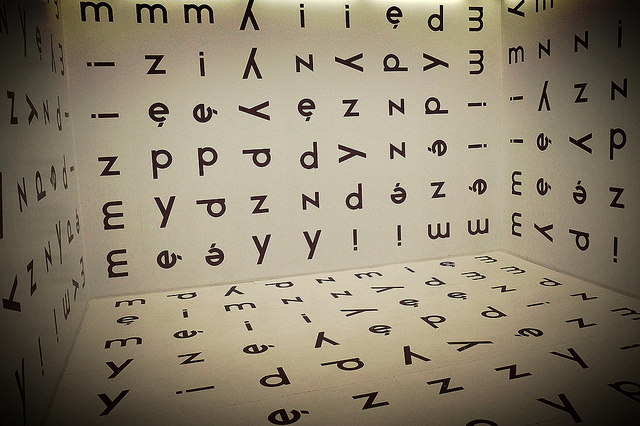 Image taken by Flickr user jurek d.[Image taken by Flickr user jurek d.]"My grandmother’s mother tongue was Ladino—old Spanish, the language of the Sephardic Jews.
 Like Yiddish, it’s a kind of pidgin language, a collage of words drawn from multiple sources, among them: Medieval Spanish, Galician-Portuguese, Mozarabic, Greek, Bulgarian, French, Serbo-Croatian.
And like Yiddish, it’s a vulnerable language. Once the trade language of the Adriatic Sea and the Middle East, and renowned for its rich literature especially in Salonika, it’s now under serious threat of extinction. UNESCO has called it “seriously endangered.”
I’ve never heard it spoken in person, though one can listen online at the Ladino preservation council’s website. When I do, I feel like I should understand the voice that sounds like my grandmother’s, with its purring R’s, but I don’t. Not a single word.
I’m not sure how much Ladino my grandmother remembered when she died in the American Midwest at 103. As a girl, she’d studied in Egypt at French schools. Later, she studied law in France, married a Frenchman. French was the only language I ever heard her speak, besides a richly accented English. French was my mother’s first language. My brother and I never considered taking Spanish in school. We took French, naturellement. And explained our interest, if asked, by saying our mother was French.
In researching my collection of linked stories, Heirlooms, which is based on family stories, I came across old letters written in what I came to understand was Ladino. I knew from reading other old family letters that much about the writer could be revealed in their word choice or turn of phrase. I stared at the undecipherable swoops of cursive, wondering what the letters conveyed. My mother could glean a few words, because Ladino, like French, is a Romance language. My mother’s cousin who grew up in Israel couldn’t help us, as he’d heard Ladino only when the grown ups didn’t want the children to know what they were talking about.
Read more from Rachel Hall's article in Guernica magazine here.
"First thought:" My Substack page

For readers who like stimulating & original lit-bits on social & personal issues. From the mind of an always-curious author/teacher/journalist living long-term in Europe (Catalonia/Spain.)
- Brett Hetherington's profile
- 10 followers

