
Brett Hetherington's Blog: "First thought:" My Substack page, page 46
March 5, 2016
"The Wind-Water Sickness" - My latest opinion column for Catalonia Today magazine
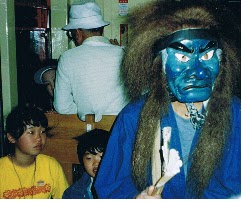 [Japanese "onni" (devil) mask]How do you get sick in Japan?
 According to one Japanese teacher that I once talked to, a Mr Shiroi, he caught a cold because the school that we both used to teach at was in an “unfavourable” north-east position, when compared to his house. He had been working at this school for four years, he informed me, and had got sicker much more often than at his previous school, which was in a northwest direction. This was a ‘good’ location relative to where he lives, so he rarely found himself in less than perfect health. Mr Shiroi told me that this extraordinary superstition was called fu-sui (wind-water) and has its roots in Chinese Confucian times, having a fairly committed belief amongst about 1 in 20 people in Japan, Mr Shiroi estimates. In China, he thinks it is over 10 per cent still.
Naturally, in our conversation I offered the opinion that it is actually germs that cause diseases, but this is only the ‘direct’ cause, he maintained. From this ancient nonsense, it seems that you can predict where the harmful things are, but they will only take effect on you if you have arrived at your destination from certain directions.
I contended to him that if somebody catches AIDS for example, it is because they shared a needle or bodily fluids with an infected person. In Mr Shiroi’s view it is also because they were ignorant of the warnings that, with special insider-knowledge, can be found.
Mr Shiroi then went on to inform me that all the important variables in fact changed on the night before ‘Setsubun,’ (which was only two nights before our discussion.) You see, the turning point for which directions are favourable is midnight on this ‘real’ New Year. Setsubun (literally "sectional separation") is a timed-honoured Japenese custom that marks the beginning of spring and is based on the solar calendar, not the lunar calendar used by the western world. A man puts on an onni (demon) mask and is chased out of his own house by the rest of the family who throw beans at him yelling the Japanese equivalent of bad luck out, good luck in! It is still practised in most Japanese households, he told me.
More interesting to me though were this otherwise well-educated man’s theories about predictability of natural phenomenon. I asked him if it was not only people’s houses and workplaces that came under the influence of this “cosmic compass.” Did it affect relationships? For example, if someone who was born in the town of Uji, south of Kyoto, and they married someone from say, Kameoka to their north-west, did this mean that their bond would be a successful one?
He believed it did, explaining to me that it is actually even better to marry a partner further along the same axis line. This struck me as another absurdity, particularly when taken to its logical extension. I argued that, according to his theory here, it would have been better for him to have married a woman from the very tip of Chile in South America rather than his current wife. “Oh, but you have to balance the idea with practical concerns,” he squibbed. I asked him what his wife thought about this. He said “Well, I got married before I learnt about these ways.”
I knew that just last year he had traveled to Morocco. He had previously told me that he liked it very much but that his wife never wanted to go back there again. Now, he filled me in, that particular tip of Africa had been the ‘second best’ possible place to travel to. It had been at times very difficult to find somewhere to go outside of Japan that was relatively “safe.”
Following these principles was limiting to his options, it seemed. I told him that former U.S. President Ronald Reagan’s wife Nancy had experienced similar problems with a different brand of superstition.
[This article was first published under the title "How do you get sick in Japan?" in Catalonia Today magazine, March 2016,]


February 28, 2016
"TTIP talks press ahead with new privileges for big business"
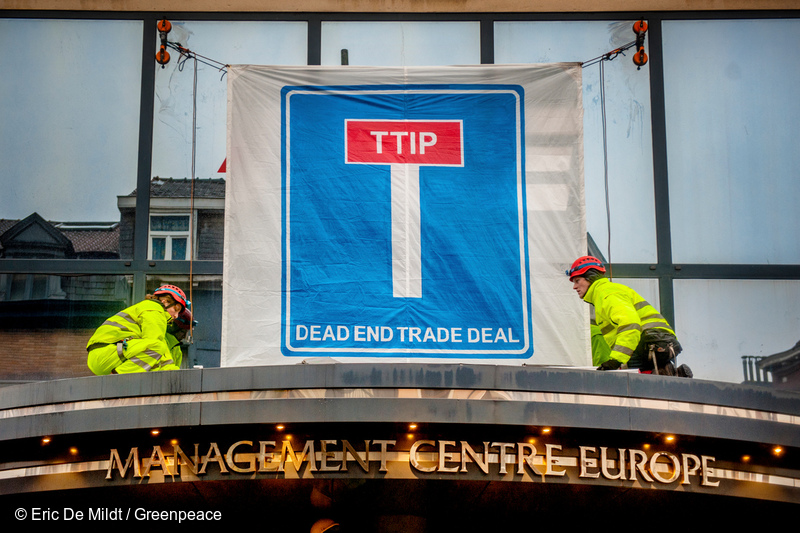 "The 12th round of EU-US trade talks ended in Brussels [on Friday] with negotiators pressing ahead to deliver new privileges for big business, said Greenpeace.
 The start of the talks was delayed on Monday after a blockade by Greenpeace activists, who warned against a “dead end trade deal” and called for an end to the negotiations. "
Read more from source here.
February 20, 2016
Video: Democracy in Europe Movement - the launch
Their mainifesto document here.
February 13, 2016
"Steinbeck, Scuppers and trains" - My latest article for Catalonia Today magazine

As a child, the great American author John Steinbeck was inspired by a scene with a bird in it: a stork. He cherished a toy ‘Easter looking-egg’ which he loved to peer into through a tiny hole, seeing “a lovely little farm, a kind of dream farm, and on the farmhouse chimney a stork sitting on a nest."
Steinbeck had taken this setting to be pure fantasy but to his surprise saw the same thing in real life one day in Denmark.
My own young imagination, before I could even read, had been fired by books like Margaret Wise Brown’s ‘Scuppers The Sailor Dog’ with its superbly memorable illustrations by Garth Williams. I would always ask my mother to read me this story and one scene in particular is imprinted on my memory even still. I’m sure that it fed my unconscious with a deep desire to travel.
Brave Scuppers is asleep in a warm bunk bed in his cosy, wood-paneled ship’s cabin. The ship is tossing because I can see that the light is swinging from the roof and outside through the round porthole window the sea is choppy. Under his bed are his new shoes that he picked out from a shop, pictured on the previous page. Scuppers rejected a different pair as being ‘too fancy’ because they were curly at the toe ends.
This shop (where he also bought a ‘bushel’ of oranges) had palm trees outside and a woman in a veil walking by, seemingly in a hurry. I’d never seen either of those things before and didn’t know the word ‘exotic’ then but that’s what I was thinking in my forming child’s outlook. When I got to Morocco twenty five years later and saw the same curly shoes that Scuppers had passed over, I felt what must have been a similiar satisfying surprise as John Steinbeck had once enjoyed.
Travel has a way of also emboldening us because we are out of the realm of home’s familiar touches.
Consciously, my love affair with travelling on trains began just over two decades ago when my partner Paula and I spent over three months on different forms of them getting across Europe. As a child and young adult I’d barely been on a train before but there was something either in my ancestral memory or a different kind of spark that kindled a vague interest in a different sort of transport, aside from buses or planes. Maybe it was hearing Neil Diamond on TV when I was eight years old. I still recall him singing:
It's a beautiful noiseGoin' on ev'rywhereLike the clickety-clackOf a train on a trackIt's got rhythm to spare
In this song too he poeticised the sounds of big city street as music to the ear and my budding brain was intrigued by this idea. Living in quiet suburbia where the high-pitched ‘ninga-ninga’ of summer lawn movers was the most common weekend noise, I’d never heard anything like the kind of thing in Diamond’s lyrics and his clear affection for the pulse and grind of the metropolis. It has stayed with me in the same way that thoughts on a train trip from over twenty years ago will now and then float back into memory.
[This article was first published in Catalonia Today magazine, February 2016.]
February 6, 2016
"France becomes first country to force all supermarkets to give unsold food to the needy"
"Supermarkets in France have been banned from throwing away or spoiling unsold food by law.
The stores are now required to donate unwanted food to charities and food banks.
To stop foragers, some supermarkets have poured bleach over the discarded food or storing binned food in locked warehouses."
Read more from source here.
The stores are now required to donate unwanted food to charities and food banks.
To stop foragers, some supermarkets have poured bleach over the discarded food or storing binned food in locked warehouses."
Read more from source here.
January 29, 2016
January 24, 2016
"Spain at last welcomes back the Sephardim"
"Following new legislation, the first descendants of expelled Jews get Spanish nationality..."
Read from from source at El Pais in English here .
Read from from source at El Pais in English here .
January 17, 2016
Speaking on Borders of Belonging at the University of Barcelona
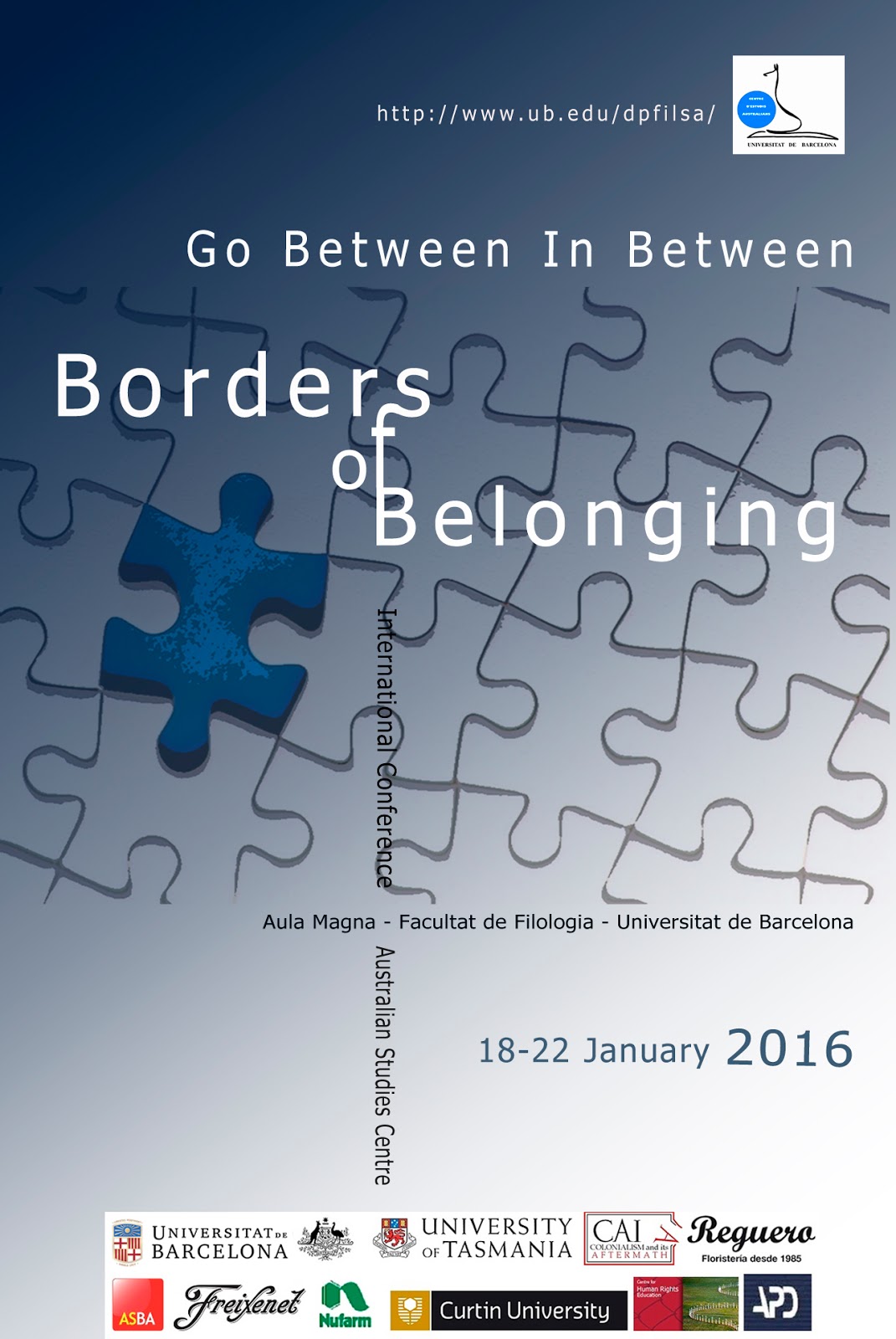 This Wednesday afternoon, along with two other writers - Gloria Montero and Inez Baranay - I will be speaking at an international seminar titled Borders of Belonging at the University of Barcelona.
I will be focusing on gender and emotion, two themes that are explored in my non-fiction book, The Remade Parent.
January 9, 2016
Spanish link with ancient Irish human genomes
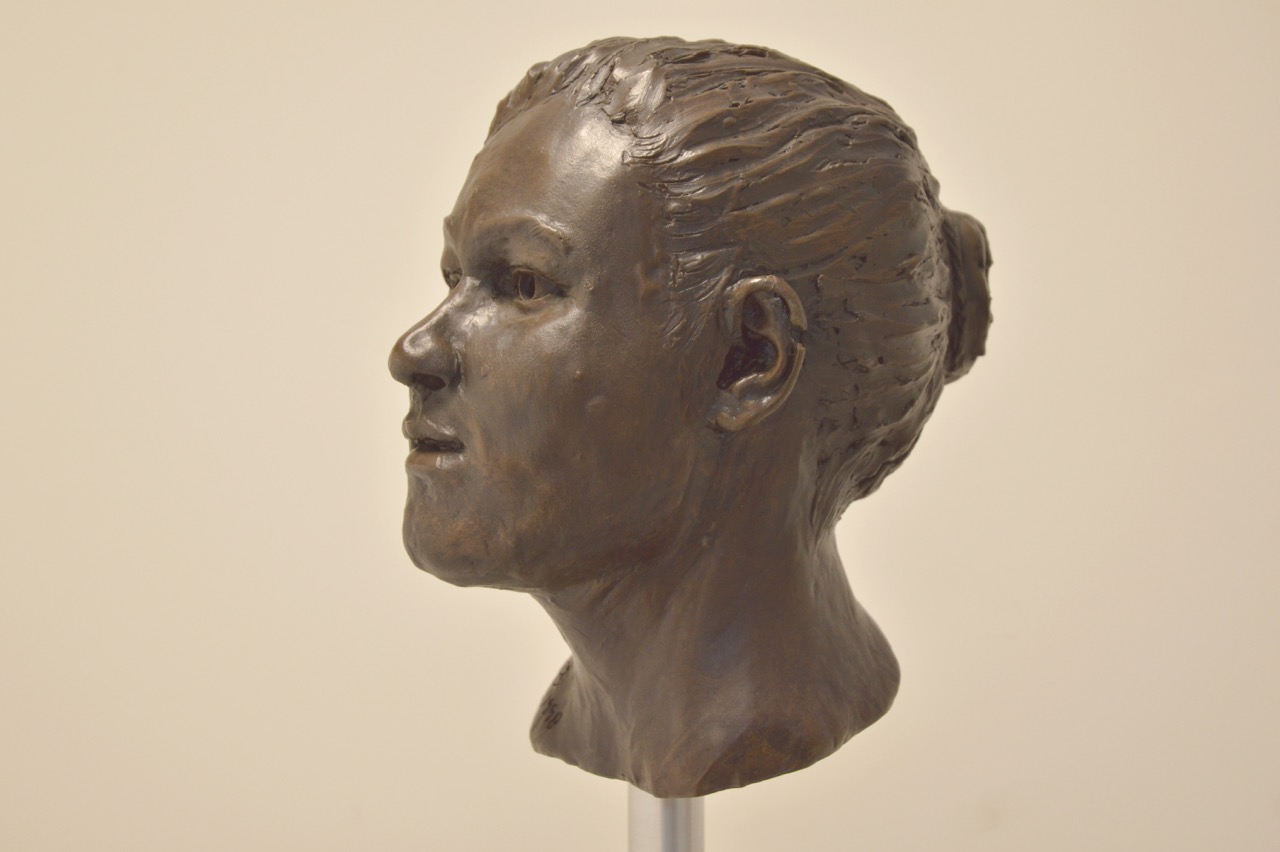 [Reconstruction of Ballynahatty Neolithic skull by Elizabeth Black. Her genes tell us she had black hair and brown eyes. Image credit: Barrie Hartwell.]" Researchers have sequenced ancient (5,200 to 4,000 years old) Irish human genomes for the first time and found that they were very similar to Spanish and Sardinian people."
Read more from source here.
January 2, 2016
"Lessons from Paris" - My latest opinion column for Catalonia Today magazine

The recent tragic terrorist murders in Paris (and sadly also elsewhere) can teach us plenty. And if we choose to not learn all that we can from these tragedies then we are as good as inviting further bloodshed and horror.
One of the biggest mistakes that I think is made around terrorism is that it is treated as something special and different from other serious violent crimes. Maybe because it comes out of the everyday (the train, a bus, a cafe, a concert) and because it’s most recent form targets no one in particular, we lose our common sense and fear that ourselves or our loved ones will be next.
It seems to me that acts of mass terrorism (just like other acts of murder) are committed by people with motive (though of course grossly perverted motives) and the means to do so on a large scale (automatic weapons and explosives, typically.) Motive and means: any attempt to deal with terrorism that does not focus on both these factors is bound to fail.
I believe that radical, extreme Islam is merely something that the Paris terrorists (amongst others) just hang their hats on. Exactly like the average North American (white male) gunman shooting up innocents at a school or an abortion clinic, what they are really fueled by is frustration that turns to resentment which then becomes great rage. Some terrorists have come from well-off backgrounds but the biggest causes of so-called ‘radicalisation’ are poverty and a need to belong, a need for identity.
When mainstream society systematically isolates migrants or people who see themselves as not being accepted by the wider majority, it is natural that resentment arises in the body and mind of those who now think of themselves as a kind of victim. If they find a focus for this bitterness - and fundamentalist religions have a slippery way of creating one - then self-isolation and a bunker/siege mentality is not far away.
In the small town where we live our teenage son has some friends whose parents are Moroccan. None of these boys were born in Morocco and they speak Catalan with our son and the other kids around. I know that some parents have told their children not to hang around with them even though they do not cause any trouble. How are these friends of my son supposed to feel? Could anyone blame them for being resentful and even angry towards the parents who insist on discrimination against them?
I am not arguing that these attitudes directly create terrorists of course. What I am saying is that it can and does contribute towards what sociologists call ‘marginalisation:’ humans pushing other humans to the edges of society. It is only logical then that these young boys will identify themselves as more Moroccan/Muslim than Catalan or Spanish because they have been rejected by parts of its more powerful, established society.
Despite all the grave social problems that run through Australia, the UK and the USA, in those parts of the planet it is standard to be both a Muslim and an Australian/American/Brit without suffering from any major confusion of who you are. Yes, there are bigots but unlike Europe there are very few ‘successful’ acts of Islamic fundamentalist terrorism.
In the run-down outer suburbs of Paris (the ‘banlieues’) where young men "of Arab appearance" are routinely stopped for ritual humiliation by police, I wonder if they think of themselves as French first.
[This article was first published in Catalonia Today magazine, January 2016.]
"First thought:" My Substack page

For readers who like stimulating & original lit-bits on social & personal issues. From the mind of an always-curious author/teacher/journalist living long-term in Europe (Catalonia/Spain.)
- Brett Hetherington's profile
- 10 followers

