Elizabeth Fitzgerald's Blog: Earl Grey Editing, page 52
January 15, 2015
2015 reading challenges
 I love the New Year. I love the feeling of possibility, of all the exciting new projects awaiting me. I want to dive into all of them straightaway and it’s a challenge not to go overboard. This goes just as much for my reading as it does for any other aspect of my life. There are many great reading challenges getting underway and quite a few have tempted me. However, in the interest of keeping my workload manageable, I have decided I’m sticking to just two this year.
 The first is the ubiquitous Goodreads reading challenge. I’ve committed to 52 books. Considering I’ll be reviewing one book here most weeks, this should be achievable (now watch me jinx myself).
The other challenge is the 2015 Australian Women Writers Challenge. I’ve signed up for the Miles level: read 6 books and review at least 4. Judging from 2014’s stats, I should easily manage this. However, I’m mindful of my tendency to over-commit. If I do well this year, I’ll definitely consider pushing harder in 2016.
I was sorely tempted by Shaheen’s Sequel Challenge. In her own words:
In 2014 I thought I’d try to get up to speed with all the series I’m currently reading, so I did this challenge as a way to reward myself every time I finished a book. The point system worked like this:
1 point for Book Two of a series;
2 points for Book Three of a series; and
3 points for any additional books in longer series.
Tempting as it is, I think I’ll be leaving that one until next year.
I’m probably also in dire need of No Book Buying Challenge but I suspect foregoing both buying new books and borrowing library books is beyond my willpower.
What reading challenges have you signed up for this year?


January 12, 2015
Mt TBR report: December 2014 & Yearly Wrap-up
Happy New Year! I hope it has been treating you well so far. As you can see, I’m back from my holiday. I had a lovely time with family and friends. My only complaint is that I didn’t get enough reading time (but when is that ever the case?).
With 2014 officially over, it’s time for me to take a good look at my reading stats for the year.
I read 56 books in 2014, which is a little on the slow side for me but within the trend of recent years. The overwhelming majority were fantasy and romance, with non-fiction trailing a distant third.
2014 was the first year I started tracking the gender of authors. I expected to discover I was reading a high percentage of male authors, since conventional wisdom says this is what most people default to. Instead, it turned out the other way around, with 69% of the books I read in 2014 written by women.
I also started tracking the number of books written by Australian authors. The figures came in at a disappointing 23%.
I read 24 new-to-me authors and 18 e-books.
I’m looking forward to seeing how 2015 stacks up against these stats.
Mt TBR status
Mt TBR @ 1 January: 191
Mt TBR @ 31 December: 216
Mt TBR finished much higher than I would have liked. Perhaps 2015 will be the year I finish with less books than I started.
I instituted a cull of Mt TBR on New Year’s Eve (which I may make a tradition), so there is some discrepancy between numbers from 31 December 2014 and 1 January 2015.
Mt TBR @ 1 January 2015: 202
Books read
54. Running Deer and Hidden Badger by K.D. Sarge. Reviewed here.
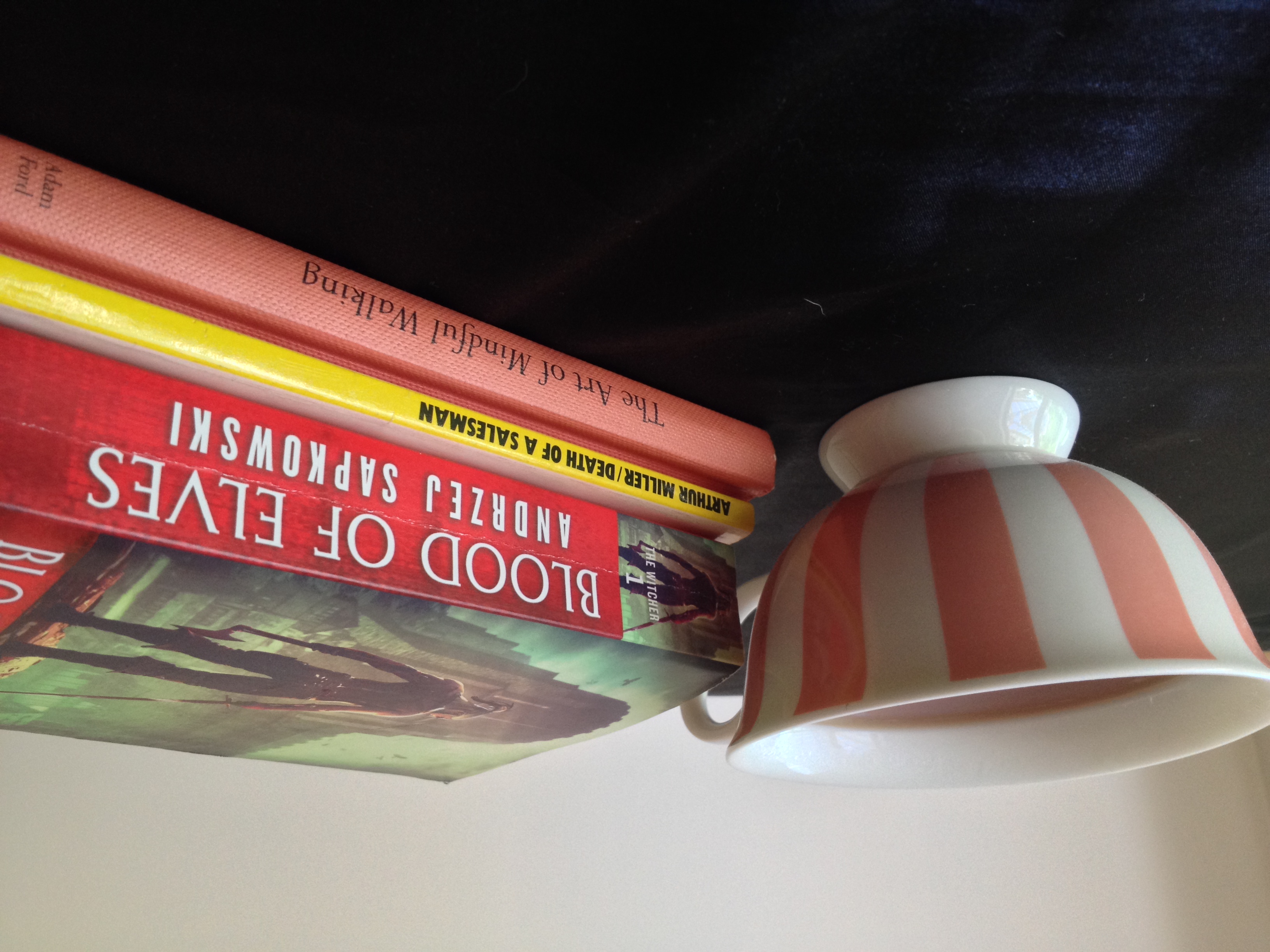
55. Blood of Elves by Andrzej Sapkowski. Review forthcoming.
56. Death of a Salesman by Arthur Miller. Brilliant writing on themes still relevant today. However, not an easy read emotionally or all that likeable.
Books acquired
Earthrise by M.C.A. Hogarth
The Art of Mindful Walking by Adam Ford
Online Reading
Quindrebel by Helen Stubbs. A short story in which the eponymous character seeks to escape her coal-furnace prison. Based on Cinderella, the mixture of fairytale and technology gave it a curious steampunk feel.
Her Words Like Hunting Vixens Spring by Brooke Bolander. After Rosa is left at the altar, she hunts down her fiancé. I can’t tell you how much I loved this story. It’s a classic Wild West vengeance story with some gorgeous turns of phrase and lots of heart. Quite possibly my favourite short story of 2014.
Spoils of the Spoiled Ch 1, 2 by Pia Foxhall. Foxhall takes the characters from her Court of Five Thrones and places them in a Hogwarts-style academy in this alternate-universe story. I’ve enjoyed seeing how the characters translate to the new setting.
Why Wouldn’t She Be My Friend? I’m Fantastic by axolotlsGambit. From the summary: In which a bored hacker and an AI with a terrible job strike up a conversation, and determine that they are flirting. (Algorithmically.) Told via tweets and chat logs. Very amusing.
So that’s it from me on 2014. How did you fare with your reading for the year? I’m also curious to hear what sort of statistics you track in relation to your reading, so please stop in and let me know.


December 18, 2014
My Favourite Reads of 2014
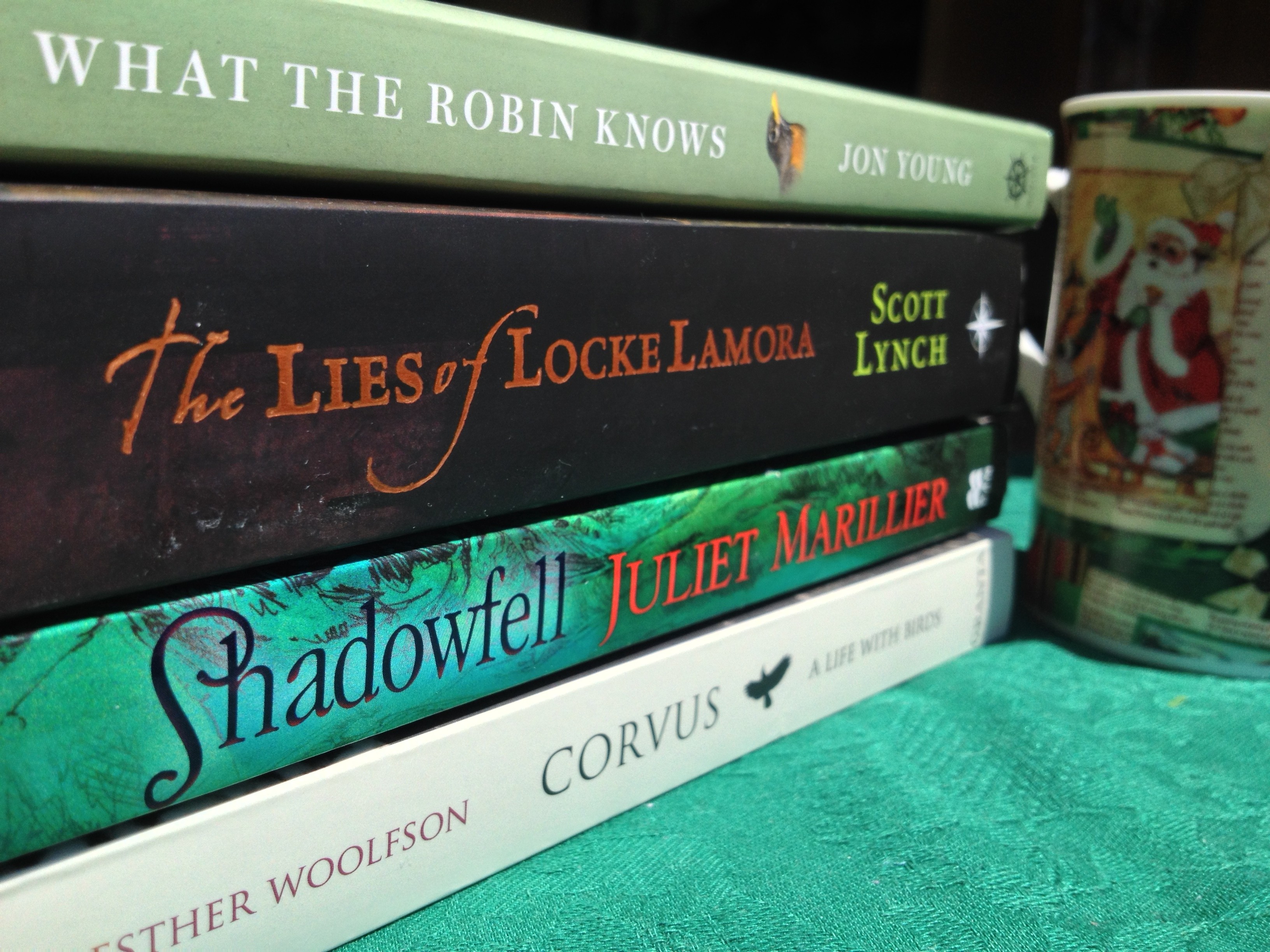
Earl Grey Editing will be closed from 20 December until 12 January, making this my last post of the year. I thought I would leave you with some of my favourite reads from 2014. These are not books that were necessarily published this year, just read by me this year. In no particular order:
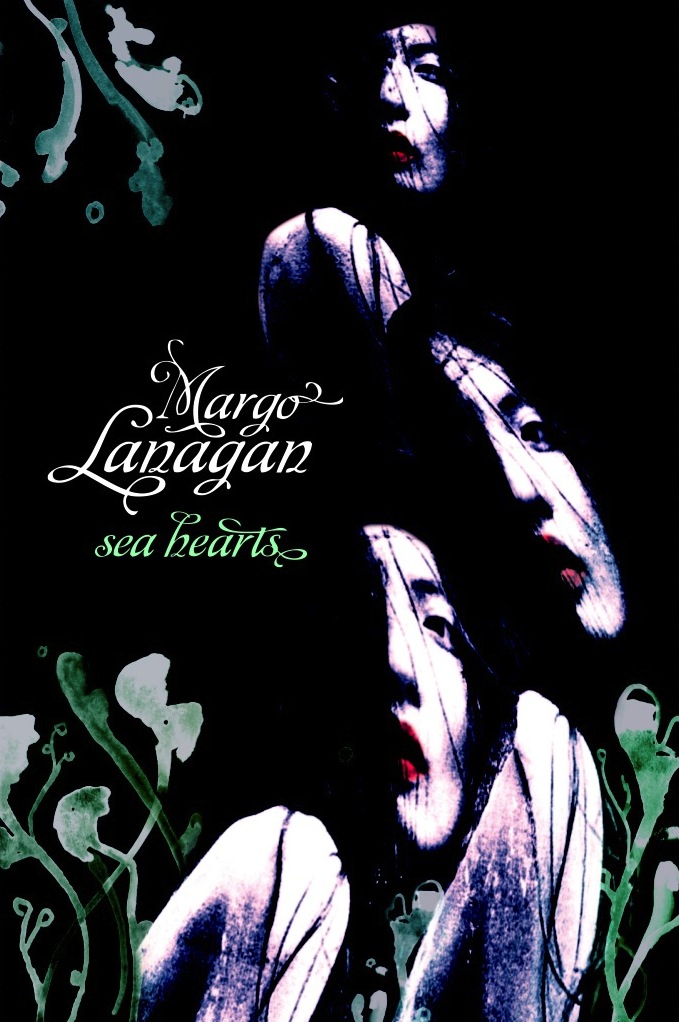 If you’ve been following along here for a while, you probably knew Sea Hearts would be on this list. It is a skillfully subtle book with turns of phrase that made me shiver with delight and envy. You can read more of my thoughts in my review.
 Likewise, the inclusion of The Interrogation of Ashala Wolf on this list probably comes as no surprise. The world-building in this YA series is excellent and the story had a fantastic intensity to it. You can read more of my thoughts in my review. I was delighted to recently discover via Shaheen of Speculating on Speculative Fiction that the third book in the series, The Foretelling of Georgie Spider, is scheduled for August 2015. I’ll be waiting impatiently.
 Sticking with YA, Juliet Marillier’s Shadowfell trilogy also deserves a mention. I’m a huge fan of Marillier’s work, so I was probably always going to love this series. However, the characters and the dynamics between them sucked me in from the very beginning. The first book, Shadowfell, had a similar intensity to The Interrogation of Ashala Wolf but plays more strongly on the theme of duty at all cost. The fae were well-handled, being less unified and more diverse than the humans in the story. They fit the landscape well.
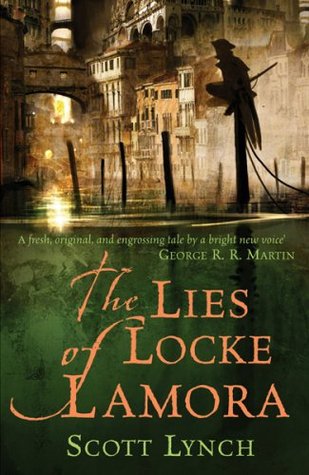 There was so much to love about The Lies of Locke Lamora. I am a sucker for a number of things in a story–adventure and intrigue being two of them. This book has those in spades. We get to take a ride with Locke as he invents new personae, impersonates other characters and (as the title might indicate) straight-up lies through his teeth. There are muggings, heists, power struggles, quests for vengeance, gladiatorial battles and battles of wit. So much fun. I did have a few issues with gender representation in this book, though it handles it better than many other male-authored, epic fantasy novels.
 Speaking of adventures, Amy Rae Durreson’s The Lodestar of Ys also makes the list. Written for the Goodreads M/M Romance Group’s 2013 challenge, the world-building will make many fantasy writers weep with envy. Amy does a fantastic job of balancing the two genres and creating flawed but loveable characters. It contains explicit sex, so is not appropriate for all readers.
 Moving on to nonfiction, Corvus: A Life with Birds is part memoir, part natural history wherein the author uses her experiences of rescuing and caring for birds–and corvids particularly–as a way of delving into their biology, symbology and psychology. There were many things I related to in the book–such as the panic (and uselessness) of trying to impose human ethics on non-humans, and Woolfson’s musings on where lies the boundary to wildness when it comes to birds living in an urban environment. The author is from a literary background and it shows in the slow, descriptive start to the book. This is writing to be savoured, though it is not going to be to everyone’s taste.
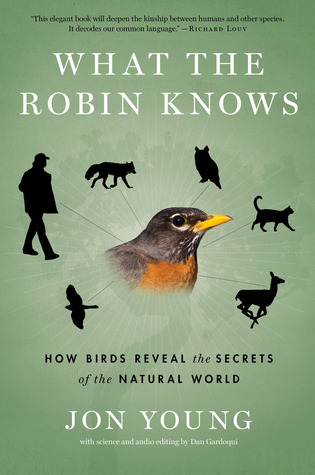 What the Robin Knows is a non-fiction book about studying bird calls and behaviour to gain a better understanding of the natural world. Written by an experienced naturalist and tracker, the book is a wealth of information. I admit that I was initially sceptical about how useful the book would prove. Being American, Jon Young’s experience is largely (though not exclusively) with American birds and the examples he uses are almost entirely American. I expected that the writing would be very much keyed to a particular locale and not at all applicable to an Australian landscape. However, I was very pleased to discover that while Young takes examples from a very specific biosphere, the book focuses on broad principles that can indeed be applied to different biospheres. Already, I have found it has changed the way I see and hear birds, even though I haven’t yet found the significant amount of time it will take to complete the exercises suggested in the book.
Those are my top picks for this year. What’s on your list? I’d love some holiday reading recommendations!
I hope those of you who are celebrating at this time of the year have a wonderful holiday. May the new year bring you an abundance of tea and books. I look forward to seeing you in 2015.


December 15, 2014
Review: Running Deer and Hidden Badger by K.D. Sarge
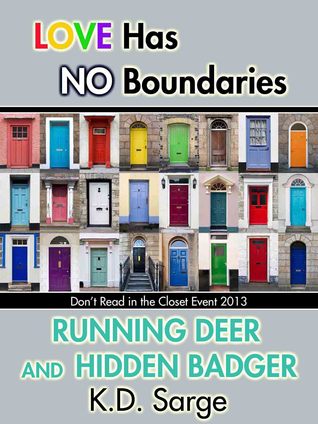
Published: 2013, self-published
Format reviewed: E-book (mobi)
Series: Love Has No Boundaries
Genres: Contemporary romance, gay romance
Source: Available free online from the Goodreads M/M Romance Group
When Cal comes home from his first year at university, he discovers his family’s Texan ranch is in dire straits and that his mother has hired a handsome city boy called Joseph to help out. Like Amy Rae Durreson’s The Court of Lightning, this novella was written for the Goodreads M/M Romance Group’s annual challenge. It is a sweet romance with no sexually explicit content.
There was a lot to like about Running Deer and Hidden Badger. Joseph’s character is of Native American descent but is out of touch with his heritage. Instead of playing on the stereotype of the wise Indian deeply connected to Nature, Joseph is from Los Angeles and knows nothing about the expansive Texan landscape. He can barely ride a horse and Cal has to teach him the business of ranching from the ground up. Although it seems a bit of a stretch that Joseph doesn’t even know what a scorpion looks like, I was pleased that the story didn’t fall into the trap of racist typecasting I might have expected from the title.
Sarge also makes sure her Texas is firmly in the modern era. The ranch hands all have mobile phones for emergencies, Joseph has an interest in digital photography and Cal speaks to his (soon ex-) boyfriend via Skype. The ranch remains fairly isolated but it is nice to see there was no pretense that these technologies don’t exist.
The story itself is a lot of fun but has a few flaws that make me suspect there was a shortage of time and word count. The focus is very much on Cal and his family. While there are some strong hints about Joseph’s backstory, they are never followed up. This vagueness and the lack of stage time given to Joseph’s past leaves the novella feeling somewhat unbalanced.
Similarly, there are a lot of threads that are dropped as the story progresses. The opening suggests that racism might be a key issue and a particular threat to Joseph. However, after the opening that threat disappears entirely. Likewise, Cal’s boyfriend disappears with hardly a whimper, making it difficult to see why he was included in the first place. Instead of adding to the story, these shadow threats only serve to weaken it. The final confrontation needed more building up and I found the conclusion very abrupt.
Despite these flaws, I still enjoyed Running Deer and Hidden Badger. The characters were endearing and Sarge did a wonderful job of bringing the Texan landscape to life. I also very much appreciated the way she wears her fandom on her sleeve, with references scattered throughout the story. There’s a horse named Rincewind (after the wizard from Terry Pratchett’s Discworld series), a property called Nine Tails (a reference to the Naruto anime) and Joseph uses the Tenth Doctor as a reference point for describing Cal to his mother. Overall, it was a nice, light romance that made my inner geek chuckle.


December 11, 2014
Loose-leaf Links for December
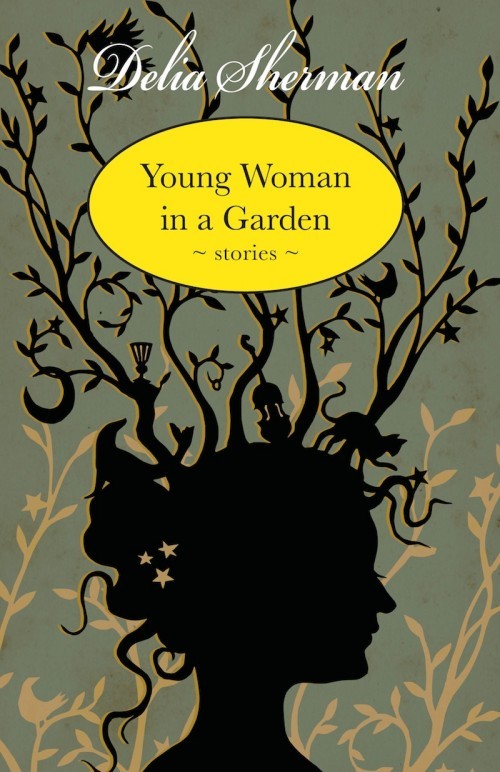
Since Earl Grey Editing will be closed from 20 December until 12 January, I’m posting this edition a little early. Anything else of interest I stumble across this month will get included in the January edition.
Bookish news
At Tor.com, Delia Sherman reflects on book covers and the work of Kathleen Jennings. The gorgeous cover above is, of course, one of Kathleen’s. She also created the cover for Delia’s book The Freedom Maze and discusses the process on her blog–which I highly recommend following if you love gorgeous artwork and intelligent, gently witty writing. (At this point, I should probably mention that, as well as being a huge fan of Kathleen’s, I am also a friend.)
Ticonderoga Publications has announced the forthcoming publication of Nicole Murphy’s People of the Star trilogy. This new series is an urban fantasy romance that follows on from the Dream of Asarlai trilogy published by Harper Voyager in 2010. Over on her blog, Nicole sketches out her work schedule for the new trilogy.
Congratulations to Amy Rae Durreson on winning second place in the Best Gay Fantasy Romance category of the 2014 Rainbow Awards with her novel Reawakening. The Rainbow Awards celebrate outstanding work in LGBT fiction and nonfiction. It is open to all authors of work containing LGBT fictional characters and work chronicling the true stories of LGBT persons. A full list of this year’s Rainbow Award winners is available.
Tasty tidbits
Speaking of romance, I came across the following via Ladybusiness: five things epic fantasy could learn from historical romance. I don’t agree with it 100% but the article does make some very good points.
On the theme of writing advice, Ian McHugh has a post up at the CSFG blog on applying the Helsinki Bus Station Theory to writing. Given that writing takes longer to produce results than photography, your mileage may vary.
Jamie Todd Rubin recently celebrated 500 consecutive days of writing by sharing some interesting statistics. I don’t advocate a one-size-fits-all approach to writing, but if your current process isn’t working for you, this may be an approach to consider. Dave Versace has had modest success with a similar process.
Over at the Writers Bloc, Helen Stubbs shares a prompt she used to flesh out one of her characters from The Stormchilds published in Winds of Change.
Lastly, for the readers out there Seanan McGuire tweets on why it matters to talk about books you love.


December 8, 2014
Review: Dimension6, Issue 1 edited by Keith Stevenson
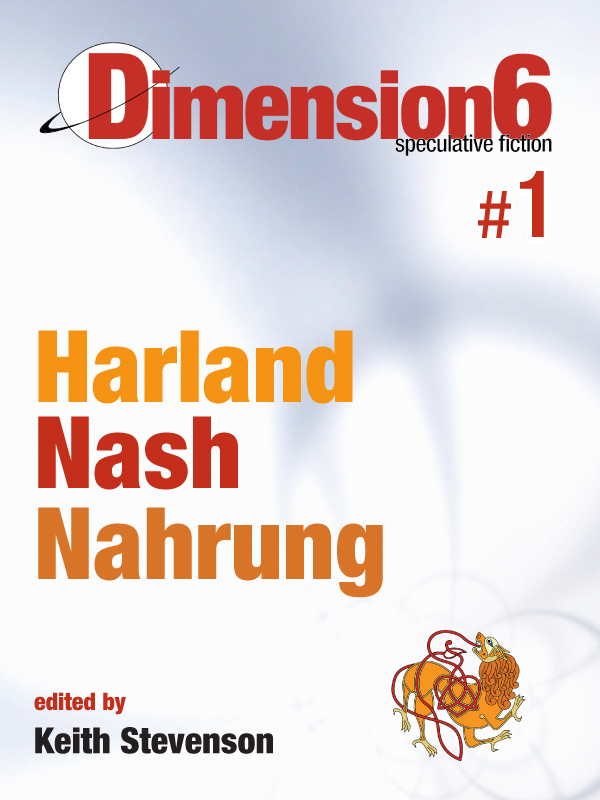
Published: April 2014 by coeur de lion publishing
Format reviewed: E-book (mobi)
Genres: Sci-fi, horror
Source: Free from the publisher’s website
Dimension6 is a new electronic publication that was launched this year by Keith Stevenson of coeur de lion publishing. There are three issues a year, each featuring three short stories. This inaugural issue contained Ryder by Richard Harland, The Message by Charlotte Nash, and The Preservation Society by Jason Nahrung.
Ryder is set in country New South Wales during World War 1. Sally has come from Sydney to stay with relatives in safety. However, she’s soon bored out of her mind and finds herself drawn to Ryder, the town’s mysterious bad boy. This story was the wrong way to start off the collection for me and was almost enough to make me put the whole thing down. Although the premise was interesting, I didn’t feel there was enough done with it to justify the story. I also found the characters thoroughly unlikeable and the implications of the ending rather uncomfortable, though the story itself was reasonably well-written. It was disappointing that the author loci included afterwards only related to the story in the most distant of ways.
Charlotte Nash’s The Message more than made up for this disappointment. Set in the post-apocalyptic future, it tells the tale of a hunter who is sent into the dangerous urban wilderness to deliver a message to the enemy. Again, it had an interesting premise and one that seemed distantly related to Ryder. The story’s twists and shifts kept me on my toes, creating excellent tension. It was definitely my favourite story of the collection. I notice that Nash also wrote Ghost of Hephaestus in Phantazein, one of my favourites in that anthology. The Message has confirmed she’s an author I’m going to be watching out for.
The Preservation Society was a bit of a change after the two sci-fi stories. Set in Queensland, a human woman is auctioned off to a group of vampires. Horror isn’t generally my thing, but The Preservation Society did such a great job of focussing on its characters that it never left me feeling out of my comfort zone. In fact, the last line had me chuckling a little. The ending wasn’t too difficult to spot, but well worth the ride. Australian vampires are a preoccupation for Nahrung and he does it well.
Based on this first issue, Dimension6 is a market to keep your eye on if you’re interested in dark, spec-fic short stories. All issues are available for free at the publisher’s website.


December 4, 2014
Mt TBR report: November 2014
After October’s little hiccup, Mt TBR is slooowly shrinking again. However, I’m going to have to do better if I want to preemptively mitigate the damage Christmas is likely to cause.
Mt TBR status
Mt TBR @ 1 January: 191
Mt TBR @ 31 October: 219
Mt TBR @30 November: 217
Books read
49. The Emotion Thesaurus by Angela Ackerman and Becca Puglisi. Reviewed here.
50. Flower and Weed by Margo Lanagan. Reviewed here.
51. No Need to Reply by Jodi Cleghorn. This collection of flash fiction isn’t my usual fare, but made a great change of pace. I found myself nodding in recognition in places and I appreciated the threads of grief and longing that wove through the collection.
52. The Disappearance of Ember Crow by Ambelin Kwaymullina. Reviewed here.
53. Dimension6, Issue #1 edited by Keith Stevenson. Review forthcoming.
Books acquired
(19/11) The Disappearance of Ember Crow by Ambelin Kwaymullina
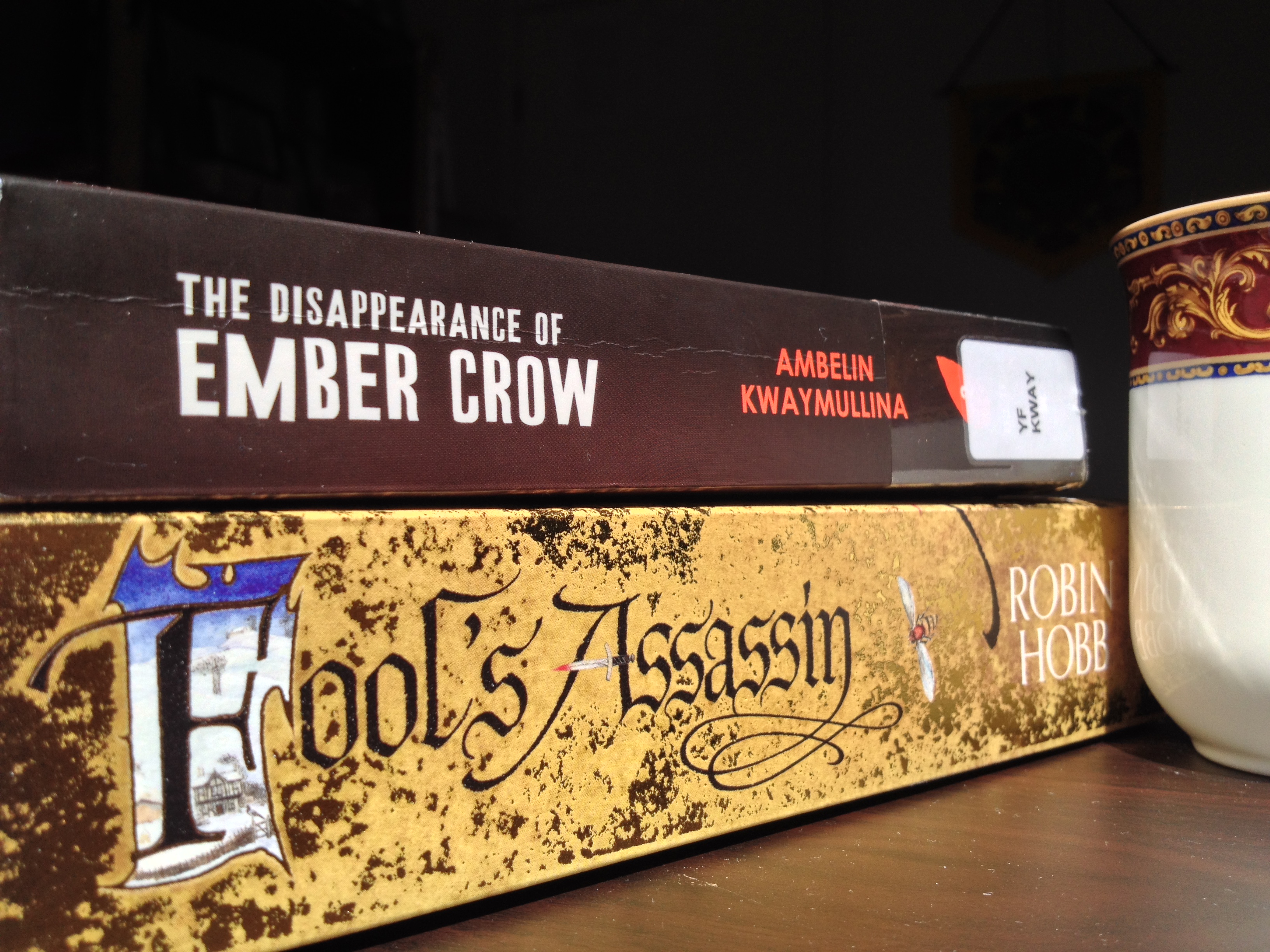
(25/11) Fool’s Assassin by Robin Hobb. I picked up this shiny new book (pictured above) at one of Hobb’s local signings. Of course, it has been a decade (give or take) since I read the two trilogies leading up to it, so…
(25/11) Assassin’s Apprentice by Robin Hobb
Online Reading
Good Company, Part One and Part Two by Becca Lusher. A m/m fantasy romance that is still a work-in-progress. Tobi and Faron are completely adorable, so it’s going to take great willpower for me to wait patiently for the rest.
The Court of Five Thrones Ch 7, 8, 9, 10, 11, & 12 by Pia Foxhall. The tension is ratcheting up in this dark, m/m fantasy erotica, as the King of the Unseelie Court takes to the battlefield. Once again, a reminder that this story is explicit, with heavy trigger warnings, and not suitable for all readers.


December 1, 2014
Review: The Disappearance of Ember Crow by Ambelin Kwaymullina
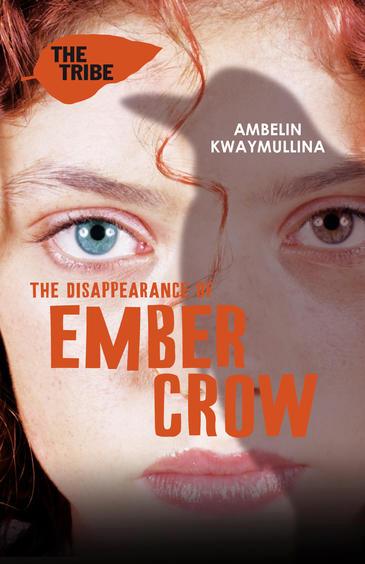
Published: 2013 by Walker Books Australia
Format reviewed: Paperback, 445 pgs
Series: The Tribe #2
Genres: Speculative Fiction, Young Adult
Source: Public library
With the Tribe now safe from Neville Rose, Ashala Wolf should be able to relax. Instead, she finds her Sleepwalking power out of control, making her a threat to everyone around her. To protect her Tribe she takes refuge with the local wolf pack. While she’s there, her best friend, Ember Crow, goes missing. Ashala must return and find Ember before Ember’s past catches up with them all.
I read the first book in the series for the Diversiverse Reading challenge and was very pleased with the way it handled diversity. I was even more pleased to see The Disappearance of Ember Crow build on that, expanding to include not just race but also sexuality and chronic illness (and another, more spoilery element). As in The Interrogation of Ashala Wolf, these portrayals are not the focus of the story (spoilery element excepted), but are included very naturally in passing.
The book also introduces a diversity of landscape that was missing in the first book. This time around, Ashala and Ember do a bit of travelling, allowing the reader to see a bit more of what their world looks like. The landscapes all have a strong Australian influence, making them very recognisable to me. This delighted me because I have an interest in Australian natural history and don’t often encounter fictional landscapes that feel familiar, let alone multiple landscapes in the same book.
There is a lot going on in The Disappearance of Ember Crow. It is told in first person from two points of view. The majority of the story is from Ashala’s point of view, but there are key passages from Ember’s perspective. While this mostly worked well, I felt that Ember’s story suffered a little. I would have liked to see more of her relationship with Jules and with her youngest brother. That said, The Disappearance of Ember Crow is already sizeable enough, so I understand that there may not have been the space.
The pacing wasn’t quite as tight as in The Interrogation of Ashala Wolf. While still being a page-turner for me, it didn’t have quite the same edge-of-my-seat tension because the threat wasn’t as present and therefore lacked the same kind of power. The ending also had a lot of action packed into it and I felt there were a few significant moments that weren’t given the space they needed.
The younger characters remained a strength of the story. Their flaws were evident once more and I appreciated seeing them not always make the right decision. In contrast, the adult characters remained fairly two-dimensional, very black and white. It would be nice to see them given a little more depth.
Overall, I found The Disappearance of Ember Crow to be a very ambitious book. It doesn’t always pull off what it sets out to do but it remains a fantastic read. I will impatiently await the release of the next book in the series, The Foretelling of Georgie Spider.


November 27, 2014
Loose-leaf Links for November
I have a lot of interesting links to share this month, so you might like to grab a cup of tea before you settle in.
Covers and Tables of Contents
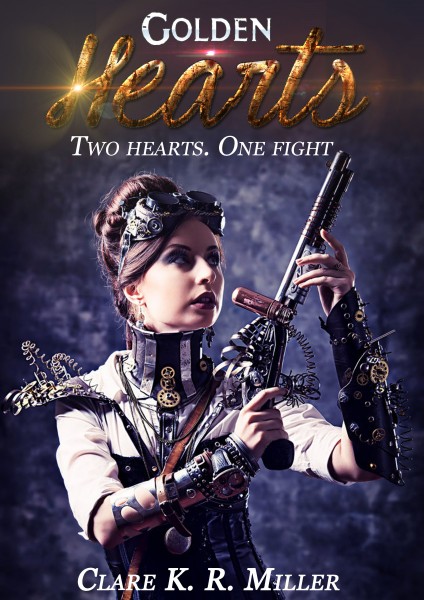
Clare Miller has reissued her steampunk f/f romance Golden Hearts with a new cover (seen above). I, for one, love the shiny!
FableCroft Publishing have announced the table of contents for their Cranky Ladies of History anthology. I spy some interesting names both among the authors and the subjects.
Also, Twelfth Planet Press have announced the table of contents for their Year’s Best YA Speculative Fiction 2013. If you enjoyed Kaleidoscope, it might be worth keeping your eye out for this one.
Awards season
The winners of the 2014 World Fantasy Awards were announced at the beginning of the month.
Closer to home, nominations for the 2014 Aurealis Awards close on 7 December. If you are an Australian speculative fiction writer with work published in 2014, you’d better get in quick! Also, if you are self-published and think this doesn’t apply to you, think again. Last year, Mitchell Hogan‘s self-published story A Crucible of Souls beat out work by Max Barry, Garth Nix, Tansy Rayner Roberts and duo Amie Kaufman and Meagan Spooner to win Best Fantasy Novel.
Having only just recently announced the table of contents for their Year’s Best Australian Fantasy and Horror 2013 anthology, editors Liz Grzyb and Talie Helene are already hard at work on the 2014 edition. Nominations are open until 20 January 2015.
Tasty tidbits
If you’re a regular reader here, you’ll know I have an interest in portrayals of diversity in speculative fiction. So I was delighted when Lynn O’Connacht posted a list of speculative fiction books with (presumed) asexual characters. She’s also looking to add to the list, so if you have some suggestions, head on over.
Jodi Cleghorn has shared how cut-up poetry helped her deal with depression.
I mentioned last month that Macquarie University conducted a forum in which they discussed a range of topics regarding the changes to the Australian publishing industry with a number of authors. Australian Author Online have released another part of their series on this study, focussing on author contact with readers.
Gillian Polack has posted the first in what promises to be an interesting series on the needs hierarchy and handling writer’s block.
And, just for fun, I recently came across an article published by the British Medical Journal in 2005 entitled The case of the disappearing teaspoons: longitudinal cohort study of the displacement of teaspoons in an Australian research institute. From the discussion:
Somewhere in the cosmos, along with all the planets inhabited by humanoids, reptiloids, walking treeoids, and superintelligent shades of the colour blue, a planet is entirely given over to spoon life-forms. Unattended spoons make their way to this planet, slipping away through space to a world where they enjoy a uniquely spoonoid lifestyle, responding to highly spoon oriented stimuli, and generally leading the spoon equivalent of the good life.
So if you made that cup of tea before you started reading this post, you might want to keep an eye on your teaspoon.


November 24, 2014
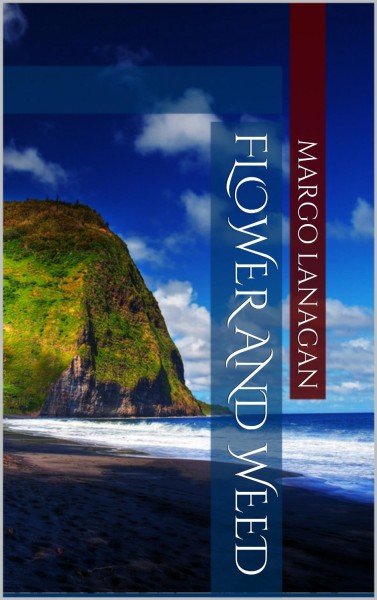
Review: Flower and Weed by Margo Lanagan
Published: 2013 by FableCroft Publishing
Format reviewed: E-book (mobi)
Genres: Fantasy
Source: Purchased on Amazon
While not technically part of a series, Flower and Weed is a short story connected to Margo Lanagan’s novel Sea Hearts. It focuses on one of the minor characters from the novel and shares a glimpse into part of her life previously glossed over. Because the story takes place during the events of Sea Hearts and involve some minor spoilers, it is not really a story for those who haven’t read the novel. Likewise, this review contains minor spoilers for Sea Hearts and major spoilers for Flower and Weed.
Flower and Weed is very much a story worth reading. In my review of Sea Hearts, I mentioned that the novel was strongly feminist. It shows how the human women on Rollrock Island are replaced with slender, beautiful, emotionally-absent selkie wives. In this way, it comments on modern society’s obsession with weight and perfection. This is the negative side of the coin. Flower and Weed is the other side, showing us a fantastically fat-positive portrayal of sex. Worn down by the grief and depression of his selkie wife, our unnamed male narrator finds himself lusting after the only sexually-available human woman on the island. Trudel is full-bodied with freckled skin and red hair. She delights in the earthiness of sex–quite literally, as the pair rut in a field. She is an anathema to the standards of modern society and to Rollrock Island. Yet Lanagan uses her gorgeous command of language to show Trudel as desirable at all times. Even once our protagonist turns away from her in shame, it is the shame of being disloyal to his wife rather than shame at Trudel’s appearance and attitude.
Obviously, Flower and Weed is not a story that stands on its own legs. While there is some effort at developing an emotional connection between the reader and the narrator, it largely depends on the groundwork laid by Sea Hearts. It also means that the character’s journey can only ever be one that maintains the status quo, which I found vaguely dissatisfying, even while I acknowledge it was appropriate. Another thing that tripped me up was the change to Misskaella’s name–shown in Flower and Weed as Messkeletha. This could be an indication that Misskaella is so insignificant to the narrator that he doesn’t even know her proper name, but it slowed me down to begin with as I struggled to place the story within the context created by Sea Hearts.
However, overall I found Flower and Weed to be an excellent story and I highly recommend it to anyone who has read Sea Hearts.