Elizabeth Fitzgerald's Blog: Earl Grey Editing, page 48
June 1, 2015
Review: The Art of Effective Dreaming by Gillian Polack
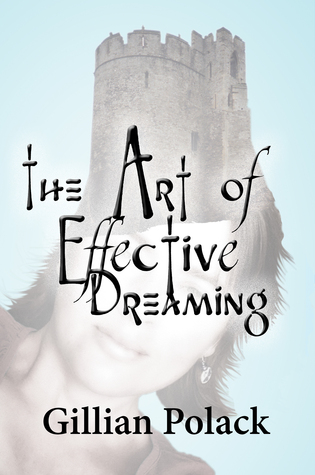
Published: April 2015 by Satalyte Publishing
Format reviewed: E-book (mobi)
Genres: Fantasy, literary fiction
Source: Publisher
Reading Challenges: Australian Women Writers Challenge 2015, Once Upon A Time IX
Available: Satalyte Publishing (print and electronic) ~ Amazon ~ Book Depository ~ Booktopia ~ Kobo ~ Smashwords
Disclaimer: The author is a friend. I have done my best to give an unbiased review.
Fay is a dreamer. To escape real life, which she finds ‘drearily, drably and impossibly dull‘, Fay creates a dream-world. She escapes there as often as possible. But what happens when the line between dream and real life blurs?
Dead morris dancers. Horror and happiness. Folksongs and friendship.
Can she trust anything, or anybody?
As befits a book about this subject matter, The Art of Effective Dreaming is a strange and rather surreal book. Fay is a bored public servant who escapes into an extraordinarily vivid fantasy world whenever life gets too much or too boring. This fantasy world begins to develop a mind of its own and things start getting out of control.
This is a novel that does some subtle things with style. Early on in the story, Fay narrates her real world life in first person and tends to avoid much concrete detail. She even says that everyday life is “…made up of all those flat details realist novelists love to write about, and that sicken me to read. I try not to think about those bits of life.” In contrast, the fantasy world elements are narrated in third person and include more of the concrete detail missing in Fay’s real world narration–details like noticing a door needs oiling. However, this distinction becomes less clear-cut as the story goes on, reflecting the blurring of Fay’s worlds and providing clues to her emotional and mental state.
Like Illuminations (and indeed all of Gillian’s work I’ve read), this is a slow-paced novel and very much at the literary end of fantasy. It didn’t take me as long to get into as Illuminations, but I’m not sure my grasp of its structure is any better. It all seemed like a bit of a mess until about halfway through when I noticed things starting to pull themselves together. This may well have been intentional, as Fay herself is a bit of a mess until this point. Identity is a strong theme of the novel, as Fay grapples with who she is and what she wants from life instead of allowing life to simply sweep her along.
This theme is also echoed in other characters. While Fay’s friends in the real world tend to remain rather flat due to her lack of interaction with them, her imaginary friends grow well-rounded as she gets to know them better. I particularly enjoyed watching Belle move from powerless maiden to someone solidly reliable and level-headed in a crisis. It is a book that rewards careful reading because seemingly-offhand statements often prove key to understanding the characters.
Feminist themes weave through the novel. Again paralleling Illuminations, the men often run off to do Big and Important Things, leaving the women to combat the real, insidious trouble–which they usually do by taking the time to connect with each other.
The Art of Effective Dreaming is a fantasy novel that pokes fun at fantasy novels and will suit readers who like layered stories.


May 28, 2015
Loose-leaf Links for May

Loose-leaf Links is a feature where I gather together the interesting bits and pieces I’ve come across in the last month and share them with you over tea. Or, in this case, over something vaguely similar to tea. The Yerba Mate came courtesy of my Monstrositea subscription.
Awards News
The Aurealis Awards have welcomed the Western Australian Science Fiction Foundation as their new overlords for the next three years.
During this time, WASFF will be trialling a new supplementary award to be presented during the Aurealis Awards ceremony: the Sara Douglass Book Series Award. This award will be open to all published Australian speculative fiction series that ended between 2011 and 2014. Submissions close on 31 August with further details available at the Aurealis Awards website. Good luck to the judges reading that category!
Speaking of which, the Aurealis Awards have also revealed the judging panels for 2015.
The 2015 Arthur C. Clarke Award went to Emily St. John Mandel for Station Eleven. The Arthur C. Clark Award is presented for the best science fiction novel first published in the UK.
Voting on the longlist for the David Gemmell Award has closed but voting on the shortlist will begin on 1 June. I saw Glenda Larke’s The Lascar’s Dagger on the longlist and have my fingers crossed it makes it through!
The Locus Award shortlist has been announced. The awards will be presented on 27 June.
On Diversity
Jim C. Hines takes a look at the gender balance in Hugo Nominees.
Along similar lines, the Australian takes a look at how instituting the Stella Prize–an accolade specifically for Australian women–has affected the gender balance of nominees for the Miles Franklin Award.
Danielle over at One Small Paw shares some interesting thoughts on reading stats and the importance of intersectionality.
During April, Memory of In the Forest of Stories tracked her TV viewing to see how often it passed the Bechdel test.
For Writers
Lightspeed is taking submissions for their Queers Destroy Fantasy issue until 1 June.
The Scifi Film Festival is running a short fiction competition (fiction, not screenplays). Entries close 29 August and the prize is $500 (AUD).
Kameron Hurley shares what she has learned in the first month of running her Patreon creator account.
For Readers
The next Dewey’s 24-hour read-a-thon will be taking place in Australia on 18 October (well, the first two or three hours will be on 17 October but I’ll be sleeping through those). I’ve already got it marked in my calendar and you can expect to be hearing more from me as the date draws closer.
Speaking of read-a-thons, I discovered Bout of Books just a little too late to join their most recent challenge. These read-a-thons last for one week and participants set their own goal for the event. The next one will be taking place 17-23 August and I am planning to participate. I’m sure no one is surprised by this.
Satalyte Publishing have signed a deal to print and distribute books from WordFire Press in Australia. It’s exciting to see some wonderful titles becoming more accessible.


May 25, 2015
Review: The Lies of Locke Lamora by Scott Lynch
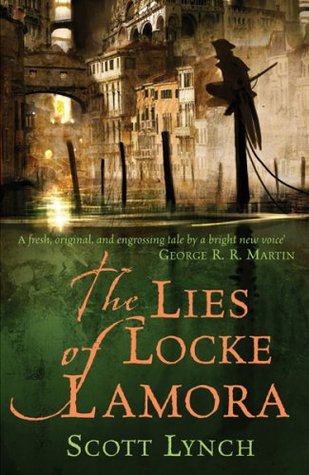
Published: February 2007 by Gollancz
Format reviewed: Paperback, 531 pages
Series: The Gentlemen Bastards Sequence #1
Genres: Fantasy
Source: Gift
Reading Challenges: Once Upon A Time IX
Available: Publisher ~ Abbey’s ~ Amazon ~ Book Depository ~ Dymocks ~ Kobo
The Thorn of Camorr is said to be an unbeatable swordsman, a master thief, a friend to the poor, a ghost that walks through walls.
Slightly built and barely competent with a sword, Locke Lamora is, much to his annoyance, the fabled Thorn. And while Locke does indeed steal from the rich (who else would be worth stealing from?), the poor never see a penny. All of Locke’s gains are strictly for himself and his tight-knit band of thieves. The Gentleman Bastards.
The capricious, colourful underworld of the ancient city of Camorr is the only home they have ever known. But now a clandestine war is threatening to tear it apart. Caught up in a murderous game, Locke and his friends are suddenly struggling just to stay alive…
There is so much to love about The Lies of Locke Lamora. I am a sucker for a number of things in a story–adventure and intrigue being two of them. This book has those in spades. We get to take a ride with Locke as he invents new personae, impersonates other characters and (as the title might indicate) straight-up lies through his teeth. There are muggings, heists, power struggles, quests for vengeance, gladiatorial battles and battles of wit. So much fun.
I also loved the structure of this book and the way it played with time. The story is not told in a precisely linear fashion. Instead, it manages to deliver Locke’s backstory (and certain other important bits of information) mostly by way of ‘interludes’ at the end of each chapter. This never felt like infodumping to me, being as richly embellished as the rest of the story. It was also a good way to build suspense by taking us away from the action of the present day. The pacing was excellently handled and really hooked me in–often by starting in the middle of the action and then backtracking somewhat to explain how the situation came about.
The setting is alive with detail, the description almost meandering but never boring. Lynch takes his time to paint us a clear picture and the result is a vibrant world.
However, I had some trouble with the representation of gender. On the surface, it gave me an impression of being a fairly equal society. There are women represented among the gangs of orphaned thieves, the lower classes, the merchants. The Don and Dona that Locke sets out to rob are represented as having a reasonably equal partnership–if anything, the Dona has more brains than her husband.
Nevertheless, there is an inconsistency between the apparent equality of the sexes and treatment of individual characters. It is hard to unpack this without spoilers. One example is that though there is nominally a female member of the Gentlemen Bastards, we never once see her on stage and she has managed to break Locke’s heart before the action takes place (thus striking her from the good graces of the reader). There is no reason to include her at all except to set up for the third book.
Scratching a little deeper, it is disappointing to note there are no females with overt power and that those with covert power end up being fairly toothless. And why exactly were all the whores female? Where are their male counterparts?
The villains were also something of a let-down. With intrigue and disguise being at the heart of this story, I had rather expected the Grey King’s identity to turn out to be someone the reader stood a reasonable chance of guessing–especially with the whole “Capa Barsavi knows my face” angle. How disappointing to discover this was not, in fact, the case.
The Grey King’s sidekick–a kind of magician known as a Bondmage–made a much better villain. There is a real battle of egos between Locke and the Bondmage, leading to palpable sense of hatred between them. Just as with Sabetha, it makes nice foreshadowing for the third book but weakens this one by undermining the central villain.
Overall, I found The Lies of Locke Lamora to be a very engaging book and an excellent adventure, albeit one with flaws.


May 21, 2015
Tea break
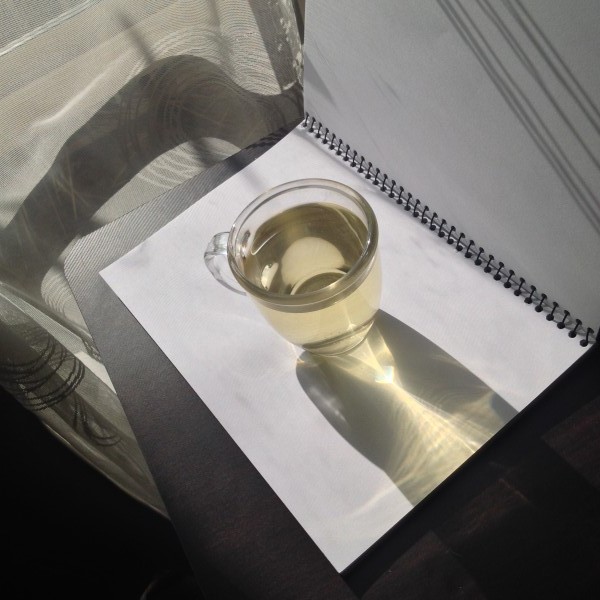
I had an encounter with writer’s block this week. I’ve been working on a post about fanfic that’s just not coming together. Over at Strange Horizons a couple of weeks ago, Renay of Ladybusiness shared a bit about her first fandom and her relationship to fanfic. I’d already been thinking about my own relationship to fandom and fanfic, so I thought it might be a good opportunity to share some of those thoughts. However, the more I tried to write the post the more I struggled. I just couldn’t figure out whether my post was adding to a conversation and allowing my readers to get to know me better or whether it was navel-gazing and out of step with the tone of the blog. The closer the deadline got, the harder I tried and the more frustrated I felt.
So I decided to step away and give myself a break. This is the first time I’ve experienced writer’s block in relation to the blog, but it has certainly happened with my fiction before. When it does, taking a break is something I find helpful. Sometimes I work on something else and sometimes I step away from writing altogether. Either way, it gives my subconscious a chance to chew over the problem. It always comes up with an answer. Perhaps in this case it will clarify what I’m trying to say or point out the post not something I need to write after all.
While my subconscious stews, I’m going to make myself a big pot of tea and dive back into my current book (The Art of Effective Dreaming by Gillian Polack). I’d also love to hear from you.
What do you do when writer’s block hits?


May 18, 2015
Review: Be With Me by Becca Lusher
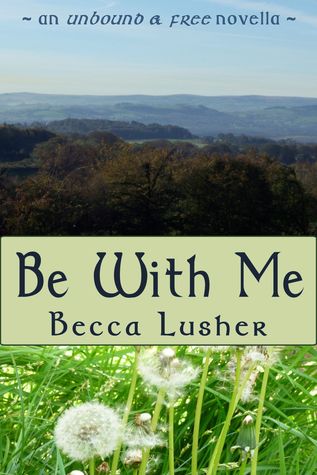
Published: October 2014 by Smashwords
Format reviewed: E-book (mobi)
Series: Tales of the Aekhartain (Historical Aekhartain #1.5)
Genres: Historical romance
Source: Smashwords
Available: Smashwords
Disclaimer: The author is a friend. I have done my best to give an unbiased review. Also, this review contains some spoilers for Unbound and Free.
Everyone deserves a second chance at love…
Barely even a wife before she became a widow, Briallen feels like she’s lost everything – and now she has to stand by while a group of strangers moves in to the house she once called home. As hard as that it is to face, it’s made even more difficult by a man she feels drawn to, and two children she can’t help but love.
Elisud’s world is changing. Homeless and wandering, with a grieving nephew on his hands, he has no choice but to live on the farm – even when he feels the constant call of the sea. Determined to make things right for his nephew and daughter, he can’t help but notice Briallen and the bruised look in her eyes.
Both battered by grief and woes, can these two wounded people ever see past their own pain and accept the love that’s kindled between them? Or will their own self-doubts hold them back?
Set in the British Iron Age, this romantic novella deals with an age-old tale of loss, grief, healing and love, with a little help from family.
Be With Me takes place between the novellas Jealousy’s Shadow and Unbound and Free. While it could conceivably stand on its own, it isn’t really intended to do so and new readers will be missing some important context. Healing and family are key themes of the novella (as the blurb above suggests), with Demairo’s recovery from the trauma of Jealousy’s Shadow being as much an integral part of the story as the romance between Elisud and Briallen.
That said, Be With Me is quite a different story to the novellas in Unbound and Free. Both feature some intense family dynamics, but where the focus is on violence and survival in Unbound and Free, it becomes more about interpersonal relationships in Be With Me. The tone is cozier and more domestic. I found this benefitted its historical aspect. In Unbound and Free, I wasn’t sold on this element; the setting felt it could equally be generic fantasy or historical fantasy. That’s not the case in Be With Me, where the details of day-to-day life come more to the fore. Every member of the family is expected to do their part and things begin to break down when this doesn’t happen, setting everyone on edge. The novella gave a very clear sense of what it is like to be part of a small community, almost to the point of claustrophobia. True privacy is hard to come by for Elisud and Briallen, making the moments they snatch together all the more sweet.
This more intimate setting also allows a nice exploration of the ways in which this society’s expectations have hurt both genders. While the relationship at the heart of the novel is a heterosexual one, it doesn’t use this as a pretext to pretend homosexual relationships don’t exist, even in this historical setting. However, while they may exist, they are not necessarily accepted, and it was interesting to trace how the consequences rippled outward. While the clan into which Elisud and Briallen have been adopted might ultimately love and need each other, their love is not always gentle; just as with any family, there are elements that are lazy, unpleasant and hard to love. Having reasons why they might be the way they are doesn’t necessarily make them easier to bear but it did make me nod in recognition.
The pacing Elisud and Briallen’s relationship was perhaps a touch uneven. There was a moment not long after they first meet that had me concerned they were veering a little too strongly towards insta-love. Yet on the whole, their relationship progresses slowly enough that it made me want to shake them towards the end.
I found Be With Me to be a sweet, character-driven romance that was well worth my time and an excellent addition to the Aekhartain series.


May 14, 2015
To star or not to star?

One of the things I struggled with when starting this blog was whether or not to star my reviews. This is something I’m sure every book blogger thinks about at some point or another. Back in March, Renay pondered review styles over at Ladybusiness. Less recently, I recall Shaheen of Speculating on Spec Fic mention at Conflux last year that she had initially started out not including stars but had subsequently changed her mind.
Indeed, the book blogs I read are fairly evenly split on this issue. Along with Speculating on Spec Fic, a few starred blogs I read include Book Gannet, The Book Smugglers and Tsana’s Reads and Reviews. A sample of the non-starred blogs include Estella’s Revenge, Lady Business, Stephanie Gunn and In the Forest of Stories (though I note the latter still has ratings included in the tags at the bottom of posts).
As a reader, I tend to be less interested in the rating than in the details of the review: why did the reviewer like or dislike the book? That’s what determines whether or not I will track down the book. It also establishes or confirms for me where the reviewer is in relation to my tastes. Do we match up or do our tastes lie elsewhere? Where is the overlap?
Having said that, once I have a feel for the reviewer, starred reviews can occasionally be a bit more useful. If I’m looking for a decent romance and can’t find any on Mt TBR, I might hop over to Book Gannet and take a look at the five-star reviews. However, given the state of Mt TBR, this doesn’t happen to me too often.
As a reviewer, I don’t like writing starred reviews. How does one quantify something that’s so subjective? Sometimes I know immediately how I am going to rate a book, while at other times I agonise over it. I should note that even though I don’t like writing starred reviews, I still do it–over at Goodreads. Then once I decide on a rating, it feels like it’s set in stone. What if I change my mind? That’s easier to do on Goodreads or in my personal spreadsheets than it is here on the blog. However, if I’m already doing it on Goodreads, why not here as well?
Another thing I struggle with is a ratings system. Five stars is fairly standard. However, I hardly ever use the full spectrum. A book has to be pretty terrible for me to consider rating it two stars or near perfect for me to give it five. That doesn’t give a lot of range. It’s something I’ve been working on. I actually find it easier to rate something out of ten and then halve it for a five-star system.
I’d be really interested in hearing some thoughts on this issue. Reviewers, do you use a rating system? Readers, do you find rating systems useful? Would you like to see one here?


May 11, 2015
Review: Kaleidoscope edited by Alisa Krasnostein and Julia Rios
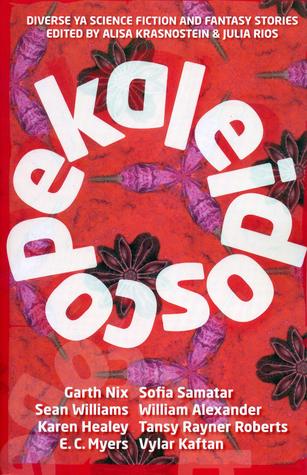
Published: August 2014 by Twelfth Planet Press
Format reviewed: Paperback, 450 pages
Genres: Speculative fiction, fantasy, science fiction, magical realism
Source: Bought directly from the publisher
Reading Challenges: Australian Women Writers Challenge 2015
Available: Twelfth Planet Press (print and electronic) ~ Amazon ~ Book Depository ~ Booktopia ~ Kobo ~ Smashwords
What do a disabled superhero, a time-traveling Chinese-American figure skater, and a transgendered animal shifter have in common? They’re all stars of Kaleidoscope stories! Kaleidoscope collects fun, edgy, meditative, and hopeful YA science fiction and fantasy with diverse leads. These twenty original stories tell of scary futures, magical adventures, and the joys and heartbreaks of teenage life. Featuring New York Times bestselling and award winning authors along with newer voices: Garth Nix, Sofia Samatar, William Alexander, Karen Healey, E.C. Myers, Tansy Rayner Roberts, Ken Liu, Vylar Kaftan, Sean Williams, Amal El-Mohtar, Jim C. Hines, Faith Mudge, John Chu, Alena McNamara, Tim Susman, Gabriela Lee, Dirk Flinthart, Holly Kench, Sean Eads, and Shveta Thakrar.
In April, Kaleidoscope won both the Ditmar Award and the Aurealis Award for Best Anthology and I can see why. Not only does it do some wonderful things with representation, all the stories are of excellent quality. As with any anthology, there were a few stories I was less keen on, but that was mostly a matter of personal preference.
Diversity is at the heart of this anthology in a number of ways. There are queer characters, characters who use wheelchairs, characters dealing with depression and chronic illnesses, characters from a range of ethnic backgrounds. In some cases the diversity is intersectional. For example, Faith Mudge’s Signature features Priya, a wheelchair-using protagonist who has brown skin. However, the characters’ diversity tends not to be the focus of the story. To continue with the example of Signature, the story is about several characters who are caught in Faustian Bargains that have just come due. The diversity of the characters in this story is completely incidental to the plot–a part of who they are but not the whole of who they are. I loved this about the anthology.
Diversity also manifests in the tone of the stories, allowing for a nice range. Some of them were a little bit dark (Kiss and Kiss and Kiss and Tell by E.C. Meyers), some were heartbreaking (The Day the God Died by Alena McNamara). Others were fun and full of hope (Cookie Cutter Superhero by Tansy Rayner Roberts, Signature). I was pleased to see some magic realism included along with more traditional fantasy and science fiction. Ordinary Things by Vylar Kaftan hardly reads as speculative at all, while in Krishna Blue Shveta Thakrar uses magical realism (and some gorgeous language) to excellent effect. Of them all, Careful Magic by Karen Healey was my favourite. In this magical society, magic users declare themselves for Order or Chaos. Helen is a rare Order magic user and one who lives with Obsessive-Compulsive Disorder. One day her careful routine is interrupted by a classmate who needs help lifting a love spell.
One concern I had about the anthology was the use of the descriptor “disabled” on the back cover. I had been under the impression that this was offensive (or, at the very least, distasteful) to certain parties and could serve to undermine the anthology’s intended purpose. If any readers have thoughts on this topic, I would love to hear them, especially because this is a trend I have noticed continuing in the promotional material for Defying Doomsday.
However, overall I found Kaleidoscope an excellent anthology and well-deserving of the awards it has received.


May 7, 2015
DNFs
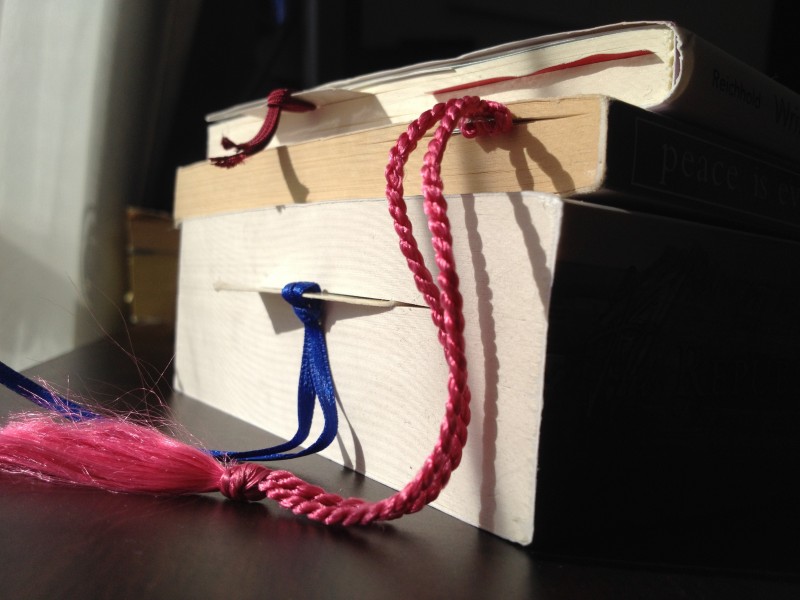
I’m a pretty stubborn reader. I crave completion and always want to know how the story ends. Almost always, anyway. It takes a lot to make me put down a book, but it has happened occasionally. Most recently was The Meeting of Waters by Caiseal Mor, back in February. This got me thinking about exactly what it was that turns me off a book. So I decided to take a look at the books I’ve not finished and see if they had anything in common.
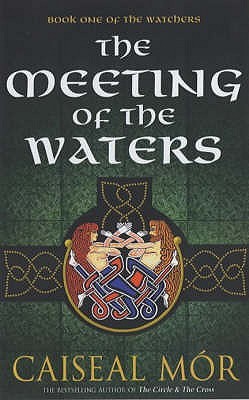
In the case of The Meeting of Waters, I just didn’t click with it from the beginning. Over the last few years, I’ve tried to read this book several times but always found the style to be a bit on the melodramatic side for me. I get that it was aiming for epic Celtic saga but it just made me roll my eyes.
The Meeting of Waters is a prequel and I could tell. It seemed to assume that I would already have an emotional bond to certain characters and therefore made no effort to help me create one. Perhaps that’s fair enough, since time spent doing so would be time wasted for ongoing readers. Maybe. But that lack of connection with the characters coupled with the style was enough to make me put down the book and give away my copy of the trilogy. I think it’s unlikely I’ll pick up work by this author again. 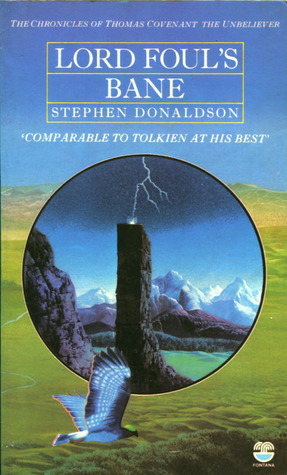
Moving on to authors I will never again touch with a ten-foot barge pole, Stephen Donaldson is top of the list. I suspect this will also be the case for a few of you. At the beginning of The Chronicles of Thomas Covenant the Unbeliever, the eponymous character is a literal leper reviled by his ex-wife and the rest of modern society. After being hit by a car, he wakes up to find himself in another world where a young woman cures him of his leprosy. Believing the world to be a dream, he repays this young woman by raping her.
It was at this point I put the book down and never picked it up again. Actually, I may have thrown it at the wall. I’m okay with some unlikeable characters but I had zero desire to see such a whiny, entitled, morally repugnant character find his redemption and save the world.

Confession: I put down A Storm of Swords at the Red Wedding. It wasn’t that I particularly cared for the characters who died. Just the opposite, in fact: one of them rather irritated me and I didn’t sufficiently care about any of the others to read on and discover their fate. After all, chances were good they were just going to be killed off anyway.
These three books show that connecting to the characters is super important to me as a reader. Of the three books, A Storm of Swords had the best chance at that–by the time I put it down, I was already two-and-a-half books into the series. There were characters I thought were at least a little bit interesting, even if there were none I especially liked. What was lacking for me was hope. While I don’t expect characters to come out unscathed, I do want them to become better people for their travails. There wasn’t much hope of that in A Song of Ice and Fire.
Becky Cole has shared some of her deal breakers over at BookRiot and I definitely agree with some of them (though not all).
What about you? What books have you put down? What are your deal breakers?


May 4, 2015
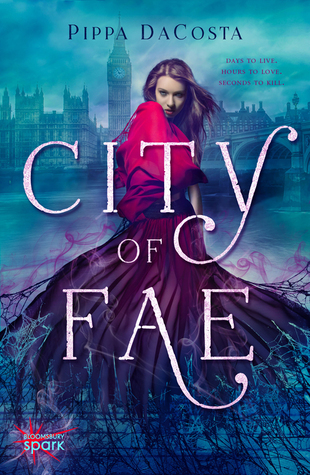
Review: City of Fae by Pippa DaCosta
Published: May 2015 by Bloomsbury Spark
Format reviewed: e-ARC
Genres: Fantasy, urban fantasy, New Adult
Source: From the publisher via NetGalley
Reading Challenges: Once Upon A Time IX
Available: From 7 May
Disclaimer: I was provided with a free copy of this book in exchange for an honest review.
From the moment Alina touches London’s hottest fae superstar, breaking one of the laws founded to protect all of her kind, her fate – and the fae – close in.
Below ground, the fae High Queen plots to claim the city as her own and places her pawns, ready for the battle to come. A battle she cannot lose, but for one small problem – Alina. There are four ancient keepers powerful enough to keep the queen in her prison. Three are dead. One remains … And to fight back, Alina risks sacrificing everything she has come to love.
As many other NetGalley reviewers have noted, the ARC I received of City of Fae was clearly not a final copy and overall I felt it had a lot of work still ahead of it.
One of the biggest flaws for me was the lack of tension. Alina is a journalist who has just been fired. Her motivation in helping rock-star fae Reign is manipulative and selfish–she’s out to score a big story that will get her back her job. While I appreciated the way this distinguished her somewhat from other love-struck, paranormal YA heroines, it didn’t endear her at all. This motivation also didn’t give us a sense of the stakes for Alina. We never see her at her former job and she has no life outside it. While there is a very good reason for this, it also means that for the first half of the novel she has nothing further to lose, nothing personal at stake, and nothing for the reader to care about.
Although I found Alina somewhat unlikeable, at least to begin with, I also found she was easily the most interesting character. While Reign never really manages to rise above the stereotypical tortured, romantic hero, Alina is blunt, forthright and doesn’t hesitate to call Reign on his bull. One of my favourite things about the novel was the banter between these two characters. Alina also takes decisive action, and really kicks some butt in the second half of the book.
Readers who adore love triangles are in for a treat. In fact, it is less a triangle than a conga line. Alina’s other love interest (not that she’s really interested) provides a steady, sober contrast to Reign. I found the character had slightly more depth, though of course the relationship had no chemistry at all. The ending of the book left this relationship in a rather interesting place for the heavily implied sequel to explore.
However, on balance City of Fae didn’t draw me in enough for me to pursue the sequel, should one be forthcoming.


April 30, 2015
Mt TBR report: April 2015
Reading slowed to a crawl this month, thanks to an especially busy month (both personally and professionally). Even the read-a-thon didn’t save me. I’m a little disappointed not to have kept up the pace of the last few months, however that rate tends to be more exception than rule. It will be interesting to see how I fare over the next month.
Mt TBR status
Mt TBR @ 1 January 2015: 202
Mt TBR @ 31 March 2015: 215
Mt TBR @ 30 April 2015: 220
Books read
22. City of Fae by Pippa DaCosta. Review forthcoming.
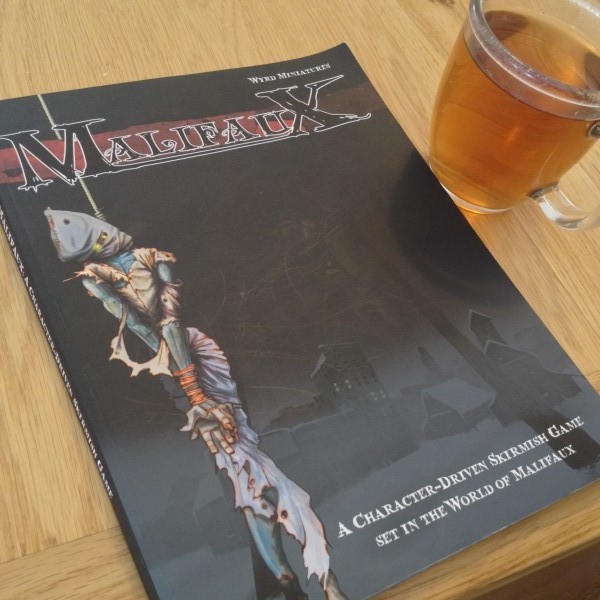
23. Malifaux: A Character-driven skirmish game by Wyrd Games. Pretty much what it says on the box. Skirmish games like Warhammer never appealed to me. However, Malifaux’s mix of steampunk and Southern gothic horror makes it pretty tempting. I very much enjoyed the short stories Wyrd Games have included between the different sections of rules.
Books acquired
Aurora: Centralis by Amanda Bridgeman
Thorn by Intisar Kanani
The Art of Effective Dreaming by Gillian Polack
Malifaux by Wyrd Games
Malifaux: Rising Powers by Wyrd Games
Malifaux: Twisting Fates by Wyrd Games
Haven Lost by Josh de Lioncourt
Online Reading
The Best of Broken Resolutions by Pia Foxhall. A non-canon, standalone, alternate universe piece utilising Pia’s characters from The Court of Five Thrones. In this piece they are regular humans competing in the field of architecture. When the two firms come together to celebrate New Year’s Eve, the result is all kinds of broken resolutions. I confess it didn’t do a whole lot for me, but I found the concrete details (specific brands and places) an interesting mix with these almost-fantasy character. Gulvi also made me chuckle. As usual, a reminder that this is an original fantasy m/m erotica and not suitable for all audiences.
So, that’s it from me. What have you read this month?