Elizabeth Fitzgerald's Blog: Earl Grey Editing, page 2
March 9, 2022
Mini Magical Readathon
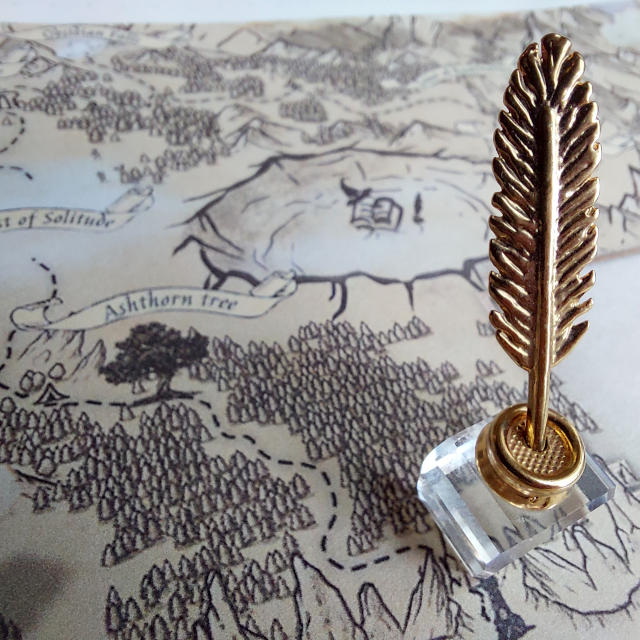
It has been well over a year since I returned to blogging at Earl Grey Editing. In that time, I haven’t once written about readathons. There are a variety of reasons for this, one of which is some ongoing health challenges; it takes more spoons than I currently have to track which readathons are on and to squeeze extra reading time into my schedule.
However, there are two readathons that I still follow: Dewey’s 24-hour Readathon and the Magical Readathon. Both customarily run twice a year in April and October, often with smaller challenges at various points in between.
The Magical Readathon is run by G of The Book Roast. She recently mentioned that due to health issues, she was not confident April’s edition of the challenge would be ready in time (I can certainly relate). Instead, she has elected to run a smaller week-long challenge on 14-20 March.
The Magical Readathon is a unique challenge. Originally themed after Harry Potter’s wizarding tests, G elected to step away from that after J.K. Rowlings’s transphobia became obvious. To replace it, she has created her own unique fantasy world. The first readathon in this setting took place last year, as the students traversed a perilous path to the Orilium Academy. Themed reading prompts were offered for each of the locations along the way. Participants were also sorted into guilds based on the roleplaying options they chose.
Character creation is governed by reading prompts as well. Want to play an elf? Read a book with a moon or stars on the cover or in the title. Want to come from a city? Read a book set in a city.
The theme of the mini readathon is gear. It’s a chance to pick up a magic wand or a familiar… or a variety of other cool things. And if you’ve missed the previous challenges, it’s a chance to catch up.
If you think this sounds cool, but are feeling a bit intimidated, I promise it’s not as complicated as it sounds. G always emphasises that the readathon is meant to be fun and supports adapting it in ways that make it accessible for you.
You can find more information over at The Book Roast.
I hope you’ll join me on this adventure.
The post Mini Magical Readathon first appeared on Earl Grey Editing.

March 2, 2022
Mt TBR Report: February 2022
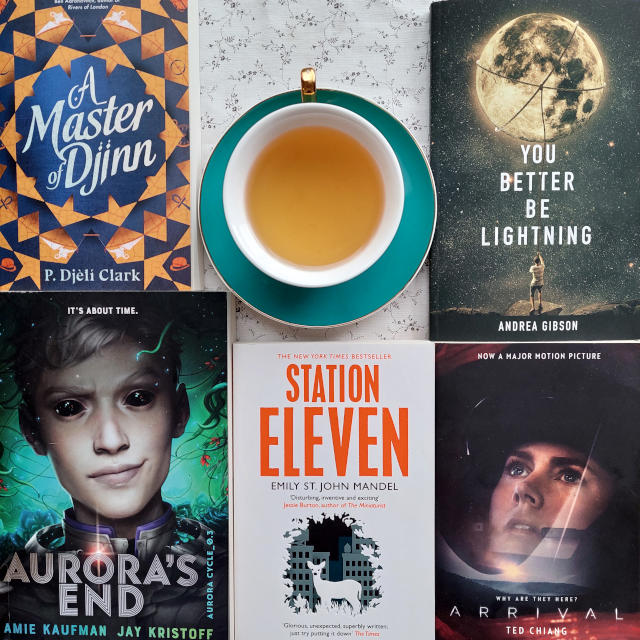
February was the month of short: two short story collections, a book of short poems and a couple of novellas. Perhaps that’s fitting for a short month.
My reading has continued to be slower this year than it used to be. I’m doing my best to roll with it, but it trips up my planning from time to time.
Mt TBR StatusMt TBR @ 1 January 2022: 360
Mt TBR @ 31 January 2022: 388
Mt TBR @ 28 February 2022: 389
12. The Art of Broken Things by Joanne Anderton. Reviewed here.
13. Murder Most Actual by Alexis Hall. Murder mystery. Review forthcoming.
14. Arrival by Ted Chiang. Collection of science fiction short stories. Movie tie-in renaming of Stories of Your Life and Others. I read these over a number of weeks with a friend. While the stories weren’t always to my taste, they were always very thought-provoking and offered a lot of good points to discuss. It was fascinating to see the preoccupations that kept coming up: science and language; God and Abrahamic religions; human evolution and intelligence.
15. Haiku @ The Oaks: The Ink Sinks Deeper edited by Hazel Hall and Kathy Kituai. A chapbook of poems by haiku poets from Canberra. I enjoyed this little collection, which had some nice imagery and some excellent examples of the form.
16. Project Hail Mary by Andy Weir. Book club pick. Science fiction. An amnesiac school science teacher finds himself the sole survivor on a desperate deep-space mission to save the Earth. This was a novel with a number of flaws, not strong on its characterisation and a bit tone-deaf in places. However, despite that, I found it reasonably fun and it took me some unexpected places.
17. Microscopes and Magic by Andi C. Buchanan. Contemporary fantasy. Second in the Windflower series. When Laurel’s magical succulents are infested by equally magical pests, it’s up to Marigold to investigate… when she’s not dealing with her PhD or coming to terms with her new magical ability. This was the second book with Laurel and Marigold as main characters. I’m not sure it really did all that much to advance their relationship (or threaten it in any way that was convincing; the low-stakes nature of the plot backfired a bit for me). I also found the scenes didn’t flow quite as smoothly and there were a sprinkling of errors. Lovely, but overall unsatisfying.
18. Alpacas and Apparitions by Andi C. Buchanan. Contemporary fantasy, f/f romance. Mildred, a witch and fibre artist, moves into a farm cottage, only to discover it’s haunted. She finds unexpected help from the alpaca farmer next door. Again, this was lovely but unsatisfying.
20. Aurora’s End by Amie Kaufman and Jay Kristoff. YA sci-fi. Review forthcoming.
AcquisitionsPride, Prejudice and Other Flavours by Sonali DevHaiku @ The Oaks: The Ink Sinks Deeper edited by Hazel Hall and Kathy Kituai
Project Hail Mary by Andy Weir
Station Eleven by Emily St John MandelAurora’s End by Amie Kaufman and Jay Kristoff
By Flame by T. Thorn Coyle
The Impossible Resurrection of Grief by Octavia Cade
A Master of Djinn by P. Djeli Clark
You Better Be Lightning by Andrea Gibson
February 23, 2022
The Art of Broken Things by Joanne Anderton
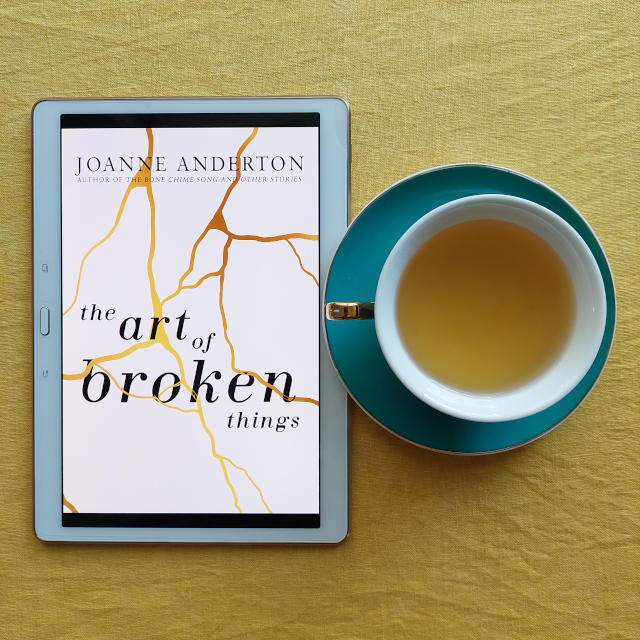
This week, I’m over at Nerds of a Feather with a review of The Art of Broken Things by Joanne Anderton. It’s a new collection of short stories by one of Australia’s most talented writers of dark speculative fiction.


 The post The Art of Broken Things by Joanne Anderton first appeared on Earl Grey Editing.
February 16, 2022
Brewing Community with Kat Clay

Brewing Community is a series of guest posts in which readers, writers, artists and fans are invited to share their experiences of community. Whether online or in person, these groups bring a great deal of support and sometimes stress to their members. The aim of Brewing Community is to share the joy and find ways to brew stronger communities.
The series first ran in 2015. In returning to it after several years, I wanted to focus on how these experiences of community may have changed in recent years, and how people would like to see them change, as well as delving into what books and media have brought comfort in difficult times.
Today’s guest is Kat Clay. She is one of the organising forces behind the Australian Science Fiction and Fantasy Writers’ Association, a talented writer, charming host of award ceremonies, snappy dresser and a partner in adventures involving tea and cake.
Since you’ve never been interviewed on Earl Grey Editing before, there’s one important question I must ask first: what’s your favourite beverage?
Tea, of course!
Branching out from that, as I’m sure you’ll appreciate, is a complex web of teas — Earl Grey in the morning or T2’s French Earl Grey or Singapore Breakfast if I have the leisure of a proper cup of loose leaf tea. In the afternoon I’ll do Australian Afternoon, a green tea, genmaicha, or chai depending on the weather. I like Love Tea’s Rooibos Caffeine Free Chai for cold Melbourne evenings. And for the really good stuff, a pure cup of Perfect South‘s Australian grown green tea is perfection.
*Barely resists the urge to chase down tea recommendations instead of conducting an interview*
*ahem*
Has your experience of community in speculative fiction and fandom changed in recent years?
It’s hard not to answer in the affirmative, when so much of our world has changed over the past two years. Barring the pandemic, my general experience of fandom has been a positive one. I’ve been missing attending conventions and seeing my friends with everything shut down or cancelled. I draw a lot of energy from other writers, so I’ve felt like I’ve had less capacity to create (although the output would say otherwise). I also just miss parading around in outrageous outfits at conventions. Sadly my tracksuit pants have been getting more of a workout than my 1970s vintage jumpsuit.
I must admit I’ve missed seeing your fantastic cosplays.
What would you like to see changed?
My experience of international fandom has always been a little different to Australian fandom itself. I’d like to see a greater appreciation for works outside the US in the States, especially around the major award nominations periods. Authors from the Asia Pacific region have been producing work at such a high level over the past few years. I think of books like Laura Jean McKay’s The Animals in that Country, The Last Migration by Charlotte McConaghy, and Black Cranes from Gene Flynn and Lee Murray.
What books or media have you found yourself turning to for comfort?
People who know my work are often surprised to hear that I’m a romantic at heart. So I’ve been enjoying a few romance novels, including doing a re-read of the delightful Red, White & Royal Blue. Trying to buy a house in the pandemic and then moving in lockdowns took a toll on my reading – most of my books had been in storage for half a year. I’m reading more now than I was previously but I feel like I need a fresh slate to attack the TBR in 2022.
As for media, I’ve been loving the glut of epic fantasy TV of late, including what I’ve dubbed Wheelie Bin of Time, and The Witcher. If things are particularly bad, you’ll find me rewatching the BBC Pride & Prejudice for the millionth time. Apart from that, Succession has some of the best writing I’ve ever seen on TV. Also I’m not ashamed to admit I read some Greg and Tom fan fiction…
 Photo credit: Justin Bennett
Kat Clay is a writer, critic, and content producer from Melbourne, Australia. Her short story ‘Lady Loveday Investigates’ won three prizes at the 2018 Scarlet Stiletto Awards, including the Kerry Greenwood Prize for Best Malice Domestic. Kat’s short stories have been published in Aurealis, SQ Mag, and Crimson Streets. Her non-fiction and criticism has been published in The Guardian, The Victorian Writer, Weird Fiction Review, and on her YouTube channel.

 The post Brewing Community with Kat Clay first appeared on Earl Grey Editing.
February 9, 2022
Bluebird by Ciel Pierlot
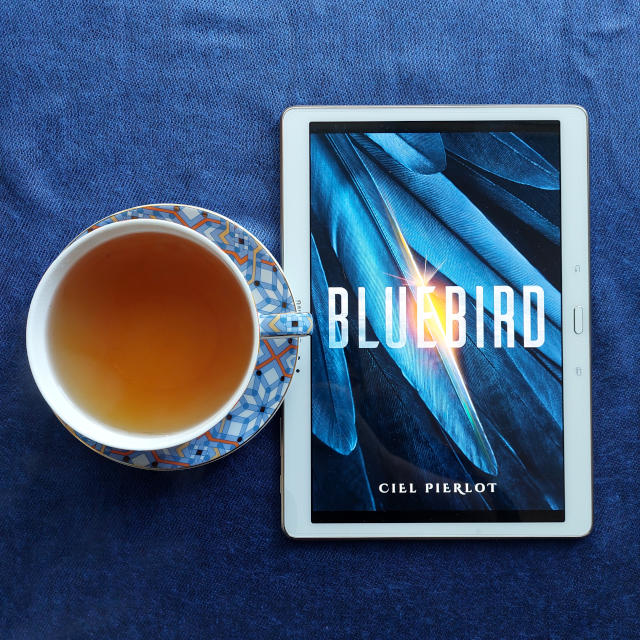
February is the month of Valentine’s Day, so I usually like to review some romance novels. But sometimes what I really want is an action-packed space adventure with a grudging friendship at its heart.
Rig lives on the fringes of a society carved up by three human factions. Once, she was a brilliant inventor for one of the factions. Now, she devotes her energy to smuggling refugees from the factions’ war to safe places, making the occasional legitimate cargo run in order to make some money. When her former faction catches up with her, she finds herself thrown together with a deadly fighter with a mysterious past. The pair team up to escape and rescue Rig’s sister from her former faction.
Bluebird was such fun to read. It had a cinematic style and had some great set pieces, starting with a sharp-shooting game at a bar and moving at various points through a couple of motorbike(ish) chases, a heist/spy infiltration of a ball and a spaceship chase through a debris field, to name a few. It kept a good action-adventure pace, while still managing some quieter, more emotional scenes where the characters connect.
The majority of the story is told in a close third-person perspective focused on Rig. This is interspersed with interludes detailing Ginka’s backstory.
Bluebird has been compared to the TV show Firefly and I can definitely see aspects of it. Rig is a sassy rebel on the fringes of society, trying to keep her ship together and get paid while sticking it to those in charge. Ginka also has a bit of a River Tam vibe to begin with: petite but deadly, and a bit niave about how the world works. But there’s no rag-tag crew; while there are some found-family feelings here and there, the true heart of the story is the friendship that develops between Rig and Ginka. I appreciated that it was something the characters particularly valued. In this sense, the story reminded me a bit more of Archivist Wasp… although that may also have been a bit of Ginka’s techno super-ninja vibe paired with Rig’s hardy make-do survival. And while there is no romance between these characters, they do have love interests elsewhere (June, Rig’s sexy-librarian girlfriend, is an absolute delight).
Given that this was a debut novel, the style was very readable, without any of the awkwardness that sometimes creeps in. However, there were a few places where the plot felt a little thin and the worldbuilding wasn’t the most complex. For example, it didn’t seem plausible that there was so very little information known about one of the factions when it remains a major player in galactic politics. That said, these quibbles weren’t enough to detract from my enjoyment.
All in all, I had a blast reading Bluebird and recommend it if you’re in the mood for a fun space romp. I’ll be keeping an eye out for more work from this author in future.
Published: February 2022 by Angry Robot Books
Format reviewed: E-book (epub), 400 pages
Genres: Science fiction, space opera
Source: NetGalley
Available: Publisher (print and electronic) ~ Abbey’s ~ Amazon (AU, CA, UK, US) ~ Barnes & Noble ~ Book Depository ~ Booktopia ~ Dymocks ~ Indiebound ~ Kobo
Disclaimer: I was provided with a free copy of this book in exchange for an honest review.

 The post Bluebird by Ciel Pierlot first appeared on Earl Grey Editing.
February 2, 2022
Mt TBR Report: January 2022
My Mt TBR skyrocketed this month, as I got sucked into Kobo’s e-book subscription service. The plan is to stay with it for a couple of months to work through the things I’m interested in reading and then let it go… but we’ll see how that works out.
Mt TBR StatusMt TBR @ 1 January 2022: 360
Mt TBR @ 31 January 2022: 388
1. Spear by Nicola Griffith. Historical fantasy. Review forthcoming
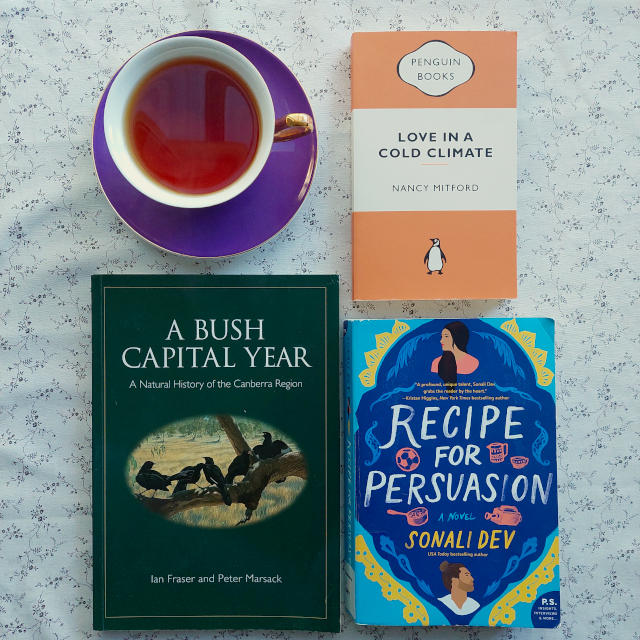
2. A Bush Capital Year: a natural history of the Canberra region by Ian Fraser and Peter Marsack. Non-fiction. Reread
3. Brand of Magic by K.M. Jackways. Fantasy romance. First in the Redferne Witches series. A psychic witch tries to help her neighbour save his family home. This read very much like an early career story, without much chemistry between the main characters or flow between the scenes.
4. Hexes and Vexes by Nova Blake. Fantasy romance. A witch reluctantly returns to her hometown to find out what’s going on when her estranged sister starts behaving oddly. While nominally a romance, the focus was more on the relationship between the sisters, which I rather enjoyed. However, the author seemed confused about the differences between Australian and European magpies.
5. My Sister, the Serial Killer by Oyinkan Braithwaite. Contemporary fiction. Book club pick. A nurse with a cleaning obsession gets called in to take care of the crime scene after her younger sister murders her boyfriend… again. This book was not my jam. All of the characters were pretty unpleasant. However, it was smart, well-written and a quick read.
6. Bluebird by Ciel Pierlot. Science fiction. Review forthcoming.
7. A Touch of Darkness by Scarlett St Clair. Fantasy romance. First book in the Hades and Persephone series. Book club pick. A contemporary retelling of the Hades and Persephone myth. This was a fun read, nothing too deep. Persephone got a bit annoying from time to time, but on the whole I enjoyed it. I appreciated that the author knew her flower lore. Unfortunately, my book club vociferously warned me against reading the sequel.
8. After Story by Larissa Behrendt. Contemporary fiction. Book club pick. A young Indigenous lawyer takes her mum on a tour of English literary sites. I found this book a bit emotionally distant at times. However, the characters were complex and it does some interesting things with the dual perspectives of mother and daughter.
9. The Bullet Journal Method by Ryder Carroll. Non-fiction. Organisational system. Unfortunately, this relies on being able-bodied enough to write everything by hand, making it useless for me.
10. Recipe for Persuasion by Sonali Dev. Contemporary retelling of Jane Austin’s Persuasion. Second book in the Rajes series. With her father’s restaurant failing, Ashna allows her friends to talk her into being a chef on a reality TV show… only to find she’s been paired with her childhood sweetheart, now a soccer superstar. Persuasion is a tricky story to adapt to contemporary times; Recipe for Persuasion made an admirable attempt, though I felt it had rather a different tone. I found Ashna a little tiresome in places, but on the whole I enjoyed it.
11. Steal Like an Artist by Austin Kleon. Non-fiction. Writing advice. The notion that all ideas are available for stealing reminded me a little too much of the concept of terra nullius. Elsewise, there was nothing particularly original here… which was exactly the book’s point.
AcquisitionsBrand of Magic by K.M. Jackways
Hexes and Vexes by Nova Blake
My Sister, the Serial Killer by Oyinkan BraithwaiteBluebird by Ciel PierlotA Touch of Darkness by Scarlett St Clair
City of Strife by Claudie Arsenault
City of Betrayal by Claudie Arsenault
City of Deceit by Claudie ArsenaultRecipe for Persuasion by Sonali Dev
After Story by Larissa Behrendt
Year’s Best Aoteroa New Zealand Science Fiction and Fantasy edited by Maria Hodgkinson
Murder Most Actual by Alexis Hall
Microscopes and Magic by Andi C Buchanan
Alpaca and Apparitions by Andi C Buchanan
The Extraordinary Adventures of Arsene Lupin by Maurice Leblanc
The Hands of the Emperor by Victoria Goddard
The Gentle Art of Fortune Hunting by KJ CharlesSteal Like an Artist by Austin Kleon
Unconquerable Sun by Kate Elliot
From a Shadow Grave by Andi C Buchanan
Birds of a Feather by Narrelle M Harris
Secret Agents, Secret Lives by Narrelle M Harris
Fly By Night by Narrelle M Harris
Once Ghosted, Twice Shy by Alyssa Cole
Prem Numbers by Suleikha Snyder
Headstrong Girl by Kim Wilkins
Paladin’s Grace by T. Kingfisher
The Art of Broken Things by Joanne Anderton
Goblin Fruit by Celia Lake
The Sea is Ours edited by Jaymee Goh and Joyce Chng
Dominion: an anthology of speculative fiction from Africa and the Africa Diaspora edited by Zelda Knight and Oghenechovwe Donald EkpekiThe Bullet Journal Method by Ryder Carroll
Love in a Cold Climate by Nancy Mitford.

 The post Mt TBR Report: January 2022 first appeared on Earl Grey Editing.
January 26, 2022
The Rook by Daniel O’Malley
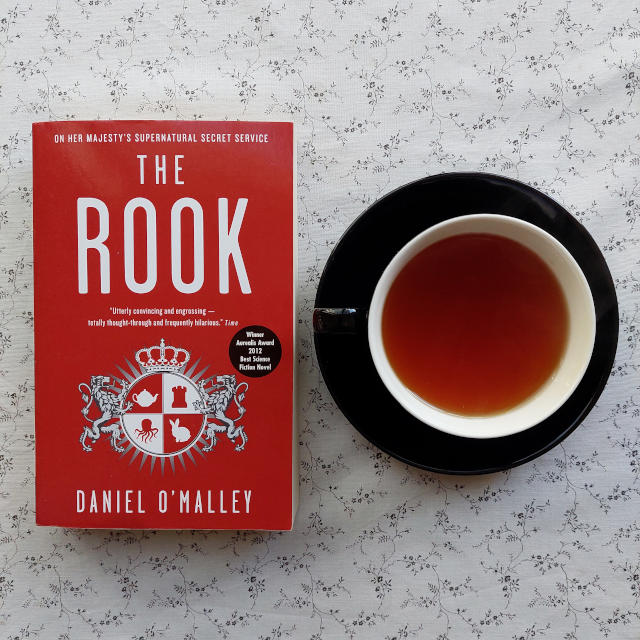
The Rook by Daniel O’Malley had been languishing on my Mt TBR for some time when the TV series was released. I watched the first season, or maybe part of the first season, before eventually wandering off to shinier shows. More recently, I dusted off the book because it fit a prompt for last year’s Magical Readathon and I figured I’d be able to skim through it fairly quickly since it didn’t seem all that interesting.
Friends, I have learned my lesson once again: always read the book first. It turns out the TV show took itself way too seriously, added some distasteful elements for drama and completely murdered the tone of the book.
Myfanwy Thomas wakes up in a London park with no memory of who she is and surrounded by bodies wearing latex gloves. In her pocket, she finds a letter from her former self offering her a choice: flee and start a new life, or return to the supernatural organisation she worked for and discover who has betrayed her.
The Checquey is rather like if the X-Men ran MI5. All of the top level members (named after chess pieces) have supernatural powers, including Myfanwy. But Myfanwy’s real superpower is a gift for administration. This delighted my heart in so many ways. In fact, the beginning annoyed me a bit with the way the old Myfanwy was so amazingly organised — leaving letters and binders full of information on her life — while the new one seemed more bumbling and reactive. However, her bewilderment makes it all the more satisfying as she grows into her powers, both supernatural and personal.
The letters and binder the old Myfanwy has prepared makes for a smart, plot-relevant way of info-dumping. The reader gets to learn about the people and organisation along with the new Myfanwy. As the book progresses and there’s less need for explanation, these morph more into a diary, giving us a glimpse into the old Myfanwy’s life and the predicament in which she found herself. It becomes a clever way to offer more pieces of the puzzle. Because the heart of the novel is a mystery: who has betrayed Myfanwy and why?
While this heart is very genuine, the story is also very tongue-in-cheek. Myfanwy’s organisational powers are definitely part of this. It amused me how Myfanwy never picked up on the way the underlings around her were terrified of her as a stickler for procedure and protocol. There was also a lot more slime and tentacles than you’ll see in James Bond (and the TV series; why, oh why did they cut that out?). Some of the villains also played with James-Bond-style tropes in a way that was very entertaining.
Another big strength of the book was the relationships between the female characters. It’s hard to say much here without giving spoilers, but I appreciated the variety in the relationships between the women and how they were never in competition. It was also a delight to see multiple competent women at work. And while Myfanwy is not exactly the celibate type, her focus is most definitely her career and not her love life; there was no romance shoehorned in.
In conclusion, I’m immensely relieved that I didn’t let the TV series talk me into unhauling The Rook without reading it first. I would have missed out on a smart, funny book that was an absolute delight. I’m very happy I have the sequel on hand… and that a third in the series is scheduled for release later this year.
Published: January 2012 by HarperCollins
Format reviewed: Paperback, 484 pages
Series: The Checquey Files #1
Genres: Science fiction
Source: Dymocks
Available: Abbey’s ~ Amazon (AU, CA, UK, US) ~ Barnes & Noble ~ Book Depository ~ Booktopia ~ Dymocks ~ Indiebound ~ Kobo

 The post The Rook by Daniel O’Malley first appeared on Earl Grey Editing.
January 19, 2022
Brewing Community with Paul Weimer
Brewing Community is a series of guest posts in which readers, writers, artists and fans are invited to share their experiences of community. Whether online or in person, these groups bring a great deal of support and sometimes stress to their members. The aim of Brewing Community is to share the joy and find ways to brew stronger communities.
The series first ran in 2015. In returning to it after several years, I wanted to focus on how these experiences of community may have changed in recent years, and how people would like to see them change, as well as delving into what books and media have brought comfort in difficult times.
My first guest is, to borrow his own phrase, a force for Genre Goodness. Paul Weimer is a prolific, Hugo-nominated reviewer. I’ve had the very great pleasure of working with him both at The Skiffy and Fanty Show and now at Nerds of a Feather. He’s the sort of person who builds community wherever he goes — introducing people and enthusiastically sharing their work — and he has been a fantastic mentor to me.
Since you’ve never been interviewed on Earl Grey Editing before, there’s one important question I must ask first: what’s your favourite beverage?
My favorite beverage is Root Beer, often found on your Antipodean store shelves as “Sarsaparilla”. One good root beer I’ve had that is brewed in Australia is Bundaberg’s. There are a wide variety of root beers, I prefer a balance between overly sweet and overly astringent and “medicine flavored”.
Has your experience of community in speculative fiction and fandom changed in recent years?
The community in SFF fandom was already changing before the Pandemic, and the pandemic itself is causing further changes and accelerations of long-standing changes in the SFF community. There are several strains and modes of this change, with a lot of factors in play, and it is continuing even as we speak.
One of these strains, predictably, is the fallout of the Sad and Rabid Puppies. The sifting and realignment of the core SFF community (by which I mean the community most interested in the smaller conventions, Hugo voters, con runners, et cetera) that the Sad and Rabid Puppies initiated with their campaigns has only progressed apace. The political sorting that this has caused has highlighted and made more manifest divisions in certain segments of the community and this tendency has only continued on since the campaigns. I had wondered if there might be rapprochement, or healing or coming to accord, after the Sad and Rabid Puppies campaigns themselves basically ended, but others have picked up their mantle and what was once a fractious but unbroken spectrum of science fiction is no longer so. Granted, the core and “deep fandom” is in the end a small part of SFF fandom, much less the entirety of SF readership, but here in the US, that self selection is definitely noticeable.
Cons bring me to another change that was already happening in SF, but the Pandemic has accelerated, and that is the rise and rise of other types of virtual fandom, and their voice and power in science fiction. I am thinking here of the Book Youtubers, and, unexpectedly, the use of technologies like Tiktok to discuss and connect books, readers, fans, writers and publishers. When many places across the world went into lockdowns, restrictions on travel, gathering together, and engaging in in-person con-based fan activities ceased. (The Fan Funds, for example, have been in a state of stasis since the Pandemic started). This is starting to change, with cons having physical and in person events again (like the 2021 Worldcon) but the virtual component to fandom is here and I think it is here to stay. I expect Booktubers and the like to only get a larger voice in fandom going forward.
That also brings me to another “self sorting” point, tying these two together, and that is the rise of Discords to create small micro communities of SFF. Cons and even individual authors are using the platform to create small, and often curated spaces for fans and like-minded folks to meet and interact. I myself am a member of some of these, and some of them are as active and “noisy” as spaces like Facebook or Twitter, but with a much more focused group of people who have self selected themselves. It will be interesting to see, when the Pandemic ends, how this all plays out in the real world. Does the self selection that was happening before the Pandemic continue, if not get accelerated once we are in cons again, and extend outward? I’ve pondered about the future of cons themselves in a virtual age. When the Pandemic started and cons started having problems, I wondered what was the future of SF conventions in this new age. I think, given people’s impatience, as it were, with how trying a virtual life can be. (The phrase “Zoom Fatigue” didn’t really exist before the Pandemic. Now…). So I think that there will be cons and fannish activities in person and lots of them once that is safe to do so (although the time frame for that is far from clear given the Omicron variant, vaccine resisters, mask resisters, and the like). What those are going to look like — I don’t know.
What would you like to see changed?
Plenty.
There are steps being taken by cons to protect members, with codes of conduct and the like, but these are really early fumbling steps and we absolutely need to do better. Fans of all types need to be able to feel safe, secure and welcomed in con spaces. We need to end the days of broken stairs, whisper campaigns, tolerating fans (and authors) who get a pass on terrible behavior for whatever reason. I want a fandom that no one should feel that they can’t attend a con because of fears of their own safety and well being. I think codes of conduct, and enforcing and making clear that such behavior is not tolerated, is a good start, but we need all cons to do this and make a more united front in this regard.
That said, too, too many cons still do not understand disability issues, and have spaces and venues that are not accessible to those with physical handicaps and challenges. I remember a con panel at a local con that was on a mezzanine that was only accessible by stairs, and so a physically disabled participant had enormous problems trying to get to the con room. We can and must do better in this regard.
Speaking of safety and accessibility, this goes to virtual spaces as well. Cons need to come to terms with what safety and accessibility mean with digital programming, and making spaces available to those who can only access the con in that manner, and making those spaces safe and free of toxic trolls, griefers and the like. Like physical cons, virtual spaces for cons are places I want fans of all types to feel safe, secure and welcomed. Finally, now that this virtual life appears to be a part of fandom that is permanent, and I am not sure how it can be done, I would like these strands to interweave better. If our fandom is going to be both virtual and physical, finding ways each can enhance and build on the other is something I want for fandom. This way, fans from the widest possible pools can, if they so wish, find and connect with each other. Fandom only works when fans have ways to communicate with each other. The first SFF conventions were born of that. The Fan Funds were born of that. Fandom only thrives when people can talk to each other. Even if the methods change and evolve, in the end fandom is a community activity, and making digital and physical participants be able to talk to each other, connect, interact and grow, is something I want for my SFF fandom. If I can’t, for example, go to the Australian Natcon, I would like a way to better interact with my friends and colleagues there, and vice versa for, say, an American con.
What books or media have you found yourself turning to for comfort?
I generally don’t do a lot of physical re-reading for comfort, because the siren call of new books is one that I can’t generally resist. Although, come to think, if flipping through books, like say, roleplaying manuals, for fun as a casual thing can be considered a comfort read, then for physical books, I guess that counts as a comfort read. For books, though, my re-read and comfort reading comes via audiobooks. When I am not listening to a book for a podcast, listening to audiobooks gives me the chance to listen to books I’ve already enjoyed in print as a way to enjoy them again and in a new format. The Lady Astronaut series by Mary Robinette Kowal, as read by the author herself, are a wonderful way to fall in love with the book again. The audio edition of The City We Became, which I reread in audio for the Hugo awards, was equally delightful and in some ways is even better than the print version for me.
And, it’s a strange thing to call it a comfort read, but I guess it counts. On a recent very long road trip, I dived into grand history books I had not read in decades, using the long miles (kilometers) and hours of driving as a chance to re-read them. Will Durant’s Story of Civilization books are dated in very significant ways given their age (one of them talks about the early life of Gandhi as a contemporary figure, for example) but the grand story of history that Durant paints, something VERY out of fashion in history books these days for good reasons, is something I can sink into, and let the miles (kilometers) fly by. If Brisbane should get a Worldcon in 2028, and should I take a driving trip before or afterwards, Durant would be a fine choice for covering long drives to adventure.
Comfort media? Streaming services have obviated the need for me to dive into my DVD collection, something that I used to do with far more frequency. I got into the habit of streaming services during the Pandemic, and have not yet lost that habit. And as a result, I’ve been watching a lot of stuff that is new to me, rather than, say, rewatching Prometheus (a terrible movie I can’t help but watch) or Inception (a wonderful movie I can’t help but watch) over and over again. But there are series on streaming that I can just put an episode or two on and enjoy again and again — The Good Place, Deep Space Nine, Star Trek the Next Generation, Stargate SG-1, The Expanse and of course, Babylon 5. It is interesting what series stick to me and what series (I will not name names, and be positive) are series that have fallen out of favor and I have no interest in revisiting. In some ways, old episodes of more episodic series are easier and more accessible to “dip into” without interrupting long narrative arcs. Dipping into long narrative arcs can force my brain to want to watch an entire season rather than a single episode of the moment for comfort.
 Photo courtesy Peter West Carey
A 2021 double Hugo Finalist (Best Fan Writer and Best Fancast) and the 2017 Down Under Fan Fund Delegate from North America to Australia and New Zealand, Paul Weimer has been exploring and talking about genre since the early days of blogs. Having honed his genre reviewing and criticism skills at the award winning SF Signal blog and podcast, Paul Weimer now writes for (and podcasts at) The Skiffy and Fanty Show, SFF Audio, Nerds of a Feather and Tor.com. He is the writer of “What I did on my Summer Vacation: The 2017 Down Under Fan Fund Report”, which set a record for number of photos in a fan fund report of any type in addition to documenting the National SF conventions of New Zealand (Lexicon 3) and Australia (Continuum 13). And of course, a visit to Hobbiton amongst many other adventures.
Paul Weimer lives in a city lying between Minneapolis and St. Paul in Minnesota, USA, where the long winters provide plenty of time to read as well as plan his photographic adventures. He is best found on social media sites, from Twitter to Instagram to Discord under the name @princejvstin, and his website is http://www.princejvstin.com

 The post Brewing Community with Paul Weimer first appeared on Earl Grey Editing.
January 12, 2022
Dark Rise by C.S. Pacat
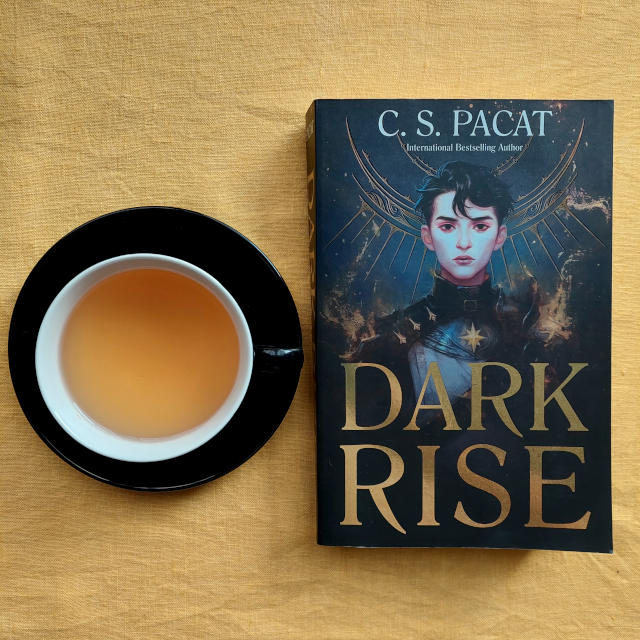
This week I’m over at Nerds of a Feather with a review of Dark Rise by C.S. Pacat. It’s a story that brings some shades of grey to the traditional battle between light and dark, walking a fine line between paying homage to classic works of fantasy and generic predictability.

 The post Dark Rise by C.S. Pacat first appeared on Earl Grey Editing.
January 5, 2022
2022 Reading Goals and Mt TBR Report: December 2021
Happy New Year! I hope those of you celebrating had wonderful holidays.
With another year’s reading wrapped up, I find myself pondering the changes to my annual reading totals over time. 2021 was my sixteenth year of gathering data. Prior to 2015 (which was my first full year of running the Earl Grey Editing blog), I wasn’t consistently reading more than 100 books. Starting the blog almost doubled the previous year’s total. 2016-2019 stats were influenced by judging for the Aurealis Awards, which is what consistently pushed my annual reading totals into triple digits.
2020 was a year without judging and largely without reviewing. Even without these factors, I still managed to read 169 books. This gives more weight to my feeling that judging has permanently changed the way I read.
2021 seems to have played out a little differently. While I have once again managed to reach triple digits, the final total wasn’t quite as high as I’d expected. One difference to last year was that I was reviewing, but while this has surely pushed up the total somewhat, it didn’t entirely counter the lulls. This was particularly the case towards the end of the year. It’s hard to say whether stress was a factor or whether this is simply part of a new pattern to my reading. After all, continual growth is not sustainable. Perhaps 2022 will shed some light.
Mt TBR StatusMt TBR @ 1 January 2021: 426
Mt TBR @ 30 November 2021: 361
Mt TBR @ 31 December 2021: 360
145. Hyperbole and a Half by Allie Brosh. Non fiction. Book club read. Part graphic novel, part memoir essays, largely dealing with mental health. While there were some very relatable parts, I can’t say I enjoyed the book much. The moments of insight only served to highlight the lack of insight in other places.
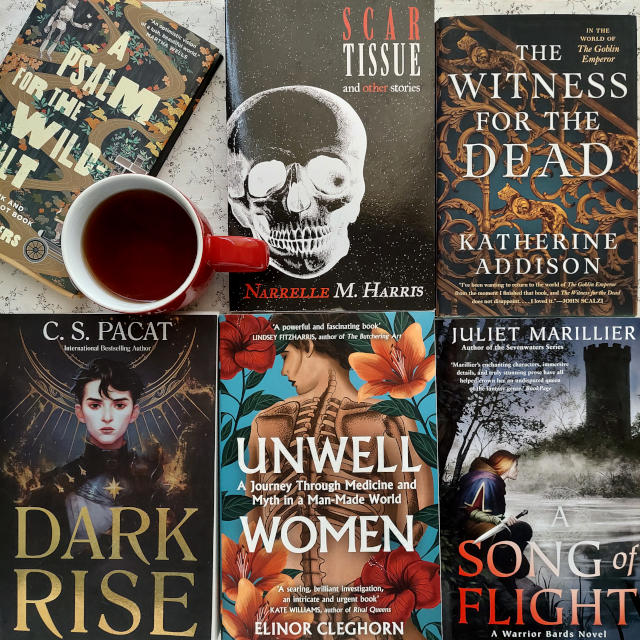
146. A Song of Flight by Juliet Marillier. Historical fantasy. Final book in the Warrior Bard series. When her oldest brother is attacked and the prince he was guarding disappears, Liobhan looks for answers. A satisfying conclusion to the series. The book did an excellent job of continuing to subvert many gendered fantasy tropes. It was also nice to see the first gay relationship I can recall in Marillier’s work, though it was pretty understated and between secondary characters.
147. Dark Rise by C.S. Pacat. Historical fantasy YA. Review forthcoming.
148. The Dark is Rising by Susan Cooper. Historical middle grade fantasy. On his eleventh birthday, a young boy must embark on a quest to unite six artefacts in a bid to defeat the dark powers that are awakening. Another classic that I missed when I was growing up. Not being of the right age for it, it didn’t do a whole lot for me and was read mostly to provide context for the above-mentioned review.
149. Four Thousand Weeks: Time Management for Mortals Oliver Burkeman. Non-fiction. A book that takes a critical look at the modern philosophies of time management. I suspect I’ll be returning to this one regularly to combat the idea that I could somehow be organised enough.
150. Ravenfall by Narrelle M. Harris. Contemporary fantasy m/m romance. A former British soldier turned vampire teams up with a streetwise artist to investigate the disappearance of several of the artist’s homeless friends. This definitely shares some DNA with Harris’s Sherlock fic, making for a wonderfully tender romance and a thrilling crime narrative. The banter was fun, though the dirty talk didn’t work for me.
151. Scar Tissue and Other Stories by Narrelle M. Harris. A collection of short stories, some speculative, others contemporary (and some both). It includes short stories connected to many of the author’s other works (including Ravenfall). I enjoyed the variety.
152. A Psalm for the Wild-built by Becky Chambers. Reread.
153. Boyfriend Material by Alexis Hall. Contemporary m/m romance. The disgraced son of a rock star needs a fake boyfriend in order to keep his job and finds it in a perfectly put-together criminal lawyer. There’s a lot of heart in this book and you really feel for the first-person narrator, even as he’s making terrible decisions. A lot of the characters feel very satirized or caricatured, but it’s so well-observed and funny that it works, and does a good job of balancing out the emotional reality of the main characters. Highly recommended, especially for anyone looking for a follow-up read after Red, White and Royal Blue.
AcquisitionsThe Sable Moon by Nancy Springer
The Queer Principles of Kit Webb by Cat SebastianRavenfall by Narrelle M. Harris
Written in the Stars by Alexandria Bellefleur
Gathering Moss by Robin Wall KimmererFour Thousand Weeks by Oliver Burkeman
The Dark is Rising by Susan Cooper
Sanctuary by Andi C. Buchanan
The Witness for the Dead by Katherine Addison
Unwell Women by Elinor Cleghorn
No Man’s Land by A.J. Fitzwater
Written by Katheryn MoonBoyfriend Material by Alexis Hall
Lady Liesl’s Seaside Surprise by Tansy Rayner Roberts
Often reading goals are a good motivator for me, but I seemed to lose the knack in 2021. I set a Goodreads goal of 150 books and made 131. This is the first year I’ve missed a Goodreads goal since 2015.
I also made a goal to read the 10 oldest books on Mt TBR. I didn’t make it through any of them, so I’ve decided not to replicate that goal this year.
In fact, I’ve decided to steer clear of goals, aside from Goodreads, which I’ve set at 125.
Wish me luck! In the meantime, if you have reading goals for the year, I’d love to hear them.

 The post 2022 Reading Goals and Mt TBR Report: December 2021 first appeared on Earl Grey Editing.