Elizabeth Fitzgerald's Blog: Earl Grey Editing, page 53
November 20, 2014
Short fiction and reviewing

Two weeks ago, I came across a post from Renay at Lady Business about her struggles with the field of short SF fiction.
The short fiction field is huge and it’s flooded with so much work that no one reader could begin to keep up (did anyone ever keep up? Was it possible, long ago before the Internet, SF fan historians?) I know there are people out there that care about short fiction, its future, and want to ensure that new people come in and care about it just as much as they do. Unfortunately, right now it feels impenetrable. I hear a lot of commentary saying that the really daring work isn’t done in novels, but instead is happening in short fiction. I hear that investing in short fiction will give you a leg up on what’s going to be happening in novel length work later on. If that’s true, at this rate it’s simply easier and less stressful for me to sit down and wait for the big ideas to hit the novels, remixed and transformed from the short fiction writers or by short fiction writers turned novelists.
I want to care about short fiction, but I have no clue how or where to start because there’s just so much stuff and there’s little to no filtering unless I slog through it myself or wait until December – March for Hugo season.
Obviously, Renay is coming at this from a reader’s perspective. However, this is also a problem from a writer’s perspective, as the exchange below indicates.
@AusWomenWriters Yes! I’m reading No Need To Reply by @JodiCleghorn
— Elizabeth Fitzgerald (@elizabeth_fitz) November 15, 2014
Hello @ElizabethLhuede! I write mainly short stories so it’s difficult to hit readers’ radars. @elizabeth_fitz @AusWomenWriters — JodiCleghorn (@JodiCleghorn) November 16, 2014
In her post, Renay calls for more (and more robust) reviewing of short fiction and this strikes me as something short fiction writers also need to help them hit readers’ radars. Along with Renay, I can see a definite imbalance: I know many short story writers but very few reviewers of short fiction.
These conversations also have me reconceptualising myself as a reader. I almost didn’t read Renay’s post, saying to myself “I don’t really read short fiction.” Once I started thinking about it, I realised how ridiculously untrue this was. What am I doing reading No Need To Reply if I’m not a reader of short fiction? Or anything by FableCroft Publishing? I’ve even edited an anthology of short fiction and been involved with several more besides. So this view of myself as someone who doesn’t read short fiction is not at all accurate. While novels remain my preferred format, there are plenty of short stories mixed in amongst my reading.
Which means I’m well placed to help out when it comes to reviewing short fiction, especially because I’m already doing it. In practice, not a whole lot is going to change. I don’t necessarily intend to start reading more short fiction–not allowing myself to read at whim is a quick way to reader’s block. However, I do hope to be a bit more conscious of the amount of short fiction I’m reading.
One change I do intend to make is how I tag my posts. As I already mentioned, my reading–and thus my reviewing–tends to be a jumble of formats. What use is reading and reviewing more short fiction if no one can find those reviews? In fact, I suspect that short story reviewing is more common than Renay thinks but that these reviews likewise get lost amongst the jumble on other book blogs. So, to help with that here I’ve started a tag for short stories.
I’d be interested in hearing more on this topic. If you’re a reader, where do you find reviews of short fiction? If you review, what do you do to make reviews of short fiction noticeable amongst the longer fiction? Are there other solutions I could help contribute towards?


November 17, 2014
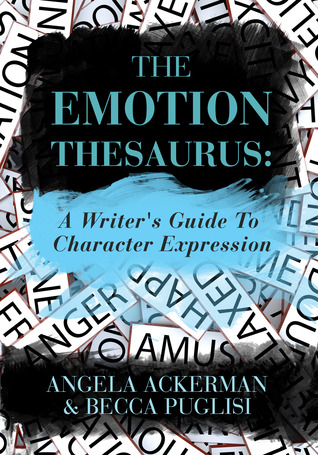
Review: The Emotion Thesaurus by Angela Ackerman and Becca Puglisi
 Published: 2012 by JADD Publishing
Format reviewed: Paperback, 170 pages
Series: None
Genres: Non-fiction
Source: Public library
The Emotion Thesaurus is pretty much exactly what it says on the label. This non-fiction book has an entry for emotions ranging from adoration to worry. Each entry lists a definition of the emotion, as well as physical signs, mental responses, cues that might be given off by acute long-term sufferers of that emotion, cues of suppressed emotion, and other possibly related emotions. It is intended to be a reference book for writers.
This book was mentioned with some derision at one of the Conflux panels I attended so I thought I would check it out for myself. It didn’t take long; the book is fairly slender and features one emotion for every double-page spread. There is a fair bit of duplication between similar emotions–for example, the lists for annoyance and irritation feature many of the same signs.
Judging from the tone, the book is aimed at newer writers and I can see how it could be a useful starting point. However, any writer will still need to consider cultural norms, genre expectations and the particulars of their character. Gillian Polack explores how to give this kind of consideration to dialogue over on the History Girls blog. While the opening chapters of The Emotion Thesaurus are careful to point out this kind of consideration is needed in order to avoid cliché, the thesaurus format makes it easy for those looking for a short-cut. This was the very reason it received criticism at Conflux.
Unsurprisingly then, the book is best seen as a tool: equally capable of producing the beautiful and the dreadful, depending on the wielder. Use with caution.


November 13, 2014
Following up

This isn’t quite a Loose-leaf Links post, but I have found myself with a few bits and pieces relating to previous posts that I’d like to share.
Reviewing and Clute’s Excessive Candour
Thanks to everyone who commented on my post Bias and Reviewing. I really enjoyed hearing what you had to say. A little bit of discussion on the post also came up on Twitter. David Lawie, who was one of the judges for the 2014 Arthur C Clarke Award had the following to say:
@Bridgeman_Books @elizabeth_fitz I don’t always achieve it, but I try to keep in mind Clute’s Excessive Candour http://t.co/MwriLMlc7T
— Duncan Lawie (@lawiedc) October 29, 2014
The Wikipedia link explained further, via this quote from John Clute:
Reviewers who will not tell the truth are like cholesterol. They are lumps of fat. They starve the heart. I have myself certainly clogged a few arteries, have sometimes kept my mouth shut out of ‘friendship’ which is nothing in the end but self-interest. So perhaps it is time to call a halt. Perhaps we should establish a Protocol of Excessive Candour, a convention within the community that excesses of intramural harshness are less damaging than the hypocrisies of stroke therapy, that telling the truth is a way of expressing love; self-love; love of others; love for the genre, which claims to tell the truth about things that count; love for the inhabitants of the planet; love for the future. Because the truth is all we’ve got. And if we don’t talk to ourselves, and if we don’t use every tool at our command in our time on Earth to tell the truth, nobody else will.
Sea Hearts wins Barbara Jefferis Award
It came to my attention the day I posted my review of Sea Hearts that it had very recently been the joint winner–with The Night Guest by Fiona MacFarlane–of the Barbara Jefferis Award. According to the Australian Society of Authors website, Barbara Jefferis was a feminist and founding member of the ASA. The award in her name honours ‘the best novel written by an Australian author that depicts women and girls in a positive way or otherwise empowers the status of women and girls in society’. If my review wasn’t enough to convince you to read Sea Hearts, you may want to take a look at the Judges’ citations.
Margo has shared her acceptance speech on her blog.
Robin Hobb on tour
It has been a bit over a decade since Fitz and the Fool broke my heart in Robin Hobb’s The Tawny Man Trilogy. Now I’m going to have to go back and do it all again because she has a new book involving the pair called Fool’s Assassin (reviewed here by Memory Scarlett). To celebrate the launch, Hobb is on tour. Locals may be particularly interested to know that she will be doing signings at Dymocks stores in Belconnen and Tuggeranong on Tuesday 25th November. Details are on her website. A big thank you to Shaheen from Speculating on SpecFic for this particular piece of news.


November 10, 2014
Review: Phantazein edited by Tehani Wessely
 Published: 2014 by FableCroft Publishing
Format reviewed: E-book (mobi)
Series: None
Genres: Fantasy
Source: Review copy provided by the publisher
Challenges: Dewey’s Read-a-thon
Disclaimer: I know the publisher, cover artist and a couple of the contributors
In my September review of To Spin A Darker Stair, I anticipated that Phantazein would prove to be more of the same. Having now read it I can say: it is and it isn’t. Although Phantazein opens with a fairytale retelling and closes with a mythological retelling, the majority of its stories are original stories that retain a strong fairytale flavour.
The stories that make up the anthology had a nice mixture of cultures. While there were some stories that felt vaguely European, there were also some that drew on Asian, Arabic and South American influences. Not being from these cultures, I’m not in a position to judge whether these influences were handled with sensitivity. From an outsider’s perspective, they seemed respectfully done. The diversity made for a reasonably well-balanced anthology, with one exception: there were very few Australian-influenced elements. Cat Sparks’ story The Seventh Relic was the sole exception and a questionable one. Only those familiar with Buddhism in Australia are likely to identify the setting, which otherwise comes across as generically western.
There was also a nice mixture of relationships featured in the stories. Being fairytale-inspired, there were various family relationships (mother and daughter, mother and son, father and daughter, siblings etc) as well as romantic relationships and straightforward friendships. I would like to have seen a few more non-heterosexual romantic relationships. The Seventh Relic proved the exception here once again, though, as with the Australian setting, it tended to be understated.
Being the exception to both of my diversity-related criticisms, it is perhaps unsurprising that The Seventh Relic was also the only story that I felt didn’t quite fit the anthology. However, I feel this was less to do with the inclusion of those diverse elements than its tone, which came across as a little too biting in comparison to the more fairytale-esque stories.
My notable mentions were difficult to pick but include Twelfth by Faith Mudge, The Ghost of Hephaestus by Charlotte Nash and How the Jungle Got its Spirit Guardian by Vida Cruz. Twelfth was a retelling of the Grimm fairytale The Twelve Dancing Princesses. It had wonderful heart and no easy resolution. We didn’t quite get off on the right foot, as I had some trouble with the perspective at first and felt the beginning could have used some tightening up. However, it drew me in as the characters came more to life.
The Ghost of Hephaestus was an enchantingly romantic steampunk that tapped into Greek mythology and managed to hit all my buttons.
How the Jungle Got its Spirit Guardian drew on Aztec influences and had some interesting commentary on gender roles sold by some strong characters.
Overall, I found Phantazein to be very entertaining. Despite my criticisms, it had a nice mix of stories and I’d definitely recommend it to those who like fairytale-inspired fantasy.


November 6, 2014
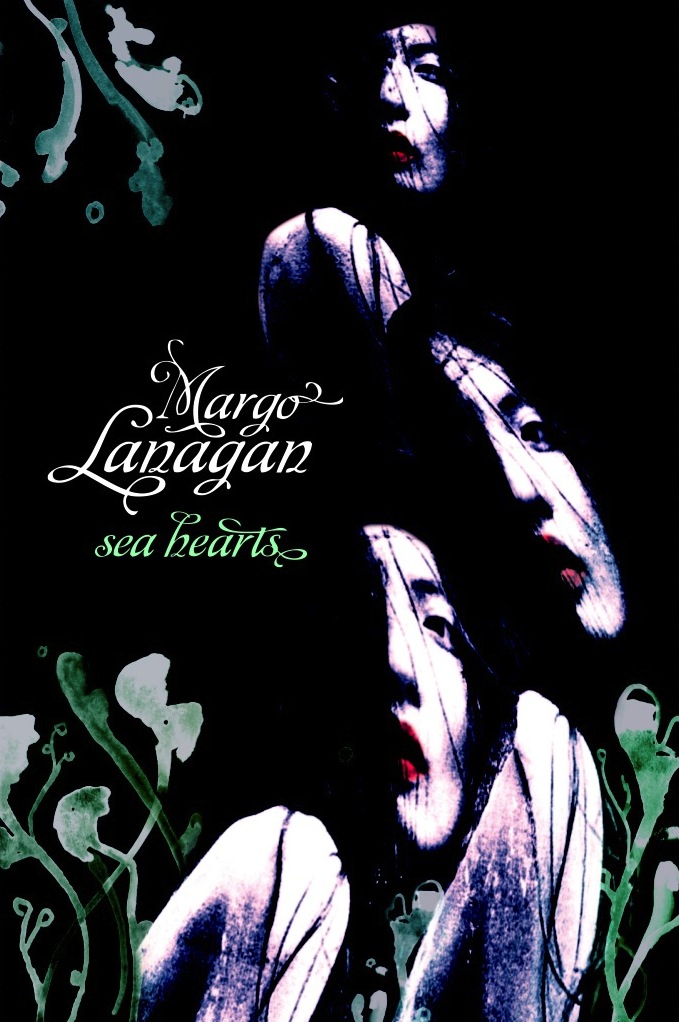
Review: Sea Hearts by Margo Lanagan
Published: 2012 by Allen and Unwin
Format reviewed: Paperback, 343 pages
Series: None
Genres: Fantasy. A case could also be made for YA
Source: Public library
Challenge: Dewey’s read-a-thon
Sea Hearts is a dark fantasy that taps into traditional tales of selkie wives. Misskaella is a lonely child, bullied by her sisters and shunned by the community for her ugly appearance and eerie affinity with seals. When she discovers she can turn the seals into human form, it sets off a devastating sequence of events.
I adored this book. Margo Lanagan has a reputation for writing stories that are very dark, so I wasn’t sure it would be for me. Indeed, the opening scene had a suitably creepy atmosphere as a group of young boys try to collect mussels from the beach without attracting the angry attention of Misskaella the crone. However, the beautiful turns of phrase drew me in and I was soon completely absorbed.
Nevertheless, it is a dark story and one that shows cycles of abuse. Gradually, we see how the bullying of Misskaella by her family and community leads to her calling forth the selkie sea wives. Witnessing the way the men of the island then conspire to keep the selkies from returning to the sea by hiding their sealskins is not pretty. This portrayal of systemic oppression at the hands of men makes Sea Hearts quite a feminist novel, though it is never preachy about it and there is certainly plenty to imply that the men aren’t solely to blame.
At her Conflux Guest-of-Honour interview, Lanagan spoke about how she often tricks herself into writing a novel by constructing it as a series of short stories. This approach is evident in Sea Hearts, which sketches out Misskaella’s lifetime and the events on Rollrock Island from a number of different, first-person perspectives. These different perspectives allow an overview of events while still inviting the intimacy Sea Hearts requires for its quiet, domestic horror. There is no black-and-white here: each perspective offers something to sympathise with, while also revealing flaws. It was this last point that kept me reading. No one was completely unlikeable and there was always a little bit of hope, no matter how faint.
As you might have gathered, the tale unfolds at a stately pace while still managing to avoid feeling slow. There’s something very ethereal about it, despite the way Lanagan anchors it in concrete detail. There is a very deliberate sense that Rollrock Island has stepped beyond time, while the world beyond its shores moves on, and my experience of reading Sea Hearts echoed that. I can’t possibly do it justice.


November 3, 2014
Mt TBR report: October 2014

September saw Mt TBR tower ever higher. As expected, Conflux contributed significantly, though wasn’t solely to blame. I’m just not reading as much at the moment and I shudder to think what Mt TBR would have looked like without Dewey’s read-a-thon to get it a little more under control.
Mt TBR status
Mt TBR @ 1 January: 191
Mt TBR @ 30 September: 215
Mt TBR @ 31 October: 219
Books read
44. Frozen Heat by Richard Castle: The fourth book in the ghostwritten Nikki Heat series tied in to the TV show Castle. The even numbered books seem to be the better ones. This one made good use of foreshadowing and made nice use of previous characters and events. The appearance of a pair of detectives by the names of Malcolm and Reynolds also had me chuckling. Overall, a nicely integrated addition to the series.
45. Phantazein edited by Tehani Wessely. Review forthcoming.
46. Sea Hearts by Margo Lanagan. Review forthcoming.
47. Andromeda Spaceways Inflight Magazine, Issue #48 edited by Juliet Bathory: (Yes, I really am four years behind in my ASIM reading). This issue had a strong focus on horror which really isn’t my cup of tea.
48. The Caller by Juliet Marillier
Books acquired
(2/10) Andromeda Spaceways Inflight Magazine, Issue 60 edited by Sue Bursztynski
(4/10) Shatterwing by Donna Maree Hanson
(4/10) Kaleidoscope edited by Alisa Krasnostein & Julia Rios
(5/10) Langue[dot]doc by Gillian Polack
(15/10) The Caller by Juliet Marillier
(15/10) The Emotion Thesaurus by Angela Ackerman & Becca Puglisi
(16/10) No Need to Reply by Jodi Cleghorn
(27/10) Be With Me by Becca Lusher
Online Reading
Strange Sights, Ch 14 & 15 by Pia Foxhall: This conclusion to Foxhall’s m/m erotic AU tale was appropriate for the characters involved. As usual, these are explicit, with heavy trigger warnings, and not suitable for all readers.
The Prince Who Never Smiled by Amy Rae Durreson: Written for Queer Romance Month, this sweet fairytale has some pointed things to say about certain forms of humour and about pressure to conform to social norms. The witty parentheses had me chuckling.


October 30, 2014
Loose-leaf Links for October
I hadn’t intended to make signal boosts a regular part of this blog but I get too many tasty tidbits to resist. So welcome to Loose-leaf Links.
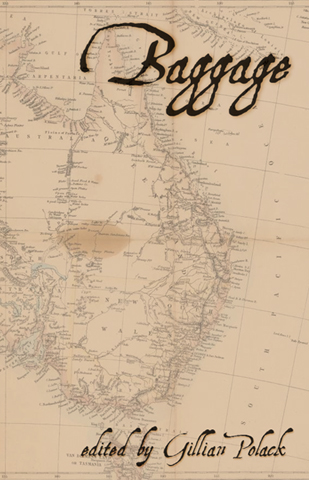
Baggage
If the gorgeous cover above looks familiar to you, it may be because you’ve seen it in my portfolio. I was a sub-editor on the anthology and it was one of the highlights of my editing career so far. It is packed full of thoughtful stories from a variety of talented Australian authors. Many of these stories have stuck firmly in my memory, despite it being a number of years since I first encountered them. The book went out of print after the initial publisher, Eneit Press, shut down, but no longer! Wildside Press have given it a new cover and Baggage is now available on Amazon.
Book releases
There have been a few new books out this month by authors I’ve been keeping an eye on. Becca Lusher released Be With Me, a historical romance novella. While it ties in with her ongoing speculative fiction series Tales of the Aekhartain, it is a standalone novella and is currently being offered for free.
This month also saw the release of Tales of the Little Engine, a collection of stories for younger readers written by Lynn O’Connacht. The collection builds on her short story The Little Engine That Couldn’t and includes two essays on the influences and ideas behind the stories.
If your tastes run more to the literary, Jodi Cleghorn has released a collection of short fiction called No Need to Reply. Jodi’s first solo publication experiments with style, structure and form. Readers are invited to pay what they want for the e-book. A print version is also available.
Australia and e-books
Macquarie University is preparing to undertake a major study into the changes in the Australian book industry. In preparation, they conducted a forum in which they discussed a range of related topics with a number of Australian authors. Australian Author Online are running a series on the results of the forum. While the series is only available to subscribers, the first installment is free and raises some interesting issues.
Ambelin Kwaymullina and Indigenous Women Writers
Some of you may recall that last month I read The Interrogation of Ashala Wolf by Ambelin Kwaymullina as part of the Diverse Universe reading challenge. The challenge aimed to encourage the reading of books written by persons of colour. Kwaymullina is also promoting this goal and has written a guest post for the Australian Women Writers blog. In her post, she recommends five very different publications written by Indigenous women. If you’re looking to introduce more diversity into your reading, her recommendations are worth checking out.
FantasyCon 2014: Editing dreams and editing nightmares
Megan Kerr at the Writers’ Greenhouse shares a wonderfully detailed account of a panel on editing that took place at FantasyCon 2014. It touches on many of the things I discussed in my editing workshop at Conflux 10, with the added bonus of multiple perspectives. Definitely recommended for those looking to learn more about what the editing process actually involves, particularly in relation to big publishing houses.
Anime for Cancer Research
I’ve previously mentioned John Samuel’s anime auctions for cancer research, but here’s a recap of the rules.
Once a month I’ll post a list of titles for the monthly donations.
Australian residents can then leave a comment indicating how much they are prepared to donate to a cancer charity to win a particular disc (don’t forget to tell me which disc you want).
The minimum pledge is 1/3 retail price
The highest pledge will win the disc
I will close the comments after about two weeks with a final comment identifying the winners.
Winners will forward a receipt for their donations to me.
I will then privately email the winners to obtain snail mail details (again within Australia only), and send them the disc(s).
I will pay for the postage.
I will match all winning pledges up to 2x retail per disc.
My default charity is the Australian Cancer Research Foundation, but I will match the cancer research charity of the winner’s choice.
I am willing to re-open bids on titles offered in previous months. Leave a comment and I’ll add them to the list.
Today is the last day to put in a bid for the October offerings, so if you are an Australian anime fan please hurry over.
Conflux reports
In my report on Conflux 10, I mentioned wishing I had a Time Turner. If one exists, it is still being kept hidden from muggles like myself. I’ve found the next best thing to be other people’s convention reports. If you’re likewise looking for more perspectives on the event, here are a few I’ve found so far:
Lisa Fleetwood
Leife Shallcross
David McDonald
Donna Maree Hanson writes about the launch of Shatterwing
Cat Sparks documents the convention for posterity on Flickr


October 27, 2014
Bias and reviewing
While I was at Conflux, I heard a lot of talk about the importance of reviews. This wasn’t limited to the panel on reviewing, but cropped up at book launches, at other panels and in conversation. With the rise of e-publishing, competition is fierce and it is important to stand out from the crowd. Reviews are one way of doing this. I heard many writers and publishers encouraging readers to leave reviews on Goodreads and Amazon. These sites are configured so that the more reviews a book has, the more likely it is to be seen. It is better to have dozens of two star reviews than a couple of five star reviews.
However, reviewing becomes tricky when one is involved in the publishing community. I read a reasonable amount of work written or published by people I know. I do this partly to keep up with what’s going on in the industry, partly out of curiosity over what my acquaintances have been working on and partly out of genuine interest for the work itself. One of the reasons I started this blog was to share what I read with people who are just as excited about books as I am. Can I do that when I know the people whose work I’m reviewing? I got a few looks of horror at Conflux when I suggested I might attempt it.
I can understand why. On the reviewing panel at Conflux, experienced reviewer Satima Flavell suggested that a review had to be sympathetic to three people: the publisher, the author and the reader. Being too kind to a publisher or author can give a reader the wrong impression about a book. This wastes the reader’s time and money at best and ultimately breaks the trust between reviewer and reader. On the other hand, criticising a work too strongly–whether warranted or not–can hurt the feelings of someone the reviewer knows and will have to encounter again in the future. It is a difficult balance.
The panelists approached the situation in different ways. Writer David McDonald simply avoids reviewing Australian material. Shaheen of Speculating on SpecFic chooses to maintain some distance from the writing community and is able to do so because she isn’t a writer herself. Satima Flavell and Helen Venn negotiate the tricky path of reviewing while still being part of the community. All of the panelists agreed that the key to this path is to be as honest and upfront as possible. Let readers know who you know so that they can make an informed choice about how to treat your review.
This commonsense approach seems to work well for Tsana Dolichva of Tsana’s Reads and Reviews, who had the following to say during her interview for the 2014 Australian Speculative Fiction Snapshot:
I think a lot of the controversy comes from worries about authenticity and potential antagonism. If a writer is friends with the author of the book they’re reviewing, for example, will they write an honest review if they don’t like it? Is a fledgeling writer worried about criticising a Big Name writer in their review? But I think we’re all grown ups and should be capable of writing critical reviews without being rude, or, on the flip side, dealing with negative reviews of our work without having a breakdown on Twitter. I understand some of the hesitancy around the matter, but I don’t think that should be a reason for writers not to review, if that’s what they want to do.
After giving the matter some consideration, I’ve decided that this is also the approach I’ll be taking. Restricting my reviewing to only non-Australian authors or those I don’t know would leave me unable to share so many exciting, well-written books. If I can’t share what excites me, what is the point of reviewing at all?
However, I acknowledge that it is a contentious issue and one I’ll no doubt continue to wrestle with as I become a more experienced reviewer. Do you write/review? How do you approach the matter? I’d love you to share your thoughts here.


October 23, 2014
Guest post: The Writing Life
I belong to a number of writing groups, including the Canberra Speculative Fiction Guild. One of the things I love most about the CSFG is the way it celebrates the achievements of its members… and they have a lot to celebrate. Fellow member and friend Donna Maree Hanson has just had two fantasy novels published by Momentum Books. In honour of this occasion, I’ve invited Donna to share some thoughts here.

Thank you very much Elizabeth for hosting me today.
Elizabeth has asked me to talk about the writing life and how the writing community helped me get the Dragon Wine series published.
Like most people I have a day job and I’ve been writing now for 14 years. That’s a very long time to dabble at something. However, I was never a dabbler. When I decided I wanted to be a writer I dove in head first, drowned a bit and then started to dog paddle. I wrote obsessively. I stopped watching the TV (just did DVDs) and wrote. I’m less obsessive now, some would say more balanced.
One of the first things that I found ‘out there’ was the Canberra Speculative Fiction Guild (CSFG). In early 2001, they were still a fairly new group and were putting the final touches on their first anthology Nor of Human. What bright shining faces. What a glow, what an aura of enthusiasm. I really clicked with the group. I’m not sure what they thought of me, but the association still stands after all this time.
So mostly short fiction was the thing that most of the group were into, not all of course, there were artists and novel writers. But it was here that I got the hint that writing short stories was good practice. Before I found out about the CSFG, I’d drafted my first novel, using a book along the lines of an idiot’s guide to writing a novel. No that is not its real name, but it was useful in the sense that it helped me gauge that I had enough story for a novel.
Once I decided to write I had ideas shooting out of my eyes, ears and mouth. I had to write them down and short stories were sort of a pressure valve. They weren’t all good and some got published, but my association with the CSFG really began my serious venture into writing, surrounded by like-minded souls who loved speculative fiction. We critiqued each other’s work, we supported, we shared the highs and the lows.
For Dragon Wine I had particular help from people, such as readers and commenters. Early readers of the very rough and graphic beginning were Gillian Polack and Kaaron Warren. They gave me confidence to keep going and advice about the story. It also helped that Dragon Wine was long listed for the Varuna MS Development Awards. Then Maxine McArthur gave me some very good advice, which I will treasure. Less is more. Then there were other members of the group, Nicole Murphy and Kylie Seluka. Matthew Farrer also recommended it to a publisher at one stage.
Through the CSFG I found out about things like SF conventions so I started attending these and networking and even running them. I met editors and other writers this way. I also joined bulletin board such as Harper Voyager’s purple zone. This led me to the wonderful Glenda Larke. Also, people were introduced to the group through other members. This was how I met Trudi Canavan, who also gave me fab advice. We’ve been friends since that time. Wow a long time now I think about it.
So community was important to me to stay writing, trying to write well and refining my craft. There’s lots more I can say about writing retreats, writing buddies, critiquing partners and beta readers but there is only so much room where I can blab about that.
Good luck with your writing all.
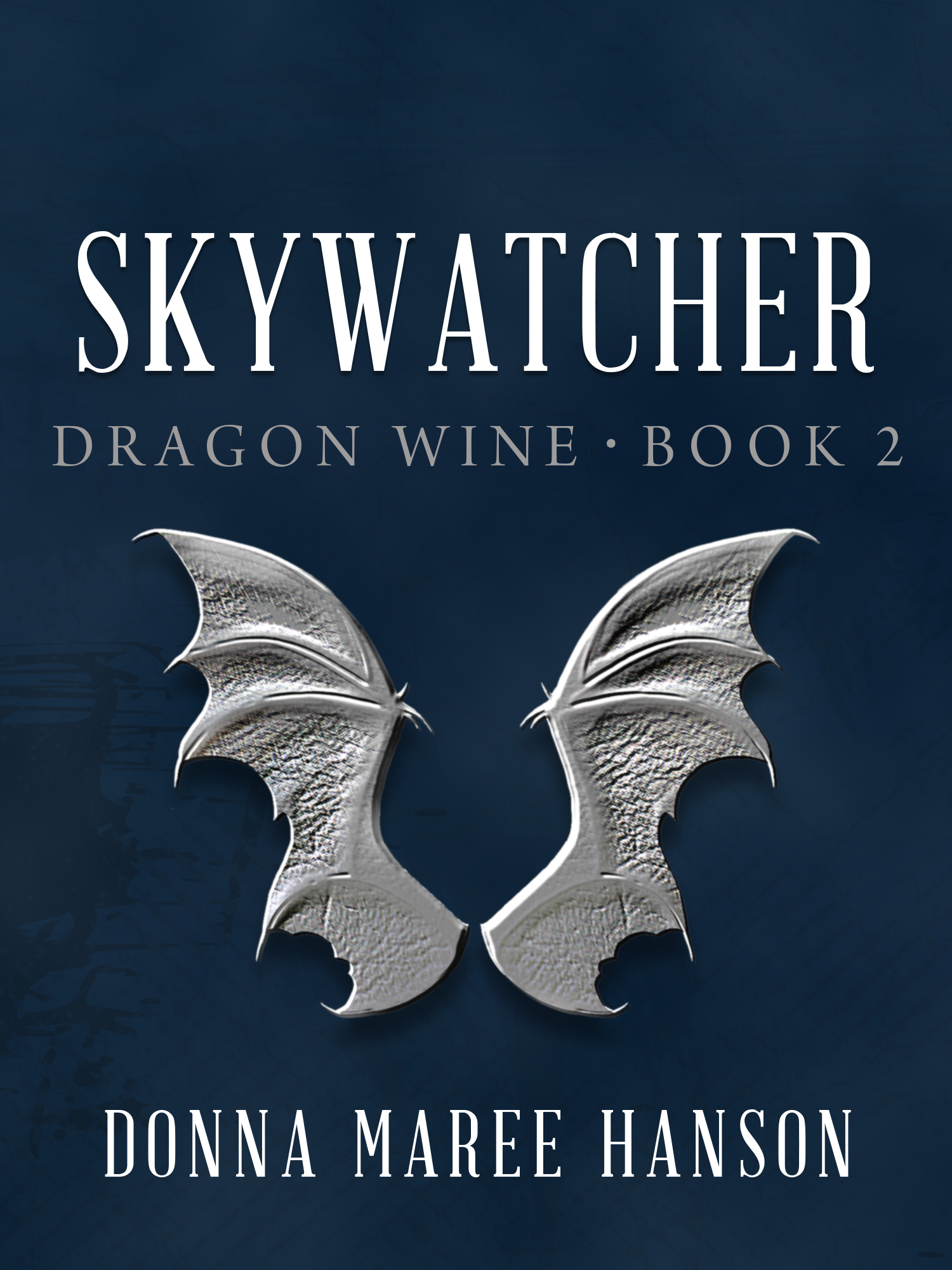
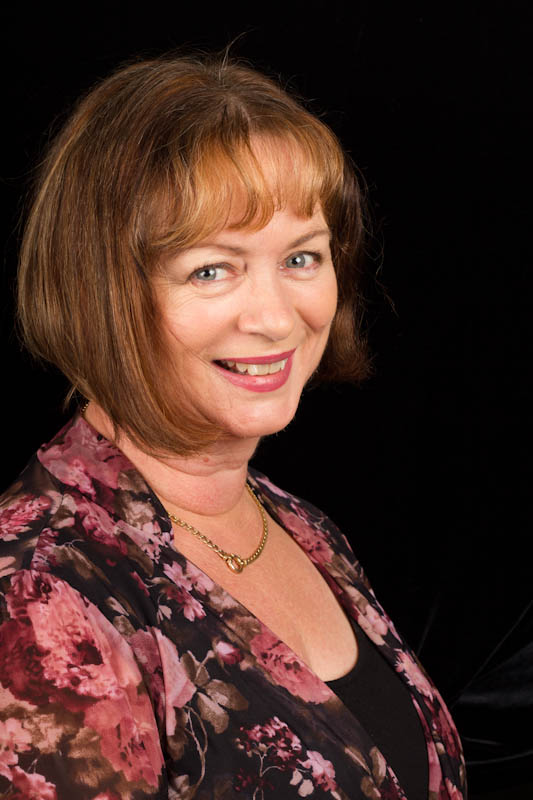 Donna Maree Hanson is a Canberra-based writer of fantasy, science fiction, horror, and under a pseudonym paranormal romance. She has been writing creatively since November 2000 and has been a member of the Canberra Speculative Fiction Guild (CSFG) since 2001. She has had about 20 short stories published in various small press and ezines. In January 2013, her first longer work, Rayessa & the Space Pirates, was published with Harlequin’ s digital imprint, Escape. In September 2014, the first book in the Dragon Wine series, Shatterwing was published Momentum Books (Pan Macmillan Australia’s Digital Imprint) The second book, Skywatcher, was published in October 2014.
Shatterwing and Skywatcher are available in ebook and print.
You can visit Donna at her blog.


October 20, 2014
Dewey’s read-a-thon
I’ve always been a bookworm and this weekend I got a chance to really indulge by participating in Dewey’s 24-hour read-a-thon. It started at 11pm local time. Not being masochistic enough to go for the full 24-hours, I made sure to get a good night’s sleep (really, it’s safer for everyone). My tweets tell the rest of the story.
[View the story "Dewey's read-a-thon" on Storify]
This read-a-thon was a bit quieter than usual for me. I managed 7 hours of actual reading time and finished off 2 books, compared to the 9 hours and 6 books I made it through last time. However, I had a lovely time interacting with the community on Twitter and was very happy to reduce the height of Mt TBR by any amount.
In contrast, the read-a-thon itself seems to be growing bigger every time. Almost 1000 readers signed up. I want to send a huge thank you to the organisers. They work tirelessly to make sure there are hourly hosts, mini-challenges and prizes. They also organise teams of cheerleaders to make sure that each and every reader who has signed up gets supported and encouraged throughout the day. I had a few members of Team Bronte stop by and leave comments (of course the teams are named after literary figures!)
If you’re feeling like you missed out on the fun, don’t despair! The next read-a-thon will take place on 26 April 2015 for Australia. I already have it marked in my calendar.