Elizabeth Fitzgerald's Blog: Earl Grey Editing, page 3
December 19, 2021
My Favourite Reads of 2021
As usual, Earl Grey Editing will be shutting down over the Christmas break. I’ll be on holiday from today until 3 January.
Since this is my last post of the year, I thought I’d share with you some of my favourite reads of 2021. This comes with the usual caveat that these are not books that were necessarily published this year, just read by me this year.
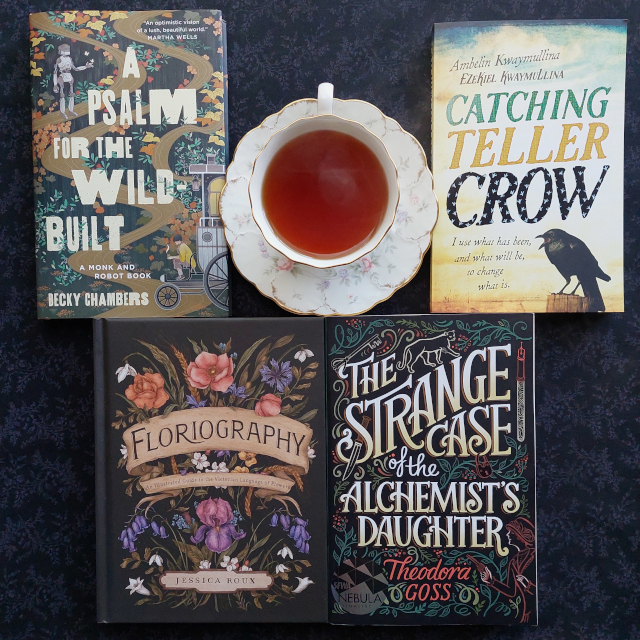
Speculative FictionA Psalm for the Wild-built by Becky Chambers. Sibling Dex is a tea monk in service to the God of Small Comforts. They ride around the moon of Panga listening to the problems of others and dispensing tea and permission to take a quiet moment. They have worked very hard to be good at what they do and are recognised for their efforts. But even though they have a good life, they remain unsatisfied. On a whim, they leave the area of Panga settled by humans and strike out into the wilderness. There they encounter the first robot seen by humans in centuries.
I love Becky Chambers’s work, and also rated The Galaxy and the Ground Within very highly. But A Psalm for the Wild-built feels like it was written just for me and remains a balm to my heart. You can read my full review here.
Catching Teller Crow by Ambelin Kwaymullina. This is a masterfully-told story about the ghost of an Indigenous girl who goes with her father to investigate a fatal fire in a small rural town in Australia. I reread this with my book club this year and was pleased to be able to share it with them. You can read my full review here.
A Desolation Called Peace by Arkady Martine. Book 2 in the Teixcalaan series. Having rescued Lsel Station from the threat of the Teixcalaan Empire (at least for the time being), Ambassador Mahit Dzmare returns home to find she’s in even more hot water there. Fortunately, she’s saved (again, at least for the time being) by the wheels that she set in motion. The new Emperor has sent out a fleet to investigate Mahit’s report of a ravenous alien race not far from Lsel Station. When the fleet captain puts out a call for a diplomat and linguist to make first contact, Three Seagrass answers, collecting Mahit along the way.
This was such a satisfying sequel, just as full of political intrigue as its predecessor. The relationships and contrasts were skillfully handled. I’ve still got my fingers crossed for more in this series. You can read my full review here.
The Extraordinary Adventures of the Athena Club by Theodora Goss. This series follows the adventures of Mary Jekyll and the rest of the daughters of literature’s mad scientists as they attempt to thwart the dark legacies of their fathers. I listened to the audio version, which was superbly narrated by Kate Reading. While the women of the Athena Club are very different and don’t always see eye to eye, there remains genuine affection between them. I am always here for female friendships and I very much enjoyed the feminist take on these classic works of literature.
The Empress of Salt and Fortune by Nghi Vo. A monk comes to a manor where the last empress was exiled. As they catalogue the items there, a former handmaiden tells them stories related to the items. Set in a world inspired by Imperial China, this is a fierce tale about the powerlessness and power of women.
RomanceAs usual, just go ahead and assume I’d include almost everything Courtney Milan has ever written. I managed to catch up on her Brothers Sinister series, which was packed full of genius women. However, for a more recent release:
The Devil Comes Courting by Courtney Milan. Third book in the Worth Saga. If Captain Greyson Hunter wants to bring the telegraph to China, he needs to find a way of translating Chinese characters into something like Morse Code. On a tip from a friend, he discovers just the person to do it: Amelia, a young Chinese woman brought up by an English missionary. Already widowed once, Amelia is about to be married off again by her family. As usual, Milan doesn’t pull any punches as she dives into the effect of colonialism on China during this period; she continues to write such intelligent romances. The relationship was also very sweet. Although the characters don’t necessarily spend much time together, their ways of keeping in touch were heart-warming. I also enjoyed seeing Amelia blossom into independence.
Non-fictionBraiding Sweetgrass by Robin Wall Kimmerer. A series of essays written by a Native American ecologist about her relationship with the natural world. By turns heart-breaking and uplifting, it encouraged me to see the world in a different way. Of all the books I’ve listed, it’s this one (and A Psalm for the Wild-built) that I can see myself returning to over and over.
Floriography by Jessica Roux. A simple dictionary of the Victorian language of flowers, accompanied by beautiful botanical illustrations. It includes the meaning of each flower, the origin of that meaning and some suggestions of other flowers to pair it with based on the intended message. Accessible and beautiful.
So, those were my favourite reads of 2021. What were yours?


 The post My Favourite Reads of 2021 first appeared on Earl Grey Editing.


December 12, 2021
Earls of a Grey Feather
With 2022 breathing down our necks, it seems like an excellent time to introduce some changes that will be taking place with the Earl Grey Editing blog in the new year.
First up, I’m very pleased to announce that I will be joining Nerds of a Feather as a regular reviewer. The existing team write some really thoughtful content, the quality of which is attested to by the fact they’ve been nominated for a Hugo Award every year since 2017. I’m thrilled that they’ve taken me under their wing. You can already find my introductory interview up on their site.
Becoming a NoaF contributor means that once a month (at this stage) there will be a link here taking you to my post on the Nerds of a Feather site. To better align my schedule with NoaF, posting will be shifted to Thursdays AEST.
Posting frequency will also increase to once a week. In addition to my usual review post, Mt TBR update, and now NoaF review, I’m also returning to an old interview series.
In its original form, Brewing Community focused on experiences of community in speculative fiction and fandom circles. It touched on how these networks could be both supportive and stressful. This time around, I wanted to put some focus on how these experiences of community may have changed in recent years, and how people would like to see them change, as well as delving into what books and media have brought comfort. I’ll have some former interviewees returning, as well as plenty of new ones. I’m very excited to share what they have to say.
With all of this going on, I’m sure 2022 will prove to be an adventure. I hope you’ll join me.

 The post Earls of a Grey Feather first appeared on Earl Grey Editing.
December 5, 2021
2021 Awards Eligibility

The end of the year means holiday madness, the last-minute panic to complete annual goals, and the beginning of a new awards season. So naturally, it’s time for my obligatory eligibility post.
Works I’ve ReviewedMy reviews this year have been fewer and less focused on local works this year, so a single list will suffice. All works below are eligible for the Hugo Awards, with additional eligibility noted.
A Desolation Called Peace by Arkady Martine
A Marvellous Light by Freya Marske (also eligible for the Ditmar Awards)
A Psalm for the Wild-built by Becky Chambers
Foxhunt by Rem Wigmore (also eligible for the Sir Julius Vogel Awards)
Theft of Sunlight by Intisar Khanani
Winter’s Orbit by Everina Maxwell
These reviews mean I’m eligible for fan writing categories for both the Ditmar and Hugo Awards.
A Note on AwardsThe Hugos are the international popularly-voted awards for SFF. Traditionally, they’re presented at Worldcon. In 2022 that will be held in Chicago, USA on 1-5 September.
The Ditmar Awards and the Sir Julius Vogel Awards are respectively the Australian and New Zealand equivalents of the Hugo Awards.
Of particular note, and unlike the Hugos and the Ditmars, nominators for the Sir Julius Vogel Awards do not have to have membership to any particular conventions or be of any particular nationality; the nominated work simply must be by a New Zealand creator. So, if you have read anything that fits the bill, I strongly encourage you to nominate it at the appropriate time.
Happy nominating, everyone! If you have recommendations, I’d love to hear them!

 The post 2021 Awards Eligibility first appeared on Earl Grey Editing.
November 30, 2021
Mt TBR Report: November 2021
November proved yet another very slow reading month. However, this was offset by some serious unhauling of my Mt TBR. I’m hoping to squeeze in some more sorting so that I can go into the new year with more of a mound than a mountain. Or at least a mountain instead of a mountain range.
Mt TBR StatusMt TBR @ 1 January 2021: 426
Mt TBR @ 31 October 2021: 393
Mt TBR @ 30 October 2021: 361
138. Sleepless, Vol. 1 by Sarah Vaughan. Fantasy, graphic novel. The bond between an illegitimate princess and her sleepless knight is tested when the king dies and several attempts are made on the princess’s life. I found the idea of the sleepless knights particularly interesting and for the most part enjoyed the relationship between the women in this story. It ended on a terrible cliffhanger.
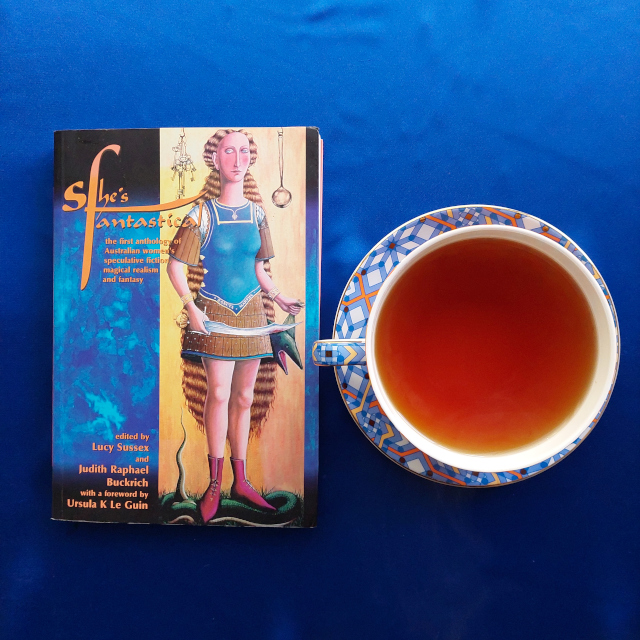
139. She’s Fantastical edited by Lucy Sussex and Judith Raphael Buckrich. An anthology of feminist Australian SFF work. Published in 1995 (and featuring a few historical works), some of the stories were quite dated in their ideas and overall I found the style a bit too experimental for my taste.
140. A Marvellous Light by Freya Marske. Historical fantasy m/m romance. First in the Last Binding series. Reviewed here.
141. Big Magic by Elizabeth Gilbert. Nonfiction. Reread
142. Harrow the Ninth by Tamsyn Muir. Science fantasy. Second book in the Locked Tomb series. Harrow joins the Emperor’s war. This book is as bonkers as the protagonist. Written mostly in second person and featuring an unreliable narrator, it’s not clear what’s going on for two thirds of the book. There’s a brief window of clarity and then the ending muddies the waters once more. For the most part, I enjoyed it, though I would have liked a little more clarity at the ending.
143. Rosewater by Tade Thompson. Science fiction, Afrofuturism. First book in the Wormwood Trilogy. Book club pick. A psychic discovers that someone or something is killing off other sensitives. Some interesting ideas, but I didn’t particularly connect to any of the characters and I found all the violence and sex somewhat tiresome.
144. A Night to Surrender by Tessa Dare. Historical f/m romance. First book in the Spindle Cove series. A reclusive community of spinsters find the peace of their town under threat when the new earl attempts to establish a militia. I didn’t feel this was the best of the author’s work, but it was still a lot of fun. The battle of the sexes felt playful while still showing that it has edges and serious consequences. And I adored the Spindle Cove community.
AcquisitionsUnderland by Robert McFarland
A Week to be Wicked by Tessa Dare
Dark Rise by C.S. Pacat
Hyperbole and a Half by Allie Brosh

 The post Mt TBR Report: November 2021 first appeared on Earl Grey Editing.
November 21, 2021
A Marvellous Light by Freya Marske
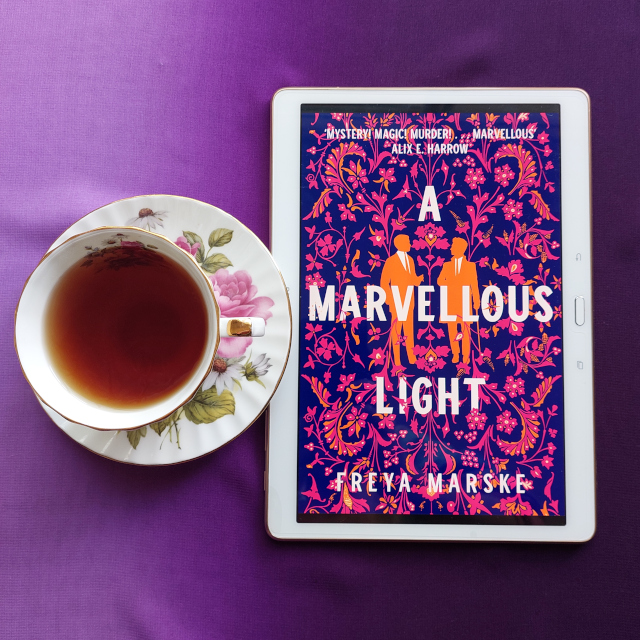
An incomplete list of things that I love: historical fantasy romance; sunshine/stormcloud pairings; competent ladies (even as side characters); land magic; sentient (or semi-sentient) manor houses; stolen kisses in a private library. I’m pretty sure A Marvellous Light was written just for me.
An administrative error sees Sir Robert Blyth (Robin to his friends) become a civil service liaison to England’s magical bureaucracy. His predecessor has disappeared and Robin’s magical counterpart, Edwin Courcey, is not happy about it. However, when Robin is cursed, the two are forced to work together to unravel both curse and mystery.
Robin is the sunshine of the pair, although he doesn’t have a lot of cause to be cheerful. His parents spent or gave away most of the family fortune, leaving Robin to scrape together enough to keep things running after they died. Being treated like items in their parents’ art collection forged a strong bond between Robin and his sister, but he doesn’t exactly have many friends. In fact, it was a rival of his parents that assigned him his new position, thinking it to be a dead-end job. Nevertheless, for the most part, Robin remains charming, well-mannered and extremely likeable. While intellectual pursuits are not his strong point, he’s good with people and an astute judge of character. He’s a little reckless, but sweet. He’s also totally clueless about magic.
In contrast, Edwin Courcey is from a powerful old magic family. Possessing very little magic himself, he has been the butt of their disdain for years and it has taught him to hold few things dear, lest they be taken from him. What he lacks in magical power, he makes up for with knowledge and intelligence. His prickly surface makes his underlying tenderness and vulnerability all the sweeter.
One person with whom he shares this tender side is his mother, who suffers from chronic illness. Although we see little of her on the page, we get to see what it costs her when she interacts with even a couple of people. Such representation in a historical fantasy was refreshing.
M/M romances can often suffer from a lack of female characters, but I was delighted to see that wasn’t the case in A Marvellous Light. While it could have stood to show a few more female friendships, the variety in the female characters worked well, ranging from badass to bad-tempered. A couple of highlights for me included Robin’s sister, Maude, who loves her brother dearly but is insistent he send her to university now that their parents are out of the picture. Another is Miss Morrissey, Robin’s new secretary, whose fearsome competence is the only reason the office isn’t falling down around their ears… but who was overlooked for Robin’s role by virtue of being female and Punjabi.
The magic system is an interesting one. While the use of gestures in magic is hardly a new idea, it’s not often the sole focus and the author manages to frame it in an original way. Giving Edwin an assistive device in the form of a simple bit of string makes the system both visceral and comprehensible, as well as being an interesting bit of character building.
Cleverly, this dominant form of magic is also not the only form of magic in the book. Land magic also makes an appearance in a number of ways. The presence of multiple systems of magic give some nuance to the story, particularly in relation to marginalised magic users and the subversion of the dominant form. However, this depiction of land magic has thus far been very much tied to Western conceptions of land ownership and boundaries. Perhaps this is fitting for the setting and genre, but remains vaguely disappointing. Despite that, I found it highly entertaining to see two city boys be chased around by a murderous hedge.
The ending was a well-balanced mix of enough conclusion to be satisfying, while at the same time leaving some big loose ends to be woven in to the rest of the series.
I am a big fan of KJ Charles and A Marvellous Light has a similar feel to much of her work: similar period of history, a good balance between action and character development, similarly explicit sex. One difference that’s worth noting is in relation to the sex scenes; while Charles tends to feature strong BDSM elements, they are only very faintly present in A Marvellous Light. This is perhaps balanced out by the torture scene the latter opens with.
So, while I had a few quibbles, A Marvellous Light was very much my cup of tea and is a strong opening to a very promising series.
Published: November 2021 by Tordotcom
Format reviewed: E-book (epub), 437 pages
Series: The Last Binding #1
Genres: Historical fantasy, romance
Source: Kobo
Available: Abbey’s ~ Amazon (AU, CA, UK, US) ~ Barnes & Noble ~ Book Depository ~ Booktopia ~ Dymocks ~ Indiebound ~ Kobo

 The post A Marvellous Light by Freya Marske first appeared on Earl Grey Editing.
November 7, 2021
Mt TBR Report: October 2021

With the Magical Readathon concluding at the end of September, I found October a slower month for reading. Amusingly enough, it seemed to have a focus on history — be it historical fantasy, historical romance or alternate history.
Mt TBR StatusMt TBR @ 1 January 2021: 426
Mt TBR @ 30 September 2021: 392
Mt TBR @ 31 October 2021: 393
129. Floriography by Jessica Roux. Nonfiction. A simple dictionary of the Victorian language of flowers, accompanied by beautiful botanical illustrations. It includes the meaning of each flower, the origin of that meaning and some suggestions of other flowers to pair it with based on the intended message. Accessible and beautiful.
130. The Harp of Kings by Juliet Marillier. Historical fantasy. First book in the Warrior Bard series. Reviewed here.
131. Gentlewomen of the Press by Tansy Rayner Roberts. Nonfiction. A series of short essays about girl reporters in literature and pop culture.
132. Now That I See You by Emma Batchelor. Memoir. Book club pick. A young woman’s recounting of her partner coming out as trans. This was an awful read. The narrator was shallow, pretentious and narcissistic, showing at many turns what a toxic person she was. It was mostly written in diary form, but the few third-person sections were clumsy. I’m entirely baffled how this book won the Vogel Literary Award and I’m angry that she would commodify her relationship in such a way.
133. Romancing the Duke by Tessa Dare. Historical romance. First in the Castles Ever After series. The daughter of a famed author inherits a dilapidated castle and the blind duke who thought he owned it. This Beauty and the Beast retelling was just the palate cleanser I needed after that last book. Tessa Dare really knows how to lean into a trope and even makes a blatant Star Wars joke.
134. The Creative Tarot by Jessa Crispin. Nonfiction. Looks at ways of interpreting the tarot as a guide for writers and other creatives. It offered some interesting perspectives, though some felt a little run-of-the-mill.
135. The Relentless Moon by Mary Robinette Kowal. Alternate history science fiction. Third book in the Lady Astronaut series. Book club pick. While balancing her roles as an astronaut and a governor’s wife, Nicole must investigate who is attempting to sabotage the Moon colony. I loved this book and its strong mystery element. I was also delighted to see an older woman as a protagonist, particularly one that has anorexia. An engaging and satisfying read.
136. The Devil Comes Courting by Courtney Milan. Historical romance. Third book in the Worth Saga. If Captain Greyson Hunter wants to bring the telegraph to China, he needs to find a way of translating Chinese characters into something like Morse Code. On a tip from a friend, he discovers just the person to do it: Amelia, a young Chinese woman brought up by an English missionary. Already widowed once, Amelia is about to be married off again by her family. As usual, Milan doesn’t pull any punches as she dives into the effect of colonialism on China during this period; she continues to write such intelligent romances. The relationship was also very sweet. Although the characters don’t necessarily spend much time together, their ways of keeping in touch were heart-warming. I also enjoyed seeing Amelia blossom into independence.
137. A Dance with Fate by Juliet Marillier. Historical fantasy. Second book in the Warrior Bards series. When Dau is accidentally blinded in a display bout with Liobhan, he is forced to return to his abusive home, where Liobhan will serve a year as a bond servant in reparation. Comes with lots of trigger warnings for abuse, torture and cruelty to animals. I loved seeing the relationship between Dau and Liobhan continue to develop. Brocc’s story was weaker and I found it rather frustrating.
AcquisitionsFloriography by Jessica Roux
Rewild Yourself by Simon Barnes
King of Scars by Leigh Bardugo
A Court of Thorns and Roses by Sarah J Maas
Say Yes to the Marquess by Tessa Dare
Harrow the Ninth by Tamsyn Muir
How to Catch a Wild Viscount by Tessa Dare

 The post Mt TBR Report: October 2021 first appeared on Earl Grey Editing.
October 17, 2021
The Harp of Kings by Juliet Marillier

Juliet Marillier has long been a favourite of mine, mostly thanks to her deft blending of magic, fairytale and history. Of all her books, the Blackthorn and Grim trilogy have been my favourite, so I was delighted when she released a new series about the children of the eponymous couple.
Liobhan and Brocc are students at Swan Island, a hidden community of warriors and spies. Competition for graduate positions is fierce, with most of the cohort failing and being sent home. However, the siblings are talented and have a good chance at being accepted. Nevertheless, they are surprised when their teachers request they undertake a mission; their talents as musicians make them ideal candidates to track down the missing Harp of Kings.
The Harp of Kings brings together several of Marillier’s older series. There are direct references to the Sevenwaters and Wolfskin series, plus of course Blackthorn and Grim. You don’t need to have read any of these before The Harp of Kings, though I think it helps to have read Blackthorn and Grim. Not only does it provide context about the parentage of Liobhan and Brocc, but it also has the strongest stylistic influence.
For example, as with the previous series, this book is told in first person, with the point of view alternating between three characters: Liobhan, Brocc and their fellow student Dau. Marillier has mentioned before that she’d hoped to continue writing more of Blackthorn and Grim after the final book in their trilogy, Den of Wolves (indeed, the conclusion of that book suffered somewhat from feeling rushed). While she hasn’t been afforded that opportunity, the characters of Blackthorn, Grim and (redacted) map rather neatly onto the POV characters in The Harp of Kings.
Liobhan is a woman in a male-dominated field and is the only female candidate to Swan Island among her cohort. She’s been brought up by her feminist mother to know her own value. Hungry for success, she fights hard and is good at what she does. Her confidence can be misinterpreted as cockiness, and indeed, if she were a male character I might enjoy seeing her get her comeuppance. Instead, her battle with her temper in the face of the patriarchy makes her all the more sympathetic. And fighting is not all she does; her skills as a musician are highly valued. Nor is she afraid to show her vulnerability.
Her brother, Brocc, is less warrior and more bard. It is clear from early on that he’s only on Swan Island for his sister; his heart lies more truly with his music, his head in the clouds. He doesn’t desire power, but misses home.
The final POV character is Dau, a fellow student and rival of Liobhan’s. Being brought up more traditionally, he harbours some sexist views and tries to convince Liobhan to give up fighting in favour of the more feminine pursuit of music. His voice is more distinct, tending towards the factual and detached, though this softens along with his character — and indeed with our view of him as we come to learn more of his backstory.
The story’s premise also owes something to the parent trilogy, which often involved the investigation of some mystery that most likely has some kind of supernatural element. As with many of the author’s works, the fae have a strong presence, though it’s not always recognised immediately. Other common signature elements present include dogs and herbalism.
I would give a content warning on this book for cruelty to animals, bullying and sexual assault.
I’m not sure how I feel about the continued presence of sexual assault in Marillier’s work. The incident in The Harp of Kings certainly could have been much worse, and is a far cry from the rape that took place in the first of the Sevenwaters books, Daughter of the Forest. And it is important to acknowledge the existence of such incidents, particularly as they relate to the themes of female powerlessness and feminism present in this book and its parent trilogy. However, I’m not fond of their reoccurrence across the author’s body of work.
The book also doesn’t do much with diversity on any spectrum. While Dau masquerades as mute farrier’s apprentice for much of the story, his muteness is mostly for plot purposes and is discarded when it doesn’t serve. The story doesn’t really delve into the lived experience of permanently being that way.
However, on the whole, I enjoyed The Harp of Kings. It served up exactly what long-time fans of Marillier have come to expect, and will appeal to readers who will appreciate badass lady warriors and historical fairytales.

 The post The Harp of Kings by Juliet Marillier first appeared on Earl Grey Editing.
October 5, 2021
Mt TBR Report: September 2021
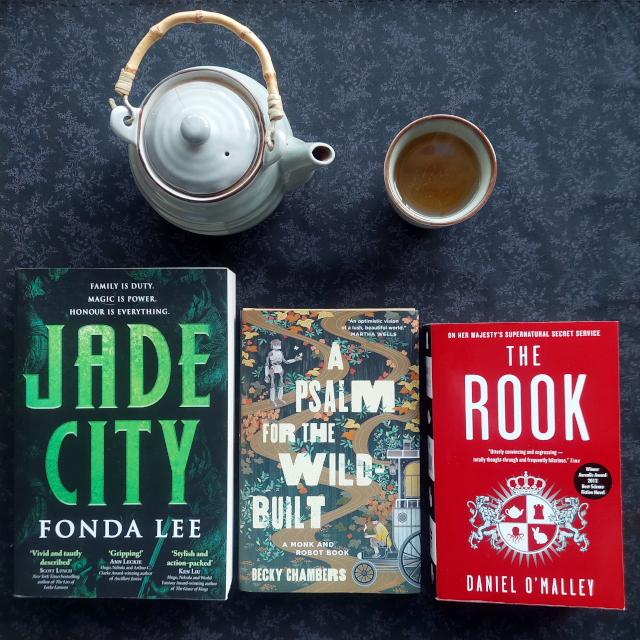
September was dedicated to the Magical Readathon, run by the incomparable G of the Book Roast. Oddly, this made the number of books I read this month drop considerably, though the average number of pages per book went up. I had a blast with both RPG elements of the challenge as well as the reading elements, and am very much looking forward to it running again in April.
Mt TBR StatusMt TBR @ 1 January 2021: 426
Mt TBR @ 31 August 2021: 394
Mt TBR @ 30 September 2021: 392
120. A Psalm for the Wild-built by Becky Chambers. Solarpunk novella. First in the Monk and Robot series. Book club pick. Reviewed here.
121. Daughter of the Forest by Juliet Marillier. Historical fantasy. First in the Sevenwaters series. A retelling of the Six Swans fairy tale. Sorcha, the youngest of seven siblings, must remain silent as she weaves six shirts out of nettles in order to break the curse her stepmother has laid on her brothers. This is a skilled retelling that I mostly enjoyed. However, the presence of rape (here, as in all fantasy from the 90s and earlier, it seems) was something of a sour note, and the ending glossed over a few difficult elements.
122. The Siren by Tiffany Reisz. Contemporary erotica. First in the Original Sinners series. A notorious erotica writer must work with a demanding editor to get her breakout novel into shape. This isn’t a traditional romance narrative and a bit more emotionally gruelling than I was anticipating. I found it interesting, but need a break before I attempt the next book in the series.
123. The Once and Future Witches by Alix Harrow. Alternate history. Book club pick. Three estranged sisters are brought together by witchcraft and join the suffragist movement. This was an interesting story with lovely language and a knack for twisting the familiar into something new and feminist. However, it was perhaps a bit long and meandering, and lacked the whimsy of The Ten Thousand Doors of January.
124. Mooncakes by Suzanne Walker and Wendy Xu. Contemporary fantasy graphic novel. Book club pick. A werewolf pursued by dark forces returns to a small town and their witchy childhood crush. This wasn’t particularly deep, but sweet and cosy — perfect reading for an evening when I was battling a nasty headache. My one reservation was that I wasn’t entirely sold on the ending.
125 & 126. Be My Fantasy and Stay My Fantasy by Alisha Rai. Contemporary romance. A politician’s daughter and his protege uncover each other’s secrets. These really should have been a single novel rather than split into two parts. Racy, but not particularly memorable.
127. The Rook by Daniel O’Malley. Review forthcoming.
128. The Last Graduate by Naomi Novik. YA fantasy, dark academia. Second in the Scholomance series. A young sorceress with dark powers faces her final year in a school that’s trying to kill her. I’d be very surprised if this didn’t start its life as Harry Potter fanfic. The protagonist is snarky and delightful. Lighter on the horror tropes this time around. The ending was pitch perfect and had me screaming, being unaware there’s a third book to come. I can’t wait to find out what happens next.
AcquisitionsMooncakes by Suzanne Walker and Wendy Xu
Sorcery and Cecelia by Patricia C. Wrede and Caroline Stevermer
The Grand Tour by Patricia C. Wrede and Caroline Stevermer
The Mislaid Magician by Patricia C. Wrede and Caroline StevermerThe Last Graduate by Naomi Novik
Jade City by Fonda Lee

 The post Mt TBR Report: September 2021 first appeared on Earl Grey Editing.
September 19, 2021
A Psalm for the Wild-built by Becky Chambers
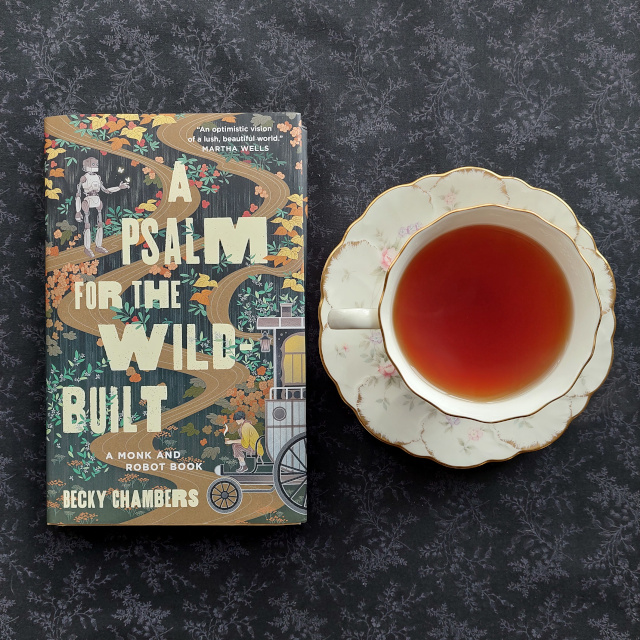
Today has not gone to plan. A weather change is coming through, leaving me in a significant amount of pain. I need to start making dinner in an hour and the kitchen is still a disaster from yesterday. The dog is whining to be taken for a walk (again). And I’ve been trying to write this review all day; I need to get some words down so that it doesn’t become yet another task piled on tomorrow’s list. In the midst of all this chaos, A Psalm for the Wild-built by Becky Chambers is a book I can turn to for comfort.
Sibling Dex is a tea monk in service to the God of Small Comforts. They ride around the moon of Panga listening to the problems of others and dispensing tea and permission to take a quiet moment. They have worked very hard to be good at what they do and are recognised for their efforts. But even though they have a good life, they remain unsatisfied. On a whim, they leave the area of Panga settled by humans and strike out into the wilderness. There they encounter the first robot seen by humans in centuries.
A Psalm for the Wild-built is a novella that fits squarely in the genre of solarpunk. This is perhaps most obvious in the setting and worldbuilding. Like most solarpunk, it is set in a world that was heading towards ecological catastrophe but managed to pull back from the brink and develop more sustainable ways. Sibling Dex starts in the one city left on Panga. There’s greenery and solar panels everywhere, while the buildings are made of biodegradable materials. This society moved away from fossil fuels, so there’s nary a car in sight; Sibling Dex tours the countryside on a bike with an electric motor, towing a wooden caravan. While we don’t see a lot of the small towns Dex regularly visits, the impression is given that each of these has found their own unique way of living, adapted to their particular landscape. Chambers once again shows her mastery by giving us enough worldbuilding for the place to feel interesting and lived in, but not enough so that we feel like we have seen it all and thus leaving room for the rest of the series.
However, solarpunk is about more than just setting, it is about hope. A Psalm for the Wild-built hits this even before the story has started, with the dedication reading “For anybody who could use a break.” If that sounds relatable, so will many of the other problems you find in this story. They range from the mundane (like forgetting to put out a towel before getting in the shower) to the significant (messing up the first day at a new job) to the existential (feeling like you have no purpose in life). These are not high conflict problems but are still shown to be important and made Dex a very sympathetic character. Their journey through these problems shows them to be fallible and there’s comfort in knowing that if this person — who surely seems from the outside to have their life together and who offers needed respite to others — can face these things and find a way through, then perhaps I can too. They also show that we can all use a break from time to time.
Much of the solace and wisdom offered to Dex comes from the robot Mosscap. In her previous work, Chambers has shown a knack for making alien species seem at once both truly alien and yet also relatable. In A Psalm for the Wild-built, she uses that skill for her robot, allowing her to tackle head-on some common stereotypes regarding robots that frequently show up in science fiction. Via Dex’s misunderstandings, she’s able to point out how these stereotypes perhaps haven’t been thought through particularly well and instead offering a smarter and more compassionate alternative.
For a novella, it packs in a lot and I could spend several thousand more words discussing it (I haven’t even started on the intersection between Zen Buddhist and Indigenous perspectives). Instead, it suffices to say that A Psalm for the Wild-built is a smart and compassionate tale that will reward rereading. It’s a reminder to take a break that I highly recommend.

 The post A Psalm for the Wild-built by Becky Chambers first appeared on Earl Grey Editing.
September 5, 2021
Mt TBR Report: August 2021
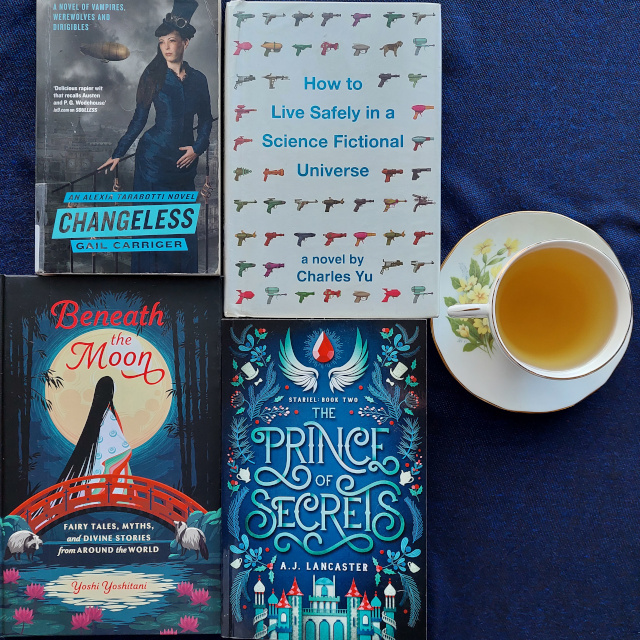
The urge to do some spring cleaning hit me this month and particularly targeted my Mt TBR. It was finally time for me to let go of some things that I just wasn’t ever going to get around to reading. I’ve not noted the specifics of what I unhauled, but you can see the impact in my numbers.
I don’t think I’m done yet.
Mt TBR StatusMt TBR @ 1 January 2021: 426
Mt TBR @ 31 July 2021: 428
Mt TBR @ 31 August 2021: 394
104. Romancing the Inventor by Gail Carriger. Steampunk f/f romance. A parlourmaid starts working for a hive of vampires but finds herself falling for the eccentric inventor who serves them. The romance was sweet, but the sexual harassment from the other members of staff and the threat from the vampires made for a tense read. The characters’ blind spots were also a little frustrating at times.
105. Romancing the Werewolf by Gail Carriger. Paranormal m/m romance. After 20 years, Professor Lyall returns home to his new pack leader. I’ve been following these characters for a while, so it was wonderful to see them finally come together.
106. Overdues and Occultism by Jamie Sands. Contemporary fantasy romance. A young YouTuber with a channel on ghost hunting comes to the library where a repressed witch works. One of the Witchy Fiction line, this is a short and sweet story about stepping out of your comfort zone, especially when it has grown too small.
107. A Wizard’s Guide to Defensive Baking by T. Kingfisher. YA fantasy. Hugo nominee. A young girl with a talent for magic baking finds a dead body on her bakery floor. This was a delightful adventure that had me in tears of laughter. One of the more original takes on magic that I’ve seen in a while. Beware of carnivorous sourdough starters.
108. Succulents and Spells by Andi C. Buchanan. Contemporary fantasy romance. Reviewed here.
109. Joyful Militancy by Nick Montgomery and carla bergman. Nonfiction. Discusses the ways in which activism can become rigid and toxic and points to some ways to counterbalance these tendencies. Not quite what I was expecting, but an interesting read nonetheless.
110. Ruin and Rising by Leigh Bardugo. YA fantasy. Last in the Shadow and Bone trilogy. Alina must recover her strength and find the last of the amplifiers before the Darkling destroys Ravka. A most satisfying conclusion to the series.
111. A Taste of Honey by Kai Ashante Wilson. Science fiction. A young nobleman falls in love with a foreign soldier. This story goes in some fantastically unexpected directions and does some interesting things with gender roles. I’ll be keeping an eye out for more from this author.
112. Beneath the Moon by Yoshi Yoshitani. Mostly an art book, it contains one-page retellings of 52 different fairytales, folk lore or sacred stories from around the world. The artwork is gorgeous.
113. Prince of Secrets by A.J. Lancaster. Fantasy. Second in the Stariel series. Life for the butler of Stariel Estate begins to fall apart when his identity as a fae prince is revealed and his family start showing up at the estate. I’m really enjoying this series and liked the switch to Wyn’s perspective.
114. Foxhunt by Rem Wigmore. Solarpunk. Reviewed here.
115. A Lily Among Thorns by Rose Lerner. Historical f/m romance. A former prostitute turned innkeeper reunites with the man who gave her the money to turn around her life. I found this had a rather different vibe to Lerner’s Lively St Lemeston series, being more focused on intrigue between English and French spies. However, this was delightful in its own way. The characters had a wonderful intensity and the story showed the precariousness of being an independent woman in strongly patriarchal times.
116. Practical Magic by Alice Hoffman. Contemporary(ish) fantasy. Magic follows the Owens sisters wherever they go and whether or not they believe in it. Wonderfully atmospheric. I enjoyed the focus on the various relationships between all the Owens women, across the generations.
117. Changeless by Gail Carriger. Steampunk fantasy. Second in the Parasol Protectorate. Alexia heads to Scotland to track down her husband and the answers to what is affecting the supernatural population of London. I found this somewhat lacklustre, though this may be in part because I’ve read spoilers in later books in this world. Nevertheless, the ending left me without any desire to pursue the rest of the series.
118. Boy Problems by AppleJuiz. Fanfic of the Tom Holland Spiderman movies. With Peter and MJ growing closer, Ned feels himself increasingly on the fringes. Ned’s voice wasn’t as strong as those the author uses for Peter and MJ. However, it remains well-written and the end scene with Ned and MJ was very sweet.
119. The Lady’s Guide to Celestial Mechanics by Olivia Waite. Historical f/f romance. First in the Feminine Pursuits series. A rich widow hires a female astronomer to translate a French scientific text. Another book about the precariousness of being an independent woman in a strongly patriarchal time, this time with a side order of the theft of feminine scientific achievements. I loved the way these women supported each other.
DNF*Note that these DNFs are separate from the books I unhauled*
The Ninth Rain by Jen Williams. Fantasy. Picked up on audio. I rather liked the dead tree god, but on the whole the vibe was a lot darker than I felt up to reading. I may come back to this another time.
How to Live Safely in a Science Fictional Universe by Charles Yu. Literary fiction. Book club pick. I got seven pages in and put it down because I couldn’t stand the protagonist, and the way the AI was portrayed was rather sexist. This turned out to be a good choice because my (speculative fiction) book club were disappointed to find it much more in the literary tradition than a science fiction one.
AcquisitionsChangeless by Gail Carriger
Psalm for the Wild-built by Becky Chambers
Never Say You Can’t Survive by Charlie Jane Anders
Ill Wind by Rachel Caine
Heat Stroke by Rachel Caine
Chill Factor by Rachel Caine
The Once and Future Witches by Alix Harrow
Show Me Where It Hurts by Kylie Maslen
The Care and Feeding of Waspish Widows by Olivia Waite
Riverwitch by Rem Wigmore

 The post Mt TBR Report: August 2021 first appeared on Earl Grey Editing.