Elizabeth Fitzgerald's Blog: Earl Grey Editing, page 49
April 27, 2015
Dewey’s Read-a-thon: April 2015
Dewey’s 24-hour Read-a-thon took place on Sunday, Australian time. For those who have somehow managed to miss my incessant posting about it, the event is basically a chance for book geeks across the world to get together and read as much as possible. It is also held in honour of its founder, a book blogger who went by the name Dewey, who passed away several years ago. I participated in my very first read-a-thon in April 2011 and haven’t looked back since.
Usually, I start the read-a-thon with a pile of books, but this time around I thought I’d try something different.
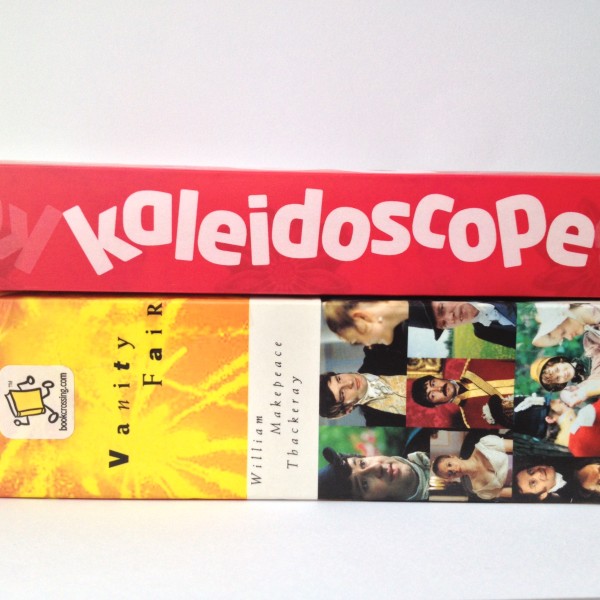
I’d started Vanity Fair a few weeks ago. Although I found it reasonably engaging, I had to put it down a couple of times in order to tackle some review books and it always took me a little bit to pick up the threads again. I figured the read-a-thon would be a good chance for me to put a serious dent in it. I had Kaleidoscope to fall back on if I needed some short stories to break things up.
So how did it go?
Hour 1 – On Your Mark, Get Set….: It’s that time!!! START READING!!!! Mini-Challenges Opening Meme Prize Win… http://t.co/zxTVehzpv6 — Dewey’s Read-a-thon (@readathon) April 25, 2015
The read-a-thon started at 10PM local time which is about the time I was going to sleep. I picked up around Hour 10.
Good morning, everyone! I’m just making my first cup of tea and am about to get started on the #readathon — Elizabeth Fitzgerald (@elizabeth_fitz) April 25, 2015
Starting mark:
6% done with Vanity Fair, by William Makepeace Thackeray http://t.co/FN6Wl2sIAH — Elizabeth Fitzgerald (@elizabeth_fitz) April 25, 2015
For some people, snacks are a key ingredient of the read-a-thon. For me, it’s tea. I’m sure no one is surprised by that. I kicked off with a plain green.
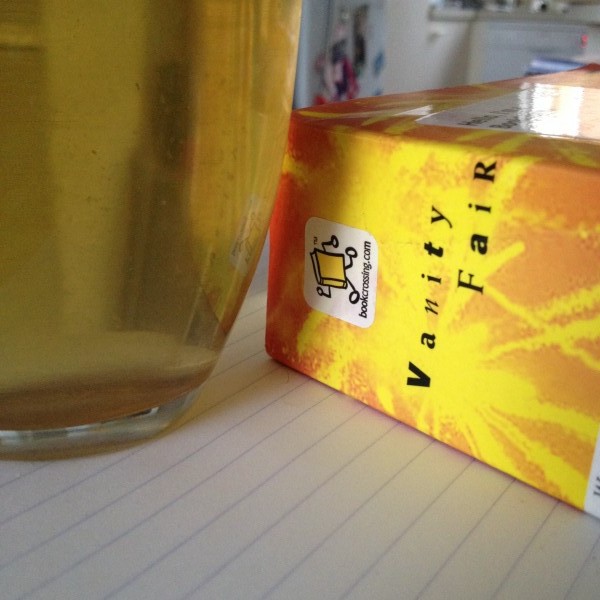
Hour 12: Mid-Event Survey with Meow! http://t.co/fhfyHRdGHA #readathon — Dewey’s Read-a-thon (@readathon) April 25, 2015
9% done with Vanity Fair, by William Makepeace Thackeray http://t.co/Y8Q7WiigVt — Elizabeth Fitzgerald (@elizabeth_fitz) April 25, 2015
So many names to keep track of! Switching#readathon material for a bit. — Elizabeth Fitzgerald (@elizabeth_fitz) April 25, 2015
It was time to go a bit darker with some Turkish Black tea and a copy of the first Malifaux rulebook on loan from Matthew Farrer.
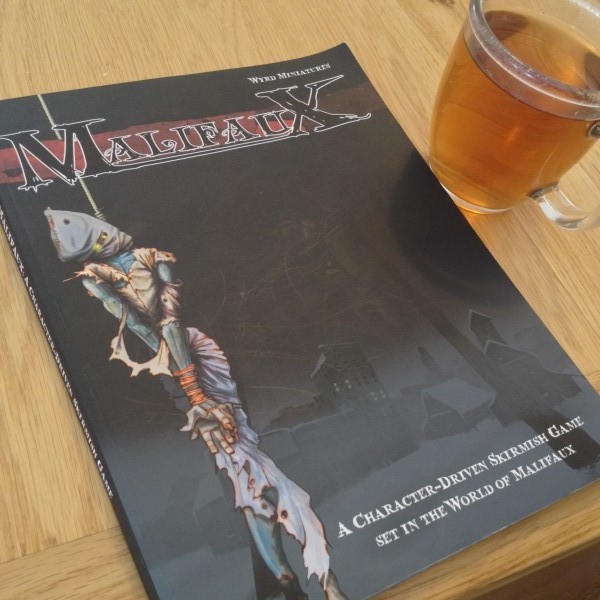
I’d previously started reading the rulebook and figured it wouldn’t take me long to finish it off. Besides, I like to prioritise borrowed books.
The Hour 13 post is up here: http://t.co/3NOMHvFFF2 #Readathon — Dewey’s Read-a-thon (@readathon) April 26, 2015
On page 94 of 212 of Malifaux Rule Book, by Wyrd Miniatures http://t.co/MqY1KTHOZi — Elizabeth Fitzgerald (@elizabeth_fitz) April 25, 2015
Breaking out the Turkish Black tea for the #readathon. Might need some toast to go with it. — Elizabeth Fitzgerald (@elizabeth_fitz) April 26, 2015
I’d been saving the last of the Turkish Black especially for the read-a-thon because it was decently strong on caffeine and one pot lasted me the whole day.
The Hour 14 post is up! Go check it out, readers: http://t.co/5kK3RKXP6x #Readathon
— Dewey's Read-a-thon (@readathon) April 26, 2015
On page 104 of 212 of Malifaux Rule Book, by Wyrd Miniatures http://t.co/G2EMgazf1a — Elizabeth Fitzgerald (@elizabeth_fitz) April 26, 2015
With two cups of tea down, it was time to switch to water. 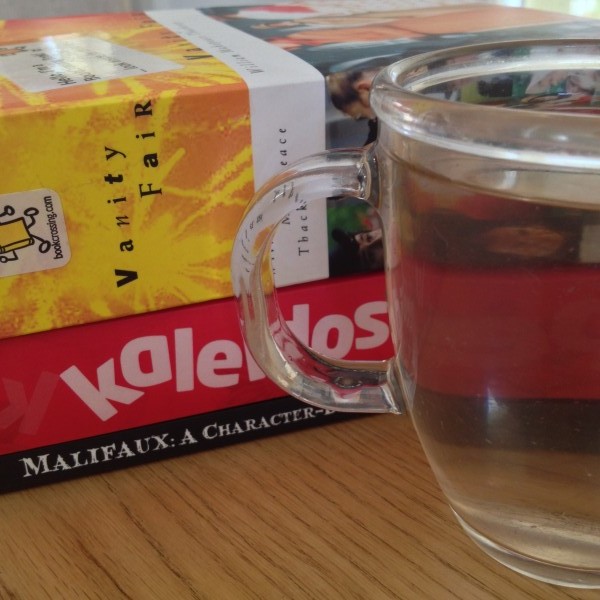
I will be giving away a copy of Haven Lost to 1 #readathon participant. To enter just tell me what's your favourite readathon snack!
— Holly (@Holly1994) April 26, 2015
Congratulations to @elizabeth_fitz who won the book giveaway. Please direct message me your email address so I can send it over! #readathon
— Holly (@Holly1994) April 26, 2015
I joined the #readathon to finish some books… and instead I end up with another book! I’m definitely an addict


April 23, 2015
Loose-leaf Links for April
Awards News
Hugo Awards
The shortlist for the Hugo Awards was announced at the beginning of the month amid much controversy. SF Signal have an annotated shortlist showing the original nominations as well as the replacements that were made after nominations were declined or found ineligible. It also has links to where the nominations can legally be read for free–or at least a sample, in the case of the longer works.
If you’re looking to get a handle on the controversy, Black Gate offers clear and concise explanation. Black Gate was nominated for Best Fanzine and one of its writers, Matthew David Surridge, for Best Fan Writer. Both have turned down the nominations. Surridge posted a detailed explanation regarding why he turned down the nomination.
The drama over nominations hasn’t left Australia unaffected. Andromeda Spaceways Inflight Magazine was nominated for Best Semiprozine and only discovered after they’d accepted that this was due to their inclusion on the Sad Puppies slate. ASIM member Simon Petrie has offered his thoughts on the situation and in the comments he touches on the reasons why the publication hasn’t subsequently turned down the nomination. As a long-time subscriber to ASIM, I find it disappointing that this recognition has been tainted by the manner in which it has come about.
Other Awards News
The 2015 Stella Prize was awarded on Tuesday night to Emily Bitto for The Strays. The Stella Prize is a major literary award celebrating Australian women’s writing.
The shortlist for the Norma K. Hemming Award has been announced. The Norma K Hemming Award is given annually by the Australian Science Fiction Foundation to mark excellence in the exploration of themes of race, gender, sexuality, class and disability in speculative fiction first published either in Australia or by an Australian citizen.
With the 2014 Aurealis Awards presented earlier this month, a call has gone out seeking potential judges for 2015. I was sorely tempted to apply myself. Applications close at the end of the month, so you’d best hurry!
On Diversity
Going back to the Hugos for a moment, Aidan Walsh takes a look at the nationality of Hugo winners. Spoilers: good luck if you’re not from the US or the UK.
Relatedly, Israeli publisher Gili Bar-Hillel writes on how con programmers (and particularly WorldCon programmers) ghettoise panel presenters not from the US or the UK. Thanks to Kathleen Jennings for bringing this to my attention.
Also via Kathleen, the Queensland Writers Centre is celebrating its 25th anniversary. To mark the occasion, they are crowdfunding for the inaugural Scholarships and Access Fund.
The goal is to provide funding and travel support to writers from diverse backgrounds – to help them engage with QWC programs and access creative and professional development that might otherwise be unavailable for financial and/or geographic reasons.
…The Scholarships and Access Fund aims to encourage voices less heard. Writers to benefit from the program include, for example: young writers; Aboriginal and Torres Strait Islander (ATSI) writers; writers who identify as living with a disability; female writers; lesbian, gay, bisexual, transsexual, transgender, intersexual and queer-identifying (LGBTTIQ) writers; writers from culturally and linguistically diverse (CALD) backgrounds; and writers from remote or regional Queensland.
Speaking of crowdfunding, I mentioned the Defying Doomsday anthology from Twelfth Planet Press in my last Loose-leaf Links post. This anthology will contain apocalypse-survival stories featuring characters experiencing physical impairments, chronic illnesses, mental illnesses and/or neurodiversity. It has just been announced that a story by Seanan McGuire will be included. The anthology has until the end of the month to meet its crowdfunding goal.
Strange Horizons takes a look at the gender and race balance of books reviewed and of reviewers across a range of SF review venues.
Via Renay from Ladybusiness: Joe Sherry reviews the diversity in his 2014 reading material. The second half of the post makes some particularly good points on why he tracks the diversity in his reading.
March was Women’s History Month. In case you missed Gillian Polack’s annual blog series, she has a handy round-up of all the guest posts.
For Writers
I always choose to hear the bad news first. So, in that vein, the Guardian reports that the earnings of the majority of authors in the UK do not meet minimum-wage level.
If that hasn’t discouraged you (and I hope it hasn’t), there are some wonderful publishing opportunities coming up. Beginning 1 May, Fablecroft Publishing are having an open reading period for middle-grade and YA science fiction.
Ticonderoga Publications are appalled at the Australian Government’s current refugee policy and are protesting by creating an anthology.
People leave their homes behind, setting off, often risking everything, in search of a new start, a better life. We are looking for stories that emphasise what makes these people the same rather than focussing on where they are going, exploring the idea this is something that could happen to anyone and that seeking refuge in a new land can be a good thing, both for the migrant and for the place that becomes their new home. Stories that look at the inhumanity of indefinite detention of refugees, of allowing them to be stripped of their dignity and sanity.
Stories that explore the potential benefits of allowing refugees to establish a new, safer life.
They will be open for submission throughout the month of June. Authors will be paid professional rates, with any profits being donated to the Asylum Seeker Resource Centre
If you’re thinking about submitting to either of these markets, perhaps consider naming your story something other than these .
I wish I could make all my potential clients read this. Dan Hanks interviews the wonderful Abigail Nathan of Bothersome Words on hiring a freelance editor.
For Readers
Speculative Fiction 2015 are looking for contributors to their non-fiction SFF anthology. If you run across a favourite review, blog, author, or article published on the internet in 2015, let them know!
Speaking of which, the contributors to Speculative Fiction 2014 were announced this month.
BookRiot have published the results of their 2014 reading habits survey.
Which brings me to Dewey’s 24 Hour Read-a-thon! If my calculations are correct (and I make no promises on that front), this will be kicking off in Australia on Saturday, 25 April at 10pm AEST. If you need to tame your own Mt TBR (don’t we all?) or are looking to connect with a great community of book bloggers, it’s not too late to join! You can sign up, follow on Twitter, join the Goodreads group or any combination of the three. The read-a-thon website will be running warm-up posts containing great advice all the way up until the event.
Don’t be intimidated by the name. You don’t have to go for the full 24 hours–I’ll be going to bed just as things get started. However, I will be participating all of Sunday. You can follow my progress on Twitter or wait for my report here next week. Please stop by, say hi and join me for a little reading of your own. If you’ve already signed up, I’d love you to leave me a comment about what you’ll be reading.


April 20, 2015
Review: Saga, Volume 3
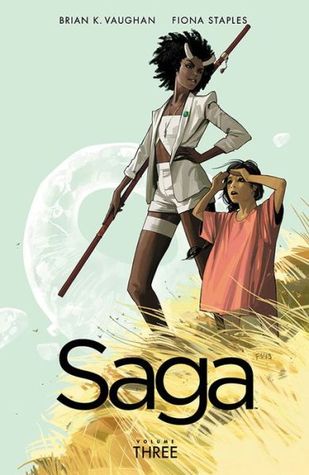
Published: March 2014 by Image Comics
Format reviewed: Paperback, 144 pages
Series: Saga #3
Genres: Science fantasy, space opera, speculative fiction, graphic novel
Source: On loan from friends
Available: Abbey’s ~ Amazon ~ Book Depository ~ Booktopia ~ Dymocks
Disclaimer: This review contains spoilers for previous volumes.
From the Hugo Award-winning duo of Brian K. Vaughan (The Private Eye, Y: The Last Man) and Fiona Staples (North 40, Red Sonja), Saga is the sweeping tale of one young family fighting to find their place in the universe. Searching for their literary hero, new parents Marko and Alana travel to a cosmic lighthouse on the planet Quietus, while the couple’s multiple pursuers finally close in on their targets.
As you may have gathered by now, I’ve become a bit of a fan of this series and Volume 3 has done nothing to dissuade me. The artwork remains gorgeous and the fast-paced fun makes an excellent foil for some serious material.
The volume opens by introducing readers to two new characters. This surprised me a little (isn’t the cast already big enough?) until I remembered that this was space opera. Sweeping settings and large casts are features of this sub-genre that Saga most definitely utilises. The introduction of new characters also balances the turnover that takes place in previous volumes.
After the introduction, Volume 3 returns its focus to our heroes. The action picks up a few weeks after the death of Marko’s father and grief is a definite theme. Not only do we watch as Marko and his mother, Klara, try to come to terms with their loss, but we also get to see the effects of grief on other characters–such as The Will and Mister Heist. Each grief is a little bit different and dealt with in different ways, allowing some wonderful nuance.
This volume also explores Alana’s background a bit more. I was a bit disappointed that it wasn’t given as much space as Marko’s, especially when coupled with the return of the sexualised slurs against Alana. I can only hope this treatment is building up to something that pays off later in the series. In the meantime, I found Alana’s stepmum, Even, very entertaining. Her wings were a great clue to her personality, a nice touch from Fiona Staples.
I haven’t yet commented on the diversity of the series, which has been fantastic. There has been a nice balance of races and genders all the way through. This volume introduces the first explicitly gay characters and hints at the discrimination they have faced back on their home planet. I’m very much looking forward to getting to know these characters better.
In my review of the last volume, I mentioned the meta commentary on reading and fandom. Volume 3 continues this entertaining commentary and even expands it to include artists and illustrators. Alana has proven herself to be very much one of my people with her vehement dislike of spoilers.
Now to get my hands on Volume 4…


April 16, 2015
Australian SF awards season
There has been so much controversy surrounding the shortlist for the Hugo Awards over the last couple of weeks that international readers may be forgiven for thinking it was the only speculative fiction awards news of any note. However, Australian readers will know this is certainly not the case. Over the Easter weekend, the Australian National Science Fiction Convention (Natcon) took place in conjunction with SwanCon 40 in Perth, Western Australia. The event saw the presentation of the Australian SF awards (the Ditmars).
For those unfamiliar with Australian speculative fiction awards, the Ditmars are Australia’s equivalent of the Hugos. Anyone in fandom can nominate, and attendees of the current and previous Natcons get to vote on the shortlist. There’s a full list of nominees and winners, but for now I’d just like to congratulate Helen Stubbs on winning Best New Talent. I published one of Helen’s first stories in Winds of Change and have been delighted to see her build on that so successfully.
I’d also like to congratulate Donna Maree Hanson on being presented the A. Bertram Chandler Award. Donna has been a guest here previously and this award recognises the huge contribution she has made to the Australian speculative fiction community. She was the inaugural president of the Canberra Speculative Fiction Guild and has been involved in running several Conflux conventions. There’s hardly a member of the Australian speculative fiction community she doesn’t know (or so it seems) and she has done a great deal to make the scene a warm and welcoming one. It is wonderful to see her hard work recognised.
Less than a week after the Ditmars were presented, segments of the community gathered again–this time on the east side of the continent–for the 2014 Aurealis Awards. Instead of being voted on by fandom, the Aurealis Awards are judged by panels of industry professionals. This year marked the 20th anniversary of the awards. Guests were invited to dress up in 90s costume (and several did, as you can see in Cat Sparks’ Flickr album). Master of Ceremonies Margo Lanagan treated us to excerpts of stories that won the inaugural awards, setting many people squirming when it came to the horror category.
Angela Slatter had an excellent year, winning every category for which she was nominated. Fortunately, she’d had the foresight to write a slightly different acceptance speech for each category.
Having taken out the Ditmar for Best Collected Work, Kaleidoscope, edited by Alisa Krasnostein and Julia Rios, added to its accolates by snagging the Aurealis Award for Best Anthology.
A full list of nominees and winners is below. Congratulations to all!
BEST FANTASY NOVEL
Fireborn, Keri Arthur (Hachette Australia)
This Shattered World, Amie Kaufman and Meagan Spooner (Allen & Unwin)
The Lascar’s Dagger, Glenda Larke (Hachette Australia)
Dreamer’s Pool, Juliet Marillier (Pan Macmillan Australia)
Afterworlds, Scott Westerfeld (Penguin Books Australia)
Daughters of the Storm, Kim Wilkins (Harlequin Enterprises Australia)
BEST FANTASY SHORT STORY
“The Oud”, Thoraiya Dyer (Long Hidden, Crossed Genres Publications)
“Teratogen”, Deb Kalin (Cemetery Dance, #71, May 2014)
“The Ghost of Hephaestus”, Charlotte Nash (Phantazein, FableCroft Publications)
“St Dymphna’s School for Poison Girls”, Angela Slatter (The Review of Australian Fiction, Volume 9, Issue 3)
“The Badger Bride”, Angela Slatter (Strange Tales IV, Tartarus Press)
BEST SCIENCE FICTION NOVEL
Aurora: Meridian, Amanda Bridgeman (Momentum)
Nil By Mouth, LynC (Satalyte)
The White List, Nina D’Aleo (Momentum)
Peacemaker, Marianne de Pierres (Angry Robot)
This Shattered World, Amie Kaufman and Meagan Spooner (Allen & Unwin)
Foresight, Graham Storrs (Momentum)
BEST SCIENCE FICTION SHORT STORY
“The Executioner Goes Home”, Deborah Biancotti (Review of Australian Fiction, Vol 11 Issue 6)
“Wine, Women and Stars”, Thoraiya Dyer (Analog Vol CXXXIV nos 1&2 Jan/Feb)
“The Glorious Aerybeth”, Jason Fisher (OnSpec, 11 Sep 2014)
“Dellinger”, Charlotte Nash (Use Only As Directed, Peggy Bright Books)
“Happy Go Lucky”, Garth Nix (Kaleidoscope, Twelfth Planet Press)
BEST HORROR NOVEL
Book of the Dead, Greig Beck (Momentum)
Razorhurst, Justine Larbalestier (Allen & Unwin)
Obsidian, Alan Baxter (HarperVoyager)
BEST HORROR SHORT STORY
“The Executioner Goes Home”, Deborah Biancotti (Review of Australian Fiction, Vol 11 Issue 6)
“Skinsuit”, James Bradley (Island Magazine 137)
“By the Moon’s Good Grace”, Kirstyn McDermott (Review of Australian Fiction, Vol 12, Issue 3)
“Shay Corsham Worsted”, Garth Nix (Fearful Symmetries, Chizine)
“Home and Hearth”, Angela Slatter (Spectral Press)
BEST YOUNG ADULT NOVEL
The Astrologer’s Daughter, Rebecca Lim (Text Publishing)
Afterworld, Lynnette Lounsbury (Allen & Unwin)
The Cracks in the Kingdom, Jaclyn Moriarty (Pan Macmillan Australia)
Clariel, Garth Nix (Allen & Unwin)
The Haunting of Lily Frost, Nova Weetman (UQP)
Afterworlds, Scott Westerfeld (Penguin Books Australia)
BEST YOUNG ADULT SHORT STORY
“In Hades”, Goldie Alexander (Celapene Press)
“Falling Leaves”, Liz Argyll (Apex Magazine)
“The Fuller and the Bogle”, David Cornish (Tales from the Half-Continent, Omnibus Books)
“Vanilla”, Dirk Flinthart (Kaleidoscope, Twelfth Planet Press)
“Signature”, Faith Mudge (Kaleidoscope, Twelfth Planet Press)
BEST CHILDREN’S FICTION
Slaves of Socorro: Brotherband #4, John Flanagan (Random House Australia)
Ophelia and the Marvellous Boy, Karen Foxlee (Hot Key Books)
The Last Viking Returns, Norman Jorgensen and James Foley (ILL.) (Fremantle Press)
Withering-by-Sea, Judith Rossell (ABC Books)
Sunker’s Deep: The Hidden #2, Lian Tanner (Allen & Unwin)
Shadow Sister: Dragon Keeper #5, Carole Wilkinson (Black Dog Books)
BEST COLLECTION
The Female Factory, Lisa L Hannett and Angela Slatter (Twelfth Planet Press)
Secret Lives, Rosaleen Love (Twelfth Planet Press)
Angel Dust, Ian McHugh (Ticonderoga Publications)
Difficult Second Album: more stories of Xenobiology, Space Elevators, and Bats Out Of Hell, Simon Petrie (Peggy Bright Books)
The Bitterwood Bible and Other Recountings, Angela Slatter (Tartarus Press)
Black-Winged Angels, Angela Slatter (Ticonderoga Publications)
BEST ANTHOLOGY
Kisses by Clockwork, Liz Grzyb (Ed) (Ticonderoga Publications)
Kaleidoscope: Diverse YA Science Fiction and Fantasy Stories, Alisa Krasnostein and Julia Rios (Eds), (Twelfth Planet Press)
Amok: An Anthology of Asia-Pacific Speculative Fiction, Dominica Malcolm (Ed) (Solarwyrm Press)
Reach for Infinity, Jonathan Strahan (Ed) (Solaris Books)
Fearsome Magics, Jonathan Strahan (Ed) (Solaris Books)
Phantazein, Tehani Wessely (Ed) (FableCroft Publishing)
BEST GRAPHIC NOVEL/ILLUSTRATED WORK
Left Hand Path #1, Jason Franks & Paul Abstruse (Winter City Productions)
Awkwood, Jase Harper (Milk Shadow Books)
“A Small Wild Magic”, Kathleen Jennings (Monstrous Affections, Candlewick Press)
Mr Unpronounceable and the Sect of the Bleeding Eye, Tim Molloy (Milk Shadow Books)
The Game, Shane W Smith (Deeper Meanings Publishing)


April 13, 2015
Review: The Dagger of Dresnia by Satima Flavell
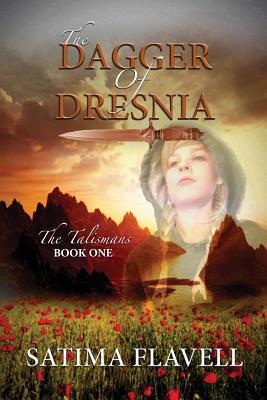
Published: April 2014 by Satalyte Publishing
Format reviewed: E-book (mobi)
Series: The Talismans #1
Genres: Fantasy
Source: Satalyte Publishing
Reading Challenges: Australian Women Writers Challenge 2015, Once Upon A Time IX
Available: Satalyte Publishing (electronic and print)
Disclaimer: I was provided with a free copy of this book in exchange for an honest review.
Queen Ellyria just wants her sick triplet sons to live, each ruling over a third of the kingdom as their dying father wished. When she finds herself trapped in a deadly bargain with a Dark Spirit, she recruits a band of young mages to help – but a terrible curse takes over. The Dark Spirit befriends her enemies and seduces her friends, and Ellyria soon finds that famine, pestilence, betrayal and bereavement are all in its arsenal. Can Ellyria unite the elvish and mortal sides of her family and in so doing, save the kingdom?
The Dagger of Dresnia is a debut novel that is a little unsteady on its feet. On one hand, it is a fairly typical fantasy novel featuring humans, elves and dwarves. As others have, it touches on racism and the clashes between those races. When elvish Ellyria married her human husband, King Fairstad, the pair pretended she had arrived from a far kingdom rather than face the hostility that would inevitably arise when her origins were discovered. As a consequence, Ellyria was cut off by her elvish family and her sons grew up without knowing their true heritage. When the Dark Spirit’s plans begin to manifest, Ellyria does what she can to heal the estrangement between the two races.
I wasn’t entirely clear what the differences were between the elves and humans. Physically, pointed ears seem to have been replaced by a birthmark under the hairline, though the elves retain their longevity and affinity for magic. Culturally, there seem to be even fewer differences between the races. While this serves to highlight the arbitrary nature of the conflict between them, it also tends to oversimplify things instead of valuing difference.
The Dagger of Dresnia moves away from typical fantasy novel in its protagonist. Although the story is told from a couple of different points of view, the main focus is on Queen Ellyria. I know of few fantasy stories where the main character is a middle-aged woman. Ellyria remains young by elven standards and beautiful by human standards, but her preoccupations are very much middle-aged and about serving as a guardian for the next generation. This manifests both in her desire for her sons to peacefully rule the kingdom and her desire to pass along her magical knowledge to the younger elves.
However, age doesn’t always equal wisdom and Queen Ellyria makes some small errors of judgement that end up having big ramifications. I found this made her easier to identify with–who hasn’t tried too hard to push on when we’re exhausted or put off important conversations because we were too busy with other urgent things?
The book’s key flaw was its lack of nuance. Everyone was exactly who they appeared to be, which made it a little predictable in places. As flaws go, this isn’t unforgivable and I expect the subsequent books will improve.


April 9, 2015
Interview with Becca Lusher
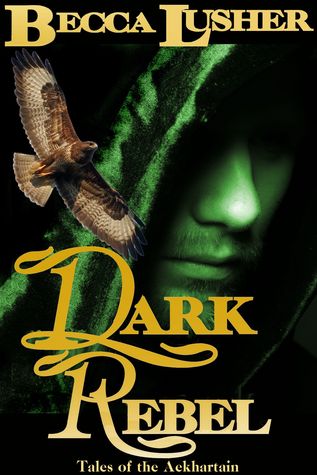
Becca Lusher and I have been friends for over a decade. I was thrilled when she started self-publishing because it meant the wider world would get a chance to meet some of my favourite characters. She recently released a new novel Dark Rebel and to celebrate I invited her for a chat.
So to kick things off, tell us a little bit about yourself.
I’m an over-imaginative, story-addict from the wild British Westcountry who writes too much, reads even more and sometimes forgets that there’s a real world with real people outside of my head. Having said that, I love being outside almost as much as I love curling up with a book. Thanks to the beautiful area that I live, caught between the moor and the sea, the natural world frequently takes over my stories – when I’m not tramping around it with my dogs and various members of my family.
I’ve been sharing stories on the Internet for more than a decade, but last year I took the plunge and became a self-published author. Considering that I’m an absolute fail at social media it seems to be going well.
 Self-publishing is working out well for you. What factored into your decision to go down that path instead of pursuing traditional publishing?
I tend to write stories that don’t fit into traditional genres or match current fads. My Aekhartain series, for instance, ranges from short stories to multi-novel mini-series, spanning a timeline from pre-Roman Britain to several centuries in the future, with side-steps onto other worlds that vary in levels of magic. Since I knew they would likely never find a traditional home I thought I’d give it a try myself, just to test the waters. I’ve tried the traditional route in the past, but I’m really bad at selling myself alongside my stories, which isn’t the cleverest way to go about things.
I much prefer for my stories to speak for themselves, while I work up my confidence to put myself out there more. I might never be a best seller this way, but it’s working well enough for the moment.
Variety is one of the things I love most about your Aekhartain series. So far you’ve released a near-future science fantasy (Orion’s Kiss), a fantasy f/f romance (Sing to Me), two historical fantasies (Unbound and Free and Dark Rebel) and a historical m/f romance (Be With Me). Can you give us an idea of what we might see next?
My next project is the second half of the Dark Rebel story, The Rebel Returns, so I’ll be sticking with the Anglo-Saxon period for one more book. Then it’s back even further to the Iron Age (about 200 BC) for the trilogy that underpins the whole Aekhartain saga, mixing prehistory with romance and plenty of fantastical moments. When those are dealt with I plan to tell a couple of contemporary Aekhartain tales before heading into the near-future, which I’m really looking forward to. I love history, but I sometimes find specific research takes the joy of discovery out of it for me, so writing forwards is always fun. There’s also a possibility I might break out into full fantasy to save myself from Aekhartain madness. If so it’ll probably involve elite riders on giant eagles, living in a world flooded by clouds where people live on mountaintops – also known as the Overworld.
I try not to plan more than one book ahead at a time, because something always crops up to change things (Dark Rebel was supposed to be one book, not two), but even when my schedule changes I still plan to write and release the books. Eventually. For now, though, The Rebel Returns and the Icarus Child trilogy are fairly certain to appear this year. Everything else will have to wait until after that. 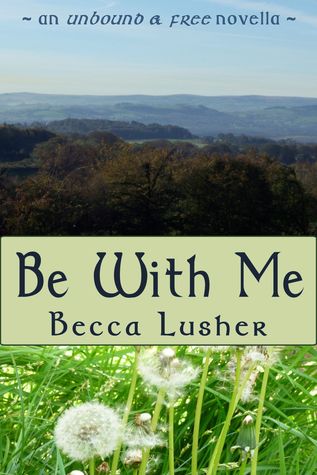
Your Tales of the Aekhartain involves a pretty epic timeline and an impressive cast. Are there any tricks you use to stay organised?
I use notes. Lots and lots of notes, some on random scraps of paper, but most in wordpad and notepad. Mostly, however, I’m lucky enough to have a talent for retaining copious amounts of useless information – capital of Kazakhstan, anyone? – which I put to good use with all my stories, but particularly the Aekhartain. When it comes to details, I’m a bit of a continuity fiend too, which definitely helps.
Despite all the planning, it sounds like your stories are still capable of catching you off-guard. What has been the biggest surprise your characters have sprung on you?
My stories are a constant surprise to me. I’m a terrible planner. Whenever I try and make a detailed plan it gets derailed in spectacular style. Mostly I write with only a vague idea of where I’m headed, so surprises are sprung all the time. I’ve lost count of the number of times a throwaway detail or random character have turned out to be pivotal the ending, without having any idea why I put them in the first place. I sometimes suspect my head is being messed with by a nebulous, brilliant writer who keeps throwing out crumbs in the hope that one day I might do something right. I hope they don’t get bored and wonder off before I get there!
The biggest surprise regarding the Aekhartain is that ten years on and over a hundred stories later I’m still coming up with new ideas for them. Not bad for a concept that was born out of a very late-night Internet conversation regarding a magpie-winged, white-haired guy with purple eyes (although Shaiel has blue eyes these days). I can’t remember why or how he came up back then, I’m just glad he did, and that he’s still around demanding stories today.
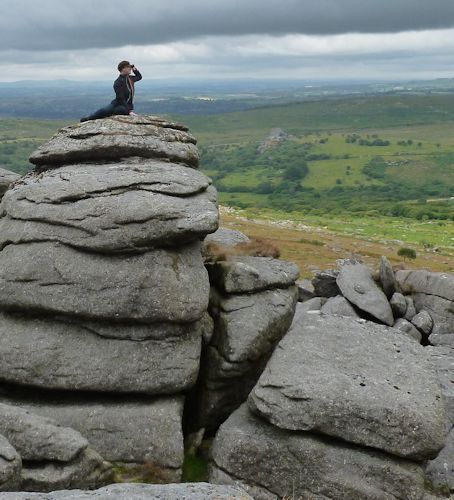
Born and raised in the British Westcountry, Becca can still be found there today, running around with her dogs, getting bossed about by her cat and taking lots of photos of gorgeous landscapes, preferably with rocks in. When not doing yoga or gardening for bees and butterflies, she has been known to write stories. The Aekhartain are just one of the many universes she likes to play with. And if you think she has a thing for corvids, you’d be right.
Got something to ask or say, or want to know more, then visit her at: beccalusher.com.


April 6, 2015
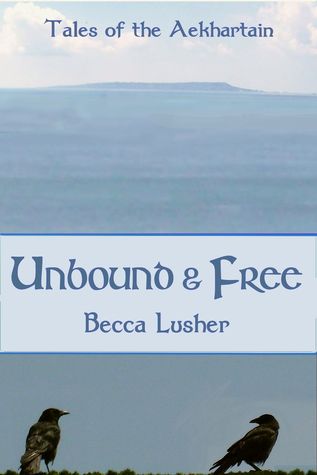
Review: Unbound and Free by Becca Lusher
Published: July 2014 by Smashwords
Format reviewed: E-book (mobi)
Series: Tales of the Aekhartain (Historical Aekhartain #1)
Genres: Historical fantasy
Source: Smashwords
Reading Challenges: Once Upon A Time IX
Available: Amazon ~ Smashwords
Disclaimer: The author is a friend. I have done my best to give an unbiased review.
Demairo’s life is far from easy. Living on an isolated island with a father who hates him and a mother he adores, things are difficult enough without the whispering voices that cry on the wind. Because this is no ordinary island.
Luckily Demairo is no ordinary child, and he has some unusual friends to support him. But a storm is coming, and no amount of crows, seals or shining stars can save him – unless he chooses to be saved.
A choice is only the start of the journey.
Set in Roman Britain (456AD), Unbound and Free is a collection of four stories following Demairo across almost thirty years as he finds out where he truly belongs.
Although the blurb calls Unbound and Free a collection of stories, I found it better to treat them as a single novel. The first of the novellas, Jealousy’s Shadow introduces us to Demairo and his family. It is clear from the beginning that the dynamics between them are uncomfortable at best, so if domestic violence is a trigger for you, it might be best to give this book a miss. Demairo’s father, Dewydd, is an abusive drunk who likes to take out his anger on the young boy. Demairo’s mother, Lowena, does her best to shield her beloved son, but there is only so much she can do, especially when she has to keep the household running almost single-handedly. She gets some help from her brother-in-law, Elisud, who, while as sweet as his brother is sullen, does nothing to stop the abuse. Of everyone on the island, it is Elisud’s young daughter Ceri who has the most success in defusing Dewydd’s moods, perhaps because she is too young to fully understand the situation.
Of course, the cast list wouldn’t be complete without including the island itself. Rumours on the mainland call it cursed. Only Demairo hears the voices of drowned sailors begging to be released from their torment, but his whole family feels their influence. The gradual corrupting of the characters is nicely handled, particularly in Lowena. Atmosphere is a strength of the novella, arising from the supernatural elements of the island and the tense family dynamics.
I’m not particularly good with history, so I couldn’t say how accurate the details of the story were. I wasn’t convinced the story needed a historical setting and would have worked just as nicely as a low-magic secondary world.
The stories following Jealousy’s Shadow deal pretty directly with the aftermath of the first novella, so I won’t say much about them. The bulk of the second novella, Unbound and Free, had an intensity that matched Jealousy’s Shadow, though in quite a different way. I found the expectations Demairo’s family had of him to be a little uniform for my taste, especially since they didn’t seem to be based on anything concrete.
Unbound and Free is intended to be an entry point for new readers into Lusher’s Aekhartain series and on the whole I think it works as intended, with the exception of a few short scenes that new readers may find cryptic.
Join me on Friday for an interview with Becca.


April 2, 2015
Mt TBR report: March 2015
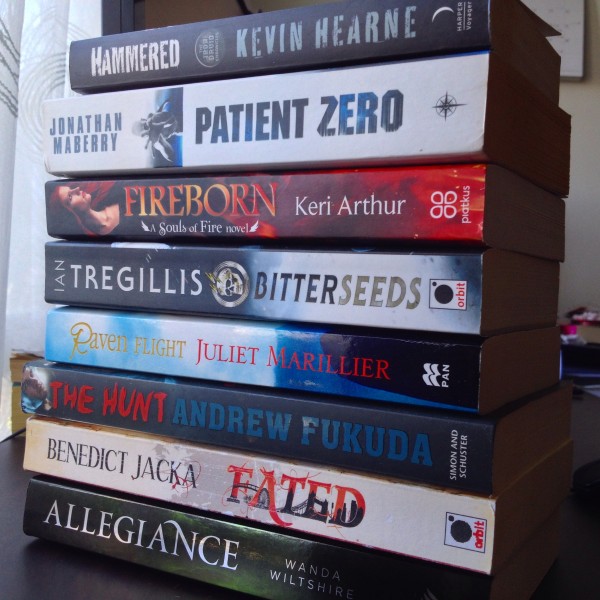
March has me well on the way to a record year in terms of the number of books I’ve read. I think I can safely say that this blog has had a definite impact on my reading patterns. However, as with last month, I’m still acquiring books faster than I’m reading them. The pile in the photo above came courtesy of a giveaway by Katherine of Ventureadlaxre.
Mt TBR status
Mt TBR @ 1 January 2015: 202
Mt TBR @ 28 February 2015: 211
Mt TBR @ 31 March 2015: 215
Books read
14. The Lost Zodiac by Catherine Tennant. A non-fiction book on the astrological properties of constellations not considered part of the traditional zodiac. Too vague to get past my scepticism.
15. Be With Me by Becca Lusher. Review forthcoming.
16. Paradise City by C.J. Duggan. My first foray into New Adult. It didn’t sell me, though I’m willing to give the genre the benefit of a doubt. This book relied too much on the humiliation of its characters for my taste.
17. Machinations edited by Chris Andrews. This anthology was a little heavy on the sci-fi for a CSFG anthology and, with a few notable exceptions, the stories left me indifferent.
18. Saga, Volume 3 by Brian K Vaughan and Fiona Staples. Review forthcoming.
19. The Dagger of Dresnia by Satima Flavell. Review forthcoming.
20. Aurora: Darwin by Amanda Bridgeman. Reviewed here.
21. Deadly Heat by Richard Castle. The fifth book in the ghostwritten Nikki Heat series tied in to the TV show Castle. The series seems to be settling in tone, though there were a few quirks in the characterisation. A bit predictable but fast-paced fluff.
Books acquired
Thief of Songs by M.C.A. Hogarth
Hammered by Kevin Hearne
Patient Zero by Jonathan Maberry
Fireborn by Keri Arthur
Bitter Seeds by Ian Tregillis
The Hunt by Andrew Fukuda
Fated by Benedict Jacka
Allegiance by Wanda Wiltshire
Aurora: Darwin by Amanda Bridgeman
City of Fae by Pippa DaCosta
Dark Rebel by Becca Lusher
Aurora: Pegasus by Amanda Bridgeman
Aurora: Meridian by Amanda Bridgeman
Online Reading
Flesh and Blood by Kantayra. Naruto m/m slash fiction. Not hugely explicit, but not suitable for all audiences. The story focuses on a relationship between two fairly minor villains. Not only does the author display a fantastic understanding of the characters but they also avoid certain romance tropes in order to portray an unexpectedly healthy relationship.
The Princess Who Didn’t Eat Cake by Lynn O’Connacht. A short allegory regarding demisexuality. I found it a little bit laboured in places but a necessary tale when there’s such a lack of awareness and acceptance of demisexuality in all its forms.


March 30, 2015
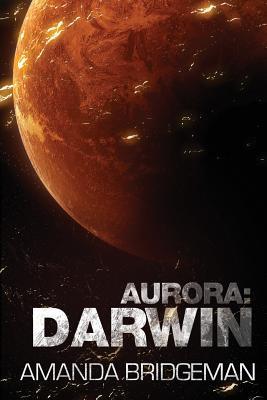
Review – Aurora: Darwin by Amanda Bridgeman
Published: 2013 by Momentum
Format reviewed: E-book (mobi)
Series: Aurora #1
Genres: Science fiction
Source: From the publisher via NetGalley
Reading Challenges: Australian Women Writers Challenge 2015
Available: Amazon ~ Barnes & Noble ~ Google Play ~ Kobo ~ Print
Disclaimer: I was provided with a free copy of this book in exchange for an honest review.
When a distress signal is received from a black-ops space station on the edge of inhabited space, Captain Saul Harris of the UNF Aurora is called in from leave to respond. But the mission is not what it seems. Female members of the United National Forces have not been allowed to travel into the outer zones before, but Harris is ordered to take three new female recruits.
For Corporal Carrie Welles, one of the Aurora‘s new recruits, her first mission in space seems like a dream come true. Determined to achieve the success of her father before her, and suddenly thrust into a terrifying mission, she must work with her new captain and the strained Aurora crew to make it home alive.
When the Aurora arrives at the station Harris and Welles soon find themselves caught up in a desperate fight for survival. Station Darwin is not what they expected. The lights are off. But somebody is home.
What’s the first thing I do after signing up for a fantasy reading challenge? Why, dive into some science fiction, of course! What makes this weirder is that I’m not a huge sci-fi reader. However, Amanda and I travel in some of the same circles, so when there was an opportunity to check out the first of her series on NetGalley I decided to give it a go.
I’m glad I did. If you’re the sort of person who wants to know how gravity is generated on board the Aurora or why the spaceship is so big in comparison to current technology, this is not going to be the book for you. This is soft sci-fi, preferring to concentrate on the relationships between characters rather than scientific details. It particularly touches on what it is like to be a woman in a male-dominated sphere.
Carrie is a relatively likeable character, being hard-working and passionate. She also has her flaws, one of which is a huge chip on her shoulder. Of the three female recruits to the Aurora, she is the one that deals most poorly with the harassment she receives at the hands of the other crew members. This may be because she is the only female recruit who specialises in combat–being a sharp-shooter–and she strives to prove she is just as good as her male counterparts at everything, even when her petite build makes that physically impossible. She verges on annoyingly foolish sometimes with the way she argues with her superior officers, but she gained back some respect from me by being quick to admit her mistakes.
There is a diverse mix of races and nationalities among the other crew members but I found the characterisation to be a bit shallow. Class differences came a little more into play, but the focus was very much on binary gender differences in a heterosexual context. This focus was somewhat integral to the plot but I hope to see more genuine diversity later in the series.
The beginning was a little rough and verged on info-dumping in places, especially when it came to setting the scene of Fort Centralis. There was also some awkwardness with abbreviations and acronyms that were mentioned once and then never come up again in the novel. However, once it got started, it was well-paced and I devoured it in no time. Some may feel the wrap-up was a bit drawn out, but I felt it held the tension well and played to that focus on character relationships, though there were elements I didn’t agree with.
Safe to say I’m hooked. I’ve already snagged the next two in the series and am looking forward to diving in.


March 26, 2015
Loose-leaf Links for March
Follow up
Readers intrigued by my review of Amanda Pillar’s Graced may be interested to know she has been doing a number of guest posts recently. You can find links on her blog. My pick is her post about juggling writing and editing.
Awards news
The Australian Romance Readers Awards were presented on 7 March. The full list of winners can be found on the ARRA website.
If romance isn’t your thing, you’re still in luck. This month saw shortlists released for the Bram Stoker Awards (for horror buffs), the Aurealis Awards (SFF) and the Stella Prize (literary fiction).
Via We Need Diverse Books: the Walter Dean Meyers Award for YA is taking submissions. If you are a diverse author who has published YA in the US, you have until 1 November to apply.
On Diversity
Exciting news from Tsana Dolichva of Tsana’s Reads and Reviews. She’s teaming up with Holly Kench and Twelfth Planet Press to create a new anthology. Called Defying Doomsday, the stories will focus on the post-apocalyptic survival of disabled, chronically ill, neurodiverse and mentally ill characters. Following in the footsteps of TPP’s Kaleidoscope, the anthology will be contingent upon a successful Pozible campaign which will be starting on 1 April.
Curating a diverse anthology is not an easy matter, as Renay of Ladybusiness recently learned. She writes about how self-censorship often kills diverse submissions before they are made.
If you are interested in issues of culture, land, ownership and speculative fiction in Australia, holdfast magazine has posted two excellent articles. Ambelin Kwaymullina offers an Indigenous perspective, while Gillian Polack writes from a non-Indigenous perspective.
N.K. Jemisin ponders the way two very similar characters of hers are judged very differently because of their gender. This also seems to tap into commentary on Jupiter Ascending.
Over on Tor.com, Kate Elliott offers some tips on writing women characters.
Readers looking to expand diversity in their reading may be interested in this list of 2015 YA reads by authors of colour over on We Need Diverse Books. AustLit have a similar list focused on Australian speculative fiction.
Or you might like to hop on over to Project Unicorn for some free genre YA featuring lesbian protagonists. Creators Sarah and Jennifer Diemer have just announced they are reopening the project for a short time.
For Writers
Fireside Fiction are looking for flash fiction and short stories up to 4000 words from all genres. Submissions close 11 April.
coeur de lion are reopening submissions for Dimension6 (Issue #1 reviewed here) beginning 27 March. Minimum length 4500 words.
Tiny Owl Workshop are opening up Lot 2 of The Lane of Unusual Traders. They are looking for flash fiction up to 500 words and short stories up to 3000 words. There are some particular requirements for this project, so please check out the submission guidelines. The deadline is 1 May for flash fiction and 31 May for short stories.
Fox Spirit Books are looking for winter-themed SFF stories set on Earth for their anthology Winter Tales. Stories should be 1500-7500 words. Submissions close 15 June.
If you are feeling a bit discouraged about your writing, Kate Elliott offers a gentle reminder that your writing is never a waste of time.
For Readers
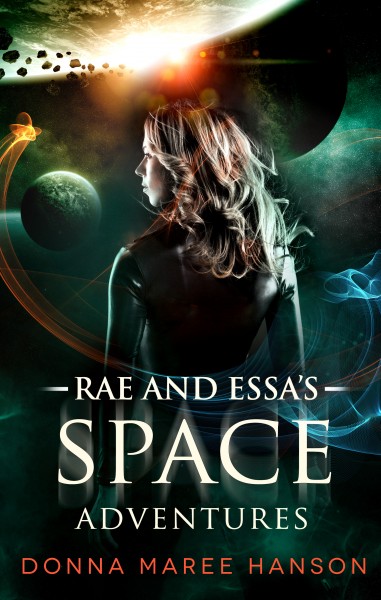
If you’re wondering about that gorgeous cover at the top of the post, Donna Maree Hanson‘s Rae and Essa’s Space Adventures is due out on 8 May from Escape Publishing. The YA SF romance is a sequel to Rayessa and the Space Pirates.
Ticonderoga Publications have announced the table of contents for their forthcoming anthology Hear Me Roar. The anthology will be available in June and is currently available for preorder.
Twelfth Planet Press’s Year’s Best YA Speculative Fiction 2013 is now available in paperback and for e-book preorders. The table of contents is impressive, as is the honourable mentions list.
Lastly, sign ups for Dewey’s 24-hour read-a-thon are now open! The event will be taking place on 26 April (Australian time). As with last time, you don’t have to participate for the full 24 hours. Just read as much as you feel comfortable.