
Lucy V. Hay's Blog, page 8
January 28, 2019
Writers Of Instagram – Which Famous Author Is The Most Mentioned?

Gone, But Not Forgotten
Many thanks to Rebecca from McGowan Transcriptions who has been in touch with this fascinating infographic, which details the most mentioned authors on instagram!
As you will see, nearly all of the below died BEFORE the advent of social media, yet they are mentioned a huuuuge amount of times. Only Maya Angelou lived to see the computerised age, she had her own Twitter account until her death in 2014).
Top 5 Authors On Insta
So, without further ado, here’s the Instagram Top 5 when it comes to famous writers:
1. William Shakespeare – 2,010,059 mentions (#shakespeare, #williamshakespeare)
2. J.R.R Tolkien – 964,045 mentions (#tolkien, #jrrtolkien)
3. Edgar Allan Poe – 789,022 mentions (#edgarallanpoe, #poe)
4. Maya Angelou – 591,462 mentions (#mayaangelou, #angelou)
5. Jane Austen – 544,636 mentions (#janeausten, #austen)
Most Mentioned Books
The infographic also notes the most mentioned books on the social media platform. Although Tolkien himself has just under a million hashtags, Lord of the Rings and The Hobbit are mentioned nearly 5 million times. This is probably unsurprising given the popularity of the films, but I think it says something about the factors that influence an author’s continued popularity over time.
So, check out the infographic and let me know what you think in the comments section!



January 13, 2019
BOOK VERSUS FILM: Bird Box – Stunning Sci Fi or Bird-brained Blunder?
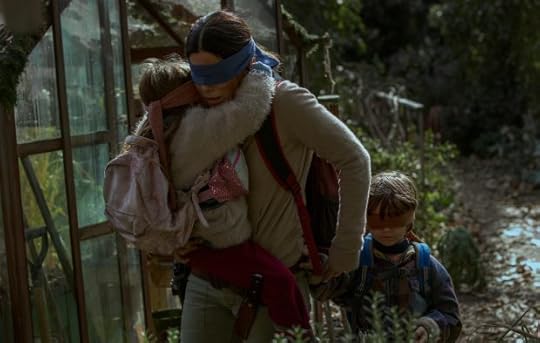
So, it’s fair to say Netflix’s Bird Box set Twitter tweeting and Facebook and instagram into meltdown! Immediately everyone started sharing opinions and Bird Box-inspired memes, plus Netflix took the step of sharing that over 45 million accounts watched the movie in its first week. Given how closely Netflix guards its viewership figures to its chest, this is particularly interesting.
Bird Box was one of my favourite reads of last year, plus the adaptation’s screenwriter is Eric Heisserer, who also adapted the Oscar-nominated Arrival (read Arrival‘s own ‘Book Versus Film’ HERE). I also interviewed Eric for my non fiction Drama Screenplays book because he wrote and directed one of my favourite dramas Hours, starring the late Paul Walker. With this in mind then, it’s also fair to say I desperately wanted his Bird Box adaptation to be good.
Read on then, for my thoughts on both the book AND the film … Be sure to add your thoughts at the bottom of the post, but please – keep it courteous. Ready? Then let’s go!
The Book
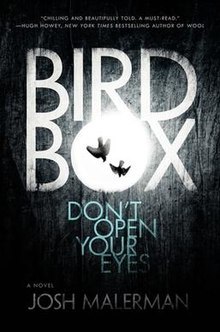 It’s tough to explain the plot of Bird Box without giving something away … But since this is a ‘Book Versus Film’, I’m going to have to! As it says on Bird Box‘s Goodreads listing:
‘Something is out there, something terrifying that must not be seen. One glimpse of it, and a person is driven to deadly violence. No one knows what it is or where it came from.
Five years after it began, a handful of scattered survivors remains, including Malorie and her two young children. Living in an abandoned house near the river, she has dreamed of fleeing to a place where they might be safe. Now that the boy and girl are four, it’s time to go, but the journey ahead will be terrifying: twenty miles downriver in a rowboat–blindfolded–with nothing to rely on but her wits and the children’s trained ears. One wrong choice and they will die. Something is following them all the while, but is it man, animal, or monster?
Interweaving past and present, Bird Box is a snapshot of a world unravelled that will have you racing to the final page.’
Written by Josh Malerman, Bird Box was one of my very last reads of 2018 … And I flew through it in just a few hours! The tension in it is fantastic and it is one of the most terrifying books I have read this year. I read it on a plane and thank God for that, if I’d read it in my hotel room I don’t think I would have been able to sleep! Unfortunately for me however, my bedroom at home is in the eaves … Fellow readers, you know why this was scary!
Anyway, we follow Malorie, responsible for her two children and completely alone with them after a terrible disaster. The book follows two timelines: one in which Malorie and the children go down the river (hopefully) towards a safe haven. The second follows the pregnant Malorie and her sister Shannon, then Malorie finding the other survivors after her sister’s death … Only for a terrible betrayal in the shared house to rip the band of misfits apart.
The concept of this book is so original. There’s a lot of people online complaining it rips off The Quiet Place, but this is BS; the book pre-dates that one by years. Whatever causes the problem here, it starts like so many disasters: no one really takes it seriously. Reports on the news speak of people going insane, then killing themselves and sometimes, others too.First people assume it’s a hoax, but then they are forced to confront the harsh facts: something is out there and making this happen.
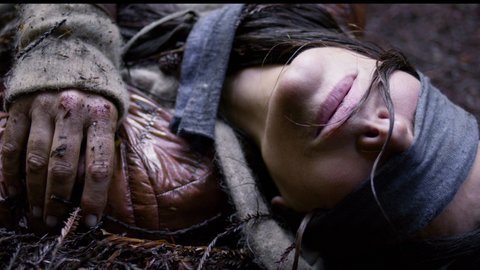
I was so impressed by how plausible Malerman made this quiet, blind-folded world: he literally thought of everything! At one part, he describes how Malorie has to train the babies to wake without opening their eyes. Something so small, yet it could mean everything. The children were just babies too, so Malorie is forced to train them by standing over them and waiting for them to wake … And hitting them with a fly swatter if they open their eyes. Brutal and unfair, yes. But necessary? Also yes. They could die.
The ending worked overall for me, especially in the second timeline: the ‘creature’ in the attic with Malorie and the babies was fantastic, but it just felt a little rushed. I felt like several characters simply ‘disappeared’ because they were no longer needed, Tom in particular. Given how much time he’d had in the novel – we see several chapters from his POV, even! – I felt a little cheated. Reading other reviews, this seems to be a fairly common feeling from other readers and I believe they are reacting to the same feeling of being ‘rushed’ or ‘cheated’ like this.
Even so, Malerman creates a complex, compelling character in Malorie. She is only young in the book – early twenties – but is plunged into a nightmare and responsibilities she could never have foreseen. She is savvy and smart too. She is the one who doesn’t trust Gary; she even thinks about maiming the children’s eyes with bleach, so they might be safe. None of this comes easy to her: she wants to be a good mother, plus she worries the children have no childhood. But she doesn’t know how else to deal with the dire situation and keep them safe.
The Film
First up, there are no ‘creatures’ in the film. In the book, Gary says he’s seen ‘hundreds of them’, suggesting it is not just one and this is an invasion story of some kind. Charlie in the film posits the notion of demons and supernatural elements, suggesting that *whatever it is*, it confronts you with ‘your worst fear’. Whatever the case, this apparently lead to some creatures actually being made for the movie, which you can see HERE. The creatures ended up on the cutting room floor, with the phenomenon becoming an unseen ‘force’ instead. I think this works MUCH better, though it does mean the cool attic scene after Malorie’s child’s birth is lost. On balance, I think this was a good decision – what you DON’T see is always scarier.
Sandra Bullock plays Malorie, so she is obviously much older than the character of the book. They seem to play it up a little as her ‘last chance’ to have a child, though she is fairly ambivalent about having a kid as a single mother. The doctor at the sonogram even gives her a leaflet on adoption. As already mentioned, the book accesses Malorie’s changing and sometimes contradictor thoughts on motherhood. Being a movie, it is visual, so Malorie needs to have an arc that takes her from one place to another: she’s not sure motherhood is for her, then she discovers she CAN keep the children alive … Then she must learn what it is to *be* a mother.
I think that’s what I liked best about this story: so many books and movies idealise motherhood in general. In the past thirty years too, modern feminism has reminded us there is no ‘perfect’ mother and that is okay. Also, science fiction too often reverts to the ‘Mom Warrior’ trope when kids appear in the narrative, thanks to Ripley in Aliens. That was ground-breaking in 1986, but is old news now.

There are other changes because it is a movie. Like the creatures, they lost the wolf attack and the birds all dive-bombing one another overhead, which reminded me a little too much of the ending of Pitch Black. Also in the book, Malerman can afford Malorie and Shannon holing up for weeks alone. This is not possible pacing-wise in the adaptation. When the ‘force’ strikes here then, it is on the way home from the sonogram. Malorie’s sister in the film is called Jessica and it makes her crash the car, then kill herself. Malorie ends up rushing with other survivors and gets rescued by a woman because she is pregnant, which is a great touch.
From there, she ends up in the house with the other survivors, where events play out loosely similar to the book. The parenthood theme is underlined again when two peripheral characters rush out again to try and save their children. The characters have other small changes – Don from the book is now called Douglas and has a much more antagonistic function. This means Gary has a much smaller part, though he is still then one who betrays them all. Here instead of going along with Gary, Douglas redeems himself by sacrificing himself for Malorie and the babies.
It’s Act 3 where the most significant changes happen because Tom DOES NOT die when Gary pulls the blinds down from the windows. Instead, he is knocked out by Gary first and so lives to help Malorie at first with the children. The filmmakers also use this time to underline the fact there are people outside who are looking at the ‘force’ without blindfolds, like Gary, yet are not killing themselves. Like the book, the movie never explains this absolutely: are these people ‘immune’? Or is it because they are already mad? It doesn’t matter and it works brilliantly.
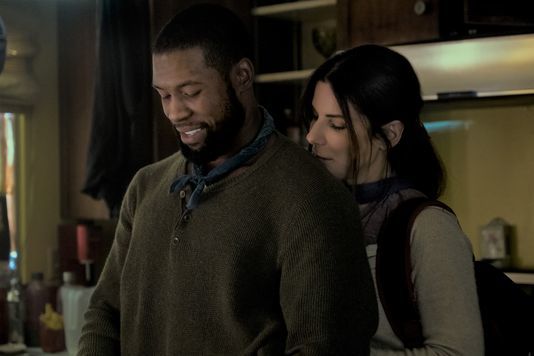
Like Gary, these people are a threat to Malorie, Tom and the children. When they attack, ex-soldier Tom has to sacrifice himself for them. It’s how Malorie ends up on the river with the children, too. It’s a masterful piece of plotting, because it neatly side-steps the issue of ‘why now?’ in terms of Malorie setting off. It also harks back to the ‘fisherman’ earlier in the narrative in Act 1 in the ‘present’ thread, who attempts to pull Malorie’s blindfold off in the boat.
So going back to Malorie: she is a modern version of Ripley in that she is a protector of children … But she is not a ‘Mom Warrior’ … Though she IS the last part, she is not a Mom at all, in real terms. This is the same in both the book and movie, though inevitably the book has the edge of the psychology of this.The movie keeps Malorie’s decision too call the children just ‘Boy’ and ‘Girl’, with Malorie renaming them Tom and Olympia when they reach the school for the blind at the end, which is a great decision.
Yet little children do deserve a mother, regardless of the terrible things going on around them. Heisserer and Susanne Bier (the film’s director) reminds us of this via Tom’s character, especially in Act 3. He and Malorie argue about him telling the children stories in the garage, which Malorie realises is her mistake when Girl runs away from her in the woods. Tom also talks about his tour in a war zone, helping the man take his children to school. These moments, especially when Malorie calls to the girl in the woods saying she DOES love her, are really effective.
Verdict
This one is another tough call, because I genuinely love both the book AND the movie, but for different reasons. Whilst Malerman has the edge on the psychological nature of Malorie and the angst she goes through alone raising the babies, I think Heisserer does a great job of bringing this to the fore in visual ways in the movie. I also think he is a plotting master in terms of pulling the two timelines together. I also think Tom living to help Malorie at first is much stronger, plus I like the fact the movie has a much more diverse cast the book (to be fair Malerman does not write UNdiverse characters, he just doesn’t mention much about characters’ races, ages, etc). But with these three ‘extras’ in my mind, I think I would say the winner has to be the movie.
What do you think?
January 8, 2019
My Year In Books: 68 Fantastic Reads!
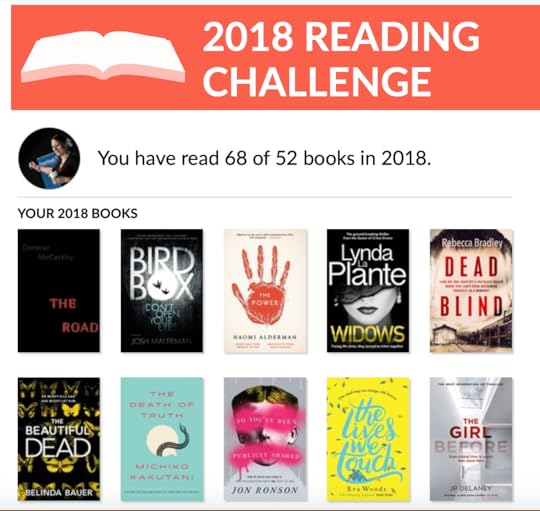
A bit later than last year, I thought I would post My Year In Books! For the last few years I have been keeping track of my progress via Goodreads, so 2018 was no exception.
Whilst 2017 was my year of championing diverse books and writers, I thought I would be less prescriptive this year. (It was my hope that being intentionally inclusive for twelve months would mean I would automatically choose more diverse books and writers).
I decided to read 52 books in 2018. This is significantly fewer than 2017, but then I had a LOT on this year, so felt the equivalent of 1 book a week would be enough. I like to have an objective too, to I decided I would set myself the following targets:
At least 5 memoirs or true stories
At least 5 books I wouldn’t ‘usually’ read in terms of subject matter
At least 5 Young Adult Books
At least 5 Classics (modern as well as classic-classics)
Attempt 50/50 gender parity in terms of male/female writers (especially since in 2016 I only read 3 books by male writers! Oops!)
How I did
So happily, I SMASHED my target of 52 books … I read 68! I was genuinely surprised when I realised this, since I spent a lot less time on Goodreads this year. I set myself a target of 100 books in 2017 and freaked myself RIGHT out. Then I realised I was putting undue pressure on myself and reduced it to 80, about halfway through the year. Once I’d relaxed, I got my reading mojo back and was able to hit that target (and exceed it!) with ease.
First up, my failures. My gender parity experiment did NOT go well! Of the 68 books I read, just 21 were by men. That said, research consistently shows male authors are favoured by publishers and readers alike, so I don’t feel too bad standing up for my fellow women.
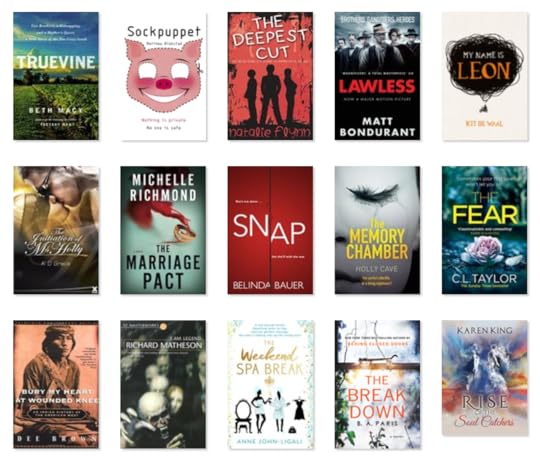
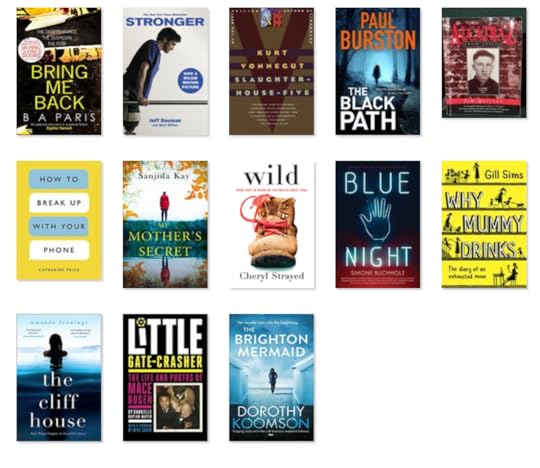
Secondly, I only read 4 classics this year: The Road, Bury My Heart At Wounded Knee, I am Legend and Slaughterhouse 5. Some might argue The Power is already a modern classic since it won so many prizes and got so much notoriety, though personally I think it’s early days for that one (though I wouldn’t be surprised. We will have to see).
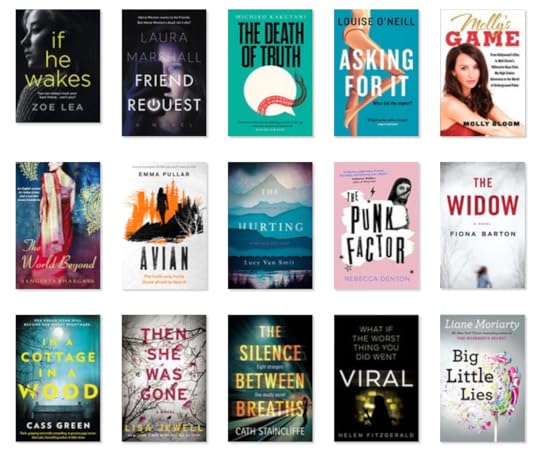
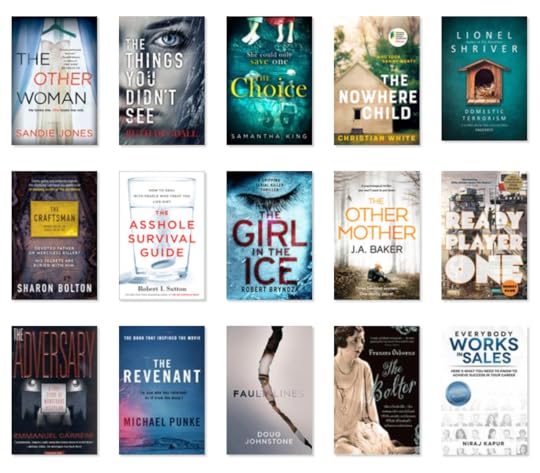
I did well on Young Adult, reading 7 titles of this type: Louise O’ Neill’s Asking for It, a desperately sad but important read about rape culture; Emma Pullar’s Avian – a cool dystopian follow-up to her debut, Skeletal which I read in 2017; The Punk Factor by Rebecca Denton, a great book about music and attitude with a very memorable main character, Frankie; Rise of the Soul Catchers by Karen King, a gorgeous love story between two teens set in The Afterlife; The Deepest Cut by Natalie Flynn, a wonderful exploral of grief and guilt; The Things You Didn’t See by Ruth Dugdall, a striking murder mystery with another memorable main character; and finally, The Hurting by Lucy Van Smit, which is sold as a Nordic Noir-style Wuthering Heights. I loved each and every one of these.
I set out to make 2018 ‘the year of the true story’, so unsurprisingly I smashed my target and then some, reading 10 of these. From tales of poker princesses like Molly Bloom, through stories of making moonshine, travelling circuses, disability, prison life and serial killers, these were all fascinating.
What I was most surprised by however was the fact I also managed to read 9 titles I would not normally check out. Some were fiction, like Why Mummy Drinks, but most of them were ‘self help’ titles, like The Asshole Survival Guide and How To Break Up With Your Phone. I don’t normally read books like this, but the latter in particular changed my life. I have taken major steps to put many of its tips into practice and I am pleased to say my social media addiction is literally a quarter of what it was before.
I can also recommend Everybody Works in Sales by Niraj Kapur – for full disclosure, I must admit to being interviewed for this one (my website and business, Bang2write, appears in it), but I was REALLY glad to read the rest of it. Niraj provides some really great, concise and useful information about utilising sales techniques NO MATTER WHAT your industry is.
Happy Reading in 2019, everyone!
January 2, 2019
Most Popular Books of 2018 and World Reading Habits
Your novel or screenplay is being polished, and you are almost ready to launch it out into the world.
You’re going to be pretty interested then in the reading habits of different countries, so that you know the best places to publish. Reading rates differ around the world, and certain books are more popular in particular countries.
The country that spent the most hours reading in 2018 was India, followed by Thailand, China, and Philippines. Surprisingly, the countries that spent among the least hours reading were the USA, Germany, and Canada.
Europeans certainly don’t skimp on spending money on books. Households in Europe spend $240 per person on books and newspapers per year, which is more than what they would spend on package holidays! Americans are still big buyers of books too, as 77% say they have shopped for books in 2018.
Politics books were huge in 2018. The most popular print book worldwide was Fire and Fury: Inside the Trump White House by Michael Wolff, while Becoming by Michelle Obama was massive in Europe.
Regardless of where you may decide to drop your publication, rest assured that books aren’t going out of style any time soon. Whether they print, e-books, audio, or mobile, the public will always love a good story and appreciate the myriad of benefits that reading provides them.
Take a look at Global English Editing’s infographic to learn more about global reading habits in 2018.

December 11, 2018
Wee Girl Reviews: Scampy Doodle & The Reindeer
 Wee Girl Reviews
It’s time for a seasonal ‘Wee Girl Reviews’! My daughter Emmeline, aka ‘Wee Girl (2)’ is 7 years old and a tiny book blogger. Emmeline loves picture books, so reads to me at bedtime so she can practice her reading and comprehension.
Since the last instalment of Wee Girl Reviews, Emmeline has been VERY busy. She has been in a show with her dance troupe, made Christmas cards and joined the gymnastics team. She can’t WAIT for Santa to come!
About The Book
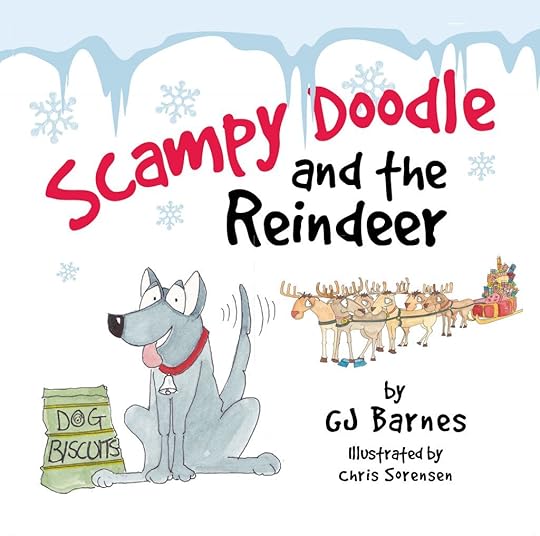
Scampy Doodle And The Reindeer is by GJ Barnes and is illustrated by Chris Sorensen. Here’s the blurb:
Scampy Doodle is a happy go lucky black dog who has a strong nose for adventure.
It’s Christmas Eve and Scampy Doodle is fast asleep when he is woken by a strange noise coming from the chimney. Discover what happens when he goes to investigate and gets the greatest surprise of his life!
Emmeline’s Review
‘I liked the pictures – Scampy’s eyes are really big, so are his ears.’
‘You shouldn’t leave whiskey for Father Christmas. He has to drive!’ (Or fly).
‘In real life, his tail would be wagging.’
‘The word Santa Clause always makes me think of ‘subordinate clause’.’ (!!!)
‘I like Scampy’s bone collar the best.’
‘I love the fact Rudolph is in it!’ (She starts singing Rudolph The Red-Nosed Reindeer).
My Review
I thought Scampy Doodle And The Reindeer is a good choice for the holiday season. It’s that little bit different and I enjoyed the pictures as much as Emmeline. She was able to read it to me without any problems. There are plenty of conversation starters and recognisable elements, such as Rudolph.
I loved the idea of Scampy putting his stocking up too for Santa, though it did make me feel guilty – we have 5 cats and I have never once left a stocking out for them. Oops!
Verdict
Scampy Doodle And The Reindeer is well-thought-out and colourful. It’s a good choice for little ones and the reluctant reader. BUY IT HERE.
From The Author
‘As my daughter got older we used to (and still do) tell each other stories in the car about our family dog Scamp. Scamp had been neglected as a puppy and was rescued by my parents and became our family pet.
He was a little bit crazy (he used to try and get up on the table to lick up crumbs after a meal) but he was always happy to see you and always there for a cuddle whenever anyone needed one.
In many ways he was more like a human being, standing up on his back legs, drinking cups of tea out of a cup off the coffee table.
So I decided to write some of our stories down to share with others, the first one being Scampy Doodle and the Reindeer.’
November 26, 2018
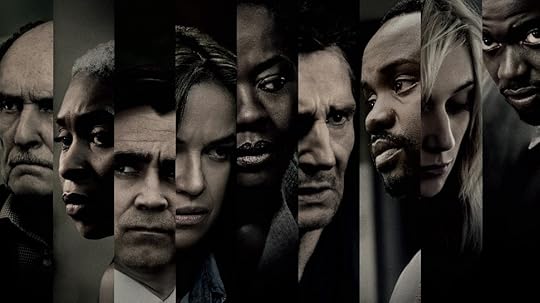
BOOK VERSUS FILM: Widows – Marriage Made In Heaven?
The Book
So, this one should be called ‘TV Versus Book Versus Film’! I’d assumed the book had come first, then the TV show, but apparently not.
Lynda La Plante is a bit of a heroine of mine. I was absolutely thrilled to meet Lynda briefly a few years’ back at London Screenwriters Festival. It was literally for about thirty seconds in the Final Draft tent, but it still counts! My mum was a big fan too, so I remember Widows back in the 80s, though I don’t think I watched it back then. I see it’s on Amazon Prime currently though, so I’ll be correcting this oversight ASAP.
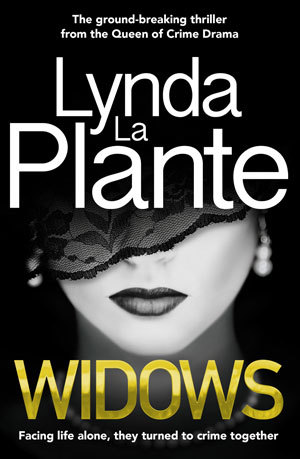 Anyway, according to its Amazon listing, here’s what it’s all about for the uninitiated:
‘WIDOWS is a fast-paced heist thriller with an all female cast you won’t forget. Facing life alone, they turned to crime together. A security van heist goes disastrously wrong and three women are left widowed. When Dolly Rawlins discovers her gang boss husband’s plans for the failed hijack, an idea starts to form . . . Could she and the other wives finish the job their husbands started?
As the women rehearse the raid, it becomes clear that someone else must have been involved. But only three bodies were found in the wreckage. Who was the fourth man? And where is he now?’
So, a very British, gritty 1980s novel by Crime Mistress of Mayhem Lynda La Plante gets the Hollywood treatment … Courtesy of not only the Oscar-winning Steve McQueen, but Gillian Flynn!
Flynn is a particularly interesting one for me, as I am a big fan of her, too. After all, Flynn’s own legacy arguably already rivals La Plante’s. Flynn has managed to make such a dent in modern crime fiction, she has popularised the so-called domestic noir subgenre in under a decade with just three full-length books to her name. Just like La Plante made the female lead in a man’s world a viable possibility with the likes of DI Jane Tenant in Prime Tenant, Flynn put female antagonists on the map with Amy Dunne in Gone Girl. Now Flynn is turning her hand to screenwriting, because why not? In the course of this post, I’ll be contrasting her version with the original source material.
The Film
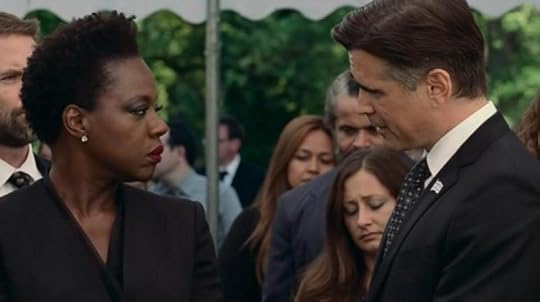
On surface level then, you would be dead right … There DO appear to be some epic departures from the source material in the film version. The action is transplanted from London, to Chicago. Though the cast was diverse by 1980s standards, it is even more so now, featuring three women of colour to just one white female lead. Even the names have changed. Dolly Rawlins is now Veronica; Shirley is now Alice; Bella is renamed Belle. Even Dolly’s dog, called Wolf in the source material, is renamed Olivia in the movie. (Which is such an odd name for a dog, that HAS to have a story of its own attached).
Only Linda’s name remains the same, but all four characters’ back stories differ to the source material; they have been swapped, or built on for other reasons. This means it is Alice who is the sex worker, not Belle, who in turn is Linda’s babysitter, because she has kids (she didn’t in the original).
What’s more, the security van raid of the book is OUT. Instead, the women in the film storm the home of a well-connected politician to steal five million from his safe. No one dies in the raid in the book (though someone does in the film, though not saying who!).
Police Versus Politics
The entire police thread detailing the epic grudge match between Resnick and Fuller in the book is also missing from the film. The thread involving London gang warfare between Rawlins and The Fisher Brothers is also missing, replaced instead by politics (the less-than-subtle subtext for readers of the novel being this is the ‘new’ kind of gang warfare). The Manning Family, fronted by Jamal, the ‘respectable’ one and his psycho brother Jatemme are campaigning against The Mulligans, a white family who have historically been in charge of the area.
Even the raid itself is different. In the book, the women take on a security van, even cutting through the van with a chainsaw. They then attempt to scarper abroad to start new lives. In the movie, they steal the money from the Mulligans to pay the Mannings, a great twist on ‘robbing Peter, to pay Paul’. All four men are absolute scumbags for various reasons, with the women potentially being collateral damage for their plans for domination, so it all ties together very nicely on that front.
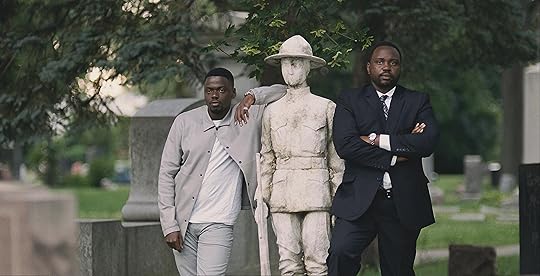
There’s also a strong racial commentary throughout the movie, as you would expect from McQueen. This not only means Tony Fisher/Jatemme is no longer a would-be rapist (thank God), but a genuinely terrifying antagonist who thinks nothing of intimidating people like they are his personal playthings, like a cat. This is why I found it a shame he is despatched so easily in the subsequent crash, though it was quite satisfying to see him get his comeuppance too.
What’s The Same
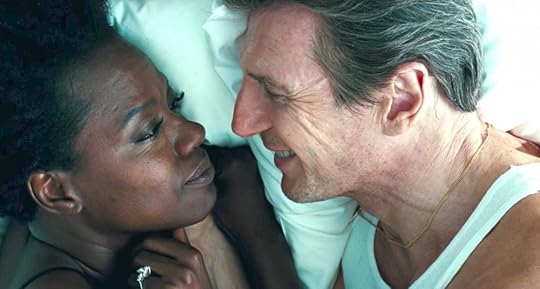
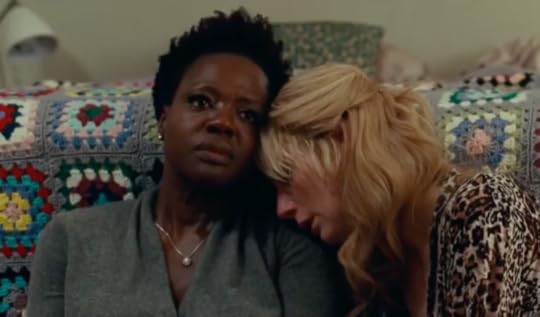
Despite the differences, at its heart the main catalyst and plot points are basically the same. Harry stole the Mannings’ $2M they need for the election, which burned up in the van when it went up in flames. Later Jamal visits Veronica, telling her she has a month to liquidate her assets to pay him and Jatemme back. Veronica discovers Harry’s ledgers and tries to sell them to raise the capital, but is unable to. This is when she decides to pull off Harry’s next heist herself, recruiting the other women.
There are also lots of little flourishes that pay homage to the original. One Harry’s accomplices in the van is called Carlos, the same as Linda’s lover in the book; Shirley’s new name comes from Resnick’s assistant in the original. Harry’s associate Boxer in the book becomes Bash, Veronica’s driver in the film. Even Linda’s shop sells beauty pageant dresses, tiaras and other equipment … In the book, Shirley had to enter beauty pageants for money after the death of her husband.
Also in the book and film is the fact Wolf/Olivia the dog gives away Harry. Dolly identifies Harry at Jimmy Nunn’s girlfriend’s place by his lighter. Nearly forty years have passed and smoking is no longer en vogue, so in the film Veronica realises he is there by his whiskey flask. Figures.
Passive Protagonist?
In the book, Dolly is very much the ‘brains’ of the operation. She takes most of the risk and must lose the police on her tail a lot of the time. She is also in extreme personal danger from the Fisher Brothers, plus she has the most to lose. She is a mentor figure to the other women, as well as an antagonistic force in their lives. In short, for me La Plante nails it in terms of plotting and characterisation: Dolly is a force to be reckoned with, plus it’s a strongly constructed story, from beginning to end.
Also in the book, a key part is the fact Dolly has to track down the ‘white van man’ she knows was present at the original robbery (as mentioned in the book’s Amazon listing). Veronica doesn’t have to do this in the movie and for me, it’s where the adaptation comes unstuck.
In comparison to Dolly (or perhaps because of Dolly?) Veronica just doesn’t feel as active somehow. This is in no way a criticism of Viola Davis’ performance, who is magnificent in the movie. Rather it’s a characterisation thing: Veronica does a great job of ensuring the other three women do stuff in the plot, but I was left feeling like she wasn’t doing ‘enough’ in the plot herself, especially when she wasn’t having to lose police tails, etc. The film also misses out the resentment between Dolly and Linda, so there’s no question mark in the other women’s heads over whether Veronica could be double-crossing them or not.
What’s more, the whole ledger thing seems to go down a blind alley. In the book, Dolly keeps the ledgers as a bargaining chip, understanding their importance because she is from that criminal background herself. She even puts it about via Boxer that Harry is still alive to further protect herself. This freaks both the Fisher Brothers and the police out, creating a circle of confusion around Dolly. It also creates a fantastic bit of dramatic irony when it turns out Harry really IS still alive.
In contrast, Veronica tries to sell the ledgers to her contact Bobby at the bar, who turns her down. Then Veronica makes the leap to doing the heist herself to pay the Manning Brothers back, which doesn’t seem very credible when she apparently previously worked for the school board. This means that when Harry turns up after the robbery at the lock-up and says ‘All you had to do was sell the ledgers’ to Veronica, I was left thinking ‘Eh?’ Bobby full on turned her down!
Also, I didn’t get the thread when Jatemme finds out about the ledgers and goes after Bobby himself for information. Why is everyone so interested in Bobby anyway, if he couldn’t/wouldn’t have sold the ledgers on? Also, given all Jatemme has to do is wait for Veronica et al to do the robbery – and then steal the rest of the loot under their noses, which he does – why bother? So he can be a complete psychopath and stab Bobby in the legs seems to be the answer, but plot-wise it didn’t feel as compelling as it could have been, because it seemed a bit muddy. Or maybe I blinked and missed something.
In comparison, La Plante’s plotting was effortless, with every character pushing the story forwards in a pacy and economical way. Even when various characters WERE trying to out-do one another!
Breathtaking Characterisation
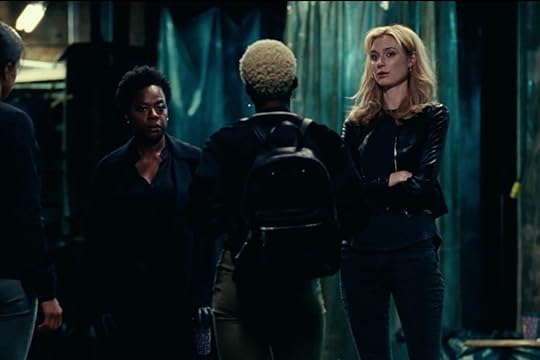
But despite the plot’s shortcomings in the film, the characters are genuinely breathtaking in their own right. The Mannings are great, but for The Mulligans stole the show as antagonistic forces to be reckoned with. Robert Duvall’s F-Bomb-ridden rant at Colin Farrell is a particularly brilliant moment. Mulligan Snr is one of those guys who believes in himself no matter what. He has literally no reason to; he is nothing but an old white man with no culture, no empathy, no interest in his fellow man. It is all about winning, a pissing contest for him. (Geee, I wonder who he could be based on!).
In comparison, we almost feel sorry for Mulligan Junior, especially as he IS more progressive in his attitudes. He actually delivers his weary riposte to his father with a quivering lip and tears in his eyes … But we can’t forget Mulligan Junior is also a complete racist as well, as evidenced in the car when he’s yelling at his (white) aide about ‘these people’ and then asking her in the same breath if she’s ever slept with a black man. But hey, he remembers to thank his (black) driver, who he then dispatches to collect money from young black business owners who’ve bought into his protection racket.
The commentary on parenthood is really strong too. Belle has to leave her own child in the middle of the night to go and look after Linda’s, simply because she can’t afford to turn down twelve dollars an hour. This joins up neatly with the racial commentary, too. In the source material Dolly and Harry had a stillborn son, but here in the movie their teen son Marcus was shot by the police. Harry says in flashback, ‘Don’t make me regret having this child with you’ and Veronica retorts, ‘If you’d had him with someone else, he would still be alive!’ This then feeds into Harry’s motivation brilliantly when he (inevitably) returns, needing the money for his new ‘white family’, paying off the update on the race theme so fantastically. I was genuinely in awe how well it was done.
Verdict
This is a genuinely tough one, because I adore the original Widows book. It’s true what made it fresh – especially the Maverick cop Resnick, the London gangland stuff – is what dates it now. With this in mind, Widows the movie brings it bang up to date with a diverse cast and a new backdrop (both literal and thematic). That said, I am a structure fan and I feel La Plante’s plotting beats Flynn’s. So, for me, the book wins by a nose.
What do you think?
November 22, 2018
Classic Literary Journeys: Which Have YOU Read?

Iconic Journeys
Some of the most famous novels are character journeys, not just metaphorically but literally too … They are ROAD TRIPS! I love this infographic from CarRentals.com, which takes its inspiration from some of the most iconic Great American Novels:
1) Fear And Loathing In Las Vegas by Hunter S. Thompson
Fear and Loathing in Las Vegas is hailed as ‘the best chronicle of drug-soaked, addle-brained, rollicking good times ever committed to the printed page’. It is also the tale of a long weekend road trip that has gone down as one of the strangest journeys ever undertaken. The movie version wasn’t great, though it was quite funny … And it got me to read this book, so job done!
2) On The Road by Jack Kerouac
A fictionalised account of his own journeys across America with his friend Neal Cassady, On The Road is considered ‘Kerouac’s beatnik odyssey’, with its Goodreads listing saying it ‘captured the soul of a generation and changed the landscape of American fiction forever’.
3) Zen And The Art Of Motorcycle Maintenance by Robert M. Pirsig
This book details a summer motorcycle trip across America’s Northwest, undertaken by a father & his young son. A story of love & fear – of growth, discovery & acceptance – Zen And The Art Of Motorcycle Maintenance becomes a profound personal & philosophical odyssey into life’s fundamental questions. Considered one of the most important & influential books written in the past half-century and to have ‘transformed a generation’.
4) The Electric Kool-Aid Acid Test by Tom Wolfe
‘Called a ‘non fiction novel’ on Goodreads (!), this book chronicles the tale of novelist Ken Kesey (One Flew Over The Cuckoo’s Nest) and his band of Merry Pranksters. In the 1960s, Kesey led a group of psychedelic sympathisers around the country in a painted bus, presiding over LSD-induced “acid tests” all along the way. Whoa! Far out, man.
5) The Lost Continent by Bill Bryson
The Lost Continent is considered a classic of travel literature, both funny and poignant. It is also the book that first staked Bill Bryson’s claim as ‘the most beloved writer of his generation’. It details Bryson’s 14,000 mile odyssey across America in search of a mythical small town called ‘Amalgam’, the kind of trim and sunny place where the films of his youth were set. Instead, his search led him to Anywhere, USA: a lookalike strip of gas stations, motels and hamburger outlets ‘populated by lookalike people with a penchant for synthetic fibres’.
6) The Cruise Of The Rolling Junk by F. Scott Fitzgerald
In an early series of journalistic pieces for Motor magazine, F. Scott Fitzgerald described a journey he took with his wife Zelda from Connecticut to Alabama in a clapped out automobile which he called the “Rolling Junk.” This book is the result!
How Many of These Classics Have You Read?
I’m ashamed to say I have read just two of these – number 1 and number 3 … Though I have read other books by authors 5 and 6. That said, I was thinking about making literary classics part of my reading pledge next year, so maybe I will add these titles to my TBR. How about you?

November 12, 2018
CRIMINALLY GOOD: interview with author Will Carver
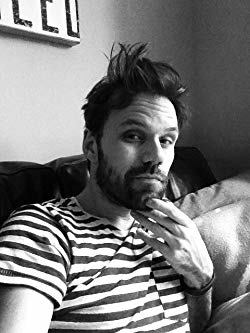 I’m Will Carver. I have written the January David supernatural thriller series – Girl 4, The Two and Dead Set. (And the digital novella The Killer Inside.) I’ve a couple of short stories published. Tempus Fugit in The Mammoth Book Of British Crime and Night of the Day of the Dawn of the Son of the Bride of the Return of the Revenge of the Terror of the Attack of the Evil, Mutant, Hellbound, Flesh-Eating Sub-humanoid Zombified Living Dead Part 2 – in Shocking 2-D in Off The Record. My latest novel is stand-alone thriller Good Samaritans.
2) Why crime fiction?
I fell into it. And I stayed. I had written a black comedy called Suicide Thursday, it never made it to full publication but an editor suggested that my style might suit a thriller. I’d never thought of writing in that genre but decided to give it a go as I had some interest from a publisher before I’d even started. I finished Girl 4 in about twelve weeks. That editor didn’t like it (of course) but a few others did. It was picked up. I was asked to turn it into a series, so I did. I wasn’t sure Good Samaritans was going to fit into the crime fiction genre when I started it but I seem to have found my way there again. In fact, if Suicide Thursday had ever made it, that would probably have found a crime pigeonhole of some kind. Something appears to be pulling me in.
3) What informs your writing?
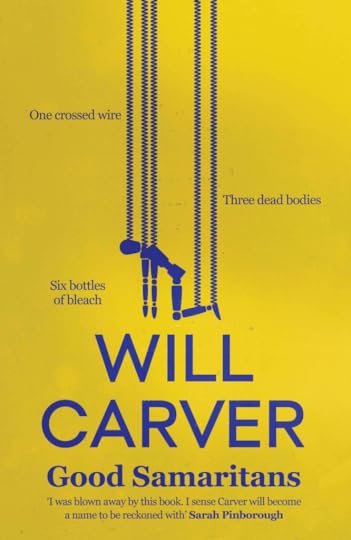 I don’t know why but I get most of my ideas in the shower. I think I am often inspired by the things that I see in real life. I watch people. I listen. People are always talking. In this age of social media, people are talking more. Things that were once thoughts are now out there. All the time. People have two personalities. You get to see them at their worst and their best – and their fake best. I like to write people at their worst, things are more interesting at the extremes. Good Samaritans was initially spawned from my own fight with insomnia but I was interested in the dynamic of two people existing together at their worst and how far they would go to preserve that dysfunction. I often find myself telling stories from the victim’s point of view because they don’t usually get to tell their story. The police do. The perpetrators do. If I see something in the news I’m always wondering about the other side of that story. The part we don’t hear. That we have to imagine.
4) What is your usual writing routine?
I don’t sleep much. So I try to fill that time productively rather than lying down frustrated that I can’t doze off. I start writing at midnight, usually. I keep going until I can’t keep my eyes open any longer or I have a thousand words that I don’t want to delete immediately. (I’ll often write a lot more than that but will cut a lot out.) Each writing session starts with reading back what I have written the day before. Sometimes it stays. Sometimes it all goes. I always try to read through what I’ve written before I fall asleep and I always think it’s crap. On Tuesdays, I also write during the day. It’s just a thing I have always done. Whatever is going on in life, however awful things may seem, that day is for me to write.
5) Which crime book do you wish YOU’D written, and why?
I don’t have this desire. If I say I wish I’d written The Silence of the Lambs, I’d have to have written it in my style and it probably wouldn’t work and it certainly wouldn’t be as good. I wish I had written my second book better. I wish I hadn’t agreed to get rid of the things that made the first book what it was. I wish I hadn’t added a fucking love interest storyline to make it thicker for holiday-goers. I wish I hadn’t changed the ending from the one I had originally written because I ‘couldn’t have my detective fail’. I wish I could’ve said no. Still, I appreciate how I screwed up and I’m not sure I’d change the lessons I learned from that. So, as I’m here, I guess I wouldn’t mind if I had written American Psycho.
October 31, 2018
BOOK VERSUS FILM: An Epic Study of The Exorcist
It’s Halloween, so for this year’s horror-themed Book Vs Film we’re comparing one of the classics. It’s the book that remained on The New York Times bestseller list for over a year. It’s the film that became the first horror to be nominated for the Best Picture Oscar.It’s William Peter Blatty’s The Exorcist!
So say a prayer, and let’s see if the power of Christ compels me to choose a winner …
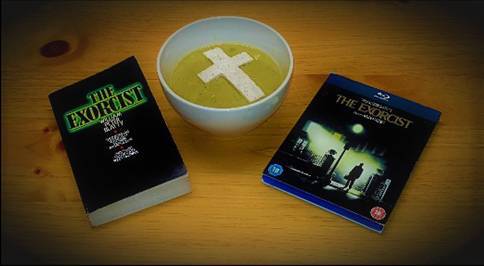
The Story
Shortly before her 12th birthday, Regan MacNeil undergoes a change that has nothing to do with puberty. Soon, inexplicable events beset the household, and it’s not long before Regan claims to be possessed by a demon. With the finest medical brains unable to agree on a diagnosis, and the police sniffing around due to a suspicious death near the house, distraught mother Chris turns to the Church, and asks about an exorcism …
The Characters
Chris MacNeil is a film star, with the director’s chair her possible next role. She’s also the mother of a loving daughter, Regan. Chrishas a distrust of doctors from when her first-born son Jamie died, aged three, due to a new drug he’d been prescribed. These misgivings resurface when the specialists treating Regan want to institutionalise her. And to add to the conflict coming her way, she’s an atheist.
Regan ‘Rags’ MacNeil, the girl at the centre of this story, is refreshingly human – whilst she ishuman. There’s a close bond with her mom, but also the hint she feels responsible for her father leaving (dad Howard felt sidelined when the celebrity magazines preferred pictures of Chris and her new daughter to Chris and her hubby). Dad’s absence is keenly felt, so it’s perhaps no coincidence her imaginary Ouija Board ‘playmate’ is called Captain Howdy.
Father Damien Karras is the broody personification of the book’s main theme: the battle between faith and doubt. As he grapples with grief at his mother’s recent passing he’s also wracked with guilt for not staying closer to her. Karras is a psychiatrist, and therefore the man the other priests turn to with their problems. He’s come to resent this, which only feeds the anger and self-loathing within him.
Father Lankester Merrin, a philosopher-palaeontologist, writes books that bring science to religion; he’s about as controversial as the Church is willing to go. And yet, from the moment he arrives outside Chris’s house – standing in a mist that will become one of cinema’s defining images – Merrin exudes absolute trust. But he’s not a young man, and he’s not a well man, and the demon inside Regan knows this.
Lieutenant William Kinderman, Washington DC’s overcoat-wearing detective, is the book’s rational still point. He poses the questions that an increasingly frazzled Chris cannot voice, solving several mysteries in a rambling, absentminded manner that’s one squint away from Peter Falk. (Blatty actually believed Columbo was based on Kinderman, but the TV pilot broadcast after The Exorcist’s publication is the second pilot. There was also one in 1968.)
The Book
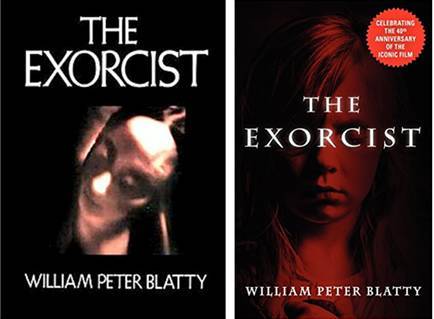
Published in 1971, The Exorcist almost never happened. Blatty started out writing comedy novels. After an appearance on Groucho Marx’s quiz show You Bet Your Life, he won enough money to write full time. Critical praise was high but sales were low, so he wrote screenplays, including the Peter Sellers’ comedy A Shot In The Dark. However, when work dried up, Blatty returned to an idea from his Georgetown University days, inspired by stories concerning a genuine exorcism…
The book follows Chris’s third-person viewpoint, although Karras and Kinderman take over when the action shifts from the MacNeil’s Georgetown residence. For much of the first half we’re waiting for these characters to work out what’s wrong with Regan; an answer we’ve been given by the book’s title. This foreknowledge could have been a problem, but Blatty cannily presents a roll-call of experts – neurologists, psychologists, even a hypnotist – and it’s the attempted debunking of the book’s premise where he has the most fun.
The middle section contains a lot of information. However, it’s surprisingly easy to digest and balanced with talk about factual possessions and black magic. It also features the best material not in the film. One example: Chris’s director, Burke Dennings, is found dead with his head turned backwards. Regan’s 180-degree head turn later on is the demon linking her to the murder – but in the novel Chris alreadyknows. Earlier she’s given a book about witchcraft, and after Dennings dies that book turns up in Regan’s bedroom, and what Chris finds inside… I won’t spoil the reveal, but it’s one of several brilliantly executed shocks, because until this point we’d assumed the book’s function was merely to clue Chris into Regan’s condition.
Unfortunately some sections aren’t as effective. The first murder suspect is Karl, one of Chris’s staff. His alibi doesn’t hold up, and Kinderman eventually solves the mystery (Karl’s supposedly dead junkie daughter is alive), but as we’ve known he’s innocent all along, these passages feel superfluous, and though well written, you want to get back to the main story.
One surprising disappointment concerns the ending. It’s the same as what we see in the film, except in the book we don’t see it. We’re with Chris in the study, listening to what happens in Regan’s bedroom. However, if the ending feels rushed, that’s because it was. Three weeks before Blatty was due to deliver the manuscript, Hollywood made an offer for him to start the screenplay. Blatty freely admits to racing through the rest of the novel, with no time for a second draft (that’s right: The Exorcistis a firstdraft). The 40thanniversary edition is his second draft – but, as the film came from the first version, I’ve used that for this comparison.
So, how does the ‘first draft’ read? It’s mesmerising. There are few books as deserving of the hype as this one. It’s a very literary novel, and if that seems odd considering the genre, I reckon it adds to the genuinely unsettling sense of the uncanny evoked here. The Exorcist is a horror novel for people who don’t read horror novels.
William Peter Blatty passed away in 2017. Paying tribute, another author described The Exorcist as “the great horror novel of our time”. That author was Stephen King.
On that note, let’s see how the film compares. No pressure …
The Film
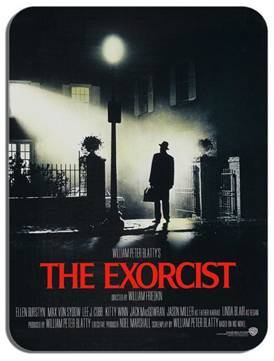
December 26th, 1973, and Americans heading to their local fleapit may have chanced a few bucks on the new horror flick opening that Boxing Day. Directed by William Friedkin with the same realism that earned The French Connectiona Best Picture Oscar, The Exorcist will have given them a Christmas they never forgot …
The Cast
For the role of Chris, Ellen Burstyn is exceptional as the mother powerless to save her daughter. Likewise, Jason Miller channels Karras’s doubt and pain with total conviction. Max von Sydow’s brief but effective turn as Merrin also deserves a mention: his acting is so good many in the audience had no idea he wasplaying a man over 40 years older(it’s a shame the Oscar for makeup and hair didn’t exist then, as Dick Smith would have walked away with it). But the film belongs to one person.
“Mother, what’s wrong with me…?” with this one line, Linda Blair not only makes real every parents’ worst fear, but lays bare the story’s emotional heart. She gives a performance that isn’t just career-defining but genre-defining. Like Perkins’ Norman Bates, or Hopkins’ Hannibal Lecter, her Regan MacNeil refuses to be constrained by the screen: she’s entered the public consciousness, and if Regan’s name may not be as familiar to some, just mention pea-soup and they’ll see her.
Does this mean the head-spinning, the makeup, the green vomit, etc, are why she’s remembered? They contribute (as does Mercedes McCambridge, who voices demonic Regan), but throughout one of the most harrowing performances ever seen, we never forget the sweet kid trapped within – and that’s all down to Blair. To suggest Regan is the sum of her ‘gimmicks’ is to say Norman Bates is nothing without a knife and a shower.
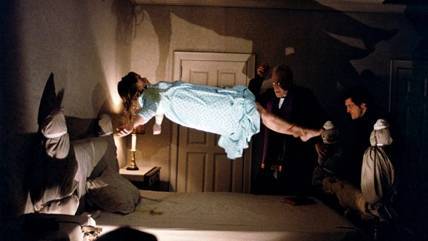
The reception
Critics were divided, but the public loved it. Following a small domestic opening at the end of 1973 word spread, and by the time the UK got it the following March, The Exorcist was everywhere. It eventually grossed over $441 million worldwide (including re-releases) and when adjusted for inflation – a better representation of ticket sales – it joins the billion dollar club. More impressive though, when the domestic box office is likewise adjustedThe Exorcist becomes the ninth most successful movie of all timein North America. And I haven’t even mentioned the awards.
The Exorcist garnered 10 nominations at the 46thAcademy Awards, including three of the four acting honours, and won for Best Adapted Screenplay and Best Sound Mixing (well deserved, as the sound is key to the unsettling feel). Burstyn, Miller and Blair were denied the acting Oscars, though Blair did win a Golden Globe for Best Supporting Actress. The film picked up seven Globes, including Best Motion Picture – Drama, and Best Director, and another screenplay award for Blatty.
Finally, in 2001 the American Film Institute 100 Yearslist announced its ‘100 Years… 100 Thrills’ – which rated the “most exciting, action-packed, suspenseful or frightening films” – and placed The Exorcist third, behind Psycho and Jaws.
The power of Christ compares you
In Blatty’s 40thanniversary interview, he confessed that he never intended his novel to be scary. It was supposed to be a rumination on faith, not a fright-fest. Luckily, when he wrote the screenplay, such reservations seem to have been forgotten.
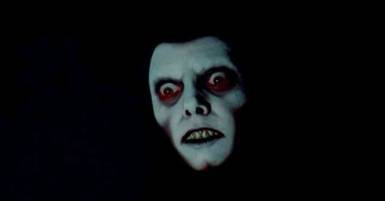
Clocks stopping, candles flaring, house lights flashing: these newmoments heighten the unease, yet none are as effective – or as infamous – as the “subliminal face-of-death image” glimpsed providing you don’t blink at the wrong time. The fact this bleached visage pops up for no readily explained reason means you’re never prepared for it, so its ability to disturb is undiminished even on repeated viewings.
What of those ‘gimmicks’? The bed levitating and head-spinning are, unsurprisingly, more effective in the film. However, the novel stretches the exorcism over several days rather than one night, heightening the risk to Regan’s life. (The demon threatens to kill her by not letting Regan sleep, leading to Karras bringing in a cardiologist who confirms she is indeed close to death.) It also triumphs with Burke Dennings’ gruesome fate. The film rushes this by having Kinderman tell Karras what happened, but the book has Kinderman visit the morgue, revealing the corpse with its head facing backwards. But if the film loses the “show don’t tell” over Dennings’ murder, it does get a last-gasp equaliser as we finally see what happens between Karras and the demon. So, is there a clear winner? No. But there is a winner.

And the Winner is …
Both have aged incredibly well, considering they’re approaching a half-century. They share the points for atmosphere, but though the book triumphs in the plausibility stakes, not having a two-hour runtime to restrict it, some subplots feel extraneous or undeveloped, which the film streamlines or removes.
Turning to the characters, Chris’s story works better in the book – in particular how she sacrifices everything, including that directing job, for her daughter. But Regan’s ordeal is so graphic that the film is a natural fit, and that’s before we consider those brilliantly realised money-shots. As for Karras, I found him more relatable on screen. This may be due to his role in the film carrying more weight despite no additional scenes, expanding upon the author’s original intention – a story about the loss of faith – and leading to a richer experience.
So the film wins it. But regardless of which came out on top, the real winner is William Peter Blatty. Stephen King’s assertion that he wrote the great horror novel of our time holds up. It just happens he wrote the great horror film of our time as well.
Thanks, Nick! Another great comparison

October 27, 2018
5 Great Literary Gifts For the Book Lover In Your Life
Literary Gifts
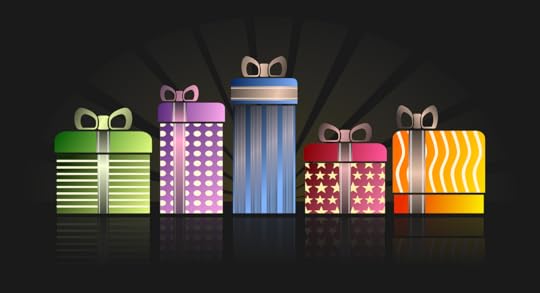
So if you’re on a budget like me and have a lot of family, your mind may have turned to Christmas gifts already … Or perhaps you are looking for the perfect gift for someone’s birthday. If your family members love books as much as mine do, then you should take a look at Literary Book Gifts – especially as I have a 20% off discount code for you, via this blog! (Discount at the bottom of post).
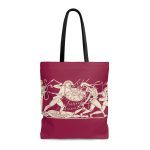 1) The Iliad Tote Bag
“No man or woman born, coward or brave, can shun his destiny” said Homer in this classic text … Which is true, because my destiny is to read ALL THE BOOKS.
This tote bag will come in handy to cart them around the place.
2
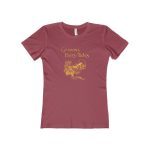 ) Grimms’ Fairy Tales T shirt
This is a great ‘uniform’ for any writer or reader. I love Grimms’ fairy tales, especially the ones that have not been rewritten and ‘softened’ over time. My favourite was always Hansel and Gretel, though I was always on the witch’s side. They ate her house! Anyone eating my house goes straight in the oven.
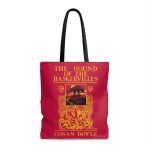 3) Hound Of The Baskervilles Tote Bag
I must confess – I am more of a cat person than a dog person, but I DO love Sherlock Holmes. When I was a teen I read The Hound of The Baskervilles over and over. Even scarier: I live where it’s set, in Devon! Eeek!
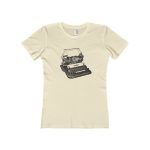 4) Typewriter T Shirt
I learned to type on a typewriter, because I am old now. I don’t miss getting my fingers stuck between the keys and scraping my cuticles back … But I DO still love the look of an old-fashioned vintage typewriter, so this T shirt is perfect for me.
 5) Frankenstein T Shirt
What?? I have to buy something for someone else??? Oh okay then, I could get this for my husband, though technically speaking Frankenstein is one of *my* favourite books. Still, he likes the monster!
Get Your Discount for these gifts and all others on the site. Use code Bang2write20 at www.literarybookgifts.com
Lucy V. Hay's Blog

- Lucy V. Hay's profile
- 174 followers

