
Lucy V. Hay's Blog, page 9
October 16, 2018
CRIMINALLY GOOD: interview with author Alex Shaw
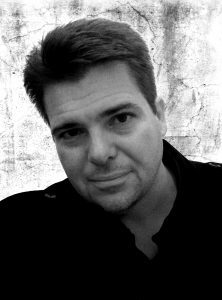 I’m Alex Shaw, and I’m a member of the CWA and the ITW. I’m the author of the Aidan Snow series of thrillers, published by HQ Digital/HarperCollins in English and Luzifer Verlag in German. I’ve also been contracted to write for Amazon’s Kindle Worlds (a program they rolled out in the US only) as well as writing several other thrillers – which I’m not allowed to name yet. Check out my books, HERE.
2) Why do you write crime fiction?
I write in my genre of crime and thriller fiction because it’s what I like to read. I think it can act as a social looking glass with which we can study and perhaps understand society. The scope and opportunities to peruse issues and stories with crime and thriller fiction are in my opinion much larger than non-genre or literary fiction.
3) What informs your crime writing?
From the time of the Prince’s Gate Iranian Embassy siege I’d always been interested in the SAS. I even formed an SAS group (I was nine at the time), and designed our badges and insignia. Later I became a fan of the Gulf War SAS troopers turned writers – Andy McNab and Chris Ryan (Chris Ryan and I now have the same German publisher). I read their books and saw how they weaved their insider knowledge 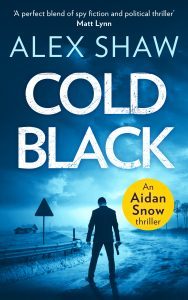 into a commercial story. When I moved to Kyiv and found that I had time to write I realised that I too had insider knowledge (of Ukraine and criminal elements therein) and decided to write crime fiction with a Ukrainian slant. No one was writing about contemporary Ukraine so I decided that I would. I started writing about the endemic corruption of post-soviet society, using my Ukrainian characters to both explore and battle this. Now I tend to focus more on Russian aggression.
4) What’s your usual writing routine?
When I can I love to write on location, for example much of my Aidan Snow books were written in the exact places in Ukraine where events take place. I scribble on a notepad and then transcribe this back to my laptop later. If we’re at home in Doha, and it’s term time then I write at home or by the pool while my two sons are at school. I don’t have a daily word count and just write what I can. I tend to write in scenes rather than chapters and only slot it all together when I’m finished.
5) Which crime book do you wish YOU’D written, and why?
There’s not one particular book I wish I’d written, although Steve Kavanagh’s The Defence was a stunning debut. I’m a big fan of Steve Kavanagh, Lee Child, Stephen Leather, Jake Needham, Tom Wood, Mark Greaney and Jorn Lier Horst. Each of their styles are different and demonstrate that no two pieces of great crime fiction are alike.


October 9, 2018
BEST OF 3: Romantic Suspense, chosen by author Susan Roebuck
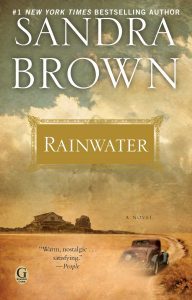 1) Rainwater by Sandra Brown
My thoughts: This was no bodice-ripping, muscle-bound hero story, just as such elements don’t exist in my books. It’s a beautiful novel set in the Deep Depression in Texas. Ella, who runs a boarding house, has a new boarder – Mr. Rainwater who is dying of cancer. He manages to connect with Ella’s autistic son. I love heroes who are flawed for some reason (whether it’s health or circumstance), and I also tend to have a person with a disability in my books (I’m thinking of Sofia in “Joseph Barnaby”).
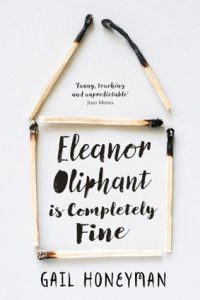 2)
Eleanor Oliphant is Completely Fine
by Gail Honeyman
2)
Eleanor Oliphant is Completely Fine
by Gail HoneymanMy thoughts: An amazing debut that is no rom-com, and is not saccharine coated or cloying, this novel is populated by (once again) flawed characters and quirky ones at that (just how I like them – check out Lua in “Joseph Barnaby”). Eleanor has no social awareness – she’s fallen in love with a man who doesn’t know she exists, and now she’s determined to make him love her back. Despite her awkwardness, Eleanor is loveable in my opinion and deserves to have someone who adores her back.
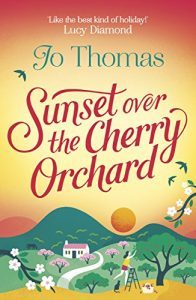 3)
Sunset Over the Cherry Orchard
by Jo Thomas
3)
Sunset Over the Cherry Orchard
by Jo ThomasMy thoughts: Ms Thomas takes the reader all over Europe. Her characters are not rich, young and breath-takingly beautiful – they’re like genuine people we meet every day. Usually the heroine is struggling to find her place in the world and ends up working in fields (no pun intended) she’d never thought of before: keeping bees, harvesting and making wine, cherry-picking… I think my novels are very much influenced by Ms. Thomas, except mine are all set in Portugal rather than a selection of European places.
BIO: Susan Roebuck is a Britsh author, born and educated in the UK but now living in Portugal. She has been an English teacher for many years with the British Council and also the Portuguese civil service where she developed e-learning courses. She is the writer of Joseph Barnaby, details below.
Joseph Barnaby by Susan Roebuck
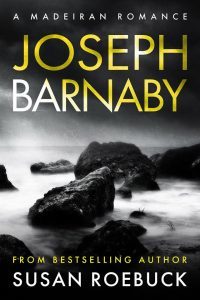 Stand by your beliefs – even if it means going to the end of the Earth
By standing up for his principles to save the life of a prize racehorse, farrier Joseph Barnaby loses everything. Now, a personal vendetta has become too deep to fight and he escapes to the island of Madeira where he finds work on a small farm at the foot of a cliff, only accessible by boat. The balmy climate and never-ending supply of exotic fruit, vegetables and honey make it sound like paradise but, for Joseph, it’s the ideal place to hide from the world. Can the inhabitants of Quintada Esperança, who have more grit in them than the pebbled beach that fronts the property, help Joseph find his self-worth again? And can he escape the danger that draws ever nearer? BUY IT HERE.
October 3, 2018
BOOK VERSUS FILM: Molly’s Game – House Always Wins
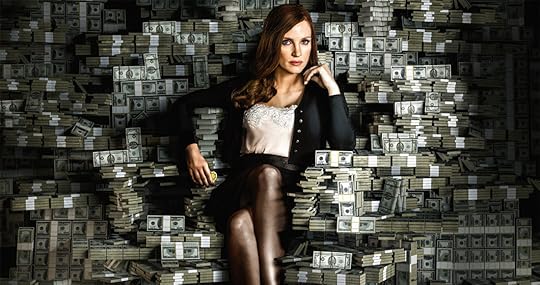
The Book
Molly’s Game tells the story of a young women who built one of the most exclusive, high-stakes underground poker games in the world. Billed as ‘an insider’s story of excess and danger, glamour and greed’, the book promises to be a no-holds-barred, behind-the-scenes look at the game, the life she created, the life she lost, and what she learned in the process.
I love memoir, plus I love stories with female leads who have done something spectacular, especially in a man’s world. Molly’s Game ticks all those boxes and more. There’s glamour, betrayal and high stakes. Hundreds of millions of dollars were won and lost at her table. Molly’s became the game for those in the know: celebrities, business moguls, and millionaire businessmen. Everyone wanted to play, but you had to have an invite.
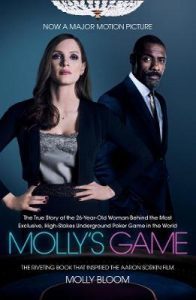 I liked this book a great deal. Picking it up, I wondered if she would go OTT on the poker element. I am not crazy about cards or games of any kind, so I worried I might get bored. I needn’t have worried. Though each section of the book is named after a poker term, Molly concentrates on the human aspect of her story. I found the most interesting parts were about her relationships … Not just with boyfriends Drew and Eugene, but also friends like Blair and her brothers.
I also really enjoyed her ambition in the book. Bloom is completely unapologetic about her desire to make as much money as possible. And why not? Ambition and ‘getting to the top’ is a character trait celebrated in male leads. (I did find it quite amusing how she kept going on about how impressed she was with all the luxury though, like she hadn’t grown up with much. She went skiing all the time, lived in a big house, had holidays abroad every year. Her Dad was a psychologist. From my POV, I’d say her parents were very well off!).
But best of all, Bloom name-drops like crazy in this book. Who knew Tobey Maguire (yes, Spiderman!) was such a jerk?? Or that Ben Affleck loved himself? Or that Leonardo DiCaprio was a bit weird, wearing headphones constantly at the poker table (okay, I might have guessed both of those). She also names a stack of other people from Todd Phillips (director of The Hangover movies); through to Rick Salomon (‘director’ and co-star of the Paris Hilton sex tape); plus a bunch of business guys who are apparently real (yes, I had to Google them).
Of course, Molly comes unstuck. She accidentally gets in bed with the Russian Mafia, gets beaten up by the Italian Mafia AND one of her players is basically crooked as hell and selling a Ponzi scheme. But hey, you play with fire, you get burned. I would have liked to see more about these developments, because the book does end very abruptly.
Overall however, this was a very fast read and a very enjoyable book for me.
The Movie
I was unsurprised to see it had been adapted: it’s an amazing story. The fact it had been adapted AND directed by Aaron Sorkin (The West Wing, The Social Network, A Few Good Men) and starred one of my fave actresses Jessica Chastain was the icing on the cake. It was a no-brainer I would enjoy it, surely?
It does start very strongly, with Bloom reflecting on her aborted skiing career. When she comes off her skis, we are treated to a voiceover that sets up what is to come. This is a movie predominantly from the inside of Molly’s head. As she finishes the prologue with a big fat ‘F.U’ – literally! – we are promised that everything we see will be from her POV, warts and all.
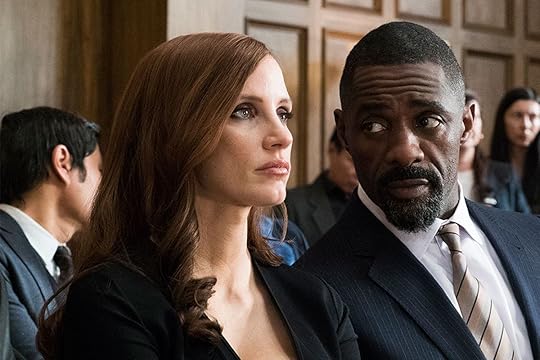
In one sense, this is true. There are significant departures from book: Idris Elba’s lawyer character Charlie was not present, nor was his daughter Stella. This in itself did not bother me. Elba is electrifying and he has great chemistry with Chastain. Also, as a script editor, I realise stories sometimes need to invent characters that are both a ‘way in’ for audiences who have not read the book. What’s more, they may also be needed for audiences who have no understanding of niche subject matters, like poker. Molly’s Game has both, so creating an ‘anchor’ character like Charlie is an obvious choice.
What’s more, there’s lots of very clever allusions to the book. They play in ‘The Cobra Lounge’ for starters (it was The Viper Room, in real life). Most of the other ‘in-jokes’ come from Charlie in dialogue. They especially relate to THAT abrupt ending that bothered me so much: ‘You finished writing the book before the good stuff happened’ / ‘I need you to tell the story again, but this time not skip over the Russians’. He also says, surprised, ‘That wasn’t in the book’, when Molly confesses to becoming a drug addict. I also enjoyed the dramatic irony of Molly passing on 5 offers to make her book a movie due to ‘creative differences’.
Absences and Additions
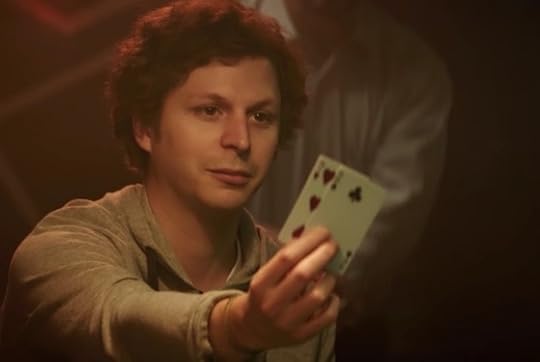
Most disappointing for me was the lack of focus on the characters who made the game so real, seedy and darkly glamorous, however. As you might guess, all the major players like Tobey Maguire are missing (I’m guessing he didn’t want to play himself, being such a jerk! Surprise!). Instead he’s played by Michael Cera (great choice) and referred to as ‘Player X’. Even so, he still doesn’t really come into play in the main narrative like he did in the book. It felt like his wings had been clipped. (Maybe Maguire threatened to sue, who knows).
There’s much more focus on the actual game of poker in the film, than the book. I found this rather distracting, just like I did the voiceover as the movie continued. It is also worth noting Molly never came off her skis in the book, like she does in that all-important prologue. In the book, she claims she could not get to the top of that game, but matched her brother’s athletic prowess, so quit while she was ahead.
She also claims in the book her parents were not behind her skiing after her surgery. In comparison, her father in the movie (played by Kevin Costner) continues to push her. He is barely in the book, but here in the movie he is very much a big presence. He appears in both flashbacks and ‘real time’, helping Molly come to an important realisation about her place in the world. The skiing prologue even comes back, book-ending the piece, which ended up providing a really great resolution in my opinion.
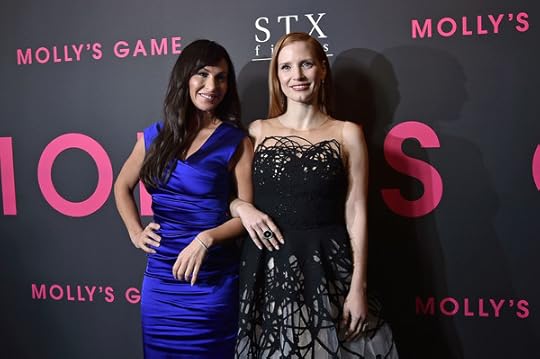
I also loved how the Dad makes reference to the fact she never wanted anything when she was growing up, just as I thought when I was reading: ‘Were those workhouses tough, Tiny Tim?’ Chastain also says the scene in which she confronts her father about whether he liked her brothers more than her is the ‘best film scene I’ve ever done’. I agree, it was very strong. Bloom’s family’s absences spoke volumes in the book as far as I was concerned … I felt there was something she wasn’t saying. With this in mind, I get the feeling this was the more ‘truthful’ depiction of why Molly ended up doing what she did. (Since the real Molly Bloom – pictured below, with Chastain – seems very happy with how the movie turned out, I would wager real money on this, too!).
Verdict
This is an especially tough one to call. On the one hand, Molly’s Game the book has what I wanted: a woman in a man’s world, unapologetic and kicking ass, making a stack of money. But it also meanders, then ends very abruptly, which was frustrating.
In comparison, the movie makes Molly much more human. I felt like she was someone I might know, rather than a glitzy babe. But the voice-over was totally overbearing, as was all the poker info. Plus at two hours twenty minutes, the movie was waaaaaaaaay too long.
So, I guess it has to be the book as it delivered what I wanted initially!
What Do You Think?
October 2, 2018
CRIMINALLY GOOD: interview with June Trop, author
 My name is June Trop. A transplant from New Jersey, I have lived in New Paltz, New York in the mid-Hudson Valley for more than thirty years. I began my professional life as a science teacher in New Jersey, moved to New Paltz when I married Paul R. Zuckerman, and retired as a professor of science education at the State University of New York.
I write historical fiction in the mystery genre. My protagonist is Miriam bat Isaac, an amateur sleuth and alchemist living in Roman-occupied Alexandria, Egypt during the first century of the Common Era. So far, I have written five books in the Miriam bat Isaac Mystery Series, all with three-word titles beginning with “The Deadliest…”.
For the first book, The Deadliest Lie (Bell Bridge Books, 2013), get ready for a maddening search for a set of high-stakes documents. Then prepare yourself for an insider’s view of Roman Alexandria, its urban splendor, political volatility, and harsh realities. Miriam must find out who stole the scrolls containing the Alchemical League’s most valuable formulas and how the culprit managed to steal them right from under her very nose.
The second book, The Deadliest Hate (Bell Bridge Books, 2015) finds Miriam tracing the leak of an alchemical secret that surfaces in Caesarea. But why have Judean terrorists targeted her for assassination? And can she discover who is responsible for the leak while eluding the assassins and protecting a secret of her own?
The Deadliest Sport (Black Opal Books, 2017) is a locked-room murder mystery. The victim is a jackal-faced slave lodging at The Pegasus, a sleazy waterfront inn where Miriam goes to investigate the disappearance of an elderly friend’s will. Could the slave’s bashed skull have anything to do with that will? And who killed him anyway? Only Miriam is shrewd enough to penetrate a monstrous, multi-layered scheme and bold enough to risk her life to expose the mastermind behind it.
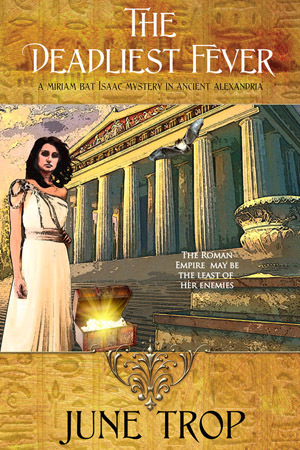
The Deadliest Fever (Black Opal Books, 2018) is about an audacious heist of jewels from the Temple of Artemis in Ephesus and the fates of the perpetrators once they arrive in Alexandria. Can Miriam discover the connections among that jewel heist, the death of a hard-breathing sea captain, and the desecration of the Torah mantle in Alexandria’s Great Synagogue? And can she do it before the deadliest fever claims its victim?
In The Deadliest Thief (Black Opal Books, in press) one of the accomplices in the jewel heist at Ephesus vows to kill Miriam and her occasional deputy, the itinerant dwarf Nathaniel ben Ruben. At the same time, a kidnapper vows to butcher Phoebe, Miriam’s closest friend. Miriam suspects the events are connected, but who is really the deadliest thief?
The core characters’ lives advance with each book, but each story stands alone. So, begin with any one of the first four and accompanyMiriam through the rancid underbelly of the city second only to Rome. You can purchase the books in e-book or paperback on MY WEBSITE ,or find them on Amazon, Barnes and Noble, and other platforms. And don’t forget to read my blog every week on my website or Facebook page, June Trop Author.
2) Why do you write crime fiction?
 For me, writing a good mystery is the greatest challenge. Readers should be able to solve the puzzle but, at the same time, be unable to do so. Accordingly, the pieces must fit together precisely. And then, the solution must satisfy. That is, justice should triumph, and readers should see that the author was fair. It doesn’t get more challenging than that!
3) What informs your crime writing?
The character of my protagonist and her historical setting inform my stories. Years before I ever conceived of writing mysteries, I was studying the historical development of concepts in chemistry. That’s when I encountered the legendary founder of Western alchemy, a woman who lived in Roman Alexandria. With a little tweaking, I made her my model for Miriam bat Isaac. And so, the character of this once-famous woman, as I imagine her to be, leads me to the premises and situations my protagonist faces and the themes of the stories.
4) What’s your usual writing routine?
Before I begin the actual writing, I keep a journal of plot ideas. Most of the storylines reach a dead end, but some come alive. When I’ve fixed on a plot, I make a list of all the scenes to get from the beginning to the end and record what must happen in each scene to move the story forward. Then I create a subplot or two and insert those scenes into the list as well. This framework is what I use to flesh out each chapter. And, as a new idea emerges along the way, I insert the idea into the relevant scene or string of scenes.
5) Which crime book do you wish YOU’D written, and why?
To me, the best mysteries were written by Arthur Conan Doyle, and my favorite for its atmosphere and twists is The Hound of the Baskervilles. As far as contemporary American crime writers, no one in my mind surpasses Lawrence Block for his Matthew Scudder series. My favourite is A Long Line of Dead Men for its ingenuity, but it’s the character of Matthew Scudder and the setting, the noir streets of New York, that make all the books a treat.
September 25, 2018
CRIMINALLY GOOD: interview with author Belinda Bauer
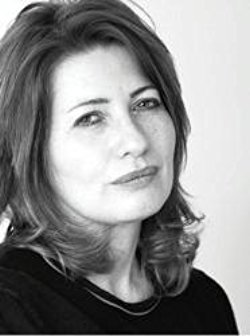 1) So, who are you & what have you written?
Belinda Bauer. I’ve written eight crime novels – Blacklands, Darkside, Finders Keepers, Rubbernecker, The Facts of Life and Death, The Shut Eye, The Beautiful Dead and Snap. I’ve also written High Rollers – a thriller about an air crash investigator – under the pen name Jack Bowman.
2) Why do you write crime fiction?
Because the first novel I had published was deemed to be a crime novel. I’d planned on writing a scifi novel next but it was not to be! Marketing departments love to pigeonhole you …
3) What informs your crime writing?
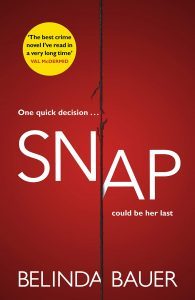 I’m inspired by many different things. Sometimes real life, sometimes dreams, and sometimes just ‘what if?’ moments. I wrote The Shut Eye entirely because I heard a radio documentary. I loved the term for an ‘honest’ psychic so much I knew I had to write a book called The Shut Eye, and immediately started to do some very interesting research!
Many of my books have children at their centre. I like to write from a child’s point of view because children lead secret lives below the radar of the adults around them.
4) What’s your usual writing routine?
Ideally, 9am to about 2pm. If things are going well I can easily do 2000 words in that time. If they’re not, I can’t do 2000 words in a week…
5) Which crime book do you wish YOU’D written, and why?
If it were first published today, To Kill a Mockingbird would be sold as a crime novel, so I wish I’d written that. Outrageous injustice unfolds so seamlessly through the eyes of a child that we barely realize the horror of what we’re witnessing. That childlike sense of only half-understanding is palpable.
September 13, 2018
CRIMINALLY GOOD: interview with author Val Penny
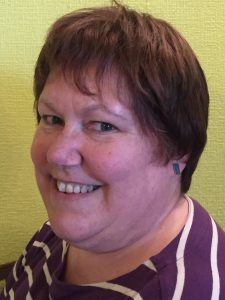 1) So, who are you and what have you written?
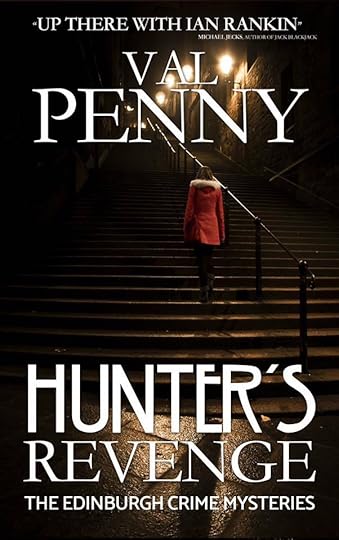
I’m Val Penny and I am an American author living in SW Scotland where I live with my Scottish husband and two cats. I have a Law degree from Edinburgh University and an MSc from Napier University. Throughout my life to date, I have had many jobs including hairdresser, waitress, lawyer, banker, azalea farmer and lecturer. However I have not yet achieved either of my childhood dreams: being a ballerina or owning a candy store. Until those dreams come true, I have turned my hand to writing poetry, short stories and novels. My crime novels, Hunter’s Chase and Hunter’s Revenge are set in Edinburgh, Scotland and published by Crooked Cat Books. LIKE my page and follow me as @valeriepenny.
2)Why do you write crime fiction?
I enjoy reading crime novels! They are also amongst the most popular books purchased, so I have a large target audience!
I also find that through writing crime novels I find an emotional release in my craft. Crime novelists deal with the dark things that people usually push to the side of their minds in order to get on with every day life: I find the attraction of writing can be important and cathartic.
It is often said that writers can be difficult people: gloomy, competitive and quarrelsome. However, for the most part, I have found crime writers to be an inclusive and convivial bunch.If you have a chance to go to a crime-writers’ convention, do take it: I’ll see you there! Crime writers conventions are exhausting, exhilarating and irresistible.
Lastly, I suppose, I write crime novels because I can create and then solve a puzzle for my readers. I can also confirm the a crime novel is an excellent place to park your rage! The prospect of giving vent to righteous anger in a safe form can be a particularly pleasing device. When characters require to act in a violent way or commit violence the reader is willing to witness this on the page but they would shy from it in real life. I can let rip on the page in a way they avoid doing in the real world.
 3) What informs your crime writing?
For me, the sources for crime novels are many and varied. Ideas can spring from the news and current affairs articles; memories from the past and historical events or things that puzzle or fascinate me. I am never without a notebook. I never know when I will see or overhear something that I can subsequently use in a novel. Once I begin to exercise my creative muscles, I often find that they run into stories demanding to be told.
I can confirm that the research you do for crime novels and for academic purposes are equally satisfying. The research for a crime novel is also extremely diverse. It may involve visiting prisons, refuges, police stations or drug dens. Police are often very willing to be of assistance to crime writers, even if it is just to avoid being irritated when otherwise the writers would get police procedures wrong! When you are writing a novel, no information or experience is wasted!
4) What’s your usual writing routine?
It has taken me some years to develop a writing routine that works properly for me in real life. However, I now settled into a sensible working day. In the morning, I exchange contact with my readers through social media. This allows me to tell them what I am doing in my writing life and learn their views of my books. I also deal with any emails that have come in overnight and need attention. After lunch, I settle down to write for five hours and that leaves the evening free to relax with my family.
5) Which crime book do you wish YOU’D written and why?
The first adult crime novels I read, like many people I suspect, were those written by Agatha Christie. She is the mistress of plot construction and deflection. I would have been proud to write any of her novels, but I particularly like the setting of Death on the Nile. The way this story weaves around the different historical Egyptian sites and the clues and red herrings sweep through each different character in turn is delicious. It is a fine neat plot with a satisfying conclusion. No crime writer can hope to achieve more.
August 29, 2018
CRIMINALLY GOOD: interview with author Roger Bray
 I served in the Royal Navy for ten years including in the Falklands War before migrating to Australia and becoming a police office. I served for 17 years before being medically retired after being seriously injured while protecting a woman in a domestic violence situation. I am married with three grown children and one grand daughter and lives south of Brisbane with the love of his life, my wife of thirty years and her overly cute cat. I currently a full time author.
To date I have two novels published, The Picture, a story about avarice regardless of who may get hurt and of consequences balanced against an ex-cop who has always tried to do the right thing and help people, and Psychosis, about an innocent man imprisoned for his wife’s murder and his sister, desperately trying to have him released but losing hope with each setback. Both the books have received great reviews and very positive feedback. I like to look into the character of the people involved and that has struck a cord with readers whoo want more than quick action.
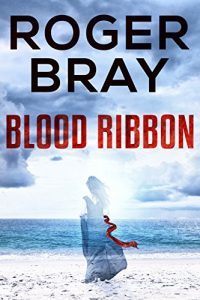
My third novel, Blood Ribbon, is out now. As with my previous novels, it involves ordinary people caught up in extraordinary events and how they deal with them. Trying to keep their sanity while finding out the truth.
2) Why do you write crime fiction?
I don’t, I write literary fiction which seems to involve crime. Jokes aside, I like to explore the interaction of people with circumstances, crime happens to bring the best and worst out in people. As a police officer I was able to observe how people dealt with situations well outside their comfort zone, outside their everyday lives, and it can be very surprising to see how people react.
3) What informs your crime writing?
 Obviously having been involved in many types of violent crime I have some insider knowledge but, as I said before it is more about how people react. Often it is normal for police to attend a crime scene where civilians are experiencing the worst day of their lives. To the police it may be the third of fourth such event they have attended that day. Being an ex-police officer certainly helps with ideas, but I am a voracious reader as well, of novels but also articles about myriad things. Your idea of ‘What if…’ is very true, along with ‘why’ and ‘how’. How is easy, like a Cluedo solution, the why is often a lot more subtle and I enjoy bringing that out in my books.
4) What’s your usual writing routine?
I spend a fair amount of time thinking through ideas, trying to build a narrative, making notes and writing down anything relevant. I like to have an ending in mind before I start but often that will change as the story develops. Once I start writing I start at page one and finish at the end. That sounds a little oversimplified but I have found that writing different parts and trying to fit them together leads to disaster. Sometimes it is unavoidable but I prefer the linear approach. Once I start writing I like to have a routine and spend a few days at it, writing until I run out of steam, which could be ten pages or fifty. Have a break, reread, edit and continue.
5) Which crime book do you wish YOU’D written, and why?
The Innocent Man: Murder and Injustice in a Small Town By John Grisham. Non-fiction but definitely crime. Why? Because I think it would have been fascinating to research and would have given a great sense of satisfaction to expose such an egregious miscarriage of justice.
August 27, 2018
CRIMINALLY GOOD: interview with author Gordon Brown
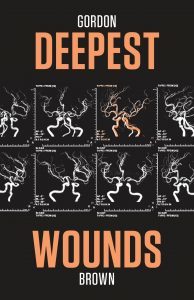
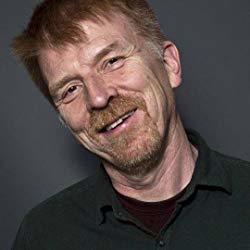 I’m Gordon Brown, not the ex-Prime Minister, and I’ve written six novels so far. Falling and Falling Too (the Charlie Wiggs series), Darkest Thoughts, Furthest Reaches and Deepest Wounds (the Craig McIntyre series) and a stand-alone called 59 Minutes. I’ve also written a number of published short stories in the following anthologies – Bloody Scotland, Blood on the Bayou and the CWA’s Mystery Tour.
In a former life I was the Brand Director at Tennent’s, the marketing director at STV, delivered pizzas in Toronto, sold non-alcoholic beer in the Middle East, launched a creativity training business and floated a high-tech company on the London Stock Exchange. I’ve compered the main stage at a two-day music festival and was once booed by 49,000 people while on the pitch at a major football Cup Final. I’m a local radio DJ and I’m one of the founding directors of Bloody Scotland, Scotland’s International Crime Writing festival.
There’s more about me at www.gordonjbrown.com or you can tweet me @GoJaBrown.
2) Why do you write crime fiction?
I have two on-going series (and a third in the offing). The Craig McIntyre novels are U.S. based conspiracy thrillers and the Charlie Wiggs books are Scottish crime but, at the root of all my writing is a simple idea – how do ordinary people cope with the extraordinary. Crime/thrillers are an ideal genre for me to work within. I started out, when I first put pen to paper, with a penchant for horror and sc -fi and this still shows in some of my work. The Craig McIntyre series has been called high concept. I like to build the plot around the characters and I find that the stories flow so much better when I’m challenging those characters as hard as I can. For this reason, I write about the world of crime as it gives me wonderful license to put my characters through the mill.
3) What informs your crime writing?
 My preference, in writing a book, is to start with a single line and see where it takes me. My freshest work comes from wandering down blind alleys and figuring a way back out. I’ve been in Marketing for thirty-five years (it’s my day job) and the discipline is all about understanding your audience. I’ve spent an extraordinary amount of time trying to get under the skin of people. When it comes to writing a book that’s where I start, with the people. Get this right and everything else springs from there.
I also dig into my past a lot. For example, my father was a policeman in the sixties and seventies and, in the back of my head, I’m still a policeman’s son. That time in my life still provides me with inspiration and I’m now writing a novel (a new third series) that uses those experiences as the back story for my protagonist.
4) What’s your usual writing routine?
It used to revolve around planes, trains and hotels. My day job was full on and I had to grab anytime I could to write. All I’ve ever required is a laptop, a place to sit and my headphones. I need to have music on, to work. (At the moment I’m listening to a compilation called Cream Future Trance). The music cuts out the world beyond and lets me focus on my writing. But things are changing. Now that I’m spending more time writing and less time on the day job, I’ve gravitated to the dining table in my front room or the balcony in our apartment in Spain as my preferred places to write. I like early mornings. I’m not good with late nights. I also need a word count target to deliver my work. A minimum of 2,000 words per day – although I can double or triple that when I’m on a roll. I hate days when I’ve written nothing. Some nights I’ll go to bed, only to realise that I’ve not typed anything that day. I’ll often get back up, open my laptop and type ten words, then return to bed. That may sound pointless, but, in my head, every word is one closer to completing the next novel.
5) Which crime book do you wish you’d written and why?
Such a tough question. If I have to choose one, I’d probably pick William McILvanney’s ‘Laidlaw’. He’s the godfather of Tartan Noir and that would have been a nice thing to put on my CV but, more importantly, Willie’s turn of phrase and use of our language is exquisite. Every sentence feels crafted to the point of perfection. Jack Laidlaw is the main protagonist in the book but the other star is Glasgow itself and the book is a magical balance of character and place. I had the joy of interviewing and meeting the great man a few times. A humbler person it would be hard to imagine. I once asked him why Laidlaw lived in Simshill (the very area in Glasgow where I grew up). Willie said he’d heard that’s where all the police lived in the sixties. My dad was a police constable and what Willie had heard was true; every second house around us had a police officer living in it. I told him that one night, over a drink, and he had smiled, telling me that was good to know because he’d never actually been to the place. A wonderful man. A wonderful
August 25, 2018
My Favourite Reads: Kelly Smith, author
 Writing my first book about my failed relationships was not a book I ever intended on writing. I always wanted to write fiction. I love getting lost in the minds of fiction writers: their fantasies, love stories, and heart wrenching tragedies. I have so much going on in my own life, that I like to take a break and travel through someone else’s story!
One of my favorite writer of fiction is Jennifer Weiner. At times we can find non fiction books to be not only honest and real, but also heartbreaking at times. But when one of your favorite authors turns the table and writes something you may not expect, it is even better.
 Non Fiction Surprises
So when Weiner released her non fiction book Hungry Heart, I was the first to snatch it up. She takes on a true journey of life. Everything from sex all the way through her mother coming out of the closet! Taking us on her real life journey seemed an easy task for Jennifer. So much of her story was relatable to me, because I too never expected to be a writer, but I too am a storyteller. I love through words; I feel through words and words are what push me to be a better person. I admire her style of writing, raw and easy relate to.
My Book
So, now here I sit with my own book, which I hope will help to plant seeds and change people’s lives. Now that I a seeing those words in print, I am realiSing that is a bit of pressure, but it is my story and like others out there if there is a story in you, it needs to come out of you whether your words are fiction or nonfiction.
Thanks, Kelly! About Signs:
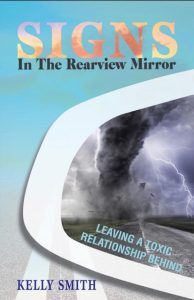
What kind of person ends up in a toxic relationship? And why does she stay? This searingly honest novel answers both those questions head-on. Coming out of a failing marriage, Kelly turns to Gabe out of fear of being alone. Her gradual slide into danger is at once terrifying and inevitable, and the steps she takes to get out of it will both inspire and offer hope. Buy HERE (UK) and HERE (US).
BIO – Boston born and raised, Kelly now makes her home in Austin with her three sons and one amazing Giant Schnauzer Bullseye. Kelly has written for Huffington Post, blogs at Thoughts Becoming Words, and hosts a podcast, Lets Get Wicked Deep. LIKE Kelly’s FB page and follow her as @kellys_author.
WEE GIRL REVIEWS: Tommy Twigtree And The Carrot Crunchers
Wee Girl Reviews
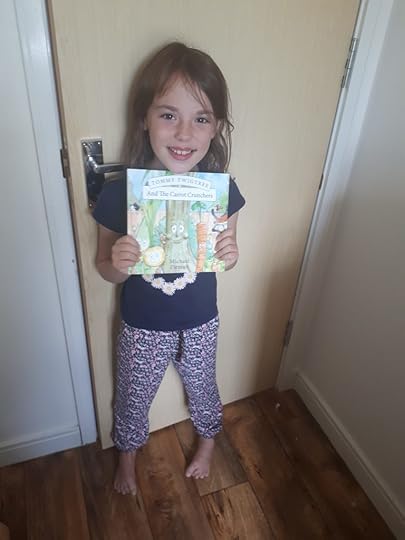
We love summer reads and my daughter Emmeline, aka ‘Wee Girl (2)’ is 7 years old and a tiny book blogger. We read picture books together at bedtime, so Emmeline can give her opinion on them.
Emme has been up to A LOT this summer holiday, including going to her favourite place with her cousins – Padstow, Cornwall. She loves body boarding.
About The Book
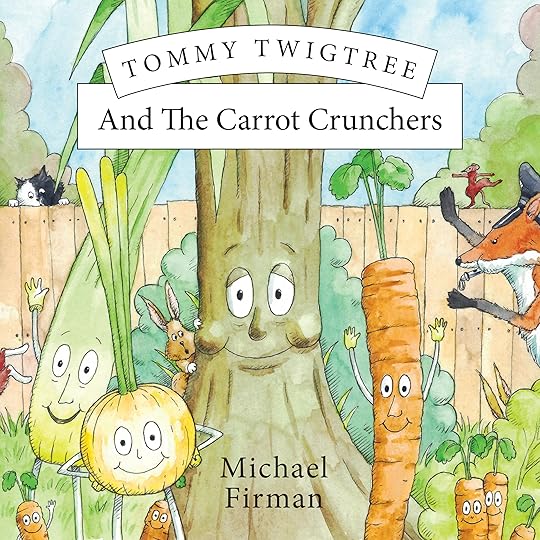
Tommy Twigtree and his friends enjoy peace and harmony in their garden.
That is, until Robbie Rabbit and his Bandits decide that carrots are on the menu!
Tommy Twigtree And The Carrot Crunchers is the first book for children by Michael Firman.
Illustrations are by Nick Roberts.
Emmeline’s Review
Here’s what Emme said about Tommy Twigtree And The Carrot Crunchers:
‘This is a funny book.’
‘One of the rabbits has a scar on his cheek.’
‘Rabbits are supposed to be cute, not evil!’
‘Foxes driving cars??? Why doesn’t he eat the rabbits? He should EAT THEM!’
‘I like the ladybird policeman.’
‘It’s sad six carrots get eaten!’
My Review
I enjoyed this book. I like the idea of a tree ‘guardian’ watching over the vegetables, plus the idea of pole-vaulting rabbits is inspired. The pictures are fun and the colours natural-looking, which suits the illustrations really well despite the ‘out there’ story. There were some lapses in tenses from past to present, plus a couple of ‘adult’ words Emmeline didn’t understand (like ‘retracted’) that could have been substituted, but these did not seem to detract from her enjoyment. (I was also amazed that she knew the word ‘offender’, which Emme defined as ‘the worst person ever to fight’!).
I have fond memories of the Peter Rabbit books, so thought it would be a bit like Beatrix Potter – nope! This might start out in cutesville, but gets heavy quickly, with six of the vegetables effectively getting ‘killed’ by the baddie rabbits. This thrilled the bloodthirsty Emmeline, but if you have a child with a delicate disposition who would find this upsetting, you might want to give this story a wide berth.
Verdict
A fun tale that brings a fresh new spin to classic garden stories. BUY IT HERE.
Author Bio
 Michael lives in rural Sussex with his wife. His story telling started when his eldest grandchild was old enough to appreciate a bedtime tale. Rather than read to her he began to craft stories about the trees, plants and animals that live in his garden. As time passed and a second grandchild also enjoyed these tales of adventure and daring, the stories began to create a whole world that lived and went about its business right in his garden. His grandkids, Poppy and Rudi continue to enjoy further developments in the lives of the characters that populate these stories and Tommy Twigtree and The Carrot Crunchers is the first in a series charming garden tales.
Lucy V. Hay's Blog

- Lucy V. Hay's profile
- 174 followers

