
Lucy V. Hay's Blog, page 7
July 30, 2019
7 Top Murder Mystery Books
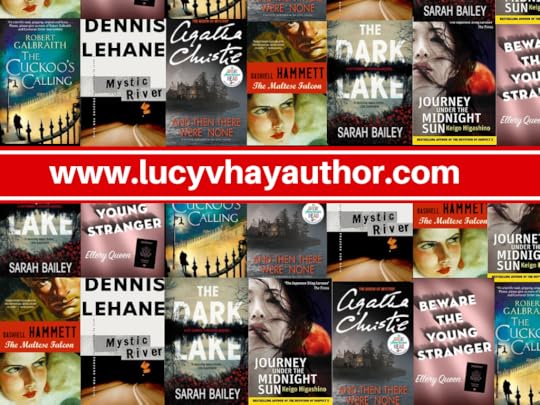
Murder Mystery Books
If you’re the sort of person who loves a good thriller, you certainly aren’t alone! Mysteries and thrillers are among the top books sold across the globe. Every year, hundreds of great stories are added to this genre. That means that finding the real gems among them can be a challenge. There are so many out there, plus few of us have as much time as we’d like to read!
If you’re curious about the very best ones, here’s a list which may help you narrow down your choices next time you visit a bookstore or click on the “checkout” button online. Warning: we recommend reading some of these in broad daylight, possibly with company!
1) The Cuckoo’s Calling, Robert Galbraith
You might be familiar with this series already, as the author is very famous under another name – J. K. Rowling. That alone is enough reason for many readers to pick up the book. It’s very good in its own right and offers readers a spine-shivering world to step into, with another two books following the first.
2) Journey Under The Midnight Sun, Keigo Higashino
If you love a good detective story with lots of detail and an extensive plot, this is one for you. Set over twenty years, Higashino’s book explores the issues of obsession alongside the traditional murder mystery. It’s a bit different from many in this genre, but definitely a worthwhile and enjoyable read.
3) The Maltese Falcon, Dashiell Hammett
Perhaps one of the more famous names on this list! This book follows the story of a hero called Sam Spade, who accidentally gets caught up in a treasure hunt with a very specific goal: a Maltese Falcon, encrusted with precious gems. This thrilling book is ideal for both die-hard fans and readers dipping a toe into this genre. It makes for a very memorable read.
4) And Then There Were None, Agatha Christie
No list of mystery novels would be complete without at least one Agatha Christie! This is one of the really good ones. The title alone has a pretty chilling air to it and the book does not disappoint. With ten suspicious characters and ongoing murders, devious pasts, and a creepy setting, you won’t know who to trust or believe – the perfect chilling murder mystery.
5) Beware The Young Stranger, Ellery Queen
If you’ve ever wondered what it’s like to be in love with someone who could also be a violent killer, this book might be for you. It has all the answers – or does it? Keeping guessing, along with the main character Nancy, about whether her husband-to-be is responsible for two deaths … Or whether somebody else is using him as a scapegoat to avoid the spotlight themselves.
6) Mystic River, Dennis Lehane
If you haven’t read any Dennis Lehane, you should definitely check him out. This book is not for the faint-hearted, full of blood and drama. For those who love to see a very visual world, there are some great adaptations of Lehane’s books too, including this one. For more on adaptations, CLICK HERE.
7) The Dark Lake, Sarah Bailey
Lakes feature in a lot of murder mysteries because they’re great for creating a spooky atmosphere. There’s no exception in this book, where a dead woman who has been strangled is found floating in the lake. Detective Gemma Woodstock has to dredge up an awful lot of her former schoolmate’s past to get the answers she’s seeking. A debut novel, this book is extremely impressive. Look out for more novels from this author, as she’s well-worth the time and attention!
Check Out These Books
No matter what sort of mystery tickles your fancy, you’re bound to find it, hopefully with some recommendations from this list. There’s so much available, it’s hard to know where to start sometimes, but some of the books included here offer chilling, thrilling, hair-raising worlds which will keep you guessing from start to finish, so don’t hesitate to check them out and start making the shadows come to life!
BIO: Ashley Halsey is a professional writer at Gum Essays and Lucky Assignments who has been involved in many projects throughout the country. Mother of two children, she enjoys travelling, reading and attending business training courses.


July 12, 2019
BOOK VS FILM: Pet Sematary: Horrifyingly Bad, or Horror Masterpiece?
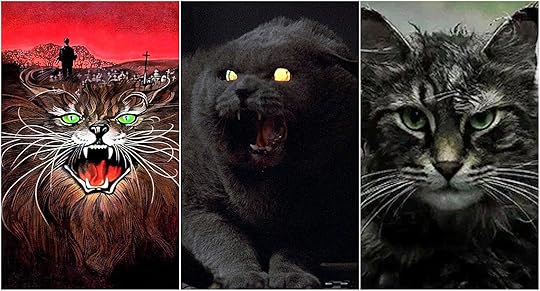
Book Versus Film
If you go down to the woods today, you’re sure to encounter one book, two films, three empty graves and foreshadowing to make you weep. Let’s bury Stephen King’s Pet Sematary in that ancient MicMac ground, and see what rises victorious.
Grab your shovel, take my hand, and tread carefully: there are spoilers everywhere…
Eulogy: Story & Characters
Louis Creed moves his family to sleepy Ludlow for a quieter life. Their new home borders a road populated by speeding trucks, and the nearby woods harbour a graveyard where kids bury their pets: the “pet sematary”. But beyondthatlies anotherburial ground, and whatever is laid to rest there does not rest for long.
After their cat is run over, Louis witnesses first-hand the power of that ancient ground. But even as he wonders if a human could be buried up there, a tragedy threatens to tear his family apart…
The book is told from Louis’s third-person viewpoint, apart from some scenes towards the end. Wife Rachel inherits that King favourite, the childhood trauma: here it’s elder sister Zelda, who died from spinal meningitis when Rachel was eight. This gave her a death phobia guaranteed to cause sparks when 5-year-old daughter Ellie realises her beloved cat Church must one day die. Finally, 21-month-old son Gage completes one of King’s most endearing families.
Two other central characters are Jud and Norma Crandall, who live over that road. Jud is a fount of local knowledge concerning places to bury pets, especially pets you don’t want to stay buried, and becomes a father figure to Louis. The paternal relationship is a key theme – between Jud and Louis, then Louis and Gage – and is the book’s emotional core.
Interestingly, there is no human antagonist. The closest is Rachel’s father, Irwin, but even he gets a redemption. Instead, the evil is the MicMac cemetery beyond the pet sematary, abandoned since the Wendigo (a Native American myth) ‘soured’ the ground.
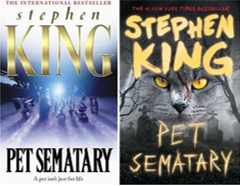
First Exhumation: The Book
Did you ever hear about the book so scary its author refused to publish it …?
The history of Pet Sematary is worthy of its own book, if not for the fact most of it appears in the book. A man (let’s call him Stephen) takes a job that necessitates moving his family into a new home, alongside a road where trucks have a bloodthirst for pets. Soon, the daughter (let’s call her Naomi) is distraught by the premature death of her cat. Her younger brother (let’s call him Owen) has an even closer brush with death: during a day kite-flying with dad the toddler stumbles towards the road, almost into the path of –
Sound familiar? Oh, and in the nearby woods there’s a place where victims of that road were buried. I’m sure you can guess its name.
At times, this is less a work of fiction and more a glimpse into the misfortunes of the family King in the late 70s. Whilst crossing that road himself, King wondered what would happen if his daughter’s cat had come back – and then, what if a personcame back? – and by the time he’d reached the other side, Pet Sematary was born.
When the story demanded a tragic turn of events, however, the idea lost its appeal. Still, he finished it, reread it, then locked it in a drawer. Had it not been practically wrestled from him by publishers Doubleday, it’d most likely still be there. King said it took him to places he had no wish to revisit.
Digging Deeper
 Pet Sematary contains the DNA of two horror classics. The first is W. W. Jacobs’ The Monkey’s Paw, a 1902 short story that is a warning to the curious about tampering with fate. An enchanted object grants three wishes, but these exact a heavy cost (think Aladdin by Blumhouse Productions). The MicMac ground replaces the paw, and the wishes are the three occasions Louis buries something there.
The second influence is more recent: it’s The Shining. Ellie’s prophetic dreams (not about Redrum the undead horse, sadly), escalate as she senses her father in danger. Rachel, having taken Ellie across country to her parents’ house, hurries back home – and this mercy dash, where fate blocks her at every turn, brilliantly recreates Halloran’s rescue mission to the Overlook Hotel.
Those final chapters, when we don’t know what will happen, are the most suspenseful. But prior to that King delights in drip-feeding spoilers, crafting astonishing levels of dread precisely because we know what’s coming: from learning Norma will die in ten weeks, or a day kite-flying is the last time Louis is happy, to that devastating sentence just beyond the halfway point.
Really, the moment Jud and Louis give Church a tenth life, we should have expected it. But nothing prepares us for: “And Gage, who now had less than two months to live, laughed shrilly and joyously.” As the Creeds go about their lives, unaware their future is on a collision course with a truck that recalls Thomas Hardy’s Imminent Will fashioning an iceberg for the Titanic, the world’s foremost horror author has never been so heart-breaking.
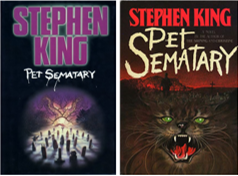 And it gets worse. Whilst we’re spared Gage’s death, the chapters showing the family’s grief are harrowing – until, miraculously, we’re told Gage didn’t die. He grew up, became an Olympic-winning swimmer, and for three blissful, deceitful pages we’re fooled. But this isn’t a cruel trick; King teases a future where Gage lives, so we’ll be desperate for it to be true, and so we’ll support whatever Louis does next.
Despite King refusing to do publicity, Pet Sematary shifted 600,000 hardcover copies upon release in 1983. King said the story “spirals down into darkness” – a metaphor that manifests several times, including the pet sematary’s layout – and it’s this hopelessness that scared him so much he locked it away. But, like that ancient ground, it keeps luring him back. King wrote the screenplay for the 1989 film and ensured the production didn’t stray from it (or from Maine); and, when the remake was greenlit, the ‘twist’ was put to him for his blessing. Which brings us nicely to the films …
Second Exhumation: The 1989 Film
Director Mary Lambert received the script whilst editing her video to Madonna’s Like A Prayer. What appealed to her was that, whilst many horror films are about death, Pet Semataryis about learningabout death. Lambert jokes she was hired due to knowing the Ramones, one of King’s favourite bands. She persuaded them to write the end-credits song, and also talked King into doing his memorable cameo at a funeral.
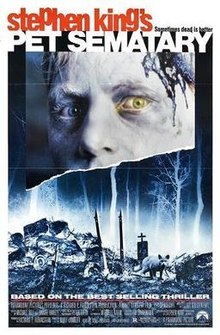 Story-wise, apart from assimilating some secondary characters (and having one commit suicide), the biggest departure is the ending. The studio insisted this be more gratuitous. It resolves a question unanswered in the novel, but that aside, Lambert’s main change is tonal. To offset the unremitting story she adds humour, through Victor Pascow’s ghost. His scenes with Rachel recall dead friend Jack from An American Werewolf in London. Otherwise, it’s an extremely faithful adaptation.
And therein lies the problem. Without an omniscient voiceover there’s no way to telegraph what’s coming, nor recreate the dread used so effectively in the book. This leaves suspense to drive a story that, most of the time, is easy to predict. King probably realised this, hence why he used our foreknowledge to his advantage. Faced with the same problem, however, the film struggles to genuinely scare.
That’s not to say it isn’t effective. The first shock – Louis’s midnight stroll to the pet sematary wasn’t a dream – is brilliantly handled (better than in the remake); likewise, the build-up to Gage’s death is superb, culminating in a wide-shot of Louis running for his son as the truck hurtles into view. The boy playing Gage, Miko Hughes, hadn’t even turned three at the time, but he’s terrific. He would waddle away with the acting honours too, if not for Herman Munster himself as Jud. Lambert made Fred Gwynne her first choice, despite him being too young (his black hair was dyed white) and he gives a performance so indelible it casts a Frankenstein’s Monster-sized shadow over the role. Wisely, 2019’s Jud, John Lithgow, plays him completely differently.
Full use is made of the beautiful countryside, especially the trek to the MicMac ground. Lambert dragged her crew all over Maine to convey the feeling of a long journey, and it works. The mountaintop burial ground looks terrific, as does the pet sematary, at least when that blue light isn’t shining through the deadfall. The largely practical effects – from mirror-angled light making Church’s eyes glow, to torching a real house (and a full-size façade for a second inferno) – ensure we rarely question what we’re seeing. Okay, the dummy used as evil Gage looks like Chucky, but holding that against a film 30 years old would be, in Gage’s dying words, “no fair”.
There is one aspect where the film absolutely wins, though, and her name is Zelda. I say ‘her’, but Lambert cannily cast actor Andrew Hubatsek, believing a guy would bring an ‘otherness’ to the role. She wasn’t wrong, as the directors of the remake will testify…
Third Exhumation: The 2019 Film
I blame Pennywise the Dancing Clown. Recent Stephen King adaptations were mostly for television until 2017’s It: Chapter 1 became the highest-grossing horror of all time, sending studios scurrying through their back catalogues. But could this resurrection beat the MicMac curse, by keeping its soul?
Directors Kevin Kölsch & Dennis Widmyer got the gig thanks to 2014 horror Starry Eyes. Both loved Lambert’s original, especially Zelda, and they couldn’t wait to remind us that “sometimes dead is better” – a tagline shared by both films. However, this does leave one very undead elephant in the room…
When Paramount Pictures announced the new Pet Sematary towards the end of 2017, the project had already spent seven years gathering moss. A slew of genre remakes, reboots and reimaginings had catapulted cinemagoers’ patience beyond breaking point, so this was greeted with little enthusiasm. When we already have a faithful adaptation, why bother? It’s a good question, and Matt Greenberg’s 2010 screenplay provided a good answer: suppose it isn’t Gage who dies, but Ellie…?
It’s one thing for a toddler still learning to walk becoming the walking undead, but when it’s a kid old enough to understand what dead is, and its consequences on her place within the family, that lesson about death is now shared between the living andthe dead. With a new script by Jeff Buhler (Greenberg gets a ‘screen story’ credit) and photography swapping Maine for Montreal – though both films share the same real graveyard: Mount Hope Cemetery in Bangor, if you’re down that way – the directors created something that’s respectful to King’s book, reverential to Lambert’s film, yet still its own movie.
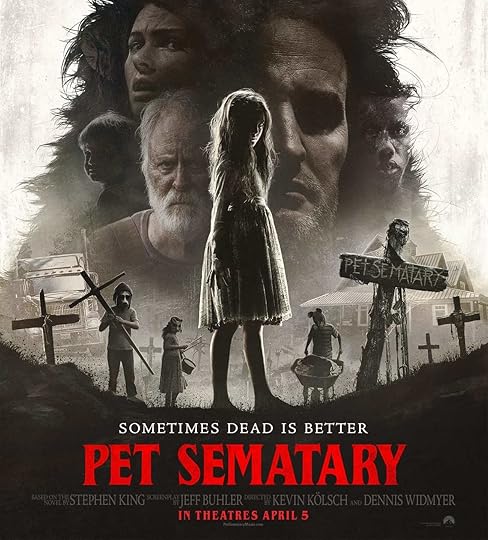 The differences are immediate: Jud’s introduction to the Creeds comes through Ellie (there’s surprisingly little warmth between him and Louis), and at last we see Norma, even if only as a tormenting vision. Her almost complete excision from both films means Jud shows Louis the burial ground to spare Ellie the facts of death, rather than repaying him for saving Norma’s life. Though quicker, replacing gratitude with contrivance is one mistake both films make.
Where material gets dropped (Louis and Irwin fighting) something omitted last time appears instead (the Wendigo finally shows up… in a book), but it’s all a preamble to that twist, and the uncharted territory which follows. Disgruntled fans were told dead Gage was too difficult to realise, but I suspect smoke and mirrors among the mist and gravestones: Not only is an older child better able to process what’s happened, she’s less likely to provoke laughter when seen dragging adults away… Which brings us to the ending. Both of them.
The directors always had two endings: one that stayed closer to the book, and another that went darker. Both were tested, and the winner was the second one. It works well, ensuring audiences don’t know what’s coming, and leading to an unsettling final image of three dead Creeds, plus cat, approaching their one surviving relative – although an ambiguous opening scene is here revealed as the actual finale, reframing everything else as a flashback. And that (redone) Ramones song still plays us out.
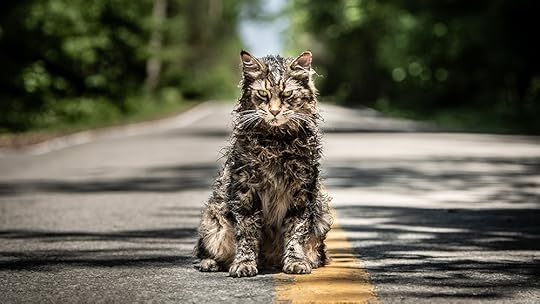
Once again, a talented cast keeps things grounded. Jason Clarke digs deeper depths as Louis, but the star this time is JetéLaurence as Ellie. If she’s sweet as the girl who loves her cat, she’s a revelation after following him back from the grave. Speaking of fatal felines, the British Shorthair has morphed into a (what else!) Maine Coon, and this kitty is frighteningly good. Maybe it’s the droopy eye, but Church could fell a rabid St Bernard. One pleasing tweak is Rachel gets more to do, and Amy Seimetz (who was EIGHT when she read the book) makes the most of these new opportunities.
Last Rites
Lambert’s film is slow-paced, and the editing occasionally jars, but the most oft-quoted criticism is it’s not scary enough. Whilst not unfair, that’s because it follows a book which eschews easy frights for something deeper. When we consider other 1989 horrors – almost entirely sequels, including more Freddy, Jason and Michael – quality was rare. There were exceptions, such as Society and (ironically, a sequel) The Exorcist III, but honestly, it’s a miracle Pet Sematary turned out so well. We got a character piece, more in tune with today’s elevated horror – Get Out, Hereditary– and whilst a chunk of that was the script, Lambert deserves most of the credit. Oh, and 30 years on, it’s still the most successful female-directed, R-rated horror at the box office.
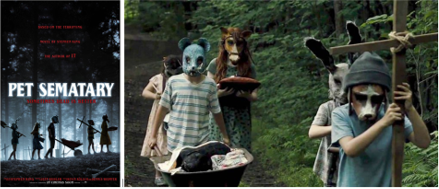
The latest film plays with expectations, such as Gage heading towards the road, and some of the imagery is striking – the masked kids procession that featured prominently in the advertising; sadly their only scene, despite the trailers offering more – and naturally Zelda promises nightmares for a whole new generation (can you spot her hiding in the poster below?) But, most remarkably, the ending is somehow bleaker than the novel.
Pet Sematary is about mortality. On our proximity to death, Louis says “We’re all close. All the time”and it’s the ways we try to cheat that where the horror lies – which both films capture well. The first, in sticking to King’s script, is more faithful; the second, in throwing that curveball, is creepier. But does either film tell it better than the book?
The key difference comes in how the story is told. King’s remarkable use of omniscient author is a gamble that pays off handsomely. Without this, either film could have won – but the foreshadowing sets it above not just the films, but most of King’s other work. Pet Sematary is not a story so scary it should never have been published, but it is an experience you will not forget. And so, the book wins.
Author Bio:
Nick Jackson was once run over by a car. He survived. He’s the author of several short stories, some a lot scarier than others, as well as numerous Book V Film comparisons for Lucy, including The Shining , The Exorcist , and The Silence of the Lambs . He has no idea why Ellie is short for Eileen in the book, Ellen in the first film and Eleanor in the remake, but he does know Zelda is hiding to the left of Rachel in the last 2019 film poster. And he hopes you always look both ways when crossing the road.
June 25, 2019
Top 10 Movies Based on Non-Fiction Books
“Non-fiction books are so boring. Who likes to read real stories when there are things like Game of Thrones and all the best sci-fi books?”
Do you have that thought when someone mentions non-fiction? That can mean only one thing: you haven’t read non-fiction at all. When you start reading it, you’ll realise that real life is more creative than George RR Martin himself. Okay; maybe not that creative, but still surprising.
If you feel like books are too much of a challenge, how about non-fiction movies? We’ll suggest a list of reality-inspired films based on books. After watching at least one of these movies, you’ll be inspired to read the books as well.
Top 10 True Story Books Made into Movies
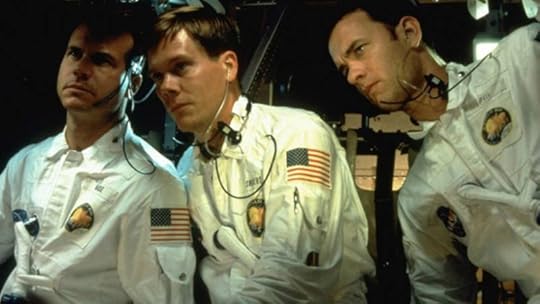
1) Apollo 13
Critics would argue that this isn’t the best work of Tom Hanks as an actor. But it’s a great movie nonetheless. It’s valuable because it shows us the reality behind Nasa’s missions, successes and failures.
Figure 1. source
If you read about the accident, you’ll find a lot of information why the spacecraft malfunctioned. But if you’re not an engineer, you’ll hardly understand it all. James Lovell (an astronaut) and Jeffrey Kluger (a journalist) made it simpler for laymen to see what was going on. In 1994, they published the book Lost Moon: The Perilous Voyage of Apollo 13. It’s the book that was taken as foundation for the movie Apollo 13.
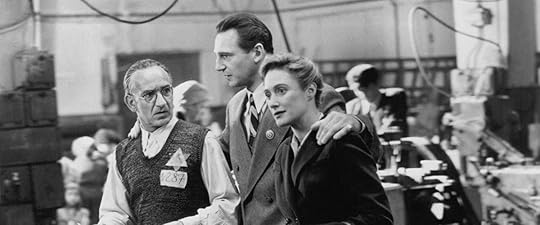
2) Schindler’s List
Oskar Schindler was a member of the Nazi Party. That statement will give you the wrong impression of him being the bad guy. In reality, Schindler was a hero, who saved 1,200 Jews from death. Thomas Keneally was so inspired by this character that he wrote the Booker-winning Schindler’s Ark.
The movie, directed by Steven Spielberg, is heartbreaking. Oskar Schindler may be the best role that Liam Neeson ever played.
3) Casino
If you thought that non-fiction was boring, you should watch Casino. If you’re not ready to watch a 3-hour movie, just take a look at Robert De Niro’s style in it. Did you take a look at it? It’s not enough for you? How about Sharon Stone? Now you must be ready to stay with the movie for three hours.
When watching the movie, you don’t feel like it’s non-fiction. You can’t believe this could be real. But it is. It’s the story of Frank Rosenthal, whose life inspired the book Casino: Love and Honor in Las Vegasby crime reporter Nicholas Pileggi. The book inspired the movie, Martin Scorsese was the one who brought it on screen, and the rest is history. It’s one of the most mesmerizing movies you’ll ever watch.
4) Catch Me If You Can
One person managed to make people believe that he was a pilot, a doctor, and a parish prosecutor. He was so good at lying that FBI used his skills to get other frauds. Yes; that really happened. We’re talking about Frank Abagnale. His real profession? He became an American security consultant after he was caught. Before that, he was probably the smartest fraud in human history.
The movie is based on Catch Me If You Can: The Amazing True Story of A Real Fake by Abagnale himself, with Stan Redding.
5) Moneyball
Do you like sports movies, where the main characters trains really hard and then wins the day? You thought of Rocky Balboa right away, huh? Rocky was a character based on fiction. But reality is not scarce of such inspiring stories.
In 2003, Michael Lewis published Moneyball: The Art of Winning an Unfair Game. It shows you how a modest team with a small budget fought capitalism and played with heart. The team’s general manager used computer-generated analytics to assemble the team. And it worked.
If you’re not sure about the book, you can watch the movie first. It came in theaters in 2011. Brad Pitt, Jonah Hill, and Robin Wright are the main stars in it.
6) The Wolf of Wall Street
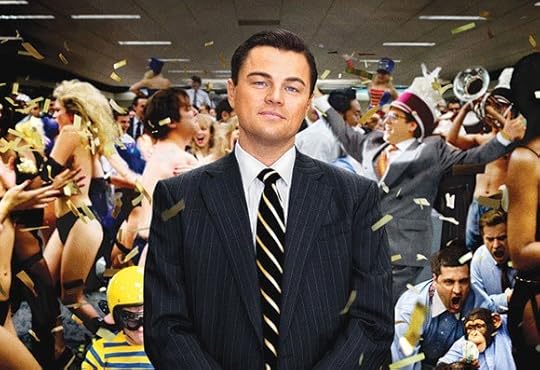
The movie was crazy popular when it came out, but did you know it was based on a true story? Did you know it was based on a book, too? It’s a memoir by Jordan Belfort, the main character himself.
Leonardo DiCaprio played the role magnificently. But when you read Belfort’s words, the story seems more real.
7) Lincoln
Who doesn’t love Daniel Dey-Lewis? He is such a versatile actor who elevates his work on the level of art. He proved that with the Lincoln role in 2012.
There are several books about Abraham Lincoln, but the movie was based on a particularly interesting one – Team of Rivals: The Political Genius of Abraham Lincolnby Doris Kearns Goodwin. The author is an acclaimed historian, who based the book on research and facts.
8) Flags of Our Fathers
Clint Eastwood is the director of the 2006 movie by this name. In an interview about the movie, he stated: “I wanted the audience to get to know these people and see what they went through and give them a feeling of what it was like at this time. People donating their lives, the feeling of false celebrity, which seems quite common these days.”
Eastwood founded the movie on Flags of Our Fathers, a book by james Bradley and Ron Powers.
9) Jarhead
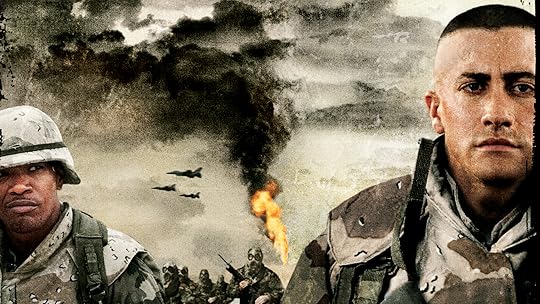
Many war movies seem surreal. It takes a while before you realize that the screen is depicting the actual truth. That’s the case with Jarhead, a movie staring Jake Gyllenhaal. He plays the role of Swofford, who was the author of the Jarhead memoir.
The book and the movie are about Swofford’s experiences during the Persian Gulf war. It shows you the reality of war without any idealism involved.
10) Donnie Brasco
An FBI agent infiltrated in a mafia family and getting too attached with a hitman? Many of us watched the movie and loved it. But not many know that, despite all odds, it’s actually a true story.
Joseph D. Pistone was the agent in question and author of Donnie Brasco: My Undercover Life in the Mafia.
Should You Read the Book or Watch the Movie?
Many will tell you to read the book first. The movie tends to spoil the impression. It’s faster and it can’t include all details from the book. When you get to the book, you already know how it ends and it might get a tad boring.
But even if you watched some of the best non fiction movies, you can still read the books that inspired them. These books tell real stories about real people. They convince you that reality is just as fun as fiction. So why not give them a chance? Pick one of these for your next movie night! Enjoy!
BIO: Michael Turner loves watching war movies and reading non-fiction books. He works as a writer and editor for EduBirdie. Book and movie reviews are his specialty. His blog is his safe place, where he shares impressions about all books he reads and movies he watches.
May 23, 2019
INFOGRAPHIC: Inspiring Bedtime Stories For Young Girls
If you’re an avid reader, you likely grew up reading everything you could get our hands on. From fairytales to wild fantasies, no page was left unturned. However for many, there is one type of story that is read less frequently than others: tales with empowered, clever, and independent female role models. These stories can be surprisingly hard to find. Princess books and fairytales may be fun for young girls, they miss out on the opportunity to teach children important lessons for later in life.
That’s why Sleep Advisor compiled this list of bedtime stories to inspire and empower young girls. Show your daughter or niece that women can and do make a difference with a book from the section on historical figures. Or, give her the tools to grow up confident and self-assured with a book from their fictional section. Or for the girl who loves princesses, read her a story from their modern fairytale section that shows princesses can fight dragons, too.
Reading an empowering bedtime story with your child is a great way to get them ready for bed, and give them the tools for success later in life. Check out the full list below to find the perfect book. Happy reading!

May 16, 2019
5 Ways To Get Involved On This Site
Guest Posts Wanted
Every single day I get asked if this site takes guest posts. The answer is YES PLEASE!
This site does have a remit, however. We only carry articles related to books and reading. This is fairly broad and covers stuff like movie and TV adaptation, but also dips into stuff like author quotes and literary gifts, such as stationery and notebooks. We never carry articles about essay writing or college education.
The idea is, if you love books or want people to hear about YOUR book, then this is the site for you. Here’s the 5 ways you can currently get involved on this site.
BOOK VS. FILM – We particularly LOVE comparisons of books and their movie adaptations
BOOK LOVE – do you absolutely LOVE a particular book, series or genre? Let us know what it is and why, like these posts did
HOW I WROTE – are you a published author or produced screenwriter? Then let us know how you wrote your project and give us the inside view of it!
INFOGRAPHICS – Check out our amazing reading and book graphics – do you have one to share?
GENERAL GUEST POSTS – We love guest posts about reading, reading-related products, author quotes, genre … you name it!
So You Know …
Most popular. The most popular posts on this site are the ‘Book Versus Film’ case studies. If you are looking to get valuable clickthru to your Amazon pages and sites, these BvF posts can get eyes on them (in some cases, months and even years after they’re published. Pick a classic or controversial book/film to take advantage of this).
In the case studies, writers look at the adapted versions of books in film (or TV, where appropriate) and decide which is the ‘best’ and WHY, based on craft reasons (not just personal opinion). So far we’ve covered everything from literary classics, historical, horror, crime fiction, YA, dystopian, you name it. You can see all of the case studies HERE.
Second most popular guest posts … Infographics about reading or books. All you need to do is create a short intro of approx 250-300 words about the subject covered in the infographic. (Note: You don’t have to have to made the infographics yourself – check out sites like visual.ly – though you do have to credit the maker).
Third most popular … Top 5 – 10 lists of books, all based around a theme. You are permitted to include your own book in the list. Here are some examples:
Top 5 Ghostly Narrators In Crime Fiction
Top 10 Authentic YA Reads You Cannot Miss
Top 5 Brilliant Books Set In Brighton
Top 10 Twins In Books And Movies
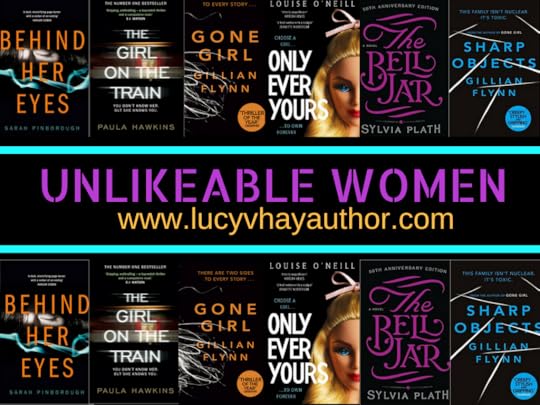
Top 6 Unlikeable Women In Fiction
Other reading and book-related posts are welcome, however. Articles about managing TBR piles, literary and author quotes, literature quizzes, favourite reading and writing products, weird book-related words etc are also welcome.
Email me today!
Get in contact on Bang2write@gmail.com. Looking forward to hearing from you.
NB. I want to shout about books and help my fellow authors get their messages out. This site gets in excess of 25+ page views yearly, plus I can promise shares in my Bang2write platform too which is even larger. I don’t get paid for this however, which means I am afraid I cannot pay for guest posts. If you are looking for paid dues post opportunities, CLICK HERE.
April 24, 2019
INFOGRAPHIC: Lessons We Learned From Female Literary Characters
As regular readers of this blog know, I love reading books as much as I love writing them. I also love female characters, which is why I wrote my free ebook, How NOT To Write Female Characters.
I believe we never stop learning if we never stop reading. Literature can serve a great purpose in life, more than we realise. If you set aside time to read some of the remarkable tales of women in literature, you’ll be astonished at some of the epiphanies you will take away to incorporate into your life.
If you are still looking to find some great lessons to learn from female figures, why not pick up a book with one of the best female literary characters! Redbubble.com has put together a list of 12 Lessons We Learned From Female Literary Characters. The list includes quotes from each empowering women and the message we attain from them. Happy reading!

April 1, 2019
INFOGRAPHIC: The Surprising Reading Habits Of Millenials
I love reading, plus I love my phone. But how many Millennials do you think own a smartphone? Unsurprisingly, the answer is – most of them!
Studies show that 94% of Millennials own one compared to 46% of those aged 65+ years. But how do they use their phones? Browsing their social media feeds? Watching videos on Youtube?
Well, some of them definitely do. But the findings from a new research study might surprise you. It shows that most Millennials also use their phones to read daily!
Since reading has become digital to them, they use their phones to read more than their computers and tablets. And because everything is accessible using the internet, they prefer to read the news instead of watching or listening to it.
When it comes to books, they read an average of 5 books per year. Although they still prefer to read print books, they also prefer to buy it in digital format if the price is cheaper.
Millennials actually read more than any other generation, including Gen Xers, Baby Boomers, and the Silent Generation. Yes, Millennials read more than their parents and grandparents.
The book industry, especially the eBook market, has benefited from the increase in demand from Millennials. eBook reading is on the rise. And the worldwide publishing industry continues to grow year by year.
If you want to learn more about the surprising reading habits of Millennials, here’s a fun infographic from The Expert Editor, an Australian editing and proofreading company.

March 21, 2019
Two-Faced: Powerful Theme In THE OTHER TWIN
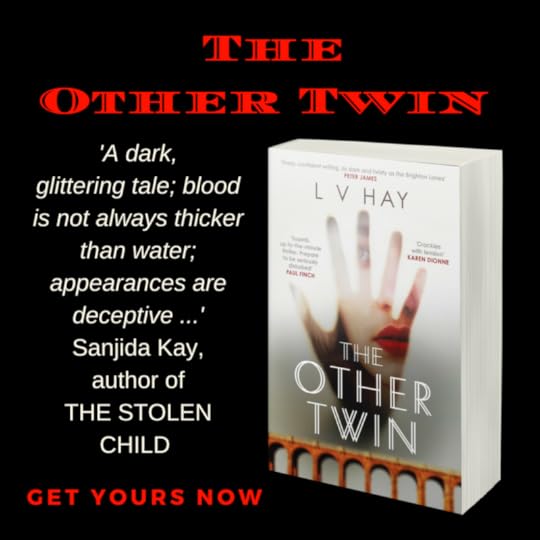
I’m delighted to announce my debut crime novel, The Other Twin, has been selected as one of 9 Harrowing Thrillers with a Twist Of Family Drama by Wiki Ezvid, the world’s first video Wiki!
It’s a real honour to appear in this round-up, since ‘harrowing family drama’ is EXACTLY the theme I was going for in The Other Twin. Theme refers to an idea that recurs in or pervades a work of art or literature, so I thought it would be fun to go into more detail about all the ideas, locations, motifs etc that power the story. Enjoy!

1) Almost like cities such as London and Edinburgh, Brighton has a strong, vivid presence in fiction, which means that many people must come to any new representation of it with a lot of familiarity. How well do you know it as a place and do you feel the weight of all those ‘other’ Brightons behind your writing?
I knew I had to get Brighton right. It’s a vibrant city that has such a significance for so many people, especially the LGBT community. I knew that classics like Graham Greene’s BRIGHTON ROCK right through to modern icons like Peter James’ Roy Grace would be compared against my version of Brighton – which people have, in reviews – so yes, that was a pressure. But ultimately, I had to let go of that and bring forth MY vision of Brighton, not recycle someone else’s. So rather than pore feverishly over published content, I went to Brighton and sucked up the atmos there, using my eyes, ears and other senses to really get a ‘feel’ for the place. Hopefully I have transmitted that to the page.
2) Your novel uses the dichotomy between the public and the private of the internet to great effect, the way that we publish the most intimate thoughts to a world of strangers and yet keep them from our nearest and dearest. How do you feel that sense of sharing and yet not sharing has affected how we live now?
I’m always reminded of Shakespeare’s notion of the ‘whole world’s a stage’ quote when it comes to the internet. We all have online personas now, just as we have public and private ones. How we use these online personas can differ, person to person. For some, the online persona is a ‘work thing’ – they may create a brand and strategy, that is very carefully crafted. For other people, online may be the only place they can speak the truth and truly be themselves. For just as many, it is somewhere in-between. Social media has so many wonderful applications, especially for women and marginalised people to find their tribes and create opportunities (including work and money). But it also has a dark side: too many people abuse social media – such as trolls – and even more use it to fuel the neverending cycle of outrage we currently live in. It’s become a conformity factory, with perceived transgressors piled on and harassed; those people calling out others then kid themselves they’re raging against the machine and/or taking on the system. It’s a real shame.
3) There are a lot of hidden identities in the book, some hidden willingly, some desperate to be uncovered. Do you think that the struggle for truth in who you are is at the heart of your writing?
Absolutely. I spent a very long time confused about who I truly was; I felt fragmented, even a fraud. It took me many years to accept my own identity and my – sometimes paradoxical – roles and emotions within it. Life is a journey and I daresay there are still lots of things I will find out about myself yet, too. But unlike before, I am not afraid to do this anymore. I think that’s why I wanted to write about identity and truth in The Other Twin – I feel it is all a matter of perspective, rather than a concrete thing.
Reading your book I did reflect on how what might be called ‘Thrillers’ do seem to have a mostly white, female and middle class cast, especially those centred in a domestic setting rather than all spies and guns, if you know what I mean. Did you set out to write a book with a deliberately more diverse cast of characters?
I feel very strongly that stories of any kind need more variety. As a script editor and blogger at www.bang2write.com, I identified a need for stories to have more characters than ‘the usual’ a long time ago; not just for ‘political correctness’, but because there are swathes of the audience not being served – it’s good business sense! I have written several non-fiction books about writing, including one on so-called ‘diverse characters’, so it was a no-brainer to take my own advice! Lots of writers shy away from diverse characters like those from the LGBT or BAME communities, because they’re afraid of getting it ‘wrong’. I can understand and relate to this worry, because I felt it too. But I picked LGBT and BAME characters because of a genuine interest and feeling of solidarity with both communities; my friends and acquaintances sharing their own stories literally helped me inform the narrative. Their POVs were absolutely invaluable and I feel very grateful they shared their perspectives with me. There would have been no story without them.
4) Do you start a book with an idea of where the plot is going, or do you pick up a thread and see where it follows?
It depends. With The Other Twin, I saw the ending and ‘big reveal’ in my head, clear as day – as if it was a memory, like it really happened. I could see and feel it so clearly, right down to the location and the sense of urgency. From there, I asked myself: WHO are these characters? WHAT is happening? WHY? HOW did they get here? Though the ways of getting there changed through the many drafts, that ending never did.
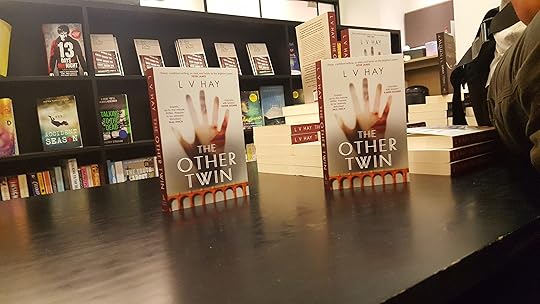
5) Assuming Is this your first published book, or even if it’s not, I imagine like most of us it’s one in a long and worthy line of nearly there’s and also-rans, so what do you think you’ve learned about your writing by being published?
Every book teaches you something in my experience. The Other Twin is my first crime novel and what I have learned from this one is how much difference an editor who really ‘gets’ the book makes. Both Karen Sullivan and West Camel at Orenda Books challenged me every step of the way to bring my best game to drafting process, they went through every line with the classic fine-toothed comb! I was allowed to get away with NOTHING. The fiends!
6) Where is your next book set, will you stay in Brighton or are you moving to a new location?
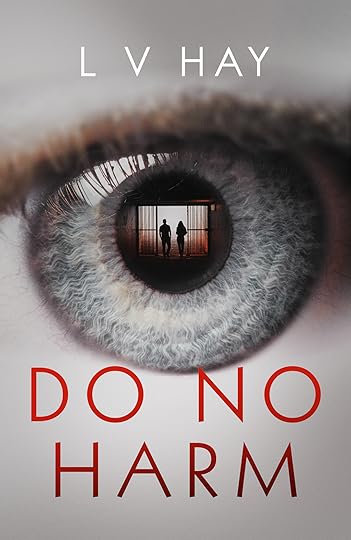
My second book for Orenda, Do No Harm, is set in Epsom, Surrey. So very middle-class, white and straight … in both senses of the word. Probably the antithesis to Brighton, in fact!
7) Cats or dogs?
Cats, obviously. I have five of my own, I’m a crazy cat lady in training. When my kids have left home I plan to rant and rave and throw cats at everyone like the woman from THE SIMPSONS. It’s going to be awesome.
This post originally appeared on Retreat West’s blog.
February 13, 2019
Spreading Joy All Over The World: 100 Iconic Love Stories
Maybe you love to celebrate this special day, or perhaps you feel it’s a crass commercial made-up holiday. Me?? I LOVE love, so I always welcome the opportunity to spread a little joy … and how better to do this WORLD-WIDE??
GEditing have been in touch with this amazing infographic, detailing iconic love stories from different countries all over the world. They have also given an incredible overview of every single title on the list over at their website.
So, if books are YOUR first love, then make sure you check out the titles below … I know I will be adding quite a few titles to my TBR List on Goodreads now!
I must admit, I don’t read all that much romance, so I am not that well-travelled when it comes to this list! Here’s the ones I’ve read:
The Proposal (Wales)
PS I Love You (Ireland)
Far From The Madding Crowd (UK)
The Never-ending Story (Germany)
The Count Of Monte Cristo (France)
Othello (Cyprus)
Romeo & Juliet (Italy)
The Thorn Birds (Australia)
Where have you travelled to? Let me know in the comments. Click on the infographic or HERE to read about the books. Enjoy!

February 11, 2019
BOOK VERSUS FILM: You Were Never Really Here
The Book
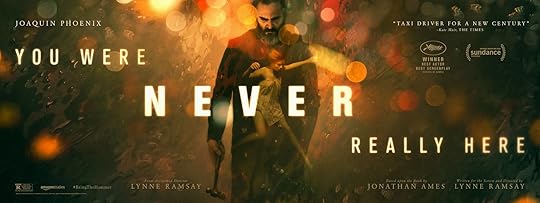
You Were Never Really Here is a novella by Jonathan Ames. It was originally approximately fifty pages, though it was extended to about 100 when the movie adaptation came out. I read the new version for the purposes of this comparison. Here’s the short synopsis of the book from Amazon:
Joe has witnessed things that cannot be erased. A former FBI agent and Marine, his abusive childhood has left him damaged beyond repair. So he hides away, earning a living rescuing girls who have been kidnapped into the sex trade.
Now he’s been hired to save the daughter of a New York senator, held captive at a Manhattan brothel. But he’s stumbled into a dangerous web of conspiracy and he s about to pay the price.
Brutal and redemptive in equal measure, You Were Never Really Here is a toxic shot of a thriller, laced with corruption, revenge and the darkest of inner demons.
I loved this book, I powered through it in about an hour. I adore thrillers and am fond of hitman stories anyway, but I haven’t seen a hitman quite like Joe. Very often hitmen are angsty or traumatised, but this is usually because of their service in the forces.
 In comparison then, Joe went into a life of brutal killing because he was ALREADY traumatised. It’s the only thing he has ever known. Joe is a protagonist is not only ‘not entirely sane’, but he is aware of it too and it’s this insight that connected with me the most. After all, what would you do if the rules of society don’t apply to you, plus you don’t even care what happens to you?
It’s a compelling starting point for a character, especially when it’s obvious Joe does care about other people. He stays alive for his mother, plus he ensures he leads a life of solitude, so he does not hurt others … Either by accident because others are trying to hurt him, or because he may not be able to control himself. As the Amazon listing also says, ‘A hammer was Joe’s favourite weapon. He was his father’s son, after all.’
Joe is a dark and complex character, which mirrors the book’s plot. For such a short piece, I have seen less complex plotting in a novel three times its size. In this story world, sex and violence are currency in a world where men always get what they want. Through antagonist Votto we are asked to consider there are men in the world who will sacrifice anything – their children’s innocence, their wife’s life – for their ambitions. It makes for uncomfortable reading, because we know full well Votto’s actions have played out in the course of real life in some cases.
The book ends abruptly with Joe’s revenge on Votto, the man behind his mother’s murder. This might feel like a cheat to some, but invited to me to imagine what Joe could do next … Which, to all intents and purposes, could be anything. Would he go after Lisa, the girl who had been stolen, or not? Or does Joe just want to destroy them all?
We can’t be sure, the story is over … And that’s the point. We can’t be sure of anything Joe might do. He had been waiting for his mother to die, but now she is murdered, her death has given him renewed purpose.He is an unstable enigma. All we can be sure of is that people will pay.
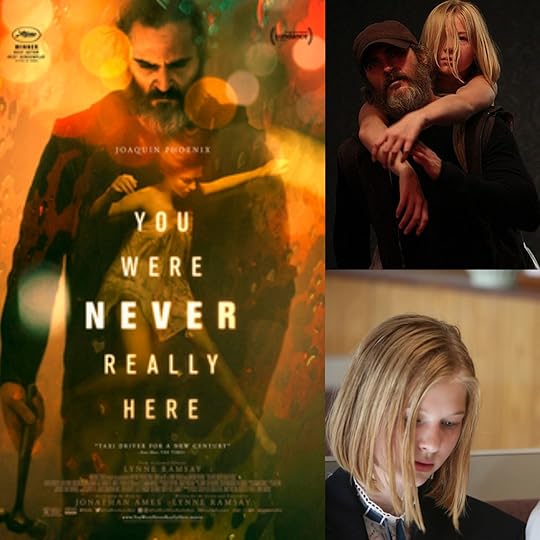
The Film
The film is listed on Amazon as Prime as ‘A tormented but brutal hired gun sets out to rescue a young girl from a sex ring, only to find himself weathering a storm of violent vengeance when matters go awry.’ It’s clear from the marketing materials too that the girl Joe rescues is much more central to the movie than she was in the book. This makes sense, because we have seen many movies about hitmen rescuing innocents, especially children: Man on Fire, Drive and Safe being just a few. It is ‘pre-sold’ and audiences have shown they like this story.
The first third of the movie is almost identical to the book, more or less. The filmmakers explore Joe’s state of mind as a series of intercuts, showing his suicidal thoughts and the causes of them (his past abuse). They also show his connection to his mother and how he looks after her, whilst simultaneously thinking constantly about his own self-destruction.
Joe is otherwise alone. Even though he has friends, he doesn’t recognise it. There’s a poignant moment when his handler McCreary talks about them both going out on his boat, having steaks and beer. Joe does not connect with him at all, saying only ‘What?‘ Joe can’t imagine why anyone would be interested in him, so he is in his own little world. He is out of reach.
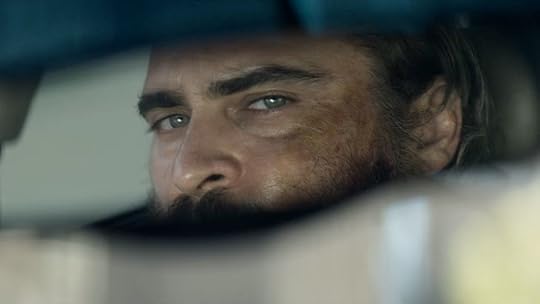
Lisa is re-named Nina in the film. There are two powerful recollections of Joe’s past as an FBI man and a soldier: the dead girls in the meat truck (present in the books); and a child in a foreign land, shot by bullies when Joe gave him a candy bar. This reminds us Joe thinks he is the problem – he believes he has caused these deaths.
So when his mother is killed – not to mention McCreary, his informant at the bodega and his son too – we can see why Joe would unravel so spectacularly in the book. He has been waiting his whole life for this. In comparison, Joe is no vengeful hero in the movie. First he gives his mother a water burial, like he does in the book. But instead of driving off in search of Votto like the novella, he fills his pockets with stones and attempts to join her. As he begins to sink, his mother’s blonde hair reminds him of Nina. It’s this that prompts him to clamber from the lake and go in search of her.
There are other small tweaks to the plot, but ones have far-reaching consequences. Nina’s father Votto kills himself early on the movie (though we suspect he may have been thrown from the roof-top). Governor Williams replaces him as the antagonist, a composite character of the Mafia Boss who strong-armed Votto to hand over his daughter to the brothels in the book. (The filmmakers hint that Votto handed Nina over here too. A shot shows the two men lying in Nina’s room, on her bed, together whilst the semi-naked Nina looks on – a clever play on the old adage, ‘getting into bed together’).
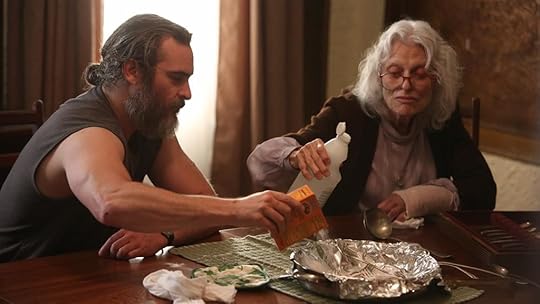
The ‘open’ ending is gone too, replaced with Joe attempting to do what I hoped he would … He tries to rescue Nina (re-named from Lisa, in the book) from Governor Williams. But this is not a story of heroes, so it is a great decision of the filmmakers to have him arrive too late. He is distraught: he cannot avenge his mother, he is not a good son. Now he has nothing.
But then something unexpected happens. As Joe walks listlessly through Williams’ grand house, he finds Nina, covered in blood, eating dinner by herself. The little girl, sick of being Williams’ play thing, has killed him herself.
That’s what I like best about the movie: Nina and Joe are doppelgängers. They are both traumatised and capable of terrible violence (however justified) because of it. Unlike Joe though, Nina is not completely hollowed-out by this terrible life yet. That’s why, at the diner, she tells him ‘It’s a beautiful day’. She is symbolic of hope and a new beginning. Now Joe can either kill himself, or take responsibility for her like he took responsibility for his mother. Though he still thinks about suicide (responsibility or even love are not magic cure-alls!), his life nevertheless has purpose again. They leave together.
Verdict
Another tough one, because I like both so much. That said, Joe in the movie is much more relatable to me. We know for definite he is the protector of a child, which makes me warm to the movie version more. I also like his change of heart in the lake more too, which doesn’t happen in the book. But most of all it’s the clever doppelgänger element that swings it for me. So there might only be a hair between it, but it has to be the film this time!
Lucy V. Hay's Blog

- Lucy V. Hay's profile
- 174 followers

