
Lucy V. Hay's Blog, page 4
September 20, 2021
Creative Reading Nook Ideas for Book Lovers

Image source: Pexels
Want Your Very Own Special Space for Reading?Imagine having a space to unwind and get lost in your favorite book. With a reading nook, you can do exactly that!
Creating one is fairly simple. The first step is to find a small area in your home, such as a room or corner, dedicated to reading and relaxing in peace. Next, add cushiony seating and pillows to make it comfortable. Consider including other essentials, such as a bookshelf and side table, to place your books, coffee, or reading lamp. Finally, feel free to get creative and decorate your reading nook in a way that fits your unique style!
As an avid reader, you may love the idea of designing your reading space on something book related, such as resembling a fictional setting in a novel or honoring your favorite author. Angi put together a list of creative reading nook ideas to help you get started. From framing book quotes to revamping an attic, there’s an idea for every size, budget, and personality.
Why not create your nook by dedicating it to your favourite author, like this nook inspired by Ernest Hemingway?


September 3, 2021
How I Wrote The Coven (as Lizzie Fry) – PART TWO
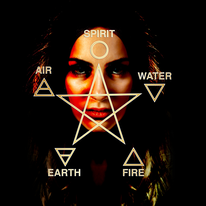 Sooooooooo, how does this storyworld work? Here goes …
THE COVEN is set in a parallel world just like our own but where witchcraft is slightly different to what we might expect. 50% of women have some form of magic and it’s causing unrest amongst people all over the world.
Divided into ‘The Triumvirate’ witches are made up of three types in this storyworld … The vast majority are Kitchen witches, who like witches in our own world use spells, grimoires, poppets etc to cast their magic which is not innate.
Then the next rung of the ladder is occupied by The Crystal Witches (about 5% of women) who like their name suggests need crystals to channel and focus the magic they are born with.
At the top of the tree (about 2% of women) are the Elementals. They are naturally talented and focus the power coursing through their veins from the air, water, fire or earth.
Battle of the Sexes? Needless to say, the populist demagogue president of the united states does not like women having this much power one bit. His shadowy international cabal of men The Sentinel are tasked with keeping witches under control across the globe.
Kitchen witches have been asked to recant their biological rites to practice magic; Crystal witches have been shipped off to sinister internment camps called Angel Caves and Elemental witches all have kill orders on their heads, forcing survivors underground.
Amidst this chaos, a young woman in the UK called Chloe comes into her powers … and discovers she has ALL FOUR elements: air, water, fire and earth.
Chloe is quite literally the most powerful Elemental witch to ever walk the planet. This means she is in terrible danger from The Sentinel who want her dead.
She and her father Daniel must go on the run to escape The Sentinel. Chloe is also helped by crystal witch Adelita who is drawn to the young witch and rogue Sentinel Ethan who is keen to redeem himself for his past crimes.
As the Spring Equinox approaches, time is running out for Chloe to discover how to use her powers and help free witches from the tyranny of The Sentinel, once and for all.
More on Injustice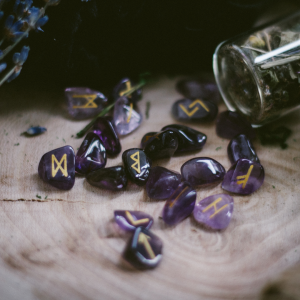 On the surface, The Coven is essentially a chase thriller. I took the notion of a witch hunt and made it literal … Chloe and her friends must go on the run to escape the Powers That Be. They must also try and save the day before a deadline too … one of the building blocks of the thriller, as I outline in my Thriller Screenplays non fiction book.
However as anyone knows who follows Bang2write (my writing site) knows, what I call ‘thematics’ is very important to me. I wanted this chase thriller to have added story ‘layers’ the reader can peel back if they want to.
Like our own real world, The Coven’s storyworld is full of systemic injustice that’s hard-baked in to benefit the people at the top. Crucially, this is NOT just a ‘battle of the sexes’ story, but about the intersections of injustice under patriarchy. In the story you will find commentary not only on misogyny, but also racism, homophobia and transphobia. You will also find female characters who manipulate others and take advantage, just as you will find male characters who exercise brute force.
But importantly, men are not the automatic enemy in this storyworld either. This is because I believe patriarchy is as bad for men as it is for women. Men in the story are faced with a choice: go with the system or against it. Just as there are men in our current world who are true allies and women who are not, I wanted to reflect this in this story.
Grab Your CopyAs with the hardback, I will be signing copies of the paperback for my local bookshop, Liznojan. To order your signed copy, CLICK HERE.
To order non-signed copies or ebooks, CLICK HERE or any of the pics in this article.
Enjoy!

September 1, 2021
How I Wrote The Coven (As Lizzie Fry) – PART ONE
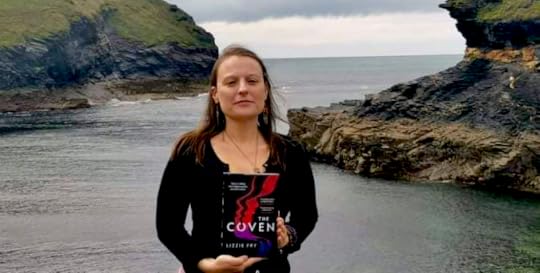 The Coven is out TODAY in paperback!
Just in case you don’t know, I’m Lizzie Fry as well as Lucy V Hay (you may have noticed I’ve rebranded this blog!).
Though I’m still writing thrillers (as with my LVH books), my Lizzie Fry books are HIGH CONCEPT … and first in line is The Coven, a book that places the supernatural and a global witch-hunt at its heart.
Of course, for my LVH fans, you’ll find some familiar elements … not least feminism, politics and of course my beloved Westcountry. The Coven starts in Devon and takes us into Cornwall before racing off around the world.
In fact, in the pic above I’m standing in the harbour in the village of Boscastle (aka Kastel Boterel in Cornish). Three MAJOR events happen in Boscastle in The Coven. When I was researching, I wanted the book to be as visual as possible so I decided to make use of my screenwriting background.
I also spent of lot of time talking to screenwriters who’ve worked in the studio system in Hollywood. I asked them how I could ensure important plot points could be memorable for readers. Their advice?
Concentrate on and name your set pieces.
What are set pieces?For those that don’t know, set pieces are those big, action-packed events in big, blockbuster movies that can ‘standalone’ because they have a beginning, middle and end. Often they appear in the trailer. If you think of your favourite blockbuster movie, chances are the moments you like best are set pieces.
This lit a fire under me and I spent AAAAAGES watching Hollywood blockbusters and deconstructing them. I soon noticed my screenwriter friends were right. Each set piece told a ‘mini story’ in their own way. Also, the plotting point of each set piece became very obvious, so much that each suggested a name or title for what was going on and how it contributed to the plot as a whole.
This lead me to write – and name! – the following set pieces in the book:
Attack of the Feral TweensThe Battle of Boscastle The Dark Side of the MoonThere’s lots more in The Coven, but these are the three set in Boscastle, Cornwall. I discovered naming my set pieces forced me to ‘focus in’ not only on the point of what was going on *in the moment* but how it contributed to the story as a whole.
No Spoilers!Of course, no spoilers … so I won’t tell you what exactly happens in each set piece. These were my three favourites to write, especially Attack of the Feral Tweens.
If you follow me on social media, you’ll know I have three kids including two incredibly feisty daughters. Needless to say they acted as my inspiration for this set piece in The Coven.
There’s even a moment when I pay tribute to them when the characters do something in particular … If you have already read the book and think you know what it is, drop me a line or your suggestion in the comments!
More From the ‘How I Wrote’ series:14 Inspirational Books, Movies & TV Shows That Influenced The Coven
10 Female Antiheroes That Influenced my latest crime novel, Never Have I Ever
How I wrote my crime debut, The Other Twin
How I wrote Skyjack, a post-apocalyptic novella
How I wrote Love You To Death, a short story
August 8, 2021
8 Best Books For Ocean Lovers
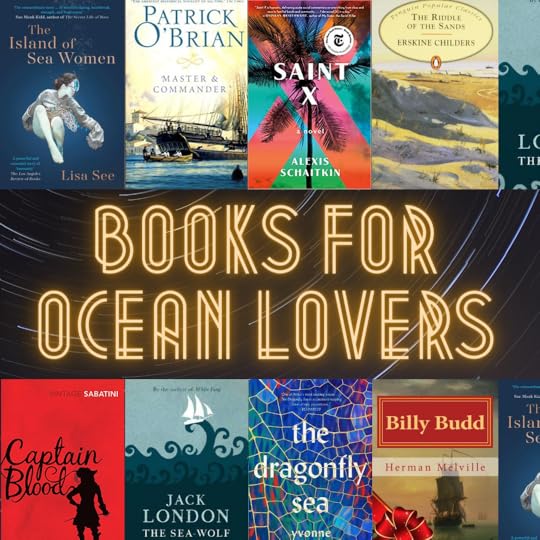 If You Love The Ocean, Read These …
Summer is here, and the ocean waves are calling. If you like the sun, sand, and the salty ocean breeze on your face, then you will absolutely love these 8 fun books that feature the sea.
1) The Dragonfly SeaThe Dragonfly Sea, written by Yvonne Adhiambo Owuor, tells the story of a mother and daughter, living off the coast of Kenya. It tells the tale of Ayanna and what it’s like growing up near the sea and all the changes it brings to her and her mother’s life. If you love ocean adventures in far away locations, then this is a great read to pick up.
2) The Island of Sea WomenLisa See writes a fictional story about two women growing up on the Korean island of Jeju. Here is where the Haenyeo women, who dive to the ocean floor and bring up seafood. The story follows Mi-ja and Young-sook, best friends and Haenyeo divers, following in the footsteps of their mothers. However, their coming of age coincides with large historical forces which will challenge the two young girls and threaten their age-old tradition. See offers a great coming of age tale around a time-honoured Korean ocean tradition.
3) Saint XSet against the backdrop of the Caribbean, the island of Saint X became a safe space for the wealthy seeking an escape. However, a girl goes missing at one of these resorts and her sister can’t let it go. Saint X, written by Alexis Schaitkin, explores the economy that sprung up in these island paradises, along with the tensions between native islanders and the tourists that flock to these resorts.
4) Billy BudWhen you mention Herman Melville, everyone thinks of Moby Dick, yet few will mention Billy Bud. In his last novel, published posthumously, is more of a novella. It was pieced together and is short. However, it makes it a great choice if you are new to nautical fiction.
Billy Bud follows the tale of a young seaman who is liked by everyone but John Claggart. His continuing antagonism leads to an accusation of inciting mutiny and what follows leads to a moral conundrum that is left open for the reader’s interpretation. It’s a fun little book to read while sat at the beach, enjoying the ocean for sure.
5) Master and CommanderIf you are a fan of Jane Austen, then you will love Patrick O’Brien’s naval novel Master and Commander. He was a huge Austen fan, and his writing style is eerily similar to his favourite author, capturing the some of her trademark characteristics like witty dialogue and interesting interpersonal relationships between the main characters. This novel is the beginning in a 21-book series and follows the friendship of Captain Jack Aubrey and the ship’s surgeon, Stephen Maturin, against the backdrop of the Napoleonic Wars.
6) The Riddle of the SandsThis novel is considered to be one of the first and best spy thrillers. Erskine Childers takes us on a harrowing journey to uncover a secret German plot by the most unlikely of people, two ordinary Englishmen, navigating the North Sea on their weather-beaten yacht. This novel helped launch the espionage genre and an entire sub-genre of “invasion literature”. Childers hoped it would alert the public to the growing dangers of Imperial Germany and his book was instrumental motivating funding for increased naval security. It was an instant bestseller.
7) Captain BloodRafael Sabatini wrote a great swashbuckling tale that is best read on the beach. It follows Peter Blood, once a doctor, now turned pirate, who sails the Caribbean in search of treasure, adventure, and honour on the high seas. Definitely worth a read.
8) The Sea WolfWritten by Jack London while he was fast becoming a celebrity author, this novel is about the personality struggles of Humphrey van Weyden and the captain who rescued him, Wolf Larsen, when van Weyden’s boat collides with Larsen’s. This book became an instant bestseller and is still a joy to read 100 years on.
If you love the ocean, then these 8 books are worth reading. They will be sure to add to any beach adventure.
Happy reading!BIO: Emily Henry is a writer at Simplegrad and Assignment writing service. She is passionate about educating her readers on their rights and helps them find representation. Emily is also an editor at Top Canadian Writers.
June 24, 2021
BOOK VERSUS FILM: Where Eagles Dare
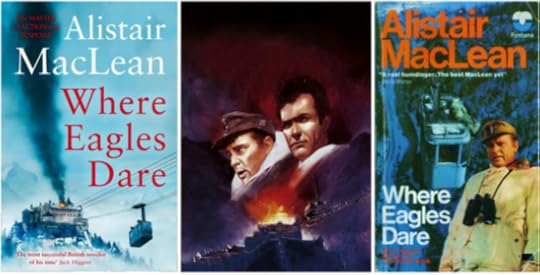
Now restrictions are being lifted, who fancies a trip to a Bavarian castle? It’s time for a new Book Versus Film, and today we’re looking at something a bit different: a book that was conceived as a film, but published 18 months before opening night.
So, grab your parachute and snow camouflage, and let’s sneak into one of Alistair MacLean’s most celebrated war-time thrillers, to ask that vital question: why is Broadsword calling Danny Boy?
The StoryHigh in the Alps sits the Schloss Adler, a castle that is the headquarters of the German SS in southern Bavaria, and a prison for American General Carnaby, recently captured architect of the second front. The British launch a hastily assembled rescue mission – allegedly to stop Carnaby revealing all about the forthcoming D-Day landings – but this is actually a ruse, for Carnaby is not whom he appears to be. And nor are several members of the rescue team…
The BookBy the mid-1960s, Scottish author Alistair MacLean was so disillusioned being a bestseller that he decided to run a hotel instead. He had reluctantly started writing again when American producer Elliot Kastner rang him. He told Kastner most of his books were already optioned, but the producer wanted him to write an original adventure for the screen, something the author had never been asked to do before. With that, his career as a hotelier was over.
The criteria was simple: a “sweaty, exciting adventure movie”, with five or six protagonists on a dangerous mission during World War Two, and any female characters given something to actually do rather than being “arm-pieces”, as was often the case. MacLean’s imagination conjured up a mission so impossible Tom Cruise would think twice about accepting it, and wrote the screenplay in six weeks. But he wasn’t ready to say goodbye to his new roster of characters just yet, so it’s fortunate he retained the book rights to Castle of Eagles – or, as it soon became known, Where Eagles Dare.
The CharactersMission leader John Smith is a cool-headed, somewhat detached Brit, and on the page he avoids killing whenever possible, which leads to some significant differences between book and film. After being arrested in a village, Smith tricks his captors into giving him a gun, steals their car but leaves them alive (they’re not so lucky in the film). Later, during the story’s key scene in the castle’s hall, where we learn the real mission is to identify all German spies in Britain – for ‘General Carnaby’ is an actor, and the MacGuffin to unmask the traitors – Smith drugs the German officers, and even places pillows under their heads (they’re shot in the film, killing all the major protagonists with almost an hour still to go). Most interestingly, as they flee the castle Smith disappears, to save a German they tied up earlier, who would otherwise die in the fire that has since started (this doesn’t even appear in the film). It’s an interesting facet, and explains why he wants to take the traitors home alive – something the film keeps, but which seems at odds with their more violent leader.
Smith’s number two is US Army Ranger Morris Schaffer. He often has lots to say, likes referring to himself in the third person, and frequently makes jokes, to varying degrees of success – but where Schaffer really struggles is his ‘romance’ with Bavarian agent Heidi. Despite being in constant danger, he can think of little else but her from the moment they meet. He’s soon planning their wedding. Maybe dinner and a movie first, Morris? MacLean admitted he struggled writing female characters and sexual tension, and here it shows.

The other romance is between Smith and fellow MI6 agent Mary Ellison. Their backstory stretches back several years, as undercover agents in Italy, and though Smith seems ambivalent, by the end he wants to marry her once they return to England (some sources say the film was to end with Schaffer and Heidi getting married instead.) Although it is Mary who gets the men into the castle, in the book she is often prone to despair, and seems out of her depth.
As for the protagonists, the Germans barely feature. The senior officers are Reichsmarschall Rosemeyer, Colonel Kramer – the most cunning officer going by his introduction, though he never gets to show it – and Gestapo Captain von Brauchitsch, who does show some cunning (he holds Mary’s hand as they share a drink, but rather than trying to woo her he is checking her pulse to see if she’s lying). The double-agents – a MacLean staple – are little more than names on pages, and we never understand why they turned traitor. As even Rosemeyer disapproves of their duplicity, we’re left with the impression MacLean feels they don’t deserve a motive.
Told mostly from Smith’s third-person point of view, with some surprisingly long sentences – uncommon for an action-adventure – and enough dialogue adverbs to give Stephen King nightmares, Where Eagles Dare is a perfect example of MacLean’s strengths and weaknesses. The characters are perfunctory, the dialogue can be inadvertently hilarious (“Deucedly sorry and all that, chaps…”) but the plotting and tension are superb, the attention to detail is engrossing, and the foreshadowing is fantastic (this line from the beginning: ‘“I know very well what you are,” Smith said quietly.’ is actually spoken to one of the traitors). MacLean also had a wry sense of humour: Mary uses the alias ‘Maria Schenk’, and at one point Smith fabricates a plot to assassinate Hitler; in the 2008 film Valkyrie, we learn of a real plot to assassinate Hitler, by German officer Claus Philipp Maria Justinian Schenk Graf von Stauffenberg. This may be a coincidence, but I doubt it.
Reception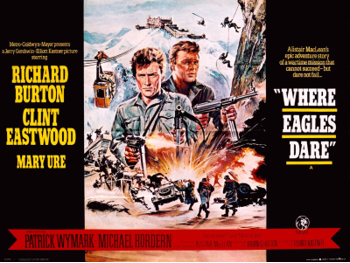 MacLean once said he did not enjoy writing books, and churned them out in “35 days flat – just to get the darned thing finished”, so he wasted no time turning his screenplay into a novel. Published in July 1967 to largely positive reviews, it is possibly second only to The Guns of Navarone for recognisability factor today. Not bad for a book he had no interest in writing until a Hollywood producer came along.
MacLean may not have seen himself as a natural writer but many others did. His first novel, HMS Ulysses, inspired by his World War Two experiences on board HMS Royalist, is considered one of the greatest novels about navy ships, and there’s little doubt he tells a story that doesn’t let go until the final page. But can his first screenplay keep pace?
The FilmWhen Elliott Kastner decided to make a Second World War thriller, he had two names in mind. The first was Alistair MacLean, the second was Richard Burton. MacLean was lured by the idea of writing an original film, and Burton was intrigued at the thought of making something his kids could enjoy. Once he had both signed up, and the script’s title changed (Kastner’s sole contribution, from Shakespeare’s Richard III: “The world is grown so bad, that wrens make prey where eagles dare not perch.”) only then did he speak to the studios. A bidding war began, with MGM the eventual winners, allowing Kastner to hire old schoolfriend Brian G Hutton as director, and setting the budget at $6.2million.
Cast and Character ChangesJoining Burton as Smith were Mary Ure playing Mary Ellison and Ingrid Pitt as Heidi, but the most significant signing story-wise was Clint Eastwood as Schaffer. Eastwood called the script “all exposition and complications”, but agreed to play the part providing much of his dialogue be given to Burton. This makes Schaffer a brooding, more intelligent presence, devoid of the wisecracks, the third-person references, and that ‘romance’ with Heidi.
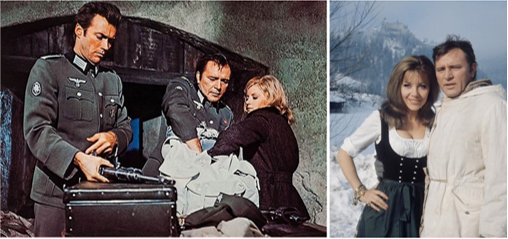
Mary is a more capable agent, less dependent on Smith, and undaunted by her mission infiltrating the castle. Now it is clear to see why Smith relies on her. Their relationship is just one facet here, and in the film it does not define her (a fate Heidi also suffers from in the book: she gathers all the intel about the area and smuggles everything they need into the castle – including Mary – but is memorable only for Schaffer’s obsession with her).
There is one other significant character change: Captain von Brauchitsch becomes Major von Hapen, and is repositioned as the film’s primary villain. As with other cinematic Gestapo agents (Raiders of the Lost Ark’s Toht) von Hapen puts everyone on edge. From his first introduction, meeting Rosemeyer – in a scene not in the book – von Hapen exudes menace; even the cable-car operator bricks it when he discovers whom he has kept waiting on the phone when the Major rings for a car. Played with steely eyed glee by Derren Nesbitt, it’s surprising von Hapen’s role wasn’t further expanded, perhaps leading the chase at the end, because he is easily the best of the antagonists.
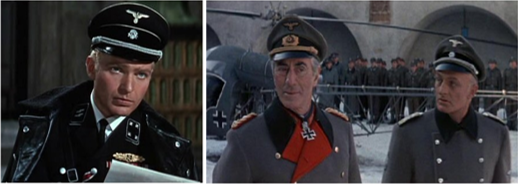 As this point it would be remiss of me not to mention how the Allied team were all chosen because they are fluent German speakers, yet every German character speaks perfect English throughout – barring a few shouted orders, and two soldiers having a chinwag – so this necessary skill, which the book similarly squanders, is completely redundant. (A slight lie: John Smith manages two words: “Johann Schmidt”. Go on, guess.)
The book packs in more danger at the beginning, when the team arrives by plane in the Bavarian Alps (they’re flying dangerously close to the mountains at night, then must abseil down one) but the film streamlines this to get to the main theme, epitomised by one telling change: the plane in the book is a Lancaster bomber, but in the film it is a Luftwaffe Junkers Ju-52, and whilst the men on board are in German uniform we soon discover by flashback that they are Allied agents: because nothing is what it first seems.
Where scenes are changed, it’s usually to up the body-count – the book is far less violent – but a few also ratchet up the tension. In the book, Smith escapes one cable-car onto another by climbing the pylon and dropping down; in the film he leaps between the two. But perhaps the biggest change as far as the action is concerned comes with the final escape.
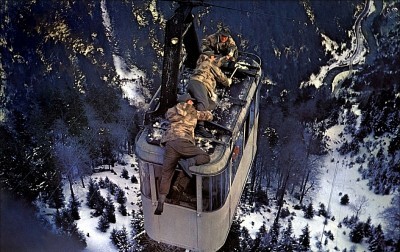
The team steal a bus, and in the book they take a bizarre detour through German barracks, trying to blag their way out before being discovered and chased by a tank, until they blow up a bridge (as per the film) and reach the airfield. The film does away with the barracks scene, and is much better for it – otherwise Ron Goodwin’s glorious score would have to segue into the Benny Hill theme for a mad few minutes.
ReceptionWhere Eagles Dare received a Royal gala premiere in January 1969. Reviews were very positive – a typical quote, from Variety: “It’s more of a saga of cool, calculated courage, than any glorification of war.” – though some complained the mission-within-a-mission, and double-agent / triple-agent scenes were confusing. (I wonder how old Christopher Nolan was when he first saw this…) Many feared it would struggle at the box-office due to a growing anti-war movement, especially with Vietnam, but the film was a huge success.
It’s Steven Spielberg’s favourite war film, and is rightly considered a classic. Where Eagles Dare goes at such an unrelenting pace there’s no time to spot the logic gaps (during two radio conversations, the speakers begin with codenames but then use people’s real names); it’s peppered with improbabilities (Eastwood firing two submachine guns simultaneously, without any recoil), and inaccuracies (don’t mention the helicopter) but that adds to the charm. Also, it gave us the genre’s most famous quote, with “Broadsword calling Danny Boy” cropping up as a song by German house/trance DJ Tomcraft, a line in a Matt Smith Doctor Who episode, and elsewhere.
And the Winner is …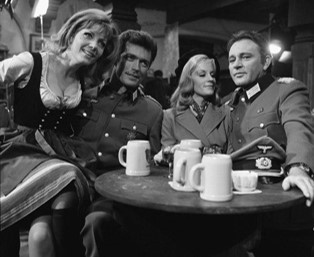 Despite the book coming first, and many assuming the film was an adaptation, today it’s the film that most people remember – assuming the book to be a novelisation instead. Neither is strictly accurate. MacLean created the story’s template then reworked it in prose form before filming had even started, so both were effectively born together. As far as book/film timelines are concerned, these two are twins. But do we love one more than the other?
The book wins out when it comes to detail, and of course the story is free of budgetary and time constraints. The suspense is superb, but some characters don’t work as well, and you aren’t as invested in their fate. The film looks spectacular in a way the book never could, but it also smooths the character wrinkles, focuses more on that central theme of deception, and avoids a fumbled last act by jettisoning the barracks escape. Therefore, the film is the winner.
And that’s Broadsword, over and out!BIO: Nick Jackson loves books, films, and writing – so writing about books and films is how he gets his kicks. No, he doesn’t get out much. He would like to thank Richard “Danny Boy” Banks for suggesting this mission.
May 27, 2021
Top 10 Book Genres To Get Your Teens Reading
 Teens And Reading
If you want the teenagers in your life to test the waters of the reading world, you’ll notice that there are quite a few genres to pick from. Teens don’t want to be wasting their time.
So, let’s start from the beginning. Before you start browsing for books for your teens, let’s define what kind of genres would be suitable for an inquisitive teenager.
Considering everyone can be attracted to different types of stories, you want your teens to keep their mind s open. Explore the genres that provoke the best reactions among teenagers. There might be something for a ‘golden oldie’ like yourself as well. Let’s go!
1) FantasyAllow your teens to be taken to unforgettable places filled with magic and action. Their imagination could go wild as they read about fantasy stories of enchanting lands, realms, wizards, and various mythical creatures. If your kids liked books or movies about Harry Potter or Narnia, fantasy is the genre you should explore further. Many great books can draw teens into this genre such as the Camelot Rising trilogy, Vampire Academy, Rebel of the Sands series, and more.
2) Young AdultSome readers resonate best with books they can relate to. That’s why this genre must be mentioned. Your teens reading about teenagers with similar struggles and high points to can make them feel more understood. Go into the young adult/teen section of the bookstore with them and see what catches their eye. You won’t be disappointed. MORE: Top 10 Authentic YA Reads You Cannot Miss
3) AdventureFeed your teenagers’ reading habit while also feeding their need for adventure. Fall in love with the stories of daring heroes who roam the world and tackle one challenge after another. The excitement, the bravery, and usually a touch of romance, that’s what you can expect. MORE: 7 Tips For Developing Your Reading Habit

Teens can spot a quality read, so you should get your hands on some classics for them. Charles Dickens, the Bronte sisters, Leo Tolstoy, George Orwell, and others will blow their minds with their impeccable writing. This is an especially tempting genre for all teens who cherish a passion for writing. The classics can teach them a lot about the beauty and intricacy of the written word. MORE: 10 Sensational Classics To Read Right Now
5) Self-HelpIt’s not easy being a teenager. There is nothing wrong with admitting that. However, self-help and inspirational books can make it a bit easier. They can help your teens understand themselves better, feel more confident, and think more positively about the future. What’s more, they can help them live a happier life. If you don’t know where to start, check out You Don’t Have to Learn Everything the Hard Way, The 6 Most Important Decisions You’ll Ever Make: A Guide for Teens, and The Ultimate Self-Esteem Workbook for Teens.
6) AutobiographiesReal-life stories can be just as intoxicating and inspirational as fiction. Why not encourage your teens to read about the lives of people they admire? Or, even people who you find intriguing. Their mistakes and successes can teach your kids valuable lessons. MORE: 3 Great Memoirs You Should Read
7) Science FictionAre your teenagers fans of sci fi shows on Netflix? If they fall under this category, they will love sci-fi books. Sci-fi books can in general be a good pick for teenagers as they inspire them to use their imagination. A growing imagination will boost their creativity. And that little spark that ignites creativity is always welcome. MORE: 5 Reasons To Love Science Fiction
Romance is an ever-present ingredient in all genres. However, standing on their own, purely romance novels can open up a portal to heart-warming tales. With some great teen romance books such as If I’m Being Honest and A Sky Painted Gold, your teens can indulge in love stories they can identify with.
9) ThrillerDo your teens want to read novels that will make it hard for them to put the book down? Then, you should consider adding thrillers to their collection. If they like crime shows and mystery movies, they’ll love thriller books. The suspense to know who’s the bad guy and numerous guesses they’ll make while reading will get them hooked on this kind of book. MORE: Top 5 Dystopias you Need To Read Right Now
10) HorrorThis may be not for everyone, but for some, it will be just what they’ve been looking for. Now, within the horror genre, you can aim for novels that are written for young adults. Among these novels, you can find Undead Girl Gang, Shutter, and Ten.
Wrapping UpHave you spotted a genre that could be just the fit for your teens? I bet you did. Within the above-mentioned genres, you must’ve found at least two that could spark your kids’ desire for reading.
No matter what genre you choose, you can’t go wrong. Help welcome reading in your teenagers’ lives and ensure they enjoy all the wonderful worlds and stories that books will introduce them to.
Enjoy!BIO: Jessica Fender is a professional writer and educational blogger at EssaySupply, an aggregator for useful college resources and websites. Jessica enjoys sharing her ideas to make writing and learning fun.
April 23, 2021
BOOK VERSUS FILM: The One by John Marrs
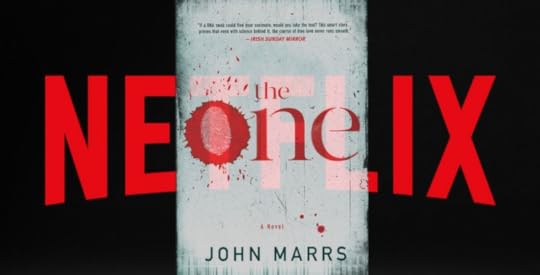 Book Versus Film … Or TV Series!
In 2019, I read a romance/thriller with a sci-fi element. Romance and thriller are separately two of my favorite genres. Since I pick novels according to the plot, the concept of John Marrs’ bestseller The One (published in 2016) fascinated me.
I was thrilled that Netflix adapted this novel into a series. Having binged the 8 episodes in 2 days, I’m here to give a book vs. series comparison.
It’s also impossible to do the analysis without giving some spoilers. Bear in mind I’ll be spoiling the series and the novel separately because they differ in their twists.
You’ve been warned.
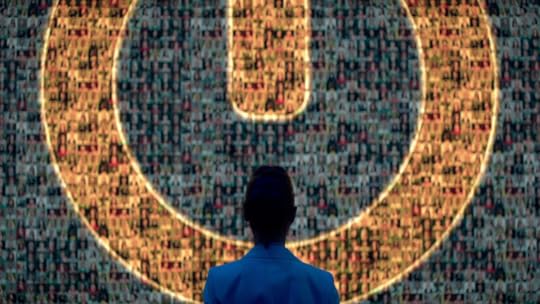
The One is set in the near future, 20 years after scientists have discovered DNA matching. A quick swab into your mouth, and you’ll find the love of your life, aka The One.
It’s in your genes to fall and stay in love with this person.
Expectedly, this has caused a major spike in breakups and divorces of couples who got together prior to this breakthrough, which has gained founder/scientist/CEO Ellie enemies as well as fans.
The book follows Ellie, as well as four other main characters who have either willingly matched or been tricked into matching with The One. We see how their relationships go, and the impact of this match on the other aspects of their lives.
Each chapter ends with a cliffhanger, and the next chapter is about another character. We are always on our toes, no matter whose story we are reading. And because one of the five protagonists is a serial killer, this is a book anything can happen.
Ellie is a tough workaholic. Men she has dated were disappointing one way or the other, but she can’t resist when she matches with a modest, witty, and disarming guy named Timothy. Initially, she hides her identity and wealth for a better relationship. When Timothy finds out the truth, he understands and accepts her reasons. But that’s only because he has bigger secrets of his own.
Christopher is a serial killer. He is a psychopath and has decided to become the most-talked-about serial killer in history. He’ll achieve this by killing 30 women and stopping after – without getting caught. He’s achieving his goals until he meets his match: the smart police officer Amy. At first, he finds it thrilling to be leading a double life and dating a cop. But the more time he spends with her, the more he falls in love. Killing becomes increasingly more difficult.
Nick is happily engaged to Sally, but their married friends Deepak and Sumaira are married and “matched,” and swear by the DNA test. Nick finally gives into Sally’s curiosity, and while she says she didn’t get a match, they are both shocked to find Nick’s match is a man named Alexander.
Jade’s been talking to her match farmer Kevin on the phone as he doesn’t use Skype and the like. She’s upset he is located in Australia. When she visits him, she gets the shock of her life: Kevin’s dying of cancer. Not only that, the fireworks and explosions are caused by his brother Mark.
Mandy can’t wait to meet her match Richard, but she soon learns that he is dead and meets his family at a memorial service. She quickly bonds with his sister and mom. She feels that she already loves him, and after some thought, she agrees to carry his baby. (He had donated his sperm after a bout with cancer when he was young.)
All five characters get more twists and turns with each chapter.
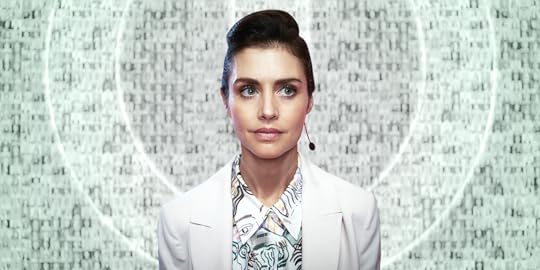
The series is set two years after the technological breakthrough, as opposed to twenty in the book. Like the book, the series takes place in the UK.
While the series changed quite a bit and I was disappointed we no longer had a cop character who matched with a serial killer, the series did a good job of balancing creative changes for length, simplicity, and staying true to about 60% of the novel.
The character names have been changed.
Rebecca’s the scientist/CEO behind The One, where a single hair can be tested to find your match. She has fallen out with the scientist/friend she’s done the discovery with due to past conflict we’re slowly revealed.
The board is trying to push her out, and she does whatever’s necessary to keep her seat and control in the company she created. The world thinks she is in a relationship with her match. When the body of her old roommate surfaces, cops investigate the case, lead by Kate.
Kate is bisexual and currently in contact with her match Sophia via video calls.
Mark is a happily married journalist, but his wife can’t help but fear what would happen if he met his match. Obsessed, she gets him tested without his knowledge and befriends his match under false pretenses. In the meantime, Rebecca gives Mark story scoop that will benefit her both legally and professionally.
Kate is convinced Rebecca is connected to the roommate’s disappearance and murder. She also tries to cope with the fact that her match had an accident when she arrived in the country and is now in a coma. Then she meets her match’s wife and learns that she has been keeping quite a few secrets.
Through flashbacks, we find out how Rebecca really got her hands on the DNA she needed for research, and what happened with her real match.
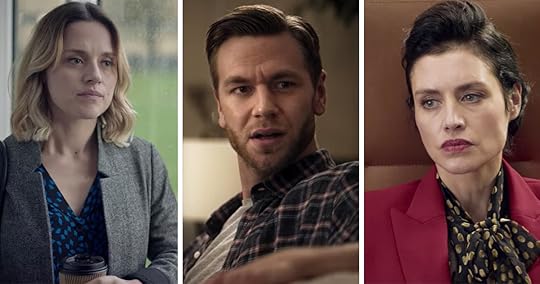
The series casting is more diverse and has added new characters, removed some of the original ones and combined several character attributes and storylines. The most loyal adaptation is Ellie/Rebecca, though her storyline has changed as well.
For instance, Rebecca’s scientist friend James doesn’t exist in the book, but he is vital to the story in the series. The murder case that jeopardises Rebecca’s life and career doesn’t exist in the book, neither does the roommate. In the book, she never meets the cop character, and the cop character is secondary (albeit crucial to the plot).
In the series, we can’t help but like Ellie/Rebecca’s true match. He is a loving brother and a stand-up guy. He chooses to stay behind to look after his addict brother even though he is in love with her. When he finds out the darkest things about her past, he chooses to protect her. In the book, her match is practically a villain.
It’s hard to say whether the book or series Rebecca/Ellie is more morally corrupt. They both get their hands on people’s DNAs through unethical and illegal ways and conduct testing without their knowledge. They commit other crimes too, but they are often pushed to do so. The characters that push them don’t go to the cops and turn them in. Instead, they resort to blackmail and threats and want to destroy everything she’s built.
In the book, it’s not possible for one person to have more than one match, while in the series, it makes for a pretty good complication.
And these are only some of the differences.
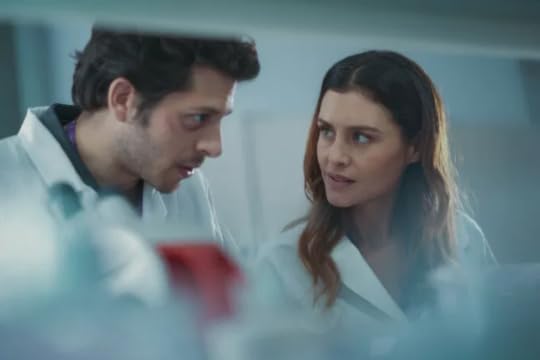
I love them both for different reasons!
The book is darker thanks to Christopher, the serial killer character.
The series is more even in the genre department. It’s a crime/thriller with romantic storylines. It’s closer in tone to the most police procedurals we see. There’s even a whodunnit, combined with several other past and present crimes. (Critics of the show complained it was too much of a procedural, but it was right up my alley.)
In the book, on the other hand, some storylines are pure romance. Jade’s storyline is never a thriller. It’s exciting and full of surprises, but it’s a complicated romance when it is said and done. Nick and Alexander’s story also bears no criminal element.
Mandy’s storyline becomes a thriller toward the end, but it’s mostly drama. Christopher’s storyline never quite becomes romance, because well, he is a psychopath who thinks he might kill his match too.
There are many insane and impressive twists involved in both.
I loved reading the book, and I definitely enjoyed watching the series. I appreciated the changes because it meant I no longer knew what was coming.
Both are fun and gripping, just in different ways.
But if you force me to pick, I’ll pick the book because it came first, blew my mind and is a masterclass in writing a story with several protagonists, genre-blending, and cliffhanger chapter endings.
Over To You …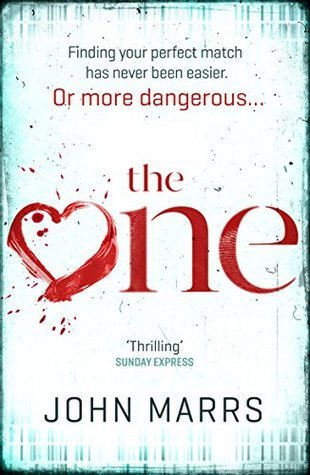 Whether you prefer the book or the TV series, I’m pretty sure you will be asking yourself …
And considering the psychological and sociological impacts alone makes it worth trying the book and series.
The series hasn’t been renewed as of yet, but the ending has potential and I’ll be sticking with these characters if there is a season two.
Enjoy!BIO: Pinar Tarhan is an experienced freelance writer and romcom novelist. She enjoys creating fun, escapist fiction. Her second novel A Change Would Do You Good is available on Amazon.
February 25, 2021
BOOK VERSUS FILM: A Discovery of Witches
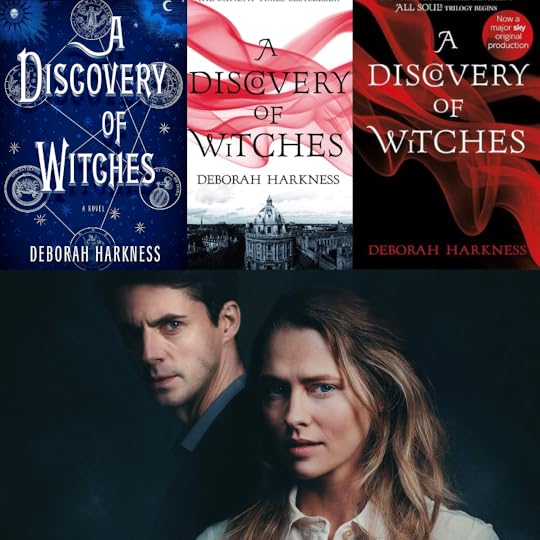 Ahem
… TV Series Versus Film!
Ahem
… TV Series Versus Film!This time it’s a TV series rather than a film we’re comparing to its source material … But then we’ve done this before with several TV series before, catch up with them below.
The Handmaid’s Tale Apple Tree Yard The Night ManagerCheck out the rest of the Book Versus Film case studies, modern to classics, HERE.
The Book Historical fantasy novel A Discovery of Witches by Deborah Harkness was first published in 2011. Marketed as ‘Harry Potter or Twilight for grown ups’, the book and its follow ups (The All Saints Trilogy) enjoyed considerable commercial success and critical acclaim.
In this storyworld there is a trinity of supernatural creatures that live amongst humans: witches, vampires and daemons. The book follows the fates of Diana Bishop, a witch scholar doing research at Oxford university in England. When she discovers a lost manuscript – ‘Ashmole 784’ – her life is put in danger as it turns out the manuscript may contain the key to life for ALL creatures.
This first book is about Diana and the peril she finds herself in as a direct result of discovering Ashmole 784, not only from daemons and vampires but from her own kind, the witches.
Diana finds herself at a considerable disadvantage because she has rejected her witch powers all her life, after the murder of her parents when she was just seven.
Enter Matthew Clairmont, an enigmatic vampire scientist who vows to help and protect Diana. With him and various other allies Diana sets out to discover more about her powers and to gain control over her magic. She must also face ‘The Congregation’ who forbids inter-species love between creatures.
My reviewI first read A Discovery of Witches around the time it first came out. I had cancer back then and was undergoing chemotherapy, so I discovered on re-reading recently I had forgotten a lot of it (though not really surprising!).
I love a great concept and like Twilight is essentially ‘Romeo and Juliet’, so is A Discovery of Witches at its heart. The idea of a vampire and a witch falling in love is fantastic. I also love the idea our heroine must learn how to control her powers and can’t even trust her own people.
It’s also clear Deborah Harkness knows her subject. A historian herself, she provides an authentic-feeling storyworld that provides a fascinating backdrop for this world of creatures. The addition that Matthew is fifteen hundred years old so has met some of the most famous people in history such as Charles Darwin, Christopher Marlowe or Isaac Newton is fabulous.
I also love the idea that witches live in haunted houses and various ancestors are always with you. The idea that the house hides things from them or even adds or takes away storeys is inspired.

At 688 pages however, the book feels about 250 pages too long. The vast majority of the action seems ‘back-ended’ to the resolution, which seems a shame when it includes stuff like witches flying, torture, haunted houses, ghosts and time travel!
There’s also some considerable repetitions from stories that have gone before, most notably Twilight. The dynamic between Matthew and Diana in the book is very similar to Bella and Edward’s. Matthew’s ‘son’ vampire Marcus was dying in a pandemic when Matthew turned him, just like when Carlyle turned Edward. The Congregation seems remarkably similar to vampire council The Volturi.
There are also various hints towards a dark backstory for Matthew as a kind of ‘vampire vigilante’ that’s similar to Edward’s, too. Though there is some mention of sex it’s all remarkably chaste, much like Twilight too … But perhaps all this is WHY it did so well!
Harkness claims to have never read Twilight (which to be clear I don’t doubt). Many writers say they ‘don’t want to be influenced’ by reading or watching what’s gone before, but I find the opposite happens. Working with writers, I find they tend to get influenced by a kind of ‘osmosis’ and that seems to have happened in the book version of A Discovery of Witches.
All that said, I enjoyed A Discovery of Witches and was looking forward to catching up with the TV series (2018, first season only) at last. Read on to find out what I thought of it as an adaptation.

A Discovery of Witches is one of those rare beasts … It appears to be a faithful adaptation, whilst also taking some significant liberties in how it presents the plot from the page to the screen.
Series 1, episode 1 of the TV series starts where we expect: Diana at Oxford, finding Ashmole 784 (also known as ‘The Book of Life’ here). It also ends where the first book in the trilogy ends too: episode 8 shows Matthew and Diana escaping into the past as time walkers so Diana can study with the witches of old.
PlotThere are some significant changes to how the plot works out within those two points, ranging from big to small.
From episode one, we are left in no doubt ‘creatures’ – as witches, vampires and daemons are known in this storyworld – are facing significant problems.
They are all effectively dying out: witches’ spells no longer work; vampires can no longer ‘sire’ (create new vampires) and daemons are going mad. This is presented as both dialogue and events, such as Matthew’s son Marcus’ friend’s death by hit-and-run, with a helpless Marcus unable to ‘turn’ him and watching him die. Whilst the theme of creature extinction is present in the book, this comes much later.
Matthew is very much a threatening and rather creepy presence in the book. A couple of chapters from his point of view show this, plus the fact he kills Diana’s witch friend Gillian underlines this. In contrast, Gillian does not die in the TV series, with the witches lying about this to de-stabilise Diana’s belief in him.
There are also some other good elements that make it directly from the pages of the book to the TV series. My favourites are Sept Tours, Matthew’s family home, as well Sarah and Em’s haunted house. I also enjoyed the moment Diana causes ‘witch water’ … She starts crying because Matthew leaves her, almost flooding Sept Tours.

I really like the fact the TV series ‘rebrands’ Ashmole 784 as ‘The Book of Life’ from the very beginning. It underlines what’s at stake for the creatures and makes the story much more compelling from the beginning.
There’s a lot more about Matthew leading ‘The Knights of Lazarus’ in the book, though it never really feels as if it gets paid off in Book 1 (perhaps it comes later in the trilogy). In contrast, the TV series seems to use it less, but links it to the plot a lot more, with Gerbert using this to attempt to usurp Baldwin on The Congregation.
Other elements of the book, such as the antagonistic forces of Satu and Juliet are re-arranged. In the book they seem to ‘drop into’ the action towards the end with no real mention prior to this. In direct contrast, both of these characters have much ‘beefier’ parts in the TV series and their role functions are seeded from episode 1.
Like Satu and Juliet, daemons Sophie and Nathaniel are also ‘flown in’ towards the end of the book, yet they have a strong part to play in pushing the story forwards in the TV series from the very beginning.
Agatha, a daemon congregation member and mother to Nathaniel, does not appear in Book 1 but has a strong part to play pushing the story forwards in the TV series too. (That said, though dameons’ place is cemented much more effectively in the TV series than the book, in my opinion we still don’t know enough of what daemons are capable of in contrast to witches and vampires).
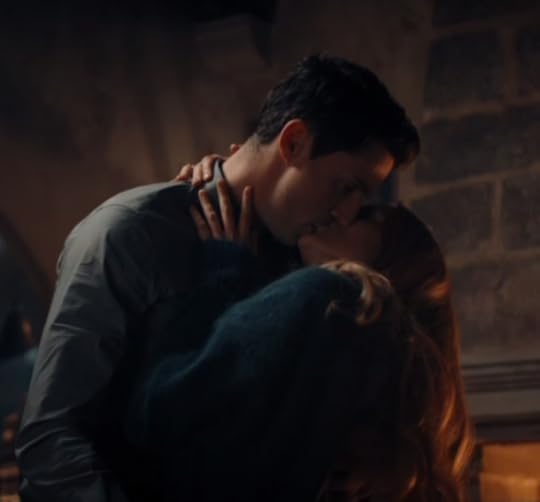
There also appears to be certain elements in the TV series that are either not in the books or takes place in the subsequent two volumes of the trilogy (which I have not read, FYI).
The addition of the severed head/seer Meridiana and the witches ‘light and dark’ was not present in book 1 to my recollection.
Meridiana’s repeated ‘Beware the witch with the blood of the lion and the wolf, for with it she will destroy the children of the night’ (aka vampires) is also another element driving the plot of the TV series. More on this next.
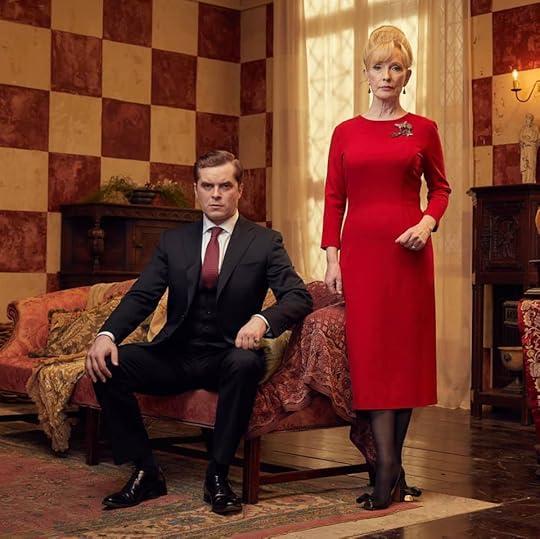
There have been multiple characters lifted wholesale from the text, as well as some considerable changes to the characterisation in the TV series, too as follows … First things first though, here are the characters who appear similar or the same as the book.
Ysabeau is probably the most faithful character to the book. She and her partner Martha act exactly as we imagine from the pages, as do Sarah and Em, Diana’s aunts.
Their collective dismay at Diana and Matthew disobeying the covenant that say witches and vampires must not be together feels positively Shakespearean. Their resolve they will fight for them no matter what is fantastic. Equally, Miriam and Marcus’ belief in Matthew and love for him means we have no doubt they will fight for Diana, too.
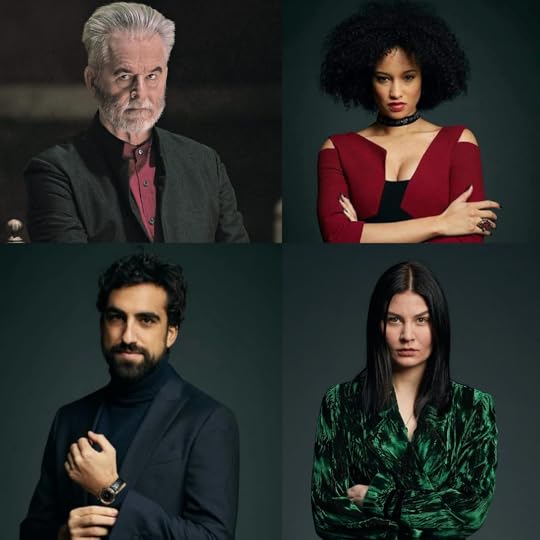
Next, what’s different. First off, the obvious: the casting in the TV series is MUCH more diverse than the book. Whilst the book is inclusive of gay relationships, the TV series goes one further. This is a storyworld that does not focus solely on white people. Whilst Diana and Matthew are white (as they are in the book), other character role functions are race-swapped at will. This is in-keeping with modern storytelling values, which have progressed considerably on this since 2011.
Diana is constantly called brave in the book, but I found her a little wet, rather like Bella from Twilight. So just like Bella’s re-imagining in Midnight Sun from Edward’s POV, I found Diana in the TV series MUCH more rounded. She is understated, but does appear to be as brave as everyone says, taking on her new powers and the fact her life has been turned upside down.

As mentioned already, Matthew is much creepier in the book, plus he’s also much more controlling of Diana. Again, his characterisation is very much ‘of its time’ in that 2011 we had such toxic ‘Alpha Male’ characters as Christian Grey from Fifty Shades. In contrast, Matthew seems much more complex in the TV series. This figures, because in the past five years in particular audiences have started to demand much more nuanced characterisation in general.
Gerbert, an antagonistic force who is mentioned fleetingly in Book 1 has a much larger part to play in the TV series. He has been keeping witches and vampires enthralled to him for centuries in a bid to destroy the Clairmont family. Whilst we hear about this in the book, we don’t ‘see’ what or why he does this.
Baldwin, Matthew’s brother also has a much larger part in the TV series. He is an active ally here, albeit a reticent one. When Gerbert tries to turn the tables on him with the congregation in a bid to take the spoils for himself, only Agatha can save Baldwin.
Domenico appears in Book 1, but only really as a messenger. Here in the TV series he is as much a manipulator as Gerbert. He acts as the catalyst for Juliet’s ensuing madness over Matthew, plus there’s a great moment where he seems merciful towards Baldwin … only to tell him he owes him. I really liked this flip on our expectations.
VerdictSo book or TV series … When I like different things about the two versions, this is a difficult call!
However, all the changes and rearrangements make the characters in the TV series seem more three-dimensional to me, plus there’s more of a sense of moral ambiguity thematically as well as some stronger feminist messages too.
Also as a plotting junkie I like how the ‘Book of Life’ issue is presented in the TV series and kept in mind from the beginning, along with various antagonistic functions to keep the pressure on.
So, for me … it is the TV series that is the winner on this occasion! Given Deborah Harkness is heavily involved in the adaptation, that is a shared win for her too.
What do you think?February 17, 2021
8 Hottest Sci Fi & Fantasy Books Out Soon
 Out in 2021
While it’s safe to say that nobody knows what other-worldly events 2021 is going to bring us, we do know some good things … Our favorite authors are scheduled to release some more of their other-worldly stories to us mere mortals.
Fear not the real world, but escape into some of the most fantastical writing this year has to offer you with my preview of what could be in store! Here’s a round-up of some of the hottest authors on the block right now in science fiction and fantasy, from legends of the genre to ground-breaking debut pieces. Enjoy!
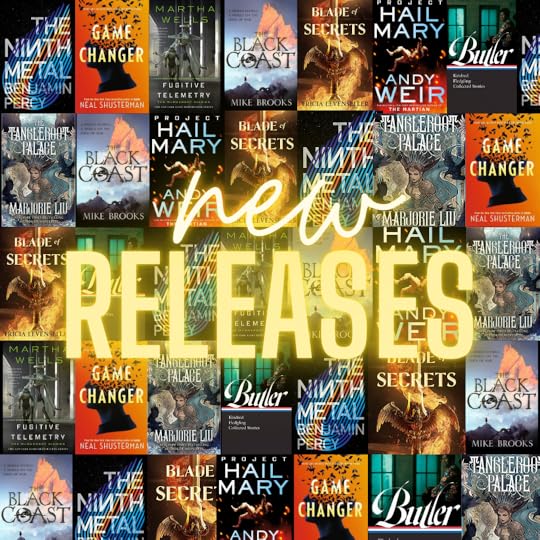
Octavia E. Butler, the 2020 New York Times Bestselling author of Parable of the Sower has a collection of stories, published by the Library of America to get you off to a flying start.
You’ll be familiar with some of the tales included such as Butler’s well-known slave story ’Kindred’ and the vampiric ‘Fledgling’, but there are also eight other short stories and a number of lesser known essays to sink your teeth into.
2) Fugitive Telemetry by Martha WellsComing out on April 27th via Tordotcom Publishing, Martha Wells’ ‘Fugitive Telemetry’ belongs to the endearing series she has created about an unruly security bot named Murderbot.
Number six in the series, you’ll have a bit of catching up to do if you want to read the first few escapades first, but I’ve no doubt that Well’s witty work will leave you wanting more of her antisocial and anarchic mystery-solver.
3) Project Hail Mary by Andy WeirDue for release on the auspicious date of May the 4th (be with you!), Andy Weir returns with yet another sparkling odyssey to follow on from The Martian and Artemis.
His new release Project Hail Mary is published by Ballantine Books. It tracks the exploits of unlikely hero Ryland Grace when he finds himself the only passenger aside from two corpses on an unfamiliar spacecraft after an unhealthily long sleep. He realizes that it is up to him alone to save the human race.
4) The Black Coast by Mike BrooksNew kid on the block, Mike Brooks, launches his first fantasy novel this year with an epic series opener entitled The Black Coast. Brimming with feel-good battles, heroes of old and mystical beasts, Brooks has carved a world full of wonders to behold.

National Book Award-winner and New York Times-bestseller, Neal Shusterman is also back this year with a new novel entitled Game Changer. Following on from the unquestionable success of his ‘Arc of a Scythe’ series, Shusterman poses uncomfortable questions of his readers in a searingly topical examination of the human role in this universe.
6) Blade of Secrets by Tricia LevensellerTo be released in May, ‘Blade of Secrets’ will be the first of a fantasy duo penned by Tricia Levenseller. In this book, as the title suggests, Tricia charts the anxiety-ridden journey of a shy young female blacksmith whose magic sword becomes too dark and powerful to be contained. This leaves her no choice but to pursue it in an attempt to save humanity from the destruction it may inflict.
7) The Tangleroot Palace: Stories by Marjorie LiuUniversally-acclaimed author Marjorie Liu last wowed us with her graphic novel ‘Monstress’ which claimed a spot as New York Times bestseller as well as winning multiple awards from the Romantic Times, Hugo and also British Fantasy.
This June, Liu returns to tempt us with her debut collection of stories, The Tangleroot Palace, for which we wait with baited breath. More of Marjorie ’s mysteriously magical woods full of intoxicatingly dangerous women are sure to have us on the edge of our seats this summer.
8) The Ninth Metal by Benjamin PercyAlso out in June just to keep those beads of sweat on your brow, is the talented Benjamin Percy’s thrilling series-opener, The Ninth Metal. Get ready to have your mind blown by Benjamin’s sparky writing, as a meteor shower descends on earth, leaving behind a precious new metal that drives people to crazy heights in the heat of the Midwest as they attempt to exploit this strange new substance from space.
BIO: Respected book-reviewer Lauren Groff writes prolifically herself, contributing regular pieces to Lia Help and BigAssignments. She also works as a proofreader at OX Essays writing service.
More on this site about science fiction and fantasy5 Reasons To Love Science Fiction
7 Great Utopian Books We Should All Be Reading
Top 10 Deplorable Dystopian Worlds
Love Science Fiction? Check Out This Infographic
Top 5 Fantasy Romance Novels Worth A Read
Book Versus Film: War of the Worlds
Happy Reading!January 23, 2021
Getting To Grips With Networking As A Writer
 Networking Mistakes
As well as being an author myself, I work with writers. This means I see A LOT of writers making the same old mistakes when it comes to networking, especially on social media.
Many writers believe in ‘book spam’ – dropping multiple links without care in Facebook groups, copying and pasting the same tweets, or effectively yelling ‘BUY MY BOOK’ endlessly into the void. Others draw lines in the sand between themselves and others, slagging off books, TV shows and movies and other writers … As if that would endear them to their peers!
So when I was offered a place on the blog tour for Networking for Writers by Lizzie Chantree, I jumped at the chance to read it. Though I am experienced at networking as a writer, I am always interested to see what others are doing. I also wanted to know if I was missing out anything in the networking writer’s toolkit.
In addition, lots of my ‘Bang2writers’ have been asking for my recommendations on how to avoid big networking mistakes and I hoped this book would provide an insight for them.
Networking For WritersAt just 100 pages, Networking For Writers is a concise and easy to follow guide. It’s written in a conversational tone and I particularly liked the author’s references to her life outside writing.
Despite its brevity, the book is comprehensive. Lizzie takes on both social media networking and real life events, shining a light on how writers can use both to source opportunities. She also suggests running one’s own events, both in ‘meat space’ and online, plus she breaks down how to go about this.
I particularly liked Lizzie’s thoughts on author branding and creating what she calls ‘a bestseller support system’. Her explanations about brand mottos, mission statements and ‘the story of you’ are right on the button in my experience. I have followed this remit myself for both my Bang2write and author platforms and found it to be very fruitful.
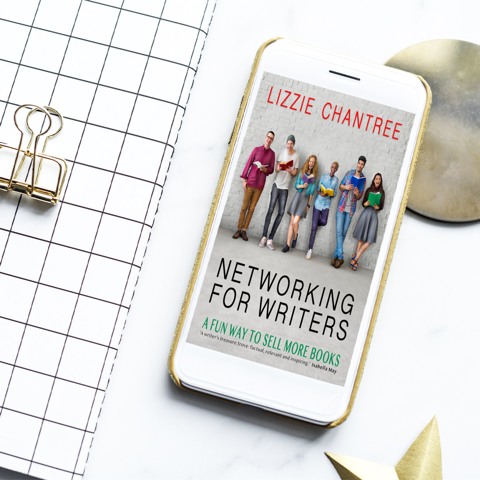
There’s a wealth of material in Lizzie’s book. Here’s some of the elements I identified …
Using libraries and other local resourcesDeveloping relationships with your peersDeveloping your USP (‘unique selling point’)Writing sprints and lockdown buddiesHow to utilise Twitter hashtags effectivelyIncreasing online reach via guest posts & blog toursMaking the best use of PinterestHow to measure and evaluate your interaction & engagementSEO (‘search engine optimisation’), keywords and bloggingMarketing plans and schedulingTime management and routinesHow to run promotions and giveawaysAvoiding procrastinationNewsletter swaps, lead magnetsIt’s A YES! From LVHIn short, I think Networking For Writers is a super-useful book. So many writers tell me they just don’t know where to start … I will be telling them from now on to START HERE!
Networking for Writers by Lizzie Chantree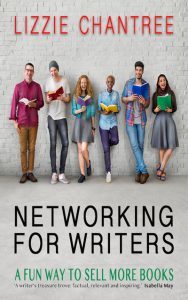 Are you swamped with book marketing and looking for a way to find new sales? Learn simple and effective networking techniques, to grow your readership and connect with other authors and book lovers, today!
Whether you are a new or experienced writer, self-published or traditionally published, this book will show you how to grow your readership and author network, through some of the most powerful of all marketing tools – word of mouth and recommendation.
This book will show you:How networking can help you sell more books.Why author branding is important.How networking hours work.Specific Facebook groups for writersHow to utilise social media to grow your readership.How not to waste valuable writing time.How to make our marketing more effectiveThroughout Networking for Writers, we will explore running or attending book signings, hosting seminars, finding a writing buddy or mentor, author networking groups, social media planning and so much more.
About The Author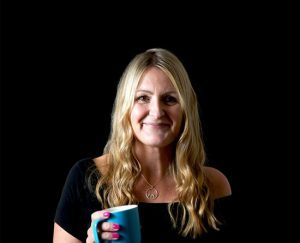 International bestselling author and award-winning inventor, Lizzie Chantree, started her own business at the age of 18 and became one of Fair Play London and The Patent Office’s British Female Inventors of the Year in 2000. She discovered her love of writing fiction when her children were little and now works as a business mentor and runs a popular networking hour on social media, where creatives can support to each other. She writes books full of friendship and laughter, that are about women with unusual and adventurous businesses, who are far stronger than they realise. She lives with her family on the coast in Essex. Visit her website at www.lizziechantree.com or follow her on Twitter @Lizzie_Chantree.
Lucy V. Hay's Blog

- Lucy V. Hay's profile
- 174 followers

