
Lucy V. Hay's Blog, page 6
January 10, 2020
If You Love Science Fiction, Check Out This Infographic
Best Science Fiction EVER
Science fiction takes us to whole new worlds, makes us question our own reality, and gets us excited (or in some cases terrified) for the future.
So, with thousands of science fiction books out there, which ones are worth your time?
Thankfully, Global English Editing has narrowed down the search by creating a great new infographic featuring the 16 best science fiction books of all time.
Whether you’re new to science fiction or hardcore book and film lover, there’s something on this list for everyone.
Take a trip down memory lane with Frankenstein, go on an intergalactic adventure with The Martian, or sit and ponder the intense truths behind Ender’s Game.
Though many of these books are set in different worlds, the lessons they teach and questions they pose are still very much applicable to us here on earth.
Check out Global English Editing’s infographic below. Enjoy!
Which Ones Are Your Favourite?



December 11, 2019
Happy Publication Day To Me – NEVER HAVE I EVER, Out Now
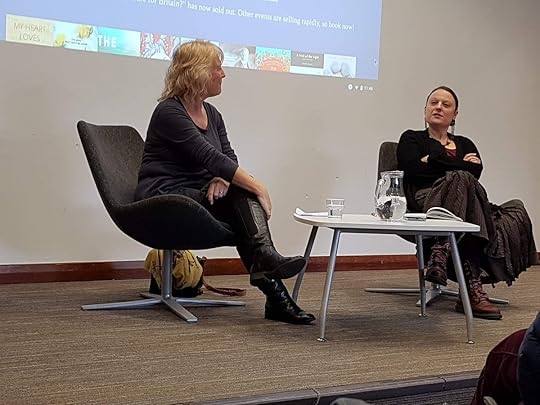
Never Have I Ever Is Published!
Happy Publication Day to me … My third crime novel, Never Have I Ever, is published by Hodder Books today.
Above you can see a picture of me discussing how I wrote the book at Exeter Literary Festival recently, with fellow crime author Bernie Steadman (on the left).
This one is probably my most personal book to date, as it’s about an author from Devon! That said, my protagonist Sam is NOT me. At least, I hope she isn’t me … As anyone who reads my writing site Bang2write knows, I love an antihero!
We join Sam as she moves her family back to Ilfracombe in Devon, where she grew up. It’s an area I know exceptionally well, having grown up there myself. I love to write Devon into my books, like I did with The Lynmouth Stories, so thought I would do the same here.
Here’s some pictures of just some of the local landmarks that end up in the book …
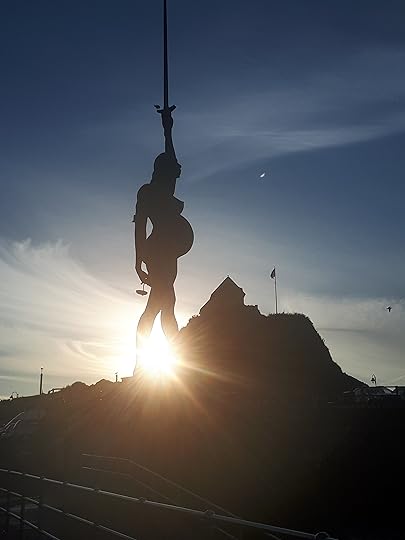
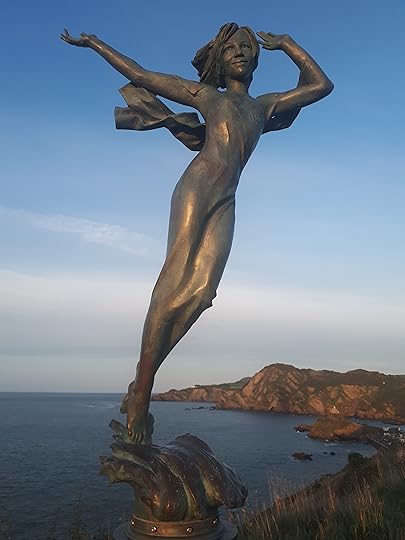
Damien Hirst’s Verity
The archetypal ‘warrior mom’, Verity divided the art world when she was installed on Ilfracombe harbour. She forms an important part of Never Have I Ever, since one of the book’s themes is about motherhood.
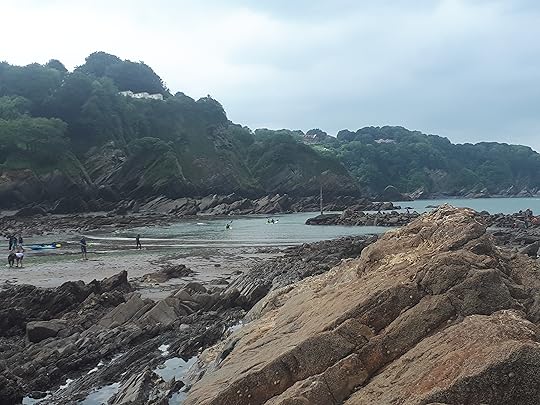
Wildersmouth Beach & Ilfracombe Tunnels
Popular with dog walkers, Wildersmouth is a small cove off the sea front. Ilfracombe Tunnels are Victorian bathing beaches. In the old days, there was one for men and one for women! These days, it’s a proper resort and you can even get married there.
The Clapping Circle
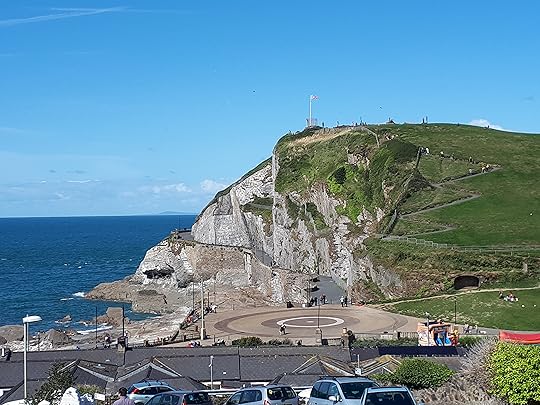
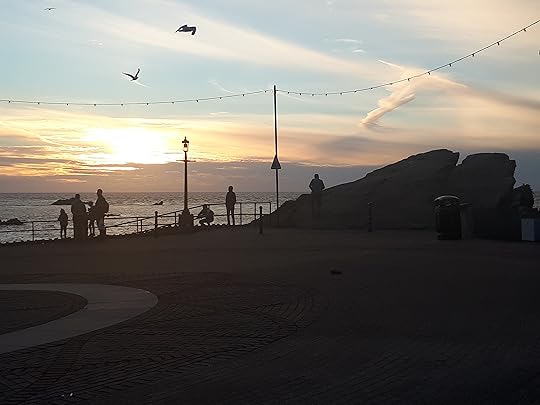
A popular tourist attraction on Ilfracombe sea front, if you clap your hands in the centre of that big circle, it makes a ‘dink’ noise as the sound bounces around the cove!
Capstone Hill
This is the big hill that leads to the top of the headland that surrounds the sea front/ harbour. It’s an epic view but SO steep, plus you need to be careful. At the top is ‘Katie’, another statue placed in memory of a Russian student who sadly fell to her death.
The Landmark Theatre
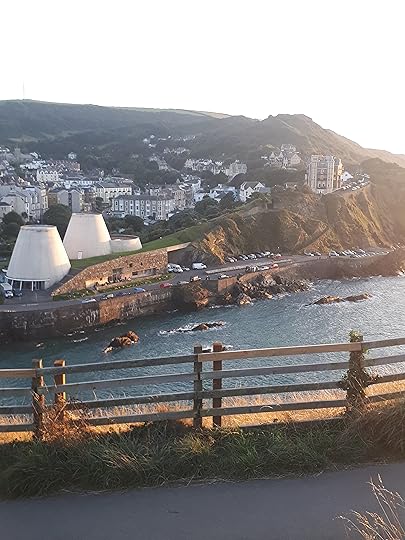
Known as ‘Madonna’s Bra’ by the locals when it was built back in the 90s, The Landmark is the two almost conical-shaped buildings below, seen here from the top of Capstone.
Back To The Book
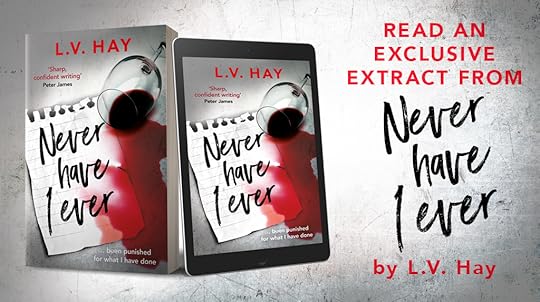
Set between ‘now’ and 1996, Sam’s past returns to haunt her when she receives a note, ‘Never have I ever been punished for what I have done.’ But what did she do?? And who is sending the notes?
Like the game, Never Have I Ever follows the same kind of set up, only with a TWIST … Instead of just owning up to what you haven’t done, you then have to go and DO THE THING. It’s kind of a mash up between NHIE and ‘truth or dare’, if you like. Of course everything gets out of control and the girls go TOO FAR.
You can read an extract HERE (or by clicking the pic below). Also, don’t forget to check out my social media for the chance to win a signed paperback plus some other goodies. For your chance to win, don’t forget to LIKE and comment on the giveaway posts …
Lucy V Hay Author on Facebook
Follow @LucyVHayAuthor on Twitter
Or @LucyVHayAuthor on instagram
And yes, do feel free to try your luck on all 3 platforms. Please spread the word to your friends and followers. Thanks.
Good Luck!
December 4, 2019
Top 10 Feel Good Non Fiction Books
When you think of the word “winter”, cozy sweaters, patchwork quilts, and hot chocolate are what probably comes to mind. But to a lot of people, winter is associated with Seasonal Affective Disorder, or SAD.
Whether you’re a millennial bookworm or a hardcover-loving baby boomer, you cannot deny the comfort of a heartwarming feel-good book.
1. The Art of Happiness: A Handbook for Living – Dalai Lama and Howard C. Cutler
The Art of Happiness, together with Dr. Howard Cutler, the Dalai Lama talks on one of the most integral aspects of life.
2. The Life-Changing Art of Tidying Up: The Japanese Art of Decluttering and Organizing – Marie Kondo
Marie Kondo introduced us to her KonMari Method of reorganizing and decluttering your surroundings. Taking the revolutionary movement one step further, this book gives new meaning to tidying up.
3. Joyful: The Surprising Power of Ordinary Things to Create Extraordinary Happiness – Ingrid Fetell Lee
In Joyful, TED speaker and designer Ingrid Fetell Lee answers one important question: “What is Joy, and how do we find it?”.
The book lays down 10 Aesthetics of Joy: Energy, Abundance, Freedom, Harmony, Play, Surprise, Transcendence, Magic, Celebration, and Renewal.
4. How To Win Friends and Influence People – Dale Carnegie
For over 80 years, Dale Carnegie’s debut bestseller has helped numerous individuals climb the success ladder. Filled with hard-hitting, practical advice, this book is a must-read for the socially challenged, along with anyone working in Sales.
5. Gmorning, Gnight!: Little Pep Talks for Me & You – Lin-Manuel Miranda
If you enjoy listening to Lin-Manuel Miranda’s Hamilton, then this might be just the book for you. Gmorning, Gnight! is a delightful compilation of inspiring tweets written by the author.
6. The Little Book of Hygge: Danish Secrets To Happy Living – Meik Wiking
The people of Denmark are considered some of the happiest in the world, and the reason is “Hygge”. Pronounced “hoo-ga”, it is the Danish philosophy of comfort, togetherness, and well-being.
7. The Last Lecture – Randy Pausch
This book is a written account of his lecture, “Really Achieving Your Childhood Dreams”, with extra anecdotes based on his experiences.
8. The Examined Life: How We Lose and Find Ourselves – Stephen Grosz
The best books are often the ones that feel like conversations. The Examined Life by Dr. Stephen Grosz is one such example that is highly praised as “an essential read” by researchers.
Serving as a window into the soul, this book looks at human emotion and how our past experiences shape our lives.
9. The Clancy’s of Queens – Tara Clancy
An adventurous, feel-good, coming-of-age memoir, The Clancy’s of Queens is multiple genres rolled into one truly humorous read. Tara Clancy, as the titular character, takes us on an eventful journey through the American social strata.
10. It’s Okay To Be Different – Todd Parr
This book packs a powerful message within its limited pages. Todd Parr delivers the all-important message of self-acceptance and confidence. It is also an excellent guide on cultural diversity and tolerance. An instant self-esteem booster, It’s Okay To Be Different will be right at home on your bedtime reading shelf.
Happy Reading!
BIO: Stella Lincoln is a book lover and researcher of what makes excellent writing. She is currently working as a Scriptwriter and blogger at Academist Help. Stella inscribes passionately about writing, literature, and language. She loves to give feedback and share new ideas with other authors.
November 11, 2019
7 Great Utopian Books We Should All Be Reading
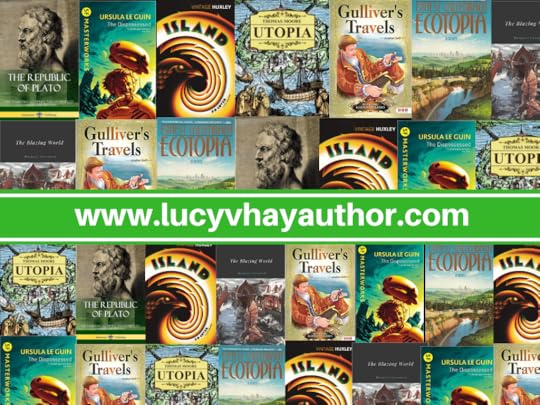
Utopian literature is a wonderful, rich genre full of inspiring books that can greatly benefit the reader. The following seven titles are just a sample of what the genre has to offer – from romances to philosophic treaties, Utopian books are an eclectic mix of fiction and non-fiction, essay and novel. The genre has spanned many years and encompassed many visionary thoughts – get ready to dive in!
1) Utopia, Thomas More
The first book of the list must be the eponymous founder of Utopian literature, published in 1516. This book is a combination of satire and political idealism. Set on an island portraying a perfect world, More essentially argues that an ideal society, or utopia, is too good to be true. Seen by some as a lecture in Catholic theocracy, and others as a justification of colonialism, others still note the book as an example of proto-communism. It at least pokes fun at the world’s idealists – although since adulterers are enslaved and the death penalty exists, it might not fall in line with today’s idealists! Whatever your take, it will make you think, and is visionary for its time.
2) Republic, Plato
Before More, there was Plato – many have noted it as the first work to envisage an ideal state (you may recall, no poets were allowed) and lay down laws for activities within society. In Republic, Plato shows Socrates debating with his students about the ideal city-state, the possible forms government could take and what justice really is. Powerful stuff!
3) The Blazing World, Margaret Cavendish
Cavendish’s work is usually interested in utopias and feminism – from the all-female university in The Female Academy and The Convent of Pleasure, in which women devote themselves to a life of pleasure and learning. The Blazing World is similar, depicting a young woman’s voyage into another, fantastical world, which she achieves by going to the North Pole. In a lot of ways, it’s an early Alice in Wonderland, but with less floating cats.
4) Gulliver’s Travels, Jonathan Swift
A hilarious political satire, you will probably have heard of this novel already due to the number of movie depictions available. None truly do the book justice – it’s a literary epic, following our hero as he moves through four different worlds, each with its own satirical depiction of society.
In the first world, the Lilliputians are tiny and their morals and care for trivial matters similarly small. In the next, the people are giants, and Gulliver is now in miniature. The third is a complete satire of science as Gulliver lands in a world where huge sums are used on nonsensical scientific experiments, like extracting sunbeams from cucumbers and softening marble.
The last is particularly disturbing, as in the world of Houyhnhms, horses rule and humans are beats called Yahoos. It’s an interesting parallel to colonialism and imperialism in Swift’s era.
5) Island, Aldous Huxley
Unlike Swift’s satire, Huxley actually presents ideas and methods to form a better society – they include increased agriculture, vegetarianism and adoption clubs for children.
6) Ecotopia, Ernest Callenbach
Like Huxley, Callenbach envisions a co-existence with nature within which the nature-society division is gone. In this story, the ecostate split from the USA in the 1980s and went its own way to life in line with nature’s laws. In this world, there are only 20 working hours week, bus travel is free, and trees are planted everywhere. Possibly a lot like the world we could live in, in the future!
7) The Dispossessed, Ursula Le Guin
Published in the height of the Cold War, this is an outstanding example of Utopian literature. Given the apocalyptic tone of the Cold War period in arts, the novel is similarly dystopic – one world is an exaggerated version of the USA (Urras) in a fully capitalist society, whilst the other (Anarres) is the USSR where concepts of property are foreign to the people. Things are not perfect in either, of course, as inhabitants of Urras are corrupted by greed whilst Anarres people are creatively at a dead end, and no more progress can be made.
BIO: Ellie Coverdale, a writer and blogger at Academized.com and Paperfellows.com, loves sharing her writing tips and suggestions with her audience. Her writing encompasses many topics, including education, life as a writer, and lifestyle tips. In her free time, she works as a teacher for Stateofwriting.com.
October 30, 2019
BOOK VERSUS FILM: The Haunting of Hill House
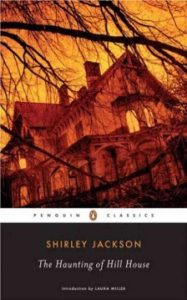 For this Halloween’s Book Versus Film, we’re visiting one of fiction’s premier haunted houses. It has stood for sixty years, and might stand for sixty more. Within, walls meet at odd angles, floors don’t lead where they should, and doors shut by themselves; and whatever walks there… well, if you’re brave enough to step inside Shirley Jackson’s Hill House, we shall see…
The Story
Four people choose to spend their summer in Hill House, hoping to prove the supernatural exists. But one of their number is soon marked out by the house, and over the course of several days it isolates her from the others, determined to make her a permanent resident.
The Characters
Aside from introductions to our four houseguests, the book is told from Eleanor Vance’s viewpoint. She’s spent 11 years looking after her recently departed mother, and now finds herself, at 32, painfully shy and living with her married sister. Life was filled with summer days until her father died 20 years ago; since then, Eleanor counts each summer as another year wasted – so it’s no coincidence she makes her bid for freedom on 21st June: the summer solstice (a Thursday, setting the book in 1956). Eleanor’s inner monologue brims with wonder at her escape, but as Hill House exerts its influence her thoughts take a darker turn. When she begins her journey, her car is “a little contained world all her own” – a telling insight, as the ending will reveal.
Theodora – just Theodora – earns her place by an uncanny knack for predicting cards. A bohemian artist, Theo’s attraction to Eleanor is hinted at, though Jackson is careful not to ‘out’ her (she wrote this shortly after the start of the Lavender Scare: the McCarthy-era homosexual witch-hunt). Theo embodies everything Eleanor lacks, a duality that Jackson has used elsewhere, so it’s natural these two are paired together throughout.
Luke Sanderson, nephew of the house’s owner, is there to keep an eye on proceedings (and himself out of mischief). He arrives with the certainty ghosts don’t exist, unlike the group’s final member, the person running the experiment, Dr John Montague. He yearns to add a sheen of respectability to the supernatural, but for all his research he is ill-prepared for what the house has in store for them…
The Book
 When Shirley Jackson wrote The Haunting of Hill House, she was best known for her short story The Lottery. Much of what bedevils Eleanor comes from Jackson’s own experience. She had a difficult relationship with her mother, suffered from anxiety throughout her life, and felt ostracised by her community (Eleanor’s mom claimed the neighbours were against them). But these parallels are not what inspired her to write it. No, that’s down to the Society for Psychic Research.
Having long been interested in the paranormal – quite wonderfully, the author bio for the first edition describes her as “perhaps the only contemporary writer who is a practicing amateur witch” – Jackson read the Society’s reports on a haunted house investigation, and wanted to invent her own. Whilst researching, she found pictures of a haunted-looking house in California… only to discover her great-great grandfather built it.
From the first paragraph, Jackson takes care to present Hill House as a living thing. In her celebrated opening she writes “Hill House, not sane, stood by itself against its hills…”; windows are watchful, cornices are described as eyebrows, and no opportunity is missed to remind us this house is different. It is variously described as vile, diseased, and leprous – something the film alludes to, by including a statue of St Francis curing the lepers.
Book “Exclusives”
 The history of Hill House is not revealed until we’re almost a third of the way through, but the hints beforehand, along with Montague’s claim it’s better to hear it in daylight, deftly builds expectation. The film gives us this at the very beginning, and whilst it makes sense – unsettling the audience before the main cast are introduced, and avoiding intrusive flashbacks – the book’s use of anticipation is more effective.
There are also several scenes set in the grounds. Eleanor and Theo discover a brook, only to be frightened by movement on the far side. Theo claims it was a rabbit, but we’re not certain she’s being honest. A few nights later they return there, and experience the story’s most visible supernatural activity, culminating in a ghostly family having a picnic. Eleanor has a final scene there, witnessing invisible footsteps crush grass before wading through water to the other side – possibly the ‘rabbit’ from before – but by now she isn’t afraid; her fears have transformed into neuroses at what the others think of her. Hill House is no longer the enemy.
If the book has one weakness, it’s the introduction of Mrs Montague towards the end. She’s also obsessed with the supernatural, but has little time for her husband’s scientific pursuits; her preference is for automatic writing, for making wild assumptions, for constantly chastising John’s methods. This does create one terrific scene – when the ghost ‘reveals’ its name – but her repeated claims of nuns walled up alive releases too much of the tension.
Reception
Published in 1959, The Haunting of Hill House received glowing reviews. It was a finalist for 1960’s National Book Award, and is often called literature’s greatest haunted-house story – not bad for a novel that eschews shocks for drip-fed atmosphere. It is cited as the scariest book by many, including Neil Gaiman, and lauded for its elegant writing, with Stephen King describing the opening paragraph as possibly the finest ever written.
For such a highly regarded story, it’s no surprise there are several adaptations. It has been translated to the stage, film (twice) and television, but for this I will concentrate on the first film, 1963’s The Haunting, as it stays closest to Jackson’s story.
The Film
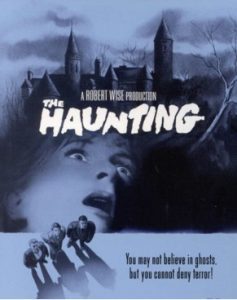 When Superman: The Movie opened in 1978, its tagline proclaimed: “You’ll believe a man can fly”. Practical special-effects were in their hay-day, and seeing really was believing. But with that came a downside – what if the thing onscreen does not meet your expectations? As audacious as HR Giger’s Alien designs were, that final metamorphosis cannot escape being a man in a suit. Then, seeing becomes disbelieving.
But seeing is only one of the five senses (six, if you’re Haley Joel Osment), and stories – especially scary stories – were being told long before films existed. It’s something Robert Wise, in post-production on West Side Story (for which he won his first Best Director Oscar), understood. He saw a Time magazine review of Jackson’s book, read it, and knew he had to make it into a film.
If he seemed an odd choice for director, Wise had that rare knack of mastering any genre. He’d already made The Day The Earth Stood Still and would go on to make The Sound of Music (and that second Best Director Oscar), but Wise started out directing low budget horrors for Val Lewton – from whom he learned audiences are more afraid of the unknown than what they can see – shortly after editing Citizen Kane.
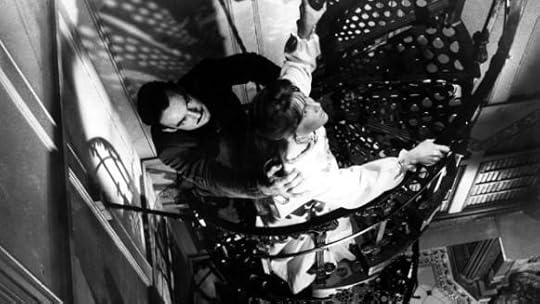
Screenwriter Nelson Gidding suggested the story takes place inside Eleanor’s head, with the other characters being staff and patients at the hospital where she is staying – an idea that possibly originated from this comment by Eleanor: “All three of you are in my imagination; none of this is real”. Jackson liked his idea but confirmed the house and its ghosts were real. However, the script remains as much an exploration of Eleanor’s psyche as of Hill House itself; their symbiosis exemplified by an unsafe spiral staircase, the perfect mirror (in a house full of them) for Eleanor’s deteriorating mental state.
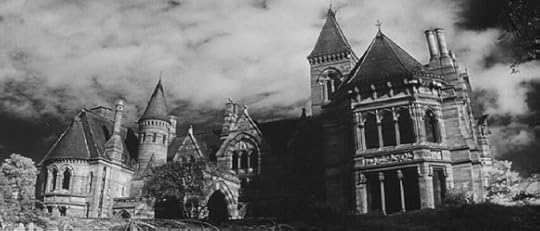
Wise brought the film to Britain, where MGM in London funded the million-plus budget. The house exteriors were filmed at Ettington Park (now a hotel), and several shots emphasised a pair of windows as eyes; coupled with statues, busts, and cherubic door-handles throughout the superb sets, the feeling Hill House is always watching becomes pervasive.
The Cast
Julie Harris plays Eleanor, with the right amount of vulnerability to offset her character’s neuroses. Harris struggled with depression at the time, but used it in her performance, although it did lead to her feeling isolated. Claire Bloom is equally good as Theo, bringing a joie de vivre to the role, as well as a more protective side towards Eleanor.
Russ Tamblyn initially turned down the part of Luke, but was persuaded by the studio to reconsider, and would later admit The Haunting was one of his favourite jobs (so much so, he cameos in Netflix’s recent version). Richard Johnson plays a more confident Dr John Markway (changed from Montague), filming during the day whilst appearing on stage each evening in The Devils. Johnson was considered for James Bond, but turned it down – although if he hadn’t, there might have been an interesting dynamic with his on-screen wife here, played by Miss Moneypenny herself, Lois Maxwell. Rounding off a uniformly excellent cast is Rosalie Crutchley as housekeeper Mrs Dudley. She’s only got a few lines, but her delivery does a lot to set the mood.
Film “Exclusives”
The most obvious change is the title. Wise asked Jackson if she’d considered any other titles for her book, and there had been one – The Haunting – which he used for the film.
Though largely faithful to Jackson’s story, most scenes set in the grounds are dropped in favour of confining everyone indoors. The whole tale is condensed into three nights too, rather than the eleven nights in the book, but never feels rushed. One reason why is we lose a second occurrence where “Help Eleanor Come Home” appears on the walls, this time in Theo’s bedroom, written in blood. If this was to avoid repetition, and the audience getting restless, the addition of a perfectly executed scare involving a trapdoor is clearly aimed at making us jump out of our collective skins. But if the plot survives largely unscathed, what about the characters?
The first significant divergence is Theodora, whose lesbianism in the book was muted (her ex-partner is never identified by gender) but in the film Theo’s attraction to “my Nell” is obvious – as is her jealousy at Eleanor’s infatuation for Markway, another film addition. Also, whilst Eleanor in the book declares she will go home with Theo only to be told she isn’t wanted, the film’s Theo still plans to take Eleanor and flee Hill House, despite how much their relationship has soured.
The second major change is Grace Markway (formerly Mrs Montague). The film reigns in her excesses – and completely excises her friend, Arthur Parker. She arrives at Hill House not to find ghostly nuns where they aren’t any, but to save her husband’s reputation from a nosy reporter. This Grace suffers John’s obsession with the supernatural rather than shares it, and insists on sleeping in the most haunted room to prove to him that ghosts don’t exist…
The ending is the same, though the film plays it at night, but arriving there is different. The book’s Eleanor intends to crash her car (her little contained world, remember?) into a tree, so desperate is she to remain at Hill House, and only at the last second comes to her senses – too late to save herself. In the film, unseen forces take control of the car as Eleanor drives away, and she resists – initially – but the appearance of Grace on the road makes her swerve, into that tree, implying her death was an accident, more palatable to filmgoers perhaps. The book is ambiguous as to whether she gets what she desired, but the film is less coy; in a haunting recap of Markway’s opening soliloquy, Eleanor’s voice tells us that “we who walk there, walk alone.”
Reception
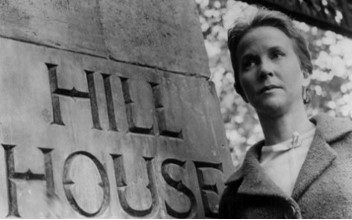
The initial reviews were mixed, and only in later years has its reputation grown. Nowadays, The Haunting is considered the scariest film ever made by many, including Martin Scorsese. Stephen King and Steven Spielberg once talked about remaking it; their collaboration never got produced, though King’s version became the miniseries Rose Red, and Spielberg exec-produced the 1999 remake. That film did the one thing the original deliberately avoided: it showed the ghosts. But, as Robert Wise knew, the things in our imagination are scarier – and 1963’s The Haunting proves, possibly more than any other horror film, that sometimes not-seeing is believing.
VERDICT
The book is beautifully written, with long sentences generously sprinkled with commas and semi-colons; just as well, because some passages take your breath away. Likewise, the film is beautifully shot, and has its own methods for making you breathless.
As a horror story, the film wins. The book is un-nerving, but the film is terrifying, and thirty years after I first saw it, nothing has scared me as much. As a character piece, though, the book wins. The film gives a good telling of this aspect, but despite a terrific performance from Harris, Eleanor’s collapse into insanity works better on the page.
So, both book and film play to their strengths. What we have is a story that works just as well on page and screen – therefore, I’m happy to call this one a draw.
BIO: Nick Jackson has had several short stories published, featuring ghosts, bleak future dystopias, and The Great Gatsby. He’s also written several Book V Film comparisons for Lucy, including the last two Halloween specials.
October 28, 2019
Top 10 Books That Changed Our World
Favourite Books
We all have our favorite books and novels, but every once in awhile, we come across a book that boasts a strong, lasting impact on society. This happens for a couple of reasons. Maybe the story wins several awards, a huge fan base in involved, history comes to life, or the book generates controversy.
Nonetheless, here’s our list of 10 books that changed the entire world, featuring a mix of contemporary and classic novels. Similar to how a quick detox can cleanse your body, an inspiring book can cleanse your soul and help you see the world in a way you’ve never seen before.
1) 1984 by George Orwell
George Orwell’s work of dystopia is what launched the dystopia subgenre in the first place. It’s where authors think of the near future as a horrible place controlled and monitored by the government, usually with rampant censorship and zero freedom.
Books like Brave New World by Aldous Huxley, Clockwork Orange by Anthony Burgess, and Fahrenheit 451 by Ray Bradbury would not exist if it wasn’t for Orwell’s 1984.
Fun fact: 1984 still blows the books mentioned above out of the water. Here’s a BBC News video on why it still matters.
Luckily, the world did not turn out as Orwell predicted it would in 1984. The book was published way back in 1949, but its influence lasted for a long time and continues to do so.
1984 is about a man who lives in a society controlled by a divine leader who rules using fear, force, surveillance, and a pervasive cult of personality (although it is unclear whether he really exists). Terms like “doublethink,” “big brother,” “2+2 = 5,” and ”thoughtcrime” from the book are still used in today’s world.
2) Giovanni’s Room by James Baldwin
Famous author James Baldwin wrote one of his finest pieces Giovanni’s Room to send the world a daring message. He placed the love and relationship between two men at the center of his novel, which was a bold effort in the fight for liberation, acceptance, and recognition for LGBT people of color.
3) Poems on Various Subjects, Religious and Moral by Phillis Wheatley
Phillis Wheatley had to face several trials to prove that she was the real author behind her own work—this was, in fact, way more popular than the actual book itself. However, her poetry was still recognized and praised by numerous high intellectual people in colonial America.
The positive outcome of her trials to prove authorship of her own work forced many white people living in America and England to believe black people were, in fact, people who knew a thing or two about art.
4) To Kill a Mockingbird by Harper Lee
One of, if not, the best-loved story of all time, Harper Lee’s To Kill a Mockingbird, was translated into over 40 languages and sold over 30 million copies worldwide. It served as the basis for a popular motion picture and was even voted one of the most iconic novels of the 20th century by librarians from all around the world.
It’s a heart-wrenching, outstanding coming-of-age story. The book views a world of savage inequities and great beauty through the eyes of a teenage girl, as her father risks everything to defend a man of color being accused of a horrible crime unjustly.
Checkout the summary of Harper Lee’s To Kill a Mockingbird explained by VideoSparkNotes on YouTube to better understand the concept.
5) A Study in Scarlet by Conan Doyle
This detective mystery novel was first published in 1887. It’s the first-ever story to feature the beloved character of Sherlock Holmes, who’d later become an iconic literary detective character.
The title of the book derives from an interesting speech given by Sherlock Holmes himself to Doctor Watson—his companion—on how to detox his work. Holmes describes in the speech about the murder investigation that takes place in the story.
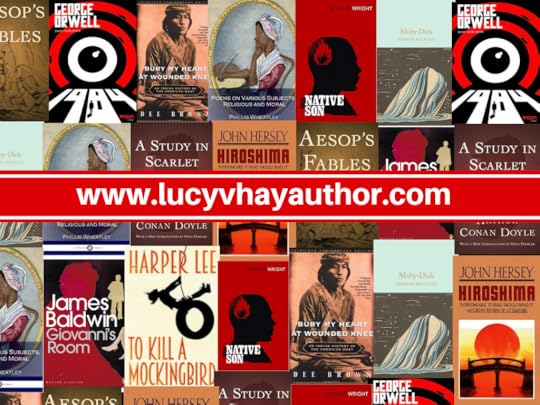
6) Aesop’s Fables by Aesop
This is a collection of tales and fables credited to Aesop, who was a slave in ancient Greece purported to have either collected or written them sometime between 560 and 620 BCE.
What’s interesting is that even though a slave wrote these fables in ancient Greece, they still managed to stay relevant to this date. Fables like The Ant and the Grasshopper and The Tortoise and the Hare are still well-known among parents and children across the world and reinterpreted in many forms.
7) Hiroshima by John Hersey
Hiroshima tells the stories of 6 survivors from the Atomic bomb that was dropped on Hiroshima, Japan, on August 6, 1945. They speak of tremendous loss, horror, and courage.
About 40 years later, Pulitzer Prize-winner Hersey returned to Hiroshima to locate the survivors he interviewed and learn their fates. These stories will continue to influence our future generations that may consider utilizing atomic bombs.
8) Native Son by Richard Wright
Right from the beginning, Bigger Thomas was headed for jail. It could’ve been for petty larceny or assault; by chance, it was for rape and murder.
Native Son tells the tale of a young black man who was caught in a downward spiral after he takes the life of a young white woman. Wright’s incredibly powerful novel is nothing but an unsparing reflection of the feeling of hopelessness and poverty experienced by people in inner-city areas.
9) Moby Dick by Herman Melville
This epic novel showcased that America had a voice in the sea of literature—a voice worth listening to. Today, America dominates modern literature.
Moby Dick tells the story of Ishmael—an adventurous sailor—and his journey on the whaleship Pequod, which is commanded by Captain Ahab. Ishmael comes to know that Ahab seeks one particular whale, Moby Dick, a white whale of enormous ferocity and size. Comparatively few whalers are aware of Moby Dick, and only some have faced him. In a recent encounter, the whale destroys Ahab’s boat and bites off his leg. Ahab seeks revenge.
Through the journey of Ishmael, the idea of social status and class, the existence of God, and good vs. evil are all examined as he speculates upon his place in the world, as well as his personal beliefs.
10) Bury My Heart at Wounded Knee by Dee Alexander Brown
Progress is made, but problems still arise. The world requires constant reminders that our history is influencing the problems of today and tomorrow.
Brown has brought America’s most violent history with the Natives upfront with Bury My Heart at Wounded Knee at the peak of the American Indian Movement (AIM), stoking its powerful, revolutionary flames.
Furthermore, it was invoked by activists opposing the Second Indochina War, aka Vietnam War, who drew comparisons between the brutalities committed on America’s own soil against the Natives and the violence in Vietnam.
Wrapping Up
Certain works of history, literature, philosophy, science, religion, and political theory offer strong examples of how books can birth great religions, spark revolutions, spur scientific advancements, educate us how to think innovatively, shape world economies, and so much more.
Every reader knows how a book can change your life, and the ones mentioned above literally changed the whole world.
BIO: Kathrin Garner is an enthusiastic journalist and writes article on social issues. As an activist, she takes part in NCSM program, which is a discussion platform on the relevant cannabis topics. So, if you want to know how to detox from weed, feel free to contact her. Also, she is a volunteer at Marijuana Detox. She searches for current issues, and writes about it to a wide range of readers.
October 11, 2019
Top 5 Fantasy Romance Novels Worth A Read
Why Read Fantasy?
Fantasy is an amazing genre for novels, with the power to transport you into new worlds, new universes. A big part of the appeal of reading novels is escapism, the ability to take yourself out of your own life and look through the window into the lives of others from places and times you can never visit yourself. It’s a testament to the quality of the book if you find yourself invested in the lives of the characters of fantasy novels.
Given that escapism is a powerful element to fantasy, it makes sense for the fantasy to be paired with romance for the ultimate escape. Many very entertaining and excellent novels fall under this cross-genre and could bring something special to your life.
So let’s take a look at five examples of great fantasy romance novels …
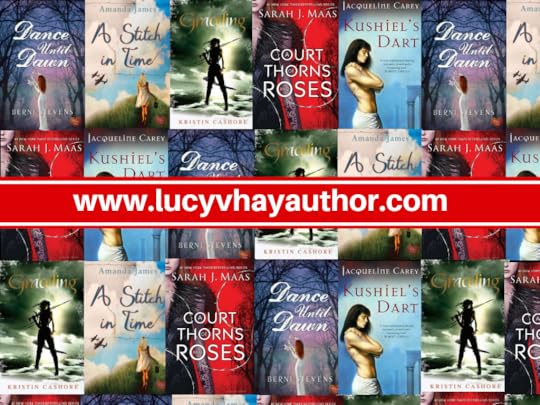
1) A Court Of Thorns And Roses by Sarah J. Maas
An excellent medieval take on the fantasy thriller, written by Sarah J. Maas, that sets the story in a wintery world. The main character Feyre is caught up in events after being captured for killing a faerie only to discover her feelings for the one who has captured her. It’s a sprawling epic, with masses of lore and world building which makes the whole thing feel that much more alive and believable. Maas is a NYT bestselling author with an amazing eye for intrigue and a skill for burying her readers in the story. Well worth a read!
2) A Stitch In Time by Amanda James
A Stitch In Time, by Amanda James, is one of those rare novels that combines a subtle element of fantasy with an altogether believable story about a woman who is very much bogged down with her life and times. She is a single (divorced) 30 something history teacher with no degree of interest or excitement in her life and everything slowly trundling on without her knowing how to make more of her life. Everything is interrupted by John Needler, a man who reveals to her the ability to time travel. Soon she finds herself travelling through time periods helping others achieve the life they’ve always wanted. The only question is whether she can achieve the life that she wants. A fun, moving romance with a dash of fantasy, that is sure to get your mind wandering.
3) Graceling by Kristin Cashore
Graceling, by Kristin Cashore, is the first of an amazing trilogy of fantasy works. Katsa is a Graceling, a rare type of fighter who is prized as a fighter and, despite being a relation of the king’s, is forced to be hired muscle. Her life is turned inside out when she falls in love with the Prince and begins to realize the origin of her skills and the terrible secret behind them. Cashore’s prose are flowing and elegant and her world-building is excellent as well, making for a really enjoyable first installment in the series.
4) Kushiel’s Dart by Jacqueline Carey
Kushiel’s Dart is an erotic fantasy book by Jacquline Carey, that birthed at trilogy and creates a fascinating world to surround the otherwise fiery and passionate romance that encircles Phedre, a young woman with a certain gift and a life that is shaped around her unique origins. She often has to use her body as a way to get what she or her master wants from others in a treacherous world of intrigue and backstabbing. Extremely readable and intense, Kushiel’s Dart is not one to miss.
5) Dance Until Dawn by Berni Stevens
Dance Until Dawn by Berni Stevens is the first of the Immortals of London trilogy and centers on the life of a young, twenty something dancer on London’s West-End, called Ellie Wakefield. The only problem is that she has gotten caught up with a vampire, who has killed her, and she lives on in vampirical form. She and William, the vampire, have a fascinating relationship that it’s so easy to get caught up in, amongst all the other bizarre magic of this special novel.
Conclusion
No matter what you’re interested in specifically, fantasy romance will have a book that you will find enjoyable. Each of these five offers something new to feast on and as an entry point for more research into the genre. Enjoy!
 BIO: Michael Dehoyos is a book marketer and publisher at PhD Kingdom and Academic Brits. He assists book companies in developing strategies for sales, as well as sharing his knowledge by contributing to numerous sites and publications, the academic service, Case Study Help, amongst them.
September 29, 2019
Review – Writing Fiction by James Essinger
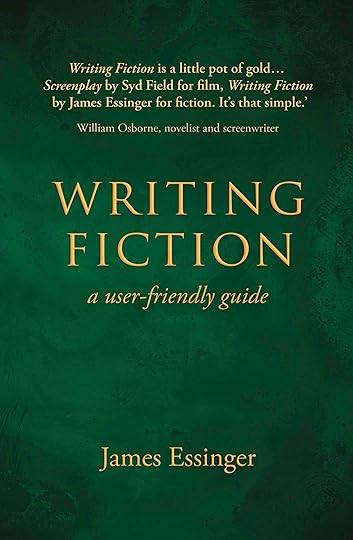
My Review
WRITING FICTION: A USER-FRIENDLY GUIDE is a fun book about the writing of novels. It is laid out in accessible and straightforward way, taking its reader from considerations like ‘What is fiction, anyway?’ through to stuff like characters, plotting, language use and show versus tell.
The book also covers some considerations about editing and includes some useful appendices at the back. One of these covers common mistakes he sees most often as an editor, which is always great information for writers wanting to avoid the obvious pitfalls.
I liked Essinger’s positivity in the book; it’s never ‘IF you write your novel; IF you publish it’, but WHEN you do this. His inclusion of movies and what we can learn as novelists from screenwriting is fantastic, as are the tips he gathered directly from screenwriters Bob Gale (BACK TO THE FUTURE) and William Osborne (TWINS). His exploration of COMMUNITY’s Dan Harmon’s ‘Story Circle’ is also another high point.
I appreciated Essinger’s inclusion of LGBT characters and books, too; his exploration of protagonists is not entirely heteronormative, which is unusual.
Essinger is clearly an extremely well-read man, so his observations about classic books are welcome. That said, I did feel he relied a little too heavily on some of the examples to illustrate his points (especially as they weren’t actual case studies). That said, I now feel inspired to read Forsyth’s DAY OF THE JACKAL, so maybe it works out after all!
In my opinion some of the chapters would also have benefited from being lengthier and having the learning objective stated overtly (perhaps with a ‘summing up’ at the end?), especially those that dealt with some specific aspect of writing craft. This lead me to feel this book is for more seasoned novelists than new writers, imho.
As a last point, I really enjoyed Essinger’s rather eccentric narrative voice in the book. He is very self-deprecating, talking about his re-written examples being ‘not necessarily brilliant’ and even mentioning at one point he was a sex-starved young man with no idea about women (!). I found this very amusing and considered it made the book more interesting … But if a surplus of personality is not to your tastes in non-fiction, then maybe you won’t.
Summing up then, this offers a good amount of information for would-be novel writers, though I think its ultimate value is perhaps for writers who have been writing a while and need a ‘reset’. Recommended.
About The Book
Writing Fiction – A User-Friendly Guide
‘Writing Fiction is a little pot of gold… Screenplay by Syd Field for film, Writing Fiction by James Essinger for fiction. It’s that simple.’ – William Osborne, novelist and screenwriter
Writing Fiction – A User-Friendly Guide is a must-read if you want to write stories to a professional standard.
It draws on the author’s more than thirty years of experience as a professional writer, and on the work and ideas of writers including:
Anthony Burgess
Joseph Conrad
George Eliot
Ken Follett
Frederick Forsyth
Dan Harmon
Ernest Hemingway
David Lodge
Norman Mailer
John Milton
Ben Parker
J.K. Rowling
William Shakespeare
Martin Cruz Smith
R.R. Tolkien
The twenty-four chapters cover every important matter you need to know about, including: devising a compelling story, creating and developing characters, plotting, ‘plants’, backstory, suspense, dialogue, ‘show’ and ‘tell’, and how to make your novel more real than reality.
Also featuring special guest advice from legendary screenwriter Bob Gale, who wrote the three immortal Back to the Future movies (1985, 1989 and 1990), and novelist and screenwriter William Osborne, whose many screen credits include the co-writing of the blockbuster Twins (1988), this highly entertaining book gives you all the advice and practical guidance you need to make your dream of becoming a published fiction writer come true.
Purchase Links
Available in both paperback & ebook.
Amazon.co.uk
Amazon.com
 About The Author
James Essinger has been a professional writer since 1988. His non-fiction books include Jacquard’s Web (2004), Ada’s Algorithm (2013), which is to be filmed by Monumental Pictures, and Charles and Ada: The Computer’s Most Passionate Partnership (2019). His novels include The Mating Game (2016) and The Ada Lovelace Project (2019). LIKE his page on Facebook, or follow him on Twitter as @jamesessinger.
September 23, 2019
Banned Books: Is Your Favourite On The List?
It’s Banned Books Week
Books have been seen as dangerous since we first started writing them. And in 2019, governments around the world continue to censor them.
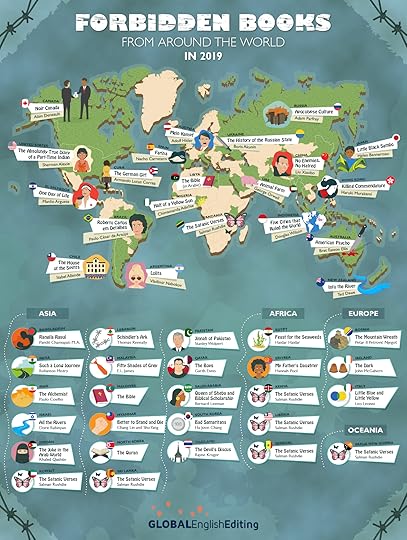
From American Psycho by Bret Easton Ellis (Australia) to The German Girl by Armando Lucas Correa (Cuba) to all works by political activist Liu Xiaobo in China, including his critically acclaimed No Enemies, No Hatred, governments try to restrict what their citizens can read.
Even in the United States where books aren’t allowed to be banned, thanks to the Supreme Court, libraries and schools can still curb what books are available.
In the last week of September each year, the American Library Association team up with Amnesty International for Banned Books Week. The event showcases books that are currently restricted by libraries and schools in the United States.
Many thanks to GE Editing for this illuminating infographic. Check out further details about banned books from all around the world, HERE or by clicking on the pic below. Shocking stuff!
August 15, 2019
8 Must-Read Chilling Thrillers For 2019
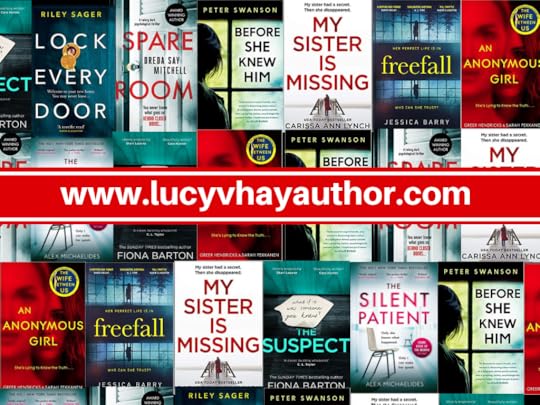
Most people love the occasional thriller, albeit a novel or a movie. The genre’s popularity in recent times is unrivalled, as a number of books have become cultural phenomena: think Gone Girl or The Girl on a Train.
Whether you are looking for something before bedtime, or something to bring with you on holiday, a chilling thriller ticks all the boxes. Here are eight of the best releases of 2019 so far:
1) The Silent Patient by Alex Michaelides
This is a novel which has a familiar guise but with a deliciously sharp twist. Alicia Berenson has secured fame with her painting and seems to have an idyllic life married to a photographer of equally-established fame. However, all is not as it seems, and Alicia shoots her husband five times in the face. What is the motive for this heinous crime? What has driven Alicia to such extreme lengths. Criminal psychotherapist Theo Faber wants to know, but first he has to tackle the fact that Alicia has been mute since the crime.
2) My Sister is Missing by Carissa Ann Lynch
Everyone loves a missing persons case as part of their thriller mystery, and in this case it’s a missing family member which has left everyone perplexed for twenty years. A VHS tape detailing a horrific crime sparks fresh impetus in the missing person case as Emily seeks to discover the truth about her sister Madeline. Could mysterious neighbors hold the clue?
3) Spare Room by Dreda Say Mitchell
Lisa is renting a stunning room in an equally stunning house. It is a room that the proprietors tell her has never been let before. So why has Lisa discovered a suicide note? Are they lying to her, or is Lisa having some kind of mental lapse? Is her imagination getting the better of her, or is she in fact in perilous danger?
4) An Anonymous Girl by Greer Hendricks & Sarah Pekkanen
Following on from the plethora of successful novels with ‘Girl’ in the title, An Anonymous Girl is a psychological thriller full of suspense, brought from the authors who achieved fame with The Wife Between Us. Trouble begins for protagonist Jessica Farris when she volunteers for a psychology study. Intended as a quick buck, the decision turns into something far greater, and soon Jessica begins to wonder if the enigmatic doctor running the trial knows more than he is letting on.
5) Before She Knew Him by Peter Swanson
Hen and Lloyd’s perfect life in their new home in Massachusetts looks set to be smashed by their mysterious neighbors – it’s a premise that has worked well before and works well again for Swanson in this chilling thriller.
Are the neighbors killers? Or are Hen’s own psychosocial vulnerabilities coming to the fore once more. Obsession and intrigue become the central theme of this gripping novel.
6) Freefall by Jessica Barry
This debut thriller will appeal to anyone and everyone who has ever had a secret. Allison survives a plane crash must now hide from people who want her gone. Meanwhile, Allison’s mother, who has always had an uneasy relationship with her daughter, starts to seek answers but that means discovering the truth that Allison has desperately tried to cover up for so long. This riveting read shows the ability of an author who looks set to establish herself in the genre for years to come.
7) The Suspect by Fiona Barton
A parent’s worst nightmare rings true in this novel about two 18-year old girls who embark on travels across Thailand, but then go missing. What transpires is an engrossingly written book which will reel readers in and not let them go until the final shocking twist. This is thriller writing at is very best by an author who has received universal praise for her craft.
8) Lock Every Door by Riley Sager
Jules Larsen secures a job as an apartment sitter in one of New York’s most famous, wealthy and yet mysterious buildings. The rules by which she must obey are clear: no visitors at any stage, she must not spend a night away from the apartment, and she must not disturb or engage with any of the rich and famous residents of the complex. Easy money, right?
All is well until Jules befriends another apartment sitter, Ingrid, who then goes missing. What are the secrets held between the building’s walls?
Have Fun Reading!
BIO: Aimee Laurence is a manuscript editor at UK dissertation help and Custom essay writing service. She helps writes polish their skills and enjoys reading and reviewing latest releases. Also, Aimee is a tutor at Write my assignment portal.
Lucy V. Hay's Blog

- Lucy V. Hay's profile
- 174 followers

