
Lucy V. Hay's Blog, page 13
April 20, 2018
CRIMINALLY GOOD: interview with author Peter Beck
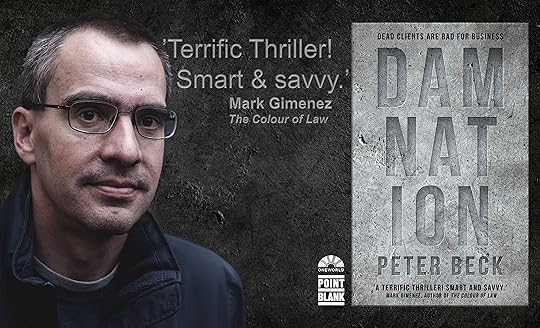
1) So, who are you & what have you written?
Hi there, I’m Peter Beck, the author of DAMNATION, an international, high-octane thriller. Mark Gimenez (author of The Colour of Law) says DAMNATION is ‘A terrific thriller! Smart and savvy.’ It’s published by PointBlank, an imprint of Oneworld, twice winner of the Man Booker Prize. You can find me on Twitter as @peterbeckbooks and you can LIKE my Facebook page, here.
When I was 20, I did my military service as a cyclist in the Swiss Army and was trained to destroy enemy tanks using rocket launchers (in the meantime, the army has come to its senses and has abolished this branch). I also have a black belt in judo, which comes in useful when I’m writing close combat scenes.
After my military service, I went to university to study Psychology, Philosophy and Economics, and stayed on to do a doctorate in Psychology. This still helps me describe what’s going on within my characters and shape their personalities, their motives, etc. For example, it’s really important for me that my hero, Tom Winter, has strong values. He’s head of security at a Swiss private bank and always tries to do the right thing, despite the bank’s boss only being interested in making the biggest profit possible.
Since I couldn’t find a decent job in psychology, I came to the UK to do an MBA at Manchester Business School and then went back to Switzerland to become an executive board member of a large Swiss company.
Today I’m self-employed and divide my time between writing the Tom Winter thrillers and supporting businesses in shaping their corporate culture.
I’m a member of the International Thriller Writers and the German-speaking crime writers’ association, Syndikat. My mother tongue is Swiss German, an Alemannic dialect which has no written form; I learnt to speak, read and write High German in primary school. My French isn’t great but I’m fluent in English, thanks not least to my Mancunian girlfriend.
DAMNATION, the first in the Tom Winter series, was initially published in 2013 in German by emons Verlag and is translated into English by Jamie Bulloch.
Its international story starts with a dead client, which is really bad for business. A helicopter explodes in the Swiss mountains, leaving behind the charred bodies not only of an incredibly wealthy Arab investing in nuclear plants, but also a close colleague of Winter.
Winter teams up with Fatima, a mysterious Egyptian businesswoman, and together they follow the money trail around the world and back into the Swiss mountains, the NSA watching their every move. When taciturn Winter, a former special forces commander, closes in on the truth, they turn from being the hunters to the hunted and realize they are in a deadly, high-stakes race against the clock.
2) Why do you write crime fiction?
This question could be answered on so many levels. Do I want to explore my dark side? Was there a childhood experience priming me to write? At the end of the day, I don’t know.
What I do know is that I’ve been reading thrillers for years and so I write what I like to read myself. For me, good entertainment needs a cool hero, a fast pace and cliffhangers. By the end, the readers should have bloody fingernails.
3) What informs your crime writing?
My travels. I combine them with research for my writing, taking a lot of photos at exciting locations. My hero is head of security of a Swiss bank with clients all over the world, so as an author I can send Tom Winter wherever I like.
I’ve spent time in Cairo, Boston and Norway, so in DAMNATION Winter goes there, too. And of course, there are lots of scenes in Switzerland, not just in the cities but also up in the Alps and the vineyards sloping down to Lake Geneva. In the next installment, there are scenes in Manchester (where I lived for two years), in the Azores (where I had a fantastic holiday) and in Nuremberg (where I attended the annual get-together of the German-speaking crime writers’ association).
Another aspect of my writing is the big fault lines in society like alienation, exploitation, nationalism and prejudices in general. I’m very much interested in understanding these in depth and exploring them in my writing.
Writing helps me to think and thinking helps me to write. Describing a complex phenomenon helps me to understand it a little bit better. In DAMNATION, for example, I try to explore the implications of rich Arabs from the Middle East buying into critical infrastructure, like nuclear plants in the USA or server farms deep in the Swiss mountains.
4) What’s your usual writing routine?
I usually have too many ideas, but since writing a thriller with 400 pages is like running a marathon, it’s actually 99% sweat and only 1% inspiration. So I try to be disciplined and use my energy wisely.
On writing days, I sit in front of my computer from 8 to 12 and, after lunch and a power nap, from 2 to 4. At the beginning of day, I usually go over the pages I wrote the day before, streamlining the text and deleting the bits I’m not happy with. In order to follow my progress and keep on track, I have an Excel spreadsheet which breaks down my writing goals on a daily basis and shows me green figures when I’m ahead of schedule and red when I’m behind.
5) Which crime book do you wish YOU’D written, and why?
When I was sixteen or so, I read my dad’s copy of The Spy Who Came in From the Cold by John Le Carré and I was hooked. Somehow it opened up another world for me. I’m still fascinated by Le Carré’s mastery, by how he lets most of the actions happen in his protagonists’ minds.


April 13, 2018
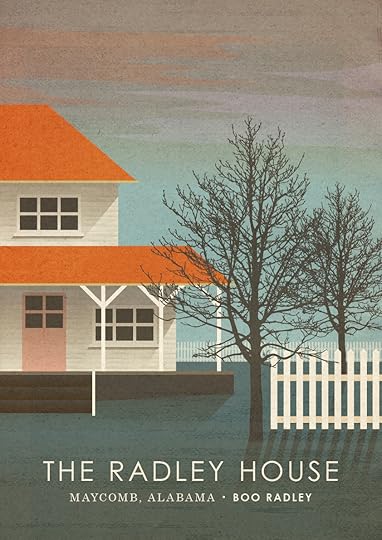
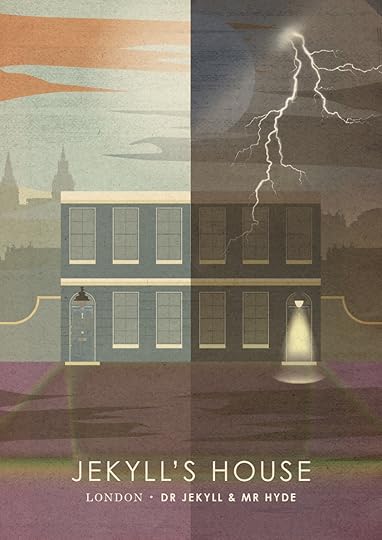
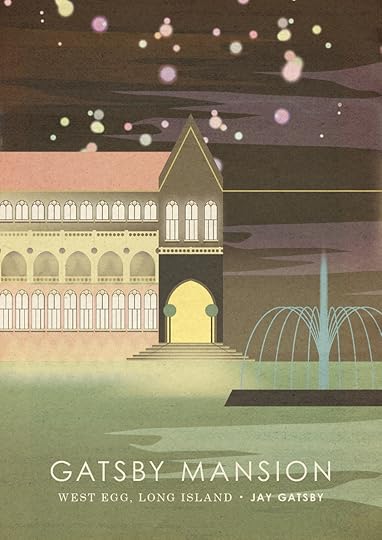
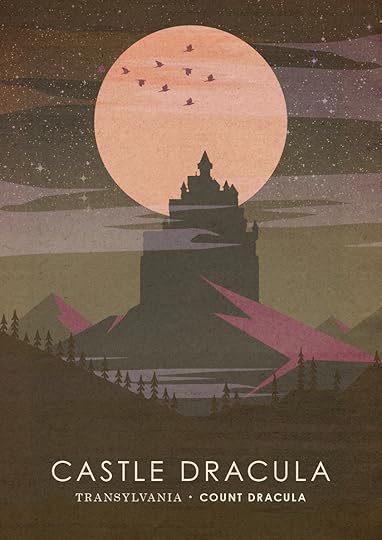
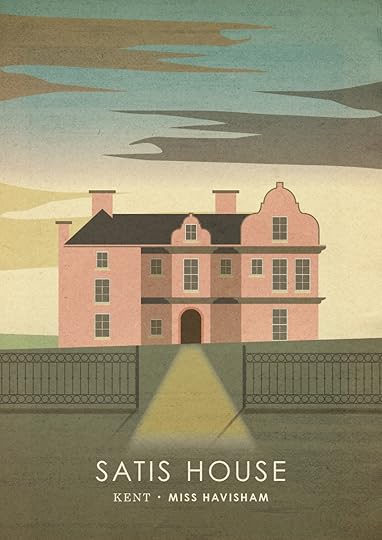
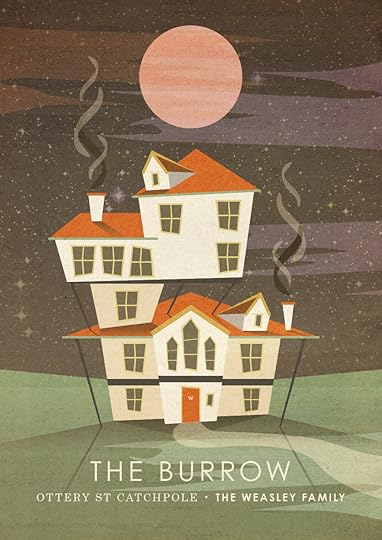
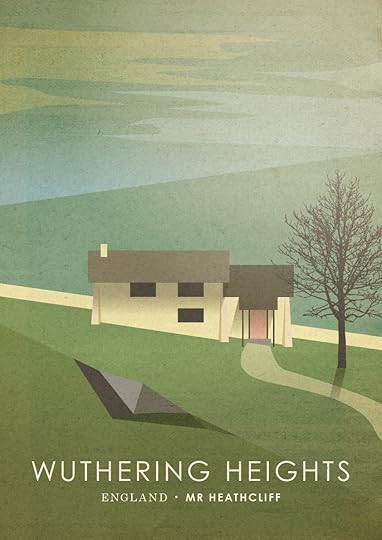
Literary Homes – Which Is Your Favourite?
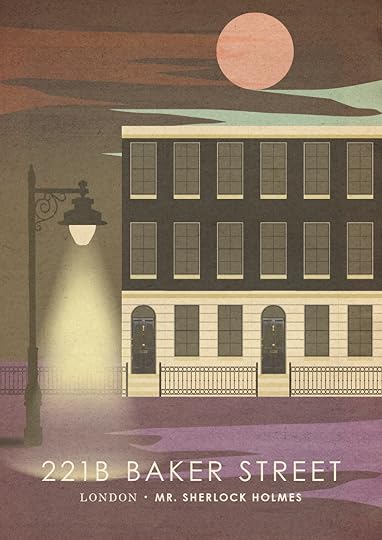
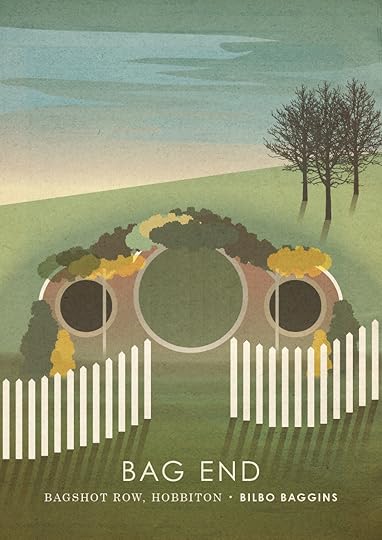
We all imagine the homes of our favourite characters, from ‘real world’ characters like Sherlock Holmes, through to the more horrifying like Dracula, or fantasy like The Weasley’s from Harry Potter.
So when Rhian got in touch with me offering to show me the posters of literary homes her team had made, I HAD to see them!!
I love the ‘minimalist’ look and muted colours they’ve chosen, for starters. I could imagine any one of these as a poster on my wall in my study (IF I still had one … my teen son is currently living in it at the moment, WAAAAAH!).
I kept changing my mind over which is my favourite. Obviously my dark psyche is immediately drawn to both Dracula’s and Doctor Jekyll’s … Plus I also love pink, so Mis Havisham’s home is a draw.
I also love the version of Wuthering Heights here. Living in Devon, I’ve always felt a kinship with that novel since I am as well acquainted with the moors down here as Kathy and Heathcliff are with the Dales.
Ultimately though, I think the Gatsby Mansion is my favourite. I love the contrasts of the shapes and colours here, right down to the fountain. And I fully intend to be a gazillionaire like Jay Gatsby one day, so will live in a house just like this!
More Literary Fun:
BOOK VERSUS FILM: Which Is The Greater Gatsby?
8 Weird Book-Related Words You Need To Know
Most Popular Books Of All Time
April 6, 2018
Game Over for READY PLAYER ONE – Which is Better?
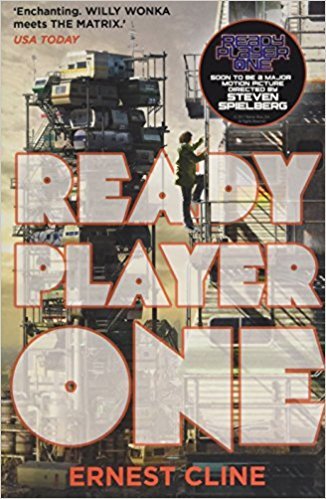 So, READY PLAYER ONE has got everything that ticks all my boxes: a teen hero and his rag-tag bunch of friends; a shadowy evil corporate cabal; dystopian real world; even giant robots!
And there ARE some flashes of brilliance that I really liked: the idea of The Stacks (trailers on top of one another), for instance, is inspired. Wade himself is appealing – he is not your ‘typical’ white saviour hero, the others in his team COULD save the day too (and the only reason they don’t, is down to blind luck, rather than his superiority to them). This is really refreshing, as is his love for Art3mis and the fact she rejects HIM in favour of the contest and her ideals.
Yet there were other elements that really impaired my enjoyment of this book. The constant geeky references are massively overdone, plus there just aren’t enough visuals for me, in what should be an awesomely visual piece! Instead, we have characters playing video games … inside a video game. Seriously? If they’re going to BE the characters, why are they putting quarters on top of arcade machines rather than kicking Pac Man’s ass FOR REAL! Also, all the quoting of movies and repetition – ‘get the hell out of Dodge’ being just one – did my swede in … and I LOVE movies!
There were also many random set ups and pay offs that felt too contrived. The aforementioned game of Pac-Man being just one; another being that Ogden Morrow was watching them all along and just appears at the end to help them out. These were NOT Deus Ex Machinas, but they were too ‘easy’ plot-wise.
Lastly, the Japanese characters could have been awesome, but instead are stereotypes, talking about ‘honour’ and adding ‘-san’ to everything every 5 seconds.
So I both liked AND disliked this book in equal measure, a first for me. But I felt if anyone could ‘fix’ these things that impaired my enjoyment, blockbuster maestro Steven Spielberg could!
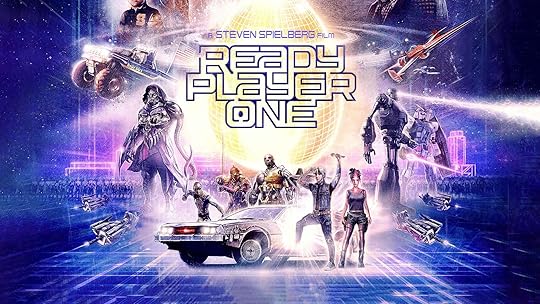
The Film
So, first off – as I suspected, the visuals of the movie were literally two million times better than the book. The first challenge was not a video game challenge with a demon, but a Fast And Furious-type race that involved massive pile-ups, a T-Rex and even King Kong. That’s MUCH more like it! The Stacks were also brilliantly brought to life, plus The Oasis looked fabulous from the offset.
There’s a variety of omissions and changes that speed things up. Ludus is there (blink and you’ll miss it, though!), plus Parzival does not appear to be stranded there. That said, at three hours twenty the movie is still FAR too long and around the second act, I did start to get a little bored. I think overall the plot could have been more cohesive and generally tighter, especially regarding Halliday’s 80s obsession which was not adequately explained in my opinion.
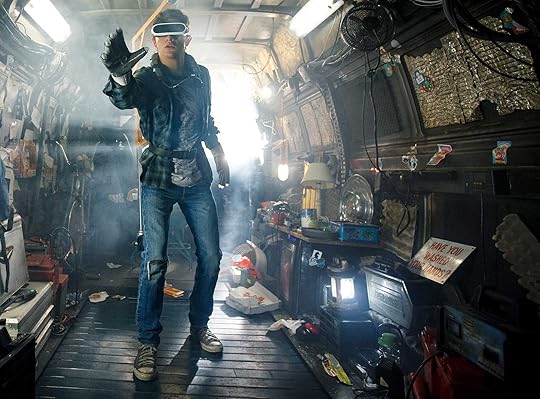
But there were other smaller changes that really worked. I-Rok, a throwaway character in the book, becomes one of the main antagonists in the film and I liked this change. Also in the book, Wade thinks Sorrento is bluffing and hears the Stacks blow up from afar. In the movie, he runs towards to The Stacks, trying to call his aunt on the phone. This is much more dramatic and heart-breaking as he witnesses his home go up in flames.
I also enjoyed the pop culture references a lot more in the movie. The T Rex is clearly the one from JURASSIC PARK, which made me laugh out loud. Chucky turns up, so does the Xenomorph, Batman, The Iron Giant and there’s even a TERMINATOR 2 reference in there as well. In addition, there are lots of recognisable gamer references as well that even non-gamers like me got: I spotted the HALO guys, as well one of the characters from Mortal Kombat.
There are also some massive changes to the key clues and the movie they fall into, in this case The Shining. These bits were actually very scary and my six year old was frightened. Personally I think 12A is too young a certificate for this part of the movie, or there should have been some extra info about this. That said, I loved this part of the film, especially the zombie dance.
The best part for me was the changes to the High 5. In the book, Wade doesn’t meet them all until nearly the end (and meets Art3mis on the very last page). Aech is revealed as female much sooner and though they don’t say explicitly she is gay, it is hinted when she decides to kiss the lady in room 237 in The Overlook hotel. Daito and Sho are MUCH better in the movie, especially Sho who turns out to be an eleven year old child. There are still some stereotypical elements – like Daito bowing or meditating before taking up his part in the end battle – but Sho’s wise-cracking provides some relief from this.
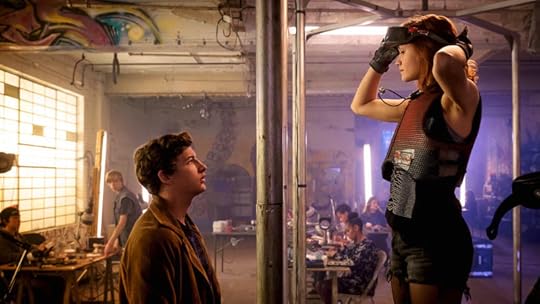
In the movie, Art3mis has Wade kidnapped in the real world and taken to her hideout. She’s a much more rounded character in the movie and for me, the ‘real’ protagonist. There’s even an extended chunk when she goes off by herself inside The Oasis to help bring IOI down from the ‘inside’. This borrows from the book (Wade essentially does this) but brings forth a much more interesting plot element, as Wade and the others help her via remote comms. It also adds a cool ticking clock element as Sorrento realises she’s inside the war room and starts unmasking Sixers to try and find her.
Lastly, the ‘easy’ bits I found most annoying about the book are set up MUCH better. There is a curator inside The Oasis who is – you guessed it – Ogden Morrow. What’s more, he gives the Pac Mac quarter that is Parzival’s extra life to him, which works much better.
Verdict
This is an easy one for me. The movie of READY PLAYER ONE is the winner, hands down. It’s more visual, has better female characters and much more relevant pop culture references while still staying relatively true to the book. Game over!!
March 27, 2018
Book Versus Film: WILD Rocks, But Which Is Better?
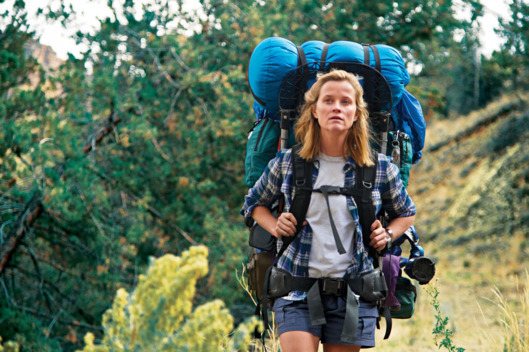
The Book
I LOVE this book. I have posted before that I love memoir anyway, so I should have known the chances were high I would enjoy this tale of suffering and stamina … But I had no idea how much I would recognise here!
That said, a memoir about hiking did not feature high on my ‘To Be Read’ list. That said, one of my ways of reducing my TBR is by getting my girls to pick out books at random and my six year old pulled this one out recently. She likes shoes (I think she was a dog in a former life) and said she picked it out because of the boot on the front.
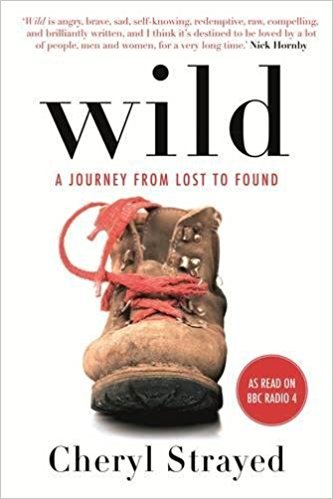 I don’t mind admitting my heart sank a bit. After all, I have never hiked the Pacific Crest Trail; I hate camping; I hate the Great Outdoors generally. Whilst I love to see beautiful scenery, I’m the lazy type who likes to see it zip by in the car. Plus I live in Devon, so I’m spoiled: I can see lovely scenery every day of the week, I don’t need to imagine it. But I am a big Reese Witherspoon fan, so I figured I could watch the movie as well as do one of these Book Versus Film articles, if nothing else.
I was hooked from the very first page. Actually, scratch that – the first image. Strayed begins with the loss of one of her boots down the mountain, so she ends up barefoot, with a monster of a pack, miles from anywhere with only one shoe. It’s a genius move, because it pulls you right in from the offset.
So, I found myself devouring her tales of snow and coyotes; rattlesnakes and rain; of meeting men on the trail – most friendly, one not-so-friendly – plus numerous parties and gatherings at campgrounds. I had no idea hiking could be such fun (as well as difficult as hell!).
Wild also answered various questions I didn’t know I had, like ‘How do you get money and supplies sent to you when you’re ‘off grid’?” (Answer: via pre-packed boxes you send yourself, to trading posts and agreed rest stops). Also, “How do people keep track of where you are and know when to raise the alarm if you are lost or hurt?” (Answer: via the trail register and agreed check-ins). Interesting!
But Wild is so much more than Cheryl’s physical journey. I was particularly impressed by how she held NOTHING back, for fear of judgement. She paints a picture of a young woman on a mission to meltdown via drugs, sex and self harm, because of the loss of her beloved mother. Her spiritual journey and her honesty in confronting various things about herself during the trail, as well as in the years afterwards, makes for a stunning, insightful read. As far as I’m concerned, everyone should read this!
The Movie
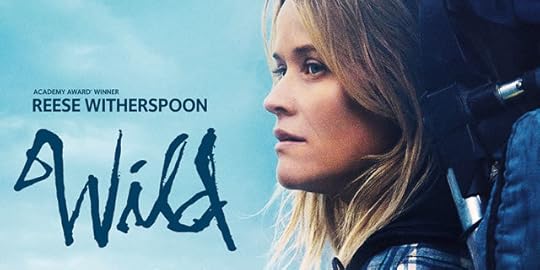
I’m a huge Reese Witherspoon fan anyway, but she is the perfect choice to play the part of Cheryl. She not only has the blonde hair and blue eyes of ‘The Queen of PCT’, she has the attitude: sweary and tough, but also vulnerable.
The movie starts just like the book, with Cheryl flinging her remaining boot into the canyon and screaming. This was such a powerful image to begin the book, I’m glad they transposed it to the film version as well. As with any memoir, there are some hard decisions on what to include and what to leave out. I was interested to see most of the secondary characters of people Cheryl met on the PCT in the book are pruned RIGHT BACK in the film, to emphasise her loner status. This was a wise move, which also meant anyone who does breeze into her life brings solutions or problems with them.
In addition, Cheryl’s sister is missing here, as is her step-father. This is unsurprising, given how little they drive the action in the book. Cheryl’s natural father is nearly missing too, referred to as an ‘abusive asshole’ by both Cheryl and her mother, Bobbi; there’s also one sequence that hints at the chaos Cheryl grew up in during her formative years. The inclusion of her brother Leif was well-handled, reminding us he was as lost as she was. We don’t know what will happen to him and Cheryl’s phone call to him from the payphone in the movie works especially well.
In an age in which female leads are often supposed to be ‘good’, I had assumed they would airbrush over the more contentious elements of Cheryl’s character in the movie. Instead, from the beginning, there are graphic depictions of drug-taking, sex and Cheryl’s general bad behaviour, rejecting both her long-suffering husband and best friend, as well as the intervention of counsellors. This created the effective set up for Cheryl to take the time out to ‘walk herself back to the woman her mother thought she was’ that worked so well in the book. Witherspoon got an Oscar nod for her acting here and I’m not surprised. She was completely believable and I was able to empathise with Strayed just like I had in book.
Unlike the book, the movie has a much more ‘hyper-real’ feel. Whilst in the book Cheryl reflects and reminisces from the safety of years later, the movie gives us more of an impression of the inside of her troubled mind whilst she is ON the trail. There are moments, such as when she meets Kyle and his grandmother, that suggest they are not ‘really’ there (in the book, this seems to have been a literal event, with Cheryl spending more than a few moments with them). In the movie, this seems to suggest a moment of break-through for Cheryl in her bereavement, as does the appearance of the fox in the snow, who follows her to the Bridge of the Gods (signposted heavily as the spirit of Cheryl’s mother, Bobbi).
Wild also reorders various events in the book. This is an unsurprising, since there needs to be a sense of escalation in movies that books don’t necessarily have to have (especially memoirs). What IS surprising is how they play Bobbi’s terminal cancer and subsequent death so much ‘later’ than in the book, but then thinking about it, we needed to invest in not only Cheryl, but Bobbi too. Laura Dern does fantastically well here and her tragic lament ‘I was never really me’ when she is faced with mortality is truly heart-breaking. Paul, played by Thomas Sadoski, is also brilliant – exactly as I envisaged Paul in the book.
VERDICT
Wild is a sumptuous, well-done and faithful adaptation of the book, without being ‘try-hard’ or lacking in any way. I would venture you can enjoy it without reading the book, but the attention to detail here means you’ll enjoy it even more when you have.
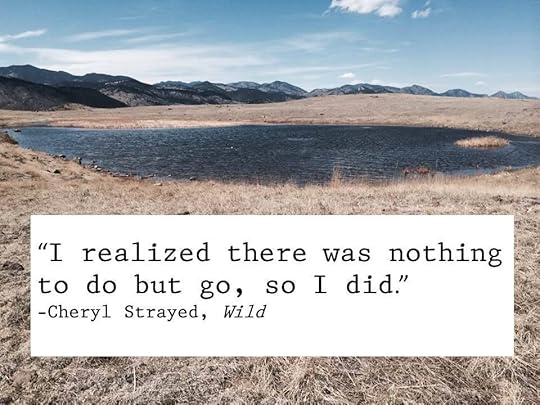
Here’s some great quotes from Cheryl Strayed to tackle life. Enjoy!
March 23, 2018
CRIMINALLY GOOD: interview with author Joel Hames
 I’m Joel Hames, I’m a Londoner exiled to the rural north west of England, and I’ve written three novels.
Bankers Town, my debut, was published in 2014. It’s a tragi-comic tale of the world of the City up to and beyond the 2008 crash.
That was followed a year later by The Art of Staying Dead, a conspiracy/action thriller whose central character, Sam Williams, is a human rights lawyer floundering at the dead end of his career. Sam sees an opportunity to make some headlines with a visit to a high security prison, but the bloody riot he witnesses there is just the start of a journey that takes him to places he wouldn’t have dreamed of in his worst nightmare.
And of course there’s Dead North, published yesterday, which reboots that same character, Sam Williams – it’s the first of a new trilogy starring him, with no need to have read the earlier novel. Dead North takes Sam from his native London to Manchester, and then to the hills and moors of Bowland, helping an old friend try to unearth the mystery behind the cold-blooded murder of two police officers on a remote country lane. It’s part police procedural, part exploration of motive, of what makes normal people do the apparently abnormal, of what makes us tick.
I’ve also published stories in anthologies, as well as three novellas, Caged, Victims (a Sam Williams prequel, available for free through my website HERE and Brexecution, a black comic thriller written and published within eight days of the 2016 Brexit referendum, and imagining dark conspiracy behind every bland soundbite.
I’m on Facebook and on Twitter at @joel_hames.
2) Why do you write crime fiction?
Because writing about it’s safer than committing it!
But seriously – because I love the “what-if”s that it presents you with. I’ve always been someone who looked for the loophole, the trick, the scam – not that I ever wanted to do them, you understand, but rather out of intellectual curiosity. In my days in the City I used to run billion dollar deals and it was impossible not to wonder what would happen if this went astray or that never quite made it where it was supposed to. Crime fiction gives me the opportunity to explore things from both ends.
On the one hand, I can take a situation that exists in real, everyday life, and conjure up an event to snatch that ordinariness away in an instant. On the other, I can imagine unusual circumstances – the kind of daydream we all have (in the case of The Art of Staying Dead it was “just say you saw a man escaping from a prison, informed the authorities, and they insisted you were mistaken”). And then I can try to get them to meet in the middle.
There are other genres I’d write in, and am keen to explore, but for the moment, crime gives me the human element, the exploration of motive and the interaction of memory and desire, as well as the joy of flexing my writing muscles and some wonderful opportunities for plot development.
3) What informs your crime writing?
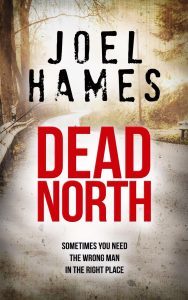 Initially, with Bankers Town, it was all about the world I knew, the world of finance, and the possibilities, where unimaginably vast sums are moving around, of shaving something off those sums without anyone noticing. After I’d written that book and moved onto the next, it occurred to me that the common theme was something of an ‘everyman’ one – a normal person, someone you’d see on the street and consider perfectly run-of-the-mill, your brother, your wife, yourself – thrust into abnormal situations. On that basis, each situation is unique, and whilst I research everything I need to in painstaking detail, prior knowledge isn’t really necessary.
For Dead North I needed to know the geography of East Lancashire well, and study the Police and Criminal Evidence Act, which took me back to my old days as a lawyer, as well as spending hours in conversation with a number of serving police officers; for the book that will follow it I’ve delved back into my memories of renaissance literature; for my work-in-progress I’m learning all I can about blockchain and hi-tech identity theft.
4) What’s your usual writing routine?
Two-three months outlining and researching my plot, until I have a twenty-thirty page breakdown of what happens at every stage of the book, as well as separate tabs outlining character development, themes that need to be explored, and anything else that comes to mind. This involves sitting alone at home or in a bar or at some venue where I’m waiting for my daughters to complete whatever activity they’re doing, and hoping to be struck by inspiration. It’s surprising how often that happens.
Then four-five months writing, which should really take half that but is invariably sidetracked by a fundamental change to a major plot point at least once a week. This involves sitting in the home office I share with my wife and trying not to distract or be distracted while we both get on with it.
Then a couple of months editing, which includes feedback from trusted beta readers and inevitable significant changes to the book. This involves smiling grimly as I delete paragraphs of deathless prose and banging my head repeatedly against a wall as I try to figure out what to replace them with.
5) Which crime book do you wish YOU’D written, and why?
4:50 From Paddington. I love many modern crime classics, Kate Atkinson’s in particular, but Christie’s ability to unwind a complex plot at just the right pace is unrivalled, and for me, this Miss Marple mystery is her crowning achievement.
March 20, 2018
CRIMINALLY GOOD: Sophie Hannah, author
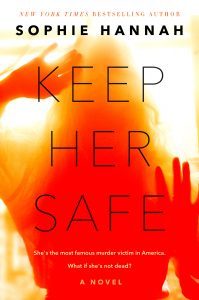
 I’m Sophie Hannah: a crime writer, a poet and (more recently, and to my huge surprise) the co-creator of a murder mystery musical. My latest published book is Did You See Melody?. It’s a contemporary crime novel set in Arizona, though it has a British heroine who has kind of run away from home and ended up in America. (In the US, this same novel is called Keep Her Safe. Take care not to buy it twice – unless you particularly want to, that is.)
My first crime novel, Little Face, was published in 2006 and, in it, I introduced my series detectives, Simon Waterhouse and Charlie Zailer. Simon and Charlie are police officers who, in 2006, embarked upon a complicated relationship that is still not entirely sane or functional twelve years later (though they are happier now than they have been at various points!) My series books are trying to have their cake and eat it, in a way – each one is narrated by a first person heroine who is unique to that book, which gives the novels as much of a standalone feel as a series feel. And I also sometimes write completely standalone crime novels, such as A Game for All the Family (2015) and Did You See Melody? (2017) which comes out in paperback later this year.
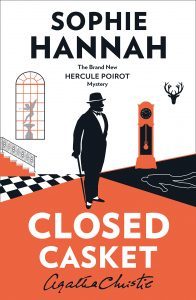 My all-time favourite author is Agatha Christie, so I was hugely honoured when her family and her publishers, HarperCollins, asked me to write a continuation novel starring Hercule Poirot. The Monogram Murders, my first Poirot novel, was an international bestseller, and so was its successor, Closed Casket, which came out two years later. My Poirot novels are published in 36 languages and 51 territories. I’ve just finished writing the third one, which will be published in August and is called The Mystery of Three Quarters.
Sometimes I write things that aren’t crime. I’ve written a supernatural novel called The Orphan Choir, which was published by Hammer in the UK and Picador in the US. My latest poetry book is Marrying the Ugly Millionaire: New and Collected Poems.
I’m currently working on not one but two secret (for the time being) projects, and a new contemporary standalone crime novel, Haven’t They Grown – details of which can be found on the ‘About’ page of my website.
My first co-written musical (mentioned above) is called The Mystery of Mr. E. Its next two stagings are going to be at the Noirwich Crime Festival in Norwich on Saturday 15 September, and at the Cambridge Literary Festival on Saturday 24 and Sunday 25 November. See the events page of my website for further details.
You can sign up to receive all my literary news and gossip here, at the bottom of the home page of my website. I’m on Twitter here as @sophiehannahCB1 and on Instagram here as @sophiehannahwriter.
2) Why do you write crime fiction?
 I’ve been a mystery addict ever since I read Enid Blyton’s Secret Seven series as a child, closely followed by her Five Find-Outers books. Once I’d got through them, it was a fairly natural progression to Agatha Christie, and then Ruth Rendell. For me, crime fiction is all about the mystery – that has to be the driving force. I think crime fiction is the best genre to read because it’s so close to real life, which is completely driven by the need to find out things we don’t know: who to trust, who’s telling the truth, etc. I love surprising plot twists which expand the imagination and which demonstrate that people are capable of strangenesses we might never guess at. There’s that big battle between good and evil – but in the best crime fiction, it’s not between good guys and bad guys; it’s a battle that goes on within individual people.
Above all, I’m interested in people’s psychology, and in psychological harm which can be more damaging than physical harm. The people we’re close to, the people who are embedded in our lives, can be the most dangerous people we meet. It’s hard to convince those around us that Auntie Maureen is a greater threat than a knife-wielding stranger – but often it’s Auntie Maureen who is going to do you the most lasting harm.
3) What informs your crime writing?
There’s always a lot of me in my fiction, and I often begin with things that have actually happened to me – although I add many details to make the scenarios fictional and more exciting. A few years ago, I went to a hotel in Manchester, England, and arrived very late. I was exhausted, and so must the receptionist have been, because she sent me to the wrong room – one that was already occupied! I let myself in and was greeted by a naked shaven-headed man, who was not thrilled to have been woken up and barged in on by a frizzy-haired, bespectacled crime writer! Luckily, I survived the experience. Unlike the heroine of Did You See Melody?, I did not end up convinced I’d just seen a girl who was officially dead but seemed to be very much alive. That’s a good example of how I take something from real life and then add to it to make it into a better and more thriller-like story.
4) What’s your usual writing routine?
 The first step is to notice a looming deadline and panic horribly, losing sleep and toying with the idea of faking my own death to avoid that deadline. The second step is to work flat out, because I have no choice – staying up till 3 am most nights. When I’m writing a first draft, my usual writing hours are 1 pm until 5 or 6 pm, and then 11 pm until 3 am if necessary. And, annoyingly, it usually is necessary. The third step is to collapse in a heap of exhaustion once the book is finally – somehow, miraculously – finished. That’s how I write my first drafts, but I should add that this is preceded by a lengthy planning phase which is much more sane and reasonable. Planning is my favourite part of writing, and I can’t imagine writing without planning: you wouldn’t build a house without a solid set of architectural drawings, after all. I’ve written here about why and how I plan my novels.
5) Which crime book do you wish YOU’D written, and why?
Right now, the book I most wish I’d written is the next one I have to hand in – because I’m already panicking about the deadline. Even the word ‘deadline’ makes me feel a bit queasy. But seriously … I don’t think it’s right to wish you’d written someone else’s book. What they’ve written is their own work, so coveting it is a kind of fantasy-theft.
However … there are so many books I hugely admire. I’m currently in major awe of Julia Heaberlin’s latest novel, Paper Ghosts. It hasn’t been published yet, but I’ve read the proofs and I think it is intensely gripping and beautifully written.
March 16, 2018
BEST OF 3 – Kidlit Faves From Alun Davies, Author
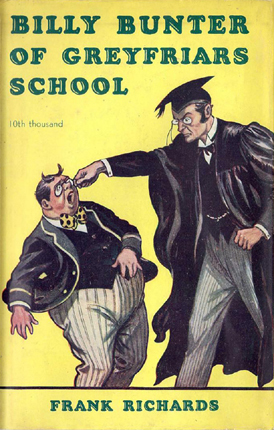 1) The Billy Bunter series by Charles Hamilton
The first book, indeed set of books, I remember reading at the Library in Ebbw Vale was The Billy Bunter series. Every Saturday morning I sat near the window overlooking the High Street reading Chapter after Chapter. It was the first time I ever recall laughing out loud as I became thoroughly immersed in the world of Greyfriars School, The Famous Five, Mr Quelch and The Three Fishers.
I think it was the language as much as anything.”Yoop” “Yaroooh” “He He He” and so on. It doesn’t sound much now but I was very young and certainly greatly entertained. The Chapters were short and punchy; there could be 36 or so per book and I was drawn into the world that had been created.
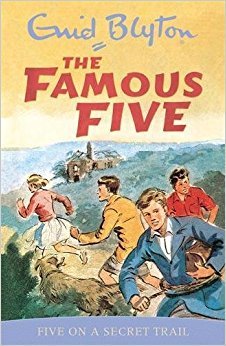 2) The Famous Five series by Enid Blyton
I loved the loyalty and togetherness of The Famous Five ( Harry Wharton and Co.), the shadier characters like Vernon-Smith, their relationships with older boys like Horace Coker and the rivalry with St Jim’s manifested on the cricket field. Of course looming large at every turn was Billy himself. His only purpose in life seemed to be in gathering food together for his immediate disposal but I always felt he was a more interesting and sympathetic person, if given the chance to show it.
For years I thought the author was Frank Richards and only much later discovered his real name as Charles Hamilton. I see that he may have written as many as a thousand full-length novels with his work appearing in Fleetway House magazines called The Gem and The Magnet. I have a big collection of these stories on my shelves as I write.
3) The Just William series by Richmal Compton
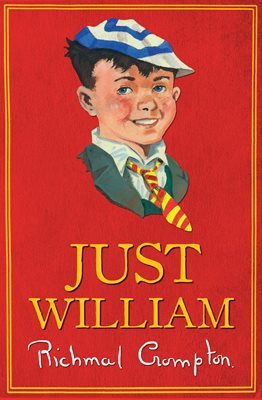 No-one ever read a book to me at home so having found the sort of thing I liked you will see a pattern developing with my next series of books – Just William. The main character, Master William Brown, together with Ginger, Henry and Douglas, formed The Outlaws; various escapades ensued. William’s sheer personality and enthusiasm held everything together. I won’t go into more detail in this short piece , suffice to say – and for me to notice in looking back over the years– that my formative first reading was of a certain kind of story.
And some extras!
 Growing up (and developing slowly), I came across many more influences in literature, notably Wind In The Willows, Treasure Island, Peter Rabbit and, although it may seem a little out of place here, David Copperfield (the picture of Dora holding pencils for David as he was writing has stayed with me ever since). Also, the unconditional love from his mother even in some very difficult circumstances, was described so powerfully that it brought a tear to my eye. It was a far cry from The Remove at Greyfriars.
I don’t suppose there is anything remarkable in the books I have named, they are likely to serve as favourites to many people. Yet no matter. The impressions gained in childhood can easily become the food of maturity and so what better than something that stirs a young imagination into action? Thus it seems to me that a story has no need to provide answers but every requirement to allow the reader to find them. In that regard my own writing exists within a world I imagine but at its’ source are some of the threads now guiding me and which I believe both young and old should notice and consider.
BIO: Originating from the South Wales Valleys, Alun Davies had a varied and extensive career including roles in the Civil Service and international trade and accountancy practices before starting his own business. Now retired he lives in London with his wife and three grown up children. In his spare time he writes music and has written original songs to accompany the release of the animation. LIKE Alun’s Facebook page HERE and follow him on instagram as @barryandthechronicles. His own novel for children, Barry And The Chronicles, can be bought HERE.
March 14, 2018
CRIMINALLY GOOD: interview with author Michael Clark
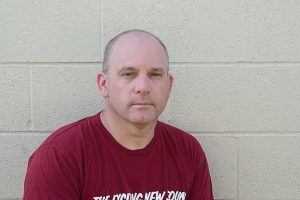 My writing career began in the late nineties, with freelance submissions in the realm of automobile journalism. I grew up drooling over issues of Car & Driver, Road & Track, and most of the specialty products from the likes of Hot Rod. I had this idea that writing about cars could actually get me cars. It does, if you count press cars, though there’s always the catch behind them, as in the positive has to outweigh the negative by a considerable margin, if you want the next press car. I was starting to feel more like a shill than an intrepid journalist, never a good feeling to have. It was a fun way to make tens of dollars, and I did earn a few awards for my writing and photography. The only things that interest me these days in the world of car are the motoring weird, or the cars that nobody wants. With self-driving Teslas killing their owners, and General Motors proudly showing pictures of production cars without steering wheels, I have a feeling that what I loved about the world of car is fast disappearing. What better time to switch careers.
2) Why do you write crime fiction?
Well, I’m not entirely sure that I am a crime fiction writer, not yet anyways. I’m more interested in the story first, murder and gun-play second. I believe that my next few novels will have a crime component, though I’m not saying that this is the only thing I’m interested in exploring on my keyboard. My second novel, which I’ve just completed, has plenty of criminal activity going on, from white-collar to outright murder. There’s also death-by-oops, and a strong paranormal character. Is that crime fiction? Maybe. My ultimate goal is simple: write more, work at soul-sucking day jobs less.
3) What informs your crime writing?
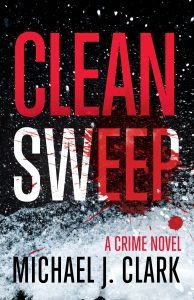 I’m a big fan of anything conspiracy-laden. One of my English papers in high school was on the JFK assassination, with plenty of my own whacked-out ideas on the subject. (This was pre-Oliver Stone JFK.) Clean Sweep digs into some very dark times in Canadian medical history, evolving into one of my favorite recurring thoughts: what if all those creepy shenanigans are still going on? My second novel was inspired by the grainy newsprint picture of a car being towed out of the river in my hometown of Winnipeg. It was an apparent suicide, with the driver handcuffed to the steering wheel. When you think about it, the driver may have had a little help.
4) What’s your routine?
In a word, evolving. I don’t mind the background noise, the interruptions, the time of day, even the inevitable screwing around that I end up indulging in. Of particular note is the loss of what I have decided to call ‘Page Count Anxiety’, or PCA. (There’s probably a drug in development for it as I write, that its not for everyone, blah-blah-blah…) I used to set page count goals. These days, I just put my fingers on the keyboard, pop the clutch, and see what happens. I’ve had some impressive spurts, some days in the mid-twenties. Here’s the scary part: I don’t think I’ve maxed out yet. I hope I’m right about that, and that the quality goes along with it.
5) Which crime book do you wish you had written?
It’s not so much a book. It’s more of a time. The glory days of pulp, the flurry of scripts for the likes of Roger Corman and American International. So much smoke in the air that you’d swear it was the cure for cancer. A time when there was plenty of room in our lives to craft. I guess what I really want is a time machine. And my old flip phone.
March 10, 2018
Brilliant Brighton: On Location in THE OTHER TWIN
World-building is so important in a good novel in my opinion. Because I love reading books that make locations characters in their own right, I wanted to make sure I wrote a book that did the same. I also knew I wanted to write a crime novel with an LGBT theme from the offset in my debut, The Other Twin, so setting it in Brighton was a no-brainer!
So, without further ado, here are the main locations in my book … Enjoy!
1) The Sea Front And Beach
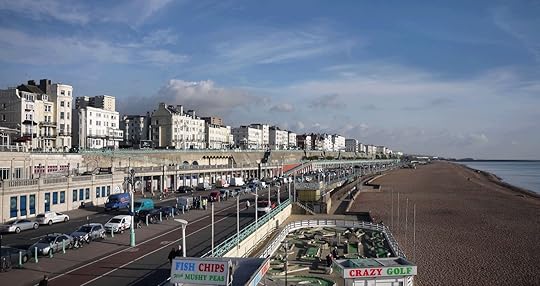
First up, the obvious. Any seaside novel must take in the sea front! The beach is mostly pebbles close to the roadside, though it falls to shale the closer you get to the water. There are beach huts and tall, concrete steps up to the pavement above.
Brighton is wide and open, with very little shelter from headland. This means wind whips up across the sea front and beach very fast, bringing with it chills aplenty! There’s also a marina and many boats, so you can hear the wind whistling through furled up sails and wooden and metal decorations on the boats themselves. When the wind really gets up it is a strange cacophony of sound here.
2) The Piers
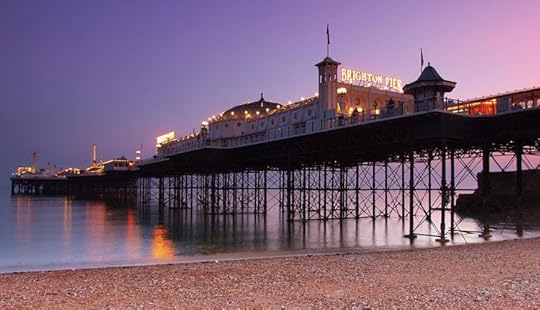
Like many English seaside towns, Brighton is known for having a pier, but unusually this city has two. The Palace Pier is home to many arcades and amusements, as well as kiosks selling thing like drinks, donuts and ice creams to tourists.
In The Other Twin, India and Poppy’s parents Tim and Kirsten run an amusement arcade here on The Palace Pier, largely made up of ‘Penny Falls’ – those machines you throw pennies and two Ps into that create cascades of money if you get lucky.
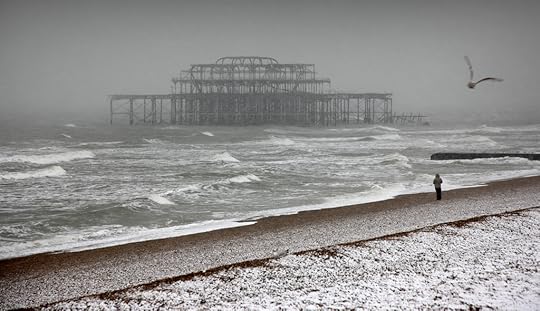
The West Pier, in contrast is nowadays a blackened shell. In 2003, it caught fire for the second time, for a reason that remains largely unexplained. I thought it represented an interesting contrast and subtext – this is Old Brighton, compared to the glitz of new Brighton via The Palace Pier.
3) Season
I set The Other Twin at Christmas, new year and January. This was deliberate. Tragedy at Christmas always seems worse somehow, plus I wanted to paint a picture of what seaside towns are like, ‘out of season’.
Dark and forbidding, seaside towns in winter can be desolate places – not just in feeling, but literally! Everything is closed, even boarded up. Plus, the skies are so grey and overcast, it can be difficult to see where the sky ends and the sea begins. I wanted Poppy to feel alone and oppressed in her search for the truth, with the season reflecting this.
4) The Obelisk Resort
This is the one part of the book that DOESN’T exist! I imagined a big hotel and resort and out near the marina, somewhere just beyond Brighton Conference Centre. This was actually one of the first locations that came to me: all glass and chrome, with a massive black monolith out the front that you can see from the beach.
The reason for this place is because I wanted to bring forth the notion of tensions in the town and within the families there. The Spence Family, who own The Obelisk, have brought much work to Brighton, but they also have their own agenda which certain locals don’t appreciate. I grew up in a seafront town not unlike Brighton (though much much smaller) and certain families can have their fingers in way too many pies shall we say! I wanted to bring this ‘classic’ problem to the novel and contrast it with the newer elements.
5) The Prince Albert
Though not strictly a ‘real’ pub, this is based very heavily on a number of real LGBT bars in the city (and if you’ve been to any, you will know which one this mostly ‘really’ is!). Lots of people who don’t drink in such establishments assume gay bars are all disco and drag queens. Nothing could be further from the truth. Whilst some places do like ‘traditional’ gay fare like lip syncing to Kylie and rainbow flags, the average gay pub is much like the average straight one! Booze, pool and bar snacks figure highly. Fancy that!
I hope you’ve enjoyed going on location to Brighton with me. Do visit this vibrant and diverse city when you can.
This post originally appeared at The Book Trail
March 5, 2018
Wee Girl Reviews: The Dog Ate My Homework
Emmeline, aka ‘Wee Girl (2)’ is 6 years old and a tiny book blogger. She has been enjoying playing in the recent snow A LOT!
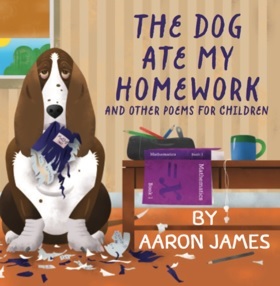
Emmeline is a reluctant reader, so I’m happy to partner with AuthorRight for ‘Wee Girl Reviews’. In this feature on the blog, we will read picture books together, so Emmeline can give her opinion on them. Today’s is The Dog Ate My Homework by Aaron James.
About The Book
The Dog Ate My Homework by Aaron James is a collection of short poems that will capture your imagination. Filled with fun stories that make you think, laugh and tell your friends. Do you remember your first day at school? Or when you tried to convince your teacher you actually done your homework? Or the excitement you felt when you bought your new pair of trainers? In The Dog Ate My Homework you will get a chance to read all these stories and many more! BUY IT HERE.
Emmeline’s Review
This time, Emmeline wanted to do a video review. Here is what she thought of The Dog Ate My Homework by Aaron James. Enjoy!
http://www.lucyvhayauthor.com/wp-content/uploads/2018/03/video-1519996890.mp4
My Review
I really like the idea of poems for kids. I loved Roald Dahl’s Revolting Rhymes as a child myself, plus I used to be an English teacher, so welcome any opportunity to get kids interested in poetry. The scenarios James picks, such as homework, new shoes and first day of school, were particularly relevant to children and Emmeline told me she liked these poems the best.
I thought some of the metering and rhymes was a little ‘off’, but this not bother Emmeline one bit. I thought the illustrations and colours picked were really good. I also REALLY liked the fact the narrator child going to school was black. Readers need and want more diverse characters in their books, plus children growing up today are living in an increasingly diverse society. In fact, whilst we were reading, Emmeline said the boy in the picture looked like a friend of hers from school. Result!
In short, I enjoyed this book and so did Emmeline. She was able to read from it, sounding out words with relative ease. We will definitely look out for more kids’ poetry books from Aaron James.
 OUR VERDICT:
The Dog Ate My Homework is a cute and eye-catching book, carrying relevant scenarios and messages in the poems for kids. Recommended.
About The Author
Born and raised in Tottenham, North London and today living in Bromley, South London with his wife, Aaron James works as a poet and spoken word artist. The Dog Ate My Homework is his first children’s poetry book.
Lucy V. Hay's Blog

- Lucy V. Hay's profile
- 174 followers

