
Lucy V. Hay's Blog, page 16
January 13, 2018
BOOK VERSUS FILM: The Snowman
Audiences of a certain age, with little knowledge of Nordic Noir, will be forgiven for expecting this film to be from the book by Raymond Briggs. Even sounding less Walking in the Air and more Do You Want to Build a Snowman? won’t really help the recognition factor. It’s time for another Book V Film fight. Snowballs at the ready…
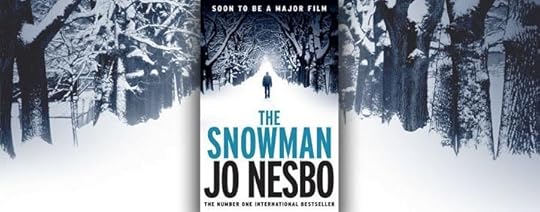
First Flurries
When professional footballers take early retirement, many go into coaching. Jo Nesbø went into the military, and then formed a band. When successful musicians are asked for a memoir, many write a story of sex, drugs and rock ‘n’ roll. Jo Nesbø wrote The Bat, creating Norwegian detective Harry Hole. Football and music’s loss is definitely literature’s gain.
The Snowman is the seventh Harry Hole novel, but his first big screen outing. Both book and film are a good jumping-on point for those new to Harry. So, what’s it about?
Women have been disappearing for years throughout Norway, when the first snows of winter fall, but the police haven’t seen a pattern. Then Oslo policeman Harry Hole receives a letter warning him this will happen again – just as it happens again. As more women go missing Harry realises he’s up against Norway’s first serial killer; a killer who leaves a calling-card outside each victim’s house: a snowman…
The Book
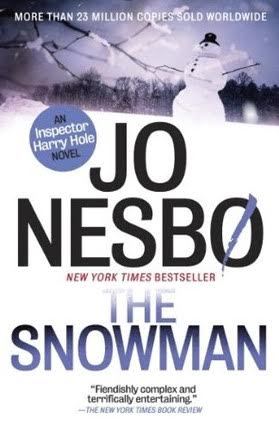 First published in 2007 (and translated into English in 2010) the book ploughs straight into one of its main themes: infidelity. A 1980-set opening chapter has a married woman enjoy one last fling with her lover whilst her child waits in the car. Then we’re in 2004, where the majority of the book is set, and it’s not long before that first disappearance.
At 550 pages this is not a short book, but it is one steeped in authenticity, rich in detail, and told at a frantic pace. I flew through it. Nesbø likes to play games with his readers – at one location, where vital evidence is discovered, there hangs a print of a smoking gun – creating the impression of an author having fun. It’s a feeling that rubs off on us too.
Harry at first glance is the typical alcoholic detective who doesn’t play well with others, let alone by the rules, but there’s more beneath the surface. His relationship with former love Rakel is both complex and essential to the plot rather than a distraction, and he’s a father figure to her teenage son, Oleg. He has his demons, but also his angels too.
Of his team the stand-out is newcomer Katrine Bratt, recently transferred from Bergen, which we learn through several 1992 flashbacks is where the Snowman first kidnapped women. There’s a simmering tension between her and Harry, but nothing is quite what it seems with Katrine. She’s as smart as her new boss, but has her own agenda for catching the killer. Happily she’ll return in later novels; Katrine is too good a character to lose after one appearance.
The suspects allow us to explore another important theme: how well do we really know somebody? For instance, one man, seemingly an odious creep in life, is revealed in death to be far more altruistic. This question of identity, coupled with the issue of infidelity, is the link between the Snowman’s victims – families where a child is raised by an unsuspecting non-biological father – but it’s not subtle enough for us to only discover it when the police do. Which leads to the book’s one failing: too much dramatic irony.
And unfortunately the motive isn’t the only example. The midpoint of any story is crucial, often revealing an important change in character or plot. But I didn’t expect this book’s midpoint to accidentally reveal the killer’s identity. It’s a fumbled sleight of hand that means the reader knows more than Harry and co for the second half of the book – robbing us of the thrill an unexpected final-act denouement would contain.
The Film
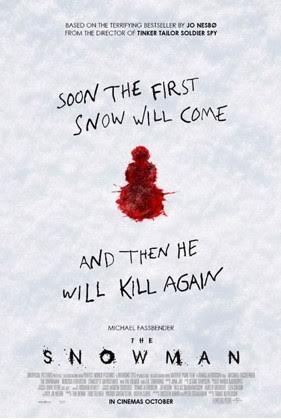 The good news is there’s no such reveal halfway through the film. It looks beautifully chilly as well, with cinematographer Dion Beebe ensuring Norway’s harsh winter is breathtaking on the big screen. Also, director Tomas Alfredson knows a thing or two about intrigue and frozen snowy locations; with credits including Tinker Tailor Soldier Spy and Let the Right One In, he’s a great choice. Which makes the decision to only hire him at the last minute all the more puzzling.
Western audiences generally prefer visiting snowflake-covered crime-scenes on the television. There have been some honourable big-screen attempts, but when even David Fincher’s The Girl with the Dragon Tattoo failed to find an audience (let alone a sequel) it would have made more sense to get an experienced hand like Alfredson on board much sooner – or delay filming when first choice Martin Scorsese relocated to a producer’s chair – rather than rush this before the cameras. But that’s precisely what they did.
At least in casting Michael Fassbender we get the perfect actor for Harry Hole. His vulnerability and enigmatic qualities do help sell a character who’s more like the cliché the book works so hard to avoid. But if he is underwritten here, then Katrine Bratt is positively lost in translation.
It’s a credit to Rebecca Ferguson that Katrine still retains her strength and purpose, because so much of what makes her memorable doesn’t survive the crossing from page to screen. It’s possible to actually trace most key changes between book and film by following her character arc. So that’s where we’ll start the examination…
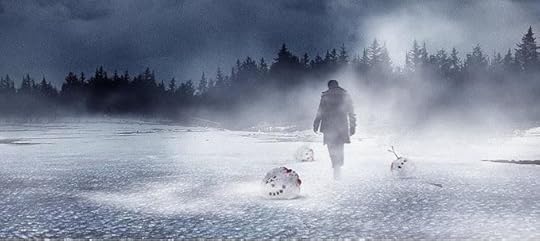
Different types of snow
The Snowman letter
(Book) The MacGuffin that piques Harry’s interest, supposedly written by the Snowman, is actually from Katrine. She knows long before anyone else that the cold-case disappearances are linked, and also the best person to solve this is the one man who’s received FBI training in serial killers: Harry.
(Film) The Snowman sends the letters. It’s unclear why, except that in the film he’s more reckless when drawing people’s attention – even lobbing snowballs at potential victims!
The cold cases
(Book) The 1992 investigating officer, Gert Rafto, was already in disgrace for stealing valuables from other cases, so when he vanished during his Snowman investigations people assumed he was the killer. Katrine is Rafto’s daughter, so her involvement is twofold: she wants to find her missing father, and also clear his name. When she and Harry finally track down Rafto, in the book’s stand-out scene, he’s found to be another victim of the Snowman.
(Film) The family connection is there but we already know Rafto is dead, and it’s assumed (incorrectly) that he killed himself.
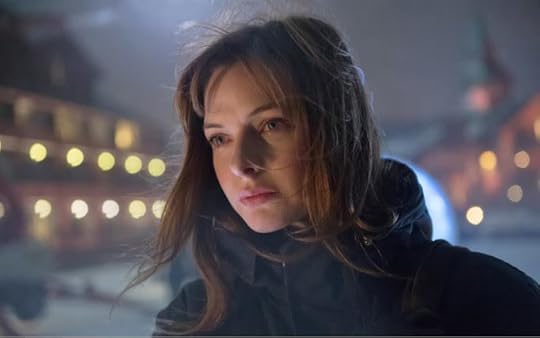
Katrine targets a suspect
(Book) Convinced the Snowman is wealthy entrepreneur Arve Støp, Katrine blags an invite into his house and attempts to extract a confession and exact revenge. She’s only stopped by Harry’s arrival, and flees.
(Film) This time she blags her way into Arve Støp’s hotel suite, but somehow the real Snowman knows she is there, incapacitates her, and cuts off her finger – to unlock a portable fingerprint-registered recorder which is already in the room so can easily be carried to her prone body. And then the killer leaves her in a car for Harry to find – amazingly still alive! – and Katrine plays no further part in the film.
Katrine becomes a suspect
(Book) Having worked out Katrine sent the letter, and following her botched attempt to kill Arve Støp, the police think she is the Snowman. Harry tracks her down, but though she’s arrested he is not convinced she is their killer. Katrine is eventually released, to return to her old police job.
(Film) None of this appears.
The investigation
(Book) Let’s give poor Katrine a break now, and turn our eyes to the investigation. The most interesting case from a storytelling POV is the second present-day victim, poultry farmer Sylvia Ottersen. We experience her pursuit, capture and confrontation in a forest, and also see what the Snowman does with at least part of her body, to taunt the police.
(Film) It’s understandable the film cannot fit in all the missing persons cases; it would have been repetitive to try. We do get Sylvia’s case, although now with an intriguing twist: the Snowman reports her as missing before he abducts her. The trailer makes much of this new ploy, suggesting it will feature heavily in the film, but it only appears once. A less interesting twist is that Sylvia now doesn’t have any kids – but she has had an abortion, to ensure her husband wouldn’t discover she was carrying another man’s child.
And speaking of trailers, they do tease scenes from the book’s version of Sylvia’s story – her fleeing, and being caught by a trap – but they don’t make the final cut.
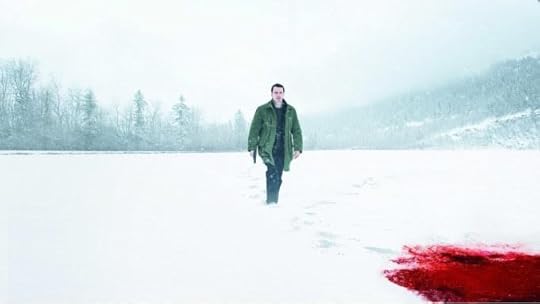
The ending
(Book) The final abductee is trussed up in a trap worthy of a Saw movie, for Harry to find and solve. Once done, the showdown proper happens at a prominent Oslo location cleverly seeded into the book earlier. Though caught, our antagonist lives to fight another day – so the potential for a rematch, or to serve as a Hannibal Lecter-type character in the future, is an option.
(Film) The change here, of location at least, is one I think the film gets right. We’re now back to the house where the opening scene takes place, adding a nice symmetry to events. The final trap and rescue are not as convoluted; however, the showdown itself is rushed and anticlimactic. There’s also no chance of a second bout.
The Snowman’s motivation
(Book) This stems from the betrayal felt upon discovering his ‘father’ was no such thing, due to his mother having an affair. And he murders his mother as soon as he learns this.
(Film) Possibly the biggest alteration; this alters the film’s entire story. The paternity issue is crammed into the opening scene, which leads to the unfaithful mum killing herself in front of her child. The killer’s grudge is now apparently against women who didn’t want their children (the mother’s suicide; Sylvia’s abortion) – but just to really crack this very thin ice, Harry tells the Snowman he had it wrong all the time, and his rage really stems from hating his absent father.
Final Snowmelt
 Perhaps the producers felt an uncaring father figure as catalyst was more palatable for audiences. It’s a betrayal of the book though, and muddies the film’s narrative water (the first present day victim clearly does love her child). As for the other changes, Katrine no longer being a suspect isn’t a problem; the way she’s just cast aside in the film is though. And she’s not the only character this happens to either.
No adaptation should treat its source material as a sacred text – for a terrific example of a film making all the right changes, why not check out Lucy V Hay’s Arrival comparison HERE – but they should make sense. Tomas Alfredson has stated that as much as 15 percent of the screenplay didn’t get filmed, and it shows. By the time the end credits roll, this snowman has sadly turned to slush.
To be fair, the film is not the Thanksgiving turkey many critics say it is. It looks stunning, there are some great central performances – Fassbender and Ferguson in particular are ideal casting – and the notion of a killer forewarning the police who his next victim will be would’ve made a terrific USP, if only they had developed it further. Certainly the potential for a big screen franchise is there. But whereas the book barely puts a foot wrong, even despite showing its hand too early, the film stumbles from one slip-up to another.
So it’s no surprise that Jo Nesbø’s novel is the clear winner!
BIO: Nick Jackson is the author of several recently published horror and science fiction short stories. His favourite winter sports include watching snow fall from beside a roaring pub fireplace, and hibernating until spring. He is currently planning a second novel, outlining his first feature script, and writing more short stories. He isn’t building any snowmen.


January 9, 2018
BEST OF 2017: My Memoir Picks
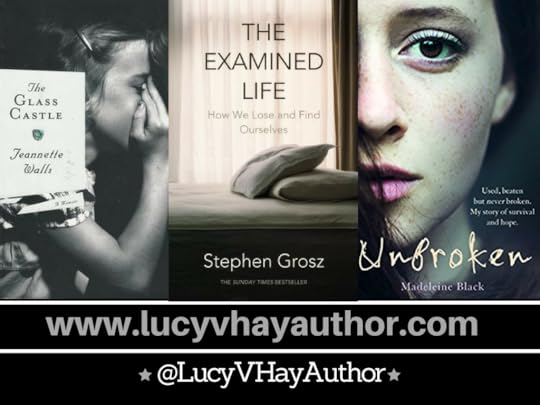
So, I’ve always loved memoir and biography (of NON-celebrities), so I decided to read more in 2017. Here are the choices I picked up last year that I can recommend most highly:
1) The Glass Castle by Jeanette Walls
I’d heard about this book often since its publication, but never got round to reading it. When I discovered this was going to become a movie, I thought I’d take a look. Wow! This was such a compelling, entertaining (and ultimately tragic) tale, it’s rocketed straight into my Top 10 Favourite Ever Books, along with Maya Angelou. Read my Goodreads review, HERE.
2) The Examined Life by Stephen Grosz
I’m really interested in psychology and therapy generally, plus I have been in therapy myself on and off for about a decade now, so The Examined Life was a no-brainer. What I really liked about this book was there were no ‘easy answers’: Grosz presents the cases, plus his musings, with no strong conclusions either way. This was unlike any other psychology book I’d read, plus I liked his thoughts on the fallacy of ‘closure’. I didn’t learn anything new in this book, but that wasn’t the point. It was a lesson in empathy. Great stuff. Read my review on Goodreads, HERE.
3) Unbroken by Madeleine Black
I normally go out of my way to NOT read books about rape or abuse, but something compelled me to pick this one up. I’m so glad I did. It was a hard read and I needed lots of breaks from it, but Madeleine’s honesty and emotional literacy was a real eye-opener. I’m not exaggerating when I say this was a life-changing read for me. Read my review on Goodreads, HERE.
January 5, 2018
BEST OF 2017: My Police Procedural Picks
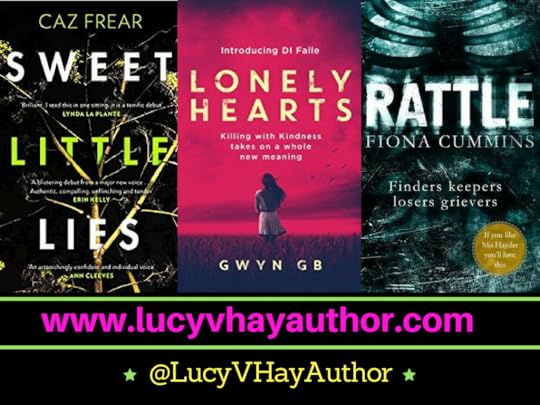
I’m not usually ‘big’ on police procedurals. This is not because I don’t think they’re good, but because they’re frequently series and given I like to read as many different authors as possible, I have a commitment problem!!
But these are all book 1 of new police procedurals, they all had SOMETHING about them I just couldn’t resist. Here’s why …
1) Sweet Little Lies by Caz Frear
It was IMPOSSIBLE not to notice this one in 2017, it seemed to be ‘everywhere’ after it won the prestigious Richard and Judy Search For Bestseller contest. As reading prize-winning novels was part of my 2017 reading reading pledge, I’d already added it to my Goodreads when the author Caz Frear popped up in my own feed, saying she’d read The Other Twin and liked it! It was like fate, so that very day I downloaded this book.
All I can say is … Wow! I LOVED this. The lead protagonist Cat Kinsella is a brilliant take on the character I call ‘Millenial Girl’ and I loved the various references to the nineties and early 00s the author makes to Kinsella’s childhood. I also loved the twist on Kinsella’s own ‘Daddy issues’, especially given the intrigue surrounding the cold case and how Kinsella is, at best compromised and at worst, implicated herself. Definitely one to watch and I will be returning to this series for sure.
2) Lonely Hearts by Gwyn GB
I’ve known Gwyn through my (principally) screenwriters’ platform Bang2write for some time, but had somehow missed she’d taken to writing novels as an indie author! When she asked me to read her novel, I don’t mind admitting I was a little worried. What if I didn’t like it?? Friendships – online and otherwise – have gone South for less. After all, our books are our babies!!!
So I took the coward’s way out and told Gwyn I would if I could get round to it … But then I told one of my girls to pick me a book (which is usually how I pick reads from my TBR) and she picked this one!!! It seemed like fate, so I knuckled down. I needn’t have been concerned. From the cover through to the characters and the impressive plotting, Lonely Hearts is a cracking read. I loved the mystery and intrigue, plus the update on the ‘Lonely Hearts Killer’ idea, using a male victim instead, made it feel fresh and modern.
Best of all though is DI Falle, who is neither what I would call a ‘kickass hottie’ or a perfect, misery-laden ice queen. She feels human and real. So refreshing! This book deserves MANY more readers, so make sure you add it to your TBR pile today.
3) Rattle by Fiona Cummins
This one came HIGHLY recommended by Karen Sullivan of Orenda Books, so I knew it must be good – and I wasn’t disappointed! Rattle is a TERRIFYING read, with so much going for it: the three dimensional characters; the tight plotting; the enigmatic, lean language choices – just fantastic. Most of all however, The Bone Collector is SO plausible and even – dare I say it – empathetic, in a completely psychopathic way!!! As a script editor I read A LOT of psychopaths and this one is one of the freshest and most realistic I’ve seen in years. Definitely worth a read.
January 2, 2018
BEST OF 3: My Orenda Christmas, Year 2
Traditions
Long term readers of this blog know I started a tradition last year … My Orenda Books Christmas. It’s very simple – during the break, I try and read as many books by my favourite publisher as possible! (Now, of course I am biased – Orenda is *my* publisher for The Other Twin, after all – but it’s worth noting I went after Orenda BECAUSE I was such a fan in the first place!).
On the surface, I thought I didn’t do quite as well as last year … I only managed 3 (I did 6 last year) … But then I checked my Goodreads 2017 and realised 2 of them weren’t actually read in 2016! Shock! So in real terms, I’m only down 25% this year, which makes me feel a bit better – especially as I smashed all my reading pledge targets for this year, plus I read and reviewed 10 more books than 2016. For more details on all this, CLICK HERE.
But since Best of 3 reading recommendations is a LONG TERM tradition of the blog, I thought I’d take a look at the 3 Orenda titles I devoured during Christmas break. All got FIVE STARS from me, though for different reasons. Ready? Let’s go …
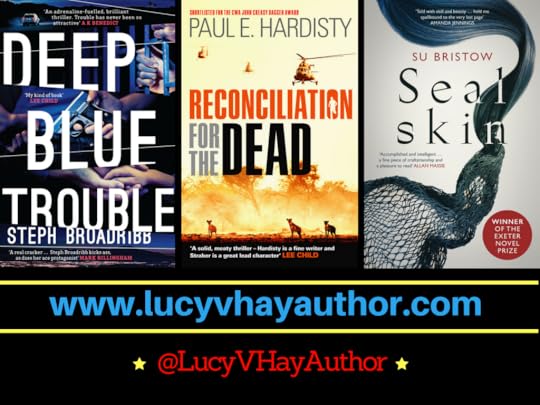
1) Deep Blue Trouble by Steph Broadribb
First on the list, plus it’s my stop today as part of the Deep Blue Trouble blog tour. I really enjoyed Deep Down Dead, but I think this one in the Lori Anderson series is EVEN BETTER. Following the fates of Lori Anderson, a female bounty hunter who is also a single Mom to Dakota, 9, Lori has to get her mentor and lover (and Dakota’s dad) JT out of jail by doing a dodgy job across the Mexico border for equally dodgy FBI agent Alex Monroe. The prose is lean, the characterisation layered, the tension and mystery taut and suspenseful as hell. You gotta read this!!! Check out my review on Goodreads, HERE.
2) Reconciliation For The Dead by Paul Hardisty
I normally don’t read thrillers set in war, the 80s OR Africa – so I knew I would have to gird myself to read Reconciliation For The Dead, which is all three! True to form, this is a BRUTAL story that spares NOTHING … The true horrors of war are laid out, but not in a sensational or nasty way, more matter of fact; it’s really authentic, you can tell Hardisty is an ex-soldier himself. There were times I wanted to stop reading, but I knew I couldn’t: I had to know how the story played out. Hardisty’s prose is literary and brought to mind Terry Hayes’ I Am Pilgrim, especially how Straker is essentially reminiscing what happened in his youth and is now looking back on his own actions (some would say crimes). That sense of ‘looking back’, plus the transcripts of Straker’s testimony in court, bring a sense of pathos to the story which is heart-breaking. Can’t stop thinking about this one. Read my Goodreads review, HERE.
3) Sealskin by Su Bristol
I read A LOT of crime fiction, so I like to read something outside the genre from time to time as ‘a palate cleanser’. Sealskin was the perfect choice: a haunting, lyrical retelling of the Selkie myth, Bristow adds her own take to it that feels truthful and really adds something. Donald’s terrible actions when he meets Mhairi are not glossed over: he must confront his own guilt and learn to deal with it by becoming a better man. And that ending! Bristow really nails it. Read my Goodreads review, HERE.
January 1, 2018
BEST OF 2017: My Domestic Noir Picks
I write domestic noir (aka ‘psychogological thriller) myself, so obviously LOVE to read this subgenre of crime fiction. If you’re new to it, or looking for some 5 star recommendations to start the year off, here’s my latest ‘Best of 3’:
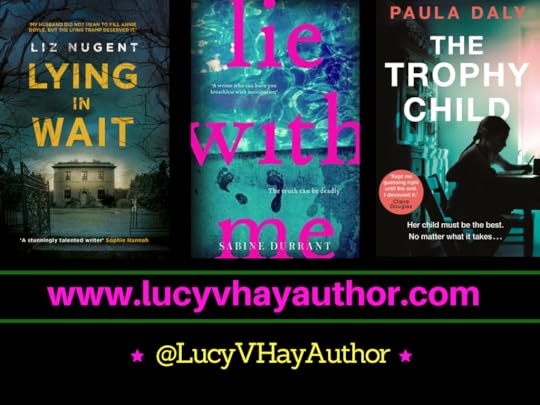
1) Lying In Wait by Liz Nugent
I’d never read any books based on the fact they were on the Richard and Judy Book Club list before, so I decided to check some out at the beginning of the year. Wow! This story of obsession and revenge was just up my alley, plus I loved the period feel. None of the characters were ‘likeable’, all had their own agendas and (screwy) motivations as far as I was concerned, but that was what I LOVED about it. See my review on Goodreads, HERE.
2) Lie With Me Sabine Durrant
A second Richard and Judy Book Club pick for me – and again, I totally loved it. This subgenre is primarily known for its female protagonists, so I wasn’t sure if I would warm to a male protagonist, especially one who is essentially an anti-hero. I couldn’t have been more wrong! Another one with a brilliant sucker punch ending and a fantastically well-drawn storyworld. Recommended. See my review on Goodreads, HERE.
3) The Trophy Child by Paula Daly
I got a sneak peek at this one before anyone else, because I was lucky enough to be a beta reader for Paula! I was totally thrilled to be asked because I LOVE Paula’s work and this one was no different. I have very strong feelings about so-called ‘helicopter parents’, so again this played right into my interests … and no one does a sting in the tale quite like Paula! I won’t spoil it for you, be sure to seek this one out, STAT! See my review on Goodreads, HERE.
December 30, 2017
My Year In Books – 90 Awesome Reads!
My Reading Pledge 2017
This year, I set a reading pledge for myself. I decided I would read at least 5:
Writers of colour
Classic literary titles (or modern prize-winners, i.e. Pulitzer)
Non fiction titles
Fiction titles that aren’t crime, mystery or thriller (or classics, prize-winners or non-fiction!)
Plus a crime fiction subgenre I’ve never tried before (last year it was Nordic Noir)
I also decided to read more male writers … I only managed a woeful 3 in 2016!!! 
December 14, 2017
BEST OF 3: Allie Cresswell, author
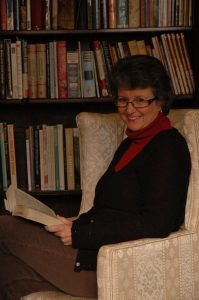 Happy Publication this week to Allie Cresswell, for her novel Tall Chimneys! To celebrate, Allie has decided to share her ‘Best of 3’ Historical Fiction novels with us. Don’t forget to check out Tall Chimneys on Amazon – click HERE for USA and HERE for UK, or on Allie’s book cover below in the body of the post. Over to you, Allie!
1) The French Lieutenant’s Woman by John Fowles
I love this book because it is intellectually and morally challenging. It has big themes: free will; evolution; the warnings and encouragements of history; the strengthening and stifling mores of cultural convention and religion.
It appeals to me as a writer too. Fowles uses the process of novel-writing as a metaphor. How far is an author licenced to direct her created world and the imaginary characters it contains? Or how far should she let them have free will? The wider implication is, how far is God, or society or received morality licenced to interfere and direct the world and its inhabitants?
The story is set in 1867, just after Charles Darwin’s Origin of Species had been published, although it is written with the hindsight of the 1960s. The plot is actually not very unusual. A man, a keen palaeontologist and also, interestingly, called Charles, is engaged to one woman but finds himself powerfully attracted to another. What follows is an exploration as forensic as it is humane of the terrible dichotomy between what is expected and what is desired. The outcome Fowles paints is both bleak and brave.
Charles embodies the evolving member of the species which adapts, which chooses (selects) to do things differently, and by doing so forges a new path, new possibilities and therefore ultimately survival for his genus. Charles’ struggle – emotional, intellectual, theological and philosophical – is beautifully mapped by the writer, profound and affecting to read. Likewise the fall-out which shatters his world like a comet hitting pre-historic earth is painful; the self-appointed occupiers of the ‘moral high ground’ are merciless, viewing Charles with horror and doubt as the first Ichthyostega must have been viewed by the fish it left behind in the sea.
For anyone who has been in this situation – as I have – confronted with making a life-changing but ultimately life-saving decision which with appal everyone you know; which you will be told is ‘wrong’ and ‘selfish’ and ‘wicked’, which may well injure people you would rather not hurt, but which every atom in your soul cries out for you to make anyway, this book will not comfort you but it will resonate with great power.
In keeping with his premise, John Fowles allows the reader free will by providing two endings for the novel. A masterstroke!
2) The Pillars of the Earth by Ken Follet
Nothing philosophical about this one – it is just a rip-roaring good read, with all the rape-and-pillage, head-lopping and cassock-lifting you would expect of a medieval historical novel. The story surges along; secrets, lies, forbidden romance, battling barons, down-trodden peasants, the machinations of the church, brutality and beauty, it’s all there in spades. Make a big mug of tea and a pile of buttered toast and dive in.
In the midst of it all a cathedral is designed and built. I love the way that the building becomes a character, as much at the mercy of its times as the other men and women of the tale. It literally soars over the grubby and grisly goings on, connecting earth with heaven, adding perspective and a lofty, awesome beauty to the book. If you were never interested in the architecture of cathedrals before this I guarantee you will be fascinated by them when you have finished.
There is a brilliant authenticity about Follet’s evocation of Medieval England. It is dirty and smelly and basic, the people have grit and resilience, but there is something fine and admirable about even the lowest of them. They have spirit and an enduring quality which stays with you when the saga is done. I like that.
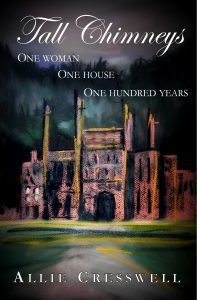 3) Pure by Andrew Miller
I have dithered over this one. Anya Seton’s Katherine was a strong contender but in the end I have gone for Andrew Miller’s Pure.
This is a beautifully written but harrowing account of the clearing of an ancient and over-crowded graveyard situated in the centre of Paris, just at the time when the city was beginning to ferment with revolution. The consequences of the past are horribly present, both in terms of past injustices endured by the people, and the all-pervading smell of the dead which creeps into everything in the vicinity.
The title of the book is wonderfully ironic; grit, grime, ordure, decay, filth and degeneration suffuse this novel. The reek of decomposed bodies permeates the food, bedding and clothing of the characters. It is tangible in the very air of Paris, and gradually seeps out of the pages too. Dirt is indelibly written into the story, almost a character in its own right; not one character at any time makes use of water for washing – the closest approximation to any attempt at personal hygiene is a quick wipe with a handkerchief dampened with rose water. There comes a point when the reader begins to handle the book itself with ginger fingers. There is scarcely a shaft of wholesome light – candlelight is only the gutter of smoky tallow, the graveyard pyres burn dark and thick with ash.
The shining beacon of purity in the novel is the determination of Jean-Baptise (beautifully named, evoking the cleansing balm of healing waters), a young, earnest engineer tasked with clearing the graveyard, to do a thorough, efficient and respectful job of it. Though occasionally led astray by more street-wise Parisians Jean-Baptiste holds firm to his grisly task with admirable and illuminating nobility, finding self-respect and love on the way.
This is a dark and difficult novel, its subject unrelievedly grim, its language of grime all but insupportably vivid. Whether the light of Jean-Baptiste is sufficient, in the end, to keep the dirt and darkness at bay is moot. The book left me feeling in need of a deep, hot bath as though I had literally travelled in time to see and smell and touch Paris in the eighteenth century with my own hands.
Thanks, Allie!
Don’t forget: you can buy Tall Chimneys HERE (USA) or HERE (UK).
December 13, 2017
BOOK VERSUS FILM: Which Murder On The Orient Express is on the Right Track?
The Book
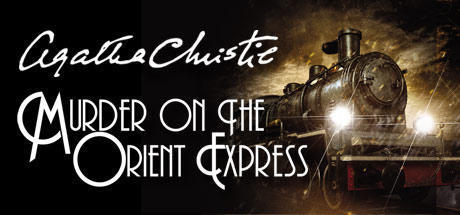
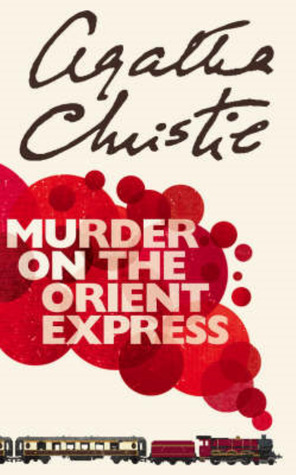
When Murder on the Orient Express was published in 1934, Agatha Christie is already the Queen of Crime. She was a literary phenomenon that has created one of the most enduring sleuths of all times, pedantic, vain Belgian Hercule Poirot, famous for his outsized moustache and his unparalleled use of the little grey cells. In the book, Christie combines her skills at a locked room mystery (in this case a locked train compartment, and a train stuck in the snow) with her love for travelling, and different cultures.
The book has never grown out of fashion since and is one of the most enduring of Christie’s whole canon.
It is also one of her most unusual works. At its heart is not the search for truth and justice alone, it also deals with miscarriage of justice, and its twist at the end is as ingenious as it is convincing.
The Plot
 Instead of enjoying a few days’ rest in Istanbul after the successful conclusion of a case, duty forces Hercule Poirot to return to England. To his dismay, he finds the first class on the Orient Express fully booked. It is only his friendship with the director of the company, Monsieur Bouc, that secures him a berth at all. ‘All the world has decided to travel today,’ says attendant Michel.
Poirot finds himself bored, uncomfortable and distinctly out of sorts. All he can do is read his Dickens and observe his fellow passengers. Yet when a wealthy American, Mr Ratchett, wants to hire him to protect him from being murdered, he declines: ‘I do not like your face.’ The man who repulses Poirot so much reminds him of a wild, savage animal – an instinct proven correct when the train gets stuck in the snow in the middle of the night, and Ratchett is found stabbed twelve times in his locked apartment the next morning.
A burnt letter fragment gives Poirot the deciding clue: Ratchett was an alias. The murdered man was a gangster called Cassetti, the mastermind behind the kidnapping and murder of little Daisy Armstrong, a tragedy that caused her mother to give birth to a stillborn child and die herself. Colonel Armstrong killed himself as a result, plus a wrongly accused maid threw herself out of the window. (The case is modelled on the infamous kidnapping case of the son of aviation pioneer and American hero Charles Lindbergh – a case that shocked the world as one of the first kidnapping cases).
 In short, Cassetti has received his just deserts. Eager to assuage his boredom however, Poirot finds clues in abundance – a pipe-cleaner, a handkerchief, the scarlet kimono of an unknown woman he’d spied from a distance; plus a uniform button. What’s more they all point towards a nebulous figure: a small man with a high-pitched voice that Cassetti feared, according to his secretary.
But Poirot discards red herrings, searching for a connection to the Armstrong case, only to find too many suspects to his liking. Every single of the twelve passenger he interviews is discovered to have known and loved the family. ‘Impossible,’ he says. Yet a conspiracy is the only solution that makes sense of the facts. A self-appointed jury, carrying out a death sentence.
Conspiracies as such were nothing new to Agatha Christie’s writing, but in this case Hercule Poirot leaves it up to Bouc to decide which solution to present to the police: a cleverly planned act of revenge on a murderer who’d escaped the noose through bribes and tricks; or that nebulous figure who must have fled through a window after the deed, with the snow covering his footprints?
It’s obvious whose side the little Belgian is on, so his sympathy for the killing is what sets this book apart – for once, Poirot sides with people he’d normally bring to justice to restore balance and flatter his own vanity. It’s an ingenious book, with an intricate and yet simple plot, but it’s the emotional side displayed that makes Murder on the Orient Express stand out.
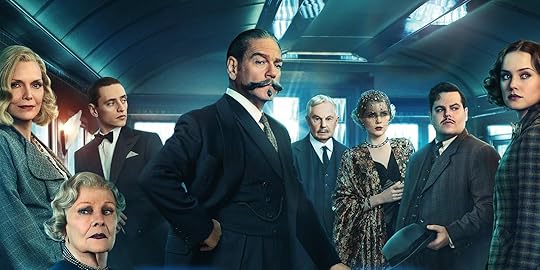
The Film
Kenneth Branagh is a Shakespearian actor and director of outstanding talent, so in the film version of Murder on the Orient Express he makes full use of the opulent period setting. The opening scenes take us to the Wailing Wall in Jerusalem in 1934, where Jews, Muslims and Christians pray, then lead us to a man who searches in vain for two perfectly symmetrical boiled breakfast eggs. In a just few moments, we’re introduced to the case that brought Poirot to the Near East (something only hinted at in the book), to his obsession with symmetry, as well as his impartiality with regards to the truth, when he uncovers the British commander as responsible for a theft an imam, a rabbi and a priest are suspected of.
Poirot, who intends to take a holiday, is recalled to England. His friend M Bouc, a hedonistic young man with a penchant for prostitute and idleness, secures him a berth on The Orient Express. The oriental opulence and visual of the train journey are magnificent, but the film is weakened by changes to the characters. Poirot, who in fine tradition of the hero’s journey, is reluctant to hunt for the murderer of the man whose face he did not like (a quote that is used in every film version), he has no ambivalence towards the then unknown killer. Point agonises several times over the photograph of a woman, which might have added the intended depth to the character had we but known more about the lady in question.
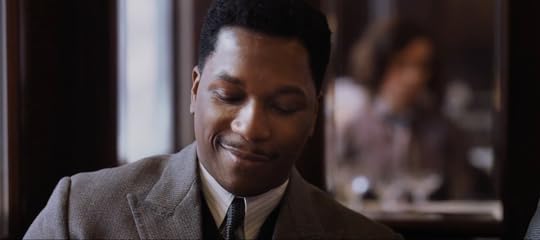
There’s also a laudable attempt into making the all-white cast a bit more diverse, when Miss Debenham’s love interest Arbuthnot (a Colonel in the book, a doctor in Branagh’s film) is shown to be BAME, of humble origin and a former protégé of his WWI commander Armstrong. This leads to faux racism by one of the passengers (who is hiding his identity as an American and private investigator behind the mask of an Austrian Aryan); plus the nervous state of the Countess Andrenyi, who turns out to be the aunt of Daisy Armstrong (but has become addicted to sedatives). These tweaks are supposed to add to the theatrical richness, but fall flat.
Another change is to plot: the train isn’t simply stuck, it is derailed and leaning precariously on an overbridge in the mountains (although not for long). Poirot and other passengers nip in and out for hot drinks and spot of interrogation. This leaves out most of the conclusions that Poirot forms in the book, aplus how he arrives at them, but at least the visuals add to that sense of isolation and danger. This sense is heightened for a few moments, when one of the passengers is stabbed non-fatally in the back, and Poirot is shot and wounded in a desperate effort to deflect his suspicion from one particular passenger.
In the end, Poirot also presents Bouc with the two solutions – a mysterious stranger who took his revenge and escaped, or a conspiracy to bring a man to justice who escaped it before – but he does it grudgingly, because it offends his sense of balance. The sympathy and human quality of the Poirot in the book has been lost. Indeed, the only character who has escaped changed but not diminished by Branagh’s tweaks, is the murder victim, played by Johnny Depp without the mannerisms most of his characters show. In an all-star cast, only he and Branagh are allowed to shine.

The Verdict:
Although the film is a glittering spectacle for the eyes, down to the smallest detail – even the costume changes are meant to reveal the everchanging characters – the book wins. Branagh’s version is fun to watch, but he sacrifices not only the cerebral pleasure of Poirot’s sleuthing but Christie’s unusually layered character sketches for the whole cast. This means the satisfaction of Poirot’s heart and head working in tandem also fade.
There’s another movie version of the book, with a cast just as illustrious, that honours and respects the book in a way Branagh’s doesn’t. Murder on the Orient Express, filmed in 1974 by Sydney Lumet, has stayed faithful to the book all the way through, thus preserving the intricacy and allowing even the smallest character to take his or her rightful place on the train. Branagh has steered it off the tracks.
BIO: Carmen Radtke is a screenwriter and novelist. Her debut novel is The Case of the Missing Bride (Bloodhound Books), a historical mystery set on a ship en route from Australia to Canada.
She also writes under the pen name Caron Albright. A Matter of Love and Death, another historical mystery with a bit of romance added. Both are available now. Follow Carmen on Twitter: @CarmenRadtke1 and check out her website, HERE.
December 1, 2017
CRIMINALLY GOOD: interview with top author Ian Rankin
This is one crime writer who barely needs any introduction … I’m delighted to be featuring none other than the awesome Ian ‘Rebus’ Rankin on CRIMINALLY GOOD today! I’m always fascinated by the books the most successful writers love … they’re nearly always classics. Something in that, I reckon. Enjoy this short n’ sweet coffee break read, everyone and have a brilliant week.
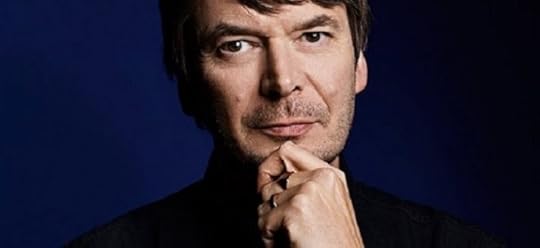
1) So, who are you and what have you written?
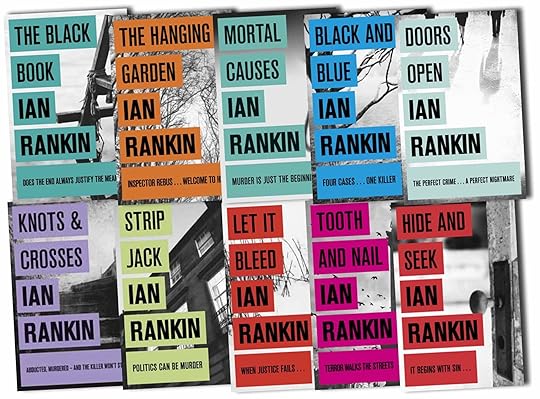
My name is Ian Rankin and I’m the author of over 30 published novels, many featuring Edinburgh cop John Rebus. Check out my website by clicking on my name above; LIKE my Facebook page and follow me as @Beatthigh.
2) Why do you write crime fiction?
I write crime fiction because I enjoy the sense of place, the strong narrative drive, the complex characterisations. It’s fun to read but can take on large moral questions.
3) What informs your crime writing?
See above. I wanted to show readers there was more to contemporary Scotland/Edinburgh than tartan and bagpipes. I wanted to write about the darker side of human experience and about social and political issues. The crime novel allows me to do that without becoming preachy.
4) What’s your usual writing routine?
My usual routine includes a lot of prevaricating. I’ll do anything to defer the moment when I have to do some actual writing. But when a novel is underway I try to write a little (or a lot) every single day, so I don’t start to forget the plot. My first drafts are written quickly and are far from perfect. I then do the research (this saves time, as by now I know what I really need to know). The second draft fixes mistakes and puts meat on the characters’ bones. A third draft is a polish. The whole process takes around six months.
5) Which crime book do you wish YOU’D written and why?
If Bleak House by Charles Dickens counts as a crime novel I’ll have that – it’s such masterful storytelling as well as powerful social satire. James Ellroy’s White Jazz is another favourite. Or anything by Ruth Rendell!
November 29, 2017
The Hard Truth About Book Blogging And Social Media
Blogger Bashing
So, it’s not been a great few weeks for Book Bloggers. Between various Facebook groups requiring them to file their reviews in designated threads, getting thrown in Twitter jail and certain users even saying book bloggers are NOT ‘real readers’, it’s easy to see why they’ve become despondent with social media of late. After all, unlike most bloggers – such as lifestyle, make-up and entrepreneurial types – book bloggers are NOT paid to share reviews. Most are simply book lovers, looking to share the book love.
Before we begin, I should mention – I love book bloggers. Not only am I an author – so book bloggers’ support is crucial to me and my books – I am literally a book blogger myself. I love blog tours and read them daily. I have bought books directly BECAUSE OF blog tours, too.
On this basis, so we’re clear: book bloggers and blog tours have my full sympathy and support. I offer these thoughts and tips solely to try and help. Ready? Then let’s go!
Marketing Online
But now let’s take a look at the flip-side of the disagreement. It would seem certain users on social media believe Book Bloggers are not impartial or even untruthful, because bloggers are ‘marketers’. This has lead to some of them calling for Book Bloggers to have threads or even groups of their own, calling non-bloggers ‘real readers’ in contrast.
Now, obviously book bloggers ARE real readers, who DO love books and CAN be trusted (all of which goes without saying). However, when it comes to marketing, this is where it gets a little hazy (and where I think some of the confusion is coming from).
Whilst individual bloggers may not be paid marketeers, blog tours do come under the banner of ‘content marketing’, hence publishers arranging them to help spread the word about them (and ultimately sell more books!).
This is also why authors are encouraged by their publishers to have a persona online. In marketing theory, it’s said that the average customer will need exposure to a product a minimum of four times before they buy it. This means the internet – especially social media – has become a potential goldmine for every kind of marketer (including authors and publishers) for obvious reasons.
Social Media and User Preferences
But like anything, how social media users prefer to engage with marketing also changes. On a giant scale, this is why Facebook changes its algorithm and presentation every year or so. Even on a tiny scale, as an author and content marketer myself, I discover every single year I have to change my approach to stay ‘fresh’ and ensure my hits and conversion rates stay up-to-date.
So, whilst Book Bloggers ARE taking part in blog tours because they genuinely love books (and even love the book they are promoting), they ARE also still part of the bigger process of content marketing … But only in the sense that EVERYONE online does overtly or covertly, if they want people to take action of any kind (whether that’s clicking on a link, buying a book, sharing book/film/TV love or something else).
Real Readers??
So, as mentioned: calling a book blogger ‘not a real reader’ is a totally unfair misnomer. However, during the course of my research, I believe I may have isolated some of the thoughts/reasons from those blogger bashers on why we have arrived here and what we may want to do about it:
1) Book Bloggers seem to LOVE all the books they read??
Now, if you *are* a book blogger, you know that generally speaking, book bloggers prioritise book LOVE, so they invariably withdraw from tours when they don’t like the book. But for the uninitiated, they might think Book Bloggers are simply saying they love ‘everything’ (and may not even be reading said book).
Now, of course the above isn’t true, but maybe Book Bloggers (including me!) should be wondering how to correct this assumption in non-book bloggers through other user engagement on social media? Some would say yes. Personally, I think life is too short for this (see below).
POTENTIAL SOLUTION: If non-bloggers don’t believe Book Bloggers regarding their ‘book love’, I believe that’s personally their issue, not ours. I would recommend Book Bloggers leave hostile groups, since there are loads of great Facebook groups out there with good engagement who are not hostile. As book bloggers I think we sometimes worry too much about individual groups and other online spaces … In all my years social media marketing my own sites, I can tell you that I have NEVER ‘suffered’ in reach from not being part of a particular group. Being Facebook, always plenty more where they came from!
2) Facebook & Twitter Jail
Cross-posting is when a blogger, brand, individual etc posts their link in multiple Facebook groups and pages. This is a good practice and Facebook ensures people don’t get the multiple notifications as standard they used to (so if they’re members of the same groups where the same link is posted, notifications will be reduced).
On this basis then, it’s actually pretty difficult to get flung in ‘Facebook Jail’ from cross-posting alone, so this likely means:
a) the Blogger has been cross-posting waaaaaay too much (i.e.. 20+ groups seems to be the cut-off point I’ve noticed, with about 10 groups maximum ‘the sweet spot’ for engagement) OR
b)other user(s) have decided said Blogger is a spammer and flagged them with Facebook. Boo!
Twitter however has not followed suit regarding Facebook and multiple shares. As a result, Book Bloggers will do multiple shares of theirs and their friends’ postings – sometimes as much as 100 links a day – which ends up flagging the user as a spammer automatically. This Blogger will then end up in ‘Twitter Jail’.
POTENTIAL SOLUTION: Perhaps Bloggers should be cross posting LESS on Facebook (10 groups/pages maximum in one go), with different pictures and headings wherever possible … and sharing links on Twitter 5-10 times a day with links maximum, especially when clickthru there is much lesser anyway? This would avoid any Facebook or Twitter jail-time, plus we wouldn’t get flagged by any malicious users. If bloggers love to post on Twitter, I recommend pictures over links, especially of books, which Twitter users seem to love. Also cross-posting from instagram, Pinterest and Tumblr also works well.
3) Non-Book Bloggers don’t tend to CLICK on links on social media
These are the facts: in 2017, clickthru from social media (especially Twitter) is riiiiiiiight down. In fact, even though you might get loads of retweets and multiple shares, your content links STILL might not get clicked on!
It would seem that people prefer to use social media for ‘brand awareness’ at the moment, rather than follow a link – and sadly, this includes book reviews too.This has lead to some non-bloggers complaining some groups and TLs *feel* as they’re ‘filled up’ with ‘samey’ content, because they’re looking for interaction ON social media itself, rather than an ‘outside’ site.
Whilst book bloggers are quite right when they suggest simply skimming over posts that are not of interest, those same non-blogging users will report they LIKE to see reviews on Amazon on Goodreads (and read them there, instead). So could the be a question of being in the ‘wrong’ place?
POTENTIAL SOLUTIONS: If this is the case, maybe us Bloggers should be thinking about engaging non-Book Bloggers in the ways they prefer FIRST – by prioritising content links and book discussions on social media … Then sending reviews over to Amazon/Goodreads instead?
Alternatively, perhaps it’s about changing the presentation of reviews on social media, so they have different graphics, headlines and introductions? This would mean reviews – even for the same book – would not look ‘the same’ to skimmers on social media. We wouldn’t have to check with each other either, we’d just use our own visual branding (photos, graphics or both), so it would be inevitably different. Check out my own visual branding in *this* post (or the rest of my site) to see what I mean. Again, pictures without links, plus cross-posting between platforms (like instagram to Facebook pages and/or Twitter and so on) should satisfy the Twitter junkies amongst us and help us avoid jail too!
4) Non-Book Bloggers really LIKE content & graphics on social media
Despite being a book blogger myself, I don’t actually carry reviews on my actual blog. Instead, I post my thoughts to Goodreads and Amazon. On my blog, I write about stuff like reading recommendations (note: not reviews), crime writer Q&As, reading round-ups (fave genres etc) and other stuff to do with the subject of reading generally.
I don’t think it’s any accident I don’t tend to get told to put my stuff in the blogger threads in FB groups. My blog is ‘differentiated’ enough from the usual blog tours to not get counted as such and it more often than not flies under admins’ radar, even in the strictest groups. It’s not foolproof – and occasionally someone will call me a spammer regardless – but I do seem to ‘get away’ with my posts generally on a daily basis, plus I’ve never been to Twitter Jail.
POTENTIAL SOLUTIONS: Whilst reviews are crucial to authors, content posts and graphics seem to be more popular, thus more likely to engage to potential readers to buy the book via social media. Perhaps reviews and content need more segregation in the outreach online … ie. prioritising content on social media, with reviews going up on Amazon and Goodreads instead?
Concluding
So, I believe that it’s not that book reviews are a problem, or that book blogging is a dying art, or even that blog tours are pointless. It’s simply about figuring out how to ENGAGE users on social media, in the way they seem to prefer, to tempt them to click on our links.
Based on my own experiments, this appears to be (at the moment!):
Prioritising links to content on social media (Q&As, round ups, etc)
Photos/graphics (especially of book covers)
Thinking about repositioning ‘reading recommendations’ over reviews
Cross-posting between platforms (ie. instagram to Twitter; Facebook to Twitter, etc)
Or having reviews, but with various different intros, pics, graphics etc
Other stuff like quotes from authors / books
Cross-posting to fewer groups and pages *within* Facebook
Questions for readers (especially with accompanying pictures)
Opinion Polls/ Quizzes
As it currently stands in the blogger-bashing climate, I want to stress: this post is not saying you can’t post your reviews on social media! But rather, think about how you’re going to TEMPT people to CLICK, especially on Facebook. With Twitter, you may want to prioritise pictures over links, like instagram.
Too Long, Didn’t Read?
You need to TEMPT people to click on your links on social media. You need some kind of strategy to do this. Also, think about engaging people between platforms via cross-posting. Want more on this subject? Then check out my blog post on How To Build Your Own Online Platform.
Good luck!
Lucy V. Hay's Blog

- Lucy V. Hay's profile
- 174 followers

