
Lucy V. Hay's Blog, page 14
March 2, 2018
The Dark Side of Social Media in THE OTHER TWIN
Something a little different today … Here’s an interview I did with the awesomely prolific Rachel Amphlett, author of the Kay Hunter Series (amongst others!). Make sure you check her books out. Over to you, Rachel!
1) Like me, you’re a huge fan of thrillers. What attracted you to writing in the crime/thriller genre? Was there a particular author that inspired you to do so?
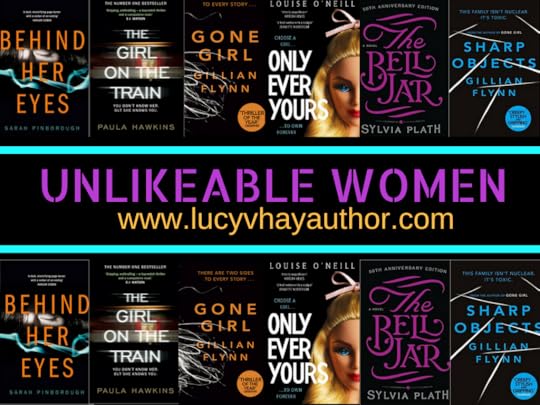
I’ve always enjoyed crime, mystery and thriller; I’d even written a book about writing and selling Thriller screenplays! But I’d never thought about writing my own until I read Gillian Flynn’s Gone Girl. I was blown away by Amy Dunne: she’s such an appalling, wicked person. I loved that; it’s so rare to find a female antagonist who is so self-serving as that … AND she gets away with it!! I was also struck by the set up; the fact it was a domestic situation, rather than a police procedural. It was like a million lightbulbs flashed ON in my head. I very consciously thought, ‘I want to write books like THIS!’ Books about relationships gone wrong; the seedy underbelly of life; the dark side of human nature.
2) What sort of research did you undertake for your latest novel, The Other Twin?
Most of the research came from what I already knew, especially in terms of the social media and blogging world, but also the LGBT community who have always welcomed me with open arms. It was more a question of matching my existing interests and experiences with a story in that sense. However, a small plot point in the book revolves around Black hair, particularly hair relaxants. I did a lot of research for this, as I was very anxious not to get this wrong as a white writer. I read a lot about it, obviously plus I talked to a lot of Black women about their own trials and tribulations in relaxing their hair. I was struck by how many had similar feelings and experiences about the process. This is in turn helped inform the ‘how and why’ of the character’s experience in the story.
3) The effects that social media can have on lives is becoming increasingly apparent, and this is something you cover in The Other Twin – what were the most startling discoveries you made during the research for your book?
I think the most striking thing I noticed during my research is how different those under 25 view social media. They’ve grown up in the digital age and view privacy and the internet completely differently, using it in a much more integral yet moderate way than we do (if that sounds like a paradox, it’s because it is!). Those over 25 frequently see social media as a bad thing, always focusing on all the negatives – cyber-bullying, trolling, stalking, flaming etc. We may talk about the dangers of the web and how kids may be too naïve to understand what they are. Yet younger people see the internet as part of their normal lives and for the most part use it accordingly, in a very sensible way. Much more sensible than a lot of older users, in fact! Young people seem to get the need for ‘holding back online’ instinctively in a way older people don’t. I was particularly impressed when I discovered ‘FINSTERGRAM’: these are young people’s ‘fake Instagram’ accounts. They use Finstergram to talk about and post things they know would get them hassle (for whatever reason) from ‘real life’ people like family and friends. This avoids not only real life arguments and drama, but keeps them safe online as they will use pseudonyms too.
4) What does your writing space look like? Do you have any pre-writing rituals to get you “in the zone”?
My writing space is the box room. I have all the usual things in here with me: a printer, desk, plus two shelves of books, a gazillion papers and at the moment, a fridge because it won’t fit anywhere else (unfortunately it is not plugged in!!!). It’s a very utilitarian space, but I do have some cool posters now and a collection of mobiles with hearts and bells on hanging from the ceiling. Because WHY NOT.
5) How do you structure a typical day to ensure you avoid distractions and hit your own word count targets on top of all the other commitments you have with a busy family life and running your popular Bang2write business?
I’m struggling to answer this one, as there’s no such thing as a ‘typical’ day for me, to be honest. I also binge write my novels, so don’t tend to have a daily word count – though when I am writing or editing them, I aim for at least 1500-2000 a day.
Generally speaking though, I do the school run then come back about 9am. I’ll do admin tasks like emails, scheduling blogs, etc until about half ten. After that, I’m either reading screenplays or writing posts etc until 3pm when I have to do the school run again. 4pm til about 6pm I’m usually doing phone calls and emails whilst making the dinner and stopping the children from killing each other! It’s full on in this house!
6) We all occasionally hit a brick wall with our creative endeavours – what do you do to overcome any stumbling blocks?
When I get stuck or want to learn a new skill, I scrapbook. I get some nice stationery and highlighters and go looking for tips or ideas. I’ll read articles and take notes; I will download worksheets from sites and fill them in; I’ll identify and interview people who have done what I want to; I’ll visit museums and villages and towns; I’ll read novels with concepts *like* mine and identify what makes them great, or what left me wanting more. In other words, I immerse myself in the genre or idea or whatever until I unlock the frozen part of my brain.
7) What have you got planned for 2018?
More novels, more blogs, more courses and workshops!
8) Finally, where can we buy your books and keep in touch with you?
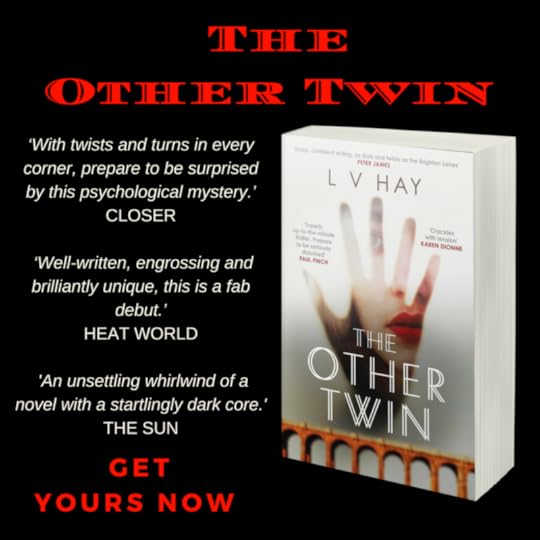
The Other Twin is available at all good book stores via paperback and ebook. It’s online via Amazon; Orenda Books also has it on their site too. You can find me online at my website, www.lucyvhayauthor.com, also @LucyVHayAuthor on both Instagram and Twitter, plus you can LIKE my Facebook page too.
This post originally appeared on Rachel Amphlett’s blog


February 27, 2018
My Loves And Hates In The Writing Process

1) Are you a plotter or pantser?
I’m a trained screenwriter and work as a script editor now, so spend all day with screenplays. On this basis, I have to be a plotter – I don’t know any different! I get everything done a LOT quicker if I know what actually needs doing. In my work, I’ve seen waaaay too many writers get lost inside drafts without direction. That’s not to say pantsers don’t exist or get stuff done, of course they do, but I bet many writers would save themselves a lot of heartache if they did the foundation stuff first. I’ve even seen writers lose heart and give up altogether sometimes, it’s a real shame when we consider the solution is obvious.
2) Do you read your reviews? Do you respond to them if they are particularly good or bad? How do you deal with the bad?
I’ve been a writer a long time now, so feel like I have a pretty thick skin (you need it!). I do read my reviews and as long as they’re constructive or obviously down to personal judgement, then that’s fine. No one HAS to like my work! I do get annoyed when there’s an obvious agenda behind a review, but I never respond. Besides, that’s what the ‘not helpful’ button is for! 
February 22, 2018
Wee Girl Reviews: HAVE YOU SEEN THE SLEEP FAIRY?
Wee Girl Reviews
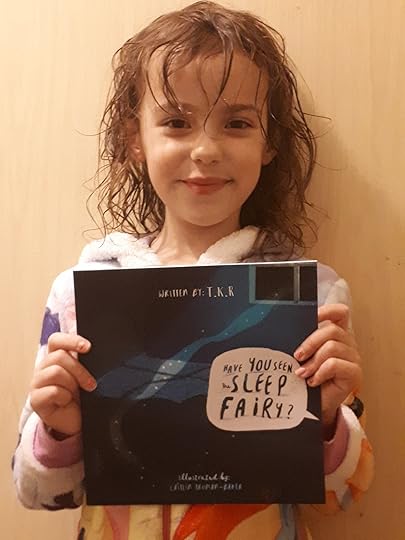
My daughter Emmeline, aka ‘Wee Girl (2)’ is 6 years old. She loves Maths, YouTube, dancing and Tae Kwon Do. She also likes baking, her giant toy caterpillar Frankenstein and cats.
Emmeline is a reluctant reader, so I’m happy to partner with AuthorRight to start a new feature, ‘Wee Girl Reviews’. In this feature on the blog, we will read picture books together, so Emmeline can give her opinion on them.
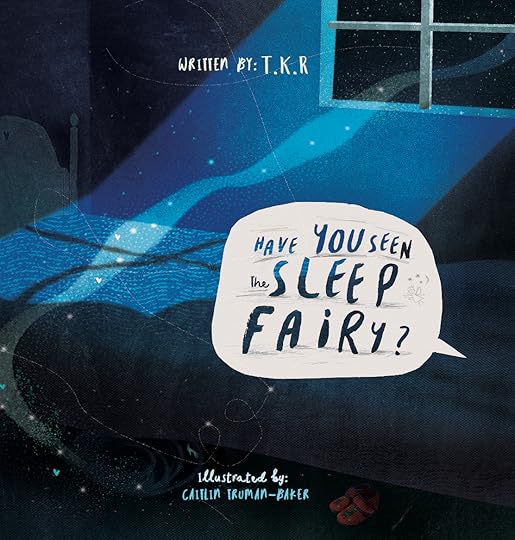
First up is Have You Seen The Sleep Fairy? by T.K.R.
The Book
Have You seen the Sleep Fairy? is the story of a sleep deprived mother and father who are rescued by this shyest of fairies, who only comes out at night when all the children in the home are asleep. She helps children get into the habit of sleeping through by leaving tiny items of interest under their beds for a few days until she can trust them to sleep through on their own. This sweet story is simply told by the author and beautifully bought to life in this new illustrated children’s story. Get your children into the habit of sleeping through by reading The Sleep Fairy to them and applying the idea to your family routine. Here’s to you and a peaceful night’s sleep.
Buy the book HERE, or click any the pic of the book cover at the beginning of this post.
Emmeline’s Review
We read the book several times together. The first time I read it; the second time I asked Emmeline to sound out various words; the last time Emmeline read the book to me. Here’s what she said:
‘It’s got a question for the title – you can tell, because there is a question mark.’
‘The dinosaur sticker in the book looks like the one from Pepa Pig.’
‘The sleep fairy puts a kind of glitter in your eyes to make you fall asleep … In real life, this is when you get EYE SNOT!’ (laughs)
‘I like sharks too, just like the sister in the story.’
‘The colours in the pictures are really nice.’
‘I like this story A LOT!’
My Review
Like Emmeline, I love the colours in this well-illustrated, effective story. The advice for parents here is so simple, yet really well thought out … And doesn’t lecture children, which means they learn to relax to bed without feeling like they’re being told off. Genius!
The language used here is simple and kids can read it easily, even if they are reluctant readers like Emmeline. I also liked the fact there were four children in the story. I grew up as part of a big family, yet rarely saw families in stores with more than two kids in them. The brothers and sisters are well differentiated, too without being overly complicated.
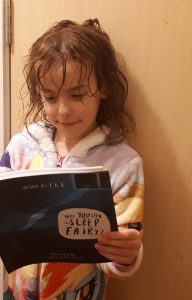 What’s more, Emmeline loved the idea of a sleep fairy and before I knew it, I was buying stickers to put under her bed so she could find them in the morning too. Though Emmeline has never been a poor sleeper, her elder brother and sister never slept through the night for YEARS … I wish we had had this book back then!
VERDICT
Highly recommended. Kids and parents alike will love this sweet story. It’s relevant and offers simple, effective help for sleep-deprived parents everywhere that will appeal to kids, too.
About The Author
Living in Chelsea, London with his wife and four children author T.K.R is no stranger to sleepless nights. When not writing children’s books, he runs his own business, Captivate Marketing (Pty) Ltd which focusses on the tools and tactics associated with amplifying his clients’ global brands.
February 20, 2018
INFOGRAPHIC: A Snapshot Of American Reading Habits
I’m super-nosey, so I always love to know what other people are reading – which is why I love Goodreads. Seeing people shelve, read and review books virtually (plus where they are page-wise!) is fascinating to me, which is why I always share my own reading progress online.
So when the good folks from GlobalEnglishEditing got in touch to share this infographic, I couldn’t resist a snapshot of an entire COUNTRY’S reading habits!
My favourite part is the favourite book in all 50 states. I have been seeing The Subtle Art of Not Giving A F*ck everywhere, so can’t wait to read it. I was also interested to see the most challenged books, especially given my interest in diversity in fiction, film and TV.
Lastly, I was surprised to see Americans read less in 2017, than 2016 and wonder if the UK is the same? I was not surprised to see younger people read more than older people. People tend to wait longer to have kids these days and family commitments can mean there’s less time for reading. That said, more people live longer now, so I did wonder why retired people’s did not counteract this? Intriguing.
Enjoy!

February 19, 2018
Read An Excerpt, ‘Hiding’ by Jenny Morton Potts
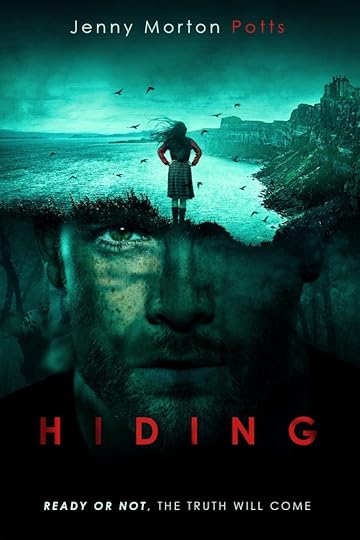 When they arrived at Turville, there were many cars in the lot. You might have thought you were attending a concert. There was no landscaping, nothing to soften the bricks of this death house which had been painted grey some time ago and had begun to flake. The Harfield logo hung on a large metal plaque. It too was faded and chipped.
Without a word of leave, the escorting officers walked away from the passengers and new staff took over. The minibus occupants were told that their belongings would be locked in the van until post-procedure. They were asked if they would like to take quarters into the building as there was a vending machine with snacks and drinks.
Then another officer, a woman, just young, set about asking them security questions and issuing tags on neck bands. ‘You have to sign your name in a ledger. That’s first.’ She made herding movements with her arms and the group passed through a body sensor and then there was a cursory pat down. The officer held her thumb and forefinger up, like a diver’s affirmative. Good to go.
Keller noted that indeed the older man he had marked out as a journalist, was permitted to take a notepad in with him. The redhead girl was also permitted writing material. Their pens were tested in a small scanning machine and he overheard the girl saying that she was preparing her doctoral thesis.
‘Nice subject for a PhD,’ Keller muttered beneath his breath. ‘Classy.’
Somehow, he thought there would be a long walk now, time for contemplation but almost straight away the group were led into a small waiting room. The walls were solid, there was no viewing window. This was not the place then. But there was a vending machine. Keller could see fresh apples in the bottom row.
The redhead sat opposite Keller. He wondered if she would like the look of him. Women usually did, at first. It wasn’t really the time or the place but a woman like her was hardly one for etiquette. She looked at her watch and said to the student wearing the plaster cast that she could barely cope without her cell. She then realised that there was some sort of joke to be made of the pun on ‘cell’ and actually laughed. Keller had a sudden vision of being in a lifeboat, sitting next to her, and pushing her over the side. She scribbled away in her big A4 pad, a ring with a diamond on her wedding finger. She was engaged then, and no doubt believed that she had everything to live for. The death penalty has a way of driving home a point like that. The girl sighed, like she had done a hard day’s work. As if taunting him, she let the pad rest upside down on her lap, so that he could make out the words. She had big, babyish writing. Not like the American cursive they were taught. She had a bit of an accent too. Probably went to one of those expensive schools in Europe. Keller looked down at her notes.
…2002 Uzbekistan authorities boiled men to death in water… China have mobile death units, small buses with in-house execution equipment which travel to far lying provinces…. Neighboring South Carolina executed a 14 year old in the electric chair…
Keller stared hard at the redhead. What a charming companion for the day. Fleetingly, he wondered if he should follow her home tonight and get in a bit of target practice. He could get himself match ready and make the world a better place without this member of the population. He dug his knuckles into his thigh and told himself to stop getting distracted.
Keller knew that there would be no stay, and no clemency. He knew that the procedure would begin at 12 noon prompt. He closed his eyes and let his head rest against the cool plaster of the wall behind the bench. Without vision, the thrum of the AC filled his ears fully and he shut out the hushed voices and fell asleep, as he had done in moments of stress as a child. He had Aunt Joya to thank for that technique. Every time she locked him out of the house, he’d nap, no matter what the temperature. If he were to have died of cold before waking, that wouldn’t have been much of a tragedy. There was a point in the coldness when you stopped noticing and the sleep just washed gently over you. He trained that sleep to come to him when he needed it, like a faithful dog.
When Keller was woken in the Turville waiting room, his legs had loosened and sprawled out before him. ‘It is time,’ someone seemed to have said in his ear. As the day’s reality cleaved through his head afresh, the redhead opposite had the nerve to offer him a look of disapproval. She picked her way through his sleepy limbs and walked out of the door, sober and straight-faced.
There was a walk now. They passed doors, like random choices. They all looked the same, all the colour of pale nicotine. But some of those doors were in the business of living and some were not. As you walked past them, you could feel hope slipping away. Which door? Which one? It was like a game the devil might play as you entered hell. Eventually the passengers reached the end of their journey and were shown into another room which was similar in size to the last but with what looked like a window on one side. The window was dark for the moment, with a black blind pulled down and opposite, there was a gallery with seating. The seating was slightly raked, like a theatre. They were here for a performance.
About The Book …
A gripping psychological thriller with chilling twists, from a unique new voice.
Keller Baye and Rebecca Brown live on different sides of the Atlantic. Until she falls in love with him, Rebecca knows nothing of Keller. But he’s known about her for a very long time, and now he wants to destroy her.
This is the story of two families. One living under the threat of execution in North Carolina. The other caught up in a dark mystery in the Scottish Highlands. The families’ paths are destined to cross. But why? And can anything save them when that happens? Purchase HERE, or click on the pics.
About The Author
 Jenny Morton Potts is a novelist, screenplay writer and playwright. After a series of ‘proper jobs’, she realised she was living someone else’s life and escaped to Gascony to make gîtes. Knee-deep in cement and pregnant, Jenny was happy. Then autism and a distracted spine surgeon wiped out the order. Returned to wonderful England, to write her socks off. Jenny would like to see the Northern Lights but worries that’s the best bit and should be saved till last. Very happily, and gratefully, settled with family. She tries not to take herself too seriously.
February 13, 2018
Top 10 Things That Inspire Me As An Author
You can see more of my fave things that inspire me, HERE.
One question writers get asked ALL THE TIME is ‘Where do you get your ideas from?’ My answer is always, ‘EVERYWHERE!’ 
February 12, 2018
CRIMINALLY GOOD: interview with author Richard Dee
1) So, who are you & what have you written?
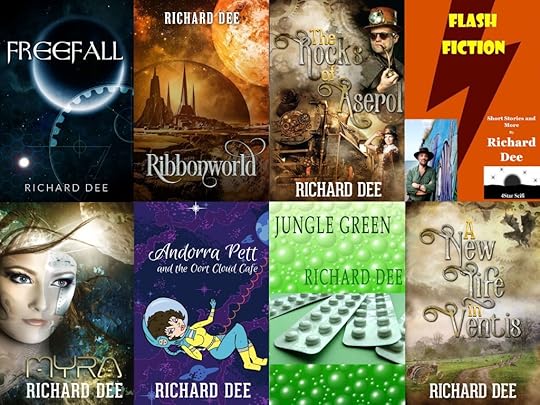
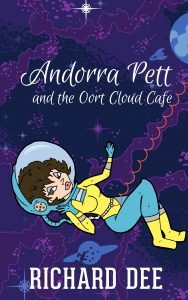
 I’m Richard Dee, I normally write Science Fiction and Steampunk adventures, they have an element of crime in them, but more as an aside to a conspiracy style adventure than as a specific “whodunit.” However, I’ve started writing what I hope will be a series of lighter Sci-fi novels, which are more crime-centred. They feature the adventures of Andorra Pett, an accident-prone and reluctant amateur detective. Think Agatha Raisin, in space.
The first, Andorra Pett and the Oort Cloud Café is out now and the sequel, Andorra Pett on Mars is due in April 2018. Other stories are in progress. You can find out more about me and my novels at www.richarddeescifi.co.uk , where there are free short stories, extracts and other goodies! . I’m also on Facebook as RichardDeeAuthor and I’ll be ramping up my twitter presence @richarddockett1
2) Why do you write crime fiction?
The idea for Andorra Pett came from two short story ideas, a farm in space and the adventures of a man who mined the rocks in Saturn’s rings. I thought that such places would be ideal settings for a murder mystery. Both were dangerous enough in their own right that no one would notice an extra body here or there. There was bound to be emotion and antagonism in such a dangerous environment. All I needed was a sleuth. At the time, there were a lot of novels featuring coffee shops or cafés, with people who had changed their lives to run them.
I realised that the two things could work together, someone starting a new life on a space station and a crime, it was a ‘fish out of water’ scenario, full of potential for fun and adventure.
3) What informs your crime writing?
I’m not particularly scientific, but I do have a passion for knowing how things work. This means that I do a lot of research, and it also means that any idea for a plot gets a thorough check for plausibility. They may be set in the future, that doesn’t mean that the science in the fiction doesn’t need a basis in fact. I don’t suppose that human nature will have changed that much, so I’ve just given it a new stage to perform on.
 4) What’s your usual writing routine?
I get up early and do an hour or so before the day starts. Usually, that will involve any ideas that I’ve had overnight, I keep a notebook for stray plot threads. I might do a bit more as the day progresses but I try not to let it get in the way of having a life. In a good day, I might do 5,000 words, I try to do at least 2,000.
5) Which crime book do you wish YOU’D written, and why?
Anything by Agatha Christie. I wish that I could plot with the same precision and aspire to create such a detailed world for my characters to operate in. Miss Marple is a triumph, particularly as portrayed by Joan Hickson.
February 7, 2018
CRIMINALLY GOOD: interview with author Roy Harper
 1) So, who are you & what have you written?
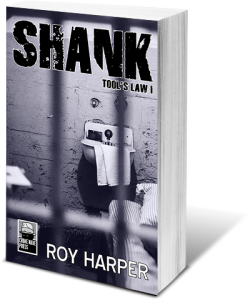
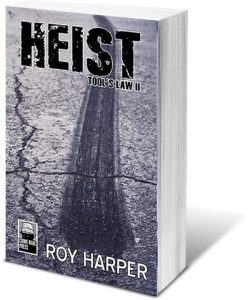
Hello readers. My name is Roy Harper, author of the novels Shank & Heist, which I hope you’ve read and enjoyed. There’s a prequel, as well, that may be released by Crime Wave Press in the future.
2) Why do you write crime fiction?
I’m a convict. I’ve been in prison since 1975 – Arizona, Mississippi, Alabama and now Colorado. I live crime fiction. I can write what I choose, what I’ve fantasised about and make it better or worse. Crime fiction is a place where anything can happen and personalities can justify any action they choose. It is the mind, with no boundaries set except by the author or the protagonist.
 3) What informs your crime writing?
My life, past and present, sets the scene for my stories. Well, mine and the lives of people I meet. Many of the things I write about are or were real. It is often stories of things that happened either in my life or in someone else’s.
4) What’s your usual writing routine?
In Mississippi I was considered high risk and moved from cell to cell every week. I began to write and let me tell you, that was a real bitch. I’d move, spend the day cleaning the cell, then rest that day, and maybe the next, then get out my writing materials and get to work. The more they pissed me off, the more I wrote. Near moving day I’d pack my little shit and wait to move and start all over again. It was a bummer, and at times difficult to adhere to, but I did, and got ‘er done.
 5) Which crime book do you wish YOU’D written, and why?
Louis L’Amour wrote a few books that weren’t westerns. Last of the Breed is literature with crime I can relate to. Beautifully written. It’s the sort of masterpiece I aim to write.
BIO: Roy Harper has been incarcerated in Mississippi since 1981 for armed robbery. He has gained nationwide notoriety for two highly publicised escapes from a maximum security prison in 1983 and 2000 and for his efforts in the courts to reduce brutality and injustice in American jails. Buy his book Shank, HERE and Heist, HERE..
February 5, 2018
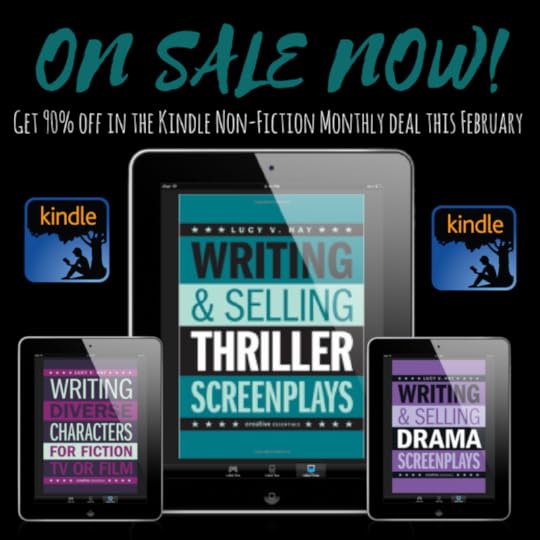
Get 90% off my books!
February 2, 2018
BOOK VERSUS FILM: Which Castle Is Captured Best?
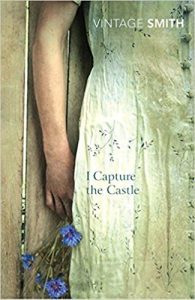 The Book
Somehow, this book had passed me by – I’d actually thought I’d read it for years, but turns out I had mixed it up with Shirley Jackson’s We Have Always Lived In The Castle! But I love British fiction set in rural England, in castles and with large (mad) families, so I Capture The Castle by Dodie Smith was a no-brainer! When someone offered it to me in a book swap, I had to read it, no question.
With fans so illustrious as JK Rowling, I knew the book had to be something special. The story of Cassandra, a young woman-girl’s first forays into love and heartbreak, there’s something so gloriously female about the angst here. When two Americans take up residence not far from the castle (becoming their landlords in the process), they quickly esconce themselves in the Mortmains’ lives. Simon proposes to Rose, Cassandra’s sister, only for everything to get out of control (especially considering Cassandra is in love with him herself).
Cassandra narrates the goings-on in her diary about her madcap family with aplomb; there’s some genuinely funny moments that border of tragedy, especially between her father Mortmain and his second wife, Topaz; or between Topaz and her sister, the recalcitrant Rose. In fact, Topaz is the high point of the book for me: I fell quickly in love with this seemingly hare-brained, yet wise-beyond-her-years exhibitionist. She was such a contradiction in terms and truly delightful.
That said, I love tight plotting, whilst I Capture The Castle is more of a character-led, ramshackle affair. Whilst it kicks off at a rip-roaring pace, with a neat and intriguing ending, I finished the book feeling it could have been shorter, with an extended period feeling like it was ‘treading water’ in the middle. The characters were indeed a blast, plus there’s a hefty wedge of emotional truth, but overall I felt as if I liked the book a great deal, rather than loved it. I am however glad I read it and finally realise it’s a separate story to Shirley Jackson’s (which, incidentally, I LOVE — but then it’s considerably darker, which hints at my preferences).
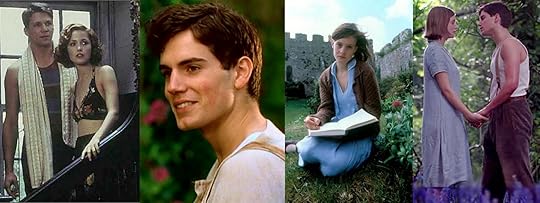
The Film
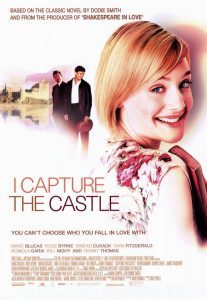
The film version of I Capture The Castle came out in 2003 by BBC Films and has an 80% fresh rating on Rotten Tomatoes, the online reviews aggregator. It features a very young Rose Byrne and a youngish Bill Nighy, including a host of other British and American stars whose faces you’d instantly recognise, even if you don’t know their names … Not least Henry ‘Superman’ Cavill!
Like the novel, the movie had passed me by as well, though I managed to pick the DVD up on Amazon for 99p. I settled down to watch it and was mildly surprised by how faithful it was to the original text, right down to beginning with Cassandra writing in the kitchen sink. In fact, the first half is transposed almost verbatim from the pages and straight onto film, somehow. Romola Garai does a great job in the role; she was Cassandra to me.
Mortmain, similarly, is perfect; though Topaz is much more angsty in the film version. Her ‘communing with nature’ appears to be a release from the house of madness, which I liked, but I grieved for the flighty, somewhat obvious Topaz I had envisaged in the book. I love the unintended dramatic irony that Henry Cavill has himself grown up to be ‘big in Hollywood’, so he was perfect for the role of Stephen. He plays him a bit wet and naive, rather than dark and brooding, which worked especially well for me.
The ‘Night of the Bear’, we see Stephen seeing Niall and Rose kiss, so it makes sense we also see him go to see Niall, in a bid to bring them together to ensure Cassandra has Simon for herself. This means it’s a little less ‘out of left field’ than in the book, but for me, it Cassandra’s agonising, entirely from her POV, is much more interesting.
 There are some additions to the telling of the story, the most striking being dream sequences of Cassandra’s about Simon; or flashbacks to when her father attacked her mother with the cake knife and went to prison. These felt rather jarring for me, as if they hadn’t ‘earned’ their place in the narrative. There’s also a subtlely different slant to the ending of the story, with Cassandra outwardly rejecting Simon, since she fears being second best like her own mother was. The book is much more ambiguous on this, which feels more true to life (though this is, arguably, not suitable for a movie which insists its characters must be more active).
But overall, this was surely good enough to satisfy the most ardent fan of the book, but for me, the movie felt rather flat. It feels rather theatrical, with a ‘lack’ of movement, which seems odd considering the castle and its surrounding lands is so visual. But Cassandra’s voiceover seems to take over, sucking the vitality from each scene. Which is a shame, because there are some great performances, not least between Cassandra and Mortmain. When she stands up to Mortmain in the tower, telling him that he has been indulged, this is a really powerful moment. Similarly, I loved the argument between Rose and Cassandra about Rose’s marriage means for the family, in taking them out of poverty. In short, there was loads good about it, it just failed to CAPTURE (arf) me.
VERDICT:
This – for once! – is an easy one: it’s no question for me that the book is waaaaaay better. Interestingly, in my research for this blog post I have discovered die-hard fans of the book DON’T like the film at all. Whilst I don’t share their mad ardour for the book, I can see why: the movie is SO slavishly faithful, I can’t help but wonder if they’d been less so, it might have hit the right notes with them, more? But the critics liked it and so did 76% of the audience, so maybe the die-hards are small in number. Whatever the case, I have no hesitation in recommending the book, but only recommend the film to the curious who want to see how it fares in its adaptation. Enjoy!
Lucy V. Hay's Blog

- Lucy V. Hay's profile
- 174 followers

