
Lucy V. Hay's Blog, page 17
November 28, 2017
BOOK VERSUS FILM: The Handmaid’s Tale, For Better Or Worse?
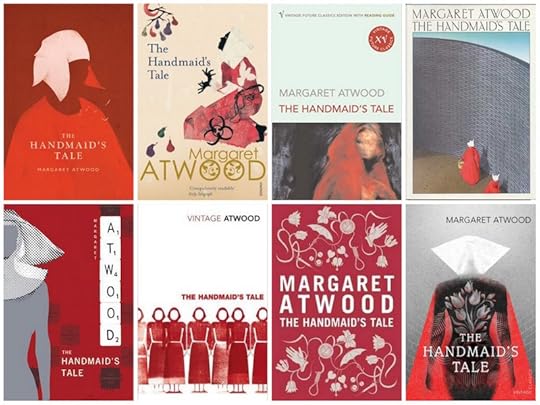
The Book
The novel is a modern classic and rightly so. Atwood’s rich prose and complex characterisation lifts off every page, bringing a story to life that feels both modern and medieval at the same time. Offred’s sense of isolation in the novel is striking: the book concentrates almost solely on her reaction to what happens to her, plus her helplessness. As a feminist text, The Handmaid’s Tale draws on how patriarchy is bad not just for women, but for ALL of us.
We learn very little about Offred’s life before Gilead; we don’t even know her true ‘shining’ name (though many believe it is June. This is based on the first scene when she and the others arrive at The Red Centre, a training place for handmaidens. Atwood has refused to corroborate this, but says readers can believe this if they wish). But in real terms, we know only she was the second wife of Luke and the mother of a girl child. In Gilead, all divorces are nullified, so Offred and Luke are adulterers and their child a bastard. This is illegal, so they’d tried to flee and failed. During the chase Luke was (presumably) killed and Offred was captured and drafted, the child was forcibly removed from her.
In the book, Offred is surrounded by a myriad of differentiated and memorable characters. It’s clear, from the beginning, there is a line drawn in the sand between her and mistress of the house, Serena Joy. Offered is young and fertile, but Serena Joy is old and essentially past her sell-by date, drawing on patriarchal ideals of what being a ‘real’ woman means. The Commander is quiet, reserved, watchful, but strangely reckless. His desire to connect with Offred on an intellectual level, playing scrabble with her and giving her forbidden objects like magazines hints at his dissatisfaction with the new life he finds himself in.
The two main secondary characters who signify resistance, both literal and metaphorical, are Moira and Ofglen (#1). Moira is a lesbian, but has been able to hide this in the new society (homosexuality is forbidden in Gilead). In the book, it’s hazy just how friendly Offred was with Moira before America fell; it’s possible they only met at The Red Centre. During the course of the story, Moria acts as a mentor to Offred, counselling her on what she needs to do in order to survive, though she inspires Offred when she successfully escapes The Red Centre.
Ofglen #1 also offers a similar dramatic function in the novel by introducing her to MayDay – a resistance against the Commanders of Gilead. Both are thwarted in the book: Moira ends up at Jezebel’s, a brothel, entertaining The Commanders; Ofglen #1 kills herself when she is discovered and taken by The Eyes (Gilead’s secret police).
Duty is a keystone of Gilead society. The Waterford’s driver (and Offred’s lover) Nick might be a man in this new society, but he is low status and as much of a pawn as Offred is. Even the fact he is an Eye does him few favours; he is at the mercy of his masters The Waterfords, just like Offred. Other handmaids create obstacles, either directly for Offred (such as Ofglen #2, who warns her to stay in line) or Janine (aka Ofwarren, whom Offred meets at The Red Centre, who creates drama / issues for The Handmaids generally, especially as they are training).
In comparison, The Marthas are those infertile, low status women who must wait on the households and Rita and Cora, the Waterford’s key servants are brought forth to deliver this. They are cool with Offred, preferring to barely connect with her, treating her as an object on order to cope with what is asked of them. A common litany is ‘blessed be the fruit’ — Offred is essentially just a uterus on legs, a host.
The exposition of the storyworld is expertly hidden and doled out; there are no big dumps of information about the new world order in terms of The Commander, the handmaids, the Marthas, the Econowives, The Salvagings, UnBabies, The Colonies and so on. After all, there is no reason for Offred to re-explain Gilead as she finds it to herself … She knows what is going on, she is living it!
*That* ending would be abrupt anyway, but it is made even more so by the addition of a final chapter by Professor James Darcy Pieixoto, offering supposed ‘Historical Notes’ for what *really* happened to Gilead, which we understand has already fallen. The professor gives a talk about the narrator’s story, which he has painstakingly transcribed and formatted into The Handmaid’s Tale.
Professor Pieixoto offers details about the origin of this text and its authenticity while lamenting how little can be learned about the narrator. He also offers possible identities for the Commander. Some reviewers have confessed to feeling perturbed by the inclusion of these notes, questioning why they are needed. For me, I think they are justified: had we ended the story with Offred getting into the Eyes’ vehicle, it would have ended on a very dark, hopeless note. But by making us realise Gilead is already dead and buried, the story ends with a sense of hope, even if Offred is also dead. This means The Handmaid’s Tale is less diary and more of a final testimony. In real terms, we don’t know exactly what happens to Offred – but I HOPE she is dead, as this is her only ‘escape’ from such a torturous existence.
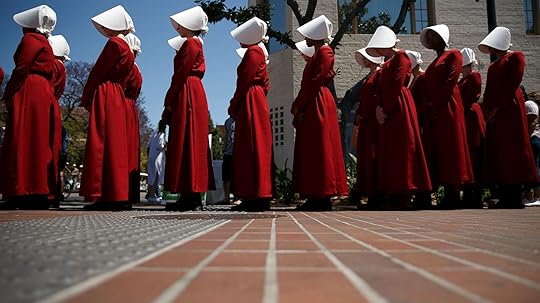
The TV Series (2017)
As you might expect with a modern classic novel, there have been numerous adaptations of The Handmaid’s Tale over the last thirty years, including a movie, an opera, a radio drama and a ballet. Critical response has varied, though the most recent Netflix/Hulu adaptation starring Elizabeth Moss as Offred, Joseph Fiennes as The Commander, Yvonne Stahovski and Max Minghella as Nick has received almost universal accolades. So, for the purposes of this blog post, I will concentrate on this version.
The Handmaid’s Tale is incredibly faithful to its source material: so much so, Margaret Atwood even appears in it! (She’s the woman who slaps Offred’s face in The Red Centre). Basically, everything that was present in the book appears here, such as from the ‘main’ story points such as The Ceremony or Offred’s affair with Nick, through to Moira’s escape; Janine’s initial rebellion; Moira’s secondment to Jezebel’s , Ofglen’s horrible fate and beyond. Offred’s original name is even – and as a nod to fans of the book – ‘June’.
Crucially however, this is an adaptation for a TV series, rather than a book. Whilst the book is fabulous and one of my favourites, it’s hardly plot-driven. So, here is what they do:
1) Offred’s Voiceover
Literary in style, the book focuses on Offred’s thoughts and feelings, rather than her actions. She is incredibly passive in the book and this does not sit well with screenwriting generally, especially when there’s approximately ten hours of screen-time to fill, a there is here, in The Handmaid’s Tale TV adaptation! But the makers get round this brilliantly, offering up a complex voice-over for Offred: she will present her meek, pious face to the Waterfords and the rest of Gilead, but in her mind she is raging. This feels authentic and real, because Offred is doing what she has to, to survive … but that DOESN’T mean she has to like it!
2) Serena Joy
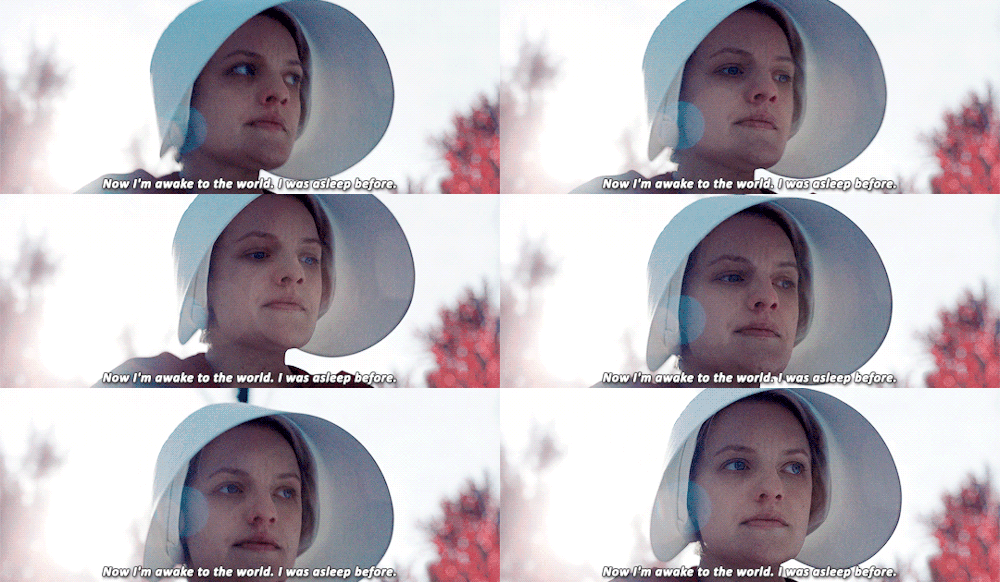
Serena Joy is Offred’s main antagonist in the adaptation, but crucially she is considerably younger than in the book. This adds a whole new layer of conflict, taking away somewhat stale notions of fertility and what being a woman means, which we have seen lots of in the decades since The Handmaid’s Tale was published). Instead, the conflict between Offred and Serena Joy is that Offred is a usurper, which is much more modern and feels fresher.
In addition, in the TV series, Serena Joy is also the architect of Gilead and actively helped set it up with Commander Waterford … but ironically, by rejecting feminism and embracing old school ideals, has made herself obsolete. This is masterful and the way Yvonne Strahovski plays her – so frustrated, so enraged – makes her a convincing doppelganger for Offred in real terms. This also gives her much more ‘story space’ in future series too, as the show runner Bruce Miller explains HERE.
2) Luke
Barely in evidence in the source material, Luke is fully realised character in the adaptation. From Offred’s memories of him in the book, the screenwriters take him into storylines of his own; this includes an entire episode that depicts what happens to him after June hears the gunshot in the woods. It would have been very easy to cast men as ‘the enemy’ in this adaptation, but Luke’s inclusion in the story as a whole – including his fight in Canada to try and get his family back – is sympathetic and feels real. The way they’ve made him a real, holistic character is just fantastic.
3) Moira
Moira’s place in Offred’s old life is played ‘upfront’ here, with no room for ambiguity. Both women know each other and are great friends, which adds to the pain of the journey they have to undergo, first at The Red Centre, then separately. Unlike the book, Moira tries to take Offred with her when escaping; unfortunately they are separated and Moira escapes alone. This means their reunion at Jezebel’s – faithful to the book – is even more bittersweet, so when Moira manages to make it to Canada and find Luke, we hope (unlike the book), that husband and wife will be reunited too.
4) The Commander
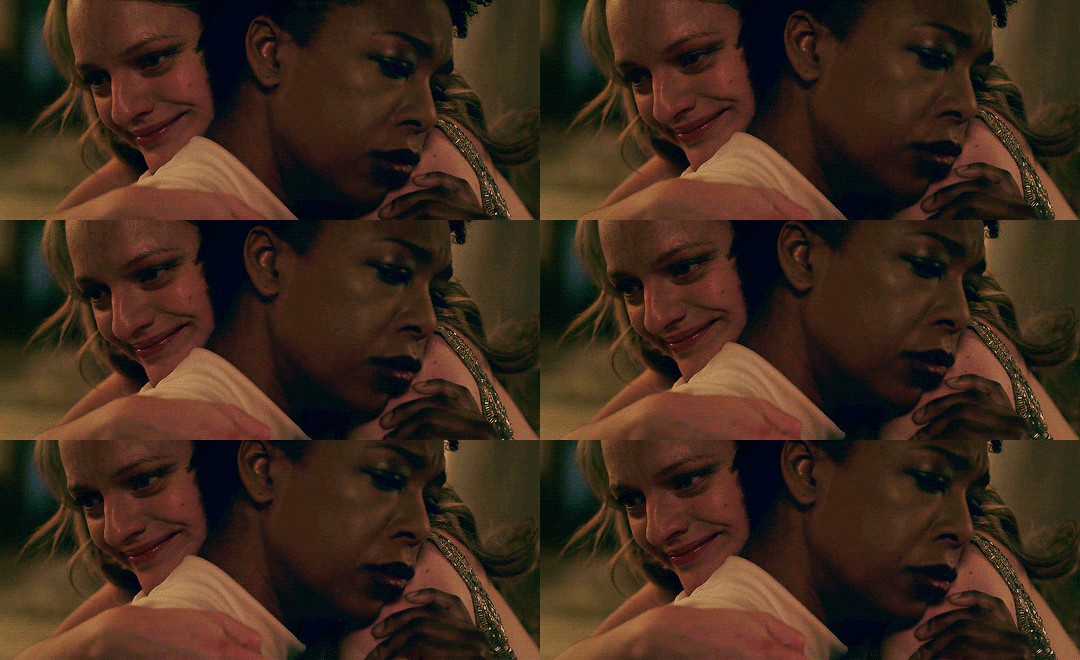
The Commander is probably the most faithful characterisation to the source material. He is reserved and watchful, but reckless: there is a great scene when in The Ceremony he starts looking at Offred in a heated, sexualised way and Offred’s voiceover begs him to stop. Fiennes plays him seemingly sympathetic one moment, an authoritarian the next … He is exactly how I imagined him in my mind.
5) Nick
Nick is another superbly realised character in the adaptation. Max Minghella plays him in an understated, morally ambiguous way. Unlike the book, where he feels like relief for Offred, Nick offers a more overt mentor function: like Moira in the book, he counsels Offred on what she needs to do in order to survive. It seems apparent he will do whatever it takes to ensure his own survival too, but he is pragmatic rather than dangerous.
6) Ofglen # 1
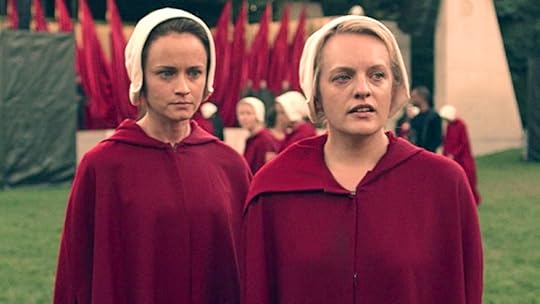
Ofglen # 1 has a much larger, rounded part in the adaptation. Like Moira, Ofglen #1 is also gay and found guilty not just of ‘gender treachery’ (lesbianism), but having a relationship with a Martha, rather than being a member of MayDay. This makes sense, as otherwise Offred would be found out too quickly; Ofglen’s brutal treatment is also what spurs Offred on into her own rebellion. Ofglen’s girlfriend is hanged, but Ofglen is sentenced to ‘Redemption’ – she is spared because she is fertile, though they remove her clitoris. Later, Ofglen returns to the circle of handmaidens, though she pretends not to know Offred before finally stealing a car and being carted away by The Eyes.
7) Janine
Again, Janine has a much larger part in the adaptation. As in the book, Janine arrives at The Red Centre full of (understandable) vitriol and is punished as an example to the others (in the adaptation she loses her eye, though this does not happen in the book). As time goes on, Janine’s grip on reality starts to waver. Janine in the book gives birth to a seemingly healthy baby, which is then declared ‘UnBaby’ and discarded later (with Offred losing track of her shortly afterwards).
The first half of this happens in the adaptation, but the baby stays in the Warrens’ home in the TV series. Janine believes erroneously her Commander is in love with her and that he will discard his wife and they will live as a family, together. When she is sent away to a new Commander, her sanity breaks. She runs away and steals the baby back, threatening to jump from a bridge. Offered is able to persuade Janine to give her the baby before she tries to kill herself. Before she jumps, Janine reveals she has been having sex with the Commander, which is forbidden; this leads to his downfall as well (he has his forearm removed in penance, the harshest possible sentence, at the request of his own wife).
8) Last major plot additions
The storyworld is much richer in terms of the ‘baby problem’ world-wide in the adaptation. There are numerous references to it in the past thread, such as when June tells Moira she’s pregnant in the queue (‘Well they say that’s the hard part??’); or when a nurse says most of the babies born that day had died; or when grieving mother steals Luke and June’s baby at the hospital, thinking it is her own. It’s much more apparent this issue not only pre-dates Gilead, it prepares the ground for it. I got a hint of this in the book, but not as strongly.
In the adaptation, a Mexican delegate comes to see Gilead and Offred is paraded in front of her. She asks whether Offred is happy (something tourists ask her in the book). Offred feels compelled to say yes, since Commander Waterford is there.
Later, it becomes apparent the Mexicans are not there to trade for oranges as Offred first assumes, but for handmaidens, so Mexico might try and repopulate. Offred rails against this with Nick and decides she will tell the Mexican delegate the truth. Unfortunately for her, the Mexican delegate tells her that her own hands are tied: she can do nothing for her. However, on leaving it’s revealed her assistant has a note for Offred, from Luke (and we discover, with her, he is still alive).
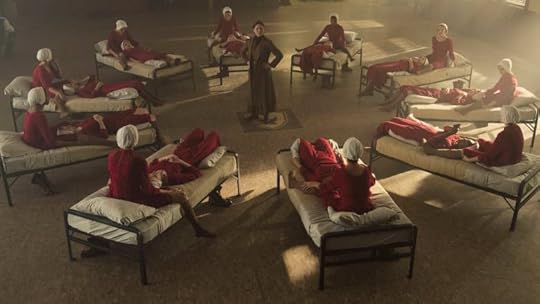
Lastly, Janine’s storyline comes to a head in the final episode and collides with Offred’s. A Salvaging is called and it becomes apparent they are being asked to kill Janine this time, for endangering the Warrens’ baby. It is when Offred says she won’t that all the other handmaidens follow suit and throw down their rocks. This is also why The Eyes come for her. The last shot is of Offred getting into the vehicle, just like in the book (though unlike the book, the story will continue in series 2).
Concluding:
I love the book, but it is quite slow and ends very suddenly, so I understand why some readers find it hard-going. It’s also possibly a story that is so deep in its meaning, that the reader has to be already ‘into’ its message (especially its warning regarding the paternalistic nature of some strains of feminism). On this basis, the book perhaps preaches to the converted a little.
In comparison (and as you might expect), the TV series is MUCH more accessible. Yet they’ve done it in such a way that is both modern *and* classic, yet has built on what is in the book AND added to it. It’s without question one of the best adaptations I’ve ever seen, as it is both faithful and adds to the story world, bringing its meaning to a whole new audience whilst not alienating its core fans. No mean feat. Whether they can capture lightning in a bottle twice with series 2 will be very interesting.
So, my verdict? I think I actually like the adaptation better, because it has the potential to take Atwood’s message further in the long term. Bravo!
What do you think?


November 27, 2017
My Top 5 Remarkable Rom-Com Reads Of All Time

When is a Rom-Com not a Rom-Com? When it’s labelled as chick lit, women’s fiction or a romance novel, of course. It doesn’t really matter what category or genre it’s labelled under, in my humble opinion, if it has these essential elements:
At least one main character who is ‘played for laughs’ with a funny voice, witty dialogue or hilarious internal monologue
A central romance or love story (other stuff can also be happening)
A happy ever after (HEA) or happy for now (HFN) ending – ‘everybody dies’ books are not welcome here…
Wacky plot details and accidental misunderstandings are entirely optional!
So without further ado, here’s a few of my favourite Rom-Com books, or whatever you want to call them.
1) Rachel’s Holiday by Marian Keyes
Some would disagree with this book being categorised as a Rom-Com, but I think it is. There is a heroine dealing with some difficult issues and she’s an ‘unreliable narrator’ of what’s really happening, but it’s done with Marian Keyes’ trademark humour. There’s also an example of a sex scene with smouldering build-up…Luke, aka the ‘ridey’ real man. Hello!
2) The Hating Game by Sally Thorne
I read this one recently and absolutely loved it. The Hating Game is the debut novel from Australian author, Sally Thorned, and she nails the enemies to lovers trope. It’s very funny, from the moment the two lead characters appear on the page, glaring at each other across the partitions in their fictional office. Highly recommended!
3) Risky Business by Amy Andrews
This is another unusual Aussie choice from one of my favourite authors, Amy Andrews (who I’ve shamelessly fan-girled at the Romance Writers of Australia conference). Risky Business is the tale of a heroine, Samantha, who fears her eggs are getting past their use-by date…her fertility is coming to an end and she wants a baby. Now. Her eggs are talking to her, and the internal banter is giggle-worthy. Enter the hero, Nick, who is a manly man who also just happens to inherit a romance bookshop. This one is sexy and funny, has lots of fab Aussie references and just an all round fun read.
4) Bet Me by Jennifer Crusie
Rightly considered a classic in romance writing circles. This book is hilarious and features an unconventional heroine, a chubby actuary, and a bet that the hero can’t get her into bed within a month. There are heaps of misunderstandings in this one but it only adds to the fun. I don’t know why this book hasn’t been made into a movie yet. Hurry up, Hollywood.
5) Play by Kylie Scott
This book is right up there in the smokin’ hot romance scale, as well as laugh-out-loud funny. The hero, Mal, is one of the members of the Stage Dive rock band. It follows the band (part of a series of Stage Dive books) but to me, Mal is the funniest and most memorable character. His one liners are very naughty but also very funny. Trust me on this, you want to read this one but it is R rated (fair warning).
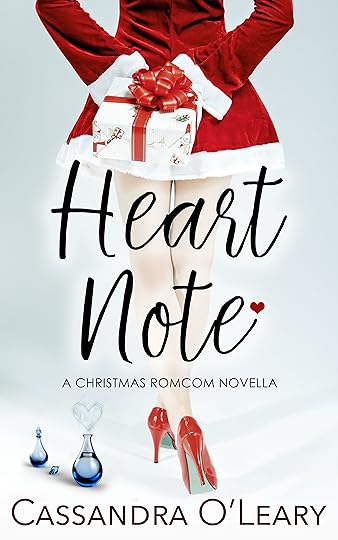
BIO: Cassandra O’Leary is a romance and women’s fiction author, communications specialist, avid reader, film and TV fangirl and admirer of pretty, shiny things. Cassandra is also the Winner of the We Heart New Talent contest, HarperCollins UK. Nominated for BEST NEW AUTHOR in the 2016 AusRom Today Reader’s Choice Awards for excellence in Australian romance fiction. Her Christmas novella, Heart Note, is OUT NOW!
November 24, 2017
The AMAZING Benefits of the Book for the 21st Century
Why pick up a book when a smartphone will do?
The advent of the smartphone and the availability of internet has made finding new information and entertainment easier, but whilst this is convenient, it has also made life a little boring. Books make the reader think so much more whilst enjoying a story, rather than watching the same Hollywood actors and special effects that were wheeled out in the last blockbuster. Exercising our imagination whilst reading has far more benefits for the mind than relying on a screening subscription, and with a library membership it can also be free.
Workout for the Mind
It has been found that reading has positive effects on the mind. Reading has a myriad of benefits, from expanding the vocabulary to increasing general knowledge. Whilst many equate non-fiction with improving general knowledge, fiction can do this as well because as well as stimulating our imagination it stimulates curiosity to find out more about the possibilities beyond the scenarios or places explored in the story. Reading has also been linked with staving off age-related memory decline and depression.
Get Them While They’re Young!
There are so many demands on young people’s attention now, from the controversial increase of homework over recent years to the availability of video games on smartphones, consoles and computers. For those who have smartphones, it is not just a case of switching off the game, as many smartphone games will send alerts to the phone in order to draw attention back to the game.
Among all this engagement with technology and learning, there should still be a place for reading for pleasure to allow for the imagination to be properly piqued from an early age. It is never too young to start reading with children, and those that are exposed to books at a young age are more likely to continue reading and reap the benefits as they get older.
And Relax …
Even when reading the most tense of thrillers, reading has effective relaxing qualities. Although the reader may feel tense awaiting the the next twist in the tale, they are also spending that time enthralled in fiction and away from real world commitments and stresses. Whether this means reliving nostalgia by reading classics or childhood favourites, or indulging the thrill-seekers’ need for tension and tenterhooks, curling up in comfort with a book is an effective way to relieve stress.
Everyone lives a busy life but really the benefits of reading are just too good to pass up. From getting children off to the best start in life by preparing them for the reading they will do at school and giving them an alternative to screen-time, to relaxing after a hard day and maintaining mental agility, reading does it all. There are plenty of opportunities in life to sneak in a read – travelling on public transport, in the bath, in the doctor’s waiting room … So, before picking up the smartphone people should remind themselves how long ago they last enjoyed a good book.
BIO: Jane Sandwood is a professional freelance writer and editor with over 10 years’ experience creating both print and online content. When Jane isn’t writing, she is busy spending time with her family. She also has a great passion for reading, enjoys music and travelling whenever she can.
November 22, 2017
CRIMINALLY GOOD: interview with author Caroline England
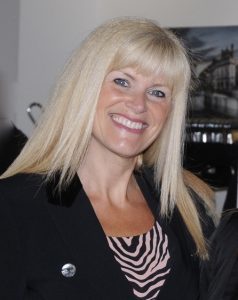 1) So, who are you & what have you written?
Hello Lucy! I’m Caroline England, a former lawyer turned author. My debut book, Beneath the Skin, was published by Avon HarperCollins on 5 October this year. You can find me @CazEngland on Twitter, cazengland1 on Instagram and you can LIKE my Facebook page. My second book, My Husband’s Lies, will be published by Avon HarperCollins on 3 May 2018.
2) Why do you write crime fiction?
I love the crime fiction genre and it’s enormous range. From being very young it has always been my first reading choice. Beneath the Skin is very much at the ‘domestic noir’ end of the spectrum. It is a slow, thoughtful and nuanced unfurling of secrets, and though it has psychological elements, it’s more character based than plot, so it’s more suspense or mystery than ‘thriller’.
3) What informs your crime writing?
By profession I’m a solicitor. As a trainee I worked mainly in criminal law, representing burglars, car thieves and even one or two murderers! After that I practiced divorce and matrimonial work, then went on to do professional indemnity, representing professionals such as solicitors and surveyors who’d made a mistake – or not – as the case might be.
All these experiences have influenced my writing as I’m captivated by people and the human condition; 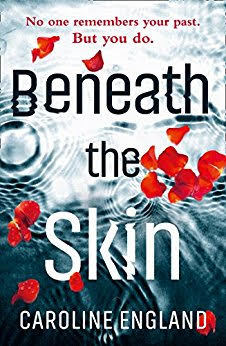 how we’re all different but the same, how we’re all flawed and frail, capable of lies, betrayal, deceit and even worse! It sounds a little biblical, but which of us hasn’t sinned? Whether dealing with crime, divorce or professional negligence, a solicitor is like a counsellor, you’re seeing people naked, effectively; raw, human emotion!
When I left the law, I became a volunteer community mediator, which again was fascinating. This time I heard not one, but two or more points of view, two or more versions of truth, which is very much what story telling is about.
4) What’s your usual writing routine?
Beneath the Skin was published on ‘Super Thursday’. As you’ll know, this is the day all the big-gun-top-authors get published, giving them time to vie for the Christmas charts. Alas, a wee debut like Beneath the Skin struggles to keep its head above the waves, so I’ve been spending an inordinate amount of time glued to my study chair, tweeting and posting, messaging and emailing, researching and learning, phoning and begging! I think you get the picture. In short, the past few weeks haven’t been the norm.
Typically I start the day waving my youngest girl off to school, then I head to the study, sit at my desk and fire up the laptop. I delete as many emails as I can get away with and cross off the top things on my to-do list and put them at the bottom (surely that’s progress?)
In recent months it’s been more editing, amending and polishing than creating new sentences. I can’t wait to go back to empty days so I can let my mind wonder with a new novel I began a few months ago. When I do get back there, I’ll read the last chapter, get into the character’s headspace, wear their clothes, eat their food and see where he or she takes me for three or so hours (with plenty of Yorkshire tea). I’ll have an early lunch, then go back to the laptop for another couple of hours until my daughter comes home. Though I’ll try to get back to the writing, more likely than not I’ll get distracted by one of those dreadful ‘Housewives’ programmes my daughter insists on watching!
5) Which crime book do you wish YOU’D written, and why?
Death on the Nile or any of the Agatha Christie books. So simply written, yet so complex, intriguing, misleading and surprising.
November 21, 2017
How To Keep Your Love For Reading
If you’re a life-long lover of books, it can be very disheartening to wake up one day and realise that you just don’t seem to love it anymore. Whether it’s because finding time to read is a struggle between what you want to do and what you should do, or if it’s just because you haven’t been enjoying what you’ve read, there is hope. Here are some tips to help you reKINDLE your love affair with the written word, and enjoy reading again.
1) Designate Some Time to Reading
There is work to do, laundry to fold, or errands to run, and somehow reading gets associated with wasting time. The joy that we get from relaxing with a good book now comes along with negative feelings of guilt or laziness. A good way to combat this is to associate reading with self-care. Tell yourself, and your family and friends, that you need to devote 6 or 8 hours (or even a whole weekend) to reading. Doing something refreshing for yourself is not a waste of time; give yourself permission to forget about life’s problems and lose yourself in a book. MORE: 1 Simple Habit Guaranteed To Lower Your TBR Pile
2) Minimise Distractions
One of the quickest ways to lose our love for reading is to not be allowed to finish a page in between distractions. You may unconsciously start associating reading with frustration. Set your phone to Do Not Disturb, shut the bedroom door, and tell your family or roommates you’re resting. This lets you enjoy your reading without the anxiety of the next interruption.
3) Consider Beta-Reading
Beta-reading is the art of reading a draft of a book, and then telling an author how they can improve the book. A good author knows the value of a strong beta-reader, and if you’re a bibliophile, you may have a lot to offer. The best part? You can get paid to simply read a book, and then tell them what you thought. Now, don’t expect to make millions here, but $25 is not unreasonable. This is a great way to get some quality, distraction-free reading time. Just explain to your spouse or your kids that you are “working.” It’s a good way to get that “permission” to let yourself enjoy a book!
4) Share Your Thoughts
When is the last time you really spent some time dissecting what you thought of a book you read? Sometimes, we get so caught up in being able to say we read, that we aren’t paying attention to what we’re reading. Create a blog or website where you can review books on your own terms, and spark some discussion. It may remind you of what you love in a book, or what you hate, and gives you the opportunity to reacquaint yourself with why you are a reader. MORE: How Do YOU Handle Your TBR Pile?
5) Enjoy Something Light
Trying to keep up with best-selling literary works and reading the things you think you should be reading is a frustration you just don’t need. If a book doesn’t keep you engaged, you’re going to start hating picking it up just to finish it. It’s okay to enjoy a mystery novella or a romance novel just for the fun of it. Finishing a light, fun read can be more rewarding than slogging through a book you just don’t enjoy.
6) Multitask
No one said you have to be holding a book in your hands in order to read it; audiobooks can be a wonderful way to bridge the gap between getting things done and getting your book-fix. While many people consider audiobooks to be “cheating,” ignore that. If they give you an opportunity to enjoy a book while getting in your workout, commuting to work, or cleaning the house, do it.
7) Take a Break!
It may sound counter-intuitive, but sometimes deciding to take a break from reading for a few days- or weeks- can help to reset your book habits. At some point, you will find that you’re craving the escape that you get when you lose yourself in a book, and you’ll be itching to read again. MORE: How To Keep Your TBR Pile Fresh
BIO: Rachel is a mother of 2 beautiful boys. She loves to hike and write about travelling, education and business. She is a Senior Content Manager at BizDb.co.nz – an online resource of relevant business information.
November 17, 2017
BOOK VERSUS FILM: The Shining – Which Is Better?
There must be something about the initials S and K. Not only do they stand for one of the world’s greatest authors, they also apply to one of our finest directors. But those two letters aren’t the only thing Stephen King and Stanley Kubrick share. They have both told the same scary story, about an isolated hotel in the mountains, but who tells it better? Welcome to the Overlook!
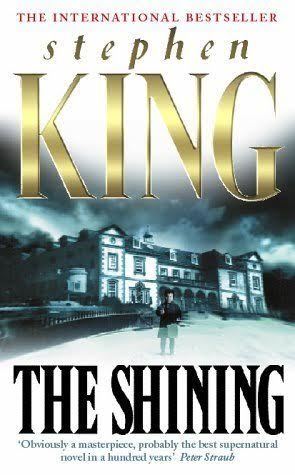 The Book
Published in 1977, The Shining is among King’s most personal novels. He created the character of Jack Torrance, a man battling alcoholism, whilst he was facing the same struggle. The location also came from his own experience, though the hotel he and his wife stayed in as it closed up for the winter didn’t come with ghosts. It did have a room 217 though: that’s where King began his third book.
The plot sees Jack become caretaker of the Overlook Hotel during the closed winter season. Along with wife Wendy and son Danny they are soon snowed in – but they are not alone. The hotel has a gruesome past, and its ghosts target Jack. Danny, who has psychic powers (the ‘shining’) sends a telepathic cry for help to the only other person with the same ability: the hotel’s chef, Hallorann. But Hallorann is hundreds of miles away, and it won’t be long before Jack succumbs to the hotel’s evil plans for Danny…
At just over 400 pages, the book is perfectly structured into three acts. Act One ends at page 98, as the Torrances take possession of the hotel. The Act Two mid-point straddles the 200-page mark when Danny has his horrifying encounter with the ghost in room 217 (the outcome of which shatters Jack and Wendy’s already fractured relationship). And Act Three commences just before page 300, when Hallorann gets Danny’s SOS, and begins the long journey back to the Overlook.
The Characters
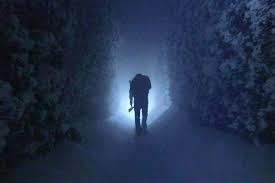 After Salem’s Lot’s large cast, King dials down the main characters to four: Jack, Wendy, Danny and Hallorann. Much of the first act sets up Jack and Wendy, especially his issues with alcohol, and his recent dismissal from a teaching job. Through Danny’s ability to see into his parent’s minds, we learn they came close to a divorce when Jack accidentally broke Danny’s arm during a drunken rage, and discover Jack has considered suicide. It’s a raw, very believable dynamic, and whilst Jack may be the book’s protagonist he’s certainly no hero. He is, however, trying to be a better person for the family he loves.
The antagonist in the book is the hotel itself. Occasionally the Overlook finds a voice in one of its ghosts, especially barman Lloyd, but the subtle possession of Jack is where we really see the malign influence at work. It appeals to his vanity (a scrapbook detailing the hotel’s grisly history becomes Jack’s writing project) and only when the family are snowed in does it prey on his weakness (ensuring there is drink when Jack is at his lowest). One of Danny’s insights sums up the Overlook perfectly: “This inhuman place makes human monsters.”
The Horror
The first danger comes with the wasps’ nest found in the hotel’s roof. Jack kills them all with a bug bomb, presenting the empty nest to an impressed Danny as a gruesome keepsake, but that night the boy wakes to find the colony very much alive… It’s a key scene because it not only establishes Jack as a liability in Wendy and Danny’s eyes, but in ours too – for we are never 100 percent certain he actually did kill all the wasps.
There are more horrors to come. A fire-hose that seems alive, like a snake. A presence haunting the kids’ playground. The topiary animals that move when you’re not looking. And Danny’s recurring vision of a mallet swinging Jack chasing him through the hotel. These scenes, along with the wasps’ nest and the scrapbook, have two things in common. They ratchet up the tension, with each new threat looming larger than the last. And they are all, surprisingly, missing from the film.
 The Film
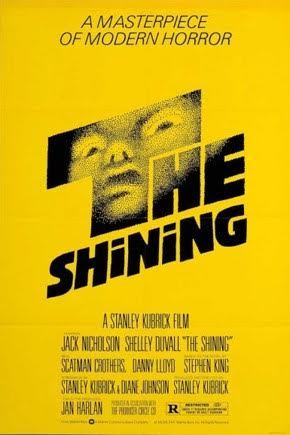
When Stanley Kubrick announced in 1978 that The Shining would be his next film, anticipation was high. He adapted the script himself, along with Diane Johnson, and filled Elstree Studios with truly spectacular sets, allowing the director free reign to craft precisely the film he had in mind. The end result – from its stunning opening landscape shots to the final harrowing chase through the hedge maze – is a visual masterpiece.
Made for between $11 and $18 million, and released in 1980, it divided critics at the time but is now considered one of the finest horror films ever made. Empire magazine recently placed it at 35 in their 100 Greatest Movies poll (the highest ranked supernatural horror), and Jack Nicholson’s performance as Jack Torrance was voted 25th most memorable villain by the American Film Institute in 2003. So, ‘classic’ feels like an understatement.
The Changes
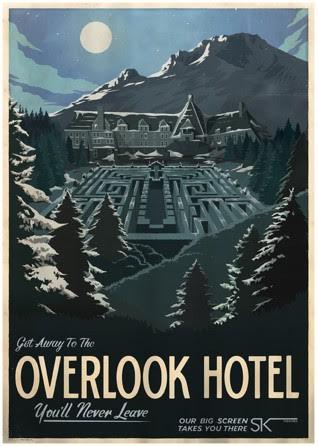 The set-up follows the book quite faithfully, but by the time the family are alone in the hotel (much sooner now, as almost all Jack’s back-story has been jettisoned) the pacing actually slows down. For much of the film the only bursts of action are several long, single-take shots with the then-new Steadicam stalking Danny though the Overlook’s corridors on his tricycle. The dead woman in Room 217 still appears (though it’s now Room 237) but it’s telling that whenever Jack talks to a ghost he is actually facing a mirror. Even when he’s locked in the larder, the door through which he begs ghostly Grady to release him has a reflective surface. So, how much of this is real, and how much of it is in Jack’s head?
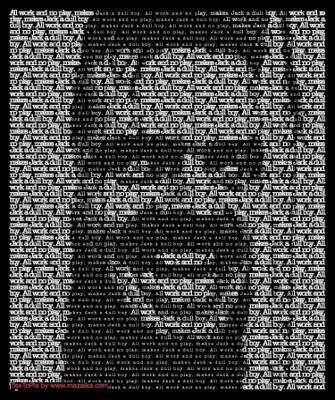
In place of King’s scares, Kubrick brings new chills to the Overlook. Danny sees Grady’s twin daughters (and their chopped-up corpses) so there are some ghosts on the loose; and one terrific scene has Wendy find the manuscript Jack’s been working on for months, only to discover it comprises of ‘All work and no play makes Jack a dull boy’, over hundreds of pages. This tells us far more about his unstable psyche than any axe through the door.
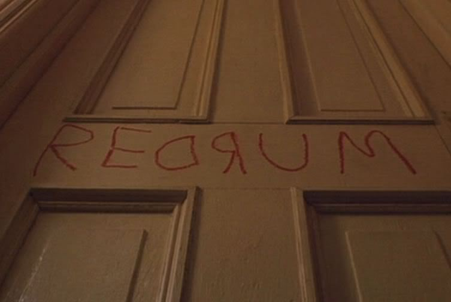
The way some scenes have been reinterpreted works better on screen too. ‘Redrum’ in the book isn’t a surprise because it appears so often that we realise it’s ‘murder’ written backwards long before the reveal. The film wisely gives us the briefest glimpse of the word before having Danny speak it instead – so it’s a shock when we learn the truth.
I also think Kubrick’s version of Danny’s assault in Room 217 / 237 is more effective. The book shows the dead woman attacking the boy but the film keeps her appearance hidden until later – and so now we’re treated to Danny stumbling towards his parents, back to camera, and though we know something is wrong we have no idea what until Wendy and Jack find the bruises around his neck… by which time our imaginations have already filled in the terrifying blanks.
But what follows this scene sums up exactly why the book and film are so different.
In both versions Wendy accuses Jack of inflicting Danny’s bruises. In the film Jack and Danny are not close; their first scene together, driving to the hotel, highlights this disconnect. But in the book, the bond between them is so strong that Wendy feels jealous – and so, after Danny is attacked, she secretly hopes it was Jack. The book’s relationships between the Torrances, the love, loyalties and resentments, are so rich and identifiable that we cannot help but care for all three of them – even when one finally threatens the other two. In the book we want Jack to survive. In the film we want him to die.
It’s not just Jack – or Wendy, for that matter – other characters also suffer in translation. Hallorann’s perilous return to the Overlook originally ends with him rescuing Wendy and Danny, a rewarding outcome for the character and a satisfying conclusion for the reader. But the film has him arrive at the hotel only for Jack to put an axe through his heart. The overriding feeling this time is of being cheated. And is it hard to shake the feeling the characters are little more than set dressing for the hotel itself.
Conclusion:
 In showing Jack’s battle against alcohol and his steady descent into madness, Stephen King points a spotlight on mental illness decades before it stopped being a taboo subject.
At the heart of any story there must be characters we can relate to – horror especially, because believable characters make an unbelievable story-world seem real. The family in the book make us feel and make us care; the family in the film make us watch – but as voyeurs, for there is no emotional attachment.
The film is a work of art, but by making Jack both protagonist and antagonist it highlights a serious flaw in its version of the story: Jack doesn’t need the Overlook. From the first moment we see him it’s clear he’s already unhinged – and Wendy and Danny will be in just as much danger if they never go to the isolated hotel in the mountains.
So the winner is the book.
BIO: Nick Jackson writes horror and science fiction. His most recent work appeared in the dystopian anthology The Anthropocene Chronicles vol 2, available on Amazon. He lives in Leeds, England, and does not wish to hear from anybody offering cheap holidays to remote hotels in the Rockies.
November 16, 2017
CRIMINALLY GOOD: interview with Stephen Gallagher, author and screenwriter
 1) So, who are you & what have you written?
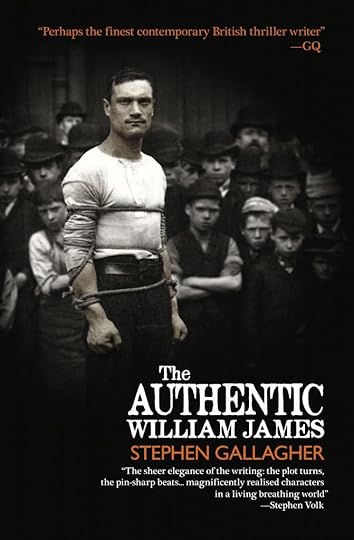
Stephen Gallagher. I started out in SF and horror (Doctor Who, Chimera) and my move onto this genre was with a crime/horror fusion novel called Valley of Lights. After that I—unconsciously—refined my act toward straight crime thrillers with an edge of something brought in from those other genres. I wrote Rain, Down River, and Nightmare, with Angel, The Painted Bride and The Spirit Box. All aiming to offer a hint of something big and dark moving under the realist narrative.
In TV I’ve written for Murder Rooms, Rosemary & Thyme, and Silent Witness. A forgotten crime show called Rockliffe’s Folly and another actually called The Forgotten. I argued unsuccessfully with producers over the need for science probity on ITV’s Eleventh Hour but then saw my show done properly in Jerry Bruckheimer’s CBS makeover. Last year I worked on Stan Lee’s Lucky Man.
This year’s novel is The Authentic William James featuring Sebastian Becker, Investigator to the Lord Chancellor’s Visitor in Lunacy. Check me out on Goodreads, HERE, on imdb and follow me as @brooligan on Twitter.
 2) Why do you write crime fiction?
At its best it’s a path to the big themes—good and evil, light and darkness, sin and redemption, all run through a filter of credible human psychology so it has meaning at a contemporary level. Most real-life crime is desperately mundane, but even there you can open a door to something bigger. Look at what Simenon could do with a drab life.
3) What informs your crime writing?
I came in through the horror/fantasy door so I imagine it’s that.
4) What’s your usual writing routine?
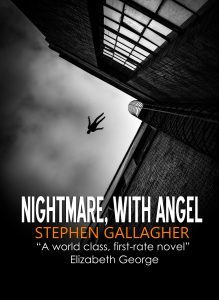 Faff around for six hours and then cram a day’s work into the last two. Logic suggests that if I could move those two hours into the morning then I could take the rest of the day off. If only. Frederick Schiller Faust, who as Max Brand (and other names) was one of the twentieth century’s most prolific and successful writers, used to bang out his 14 pages before breakfast so he could spend the rest of the day on his poetry, which no one remembers. My point being… nah, I don’t have one.
5) Which crime book do you wish YOU’D written, and why?
Eye of the Beholder, by Marc Behm. Maxim Jakubowski put me onto it, back when he was running the Murder One bookshop. It’s an intense story of love and obsession, like a tragic aria sung on a single breath. Comparable to Cornell Woolrich at his best. Why do I wish I’d written it? So I could be comparable to Cornell Woolrich too.
November 14, 2017
BEST OF 3: Andrew Maak, Book Blogger
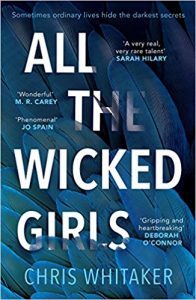 1) All the Wicked Girls by Chris Whittaker
Why I like it: This is the most recent of my recommendations having been only been released in August 2017. It is the second novel by this author with ‘Tall Oaks’’ having been released last year.
An excellent slice of rural Americana, it is more about the residents of a small town where a young girl has gone missing than the crime itself. The local dialect used is very genuine and that may cause the first few pages to be a struggle but please stick with it. The characters are wonderfully drawn and stay with you long after the last page has been turned.
It is one of those rare books that you can’t stop reading but really don’t want to end and I have been recommending it to everyone who asks what my favourite read of the year has been.
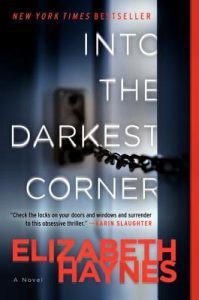 2) Into the Darkest Corner by Elizabeth Haynes
Why I like it: Domestic-noir – if that is the correct term for the sub-genre this recommendation falls into – has always been my least favourite within crime fiction and indeed my wife had to persuade me to give this one a read. I was truly gripped from the word go. The author created an excellent example of a flawed protagonist and the depiction of Obsessive Compulsive Disorder, to me, felt very well researched and conveyed. The tension grew fantastically well throughout the course of the book and built to a fantastic conclusion.
With the domestic setting of the book, the events portrayed could very easily be happening to someone – possibly someone you might even know – as you read it and that is genuinely scary.
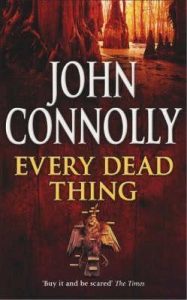 3) Every Dead Thing by John Connolly
Why I like it: This is the first in the very popular Charlie Parker series which I had steadfastly avoided for many years thinking that I wouldn’t like my crime fiction mixed with supernatural elements. I eventually cracked and found out I had been very very wrong. Not only is Parker a fantastically-drawn protagonist but every recurring side character and antagonist are given real depth and practically jump from the page.
Every Dead Thing itself is a terrific introduction to the character, with Parker following a serial killer into America’s deep south. The atmosphere elicited is enough to get you sweating and swatting at mosquitos.
Admittedly the series is not for everyone, but if you haven’t tried them I urge you to do so. Every new Charlie Parker release is one which I now look forward to months in advance.
BIO: Andrew Maak blogs about books and beer. Check out https://booknbeersite.wordpress.com.
November 12, 2017
CRIMINALLY GOOD: interview with author Judith O’ Reilly
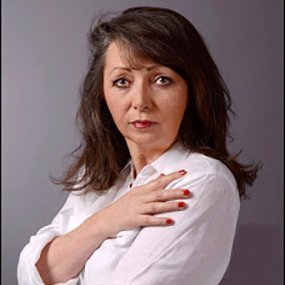 1) So, who are you & what have you written?
I’m a writer. I usually pause after that. Sometimes I add ‘and a journalist’. Sometimes I don’t. Tends to depend on how confident I’m feeling on any given day. But I’ve been writing books for ten years. Very sloooooowly. (I also do occasional journalism and strategic communications work.) My website is wwww.judithoreilly.com (or on twitter at @judithoreilly). And my latest book which comes out as an ebook 6th November and in paperback 15th March, is called Killing State.
It’s a departure for me. A political thriller with lots of action adventure. My other two books Wife in the North and A Year of Doing Good were both classed as memoirs. Wife in the North (was based on my blog at the time www.wifeinthenorth.com) and was about moving from London to Northumberland and being a wife and mother and bereavement and starting life over. My other non-fiction book, called A Year of Doing Good, involved me doing a good deed a day for a year and was an exploration of goodness. Doing all those good deeds did not make me a better person, by the way. In case you were wondering.
2) Why do you write crime fiction?
I didn’t want to keep writing about my life. I tried writing fiction straight after my memoir, Wife in the North, but it simply wasn’t good enough. I was naiive. Because I’d always been a reader, and because I’d already written non-fiction, I thought I could just sit down and knock out a great novel. It didn’t work. Then I had the idea for the second non-fiction book, and put the novel to one side. Luckily for everyone concerned, I have to say.
When I thought about writing fiction again, I did it differently. This time, I invested time and energy in learning the craft. I decided I wanted to write something with more plot. (I can’t write ‘literary’ fiction.) But I love politics and I’d always loved thrillers. Plus I’m interested in morality and mortality and all of that has fed into my own thriller with good guys and bad guys and imminent death round every corner.
3) What informs your crime writing?
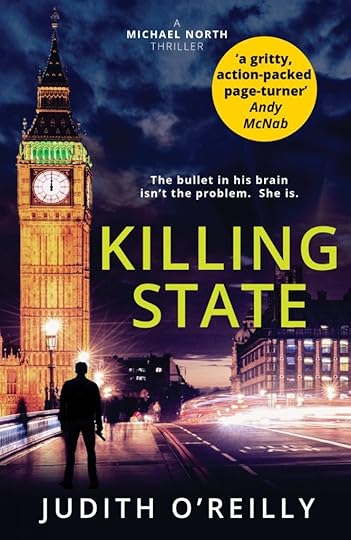 Having been a national journalist (working for The Sunday Times, Newsnight and Channel 4 News), I keep up with the news and there’s flicks of past news stories in Killing State. I’ve a scene in the book where a woman is vulnerable to knife attack in an East End park. Although I didn’t realise when I was writing it, in retrospect, that scene was probably triggered by the terrible death of a US artist murdered in an East End park when I was living in London.
My hero is an extra-governmental assassin who works for a mysterious agency called The Board and he and his colleagues ‘take out’ bad guys who can’t be brought to justice any other way. Sometimes those deaths are apparent accidents or can be explained away medically. Sometimes they are the kind of deaths which journalists investigate for years but never come up with a proper explanation for.
Another key theme is what happens when women won’t be told what to do. When they won’t behave as they’re expected to. Won’t do as advised. Won’t do what men tell them to. My hero is a man, but I have a lot of powerful women characters who are strong and dynamic and do what they think they have to do, regardless of the consequences. They refuse to play it safe. I guess I’m pretty stroppy these days. I only wish I’d been stroppier when I was younger.
4) What’s your usual writing routine?
I have a black miniature poodle called Joey, who is a recent addition to the family. My 11-year-old daughter waged a war of attrition over a great many years to get a dog, and finally won. Once my three kids leave for school around eight, I run a comb through my hair to make myself look respectable, slap on some lippy, think Bleeding Hell I look old, and take the dog for a walk along the Durham riverbank. Part of the dog walking involves coffee with a mate who also works at home. My mate designed my cover and promotional artwork, and also set up my website (she is basically a genius), so occasionally we justify the coffees by tweaking something like adding the Andy McNab blurb to the front.
When I get back, I move the dog basket under my desk and start hammering away at the keyboard. I’m focused so aside from drinking an unbelievable amount of tea, I stick at my desk till the kids come in. Once I’m through that, I try and work for a couple more hours till I break for dinner. I try not to go back to my desk in the evening if I can avoid it. I used to work in the evenings, but these days it doesn’t do it for me. I will confess though, that I do work seven days a week. Not all day Saturday and Sunday, but part of both. It’s an extremely bad habit. I partly blame working at home. It’s just playing catch up for the mornings I have to take elderly parents to hospital or gets distracted by something domestic during the week.
5) Which crime book do you wish YOU’D written, and why?
I try to tamp down envy of other writers, because you have to accept you do what you do and they are who they are. I’m a big admirer of James Patterson and Lee Child. I’ve just found John Connolly and love his Charlie Parker. Howard Linskey is a Durham writer with a nice way with him. When the Robert Galbraith novels came out I immediately adored Cormoran Strike. But probably if I had to pick one, it would be Raymond Chandler’s Philip Marlowe books. I love the style and the wit and if I had to chose a favourite with a gun held to my temple, then it would be The Big Sleep. Sleek, witty, evocative and gripping.
November 10, 2017
7 Tips for Developing Your Reading Habit
We could all benefit from reading a little more. It’s sometimes difficult to find the time to read, no matter how much we may want to. While putting the effort into developing your reading habit is something you have to fully commit to, changing the way you decide to read can make it easier to commit.
1) Use GoodReads
GoodReads is a social network specifically for readers. It allows its users to create reading lists, make virtual bookshelves, and see what their friends are reading. A sense of community makes reading a little more fun, and it always helps to have that reading list. You’ll know what you’re working towards and be able to create a reading adventure.
2) Buy Books Digitally
If you have a digital reading device, you’ll only need to carry one thing. You can buy books from your couch and read whatever you want, whenever you want to read it. The convenience leaves you without an excuse. Just make sure you’re using a secure connection when you purchase eBooks, especially if you’re on public WiFi. You have an entire library at your fingertips.
3) Set Reasonable Goals
Reading enthusiasts have a tendency to brag about lofty reading goals. You might not be able to finish a book a week with your current schedule – especially if it’s a long book. Even a book a month is more than zero books a month. Don’t overwhelm yourself with goals you can’t meet. You can always finish early, but you shouldn’t feel like reading is a high pressure chore.
4) Don’t Read Things You Hate!
If you have a hard time picking up a book again, it could be because you don’t like it. Don’t judge your own tastes based on what other people are reading. Some people adore The Great Gatsby. Other people can’t stand it. If you’re one of the people who would rather read anything else, then read anything else. It’s hard to invest yourself into a book that doesn’t actually interest you – reading shouldn’t be work.
5) Have an Accountability Buddy
Some people join book clubs because it keeps them focused on reading, but others feel like book clubs are too much trouble. If you don’t want to involve yourself in an entire club, partner with a friend who likes to read. Whether you’re reading the same thing at the same time and discussing it as you go or reading different things and telling each other about them, reading will feel like a fun hobby that brings you closer together.
6) Put Reading in Your Routine
Whether you read more or less than your allotted time, you should have some time allotted. Avid readers like to enjoy a book with their breakfast and coffee. If that will work for you, bring along a literary companion. You might prefer reading as a way to relax before bed. If it becomes a part of your day to day life, it will be easy to keep up with your habit.
7) Make the Most of Your Spare Time
Read whenever you can read. If you have a long commute or a lengthy wait at the doctor’s office, spend that time reading. If you would have otherwise spent that time unproductively, it never hurts to read instead. You’ll finish books much faster when you pick up a book in your spare time.
Concluding:
Anything can become a habit with time. As long as you try your best to stick to reading, you’ll find that it becomes easier as you immerse yourself. You might not be one of those people that can read a full book cover to cover in one sitting, but you can still be well read by taking a little time to do it each day.
BIO: Sarah Kearns is a hard working mother of three daughters. She is a Senior Communications Manager for BizDb, an online resource with information about businesses in the UK. She loves cooking, reading history books and writing about green living.
Lucy V. Hay's Blog

- Lucy V. Hay's profile
- 174 followers

