
Lucy V. Hay's Blog, page 20
September 29, 2017
CRIMINALLY GOOD: interview with author Dietrich Kalteis
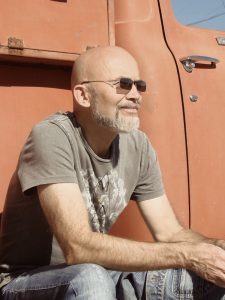 1) So, who are you & what have you written?
I’m a Canadian author living in Vancouver, and I’m getting set for the launch of my fifth novel, Zero Avenue, during the first week of October. My first three books are crime stories set on the West Coast, and the fourth, House of Blazes, is historical fiction set in San Francisco in 1906 at the time of the great earthquake and fire.
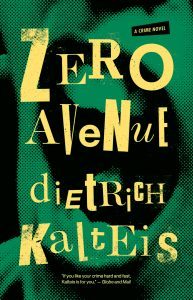
Zero Avenue takes place during the early days of Vancouver’s punk music scene. The story follows Frankie del Rey, who aspires to launch her music career and raise enough money to cut a demo record and take her band Waves of Nausea on the road. To make ends meet she mules drugs for a powerful dealer named Marty Sayles. Things are going well when she gets in a relationship with Johnny Falco, owner of a struggling club on the Downtown Eastside.
That is, until Johnny decides to raid one of Marty Sayles’ pot fields. When he gets away with it, Frankie’s bass player finds out about it and figures that was easy enough and rips off another one of Marty Sayles’ fields. When he goes missing, Johnnie and Frankie try to find out what happened. Meanwhile Marty Sayles comes looking for who ripped him off the first time — a trail that leads straight to Johnny and Frankie.
I am also the award-winning author of Ride the Lightning, The Deadbeat Club, Triggerfish, House of Blazes. Nearly fifty of my short stories have been published internationally. You can find me online via my blog, HERE.
2) Why do you write crime fiction?
Growing up, I was inspired by reading the greats, guys like Elmore Leonard, George V. Higgins, James Crumley, and Charles Willeford. When I started out I wrote mainly short stories, experimenting with different genres and styles, trying to find my own voice. And I guess I ended up writing the kind of novels that I always liked to read, and crime fiction just seems to fit.
I like to tell a story from the characters’ perspectives, trying not to interfere by imposing my own values or principles in the narrative — letting them tell their own story. Often the characters end up in that gray area between not all good and not all bad. To me, that makes them less predictable and more interesting since they don’t follow any rules, or they bend them to get what they want, or catch who they’re after. I don’t plot my stories beforehand, so when I start writing opening chapters I have no real idea where the story will end up, but I enjoy seeing where the whole thing will lead.
I also like tossing some levity against the tension of a crime story; it creates an interesting balance. While there’s nothing funny in the crimes themselves, sometimes it’s the characters’ own cleverness or the lack of it, and sometimes it’s their own desperation, which lead to moments of dark humor.
 3) What informs your crime writing?
 I often read something in the news, or I’ll listen to somebody telling me about something that happened. If I find it interesting, in my mind I start thinking, well what if this happens, and the next thing I’m spinning it into a story. That’s how my novels usually start out, with a single scene. I don’t plot out my stories beforehand, so the stories just grow from these single scenes. As I’m writing, I’m also researching and finding more that I can weave into the story.
In my historical novel, House of Blazes, I set the story along the Barbary Coast at the time of the 1906 San Francisco earthquake. What drew me to it for the story’s setting was its lawless history, and I also liked how the story took on this western-meets-modern-city feel. While I was working on the story, I came across an article about a modern-day couple who found a fortune in gold coins on a property they owned not far from San Francisco. The coins originated from the San Francisco mint around the turn of the last century. Experts and historians couldn’t agree how they got there, but it gave me a new twist to build into my story.
4) What’s your usual writing routine?
Itʼs very simple: walk dog, eat, write. Repeat. Along with some coffee, I play music that suits whatever I’m working on, and I write from very early morning until noon everyday. Sometimes I come back to it later in the day, but morning is the best time since I’m sharper then. Keeping to the same routine allows me to stay focused and jump straight in every morning and get right to work.
5) Which crime book do you wish YOU’D written, and why?
I read a novel every week, sometimes more, so I could come up with a long list of great ones. While I can’t say that I wish that I’d written any of them, a great novel inspires me to write my own stories; and if anything, I wish I had extra time to read more.
For me, it’s about an author’s voice — it’s the personality of the writing, it’s what makes each author unique. It’s the way they combine syntax, pace, character dialog, and all the story elements and just pull the whole thing off. It’s like magic when I read a story that’s hard to put down. And when I finish, I just want to rush out and find everything else that author’s ever written.
It doesn’t happen with every book I read, but there are a couple that I recently read that are that good: Razor Girl by Carl Hiassen, and The Force by Don Winslow. Then there are a few classics I reread that also had that effect the second time around: The Last Good Kiss by James Crumley, Miami Blues by Charles Willeford and Trouble in Paradise by Robert B. Parker.


September 27, 2017
CRIMINALLY GOOD: interview with author Benedict J Jones
 1) So, who are you & what have you written?
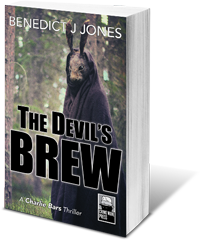
My name is Benedict J Jones, I’m a writer from south east London and I mainly write in the genres of crime and horror with the occasional western thrown in for good measure. I’m probably best known for my books about my south London private eye Charlie Bars; Skewered and Other London Cruelties, Pennies for Charon and The Devil’s Brew as well as my splatter-punk horror novella, Slaughter Beach.
I’ve been getting stories published for about a decade now and my first novel (Pennies for Charon) came out through Crime Wave Press in 2014.
2) Why do you write crime fiction?
That’s a good question. I’ve always been drawn to examine the darker aspects of human nature and behaviour as they seem to tell us a lot about ourselves. In some ways I think that writing about something, telling a story about it, is a good way to keep the dark away. People seem to have been doing that since the beginning of time and if you look at some of those early stories most of them revolve around the fears that lurk around the edges of our structured lives.
I use crime fiction to try and make sense of things, to follow the secret history of our world and to try and get some kind of handle on the awful events that seem so prevalent these days. Crime fiction can really cut to the heart of social ills and be quite revealing about the nature of things.
 3) What informs your crime writing?
 I think place influences my crime stories, and all my writing really, quite a lot. London herself acts as a strong character in the first couple of Charlie Bars books and even in “The Devil’s Brew” the city stays a major character, albeit one off stage in that novel. As such it isn’t just the physical places and locations that I use but the history and folklore of the metropolis that has soaked into the fabric of the place. There’s something special about walking the same streets that were trod by Jack the Ripper, The Krays, The Richardsons and the rest.
It can also be the little things: snatched glances of things around the city, tiny articles in the paper, half-heard conversations in pubs and bars. It all goes in the mix and can added into stories.
4) What’s your usual writing routine?
Get home from work, eat, shower, and then dive into the work. I find I can usually get about four hours in that way. It works for me in allowing me to get a lot down on the page but that level of intensity, for me, can only be managed for set periods and then I need to do something else!
5) Which crime book do you wish YOU’D written, and why?
That’s always a hard one to answer and my answer changes with some regularity. Right now? I’d probably go for The Friends of Eddie Coyle by George V Higgins. It is a perfectly formed piece of noir pitched with just the right level of sympathy and really gets to the heart of the human condition.
September 26, 2017
Top 18 Questions On What Makes Me A Writer
People always ask me WHERE I get my ideas from, or even WHY I became a writer … So I thought I’d round up some of my thoughts on this for a post! Many thanks to Katherine at Bibliophile Book Club for these thought-provoking questions and for hosting me over at her site recently as part of the blog tour for my new book, Writing Diverse Characters for Fiction, TV & Film. Enjoy!
1) Can you tell us a little about yourself?
Hi! My name is Lucy V Hay (sometimes LV Hay!) and I’m an author, script editor and blogger who helps writers. I’m owner of the writing tips and networking blog www.bang2write.com, which was shortlisted for the UK Blog Awards this year, as well as named Feedspot’s number 1 screenwriting blog in the UK (tenth in the world).
As a script editor, I’ve been privileged to work on a number of fab and award-winning British projects, both feature and short film.
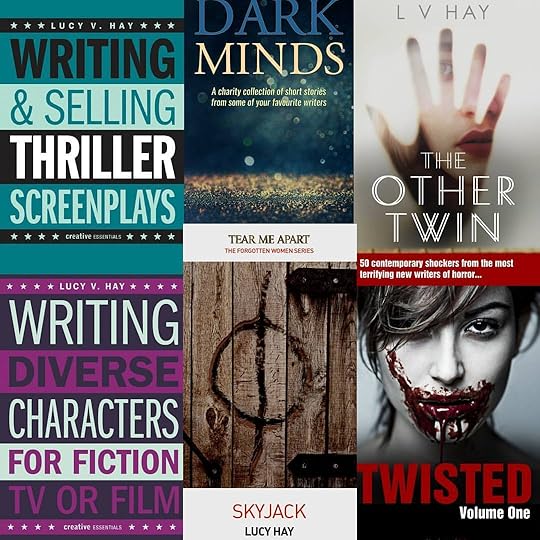
I’ve written books about screenwriting, including one out NOW, Writing Diverse Characters For Fiction, TV and Film. I’m also a novelist; my latest is out with Orenda Books.
2) How did you get into writing? Is it something you’ve always wanted to do?
I’ve always wanted to be a writer, ever since I was a little girl. I wrote my first ‘book’ in the middle of my Maths homework book when I was about eight. It was called DUSTCART GEORGE and it was about a girl who ran away from home and had her own dustcart sweeping up the streets in London. I did my own illustrations too! Needless to say, my Maths teacher was not very happy though she did say she enjoyed the story, so job done.
3) Where do you get your inspiration from?
Everywhere, both in real life and online. There’s always new perspectives and ideas and thought patterns … This is why I love social media so much. There’s always someone sharing their POV, or a snippet from their lives, or a character from history … Whilst it’s true social media can be an extended whingefest and full of people’s pictures of their dinner, I make sure I follow the ‘right’ people … By ‘right’ I mean anyone who might challenge my little bubble and make me think of something differently, rather than abject trolls!
4) How would you describe your writing to anyone who hasn’t read your books?
I would call it ‘dark and lyrical’. Dark, because I am obsessed with the reasons people do and say terrible things to each other; no one wakes up in the morning and says, “Today I will be as evil/careless/selfish etc as possible”. I’m also interested in notions of redemption and whether it’ possible to be ‘good’ after being ‘bad’ – and whether society will let you!
Lyrical, because I am also obsessed with the craft of writing, right down to what words are chosen. I want my work to be literary, but also accessible. I want to bring forth visual tales like my hero, Doris Lessing who was so skilled at ‘word pictures’. That’s the dream.
5) Do you think social media helps in regard to promotion and drumming up publicity for a new book?
Absolutely. Blog tours, tweets, author spotlights, Instagram features, Facebook Q&As, guest posts … they all work in getting a book out there to the readers. The important thing to remember is they are cumulative. In marketing, it’s said the average consumer is exposed to a product like a book four times before they buy it. Also, referrals are so important – people buy your book if they see people they like/follow endorsing it, whether that’s another author or a book blogger (preferably both). This notion you tweet a few times and get an Amazon bestseller simply doesn’t add up!
6) What’s your most favourite thing about being an author?
Writing. I’m so lucky to be able to do what I love as my actual job.
7) What’s your least favourite thing about being an author?
Writing. I hate it so much! (haha). As you might guess, I have a bit of a love/hate thing going on here.
8) Where do you see your writing career 5 years from now?
I would love to have had a number of bestselling books and hopefully, a movie or TV adaptation of at least one of them. I’ve also always wanted to write a dystopian series for teenagers. But really, more of what I’m doing now: writing, workshops, blogging, etc!
9) What’s next for you?
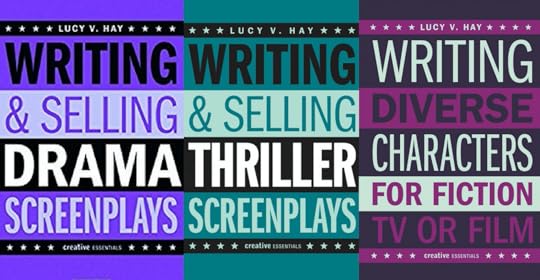
Book 2 for Orenda. No title yet and still working on the rewrites. Also, my latest writing book this September, Writing Diverse Characters For Fiction, TV & Film, which is OUT NOW, published by Oldcastle Books as part of its Creative Essentials range. This will be my third in the series, but my first where I include novel writing too rather than just screenwriting.
10) I often wonder are authors voracious readers. Do you read much, and if so, what kind of books do you enjoy?
I adore reading; I try to read at least one book a week. I think it’s really important writers read – I would even wager real money that the best writers (in a craft sense) are the most well-read (whatever that means). I also think the best writers are the most open-minded and challenge themselves the most in terms of what they read. It can be tough to read outside of your comfort zone, but very rewarding. For this reason, I try to set myself pledges on what to read.
11) Can you tell me your all-time favourite book, or if you have to, your top 5?
Argh, I have so many favourites … and so many fave 5s! I suppose the book that changed my life was probably Maya Angelou’s I Know Why The Caged Bird Sings.
12) Has there been any books you’ve read that you wish you had written?
So many. But I wish I had written GONE GIRL, if only to get a naked Ben Affleck in the shower.
13) When you’re not writing, how do you spend your time?
Spending time with the kids. Reading. Baking. Going for drive, watching movies, hanging out. Nothing earth shattering but it’s the little things I think.
14) Have you any hobbies that aren’t book-related?
I like to take pictures, especially of nature and my 5 cats.
15) What’s your favourite holiday destination?
I love Harlyn Bay, in Padstow. The beach is gorgeous and I love standing out on the headland there and watching the tide come in.
16) Favourite food?
Depends on the day! But overall, probably chocolate. All of it. Give it to me!
17) Favourite drink?
Booze! At the moment, gin. Though it goes through phases … Ale is a favourite, being a Devon gal.
18) Last but not least, why writing? Why not something else?
Well, I was a teacher for a bit. I’ve also worked in other places like telemarketing, supermarkets, cafes, waitressing, even marketing via sandwich boards and in a giant bear costume! Writing wins hands down over all of these.
This article originally appeared on Bibliophile Book Club.
September 22, 2017
CRIMINALLY GOOD: interview with author Elka Ray
 1) So, who are you & what have you written?
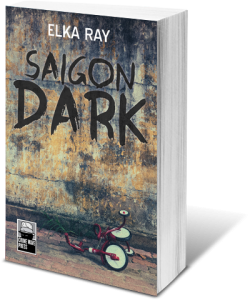
I’m Elka Ray. I grew up in Canada and live in Vietnam, where I work as an editor and write crime fiction. My first novel, Hanoi Jane, is a light romantic mystery. My second, Saigon Dark, is psychological suspense. I’m also the author of a collection of short crime stories, titled What You Don’t Know: Obsession, Mystery & Murder in Southeast Asia. One of my short stories was included in an anthology of Southeast Asia’s Best Crime Fiction in 2014. As well as writing for adults, I’m the author and illustrator of a series of kids’ picture books about Vietnam.
2) Why do you write crime fiction?
I’ve always been fascinated by what motivates people, especially if they’re acting in ways that seem irrational, self-destructive or immoral. When a crime’s occurred – both in fiction or real life, people don’t just want to know who did it but why. I enjoy answering that question.
 3) What informs your crime writing?
Real life cases can serve as seeds from which characters and stories grow. I listen to a lot of true crime podcasts and justify it as “research” when it really isn’t.
4) What’s your usual writing routine?
I dedicate about half of each month to editing work and half to writing fiction. My workday starts when my kids leave for school at 8am. I usually eat lunch at my desk and work through until 3pm, then go for a swim in the ocean or a walk on the beach. A lot of my pre-writing work – dreaming up the characters and plots – takes place while swimming or walking.
5) Which crime book do you wish YOU’D written, and why?
This one’s easy: Scott Smith’s 1993 thriller A Simple Plan, about three guys who find a bag of cash in the wreck of a small plane and decide to keep it. It’s so well written you don’t just understand the characters’ actions – you become complicit. If you haven’t read it, don’t wait. It was also made into a 1998 movie.
September 19, 2017
CRIMINALLY GOOD: interview with author David Malcolm
 1) So, who are you & what have you written?
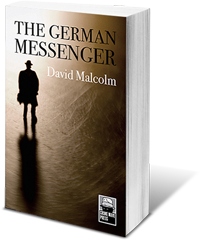
My name’s David Malcolm. I come from Scotland. I’ve knocked around the world for the past forty years or so – mostly the USA, Japan, and Poland. Off and on, I’ve lived in Poland for almost thirty years. My novel The German Messenger – a spy story set in 1916 – was published by Crime Wave Press in 2016. I’ve also published crime stories and keep on writing them.
2) Why do you write crime fiction?
It takes you to the lies and mistakes that sit under everyday life. It takes you to the corruptions that fester under our politics. It takes you to interesting places you’d never actually want to be in. It helps you take imaginary revenge on people you hate.
 3) What informs your crime writing?
For me it’s people, times, and places. I’m interested in historical crime fiction because you can recreate times and places that are fascinating, but, of course, gone forever. I like to create the central characters who move through those times and places.
4) What’s your usual writing routine?
The goddamn day jobs interfere so much I don’t have a routine. I write when I can. I plan the stories in my head walking or when I’m on a train. Or on scraps of paper in café and bars.
5) Which crime book do you wish YOU’D written, and why?
Anything by Ross Macdonald. Because they’re so elegant, so inevitable, and so miserable.
September 16, 2017
10 of the Most Shocking Social Media Murders
In my crime debut for Orenda Books, The Other Twin, my protagonist Poppy discovers her sister India had been writing a blog in the run up to her death by (supposed) suicide. On it, India has detailed a number of accusations and observations about people, all of them with codenames.
This leads Poppy to believe everyone on that blog has a motive for killing India … IF she can work out who each of them are! But I got this idea from REAL LIFE! Feast your eyes on these unbelievable and horrifying tales of revenge, violence and homicide via social media …
This post first appeared on FirstPageTilLast. See the original post, HERE.
1) The Facebook Killer
We might use Facebook for connecting and chatting with friends; some of us use it for work, like us social media marketers. But what happens when someone uses the platform with murder in mind?
Steve Stephens – aka ‘The Facebook Killer’ – killed himself recently ending a nationwide manhunt. This April, Stephens put up a video promising to murder someone. Two minutes after this, he posted a video of himself killing a 74 year old grandfather, whom he apparently chose at random. Eleven minutes after that, he broadcast live on Facebook confessing to the crimes – but it was two hours before the videos were reported to Facebook and another twenty-three minutes before Stephens’ accounts were suspended.
2) The WhatsApp Killer
German teen Marcel Hesse is accused of luring a nine year old boy into his home and stabbing the boy fifty six times. He posted on Whatsapp afterwards, ‘Just killed the neighbour’s child, doesn’t feel bad tbh’. He also posted video on the platform, saying that he ‘wanted to get a girl, so (he) could rape her’. Hesse is also thought to be behind the murder of another man, whose body was discovered in a flat Hesse had attempted to burn down. His trial is ongoing.
3) The Instagram Killer
American Amanda Taylor, 24, posted a photo of the weapon she allegedly was on the run with after she stabbed a 59-year-old man to death on Saturday. She said in her posting the man she’d murdered was her father in law, whom she blamed for ‘destroying’ her husband with ‘drugs and depression’. She was jailed for life in 2017.
4) Killed Over Facebook Status
When 26 year-old Sarah Richardson decided to change her relationship status from ‘married’ to ‘single’ on Facebook, she couldn’t have known it would lead to her murder. Ex-husband Edward sneaked into her parents’ home and stabbed to her death. Richardson, of Stoke On Trent, UK, is currently serving eighteen years.
5) Twitter Diss
When Jerrold Parker, 18, of Indiana, USA, tweeted that Devin Leggett ‘couldn’t rap’, he signed his own death warrant in less than 140 characters. As a direct result of the Twitter feud between the two young men, a meeting was set up in a local carp park, where Leggett shot Parker multiple times, according to multiple witnesses. Parker’s friends tried desperately to save him, taking him to hospital in one of their cars, but unfortunately were too late.

6) Facebook Ex Strikes
Australian Sarah Elson, 22, hoped to reconcile with her ex-boyfriend Daniel Garcia, when he contacted her on Facebook, asking to see her again. But her former boyfriend’s intentions were more murderous than amorous and he lured her to her death. After being called to a disturbance in the Brisbane hostel where Garcia was staying, police found Elston’s mutilated body, dead from multiple injuries.
7) Facebook Death List
3 Columbian teens were found shot to death, then five days later, the names of the dead teens showed up on a mysterious Facebook ‘death list.’ When another teenager named on the list was killed three days later, more lists were posted. Leaflets were placed on cars asking the families of kids on the list to leave town within three days or see their children killed.
No one knew what was going on. It was like a movie. Was it a cruel prank? A twisted social-media-savvy serial killer? To this day, nobody knows – or at least, no one willing togo on the record about it. The killings stopped after most of the kids on the ‘death lists’ took the leaflets’ advice and fled town.
8) MySpace Murder
Remember Myspace? When 15 year old 1 Hughstan Schlicker’s parents banned him from using MySpace, he killed his dad with a 12-gauge shotgun. Apparently, Hughstan had planned to kill himself because he felt cut off from the digital world; but when he bargained with himself that if his Dad got home early, he’d kill him instead. Unfortunately Schlicker’s dfather, Ted, got home early. The Arizona teen is currently serving 22 years.
9) Facebook Feud Leads To High Speed Car Chase
Facebook Feuds are most often passive-aggressive posts, or flaming and shaming, but for Torrie Lynn Emery, 23, and Danielle Booth, 20, it led to a deadly high-speed car chase.
Desperate for the attentions of the same guy these two young women had been fighting on Facebook for months. This spilled over into real life when Torrie saw Danielle driving with a friend and she pursued them across town.
Torrie rammed their car several times until the others car’s driver, Alesha Abernathy, ran a red light and was hit by a truck. Abernathy died instantly and her passenger, Danielle Booth, was seriously injured. Even worse, Torrie had her three year old child in the car with her the whole time! At her sentencing, Emery said she prays every day for forgiveness.
10) Online Mind Games
28 year-old New Zealander Natalia Burgess spent months creating Facebook profiles for (fake) attractive teenage girls. She then hooked in teenage boys, creating intense online relationships with them … ONLY TO THEN KILL OFF the girl profile, often via accident or suicide! This would then leave the teen boys devastated and traumatised by their online girlfriends’ demises. Hideous! Burgess was eventually found out when a (real) girl found her own photo on one of these fake profiles. Burgess was sentenced to two years in prison.
Watch What You Post …
… So, do remember these terrible stories next time you’re tempted to start a fight online, change your details or share some information about yourself. Like real life, social media can sadly be deadly.
September 12, 2017
CRIMINALLY GOOD: interview with author Chris Roy
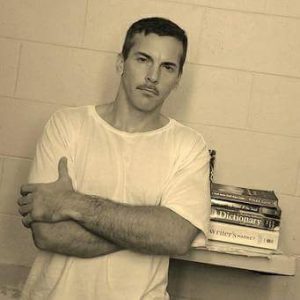 1) So, who are you & what have you written?
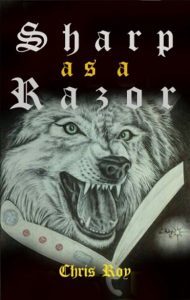
I’m Chris Roy, author of Shocking Circumstances and Sharp as a Razor, crime thriller trilogies published by New Pulp Press. Near to the Knuckle published two of my works in dark fiction. They will produce a magazine later this year with Pulp Metal Magazine that will feature Waste Management, my current WIP.
A few months ago I finished a novella, Her Name is Mercie, a thriller written in a different style than Shocker and Razor. I’m currently writing dark fiction. It’s a different animal than the thrillers I’m used to penning. There are no fight scenes and cars racing. There are scenes of homicide and racing hearts. Criminals with a conscience versus vicious psychopaths.
Want to know more? The Team posts on Twitter as @authorchrisroy & on Facebook , HERE.
2) Why do you write crime fiction?
I don’t get to travel and experience places that inspire noir literature. I’m serving a life sentence, and was a criminal for much of my youth. As a writer, crime fiction is as natural as walking. It simply resonates with me.
 3) What informs your crime writing?
Personal, past experiences. Science and technology publications such as Psychology Today and Popular Science. And living with criminals in maximum security for 18 years.
4) What’s your usual writing routine?
When an idea hits me, I jot down notes just about anywhere. Scraps of notebook paper, corners of newspapers. On a Nutty Bars box.
When I commit to a story, the first couple drafts are scratched out with pen and paper. A work isn’t ready for submission until my wife, mom and other test readers give me their take. Polish, proof, type and pow – off to the publishing world it goes, fingers Xed.
5) Which crime book do you wish YOU’D written, and why?
The Girl with the Dragon Tattoo. That book entertained millions of readers around the globe. I’m a fan of strong female protagonists, and they don’t get any tougher than Lisben.
Plus, if I was the author, I’d have a few bucks to spend on a lawyer.
September 7, 2017
CRIMINALLY GOOD: interview with author Rebecca Tope
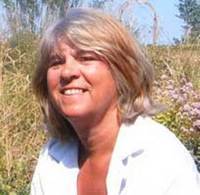 1) So, who are you & what have you written?
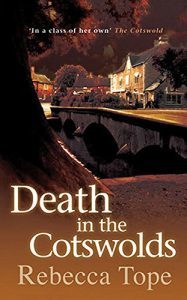
I’m Rebecca Tope, author of thirty crime novels, generally regarded as being in the ‘cosy’ subgenre. At present there are 16 titles in the Cotswolds series, featuring housesitter Thea Osborne and her cocker spaniel Hepzie, and 7 titles in the Lake District series, featuring Simmy Brown, florist. Both these protagonists are very much amateur – in fact accidental – sleuths.
I’ve also self-published three historical eBooks, and a hardback biography of Sabine Baring-Gould, just to keep things varied.
2) Why do you write crime fiction?
Because that’s the only thing anyone will publish of mine, up to now. It’s the biggest selling genre, and the industry doesn’t like people who switch in and out of different kinds of book. I’ve always enjoyed reading murder mysteries, and they are definitely fun to write.
 3) What informs your crime writing?
Very difficult to give a proper answer to this. It’s mostly negative – definitely no interest in police procedure, for a start. I like to present a wide cast of characters, most of them with some kind of crisis going on. I like my people to be politically incorrect at times, to break rules and buck trends. It was years before I would let any of them use a mobile phone (because I haven’t got one myself any more), and they’re still very dim about Facebook. Anything more recent than that is quite out of the question. In essence, I suppose it’s ‘character’ that informs the writing.
4) What’s your usual writing routine?
I get up early (very early in summer) and after walking the dogs and checking for emails, I write at least 1000 words. This generally entails reading back a page or two, and then just discovering the next piece of the story. I seldom know where the story’s going, although sometimes on the dog walk I have one or two ideas for the what’s going to happen in that day’s section. I finish by 10.00am, usually, and spend the rest of the day doing other things – ideally outdoors.
5) Which crime book do you wish YOU’D written, and why?
There are so many. I might have to cheat and say three – The Beekeeper’s Apprentice by Laurie King is fabulously original and actually quite brave. Half Broken Things by Morag Joss is a book I regard as very nearly perfect. And Into the Darkest Corner by Elizabeth Haynes is a sustained crime thriller that genuinely made me feel I was alongside the central character.
Listen to me and Rebecca plus author James Mortain talking crime fiction on @TivRadio!
September 6, 2017
CRIMINALLY GOOD: interview with author James Diabasio
 1) So, who are you & what have you written?
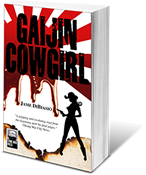
My first two published novels, GAIJIN COWGIRL and BLOODY PARADISE, are international thrillers. GAIJIN COWGIRL delves into crimes of power in Asia emanating from World War Two. BLOODY PARADISE is a tropical noir, set in Thailand, in which a man and a woman must trust each other if they are to get off an island alive.
I’m American but I have lived in Asia since 1997, where I am a journalist. My fascination with Asian cultures and America’s history in the Pacific forms the backdrop to the stories that I write.
2) Why do you write crime fiction?
Because it’s fun, and also because it’s hard. Crime fiction is a means to explore the dark side of humanity without losing your bearings.
 3) What informs your crime writing?
My job and my interests expose me to a lot of countries and societies, and their histories. I also cover finance and technology as a journalist, so I have a view on how power works – the engines of both progress and exploitation. Finally, I find gender roles in Asia interesting because they are different than the West’s, and that got me into writing female protagonists. It’s a good exercise for a writer to see the world from a different point of view; to empathize.
And I love stories. When you write a novel, story comes first, driven by characters, in a given setting – in that order. The heavier themes give the book depth but they are subservient to story.
4) What’s your usual writing routine?
Given the demands of the day job, I tend to work in spurts over weekends and holidays. It’s not ideal, but I’m disciplined.
5) Which crime book do you wish YOU’D written, and why?
I recently came across a 1970s French crime novelist named David-Patrick Manchette. He wrote a short book, a novella really, that has been translated into English called “Fatale”. It captured the kinds of characters I’ve been developing.
September 5, 2017
BEST OF 3: Carmen Radtke, author and screenwriter
Although my literary taste – and my own writing! – involves pretty much everything that catches my fancy, historical mysteries written by modern writers are my go-to genre when I need a bit of comfort. I have selected the first books of three series who constantly delight:
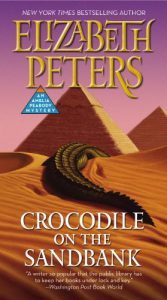 1) Elizabeth Peters, The Crocodile on the Sandbank
WHY I LIKE IT: The Victorian era series, as befits a trained archaeologist, is steeped in knowledge about ancient Egypt. Woven in the fabric of the mysteries, it deals with cultural clashes, western prejudices and expectations, the struggles faced by women in both cultures. Armed with wit, razor-sharp intellect and a sturdy umbrella, she deals with impunity with walking mummies, grave robbers, a girl on the brink of ruin, and a dashing archaeologist. Even after the third read, I keep turning the pages for just one more chapter.
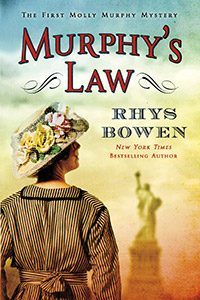 2) Rhys Bowen, Murphy’s Law
WHY I LIKE IT: “A week before I turned twenty-three, I was on the run, wanted for murder.” A chance encounter provides peasant-girl Molly Murphy with a new identity, a ticket to America – no passport control at the end of the 19th century – and the care of two children.
But as Murphy’s law will have it, am man is murdered on the ship, and Molly has seen too much. Soon she’s in up to her neck with dodging the police (including handsome Daniel Sullivan who gets her heart racing in more than one way), and escaping the murderer.
The whole series is fast, fun, and frivolous, with serious topics like rape, exploitation, and corruption working their way quietly into the reader’s mind.
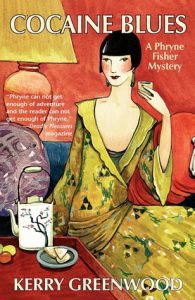 3) Kerry Greenwood, Cocaine Blues
WHY I LIKE IT: The Hon. Phryne Fisher is a heroine that in most books would have been a man. She’s young, beautiful, rich and titled, and as such a rarity in Australia at the end of the Roaring Twenties. She’s also liberated in every sense, and while she loves them and leaves them, the men she beds hardly ever have a hold over her heart. With socialist sympathies and a fine disregard for conventions, this pistol-packing lady is a treasure, and an advocate for gays and lesbians. The series is clever, thought-provoking and as intoxicating as one of Pharynx’s cocktails!
BIO: Carmen Radtke is a screenwriter and novelist. Her debut novel, The Case of the Missing Bride (Bloodhound Books) is out TODAY, 5 September! She also writes under the pen name Caron Albright. A Matter of Love and Death will be published by Bombshell Books. Follow Carmen on Twitter: @CarmenRadtke1 and visit her website, HERE.
Lucy V. Hay's Blog

- Lucy V. Hay's profile
- 174 followers

