
Lucy V. Hay's Blog, page 24
June 2, 2017
CRIMINALLY GOOD: interview with author Gunnar Staalesen
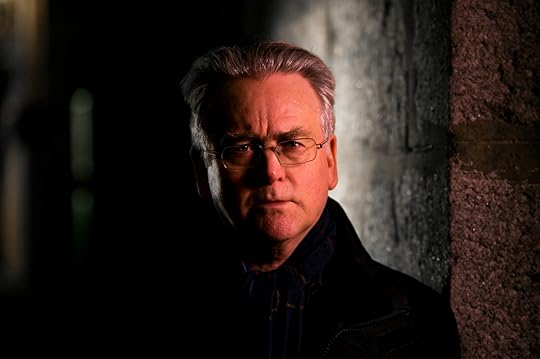
1) So, who are you & what have you written?
My name is Gunnar Staalesen and I’m a Norwegian crime writer. I have written eighteen novels and two collections of short stories about the Bergen-based private detective, Varg Veum. You can find out more about me and my books, as well as about the TV dramas, films and other work based on them on my website, HERE. Most of the site is in Norwegian, but you can find out which titles are published in the UK and other English-speaking countries, HERE. Plus you can find out about films based on my work on the .
2) Why do you write crime fiction?
I write crime fiction because I have always loved reading crime stories – ever since I first read the Hardy Boys books, and then experienced my first ‘adult’ crime mystery, The Hound of the Baskervilles. After reading the Swedish writers Sjöwall & Wahlöö and the American trinity of Hammett, Chandler and Ross Macdonald, I was inspired to start writing within the genre. I began in 1975 with a police procedural, and my first Varg Veum novel came out in 1977. For me crime fiction is the perfect way to tell the stories I want to tell: those that deal with the human condition in our times and our kind of society.
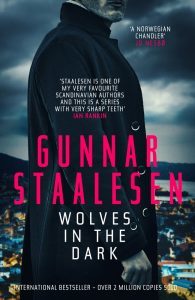 3) What informs your crime writing?
I am first and foremost a storyteller. I like to tell good, old-fashioned stories in the tradition of Conan Doyle and Dickens, of Victor Hugo and Ernest Hemingway, and of Hammett and Chandler. From time to time I am inspired by real cases, but I make them my own. So I suppose what I write is pure fiction – inspired by reality.
4) What’s your usual writing routine?
I devote more or less an ordinary working day to writing; i.e., I write from say 10 a.m. until 4 p.m. I never write at night, but it sometimes happens that I write in the evening, if I have something to finish. Five days a week of writing is normal for me, if I am not too busy doing interviews or answering questions like these!
5) Which crime book do you wish YOU’D written, and why?
I would like to have written How Like an Angel by Margaret Millar or The Long Goodbye by Raymond Chandler, which are two of my favorite crime novels.


June 1, 2017
BOOK VERSUS FILM (And Beyond!): War Of The Worlds

War of the Worlds by HG Wells was one of my favourite books as a child. Like many popular novels, there have been many, many adaptations of it … Now stretching across the mediums, too!
With this in mind then, I’m going to take a look at a book which captured the imagination of the public, starting incredibly before space travel was even possible. Enjoy …
1) War Of The Worlds, Orson Welle’s infamous radio broadcast
The Youtube comments are hilarious for this one, labelling Orson Welles ‘the original troll’, since this broadcast had people literally running for the hills! I think the saddest element is the notion that in 1938, ‘the war scare was over’ … If only! But then it’s easy to judge with hindsight. Still a really well put-together broadcast I think, if you haven’t been able to listen to it, do. It’s only fifty seven minutes, you can listen to it in your lunch break.
2) War Of The Worlds (1953 version)
There was no Youtube ‘back when I were a nipper’, so I saw this movie when my friend Helen brought it on VHS tape from a car boot sale for 20p and we watched it together. I hadn’t left primary school, so I suppose I was about ten. It’s quite faithful to the book, though the location changes from London to California and the protagonist is a physicist instead of a journalist; what’s more his girlfriend, whom in the book he famously sees setting off on the boat without him, is a woman, Sylvia, he actually meets at the crash site instead.
Overall I was satisfied by the adaptation as a child and found parts of it quite scary! However, due to the incredible leaps forward in technology in the last twenty five years – particulary CGI – the monsters, space ship, etc now look reaaaaaallllllly dated. What’s more, the way modern blockbuster movies are structured would mean they’d never make it like this in 2017. Despite this, the actual storytelling still works for me in a retro way.
3) Straight Text Reading from SpokenVerse
There’s plenty of readings of classic literature online and on Youtube, but I do really like this one. The deep, languid almost-bored diction of the narrator gives a sense of gravitas to the story that feels really compelling. If you give it a listen, make sure you have it on ‘auto-play’ though so it goes on to the next part of the story!
4) Jeff Wayne’s War Of The Worlds (1978)
Perhaps one of the most interesting adaptations, due to the fact one doesn’t always see books reimagined as a prog rock offering!
I was lucky enough to see Jeff Wayne and his orchestra perform this at the Bournemouth International Centre about ten years ago, having listened to the recording numerous times during my childhood and teens. Jeff Wayne takes a very “traditional” look at War of the Worlds, restoring the unnamed journalist and even the priest who attempts to drive back the creatures with the power of God.
Whilst not fantastic music by any stretch of the imagination (not to mention rather repetitive at times), Wayne does I think capture the drama of the novel with a combination of music, F/X and media. The icing on the cake for me has to be *that* Richard Burton narration …. Restored for the noughties by using an actor’s moving lips over Burton’s own holograph face, it seems to “loom” over the proceedings for the audience. In more recent times, Liam Neeson plays the narrator.
5) War of the Worlds (2005 version)
This is actually probably my favourite version of War Of The Worlds and possibly makes my favourite top 10 blockbusters, ever. I couldn’t believe the liberties taken with the source material; Josh Friedman, David Koepp and Spielberg must have had nerves of steel to mess with such a classic! But as I mention in my Writing And Selling Thriller Screenplays book, I for really thought these gambles paid off.
In this version, the goal completely changes: instead of the Journalist merely trying to survive whilst documenting the apocalypse, Tom Cruise’s absent father must take his children to his Ex in Boston, by hook or by crook. This neatly side steps the whole Deus Ex Machina of the aliens being defeated by the cold virus and introduces a whole set of new problems for the characters involved. What’s more, for a 12A, I think it’s REALLY SCARY!!
And finally, just for fun:
War of The Worlds, in 30 seconds – with bunnies. SYLVIA! A surprisingly well done parody of the 1953 version — enjoy!
Which is your favourite? Do you know of any other adaptations of War of the Worlds, not listed here? Over to you …
May 31, 2017
BEST OF 3: Emma Pullar, Author
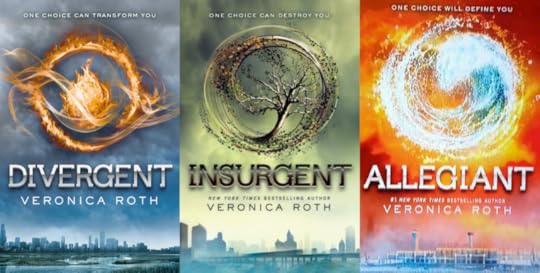
1) Divergent by Veronica Roth
Society is divided up into five factions which are Dauntless (the brave), Amity (the peaceful), Erudite (the intelligent), Abnegation (the selfless), and Candor (the honest). We follow Tris Priory; a young woman who takes a test to see which faction she is suited to and the test comes back as Divergent, i.e. she has traits of more than one faction. This is bad. As we go through the trilogy we find out one faction is planning a takeover, and being Divergent, Tris finds herself in a dangerous position. Divergent is one of the best concepts I’ve read in YA literature and a great spin on structures in society. MORE: Book Versus Film: Divergent
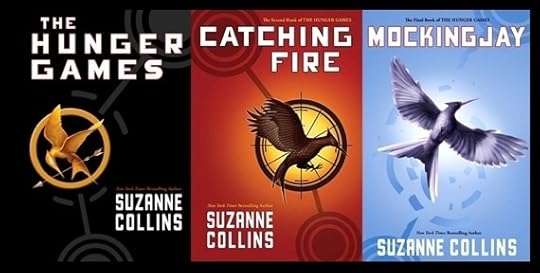
2) The Hunger Games by Suzanne Collins
The Hunger Games is a new take on an old idea. The Running Man and Battle Royale came first and I love those two stories but I have to hand it to Suzanne Collins, she has taken the idea of youngsters killing each other in an arena to a new place and it blew me away!
I love the protagonist Katniss Everdeen. She relies on herself, she protects others and she is resourceful. The supporting characters an interesting and well developed. Collins conveys the complexities of war and an oppressive government in such a unique way that it resonated with teens and adults alike. MORE: Book Versus Film – The Hunger Games
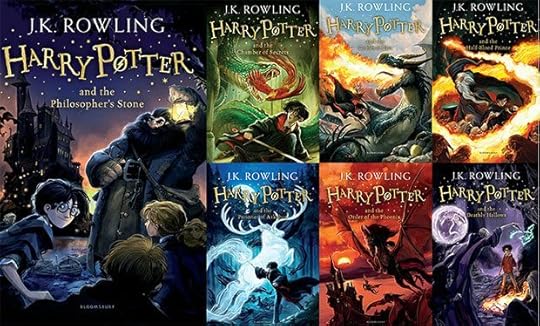
3) Harry Potter by JK Rowling
Although the books initially start out in middle-grade territory, by book four they have progressed to young adult. Harry Potter is a firm classic. It’s something my whole family enjoys. I think that’s part of its charm and the reason for its huge success.
The books are set in a fun fantasy world with something new and fascinating around every corner. Riddled with morals and mysteries to solve; it really does have everything you could possibly want in a YA fantasy series. MORE: Adaptation Showdown: Which is better, the book or the film?
That’s my three. Happy reading everyone!
BIO: Emma Pullar is a writer and book reviewer. Her picture book, Curly from Shirley, went to number four on the bestseller list and was named best opening lines but NZ Post. As well as picture books, Emma writes horror, dystopian, sci-fi, fantasy and paranormal fiction. You can read her short horror story, London’s Crawling, in the Dark Minds charity collection. Follow Emma on Twitter, HERE.
May 29, 2017
CRIMINALLY GOOD: interview with author Karen M. Bryson
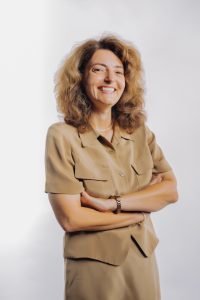 1) So, who are you & what have you written?
I write contemporary romance and romantic crime fiction.
I’ve written over 40 romance novels, three of those (ONLY THE PRETTY ONES, THE NINES and BEHIND BLUE EYES) are dark romantic crime fiction stories.
You can connect with me via my website; LIKE my page on Facebook; follow me on Pinterest, plus Instagram and on Twitter as @karenmbryson. Sign up for my newsletter, HERE.
2) Why do you write crime fiction?
I have a fascination with vigilante justice stories. I particularly
enjoy writing stories in which females are anti-heroes.
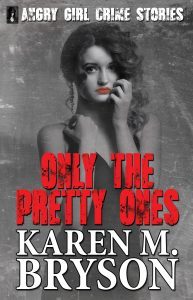 3) What informs your crime writing?
I love watching vigilante justice movies and reading vigilante justice novels. I’m particularly inspired by stories with strong female protagonists like Lisbeth Salander (The Girl with the Dragon Tattoo.)
4) What’s your usual writing routine?
I write every morning, starting at about 5 am. I like to write for several hours before starting my full-time job as a university professor.
5) Which crime book do you wish YOU’D written, and why?
The Girl with the Dragon Tattoo. Lisbeth Salander is such a strong and memorable character.
May 26, 2017
BEST OF 3: Cristina Palmer-Romero, Author
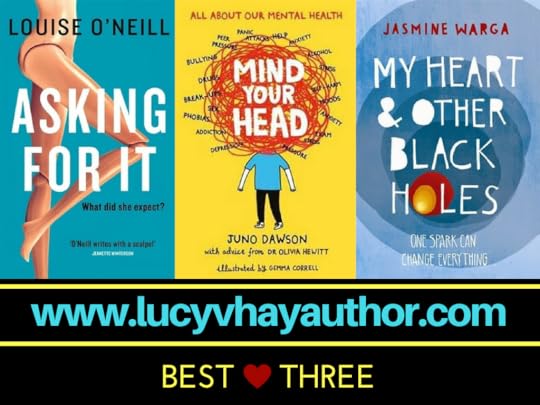
I write about sexuality. Female sexuality in particular and the constant abuse of females when they express their sexuality. It is this abuse which can lead to a number of mental health problems along the way and I am obsessed by sex, our expression of it and our mental health as a result of our sexual expression. Hence my choice of reading when it comes to young adults is generally around the subjects of depression, shagging and slut shaming.
Here are my 3 top books:
1) Asking For It by Louise O’Neill
This book is utterly devastating. The horror in this story lies in the sad truth that this goes on each and every day. The author accurately illustrates the blame the rape victim has to swallow, for not only being horrifically raped, but also for ruining the lives of the boys who did it. Having read a number of criticisms about this book, that the scenes are too graphic, I disagree, the scenes are hard to read and they challenge you to place yourself at the heart and soul of the victim. Only then, can the reader reflect on shaming and blaming they may have done in their lives. I think this is a great book to give readers a kick up a backside, especially as it is almost a mirror image of the news we have today about teenagers navigating ‘rape culture’ and social media.
2) Mind Your Head by Juno Dawson
This isn’t a piece of fiction, but it is most definitely a book which should be included in a YA reading list. It is an easy read and it perfectly illustrates examples of problems which affect our teens today. It talks the readers through finding help, and I wish this kind of book had been around when I was a teenager. It doesn’t claim to have the answers, it is not a self-help book, the author simply shares real life experiences which will likely resonate with some readers. This is a book to leave on the coffee table at home!
3) My Heart and Other Black Holes by Jasmine Warga
This is a dark and beautiful book which presents interesting questions about the variable causes of teenage depression. Our protagonist wants to end to her life but she is afraid to end it alone and embarks on a quest to find a suicide partner. The first half of the book is bleak and at times upsetting to read, but as her relationship develops with her suicide partner, the book evolves into more of a romance. Ordinarily I would be cross that yet again the saviour for the female is always a male. Yet in this reflection on depression I think the author articulates nicely that sometimes our own families can’t help us heal because they are at the root of the depression and instead a connection with a stranger can trigger numbed feelings of joy.
BIO: Cristina Palmer Romerro is a producer and writer. She has recently completed her 1st book, Secret Diaries of a Teenage … Nymphomaniac?. She produced and edited the bestselling short stories: Twisted50 & Evil Little Sister, contemporary horror stories, with the London Screenwriters’ Festival. She writes for SeenLondon magazine and is currently developing creative writing workshops for children and young adults. She has production managed & coordinated a number of prime time TV shows, and has created & devised creative learning workshops for vulnerable adults. LIKE Cristina’s Facebook page.
May 25, 2017
7 Useful Tools For Book Lovers
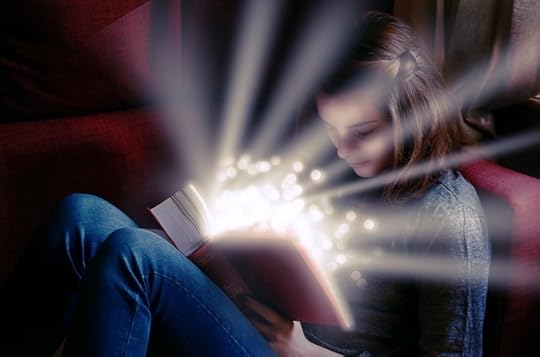
Reading seems like a fairly straightforward process. After all, we’ve been doing it for thousands of years. We just don’t read the same way we used to – books are everywhere, and they come in many different formats. Digital books and audiobooks changed the game. It’s easier to be an author than it ever was, and this has only given us more literary options!
If you or someone close to you is a book lover, look into these tools:
1) Personalised Stamps
We all love sharing our favourite books with others, but some of these borrowers are forgetful when it comes to returning things. That’s where personalised rubber stamps come in. It’s relatively easy and inexpensive to have a custom rubber stamp made that denotes whose personal library a book is from. This can put an end to confusion, and make sure books get back to their proper home.
2) WhichBook
When you’ve found yourself on an unorthodox kick, it can be hard to find more books to satiate your craving. You want something unpredictable, disturbing, romantic, and funny. You’ve already read John Dies At The End, so where do you go next? WhichBook allows readers to adjust how much of what quality they’re looking for in a book, and makes recommendations based on what the reader is looking for.
3) Audiobook Converter
When Audiobooks come in MP3 format, they become difficult to keep track of. Fortunately, iTunes has some built in features that allow users to easily convert MP3s into optimized audiobooks. This means you can listen to your book while you’re working out at the gym, and pick back up where you left off when you go out for lunch afterwards. If you don’t have an iPhone, you can always purchase one secondhand and unlock it. It’s worth it just to have the perfect audiobook companion.
4) Wattpad
At its core, Wattpad is a social network specifically for readers and writers. Whether you’re looking to discover something new and read fiction written by undiscovered talent, or you yourself are an aspiring author looking for some feedback, you’re going to love the sense of community on Wattpad. You may discover your new favorite author in casual conversation among people with similar tastes.
5) Plug and Read Classics
What if you could fit a library of thousands of classic books comfortably into the palm of your hand? Now you can! Technology is a wonderful thing. Most of the classics are in the public domain, and many book stores are taking advantage of that by loading them onto USB drives for ultimate portability. Taking a weekend trip away? Bring your USB library. It’s never been easier to read while you travel.
6) LibriVox
You always said you would get around to reading Pride and Prejudice, but you just can’t seem to find the time. With LibriVox, you don’t have to read it at all. You can listen to it while you’re cleaning the house or walking the dog. Volunteers read public domain classics and send their readings to LibriVox, where you can listen to them for free.
7) Lighted Bookmarks
Lighted bookmarks serve two very important purposes: one, you’ll need to know where you left off, and two, it’s impossible to read in the dark. Rather than having two completely separate tools to solve both problems, lighted bookmarks offer a versatile solution to two of the most common things that readers need.
These tools are more than just useful – they also make it fun to read. If you’ve been slacking lately, maybe using a few of these tools will inspire you to dive back into that tough read you’ve been shoving aside for a while now.
BIO: Rachel is a mother of 2 beautiful boys. She loves to hike and write about travelling, education and business. She is a Senior Content Manager at NYBizDb – an online resource of relevant business information.
May 24, 2017
BEST OF 3: Richard Dee, Author
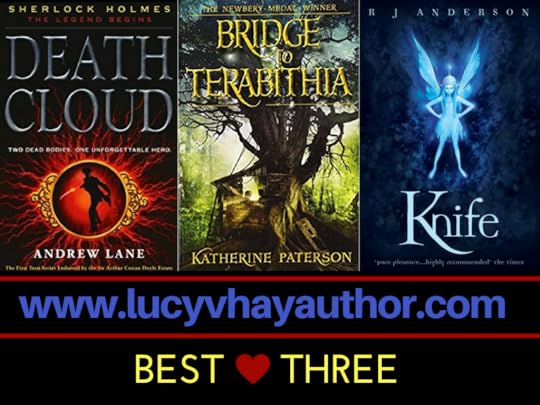
1) Death Cloud, Book 1 of Young Sherlock Holmes, by Andrew Lane
These books are a brilliant new spin on a classic, what could have happened before the adult Sherlock we know and love. I do enjoy a good backstory, this one, and the rest of the series, have plenty of action and adventure, all told with logic and eye to detail.
2) Knife, Book 1 of the Faery Rebels series, by RJ Anderson
Excellent fantasy with a real twist, this story is so much more than just another fairy tale. Knife is the story of a feisty female with a world to explore. The emotion that the author squeezes out of the character as the story progresses makes this a rollercoaster ride.
3) Bridge to Terabithia, by Katherine Paterson
This is a story about the power of emotions, of friendship, imagination, childhood games, bullying, relationships and overcoming. Although there is sadness, this is an ultimately uplifting and powerful story, so realistically written in parts that it takes your breath away.
BIO: I’m Richard Dee and I live in Brixham, Devon. I used to travel the world for real, now I travel the Worlds in my imagination. After forty years at sea, I’ve retired to Devon where I write Science fiction and Steampunk adventures for all audiences. My Steampunk novel, The Rocks of Aserol is an adventure for everyone, complete with fiendish villains, resourceful ladies and fantastical machinery powered by steam and clockwork. Follow me on Twitter as @richarddockett1.
May 23, 2017
CRIMINALLY GOOD: interview with author Johana Gustawsson
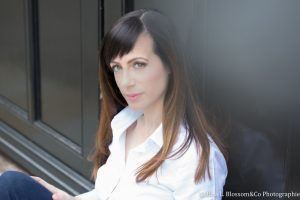
1) So, who are you & what have you written?
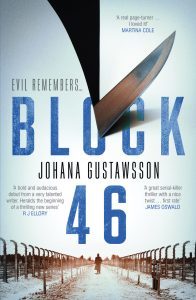
I am Johana Gustawsson. I am southern French, with some Spanish “boiling” blood, as we say in my family and I live in London with my Swedish husband and soon to be three boys. I worked as a journalist for the French press and television for ten years, before becoming a full time novelist. Block 46, my first thriller, has now been sold to fourteen countries and is published in the UK by Orenda Books. I am working on the third novel in the Roy & Castells series. You can follow me as @JoGustawsson on Twitter.
2) Why do you write crime fiction?
I greatly enjoy dissecting the minds of the hunter (profiler and serial killer) and his prey: I find it fascinating. And, also, killing people on paper is wonderfully cathartic and allows me to stay out of prison! But that said, I am definitely hoping I could plan the perfect murder!
 3) What informs your crime writing?
I am an avid reader of forensic psychology and enjoy immensely the books written by profilers about their hunting methods and behavioural science knowledge. I am particularly fond of the American John Douglas and Robert Ressler, and Stéphane Bourgoin, our French national specialist in serial killing, just to mention a few.
4) What’s your usual writing routine?
I write when my son is at pre-school and I usually even eat at my desk not to loose one minute, as those hours pass so fast! When I am finishing a book, let’s say the last couple of months before the date I have to deliver it to my French publisher, I work weekends and late in the night, as I tend to be late!
5) Which crime book do you wish YOU’D written, and why?
Murder on the Orient Express, which is brilliantly plotted and so diabolically clever! I am a huge fan of Agatha Christie: I got into crime reading when I was 7 thanks to her, after discovering the incredible Poirot in The Mysterious Affair at Styles. But Murder on the Orient Express really is my favourite.
May 22, 2017
CRIMINALLY GOOD: interview with author Karen Randau
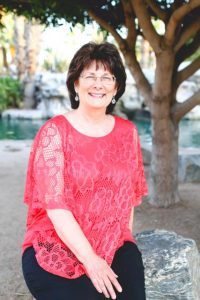 1) So, who are you & what have you written?
My name is Karen Randau. I currently have two books published in my Rim Country Mystery series, a third is nearly finished. They are published through Short On Time Books.
The first book in the series, Deadly Deceit, is set in a fictional mountain town in Arizona called Rim Vista. In it, the protagonist (Rita) is sitting beside her husband in their small-town movie theater when a man shoots Rita’s husband and thirteen other people. Ensnarled in a cover-up that puts her in an assassin’s crosshairs, Rita must unravel a web of lies and connections that date back to her husband’s service in the Iraq war – before a mysterious kidnapper returns Rita’s daughter Zoe one body part at a time. This fast-paced mystery/thriller is one you won’t want to put down from beginning to end.
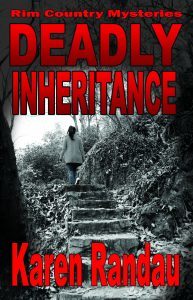 The second book, Deadly Inheritance, is set in Scotland, when Rita is on her honeymoon with the detective who investigated her husband’s murder. It features a poisoned hotel clerk, a ruined Scotland honeymoon, and a hidden Viking burial site. In this fast-paced mystery/thriller, Detective Cliff Avery plans to meet his grandfather for the first time while on his honeymoon with Rita. As the newlyweds check into the honeymoon suite at a luxurious Scottish hotel, the reception clerk dies after opening a note meant for Cliff. The action shifts into high gear when a mysterious woman uses the hotel clerk’s car against Rita and Cliff.
The couple team up a local detective to discover who wants them dead and why. The search for answers takes them on a one-of-a-kind tour of Scotland. The third book, Deadly Choices, takes Rita and Cliff back to small-town Arizona, where Rita’s mother comes for a visit and wants to go camping. Their plans change – and the action takes off – when an elderly woman stumbles into their campsite when the shaft of a bloody arrow protruding from her chest. Deadly Choices will be out later this year.
Connect with me on my website, LIKE my page on Facebook , or follow me on Twitter as @klrandau.
2) Why do you write crime fiction?
I write what I like to read. I especially like the fast pace of thrillers, and I enjoy creating intricate plots with twists that keep you guessing to the end.
3) What informs your crime writing?
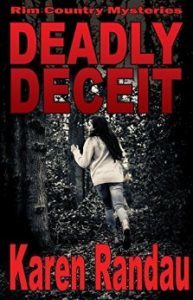 The idea for Deadly Deceit came from news headlines. The story isn’t true-life, but when I listened to news about a similar shooting, I wondered about the people left behind. That’s the story I told. I used a few of my own life experience throughout the novel, along with knowledge I’ve gained from working in an international organisation.
The idea for Deadly Inheritance came to me as I was thinking about places I’d like to visit. I thoroughly enjoyed the research about Scotland! Deadly Choices leapt from a scene in Deadly Inheritances, when Rita was thinking about the mother she hadn’t seen in a long time. It turns out Rita’s mother also had a devastating secret she’s hidden from Rita for a couple of decades.
4) What’s your usual writing routine?
I try to write every day, even if I can only manage a few hundred words. Sometimes, that’s just to clean up and improve the chapter I wrote the previous day! When I start a novel, I use a spreadsheet to create a preliminary outline. I like to use a spreadsheet because of the ease of counting the number of words in each chapter, anticipating where I should put twists, and keeping track of clues, red herrings, and ending hooks. It works better for me than anything else I’ve tried.
I typically use up the ideas in my outline fairly early in the writing. From that point on, I outline from one major turning point to the next (there are usually five).
5) Which crime book do you wish YOU’D written, and why?
I wish I’d written the Jack Reacher novels by Lee Child. I like how the author is able to take the protagonist to different places for each story. I also like how mysterious and accomplished Jack Reacher is.
May 18, 2017
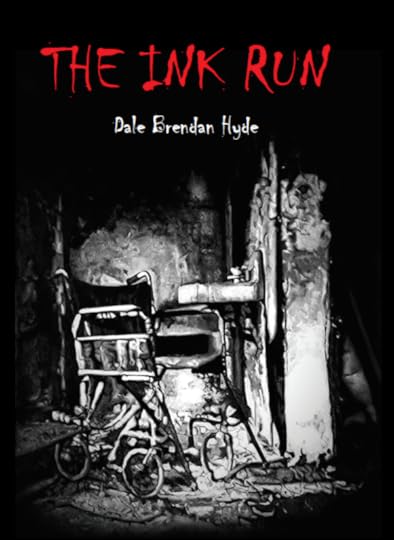
CRIMINALLY GOOD: interview with author Dale Brendan Hyde
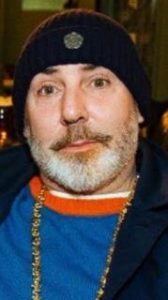 1) W
ho are you & what have you written?
1) W
ho are you & what have you written?
My name is Dale Brendan Hyde, I have been writing now for many years, mostly working on my debut novel. I have written for magazines & contributed to a few books. My first published work was a poetry collection for the TS Elliot prize. My novel though is crime fiction. It’s taken many years to complete but I’m finally there. I’m published by War Cry Press. The hardback is out for sale on their website, Amazon, Waterstones, Nook for iBook, etc.
2) Why do you write crime fiction?
I had a very troubled past from my early teens until my early thirties. I have always been interested in crime from all angles, police, courts, law, prison, reform, punishment etc … My debut reflects some of my own past along with much research into other fields of crime.
 3) What informs your crime writing?
I have studied many real life cases and interviewed & written to many criminals. I’m friends with some! I would say again my writing is a mix of the real, the researched and various imaginative thoughts on crime.
4) What is your usual writing routine?
While I was concerned in the process of my debut, I would use an office, read from 7am back through the previous day’s work. When satisfied with the edit, I would then pick up from where I finished. I would usually work 7am to 7 pm, with an hour break for lunch.
I continued this routine for many many months until I completed. My debut was 156 thousand words. So it was a labour of love for sure!
5) which crime books do you wish you had written & why?
This is a great question. I would have to say American Psycho by Bret Easton Ellis, a very powerful but disturbing book. I also think Papillon by Henri Charriere is the best crime story ever written. A powerful story that takes you as a reader on an amazing journey.
Lucy V. Hay's Blog

- Lucy V. Hay's profile
- 174 followers

