
Lucy V. Hay's Blog, page 27
April 16, 2017
Why ALL stories Are About Detectives
Carey Harrison is the author of 16 novels and more than 200 plays and scripts for film, television, radio and theatre. His numerous prizes and nominations include Sony awards, the Giles Cooper Award, the Prix Marulic, the Society of Authors’ Encore Award, the Writers’ Guild of Great Britain Award for Best Play, the Prix Italia Silver Award and Best Play from the Berlin Academy of the Arts, as well as two nominations for the Pushcart Prize for Journalism.

My Fave Themes
My favourite themes in literature – the ones that would most incline me to open a book by an unknown author (otherwise it would probably be the author’s name, rather than the theme of the book that would attract me) would probably involve violence, I’m mildly ashamed to say. Bodies. Wartime, perhaps, and if not, then individual murders.
Detective stories
I’m greatly drawn to detective stories, police procedurals and the like, and have concluded that most works of fiction – from Oedipus Tyrannos onwards – are detective stories, even if in disguise. The reader’s search for closure, which accompanies all reading, or even hearing, of a story, is a kind of whodunit, a pursuit of resolution. Sometimes no one is entirely to blame (war stories are like this).
Sometimes the person hunting for the criminal is the criminal, as in Sophocles’ play. Sometimes the reader winds up thinking that the story is in fact about the reader; this has been written about my own novels, which I certainly understand as detective fiction. There is a hunt for the truth, wherever this may lead, and whatever surprises it brings.
Theme FAILS
So if all fiction is like this – and it really doesn’t matter if there are fewer rather than more bodies, in fact just one body will do, or even a missing person – what is it that fails to entice me to open a book?
Well, for instance – and yes, now we’re really getting to it – a story of drawn-out divorce in Hampstead. Not only divorce among the agonized but comfortably well-to-do will turn me off before I even reach the book’s exquisitely written and much praised pages, the very setting will have stopped me in my tracks. I could face agonized divorce in a marriage whose problems included severe poverty, separation, persecution, and other objective discouragements.
The mere fact of, for instance, adultery, is a story premise that leaves me cold (not in life, of course, where it might leave me cold or extremely interested, depending on the circumstances). Middle class domestic drama, in other words, I can happily leave to life itself, and not have to meet when I sit down to read.
No sex, please – we’re British
Nothing discourages me more in a book’s theme than a tale of sexual domination and sado-masochistic delights (yes, you know the book I’m referring to). It’s a case of too many bodies rather than too few.
I rather like the antique convention of cutting from a first embrace to the later consequences of what will follow. I don’t need a play-by-play account of sex; I don’t even want one, because I find arousal to be an odd distraction – even a Trumpian distraction – from the way in which I find myself drawn into a story.
Spirited reads
The true location of my interest in a novel is, I’ve found, neither the heart not the head, and certainly not the groin, but rather the spirit. The heart and head are present, but what I unconsciously seek from a book is the exaltation of finding life so brilliantly summoned into words that I feel there is a part of me that can overcome even tragedy; this part, in which words themselves come to signify an understanding that transcends suffering, is neither head nor heart but spirit. With its help, even the most terrible stories are filled with hope, a hope symbolized by the author’s ability to tell the truth so vividly. The same applies to music. How can one listen to Mahler’s Kindertotenlieder, Songs for the Death of Children, and yet feel liberated?
To this strange alchemy, of which literature is also capable, erotica comes as a brutal interruption; so, for me, it’s either uninterrupted sex, please, or no sex at all.
WhoDidIt
No one who is a fanatical murder mystery fan, as I am, will be surprised to hear that I am addicted to the travails of Michael Connelly’s fictional detective Harry Bosch, and the Los Angeles where he finds his troubled way. Anyone who likes detective stories, with an ever-interesting detective, should find their way to Connelly’s books. That’s my recommendation for today!
(And of course I also hope you might open one of my books: the first novel of The Heart Beneath has reached no.1 on the ‘thriller’ download list in Canada, the publishers have told me, to my delight. Go, Canada!!)
FIND CAREY’S WORK: Carey’s novel, Richard’s Feet, the first volume of the Heart Beneath quartet, was longlisted for the Booker Prize. The Heart Beneath has recently been re-published by The Odyssey Press and is available as four separate e-books; the quartet will shortly be made available as an omnibus edition.


April 15, 2017
CRIMINALLY GOOD: Interview with author Sharn Hutton
 1)
So, who are you & what have you written?
1)
So, who are you & what have you written?
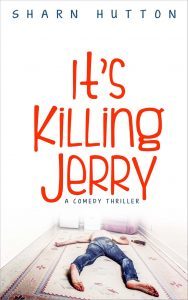
My name is Sharn Hutton and I released my first novel, It’s Killing Jerry at the end of last year. It the story of an everyday guy called Jeremy Adler, who, through a combination of misfortune, selfishness and cruel fate, finds that a surprising number of people would prefer it if he was dead.
The story opens with a news report of his disappearance then jumps back four months to watch the mayhem unfold.
It’s the first book in a series (outlines for two more currently – just got to get that writing done!). You can LIKE my page on Facebook; follow me on instagram as @sharnious and on Twitter as @sharnhutton1. Here I am on GOODREADS.
2) Why do you write crime fiction?
It’s Killing Jerry is quite unusual in the crime fiction world because the reader knows a lot more about what has happened than the detective investigating. It’s very much a character led story. As my first book, the plot unfolded before me – it was the tale waiting to be told.
 3)
What informs your crime writing?
3)
What informs your crime writing?
Like most writers, I drew my themes from the world around me as I wanted it to be a story that most people could relate to. Jerry’s at the centre of a demanding world. He has a manipulative and selfish ex-wife, a narcissistic boss who wants him to lose his job, a needy best friend who’s out of work and too interested in Jerry’s life and a wife and new baby who cry together through the night. The demands upon him are huge and try as he might to keep everyone happy the tide of resentment is turning against him.
Themes running beneath the story include:
· What is our definition of success? For many this means more money, a better job, but what about happiness, family and love?
· How can women balance cultural and religious expectations against the realities of modern life?
· The mixed blessing of parenthood. A new baby doesn’t bring joy for everyone!
4) What’s your usual writing routine?
I have young children so I have to fit writing around them. After the school run I get the dog marched around the park and domestic drudgery out of the way first and then aim to be at my desk by 11 AM. That gives me four clear hours until I have to fetch the ankle-biters again.
As a self-published author I’m spreading the word about It’s Killing Jerry myself so have to dedicate a fair bit of time to advertising and social media. Now that the sequel is underway so I’ll have to be strict about dividing my time between promo and writing.
5) Which crime book do you wish YOU’D written, and why?
I like my crime stories to have a whiff of irreverence and humour along with all the excitement and for that reason I’ll single out the Stephanie Plum series from Janet Evanovich. Those stories are so packed with character, danger and sex appeal, there’s been enough juice for novel after novel.
EASTER GIVEAWAY!
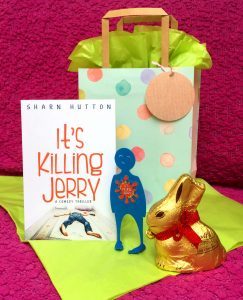 Sharn has very kindly put these great goodies up for grabs to Criminally Good readers. Want ’em? Then CLICK HERE (or on the pic on the left) and follow the instructions for your chance to win.
Please note: UK entries only, plus the deadline for the giveaway is 5pm GMT Easter Monday (April 17th, 2017).
Good luck, partners in crime!
April 13, 2017
BEST OF 3: Alexina Golding, Book Blogger
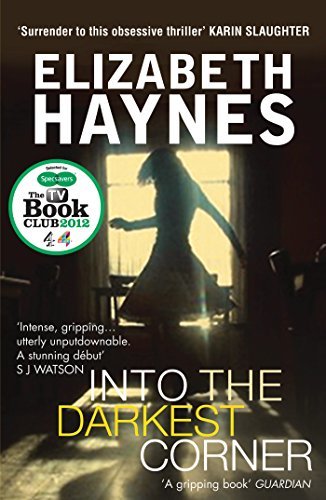 1) Into The Darkest Corner by Elizabeth Haynes
This is the first psychological thriller that I read, and I was drawn into Catherine’s character straight away, and wanted to read her story. It went on to change my reading genres from women’s fiction to crime-based novels. Which says a lot about the writing style of Elizabeth Haynes as well as the captivating story! It is also the first story where I read parts of it through my fingers and wanted to pull the character out and save her. It is one of my all-time favourites and recommended reads.
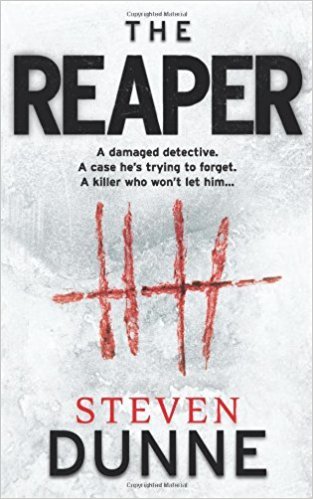 2) The Reaper by Steven Dunne
This series is one of the first series of a Detective nature that I read, It is written with depth and crime based rather than procedural based. They can be read in any order, and as stand-alones, but you do benefit from reading them in order.
The content of this book made me questions my morals and it really is the nitty gritty everyday crimes that happens to us individually that is now not always seen as crime/criminal behaviour, but it is what is personal to us. From that point of view, it is a great plotline, and left me wondering what I would do? The reaper is justified in what he does and he has his own unique way of punishing the offenders. This is one series where I am itching to read the next in the series straight away!
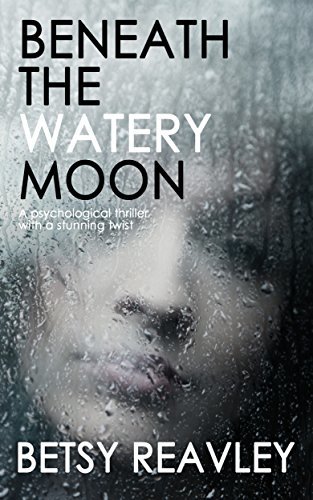 3) Beneath the Watery Moon by Betsy Reavley
It is sad, beautiful, horrific, disturbing. Do I need to say more? You are taken on a journey with Annabel that will make you question what is the truth and included within all this is some beautiful poetry that really helps with you to try and understand the working mind of Annabel.
The story is so dark and disturbing, but a compelling, literary read. I found myself yet again wanting to save a character from a book! It is a brilliant must-read and one of the few books that I would re-read. It deserves its place on my all-time favourite reads, even though I nearly threw up reading it at one point — it needs a read with caution sign!
BIO: I was born in Perth, Scotland and moved around various places before settling in Cambridge at the age of 6. I’ve always been an avid reader. I have two teens, husband and a couple of cats to share my home with. I ran my own business while the children were growing up, and worked as a cake maker and decorator, in a “cake kitchen” from home. When I was looking for a change, I was lucky enough to be found by Bloodhound books and am now part of their team. It has been a busy few months with the change over from cake room to office/library, but guess which I prefer? I have also started a blog, which can be found at www.bookstormer.co.uk.
April 12, 2017
CRIMINALLY GOOD: Interview with author Mark Tilbury
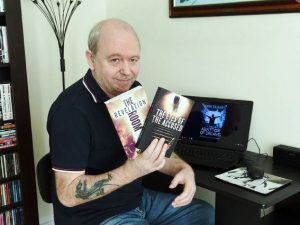
1) So, who are you & what have you written?
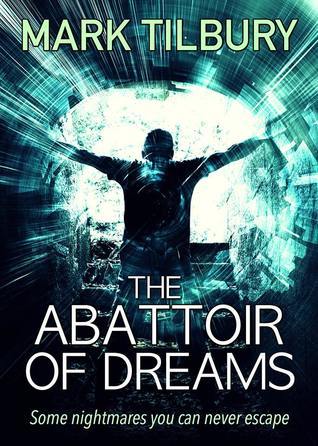
My name is Mark Tilbury. I grew up in a small town in Oxfordshire, but moved to Cumbria in 2015. To date, I’ve written three books, the last of which, The Abattoir of Dreams, was published by Bloodhound Books at the end of February. I’m pleased to say that it made the top ten psychological thrillers in the Hot New Releases chart, and has been really well-received. It was an extremely difficult subject to write about as it involved abuse in a children’s home, but I’m really glad I wrote it because it was something I wanted to say. It absolutely sickens me to the core how some of those people entrusted to look after children abuse their power and get away with it time and again.
My first two books, The Revelation Room and The Eyes of the Accused, are completely different. They are about a young man who is thrown into the murky world of private investigating after his PI father is captured and almost killed by a cult. Book one is the story of how this happened, and book two is the continuation of the series with Ben’s father now crippled and unable to work in the field.
Ben and Maddie are not your typical sleuths. I wanted to try to create something of an anti-hero. A shy, insecure young man completely out of his depth, aided by his friend Maddie who he is secretly in love with. Both books were initially self-published, but have been withdrawn ready for republication by Bloodhound Books in June and August respectively. I have also been contracted to write a third book in the series which I’ve just started working on.
You can find me Goodreads HERE, plus you can follow me on Twitter as @MTilburyAuthor, or at Google+ HERE. LIKE my Facebook page, HERE.
 2) Why do you write crime fiction?
It’s a great vehicle for me to examine the darker side of humanity. I love observing people and putting them under the microscope. Seeing what makes them tick. Exploring why some individuals are capable of committing terrible inhuman acts. I like to go deep into the mind of the antagonist, and then pit them against a protagonist who seemingly has little chance of defeating them.
3) What informs your crime writing?
Mostly it’s my interest in psychology, but I’m rarely influenced by anything in particular. The ideas generally come from nowhere. The idea for The Abattoir of Dreams came from the remnants of a dream I had about a guy in a log cabin in the middle of the woods with no idea of how he got there. Then I started wondering why he couldn’t remember anything and, more importantly, what it was he couldn’t remember. The finished story had no log cabin in the woods, but it certainly gave me a starting point. I didn’t know it would turn out to be quite as traumatic as it did, particularly dealing with the protagonist’s abuse in a children’s home and his dreadful childhood, but I’m glad I wrote it and I’m extremely proud of it.
4) What’s your usual writing routine?
I usually write down ideas and expand on them in the morning. Then I try to write 2000 words in the afternoon when I’m working on a novel, but don’t beat myself up if I can’t.
5) Which crime book do you wish YOU’D written, and why?
It might be an odd one, because Stephen King is not especially known for crime books, but Dolores Claiborne has got the lot for me. It’s so cleverly written, and narrated in the first person so as it reads like a transcript from a police interview. Dolores has been arrested for murdering her wealthy employer who she has looked after for thirty years. The story deals with Dolores’ life, including the murder of her husband, right up to the present and what really happened to the old lady. A true masterpiece.
April 11, 2017
7 Brilliant Benefits Of Being A Voracious Reader
As inhabitants of a modern world we read hundreds of text messages, emails and trashy articles on our phones every day. We can sit through a TV box set in one evening and play video games to our hearts’ content. But when was the last time we sat down with a good book?
If you’re only reading when you have to, you could be missing out on the great variety of benefits experienced by regular readers. Here’s why:
1) It Makes you a Better Writer
“If you don’t have time to read, you don’t have the time (or the tools) to write. Simple as that.” These are the words of novelist, Stephen King, who has published 54 novels and 200 short stories. Writers should always be reading something. Reading exposes you to different writing styles and techniques. These can help to shape your own writing, whether you choose to emulate or avoid them.
2) It Expands Your Vocabulary
The more you read, the more new words you incorporate into your own vocabulary. With a wealth of words at your disposal, you’ll find it much easier to express what you want to say, either in person or in writing.
3) It Helps You To Relax
A 2009 study by the University of Sussex found that reading for just six minutes could reduce stress levels by up to 68%, slowing down the heartbeat and easing tension in the muscles. A great novel can transport you to other places and help you to forget every day struggles and stresses.
4) It Helps You To Sleep
Reading before bed helps you to fall asleep more easily, whilst the bright light of TV and phone screens have the opposite effect. A bedtime ritual of settling down with a good book will start to signal to your body that it’s time to prepare for sleep. Some people’s bodies get so good at sensing the signals that they can only manage a few pages before nodding off.

5) It Gives Your Brain Exercise
Like any other muscle in your body, your brain needs exercise to work to its best potential. “Use it or lose it,” goes the saying! Staying mentally stimulated has been shown to reduce your chances and slow the progress of brain diseases such as Alzheimer’s and dementia. Reading can also improve your focus and concentration.
6) It Improves Your Memory
When you read a book, there are lots of things to remember. Characters, locations, relationships, sub plots and the arc of the main story. Remembering these things creates new pathways in the brain. This acts as a kind of brain training and improves your memory for real life events too.
7) It Teaches Us About People and the World
Whether you’re reading fact or fiction, books can teach us so much about other people and the world around us. Books can tell us about history and the present day, give new perspectives on a particular issue or reveal ways of life we rarely come into contact with. Reading makes us more empathetic as we try to understand character motivations in a novel, and more aware of our own personalities as we compare our own feelings to those we come across in the book.
CONCLUDING:
From childhood into old age, there are so many reasons to get lost in a good book. Besides the obvious entertainment value of a great page turner, there are advantages that transcend the time we spend reading. We can take benefits in health, brain power and emotional intelligence from the pages of a book, back with us into the real world, and continue to enjoy that enrichment each and every day.
BIO: Kate Thora is a Senior Content Specialist for Uphours, an online resource with information about companies. In her spare time, she loves writing and painting while surrounded by nature. Follow her on Twitter @katethora1.
April 10, 2017
BEST OF 3: Sarah Hardy, Book Blogger
1) The Abattoir of Dreams by Mark Tilbury
I picked this book up with no clue what it was actually about. I don’t ever usually do that but it made it even more thrilling as I had no idea what to expect. What I got was a heart pounding as well as heart breaking read. I love a book that really gets inside my head which this did. It is definitely an emotional rollercoaster of a read that will stay with me for a long time to come. Read my full review, HERE.
2) A Suitable Lie by Michael J Malone
This book totally blew me away. The fact that it was the man that was the victim of domestic abuse is something new to me as i’ve never come across a story line where it’s the man, it’s always usually the woman. Domestic abuse really is not an easy subject to read and this author had me going through every emotion possible. At times I was so infuriated that I wanted to throw my kindle at the wall at the injustice of the main character. The fact that the author had me feeling so many things is a talent in itself. It really got to me and I mean REALLY got to me. I had to keep having a breather to calm myself down before I could read on. Just brilliant! Read my full review, HERE.
3) Dark Water by Robert Bryndza
Anyone that knows me, knows what a huge fan I am of this author. This guy could write a shopping list and I would be gripped. I have loved all his books but I have to say that Dark Water is my personal favourite. I had been dying for this to come out so I could read it. Problem is it was so good that I devoured it in one afternoon. Always a sign of a good book. The story line for me in this one was just nail biting and had my heart racing. Robert just writes the perfect crime books, it had everything i want from a crime book and more and best of all he always leaves me desperate for more. Read my full review, HERE.
BIO: Sarah Hardy is an avid reader and book blogger whose dream came true at the back end of last year when she was offered a role with Bloodhound Books. Born in Durham she now lives in Leeds, West Yorkshire with her husband, 2 teenagers and 2 pets.
WANT TO SHARE YOUR OWN ‘BEST OF 3’?
We always want to hear your crime, thriller and mystery reading recommendations. For full details, CLICK HERE or on the pic at the top of this article.
April 7, 2017
INFOGRAPHIC: Why You Should Do Your Homework
I’m a big fan of the old saying, ‘failure to plan, is planning to fail’ … So when James from 123Writings got in touch with this infographic, I was interested to see what celebrities thought about homework and preparation.
Imagine my surprise when I discovered that I shared a similarity with Kristen Stewart!! People think I’m a bit of a rebel too, but I ALWAYS did my homework in school. In fact, I was a bit of a swot. Don’t tell anyone! 
April 6, 2017
My Top 6 Unlikeable Women In Fiction
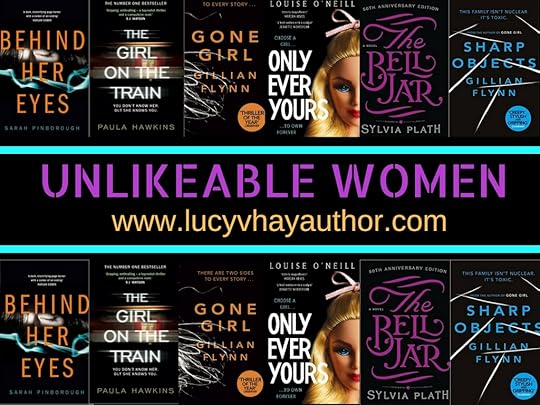
This great link from Book Riot turned up on my social media feeds recently – 100 Must-Read Books With Unlikeable Women.
It’s SUCH comprehensive list and there’s plenty on there to add the TBR! As I’ve written before, I LOVE an ‘unlikeable’ woman (though I’d call them ‘enigmatic’, rather than unlikeable!!).
My protagonist in my debut, The Other Twin is called Poppy Wade and she might be termed ‘unlikeable’ because she can be selfish and reckless … Though I love her because she’s also FIERCE and LOYAL! I hate goody-two-shoes characters and I love to read about women with flaws and problems of their own, which is why I wrote Poppy like this.
Without further ado, here’s the ones I’ve read from the top 100 list:
1) Behind Her Eyes by Sarah Pinborough. One of my first reads of 2017, this is a very unusual book because it may not be about what you *think* it is … I’m not giving anything away though! Read my full (non-spoilery) review, HERE.
2) Gone Girl by Gillian Flynn. **Obviously** Amy Dunne will figure in a top 100 — she’s an icon and opened the door to many more enigmatic leads like her! Thanks Gillian Flynn, you rock! My full review, HERE.
3) The Girl On The Train by Paula Hawkins. Rachel is iconic too, just like Amy Dunne – so again, we can’t have a top 100 list without her. As a British novelist like Hawkins, I feel so inspired by the success of this book and think it’s great storytelling. My full review, HERE.
4) Only Ever Yours by Louise O’ Neill. The Handmaid’s Tale for the YA generation, this story is so relevant right now it’s scary. O’Neill’s writing is top notch, too: I feel so sorry AND infuriated by protagonist Frieda, whose actions are understandable, tragic and pathetic (in the truest sense of the word). My full review, HERE.
5) Sharp Objects by Gillian Flynn. Of course Flynn gets more than one outing on the list … she’s queen of the enigmatic lead! This time it’s the mixed up and morally ambiguous Camille Preaker’s turn and wow, is she memorable. Read my full review, HERE.
6) The Bell Jar by Sylvia Plath. Perhaps the saddest addition to the list. Although this is a novel, it’s quite obvious – given what we know from history – that Esther, the lead here, is Plath herself. All the same, an eye-opening account of mental illness that flies in the face of stereotype. A must-read. Check out my full review, HERE.
Also listed on this top 100, I’ve also got Americanah by Chimimanda Ngozi Adichie on my own TBR pile — looks like I need to bump it up the list!
Which are YOUR favourite ‘unlikeable’ – or ENIGMATIC! – women in fiction?
April 5, 2017
My Top 10 Reading And Writing Products
The third novel in Marianne Delacourt’s series of paranormal crime novels about unorthodox PI Tara Sharp, ‘Too Sharp’, launched last week. The novel is available from all online retailers, including Twelfth Planet Press and Amazon .
Readers new to Delacourt’s Tara Sharp series can spark their addiction with ‘ Sharp Shooter’, the ebook of which is available for free for a limited time to celebrate the launch. Over to you, Marianne!
Ohhh this is so much fun to think about! Thank you for asking 
April 4, 2017
My 2017 Reading Pledge Update (First Quarter)
So, the first three months of the year have passed, which means it’s time to examine my reading pledge for 2017 so far!
My reading challenge on Goodreads is to read and review 100 books this year (I managed in 80 in 2016) and I’m on more or less on track with 21 books read this quarter. In 2017, I pledged to read at least five:
Writers of colour
Classic literary titles (or modern prize-winners, i.e. Pulitzer)
Non fiction titles
Fiction titles that aren’t crime, mystery or thriller (or classics, prize-winners or non-fiction!)
PLUS: a crime/subgenre I’ve never tried before
So, how have I done so far?
I’ve done best reading writers of colour. I’ve read Never Let Me Go by Kazuo Ishiguru; Everything I Never Told You by Celeste Ng; Arrival by Ted Chiang; plus Hidden Figures by Margot Lee Shetterly.
In terms of literary classics, I haven’t read ANY, though most of the above are modern prize winners (but I’m kinda cheating, really as I’m doubling up!). I have read the superb Little Deaths by Emma Flint, which was long-listed from The Baileys Prize. I’d like to read more from that list for sure (I have The Power by Naomi Alderman on the TBR too).
In terms of non-fiction, not counting Hidden Figures, I’ve only managed one other – the fabulous For The Love Of Shakespeare by Beth Miller.
In terms of a crime/subgenre I’ve not tried before, I really struggled to find one this year as I’ve dipped a toe in most of them … So I decided to try book club titles. I’ve always been a bit of a rebel about these, just because everyone else is reading them! Any I’d read before had been accidental, so I decided I was probably missing out. I read Lying In Wait by Liz Nugent; Lie With Me by Sabine Durrant and Baby Doll by Hollie Overton because they all feature on Richard and Judy’s Spring 2017 Book Club. I’ve also got The Trouble With Goats And Sheep by Joanna Canon on the TBR.
So in the next quarter, I’m definitely going to read more non fiction and classics. I’ve got The Psychopath Test by Jon Ronson and The Ministry of Fear by Graham Greene in my TBR, so those would be good places to start.
How’s YOUR 2017 reading pledge or Goodreads challenge going?
Lucy V. Hay's Blog

- Lucy V. Hay's profile
- 174 followers

