
Lucy V. Hay's Blog, page 25
May 16, 2017
CRIMINALLY GOOD: interview with author Tana Collins
1)
So, who are you & what have you writte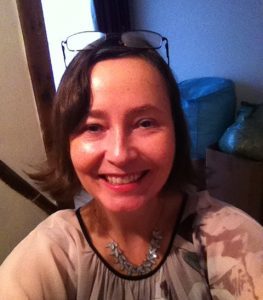 n?
n?
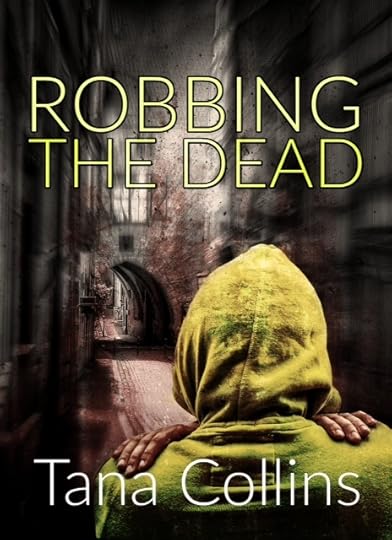
My name is Tana Collins. I’m the author of a brand new police procedural series set in the picturesque East Neuk of Fife featuring Glaswegian cop, Inspector Jim Carruthers. My debut novel, Robbing the Dead was published on 14th February. The follow up in the series, Care to Die, is being published on 1st June 2017. So it’s a big year for Inspector Jim Carruthers and his team!
2) Why do you write crime fiction?
All sorts of reasons. I love a good mystery and a good puzzle. I also love how crime fiction writers often have a strong sense of place in their novels and it’s a real joy for me to write about Fife, a part of Scotland close to my heart. Being a writer you are accutely aware of your your environment and senses. And other people. I love that. Like a lot of writers I use crime fiction as a vehicle for exploring social issues. My crime novels tend to involve real life events which I weave in to a fictional storyline. I want to try to give the reader something unexpected that will pull at their heartstrings. I guess in terms of subject matter my novels are not always necessarily an easy read but I still want them to be satisfying!
 3) What informs your crime writing?
As a teenager back in the late 70s/early 80s I managed to intercept the police radio and I used to listen avidly to all the local goings on until I got caught! I’m not sure if it was boredom or nosiness but I used to imagine myself solving the crimes and catching the perpetrators! I also love writing, have a vivid imagination and a background in political philosophy so perhaps crime fiction was inevitable.
4) What’s your writing routine?
I’m afraid I don’t have one! I do my best writing in the morning or late at night but most of the time I fit it round the day job unless I’m in the middle of an edit or I’m on holiday when I give myself more time to write. I love nothing better than the thought of a two week holiday where I can.
5) Which crime book do you wish YOU’D written, and why?
Oh that’s such a good question! It would have to be Peter Robinson’s In a Dry Season. It’s such a wonderful multi-layered mystery. It was the first crime novel I ever read, still my favourite and it opened up a whole new world to me. I remember being amazed at Robinson’s sense of place and the fact that he managed to weave two timelines in to his book so skilfully. I’m also a little bit in love with DCI Banks but that’s supposed to be a secret!


May 15, 2017
Which Are The Best Ever YA Book Covers?
Fact is, we live in a visual age and the cover of a book is an important communication to a potential reader. A truly great cover not only hooks and entices the reader to pick it up, it gives important information about the genre, style, and type of story that can be found inside. In contrast, a BAD cover will literally put a reader off from even considering reading it!
A great cover is arguably even more important in the YA sub genre. Teens and young adults today are bombarded with imagery like no generation before them, which means they’re the most media literate, EVER. They can decode visuals quicker, so imagery has to really GRAB their attention.
So, for YA May, I scrolled through acres of covers of recent YA novels, deciding which I would read on the basis SOLELY of what they looked like. I added them all to my Goodreads … plus I even discovered I had a couple on my TBR already! I also LOVE the new cover for YA classic, Forever by Judy Blume.
These below are the ones that caught my eye … Which would YOU read, based on the cover alone?
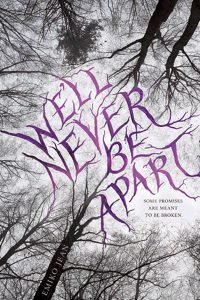
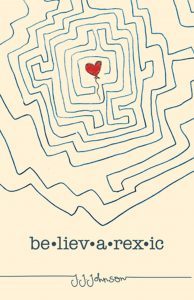
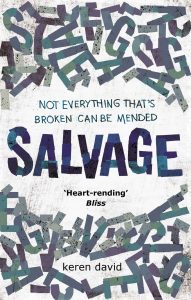
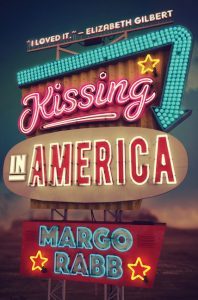
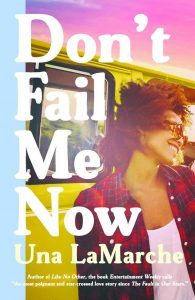
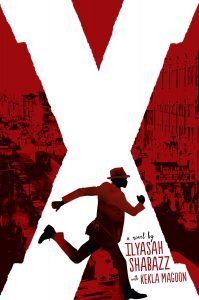
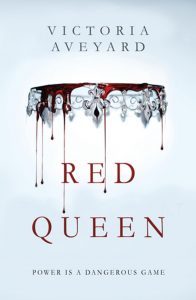
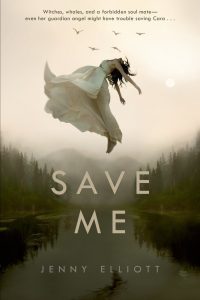
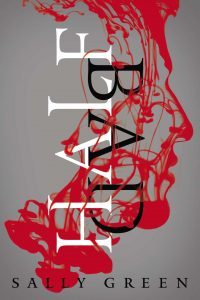
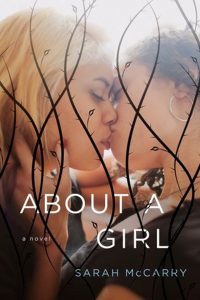
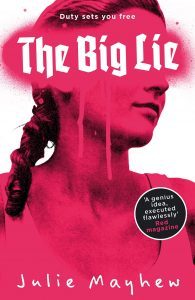
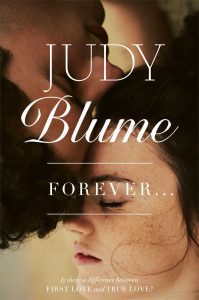
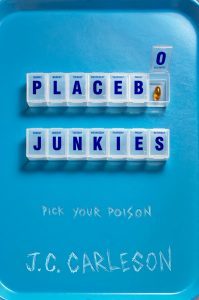
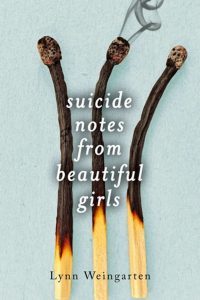
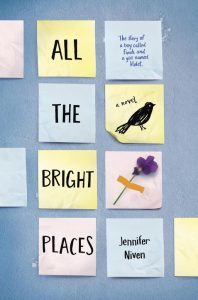
Which is YOUR favourite, above?
LINKS:
29 Best YA Covers (Epic Reads)
50 Covers For 2014 (Casual Optimist)
52 Covers For 2015 (Casual Optimist)
30 Best YA Book Covers 2015 (Bustle)
Notable YA Book Covers of 2016 (Casual Optimist)
May 11, 2017
BEST OF 3: Abby Fairbrother, Book Blogger
As YA May continues, we have a great YA reading recommendation from book blogger Abby Fairbrother today, plus two more from some real YOUNG ADULTS themselves! Thanks guys!
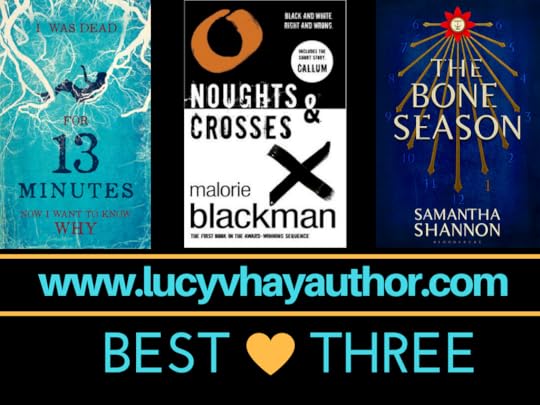
1) 13 Minutes by Sarah Pinborough
I found this book dark, intriguing & very suspenseful. Once I reached halfway through the book, I already felt the writer had delivered with a fantastic story & characters, but that is when the real plot really began unravelling.
I think the novel really taps into the complex mindset of teenagers very well and show that ultimately it’s a very fragile time in a person’s life. I read the novel in forty eight hours and before I even put the book down, my daughter Daisy snatched it and escaped to her room, where she read it in a day.
This is the first novel myself & my daughter read together and it was interesting to find that we both took a different angle on the characters. This is really a 10* review, as we both gave it 5*!
Check out Abby’s Q & A on her blog with author Sarah Pinborough, HERE.
2) Noughts and Crosses by Malorie Blackman
My 19 year old brother loved this book as it tackles the issues of race but in a race reversal as such.
3) The Bone Season by Samantha Shannon
My 14 year old daughter loves The Bone Season as she found she completely immersed herself in a whole other world. (I think they are similar to Divergent-type novels).
BIO: Abby Fairbrother is a book blogger and YA enthusiast. Check out her book blog, HERE and follow her on Twitter as @annebonnybook.
WE WANT TO HEAR YOUR OWN TOP PICKS!
Want to recommend your own ‘Best of 3’? Please do! Check out the submission guidelines, HERE. Looking forward to hearing from you.
100 Best Young Adult Books Of All Time – Vote!
As YA May continues, I was looking for the definitive answer of WHICH Young Adult books were the best ever … And I found this, over at Time.Com:
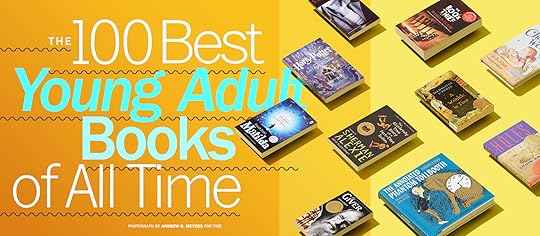
This photo gallery is great, with a pic for each book as well as a short blurb on it. I was pleased to see I’d read a lot more of them than I thought (especially considering my embarrassing turn on the Ultimate YA Quiz last week!). If you’re a YA fan, you’ll want to take a look – it can work as some fab reading recommendations too.
There’s also a poll, asking you to vote for your favourite YA Book of all time. I was surprised to see a few on there, such as Matilda by Roald Dahl – I would have thought that was more of a ‘tween’ book. The Harry Potter series, too!
All that said, I think the Anne of Green Gables series is probably my favourite. I loved those books so much! I read the first again recently with my middle child and she loved it too.
Which YA book is YOUR choice for the best of all time?
May 9, 2017
CRIMINALLY GOOD: interview with author Mike Knowles
 1) So, who are you and what have you written?
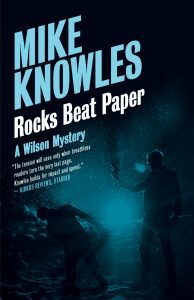
My name is Mike Knowles and I’m a crime fiction writer. I have had six books published so far. The books are all about a career criminal named Wilson. Each novel follows Wilson as he plans and commits a heist. Every job has its complications and things often end bloody. My sixth book, Rocks Beat Paper, is out TODAY!
In the book, Wilson flies to New York to rob a jewellery store of millions in uncut diamonds. Wilson puts together a way to get inside and things are all going according to plan until the inside man dies and everyone walks away — everyone but Wilson. He stops looking for a way inside and instead works out a plan to get the diamonds to come to him. He recruits his own crew and sets a con in motion that will walk the diamonds right out of the store.
The plan should work out; at least, it would if there weren’t other people after the same diamonds — people who are willing to go to any length to get their hands on the stones! Wilson finds out that stealing the diamonds is nothing compared to what it will take to keep them.
2) Why do you write crime fiction?
I think what interests me about crime fiction is the challenge. I like working out how to pull off a crime. The logistics and methods take a lot of time to devise and I enjoy all the work that goes into a coming up with a good getaway.
 3) What informs your crime writing?
The broader ideas for my books often come from things that I read about in the newspaper. Once I have an idea, I start writing and let the story develop on its own. Once I get a rough draft completed, I read the book over, noting any areas that I am unsure about. At this point, I start pulling articles from the internet and ordering books on the subjects in question. There are plenty of times when I have had to change what I have written because I have learned that things don’t work the way I initially thought they did.
My writing has also benefitted from the ever-growing presence of the internet. As technology permeates more and more of people’s lives, a lot of what they experience ends up online. I have definitely profited from the network of shared personal experiences found on the internet. If you have never ridden on a train in New York, Google it and you can experience whatever line you want to ride from the perspective of someone’s cell phone. If you want to step out of the train car, there is an urban explorer out there who has filmed themselves doing just that. The internet has given me greater insight about many of the places I write about.
4) What’s your usual writing routine?
When I get to work, I take a few minutes before the day starts to jot down whatever ideas have come up that morning. The notes are usually plot points or small bits of dialogue. On my lunch break, I write. I don’t eat, I don’t socialise, I try to get as much done as I can. I get another round of writing in around ten o’clock that night. I usually work until I start to fall asleep at my desk. The next day, I do it again.
5) Which crime book do you wish YOU’D written, and why?
I thought about this question for a while. The idea of a book that I wish I’d written is something I never considered. Books are a snapshot in time of a specific writer’s experiences and creativity — they have a sort of fingerprint. When I thought about the books I love, really love, what makes me love many of them is their distance from me. I love books that involve a world that is nothing like my own. Books that were generated from a series of experiences that I have never encountered.
The Dawn Patrol by Don Winslow is not a book that I wish I had written — it is a book that made me wish I had experienced some of the things that made such a book possible. The book should be checked for a pulse. There is life in the pages. Every time I read it, I feel like there is a place somewhere in San Diego where I will find everything, and everyone, that was on those pages. The book is something I could never have written, but it always leaves me feeling as though it is something I could experience. I think that is why I love it so much.
May 8, 2017
Who Is YOUR Favourite YA Author?
So it’s YA May and one of my reading buddies asked, ‘Who is your favourite YA author?’
I didn’t even pause to think! For me, there’s only one definitive YA author and that’s Sarah Dessen. Her novels set in Wildflower Ridge are my absolute favourites. I love how relevant her stories of dysfunctional families, teenage angst are, plus the idea that ‘behind closed doors’ all is NOT what it seems.
My favourite of Dessen’s is probably Along For The Ride. Auden’s teenage loneliness, plus the beach town storyworld in which she lives feels really authentic to me. It’s one of the few books I’ve read more than once, too!
If you know Dessen’s work, why not try the quiz below – just scroll past the pic for the ‘take quiz’ widget. And if you’ve never read one of Sarah Dessen’s books?? START TODAY!!!
Goodreads Quiz
A Sarah Dessen Fan Quiz
taken
1244 times
20 questions
take quiz
May 5, 2017
INFOGRAPHIC: The Ultimate Guide To YA Romance
Since it’s YA May at the moment, I thought I’d take a look online to see if I could find some VISUAL representations of the YA genre!
Romance is a BIG part of YA, so I love this infographic from the brilliant site Epic Reads which shows us – in glorious technicolour! – just how many times words like LIPS and KISS appear in various celebrated YA books featuring romance.
I always think number crunching exercises for books are really interesting … For example, I’ve read Divergent a couple of times now, I can safely say I NEVER noticed how many times these words appeared! Yet according to this infographic these words appear fairly steadily throughout the story. I guess it just shows that if you’re absorbed in the story and characters, anything goes!
See if you can find your favourite YA featuring romance on the infographic below and let us know what you think. Enjoy!
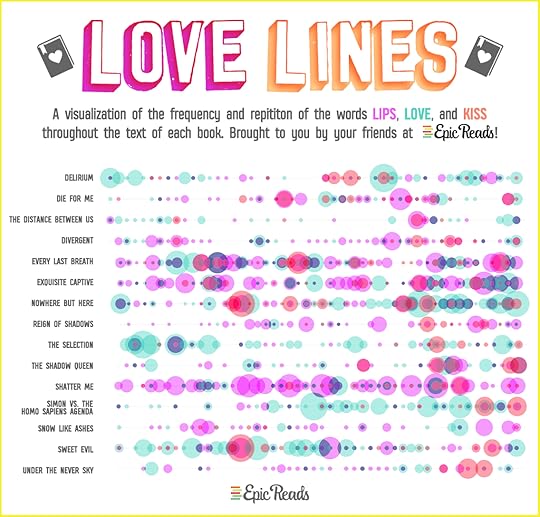
How to read this infographic:
The pink bubbles represent the word LIPS
The teal bubbles represent the word LOVE
The orange bubbles represent the word KISS
Where the bubbles begin marks the beginning of the book and where the bubbles stop, marks the end of each novel.
The bigger the bubble = the more often that word appears in that part of the book
The total number of times the words LOVE, LIPS, and KISS appear:
Delirium by Lauren Oliver – 119
Die for Me by Amy Plum – 104
The Distance Between Us by Kasie West – 56
Divergent by Veronica Roth – 94
Every Last Breath by Jennifer L, Armentrout – 284
Exquisite Captive by Heather Demetrios – 247
Nowhere but Here by Katie McGarry – 277
Reign of Shadows by Sophie Jordan – 88
The Selection by Kiera Cass – 118
The Shadow Queen by C.J. Redwine – 90
Shatter Me by Tahereh Mafi – 184
Simon vs the Homo Sapiens Agenda by Becky Albertalli – 117
Snow Like Ashes by Sara Raasch – 49
Sweet Evil by Wendy Higgins – 150
Under the Never Sky by Veronica Rossi – 58
Which of the above YA books featuring romance is YOUR fave?
May 4, 2017
Top 10 Witches In Books And On Screen
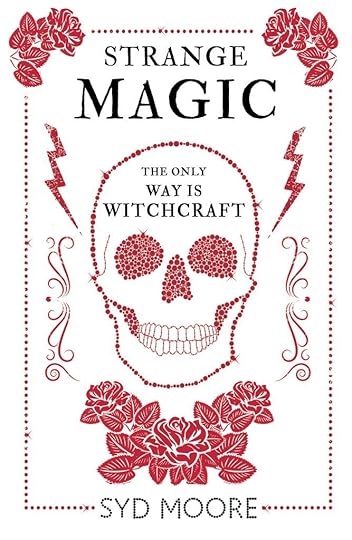
Many thanks to Syd Moore, who’s written this great post! I am a big fan of witches myself, so make sure you check out Syd’s Book, STRANGE MAGIC, published this week. Enjoy!
This top ten of witches in books and on screen has actually been quite difficult to write, mainly because there are just so many great ones that I couldn’t fit in. I have had to jettison some of my favourites such as Misty the Blue Witch, who was the cover girl for the spooky comic I read as a child. Between its pages my imagination was stirred so powerfully it ignited a lifelong interest in the supernatural.
I also had to omit the Owens sisters in Alice Hoffman’s Practical Magic who transformed on screen into Sandra Bullock and Nicole Kidman. Hard to forget that dazzling duo of wyrd sisters! So, without further ado …
10) Miss Price in Bedknobs and Broomsticks
Angela Lansbury plays a young(ish), not particularly child-friendly trainee witch in this great children’s comedy. Part animated, part live action, the plot follows Eglantine Price, a conman and three evacuee children in their quest to find the ‘substitutiary locomotion’ spell on the Star of Astoroth. It’s got German soldiers, football, a talking bear, dancing clothes and of course broomsticks all of which are sensibly navigated by the wonderful Ms Lansbury. Eglantine Price is a great character, both magically active and dedicated to her craft, whilst also very English and pragmatic. What more could one wish for in a witch?
9) Circe – The Odyssey by Homer
The goddess of magic, witch and enchantress Circe was the daughter of a sun god and an Oceanid nymph. Sometimes she is also referred to as the daughter of Hecate, the goddess of witchcraft. Either way, in The Odyssey she was definitely pretty witchy. Odysseus happened upon her, living in a mansion, keeping lions and wolves as pets. Presumably unimpressed by the behaviour of his men in her house, she created a magic potion and turned them into pigs. Subsequently she seduced Odysseus, the hero, and kept him on her island for a year before dismissing him.
Loved by the Pre-Raphelites, she is often portrayed as a beautiful redhead with luscious long hair, bedecked in gold bands and long flowing robes; a kind of prototype hippy goth. She’s sexy and sensuous. Circe knows what she wants and isn’t afraid of using magic to get it. You’ve got to love that!
8) The Love Witch directed by Anna Biller
A contemporary film with the aesthetic of a technicolour Hammer Horror, The Love Witch is a strong take on women, witches and sexuality. It celebrates kitsch in a serious way. Along with her cinematographer M David Mullen, Biller has reproduced an array of classical camera styles. The costumes are luscious too. In the film, Elaine, the eponymous Love Witch, seduces men with love potions and beds them with fatal consequences. Its feminist take on sexuality and the exploration of the ‘female gaze’, combined with the stylish visual feast means it’s destined to become a classic of the genre.
7) The Witch – A New England Folktale
This had quite an effect on me when I watched it last year. At first I didn’t know what to make of it but slowly I realised that it is actually a very clever film. Set in New England, in 1630 it follows Thomasin, the daughter of William and Katherine who along with their young family have settled on the edge of a dense wilderness. When their baby son inexplicably vanishes and the crops fail, the family begins to turn on one another. Anya Taylor-Joy is compelling as the troubled teenage Thomasin and puts in a masterful and ultimately chilling performance.
Robert Eggers, the writer and director, undertook a huge amount of research into the witch trials and the resulting story reads as if the testimony of witnesses and accusers swept up in various witch hunts was true. I won’t give any spoilers away but the ending is quite unsettling.
6) The Witches of Oz in The Wizard of Oz
Both the Witches of the West and North have become iconic in Western culture. The Wicked Witch of the West got her own book and West End show with Wicked, a revisionist tale, which gave the background to her life. She’s wilful and cantankerous and cackling.
Not all witches have to be good, but of course Glinda, The Good Witch of the North, both in nature and appearance, very much is. She looks like a fairy with her puff pink sleeves, crown and wand, but she is rooted firmly in witchcraft, reminding us that sometimes good and evil are purely matters of perspective.
5) Pogles Wood – The Witch
First screened in1966 The Pogles was part of the Watch with Mother series. One episode, featured a dark crow-like witch. She was ahead of her time, sporting black and lace goth robes, although she still employed traditional occupations such as stealing babies and trapping husbands in wicker cages. She was also funny – sarcastic with a sharp tongue. Following her discovery, accusations and insults are traded between Mrs Pogle: ‘you power peeving hag’, and our anti-heroine, the witch: ‘Words Mrs Pogle! What rude things you say! I shall make you into something that won’t talk.’
The episode neatly observed the conventional pattern of neighbourly accusation, subsequent persecution and then burning of the witch. It mirrored the European witch hunts of the 16th and 17th centuries which resulted in the wrongful deaths of thousands of those falsely accused. This programme, however, was aimed at pre-schoolers. Despite the comfy Bagpussian narrator, The Pogles was simply too starkly realistic – the episode was canned for scaring the crap out of its infant viewers.
4) Jessica Lange as Fiona Goode in American Horror Story, Coven
Jessica Lange has been mesmerising in all her roles in this franchise US TV series but as the ironically titled Fiona Goode, she peaked. Supreme Witch of the Salem Descendants, Goode is on a mission to find eternal youth and guide her charges into an understanding of their true power. She’s glamourous, loves both her luxuries and her men. In Fiona Goode, Lange has created a vision of female middle-age which unlike many contemporary depictions is magically powerful, ambitious and autonomous, and still very, very sexy. About time we saw more of this sort of characterisation on screen.
3) Willow Rosenberg in Buffy the Vampire Slayer
My son narrowly escaped being called Willow after this wonderful witch. The whole Buffy series was absolutely brilliant. Witty, subversive, intelligent and entertaining though often overlooked because of its quasi-comic book title. The show explored many challenges faced by young people as they transition into adulthood and discover their identity and sexuality. Willow, who found her soulmate in fellow witch Tara, is a complex character. She is, by turns, innocent, noble, powerful, benevolent, funny, then defiant and downright terrifying. One allegorical theme in series six explores Willow’s sordid addiction to magic and her pained search for her true identity. Conversely, Under Your Spell, her duet with Tara from the musical episode Once More With Feeling is in my humble opinion one of the sweetest most enchanting love songs I’ve ever heard. Beautiful and scary!
2) Margarita in The Master and Margarita by Mikhail Bulgakov
Set in the 1930s the main plot concerns the Devil’s visit to Moscow in the very atheist former Soviet Union. He arrives with a huge talking cat called Behemoth, and a crew of odd looking deviants – witches, valets and vampiric-looking nasties – who wreak havoc on the city. Margarita dominates the second half of the novel. She is invited to the Devil’s midnight ball on Good Friday and offered the chance to become a witch. She accepts and learns both to fly and control her passions (mostly) and, on one imaginatively evocative night time flight, swoops sky-clad over forests and rivers to Moscow. The Devil grants her a magical wish and, after saving a woman from a particularly nasty eternal damnation, she asks to be reunited with her lost lover, The Master.
Margarita is memorable for her strength, fearless nature and passion. The book itself is both satire and unconventional love story; one of the best of the Twentieth Century.
1) Samantha Stephens, portrayed by Elizabeth Montgomery in Bewitched
My parents wanted to call me Elizabeth but my cousin nabbed it, so instead I was named after the protagonist in this splendid 1960s series. It triggered an affinity between my family and the kooky nose-twitching housewife-cum-witch. For the first time, in my mind, witches became something that it was possible to look upon with affection. And legitimately so, for it seemed the whole world was in love with the sunny-natured Samantha and her strange female relatives: Tabitha, her cute witchy daughter, and Endora, her sharp, muggle-loathing mum. Samantha was loyal to her mortal husband and although she tried hard to conceal her magical abilities, she couldn’t help giving in to her true nature. She was, to be blunt, refreshing and just lovely. As Darrin, her husband, was known to repeat, ‘Samantha, you’re one witch in a million.’
 STRANGE MAGIC by Syd Moore is published by Point Blank, an imprint of Oneworld on 4 May, paperback £8.99.
May 3, 2017
The Ultimate YA Quiz
Following the success of last year’s Dystopian November, I’ve decided this month is YA MAY! It may surprise you, but when I’m not reading – or writing! – crime fiction, I love me a bit of YA fiction! I tend to prefer teen lit set in the real world, dealing with real issues and real problems (though of course I love a bit of dystopian YA, too!).
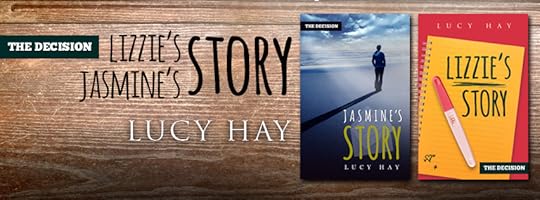
In fact, I love YA so much, I even wrote a couple of YA novels! The Decision Series is a duology of books that confront a teenager with a dilemma and ALL the possible outcomes of that particular scenario:
In The Decision: Lizzie’s Story, our heroine discovers she is pregnant and must work out what she wants to do about this situation — and it goes waaaay beyond *just* ‘have the baby, or don’t have the baby’! READ AN EXCERPT, HERE.
In The Decision: Jasmine’s Story, the protagonist discovers she is the only one who can help her best friend, which might seem like a no-brainer … Until lots of OTHER BFF/frenemy stuff is factored in!! READ AN EXCERPT, HERE.
Since I’ve read a lot of YA (and even written a couple myself!), I thought the quiz below would be pretty easy, but I just took it and got a TERRIBLE 3 out of 11 questions right!!! That’s just 27%. Supersadface. THE SHAME!!
Just scroll down and click on the ‘ take quiz’ widget to take the test yourself.
Let me know how YOU get on!
Goodreads Quiz
The Ultimate YA Quiz
taken 784 times
11 questions
take quiz
May 2, 2017
BOOK VERSUS FILM: The Silence Of The Lambs
WARNING: Do not touch the glass. Do not approach the glass. And do not under any circumstances read this if you don’t already know the story …
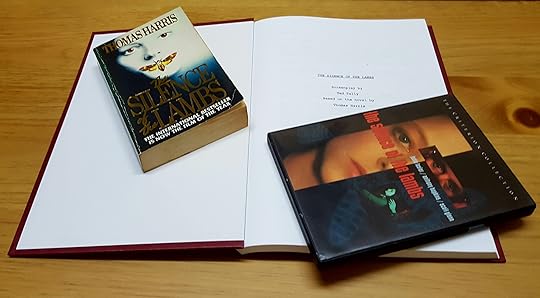
CS: Hello, Dr Lecter. May I talk with you?
HL: Good evening, Clarice. What do you have for me this time?
CS: A comparison study, concerning the book and film of The Silence of the Lambs.
HL: Lucy V Hay sent a blogger to me?
CS: You see and read a lot, Dr Lecter. But are you willing to point your high-powered perception at the story of how we met?
HL: Send the first case file on through, now.
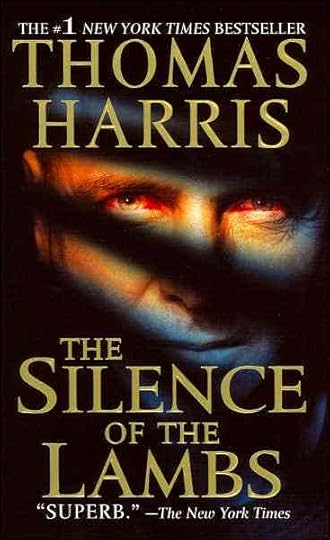
Case file #1: the 1988 BOOK
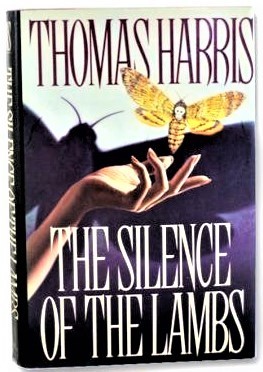 HL: What I find most interesting about Thomas Harris’s book is the risk he takes before writing a single word. When penning sequels to earlier successes authors usually retain the protagonist, but here poor Will Graham does not return from Red Dragon. Instead, our Mr Harris elects to keep me around. Which is, of course, the correct choice.
CS: The book became a global bestseller. Why do you think it was so popular?
HL: Years of research, and it shows on all 352 pages. And, whilst other detail-heavy prose often feels just as heavy-going, the writing here simply flows, much like the rich juices from a roasting carcass. Does that make you feel hungry, Clarice?
CS: I just ate. How would you sum up the story, Dr Lecter?
HL: It’s all here, in the case file. The hunt for serial killer Buffalo Bill is getting nowhere, so the FBI sends poor little trainee Clarice Starling – you – to the Baltimore State Hospital for the Criminally Insane, to interview the brilliant psychiatrist Dr Hannibal Lecter – me – and gain his help catching that naughty boy.
CS: Will you share your thoughts about the characters, please?
HL: I particularly enjoyed seeing your boss suffer. Heading up the investigation means Jack Crawford’s a busy man; but there’s no respite for him at home – not with his dying wife Bella to look after. How long before that starts to affect his work, do you think? Alas, only the book ponders such a painful, yet insightful, question.
CS: Did anyone else make a strong impression on you?
HL: It would be remiss of me not to discuss our antagonist Jame Gumb, AKA Buffalo Bill. He’s one conflicted man, Clarice, damaged by childhood events. Whilst of course he’s a repulsive being, I could not help but find him fascinating. I especially liked his dilemma over where to put the zip on the suit he’s making from his victims’ skins.
CS: You mention the skin-suit – that’s revealed in the book much sooner than in the film. Dr Lecter, do you think it’s more effective that way?
HL: Whilst I prefer keeping people in the dark, revealing this aspect of Bill earlier in the book is necessary. We get many insights into his psyche that would otherwise be confusing.
 CS:
There’s two characters we haven’t discussed yet.
CS:
There’s two characters we haven’t discussed yet.
HL: I wondered when you’d get to us. Dr Hannibal Lecter, and FBI agent-in-training Clarice Starling! We’ll begin with me. Ah, the days when I had six fingers on my left hand, and collected church collapses for my own amusement, Clarice! Of course I am biased, but I will say the interactions between our two characters are the highlight of the book. It’s easy to see why Mr Harris finds me more satisfying than Will Graham. After all, how can one not admire a man who tries to patent a crucifixion watch?
CS: And my role?
HL: Poor little Starling: eager to be accepted into the FBI, and yet troubled by childhood trauma, on the ranch where she was raised, and where she failed to save a single lamb from the slaughter. This book is your story, Clarice, and in literature it is quite something to know you. Indeed, Starling’s skills and trials in the book exceed what we get in the film.
CS: Tell me how.
HL: The clever way she cracks the padlock to gain access to Benjamin Raspail’s storage, and how she preserves the scene once inside. There’s a practicality to her that’s not as evident on screen. And then we have the career threat. Four weeks shy of becoming a special agent and suddenly all that hard work is jeopardised by a case she’s no longer on. Walking away might mean graduation, but would also sacrifice Bill’s latest victim to a grisly fate… Another book exclusive.
CS: So that’s a second win for the book: the detail which never feels obtrusive, and the strong characters with their own conflicts.
HL: Why don’t you send that tape through, Clarice, and we’ll take a look at the film …
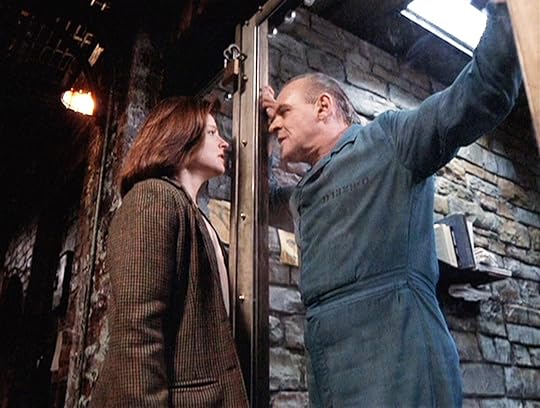
Case file #2: the 1991 FILM
HL: It amuses me to recall how this went on general release on Valentine’s Day. Just picture it, Clarice: all those tedious, sticky fumblings in the back rows of theatres… What a date night surprise we must have been.
CS: I imagine most people were surprised, Dr Lecter. Many were terrified. But it went on to earn over $272 million, from a $19 million budget. And it became only the third film to win the top five Oscars, at the 64th Academy Awards. One of those was for best adapted screenplay; I’d like to begin there if I may –
HL: No! I’ve told you things, now you tell me things. Quid pro quo, Clarice.
CS: Very well. Ted Tally’s screenplay is among the most faithful adaptations ever written. As far as the plotting goes it’s almost identical, so that’s a draw. But where the book utilises many points of view, the film mostly refocuses the narrative on one character.
HL: On you, Clarice. How did it feel?
CS: To begin with, she feels like an outsider. But that’s the point. There’s a couple of scenes where my character is surrounded by men – FBI agents in an elevator, and police officers at a funeral home – and they’re looking down on her, but she’s the one still there in the next shot. The film makes the point about breaking into this men’s club even better than the book.
HL: Indeed it does. But there’s another way in which the viewer becomes you, isn’t there? Did you spot what that is? Make an effort to answer now.
CS: The director, Jonathan Demme, had the actors talk directly to camera whilst addressing my character when I’m off-screen. It made our conversations more powerful as a result
HL: And made the audience more afraid of me.
CS: There’s a greater sense of dread, that’s true. It’s often described as the only horror film to win the best picture Oscar – though I’m not sure it should be called a horror.
HL: That’s a conversation for another time, Clarice. I want to hear more about your thoughts on the film.
CS: It’s far more disturbing than the book, and at times the tension is unbearable. Jame Gumb hunting my character in his night-vision goggles; your escape from the courthouse in Memphis… And then there’s the misdirection, such as the famous cross-cutting scene between the FBI’s raid on the wrong house, whilst in the right house Jame Gumb is opening the door on unsuspecting me.
HL: It is certainly more dramatic. So, you’ve discussed what the film adds, now tell me what it omits.
CS: Aside from the two ‘book exclusives’ you mentioned, there’s Jame Gumb’s past, and Jack Crawford chasing down the lead about sex reassignment. And also there’s the explanation of how you make the handcuff key, which in the book is a very detailed process, but for the film you use a pen-nib.
HL: Simplicity, Clarice. It streamlines the pace. Is the film better for it though?
CS: The book can afford to take its time. If it read as fast as the film it would feel rushed; likewise, if the film was as detailed as the book it would drag.
HL: That’s honours even, then. What have we learned from case file number two? The handling of Clarice, both as a woman breaking down barriers and as the audience’s eyes, earns the film a point; so too the addition of horror and the increased tension. Have you anything further to add before we choose a winner?
CS: The performances. Jodie Foster and Anthony Hopkins didn’t just win best acting Oscars. They created icons. When the American Film Institute compiled their list of the 50 greatest screen heroes in 2003, Foster’s Clarice Starling was the highest-ranked female character, at number six.
HL: Beating Ellen Ripley by two places. Congratulations.
CS: And on their list of villains, Hopkins’ Hannibal Lecter was first. But we can’t decide this comparison by what awards were won. As impressive as they are, over 25 years later people do not remember the book or the film for those.
HL: You’re so close to the way you’re going to choose the winner, do you realise that?
CS: In storytelling terms it’s about as perfect a marriage between book and film as you’ll get. Yes, the book came first then the film. But after that …
HL: What came after that, Clarice?
CS: When Chris Carter made The X-Files, his female agent Dana Scully was heavily influenced by the film’s Clarice Starling. Hannibal the Cannibal became a cultural phenomenon, being referenced everywhere from soap-operas to sitcoms to sketch-shows; there’s even a nod in the Shaun the Sheep movie –
HL: Sounds charming…
CS: And how many films or TV series have since featured an incarcerated criminal genius giving advice? Even today The Blacklist has its own criminal mastermind helping a rookie profiler.
 HL: So what came after is its legacy?
CS: And it’s a legacy created almost entirely by the film. John Douglas, the real-life inspiration for Jack Crawford, said the film did more for the perception of the Bureau than any genuine case. It actually changed the public’s opinion about the FBI.
HL: His words are quite an endorsement.
CS: And speaking of words, Dr Lecter, if I were asked what drink you preferred with liver and fava beans, and I said a big Amarone, I’d be told that was wrong. But it’s what appeared in the book – it’s what came first – yet everybody will say the correct answer is a nice Chianti. The alternative, from the film.
HL: I fear our time together is almost up. What is your final word?
CS: From the legacy of The Silence of the Lambs, it becomes clear which is the more effective version. The film is the definitive telling of the story. The film is the winner.
HL: Well, Clarice, you have indeed thrilled me with your acumen. I concur with your decision. The film it is.
CS: Thank you for your time, Dr Lecter.
HL: Goodbye, Clarice. And on your way out, I would be most grateful if you’d ask Barney to have Dr Chilton stop by. All this talk has left me feeling rather peckish …
BIO: Nick Jackson gets easily confused. Many years ago he found Precious – but when he tried to stick it on his one-ring finger, the dog nearly bit his hand off. Nowadays he writes short stories and screenplays – usually horror / supernatural thrillers – and recently appeared in the anthologies Dark Minds and Twisted’s Evil Little Sister. He’d like to offer his sincerest apologies to Ted Tally, whilst declaring that imitation really is the sincerest form of flattery.
To Jonathan Demme (1944-2017) at rest where the lambs do not scream.
Lucy V. Hay's Blog

- Lucy V. Hay's profile
- 174 followers

