
Lucy V. Hay's Blog, page 28
March 31, 2017
Top 10 Twins In Books And Movies
The lovely Donna at the Chocolate N’ Waffles book blog has been spotlighting Orenda Books all this month … So, as my debut The Other Twin is out with this great publisher this year, I thought I’d write her a guest post!
You can view the original post, HERE and follow Donna on Twitter as @choconwaffles. Enjoy!
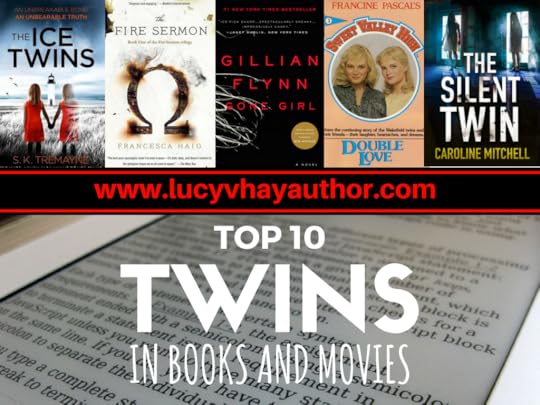
So, The Other Twin is out this July with Orenda Books (SPOILER – twins figure highly in the plot of my book … though you probably guessed that!). I’ve been obsessed with twins and multiple births my whole life – I’m even married to a triplet!! – with this in mind, I thought I’d take a look at my top 10 twins in books and movies. Check these out for size:
1) Gone Girl by Gillian Flynn. GG is a marmite book and predictably I loved this story of sociopathic marital vengeance! But one thing many people forget is there is a pair of twins in this story – Nick and his sister, Go (short for ‘Margot’). I loved the relationship between them, especially as Go always tried to appeal to Nick’s logical side … and we all know how THAT turned out! Read my full review, HERE.
2) The Grady Twins in The Shining. I don’t remember if they were in the book or not, but conversely they only get a small part in the movie, but it’s one of the most memorable moments in the entire film! As young Danny rides his tricycle down the labyrinthine hallways of The Overlook Hotel, he stumbles upon a pair of (dead) twins. It gets even creepier when they say: “Come play with us, Danny”! Eeeek!
3) The Fire Sermon by Francesca Haig. Set in a dystopian and primitive future, after a nuclear holocaust, everyone is born with a twin: the healthy one, perfect in every way – the ‘Alpha’. The second is the ‘Omega’ – born with a deformity, big or small. This new society is an uneasy apartheid, because if one of the twins dies, so does the other. This was a fascinating idea and I could definitely see it as a movie – Dreamworks have bought the rights! Read my full review, HERE.
4) Jessica and Elizabeth, the Sweet Valley High series by Francine Pascal. If you were a teenager in the 90s like I was, you’re bound to have read at least one of these books! The stories are centered around Jessica and Elizabeth Wakefield, two identical blonde Californian twins, who argue, occasionally swap, and compete for boys. Of course, they’re complete opposites: Elizabeth is responsible and diligent (and frankly, a good two shoes!), whereas Jessica is hot-headed, popular, sexy and well, a bit devilish. Girls just wanna have fun, don’tcha know!
5) The Silent Twin by Caroline Mitchell
When her twin sister Abigail goes missing, Olivia becomes mute … and only Detective Jennifer Knight can find her! I loved the spooky, rural backdrop of this story – it reminded me of growing up on Exmoor when I was a kid. Read my full review, HERE and you can read an interview with the author, Caroline Mitchell, HERE.
6) Tweedle-Dum And Tweedle-Dee, the Alice in Wonderland books by Lewis Carroll. Perhaps two of the most iconic characters from the Wonderland storyworld, I think Disney’s depiction of them are the best. I loved their song as a child and the way they’d ‘beep’ when they hit or jumped on each other! Other incarnations – such as the Matt Lucas creepy eggs in the most recent movie version has me screaming for the hills! Yikes!
7) Luke and Leia, the Star Wars Trilogy. Probably the most famous pair of twins in the universe! I know male/female pairs can’t be identical, but even as a kid I always thought it was weird Luke and Leia don’t look *remotely* alike. But then if that’s the weirdest thing I noticed about Star Wars, I suppose the filmmakers have done a good job!
8) Sam and Eric, Lord of the Flies by William Golding. The original Jedward, so few boys on the island can tell these lads apart they get referred to as ‘Samneric’. They’re not main characters as such, but bystanders whose inaction makes them complicit in the terrible crimes that go on … A stand-in for the reader, in effect.
9) The Weasley Twins, the Harry Potter series by JK Rowling. Probably the most beloved twins in all of recent literary history, these guys are confident, funny and stars of the school – showing, once and for all, gingers DO have more fun!!
10) The Ice Twins by SK Treymayne. Since I love twins so much and this story is set partly in Devon, this was a total no-brainer of a read for me! When one of their twin daughters, Lydia, dies in an accident, Angus and Sarah are faced with a haunting scenario … their remaining daughter, Kirstie, insists they have mistaken her identity — she is in fact Lydia! I LOVED this concept and the storytelling here is really visual. Read my full review, HERE.
Which of these are YOUR favourites? Have I missed any others out?


March 30, 2017
BEST OF 3: Betsy Reavley, Author and Publisher
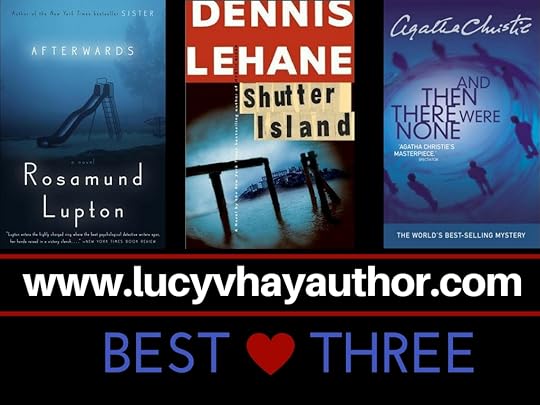
1) Afterwards by Rosamund Lupton
WHY I LIKE IT: This was the first crime novel that really moved me. Over the years I’ve read many books, which have plenty of atmosphere and great plots but this story was not only told with beautiful writing but also had an emotional impact. The subplots in the book standout with real strength and add a layer that is not often found in other novels. The relationship between the mother and daughter was extremely well handled and never once did I find myself questioning the characters or their behaviour. If you read nothing else this year, I highly recommend you read this book.
2) Shutter Island by Dennis Lehane
WHY I LIKE IT: I read this book a few years before the film was released. It had me gripped from start to finish. What’s not to like? It has everything – murder, intriuge, relationships and madness. Add a cast of extremely well thought out characters to the plot and Lehane produces a book that was not only begging to be turned into a film but a novel that has such darkness it almost spills off the page. This is a masterclass in delivering a twist and keeping the reader hooked.
3) And Then There Were None by Agatha Christie
WHY I LIKE IT: I started reading Agatha Christie when I was nine years old. This was one of the very first crime books I ever read. It was a superb introduction to the genre and I’ve never looked back. The premise of the story is terrifying. Ten people, trapped on an island, are slowly being killed off one by one. Who is the killer? They are all strangers and no one knows who they can trust. The setting of the book played as much a part in the story as the characters. The idea of being hunted down by an unknown threat keeps the reader on the edge of their seat. One of my favourite all time books.
BIO: Betsy Reavley is the best-selling author of psychological thriller novels and two poetry collections, The Worm in the Bottle and Shadows in the Light. Published by Joffe Books, Beneath the Watery Moon was Reavley’s first novel that examined the horror of mental illness. Carrion, The Quiet Ones, The Optician’s Wife and Frailty are all published by Bloodhound Books and are available from Amazon as ebooks and paperbacks. Betsy was born in Hammersmith, London.
WANT TO SHARE YOUR OWN ‘BEST OF 3’?
We always want to hear about your favourite crime, mystery or thriller books! To submit your own reading recommendations in this genre, CLICK HERE or on the pic above.
March 28, 2017
10 Sensational Classics to Read Right Now
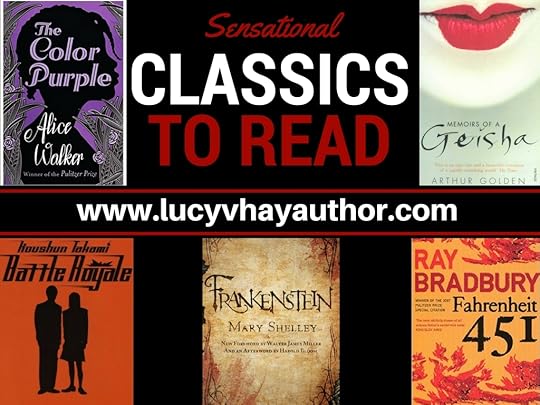
What makes a classic? For me, a classic book is one that penetrates the soul of many readers and stands the test of time … And by that, I mean it continues to sell decades after it was published.
We can all state the usual classic books by amazing authors like Dickens and Shakespeare, yet there are so many classics out there that don’t immediately spring to mind. Here are 10 Sensational Classics to Read Right Now!
1) Battle Royale by Koushun Takami
Kids kidnapped and taken to an island to fight to the death until one is left standing, done in the name of entertainment and to maintain law and order over the unruly youth. Battle Royale may not scream classic, yet, Takami’s YA novel is not just a horror show. It’s a looking glass into the minds of teenagers faced with an impossible situation and their attempts to stay alive. Some give up, some become ruthless killers and some stand up against the government and try to escape. Dystopian as a genre is full of classic tales. This one being one of the best.
For more information on dystopian worlds, read my Top Ten Deplorable Dystopian Worlds HERE.
2) I know Why The Caged Bird Sings by Maya Angelou
This is the first volume in a series of six autobiographical books. It’s a coming of age story. Quote: “I was going to look like one of those sweet little white girls who were everybody’s dream of what was right with the world.” Two pages in and tears were streaming down my face. What a thing for a child to think. A powerful account of a difficult life, told in an innocent voice and in the style of a fictional novel. Have some tissues handy, you will cry. A non-fiction classic.
3) Frankenstein by Mary Shelley
There was some dispute over this one. People couldn’t believe that a woman, and someone as young as twenty, could have penned this accomplished, dark, gothic story. Mary’s husband (also a writer) must have written the novel. Nope! It was found that her husband had done no more to enhance the story than that of a usual editor. Mary had indeed penned the tale. Frankenstein is whimsically written, lulling the reader into a false sense of security before the frightening truth unfolds. The story of Frankenstein’s monster has been retold using many different mediums. It’s a tragic tale of a manmade creature trying to find his place in the world. The creature ends up killing people and destroying is maker’s life, all because he doesn’t wish to be alone. Doctor Frankenstein is the real monster. A firm classic.
4) The Diary of a Young Girl by Anne Frank
When I was the same age as Anne, I wrote a diary. It was unremarkable garbage which involved teenage angst and gossip. I thought it might be publishable and actually wrote to my favourite author at the time to ask her opinion. She told me my diaries would have to be remarkable to be published. Mine might not have been, but Anne Frank’s certainly was! Written from age 13-15, Anne documented her life during the war and sadly died in a concentration camp, never to know her diary would be published. Anne describes people and events as only a teenager can. It is both heart-warming and heart-breaking: “In spite of everything I still believe that people are really good at heart.” A forever classic.
5) Memoirs of a Geisha by Arthur Golden
Arthur wrote this book over six years and it was released when he was forty. This is one of my all-time favourite novels, which is surprising because it does not fit with my usual ‘go to’ genres. What makes this classic story amazing is the fact Golden consulted a real Geisha and spent time studying and working in Japan. The novel transports you back to a time period when Geisha were at their peak. It’s a work of fiction but Mineko Iwasaki, who Golden had secret meetings with, was outraged when he named her in the acknowledgements. She received death threats and lost friends over breaking the code of Geisha and then wrote her autobiography: ‘Geisha of Gion’ as counter balance to his story. It makes me wonder how much of a work of fiction it is and that maybe there is more truth in this story than Geisha would like to acknowledge.
6) Animal Farm by George Orwell
George had written ten books before he penned Animal Farm and was about forty-two when he wrote this amazing political tale about farm animals staging a revolution. The animals wanted freedom and a better life, what happens is far from it. This novella highlights how easy it is to manipulate facts to suit an agenda and how easily the mind will accept alt-facts. A clever story and one that stands the test of time, especially in the post Brexit, Trump age!
7) The Color Purple by Alice Walker
Written in entries titled ‘Dear god’ this book is strong from the start. It almost feels like non-fiction. The protagonist’s voice and character pops off the page, Celie’s southern accent coming through as if she sits in the room talking to you. Alice Walker actually narrates the audiobook, it’s haunting. The Color Purple is a tale of sexism, racism, abuse and control. It is also a tale of sisterhood and strength in the face of adversity. A southern girl, in impossible circumstances. There’s no question as to why this won the Pulitzer prize, this book deals in the human condition with unapologetic honesty.
8) Harry Potter and the Philosopher’s Stone by JK Rowling
The Harry Potter series is hugely popular and for good reason. I believe it is a classic tale across seven books. I’ve found that some adults have a mental block where HP is concerned and it’s a real shame. I read the books in my 20s and it was a magical experience. My children are now reading, watching and listening to the masterpiece that is the Wizarding World of Harry Potter. The story is riddled with messages of morality and touches on so many important issues; right and wrong and the grey area in between. Injustice. Life, loss and death. JK Rowling has sewn her fantasy world into our reality, and that’s the real magic of Harry Potter.
9) Fahrenheit 451 by Ray Bradbury
Ray’s writing is unusual. It’s written in prose I’d never seen before. Disjointed and poetic, like the story itself. The book is centred around the life of a man called Guy Montag, who’s a fireman; called not to put out fires but to start them. In this bleak idea of the future, books are outlawed and Montag’s job is to burn them and any personal libraries he happens across. Montag is soon disillusioned with the world he lives in and everything starts to unravel from there. A classic dystopian tale which is every reader’s nightmare.
For more on this title, read the case study HERE.
10) Misery by Stephen King
From a reader’s book-burning nightmare to a writer’s manuscript-burning one! Misery is one of my favourite King books. It’s the ultimate fangirl obsession taken to psychopathic levels. Annie Wilkes is a classic character and the idea of a writer being kept prisoner in order to re-write a book a fangirl was unhappy with is something I don’t think can ever be recreated. King has nailed it.
For more on this title, read the case study HERE.
IN CLOSING: There are thousands of classics and more being penned every day. I’d love to hear from anyone who can recommend classic work by LGBT, poor/uneducated or disabled authors. The person behind the book matters not, we don’t need to know who they are to enjoy their work but I, for one, think all voices should have an equal platform. Storytelling belongs to all of us. If we continue to increase the variety of voices and characters in our stories, the HUMAN race will continue to grow and flourish.
BIO: Emma Pullar is a writer and book reviewer. Her picture book, Curly from Shirley, went to number four on the bestseller list and was named best opening lines but NZ Post. As well as picture books, Emma writes horror, dystopian, sci-fi, fantasy and paranormal fiction. You can read her short horror story, London’s Crawling, in the Dark Minds charity collection. Follow Emma on Twitter, HERE.
March 26, 2017
When do you give up reading a book?
I’ve seen lots of chat online recently about WHEN people give up on books they are not enjoying.
I’ve noticed lots of readers saying they give a book 50-100 pages. This is interesting to me, because as an author you have approximately 50 pages to ‘wow’ literary agents as a writer if you’re making novel submissions. So this means the average reader and literary agent submissions correlate.
But you get EVEN LESS than this as a screenwriter – just ten pages! In real terms, you may even get just one. This because there are SO many screenplay submissions, scripts have to start as they mean to go on and be as visual as possible. You get a little more leeway as an author.
But I give books much less chance … I read the first ten per cent only. If I don’t like it by then, it’s GONE!
But I absolutely hate giving up on books, just from sheer bloody-mindedness … It’s quite unusual for me to give up once I’ve got 50 pages or more in. This is because I can read a 300ish page book in about four hours, so if I’ve read 100 pages, that’s a third of the book … I can read there other two very quickly.
My own foible, though: if a book is on my TBR pile for a year or more? I may delete it from my Kindle or give it away if it’s a paperback. I work on the basis that if I’m really excited about the book, I would have read it by then!
What about you?
March 24, 2017
CRIMINALLY GOOD: interview with author Su Bristow
 1) So, who are you & what have you written?
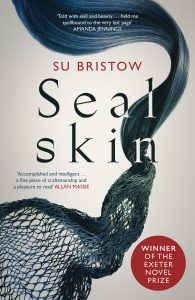
My name is Su Bristow, and my debut novel, Sealskin, has just been released by Orenda Books. It’s a retelling of the Scottish legend of the selkies, or seals who can turn into human beings, and what happens when a young fisherman witnesses this. It’s not a crime novel in the usual sense, although a crime is certainly committed that has very far-reaching consequences!
I’ve also written two books on herbal medicine – I am a consultant medical herbalist by profession – and one on relationship skills, co-written with psychotherapist Malcolm Stern. Check out my website HERE and follow me on Twitter as @SuBristow.
2) Why do you write fiction?
Actually, I was writing fiction and making up stories long before I started writing non-fiction. One of my special studies at university was ethnomedicine, and it showed me that what people do to heal themselves when they have only the natural resources around them, is to make up stories. We all do it all the time, even when we think we’re making sense of the world. In fact, the more interesting question might be ‘why do some people think that they don’t make things up?’
 3) What informs your writing?
I’m particularly interested in the stories we’ve made up along the way about the natural and the supernatural worlds that under and overlie our own. They have a lot to tell us about ourselves and our preoccupations. All the ‘big’ stories, the legends that keep on being told and retold, tackle some of the major human questions: about life and death, right and wrong, love and conflict. And by clothing these big questions in metaphors, they add a layer of meaning that’s not purely fanciful. It speaks to our sense of wonder, our spirituality if you like.
4) What’s your usual writing routine?
Routine?? If only! Writing has to fit around other things, especially the demands of my herbal practice. It happens when I have time. But I do belong to a couple of writing groups, and it’s helpful to know that there are people expecting to see some words.
5) Which book do you wish YOU’D written, and why?
It’s very difficult to choose! And it’s not quite the same as books you really like, because part of the joy in those is that sense of touching minds with someone else, someone who takes you further than you would have been able to go on your own. Books like that might include The Lacuna by Barbara Kingsolver, or All The Light We Cannot See by Anthony Doerr.
That said, I think the book I think I’d most like to have written would be the Earthsea trilogy by Ursula le Guin. I love the style of her writing, the internal coherence of the world of Earthsea, the philosophy that underpins it, the stories themselves, the characters … Need I go on?
If I had to choose a crime writer whose writing I’d like to emulate, I think it would be PD James. For me, character development is at least as important as plot, and she does this very well indeed, even with quite minor characters. And there’s a powerful melancholy in all of her novels, a sense of the terrible havoc that crimes wreak in people’s lives, that makes them feel more real than a lot of other crime novels I’ve read.
March 23, 2017
INFOGRAPHIC: Paraphrase Versus Plagiarism
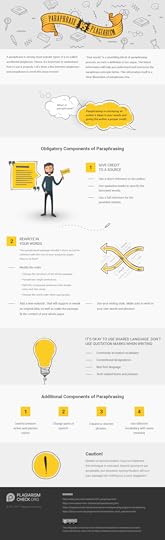
Many thanks to Nancy from www.plagiarismcheck.org who’s been in touch with this great infographic detailing the difference between paraphrasing and plagiarism. As a writer and content/social media marketer, plagiarism is a very real concern, so I’ll definitely be bookmarking this for future reference!
For more on plagiarism and samey stories, check out the following links too:
The 9 Circles of Plagiarism HELL
4 Reasons Samey Stories Happen … and 1 Thing You Can Do To Beat Them
March 22, 2017
CRIMINALLY GOOD: Interview with Author J A Baker
 1) So, who are you & what have you written?
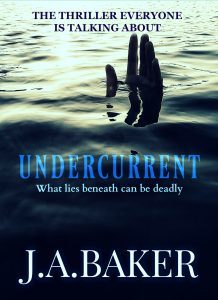
My full name is Judith Baker, although I write under the name of J A Baker after discovering that there are two other writers out there with my name. Turns out there was also another writer called J A Baker as well! Who would have thought it? I am based in the north east of England and started writing a few years ago after completing my degree with The Open University. My debut novel, Undercurrent is due out with Bloodhound Books on 28th March so watch out for it! You can follow me on twitter @thewriterjude and my website is currently being updated so watch out for that too.
2) Why do you write crime fiction?
I love both reading and writing crime fiction because of the complexities of the characters and all the twists and turns that you encounter along the way. I also really enjoy the element of surprise and the eerie ambience that comes with this particular genre. Being scared and scaring others by being able to provide tension is such an enjoyable sensation.
 3) What informs your crime writing?
I’m a people-watcher and thoroughly enjoy dissecting situations, getting to the nub of a problem or finding out the story behind an event. I tend to steer clear of police procedural writing as I’m not well enough informed to get it right. My background is in education and psychology, which is why I focus on the darkest recesses of a character’s mind, working out what makes them tick. It’s amazing what the most timid of characters can be driven to do when put under enormous pressure, or when faced with a really difficult situation.
4) What’s your usual writing routine?
I work full time, so most of my writing is done on an evening or at the weekend. I would love to see a time when I could do it as a full time career but for now I’m happy enough to tap away at my keyboard while everyone else watches the soaps or the football on TV!
5) Which crime book do you wish YOU’D written, and why?
Ooh such a difficult question! The first obvious thoughts would be The Widow or The Girl on the Train, both of which were brilliant books that focused on the workings of the characters’ minds. However, my all time favourite book and the one that inspired me to write is Tideline by Penny Hancock, so it would have to be that. Firstly, the language she used was beautiful; how she described the sounds and smells of the River Thames was just perfect. Also Penny managed to convey the borderline madness of the main character without giving anything away. Even at the end, I actually had sympathy for her despite the fact that she was completely psychotic! Now that is good writing …
March 21, 2017
Take This Killer Quiz On Books And Literature
We love reading quizzes
I couldn’t resist this one I found on QuizFactor! Combining questions on classic fiction, writers, stories and even etymology, this quiz is VERY comprehensive … and worst of all, it times you as well!!!
There’s no less than TEN levels to battle your way through … And you need at least 7/10 per level before it will let you progress to the next. I started off okay, but started having to replay levels from 4 onwards. By the time I got to Level 7, I don’t mind admitting I was guessing a lot and having to replay more than once!! It took me AGES to get to level 10! Eeeek!
Take the quiz below, or CLICK HERE for the original quiz page.
Let us know how YOU get on!

March 20, 2017
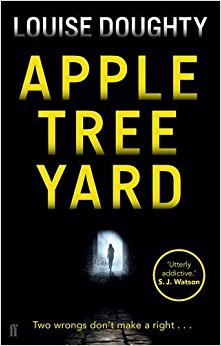
BOOK VERSUS FILM: Apple Tree Yard
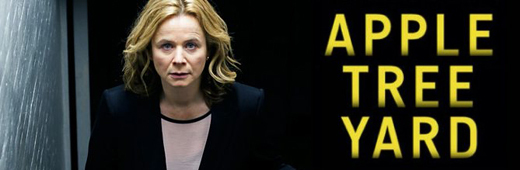
Okay, not film exactly this week, but a TV adaptation – same diff! I’ve been catching up on television lately, which means I’ve only just got round to the BBC’s recent adaptation of Apple Tree Yard. (If you haven’t seen it yet, you can buy the box set, HERE).
Apple Tree Yard was a five star read for me in 2016, so I was really looking forward to seeing the adaptation. I was pleased with the casting – Emily Watson was perfect as Yvonne – and whilst Ben Chapman seemed a little young for her lover, I felt sure he had the acting chops to pull it off.
But which was better, the book or its adaptation? Here’s my SPOILERIFIC rundown, plus my verdict of this courtroom drama …
1) Yvonne. As predicted, Emily Watson was perfect as Yvonne, for me. She also brought a warmth to the protagonist I hadn’t experienced in the source material. Whilst Yvonne had seemed more calculating in the novel, Watson’s interpretation of her was more ‘stretched’ by life and dare I say it, relatable. That said, I loved Yvonne in the novel BECAUSE she could behave so reprehensibly – which in itself lent the ending much more credibility in the book, rather than the film.
MY VERDICT: Draw
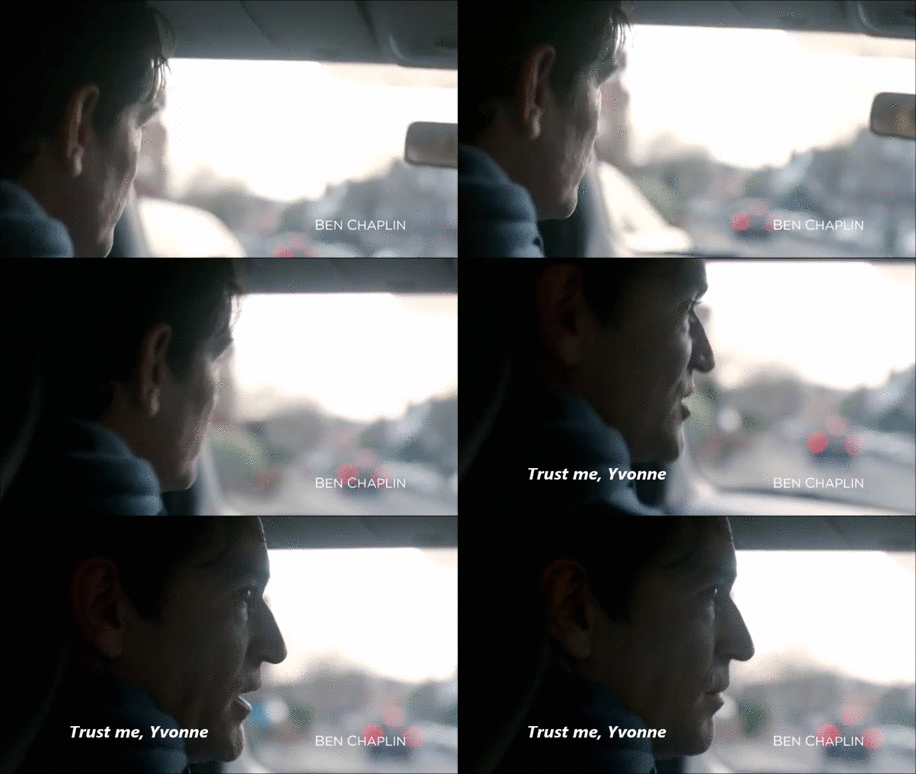
2) Mark (aka ‘X’). Ben Chapman puts in an excellent performance and as a character, Mark seems much nicer and more protective of Yvonne than ‘X’ in the book. Unfortunately I didn’t really buy the chemistry between Yvonne and Mark in the way I did in the book between her and X. I could believe her in the source material when she says ‘sex with him is like being eaten by a wolf‘, but I didn’t really get this feel from the adaptation. In addition, he seems much more eager to please her in the TV adaptation (and why not, arf!) but then they included all the stuff from the source material like X’s constant cruising of female work colleagues, even after Yvonne’s rape. This seemed inconsistent and whilst I understand the idea is in the adaptation he has a personality disorder, it didn’t work for me. In the book X claimed the same, but I got the impression he was only saying it to try and get off the charge – which worked much better in my opinion.
MY VERDICT: Book
3) George. George, Yvonne’s rapist, comes out of the left field in both the book and the adaptation. This works well because she never perceives him as a potential threat, until he actually is one. He is perfectly ‘normal’ — as rapists and abusers too often are. It’s refreshing to see this in fiction and on TV, which frequently create such characters as evil caricatures. In the adaptation after the rape, another layer is added: she believes George is following her and messaging her, even watching her. It’s never clear if this is a figment of her imagination as a result of the trauma, or the truth … or a bit of both. Now this may have been present in the book too, but I never got it until I watched the adaptation.
MY VERDICT: Adaptation
 4) Yvonne’s reaction. What I liked about both the book and the adaptation is Yvonne’s rape is never questioned, by either Gary or Mark/X. She is the only one who ever blames herself, in fact (as rape survivors often do). In the book however, her thoughts on what has happened to her and what it means for her sense of self is much more nuanced. They do try and bring this in during the adaptation but of course, it’s a visual medium.
MY VERDICT: Book
5) Gary. The other main character of note is Gary, Yvonne’s husband. I don’t know if they ‘beefed’ his part up more for the adaptation, or I just noticed him less in the book … But I feel like he’s a much more holistic character in the adaptation. His confession that he slept with Rosa before Yvonne goes to see George with Mark is a masterstroke; in the book she reads the papers with him in the garden if I remember correctly, which I felt went from 0-60mph in terms of murderous intention.
MY VERDICT: Adaptation
6) Other characters. The best friend character had a great expositional function in the book, as did Yvonne’s children, but inevitably these characters got sidelined a bit in the adaptation. Interestingly, Mark’s wife seemed much more three dimensional in the adaptation, even though she only appears briefly. But overall, the book had much richer characterisation overall, especially when it came to mental health — as you would expect, from a book.
MY VERDICT: Book
7) Plotting & Pace. In terms of the book, pace zips along from there offset IMHO and I never once felt like I was ‘waiting’ for anything to happen. Surprisingly, I felt the opposite for the adaptation. The first episode felt unbearably slow, though the second episode picked up considerably, with the third my favourite. I felt as if four episodes was ‘too many’ for a story like this and that two episode, perhaps three at a pinch could have worked better in terms of pacing.
MY VERDICT: Book
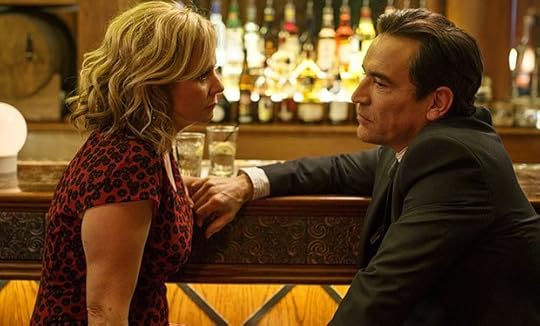
8) Ending. In the book, Yvonne and X never meet again after their arrest and we discover what she has done in retrospect. Being TV and thus more immediate, the ending in the adaptation has Yvonne and Mark meeting one last time via glass, in which Mark says ‘I never told them’ – the notion being he did not sell her out like she sold him out. Except, in the TV version she says something like he couldn’t tell the difference between what was real and what wasn’t … the idea seemingly being he went and killed George, off his own bat rather than because of Yvonne’s instruction. I disliked this intensely because it effectively changes the ending: the book has a sting in the tale when we realise she has been lying. This element is removed in the adaptation, which undoes the narrative e logic of a variety of other threads (see next).
MY VERDICT: Book
9) Other. A female screenwriter and a female director were at the helm of the adaptation and it shows. The horror and disbelief of Yvonne’s rape is not shown gratuitously or sexily; we experience it through her eyes and only a snippet. There was also a motif dedicated to recycling throughout the adaptation that was very clever and had all kinds of subtext attached about ageing. Close ups of Yvonne’s boot too appeared more than once – just like in the source material – and linked nicely to her prison leg cuff. However, the subtext of such things as the experiment where the monkey stands on her baby (or not) does not fare as well in the adaptation as it does the book, though arguably this doesn’t matter (especially given the ending is no longer about Yvonne selling Mark out).
MY VERDICT: Draw
Concluding:
Well, it’s a tough one, but with these points in mind I’d say it’s Book – 5, versus Adaptation 2 (with a further 2 as ‘Draw’). I really enjoyed the adaptation overall, but ultimately it was the book that hit all the buttons for me.
What ‘s YOUR verdict?
If you want to write a ‘Book Versus Film’ review of a movie or TV adaptation, check out the full details HERE or click on the pic below.
March 17, 2017
BEST OF 3: Angela Wooldridge, author
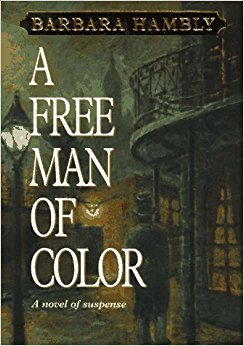 1) A Free Man Of Colour by Barbara Hambly
This is my ‘go to’ book that I’ll recommend to anyone, regardless of their preferred genre.
It is 1833 and Benjamin January has returned to his hometown of New Orleans following the death of his beloved wife in Paris. Ben is a surgeon and a musician, but finding employment is tough when you’re over 6 feet tall and black. Most people automatically calculate your worth on the block and aren’t too concerned about the freedom papers in your pocket.
When the notorious mistress of a Creole plantation owner is murdered, nobody looks too hard for the real culprit. To avoid becoming a handy scapegoat, Ben must tread a very fine line between his mother’s world of the free coloured mistresses of white protectors, and his sister’s world of slaves and voodoo.
This is a historic murder mystery by one of my favourite authors. Barbara Hambly weaves the glitter and dazzle of New Orleans at Mardi Gras with the threads of blood, sweat and fear. I defy you not to like this book.
2) I Let You Go by Clare Mackintosh
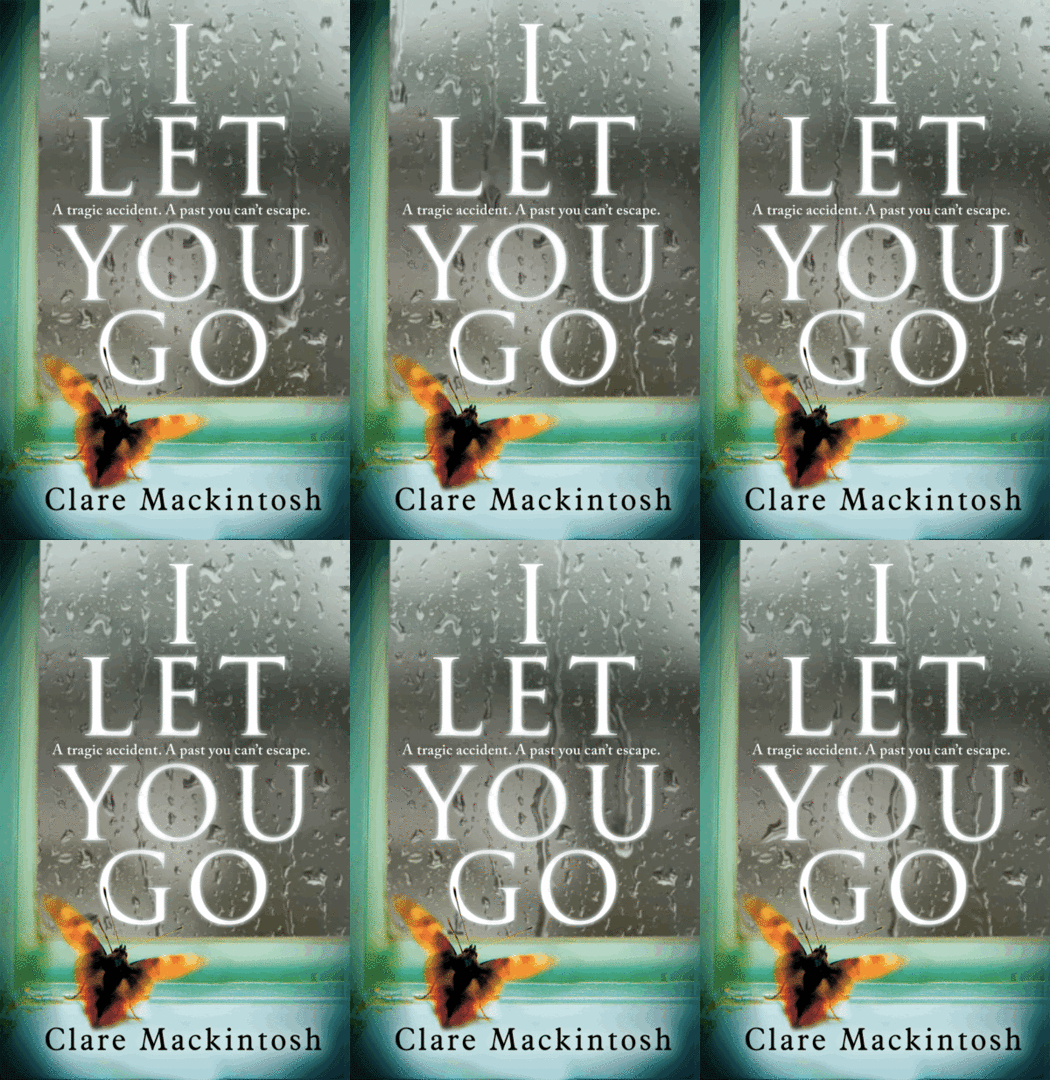 Jenna is on the run. Something terrible happened and it was her fault.
This was recommended to me by someone I respected. I didn’t really want to read it, but felt I should, so the quiet start with lots of unanswered questions might have made me miss out. But that quiet beginning is almost necessary as a contrast the the ton of bricks that hit you as the plot begins to take off, sending you on twists that you wouldn’t expect.
As with many psychological thrillers, I can’t tell you much without spoiling it, so instead I’ll just throw down the recommendation gauntlet.
3) Wonder by R J Palacio
I’m breaking the rules with my third choice, because rules are really more like… guidelines, right? (Besides, it’d be a crime not to read this book!) My eleven year old daughter bought this with her birthday money as they were reading it at school and not going fast enough for her. When she finished, she said; “Mum, Dad, you have to read this book.” And she was right!
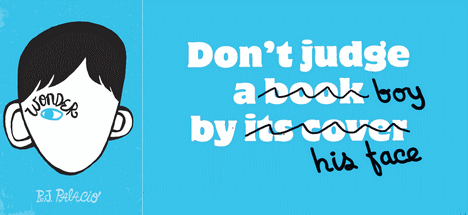
August is a very ordinary 11 year old boy. He just wants to hang out with his friends, play computer games, eat pizza. Normal stuff. But August can’t be that ordinary kid that he is on the inside, because on the outside he doesn’t look like everyone else. And they can’t let him forget it.
August was born with a number of disfigurements which make him look very different to everyone else. He’s had so many operations over the years that it’s only now that he’s finally able to go to a normal school. He’s really looking forward to it …
… The story follows August through his first year of high school, but as we go, we get to experience things from other character’s points of view. And I think that’s what really makes this book work; you get to see events through different eyes, and to understand their motivations.
This is one of those books that everyone should read. It’s beautiful, it’s heartbreaking and it has the potential to change the way you look at the world.
BIO: Angela Wooldridge writes short stories for magazines such as My Weekly and The People’s Friend, and has had stories shortlisted in various competitions. She is currently working on a YA Fantasy novel, An Alternative to Frog, which began life as a short story, but the characters kept coming back. You can read the original story on her blog, or follow her on Twitter at @angwooldridge.
We want to hear YOUR ‘Best of 3s’!!
Please share with us your ‘Best of 3’ picks — we always love to hear your reading recommendations on this blog! For more details CLICK HERE or on the pic.
Lucy V. Hay's Blog

- Lucy V. Hay's profile
- 174 followers

