
Lucy V. Hay's Blog, page 30
March 1, 2017
How Many Of These Classic Books Have YOU Read?
Part of my reading pledge this year was to read more classic and prize-winning fiction, so I’ve been checking out lots of ‘must read’ lists recently for my TBR!
Lists and quizzes are what the internet is made for, so there’s lots around – but I think my favourite is List Challenges. They’ve got some fab book-orientated lists and don’t disappoint … They take in modern classics as well as ye olde stuff too.
The below is taken from a top 100 on the site … How many have YOU read, here? I’ve read 24 from the forty listed here, need to do better!
If you want to take the full test of the top 100, CLICK HERE. Enjoy!
[image error]
[image error]
[image error]
[image error]
[image error]
[image error]
[image error]
[image error]
[image error]
[image error]


February 28, 2017
INFOGRAPHIC: 32 Differences Between Children’s Books And Their Movies
Since I’m both an author and a script editor, I find TV and movie adaptations absolutely fascinating. It seems everyone else does too – because the ‘Book Versus Film‘ feature on this blog is one of the most popular!
Normally we’d only be able to cover one property from book to film, but this fabulous infographic manages to take in seven books and compare them. There’s some really intriguing differences here too … I especially wonder why Peeves the Poltergeist was cut from the Harry Potter movies, Rik Mayall would have been perfect!
Take a look. I haven’t read all the books here, but I’ve seen all the movies – what about you?
See all the BOOK VERSUS FILM articles HERE.

From Visually.
February 27, 2017
CRIMINALLY GOOD: Interview with author Paolo Sedazzari
 1) Who are you, and what have you written?
I am Paolo Sedazzari and I have written The BMX and The River Cult Murders which has recently been published by The New Pulp Press. They are based in Florida and specialize in lurid crime fiction.
I like to think of it as an authentic day-by-day account of how a murder investigation is actually conducted, where every breakthrough is fought for, and nothing falls into the lead detective’s lap.
I have made a few films which are listed , plus I have an oral history novel called Feltham Made Me coming out soon.
2) Why do you write crime fiction?
Very simple. I LOVE crime fiction. Good crime fiction is a puzzle, but the puzzle is not simply numbers and data – it’s linked to human behaviour and motivations. At its core it’s a fight between good and evil, but some crime fiction also gives an insight into all the greys in-between.
3) What informs your crime writing?
The BMX Kid and The River Cult Murders is based on a real life series of murders that took place in Fall River, Massachusetts. I like crime fiction to be rooted in reality, which is why I do a lot of reading of true crime. My all-time favourite in that genre is David Simon’s Homicide: A Year on the Killing Streets.
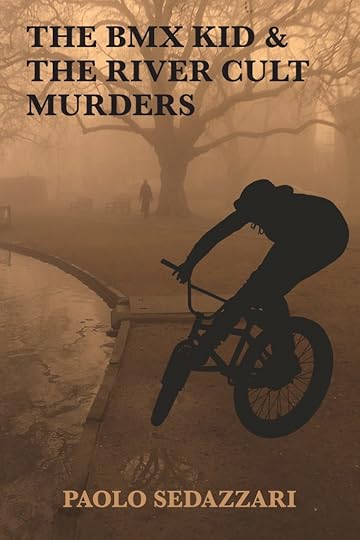 A recent review on the Zani website described The BMX Kid as “combining the grit of a true crime tale with the page turning structure of the best fictional detective story.”
This is exactly what I am trying to achieve!
My next crime novel is also based on two real life cases, so I am researching the available files on those cases.
4) What ’ s your usual writing routine?
I try to get as much writing done as I can in the morning – so I can then spend the rest of the day in the pub! It’s the Julian MacLaren-Ross writing routine and it works very well.
5) Which crime book do you wish YOU ’ D written, and why?
That’s a hard question because I am a believer in writing in your own voice. So while there a hundreds of books and writers I admire – for instance Raymond Chandler’s Long Goodbye is one of my favourites. But I can’t say I wish I’d written that because it’s written in Chandler’s voice, in his own words, set in the time he was in.
I think Gillian Flynn’s Gone Girl is a masterpiece, and if I ever get anywhere close to that level of excellence I would die happy.
But I love what I do – when I was re-reading The BMX Kid for the final time just before I sent it to the publishers, I was enjoying it so much I was actually wishing that someone else had written it, so I could have the pleasure of reading it for the first time – and not know what was going to happen next.
February 25, 2017
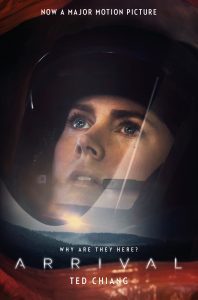
BOOK VERSUS FILM: Story Of Your Life AKA Arrival
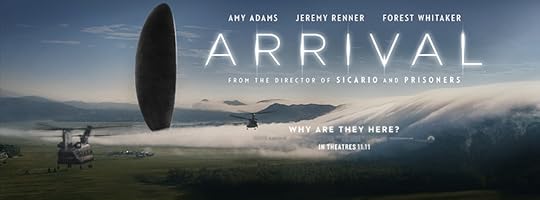
With the Oscars around the corner, I thought I’d share my thoughts on one of my favourite adaptations in recent years, ARRIVAL, which is up for Best Picture in 2017.
ARRIVAL is written by veteran Hollywood scribe Eric Heisserer and directed by director of the moment, Denis Villeneuve (Sicario, Prisoners). It’s adapted from the short novella, Story of Your Life by Ted Chiang.
Warning – SPOILERS!!! Do not read on if spoilers bother you
The Book
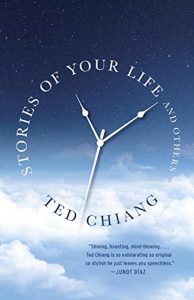 Ted Chiang’s stories are highly cerebral and Story Of Your Life is no different. Chiang is clearly a passionate, highly educated man and his writer’s voice is quite unlike others I’ve seen before (which, as someone who works with writers daily, is quite something!).
Unlike others in the collection however, Story of Your Life probably the most accessible (bar the award-winning Tower Of Babylon, which reads rather like a science fiction Bible story). Drawing heaving on academic references to linguistics then, Ted Chiang weaves a hypnotic, heartrending tale about a woman who is burdened with the knowledge her only child will grow up, only to die at the untimely age of twenty five in a climbing accident in a national park.
Unlike many science fiction stories that rely on expositional clichés like entirely random flashbacks, sudden psychic abilities or time travel, Story of Your Life side-steps these obvious crutches with panache. Instead, our protagonist Louise Banks will meet aliens – and in learning to converse with them via their strange and other-worldly language, she discovers an entirely new way of looking at space and time.
This means she will be able to see everything in the space she occupies, from the moment she learns the alien language, until her death. In doing so, she also discovers this same time period will include the birth and death of her own beloved daughter.
In the course of the story, we will discover how Louise deals with this knowledge – both via grief and joy. It also draws forth the difficult question: “If you knew then, what you know now, would you still do what you did?“
In other words: would you still have a child, if you knew they would grow up, only to die prematurely?
For me, the answer is a resounding YES. As a cancer survivor, it’s been brought home to me that none of us know how much time we have – yet even if we do (ie. through a terminal diagnosis), this does not negate the existing time we have.
What’s more, every person born will die. We cannot escape this. For me, it is selfishness personified to avoid creating that child who will die, simply to avoid the pain of losing them. I accept however that some people feel the exact opposite.

The Film
Story of Your Life is roughly 70 pages in length, so it stands to reason there will be some key differences in terms of ‘padding out’ the material to fill a hundred and twenty minutes like ARRIVAL.
In addition, as a script editor I am aware of the different conventions a movie would need in creating tension and drama that are not necessarily applicable in a short story. Short stories can get away with being more of a ‘snapshot’ of a character’s life (which can also happen in short film), whereas the story approach for a two film will need to be more holistic in its approach to the story.
Heisserer is a big fan of Story of Your Life and Ted Chiang and this shows in this adaptation. Every difference and addition to the source material – and there are many – he has brought forth with due care and attention (more on this, in a sec).
It should be noted – Heisserer wrote his screenplay on spec and despite being well-known as talented and capable of delivery in Hollywood circles, he’s written at length of his struggles in getting ARRIVAL to screen. In other words, this adaptation has been a labour of love.
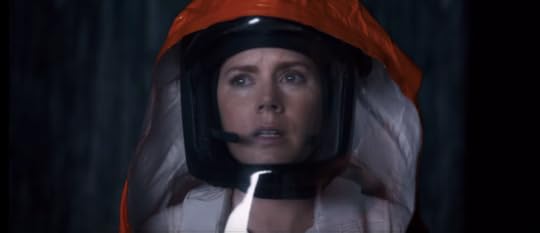
Key Differences
As mentioned, much of the below has been added, though some are strikingly different from the source material:
Most obviously, the title. The reason is obvious too, though Eric did originally want to call it Story of Your Life, ARRIVAL is much more compelling in a marketing sense when it comes to movies. Also, the movie was sold to potential audiences ‘up front’ as being about aliens (hence the ‘Why are they here?’ tagline), rather than the personal struggles of our protagonist. This is because genre usually sells better than drama.
The daughter dies of a terminal illness, not a mountaineering accident in the film. She’s also considerably younger, about fourteen or fifteen (she’s twenty five in the novella). It’s again obvious why, as there is much more ’cause and effect’ here, which movies demand – plus her husband also leaves Louise directly because of her prior knowledge of the daughter’s death. This detail is significantly more hazy in the short story.
The suspicion of the worldwide military regarding the aliens is present in the short story, though there is more discussion of whether it’s possible to trade with the aliens than the fears of alien invasion/domination present in the film.
Louise tells the ‘Kangaru’ story in the short, just as she does in the movie. However, Louise also makes her concerns regarding language much more obvious throughout the movie, breaking down visually several more times why it’s so important they get it right – not only for the military, for us at home as the audience who may not have this understanding. I was able to follow Chiang’s logic easily because I have studied English Language and taught it myself, but it may not be so obvious for readers who have not.
The daughter and Louise’s interactions are funny, sometimes even comedic, in the short story. In addition, Louise appears much more of a wise-cracker in the short story; at one point she posits the aliens won’t come out of their ship because of ‘fear of cooties, maybe’. In the film, she is much more serious.
The Chinese General who causes significant issues for human negotiations in the movie (and whom Louise must appeal to in the resolution) does not play a part in the short story at all.
There is no bomb planted in the alien space craft by renegade soldiers in the short story. The ‘plot point’ that propels us into the final showdown in the movie regarding the withdrawal the death of one of the aliens and the withdrawal by humans is not present in the short story. The aliens simply take off and go home.
Louises’s realisation regarding her daughter comes at the end of the movie and is signposted very obviously because of a deftly-done misdirect at the beginning by Heisserer. This realisation does not come to Louise in the short story; instead it’s presented as fact – but comes to the reader instead, much more ‘gently’ over the course of the story.
In the short film, the aliens simply leave without ever answering why they came. In the movie, they finally answer why they’re here: mankind helps the Heptapods in the future, so they have come to help mankind, hammering home the point their worldview is not sequential like a human’s.
Louise’s co-worker is called Gary in the short story; he is called Ian in the film (the characters played by Jeremy Renner).
‘Come back to me’ is the signpost dialogue in the movie, linking there daughter’s birth and death; in the short story, it’s the words ‘She’s mine‘. Heisserer’s dialogue acts as a signpost for movie audiences of the circular nature of life in this storyworld.
By the way – I read the script and short story before seeing the movie. Intriguingly, the logograms – aka semagrams – are easily to understand in the short story once you’ve seen the movie, I discovered. The filmmakers did an EXCELLENT job here.
Concluding
This is a genuinely difficult one to call because I REALLY love both versions!! But rather than call it a straight draw, let’s break it right down to its components:
 If we’re talking about characters, I think I might say Story of Your Life is my favourite. I enjoyed the insight into characters we don’t see in the movie, such as Louise’s second husband Nelson and the daughter’s best friend. Most of all though, I fell in love with Louise’s wise-cracking voice in the short story, plus Gary’s relationship with her seemed more compelling than Ian’s (which makes sense, given that Chiang was able to ‘hide’ Gary’s involvement in the story because it is a novella, whereas Ian needs to be seen in a movie). It wasn’t I dislike Heisserer’s versions of them – FAR from it, both of them are really great – but Chiang’s had the edge. This also makes sense, because Louise and Gary are Chiang’s direct creations.
If we’re talking plot, then I much prefer ARRIVAL, for the same reason as above. I don’t think it’s any accident my favourite moments in the film are those that were not in the short story! Heisserer’s creations, especially when it comes to the resolution, are really compelling, a script editor’s dream. Heisserer has fashioned a different structure, but it really works. The misdirect at the beginning regarding the daughter’s death is masterful because it makes us THINK we know this story, when nothing is further from the truth.
Heisserer’s dialogue is first rate as always, especially Louise’s ‘I’m about the same’ to her mother; or the soldier’s young wife, crying on the phone, scared the aliens have come to kill them all, which gives him the motivation to plant the bomb.
Best of all, even characters with antagonistic functions – and there’s plenty of them, this is essentially a military movie after all – are not ‘comic book villains’, there to kill or capture the aliens by any means necessary. They’re worried, confused, fearful of the aliens’ intentions – after all, why ARE they here?
In short: Heisserer has done something truly remarkable … he has LITERALLY added to the story. This is surely what every author wants in the adaptation of their story to the screen.
Which do you prefer?
February 24, 2017
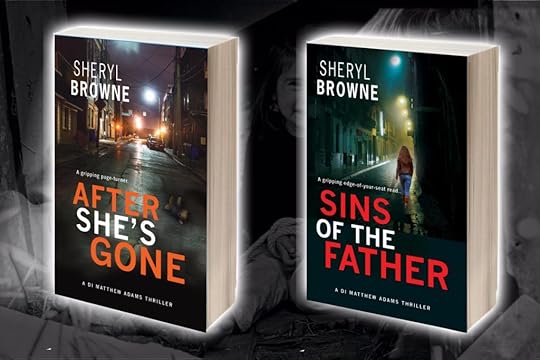
CRIMINALLY GOOD: Interview with author Sheryl Browne
 1) So, who are you & what have you written?
I’m Sheryl Browne bringing you edgy, sexy contemporary fiction and psychological thriller. A member of the Crime Writers’ Association and the Romantic Novelists’ Association, I have several books published and two short stories in Birmingham City University anthologies, where I completed my MA in Creative Writing. Recommended to the publisher by the WH Smith Travel fiction buyer, my books come to you from multi-award winning Choc Lit. Here’s all my author links: Website | Twitter | Facebook | Amazon | Amazon US | Pinterest Choc Lit
2) Why do you write crime fiction?
Well, aside from the fact that, according to one reviewer, I apparently have a scary insight into the mind of a psychopath, I think I leaned towards psychological thriller because I see people as not all good or all bad. More opposite sides of the same coin with some crossover in between.
Many of my contemporary fiction novels feature policemen and, as my leading characters grew, I found myself exploring police procedural and, inevitably, the traits of the protagonist. I suppose it was a natural progression to write thriller, looking at the family unit and placing it under threat.
3) What informs your crime writing?
I’m lucky enough to have had the advice of a Chief Constable and more recently a Senior Police Detective and that has helped me tremendously in regard to police procedure and pointers on prison sentencing, etc. I realised I needed at least the basics of forensics when I started out thriller writing, to be honest, so undertook a forensics course, which I passed I’m relieved to say.
The internet is a massive boon to writers now, of course, you really can Google just about anything. You can access some fascinating case studies and headline news stories – I dread to think what my browsing history looks like!
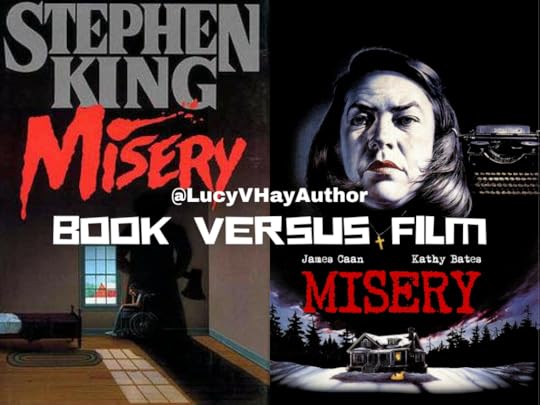
I think the most important writing tool though is to read. Other authors can show you how to weave a story and they can be a massive stimulus for your own writing. I’ve read a fair few of Stephen King’s novels (who hasn’t?). Who could ever forget Misery? Unsuspecting, injured author held captive by a psychopathic and very angry fan? What a simple and truly fabulous premise.
Martina Cole’s books were a huge influence on me, too, and the inspiration behind my desire to delve into the darker psyche of some of my characters. A book that stays with me is The Ladykiller. It’s with morbid fascination you glimpse into the mindset of a sexually depraved killer.
4) What’s your usual writing routine?
With two books out a week apart, my routine has flown out of the window. Normally, though, I will try to hit social media early and get emails out of the way and then just write. I have to switch social media off sometimes, to be absolutely honest, because it’s far too tempting a distraction. When the writing bug bites I can write until midnight, cue ideas to pop into my head throughout the small hours thereafter.
5) Which crime book do you wish YOU’D written, and why?
Misery by Stephen King (you knew I was going to say that, didn’t you?), because it’s unforgettable.
MORE: Read our Book Versus Film post on Misery, HERE or click the pic below.
February 23, 2017
Top 5 Thursday
Thanks very much to Lorraine at Review Cafe for having me recently over at her blog! Lorraine asked me some GREAT questions on my must-read authors and books, as well as other tips and tricks.
Here’s the blog post in full, or if you prefer, check it out on Review Cafe HERE or by clicking the pic below. Enjoy!
1) Top 5 books this year (so far)?
Cripes, I’ve read so many great ones in the last twelve months, it’s SO difficult to choose! But if I ABSOLUTELY HAD TO, these are probably the five I recommend most to my fellow readers:
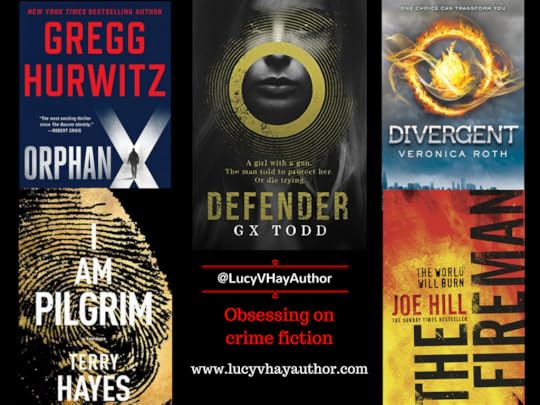
Defender by GX Todd
The Bird Tribunal by Agnes Ravatn
The Liar’s Chair by Rebecca Whitney
In Her Wake by Amanda Jennings
Untouchable by Ava Marsh
What all these books have in common is an enigmatic female lead. I’m so bored of ‘typical’ characters, but equally I don’t want a character completely out of the left field either. The five above have female protagonists whose behaviour can be surprising, conflicting, even morally ambiguous – I’m certainly never bored by them!
2) Top 5 authors you think everyone should read?
Gillian Flynn
Chinua Achebe
Joe Hill
Maya Angelou
Peter James
These writers consistently knock it out the park not only with their storytelling, but the actual WAY they write. I’m a lover of literary prose that takes us to the next level of description … And these guys can take us into other places (literal and metaphorical), bringing forth the five senses AND the storyworld to life. Brilliant!
3) Top 5 books you want to read before the end of 2017?
The Divergent Trilogy by Veronica Roth. I love the first novel, but haven’t got round to the rest, so must catch up. After all, I LOVE my dystopia!
I See You by Clare Mackintosh. I missed out on an ARC for this one, noooooo! I loved I Let You Go though, so hoping to catch up on this one.
Orphan X by Greg Hurwitz. I’m a sucker for an assassin with a dark past, so I *just gotta* read this one and luckily for me, I found a hardback copy in a charity shop recently for £1!
I Am Pilgrim by Terry Hayes. Terry Hayes wrote one of the instalments of my favourite franchise, Mad Max, back in the 80s. My other job is as a script editor for movies, so I can’t resist this one, but it is a mahoosive tome at 700+ pages. I could read at least two books in the time it takes me to read this one and time is always at a premium for me.
The Marsh King’s Daughter by Karen Dionne. I DID manage to get my mitts on an ARC for this one, it looks so good. I love reading books that aren’t even out yet, so this will probably be next on my TBR.
4) Top 5 blogging tips that you would give to new bloggers?
Goodness, I have so many! My top 5 would be:
Have a strategy
ALWAYS write great headlines
Pay attention to traffic (but don’t become obsessed with it)
Use social media WELL
Evaluate your strategy at various intervals
For those who want more detail on the above, I was interviewed in 13 Tips from Popular Bloggers to Beat Procrastination and Write Productively.
5) Top 5 book blogs you follow?
Again, so many that I love, but here’s my favourites I visit most days/weeks:
If Only I Could Read Faster
Crime Fiction Lover
Crime Book Junkie
Women Writers
Damp Pebbles
Thanks Lorraine for having me!
February 22, 2017
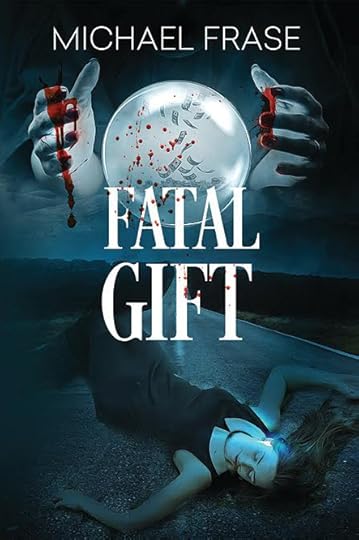
CRIMINALLY GOOD: Interview with author Michael Frase
 1) Who are you and what have you written?
My name is Michael Frase and I have written five full-length novels thus far. They are all thrillers, or as you refer to the genre, crime fiction. Fatal Gift is the first of these books to be published. The others are scheduled for release over the next couple of years. You can visit my website HERE and LIKE my Facebook page, HERE.
2) Why do you write crime fiction?
I find the struggle between good and evil, between the individual and corrupt government or corrupt entities within the government, to be especially compelling. I like to put ordinary people—those possessing no “superpowers”—into situations completely outside of their comfort zone and typically not of their doing, and then see how they fair when pitted against the forces of evil. Much as you and I would have to do if we found ourselves in similar circumstances.
 While I respect anyone who can write well and hold an audience’s attention, regardless of their chosen genre, I just don’t see myself writing romance novels or science fiction. I think any artist performs best when he or she stays within a world they know. That said, it is also essential to grow and test oneself constantly throughout one’s career. Whenever it gets to easy or familiar, banal and uninspiring can’t be far away.
3) What informs your crime writing?
I have had the good fortune of being around and involved with many different types of law enforcement personnel and agencies for much of my adult life.
I have served as a consultant for numerous “spook” agencies over the years and have even developed various technologies used in the war against crime and terrorism. While none of the books I have written to date relate directly to any information or cases I reviewed or was involved with, the cornucopia of information that I gathered during that time has given me more than enough material for a bookshelf of stories.
4) What’s your usual writing routine?
I don’t believe in writer’s block. I’ve heard that expression for years and I don’t even know what it means. I get up every day and write, just as anyone else performs the tasks associated with his or her job. I’m a writer; that’s what I do, even if it’s not always inspiring or award-winning. Electricians don’t get electrician block. Nurses don’t get nurse block. They go to the office every day and do what’s expected of them.
If someone has the good fortune to write for an audience, it is their obligation to get up every day and go to work. That doesn’t mean that everything they put down on paper will be worth reading. In truth, I probably throw out ninety percent of what I write at any given time. I am always my toughest critic, and it must past my stringent standards or it goes straight in the trash—no reprieve. But, whether good or bad, I do write something every day, often as much as five or ten thousand words. I find that the “writing muscle” must be exercised every day to stay in top form, just like any other part of the body. The more you work it, the more you can depend upon it.
5) Which crime book do you wish you’d written, and why?
I suppose if I had to pick just one novel, it would be The Da Vinci Code. I have three reasons for saying that: first, Dan Brown developed a story-line for this novel that was almost wholly unique in the world of literature, something that is more difficult to do than any non-writer could possibly imagine. Second, Brown did a stellar job of weaving the tale, and gave us several characters that “stick to your ribs,” as my mother would say. And third, I can’t imagine a writer alive who wouldn’t want to say they had written for an audience as large as the one enjoyed by that worldwide bestseller.
February 21, 2017
INFOGRAPHIC: Teach Yourself To Speed Read
Even though I try hard not to take on too many reviews, I’ve still somehow managed to clock up approximately 50 books on my e-reader and two shelves worth of books in my study (probably another thirty or so).
Oh and that’s not even including all my ‘want to reads’ on my goodreads profile. Eeeek!
Apparently, this makes me a bit of novice on the ‘to be read’ stakes though – I’m told some of my fellow book bloggers have literally hundreds, sometimes even THOUSANDS on theirs!
But with so many great books on our TBR piles, we definitely need to speed read to be in with a chance of getting through our Kindle queues and piles of books!
So if you’re not sure how to speed read yet, then check out this great infographic! I’m going in …
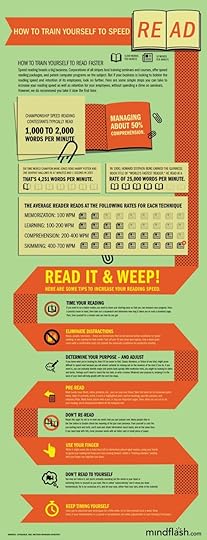
by Mindflash.
From Visually.
February 19, 2017
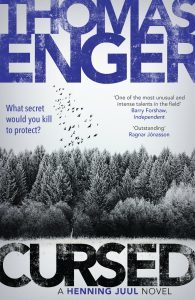
CRIMINALLY GOOD: Interview with author Thomas Enger
1) So, who are you & what have you written?
My name is Thomas Enger, I’m the author of the Henning Juul series which consist of five novels in total (Burned, Pierced, Scarred, Cursed and Killed). Cursed is just about to be released, while Killed will be out in the UK some time in 2018.
I have also written a dark fantasy young adult thriller which roughly translates from Norwegian into The Evil Legacy, a book that so far hasn’t been translated to English. You can find me here at my website, www.thomasenger.net and on Twitter as @EngerThomas. You can also LIKE my FB page.
I’m also a composer, and you find examples of my work on my Soundcloud page:
2) Why do you write crime fiction?
Good question. I really don’t know, to be honest. Maybe it’s because I like the genre a lot, and that it was crime fiction that really got me hooked into reading some 120 years ago. Nowadays I read just as much “ordinary” fiction as crime fiction, but as my heart and mind is a lot more tuned into the finer arts of murder and mayhem, so I think I’ll stick to that.
A lot of authors say they write crime fiction because they want to address certain issues in society, and they find that the crime novel is a great tool or vessel for that. Not me. I don’t want to impose my political views on anybody, I just want my novels to be entertaining and fun. I don’t mean to say that novels who particularly deal with social issues can’t be fun and entertaining, it’s just not me.
 3) What informs your crime writing?
My stories usually start with the question “what if”. The idea for Burned, for instance, the first novel in the Henning Juul series, began with a crazy dream I had one night. I dreamt that an old man was out walking his dog one very early morning (I actually saw this through the old man’s eyes. Now what does that say about me??) and he stumbled upon this tent somewhere on the outskirts of Oslo. Curious as he was, he peeked inside, and there he found a young woman half-buried into the ground, dead, in what appeared to be a sharia killing (she had been stoned to death). When I woke up I said to myself: What if that really happened in Oslo? Wouldn’t that be a great start to a crime novel?
That’s just one example. I have plenty others. You just have to pick up my novels.
4) What’s your usual writing routine?
I usually start my days with the newspaper and a lot of coffee, and once my brain has gotten its fair share of caffeine and the kids have left the house, I sit down at my computer and get to work, usually at around 8 a.m. How I work depends on where I am in the process, whether I start out be re-reading what I wrote the day before, or if go more deeply into the chapters as a way of refining them. I enjoy all aspects of writing, but because it’s such an intense form of work, I have found over the years that I can’t work for more than three or four hours before I need to take a break. In total I spend somewhere between 4-8 hours every day writing, but I stretch that out over the whole day.
5) Which crime book do you wish YOU’D written, and why?
The Woods, by Harlan Coben. A cracking fast-paced read with an unforgettable plot. Also, Coben is very entertaining in his style of writing, and quite often I find myself laughing out loud when I read his stuff. Not many authors are that funny. I’ve read The Woods a number of times since its release in 2007, and it is equally impressive every time. So take a bow, Mister Coben. One day I hope to be as good as you.
February 18, 2017
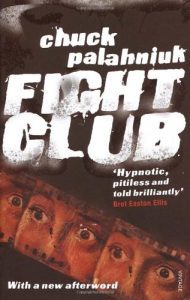
BOOK VERSUS FILM: An Epic Study of FIGHT CLUB
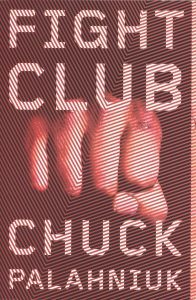
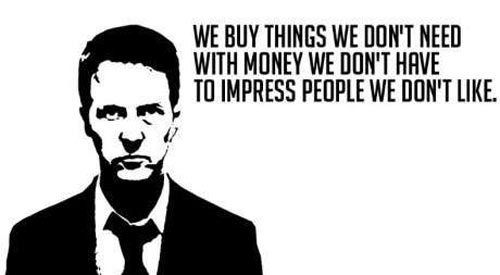
Fight Club is an interesting and unusual example in the book versus film debate. Here is a cult novel that received an incredibly faithful, big-budget adaptation. The movie version then underperformed at the Box Office but found a following through home entertainment. Chuck Palahniuk is on record as applauding the adaptation, particularly the way it streamlined his original plot. When you compare the two, it’s apparent at least 90% of the book made it into the film, so no wonder the author was pleased.
The subject matter here is confrontational, but there was little conflict between the respective visions of Palahniuk and David Fincher, the director responsible for the 1999 film. Yet there will always be differences, however subtle or significant, when a story makes the leap from the page to a visual medium. Let’s explore these now and, for anyone unfamiliar with the work in question, expect adult subject matter and spoilers.
 The Book
Palahniuk was in his early thirties and unable to place what would ultimately become his third novel (Invisible Monsters) so he penned Fight Club as a kind of “fuck you to the New York publishing industry”. Into his new idea Palahniuk poured all his frustration, not just with his creative struggle but consumerism in general, the crisis in masculinity and all the superficial values of contemporary America.
The conventions he established here would recur in all Palahniuk’s fiction; ideas of identity and acts of shocking violence, a barrelling, hyper-real style and ‘transgressive’ subject matter, stories that break at least one of society’s taboos. As with many of his novels, the idea was written as a short story first, this one with the intention of disturbing that publisher who rejected him.
Much to Palahniuk’s surprise, his new idea interested them. It was expanded into a punchy novel of less than 60,000 words, through Palahniuk’s usual methods of in-depth research, repetition and spinning out further plot developments. That’s how we get from the unnamed narrator’s meeting with Tyler Durden to the formation of Fight Club and on to Project Mayhem before everything falls apart.
It Works Well On The Page
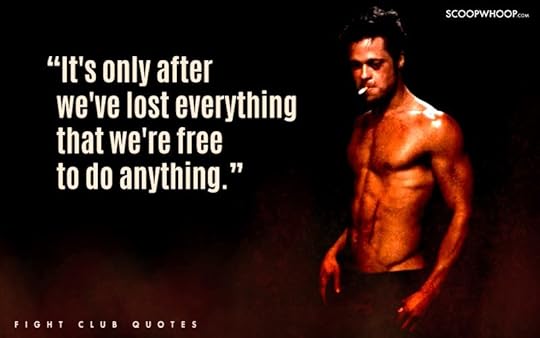
The most attention-grabbing aspect of the opening is the narrator’s voice; insistent, alienated, pummelling us in the present tense. Palahniuk’s strength has never been in portraying fully-rounded characters or creating a realistic world, he’s more about powerful imagery, intense developments, unexpected twists and turns.
Rather than adopt a conventional structure, narrative progress comes through a process of accretion, meaning the author can layer in allusions to the big twist early on (“I know this because Tyler knows this,” “Tyler’s words coming out of my mouth” etc.) These hints make developments seem obvious in retrospect, but they don’t spoil the surprise on a first reading.
On the page Chuck can skim over the more unlikely aspects of his story, such as the characters’ swift recovery time from horrendous injury or Tyler’s ability to travel the world while the narrator is supposedly asleep. The author simply barrels on to the next action-packed set-piece or memorable mantra.
When I first read Fight Club in the late nineties it seemed to me entirely successful; an exhilarating, sui generis piece, too near the knuckle for Hollywood. They would inevitably sanitise everything; render the book family friendly and PG-13. Filmmakers could never capture what made the book so effective – its vicious, nihilistic, pornographic, slapstick, profane, borderline fascistic elements – then sell the result to us as popcorn entertainment, could they?
The Swift Journey To Adaptation
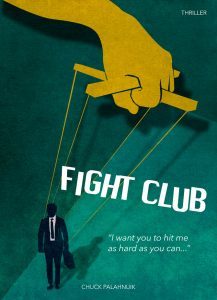
Many in the industry who saw the manuscript initially passed on it, with the book’s first reader at 20th Century Fox actively discouraging the studio from adaptation. Rights were finally bought for $10,000 which, when you consider Brad Pitt would later be paid $17.5 million to play Tyler Durden, shows the balance of power when it comes to writers and the stars who play their characters.
This was where David Fincher came in, still riding the worldwide success of Seven. The young director had the clout to get something this edgy made and being the same age as Palahniuk, the novel’s obsessions resonated. Fincher had even tried to option the work himself while another fan, budding screenwriter Jim Uhls, would lobby for the job of adapting it. This was Uhls’ first major screenwriting credit, working in collaboration with the director on something very different from the only other Palahniuk work to make it to the screen so far, 2008’s Choke which is an underwhelming, low-budget piece. Rather Fincher and Uhls would spare no expense to realise Fight Club’s full-on maximalism, with an initial budget of $50 million rising to $67 million and Fincher using three times the average amount of film on his fourth feature, some 1500 rolls.
Success on the Screen
It worked. The movie ended up far better than anyone could have expected. As I’ve mentioned, Palahniuk’s writing doesn’t really conform to traditional narrative structure, but in adapting Fight Club Jim Uhls refined the material to tease out act breaks (the formation of Fight Club, the beginning of Project Mayhem) as well as a clear Inciting Incident. It happens ten minutes in, when the narrator spots Marla Singer at the cancer support group they both attend and is the very antithesis of a meet-cute. The opening and concluding scenes with the gun in the narrator’s mouth were retained, while Fincher lobbied hard to keep the distinctive address through voiceovers, something that was initially opposed by the studio. Perhaps they were in thrall to the then-fashionable teachings of screenwriting guru Robert McKee, the execs who described this convention as hackneyed and trite. But rules are made to be broken, and our unreliable narrator becomes clear and sympathetic as his voice pounds in the audience’s ear throughout.
What Was Improved
Fincher took advantage of the technology and resources available to turn into an overwhelming sensory experience. He put on the screen moments only mentioned as offhand fantasy in the book, such as the narrator willing his plane to crash, now shown in graphic detail. There are wish-fulfilment cutaways and visual montages, with the first fight between Tyler and the narrator expanding over a number of nights, as other men are attracted by the sight, all keen to wallop each other and feel alive once more. Later Project Mayhem’s mischief committee will use pigeons to soil luxury cars, take out sculptures and sabotage the in-flight guides of aeroplanes.
During the opening credits special effects take us through the narrator’s brain and soon we will pan down buildings, into the underground car park hosting the club. There is a pounding score from electronic group The Dust Brothers, perfectly in synch with the visuals, but perhaps the most effective addition is also the subtlest.
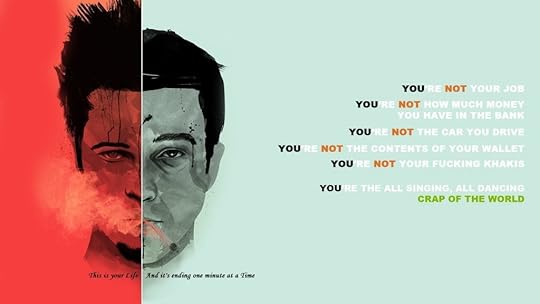
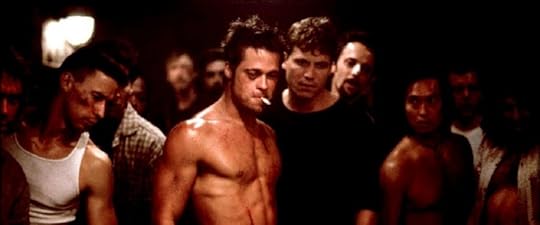
To hint that Tyler is an invention of the narrator’s fracturing mind, and also reference Durden’s hobby of inserting porn frames into family films during his projectionist work, Fincher splices in subliminal appearances from Brad Pitt, beginning when the narrator meets Marla. They reflect the narrator’s declining mental stability, his subconscious need to invent a new persona to attract Marla; a decisive, buff man of action. He is the kind of alpha male Norton’s character has been made to believe she wants, and if your mind was inventing the perfect physical specimen back in 1999, it would surely be Brad in his heyday. Flashes of Pitt start to permeate the reels before Tyler appears in the background at an airport and is then introduced, the director manipulating the frame regularly as events progress through the narrator’s mental breakdown.
What Was Lost
 Inevitably certain elements from any novel, however short, won’t make the cut in a two-hour feature. In the book there is a strand that involves Marla storing her mother’s fat, which the narrator uses to make products for the Paper Street Soap Company and leads to recriminations. Near the end of the story Marla is further alienated by seeing Tyler-slash-the narrator murder a man while working as a waiter at a murder-mystery party. I suspect these elements were removed because Uhls saw Fight Club as a “romantic comedy”. The screenwriter played up the connection between Marla and the narrator, something Palahniuk doesn’t dwell on in the book, uninterested as he is in happy endings.
Certain elements have actually been toned down for the film, with Marla’s memorable line after sleeping with Durden – “Marla said she wanted to have Tyler’s abortion” – considered too strong for US sensibilities and changed to her saying: “I haven’t been fucked like that since Grade School”. Arguably this is even more shocking, but at least it won’t get the pro-lifers’ backs up. More obscure in the book are references to the central character’s mental condition, as the narrator tries to explain by asking Marla if she’s ever seen the 1976 American TV mini-series ‘Sybil’ and Marla in turn saying he was like “Tony Perkins’ mother in Psycho”. The film prefers to cite Jekyll and Hyde, which brings us to …
Plausibility
As I’ve mentioned, on the page the difficulties of a narrator achieving all he does with two personalities using the same body – one in daytime, the other at night – can be glossed over. When it’s up there for the audience to see, this sleight of hand isn’t possible. As with The Sixth Sense (whose writer-director has just tackled D.I.D. himself in Split), Fight Club’s twist makes you go back and realise that one of the central characters was never actually there.
On a second viewing you observe the minor players and wonder how likely it is they react as they did around Ed Norton effectively talking to himself. The movie manages this fairly well, with moments gaining significance in retrospect as when Marla asks who he’s talking to while they’re having sex, Bob mentioning the rumour Durden “only sleeps one hour a night” and the scene where Norton shows how adept he is at beating himself up before his boss.
But as the twist approaches things start to unravel, specifically in the scene when Durden crashes a car with two ‘space monkeys’ in the back to make the narrator feel more alive. In the book Tyler doesn’t actually appear in the vehicle, this stunt is done on his orders by an acolyte who spouts Tyler’s invective while driving. Watching the film, we later realise there was only one person in the front of the car and ask ourselves: would those in the back really have been so brainwashed? The space monkeys fail to intervene, even as the narrator becomes increasingly unhinged and looks as if he will kill them. And worse is to come…
The Ending
In the film, once the narrator realises that Tyler Durden is a figment of his imagination we are shown a sequence of earlier scenes with no involvement from Pitt: the narrator attacking himself, sleeping with Marla, heading up Fight Club and so on.
As the apotheosis of Project Mayhem approaches, reworked here with an anti-Wall Street bent, the narrator takes action to free himself from Tyler’s malign influence. This gives the film the opportunity to end Fight Club in the same manner as every Hollywood action movie ever – with two men fighting each other. But as interpolated CCTV footage shows, this is actually Ed Norton attacking himself, dragging his body along by the hair then throwing himself downstairs in a way that’s physically impossible, even for an experienced self-harmer. As the climax approaches the audience moves from willingly suspending their disbelief to being unable to accept what is happening, as it all becomes too implausible.
At least, they do for me.
In the book, the narrator’s realisation that he can consciously control Tyler, but will only be rid of his malignant alter-ego with drastic action, leads him to blow a hole through his own cheek. The narrator then ends up in a mental institution with “a jagged smile from ear to ear”, following much reconstructive surgery (presumably). This is much more satisfying and thematically appropriate than the ending the film offers, where Uhls and Fincher fall into the trap of offering an upbeat finale and strain credulity in doing so.
Because when Ed Norton fires a handgun through his cheek in the film, it creates a minor wound that is somehow sufficient to cure his D.I.D. and vanquish Tyler, but doesn’t actually affect his speech much. It certainly doesn’t spoil the romance of the climax; he simply dabs a bit of gauze on it then happily holds Marla’s hand while they watch the empty buildings fall. I’m not a medical expert, and I know very little about ballistics, but I suspect if a bullet was fired through my cheek the immediate concerns would be very different from Norton’s here. Excellent use of the Pixies’ ‘Where Is My Mind?’ to soundtrack it though, you don’t get that in the book.
Cult Success
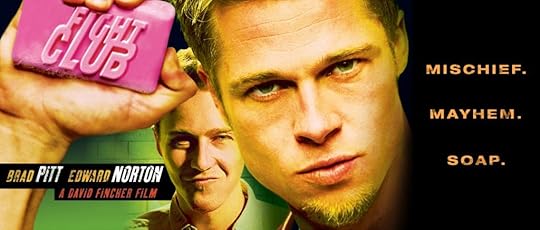
In spite of these flaws, this adaptation remains a triumph, number four in Total Film magazine’s list of the greatest films ever made and with an 8.8 average on IMDB; higher than La La Land. After an underwhelming theatrical run when it failed to make a profit and led to Fox studio head Bill Mechanic’s resignation, Fight Club found an audience on DVD and video, shifting more than six million units. The film eventually made a $10 million profit for 20th Century Fox and would remain the high-point of Jim Uhls’ career, although he did go on to write Doug Liman’s 2008 teleportation disappointment Jumper.
Fincher continued to have huge success with the similarly dark Zodiac and other twisty literary adaptations like Gone Girl or The Girl With The Dragon Tattoo, while Chuck Palahniuk gained a whole new audience from the publicity and continues to transgress fictional boundaries, although his insistence on releasing a book a year since the late nineties has resulted in a significant drop-off in quality.
Conclusion:
Overall Fight Club is as faithful a book-to-film adaptation as I’ve seen and a much-loved movie in its own right. I suspect my preference for the novel might be because of those plausibility issues I mention, and because it was on the page when I first encountered Palahniuk’s ideas, the author elucidating things I was feeling only vaguely at twenty-two. However many visual innovations or shots of Brad with his shirt off Fincher employs, his movie simply can’t have the same impact as when I first read Tyler’s philosophy:
You are not your job, you are not how much money you’ve got in the bank. You are not your family, and you are not who you tell yourself.
Then again, how many other films make an eight figure profit and lead to the resignation of a studio boss? Maybe we should call it a draw.
BIO: Alan Devey is a London-based writer of scripts and fiction. His most recent book is a novella for the Kindle called You Don’t Bury Survivors. He presents the Comes With Mp3s music show on Radio Woking, writes a blog on writing and other matters at and can be contacted via his website alandevey.net.
Lucy V. Hay's Blog

- Lucy V. Hay's profile
- 174 followers

