
Lucy V. Hay's Blog, page 33
January 19, 2017
CRIMINALLY GOOD: Interview with author Anna Mazzola
 1) So, who are you & what have you written?
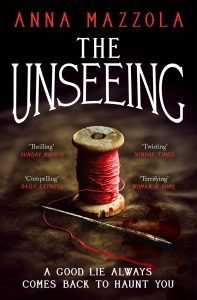
I’m Anna Mazzola and I write historical crime fiction and strange short stories. My debut novel, The Unseeing, is based on the life of Sarah Gale who in 1837 was charged with aiding and abetting the murder of another woman. The Unseeing was published in July, and comes out in paperback on 26 January 2017. I’m currently writing my second novel, which is about missing girls on the Isle of Skye. You can find out more at my website, or come and say hello on Twitter, HERE. Find me on Facebook, HERE and on instagram, HERE.
2) Why do you write crime fiction?
I didn’t specifically set out to write crime fiction, to be honest, but that seems to be what I’m drawn to. I’m fascinated by what leads people to do terrible things, and what happens to those who are left behind. My favourite novels are ones which manage to combine compelling plot with excellent writing, and that’s often crime-based novels.
 3) What informs your crime writing?
I’m also a criminal justice solicitor (dealing with people failed by the justice system or abused by the state), so I suppose the themes that interest me tie in with that – justice, injustice, loss and other cheery topics. However, I write historical fiction, so I’m mainly relying on research and imagination. And caffeine.
4) What’s your usual writing routine?
Ha! I wish I had a ‘usual writing routine’. Like most writers, I work around other things (including small children) so I tend to write whenever and wherever I can. On days when my children are at school and nursery, I drop them off, buy coffee, rush home, spend an hour or two catching up on work emails, publicity and admin, and then switch on the Freedom app to try and write or edit uninterrupted for 2 to 3 hours. I’ll then snatch the extra hour here and there. The only constants are coffee and relative silence. I often wear ear defenders when writing: it makes me look like a lunatic and thus deters people from trying to talk to me in cafes/on buses.
5) Which crime book do you wish YOU’D written, and why?
Alias Grace by Margaret Atwood, which is based on the case of Grace Marks, a Canadian girl convicted of murder in the 19th century. It’s dark, it’s clever, and it’s so bloody funny. I’ve read it five times and every time it gets better. It’s not shelved in the crime section because it’s by Atwood, but it’s a crime novel. For financial reasons, it might also have been handy had I written The Girl on the Train!


January 17, 2017
CRIMINALLY GOOD: Interview with author Jane Holland
 1) So, who are you & what have you written?
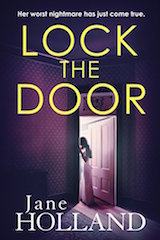
I’ve written about thirty novels all together, under a variety of pen-names, though only recently moved into psychological thrillers as Jane Holland. My first thriller, Girl Number One, hit the #1 spot in the UK Kindle store in December 2015, and my second thriller, Lock The Door, has just been released on January 10th. Lock the Door is a tense baby abduction story with a twist, described by crime writing critic, Andy Martin, as ‘Scary as hell.’ Find me on Twitter as @janeholland1.
2) Why do you write crime fiction?
Crime fiction is a genre that can stretch to fit all sorts of interesting elements and themes, which makes it fun and liberating to write. It also happens to sell rather well.
3) What informs your crime writing?
I tend to start with a ‘what if?’ situation, and then decide which characters could be associated with that situationfor the greatest impact. For instance, in Lock The Door, a baby boy is abducted. But what if this particular baby boy is suffering from a serious disorder that requires constant care and medication, meaning his life is in danger from the first minute he goes missing? Chilling stuff!
 4) What’s your usual writing routine?
I’m easily bored so don’t have a set routine, except to ensure that I get my daily word count done. That’s a minimum of 1000 words, sometimes 2000. I mostly go out to write in a cafe, as I get sidetracked at home, but sometimes I sit up in bed to write, and out in my garden if it’s warm. I do have a desk but tend to reserve it for moments of desperation.I listen to music on headphones while I write, to block out external noise, and almost always write straight onto my laptop. I am too impatient to do multiple drafts so try to get everything final draft quality first time, and leave story edits to other people (i.e. my agent or editor) to suggest.
5) Which crime book do you wish YOU’D written, and why?
Any Jack Reacher story by Lee Child, but perhaps A Wanted Man in particular. The opening is striking, and marvellously intriguing, and Child keeps you guessing all the way to the final scenes, with this wonderful crescendo style of writing, nothing too showy, always building to some unseen conclusion, and involving some well-rounded, memorable characters on its way. Plus, the finale is breathtaking both in its violence and its simplicity. Great book!
January 16, 2017
BEST OF 3: Tony J Forder, Author
 1) The Silence of the Lambs, by Thomas Harris
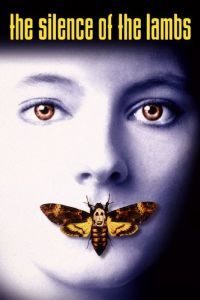
It is my favourite book. Even today, more than twenty-five years after it was written, every serial-killing sociopath is compared to Hannibal Lecter in its blurb. To have created a character so rich in texture that it remains on the tip of everyone’s tongue all these years later, is a trick very few can pull off. Sure, the film helped. Anthony Hopkins did Thomas Harris a real service there. But the origins, the skeletal framework introduced in Red Dragon, and fully fleshed out in Lambs, emerged from the imagination of Harris himself. The book is lean, yet so wonderfully descriptive, spare yet not sparse.
 2) The Poet, by Michael Connelly
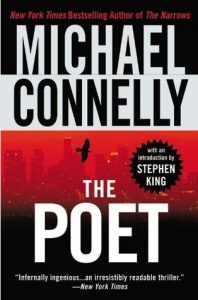
I love the Harry Bosch series, and whilst any of those books would feature high on my ‘top reads’ list, it’s the then stand-alone novel, The Poet, which strikes a chord with me. Although some critics would disagree, I don’t mind when you occasionally have to suspend belief. Would an FBI team hunting down a serial killer allow the journalist brother of one of the victims to tag along for the ride? I very much doubt it. But this is fiction, and writers of fiction should be allowed to break a few rules.
Jack McEvoy is a character rich enough to have reappear later in Connelly’s span of works, and here he takes centre stage in the hunt for The Poet. Rachel Walling is his link to the FBI, and the relationship they would form was obvious from the word go. But love interest apart, the hunt was the force moving this book along, together with a growing appreciation for the leads as they overcame their own faults.
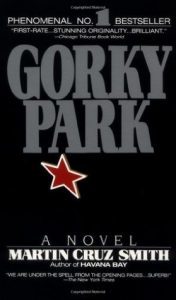 3) Gorky Park, by Martin Cruz Smith
Arkady Renko is a senior investigator in Soviet era Russia. He is assigned a case after bodies are found in Gorky Park. As he delves into the case, Arkady comes to understand that the seedy underbelly of Moscow is not the criminal world, but rather the world of the privileged and the elite. At a time when even a senior investigator can go missing in the cold, bleak landscape, Renko resolves to take the fight to those responsible.
In doing so he finds himself up against not only the KGB, but also the FBI and even a New York police officer. As he faces corruption and espionage, Renko starts to falter, but holds on to win the battle, if not the war.
A great read of its time and place, but one whose writing, plot and characterisation stand the test of time.
BIO: Tony J Forder is a published crime fiction thriller author, with a new #novel coming in 2017. Previous works are available on Amazon now and check out his website, HERE.
January 15, 2017
6 OF THE BEST: My Orenda Books Christmas
As long-term readers of this blog know, I like to theme and categorise my TBR pile, so this last holiday season just past, I decided to have an ‘Orenda Books Christmas’!
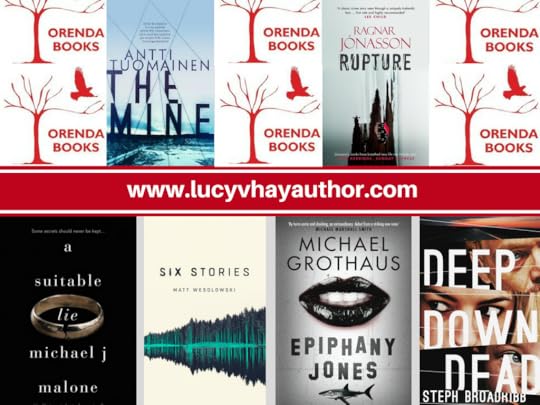
I read a whopping 6 Orenda Titles over the Christmas period
I love Orenda Books – and NOT just because Orenda is publishing *my* novel, The Other Twin, this year either. I trust Orenda’s output (and even targeted them with mine) because its head honcho Karen Sullivan has the same taste as me, which is:
Lean, literary-style prose
Strong structure, with good pace throughout
Dark and suspenseful tone
Traditional mysteries, updated for modern times
Characters & subjects ‘left of the middle’
Basically, I love that Orenda takes risks and will publish books that aren’t a carbon copy of everything else ‘out there’!
So, here’s all the titles I managed to get read and what I thought of them – make sure you click on the titles for my (non-spoilery) reviews in-depth:
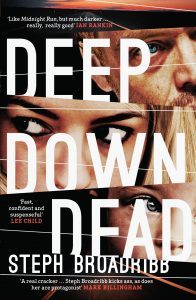
1) Deep Down Dead by Steph Broadribb. This is SO VISUAL, so as a script editor for movies I just loved it. What’s more, Lori Anderson is a fab female lead, so I can’t wait to read more with her in the driving seat!
2) Six Stories by Matt Wesolowski. This is like a traditional whodunnit, very Agatha Christie-like, so of course I lapped it up! I loved the addition of the podcasts, which made it really relevant for today. Inspired!
3) A Suitable Lie by Michael J Malone. This is a really strong novel that reminds us domestic abuse doesn’t have be solely a women’s issue. It would have been easy for Malone to get up on his soapbox, but he avoids this and delivers a devastating tale of love gone awry.
4) Epiphany Jones by Michael Grothaus. They say, ‘Just because you’re paranoid, don’t mean they’re NOT after you’ — this is one BIZARRE novel, that almost defies description in a GOOD way! Everything pays off so perfectly, I’m in awe of the storytelling. Definitely worth a read.
5) The Mine by Antti Tuomainen. This one really captured my imagination. I love a story involving hitmen anyway, but this one has some really intriguing and thought-provoking points about fatherhood. Loved it.
6) Rupture by Ragnar Jonasson. I’ve never been to Iceland, but I tell you: I’m SO going! Jonasson does a brilliant job here, the abandoned fjord is so CREEPY — plus that Agatha Christie ‘feel’ is stamped all over this story, too. Kept me guessing right up until the end. Recommended!
Don’t forget, you can friend me on Goodreads, HERE.
See you over there!
January 14, 2017
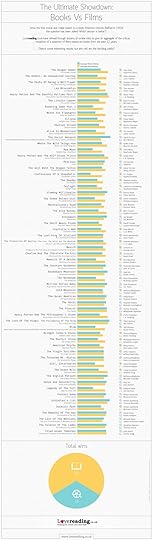
INFOGRAPHIC: Books Versus Hollywood
The Book Versus Film section on this blog is one of the most popular features – so far we’ve had the likes of dystopian YA classics like Divergent, The Maze Runner and The Hunger Games, not to mention Stephen King’s Misery. Plenty more where that came from, too!
So this infographic showing people’s perceptions of which is better – the book or the film – is FASCINATING! Some really interesting conclusions here, I think I mostly agree with them … do you??
Remember, if you have a Book Versus Film case study you’d like to do, get in touch – it doesn’t have to be crime fiction, it can be ANY genre … But it does have to be an in-depth comparison of whether you prefer the booker the film, OR whether you think BOTH versions work. All the details and previous articles can be found HERE. Looking forward to hearing from you!
From Visually.
January 13, 2017
Book Versus Film: Why MISERY Works As Both
Stephen King is the master of horror. The king of grim, the heir of scare, the duke of puke, the prince of mince… well, maybe not that last one! But this means he also has some fantastic book to film adaptions out there.
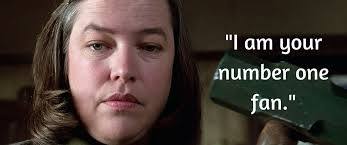
I’m a huge King fan. Not quite as infatuated as Annie Wilkes is with Paul Sheldon, but not far off! For those who are not familiar with Misery, here is a summary of the plot.
Story
Paul Sheldon is the writer of a popular romance series called Misery. He has a car accident in the middle of nowhere and Annie Wilkes (his number one fan) comes to his aid. Instead of taking him to the hospital this psychotic ex-nurse takes him to her home and holds him captive.
While he’s ‘recovering’ from his injuries she reads his latest Misery book and is livid when she finds out he’s killed off the protagonist (Misery), thus ending the series. Annie keeps Paul locked in a room and forces him to write a new novel, ‘Misery’s Return.’ Paul does as she bids, all the while trying to think of a way to escape before the crazed Annie kills him.
*Spoiler Alert*
Before we get started – there aren’t huge spoilers in here but there are some. I don’t mind spoilers because I’m a writer and it comes with the territory, but I’d hate to spoil the story for others. Ready? Let’s go …
The Book (released 1987)
STRENGTHS
 1) Paul’s Misery is Threefold
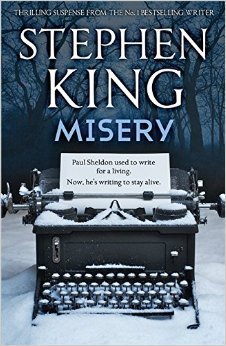
So, we know Misery is the protagonist in a series of romance novels written by Paul Sheldon. The title is a nice play on words but it could have more than one meaning. For me, it’s also about the misery Paul feels in having to continue writing the popular romance series long after his passion for it fizzled out, writing to please readers and fulfil his obligation to the publisher (a fictional gun to his head). Then Paul crosses paths with his number one fan, Annie Wilkes, and this concept is taken to a whole new level, piling on more psychological misery and adding physical misery to the mix.
2) Paul’s Inner Crazy
Misery comes under the header psychological horror and the book lives up to this label. What the reader gains from the book is Paul’s thought pattern and not just what he is thinking about doing, but also an inner monologue from a third voice who is rather aggressive towards him. Paul seems to have two voices in his head. They are both his own, but one is an alter-ego, part of his self-loathing, which makes it seem like a separate entity jabbering away inside his head, slowly driving him crazy.
3) Annie Wilkes
As King says, ‘The best stories always end up being about the people, rather than the event.’ Annie is etched into my mind. She is the star of this book, her dialogue shaping her. On the surface, Annie doesn’t look like a traditional monster, even though Paul makes it seem like she’s gruesome, with her cracked lips and stinky breath. Yet that’s precisely what makes her terrifying.
What makes Annie dangerous is that she doesn’t look/seem dangerous … at first. This narcissistic maniac is the lynchpin; if she’d been less colourful and layered the story would have lost its magic. Paul, on the other hand, could have been anyone. He’s just a regular guy and maybe that contrasts to how crazy Annie is.
WEAKNESSES
4) Pace
The pace of the book was not fast enough for me. I don’t know if this is because I read it in the information age and not when it was released in 1987. I would have been seven-years-old and although already writing my own horror stories at that age, I was obviously not reading King yet. I expect to read fast-paced stories and I do struggle when they plod, no matter how rich the prose … but maybe that’s just me?
5) Too Much Information
I could have easily enjoyed the book had King left some less important strands of information out. The Misery’s Return parts for example. I was uninterested in reading about Misery’s adventures. No wonder Paul hated writing about her. I imagine King did this for several reasons: to show how annoying Annie is for liking such trash; to show Paul’s struggle having to write with the letter ‘n’ missing off his typewriter and later the letter ‘t’; or to show another part of Paul’s torture, forced to sit and write something he’s come to hate. I almost skipped over and only read on out of fear of missing something important later in the book. It’s a minor gripe though and I’m being extremely picky because it’s hard to find weaknesses in SK’s work.
The Film (released 1990)
STRENGTHS
6) Cuts
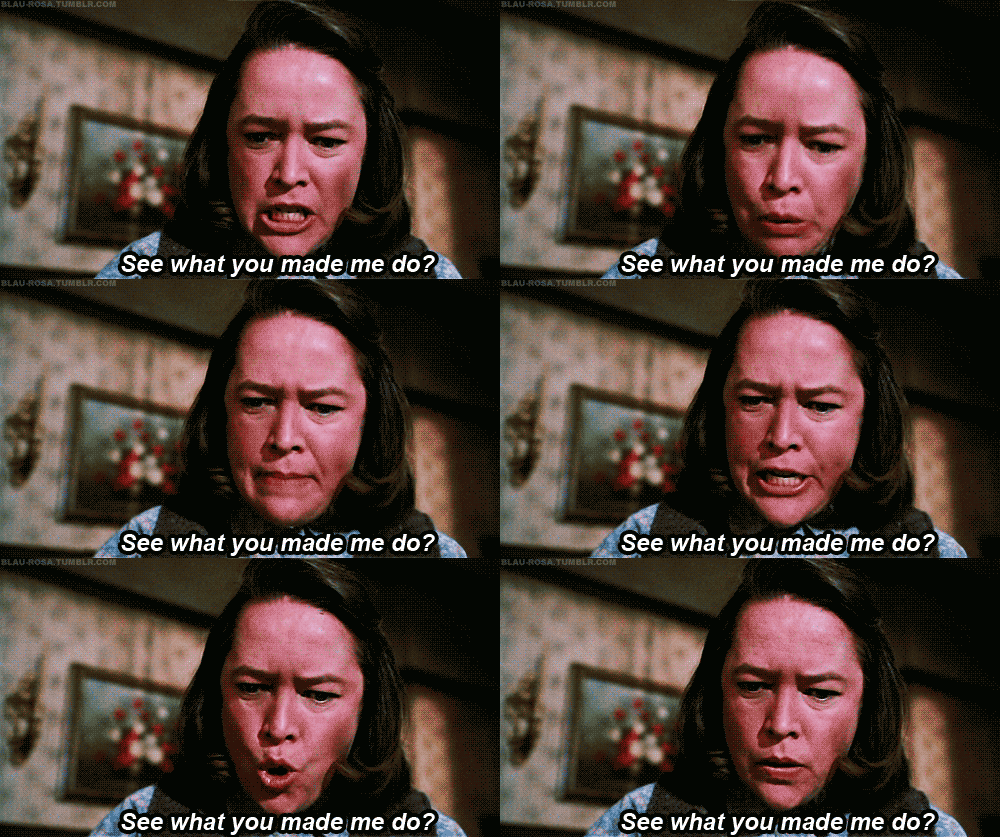
As mentioned above, I was bored by point 5 in this list, so I think the movie draws strength from us NOT having to read about Misery’s adventures! Instead, we only see an excited Annie asking Paul questions. Kathy Bates was perfect for this role. Not only does she look like the type of woman who would enjoy Misery stories but her body language and the way she delivers her lines is exactly like I imagined the deranged ex-nurse Annie Wilkes. King brought her to life on the pages and Bates did her justice on the screen.
7) Hobbling
I think the hobbling in the film was effective. Had they cut the foot off and blowtorched it, I don’t think that level of gore would have had the same impact as the block of wood and sledge hammer. It would have taken something away from the character Bates had created, pushed it too far in the insane direction for the viewers and made her less believable. Less was more in this case. I think this is also true of the scene with the lawnmower, which those dirty birdies left out of the film (but was my favourite part of the book!).
 8) Dialogue and Overall ‘Feel’
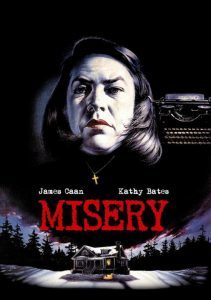
The script was true to the book. I liked that they kept Annie’s original dialogue. Words like: Cockadoodee, dirty birdy, mister man and oogie, weren’t compromised. The writers were also loyal to the plot. The film was clean, simple and ticked all the boxes. The location and set design were just as I’d imagined. Had they made the film grander than two characters and a room, I think it would have failed.
WEAKNESSES
9) Paul Sheldon
I thought Paul was uninteresting. I didn’t feel the same level of sympathy towards him that I did in the book. I wondered if this was the choice of actor, perhaps I felt James Cann wasn’t the right fit? But I think some of it is to do with the lack of inner voice: it was almost like an extra character in the book and for me, this wasn’t translated to film. I felt Paul’s pain and panic but I’m not sure I cared about him all that much. In the book, I was rooting for Paul to escape, not so much in the film. His descent into madness wasn’t there; he stayed relatively calm in the film. If I think about casting the film today I would cast Heath Ledger (if he were alive) or Idris Elba as Paul … Melissa McCarthy would make a great Annie!
10) Paul’s Inner Voice
Had the inner voice making Paul crazy been added, I think I would have felt more of a connection to Paul. I don’t know how they could have portrayed this better but I feel it was the only thing the movie lacked.
In conclusion:
I like the book and film in equal amounts. Sometimes book to film can be disappointing but here we have a subject matter that translates from page to screen extremely well. Is it the simplicity of the story? Possibly. I think it’s also probably King’s genius and the right filmmakers and actors for the job.
By the way, as a writer, the most miserable AND frightening part of both the book and the film was when Annie made Paul burn the only copy of his new manuscript. NO!!!
I think I’d have answered her request to torch my hard work with, ‘I’d rather die, you cockadoodee!’
BIO: Emma Pullar is a writer and book reviewer. Her picture book, Curly from Shirley went to number four on the bestseller list and was named best opening lines but NZ Post. As well as picture books, Emma writes horror, dystopian, sci-fi, fantasy and paranormal fiction. You can read her short horror story, LONDON’S CRAWLING, in the Dark Minds charity collection. Follow Emma on Twitter, HERE.
January 12, 2017
BEST OF 3: G X Todd, Author
 1) The Wolf Road by Beth Lewis
WHY I LIKE IT: This can’t technically be shelved under Crime, but it does tell the story of a most heinous series of crimes perpetrated by Kreagar Hallet, the father figure to our main character Elka. It’s set some time after the Damn Stupid, a catastrophic event that sets America back to an age equivalent to the pioneering era of the early nineteenth century—and this is one of the reasons why I loved The Wolf Road so much. The sense of setting is entirely realistic, and Elka’s striking voice brings a singular individuality to the story that I haven’t experienced in a long time. A top class debut.
 2) Pop. 1280 by Jim Thompson
WHY I LIKE IT: If it’s one thing Thompson excels at, it’s creating main characters who are completely despicable and yet entirely compelling. Nick Corey is the worst Sheriff you’d ever want protecting your town and precisely because of this, he is an absolute treat to watch. He sleeps, eats and carouses his way through his duties until a number of problems begin to impact on his cushy station. And, boy, he doesn’t take kindly to that. Not one bit. Everything is liberally doused in 1950s Deep South Americana, which I love, and, to top it all off, Thompson’s economic prose is to die for.
 3) The Lock Artist by Steve Hamilton
WHY I LIKE IT: Not only is eighteen-year-old Mike an absolute whizz at opening things—a locked door without a key, a padlock with no combination, occasionally even an eight-hundred pound safe—Mike is also mute and has been since a childhood trauma. It’s this unique trait in its protagonist that sets this novel apart. Mike doesn’t say a single word throughout the entire story—not when the wrong people want to use him for his unique skills, not even when he falls in love and desperately wants to leave his enforced life of crime. He’s one of the most memorable characters in a crime book I’ve read and that’s why The Lock Artist is in my Best of 3.
BIO: G X Todd is a thirty-five-year-old librarian from the West Midlands. Since completing a history degree at the University of Birmingham, she has worked for public libraries for more than a decade and currently drives a 35ft long library van around the borough. Follow her as @gemtodd on Twitter and check out her website HERE.
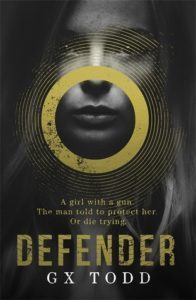 Defender, GX’s first novel, is an imaginative thriller that draws on influences from Stephen King, Clive Barker and Neil Gaiman to create a new world – where the biggest threat mankind faces is from the voices inside your own head. Defender was one of my top 4 reads of 2016! Find out why, HERE.
January 11, 2017
My Reading Pledge This Year – What Is Yours?
At the beginning of every year, I like to think about the TYPES of book I’m going to read, not to mention the writers behind them. At the same time however, I don’t like my TBR pile ‘dictating’ to me either. Ultimately I only want to read books I’m genuinely interested in … whether that’s generally, or in the moment!
So, this year, I am going to write down what I hope to read in advance … then come back and see how I did!! Here’s my Reading Pledge 2017 – will you join me?
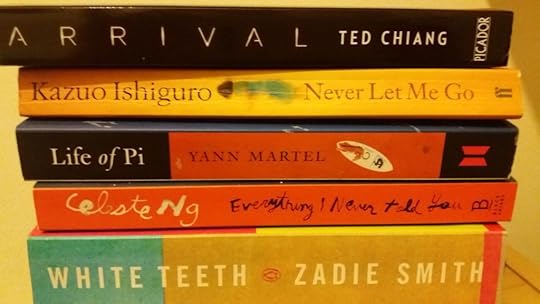
In 2017, I pledge to read at least five:
Writers of colour
Classic literary titles (or modern prize-winners, i.e. Pulitzer)
Non fiction titles
Fiction titles that aren’t crime, mystery or thriller (or classics, prize-winners or non-fiction!)
PLUS:
A crime fiction subgenre I’ve never tried before (last year it was Nordic Noir)
Obviously some of these will cross over, plus some will prove easier than others. I already have quite a few writers of colour lined up from my current TBR, for example. I’m going to push for at least ten in that category.
As for subgenere out of my comfort zone … I’d never been particularly struck on the notion of Nordic Noir, I figured ‘How different could it be?‘ but WOW! It and is and I love it! Making yourself try something new cannot be underestimated, IMHO.
I started reading Nordic Noir because I noticed Orenda Books do a lot of translated fiction. I trust Orenda’s output (and not just because they’re publishing my book! I wanted them to publish mine BECAUSE I love their stuff). So, I need to find a new subgenre like Nordic Noir, but one I’ve never tried before … A challenge!!
Will you be joining me with your own reading pledge for 2017?
January 10, 2017
How To Keep Your TBR Pile Fresh
Like all committed writers – I LOVE to read! Here’s my current TBR pile (of so-called ‘real’ paperback books, anyway):
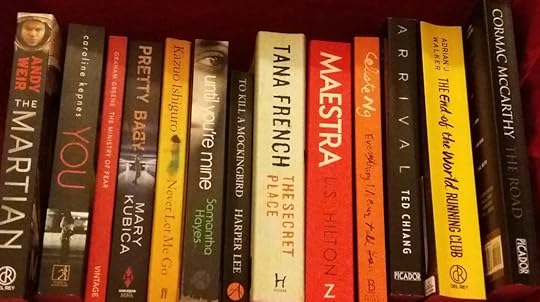
Obviously, I have a stack more too … Not only the ones I buy from supermarkets and book stores, but also charity shops and those I swap on Facebook groups too.
In addition to all THAT, I also get sent ARCs (advanced review copies) from publishers, indie authors and by my fellow book bloggers. Here’s my current TBR shelf (below) – I have a deal with my husband in that I mustn’t buy any more than these two shelves can handle. Oops!
(Remember, I have a gazillion more on my Kindle too. In short I. AM. ADDICTED!!! Sorry … not sorry!!! I just can’t help myself, basically).
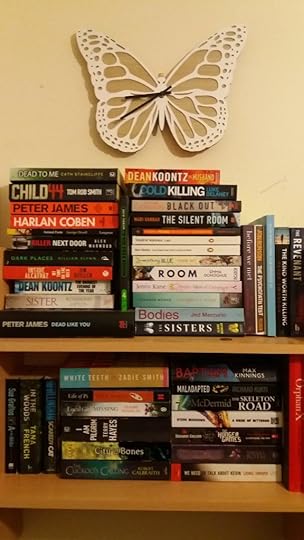
It’s probably no wonder I love reading so much and it’s just as well, since my day job is SCRIPT READING! In other words, I read all day … and then at night? I READ SOME MORE! It’s what I love to do, when I’m not writing (or y’know, living and eating and stuff).
Book bloggers sometimes complain about losing their ‘reading mojo’, but I can honestly say this doesn’t really happen to me. I think this is because I never let my TBR pile take me over or dictate to me on what I SHOULD read. So, here are my tips for keeping your TBR pile fresh and making sure it doesn’t overwhelm you:
1) Theme/categorise your books
You can do this any way you want. I find I go through phases when I only want to read one ‘kind’ of book and if that’s the case, then I’ll theme a bunch of books in that genre or of that type.
I did this for Dystopian November in 2016. I looked up loads of dystopian books that had been recommended to me over the years, but somehow missed (like Margaret Atwood’s The Handmaid’s Tale), as well as new ones, like Defender by GX Todd. I also re-read a couple, as well as watching their movie adaptations like Divergent and The Maze Runner.
I didn’t get all the dystopian books I’d put aside read in that month, but I got a huge chunk of them done. I felt ready for a break at the end of the four weeks, but felt I had a new appreciation for the subgenre.
Other themes/categories I’ve themed my TBR pile around have included (but aren’t limited to):
Detectives/police procedurals
Male leads
Female leads
Female authors
Books that have adaptations I want to watch/have watched
Books that SHOULD be adapted for screen
Books from certain publishers
Marriage noir
Abducted children
Unusual characters we don’t often see
Books with neon covers!
Basically, I’ll read my chosen theme or category until I get bored of it. Then I’ll shake up my TBR again, finding paperbacks and putting ebooks into various folders on my Kindle.
2) Avoid PROMISING reviews by certain dates
I never promise a review, not even to my own publisher. If I can get an ARC read in time for a blog tour or similar then I will, but I’m careful to keep my book reviewing as a ‘side order’ to the main content on my blog, which is made up of interviews, articles, reading recommendations and so on.
In turn, I do all I can to recommend and share reviews and books I like ‘off blog’, especially on social media. I’ll stage Q&As with authors on my Facebook page; chat in groups, Twitter or instagram; or RT tweets about books I’ve read, adding I’ve read and enjoyed them. Sometimes I’ll do the same for books I haven’t read, but instead will say I can’t wait to read them because I really like the sound of them.
Now, this tip won’t appeal to ALL book bloggers, some of whom ONLY want to review on their blogs … But for those who want to ensure they enjoy reading and make sure book piles don’t start kicking their arses, then this really works in my experience.
3) Try and be aware of your various biases
I love female writers. So this year, I’m going to make a concerted effort to read more male authors as well. In addition, I’m going to read more books with male protagonists / POVs in.
Publishing is very white-centric. Though I have previously made a good job of being inclusive of authors and characters who identify as say, LGBT and disabled, I have done a poor job recently of reading books by writers of colour. So this year, I will ensure I read more books by BAME authors.
This is not to be ‘politically correct’ – it’s because this way my TBR pile stays FRESH as I will be reading stories and viewpoints that I am not ‘used’ to.
Concluding:
In keeping your TBR pile fresh, make sure you mix up themes and categories for your books – these can be as straightforward or as crazy as you like. Secondly, try and avoid promising views to others by certain dates, since this may make your reading feel like a chore. Lastly, be aware of your biases – so you can find other viewpoints and stories that challenge them, or bring new ways of looking at the world to you.
Enjoy!
January 9, 2017
CRIMINALLY GOOD: Interview with author Steph Broadribb
 So, who are you & what have you written?
Okay, so I’m Steph Broadribb also known as Crime Thriller Girl. I’m an alumni of the MA Creative Writing at City University London and trained as a bounty hunter in California.
My debut novel Deep Down Dead is out now and is the first in the Lori Anderson action thriller series. Here’s the blurb:
Lori Anderson is as tough as they come keeping her career as a Florida bounty hunter separate from her role as single mother to nine-year-old Dakota, who suffers from leukaemia. But when the hospital bills rack up, she has no choice but to take a job that will make her a fast buck. And that’s when things go wrong. The fugitive she’s chasing is JT, Lori’s former mentor – the man who taught her all she knows … the man who also knows the secrets of her murky past.
You can find out more about me at my blog, HERE , plus you can LIKE my FB page and follow me on Twitter as @CrimeThrillGirl.
Why do you write crime fiction?
I’ve always loved crime fiction ever since I first picked up a Sherlock Holmes novel when I was about eight years old. (It was The Hound of the Baskervilles – it scared me witless and I loved it!). Since then I’ve read all kinds of crime fiction – detective, action thrillers, historical, psychologicals and I have an especially soft spot for the books of the late Michael Crichton who wrote such a huge number of diverse thrillers during his career – from Jurassic Park, to A State of Fear, and Disclosure.
My first love is action thrillers though, and my heroes of the sub-genre are John D MacDonald [fav book = The Deep Blue Goodbye], Lee Child [fav book = Never Go Back], Zoe Sharp [fav book = Fifth Victim], Jeff Abbott [fav book = Run], and Mason Cross [fav book = A Time To Kill] – if you haven’t read them yet, really you should!
 When I started as a student on the MA Crime Fiction at City University London and we got this massive reading list to work through before the course – seriously, about 100 novels – I decided to start a blog and write about my thoughts on them. That blog became Crime Thriller Girl and I’ve been lucky enough to read and review a huge number of brilliant books and met lots of fantastic crime writers.
Wanting to write crime fiction seemed like a natural progression from reading and loving the genre. In reality it took time, a lot of learning and a lot of practice!
What informs your crime writing?
I love ‘what ifs’ and I love putting my characters into difficult situations and seeing if I can get them out of them. I love puzzles, and I think that’s some of the attraction of crime fiction – there’s always a puzzle or mystery to solve.
I also, rather twistedly, like to take beautiful or fun, happy locations and make bad things happen. In Deep Down Dead some of the key scenes take place in a (fictional) theme park – I like scratching off the glitter and seeing what darkness might lie beneath.
When I started writing Deep Down Dead I also wanted to create a female protagonist who was independent and solved her own problems. Lori Anderson is a female bounty hunter – she’s a woman in a predominantly male world, and a single mom too. As part of my research for the book I went to California and trained as a bounty hunter. I also spent time with female bounty hunters and learnt about what it’s really like being a woman in that line of work. I’ve tried to use what I learnt in the book to make Lori as authentic as possible.
What’s your usual writing routine?
Well, I have a day job so I have to fit writing around that. Generally, I find I’m more creative if I write early in the morning before work, so I tend to get up around 5.30/6am, grab a coffee and get cracking. I write until about 7.30/8am, then rush to get ready for work and head to the office. I tend to write blog posts and reviews in the evening for the blog, but if I’m still fresh enough afterwards I’ll sometimes do a bit of editing in the evening.
Which crime book do you wish YOU’D written, and why?
I’m a huge fan of The Good Girl by Mary Kubica. It’s terrifying and devastatingly heart-wrenching all at the same time. From the moment I started reading it I couldn’t put it down, and it left me in floods of tears at the end (and I rarely cry from books!). It’s narratively very clever, and has utterly compelling characters. I am in awe of the writing, and some of the passages from it still stick with me even though I read it over two years ago. I cannot recommend it highly enough.
Lucy V. Hay's Blog

- Lucy V. Hay's profile
- 174 followers

