
Lucy V. Hay's Blog, page 32
February 2, 2017
5 Reasons To Love Science Fiction
I used to think I was born at the wrong time; too late to explore the world, too early to explore the solar system. Now I’m not so sure!
Since the end of the noughties we’ve seen Chris Hadfield record a music video in orbit; we’ve watched Tim Peake present a BRIT Award to Adele live from the ISS; we’ve even seen a lander take a selfie on Mars and post it to its Twitter account.
Space is cool again and I think that’s awesome. But then I’ve always loved space and, as a reader/film junkie, I’ve always loved sci-fi. Here’s why …
1) Sci-fi isn’t afraid to tackle BIG issues
Sci-fi stories can be set far in the future, they can take place on distant worlds. But, really, they’re about the issues that affect us in the here and now. For example, the novel Ender’s Game depicts a futuristic, inter-planetary war between humans and ‘Buggers’ – an insectoid alien race. It’s fast-paced and action-packed but, in truth, the book is really about the ethics of modern warfare and a complex study of duplicity and culpability. That all sounds pretty heavy for a story with a ten-year-old protagonist!
Ingeniously, however, the book is multi-layered. If someone wants to read Ender’s Game purely as a space-fighty, bug-sqishy space romp then they can, and there’s absolutely nothing wrong with that!
2) Sci-fi makes for great movies
Recently we’ve seen Andy Weir’s The Martian adapted to the big screen, successful original screenplays like Gravity and Arrival, heck, Star Wars and Star Trek have even come back!
I think that sci-fi does so well at the box office because its grand concepts and imagery are effortlessly cinematic. If you think of the shimmering, otherworldly wormhole in Christopher Nolan’s Interstellar, you may think that an animation department took some serious liberties in coming up with a bunch of polygons that ‘look cool’. But the movie’s wormhole was actually created by running data collected by real-life theoretical physicists through CGI software. Christopher Nolan was apparently so pleased with the result that he gave up on plans to come up with his own wild, filmic depiction of what a wormhole might look like.
3) Sci-fi gets people talking (and laughing)
The response to the film version of The Martian was especially interesting – some people thought it was a true story! Countless social media posts went up with people admitting that they thought the sci-fi blockbuster was based on actual events and everyone had a good chuckle.
I kind of don’t blame the people who got confused. It’s been nearly fifty years since the moon landing, humans have a near-permanent presence in space and we’re beaming back new pictures of distant planets and comets on an almost weekly basis. The first manned mission to Mars is not that far away and I can honestly see why some people thought it might already have happened. On top of that we’ve hit lots of significant, fictional sci-fi dates such as the day Marty McFly arrived in the future – I say that means we are now officially living in the future!
4) Sci-fi is incredibly relevant
This is an exciting time for sci-fi writers. Science fiction has been around for a long time of course, but rather than guessing at random possibilities like some of the old masters had to do (and they did it superbly well), every writer is blessed with a good sense of the direction in which space exploration is heading, the tech we’ll probably use to travel, and even what many planets in our solar system will be like when we get there.
These notions do not constrain storytelling, they direct and refine it. They allow sci-fi writers to put characters in situations that are literally out of this world (but still totally plausible), and to explore how they respond.
In my favourite sci-fi book of all time, Heart of the Comet by David Brin and Gregory Benford, scientists colonise the extreme environment of Halley’s Comet. As the comet surges closer to the sun the colonists have to quickly adapt to the dramatically changing comet-scape and this causes huge friction within the group. With comet chasing very much in vogue these are pressure we may well see real-life astronauts undergo in the near-future.
5) Sci-fi breaks new ground all the time
I believe the sci-fi genre is good for literary and cultural progress. Sci-fi is renowned for breaking new ground (for example War of the Worlds considered the horror of military invasion through depicting a Martian invasion of Earth) and being amongst the first genres to truly embrace character diversity – something I know is very important to Lucy.
There are plenty of sci-fi stories that aren’t set in space as well, and that stuff so often carries important predictions and warnings about the near-future (Charlie Brooker’s Black Mirror being a superb example). I absolutely love sci-fi and, if you don’t already, I think you should too!
BIO: Trained as an environmental scientist, Jack Croxall is now an author and budding screenwriter. His first sci-fi novel, Anchor Leg is out now. Follow him on Twitter @JackCroxall.
Want to write a guest post for this blog?
If you love a particular genre like Jack, or even an individual book, why not write a post for our ‘Book Love’ section on this site? It doesn’t have to be crime, thriller or mystery. Check out the details, HERE.


January 31, 2017
BOOK VERSUS FILM: Fahrenheit 451 – 5 Ways The Book Is Better
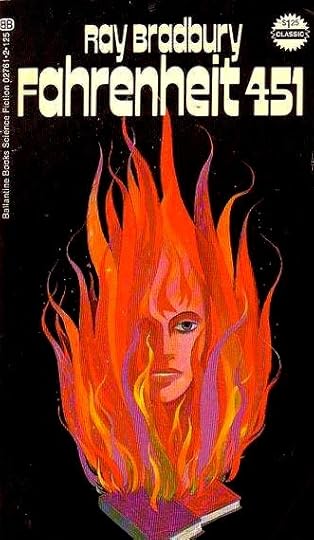 Ray Bradbury’s Fahrenheit 451, was the first Dystopian novel I ever read. I was fascinated with the world Bradbury created, the idea that Firemen set fires to control the populace and that books were ILLEGAL was bizarre but fascinating. It opened my eyes to the control that government systems force upon society, plus that society will often quietly acquiese to that control.
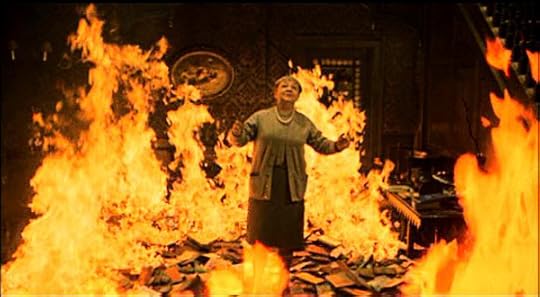
In 1966, Francois Truffaut wrote and directed the first film adaptation of Ray Bradbury’s book. Though critically slammed at the time, I feel the film DOES have gems to offer.
THE STORY
Set in a dystopian futuristic 24th century, Guy Montag is a Fireman. In this post-war American Society firemen don’t put out fires, they start them. The over-populated masses are controlled through censorship and media manipulation. Books are outlawed in the belief that knowledge is the cause of all discord and unhappiness. Montags job is to burn those books and the homes of the people who secretly read them. Blissfully unaware of the reality around him, Montag begins to question his own beliefs when he meets his new neighbour, 16 year old Clarisse McClelland.
Now, onto my SPOILERIFIC plus points from the book and the film …
THE BOOK
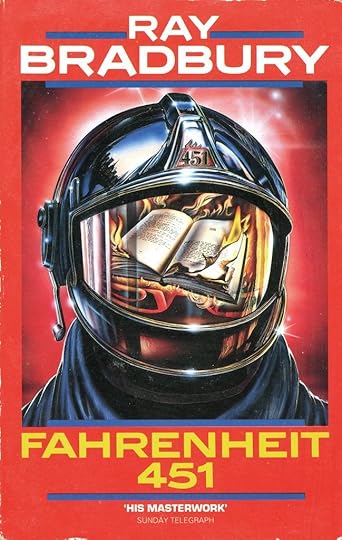 1) The Pace
The novel is set over a few short days. In a society where original thought is perverse, Guy Montag’s awakening comes at break-neck speed. Time isn’t on his side and neither are those watching his every step. He scrambles through his escape HOPING there is a safe place for him at the end of the tracks. The pressure that builds within those few days only ends when the BOMBS fall on the city.
2) The Mechanical Animal
The Mechanical Animal is a government watchdog with a hounds head and 8 spider legs. It’s job is to sniff out human DNA and keep control of the populace. This creature is scary as Hell! Bradbury’s descriptions of this creature HUNTING down Montag are truly spine-chilling.
In this world all tech is controlled by the Government and is used to track and control. Bradbury was way ahead of his time in 1953 …
3) Professor Faber
Faber is a retired English professor with whom Montag had came across in his line of work. His character represents the true history that is not discussed in Montag’s world. Faber confesses to Montag that he watched the governments take away the peoples freedoms and he did nothing. Now, full of regret that his generation let this happen, he becomes alive with exhilaration at the thought of finally breaking the system.
4) Clarisse Needs to Die
A few pages into the novel, Montag meets his new neigbour Clarisse and finds her unlike anyone he has ever met. She’s chatty, gets on with her family and enjoys nature. This is NOT normal in this world. On that first meeting Clarisse asks Montag, “Are you happy”? She then vanishes (her family vanish too) and Montags life is never the same again. Though she doesn’t make it to the end of the novel, she is never forgotten by Montag or the reader. Be like Clarisse – QUESTION EVERYTHING.
5) WAR!
There has been a War. There is the threat of War. The War starts again. From the constant sound of bombers overhead to the final NUCLEAR BOMBS dropping on the city, War flows through every page of this book. Inner battles are fought at every step. Linda is losing her own War with reality and Montag’s inner conflicts are evident. Beatty lays down his sword in the final battle with Montag. WAR! It’s everywhere.
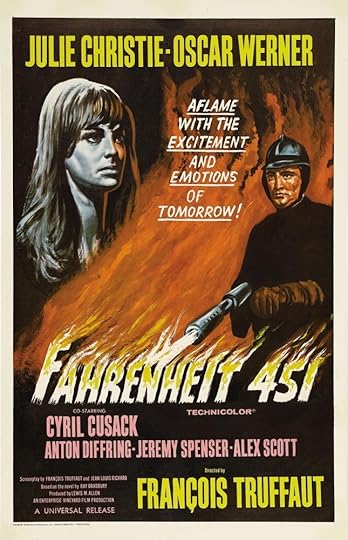 THE FILM
1) Le Internationale
The film version has more of a European flavour – Quelle surprise! This adaptation was Truffaut’s first English language AND colour film. It’s no surprise he stayed away from the Hollywood clichés. I don’t think there is a single American voice in the film. It’s not an American Society and I like that as It can be any society, at any time, anywhere.
2) FIRE!
There is so much fire in this film you can smell it. Close-ups of burning books with flames, eating the words off their pages, is spectacular. The colour red SCREAMS at you for attention against the plain, beige set. With fire comes power and Montag starts to see the destruction HE is part of – why are we killing people over words on paper? The flames that once burned FOR the system are turned on the system, as Montag’s last fire is the flaming of his boss, Beatty.
3) Linda Montag
Julie Christie plays Linda Montag. Linda is the sum of their society – on pills to pick her up, to help her sleep, she forgets her suicide attempts and is only interested in her shallow dramas. She IS willing to bend a little for her husband when she discovers he reads books. In the end, it’s to much for her and she leaves Montag. Only to be killed by the system that created her. The character is truly enhanced by Christie’s performance as the conditioned, fearful and very lost Linda.
4) The Score
The characters emotional journeys are brought to life by the score, composed by Bernard Herrmann. He of Citizen Kane, Cape Fear and Taxi driver fame (He also scored many Hitchcock films). A Master of composition who fills the film landscape with suspense, fear and haunting emotion. It is a GREAT score.
In conclusion
It’s clear that the book is my favourite of the two, it’s a fantastic novel with many layers to be discovered – with every read.
The film has got lots to offer and is a must see for all fans of dystopian worlds, classic cinema and epic soundtracks.
P.S It’s rumoured that HBO have jumped on this and are planning to make a brand new film adaptation of FAHRENHEIT 451 in 2017. I will be keeping a close eye on what comes out of the studio and I’m VERY excited to see who will be cast in this wonderful story. Who would you like to see in the Director’s chair?
BIO: Tace Dorris studied Film, the Arts and Performance. She lives in Central Scotland and is the owner of an Antiques and collectables business. When not covered in 100 year old dust she writes short film scripts and is currently studying Short Story Writing and Script Reading.
January 30, 2017
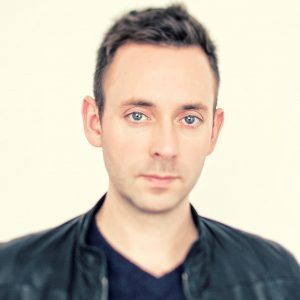
CRIMINALLY GOOD: Interview with author Ragnar Jonasson
 1) So, who are you & what have you written?
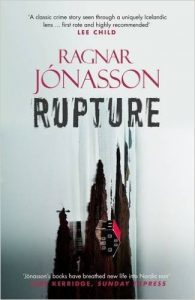
My books, the Dark Iceland series, are set in and around the northernmost town in Iceland, Siglufjordur. The books already published are Snowblind, Blackout, Nightblind and, the latest one, Rupture. More information can be seen at www.ragnarjonasson.com and you can also meet me on Twitter @ragnarjo.
2) Why do you write crime fiction?
I’ve been reading crime fiction for a long time and it’s my favourite genre, so I really simply write crime fiction because I enjoy reading it.
 3) What informs your crime writing?
I try to focus on a few things when writing; to have some sort of a twist at the end of the plot, to focus on characters and also to put some emphasis on the setting, so that the location plays a part in the story.
4) What’s your usual writing routine?
It is simply a matter of writing when there is free time to do so, but usually a bit every day.
5) Which crime book do you wish YOU’D written, and why?
Agatha Christie’s The Murder of Roger Ackroyd. An incredibly well-plotted book.
January 29, 2017
How Important Are Endings In Novels?
We’ve all been there, you’ve neglected your usual chores or duties for a few days and slammed the door in search of some peace and quiet. You’ve finally reached the milestone, you’ve made it to the last page and NOBODY can ruin this book for you … Or can they?
The answer is … possibly.
Today we’re going to talk about endings in novels and how important YOU the reader think they are to the story. Which camp do you fall under …
Yes, the ending IS important!
You invest your time reading a book, where (hopefully!) each page should be building towards the climax and the ending is where we see all the pieces fit together.
So, let’s see why endings ARE important:
A good ending needs to make the reader FEEL something, to leave an impact or lasting impression.
Must PAY OFF, the reader has spent time building towards this i.e. the big reveal/hero’s happy ending/aftermath etc.
The ending doesn’t have to be liked by the reader, but it must SERVE and make SENSE to the rest of the story.
The ending of a book can determine whether the reader will come back to this author again. If we can’t form an OPINION on what we’ve just read likelihood is, we won’t return.
Check out these titles that have been voted to have the best endings:
The Great Gatsby by F. Scott Fitzgerald
Ulysses by James Joyce
Atonement by Ian McEwan
Fight Club by Chuck Palahniuk
To Kill a Mockingbird by Harper Lee
NO, the ending ISN’T important!
Is it fair to judge an entire book because of a dud ending? For some readers, a good ending isn’t important because it doesn’t affect their opinion of the of REST of the story.
Let’s take a look at why endings might not be that important:
The characters and story should be GRIPPING enough to stay with you long after, therefore leaving the ending unimportant.
Sometimes CLOSURE isn’t always needed, not all questions need to be answered.
Endings that don’t tie up loose ends can leave the reader WANTING more and room for potential series.
Icing On the Cake
Personally, I fall into the YES category and feel an ending can dramatically affect how I receive the book as a whole. It’s a fine line between giving enough to satisfy the reader and writing an ending that’s truthful to the story. The final page is the icing on the cake, and if it leaves a bad taste in our mouths, we won’t be coming back for more.
What do YOU think?
How do you feel about endings in a novel, let us know!
BIO: Olivia Brennan works as a Freelance Writer, Blogger, Script Assistant & Assistant Script Editor. Follow Olivia as @LivSFB on Twitter and check out her website, HERE.
January 27, 2017
CRIMINALLY GOOD: Interview with author Sarah Pinborough
 1) So, who are you & what have you written?
My name is Sarah Pinborough and I’ve written over 20 novels. My most recent are the YA thriller, 13 Minutes, which just sold to Netflix, and Behind Her Eyes, a psychological thriller (HarperFiction UK/ Flatiron US, Jan 2017) You can find me at sarahpinborough.com or @sarahpinborough on Twitter.
2) Why do you write crime fiction?
I like the puzzle box nature of thrillers, but other than the Dog-Faced Gods trilogy (dystopian crime trilogy) I don’t tend to write police procedural. I really enjoy the unease and claustrophobic tone of Hitchcock and although I love a great twist, I’m far more interested in the human motivations than the police detective work. Plus, there’s way less research if you leave the police out of your crimes 
January 26, 2017
BOOK VERSUS FILM: Which Is The Greater Gatsby?
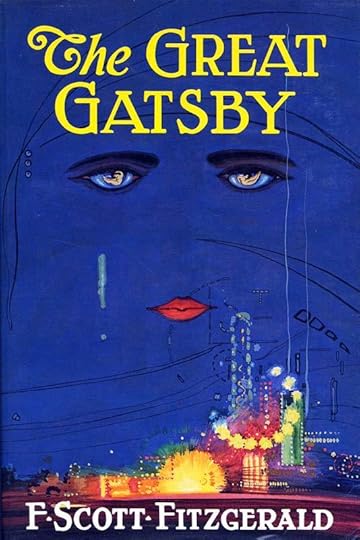 Warning: the following article contains spoilers. And alcohol. Drink responsibly!
When The Great Gatsby was published in 1925, it did what any self-respecting classic does: it bombed. Today it has a claim for the title of Great American Novel. Hollywood, bless ‘em, saw its potential early, and Gatsby’s been made to suffer for our entertainment many times since, most notably in 1974 when he looked remarkably like Robert Redford. But for this comparison, I’m pitting the book against the latest cinematic adaptation, Baz Luhrmann’s 2012 film.
Luhrmann arrived in an explosion of glitter in 1992 with Strictly Ballroom. His films are a spectacle for the eye and ear, and often at their core have a doomed romance (Romeo + Juliet and Moulin Rouge!) so Gatsby is a perfect fit. Whilst critics were divided, the pubic lapped it up, with $350 million at the box office making it Luhrmann’s most successful picture to date. But how does it compare to the book? Well, let me fix you a Highball, old sport, and we’ll begin!
The Story
New York, the Roaring (drunk) Twenties. Into this hotbed of decadence comes Nick Carraway, a writer who’s moved out east to make money from bonds. He’s got connections – his cousin Daisy is married to old-moneyed Tom Buchanan – and he’s taken a cottage next to a huge house that, each weekend, hosts headline-grabbing parties thrown by Jay Gatsby, a man surrounded by gossip and yet shrouded in mystery. Then one day Nick receives an invitation to the next party…
Toasting the Book
F Scott Fitzgerald’s writing is sublime. It’s not a long book – 180 pages thereabouts – but it’s crammed with wonderful, almost lyrical passages that never descend into purple prose. If the text occasionally feels a little archaic, we can say the same about many other classics: Wuthering Heights, 1984, The Lord of the Rings (or Flies). There’s a reason this book is studied in schools around the world: it’s not just words on pages – it’s art.
The Jazz Age era is perfectly captured. Fitzgerald doesn’t go in for much description; instead he takes us back to the 20s through what his characters feel rather than see. Nick, our narrator, is a New York newbie, so fulfils the classic fish-out-of-water role by learning about his new home as we do. We’re also told that he’s slow to pronounce judgement on others, thus making him a reliable narrator. Good job. With all this free liquor sloshing around, we’ll need someone to remember what happened the next day …
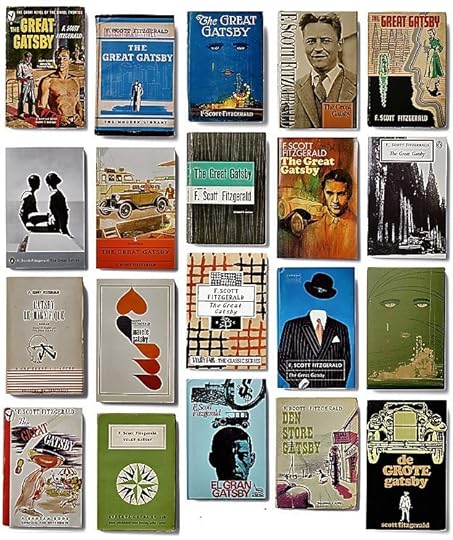
The small number of characters are well drawn and each different from the other. As well as Nick there’s the antagonist, Tom, the living incarnation of a rich, arrogant supremacist; he’s married to Daisy, a woman so jaded by money that there’s little left of the sweet Louisville debutante Gatsby once fell in love with; there’s Jordan Baker, Nick’s on-off girlfriend, who has a line for every occasion (“I like large parties. They’re so intimate.”) and is always on hand to tell Nick, and us, what’s going on!
And finally, there’s Gatsby… He’s the American Dream personified, having risen from nothing to accrue a vast wealth – all because he didn’t believe Daisy would want him if he were poor – but he can still only climb so far before the old-moneyed elite put him in his place. This is a theme Fitzgerald wanted to explore. Gatsby is no angel, but he’s the closest we have to a hero, and, as Nick says in the one compliment he pays his friend, “They’re a rotten crowd. You’re worth the whole damn bunch put together.”
The build up to Gatsby’s delayed appearance (aside from being glimpsed on his dock at night) is a masterpiece in anticipation. He joins us around page 49, and by this point we’ve heard he’s a German spy, an American war hero, an Oxford man, and has killed a man… we can’t wait to make his acquaintance when finally he joins Nick at one of his own parties, and chats away for a while before casually revealing his identity.
And finally, let’s talk about the dialogue. Nick’s narration is so filled with ironic flourishes that often it feels as though he’s telling us the story rather than writing it down, but when characters do speak, they each have their own clearly defined mannerisms. From shady businessman Mayer Wolfsheim’s ‘business gonnegtions’ to Gatsby’s ‘old sport’, it’s both memorable and credible.
The lights are dimming. That can only mean one thing –
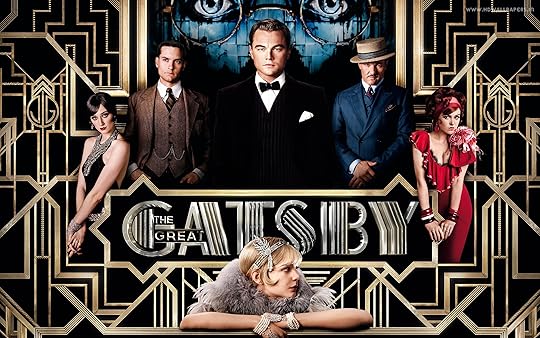
Toasting the Film
How do you adapt a book that’s a cornerstone of American literature, has shifted 25 million copies, and even after all these years is still its publisher’s best seller? Very closely, that’s how. Baz Luhrmann & screenwriting partner Craig Pearce know what kind of property they’re dealing with, and they embrace it by serving up the more celebrated passages throughout the film, sometimes even having words appear on screen as Nick writes his story. Nobody can accuse them of playing fast and loose with the source novel.
But for all that, they aren’t afraid to add material when it helps the narrative flow. The most obvious new scenes are Nick at the sanatorium, setting up why he writes the book that becomes The Great Gatsby. There are other examples, like when we see snippets of the letter Gatsby sent to Daisy on the eve of her wedding, which almost stopped her from marrying Tom. The book includes that letter too, but doesn’t reveal what it says – and I feel that, by including this, the film not only clears up some unnecessary ambiguity it also paints Daisy in a better light: for now we know that she would have accepted a penniless Gatsby after all.
As well as adding scenes, Luhrmann’s prepared to drop material if it deviates from his central story. Here the focus is on Gatsby and Nick’s relationship, a neat twist that disguises the fact our narrator is a very passive character. Most of the missing scenes occur (or rather, don’t) after Gatsby’s death. The book follows this with farewell scenes for each character – and even introduces Gatsby’s dad – but the film drops almost all of them. Interestingly, they do exist as deleted scenes on the Blu-ray (Ralph Cotterill is heartbreaking as the grieving father) but whilst in print these last moments feel necessary, in the film there could have been a sense of too many endings.
Oh, and finally there’s the cast. Everyone earns their pay on this shoot (Joel Edgerton and Alicia Vikander are especially good as Tom and Jordan) but, as with the book, this film is all about one man: and Leonardo DiCaprio lights up the screen like Gatsby’s firework display. He oozes charm and charisma, and is as comfortable with comedy (the reunion with Daisy), as he is in a pink suit. Simply put, he’s the definitive Jay Gatsby.
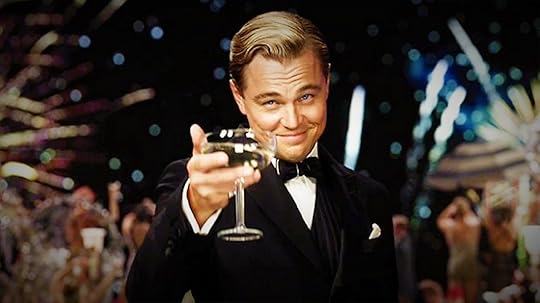
And the Winner is …
In terms of a reading experience the book cannot be beaten; as far as adaptations go, Luhrmann’s film is the best Gatsby we’re ever likely to see, so I’m calling this A DRAW! They complement each other superbly, and if some critics were less than enthused by the film when it came out a few years ago, well some critics were exactly the same about the book when it came out a few decades ago.
Now, what do you say to another drink, old sport …?
BIO: Nick Jackson lives in the north of England, and writes short stories and screenplays. His recent work has appeared in Dark Minds, a charity anthology, and Twisted’s Evil Little Sister, a collection of twisted tales. The Great Gatsby is his favourite book, so he’s as surprised by this result as you are.
January 25, 2017
CRIMINALLY GOOD: Interview with author Owen Mullen
 1) So, who are you & what have you written?
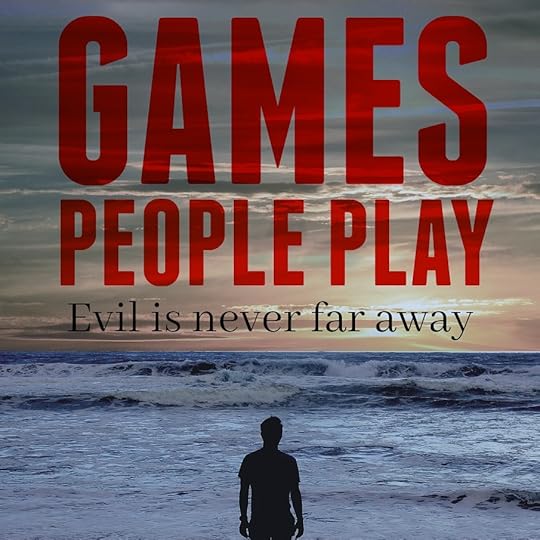
My name is Owen Mullen, I am a Scottish writer of crime fiction. My first book is a thriller set in Pakistan. Over the next few months my publisher Bloodhound Books will be releasing 3 novels in the Charlie Cameron series set in Glasgow: Games People Play, Old Friends and New Enemies, and the third one … well, I’m afraid you will have to wait a little longer to find out about this one!
I have been writing for nine years, and that time has produced 7 novels. Before I began writing I was a professional musician and session singer in London, and music has a habit of creeping into my stories. LIKE my page on Facebook, plus follow me on Twitter as @OwenMullen6.
2) Why do you write crime fiction?
Good question. In the beginning the simple answer was to see if I could write in my favourite reading genre. Crime fiction demands a level of detail and planning that offers a challenge: can I make it believable? Also, many of my favourite authors are in this genre.
 3) What informs your crime writing?
My interest in developing realistic crime fiction characters. I want the reader to feel that if they go to Glasgow tomorrow, they would meet these people. I also try to use the city almost like a character.
4) What’s your usual writing routine?
Straightforward for me! It’s all about turning up; that’s what gets results. So, 5 days a week, 8-2, target 1500 words after editing. Outside of this I will spend time in research and plotting.
5) Which crime book do you wish YOU’D written, and why?
It has to be The Hound of The Baskervilles. Probably the most famous of Sherlock Holmes novels. Back to that character thing: Conan Doyle created the most famous and iconic fictional detective of all time.
January 24, 2017
‘The Retribution Of Elsie Buckle’ – Exclusive Audio Excerpt
My short, The Retribution of Elsie Buckle, was picked as part of Create50’s Twisted, Volume 1 anthology last year … And now it’s an audiobook, too!
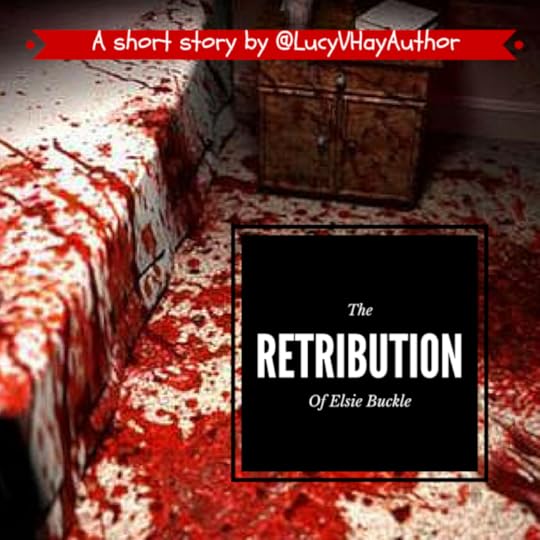
The story of a woman who teaches her three daughters to kill, I loved the notion of a play on this phrase, ‘the family who SLAYS together, stays together’!
Besides, what self respecting woman hasn’t wanted to kill the man in her life at least once. Elsie is really just setting her daughters up to deal with any male-orientated problems they have in a patriarchal world! Right … Right?!?!
January 23, 2017
INFOGRAPHIC: Most Popular Books Of All Time
A couple of surprises here on the most popular books of all time … I would have bet real money on Dickens’ most popular title being A Christmas Carol, for starters! I’m NOT surprised however to see so many female authors on this list. Hey ho!
So, how many on this list have YOU read? For me, only ten (all the way through — about fourteen if I count the ones I didn’t finish too). Oops!
Better start brushing up on my classics … It’s part of my reading pledge this year, after all. Enjoy …

From Visually.
January 21, 2017
CRIMINALLY GOOD: Interview with author Andrew Barett
 1) Hi, who are you and what have you written?
Hi, I’m Andrew Barrett, and I write crime fiction. I wrote my first crime novel in 1997, but wanted something different from the normal detective book. I wanted more forensic detail, and so I wrote a trilogy (A Long Time Dead, Stealing Elgar, and No More Tears) featuring a SOCO (Scenes of Crime Officer) called Roger Conniston.
The premise for the first book was how far can you trust forensic evidence, and it’s Roger himself who is at the centre of the story, facing irrefutable evidence that he killed a young woman. The ramifications of this first book continue into Stealing Elgar, where into the mix comes terrorists and the Russian mafia, running alongside an English gang. I loved writing this book. The trilogy is sewn up in No More Tears as Roger deals with the gang members left over from Stealing Elgar.
 Around 2004 I took a break from writing novels to write a new television series with a friend of mine, featuring (drum roll, please) Roger Conniston. We wrote eleven hours of television for YTV, but the project was shelved when the drama department closed in 2005. Shame. So I went back to novels, and began the series that I’m still writing today.
This series, also forensically inclined, features a new CSI, Eddie Collins, and begins with The Third Rule – a dystopian thriller where a newly elected government reinstates the death penalty. We see what happens when the government, and the police, get it wrong. Eddie is at the centre of this novel, and it’s up to him to fix things in his own life, and prove wrong-doings at the highest level. Dangerous work!
Black by Rose comes next; a ‘typical’ Eddie Collins book, where he deals in his own irascible way, with a Leeds gang boss. Sword of Damocles follows, and here I use one of the old scripts, one about The Yorkshire Ripper, to fully illustrate Eddie’s character. The latest Eddie Collins book, Ledston Luck is due out January 2017.
You can check out my website HERE, follow me on Twitter as @AndrewBarrettUK, LIKE my Facebook page and find me on Amazon, HERE.
2) Why do you write crime fiction?
I write crime fiction because I’m pretty sure I wouldn’t be very good at anything else. Before crime, I wrote horror, and though the stories were okay, the writing wasn’t. A lot of ink has flowed through the pen since, so perhaps towards the end of 2017, I might try and finish off one of the supernatural novels I started to write a few years ago. I think, certainly for me, once you begin writing something you love and something that is so ingrained within you, it’s difficult to let it go.
 3) What informs your crime fiction?
In 1996 I began work as a SOCO (now called CSI), and that’s when my writing career truly began. I had something very precious – inside knowledge of crime scene investigation, something that no amount of research could ever bring to life like actually living it could. I use the techniques, the thinking, the language, and everything else associated with police work in my books. I’m not allowed, nor would I want to, use real life victims or witnesses or criminals, though I do use the sensations I feel every day while out doing my job; I use the way people live, their surroundings, and the fear they live with. Mostly though, I try to write about the good and the bad in all of us, and why we do the things we do.
4) What is your usual writing routine?
My writing routine is haphazard. I work full time on a seven-on three-off shift pattern, clocking up 60+ hours a week over a full 24 hour period. I also have a lady (Sarah), and a young daughter (Ellie) so there’s often not a lot of time to go around. There’s certainly no routine – I fit it in where I can. And on top of all that, I’m not a morning person, preferring to work late into the night – sometimes overnight too.
5) Which crime book do you wish YOU’D written, and why?
I don’t wish I’d written any of the crime books I’ve read. I do admire James Carol’s books, especially Broken Dolls, and I’m a fan of Michael Kerr, having recently discovered his DI Matt Barnes series. Both authors have a wonderful way with words, and if I’m ever included in a sentence alongside either of those, I’ll be very happy.
Lucy V. Hay's Blog

- Lucy V. Hay's profile
- 174 followers

