
Lucy V. Hay's Blog, page 37
November 26, 2016
Why I Love The Female Characters In The 100
With the end of Dystopian November in sight, I thought I’d repost this great insight into the female characters on The 100 from Shauna, who works on the show.
The 100 is a CW show that’s an adaptation of the Kass Morgan books. Whilst notably different from their source material, what’s interesting is the unusual diversity of female characters on offer, especially considering the storyworld is a matriarchy, something hardly ever seen in fiction.
The 100 TV show hasn’t been without its controversies – what’s new! – but what is interesting about it is the sheer variety of role functions here. Over to Shauna on why …
First and foremost, I love the female characters on The 100 – all of them. Showrunner Jason Rothenberg and all of the writers from both seasons have put in an incredible amount of time and effort making these women as real, dynamic and 3-dimensional as any male character. They aren’t all the same, as so many women characters on other shows have been, and they aren’t all stereotypes, another pitfall of shows. They may start with qualities you’ve seen before, but the development and growth of each character has been organic and complex:
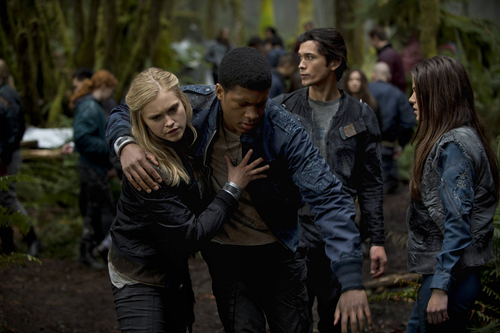
Clarke – the natural-born leader, who started as tentative and reluctant and grew to be determined and deliberate, but who still makes mistakes.
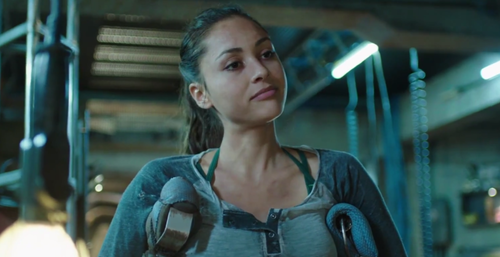
Raven – the genius, but not in a “I have to wear glasses to show I’m the smart one” way. She’s gutsy, driven and stubborn.
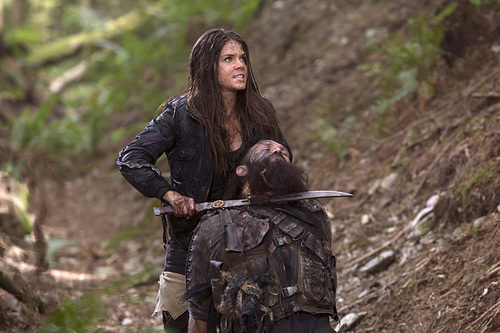
Octavia – the girl who was hidden away her entire life until she got to Earth, the first time she’s been truly free and able to make her own decisions, whether they are good or bad. She’s growing into a warrior, a fierce one at that and is finding her identity.
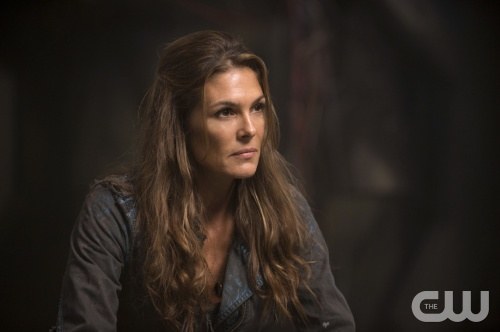
Abby – tough, strong, a doctor, a mother, a leader. She shows how hard it is to juggle all of those roles, and the difficulty in pushing aside one role to focus on another.
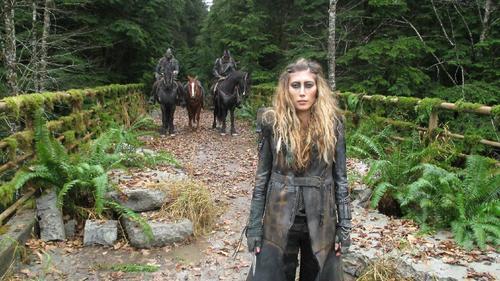
Anya, Lexa, Indra – leaders, warriors, treated as equally as any man, because they have earned their place in a society where gender is irrelevant to the ability to survive and lead.
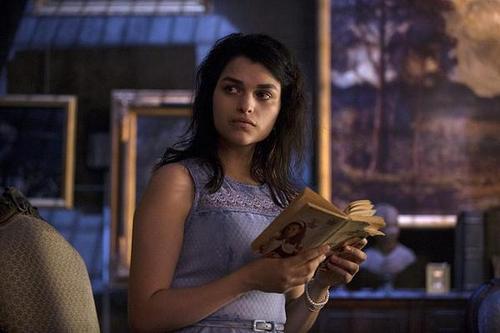
Even Maya, the girl in the mountain in series 2, who has lived her entire life underground, she slowly learns what her people have been doing and the horror of it changes her, provokes her to action.
I am proud to have worked on a show that has presented the reality we want to see, where it doesn’t matter what gender, what age, what race, what class, what sexuality you are – all that matters is that you can do your job and do it well. That’s equality.
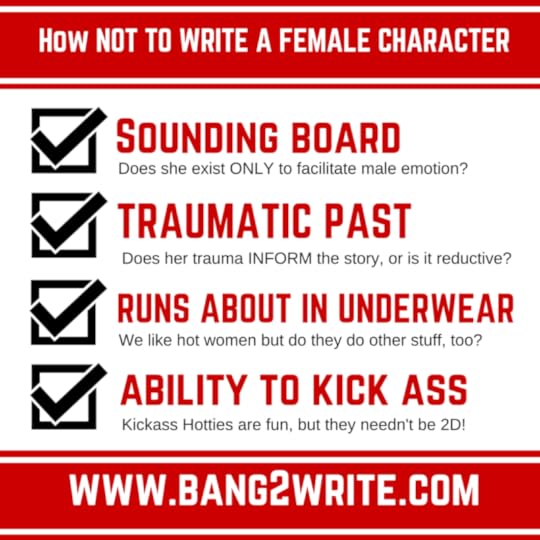
This post originally appeared on The Decision Book Series tumblr. For more on female characters, check out Bang2write or click the pic below.


November 25, 2016
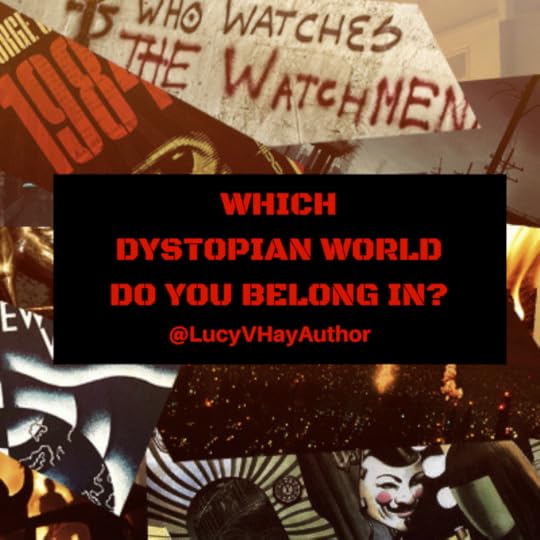
Which Dystopian World Do YOU Belong In? (Quiz)
So, if you’re wondering which dystopian world YOU belong in … wonder no more and TAKE THIS TEST. (Of course some would argue we already live in a dystopia, but that’s by the by!).
I was convinced I would get Divergent, but I ended up with The Giver by Lois Lowry. It’s not a book I know (though I LOVED Lowry’s Anastasia books when I was kid), so now I will have to check it out!
If you want to take the test too, then CLICK HERE or on the pic below.
November 24, 2016
INFOGRAPHIC: All About Psychological Violence
Some shocking stats and information here about psychological violence. This is something that gets played down so much by society, but has very real ramifications for ALL of us.
If we’re writing crime fiction, then it’s definitely worth thinking about – one of the best depictions I’ve seen is Elizabeth Haynes’ INTO THE DARKEST CORNER – although Cathy is subject to physical violence at Lee’s hands too, it’s his psychological abuse that leaves the worst scars. Definitely worth a read.
If you are (or think you could be) suffering from emotional, psychological and mental abuse, then do check out LIVING WITH ABUSE (LWA). This organisation is very comprehensive and provides help and support for anyone living with abuse. Good luck.

From Visually.
November 23, 2016
Top 4 Dystopian Archetypes You Need To Know
Many, many thanks to Olivia Brennan for this fab case study. By shining a light on this film, she’s done a brilliant job of breaking down the character archetype conventions we want to see in dystopian stories in books and movies! Enjoy …
Case Study: MAD MAX FURY ROAD
Now more than ever, the idea of a tyrannical ruler is a concept that no longer seems like a stretch of the imagination! However, we can draw some inspiration from our list of 4 kickass Dystopian Archetypes represented in Mad Max: Fury Road and why they are key roles in their dystopian world.
1) Protagonist – Imperator Furiosa
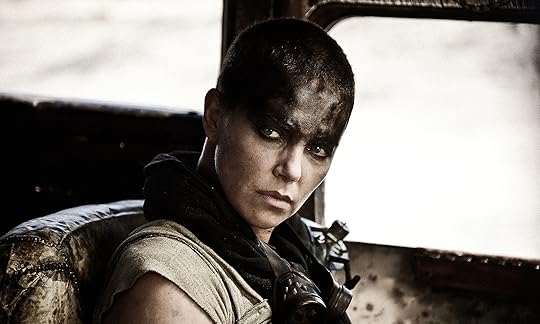
Furiosa is considered by most to be the core of the film’s narrative. A dominant, female force, with the majority of the film from her POV. She represents the typical Protagonist traits such as:
– An outcast both visually (and physically), working as a rig worker unlike the rest of the female population being used as sex slaves or wet nurses.
– She is aware of the dysfunctional laws of her society and rebels against them.
– She is seen to be ordinary and of no position of power to overcome these challenges.
KEYWORDS: outcast, ‘unlike the rest’, rebels, seemingly ordinary.
2) Antagonist – Immortan Joe
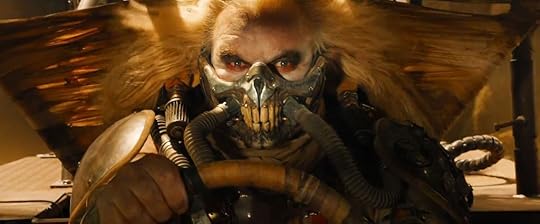
A tyrannical ruler who controls a limited amount of water to rule his kingdom. He uses women, seeing them as no more than breeding fodder. Immortan Joe is the typical Antagonist archetype:
– The central source of power in your story, the main obstacle your protagonist must overcome.
– The antagonist often has their own goal which is the exact opposite of the protagonist’s.
– Immortan Joe is the main conflict of our hero’s journey, driving the story to reach its climax which will be the meeting of these two central characters.
KEYWORDS: power, ‘main conflict’, ‘opposite goal’, ‘driving the story’.
3) The Catalyst – The Five Wives
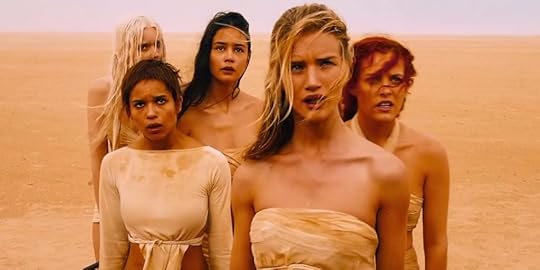
The five wives of Immortan Joe serve as The Catalyst, providing our protagonist with a reason to question their society and rebel against this.
– The wives are used for breeding fodder as they considered the most pure and free of any disease unlike the rest of the population. The wives are Furiosa’s epiphany causing her to act in order to save these women’s lives.
– They prove to be just as strong and powerful as Furiosa, risking anything to live as free women in the ‘green land of many mothers’. The Catalyst of the story must cause a reaction, an ACTION that furthers the protagonist’s journey.
KEYWORDS: question, rebel, epiphany, reason, powerful, reaction.
4) The Outcast – Max
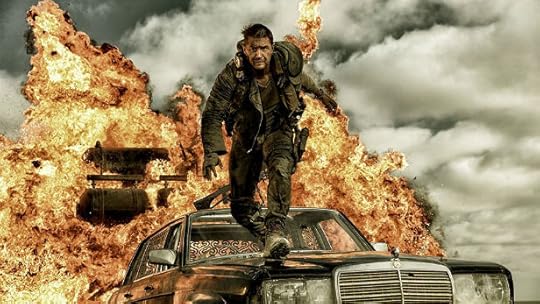
The titular hero Max serves as more of a sidekick to Furiosa in Fury Road. He is an outcast to Immortan Joe’s society, taken hostage and used as a ‘blood bag’ for Joe’s War Boys.
– He reluctantly joins forces with Furiosa after she bargains with him. The Outcast Archetype is often the protagonist who has no desire to conform or follow the rules of his society, but can be a powerful secondary too.
– He is Furiosa’s equal, both have their own mission to achieve but must come together in order to survive their dystopian world. The Outcast is often underestimated but proves to be a fierce and capable role in their narrative.
KEYWORDS: ‘no desire to conform’, protagonist/secondary, mission, survive, often underestimated.
Concluding:
These four dystopian archetypes are crucial when representing the main themes seen in dystopian novels or films which are chaos and order. In order to achieve these polar opposites, and create a believable dystopian world we NEED these archetypes to provide a reason for why the audience will care and root for our characters.
Remember, every action has its consequence!
BIO: Olivia Brennan works as a Freelance Writer, Blogger, Script Assistant & Assistant Script Editor. Follow Olivia as @LivSFB on Twitter and check out her website, HERE.
Like this?
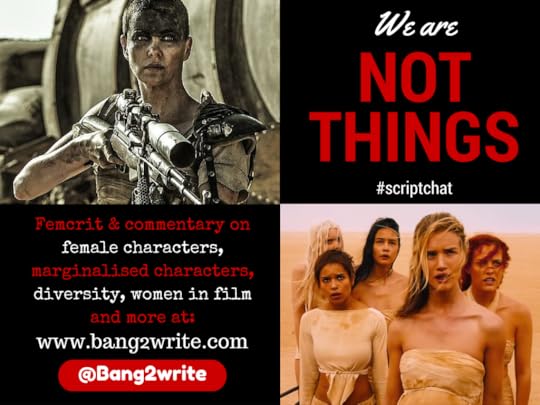
Then check out Bang2write, which talks about characterisation in writing in even more details. Click the pix for more.
November 22, 2016
Top 10 Deplorable Dystopian Worlds
Many thanks to Emma Pullar, who’s done a BRILLIANT and in-depth rundown of the top 10 dystopian worlds you simply must read if you want to really chuck yourself in the deep end of this fab genre. Enjoy!
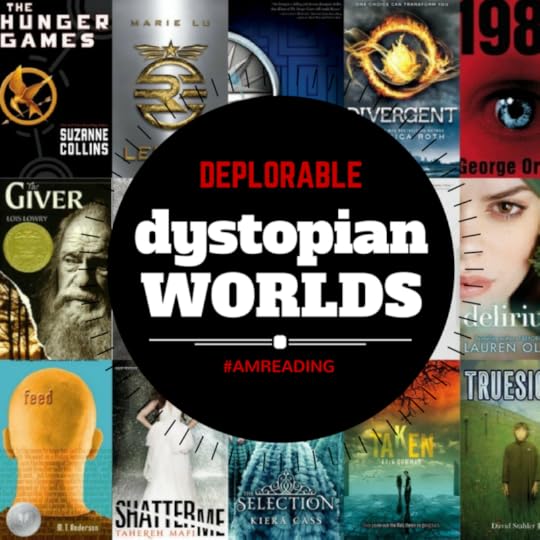
I often read blogs where people have insisted ‘dystopia is dead’ or the dystopian trend has passed. This simply isn’t true. Dystopian stories have always been popular and The Hunger Games wasn’t the FIRST popular dystopian story and it won’t be the LAST.
I love dystopian tales because they’re a dirty mirror, and even when the dust is removed and the glass is polished, the mirror remains cracked and broken. These mirrors show us our most unattractive self. Beneath the makeup and the filters and the Botox (or whatever it is people use to make their appearance more appealing) are the spots and discolorations and unwanted hair sticking out from your chin and dark circles under your eyes and wrinkles and … Read dystopian stories and be confronted with the ugly truth. If you dare!
This is my own dystopian/Sci-fi novel’s LOGLINE:
In a dark, futuristic city, a young anti-heroin goes on a perilous mission to prevent herself from becoming a human incubator for her hover-chair bound masters.
Like many dystopian stories, my Sci-fi is about control and being forced to live a lie. It tackles a repressive, authoritarian government, a disgraceful class-system, injustice, racism, and interracial relationships and more. All the things that drive me crazy about our society… and then I made it much, much worse! It’s part of a duology and my agent is currently working on finding the right home for it.
In the meantime, here’s a rundown of some of my favourite dystopian stories so far. These authors inspired me to want to write similar tales. Are any of these your favourites?
1) DUNE by Frank Herbert: Dystopian Sci-fi with a splash or horror
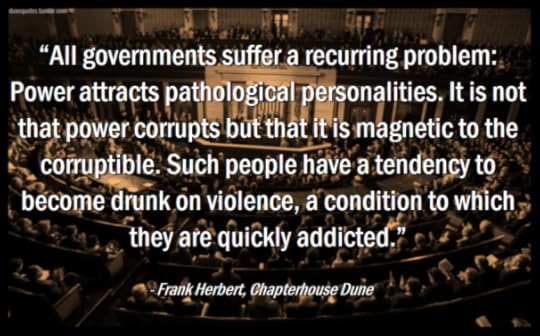
Dune is the story of a futuristic interplanetary or interstellar society of noble houses who rule over different planets. The protagonist, Paul Atreides, is sent to the desert planet of Arrakis to manage the dangerous mining of “spice” melange, which is the most important substance in the universe. The story follows Paul as he navigates his way through the politics and religious aspects of the fighting houses, all of them wanting control. This dystopian universe is riddled with deceit, each house trying to out manoeuvre the other using all sorts of manipulation and trickery. Who do you trust? Not the Harkonens, that’s for sure! The atmosphere Herbert has created is like no other. I felt as if I was there, entangled in it all.
2) The Hunger Games by Suzanne Collins: Dystopian apocalyptic
 Sixteen-year-old Katniss Everdeen volunteers for the 74th Hunger Games in place of her little sister, twelve-year-old Primrose. The girls live in district twelve, part of thirteen impoverished districts who are bound to serve the wealthy Capitol which make up the post-apocalyptic nation of Panem, North America. As a punishment for the rebellion against the Capitol, in which district thirteen was destroyed, the names of one boy and one girl from each of the remaining districts are put into a lottery and once reaped (name drawn) the ‘tributes’ are forced to take part in The Hunger Games – a battle to the death in a booby-trapped area where there can only be one victor. The games are televised and used as a means to control the districts so they don’t try to rise up against the Capitol again. The Hunger Games is a lottery no one wants to enter.
3) Do Androids Dream of Electric Sheep? by Phillip K Dick: Dystopian Sci-fi
Set in a post-apocalyptic San Francisco. The Earth is in ruins, damaged by a global nuclear war. Animals are endangered or extinct from radiation poisoning and so owning an animal is a sign of status. Most people can’t afford a real animal and so some buy electric ones and pretend they are real. The protagonist, Rick Dekard is a county hunter who retires (kills) escaped Nexus-6 androids to fund his animal collecting obsession. Using a series of tests, Rick must first determine if the target subject is in an android or human. He must not make the mistake of killing a human. Androids shouldn’t feel empathy but some of them don’t know they’re androids. Can the test be wrong? The story asks us what it is to be human and if a machine can be mistaken for one of us, should it be exterminated? This book leaves you with more questions than it gives answers.
4) Lord of the Flies by William Golding: Dystopian Spec-fic
LOTF is considered Spec-fic but I’ve included it because, for me, it is truly a dystopian nightmare! A group of boys marooned on an uninhabited island try to govern themselves with disastrous results. Ralph is the voice of reason while the bully, Jack, wants to do things his way. The boys become separated into two groups, trying to figure out how to survive until they’re rescued, one group become predators, while the others are the prey. Poor, sweet, diplomat ‘piggy’ never stood a chance. He had the conch (it was agreed that whoever held the couch was allowed to speak) but the others still wouldn’t listen. This is such a simple premise and the way the characters react in their new environment encourages us to question our own drives and instincts.
5) Divergent by Veronica Roth: Dystopian apocalyptic
Beatrice “Tris” Prior lives with her family in a post-apocalyptic Chicago. In this society citizens have been split into five factions and a person’s strongest personality trait will determine whether they are Abnegation (The Selfless); Dauntless (The Brave); Erudite (The Intelligent); Amity (The Peaceful); Candor (The Honest) and also Factionless, which are the homeless. Unfortunately, when Tris is old enough to be tested she is found to be Divergent which means she has more than one dominant trait. She conceals this as it is undesirable and instead chooses Dauntless as her faction. While settling into her new home (or rather being put through rigorous tests to make sure she is in fact worthy to be Dauntless) Tris uncovers a plot, a bid for control of the masses. I love the idea of being sorted into your strongest personality trait and living with other like-minded people but as Tris finds out, humans cannot be boxed and labelled and that’s one of the biggest issues we face as a society.
6) Battle Royale by Koushun Takami: Dystopian futuristic
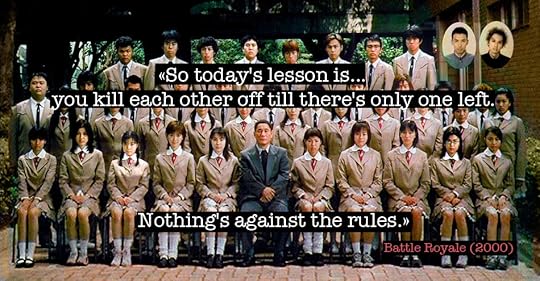
Battle Royale was created after an uprising of the people, much the same as The Hunger Games yet BR was written before it. What’s different is an entire class is chosen at random and the teenagers are pitched against their friends until only one remains. The battle is televised and to make sure the teens fight to the death, the metal collar around their neck (attached while the teens were unconscious after being gassed on the school bus) will explode after three days. The collars also pinpoint their position and the teens are given a map so they can keep out of danger zones which change daily. If caught in one, the collar explodes. If they try to take the collar off… you guessed it. BANG! My favourite thing about this story is the ‘pot luck’ backpacks. If you’re lucky you get an axe, not so lucky, a dustbin lid!
7) Fahrenheit 451 by Ray Bradbury: Dystopian futuristic
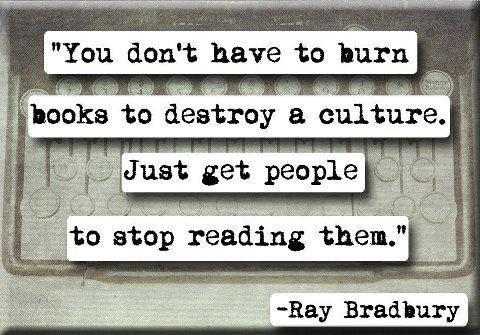
Ray Bradbury presents a future America where books are outlawed. The protagonist, Guy Montag, is a fireman and his job is not to put out fires but to start them. Firemen burn any books or personal libraries they find. Guy meets a young girl in his neighbourhood who seems different, she doesn’t see the world like everyone else does; he soon starts to question society and steals books instead of burning them. Suddenly he’s awake, eyes wide open; he can see things as they really are and he doesn’t like what he sees. Fahrenheit 451 is a masterpiece. I devoured it in one sitting.
8) Matched by Ally Condie: Dystopian futuristic
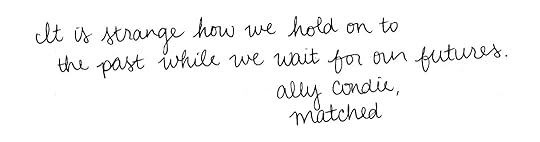
Seventeen-year-old Cassia Reyes lives in a strictly controlled society where life-partners are chosen for you. Usually the ‘match’ lives in another town but strangely Cassia is matched with her best friend, Xander. When she insets the information card she’s been given about her match a different boy’s face flashes up on the screen – an outcast at her school. Cassia’s world starts to unravel as she discovers her society isn’t all it seems. Personally, I find the extent of the control in Cassia’s world extremely scary and being matched with a stranger even scarier!
9) The Man in the High Castle by Phillip K Dick: Dystopian alternative history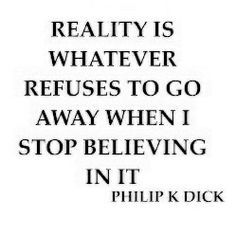 Germany and Japan won the war and took over the U.S. This world is set up so carefully that it almost feels real. Like in some parallel universe this actually happened and Phillip K Dick went there and wrote down his findings! The plot is centralized around antique dealer who exposes a corporation supplying counterfeit antiques and blackmails them into giving him money to start his jewellery business. It’s thought provoking because I’m not sure the world Phillip K Dick painted is much different to the U.S. of today.
10) The Running Man by Stephen King: Dystopian futuristic
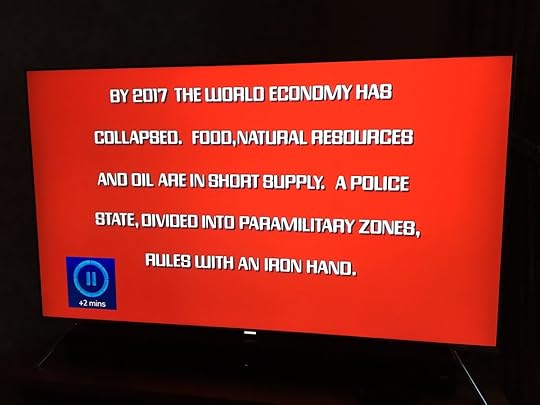
Another story in the same vein as The Hunger Games but also written before it. In the year 2025, the economy is in ruins, America has become a totalitarian dystopia and violence around the world is increasing. Ben Richards can’t find work and is impoverish with a sick daughter and a wife turning tricks to make ends meet. Desperate, he enlists in a violent gameshow called The Running Man. Ben, along with other contestants, are chased down by hunters (hitmen) trained to kill. Ben earns money the longer he stays alive and even more if he kills a hunter, with a grand prize of a billion dollars for anyone who lasts thirty days. Desperate times call for desperate measures and with reality TV on the rise I wonder how long it will be before we see this type of brutal entertainment!
In closing, I would have to say … the statement above taken from The Running Man movie is pretty messed up! It’s almost 2017 and all of these things ARE happening. Eek!
BIO: Emma Pullar is a writer and book reviewer. Her picture book, Curly from Shirley went to number four on the bestseller list and was named best opening lines but NZ Post. As well as picture books, Emma writes horror, dystopian, Sci-fi, fantasy and paranormal fiction. Follow Emma on Twitter, HERE.
November 21, 2016
CRIMINALLY GOOD: Interview with author Katerina Diamond
 1) So, who are you and what have you written?
I am Katerina Diamond and so far I have written The Sunday times Bestseller The Teacher and my current book which is The Secret – Both are crime thrillers as we follow DS Imogen Grey and DS Adrian Miles as they investigate some nasty stuff. Over the past 15 years I have written a lot of different things, but The Teacher was the first novel I approached an agent with. I live in East Kent but I have lived in various places including Greece, Cyprus, Exeter (and other parts of Devon) , East London and Derby. You can LIKE my Facebook page and follow me on Twitter as @TheVenomousPen.
 2) Why do you write crime fiction?
I have always been fascinated with crime thrillers from a child when I was into Agatha Christie and Sherlock Holmes. I love a mystery. I think I chose to write crime because I saw it as a challenge, but not an insurmountable one. It is my favourite genre anyway so it felt like a natural place for me to go. I have also read extensively on unsolved crimes, and serial killers.
3) What informs your crime writing?
I tend to draw from various sources in order to write what I do. I have always had an interest in psychology, I grew up in a multicultural family and have a lot of life experience, too. I pay attention to the people and the world around me. I find when you get past the bullshit, most people are a bit messed up, I try to acknowledge that in what I write, too. I also watch A LOT of TV – I would like to write a TV show at some point and so I try and watch anything that has been recommissioned for more than one series. Writing is all about your audience, if you can hook into an audience then you’re good to go.
 4) What’s your usual writing routine?
My usual writing routine is get up – take the kids to school (only 7 more months of that – yay) Come home, maybe catch up on an episode of something. Then I write for an hour – then a break – then another hour, then a break – then another hour – until I pick kids up from school – I dont drive, this entails a lot of walking. Then I might do some admin for an hour until its time to cook dinner and be a housewife/mother.
5) What crime book do you wish YOU had written?
Which crime book do I wish I had written? That’s a tough one, I would have to say ANYTHING by Agatha Christie. She was a master of her craft. If I had to pick one of her stories it would most likely be The Man in the Brown Suit. She has created books that are so accessible for both children and adults, I love that I still get the same enjoyment from reading her books now as I did when I was 8 years old.
November 20, 2016
BOOK Love – 5 Reasons To Love Riddley Walker by Phil Williams
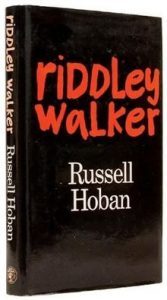 Riddley Walker finds an iron-age civilisation rebuilding a world ravaged by nuclear war, with the titular hero scavenging technology from a forgotten time. Confused interpretations of the past give the new world its superstitions, religion and a great threat in the form of an ancient weapon. Outcast from his community, Riddley must single-handedly take on those that would bring back the destruction of the apocalypse.
Beyond its inimitable dystopian set up, what makes the novel so revered is that the reader is completely immersed in the world Hoban created. So what are the elements that make it a classic?
1) The World of Riddley Walker
This pre-historic future is a fascinating combination of primitive culture developed from odd, almost random, traces of our world. The centuries old feeling – with bizarre folklore evolved, for example, from the image of a stained glass window – is authenticity down pat.
2) Restrained Exposition
Presented through the somewhat ignorant narrator and his encounters, the vast background to this world is never simply laid out in a clear or systematic way. It is a world of allusions, with references to puppet shows, computers and nuclear weapons, with no clear through line between this society’s interpretations and the past. You can’t help but experience the world the same way that Riddley does, confusion and all.
3) The Language of Riddley Walker
Hoban effectively created a new language, imagining the evolution of a broken society’s speech. The book requires more commitment than most, but by forcing you to slow down and sound out words it will actually have you thinking like Riddley’s people. This goes beyond voicing a character, it creates a unique atmosphere.
4) A Hero We Want to Spend Time With
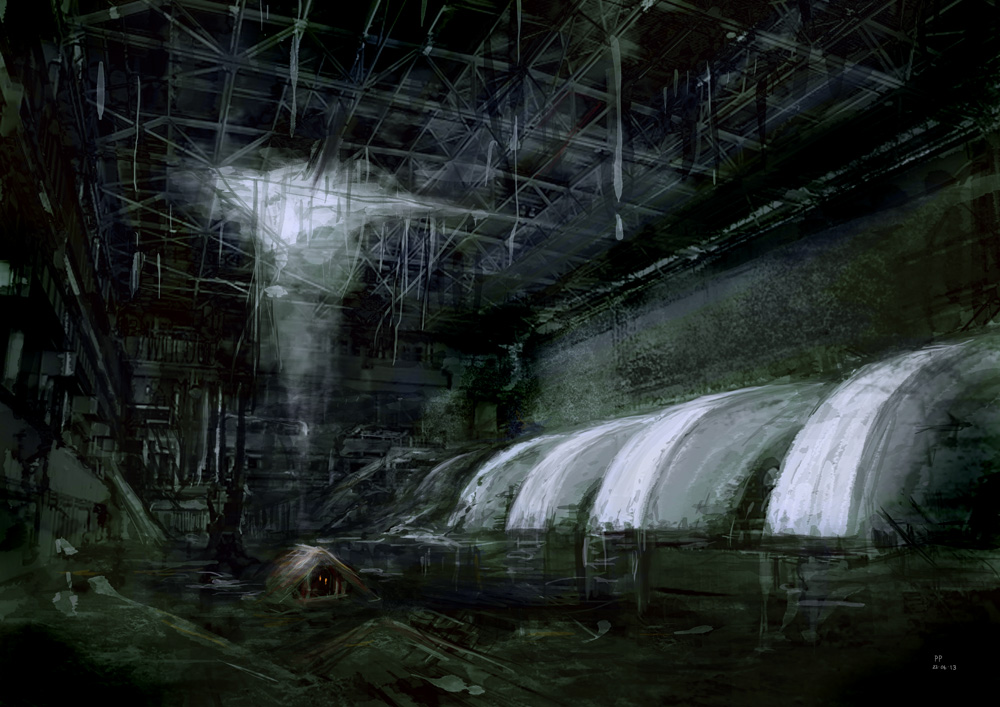
A 12 year old on the cusp of manhood, Riddley is an eminently curious and affable young man. His innocence, goodness and humour are necessary antidotes to the savagery of his world, making his story entertaining rather than simply terrifying (or baffling). He even offers a sense of blunt philosophy – with insights ranging from “What ever eats mus shit.” to “you never wil get to see the woal of any thing youre all ways in the middl of it living it or moving thru it”.
In short, he is the perfect guide to accompany through this adventure.
5) The Ultimate Stakes
In true dystopian form, Riddley’s journey does not just take him out into the world, it takes him up against something that threatens everyone. This story of adventure and discovery is also one with the greatest dangers – and its themes of power, knowledge, corruption and religion are as relevant now as ever.
The result is not just a beautifully detailed world, but an exciting, timeless story. Riddley Walker feels as likely ten thousand years in the past as ten thousand years in the future. It’s a sometimes disorientating but always fascinating ride.
BIO: Phil Williams is a freelance writer and the self-published author of two novels and a couple of English grammar guides. When he’s not embroiled in sci-fi and contemporary fantasy, he writes for businesses and tutors advanced English language and writing. You can find him on his author website, writing about the English language or on Twitter @fantasticphil.
What’s YOUR Favourite Book???

Do you have a book you simply LOVE and recommend to *everyone*?? As long as it’s crime, mystery, thriller or dystopian we’ll feature it in Bookalicious. Simply write us a post in praise of the book you love, anyway you like. It could be a listicle like Phil’s or in another form. Just make sure we know WHY you love the book and why we should read it, too! Looking forward to hearing from you. ALL THE DETAILS FOR GUEST POSTS ON THIS BLOG, HERE – or click the pic.
November 19, 2016
Top 5 Quotes For Creating Your Own Dystopian World
I love this from the unstoppable Hina Malik, who’s providing some great writing insights – not just for authors, but us readers who love dystopian worlds so much. Thanks Hina!
1) “The life where nothing was ever unexpected. Or inconvenient. Or unusual. The life without colour, pain or past.”― Lois Lowry, The Giver
Dystopian novels are set in one of three types of settings: the total absence of something; the total excess of something; or in the middle of battle or ruin between two things.
For example, a world wherein humans are dying out (absence); a world where there are too many humans (excess); or a world where humans fight robots (conflict/ruins).
Sound familiar?
Excess, absence and conflict of key elements from our current world are what form the basis of the dystopian world.
2) “I never thought it would get this bad. I never thought the Reestablishment would take things so far. They’re incinerating culture, the beauty of diversity. The new citizens of our world will be reduced to nothing but numbers, easily interchangeable, easily removable, easily destroyed for disobedience. We have lost our humanity.”― Tahereh Mafi, Shatter Me
Seems a bit eerie since Brexit and Trump! Regardless of your political views, it’s invaluable to keep up with the news and views of those who differ from you. Identifying new views enables us to imagine an entirely different world based on those views. And voila, suddenly, a dystopian world is in the making!
When developing ideas for your dystopian novel ask yourself, what would happen if the entire world became far right? Or left? What if we took scapegoating too far? What if we decided different is bad and really ran with the idea?
How would this transform the face of the current world?
All of a sudden, you’ve created a dystopian world.
Often, these questions from everyday political concerns can form the spine of your novel and more importantly, it creates a link between your protagonist’s internal conflict to the external world around them.
3. “…Coca-Cola and fries, the wafer and wine of the Western religion of commerce.”― Tad Williams, City of Golden Shadow
This is the greatest quote when it comes to writing dystopian fiction. It takes something we use every day and shifts our perspective so we see it in an entirely new BUT relatable way.
To top it off, it does it in just one sentence!
The quote denotes if your dollar is your vote and ‘you are what you buy’, then we are worshipping at the alter of the Western religion of commerce. It takes something completely normal to us all and gives us new eyes to view it through.
When working on your dystopian novel, this is exactly what you want the reader to feel.
The world needs to be familiar but strange. Like walking into your own home but all the furniture is now a deep shade of red for some reason. You recognise the structure of the house, you react exactly how you would…then you must ask yourself, in what circumstance would this be normal to me? Once again, you’ve developed another dystopian world.
4. “But Humanity, in its desire for comfort, had over-reached itself. It had exploited the riches of nature too far. Quietly and complacently, it was sinking into decadence, and progress had come to mean the progress of the Machine.” ― E.M. Forster
This wonderfully sets up the world while filling in the blanks. A common mistake in dystopian fiction is too much description right at the start. Try to strike a balance between setting up the world and keeping the reader curious to keep those pages turning!
5. “All utopias are dystopias. The term “dystopia” was coined by fools that believed a “utopia” can be functional.”― A.E. Samaan
There is no such thing as a perfect world. Even Disneyland starts to feel weird after a bit. You need darkness to appreciate the light, and all that jazz.
Dystopian fiction gives us the chance to run with peculiar and authentic ideas that thrill and engage the reader, while allowing us, as writers, the opportunity to explore how fragile civilisation is and how quickly things can change for the characters in the worlds we create. We can even use these worlds as skewed mirrors to hold up to society.
The premise of a dystopian novel normally answers a ‘what if’ question. What if aliens attacked? What if there was no economy? What if we lived in a dictatorship?
Ask yourself ‘what if’ questions that resonate with you in order to create dystopian fiction the reader will connect with.The best novels come from ideas that resonate with us in some way.
Concluding:
The key to writing compelling dystopian fiction is to harness the power of questions, and to unabashedly explore those answers and follow them down dark alleys and crooked turns to uncover what kind of a world the answer to those questions would lead to.
I hope these tips help you mould enthralling dystopian worlds!
BIO: Hina Malik is a super-awesome writer who’s currently writing her first novel. Catch her on Twitter as @dodgyjammer but BEWARE: she’s got plenty of animated .gifs and she’s not afraid to use them.
November 17, 2016
DYSTOPIAN NOVEMBER: Chat with playwright and screenwriter Lisa McMullin
 My first play, SIREN SONG, was produced at the Lion and Unicorn Theatre in 2013. My second play, the dystopian drama, RAPTURE, was previewed at the Barons Court Theatre in 2015 and received a full run at the Etcetera Theatre in June, to critical acclaim and financial ruin! Here’s what reviews said about it:
* * * * “Shades of Orwellian darkness…An interesting story about human nature that makes for compelling viewing” – The Reviews Hub
* * * * “Deliriously dark…This is certainly theatre that has a sense of purpose” – The Upcoming
I was recently longlisted for the Old Vic 12 playwright scheme and my latest play, SOLD OUT, will be produced by Rubber Duck Theatre next year. I also write television and I currently have a drama series under option with Hat Trick Productions. I was selected for the EastEnders shadow scheme this year.
Other projects include children’s drama THE NETWORK – a serial about a group of teenagers running their own social networking site – and JANGLED, a comedy drama about identity, belonging and mental health in a world where everybody is different shades of crazy.
2) What is RAPTURE about?
The play was written to suggest a dystopian, extreme vision of how the world may look in 2063. In the light of recent and current political events, our disturbing story now seems ominously prescient. The script is littered with references to the state of the nation in 2016 but it refers to this world in the past tense and presents us with a vision of what the UK may become within our lifetime.
In RAPTURE, the world is overpopulated. The planet is being eroded and polluted by a powerful and destructive species: humanity. The UK government has decided that it’s time for a cull, but they’re not monsters; this is a pragmatic genocide, democratically voted for.
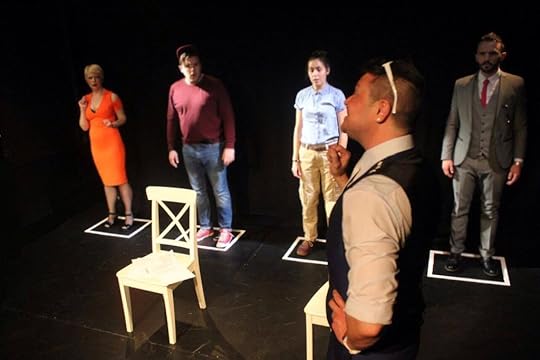
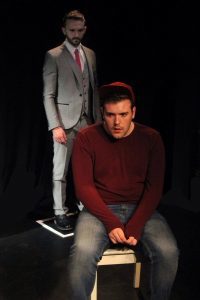
This is a play which explores the catastrophic results of a political vote. We could never have anticipated that it would resonate so pertinently in the here and now. After the last show, following the EU referendum result, audience members described it as “horrifyingly relevant” which is a frightening compliment to receive.
In this world which seems to be tearing itself apart, RAPTURE propositions a future in which humanity has audited itself and discovered itself lacking. The script is full of dark humour, the central character is both comical and sinister and our audiences swing between laughter and horror as they are asked to consider the point of, not just their own lives, but all human life.
 3) What inspired RAPTURE?
The trigger was my dad, who sits in front of the news, shaking his head in dismay and muttering, “Human beings!” This play was me taking my dad’s despair at the human race and giving it a platform.
This was tempered by a quote that stuck in my mind from an episode of Doctor Who (which is often dystopia for children):
“We are all stories in the end. Just make it a good one.”
In RAPTURE I wanted to make the audience question their own life stories – are they ‘good’ ones or do they need a rewrite?!
4) What is your writing routine?
My writing routine is appalling. I wouldn’t recommend it to anyone, but I bet it’s familiar to all writers. I turn my laptop on in the morning, I make tea and toast, I open Final Draft (writing program), I check Facebook and Twitter, I write a couple of pages, I make more tea, I send some Whatsapp messages, check Facebook and Twitter again, write two more pages, have lunch, repeat after lunch.
For me, the most important part of my writing is done when I’m not writing. It’s the thinking – you have to give yourself time and space to think, when not sat in front of a keyboard. Most of my ideas are formulated in the bath (sorry if that’s TMI!).
 5) Which dystopian story do you wish YOU’D written?
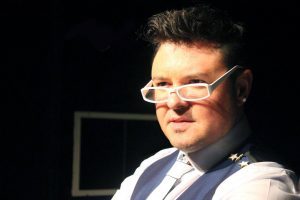
There is a play called THE NETHER by Jennifer Haley, which explores the dark side of the internet in a world where virtual reality runs parallel with the real world. It is a play about paedophilia and probably influenced my creation of one of the characters in RAPTURE (Ossie is a non-practising paedophile).
The production I saw was visually stunning and presented the virtual world as full of golden light and beauty compared to the dull, flatness of reality. It plays with the audience’s preconceptions of what is ‘right’ and ‘wrong’ and you emerge feeling wholly unsettled. Which is exactly what dystopian stories should do.
6) What’s the ONE thing our current society should stop doing in your opinion, else we’ll end up in a dystopia too?
Our current society needs to stop being so divisive. I think there must be something in our DNA which makes us resent and fear each other. The lack of compassion for the Syrian refugees, staggers me. It is racism, simply, which is born of fear. But I understand the feelings behind people who say we should, “Look after our own, first.” We should look after EVERYONE.
What we need is a good alien invasion and then we might realise that we’re all on the same team!
CRIMINALLY GOOD: Interview with author Kati Hiekkapelto
 1) So, who are you & what have you written?
I am Kati Hiekkapelto, an author from Finland. I have written three crime novels The Hummingbird, The Defenceless and The Exiled. I have been nominated for couple of awards (The Glass Key 2016, The Petrona2015 and 2016, and Icepick 2016) and won one (The Best Finnish Crime Novel of 2015). I also write columns for a couple newspapers, lyrics for my punk band and some of my short stories have been published in a Finnish literary magazine. I have a stage play for the theatre in progress, too.
2) Why do you write crime fiction?
The simple truth is: I don’t know. I could probably write any type of fiction (at the literary end of the scale), I suppose. The thing for me is to write. I love writing; it is my passion, my form of self-expression. I ‘discovered’ writing in my thirties. Before that I thought that painting was my ‘art’. I even went to art school when I was young. But I never had a true passion for painting in the same way that I do writing.
When I started writing my first novel, The Hummingbird, I found myself drawn to the genre and it seemed natural to write in this way. Ive always loved good crime fiction and I really enjoy how great tool this genre is for combining storytelling with social and political issues.
3) What informs your crime writing?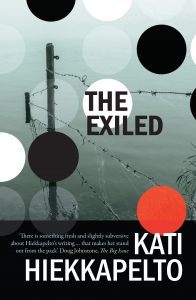
Probably my own fears and vivid imagination. If I go driving in dark hours I have to check the back seat of my car for serial killers. I was over 30 when I learned not to be super-scared if sleeping alone. I have always been afraid of darkness. Reading loads of crime fiction at early age didn’t much ease my fears.
4) What’s your usual writing routine?
I try to work in office hours. Work in this case means actual writing. But the story I am working on is in my head all the time. It develops there, mostly unconsciously, day and night. I work at home, which is not necessarily a good thing. It is hard to draw a line between work and free time. Working alone demands also strong self-discipline. Therefore, deadlines are blessing.
5) Which crime book do you wish YOU’D written, and why?
Karin Fossum’s He Who Fears the Wolf. It has an interesting, unusual structure, for a crime novel (I am always analyzing different structural solutions that writers come up with); and it’s well written, with high quality prose (to me the writing is everything; I can’t read books where the writing is not good and I hope that I can’t write one either). It’s a story that makes the reader face her own prejudices and stereotypes about mental illness. A good novel, crime or whatever, gives you something to really think about, and this book does that in spades.
Lucy V. Hay's Blog

- Lucy V. Hay's profile
- 174 followers

