
Lucy V. Hay's Blog, page 39
November 2, 2016
CRIMINALLY GOOD: Interview with author Michael J. Malone
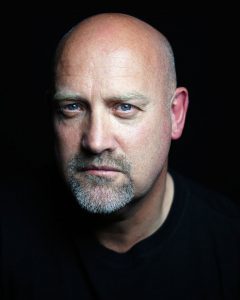 1) So, who are you & what have you written?
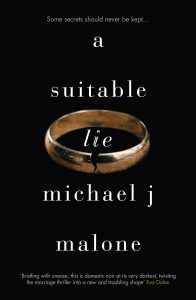
Michael J. Malone – I am a sometime poet and full-time author. A Suitable Lie is my seventh novel to be published since 2012 and details of my other books can be found on my website, or on my Amazon page.
2) Why do you write crime fiction?
I kinda fell into it by accident. It was only when I came out of the fog of writing my first published book, Blood Tears, that it occurred to me I’d written a crime novel. I just wanted to write a good book. Perhaps it was inevitable given that most of my influences were in the crime/ thriller genre.
Possibly a better question might be; why do I keep writing crime fiction? The answer is, because it’s such a fantastic literary sphere to be working in. The people are just amazing; readers, bloggers and other crime writers. And you get to do “physical” harm to people. What more could you want?
3) What informs your crime writing?
People. I think we are all inveterate people-watchers, aren’t we? (Apart from the sociopaths in the room.) And if I can get you to connect with the people in my fictive dream, I’ve done my job. Of course there’s the puzzle/mystery and the darkest of deeds, but I’m much more interested in the whydunnit. And while I explore that, I do my best to play with your emotions.
Books that make me laugh AND cry – surprised and thrilled, are the ones that I remember; those are the ones that hang in memory – and with each book I write, that effect is what I’m trying to achieve.
 4) What’s your usual writing routine?
Get up. Have a good scratch. Stretch, sorry, stretch. Brew a fresh coffee. Then it’s Facebook/ twitter/ emails.
Then I review what I wrote the day before. I only correct the most obvious mistakes as I’m really doing this to get me back into the zone. Then I go back to Facebook/ twitter/ emails.
Then I write.
Depending on what part of the book I’m on – the start and end are the most exciting parts for me –and when at those parts I can write upwards of 2000 words a day. The middle section of the book is often the most exacting. And when I’m there it can often be like wading through mental treacle. If I achieve 500 words on those days, I’m doing well. And deserving of my next Facebook/ twitter/ email session.
5) Which crime book do you wish YOU’D written, and why?
The Power of the Dog by Don Winslow. It’s an astonishing piece of work. I believe it took him ten years to research and write this book and the depth of his knowledge and experience shows. I can’t recommend it highly enough.


November 1, 2016
DYSTOPIAN NOVEMBER: Author Elinor Perry-Smith (THE FORGOTTEN WOMEN)
 1) So, who are you & what have you written?
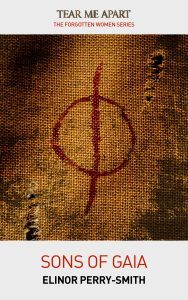
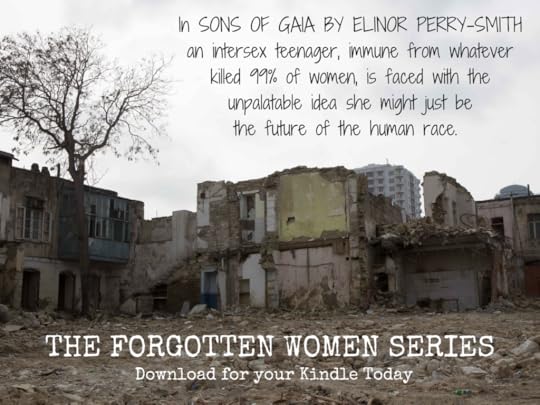
I’m Elinor Perry-Smith, a writer, proofreader, noveliser and editor based in SE London. I’ve written scripts, novellas, poetry and plays. My novella Sons of Gaia is part 4 of The Forgotten Women series. I also edited stories in current horror bestseller, Twisted50: Volume 1. Friend me on Goodreads, HERE.
2) What’s your story about?
Savannah, an intergender teenager on the cusp of puberty, is trapped by a mysterious scientist determined to restart the human race. Savannah must decide: become a woman and forever be a captive or become a man, brutish and desperate. Or might there be a third way? Savannah wants to remain both male AND female, and regain her freedom.
3) What inspired your story?
I knew an intergender person (who identified as female). It seemed to be a pretty lonely place because it was a taboo subject even a decade ago. I thought it would be interesting to have a character who, instead of being considered ‘a freak’, would actually be highly desirable as the saviour of the human race in this brave new world.
4) What’s your usual writing routine?
Coffee. Chores. Walk. Write. Repeat.
5) Which dystopian book do you wish YOU’D written, and why?
The Handmaid’s Tale by Margaret Atwood. More and more Atwood’s masterwork seems like a prophecy. That’s the best sort of dystopia, I think; where the seeds of disaster are already visible.
6) What’s the ONE thing our current society should stop doing in your opinion, else we’ll end up in a dystopia too?
We should address damage to the environment by recycling as much as possible. Other parts of the world exist under dystopian conditions because of the first world’s throwaway culture.
To buy Sons of Gaia as a standalone novella, CLICK HERE. To buy all of The Forgotten Women series, CLICK HERE.
DYSTOPIAN NOVEMBER: 6 MUSTS In YA Dystopian Novels
This post originally appeared on Bang2write, my writing tips site and was written by the talented Olivia Brennan.
There’s a certain formula that goes into creating a successful bestselling book series and franchise such as The Hunger Games, Divergent or The Maze Runner series. Not everybody has the secret recipe for “Creating Katniss”, but with these tips from six YA Dystopian authors, you’ll be onto a good start!
1) Holding Out For A Hero
“When it comes to individual destiny, there is no power greater in the universe then the conviction of the human soul to make a choice.”
Your protagonist is the vessel, the eyes of which the reader experiences their world. It’s rather tricky trying to get the balance of headstrong rebel leader and vulnerable teenager, so remember the basics.
Protagonists in Dystopian YA are usually isolated or feel out of place in their society/home/world. They are normal citizens fed up of living within their society’s demands/limits. An incident will cause them to confront these issues– but when they do, it’s important to keep the character relatable. Don’t make them high and mighty – remember the angst and rebellion and use it to your advantage.
Remember:
Protagonist should be/feel isolated in their society/home/world.
An incident causes their rebellion.
Make them a believable and relatable hero.
2) The Cause
“Dystopian novels help people process their fears about what the future might look like; further, they usually show that there is always hope, even in the bleakest future.”
What drives you to write this novel? Really think about it and the issues in our society, and how you can portray these fears in a dystopian world.
How is the story relevant to teenagers, and can it shed a new perspective on issues in our current society? What incident is the catalyst that forces the protagonist in your story to confront their society/friends/peers? Take the time to look at the news and think about how our world can be adapted and inspire your own story.
Remember:
What issues about our society/world need to be addressed?
Are these issues relevant to teenagers?
If they are, how will you portray them in your Dystopian YA?
3) Love Is A Battlefield
“The best characters in books are always the difficult ones, and why would you want to fall in love with someone difficult? The ones I’d fall in love with are the ones I’d definitely keep out of a book.”
There is nearly always a love triangle included in Dystopian YA, and while it’s not crucial to include, it definitely serves well for a character’s motivation. In your novel, it’s easy to fall into the trap of becoming too focused on creating the perfect love interest. Forget that – everybody is flawed to some degree. Make it interesting, make it real – remember we all make mistakes. How can these characters and their feelings enhance your plot? They need to be more than just a pretty face and help drive the narrative towards a shocking conclusion.
Remember:
Don’t strive for perfection – nobody is perfect/perfect is boring.
Flawed characters are more believable/relatable.
Romantic interests/subplot must enhance your story and serve a purpose.
4) Theme
“I think people respond to dystopian stories because they’re ways of acting out anxieties that we have and fears that we have about the future. So much media’s coming at you over the Internet, your brain gets overloaded. You don’t know what to do with it. And one thing you can do with it is read a story.”
A clear understanding of what the theme is in your story is crucial. Be informed on current events by watching the news or reading the newspaper. What do you worry most about our society and how can you portray that fear seen through your characters eyes?
Remember:
Watch the news/read the newspaper etc – be informed on current issues.
What concerns do you have about society?
Can you adapt that concern into a Dystopian YA plot and make it relatable to your character’s journey?
5) What A (not so!) Wonderful World
“I think it’s fascinating to look at a world that an author has created that has sort of stemmed from the world now, and usually dystopian books point out something about our current world and exaggerates a tendency or a belief.”
Following on from the previous point, how can this fear be exaggerated and built upon in your story? It’s important to lay the foundation of your world and why it came to be in its current state. You need to make the reader care about the history of your dystopian world and want an explanation for the protagonist’s situation. Create a world that serves the plot and enhances your character and their journey.
Remember:
Explain the history of your world and how it came to be.
It does NOT need to be an epic explanation, but the reader does NEED one.
Your world should NOT take away focus from the character, but enhance their journey and add to the story.
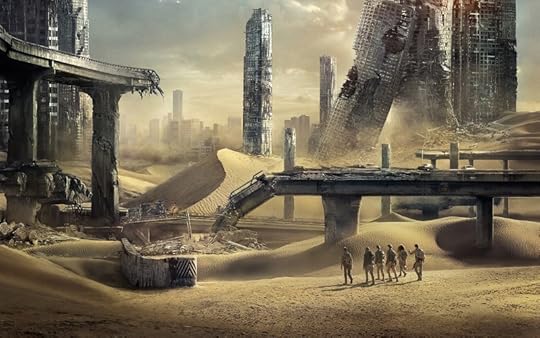
6) There Is Always Hope
“The beauty of dystopia is that it lets us vicariously experience future worlds – but we still have the power to change our own.”
The rise in anxiety, depression and other mental illnesses in teenagers nowadays has not gone unnoticed by the Dystopian YA genre. Dystopian YA often will draw a comparison of these issues in their narrative and reflected in their characters. Much like the protagonist trying to survive a harsh and isolated world, this is very much relatable to the general public who themselves might be dealing with their own struggles. The reader is able to experience the hero’s highs and lows from the safety and comfort of their own home. Through the darkness and light, Dystopian YA is able to give reassurance that no matter how bleak a situation, there is always hope.
Remember:
Look into issues affecting teenagers – rise in depression, anxiety and other mental illnesses.
Draw from these issues and consider how they can be reflected in your own characters/story/world.
Remember that your hero’s journey serves as a reminder to the reader, that they too can handle life’s ups and downs.
Are you into writing dystopian YA, as well as reading it? Then check out Bang2write for tips and free writing resources.
 BIO: Hello, my name is Olivia Brennan, a 25 year old who was first inspired by the power of film when I cowered behind a cushion watching JAWS, aged 6. Ever since, it’s been my mission to understand what ingredients make a great film and why we all love films so much, even loving to hate the bad ones! I work as a Freelance Writer, Blogger & Assistant Script Editor. Check out my blog HERE or Facebook Page The Final Frontier. Feel free to follow me on twitter as @LivSFB and say hi!
DYSTOPIAN NOVEMBER: Chat with author G X Todd (DEFENDER)
1) So, who are you & what have you written?
Hi, my name is Gemma Todd (@gemtodd on Twitter). My debut book, DEFENDER, is being published under my author name G X Todd on 12th January 2017 by Headline and it’s the first in a four book post-apocalyptic thriller series.
You can find a full description of it and pre-order yourself a copy on Amazon. Or, if you want to get your hands on a signed and numbered Special Edition copy a whole five weeks before publication, head over to Goldsboro Books where it’s Book of the Month for December. It’ll have fancy shmancy sprayed gold edging, too.
2) What’s DEFENDER about?
DEFENDER is set seven years after a major breakdown in society, where a mass appearance of internal voices convinced a large percentage of the general population to either kill themselves or each other. We are left with a world torn, its survivors divided between those who hate voices and those who fear them.
Sixteen-year-old Lacey has been living a sheltered existence in her grandmother’s farmhouse, but when her grams dies, Lacey decides it’s time to travel the six hundred dangerous miles to find her sister. She can’t do it alone, and so enlists the help of Pilgrim, a taciturn, cantankerous loner. Unbeknownst to Lacey, though, Pilgrim hears a voice of his own and he isn’t the only one…
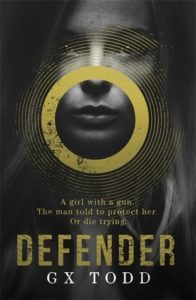 3) What inspired DEFENDER?
There are certain themes that insist on creeping into 90% of my writing. They can be boiled down to the following three: complete and utter loneliness (hence the post-apocalyptic setting – you can’t beat everyone being dead for loneliness), the psychology of violence, namely why humans commit such gross acts of violence against each other (I’m fairly fascinated with serial killers and the like), and the primal urges locked up inside us, which break free once societal constraints have been stripped away.
For The Voices series, I did a lot of research into human consciousness (I use a nifty quote from Julian Jaynes in DEFENDER, the fella who originated the Bicameral Mind theory), suicidal ideation, auditory hallucinations, and mental illness. The research has been an eye-opening and frankly terrifying experience.
4) What’s your usual writing routine?
This is where writers across the country will draw in a collective gasp of shock. I don’t have a routine. I’ve tried, a few times, to draw up a super organised writing timetable. Spreadsheeted that shit and everything, but it’s never stuck. I write when I want to (translation: not in the mornings). I sometimes have days where I work for twelve hours solid and other days when I work for no more than two and then go play video games. I work very hard when deadlines are approaching, and I kick back for a couple of weeks and don’t do much after I’ve met those deadlines. It’s quite a fluid thing for me. I am, however, going to use the NaNoWriMo template this year, if only to get my butt in the seat and get some words down every day this month. I doubt I’ll hit the 50,000 words, but I’d be happy with 30-40,000.
5) Which dystopian book do you wish YOU’D written, and why?
I’m not sure it can be called dystopian, but I really, really love AMERICAN GODS by Neil Gaiman. I was a latecomer to this book and I don’t know why. Maybe I looked at that massive tome of a novel and thought Holy crap, that’s going to take me an age to read. In fact, it took me little more than a week. It defies category, which in itself is awesome and something I wish I could do. It’s also allegorical and full of magic and it takes you through a very dream-like America inhabited by dying gods, and there’s an argument that the US can be called a dystopia of sorts with the ways things are heading, so yep, I choose AMERICAN GODS. I wish I could write something as unique and imaginative and yet still catch the imaginations of millions readers worldwide.
Oh! Can I mention Wyndham’s THE CHRYSALIDS, too? He’s most well-known for THE DAY OF THE TRIFFIDS but THE CHRYSALIDS is a real speculative dystopian tale and I think it’s his best.
6) What’s the ONE thing our current society should stop doing in your opinion, else we’ll end up in a dystopia too?
Being glued to our mobile phones. I drive a 35ft long mobile library as part of my day job and countless times every day I see people on their phones while behind the wheel. I also see them transfixed by their phones instead of talking to the checkout guy/girl in the supermarket. I see Moms chatting to their besties on the phone while walking down the street rather than interact with their own kids. We’re going to turn into either 1) an anti-social nation full of citizens who don’t give a shit about each other, or 2) a Death Race, demolition style road wars nation, à la Mad Max, with drivers mowing down people in the street.
Actually, that latter scenario sounds kind of fun …
Thanks Gemma!
GIVEAWAY TIME!!!
If you want to be one of two possible winners of a hardback copy of the awesome DEFENDER, then get over to our Facebook page Crime,Ink and follow the instructions for your chance to win. GOOD LUCK!
October 31, 2016
INFOGRAPHIC: What Is Fear?
Some REALLY eye-opening facts here … The middle section on why we LIKE being scared is definitely useful to crime (and horror!) authors, or if you’re wondering yourself why you can’t get enough of the genre.
In the meantime, HAPPY HALLOWEEN! And check out Twisted 50, which is now officially a bestseller on Amazon. Amazing!
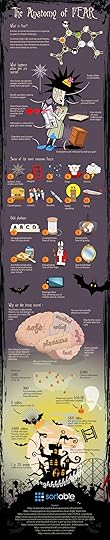
From Visually.
October 30, 2016
Top 10 Literary Tattoos
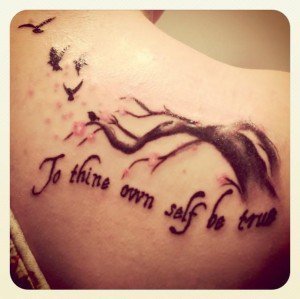
1) Shakespeare
Look online for ‘Shakespeare tattoos’ and you won’t be short of inspiration … this one was our favourite.
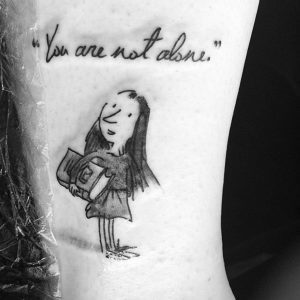
2) Roald Dahl
Matilda is quite the heroine for young girls everywhere … so it’s no accident many grow up with this strong female character LITERALLY under their skin!
3) Lewis Carroll’s Alice In Wonderland
You might be late for a very important date … but that’s okay, if you’re ‘entirely bonkers’! 
October 28, 2016
CRIMINALLY GOOD: Interview with author Rebecca Bradley
 1) So, who are you & what have you written?
My name is Rebecca Bradley and I’m a retired police detective. After 16 years’ service, 8 years in uniform and 8 in a specialist unit, I was medically retired, last year. This experience has given me a good grounding for the police procedural novels I write, with protagonist DI Hannah Robbins which are set in the city of Nottingham. I wrote the first book, Shallow Waters while I was still a serving police officer, but didn’t release it until I was in the retirement process. Check out my website HERE and you can follow me on Twitter as @RebeccaJBradley.
2) Why do you write crime fiction?
Crime is a genre I have always read and is obviously something I have always been drawn to. So, when it came to sitting down and writing, the natural choice was crime. In fact, the only ideas in my head were crime stories.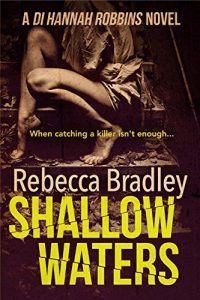
3) What informs your crime writing?
I’m lucky to be able to draw on 16 years’ service when I write, though having not actively worked for nearly 3 years now, I do have to be careful to check with ex-colleagues that procedures themselves haven’t changed within that time frame!
It’s not just the procedures that I’m able to draw on though. Being there with victims, witnesses and offenders as we entered their lives gave me emotional experience, because when police enter a person’s life, it’s usually unexpected and means events have been taken out of their hands. Everyone reacts differently. There’s no one-size-fits-all response to bad news. I will clarify that I have not taken any real event or person and placed them into my books, but recognise the emotional impact that crime plays on lives.
I think with crime you have huge scope for exploring a vast array of human emotions and ensuing actions. At the heart of any story is the character and there is nothing quite like crime to touch a character.
 4) What’s your usual writing routine?
This is always a difficult question for me. Because of poor health I don’t have a routine as such as I have to listen to my body, but I have a routine in that I will write every day. What time of day that is completely depends on how I’m feeling, it can be early, the middle of the day or I can leave it until the end of the day when it’s starting to look as though nothing is actually going to get done. But it does. I do write every day. Routine is making sure I progress my work in some way.
5) Which crime book do you wish YOU’D written, and why?
Burial Rites by Hannah Kent, because it was beautiful, haunting and it had me in floods of tears – which is something I love to do with a good book – and I’d love to write a book completely out my comfort zone like that.
October 27, 2016
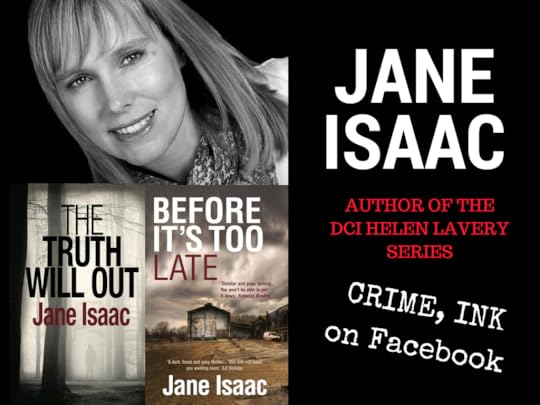
18 Questions For Jane Isaac (THE TRUTH WILL OUT)
1) What inspired you to become an author?
It was a diary that I kept whilst taking a year out to travel that ignited my interest in writing and encouraged me to sign up for a creative writing course. I didn’t see myself as a fiction author though, and initially studied non-fiction, writing articles for newspapers and magazines. It wasn’t until I started the fiction side of the course that I fell in love.
2) How did you get into writing crime?
From Enid Blyton’s Secret Seven in my early days to sitting around the TV with my family watching Poirot, I’ve always loved the twists and turns of mysteries and the thrill of the chase so I guess it was the obvious genre for me.
3) Would you ever consider co-writing, if so which author would you write with?
I’ve enjoyed the works of other author partnerships like Nicci French so yes, I would consider co-writing. I think it would be interesting to have somebody else to bounce ideas off. But who to write with? Goodness, it would have to be somebody I knew really well, that has a similar writing style and were in tune with. Sorry, I’ll have to come back to you on that one!
4) Are there any topics you wouldn’t want to cover, in a book?
I think I’d struggle with paedophilia. Lots of other writers have tackled this subject well, I know, but I do feel compelled to read a lot of true crime around the theme I choose and I’d really struggle with that issue.
5) Do you use a police ‘source’ to help with authenticity and keeping it ‘real’?
Not having a police background myself, I knew that when I started writing police procedurals I was going to need a lot of help to get as much of the finer detail as real as possible. I’m really lucky to have developed good friendships with several working and retired detectives. Some of them, like Ian Patrick and Glyn Timmins, are also now crime writers themselves.
6) If you weren’t married would you marry Jackman?
Haha! The thought of marrying somebody that is the figment of my own imagination sounds a bit weird. He is a great character to work with though!
7) Would you say that writing books gets easier, or harder, the more you have under your belt, and why?
That’s a good question! I’ve developed habits which I think ease the process – I write a four/five page outline of my plot before I begin now, something I didn’t do when I first started, and it does give me a sense of direction. I also don’t panic when I reach that dreaded half way point and some elements don’t feel right, because I know I’ll have time later to go back and knit them together. The challenge in creating something new and original still exists though. I often find myself saying to my husband, ‘I’m sure I’ve used that theme before,’ and have to look back and check in the other books! Plus, like many authors, I’m cursed with inherent self-doubt – I want every book to be my best effort.
8) How do you keep track of your plot as you write/edit? To make sure everything flows and is relevant to your plot. Do you use a spreadsheets, cards …?
I write a detailed outline, usually 4-5 pages, before I start. Things do change as the story unfolds, but I change my outline too so that when I finish my first draft and do my initial read through, I can check back and ensure that everything weaves together.
9) When you’re writing, do you read new books or stick to old faves to avoid cross-pollination?
Since I’m writing or editing most of the year in some capacity, I don’t stop reading the genre I love otherwise I would really miss it! It can be tempting to fall into technical mode and analyse a book you are reading, especially if it is the same genre, looking to see how the writer introduces twists and turns and what can be done differently. But that would spoil the reading experience for me, so I learnt very early in my writing journey to turn off the technical mode when I’m reading and purely read for pleasure. I’m mildly conscious of cross-pollination, but I don’t worry too much about it. We always put our own slant on our stories!
10) Do you need to have visited every location you use, or do you rely on your imagination alone?
I do prefer to visit locations if I can to get a feel for the backdrop of the story. The Scottish Highlands setting in The Truth Will Out is a place where I’ve holidayed annually for the last 20 years so I really ‘felt’ the picturesque setting. I’ve also enjoyed getting to know Stratford upon Avon, the setting for the new DI Jackman series, really well – we’ve had so many family weekends there, my husband calls it his second home! There are some places I haven’t visited – In Before It’s Too Late there was a Chinese character from Beijing and I had to enlist the help of the International Chinese Student Liaison Officer from Northampton University to help re-create his experience of the area and paint a picture in my mind. Although I’d still love to go to Beijing and see it for myself!
11) Do you feel pressure to make your female characters ‘likeable’?
I don’t think that characters need to necessary be likeable to be popular, so I don’t really feel that pressure. As long as they are well layered and believable and the reasons for their actions are understandable, I think they can still work.
12) Any advice on writing a synopsis?
hat’s a tricky one and something all writers seem to struggle with, especially as many agents ask for a one page synopsis. I usually write a four/five page line outline of my story and hone it down slowly until it contains the basic key elements.
13) Are there any quirks or bad habits about your characters that you don’t like and wish you could change?
I have a detective in the Jackman series, a peripheral character called Keane, whose clothes, although reasonably smart, never match – he looks like he gets dressed in the dark. It seemed like fun at first, but now I feel I want to mother him and sort out his dress style, lol.
14) Do you find your plot lines by reading newspapers or hunting out stories online?
Some of my story ideas do derive from news reports. The idea for Before It’s Too Late came from a piece on Sabine Dardenne’s own story of being kidnapped and I thought it would be interesting to follow the story of a kidnapped victim in a completely different setting, live time. However, it’s only ever a prompt. I’d say most of my writing comes from a fascination with people. I like to put ordinary characters in extraordinary circumstances and see how they react.
15) How far do you see writing as a solitary experience and how far as a collaborative one?
Collaborative at the beginning, when I’m researching, as I’m looking for opinions on storylines and how to make them work and where to fit in the procedural elements etc. They become more solitary when I sit and write as this is quite a personal process with me and my ideas. When the book is finished, it opens up again as it is read by beta readers who give their feedback on how it works and fits together. Then, of course, there is all the work done by the publishing team: editors, cover artists and publicists to put it together and get it ready to share with the world. And finally, the wonderful book bloggers and reviewers, like yourself, who help to spread the word.
16) Do you read the same genre as you write?
I do! I love the twists and turns of a good mystery, so a lot of my reading pile consists of detective fiction and psychological thrillers. I do try to vary it though and read outside genre. Book clubs are great for encouraging that. This year our village book club has read The Taming of the Queen by Philippa Gregory and Us by David Nicholls, two books I wouldn’t have enjoyed otherwise.
17) Is there a book, completely different to anything you’ve written before, that you’d absolutely love to write?
I’d LOVE to write a travel diary. There’s loads of places on my bucket list to visit, but walking the Santiago de Compostela and writing a diary of my experiences along the way would feature pretty highly … But at the moment I can’t imagine writing anything but crime, although if pushed I think historical fiction might be interesting. It would be fun to study a different era for a setting. Problem is, I’d get so bogged down in the research the book would be a long time coming!
18) If you didn’t write crime … What sort of criminal would you be?
I think I’d aim to be a very savvy criminal. I’d make sure I wasn’t at all connected to the victim(s). Most crimes are committed by people the victim(s) knows and this is the first area the police scrutinise.
October 25, 2016
CRIMINALLY GOOD: Interview with author Ankush Saikia
 1) So, who are you and what have you written?
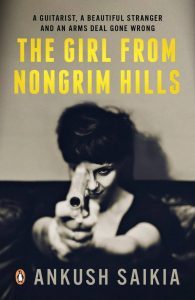
My name’s Ankush Saikia, and I’m a 40-year-old Indian author, based in Shillong in North-East India. I’ve written a couple of crime and thriller novels, including the Detective Arjun Arora series published by Penguin Random House India. Check out my website, HERE, plus follow me on instagram, on Twitter as @ankushsaikia and/or LIKE my page on Facebook.
2) Why do you write crime fiction?
I write crime fiction I think because of my interest in the darker side of human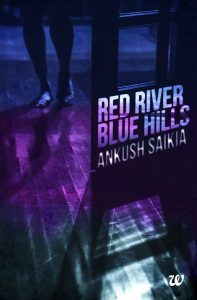 existence … in people who do not always make the right choices in life.
3) What ‘informs’ your crime writing?
The two “locations” for my books so far have been North-East India, where I grew up, and Delhi, where I spent more than a decade studying and then working. My crime writing set in these two areas is concerned with the social dynamics in a diverse country such as India more than anything else, in the various layers of society that exist here.
 4) What’s your usual writing routine?
I try and write when I can, mostly for a few hours in the morning. Having a routine always helps.
5) Which crime book do you wish YOU’D written, and why?
Graham Greene’s The Quiet American, which though more of a political thriller, also has elements of a crime novel in it — I admire the economy of the book more than anything else, one of the best examples of less being more.
October 24, 2016
INFOGRAPHIC: Anatomy Of A Crime Scene

Lucy V. Hay's Blog

- Lucy V. Hay's profile
- 174 followers

