
Lucy V. Hay's Blog, page 42
September 29, 2016
Best Of 3: Awesome Unreliable Narrators
I just LOVE unreliable narrators in crime fiction, so for my latest ‘Best of 3’ picks, I’m choosing novels I’ve enjoyed recently where you just can’t tell if the main character is telling the truth or not … Enjoy!
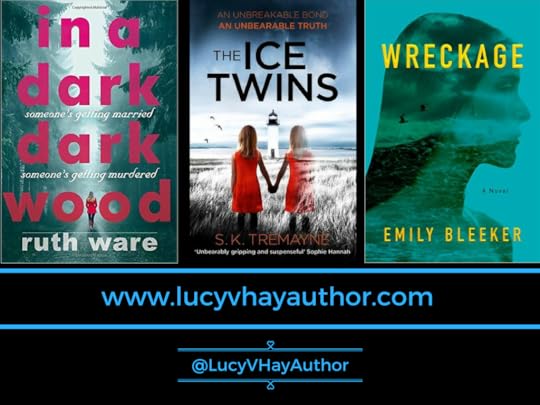
1) IN A DARK, DARK WOOD by Ruth Ware
You just KNOW that if a bunch of friends go into a wood, *someone’s* gonna end up dead … But Ware does a great job of avoiding the usual things we might expect. Headed up by a diverse cast, I marvelled at the simple, yet effective set up – I can totally see this as a movie, so am not surprised Reese Witherspoon’s prodco has snapped up the rights. Read my full review (no spoilers), HERE.
2) THE ICE TWINS by S.K Tremayne
I’m OBSESSED with twins and multiples (I’m even married to a triplet!), plus it’s partly set in Devon, where I live, so I HAD to read this one! It’s such a great concept and so visual, plus everyone’s POV seems so set against one another’s, keeping you on the backfoot right until the end. Read my full review, HERE.
3) WRECKAGE by Emily Bleeker
With lean and lyrical prose, Bleeker’s writing in WRECKAGE reminds me very much of Gillian Flynn’s. Taking the notion of a ‘desert island paradise’ and ripping it inside out, the scenes there are just brilliant. I almost wish we’d seen the whole story play out there, rather than in retrospect. Read my full review, HERE.


Best Of 3: Unreliable Narrators
I just LOVE unreliable narrators in crime fiction, so for my latest ‘Best of 3’ picks, I’m choosing novels I’ve enjoyed recently where you just can’t tell if the main character is telling the truth or not … Enjoy!
1) IN A DARK, DARK WOOD by Ruth Ware
You just KNOW that if a bunch of friends go into a wood, *someone’s* gonna end up dead … But Ware does a great job of avoiding the usual things we might expect. Headed up by a diverse cast, I marvelled at the simple, yet effective set up – I can totally see this as a movie, so am not surprised Reese Witherspoon’s prodco has snapped up the rights. Read my full review (no spoilers), HERE.
2) THE ICE TWINS by S.K Tremayne
I’m OBSESSED with twins and multiples (I’m even married to a triplet!), plus it’s partly set in Devon, where I live, so I HAD to read this one! It’s such a great concept and so visual, plus everyone’s POV seems so set against one another’s, keeping you on the backfoot right until the end. Read my full review, HERE.
3) WRECKAGE by Emily Bleeker
With lean and lyrical prose, Bleeker’s writing in WRECKAGE reminds me very much of Gillian Flynn’s. Taking the notion of a ‘desert island paradise’ and ripping it inside out, the scenes there are just brilliant. I almost wish we’d seen the whole story play out there, rather than in retrospect. Read my full review, HERE.
September 27, 2016
5 Reasons Ebooks Are Better Than Paperbacks by Lucy Adams
As an admin on Crime Fiction Addict on Facebook, I posed a poll about this subject as you can see HERE, so I was very interested to hear my friend Lucy’s reasons on why she thinks ebooks are better than paperbacks. Do you agree? Or do you think we’re just plain WRONG?? Let us know!!
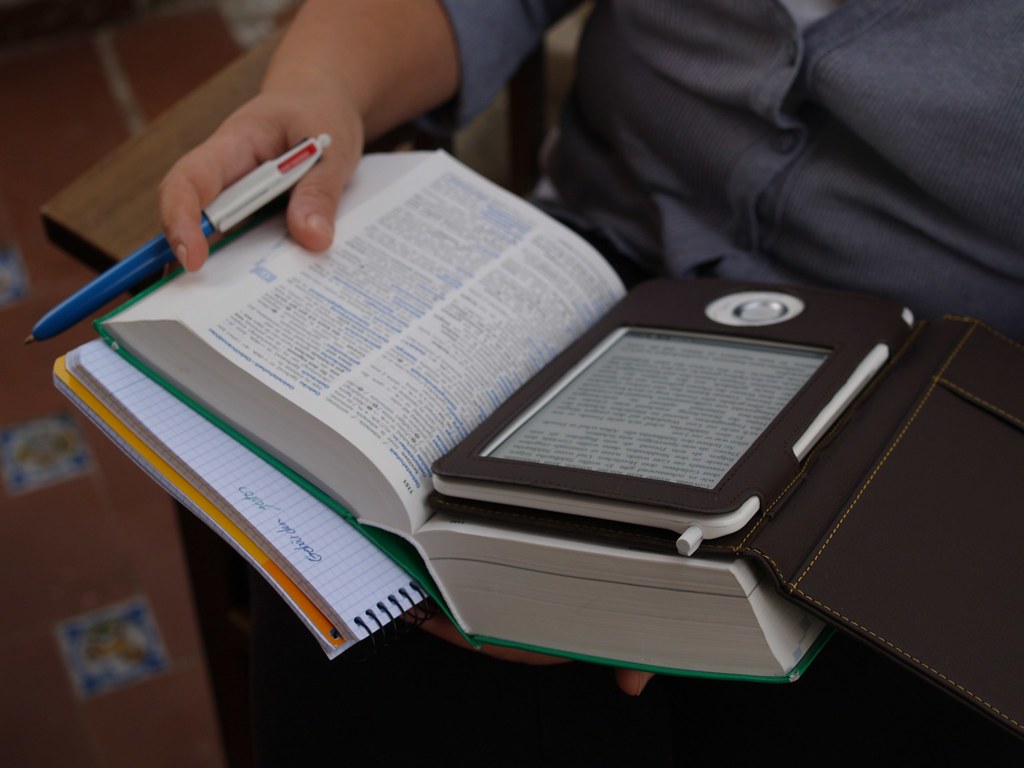
How often do you notice people reading in a subway or public transport? And how many of them use e-readers, smartphones, tablets, and other electronic gadgets?
Undoubtedly, the share of e-books is rapidly growing. With the latest model of e-reader, you can enjoy a favoUrite novel everywhere and as easy as ABC. Well, if you’re still not sure about whether to buy a Kindle (or similar), I hope these 5 reasons e-books are better than paperbacks will convince you!
1) Portability & Compactness
A huge library is now at your service every time your e-reader is at hand. Forget about bulky dictionaries and encyclopedias! E-books are very convenient to pass the time and can always be with you, with FREE e-reading apps available for your phone and tablet, too.
2) Personalisation
An e-book allows you to select the typeface, increase or decrease the size of the text and other adjusting manipulations. This is particularly useful for people who have vision problems.
3) Easy Navigation
How many times have you tried to recall details of something you have read, but you weren’t able to find the right scene?
E-books are very useful in terms of navigation: bookmarks and notes, hyperlinks and fast search – all these greatly simplifies reading process. Some e-readers are equipped with speech, which enables listening to the book instead of reading it.
4) Reduced Price
As a general rule, electronic books are cheaper than paper ones, as there are lots of deals to be had online. There is also tons of free-to-use literature on the Internet. This means people who do not have much money, and/or who cannot travel to easily to libraries can still enjoy the latest books. What’s not to like??
5) Environmental Friendliness
There is one of the most important advantages of e-books in my opinion. The production doesn’t require deforestation and undermining the ecological balance. Also, e-books are completely safe for people with asthma and allergies. Unlike printed books, they do not accumulate paper dust.
What Future Awaits Paperbacks?
Paperbacks are beautiful, but too imperfect. They are expensive, inflexible, perishable, and require a complex production cycle. They just can’t keep up with the pace of modernisation.
The eternal dispute between paperbacks and e-books will be solved by the market. Personally, I believe paper books will eventually be completely replaced by their e-cousins. Home libraries won’t disappear – they will be on our technology instead!
What do YOU think about this debate? Let us know!
BIO: Lucy Adams is a blogger and a loyal BestEssay4You client. This open-hearted woman is fond of music, traveling, marketing, and many other niches. Simply put, Lucy is a generalist. She’s always trying to look at the problem from different angles, which makes her research in-depth and comprehensive.
September 26, 2016
10 Fantastic Book Shelf Ideas
Now, I don’t know about you, but I’m a bit of an instagram addict. I only joined a few weeks ago, but already I’ve become completely glued to people’s photos … for a surprising reason.
I just LOVE to browse the #bookshelf hashtag. I don’t know why, but it’s really compelling to me to see how people arrange their books. And it seems I’m not alone … With literally millions of posts about bookshelves online, it seems loads of us can’t get enough! Here’s my current TBR shelf:
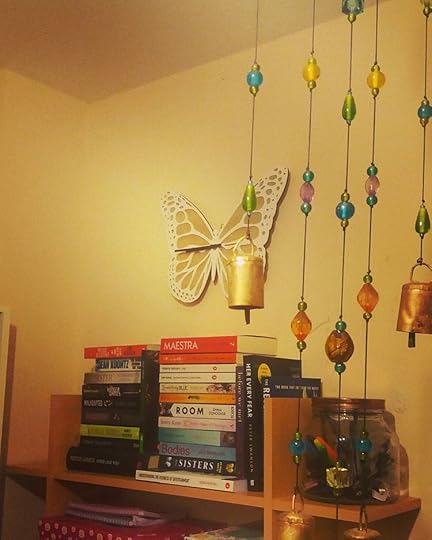
It’s nothing too *out there* but it’s MINE! Loads of great titles there, plus lots of stationery and my beloved bell mobile. (When I get stuck writing, I will reach up and brush the bells with my fingers, cos they’re right over my desk).
But it’s with amazing book shelves in mind that I had a quick poke around online today to see what I could find from other people’s homes … Enjoy!
1) Book Star
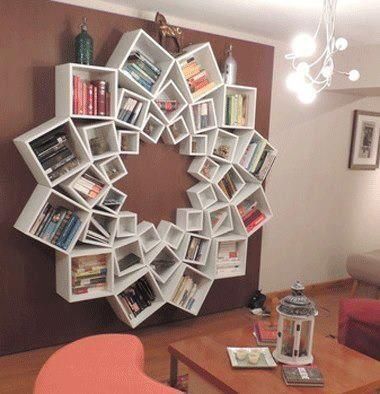
If you love books and want to make your shelf a focal point in your home, this is ace. It looks impressive and shouldn’t be too difficult to make yourself given it’s made up entirely of box shelves.
Well, I say that, I’m not handy at all!! But if you have a head for maths in terms of measuring and the DIY skills, you should be okay. Found on Pinterest.
2) Pipe Shelf
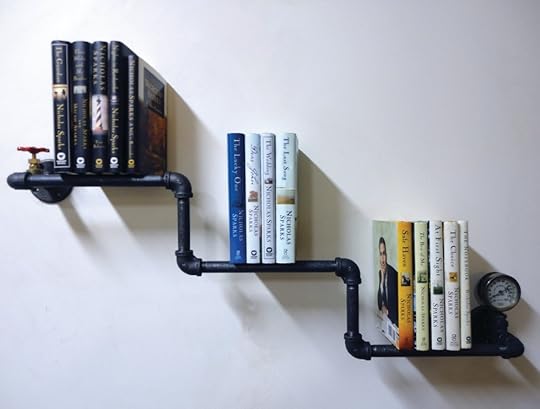
This one looks pretty minimalist, but I bet it’s harder than it looks to make it! Pretty cool though, especially in a ‘classic’ bachelor pad. Found at The Snug.
3) America Shelf
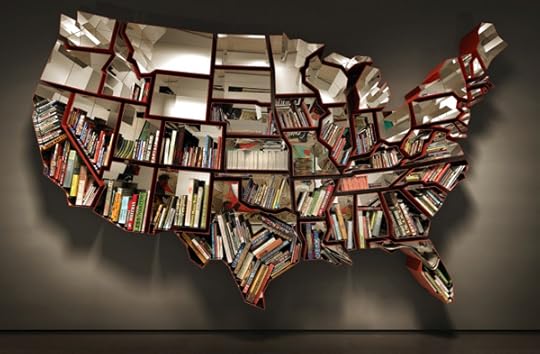
Why not arrange your books as an entire country? Found on LifeHack.
4) Bedroom Bookshelf
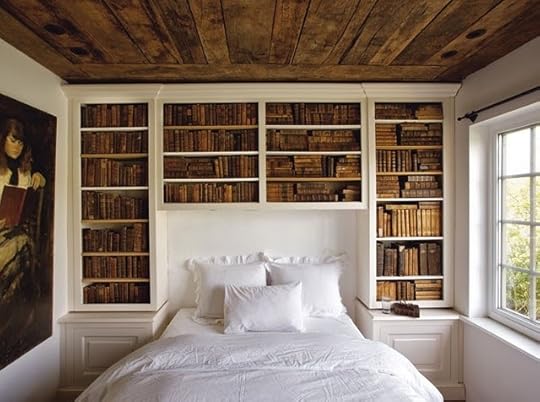
I don’t need any incentive to stay in bed reading, so if this was my room I’d NEVER get up and go to work!!
5) Hanging Book Shelves
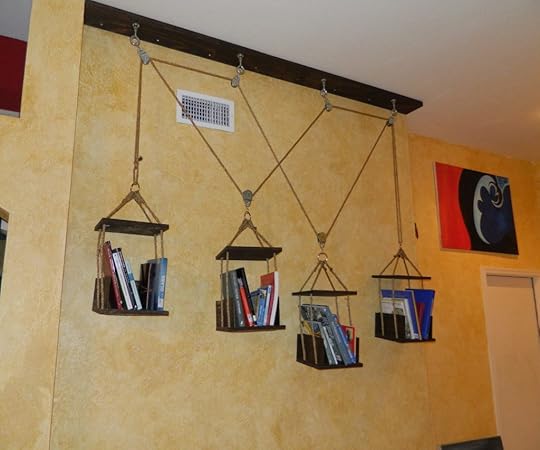
These are really unusual, but I bet they’re not child-friendly – no kid could resist knocking them and making them sway back and forth, surely? Found on RafadEv.
6) Staircase shelves
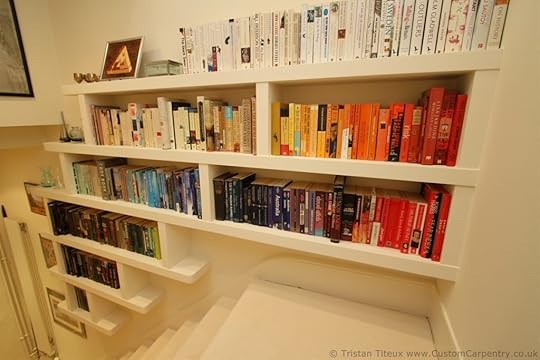
Staircases can be ‘dead’ space in a house, so if you have enough room to make use of them like this, I’m envious!
7) Tree Trunk Bookcase
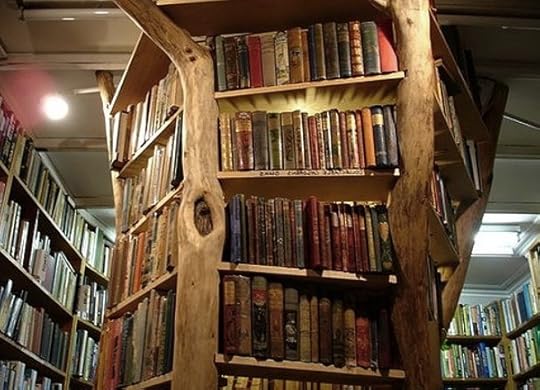
The link between books and trees is obvious, so this bookcase is not only GORGEOUS, but very apt. Found on IndustryStandardDesign.
8) Rustic Bookcases
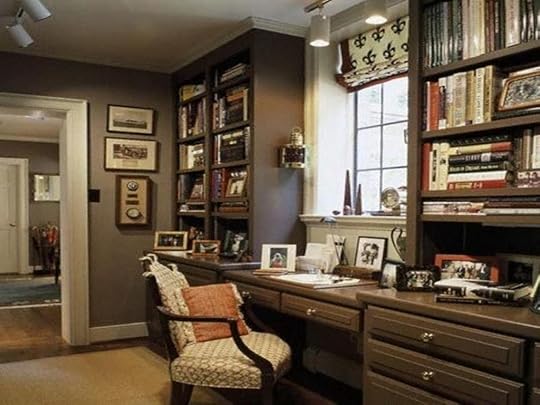
I can just imagine an author like PD James or Agatha Christie writing in an office like this. Found on FashionSchoolGuide.
9) Floating Bookcases
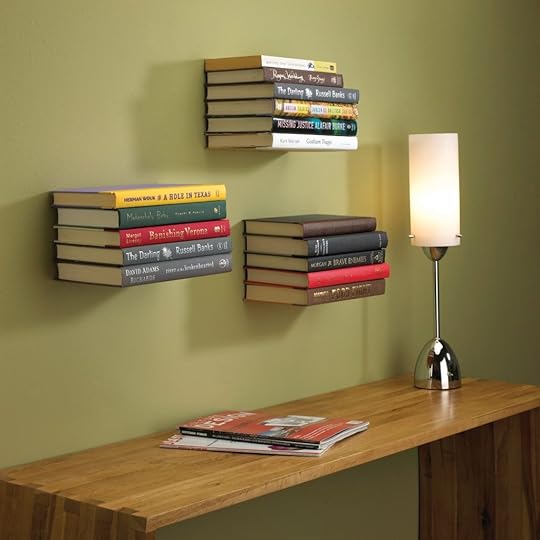
I love how the books seem to LOOM out of the wall here, so cool!
10) Corner Tree BookShelf
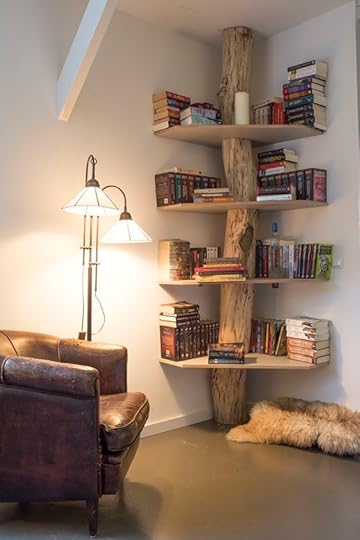
I think this one is my favourite. I might even see if I can get my husband to knock me one up … Given it’s taken him eight months to just hang the towel rail, I might get one by 2019!! Found on Pinterest.
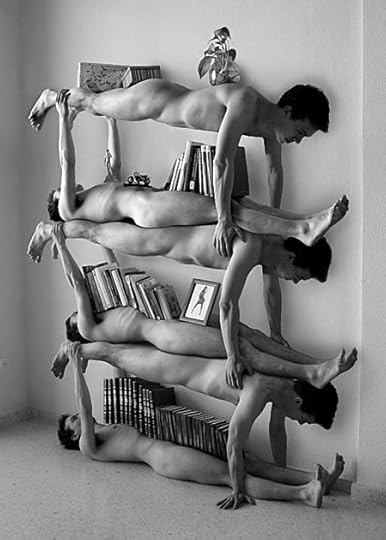
BONUS!! One last one …
Lawks, what on earth is going on here?? Can’t help but feel it would be a lot less hassle to put a flatpack together! But each to their own I guess. Happy reading!
September 23, 2016
BEST OF 3: JM Hewitt, Author
Many thanks to JM Hewitt, author of Exclusion Zone for her ‘Best of 3’ today … Of course, JM has been featured on CRIMINALLY GOOD on this site before, so check out her interview HERE.
If you’re a crime author or screenwriter, DO submit your As to my Qs, which you can find HERE or by clicking the pic below. Over to you, JM!
The three that I have chosen are interestingly almost novellas in their size. I used to be wary of not getting my fill with a novella or a smaller book, but these three choices absolutely changed my mind and these days, I seek them out! I also had to only choose books that I’ve read in 2016 otherwise I’d have been able to do best of 100 or so!
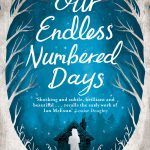 1) Our Endless Numbered Days by Claire Fuller
WHY I LIKE IT: The world created by Claire Fuller is mesmerising, chilling, haunting and THAT TWIST! When I read this book I was in the secluded woods, I could smell the autumn leaves and feel the snow. One talented author and my only regret is that I’ll never again be able to experience this book again for the first time.
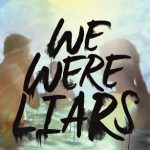
2) We Were Liars by E. Lockhart
WHY I LIKE IT: This one I read most recently, and it is the first novel of E. Lockhart’s that I have read – definitely not the last! The writing is almost poetic in places and the protagonist is a stand out. I thoroughly enjoy stories of ‘how the other half live’ and the ending was a bolt out of the blue. I did not see it coming and I was floored. I couldn’t get to sleep after I finished it for thinking about it, always a sign of a GREAT book. This is a YA book which had no negative impact on my reading pleasure at all.
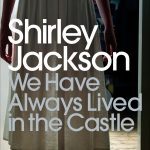 3) We Have Always Lived In The Castle by Shirley Jackson
WHY I LIKE IT: Sometimes I worry that I enjoyed a book so much because of the location of where I read it. I read this one on board the Queen Mary ship in Long Beach, California, but then I re-read it again recently and happily the novel had the same effect on me so, in this case, definitely not the location! I wondered if this should fall into my crime fiction category, as it’s more gothic horror, but I’m taking my chances and including it for the mystery element! This book brings up so many questions; what’s with this family? What’s wrong with Merricat? Why are they treated the way they are by their community? It was amazing and I’ll certainly be reading this one again and again.
BIO: J.M Hewitt is the author of the bestselling crime fiction novel Exclusion Zone, published by Endeavour Press 2016. Her second novel, The Maze, is due for release later in the year. Follow as @jmhewitt on Twitter.
September 22, 2016
21 Questions For Amanda Jennings, Author (IN HER WAKE)
So, author of In Her Wake Amanda Jennings was kind enough to do a Q&A on my Facebook page Crime, Ink a while back – and it’s taken me THIS long to get round to writing it up!
Amanda was very generous with her time and the Partners in Crime asked some VERY interesting Qs, so enjoy — and if you’re an author who wants to a Crime, Ink Q&A, contact me ASAP!!!
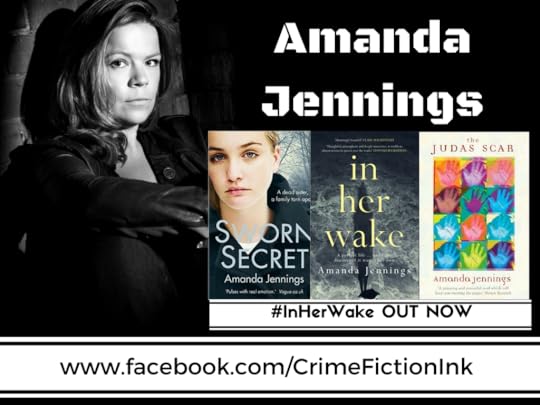
BTW – In Her Wake is currently 99p on Kindle! Don’t miss it, it’s got 126 five star reviews and is one of my favourite books of 2016. DOWNLOAD IT HERE or click on the pic below.
1) Did you set out to write a psychological thriller?
Not with In Her Wake. It was originally written as more of a contemporary fiction. The original idea was rooted firmly in the issue of Identity. I wanted this woman to be totally ripped from her home and everything she knew and then find herself having to re-identify herself. My original Bella was also plagued by alcoholism and there was a ghostly element to it, of which there are still echoes, but the ghost has been replaced by my protagonist’s inner issues and recollections and turmoil. But the story actually lent itself to a psychological thriller with the taking of a child and the wild and dramatic Cornish scenery, and once I began to rethink it as a psychological thriller it just grew and grew. The book is very much happier in this genre!
2) What inspired In Her Wake? Was it a particular case you read about, or someone’s story you heard — can you talk us through the project and how long you’ve been writing it for?
Actually it was the tragic case of Ben Needham who sparked the idea for this. I remember him disappearing so vividly, and years later, there was an article I read that said he would have been 25 that day. So I got thinking, if I was his mother I would want more than anything for him to be alive. I would also want him to be happy. And cared for. So I began thinking about a missing child who was brought up safe and sound and greatly loved by the people that took her. From this point so many other questions came into play, which is just what you want when you’re trying to plot a novel. You want lots of ‘What Ifs’.
3) What’s your process – do you plan everything meticulously first?
No, I’m not a planner by nature. I have lots and lots of notebooks, with all sorts of things in them about my characters – their motivations, what’s happened in their lives that might affect their decisions, what they love, what they hate – as well as some key scenes that I feel advance the narrative. Once I know my characters inside out, and I have a vague idea of where the story is going (held in place by these key scenes, which I see as sign posts) then I’ll start. I find once I have a first draft then I can see the story as a whole. I can see what needs to be highlighted, what needs to go, what my principal themes are, and then I can start to shape it. So much of my story comes in the numerous rewrites that follow that frenzied first draft.
4) Your writing is exceptionally vivid and beautiful. Have you always been a ‘writer’? Is your education in literature?
No! I always wanted to be an artist but I didn’t think I was good enough to go to art school, and academically I was pretty able, so I decided to combine my portfolio and love of art, with my maths, and applied to do architecture. It was only when I realised I was a useless architect (all my friends were designing awesome curving original buildings, whilst mine had four windows and door and curly smoke coming from the chimney) that I knew I wasn’t doing what I should be doing. I was at Cambridge and they have a tripos system which meant it was very easy to change course, so I just rang up one day in the Summer holidays and asked if I could swap to History of Art. It was then that I began writing essays. I also had to complete a 30,000 word dissertation for my finals, which I obviously left to the last minute, so – like any writer-to-be – I basically didn’t sleep for ten days, mainlined coffee and Mars Bars, and wrote it. I knew then I wanted to write.
5) How many words a day do you write?
Well, during a first draft I will set a minimum of 1000. But when it gets really good (and this happens rarely, I hasten to add) it can be anything up to 5 or 6000). Sometimes just getting to 250 seems more than I can hope for. But I think 1000 has a nice ring and I am aiming for 90000 first draft, so it means a neat three months!
6) How do you start writing?
Once I have a vague idea of my story I will leap in. I write my first draft, slightly in the dark, and quite quickly (about three months) and definitely leap in. However, I will also undertake many rewrites. In Her Wake had about eleven or twelve full rewrites and the opening itself is very different in the final book to how it was in the first draft. Some writers, those who plan meticulously, will no doubt have an opening very similar in first draft and final book, but for me it will certainly change. But I do worry that if I think too much about starting, I will never start! So there has to be a certain amount of ‘jumping in the deep end’ and just getting on with it!
7) Are all your reveals and red herrings planned in advance, or is it a more organic process for you?
Lots of the time it is definitely organic. Often I find that a good red herring or twist is the result of a plot hole that needs a ‘solution’. You have this bit in the story that just doesn’t work, and then – sometimes out of the blue (thanks Subconscious helper!) a solution will appear which sorts out the plot hole and provides another little angle. Often a book with a big twist or a final twist (as there is in In Her Wake) will be planned from the start. I won’t say which bit this is as I don’t want to include any spoilers in this Q&A, but I knew the twist from the off. So, in answer to your question, it’s a bit of both!
8) Where do you get the inspiration from for your stories?
Well, I find inspiration all over the place and often when I’m not expecting it. For my first book it was a conversation I had with my sister. She told me that when we are together in a social situation, she is much quieter than she is when she is out without me. I was worried by this and a little hurt. I asked her if she resented this and she laughed, and said ‘not at all’ it’s just part of who we are, part and parcel of our family dynamic, ‘you are the loud one and I am the reserved one’ but when I’m not there she steps out of this role. It got me thinking about sisters and a book about how the younger, quieter sister might change if her older, louder sister was removed during formative teen years. This got me thinking about losing a teenage daughter and how I would react if something happened to lay own daughter and then … A story appears!
The kernel of an idea can come from anywhere. Just something that gets you thinking, really. From a conversation, a newspaper article, something you overhear in a supermarket queue, and often these sparks are enough to get your mind thinking. I would have a vague idea of where my story is going to go and what arc I want the principal character to follow, but definitely the story will flesh out as I write and rewrite. Themes come to the fore. Some characters develop, some fade. Subplots emerge and those impact the narrative. It’s an organic process, really. But even though I would say I’m not a planner, at the very start I will always have a rough idea of beginning and end, and a few key scenes that act as stepping stones to progress me through the story.
9) What is your writing routine like?
When I’m writing a first draft I am disciplined. I will get up in the morning and send the girls – I have three daughters – to school, then I’ll walk my dog and think about whatever scene or chapter I am going to be writing that day. (I do need to leave my phone behind though, or I’ll be tempted by Twitter, which is awful at sapping my willpower to write!) Then I’ll get home and load the dishwasher, feed the chickens, and sit down. I will then write for about three or four hours – with a target of 1000 words a day – breaking for about seven hundred cups of tea. I will then do another hour when my husband gets home from work while he puts our youngest daughter to bed and reads her a story. Then it’s collapsing in front of the TV or reading in the bath. I will also write for large parts of the weekend. I am fortunate to have a very supportive husband who is happy to hold the fort – albeit without loading the dishwasher or cooking the kinds vegetables – so I can write.
10) If In Her Wake was to be made into a movie/tv series, who would you cast as Bella and Dawn?
Carey Mulligan would be a brilliant Bella and then Emily Watson as Dawn. In fact, I want to call them right now and demand they play the parts!! Such great actresses who would bring in incredible range of emotion and restraint to their roles. I can see Emily right now trying to battle with everything she is feeling.
11) What made you choose Cornwall as a backdrop for In Her Wake? Did you have to do a lot of research into the place?
My mum is Cornish and the whole of her family come from Cornwall. My grandmother was hugely proud of her Cornish ancestry and even when she became less mobile (she lived alone and without a carer until she finally died peacefully in her bed which overlooked St Michael’s Mount at the age of 99) she refused to leave her beloved county. My mum and dad have a house in Zennor and we have spent portions of every year since I can remember in the part of the world I describe in my book. Cornwall is very much a part of me and I adore everything about it! In fact I’m going in a few weeks to get a hit of sea air and Cornish mizzle on my face!
12) I love your descriptions of the sea in the book, they’re so beautifully written I can almost feel the sand between my toes. Where’s your favourite beach?
Oooooh! Love this. My favourite beach is described in the book! It’s the beach where they have the party, and where she sees the seal in the shallows in the early morning haze. It’s an incredible beach, called Portheras Cove, near Morvah, that you have to walk down to and there are always seals in the sea. My children love it down there and you can take the dogs. Just stunning!
13) Do you ever have trouble with losing interest in the story you are working on? How do you think of ideas to keep your story exciting?
I think you have to view writing as a job. Of course there are going to be days when the job comes easily, and the words flow, and time flies as you enjoy the type of creative haven we all yearn for, but there are also days when it is torturous. The words are like the proverbial blood from a stone and every sentence feels like a mountain. When this happens I just have to push on through. I reassure myself by saying that even if the words are dreadful they can (and will) be changed during the rewrite. There is also the other stage of writing a book when you’ve done countless rewrites and you are frankly bored stiff with the book! Again, this just means you have to have a firm talk with yourself. Remind yourself that every writer has to deal with this and that it’s perfectly normal. In terms of keeping your story interesting, my advice would be (and I heed this myself) to cut out anything that you think is dull. If it’s boring you as you write it, it will certainly bore your reader. So keep it fresh and don’t write anything that doesn’t advance the story, or character development, in some way.
14) The way you wrote about controlling parents/partners was harrowing at times. How do you get into the headspace to write such unpleasant characters who clearly don’t think they’re doing anything wrong?
think that’s the key to writing difficult characters, is remembering that to them they aren’t ‘bad’. They are acting in a way they believe to be correct. So, for example, with David, he genuinely feels that he is acting with his wife’s best interests at heart. Now, it’s obvious to us that he isn’t. That he’s damaging her further, but to him he has utter conviction that he is behaving appropriately. It is vital that I – as the writer – know what each of my characters is thinking and why they are doing what they are doing. I don’t necessarily need to articulate this, or spell it out, to the reader, but I need to know. Empathy is vital for a writer. If you can’t manage to put yourselves in your characters shoes, view the world through their eyes, have sympathy for them, and fully understand them, then realism and believability will be lacking. I don’t have any techniques for doing this, but ever since I can remember I’ve felt the pain and emotion of other people very keenly. I always cry in films, or when watching the news, or when listening to heartrending songs. And I am also always drawn to damaged souls, in the hope I can fix them! It’s easy to right people off as ‘bad’ people, but it’s never that simple, there are always explanations (not excuses) for how their behaviour has come about.
15) Do you meet people and weave them into your plot or do the characters develop as the plot unfolds in your mind?
I always have pretty decent sketch of the characters in my stories before I start. I know roughly what drives them and what they want out of life, and a vague idea of what might have gone on in their pasts. But then as the story develops, they will continue to grow. They will take on a life of their own and eventually – though it sounds terribly cliched – they will begin to make decisions for themselves and fight against me. By that I mean, I might write ‘Jon walked out on Kate and left her crying’ and Jon is sitting in the back of my mind saying ‘I would never do that, I would always stay near her, even if she shouted at me and told me to leave’. It’s at this stage in the process that the plot take s slight dive, because you have to have your characters acting try to themselves or else believability begins to lessen.
16) How did you feel when dozens of high-profile authors provided such incredible endorsements for In Her Wake?
AMAZING! What an incredible thing to have the support and recognition of one’s peers! And even more so when those writers are writers that you admire. It’s all a bit surreal and you have to stop yourself saying ‘are they really talking about *my* book’! A dream come true, really.
17) Once you’ve completed writing/editing one book, do you go straight on to thinking about the next one? Or do you give yourself a break and time to relax? If it’s the latter, what do you enjoy doing to escape the planning/writing/editing cycle?
I am currently trying to gear up to power through the first draft of Book 4. I have all the notes and I know where the story is set and what’s going on, but it’s proving a struggle to focus with so much going on to promote In Her Wake. I think I actually took too long a break between handing in the edits on IHW and starting again. Life just fills the gaps where I would usually be writing, and my family get much more attention. But I’m always planning. Even when I’m on a ‘break’ I am always thinking about the next project. In a way this ia important time, because it means when I come to write that first draft, I know where I’m going and can get it written quickly, which is how I need to work. I need that first draft, my lump of clay, so I can look at the story as a whole when it comes to editing.
18) Would you ever branch out into other forms of writing, such as film scripts?
Definitely. I would love to write a film script one day. I bought Lucy V Hay’s book a few weeks ago with the idea that I would take it away on holiday for inspiration! I got into the writing lark because a sitcom script I wrote was shortlisted for a BBC Writers Room award. I think there were over 2000 entries and I managed to get down to the last 8. I met Paul Mayhew-Archer, a script writer who works with Richard Curtis, as part of the shortlist, and he was very complimentary and made it all sound so glamorous and fun! And also I’d love to have to buy a dress for the Oscars or BAFTAS!
19) Social media seems to play an integral part in being a writer these days… how do you find such direct contact & interaction? Any advice on how you find a healthy balance that doesn’t encroach on your writing or ‘leisure’ time?
I ADORE social media! Twitter the most. When I my first book was being published, the publicity department instructed me that I needed to start doing twitter and to start a blog. I stared at Twitter for three weeks without taking part, just trying to work it out, and frankly being mostly baffled, and then one day I just sort of took a chance and went for it and I haven’t looked back. I love the immediacy of it. I love the interaction with bloggers and writers and readers. I have to say it seems very different to how it was three years ago – more combative and argumentative and less about sharing cool content that you’ve discovered – but I still love it and have to be strict with myself. When I start a first draft I go into social media shut-down and turn it all off. It’s hard but it helps my focus and productivity. The lure of playing on Twitter is just too great!
20) What’s your favourite thing about being an author?
Ooooh, so many things! I will never forget seeing my book, with my name on it, in my local bookshop. I LOVE being contacted by readers who have enjoyed my stories. I can’t believe how many writers I now get to call my friends. Writing is a funny old business but writers are simply awesome. But if I had to choose one thing? I’ll go with the moment I saw by book in WHSmiths travel bestseller chart. That was a really good and very surreal feeling!
21) If you could be someone else for one day, who would you choose?
I’d like to say someone worthy or important, but if I had a day? I’d probably go for someone who had a really cool, mad lifestyle, and got to hang out with Bradley Cooper and Daryl from The Walking Dead. Let’s say Jennifer Lawrence or Julianne Moore. Both kickass women who get to flounce around Hollywood being hot property.
THANKS AMANDA!
Don’t forget – In Her Wake is currently 99p on Kindle! Don’t miss it, it’s got 126 five star reviews and is one of my favourite books of 2016. DOWNLOAD IT HERE.
September 21, 2016
BEST OF 3: Ruth Knafo Setton, Author
FANTASTIC ‘Best of 3’ today from author Ruth Knafo Setton, who has her themed her choices … I’ll let her tell you how. Remember, if you want to contribute YOUR ‘Best of 3’, all the details are HERE.
Over to you, Ruth …
Murder exposes the lies society tells itself; love exposes the lies we tell ourselves. Put the two together in one book and you have a crime story that lays bare truths about violence and desire.
I’ve always been fascinated by the dance of frustrated desire between the detective duo. Two strong, flawed characters are forced to work together on a murder investigation, but as they pursue clues to uncover the murderer, they discover another dangerous force, an attraction to each other that makes them realize they are capable of actions they never imagined.
In the great stories, the relationship becomes an inescapable part of the story itself, and we learn that the dance of love is every bit as dangerous and potentially lethal as the dance of murder. The love story is usually forbidden—an inconvenient fiancé or spouse, a tragic backstory, class difference, societal or religious constraints, gender politics, or the pesky fact that one of them may be a murder suspect.
One, or both, fights the attraction, but in the best stories it parallels, interweaves with, affects, and often leads to the final revelation. And it is every bit as compelling as the murder investigation, revealing vulnerabilities, hidden depths, and humor in the detectives. They are suddenly taking risks they’d never have taken before.
For my three favorites, I limited my choices to a male and female sleuth, professional or amateur, equally matched in intelligence and detecting skills, whose relationship develops through a series of books. In a series, readers can watch the detective-lovers learn to trust each other as they confront obstacles. The murder is solved by the end of the first book in the series, but the dance of frustrated desire has just begun.
I chose the first book in each series. Sexual tension a requirement. Witty repartee a plus.
A curious thing I just noticed: all my choices are by women writers. A coincidence?
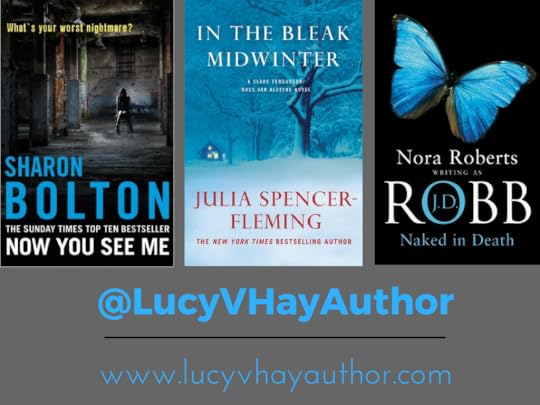
1) Now You See Me, S.J. Bolton
A Jack the Ripper copycat murderer slashes his way through contemporary London. DC Lacey Flint, a scrappy, enigmatic beauty, is suspected of the murders by Special Operations DI Mark Joesbury. Lacey has an unfortunate habit of showing up at the murder scene on the heels of the murderer, and the brutal kills seem to be personal gift-offerings for Lacey herself. Twist after twist, murder after murder, and the shifting relationship between Lacey, burdened with the secrets of her past, and the turquoise-eyed, ruthless Joesbury, make this a novel to savor on every level.
2) In the Bleak Midwinter, Julia Spencer-Fleming
Snow snow snow, white-cold, winter in Miller’s Kill, a fictional town in upstate New York. A baby is left on the steps of St. Albans Church, and shortly after, a woman’s body is found. Is she the mother? Police Chief Russ Van Alstyne’s investigation leads him, very reluctantly, to the Reverend Claire Fergusson, a former Army chaplain. She’s complicated, sensitive, generous, and the more time the unhappily married Chief spends with her seeking out clues to solve the murders, the more tormented he becomes. This is a wonderful mystery, with a very powerful sense of place, and that rare thing: a relationship between two mature, deeply moral characters who care more about everyone else than themselves, and who try to keep apart … until they can’t.
3) Naked in Death, J.D. Robb
This one might come as a surprise, but true romantic suspense is one of the most difficult genres to write—you’ve got to balance both the romance and the suspense, and in the In Death series, J.D. Robb aka Nora Roberts brilliantly balances both, and amazingly, has managed to maintain the tension of violence and desire through a series that just keeps getting better. Apprentice in Death, #43 in the series, is #1 on the New York Times Bestseller List this week.
I have a particular fondness for the first book, Naked in Death, that introduces the world of Eve Dallas and Roarke in a police procedural set in futuristic New York City. The mystery is gritty, the supporting characters humorous and interesting, and the setting of New York in 2058 tantalizingly familiar yet elusive, but it’s the relationship between Eve Dallas and Roarke that keeps readers hooked.
Eve is a prickly policewoman with tons of baggage, all sharp edges, completely focused on fighting crime. There’s just one thing: a weakness she can’t understand for a criminal billionaire who looks like a fallen angel, is not in the least intimidated by her, and tries to seduce her by giving her what she needs: great coffee. And oh yes, he is a murder suspect in her investigation. Roarke is… well, let me put it this way: Nora Roberts, the Queen of Romance, has said that of all the heroes she has created, Roarke is the only one she dreams of.
In the series, as Eve and Roarke work together, their relationship evolves, and the two commitment-shy sleuths discover that they are stronger together than apart—perhaps the ultimate lesson the detective duo can show us.
For your reading pleasure, here are a few Honorable Mentions: The couple who set the golden standard for all who follow: Dorothy Sayers’ Lord Peter Wimsey and Harriet Vane, particularly in the delightful Gaudy Night; Elizabeth Peters’ unconventional Amelia Peabody and Emerson, who meet in Crocodile on the Sandbank; Val McDermid’s eccentric Tony Hill and Carol Jordan, in the brilliant The Mermaids Singing; and a new favorite, Robert Galbraith’s rough and tumble Cormoran Strike and Robin Ellacott, in the outstanding The Cuckoo’s Calling.
BIO: Born in Morocco, Ruth Knafo Setton is the author of the novel, The Road to Fez, and the recipient of literary fellowships and awards. Her poetry, fiction and creative nonfiction have appeared in many journals and anthologies. She teaches Creative Writing and Travel Writing on Semester at Sea. She is working on her first crime novel/screenplay that features a couple whose dance already promises great frustration, for the author if no one else. She blogs on her website, plus she can be found on Facebook and Twitter.
DON’T FORGET – Your reading recommendations are WANTED! Click HERE for submission details, or click on the pic below.
September 19, 2016
INFOGRAPHIC: 16 Children’s Book Villains In Court
Ever wondered what penalties your favourite baddies from classic children’s books would get in the REAL WORLD??
You’re in luck, this fun infographic takes its inspiration from awesome antagonists and imagines what would happen to them if justice was REALLY served on them. Enjoy!

by JessicaDraws.
From Visually.
September 16, 2016
BEST OF 3: Louise Mullins, Author
 1) Distress Signals, Catherine Ryan Howard
WHY I LIKE IT: This exceptionally well-written debut by Irish crime thriller author, Catherine Ryan Howard seamlessly portrays 3D characters, alongside beautifully descriptive prose, leaving the reader with hanging on the edge of their seat at the end of each chapter. The story involving a missing woman from a cruise ship is a subject I haven’t read before and was both intriguing and enlightening.
 2) Local Girl Missing, Claire Douglas
WHY I LIKE IT: The theme of underage sex, grooming and murder is explored through beautiful language, clever twists and turns and the final revelations regarding the local missing woman made perfect sense in the end. I both didn’t want this book to end and couldn’t get through it quickly enough. A perfect combination that left its mark with me once I’d put it down.
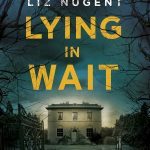 3) Lying In Wait, Liz Nugent
WHY I LIKE IT: An Irish author who is original in her subject matter and the way she explores the psychology of her characters, Liz Nugent’s recent title left me wondering who really was responsible for the murder described on page 1, and why the lead was involved. Liz’s ability to describe who-done-its and give her readers an insight into the antagonist’s mindset fascinates me. This story is told with a fresh voice and the ending was both awful and brilliantly authentic.
BIO: Louise Mullins is a qualified psychological therapist, trainee forensic psychologist and author who uses her professional experiences working with offenders and survivors of serious crimes to write psychological crime thrillers which explore the darker aspects of life. Dubbed the queen of domestic noir she is not opposed to exploring gritty, taboo subjects. She lives in Bristol with her husband and three children. Follow her on Twitter as @MullinsAuthor.
September 15, 2016
BEST OF 3: Rachel Amphlett, Author
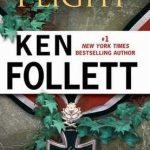 1) Ken Follett – Hornet Flight
WHY I LIKE IT: I love all of Ken Follett’s first and second-world war books, but there’s something about Hornet Flight that really caught my attention the first time I read it – more so than Eye of the Needle, which is the one most people cite. As with Follett’s more well-known tomes such as Pillars of the Earth, it’s the settings in this story that transport you into the characters’ lives and, as their plight becomes more desperate, you’re pulled right into the story every step of the way.
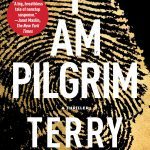 2) Terry Hayes – I Am Pilgrim
WHY I LIKE IT: This reminded me of some of the sweeping thrillers I read as a teenager – books such as Jack Higgins’ The Eagle Has Landed, or Robert Ludlum’s The Bancroft Legacy. It’s an intelligent thriller, in that the tension builds and builds, and you really aren’t sure if the good guys are going to win. I Am Pilgrim is one of those books that will have you talking about it for days after finishing it.
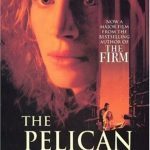 3) John Grisham – The Pelican Brief
WHY I LIKE IT: I find Grisham’s early books a lot more entertaining than later ones, but for me The Pelican Brief is the standout of all of his titles. From the opening chapter, you know it’s going to be a fast read, and it’s one of those books that I can happily devour every few years. The action beats are superb and on point, and the legal terminology doesn’t bog down the pace.
BIO: Rachel Amphlett is the bestselling author of the Dan Taylor thriller series, as well as a number of standalone crime thrillers. Originally from the UK and currently based in Brisbane, Australia, her novels appeal to a worldwide audience and have been compared to Robert Ludlum, Lee Child, and Michael Crichton. Follow her as @RachelAmphlett on Twitter.
Lucy V. Hay's Blog

- Lucy V. Hay's profile
- 174 followers

