
Lucy V. Hay's Blog, page 19
October 20, 2017
CRIMINALLY GOOD: interview with author David Videcette
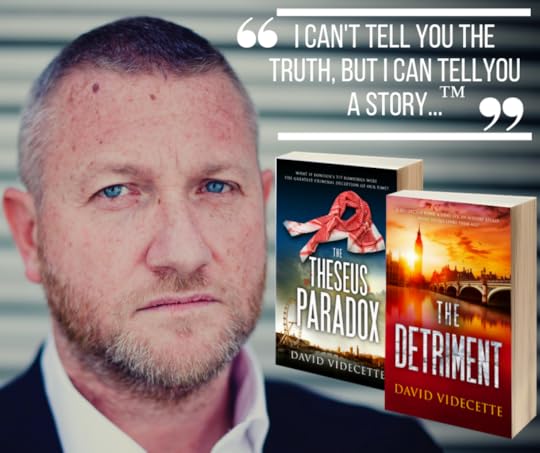
1) Who are you and what have you written?
I’m a crime fighter turned crime writer. My background is as a Scotland Yard investigator with twenty years’ policing experience – specialising in terrorism and organised crime. I’m the author of a detective thriller series based on real events and I love to chat to readers on Facebook, Twitter and Instagram.
In The Theseus Paradox, DI Jake Flannagan’s girlfriend, Claire, goes missing as he investigates the truth behind the London 7/7 bombings. What if the attacks were the greatest criminal deception of our time?
Claire returns in sequel, The Detriment, as a blazing Jeep is driven into Glasgow airport and Jake begins to unravel a real-life enigma that threatens to destroy their relationship.
Why did Claire really go missing? And is she telling the truth about her sudden and mysterious disappearance?
Intrigue, lies and fear of the unknown – sometimes the answer is much closer to home…
My thrillers are perfect for readers who like their crime thrillers as close to real crime as it comes. How much is fact and how much is fiction, only you can decide!
2) Why do you write crime fiction?
I went out to work one day and came home two weeks later wearing the same clothes and with fifty-six people dead. As a lead investigator on the London 7/7 bombings intelligence cell, I always felt that I had a story that needed to be told. Despite years and year of painstaking work and a coroner’s inquest, we only ever scratched the surface of what went on.
The Official Secrets Act prevents me from writing an autobiographical, non-fiction account, so I now write crime thrillers under my slogan: I can’t tell you the truth, but I can tell you a story…™
 3) What informs your crime writing?
I investigated terrorism and organised crime for much of my career and worked on many infamous investigations that you will have seen on the news. I use real life to inform my writing and real cases that I’ve been involved with at some level.
What has always fascinated me about criminals is not so much how they do things, but why? What motivates someone to go out and kill someone else, to turn to a life of lies and prostitution, or to proudly become a gangster? The line between right and wrong is often blurred when we start to understand what motivates and drives people’s behaviour.
I come from a police family where crime was talked about every night over dinner. It’s in my DNA. I want to show how police families cope with loved ones who work in the job, and how the demands of the role impact on family life, mental wellbeing and other relationships.
This is one of the reasons that sales and downloads of my books have been supporting the charity work of The Police Dependants’ Trust – to help officers and their families following traumatic events.
4) What’s your usual writing routine?
I want to give the reader an insider’s point of view, a different angle on what they thought they knew about events. I will spend a long time researching, interviewing, re-examining and collecting the evidence that I need to construct and illustrate my story, much like putting a police case together.
Once I have that down, I write when and where I can.
In addition to life as an author, I also commentate on crime, policing and terrorism for the news media – and I work across London in the security consultancy sector. This means you might find me furiously scribbling a new scene sitting in the car before a meeting – or whilst waiting to go on air in the BBC Green Room.
5) Which crime book do you wish YOU’D written, and why?
Perhaps I’d have written a Kay Scarpetta novel, just so I could make her a little less perfect with her pasta-making from scratch – and a little more like us average humans! Surely she’d rather grab a takeaway after a hard week spent looking at dead bodies?
David’s books are available on Amazon, or with free worldwide delivery here. For the chance to win signed copies and other goodies in David’s regular newsletter draw, pop in your email address here.


October 19, 2017
BEST OF 3 – Antti Tuomainen, author
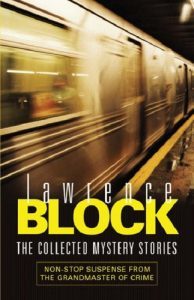
1) Enough Rope – Collected Stories by Lawrence Block
WHY I LIKE IT: Alongside novels, I love writing short stories and reading them. This massive 900-page book is filled with great stories from one of my all-time favorite crime writers Lawrence Block. The stories are of incredible variety from very dark to lighter fare. Brilliant stuff and always inspiring.
2) Sourland by Joyce Carol Oates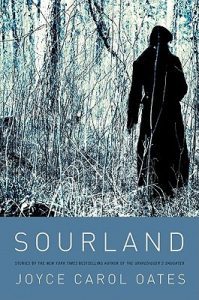
WHY I LIKE IT: Short stories, again. Joyce Carol Oates is definitely one of my favourite authors and even more so if we’re talking about short stories. You can pick any collection (there are, I think, perhaps twenty of them) and find suspenseful, scary, thought-provoking, touching and simply great stories.
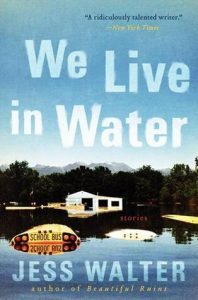 3) We Live in Water by Jess Walter
WHY I LIKE IT: Short stories, again. Some of these are crime stories and some are stories with an element of crime. All are very good indeed: human, often moving, often funny, sparely and precisely written.
BIO: Antti Tuomainen is the award-winning Finnish author of seven standalone crime novels. His works have been translated into more than 25 languages. His latest, THE MAN WHO DIED, is a page-turning thriller brimming with the blackest comedy surrounding life and death, love and betrayal, with a nod to Fargo and the best elements of the Scandinavian noir tradition. Follow him on Twitter as @antti_tuomainen.
October 17, 2017
CRIMINALLY GOOD: interview with author Cassandra Parkin
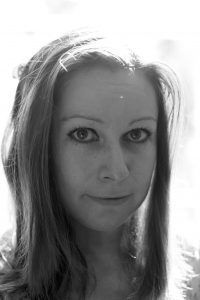 1) Who are you and what have you written?
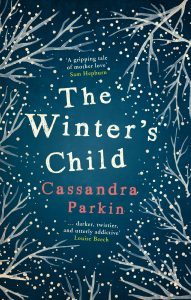
I write contemporary literary fiction – you can check out my Amazon page HERE. I blog occasionally HERE, and my twitter handle is @cassandrajaneuk (which is apparently horrifically rude in Dutch, but I’m too stubborn to change it). The Winter’s Child is my fourth novel, and my first crime novel.
2) Why do you write Crime fiction?
When I was about fifteen, a teacher dropped a copy of Kiss, Kiss on my desk and said casually, “You should read these. You’ll like them.” Once I’d got past my outraged disgust that he’d just given me something by the same bloke who wrote Charlie and the Chocolate Factory, I started reading.
It was a transformative moment for me. The crimes in those stories were so human and believable – much as I love serial-killer novels, I find criminals who are just like everyone else absolutely compelling. The stories weren’t just about the big reveal, either: sometimes there was a shock ending, but in others you knew what the crime was right from the start. That’s what drew me into Crime as a genre, I think: the awareness that criminals don’t have to be some sort of brilliant / damaged Other. We all have the capability to cross the line.
 3) What informs your Crime writing?
For The Winter’s Child, I started with the thing that scares me the most, which is the thought that one of my children could be lost and I would never know what had happened to them. That blank silence – no clues, no more information, just that endless void of waiting – terrifies me, as I imagine it terrifies most parents. But at the same time, there’s the fear of the story resolving, because for almost all of these disappearances, the ending is the discovery of the missing person’s body.
So The Winter’s Child began with the torment of that moment – my heroine Susannah, seeking out information from a fortune teller because she has no-one else left to consult, all the while knowing that finding her lost son Joel will almost certainly mean knowing he’s lost for ever.
4) What’s your usual writing routine?
I tend to write in the mornings, at my dining table. Left to myself, I prefer to write in my pyjamas, but my kids’ friends call for them on the way to the bus-stop and I don’t think it’s fair to make them look at me in all my scruffy un-brushed un-showered glory just before a long day at school, so I only do the pyjama thing at weekends. I have a sort of little tray-table thingy that balances on the table so I can write standing up, and the cats come in and out and yell for cat-treats / for attention / to tell me it’s raining / because they want me to look at a dead bird. The window looks out onto the village main street, so I still feel connected to the outside world.
5) Which Crime book do you wish YOU’D written, and why?
I would love to have written Endless Night by Agatha Christie. I’ve never read one of her books and not loved it, but Endless Night is the one that’s haunted me. Christie was the queen of gently coaxing the reader up the garden path, before leaping out and sucker-punching them from behind the rhododendrons. I reckon Endless Night is the biggest sucker-punch she ever threw.
October 15, 2017
CRIMINALLY GOOD: interview with author Brian Stoddart
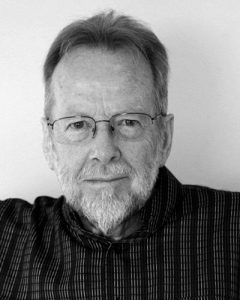 1) So, who are you & what have you written?
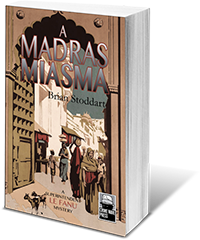
I’m Brian Stoddart and I write a historical crime series set in British India featuring Superintendent Chris Le Fanu. Three out so far and the latest, A Straits Settlement, was long listed for the Ngaio Marsh Award for Best New Zealand Crime 2017. You can find me at MY WEBSITE and on Twitter as well as Facebook.
2) Why do you write crime fiction?
Modern crime fiction is really about social challenge, and that allows me to talk about the conflicts in colonial India in a way that sees the setting as an actor. Madras now Chennai is where Le Fanu spends most time, and the city is a character that prompts the players into their actions, mistakes, beliefs and activities. That in turn allows me to write about human interaction which is really what crime fiction is essentially
3) What informs your crime writing?
My background as a researcher into modern India history. So in all the fiction I draw on the “real” history of Madras during the nationalist era. These books allow me to use a detailed knowledge of the archives and the places themselves to tell stories in a different way, and readers have responded well, saying it is like being there. That pleases me no end!
 4) What’s your usual writing routine?
I usually start in the morning and have a goal of at least 2,000 words. That usually takes until around noon or early afternoon. If the “flow” is on then I will get to 4-5,000. I start by re-reading and editing the last chapter, so that gets the rhythm and momentum back. Once finished I will usually go for a bike ride or something.
5) Which crime book do you wish YOU’D written, and why?
Neat question. Probably any of Andrea Camilleri’s Inspector Montalbano series. Had I done that, then I would have had a lot of fun, and spent more time in Sicily!
October 10, 2017
The ‘Best of’ Everything (According To Me)
When Vicki from Off The Shelf Books challenged me recently to come up with my ‘best of’ favourites for everything from authors to snacks, it’s fair to say I struggled a little picking just one! Chew on these for size …
Here’s my fave:
… author
I can have only one?? Blimey. I love most crime fiction, but I’m especially into psychological thriller. So I think my favourite author has to be … Arrrrgh! You fiend don’t make me choooose! I refuse. *Harumph*. Let’s just say I love them all!
… film
I love thriller, plus I work as a script editor for movies too, so it’s a no-brainer. I love crime, gangster, apocalypse/dystopian, supernatural – ALL OF THEM! Okay I’m being quite dull, aren’t I so let’s say ALIEN is my favourite. It’s a classic!
… TV drama
I loved Prisoner Cell Block H as a kid – it was a real thrill to watch a TV show with women dominating the screen. Now it’s remade as Wentworth Prison and it’s just as gritty, flamboyant and hard-hitting as ever. I can’t believe it doesn’t have a bigger following in the UK, it’s amazing! Watch it on Channel 5’s 5Star channel – the fifth series has just begun.
… fictional killer
Hannibal the Cannibal is a classic, but I think the one that comes to mind now that knocks him off his top spot is Adam from Barbara Copperthwaite’s Flowers For The Dead. I couldn’t believe I empathised with this guy! I also adored the formidable and terrifying Caleb Switch in Arlene Hunt’s Last One To Die. The sting in the tale for that one was just delicious. As far as female killers go, I don’t think we have enough of them, but Amy Dunne from Gone Girl is just fantastic. She will stop at NOTHING to get what she wants!
… fictional detective
Gotta be DS Joanne Aspinall from Paula Daly’s crime series set in Lake Windemere (Just What Kind Of Mother Are You?; Keep Your Friends Close; The Mistake I Made; The Trophy Child). I love how ‘ordinary’ she is; a real ‘everywoman’ with problems and flaws like any one of us. She’s clever, insightful and has a sharp eye; plus she’s not EXTRAORDINARY like so many female leads are forced to be. Also, her issues with romance and her overly large bust don’t define her. She is what she is and that’s so RARE in a female character.
… murder weapon
Anyone who can kill someone with an icicle like Jack Frost in Marnie Riches’ The Girl Who Walked In The Shadows gets a big THUMBS UP from me! A murder weapon that handily disappears?? Bonus.
… death scene
As someone who grew up in the 80s, this has to be Bugs Bunny’s ‘death’ at the hands of Elmer Fudd in the MARCH OF THE VALKYRIES Looney Tunes’ adaptation of Wagner’s classic opera. No idea what I’m on about? It’s ‘KILL THE RABBIT! KILL THE RABBIT!’ of course. Poor little bunny, indeed!
… blogs/websites
I run my own writing website, Bang2write, so this means I have to ‘keep up’ with other writing blogs and sites, especially ones that are screenwriting-based. Screenwriting theory has been very useful to me as a crime author, so my favourite is probably Screencraft. But there’s stacks more: The Script Lab, Write So Fluid, Go Into The Story to name but a few.
… writing tip
People often posit whether character or structure are more important – I say they’re inextricably linked. You can’t have one without the other, regardless of medium, because we want stories about ‘characters who DO STUFF [for various reasons]’.
… writing snack
Chocolate. Which types of chocolate depends though … I go through phases. At the moment, I am eating my body weight in Toblerone. I am still outraged by the smaller size of the triangles though, so I may plot the murder of the Toblerone people … in my next book, of course!
What are your favourites?
October 8, 2017
CRIMINALLY GOOD: interview with author Lilja Sigurdardóttir
 1) So, who are you and what have you written?
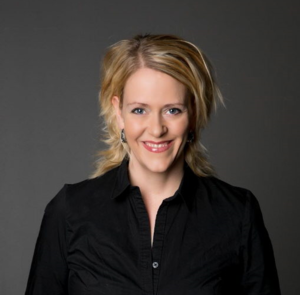
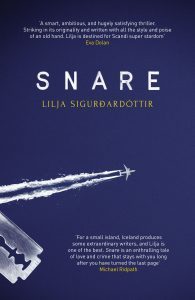
I am an Icelandic writer. I have written five crime novels and a few stage plays, one of which was produced in Iceland and won some awards. It was great fun to write for the theatre and incredibly inspiring to experience theatre-artists at work, but crime-writing is my main career. Snare is my first book that has been translated into English and I am very excited to know what people here think of it. The English-speaking world has such a rich tradition of crime fiction so I hope my story is up to standards that readers are used to.
2) Why do you write crime fiction?
Because I love it! Reading crime books gives you an enjoyment unlike anything else. It is hard to say exactly what is that makes it so enjoyable but I think it is the story0telling element. When a person buys a crime book it´s a sort of a story-telling pact between the reader and the writer. The reader expects the writer to tell a story and the level of enjoyment depends on how well the writer fulfils that pact. I feel it is my duty as a thriller writer to entertain people, to tell them a good story that is hard to put down and therefore make it an enjoyable experience.
 3) What informs your crime writing?
I draw inspiration for my writing from everywhere! I love all sorts of conspiracy theories and gossip about politics and corruption. I like to follow news of events and challenge the consensus by thinking: What if things were quite the reverse? What if this person who was found guilty is in fact not guilty? What if this disgraced politician really did not do what he´s accused of? What if this person is being blackmailed to admit to something she did not do? This sparks endless stories in my head and sometimes I have to calm myself down to avoid becoming too fantastical! After I form a plot in my head I then research quite diligently to learn what is possible and what is not.
4) What´s your usual writing routine?
I wish I had a routine! With the international success of Snare I now travel very much so I am training myself to write in airplanes and trains and hotels. I take January and February off every year for writing but I don´t manage to write a whole book in that time so I have to be mindful of using every bit of free time I get to advance the story I am currently working on. When I am at home I like to start early in the morning. I get up, grab a cup of coffee and get going. At lunchtime I am usually drained so then I do other things. I feel writing is like a muscle, you have to train it to become efficient, so taking long periods off is not good although it is necessary to take a few days off every now and then to recharge the creative battery.
5) Which crime book do you wish YOU´D written, and why?
Miss Smilla’s Feeling for Snow by Danish author Peter Höeg. It is an amazing story centred around our neighbouring Greenland. It has all the usual thriller elements and there is a big conspiracy at the centre of it but the social commentary is also very sharp and important in the Nordic countries, as it describes the life of mixed-race people that are torn between Inuit and Nordic culture. Smilla is an amazing female character and the book is an absolute enjoyment to read. There is also film adaptation of it called Smilla’s Sense of Snow.
October 6, 2017
Goodreads Giveaway, plus great deals on Kindle & Kobo This Weekend!
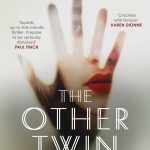
If you’ve been keen to get your hands on a paperback copy of my crime debut, THE OTHER TWIN – you’re in luck! There’s currently a Goodreads giveaway on, with FIFTEEN copies up for grabs in the UK, US Australia and Canada. ENTER HERE.
While you’re there, could you also do me a favour? Please click the TO READ button and help spread the word about THE OTHER TWIN. Thanks so much!
EBOOK SPECIAL OFFERS
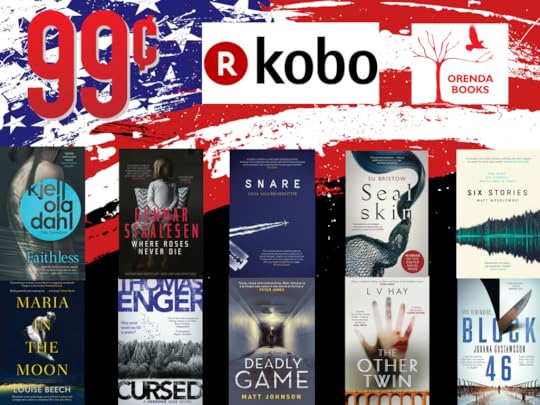
If you’re in the US or Canada and a Kobo reader, then great news – my crime fiction debut THE OTHER TWIN is on special offer, at just 99c! What’s more, you can also get all these other brilliant Orenda Books titles for the same price. Get over the Kobo site right now!
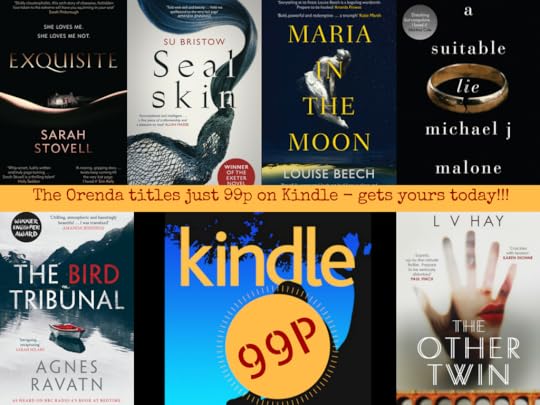
Don’t worry if you’re in the UK – got something for you guys too! If you’re a Kindle user, you can currently download THE OTHER TWIN for just 99p … And again, there’s loads of other brilliant Orenda Books titles to choose from for 99p as well. Fill your boots!
HAPPY READING!
October 5, 2017
BEST OF 3: Tara Lyons, Author
 1) Into the Darkest Corner, Elizabeth Haynes
WHY I LIKE IT: This book is dark, claustrophobic and scary as hell. I’ve never felt such a connection with a main character as I did with Cathy. It’s very cleverly written.
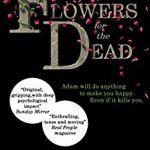 2) Flowers for the Dead, Barbara Copperthwaite
 WHY I LIKE IT: The storyline is twisted and intriguing in equal measures. To actually make me feel sympathy for a serial killer only shows the talent this author has. MORE: Read Barbara’s interview on Criminally Good, HERE.
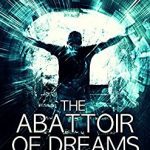 3) The Abattoir of Dreams, Mark Tilbury
WHY I LIKE IT: It focuses on a harrowing subject but the author delivers it with such sensitivity and emotion you want to read more, not hide away from the topic.
I’ve just realised all three of these books alternate between the past and present – it’s obviously a technique I throughly enjoy!
BIO: Tara Lyons is a crime/psychological thriller author from London, UK. Turning 30 in 2015 propelled her to fulfil her lifelong dream of becoming a writer. In the Shadows is Tara’s debut solo novel published in March 2016, and republished by Bloodhound Books this year. She co-wrote The Caller and Web of Deceit: A DI Sally Parker novella with New York Times bestselling author, M.A Comley. The third book in the DI Hamilton series, Deadly Friendship, was published in July 2017.
When she’s not writing, Tara can be found at a local Wacky Warehouse stuck in the ball-pit with her young, energetic son.
WANT TO SHARE YOUR OWN ‘BEST OF 3’?
We ALWAYS want to hear your reading recommendations on this site! Check out the submission details HERE and send us yours today.
October 4, 2017
My 2017 Reading Pledge Update (Third Quarter)
Want to see my second quarter results? CLICK HERE.
So, I’ve been so mega-busy this week I haven’t had chance to post my results for the third quarter of the year on my reading pledge until now! Here goes …
If you recall, I pledged to read and review 100 books in 2017. But as July rolled around, I found myself feeling extremely stressed by this target. I had a word with myself and decided that putting myself under undue pressure was a bit bonkers … So I reduced my target to 80, the same as 2016.
Unsurprisingly, I immediately felt less pressured and began to enjoy reading again! Honestly, sometimes I am my own worst enemy. Though I never have a prescribed reading list, here’s a quick recap of the TYPES of books I’ve pledged to read this year and what I’ve achieved so far:
5 Writers of colour – SMASHED this quarter
5 Classic literary titles (or modern prize-winners, i.e. Pulitzer) – SMASHED this quarter
5 Non fiction titles – SMASHED (in second quarter)
5 Fiction titles that aren’t crime, mystery or thriller (or classics, prize-winners or non-fiction!)
5 PLUS: a crime/subgenre I’ve never tried before – SMASHED this quarter
I managed 23 books in both the first and second quarters of 2017. In this quarter I merged 28, which again was unsurprising as this quarter included August, where traditionally I tend to read more because it’s the school holidays.
I was actually surprised I hadn’t read more, to be honest – but then I factored in the fact I read more classics and non fiction this quarter, which traditionally take me longer to read as I like to try and really savour and/or understand them. During this quarter, I read The Ministry Of Fear by Graham Greene (which would make a BRILLIANT modern movie); as well as Genuine Fraud by E Lockhart, which is a brilliant non-linear YA retelling of Patricia Highsmith’s The Talented Mr. Ripley. I also included I Captured The Castle by Dodie Smith in this quarter (though I technically finished on October 2nd, it was only the last 50 pages – the rest I read in September. I loved it).
Non-fiction-wise I read loads again this quarter. I read a number of free writing ebooks from Authors Publish Magazine, as well as the fabulous The Glass Castle by Jeanette Walls (which will probably figure in my top 10 books of all time). I also read Writers Gone Wild by Bill Peschel (extremely funny accounts of famous writers’ misbehaviour); The Examined Life by Stephen Grosz (really interesting tales of a psychologist’s patients); Very Good Lives (The Fringe Benefits Of Failure), a transcripts of JK Rowling’s famous speech; and Dear Ijeawele: A Feminist Manifesto In Fifteen Suggestions by Chimamanda Ngozi Adiche (insightful as always).
I also read many more challenging books this quarter, such as The Hate U Give by Angie Thomas (which I found very upsetting, but brilliant); Maria In The Moon by Louise Beech (devastatingly beautiful); Unbroken by Madeleine Black (harrowing non fiction, but genuinely life-changing for me) and I Am Pilgrim by Terry Hayes (which was truly fantastic but epically long at nearly 900 pages). All of these, too, took ‘more time’ for me to digest than average.
I only read one YA Book, Holly Hudson’s excellent Grace Steele: Death In The Pine Forest, though technically that’s also crime fiction. I also read Karen Rose’s fabulous new book in the Baltimore series, Monster In The Closet. I did read three police procedurals (which is really unusual for me): Fiona Cummins’ brilliant Rattle; Gwen GB’s really enjoyable Lonely Hearts and Caz Frear’s fantastic Sweet Little Lies though. So if we count these last three books as being in a ‘crime/subgenre I’ve not tried before’, then that’s that target smashed for the year too.
This means I’ve smashed nearly all my targets for this year, though I need to read at least 3 more books that AREN’T crime, mystery, thriller, classics or prize winners to get a full house on this year’s pledge! But I feel confident I can do that.
How are YOUR Goodreads challenges going? Check mine out HERE and friend me on Goodreads, HERE.
October 3, 2017
BEST OF 3: Awesome diverse characters of all time
As a script editor for movies and short film, I noticed a long time ago there’s a kind of homogenisation of characters in stories. Too often, stories are white, male, heterosexual and abilitity-centric, marginalising all others as being representative of ‘issues’.
It’s for this reason I wrote my latest non-fiction book, Writing Diverse Characters In Fiction, TV and Film. As part of its current blog tour, the lovely Anne Cater challenged me to come up with my favourite diverse characters of all time in books.
Wow! There are so many … Can I whittle it down to just 3?? YES is the answer … Whilst my book doesn’t just concentrate on race (it deals with LGBT, disabled and female characters too), I have decide to focus on gender and BAME characters for the purpose of this blog post.
So, here are three diverse characters that have left a lasting impression on me, for various reasons. Do you know any of these?
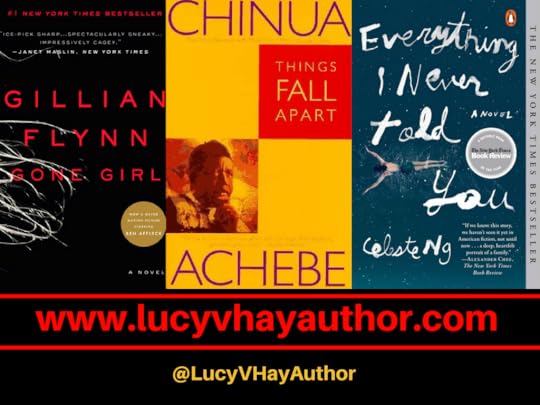
1) Female Antagonist
Character: Amy Dunne
Appears in: Gone Girl by Gillian Flynn
Reason: Brought bad girls back into the mainstream
It would be remiss of me to not mention Amy! Like it or loathe it, Flynn’s modern classic left lasting ripples because Amy truly is the definition of ‘unreliable narrator’. What’s more, Flynn’s character put female antagonists back on the map, especially in the so-called ‘domestic noir’ sub-genre that seems here to stay.
Antagonists too often have crazy plans, with female characters simple ‘bunny boilers’ against supposedly sane and ‘good’ men. In contrast, we may not condone Amy’s actions, but they are complex, clever and ‘understandable’: Nick is a terrible husband, a weak man and a pathetic human being. Frankly, I think he deserves he all gets!
Interestingly, the VAST majority of female antagonists I’ve read since Gone Girl exploded into the marketplace have been white. Maybe that will change in the years to come? We’ll have to see.
2) Male Anti-Hero
Character: Okonkwo, an Igbo Tribesman Leader
Appears in: Things Fall Apart by China Achebe
Reason: Made me realise masculinity/status can be a tyranny
Things Fall Apart is an absolute classic and for good reason. Detailing the rise and fall of Nigerian leader Okonkwo, his changing fates make for sobering reading. Presented in three parts, we join Okonkwo as a hero: a wrestling champion, he strives to show no weakness ever.
However it is Okonkwo’s pride and desire to be seen as always strong that sows the seeds of his downfall. When the Gods decide Okonkwo’s adopted son Ikemefuna must die, he is excused from having to do the deed himself. But Okonkwo insists on participating and it’s then everything starts to go wrong for this once-great man. This part also has one of the most haunting passages in the entire book:
He heard Ikemefuna cry, “My father, they have killed me!” as he ran towards him. Dazed with fear, Okonkwo drew his machete and cut him down. He was afraid of being thought weak.
It’s been twenty years since I first read this book, yet this quote stays with me.
3) Mixed Race Ensemble Cast
Characters: The Lee Family (Lydia, Marilyn, James, Nath and Hannah)
Appears in: Everything I Never Told You by Celeste Ng
Reason: Made me realise that different and/or opposed cultural expectations and values can create family friction and even tragedy
Ensemble casts are often tokenistic in their approach of both race and gender, but setting this hardgoing, but important book in a mixed race family home cuts through this issue with ease.
Focusing on the deeply troubled Lee family, the tragedy that occurs in the present was set in motion nearly two decades before when Lydia, Nath and Hannah’s parents met.
Whilst Marilyn is white, but James is second generation Chinese American. Set in 1970s Ohio, The Lees are two decades too late for female emancipation and too early for any real attempt at racial equality. As a result, the family is a local oddity, with Marilyn dreaming of her own frustrated career aspirations and James dreaming of simply fitting in. Both are deeply unhappy, which leads to their three children inheriting their parents’ issues, with terrible consequences.
I was particularly interested in this book because my own extended family is Chinese-British. I’d obviously thought about the issues my nephew and nieces may face in today’s society, but this really brought it home to me how children can face issues like this starting in the home, too. Thankfully, my brother-in-law and sister-in-law are nothing like The Lees!
Last points
If you’re wondering how you can read more diverse characters in the books you like, why not make a pledge to more intentionally inclusive? Enjoy!
This post originally appeared on Random Things Through My Letterbox
Lucy V. Hay's Blog

- Lucy V. Hay's profile
- 174 followers

