Michael May's Blog, page 133
August 3, 2015
Fritz Leiber's "Spider Mansion" and the Old Hand [Guest Post]
By GW Thomas
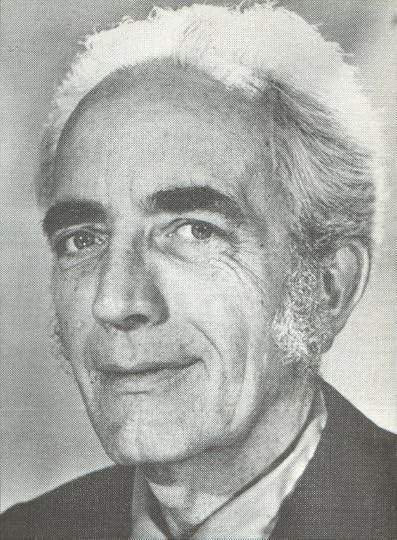 Fritz Leiber was an innovator. If he wrote in a genre, he always tried to do something to improve that type of storytelling. This desire to do more than the same old thing won him many awards (five Hugos, a Nebula, and a World Fantasy Award, as well as the Gandalf for Lifetime Achievement) and accolades in the decades after the old pulps had crumbled to dust. But during the 1940s and '50s, originality had a price.
Take Weird Tales for example. Leiber's most famous early horror story did not appear in "The Unique Magazine." "Smoke Ghost," which featured a spirit of evil created by a modern city, appeared in Unknown Worlds (October 1941) where John W Campbell pushed the definition of modern fantasy. Leiber wanted to write horror fiction using some of the same ideas as HP Lovecraft (though never in a slavish pastiche kind of way), taking the boogie men out of the haunted castles and European forests and bringing them to the streets of America. There was only one problem. Innovation courts rejection.
This was the simple economic truth of the pulp era. Fritz Leiber was not some wealthy heir, despite his father being the famous actor Fritz Leiber Sr. He needed the money the pulps provided. So do you innovate or imitate? This question drove Fritz to talk to other pulpsters. In Discovering Modern Horror Fiction II, Michael E Stamm explains:
The narrator and his wife Helen come to the house during a storm, eat a mysterious dinner during which Orne explains how his dead brother Martin had created a formula that controls size. Their host leaves the table to deal with his mastiff, though the sounds the listeners hear are those of shuffling and skittering. During the absence Cynthia gives the couple a secret message written on her hankie in lipstick. It says "Get out. For your lives."
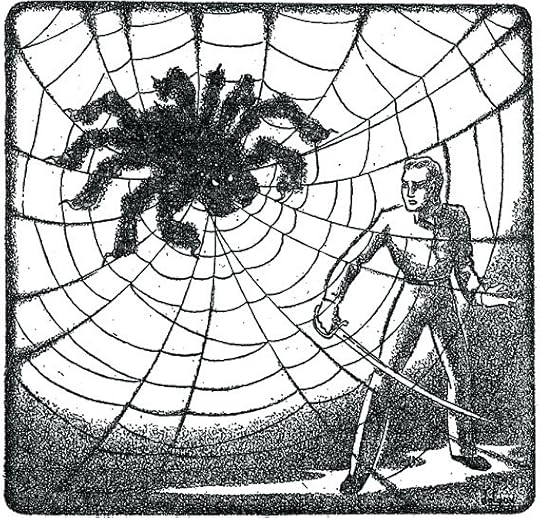 Intending to rescue Cynthia, the narrator discovers the secret of Orne House. The woman has been placed in a giant spider's web, which also contains Martin Orne, not dead but twisted by his ordeal in the web. Using grease and a sword from the mansion's hallway, the narrator frees the captives but Malcolm Orne appears. He has the unconscious Helen. The narrator engages Orne's pet giant spider while the two brothers fight. Malcolm crushes his brother's skull with his giant strength but dies when the wounded spider attacks him. The room catches on fire and the visitors and Cynthia Orne flee.
This scenario contains so many gothic props that the reader suspects the author of a touch of parody. As Stamm puts it, it has "definite humorous overtones." Stamm also points out the story doesn't read like Leiber at all. John Pelan counters this in the introduction to The Black Gondolier and Other Stories (2001). "Spider Mansion" despite its gothic trappings is still a story of science gone wrong, a theme Leiber would use again.
I've tried to discover who the Old Hand is but haven't found any thing definite. Looking at the excellent stats in "Who Wrote the Most?" by Terence E. Hanley at Tellers of Weird Tales and thinking about the publication date, September 1942, this eliminates HP Lovecraft, Robert E Howard (who had died), and Clark Ashton Smith (who had retired and certainly wouldn't have made those suggestions anyway. He too struggled with innovation vs imitation.) In 1942, Henry Kuttner, Paul Ernst and Manly Wade Wellman had sold to WT but wouldn't be considered "old hands." Ray Bradbury, Allison V Harding, and Frank Owen all came after or started about the same time as Leiber.
 This leaves some likelier suspects, starting with Seabury Quinn. He wrote the most stories for WT, at 145. The author of the most popular series, the Jules de Grandin occult detective stories, there is a good chance that he was the old hand. De Grandin and Dr. Trowbridge meet many mad scientists and misshapen freaks in Harrisonville, New Jersey. But would Quinn have been so kind to his competition? Unlike many of the "Lovecraft Circle" he wasn't involved in literary games of Cthulhu Mythos, sharing and swapping ideas, but was a hard working editor for the funeral industry.
The second most prolific writer was August Derleth (101 stories). He would have been more likely, also being a correspondent of HP Lovecraft. Derleth would publish Leiber's first book, Night's Black Agents in 1947. But Auggie wrote ghost stories like the classic "Mr. George" under his pseudonym, Stephen Grendon. The list of weird topics doesn't sound like his work. I think Derleth would have been more likely to direct Leiber towards Lovecraftian pastiche or English ghost stories in the MR James mode.
Edmond Hamilton, at number three, with 76 stories, is another good possibility. Hamilton's very first story at WT featured a giant invisible spider in "The Monster-God of Mamurth." Ed also wrote the most and best science fiction in the magazine, which would have appealed to Leiber. The advice doesn't sound like the ideas Hamilton would have promoted though. He didn't write gothic retread, but liked to explore sf and fantasy ideas. His "The Metal Giants" (December 1926) was one of the first killer robot stories. "He That Hath Wings" (July 1938) invented the idea of a mutant with wings (not Stan Lee). Hamilton was an innovator who found a home at Weird Tales, but even he would leave the pulps four years later to write Superman comics.
 Robert Bloch, HP Lovecraft's protege, wrote 66 stories for Weird Tales. He started out doing Lovecraft pastiche, but slowly found his own thing. By 1942, Bloch was writing in his famous style of black humor with "A Sorcerer Runs For Sheriff" and "The Eager Dragon." He was also writing longer, more advanced pieces like "Hell on Earth." Again, I doubt he would have handed Fritz such antiquated advice as mad scientists and giant dwarfs. He was moving away from this type of tale and could only have applauded stories like "Smoke Ghost."
After Seabury Quinn, the most likely candidate for the Old Hand is Arthur J Burks at 29 stories. His score isn't that high, but Burks was one of the million-words-a-year men, writing for many different pulps. He bragged that he could generate a new plot from any ordinary household object. ("Oh no, the Egg Whisk of Doom!") The advice given Fritz sounds more like a recipe for the shudder pulps and Burks knew them well, having written a couple dozens tales for magazines like Horror Stories and Thrilling Mystery. The plot of an average shudder pulp story involved a supernatural-appearing situation that would be revealed at the end to be the work of a crazed dwarf.
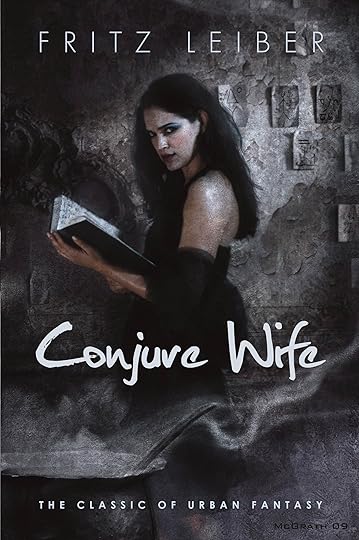
No matter who the Old Hand was, Fritz Leiber only published eight stories with Weird Tales. After "Spider Mansion," Leiber wrote a few gems like "The Hound" (November 1942) in which he used Lovecraftian themes (along with the same title as a Lovecraft story), but in an urban setting. "The Dead Man" (November 1950) was the last of his WT stories. Editorial inflexibility at WT lost them one Leiber classic written in these years, the novel Conjure Wife (1943), setting the standard for modern urban horror. It appeared in John W Campbell's Unknown Worlds. Like with the sword-and-sorcery team of Fafhrd and Grey Mouser, Weird Tales had their chance, but passed on what would in retrospect be some of Leiber's best early work.
GW Thomas has appeared in over 400 different books, magazines and ezines including The Writer, Writer's Digest, Black October Magazine and Contact. His website is gwthomas.org. He is editor of Dark Worlds magazine.
 Fritz Leiber was an innovator. If he wrote in a genre, he always tried to do something to improve that type of storytelling. This desire to do more than the same old thing won him many awards (five Hugos, a Nebula, and a World Fantasy Award, as well as the Gandalf for Lifetime Achievement) and accolades in the decades after the old pulps had crumbled to dust. But during the 1940s and '50s, originality had a price.
Take Weird Tales for example. Leiber's most famous early horror story did not appear in "The Unique Magazine." "Smoke Ghost," which featured a spirit of evil created by a modern city, appeared in Unknown Worlds (October 1941) where John W Campbell pushed the definition of modern fantasy. Leiber wanted to write horror fiction using some of the same ideas as HP Lovecraft (though never in a slavish pastiche kind of way), taking the boogie men out of the haunted castles and European forests and bringing them to the streets of America. There was only one problem. Innovation courts rejection.
This was the simple economic truth of the pulp era. Fritz Leiber was not some wealthy heir, despite his father being the famous actor Fritz Leiber Sr. He needed the money the pulps provided. So do you innovate or imitate? This question drove Fritz to talk to other pulpsters. In Discovering Modern Horror Fiction II, Michael E Stamm explains:
The plot of "Spider Mansion" (Weird Tales, September 1942) is familiar to anyone who has seen The Rocky Horror Picture Show. A man and his mate end up in a creepy mansion, wanting to do nothing more than leave. The inhabitants of the house are weird and creepy. Secrets eventually unveil a terrible truth that the couple discover, then flee. The owner of the house is not Frankenfurter but Malcolm Orne, a famed midget who has mysteriously grown into a giant. With Orne is his beautiful wife, Cynthia, a figure right out of an Ann Radcliffe gothic novel."...At the time Leiber was having trouble finding a metier that would guarantee consistent sales to Weird Tales, then the best and certainly most famous market for horror fiction. In talking to an Old Hand who'd been selling to WT for years, Leiber got a list of the sort of things the magazine could be expected to like in weird fiction: giant spiders, mad scientists, lonely haunted houses, giant dwarfs, innocent bystanders, etc. As an experiment - with definite humorous overtones - Fritz Leiber put all of these disparate elements into one story - "Spider Mansion" - and submitted it to Weird Tales - which bought it immediately."

The narrator and his wife Helen come to the house during a storm, eat a mysterious dinner during which Orne explains how his dead brother Martin had created a formula that controls size. Their host leaves the table to deal with his mastiff, though the sounds the listeners hear are those of shuffling and skittering. During the absence Cynthia gives the couple a secret message written on her hankie in lipstick. It says "Get out. For your lives."
 Intending to rescue Cynthia, the narrator discovers the secret of Orne House. The woman has been placed in a giant spider's web, which also contains Martin Orne, not dead but twisted by his ordeal in the web. Using grease and a sword from the mansion's hallway, the narrator frees the captives but Malcolm Orne appears. He has the unconscious Helen. The narrator engages Orne's pet giant spider while the two brothers fight. Malcolm crushes his brother's skull with his giant strength but dies when the wounded spider attacks him. The room catches on fire and the visitors and Cynthia Orne flee.
This scenario contains so many gothic props that the reader suspects the author of a touch of parody. As Stamm puts it, it has "definite humorous overtones." Stamm also points out the story doesn't read like Leiber at all. John Pelan counters this in the introduction to The Black Gondolier and Other Stories (2001). "Spider Mansion" despite its gothic trappings is still a story of science gone wrong, a theme Leiber would use again.
I've tried to discover who the Old Hand is but haven't found any thing definite. Looking at the excellent stats in "Who Wrote the Most?" by Terence E. Hanley at Tellers of Weird Tales and thinking about the publication date, September 1942, this eliminates HP Lovecraft, Robert E Howard (who had died), and Clark Ashton Smith (who had retired and certainly wouldn't have made those suggestions anyway. He too struggled with innovation vs imitation.) In 1942, Henry Kuttner, Paul Ernst and Manly Wade Wellman had sold to WT but wouldn't be considered "old hands." Ray Bradbury, Allison V Harding, and Frank Owen all came after or started about the same time as Leiber.
 This leaves some likelier suspects, starting with Seabury Quinn. He wrote the most stories for WT, at 145. The author of the most popular series, the Jules de Grandin occult detective stories, there is a good chance that he was the old hand. De Grandin and Dr. Trowbridge meet many mad scientists and misshapen freaks in Harrisonville, New Jersey. But would Quinn have been so kind to his competition? Unlike many of the "Lovecraft Circle" he wasn't involved in literary games of Cthulhu Mythos, sharing and swapping ideas, but was a hard working editor for the funeral industry.
The second most prolific writer was August Derleth (101 stories). He would have been more likely, also being a correspondent of HP Lovecraft. Derleth would publish Leiber's first book, Night's Black Agents in 1947. But Auggie wrote ghost stories like the classic "Mr. George" under his pseudonym, Stephen Grendon. The list of weird topics doesn't sound like his work. I think Derleth would have been more likely to direct Leiber towards Lovecraftian pastiche or English ghost stories in the MR James mode.
Edmond Hamilton, at number three, with 76 stories, is another good possibility. Hamilton's very first story at WT featured a giant invisible spider in "The Monster-God of Mamurth." Ed also wrote the most and best science fiction in the magazine, which would have appealed to Leiber. The advice doesn't sound like the ideas Hamilton would have promoted though. He didn't write gothic retread, but liked to explore sf and fantasy ideas. His "The Metal Giants" (December 1926) was one of the first killer robot stories. "He That Hath Wings" (July 1938) invented the idea of a mutant with wings (not Stan Lee). Hamilton was an innovator who found a home at Weird Tales, but even he would leave the pulps four years later to write Superman comics.
 Robert Bloch, HP Lovecraft's protege, wrote 66 stories for Weird Tales. He started out doing Lovecraft pastiche, but slowly found his own thing. By 1942, Bloch was writing in his famous style of black humor with "A Sorcerer Runs For Sheriff" and "The Eager Dragon." He was also writing longer, more advanced pieces like "Hell on Earth." Again, I doubt he would have handed Fritz such antiquated advice as mad scientists and giant dwarfs. He was moving away from this type of tale and could only have applauded stories like "Smoke Ghost."
After Seabury Quinn, the most likely candidate for the Old Hand is Arthur J Burks at 29 stories. His score isn't that high, but Burks was one of the million-words-a-year men, writing for many different pulps. He bragged that he could generate a new plot from any ordinary household object. ("Oh no, the Egg Whisk of Doom!") The advice given Fritz sounds more like a recipe for the shudder pulps and Burks knew them well, having written a couple dozens tales for magazines like Horror Stories and Thrilling Mystery. The plot of an average shudder pulp story involved a supernatural-appearing situation that would be revealed at the end to be the work of a crazed dwarf.
No matter who the Old Hand was, Fritz Leiber only published eight stories with Weird Tales. After "Spider Mansion," Leiber wrote a few gems like "The Hound" (November 1942) in which he used Lovecraftian themes (along with the same title as a Lovecraft story), but in an urban setting. "The Dead Man" (November 1950) was the last of his WT stories. Editorial inflexibility at WT lost them one Leiber classic written in these years, the novel Conjure Wife (1943), setting the standard for modern urban horror. It appeared in John W Campbell's Unknown Worlds. Like with the sword-and-sorcery team of Fafhrd and Grey Mouser, Weird Tales had their chance, but passed on what would in retrospect be some of Leiber's best early work.
GW Thomas has appeared in over 400 different books, magazines and ezines including The Writer, Writer's Digest, Black October Magazine and Contact. His website is gwthomas.org. He is editor of Dark Worlds magazine.


July 29, 2015
Break Time

I was planning to cover Licence to Kill this week and spend August just on Pierce Brosnan. It's turning out to be an unusual week though (in a good way), so I'm taking a break and will pick up again next week.
See you then.

July 27, 2015
The Gernsback Continuum [Guest Post]
By GW Thomas
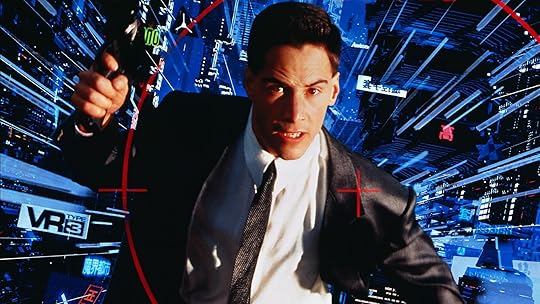 Johnny MnemonicI know its cheeky to speak ill of the successful. They are after all... successful. But I can't help it. "The Gernsback Continuum" by William Gibson begs me to be cheeky. And suggest an... improvement. Let's back up for a moment.
William Gibson, a fellow Canadian, has been big since the early 1980s. My first encounter with him was "Johnny Mnemonic" in Omni (May 1981), later made into a film with Keanu Reeves. Gibson is best remembered for Neuromancer (1984), the quintessential Cyber-Punk novel, which I still haven't gotten around to reading yet. "The Gernsback Continuum," according to editor Terry Carr (in Universe 11 (1981) was his second story to be published.
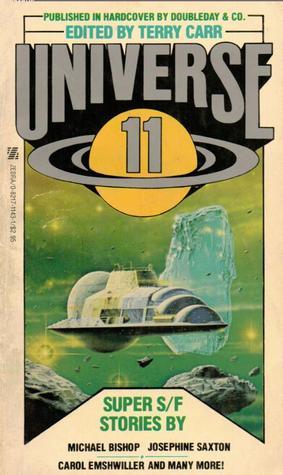 Universe 11When I heard of the story, probably in some random Gernsback search for pulp publishing details about the editor, I sat up and took notice. A story that supposes a universe based on Gernsback's magazine publishing? I'm in! This is going to be a crazy pulp ride! I had read Fredric Brown's What Mad Universe (1949), that supposes a universe created in a fanboy's mind, and liked it a lot, but here was a story that takes Gernsback head on!
So I found my copy of Universe 11 and read "The Gersnback Continuum" and before I know it, it's over. It's a rather short story. And I am profoundly disappointed. Here's why. The plot follows a photographer named Parker who is hired to do a shoot about 1930s futuristic architecture and culture. He does so much of it that after a while he starts to see things like a boomerang-shaped propeller-driven ship. The Gernsbackian reality is taking over in his mind. He talks to a friend, Merv Kihn, who reports for the UFO magazines but Kihn says it happens all the time and it doesn't mean you're crazy. The climax comes when Parker sees a man and a woman from that weird future-that-never-was. They're tall, blond, white, and robotic (in the sense that they appear less human). Parker flees the vision and the story ends with the photographer's numbing his sensitivity by focusing on the dullness and strife of today, keeping that past vision of the future at bay.
 Frank R PaulWhich is pretty good but... it's not enough. I needed more to buy it all. I wanted the two people from the vision to take him to their world of the future. And in a plot right out of Gernsback's magazine, the visitor would see why this world is too perfect. Maybe there are no races anymore, only the Teutonic Nazi version. Maybe children are raised by machines and the air is filled with propeller ships and SHIELD-style flying fortresses. With the resultant pollution problem (heroically fixed by a single scientist who brilliantly saved the earth from fossil fuels), maybe Parker even starts to fall for one of these future gals. Come on, if you've read any 1930s SF you know what I'm talking about: an Edmond Hamilton plot within a Gernsback story, and in the end he saves himself from becoming one of these terrible future drones by a memory. A single memory of something so un-Gernsbackian, it draws him back to our reality. Perhaps something from the Hippie '60s (like listening to Zeppelin II for the first time) or even God-help-us the Disco '70s. Something that says the way the world went was better. (I'll leave that really hard part for Bill Gibson to figure out. He is collecting the check after all.)
So, that's what I was expecting. Now, it's not fair to put all that pressure on Gibson's second published story, but wait, there's more!
I thought someone might have adapted the story so a Google search told me I was right. A British short film from 1993 called Tomorrow Calling starring one of my favorite British actors, Colin Salmon. He's been in Bond films, on Doctor Who, but more recently he played Walter Steele on Arrow. The short film version sticks pretty close to Gibson, and only reinforced what I thought after reading the story. It's too facile; not Gernsbackian enough.
So where do we go from here? I don't think Gibson has any real desire to write about 1930s pulp anymore. He does like using the Raymond Chandler mode in his novels, but the futures he sees - like in his last novel, The Peripheral (2014) - are much darker than those goofy Frank R Paul drawings. "The Gernsback Continuum" exists for me in those crumbling pulp pages, but Gibson 's characters were too afraid to explore that shiny world of machines and machine-like people. I think I'll have to be satisfied with a little vintage Edmond Hamilton or A Hyatt Verrill, a world that is AMAZING and filled with WONDER, but as Gibson suggests, perhaps a little too haunting and cold.
Next stop? The Farnsworth Wright Protraction!
GW Thomas has appeared in over 400 different books, magazines and ezines including The Writer, Writer's Digest, Black October Magazine and Contact. His website is gwthomas.org. He is editor of Dark Worlds magazine.
 Johnny MnemonicI know its cheeky to speak ill of the successful. They are after all... successful. But I can't help it. "The Gernsback Continuum" by William Gibson begs me to be cheeky. And suggest an... improvement. Let's back up for a moment.
William Gibson, a fellow Canadian, has been big since the early 1980s. My first encounter with him was "Johnny Mnemonic" in Omni (May 1981), later made into a film with Keanu Reeves. Gibson is best remembered for Neuromancer (1984), the quintessential Cyber-Punk novel, which I still haven't gotten around to reading yet. "The Gernsback Continuum," according to editor Terry Carr (in Universe 11 (1981) was his second story to be published.
 Universe 11When I heard of the story, probably in some random Gernsback search for pulp publishing details about the editor, I sat up and took notice. A story that supposes a universe based on Gernsback's magazine publishing? I'm in! This is going to be a crazy pulp ride! I had read Fredric Brown's What Mad Universe (1949), that supposes a universe created in a fanboy's mind, and liked it a lot, but here was a story that takes Gernsback head on!
So I found my copy of Universe 11 and read "The Gersnback Continuum" and before I know it, it's over. It's a rather short story. And I am profoundly disappointed. Here's why. The plot follows a photographer named Parker who is hired to do a shoot about 1930s futuristic architecture and culture. He does so much of it that after a while he starts to see things like a boomerang-shaped propeller-driven ship. The Gernsbackian reality is taking over in his mind. He talks to a friend, Merv Kihn, who reports for the UFO magazines but Kihn says it happens all the time and it doesn't mean you're crazy. The climax comes when Parker sees a man and a woman from that weird future-that-never-was. They're tall, blond, white, and robotic (in the sense that they appear less human). Parker flees the vision and the story ends with the photographer's numbing his sensitivity by focusing on the dullness and strife of today, keeping that past vision of the future at bay.
 Frank R PaulWhich is pretty good but... it's not enough. I needed more to buy it all. I wanted the two people from the vision to take him to their world of the future. And in a plot right out of Gernsback's magazine, the visitor would see why this world is too perfect. Maybe there are no races anymore, only the Teutonic Nazi version. Maybe children are raised by machines and the air is filled with propeller ships and SHIELD-style flying fortresses. With the resultant pollution problem (heroically fixed by a single scientist who brilliantly saved the earth from fossil fuels), maybe Parker even starts to fall for one of these future gals. Come on, if you've read any 1930s SF you know what I'm talking about: an Edmond Hamilton plot within a Gernsback story, and in the end he saves himself from becoming one of these terrible future drones by a memory. A single memory of something so un-Gernsbackian, it draws him back to our reality. Perhaps something from the Hippie '60s (like listening to Zeppelin II for the first time) or even God-help-us the Disco '70s. Something that says the way the world went was better. (I'll leave that really hard part for Bill Gibson to figure out. He is collecting the check after all.)
So, that's what I was expecting. Now, it's not fair to put all that pressure on Gibson's second published story, but wait, there's more!
I thought someone might have adapted the story so a Google search told me I was right. A British short film from 1993 called Tomorrow Calling starring one of my favorite British actors, Colin Salmon. He's been in Bond films, on Doctor Who, but more recently he played Walter Steele on Arrow. The short film version sticks pretty close to Gibson, and only reinforced what I thought after reading the story. It's too facile; not Gernsbackian enough.
So where do we go from here? I don't think Gibson has any real desire to write about 1930s pulp anymore. He does like using the Raymond Chandler mode in his novels, but the futures he sees - like in his last novel, The Peripheral (2014) - are much darker than those goofy Frank R Paul drawings. "The Gernsback Continuum" exists for me in those crumbling pulp pages, but Gibson 's characters were too afraid to explore that shiny world of machines and machine-like people. I think I'll have to be satisfied with a little vintage Edmond Hamilton or A Hyatt Verrill, a world that is AMAZING and filled with WONDER, but as Gibson suggests, perhaps a little too haunting and cold.
Next stop? The Farnsworth Wright Protraction!
GW Thomas has appeared in over 400 different books, magazines and ezines including The Writer, Writer's Digest, Black October Magazine and Contact. His website is gwthomas.org. He is editor of Dark Worlds magazine.
July 26, 2015
The Living Daylights (1987) | Music
Inspired by the success of Duran Duran's theme for A View to a Kill, the producers chose another hot-right-then New Wave band to record the theme for The Living Daylights. Rumor has it that the Pet Shop Boys were also approached, but turned it down because they wouldn't get to do the whole score. The Pretenders were also considered, but a-ha was more popular at the time, so the Pretenders instead created a couple of extra songs for use later in the move. "Where Has Everybody Gone" is Necros' favorite and gets adapted into the score as a dangerous action theme, while "If There Was a Man" is played over the closing credits and is adapted as a love theme for Bond and Kara.
John Barry famously didn't get along with a-ha during their collaboration, though - like Duran Duran - the band admitted to appreciating his input. I have no idea how their conversations went, but if I had to pick a side, I'd be planting my flag with a-ha. That's even though I like Barry's movie mix of the song better than the band's (which appeared on their album, Stay On These Roads). I was a huge fan of those guys in the '80s and still am. They have a reputation of being a one-hit wonder thanks to the enormous success of "Take On Me," but people are forgetting not only "The Living Daylights," but "The Sun Always Shines on TV" and "Cry Wolf," which both got a lot of radio time in the US. The band did even better in Europe and went on to release seven more albums after The Living Daylights, with an eighth coming out this September. If you've ever liked a-ha, all their stuff is worth checking out, especially Minor Earth Major Sky from 2000.
I could seriously go on and on about a-ha, but I'll just leave it at "I love this band" and "I love this song." Morten Harket's falsetto is amazing as always and though the lyrics make even less sense than "View to a Kill," they sound vaguely dangerous and paranoid and set a cool tone for the film. The song was a great follow up to Duran Duran and raised my hopes quite a bit for the future of James Bond themes.
Too bad the credits aren't as great. They're not awful, but I'm bored with Maurice Binder's style by now. The Living Daylights credits are more photography, mostly of the usual acrobatics or women lounging in swimwear with softly rippling water. Not that water or swimwear have anything to do with the movie. They don't even have anything to do with the song, though that's where Binder gets a lot of the credits' imagery. Like when Harket sings, "Comes the morning and the headlights fade away," Binder shows a headlight... you know... fading away.
As usual for a Barry score, the James Bond Theme isn't used enough in The Living Daylights, but it's in play more than he often lets it be. He's actually created a cool, snappy version of it and plays extended bits of it during the cold open and again during the Aston Martin chase. But he relies really heavily on the adaptations of the Pretenders songs and even a-ha's (during the rooftop chase in Tangiers and the airplane escape from the Soviet base).
Top Ten Theme Songs
1. A View to a Kill
2. The Living Daylights
3. The Spy Who Loved Me ("Nobody Does It Better")
4. On Her Majesty's Secret Service instrumental theme
5. Diamonds Are Forever
6. You Only Live Twice
7. From Russia With Love (instrumental version)
8. Live and Let Die
9. Dr No
10. Thunderball
Top Ten Title Sequences
1. On Her Majesty's Secret Service
2. Dr No
3. Thunderball
4. Goldfinger
5. From Russia with Love
6. The Spy Who Loved Me
7. Diamonds Are Forever
8. Live and Let Die
9. Moonraker
10. Octopussy

The Living Daylights (1987) | Villains

Ever since Red Grant in From Russia with Love, the Bond series has loved to give us big, blonde henchmen. There's actually not that many of them, but there's still enough repetition that I usually groan and shrug when I see one. Necros is a step above the rest though (while not rising to Grant's level, I mean). I don't know if it's the accents that he's able to adopt or his wearing some great-looking glasses the first time he kills someone, but he's way more memorable than his counterparts in You Only Live Twice and For Your Eyes Only. And he's a Pretenders fan (though he needs to buy more than just that one song).

Brad Whitaker is the weakest part of The Living Daylights. I tend to like Joe Don Baker, but this character is infuriating with his stupid "pantheon" and his his stupid pretending-to-be-a-statue that makes him look ridiculous. He's a huge nerd too, but not any kind that I like. He's never participated in or contributed to the subject he's so passionate about, but that doesn't keep him from being an attention whore with judgmental opinions that he forces on everyone in the room. He's kind of like Hugo Drax for me. Both of those guys rub me the wrong way on a deeply personal level.

Georgi Koskov, on the other hand, is a great villain. Jeroen Krabbé is hilarious and exuberant in the part, especially early on when he's hiding his true nature. Even when he's revealed as evil, he's still entertainingly obnoxious. My one gripe about him - and it's a big one - is that he should have died in that Jeep explosion at the airbase. That's a very A-Team moment, and not in a good way.
Koskov's plan is pretty good. Unlike Orlov's in Octopussy - which was full of stupid errors and had no chance of not being found out - Koskov knows where his vulnerability is and takes steps to fill it. His mistake is deliberately involving Bond, who's just better and smarter than Koskov and Whitaker. But that's awesome. I want to see Bond succeed on talent and wits (and a gadget or two); not because the bad guy's dumb.
Top Ten Villains
1. Auric Goldfinger (Goldfinger)
2. Ernst Stavro Blofeld (Never Say Never Again)
3. Ernst Stavro Blofeld (From Russia With Love and Thunderball)
4. Ernst Stavro Blofeld (On Her Majesty's Secret Service)
5. Maximilian Largo (Never Say Never Again)
6. Francisco Scaramanga (The Man with the Golden Gun)
7. Dr. Kananga (Live and Let Die)
8. Doctor No (Dr. No)
9. General Gogol (For Your Eyes Only)
10. Karl Stromberg (The Spy Who Loved Me)
Top Ten Henchmen
1. Baron Samedi (Live and Let Die)
2. Fiona Volpe (Thunderball)
3. Grant (From Russia with Love)
4. Nick Nack (The Man with the Golden Gun)
5. Gobinda (Octopussy)
6. May Day (A View to a Kill)
7. Jaws (The Spy Who Loved Me and Moonraker)
8. Naomi (The Spy Who Loved Me)
9. Oddjob (Goldfinger)
10. Necros (The Living Daylights)

July 25, 2015
The Living Daylights (1987) | Women

Already kind of talked about the function of Margot's friend. The credits call her Linda, but she's never named in the film. So let's move on to...

Kara Milovy is one of my favorite women in the whole series. She functions the way women do in Fleming's novels. Not as part of an endless procession for Bond to have his way with and leave, but as a person who - for better or worse - has an effect on him. She's a perfect companion for Dalton's authentic Bond.
More than any other woman in a Bond film - including Tracy - her relationship with Bond feels like a real thing. I can see with my eyes that she's falling in love with him and I believe it every step of the way. And I believe that he also likes her. It's never going to last because he's too messed up and driven, but that carnival stuff is beautiful and (because we know how it's going to end) heartbreaking.
I love that Kara's a normal woman. She's not a spy or a villain (or even "kept" by a villain). She just got involved with the wrong dude. But she's brave and tough. I don't think she gets enough credit for that, because she does spend some time getting rescued and yelling, "James!" but she's the one who convinces Kamran Shah to help Bond escape the Soviet airbase. Everything she does in that battle is to help and rescue him.
There's a great scene at the end of that battle that defines her for me. She's stolen a Jeep and is racing down the runway to catch Bond's plane so that she can escape with him. She pulls up alongside the cockpit and he pantomimes that he's going to lower the back ramp and let her drive up. She doesn't get it right away and his frustration is funny, but then - without any additional effort from him - she gets it and pulls the Jeep into position. At first, it looks like she's a comedic ditz and a danger to herself and Bond. That's what we expect from this kind of character. But in reality, she's very smart and a way better partner to him than he - or we - hoped for.
My Favorite Bond Women
1. Tracy Bond (On Her Majesty's Secret Service)
2. Melina Havelock (For Your Eyes Only)
3. Kara Milovy (The Living Daylights)
4. Paula Caplan (Thunderball)
5. Tatiana Romanova (From Russia With Love)
6. Fiona Volpe (Thunderball)
7. Domino Derval (Thunderball)
8. Holly Goodhead (Moonraker)
9. Mary Goodnight (The Man with the Golden Gun)
10. Andrea Anders (The Man with the Golden Gun)

July 24, 2015
The Living Daylights (1987) | Bond
Actors and Allies
Before Daniel Craig, Timothy Dalton was my favorite Bond. Until recently, I would have told you that it was Connery, but too many rewatches of You Only Live Twice and Diamonds Are Forever have changed that. It's not that those are bad movies (which they are); it's that Connery is bad in them. I have problems with Licence to Kill that dilute my enthusiasm for Dalton's short run, but the problems are never with him. He's always doing excellent work, playing exactly the kind of intense, serious Bond that I want to see.
Not that he can't joke. There's a lot of humor in his performance, but it's normal person humor. That's the big key for me. I like the quippy, gallivanting Bond a lot, but I love flawed, tragic Bond so much more. When Dalton introduces himself as "Bond, James Bond," he says it like a guy at a party, not like he's expecting someone to applaud. And as I mentioned yesterday and will talk about more below, Dalton still jokes and quips, but his humor feels genuine. Don't get me wrong: I love Moore's deadpan and Connery's grimacing at his own jokes. But they're playing larger-then-life versions of Bond. And I understand that that's exactly what makes him so attractive a character most of the time. But my heart has a special place for the unromantic, literary Bond.
I mean "unromantic" in the sense that he's unfantastic and down-to-earth. As we see in the cold open when he delays checking in for an hour, Dalton's Bond certainly has time for women. Once he meets Kara in The Living Daylights, he sticks with her, but he's still got the reputation of Sean Connery and Roger Moore. The concierge at the hotel in Austria is used to Bond's checking in with various women and Saunders, the head of Station V, can't really take Bond seriously because of the rep. Dalton is at ease and charming on his carnival date with Kara and I can see why the ladies like him. But I can also see why his intensity and underlying anger mean that he can never have a lasting relationship with a woman. That's totally Fleming's Bond right there.
Speaking of Saunders, he's an interesting character because he acts as a surrogate for viewers who are expecting a different kind of Bond than what Dalton is. Saunders has heard all the stories about Bond and he's not impressed. He's expecting an agent who's more interested in women than getting the job done. Let's face it, he's expecting Roger Moore. So as Dalton loses patience with Saunders, he's also losing patience with that expectation, making clear that he's doing something totally different.
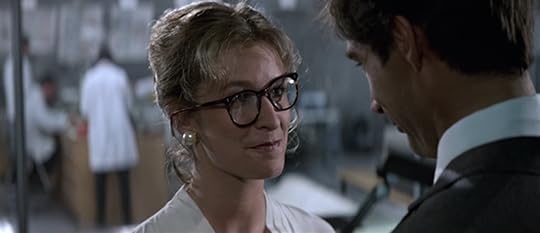
Back to Bond and women though, we've got a new Moneypenny (Caroline Bliss) and it's tough to figure her out. Or more likely, it's easy, but I'm resisting. There's a smile on her lips as she invites Bond to come over sometime to listen to Barry Manilow records. Is she joking? I want her to be. I want to find a hint of the mutual flirtation that the best of Lois Maxwell's scenes had. But I don't think she is. She lets out a telling sigh and when he puts her glasses back onto her face crooked, he obviously isn't taking her seriously. Bliss' Moneypenny is every bit the infatuated schoolgirl that Maxwell's had the reputation for.
Another female ally for Bond is Rosika Miklos, who helps him put Koskov into the "pig" to go through the oil pipes. I like her a lot. She's fun and confident. She's sexual, but not with Bond, which is refreshing. They just seem like work buddies.
Bond's professionalism also affects his relationship with M and the Minister of Defense in a positive way. They're furious when Koskov is abducted, but even though Bond's in the room when they're shouting, they don't blame him. M does threaten to recall 008 from Hong Kong if Bond can't/won't kill Pushkin, but that feels like a serious business consideration rather than an idle threat made from irritation. Robert Brown's dull, bureaucratic M is shocked when Bond makes substitutions to Koskov's gift-basket, but I imagine that he hasn't had to deal with much embarrassment over Dalton's Bond. Dalton isn't the kind of guy who's going to get caught by the top brass in bed with another agent.
I sort of wish that Walter Gotell had been up to playing Gogol for longer, but I don't have strong feelings about it. Pushkin is fine and I do like John Rhys-Davies. It just would have been cool for Gotell's last film in the series to have held such a significant part for him. Rhys-Davies makes me believe that he has a previous relationship with Bond though and he owns the role so much that it's hard to imagine Gotell in it. And it's nice closure to see that Gogol has moved on from the KGB and is doing other things.
Bond's new attitude also brings with it a sort of role reversal for him and Q. We get a nice, "Pay attention, 007" from Q, but without the usual irritation. Bond takes the briefing seriously and "pay attention" is just Q's usual way of starting his lecture. If anything, Q is now the silly one. It's not intentional; he's just a little absent-minded. He bumps his head on the Aston Martin at one point and later foolishly asks Bond to whistle while in a gas-mask.
One of Bond's coolest allies is the man known only as Green Four. He's the butler/security operative at the Blayden safehouse and puts up a surprisingly awesome fight when Necros shows up to abduct Koskov. You think Necros is going to end him quickly and move on, but the fight lasts a long time with the nameless agent nearly beating the superhenchman. It's a great, trope-breaking touch.
Felix Leiter is back, played by Jack Shephard's dad from Lost. It's a tiny appearance, but I like John Terry a lot in the role. He's laid back and casual like I want Felix to be. The thing I hate about the Bond movies is the inconsistency of Felix Leiter and it's times like this - when we get one I really want to see more of - that that hurts most.
The last ally to talk about is Kamran Shah. I feel like he deserves more discussion than I'm interested in giving him, just because of the way political relationships with Afghanistan have changed since 1987. Is Shah a freedom fighter or a terrorist? That's a way deeper discussion than I want to get into in a post about James Bond, but feel free to hit me up privately if you want to hash that out. In the movie, I like Shah a lot. He's charming and complex and adds interest to a section of the movie that's otherwise overlong. I like the stuff in Afghanistan and I can't think of any of it that I would like to cut, but it does add up to a lot of screen time.
Best Quip
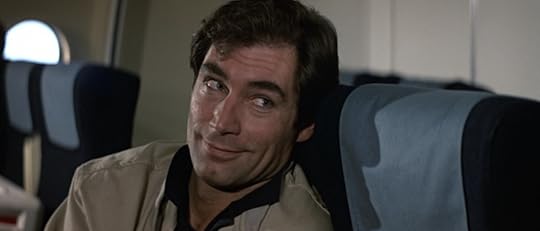
"We have a saying too, Georgi. And you're full of it." Georgi Koskov is a great villain, but he really is full of crap (though I don't think that's the expression Bond's thinking of) and it's great to see Bond finally call him on it.
There aren't a lot of quips in The Living Daylights, though Bond does have a sense of humor. Whether it's the self-deprecating way he orders his vodka martini or the lame excuses he comes up with for his car's gadgets, he's not so driven and serious that he can't enjoy himself.
He even comes up with a good old-fashioned death quip after he finishes off Necros: "He got the boot." It wouldn't be an especially strong one, but I love the way Dalton says it. He comes back into the cockpit in a good mood now that he and Kara are safe and just starts to make with the joke before realizing they're about to crash into a mountain. He's all, "He got the..." then gets an "oh crap!" look on his face before lamely finishing the line. If you're going to make a bad joke, that's the way to do it.
Worst Quip
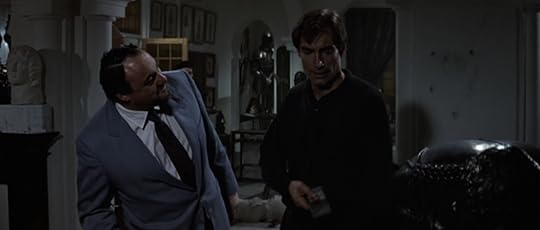
Sadly, Dalton delivers "He met his Waterloo" totally straight.
Gadgets
Bond only uses a couple of gadgets in The Living Daylights, but they're both multi-purpose. The personal one is the key-ring locator. It's magnetic and has a great collection of skeleton keys, but the really nifty parts are the stun gas and explosive charge keyed to particular whistles.
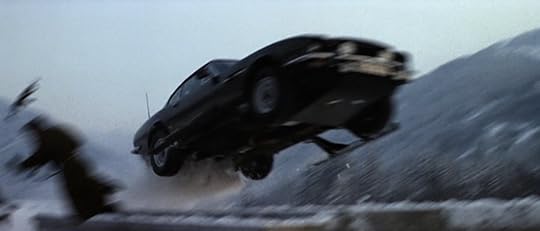
Better than that is Bond's new car, the Aston Martin V8 Vantage. It's a great-looking vehicle that comes with a laser cutter, rockets, outrigger, spiked tires, rocket motor, and self-destruct.
Top Ten Gadgets
1. Lotus Esprit (The Spy Who Loved Me)
2. Aston Martin DB V (Goldfinger and Thunderball)
3. Jet pack (Thunderball)
4. Iceberg boat (A View to a Kill)
5. Aston Martin V8 Vantage (The Living Daylights)
6. Glastron CV23HT speed boat (Moonraker)
7. Acrostar Mini Jet (Octopussy)
8. Crocodile submarine (Octopussy)
9. Little Nellie (You Only Live Twice)
10. Rocket cigarettes (You Only Live Twice)
Bond's Best Outfit

I did say I love a leather jacket and this is a great one. Very European. Like the layered sweater look on him, too.
Bond's Worst Outfit
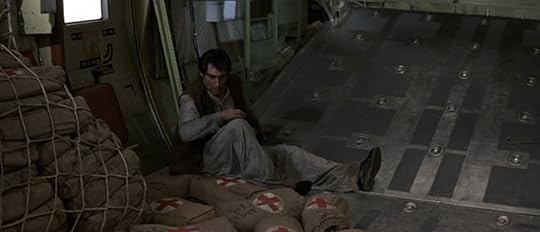
Dalton pulls off every look they give him, including the Mujahideen raider outfit. But once he lost the black, badass head covering, it let me notice how baggy those pants are. And since I gotta pick something...

Before Daniel Craig, Timothy Dalton was my favorite Bond. Until recently, I would have told you that it was Connery, but too many rewatches of You Only Live Twice and Diamonds Are Forever have changed that. It's not that those are bad movies (which they are); it's that Connery is bad in them. I have problems with Licence to Kill that dilute my enthusiasm for Dalton's short run, but the problems are never with him. He's always doing excellent work, playing exactly the kind of intense, serious Bond that I want to see.
Not that he can't joke. There's a lot of humor in his performance, but it's normal person humor. That's the big key for me. I like the quippy, gallivanting Bond a lot, but I love flawed, tragic Bond so much more. When Dalton introduces himself as "Bond, James Bond," he says it like a guy at a party, not like he's expecting someone to applaud. And as I mentioned yesterday and will talk about more below, Dalton still jokes and quips, but his humor feels genuine. Don't get me wrong: I love Moore's deadpan and Connery's grimacing at his own jokes. But they're playing larger-then-life versions of Bond. And I understand that that's exactly what makes him so attractive a character most of the time. But my heart has a special place for the unromantic, literary Bond.
I mean "unromantic" in the sense that he's unfantastic and down-to-earth. As we see in the cold open when he delays checking in for an hour, Dalton's Bond certainly has time for women. Once he meets Kara in The Living Daylights, he sticks with her, but he's still got the reputation of Sean Connery and Roger Moore. The concierge at the hotel in Austria is used to Bond's checking in with various women and Saunders, the head of Station V, can't really take Bond seriously because of the rep. Dalton is at ease and charming on his carnival date with Kara and I can see why the ladies like him. But I can also see why his intensity and underlying anger mean that he can never have a lasting relationship with a woman. That's totally Fleming's Bond right there.
Speaking of Saunders, he's an interesting character because he acts as a surrogate for viewers who are expecting a different kind of Bond than what Dalton is. Saunders has heard all the stories about Bond and he's not impressed. He's expecting an agent who's more interested in women than getting the job done. Let's face it, he's expecting Roger Moore. So as Dalton loses patience with Saunders, he's also losing patience with that expectation, making clear that he's doing something totally different.
Back to Bond and women though, we've got a new Moneypenny (Caroline Bliss) and it's tough to figure her out. Or more likely, it's easy, but I'm resisting. There's a smile on her lips as she invites Bond to come over sometime to listen to Barry Manilow records. Is she joking? I want her to be. I want to find a hint of the mutual flirtation that the best of Lois Maxwell's scenes had. But I don't think she is. She lets out a telling sigh and when he puts her glasses back onto her face crooked, he obviously isn't taking her seriously. Bliss' Moneypenny is every bit the infatuated schoolgirl that Maxwell's had the reputation for.
Another female ally for Bond is Rosika Miklos, who helps him put Koskov into the "pig" to go through the oil pipes. I like her a lot. She's fun and confident. She's sexual, but not with Bond, which is refreshing. They just seem like work buddies.
Bond's professionalism also affects his relationship with M and the Minister of Defense in a positive way. They're furious when Koskov is abducted, but even though Bond's in the room when they're shouting, they don't blame him. M does threaten to recall 008 from Hong Kong if Bond can't/won't kill Pushkin, but that feels like a serious business consideration rather than an idle threat made from irritation. Robert Brown's dull, bureaucratic M is shocked when Bond makes substitutions to Koskov's gift-basket, but I imagine that he hasn't had to deal with much embarrassment over Dalton's Bond. Dalton isn't the kind of guy who's going to get caught by the top brass in bed with another agent.
I sort of wish that Walter Gotell had been up to playing Gogol for longer, but I don't have strong feelings about it. Pushkin is fine and I do like John Rhys-Davies. It just would have been cool for Gotell's last film in the series to have held such a significant part for him. Rhys-Davies makes me believe that he has a previous relationship with Bond though and he owns the role so much that it's hard to imagine Gotell in it. And it's nice closure to see that Gogol has moved on from the KGB and is doing other things.
Bond's new attitude also brings with it a sort of role reversal for him and Q. We get a nice, "Pay attention, 007" from Q, but without the usual irritation. Bond takes the briefing seriously and "pay attention" is just Q's usual way of starting his lecture. If anything, Q is now the silly one. It's not intentional; he's just a little absent-minded. He bumps his head on the Aston Martin at one point and later foolishly asks Bond to whistle while in a gas-mask.
One of Bond's coolest allies is the man known only as Green Four. He's the butler/security operative at the Blayden safehouse and puts up a surprisingly awesome fight when Necros shows up to abduct Koskov. You think Necros is going to end him quickly and move on, but the fight lasts a long time with the nameless agent nearly beating the superhenchman. It's a great, trope-breaking touch.
Felix Leiter is back, played by Jack Shephard's dad from Lost. It's a tiny appearance, but I like John Terry a lot in the role. He's laid back and casual like I want Felix to be. The thing I hate about the Bond movies is the inconsistency of Felix Leiter and it's times like this - when we get one I really want to see more of - that that hurts most.
The last ally to talk about is Kamran Shah. I feel like he deserves more discussion than I'm interested in giving him, just because of the way political relationships with Afghanistan have changed since 1987. Is Shah a freedom fighter or a terrorist? That's a way deeper discussion than I want to get into in a post about James Bond, but feel free to hit me up privately if you want to hash that out. In the movie, I like Shah a lot. He's charming and complex and adds interest to a section of the movie that's otherwise overlong. I like the stuff in Afghanistan and I can't think of any of it that I would like to cut, but it does add up to a lot of screen time.
Best Quip

"We have a saying too, Georgi. And you're full of it." Georgi Koskov is a great villain, but he really is full of crap (though I don't think that's the expression Bond's thinking of) and it's great to see Bond finally call him on it.
There aren't a lot of quips in The Living Daylights, though Bond does have a sense of humor. Whether it's the self-deprecating way he orders his vodka martini or the lame excuses he comes up with for his car's gadgets, he's not so driven and serious that he can't enjoy himself.
He even comes up with a good old-fashioned death quip after he finishes off Necros: "He got the boot." It wouldn't be an especially strong one, but I love the way Dalton says it. He comes back into the cockpit in a good mood now that he and Kara are safe and just starts to make with the joke before realizing they're about to crash into a mountain. He's all, "He got the..." then gets an "oh crap!" look on his face before lamely finishing the line. If you're going to make a bad joke, that's the way to do it.
Worst Quip

Sadly, Dalton delivers "He met his Waterloo" totally straight.
Gadgets

Bond only uses a couple of gadgets in The Living Daylights, but they're both multi-purpose. The personal one is the key-ring locator. It's magnetic and has a great collection of skeleton keys, but the really nifty parts are the stun gas and explosive charge keyed to particular whistles.
Better than that is Bond's new car, the Aston Martin V8 Vantage. It's a great-looking vehicle that comes with a laser cutter, rockets, outrigger, spiked tires, rocket motor, and self-destruct.
Top Ten Gadgets
1. Lotus Esprit (The Spy Who Loved Me)
2. Aston Martin DB V (Goldfinger and Thunderball)
3. Jet pack (Thunderball)
4. Iceberg boat (A View to a Kill)
5. Aston Martin V8 Vantage (The Living Daylights)
6. Glastron CV23HT speed boat (Moonraker)
7. Acrostar Mini Jet (Octopussy)
8. Crocodile submarine (Octopussy)
9. Little Nellie (You Only Live Twice)
10. Rocket cigarettes (You Only Live Twice)
Bond's Best Outfit

I did say I love a leather jacket and this is a great one. Very European. Like the layered sweater look on him, too.
Bond's Worst Outfit

Dalton pulls off every look they give him, including the Mujahideen raider outfit. But once he lost the black, badass head covering, it let me notice how baggy those pants are. And since I gotta pick something...
July 23, 2015
The Living Daylights (1987) | Story

Plot Summary
Another Soviet general looks at Orlov's notes from Octopussy, figures out a better (if no less complicated) way to work that plan, but stupidly gets Bond involved on purpose.
Influences
It was clear to everyone - filmmakers and audiences both - that A View to a Kill was one Roger Moore movie too many. People didn't like it and (worse) it made no money. It was time to finally get a new Bond. Pierce Brosnan was super popular thanks to Remington Steele, so he was Broccoli's first choice. But when the producers of that show screwed the deal by exercising a last-minute option to renew Brosnan's contract, Broccoli had to go with Plan B.
Timothy Dalton had already been considered for the role a few times, going all the way back to On Her Majesty's Secret Service. He's said in interviews since that he turned it down that first time because he didn't want to follow Connery (though his official reason at the time was that he was in his mid-20s and considered himself too young). He was approached again for Octopussy, but Broccoli decided not to cast a new Bond against Connery in Never Say Never Again, and Dalton likely wouldn't have accepted the role anyway. He always preferred a darker, more Fleming-esque Bond to the campy clown (literally, in Octopussy's case) of the Moore era. The series needed to balloon and burst again before it was ready for Dalton.
And burst it did after A View to a Kill. The Bond series has always had cycles of trying to top itself; getting bigger and bigger until it gets out of control and has to go back to basics and start all over again. It happened after You Only Live Twice, Moonraker, and A View to a Kill, and it happened again after Die Another Day.
For the story, Michael G Wilson and Richard Maibaum picked one of the few remaining Fleming tales, "The Living Daylights." It's one of Fleming's better short stories, featuring a very angry James Bond on a mission to protect a returning double agent by shooting the sniper assigned to kill him. It's perfect material for Dalton to play the back-to-basics, Fleming-like Bond that he wanted.
How Is the Book Different?
The opening (post-credits) scene of the movie is right out of the short story with one important exception. Instead of protecting a returning double-agent, Bond is trying to save a defecting Soviet general. That opens up the possibility that there's a deeper plot afoot, which Bond immediately suspects when he realizes that the sniper he's supposed to kill doesn't know what she's doing. (In the short story, she actually is an assassin, but he still refuses to kill her.) From there, the movie goes into all-new territory, but I love the approach of starting with faithfulness to Fleming and spinning off from there.
Moment That's Most Like Fleming

In addition to the whole Czech mission, Bond repeats the line from the short story that gives the tale its name. In that same scene, he does one of my favorite things in any Bond movie. When Saunders threatens to complain to M about Bond's performance, Bond replies, "Go ahead. Tell M what you want. If he fires me, I'll thank him for it." And he means it. That's not only the Bond of "The Living Daylights," it's the Bond at the end of Casino Royale and a few other books. Fleming's Bond struggles a lot with his job and this is the first time we've seen that in a movie. The first time I saw this movie, that's the moment I fell in love with Dalton's Bond.
Speaking of early Fleming, I also love that The Living Daylights makes use of SMERSH, the proto-SPECTRE of the first novels. Sadly, it's just a diversionary tactic by the real villains, but it still makes me smile.
Moment That's Least Like Fleming

The whole movie is incredibly faithful to the spirit of Fleming's books, but it's hard to imagine Fleming's Bond getting along and working with the head of the KGB. Bond's relationship with Pushkin is a child of the Moore era. In fact, I understand that Pushkin's character was originally going to be General Gogol, but Walter Gotell was too ill to play that large a role. Pushkin and Bond's friendship works in the context of the movie series though. No complaints.
Cold Open

Gibraltar is a cool place to stage a set piece. And I like the idea of the Double-Os taking on the SAS in a training exercise. I don't even mind that M is there to personally oversee it. That's one of the few times where his presence in the field sort of makes sense.
What I don't like is how horrible the other Double-Os are. This is the reason we need some real, butt-kicking Double-Os. In Octopussy, 009 is murdered after running through the woods with a balloon strapped to his wrist and dressed like a clown. Bond finds 003 frozen in Siberia after a failed mission in A View to a Kill. And let's not forget 002, poor Bill Fairbanks, who was murdered by Scaramanga prior to The Man with the Golden Gun.
Another 002 appears in The Living Daylights, but he's rubbish. He parachutes into a tree and quickly gets himself out, but then stands in the middle of the road until an SAS soldier pops out from behind a bush to shoot him twice. 004 isn't nearly as incompetent, but he has a worse fate when he's murdered by the fake SMERSH agent to lend credibility to Koskov's story later on. (Incidentally, the Bond movies do have one other Double-O who may be Bond's equal. 008 is never killed and is brought up in both Goldfinger and The Living Daylights as a potential replacement for Bond if Bond can't continue his duties.)
As sad as the other Double-Os are in the Living Daylights cold open, I forgive it for introducing Bond the way it does. We don't see his face until he reacts to 004's screams. Dalton immediately gives the impression of someone with whom you do not want to mess. And that gets even stronger when he leaps into action, chasing the killer and extricating himself from a flaming vehicle full of explosives that's plunging toward the sea. It's not as flashy a stunt as the best of the Roger Moore ones, but it proves that Dalton's Bond is relentless and resourceful. And when he answers a bored woman's wishes for "a real man" by landing on her boat and stealing her phone, we find that he's also got a charming side, even if it's a bit rough.
Top 10 Cold Opens
1. The Spy Who Loved Me
2. Moonraker
3. Thunderball
4. On Her Majesty's Secret Service
5. A View to a Kill
6. Goldfinger
7. The Man with the Golden Gun
8. The Living Daylights
9. For Your Eyes Only
10. Octopussy
Movie Series Continuity

I read a rumor that there were ideas of officially rebooting the series with Living Daylights, as in a really obvious way like with Casino Royale. I don't know if that's true, but they definitely didn't end up that way. We have a new Bond and a new Moneypenny, but M, Q, the Minister of Defense, and Gogol (who does make a quick appearance) are all the same.
Like M in the cold open, Q goes into the field again too, but his presence there also makes more sense than usual. He's helping with Koskov's defection, presumably overseeing the technological elements of sneaking Koskov through the oil pipes.
Other nods to past continuity include MI6's Universal Exports sign outside their HQ. And though Bond isn't an obnoxious know-it-all, he does use his expertise to choose a better brand of champagne for Koskov's debriefing than the one M (or his people) picked out.
There's also a "shaken not stirred" line when Bond checks into his hotel in Austria, but it's delivered with humor. Dalton undercuts a lot of the silly clichés with his line readings. He's serious about wanting his martini a certain way, but he's letting the concierge know that he realizes it's a frivolous indulgence. I'll talk about more examples of this tomorrow.

July 22, 2015
The Double-O Movie Universe
My buddy Pax (from Nerd Lunch and the Cavalcade of Awesome) and I got to talking about how poorly the Bond series treats all the Double-Os except Bond. Octopussy and A View to a Kill both start with Bond's picking up the mission of a dead Double-O and things get even worse in the movie we're covering this week. Pax mentioned that it would be cool if we saw some Double-Os worthy of the designation and added, "That's a Bond Movie Universe right there. Movies about the other 00 agents. Then every few years they all crossover."
We started talking about who we'd like to see play the other Double-Os and invited the rest of the Nerd Lunchers (Carlin and Jeeg) and my frequent co-guest Kay to join in. This is who we came up with.
001: Emily Blunt
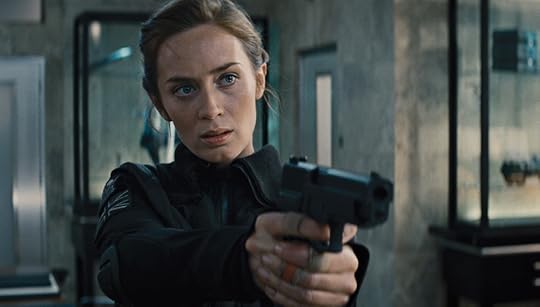
Anyone who saw Edge of Tomorrow knows how tough Emily Blunt is. And she's got Sicario coming out in September where she plays an FBI agent fighting a drug cartel in Mexico. She's got the presence to play a spy whom audiences will take seriously, but as seen in movies like Looper and The Adjustment Bureau, she's also got the range to give that character depth and make us care about her.
002: John Boyega
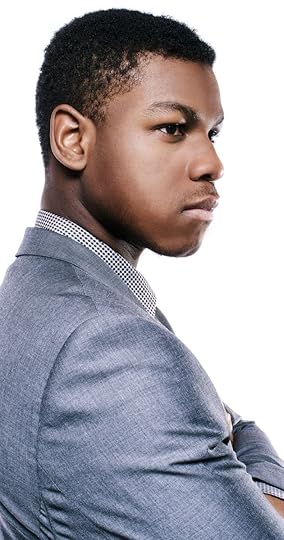
It's appropriate that John Boyega was the suggestion of Kay, Star Wars fan extraordinaire. If he isn't already, Boyega is about to become a household name thanks to The Force Awakens. And if you've seen any interviews with him, you know how charismatic he is. Of course, fans of Attack the Block already know this. There's a lot that's great about that movie, but Boyega's at the top of the list. The script for Attack the Block asks viewers to hate Boyega's character at the beginning, but love him by the end, and Boyega is the perfect man for that job. I'd love to see him play a suave, but impulsive and unconventional Double-O.
003: Dan Stevens
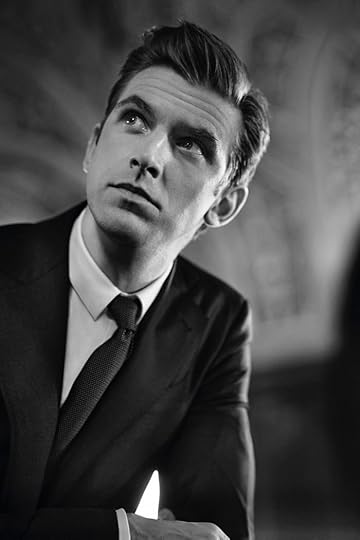
Downtown Abbey fans know how charming Dan Stevens can be. Anyone who's seen The Guest knows how much the world is hurting for more action films from this guy. Hurting. Please stop hurting the world.

I was a big fan of Sayid on Lost, so when Carlin mentioned Naveen Andrews as a possible Double-O, I was totally on board. My initial impulse was to clean him up and have him conform to the traditional, smooth aesthetic of Bond and his cronies, but it defeats the purpose of creating a diverse group of super spies if they're all going to wear a uniform and act the same way. It's far more interesting to have Andrews keep his look and play the bad boy (or one of them) of the Double-O division.
005: Kate Winslet
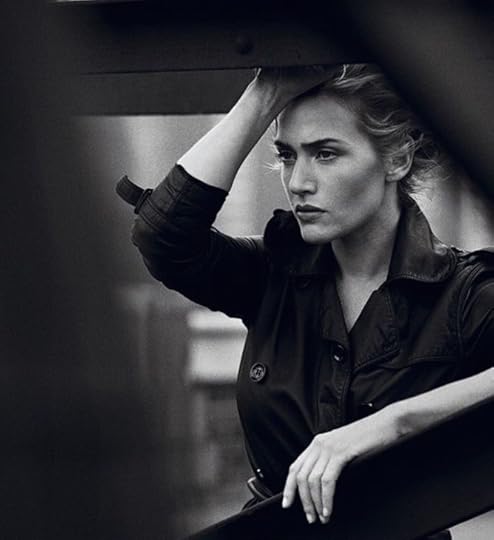
I think it was Pax who suggested Kate Winslet and without even analyzing why, I just went, "Yes! Of course she should be a Double-O!" She's not known as an action star, but she's an amazing, versatile actor and a kickass person in general. Would love to see what she could do as a spy hero.
006: Clive Owen
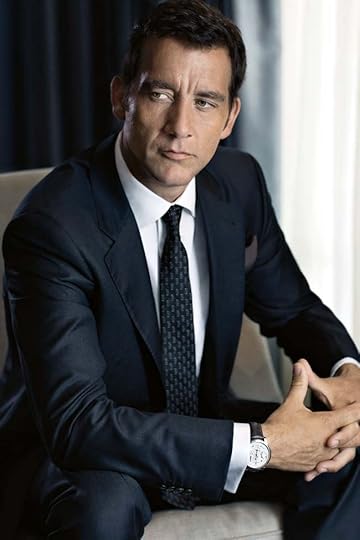
Clive Owen was mentioned a lot as a possible Bond before Daniel Craig was hired, and he's awesome. I still want to see how he would've done, so having him play 006 would be the next best thing.
007: Daniel Craig
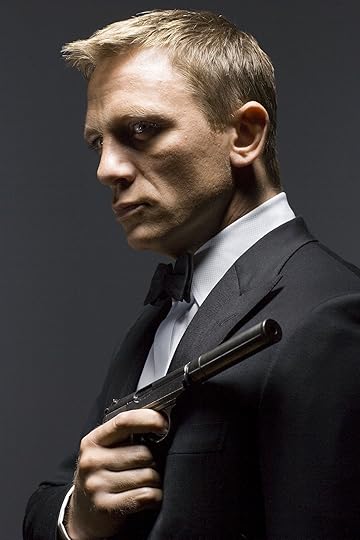
Not replacing this guy. I'll take him for as long as he wants to stay. One thing that would be interesting though - to tie him into the rest of the Double-O Universe, and this is something that they'll never do in the real Bond series - would be to make a movie that explains once and for all the Bond continuity. All of those actors can't be playing the same character, but how were so many of them married to the same woman? Or why do they think they were? As long as we're at it, let's also explain all the Felixes and why there are multiple people who look like Maud Adams and Charles Gray. That's a movie that I in no way need to see, but would love to anyway.
008: Helen Mirren
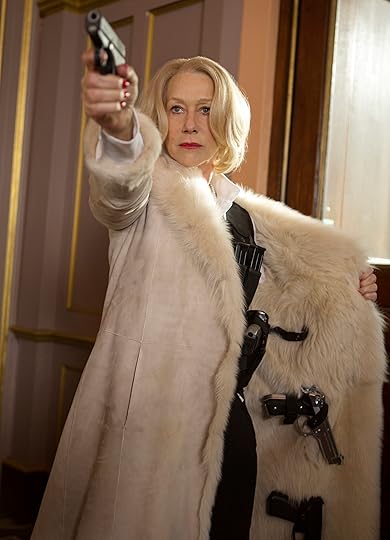
I just want her to reprise her character from RED. As in, play Victoria, that exact same character, but she's working for MI6 now as a Double-O. Tie the two universes together.
009: Idris Elba
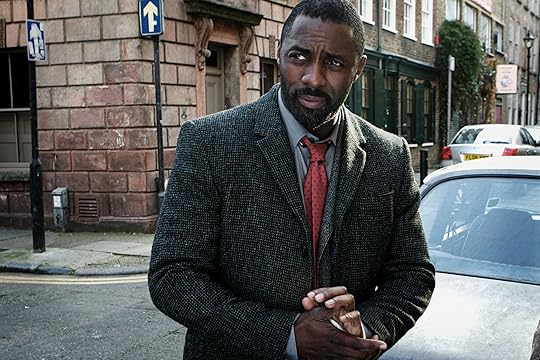
Another man whom a lot of people want to see play 007. I'm all for it except that I don't want to get rid of Craig, so why not let Idris Elba play 009 and then we can have both? (Which reminds me that I really need to check out Luther.)
0010: David Oyelowo
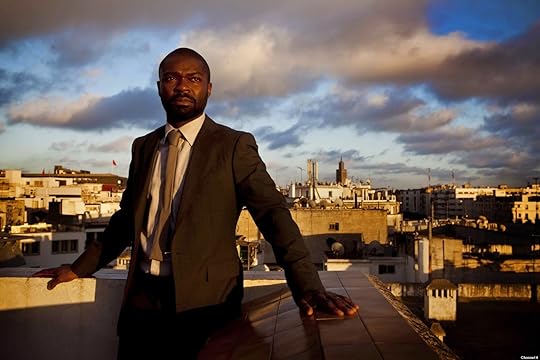
David Oyelowo has been in way more things that I realized (Jack Reacher and Interstellar, for example; even Star Wars: Rebels), but he first hit my radar as MLK in Selma. He's got a powerful presence as well as experience playing a British agent in Complicit.
0011: Katie Leung

Katie Leung is famous for playing Cho in the Harry Potter movies, but she's five years older than John Boyega. Still, with her youth, I'd love to see her agent be a cross between Boyega's and Naveen Andrews'. I imagine that she's especially great at undercover work, but she's so used to working on her own that she's constantly butting heads with M. Sort of the British spy version of every '80s cop movie ever.
0012: Hayley Atwell
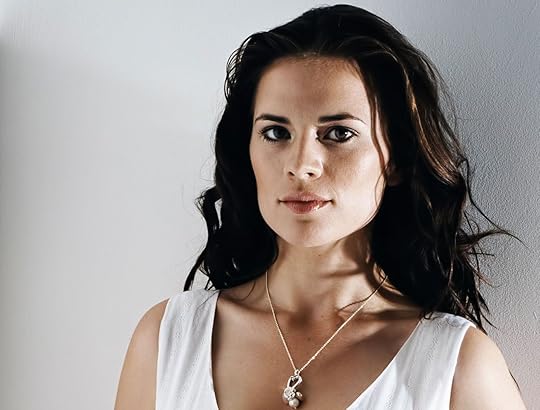
She can do this and Agent Carter, right? I imagine her as a sophisticated counterpoint to Emily Blunt's rougher 001. She's the Roger Moore to Blunt's Timothy Dalton, Mirren's Sean Connery, and Leung's Daniel Craig.
0013: Steve Coogan
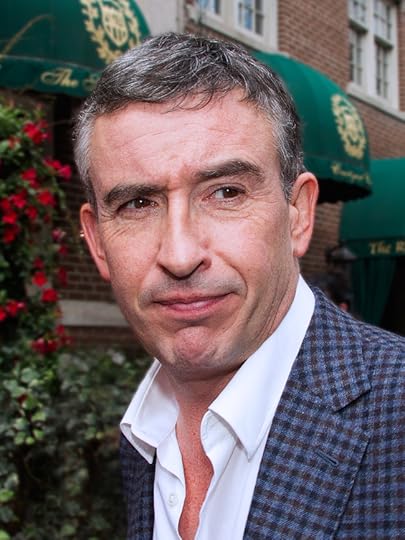
Pax suggested Steve Coogan and I almost asked him to write this entry, because I wasn't 100% sure what he had in mind. And sadly, most of my knowledge of Coogan is from the Night at the Museum movies. But knowing that Coogan's a comedian, I wanted to leave room for that aspect. Not in a Rowan Atkinson's Johnny English kind of way, but like how the best of Connery and Moore's movies had truly funny moments to offset the violence.
000: Bill Nighy
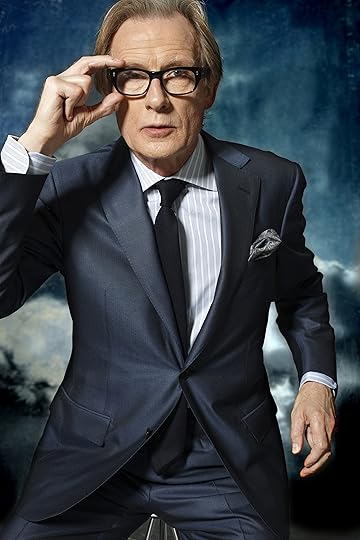
There's some world-building behind this one. Carlin came up with the idea and the number (pronounced Double-O Zero), so I asked him for more detail. He gave me an outline that I've fleshed out a little to fit with the rest of what I'm imagining for the Bond Universe.
At some point (perhaps between the events of Die Another Day and Casino Royale), all the Double-Os were killed except for Bill Nighy. I imagine that this was the result of some master-plan by some villainous organization. Nighy's character was able to stop the scheme, but he was so traumatized by the experience that he retired, receiving the honorary designation of 000. Since then, M has refilled the Double-O section, but 000 remains in retirement until our big Avengers-style crossover movie where the villains return to try to wipe out the Double-Os all over again. This means that 000 - the only man who's successfully faced them before - has to come out of retirement and again face the greatest threat he's ever encountered.
00KickInTheTeeth: Jason Statham
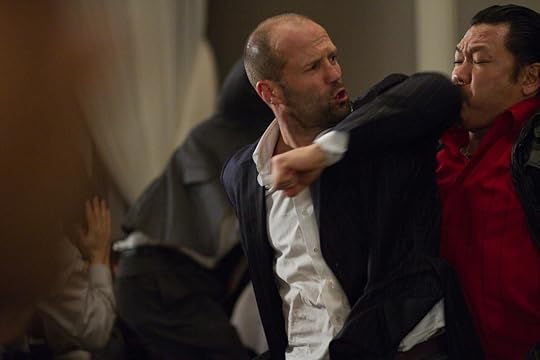
Another shout-out to Carlin who came up with the designation. I sort of want to save him for the crossover too, but why should we deny ourselves? I want to see Statham and Boyega team up so bad that I'll never get a good night's sleep again until it happens.
So that's ours! Who do you think should play a Double-O?
We started talking about who we'd like to see play the other Double-Os and invited the rest of the Nerd Lunchers (Carlin and Jeeg) and my frequent co-guest Kay to join in. This is who we came up with.
001: Emily Blunt

Anyone who saw Edge of Tomorrow knows how tough Emily Blunt is. And she's got Sicario coming out in September where she plays an FBI agent fighting a drug cartel in Mexico. She's got the presence to play a spy whom audiences will take seriously, but as seen in movies like Looper and The Adjustment Bureau, she's also got the range to give that character depth and make us care about her.
002: John Boyega

It's appropriate that John Boyega was the suggestion of Kay, Star Wars fan extraordinaire. If he isn't already, Boyega is about to become a household name thanks to The Force Awakens. And if you've seen any interviews with him, you know how charismatic he is. Of course, fans of Attack the Block already know this. There's a lot that's great about that movie, but Boyega's at the top of the list. The script for Attack the Block asks viewers to hate Boyega's character at the beginning, but love him by the end, and Boyega is the perfect man for that job. I'd love to see him play a suave, but impulsive and unconventional Double-O.
003: Dan Stevens

Downtown Abbey fans know how charming Dan Stevens can be. Anyone who's seen The Guest knows how much the world is hurting for more action films from this guy. Hurting. Please stop hurting the world.

I was a big fan of Sayid on Lost, so when Carlin mentioned Naveen Andrews as a possible Double-O, I was totally on board. My initial impulse was to clean him up and have him conform to the traditional, smooth aesthetic of Bond and his cronies, but it defeats the purpose of creating a diverse group of super spies if they're all going to wear a uniform and act the same way. It's far more interesting to have Andrews keep his look and play the bad boy (or one of them) of the Double-O division.
005: Kate Winslet

I think it was Pax who suggested Kate Winslet and without even analyzing why, I just went, "Yes! Of course she should be a Double-O!" She's not known as an action star, but she's an amazing, versatile actor and a kickass person in general. Would love to see what she could do as a spy hero.
006: Clive Owen

Clive Owen was mentioned a lot as a possible Bond before Daniel Craig was hired, and he's awesome. I still want to see how he would've done, so having him play 006 would be the next best thing.
007: Daniel Craig

Not replacing this guy. I'll take him for as long as he wants to stay. One thing that would be interesting though - to tie him into the rest of the Double-O Universe, and this is something that they'll never do in the real Bond series - would be to make a movie that explains once and for all the Bond continuity. All of those actors can't be playing the same character, but how were so many of them married to the same woman? Or why do they think they were? As long as we're at it, let's also explain all the Felixes and why there are multiple people who look like Maud Adams and Charles Gray. That's a movie that I in no way need to see, but would love to anyway.
008: Helen Mirren

I just want her to reprise her character from RED. As in, play Victoria, that exact same character, but she's working for MI6 now as a Double-O. Tie the two universes together.
009: Idris Elba

Another man whom a lot of people want to see play 007. I'm all for it except that I don't want to get rid of Craig, so why not let Idris Elba play 009 and then we can have both? (Which reminds me that I really need to check out Luther.)
0010: David Oyelowo

David Oyelowo has been in way more things that I realized (Jack Reacher and Interstellar, for example; even Star Wars: Rebels), but he first hit my radar as MLK in Selma. He's got a powerful presence as well as experience playing a British agent in Complicit.
0011: Katie Leung

Katie Leung is famous for playing Cho in the Harry Potter movies, but she's five years older than John Boyega. Still, with her youth, I'd love to see her agent be a cross between Boyega's and Naveen Andrews'. I imagine that she's especially great at undercover work, but she's so used to working on her own that she's constantly butting heads with M. Sort of the British spy version of every '80s cop movie ever.
0012: Hayley Atwell

She can do this and Agent Carter, right? I imagine her as a sophisticated counterpoint to Emily Blunt's rougher 001. She's the Roger Moore to Blunt's Timothy Dalton, Mirren's Sean Connery, and Leung's Daniel Craig.
0013: Steve Coogan

Pax suggested Steve Coogan and I almost asked him to write this entry, because I wasn't 100% sure what he had in mind. And sadly, most of my knowledge of Coogan is from the Night at the Museum movies. But knowing that Coogan's a comedian, I wanted to leave room for that aspect. Not in a Rowan Atkinson's Johnny English kind of way, but like how the best of Connery and Moore's movies had truly funny moments to offset the violence.
000: Bill Nighy

There's some world-building behind this one. Carlin came up with the idea and the number (pronounced Double-O Zero), so I asked him for more detail. He gave me an outline that I've fleshed out a little to fit with the rest of what I'm imagining for the Bond Universe.
At some point (perhaps between the events of Die Another Day and Casino Royale), all the Double-Os were killed except for Bill Nighy. I imagine that this was the result of some master-plan by some villainous organization. Nighy's character was able to stop the scheme, but he was so traumatized by the experience that he retired, receiving the honorary designation of 000. Since then, M has refilled the Double-O section, but 000 remains in retirement until our big Avengers-style crossover movie where the villains return to try to wipe out the Double-Os all over again. This means that 000 - the only man who's successfully faced them before - has to come out of retirement and again face the greatest threat he's ever encountered.
00KickInTheTeeth: Jason Statham

Another shout-out to Carlin who came up with the designation. I sort of want to save him for the crossover too, but why should we deny ourselves? I want to see Statham and Boyega team up so bad that I'll never get a good night's sleep again until it happens.
So that's ours! Who do you think should play a Double-O?
July 21, 2015
Ranking the First 15 Bond Movies

We've finished another five Bond movies and wrapped up Roger Moore, so it's time to check in again and see how the films stack up so far. As usual, we'll do it two different ways.
The first list is based on the accumulated rankings of the individual parts I've been measuring in this project: women, villains, theme song, cold open, gadgets, henchmen, and title sequence. There's a complicated, Top Secret algorithm for figuring that out and it assigns a total points value to each movie. Here's how they fall when measured that way.
1. Thunderball (127 pts)
2. On Her Majesty's Secret Service (85 pts)
3. From Russia with Love (69 pts)
4. Goldfinger (55 pts)
5. The Spy Who Loved Me (51 pts)
6. Never Say Never Again (46 pts)
7. The Man with the Golden Gun (41 pts)
8. A View to a Kill (38 pts)
9. For Your Eyes Only (36 pts)
10. TIE: Live and Let Die and Moonraker (33 pts each)
The second list is based on my gut reaction. It's how I personally feel about the movies, taking into account crucial elements that I'm not ranking like plots, actors, tone, and pacing.
1. From Russia with Love
2. Thunderball
3. On Her Majesty's Secret Service
4. Dr. No
5. For Your Eyes Only
6. The Spy Who Loved Me
7. Never Say Never Again
8. Goldfinger
9. The Man with the Golden Gun
10. Live and Let Die