Victoria Noe's Blog, page 7
February 14, 2018
When Your Friend’s Death is in the Headlines
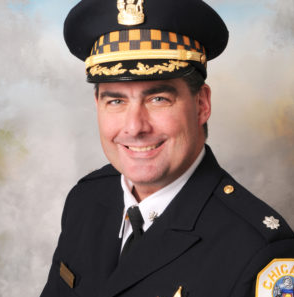 Cmdr. Paul Bauer
I didn’t listen to the radio in the car as I drove back to Chicago from St. Louis yesterday, so it wasn’t until I turned on the TV that I saw the breaking news. A Chicago police commander had been shot to death downtown, in the state office building. There was something about a suspicious person, a robbery attempt, but no name given.
My husband was preparing for his organization’s annual meeting that evening when he texted, asking if I was home. When I replied that I was, he called to tell me that the officer was the commander he’s worked with for years, Paul Bauer. What had not been the best of days became even worse, because he was also a friend.
I didn’t know him as well as my husband and daughter did, working on events together and chatting on the street. In an age where the news about police brutality fills the news cycle, Commander Bauer was an exception. He was one of the good guys.
Throughout the evening I watched the widening circles of his influence react to the news. The hundreds of officers – Chicago Police, Illinois State Police, ATF, etc. – who escorted his body from the hospital to the medical examiner’s office. The firefighters and civilians who stood at attention as the ambulance drove by. The distraught community members who worked with him to make their neighborhoods safer. Even the TV reporter who covered police headquarters described her personal grief over the loss of a man she considered a friend.
But then there are those whose connection was entirely personal: his wife and 13 year old daughter. Heidi Stevens is one of my favorite Chicago Tribune writers. Her daughter and Bauer’s have been friends since preschool. She honored that connection and the man who was a personal hero to her today.
I watched a little of the coverage on TV. And though the outpouring of respect and love that filled most of the stories was impressive, I did not want my last memories of Commander Bauer to be detailed descriptions of his death.
That’s the challenge for the friends he left behind. The 24-hour news cycle, the endless stories on the internet, may be good for ratings but are hell on people who are grieving. I don’t know about you, but there are damn few details about a friend’s death that I’m eager to learn. And I sure as hell don’t want to be surrounded by descriptions of their last minutes.
Everyone grieves differently, but we all deserve to grieve in private, even if our friends were in the public eye. Maybe everyone could stop being obsessed with information long enough to show respect not just for the dead, but the family and friends left behind. They need our support, our hugs, our understanding. Concentrate on them. And remember the ones who died – not by how they died, but how they lived.
#short_code_si_icon img
{width:25px;
}
.scid-2 img
{
width:25px !important;
}
Share this post


February 6, 2018
A Winter Olympics Story within a Story
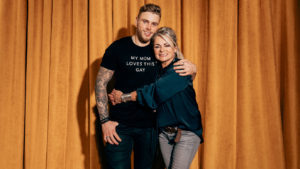 theplayerstribune.com
People love surprises. Well, I don’t, but that’s a different story. The kind of surprises I like are an unexpected twist in the plot of a movie or book. Sometimes the surprise is shocking, sometimes funny. And sometimes, it’s life-changing.
The Winter Olympics begin soon in PyeongChang, South Korea. Like most big sports events, human interest stories about the athletes are featured in the media. It’s a way of making a connection with these talented (mostly) young people at the height of their careers. Once you feel like you ‘know’ them, you’re more likely to tune in to their events and maybe others as well.
This morning I was reading an article about an athlete already in the news. Gus Kenworthy is an openly gay American freestyle skier representing the US in two events. He won a silver medal in Sochi in 2014 and is back for more. In many stories about him, being gay is the focus.
This article surprised me a lot, though I don’t think that was the intent. It’s an open letter from his mother, expressing her love and admiration for his courage. Pip Kenworthy knew she had her hands full from the beginning. When she found her 2-½ year old son happily climbing a ladder to the second floor of their house, she realized she had a daredevil on her hands. He eagerly embraced activities that scared the hell out of her.
It was almost in passing that she mentioned an event that changed Gus’ life. At 14, he and his buddies skied together in their hometown of Telluride, Colorado. Without the benefit of a coach, they taught themselves and enjoyed every minute. One day tragedy struck. The whole gang was riding on a snowcat, having a great time, when Gus’s best friend, Hoot, fell off and under the tracks.
No one should have to witness the death of a friend, much less a young teenager. His mother believes that Hoot’s death was a turning point for her son. He began to take his skiing much more seriously. What she didn’t know was that his grief, coupled with the secret he held inside him (being gay), drove him to wish he’d died instead of his friend. Somehow, some way, Gus was able to turn that tragedy into determination, and a career doing what he loved most. Because that was not only his dream, but Hoot’s.
I read the remainder of the article with that event in mind. The people I interviewed for my books have all admitted that experiencing the death of a friend changed them in ways they could not have predicted. Some changed careers, or moved to a different place. Some carried on their friend’s work, or supported causes important to that friend. But every one told me a variation of “I think about them every day.”
I look forward to cheering for Gus. And when I do, I’ll think about Hoot, who is certainly flying down the mountain sides with his buddy, in search of gold.
#short_code_si_icon img
{width:25px;
}
.scid-2 img
{
width:25px !important;
}
Share this post
January 24, 2018
Dead Friends in My Address Book
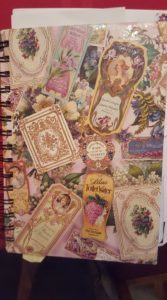 My address book
I have an address book. A real, honest-to-God address book. I’m not sure when I got it, but it’s at least 25 years old. There are tabs for each letter of the alphabet. Each entry includes lines for name, address and phone number. And it’s a mess. Sometimes I correct addresses and phone numbers, sometimes I just tear off the return address from their latest Christmas card and stick it in the front.
Recently, I had reason to go through my mother’s address book. She’s almost 89, and I was a bit surprised that she updated hers in a way I didn’t: she noted when a friend died.
I’ve gone through mine – mostly during the holidays – and as I read a name thought, ‘he’s dead,’ ‘she’s dead,’ ‘they’re both dead’. But I don’t cross out their names. My mother wrote ‘died’ after some of the names. For one she even wrote that she was surprised how much the news had affected her.
My Facebook friends list also includes a few who have died. They remain on the list because their pages are still there. People can visit to wish a happy birthday or convey their continuing sense of loss. I could delete the names. But I don’t.
For a long time I felt like I was just lazy. If I were as organized as I strive to be, I’d cross out their names or just buy a new address book and start over again. But I couldn’t.
Going through my mother’s address book made me realize I hadn’t changed anything because I didn’t want to change anything. I wanted to keep those names in the book so I didn’t forget them. I wanted to be reminded of Dan and Delle and Mary Ellen and Pierre and all the other friends who have died. Because I was afraid if I didn’t see their names I might forget them.
Of course, that’s silly. They may not be in my thoughts every day, but I could never forget them. When I see their names I’m reminded of the times we shared together and how much they meant to me. I think of them when they were most alive, not when they were dying.
So the address book stays as it is: messy, falling apart, though not yet in need of a rubber band to hold it together. I’ll risk feeling sad when I see their names. And I’m okay with that.
#short_code_si_icon img
{width:25px;
}
.scid-2 img
{
width:25px !important;
}
Share this post
January 17, 2018
What’s Your Word of the Year?
 elizabethrider.com
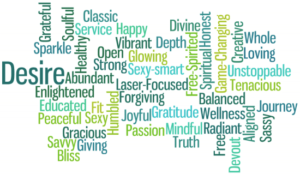
A lot of friends of mine have decided to pick a word as their theme, their mantra for 2018. Some have chosen interesting words like ‘fearless’ or ‘joy’. Mary Schmich, in the Chicago Tribune, shared some of her readers’ choices. For a while, the whole thing struck me as silly.
I don’t make New Year’s resolutions, though I am fond of to-do lists. I made a list of goals for my writing this year. I will probably fall short, but that’s okay. I’ll be happy if I only meet half of them because that will mean that I’m working smarter than I did last year.
Having said that, the idea of picking one word for my mantra started to intrigue me. I thought about what’s going on in my life: not just my writing, but personal issues. Some are things that can be fixed/solved. Others cannot, and that means I have to adjust my expectations. But as I confront some very uncomfortable realities, even as I look forward to the publication of my next book, a word popped into my head.
Regretless.
Yeah, I didn’t think it was a word, either. But I looked it up. Regretless means ‘having no regrets’.
I don’t believe it’s possible to live a life with zero regrets. When he was 87, my friend Pierre insisted he had no regrets in his life. I didn’t believe him, either. We all do things that are stupid or mean or dangerous, especially when we’re young. And we regret doing them. Sometimes we even regret doing something nice when the other person is less than grateful.
But the more I thought about it, the more I realized that this is the word for me. Not only that, I realized I’d used it as a mantra before.
Sometime in the 1980s I remember considering what I was going to do – if anything – about the AIDS epidemic. Was I going to volunteer and if so, doing what? Was I going to work in the community? Was I going to get involved in the politics? For the first few years, I had no idea. I was still working in theatre and it was starting to affect gay men I knew from college and various productions. It seemed selfish and a little heartless to do nothing.
But at some point I made a conscious decision. I have no idea what prompted the thought, but I clearly remember thinking to myself, “I don’t want to look back and realize I did nothing.” In other words, I didn’t want to have any regrets.
In the past year, a lot of writers I know who were firmly apolitical have gotten involved in advocacy. They’re not just tweeting and posting. They’re contacting their elected officials, marching, organizing and writing about it. They’re admitting – some for the first time publicly – where they stand on issues that are important to them (and no, not all of them are of one mind).
Last summer a friend who always advised other writers to not make their politics known, said, “We can’t be silent anymore.” He was going to use his platform for advocacy. On some level I think he felt the same way I did all those years ago: that he didn’t want to look back and realize he’d done nothing.
So that’s how I feel about this year. Whether it’s accomplishing my writing goals, helping my mother recover from a broken hip, staying in touch with my friends, or taking care of myself, I want to do the things that are important to me. Some – like most of my to-do list – will be easy and relatively painless. Others will take every ounce of emotional strength I can muster. I may still fall short, but I’ll know it won’t be for lack of trying.
And whatever I do accomplish, I hope that I’ll recognize that I tried, and made progress on my goal of being regretless.
#short_code_si_icon img
{width:25px;
}
.scid-4 img
{
width:25px !important;
}
Share this post
January 10, 2018
Old Friends
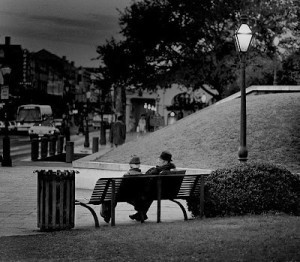 The title of this week’s blog post is one of my favorite Simon & Garfunkel songs. I was a teenager when the song was released, and the old friends sitting on a park bench were not people I related to. They were…old. They were slow-moving. Nothing like me or my friends.
But time has a way of changing things. There are friends in my life who I’ve known for decades. Some have stayed in my life continuously. Others – and I think this is more typical – have moved in and out. But as I get older, those friends are the ones who have moved closer.
I’ve watched my 88 year old mother’s world shrinking as friends and family members die. But there remains a small group of old friends, people she’s known since, well, World War II. They share a unique comfort level that I feel with my own friends. It’s not just that you speak in a kind of friendship shorthand or finish each other’s sentences. It’s more.
My friends remind me of who I was in high school, in college, in my theatre days, in my fundraising days. They remind me of reasons to be proud and reasons to cringe. They stand by me and refuse to let me criticize myself. I do the same for them.
And although we’re ‘at that age’, the truth is that I’ve had reason to grieve the death of a friend many times over the years. First the Vietnam War, then the AIDS epidemic, then various cancers, the flu and 9/11.
Nothing prepares you to lose a friend, no matter the age. Though the women in my writing group were all 20-30 years older, the deaths of two of them still shook me.
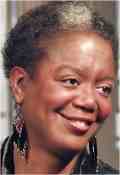 I remember walking into my friend Delle Chatman’s apartment a few weeks before she died. She’d already discontinued cancer treatment, her third bout of ovarian cancer proving too much for her tired body. And though she was at peace with her decision, her friends were not.
She greeted me at the door. “Do you want to see my urn?” She pulled a shiny cobalt-blue urn from her front closet.
Oh, hell, no, I wanted to say. Instead I told her it was beautiful. It was, but that wasn’t the point. I didn’t want confirmation of what was to come. Unlike some of her friends, I wasn’t angry that she’d decided she’d had enough, that she was ready to die. I just wasn’t ready to let her go.
I wasn’t ready to give up the early morning conversations over tea at Metropolis coffeehouse, after we’d dropped off our daughters at school. I wasn’t ready for her unfinished projects to remain forever unfinished. I wasn’t ready for a world where I couldn’t hear her voice.
As it turned out, I didn’t have to worry. After her death – beginning with her unforgettable memorial service – she would occasionally make her presence known to me. Sometimes I do hear her voice. A postcard she sent me from Paris, which has remained in the same place on my desk for almost 12 years, occasionally falls over for no reason. I do know the reason: she wants to be sure I know she’s with me.
Those old friends make their presence known in other ways. They email if they haven’t heard from you: “You’ve been quiet. Are you okay?” They share contacts and resources when you find yourself in the midst of a crisis. They send stupid photos via Facebook Messenger that they know will make you laugh out loud (preferably in a public place so strangers stare at you) when there’s nothing else they can do to make things better. And some of them give Olympic-caliber hugs when you need them the most.
I read an article a while ago by a writer who admitted he couldn’t find the time to meet a friend for lunch, but did make time to go the friend’s funeral. He wasn’t bragging. He was distraught that he’d come up with stupid reasons for not making 30 mile drive to see his buddy. Now it was too late.
It’s too easy to blow off friendships, no matter how much they mean to us. But it’s not too late to make a New Year’s resolution to keep your friends close: to lean on, to let them lean on you, to let them know they’re loved.
That’s a New Year’s resolution that everyone can keep.
#short_code_si_icon img
{width:25px;
}
.scid-6 img
{
width:25px !important;
}
Share this post
January 3, 2018
A New Year! A New Me?
 bookcovercafe.com
Every January 1st, people make New Year’s resolutions. They commit to making changes: positive changes. Some want to lose weight, exercise more, travel. Others hope to change careers or go back to school. And though I didn’t really make resolutions about my personal life (or rather, none I’m willing to share) I do have to make one big one in my writing life.
For years, the word many authors feared was ‘platform’. We were told we had to have one, had to build one, had to maintain it constantly – even if we weren’t quite sure what it was. Now I rarely hear that kind of advice given with the urgency I heard in 2011.
Now the word many authors fear is ‘brand’.
Well, maybe not many, but this one sure does.
I was pretty clear on my brand – though I never used that word – when I started writing. I was writing about an unusual topic: grieving the death of a friend. So unusual that my first Google search of the top 100 responses yielded more sites for grieving the death of a pet than a human friend. I set out to raise awareness of a kind of grief that is often dismissed and disrespected.
After seven years – starting two years before my first book came out – I think I’ve done pretty well. I became a bit of an authority on a type of grief that wasn’t widely respected. I knew who I was. My readers knew who I was. They knew what to expect.
My next book is not about grief (though it is a necessary component). Like fiction writers who hop between different genres, I now find myself wearing two hats: I write about grief and friendship but I also write about HIV/AIDS and the straight women in the community. There’s a little overlap. But it’s still two different topics.
That means, as I’ve been told time and again, my books are not my brand.
I am my brand.
Well, let me tell you, that’s a frightening proposition. What I fear more than the word ‘brand’ is the realization that I am my brand. That means I can’t hide behind my books, as many authors at least try to do. And I’m someone who hates having their picture taken!
So, I’ve been giving this a lot of thought the past couple of months. It feels a bit like an existential, midlife crisis. But it’s also a great exercise. It has forced me to look back and forward: to consider how I got where I am today and where I want to go. Some parts of that came easily. Some are a challenge.
The good thing is I don’t have to do this alone. I have colleagues and publishing gurus I can consult. My readers will help, too, because their feedback has always guided me. I will say this: don’t expect an announcement, a blog post with the headline “This Is The New Me!” That’s not going to happen. There will be changes here on my blog, on my website, in my writing. You may not even notice them at first, but they’ll be there.
Stay tuned.
If you’re a writer trying to define your brand, here are some articles that may help you find clarity:
How to Discover and Build Your Author Brand
6 Branding Tips for Writers and Authors
Your Guide to Branding Yourself as an Author
#short_code_si_icon img
{width:25px;
}
.scid-2 img
{
width:25px !important;
}
Share this post
December 20, 2017
The Last Blog Post of 2017
 Deposit Photos
Like many of you, I’m a bit over-committed these days: presents to wrap (assuming they’re already bought), cards to mail, travel arrangements to finalize.
I started writing this blog post last week. It included a bunch of year-end helpful hints. And then I decided I wasn’t going to do that. Social media is full of year-end helpful hints. What I really needed to do was, well, look back.
Last December I was in rehab for my broken writing hand. I was still doing things with my left hand only: not just personal care but decorating the Christmas tree. Yes, I put on the ornaments and tinsel without breaking anything else, which was kind of a miracle. My writing, among other things, came to an almost full stop.
The year began slowly. By the end of January I could drive again, though not easily. When I started travelling for the next book in late March, I was nearing the end of my physical therapy. Just rolling my suitcase a couple blocks required ibuprofen and ice packs, but it didn’t come close to what I’d endured earlier.
It was May before I began to feel like myself again. I was on the road, interviewing more women for the book, doing a bit more research and expanding my speaking engagements. One of them was the only presentation that’s made me nervous in years. It was a topic I’d spoken on before (moral injury in HIV long-term survivors) but this time it was for an audience of medical professionals at Mt. Sinai Hospital’s HIV rounds. And though it went well, I was shocked to find out that of the ten speakers they hosted this year, I was ranked #1. Nothing gives you confidence like being #1.
I updated my second book, Friend Grief and AIDS: Thirty Years of Burying Our Friends and finally started writing the next one, though I had to push back the publication date from this month to March, 2018.
This book scares the hell out of me. Fag Hags, Divas and Moms: The Legacy of Straight Women in the AIDS Community has scared me since I committed to writing it in September, 2015. It’s an important topic, one that’s long overdue in the literature of the epidemic. But it’s more than that. I’ve felt for a long time that what I write is skim milk. This needs to be whole milk; maybe heavy cream. And I wasn’t sure I was up to it.
But then I sat down to start writing. I hid myself away in a room on the upper west side of NYC for almost three weeks. Unlike previous visits, I saw very few people I knew. I needed to concentrate and see how far I could get. As it turned out, not as far as I’d hoped. But what I discovered was that the women were speaking to me. Literally.
One of the women in the book is actress Colleen Dewhurst, who was president of Actor’s Equity when the AIDS epidemic began. Without her, there would be no Broadway Cares/Equity Fights AIDS, which has raised over $285 million since 1988 to educate, advocate and serve the HIV/AIDS community. I was trying to decide on a compelling story to open the first chapter when I heard her voice:
“You’re opening the book with me.” Admit it. You can hear her voice, can’t you?
I’d already written about her in a different chapter. No, I don’t think so, I thought to myself.
“You’re opening the book…with me.”
Fine. We’ll see if Colleen’s opening story survives the editing process. But I have the feeling it might.
It’s been like that. Women I hadn’t interviewed or researched have popped up in my newsfeed or in posts from friends – or on occasion just showed up at events I attended – all but demanding my attention.
And though it may sound crazy, it has been comforting. More than one woman I interviewed was surprised anyone would be interested in her story. But others – like Colleen – want to be heard. They want the world to know that straight women have made a difference in the course of the epidemic.
Towards the end of my time with her, my physical therapist admitted that when I first walked in she wasn’t sure I’d regain full use of my hand. I’m glad she didn’t tell me sooner. I just assumed that if I did what I was told and worked hard at my rehab, everything would be fine.
Now I’m hoping the same thing happens with this book. But I’m pretty sure that Colleen will make sure it does.
See you in 2018!
To learn more about the book, click here.
#short_code_si_icon img
{width:25px;
}
.scid-2 img
{
width:25px !important;
}
Share this post
December 13, 2017
Books for the Special People on Your Holiday List: Part 2
Last week I offered some shopping suggestions for the hard-to-buy people on your list. All turned out to be nonfiction and memoir by women. This week’s list is equally eclectic, with books by men and women this time.
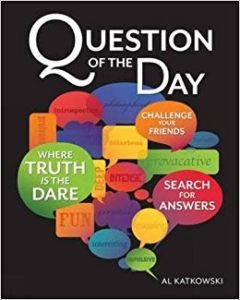 For your writing group leader, who always begins your meetings with a writing prompt – Question of the Day: Where Truth is the Dare by Al Katkowsky
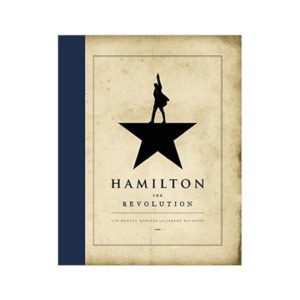 For the theatre fan in your life, as well as the person who can’t read enough history – Hamilton: The Revolution by Jeremy McCarter and Lin-Manuel Miranda
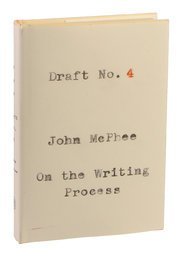 For nonfiction writers at all phases of their careers – Draft No. 4: On the Writing Process by John McPhee
 For anyone curious about the experience of Muslim immigrants to the US, a very personal and eye-opening memoir – America Through My Eyes: Experiences of an Egyptian American Muslim Woman, by Rania Zeithar
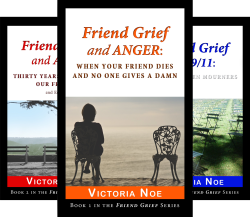 And finally, yes, my books. They may seem like odd choices for gifts. But many of those who have purchased them have done so with the intent of giving them to someone who could benefit.
They’re for anyone who has grieved the death of a friend: someone they grew up with or worked alongside. It’s often that we don’t realize just how much those friends mean to them until they’re gone. And too often, others don’t recognize how deeply we’re affected. They brush it off as unimportant because friends aren’t as important as family. They are. Sometimes more important.
In these books you’ll meet people who have lost a best friend or dozens of friends. They’ve found ways to honor those friendships, sometimes making major life changes to fulfill the potential their friends recognized in them.
If you’re afraid that sounds depressing, they’re not. Some of the stories are sad, some will make you laugh. But all of them affirm the transforming power of friendships. And there are few things as defining as the friendships that shape our lives.
So, those are my suggestions. And though the links are Amazon, you can purchase these books and ebooks on many other sites as well, including your favorite indie bookstore.
Give the gift of reading to someone you love. And don’t forget to include yourself, as well!
PS – If you’re looking for a last-minute charitable deduction, check out my next book (Fag Hags, Divas and Moms: The Legacy of Straight Women in the AIDS Community) on the New York Foundation for the Arts website. Through their fiscal sponsorship program, your support of my book’s production is fully tax-deductible.
#short_code_si_icon img
{width:25px;
}
.scid-2 img
{
width:25px !important;
}
Share this post
December 7, 2017
Books for the Special People on Your Holiday List: Part 1
I was inspired by Sandra Beckwith’s post on the Build Book Buzz blog, suggesting holiday gifts for writers. It got me thinking about books I’ve loved and love to give to friends. So in that spirit, here are a few I’d like to recommend. In the interest of full disclosure, most are by writers I know. All are by writers I admire.
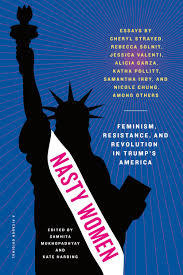 For the Nasty Woman in your life – Nasty Women: Feminism, Resistance and Revolution in Trump’s America by Samhita Mukhopadhyay and Kate Harding
 For the daughter who lives and loves basketball – Home Sweet Hardwood: A Title IX Trailblazer Breaks Through Barriers for Basketball by Pat McKinzie
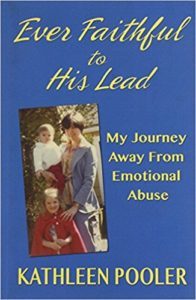 For the friend looking for the courage to leave an abusive relationship – Ever Faithful to His Lead: My Journey Away from Emotional Abuse by Kathleen Pooler
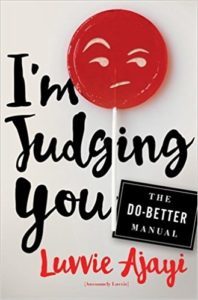 For the woman who needs a good laugh – I’m Judging You: The Do-Better Manual by Luvvie Ajayi
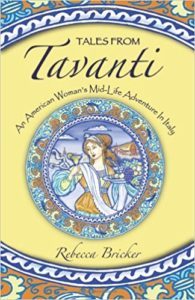 For the friend who dreams of running away – Tales from Tavanti: An American Woman’s Mid-Life Adventure in Italy by Rebecca Bricker
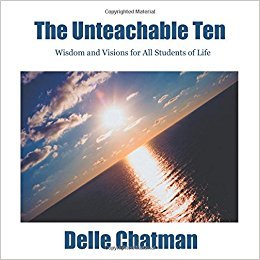 For you, when you need a quiet, inspiring read – The Unteachable Ten: Wisdom and Visions for All Students of Life by Delle Chatman
(If Delle’s name sounds familiar, it’s because she’s the friend who’s responsible for my writing career.)
Yes, it’s an eclectic group of essays, memoir, inspiration and humor by talented women who deserve your attention. There’s something to love in each and every one, so I hope you’ll click on the links and support them.
Next week I’ll have a few more suggestions, just in time for last-minute shopping.
And remember: if you have a friend or family member who’s a writer, the very best gift you can give them is to buy their books!
(Hint. Hint.)
#short_code_si_icon img
{width:25px;
}
.scid-2 img
{
width:25px !important;
}
Share this post
November 28, 2017
World AIDS Day 2017
 On the first World AIDS Day, 1988, I was in London enjoying a performance of The Secret of Sherlock Holmes, with Jeremy Brett and Edward Hardwicke reprising the BBC portrayals I watched on PBS. I was already starting to work in the AIDS community in Chicago: a little volunteering, an increasing amount of grant writing for new organizations that couldn’t afford to put a development person on staff. Gay men – famous and not – were disappearing, only to have their deaths attributed to ‘a long illness’. No one was fooled. We all knew what was going on.
Though it wasn’t why I went to London, I think I probably had some belief that I could get away from AIDS. As it turned out, I couldn’t even get away from it in the theatre.
At the curtain call, Brett made a speech. “Today is the first World AIDS Day,” I remember him saying. He went on to explain that ushers would pass buckets around to collect money for London’s AIDS organizations. I put a few pounds in the bucket and filed the idea away as a good one: curtain call appeals were rare.
The following year in Chicago, I stole the idea, sending teams of volunteers out to theatres to make curtain speeches and collect money for our organization. It was surprisingly easy, and was repeated, though no organization approaches the outrageous success of Broadway Cares/Equity Fights AIDS’ curtain speeches. Theatre companies vie for top fundraising items, not just collecting money in the buckets, but auctioning off autographed programs, posters and – as Hugh Jackman and Daniel Craig did during the run of A Steady Rain – performance-worn t-shirts. I loved both of them in the play, but seriously: a sweaty t-shirt? No, thanks. Still, last year over $7 million was raised on and off Broadway and with national touring productions. It’s a testament to the determination of the theatre community to end the epidemic.
For years after I burned out, my only activity on World AIDS Day was attending a church service or maybe thinking about those lost. When I started writing and became active again in the community, I gave presentations and attended events. This year, though, I’m not going anywhere.
I’m hard at work on a book I resisted writing for a long time – Fag Hags, Divas and Moms: The Legacy of Straight Women in the AIDS Community. It’s a difficult book to write for a lot of reasons. First and foremost, I want to do justice to the women in the book, whose accomplishments over the last 36 years have gone largely unnoticed. Second, no book can include all of them, so the women in the book must represent thousands of others.
But it’s been difficult emotionally as well. When I told a friend about some of the women I interviewed, he said, “It’s not like you’re taking notes in a lecture.” His concern seemed odd, but he was right. As I listened to these women talk about the friends and family members they mourned so deeply, describe their frustration and anger with bureaucracies and bigotry, and more often than not, cry when they remembered the lives lost…well, the stories affected me, too.
That’s not to imply that this book is depressing. It’s not. There are stories that will make you sad, others that will make you angry and a few that will surprise the hell out of you. It’s also possible you’ll laugh out loud. And I’m quite sure you’ll learn a lot. I know I have.
So this year I’ll spend World AIDS Day with these women. I’ll listen to their stories and figure out how to share them. I’ll make sure people understand the context of the times, whether they’re women who were there at the beginning or those who work today to end the epidemic.
And on the next World AIDS Day, I hope the women who couldn’t fit in the book will be motivated to tell their stories, too. Because when the history of the epidemic is written in the past tense, the world needs to know that straight women were there…and still are.
For more information:
Fag Hags, Divas and Moms: The Legacy of Straight Women in the AIDS Community
Broadway Cares/Equity Fights AIDS
#short_code_si_icon img
{width:25px;
}
.scid-2 img
{
width:25px !important;
}
Share this post