Victoria Noe's Blog, page 3
May 31, 2019
HIV Long-Term Survivor Awareness Day
 In 2015, this essay won the Christopher Hewitt Award for Creative Nonfiction. I’m sharing it again today, in advance of June 5, which is HIV Long-Term Survivor Day. I never thought of myself as a long-term survivor, but I was assured I fit the definition.
“Long-Term Survivor”
It’s only the past few years that that designation has become widely used. Hell, no one expected it would ever be possible. There was a time when my only prayer was to get through a week without reading the obituary of someone I knew or admired from afar.
Since many who have reached that milestone are also baby boomers like me, I’ve taken a special interest in their challenges. During a visit to New York, I attended a listening session at Gay Men’s Health Crisis and was profoundly moved by stories of isolation and loneliness, especially from straight men and women who felt a unique stigma. But I was an observer, not a participant.
A few months ago, when Jeff Berry at Test Positive Aware Network (TPAN) announced The Reunion Project in Chicago, I told him I’d like to attend, though I wasn’t a long-term survivor.
“Yes, you are,” he insisted.
“But I’m not positive,” I insisted right back.
“But you were there.”
I still don’t identify as a long-term survivor, but he was right: I was there.
I’ve been in and out of the community since about 1983. I started out volunteering and then became a fundraiser. The deaths of people I knew, mostly but not exclusively men, piled up during those early years. If I lost touch with a gay friend, I assumed it was because he was dying or already dead. I talked about my work with few people outside the community. To be a straight woman working for an AIDS organization in the late ’80s/early ’90s was as isolating as it gets.
I know: Elizabeth Taylor and Princess Diana, prominent public faces of straight women involved in the community. But most of us weren’t in the public eye. We were caregivers and social workers and advocates. We raised money, delivered meals and found emergency housing for those kicked out by their families. Our social lives consisted of work, fundraising events and memorial services. We did good work and had good intentions, but we were naïve: naïve about the emotional toll of our involvement.
Inside the AIDS community we weren’t always welcome, to put it mildly. We were told to our faces that we didn’t belong, called “breeders” and much worse. We were looked at with suspicion, as if our goal was to attain sainthood for working with modern-day lepers. After years of working in theater with gay men, I was shocked to be treated with contempt.
We became pariahs in the outside community. “You’ll never get a date now” was my ex-boyfriend’s sneer when I told him I took my first staff position at an AIDS service organization. Turned out the asshole was right. Because in 1989, if I told a straight guy I worked for an ASO, that was pretty much the end of the conversation. I went to my friends’ weddings and baby showers, but didn’t discuss my work.
Their attitude was always the same: “Why do you want to do that? It’s not about you.” They were right. I was HIV-negative then and now. I wasn’t at risk.
But I wanted to help so I kept at it: cranking out grant proposals, organizing fundraisers, showing up at memorial services. By the time I was married with a baby in 1994, though, I was cynical and angry and exhausted. I backed off.
For the next seventeen years, I kept up with the medical miracles and observed World AIDS Day. Other than that, I was careful to keep my distance.
After a concussion ended my sales career in 2009, I embarked on something very different: writing. I began work on what became a series of small books about grieving the death of a friend. I assumed AIDS would be one of the topics, but gave it little thought until 2011, when Tracy Baim asked me to contribute an article about my experiences to Windy City Times’ “AIDS @ 30” series.
I remember sitting down at the computer, not sure I could remember much. I didn’t realize how much I’d deliberately suppressed. But before long my fingers could barely keep up. The anger surged so quickly and so dramatically that it scared the hell out of me.
People and events, places and conversations popped into my head. But what was most troubling to me—and still is—was the isolation. I was not on the inside of the community, not on the outside: somewhere in between, unable to identify completely with either side.
The extent of that isolation was slow to reveal itself. I reconnected with a woman who’d been a volunteer in the same organization where I was the development director. It was soon apparent that our experiences were eerily similar, but until that day—over twenty years later—we had never shared them.
In early 2013, I sent my mother a copy of my book. Now, my parents were always quite liberal with regard to the LGBT community. A gay man was my father’s best friend. My nephew is gay. Acceptance was always there and they never questioned my work. So her initial reaction was not what I expected.
“You never told us. I had no idea you went through any of this.” As it turned out, she wasn’t the only one. People I’d known for 20 years didn’t know I’d ever had any involvement in the AIDS community. Time and again I saw shocked looks on their faces, and heard it in their voices, because I never, ever talked about it.
And that’s when I realized the true cost of isolation. If it was this bad for me, how must it be for those who have lived with the virus for decades, unable to disengage from it for even a minute?
I kept to myself because I didn’t think anyone cared about all the people I knew who were dying. I didn’t think anyone cared that I was afraid to check on friends I’d lost touch with because too often I found out they were already dead. I didn’t think anyone cared that I would come home from work and sit on the couch in the dark, staring at nothing, forcing myself to not feel.
So I wasn’t prepared for people to thank me now, thirty years later, for what I did. I wasn’t prepared for people to seek me out for information or advice. I wasn’t prepared to jump back into the community, this time as a writer and member of ACT UP New York.
There are days when I don’t have a fucking clue why I’m back. I don’t know what I thought I’d be doing at this age, but it’s not this. Thirty years ago I hoped all this shit would be over, but it’s not.
At the closing of the 2015 U.S. Conference on AIDS, one of the ministers said something that raised goosebumps all over my body: “Sometimes we choose our calling, and sometimes our calling chooses us.”
I still feel frustrated, I still feel angry. But I don’t envision walking away again any time soon. Because this time, for the first time, I don’t feel alone.
#short_code_si_icon img
{width:25px;
}
.scid-2 img
{
width:25px !important;
}
Share this post


May 17, 2019
Time to Carry On a Friend’s Work
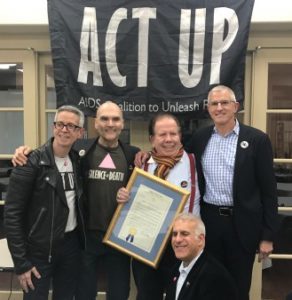 Peter Staley, Jim Eigo, Andy Velez, Eric Sawyer, Jay Blotcher. Photo by Jennifer Morton
I had a blog post ready for this week. Well, not quite ready, but it was getting there. Then on Tuesday, a post popped up in my Facebook newsfeed:
A man of great heart, deep conviction, and scalding wit has been taken from us. Veteran AIDS activist and ACT UP New York member Andrew Velez died today (May 14) in a Manhattan hospice. He was 80.
It stopped me cold (partly because I had no idea he was anywhere near 80). I knew Andy had had some serious health challenges last year, though I didn’t think much of it. The community was rallying around him and he seemed to be in good spirits. I didn’t know – or had missed the news – that he’d suffered a serious fall last month, so this announcement was a shock. Others who were close to him knew, but kept it private. I respect that.
Andy was at the first ACT UP/NY meeting I attended six years ago. In fact, Andy was at pretty much every ACT UP meeting from the first one in 1987. He was funny and bitchy and did not suffer fools gladly. I considered him one of the most effective advocates in the history of the AIDS epidemic. His obituary, which you can read here, recounts his accomplishments. It’s hard to believe one person could do all those things, but Andy could. He was clear in his focus, always, even if that focus was fun.
How do you do that kind of work for 30+ years and remain sane? It’s a conversation I’ve had a lot lately, and there is no easy answer. Some of us left the community and returned. Others left and did not return. Still others stayed in, but paid an emotional price for their involvement. Self-care for activists is not a topic that comes up very often, but it should.
I know long-time activists who will insist that their outlet was/is sex. Nothing wrong with that. Maybe that was Andy’s answer. But I suspect it was more than that.
Long ago, two women who worked in hospice attended a workshop I was teaching. At a break, I asked them how they handled working in such an environment, one in which their patients always died. “You have to have a new definition of ‘success’,” one of them told me. And I think that was Andy’s secret.
He certainly knew he couldn’t end the epidemic, on his own or with his comrades in ACT UP. But he knew what he could accomplish with them. He knew any change was progress, and he helped make a hell of a lot of change.
I always knew when I saw Andy that I would learn something and I would laugh. And what better legacy is that for anyone? There was simply no one like him. It’s up to all of us to continue his work, until the epidemic is finally, finally over.
RIP, Andy
ACT UP!
Fight back!
Fight AIDS!
#short_code_si_icon img
{width:25px;
}
.scid-2 img
{
width:25px !important;
}
Share this post
April 30, 2019
What Kind of Author Are You?
 I’m not talking about genre. I’m not talking about pantser vs. plotter. I’m not talking about introverted or extroverted. I’m talking about your social media presence.
We’re all familiar with authors who post strident, desperate “BUY MY BOOK!” notices on their social media pages. They lament infinitesimal drops in Amazon rankings and newsletter subscribers, and the unfairness of publishing in general. Their focus is always, relentlessly, on their sales.
They’re exhausting.
But many people don’t know how to present themselves on social media without the constant use of a bullhorn. And if you’re a writer for the long-haul, you need to carve out a unique place for yourself. Getting noticed isn’t easy, unless you’re one of those annoying people. So how about making your reputation as someone who’s not so obsessed with their own sales, but generous in their online relationships?
Social media – especially Facebook – helped me research, fund and sell my latest book. It was an almost five-year journey, one with serious roadblocks, that I could not have completed without the relationships I developed and maintained online. And it was easy.
I asked for help.
I asked people for help every step of the way. I went into writing with the determination to never be afraid to ask for help, and this is where that promise to myself was realized. Online friends and strangers supported me. Their excitement when the book was finally published overwhelmed me. They are helping promote it and recommend speaking engagements. They are invested in this book.
Yes, I asked for help. But the help went both ways.
It wasn’t just that I friend them, like their posts, wish them a happy birthday. If they’re writers, I share info on their books. Yes, I promote other people’s books. I buy some of them, too. I donate to crowdfunding campaigns.
When appropriate, I connect them to other individuals or groups that might be able to help them in their publishing journey, or their advocacy work. It’s not intentional matchmaking. You could call it a transactional business relationship. Or you could call it friendship. The label isn’t important. It’s the desire to help.
I was pretty stunned to find that the new book was the #1 New Release in its main category on Amazon. That never happened to me before. At least I don’t think it has. I rarely check my Amazon rankings, unlike some writers who check hourly.
That was a nice surprise, but it was not a goal. My goals are long-term, and that’s why building relationships is so important to me. I have reviews and interviews coming out through August, and speaking engagements already booked into late October. I’m not panicking. If a day goes by when I don’t sell a book, that’s okay.
So take a look at your online activity. Do you participate in groups and support other writers? Do you share information about author fairs and contests? Do you review other writers’ books on your blog, your Facebook page or on Amazon? Or are you just posting “BUY MY BOOK!”?
Relationships are relationships, whether personal or professional, whether online or in real life. Start building real ones with readers and other writers today.
#short_code_si_icon img
{width:25px;
}
.scid-2 img
{
width:25px !important;
}
Share this post
April 19, 2019
The Post-Book Launch Glow
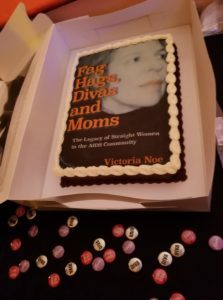 I’ve had two book launch events in the last two weeks: one in Chicago, one in New York City, both at indie bookstores. Both events had delicious cakes that looked like the book cover.
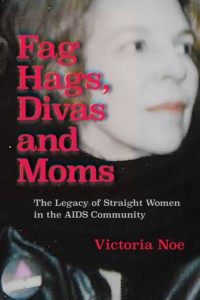
This book – Fag Hags, Divas and Moms: The Legacy of Straight Women in the AIDS Community – is very different than the Friend Grief series I wrote. It’s longer and more complicated, being published almost five years to the day after I first got the idea for it. My production team – editor, cover designer, interior designer – was different. I hired a publicist, for the first time ever. Like I said, very different.
But the biggest difference is that so many people were invested in this book. Starting on that Saturday night in September, 2015, when I first posted a tentative request on Facebook, people have come forward to offer any help they could. Some of them were women willing to be interviewed. Others were friends and strangers – so many strangers – who felt the book was long-overdue and offered research assistance. Some donated money to my crowdfunding campaigns. Others put me in contact with women to interview.
Writing is a solitary activity, but writing this book has been anything but solitary. All along the way, I’ve been fortunate to have those people with me. They encouraged me when I encountered serious roadblocks – a broken writing hand, my mother’s death – that stopped my progress on the book for months. From a wide variety of backgrounds, they offered critical feedback for my manuscript when I was just too close to it to be objective.
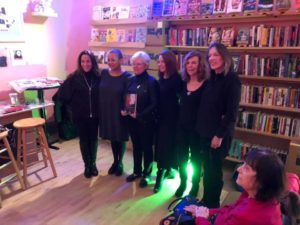 A lot of them showed up for my book launches. Six of the women in the book showed up – one in Chicago, five in New York – to celebrate. There were lots of smiles, lots of hugs and even a few tears. The tears were mine, because that’s how I respond when someone I admire says, “I’m proud of you.”
This book took a lot out of me, both physically and emotionally. And for the first time since I started writing, I worried what people would think about it. I wondered if the women in it would be proud or embarrassed.
So far, so good. The response has been positive, to put it mildly. It debuted as the #1 New Release in AIDS on Amazon. It’s getting attention offline as well, with invitations for speaking engagements.
My publicist has done a great job getting the book out there, but now it’s my job to keep it in the public eye. My marketing plan is a long-term one, not just the first couple of weeks. I’ll be popping up in interviews, freelance articles and guest posts over the next few months. My blog will feature the women I interviewed who did not make it into the book, so in the coming months, you’ll meet them, too.
It’s hard sometimes to enjoy what you’ve accomplished because you keep obsessing about what’s still on your to-do list. At least it’s hard for me. So I’m trying to take some time now to remember the hugs and smiles, to accept the compliments, to enjoy what has taken me five years to do: write a book that fills a gap not just in the history of the epidemic, but women’s history as well.
As for what’s next…I have no idea. For now, I’m just going to enjoy this and keep telling stories.
#short_code_si_icon img
{width:25px;
}
.scid-2 img
{
width:25px !important;
}
Share this post
March 28, 2019
A Special Women’s History Month
 It’s been almost five years since the idea for my next book popped into my head.
On April 1, 2014, I was at the New York Public Library for a panel discussion: “The Women of ACT UP/NY! Fight Back! Fight AIDS!” A group of accomplished women – straight and lesbians – talked about the things they’d accomplished that changed the AIDS epidemic. The most significant one was arguably a four year battle to change the definition of AIDS to include women. Until 1992, the government and insurance companies defined AIDS by how it presented in men.
I knew most of the stories they told, though many in the audience, including my 19 year old daughter, did not. I remember thinking, “these stories need to be told”.
But not by me.
Surely these stories had already been told, shared with the world beyond the AIDS community. I did some research over the next 18 months, expecting to find proof that such a book had already been written.
But there was nothing.
So I gave up looking for that book and decided to write it. Fag Hags, Divas and Moms: The Legacy of Straight Women in the AIDS Community comes out March 29.
While there are a few famous women in the book, like Elizabeth Taylor and Princess Diana, most have made their contributions with little fanfare. Some of them I interviewed in person, a box of kleenex between us. Some I researched, combing through a variety of archives full of powerful testimonies to their accomplishments.
Friends, colleagues and strangers offered help from the first day I announced I was writing this book. Women I’ve never met, but who trusted me, opened up their personal archives.
I will never be able to think about women’s history month without thinking of them: the women in the book and ones whose stories I was unable to include. AIDS is not history, but the history of the AIDS epidemic will now have a new chapter full of amazing women.
At the closing invocation for the 2015 US Conference on AIDS, a minister said something that changed my life. I’d spent four days in workshops and sharing the idea for this book with people from around the country. I was exhausted, but what he said not only shook me from that exhaustion, it has defined my life ever since:
“Sometimes you choose your calling, and sometimes your calling chooses you.”
It does indeed.
Fag Hags, Divas and Moms: The Legacy of the AIDS Epidemic is available in paperback and ebook for presale ahead of its March 29 release date from your favorite bookstore or online store, including IndieBound, Amazon, Barnes & Noble, Kobo and iTunes.
#short_code_si_icon img
{width:25px;
}
.scid-2 img
{
width:25px !important;
}
Share this post
February 23, 2019
Another Celebrity Friend Dies
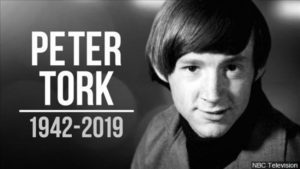 I confess to being fascinated by the response when a celebrity dies. Few, if any, of those posting online tributes had ever met that person, much less counted them as a friend. But they still considered that person to be at least ‘like’ a friend.
When David Bowie and Prince died, the tributes went on for months. People shared their favorite songs and what the music meant to them. Some even changed their avatars, in honor. I suppose that was understandable: Bowie and Prince were superstars, well-known around the world, with long, ground-breaking careers. So it surprised me this week when the death of a lesser star provoked almost equally strong sentiments.
Peter Tork was part of a 1966 phenomenon: The Monkees. Network television, eager to take advantage of the popularity of the Beatles, created a weekly sitcom about the adventures of a band that was not so successful.
Known derisively as the “Pre-Fab Four” (the Beatles were known as the Fab Four), they still became a hit show for two seasons. They went on tour, though they did not draw the audiences that the Beatles did. Though their musicianship was not as strong, most fans didn’t care.
Ringo was often thought of as less-talented, less-serious than his fellow Beatles. In the Monkees that role fell to Peter Tork. Though a solid musician, his persona was naive and goofy. And while debates could rage among teenage girls as to which one of the group was the cutest or most talented, one thing was not up for discussion. Everyone agreed that Peter was the sweetest, kindest Monkee. I don’t ever remember a word of criticism being uttered about him.
When his death was announced, I thought there would be almost no response in my newsfeed. After all, he did not have a high profile, nor did he seek one. He wasn’t in the public eye. Boy, was I wrong.
Time after time, I saw posts from people my age and younger, mourning the loss. While many of them were women, a shocking number were men, gay and straight. A few had met him at one of his solo performances. All had the same response: what a sweet, kind, generous man.
Why grieve for someone who wasn’t that big a star, someone you’d never met, someone whose music you probably hadn’t played since Nixon was president? Because he was a part of each and every person who grieved for him.
It’s why we grieve whenever a celebrity dies: they remind us of ourselves. Not that we believe we are talented musicians. But because their music takes us back to a time when our lives were simpler, when everything seemed possible, our lives ahead of us.
You’ve probably had the experience of hearing a song on the radio that you hadn’t heard in many years. Whether or not you remember the lyrics – and you probably do – your mind instantly goes back to your past. Maybe it was when you heard the song the first time. Maybe it was who you were dancing with, or where you bought the album. That music provided the soundtrack to that time. When you mourn them, you’re mourning that little piece of your life.
So, thanks, Peter, for always being the guy who knew right from wrong, and could get angry without being mean. Thanks for showing us the simple joys of playing bass with your friends.
You and your smile will be missed.
#short_code_si_icon img
{width:25px;
}
.scid-2 img
{
width:25px !important;
}
Share this post
February 7, 2019
The Soundtrack of My Writing
 I’m almost ten years out from my concussion. It was the first one documented, though it’s very likely it was the second. Over the years I’ve learned how to control the side effects so they don’t overwhelm me. Silence is my default remedy.
Well, not total silence. When I work at home, I’m usually sitting at the dining room table, which at the moment is covered with research, drafts and notes. Our house is on an alley, across from an auto body shop. As you can imagine, total silence is rare. I hear cars going too fast until they hit the speed bump, garbage trucks emptying bins, the ‘beep’ of trucks backing up. But when you live in a city, you learn to tune those out.
Sometimes I work in libraries, which are quiet but not silent. And I’m not alone, which is a different kind of distraction, especially if you enjoy people-watching.
I recently was reminded that I used to write while listening to music. Those who write historical fiction often share their playlists, which help immerse them in the time period. When I was writing my first book about AIDS (Friend Grief and AIDS: Thirty Years of Burying Our Friends) it was music that often filled my head. The late 80s were full of not only Madonna, but Donna Summer and Prince; Whitney Houston and Queen; Cyndi Lauper and Wham! and Michael Jackson. Tina Turner’s “What’s Love Got to Do With It?” immediately takes me back to the dance floor at Roscoe’s, a gay bar in Chicago, where I used to host fundraising events.
But with my current book, there has been no such soundtrack. Those songs are still in my head, but they haven’t guided me, at least not since I wrote the opening chapter. What’s left is the music that always helped me focus in the beginning.
The White Album.
I’ve been a Beatles fan since 1963, before they appeared on Ed Sullivan, 55 years ago this week. My first concert was their performance at Busch Stadium in St. Louis in 1966. My daughter’s first concert was Paul McCartney. Each album, each song, has a particular meaning to me, but it is this one, a double album, that guides my writing.
I can’t listen to Sgt. Pepper when I’m writing anymore than I can listen to Broadway cast albums: I want to get up and dance. This one doesn’t inspire dancing. It reminds me, always, of gatherings at the ‘brown house’ on the campus of Webster College (now Webster University) when I was in their theatre conservatory. It reminds me of sitting on the floor with my classmates and friends, singing along to every cut on this album. No one danced. We just listened and sang and ate and drank.
Maybe it’s that memory that inspires me: the comfort of a place and time when I was just finding my way in the world and everything seemed possible.
Lately I’ve been overwhelmed by a to-do list filled with challenging tasks: making sure all the permissions have been granted, compiling the index, fleshing out my marketing plan, sending the manuscript to a formatter, choosing a cover design. As you can see, I need to be focused and clear-headed for what’s ahead. So it was good timing to be reminded of what The White Album means to me.
Maybe you have a particular kind of music you listen to while you work, music that reminds you of people and places that you love. Whatever it is, keep it close. Put those songs on an endless loop and sink into the memories.
I think I’ll start with Martha My Dear.
#short_code_si_icon img
{width:25px;
}
.scid-2 img
{
width:25px !important;
}
Share this post
February 1, 2019
Today I’m 8
 God bless Facebook Memories.
Thanks to that sometimes annoying, sometimes entertaining feature, I was reminded that my first blog post was eight years ago today.
I’d just returned from my first writing conference in New York. I’d spent a little over a year starting the research for what would become the Friend Grief series. I was in a writing group that was helping me observe and listen and be a better writer. But I’d never been to a writing conference before.
My only social media experience was a couple years on Facebook, and that was pretty much 100% social. Pre-conference, we’d been asked to life-tweet during our sessions. Tweet? You mean on Twitter? Yikes. On the way there, I signed up for Twitter, and while at Writers Digest Conference, I made my first tentative forays into the Twitterverse. It was nicer then: not nearly so mean, so reactionary, so depressing. It wasn’t as engaging as Facebook, but it wasn’t as bad as I’d feared.
One of the things I heard over and over again at the conference was that authors needed to blog. It would be an understatement to say that I was clueless about blogging. But after a weekend of soaking up as much as I could, I returned to Chicago determined to start that blog.
I set up on Blogger, rather than WordPress, though I don’t remember why. But once I did that, I was faced with a blank page. What to write?
I was trying to grow a presence as an expert on a particular kind of grief: the kind you experience when a friend dies. It’s different than losing a parent or a sibling or a spouse. At that time, if you Googled “death of a friend”, you’d find more entries for losing a pet than a human friend. So my first blog post was about that, with the working title for what I assumed would be only one book: “It’s Not Like Like They’re Family”.
Over the years, I believe I achieved what I set out to do. That book turned out to be a series of six small books. I spoke at conferences and libraries, appeared on the radio, guested on other blogs and podcasts. I wrote freelance articles, and hosted some terrific people with stories to tell about the friend they grieved. My posts were mostly about friend grief but eventually branched out: to the writing process, the publishing industry and to my next book.
I’ve changed my blogging calendar many times, to accommodate special circumstances (a broken writing hand, my mother’s death) and to better serve my readers. My social media presence now include Instagram and Pinterest, as well separate Facebook pages for my writing and the next book.
But it’s the blog that made me really take writing seriously. It forced me to put myself out there on a regular basis, even while I worked on my books. The discipline has been good for me. And while practice doesn’t always make perfect, it does make things better.
So happy birthday to me, or more accurately, this blog. I hope we’re both around for a long time.
#short_code_si_icon img
{width:25px;
}
.scid-2 img
{
width:25px !important;
}
Share this post
January 23, 2019
Writer’s Block…or is it?
 writing.inside.tru.ca
I didn’t write a blog post last week.
Writer’s block is something that most – if not all – writers experience at some time. Even non-writers recall the panic of sitting down to write a term paper and having no idea where to begin.
A writer friend of mine described her situation as scraping the bottom of the barrel. I’ve read her scrapings. We should all be so lucky to write scrapings like hers.
What if it’s not writer’s block? What if it’s something else?
It may be news to some, but writers are human beings. Their lives are filled with the usual things: relationships, bills, traffic, grocery shopping, doctor appointments. Sometimes those things run smoothly. Sometimes they do not.
I know a couple writers who, while writing difficult memoirs, are experiencing health issues. I know one whose parent was dying while she did her best to write enough blog posts ahead of time to give herself some breathing room.
Since October 2016, I broke four bones in my writing hand (necessitating emergency surgery and 29 sessions of therapy), healed long enough to spend months making weekly 600 mile round trips to help my mother in her final illness, endured her death while completing duties as power of attorney and executor, and pretty much ruined my own health in the process. And that doesn’t count my daughter moving to London for grad school.
Through all that time, I was writing my next book. I was researching and interviewing women whose stories I wanted to include. I was applying for permission to use excerpts from other works, as well as photographs and posters. I sent my manuscript to beta readers and survived the editing process with my new, wonderful editor. I cut back on my weekly blog posts.
Strictly speaking, I didn’t have writer’s block. I have a whole list of topics I can blog about at any time. I have quite a few people I’d like to feature on my blog. But sometimes, the well is dry: not the writing well, the energy well.
There are days when my post-concussive symptoms spike and there have been a lot of them lately. It’s like being in a fog, struggling to focus. Yesterday I spent well over an hour on something that should’ve only taken me about 20 minutes (it’s not done yet). All I can do when that happens is turn off the computer and rest my brain.
Writers can be ridiculously hard on themselves. The month of November brings NaNoWriMo (National Novel Writing Month), where writers try to crank out the first draft of a novel in 30 days. I’ve seen writers insist on Facebook and Twitter that they ‘failed’ NaNoWriMo because they only wrote 20,000 words.
When was the last time YOU wrote 20,000 words in one month? Yeah, probably never.
Maybe all this would be easier – and more fun – if we stopped finding ways to brand ourselves as failures and instead focused on what we were able to do despite obstacles.
Because if we did, the stories would not just make us feel better, but inspire others as well.
#short_code_si_icon img
{width:25px;
}
.scid-2 img
{
width:25px !important;
}
Share this post
January 12, 2019
The Joys of Binge-Reading
 Laura Linney and Olympia Dukakis
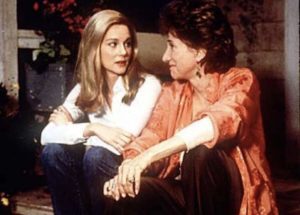
Several years ago I found myself in Brooklyn, at Armistead Maupin’s signing for the final book in the Tales of the City series, The Days of Anna Madrigal. I had fond memories of the mini-series on PBS, of the colorful characters who lived in Barbary Lane in pre-AIDS San Francisco, and had read most of the books. I was there to experience Maupin in person, and the unexpected thrill of seeing Laura Linney, who played Mary Ann Singleton, in the audience was a bonus. But I put the book aside. I knew I’d have to refresh my memory before digging into it. Sometime later I decided that my reward for writing my next book would be binge-reading the entire Tales of the City series. What better way to relax than with old friends in well-loved books?
But last summer, deep in the third draft of my book, I realized I needed to add a chapter on fictional women. Throughout the AIDS epidemic, movies, soap operas and novels have educated and enlightened the public through stories that were entertaining, if sometimes melodramatic. And I knew that Mary Ann Singleton had to be included. She represented straight women whose lives were full of gay men, lives that changed forever when the virus took many of them.
I already owned some of the Tales books, but I ordered the rest from the library. And over the course of about ten days, I binge-read all nine. Unlike my previous experiences binge reading, this one touched me deeply.
Certainly the subject matter was a factor. I read the first few books with the joy of rediscovering beloved friends in the 1970s, mixed with the sadness of knowing what horrors awaited them in the 1980s. I fell in love again with every character, even the annoying ones, as they aged and found ways to surprise me. Places and events triggered ‘I remember that’ moments: earthquakes, closing the bathhouses, the Jim Jones cult, the terror of waiting two weeks for the results of an HIV test. Maupin does what all great writers do: he creates a world you wish was your own.
Maybe it’s the wisdom of time and distance, but what had been merely entertaining the first time I read them now changed. I could see clearly that everyone in Maupin’s series was on the same journey, the one we all take, in search of love.
I’ve binge-read other series: Dorothy Sayers’ Lord Peter Wimsey stories were the first, I believe. Much later, I read the first six No. 1 Ladies Detective Agency books from Alexander McCall Smith in about a week’s time. Both took me to very different places, very different times, with characters I quickly grew to love.
I was sad when I turned the final page on The Days of Anna Madrigal. I wanted another book to read immediately. Even when the end of a series is neatly tied up with a bow, there must be a way to untie it and continue. Right?
In between that evening in Brooklyn and my binge-reading, it was announced that there would be a reboot of the Tales of the City series on Netflix this year (yes, with Laura Linney in the cast once more). It will broadcast some time after my book is published, which seems a sweet kind of serendipity.
That will give me plenty of time to binge-read the entire series once again.
#short_code_si_icon img
{width:25px;
}
.scid-2 img
{
width:25px !important;
}
Share this post