Victoria Noe's Blog, page 4
January 4, 2019
Focus, Distractions, and Pie
 The beginning of a new year finds most of us clutching to lists of things we hope to accomplish in the next twelve months. For writers, that can mean finishing a book, signing with an agent, or just perfecting their craft.
I have a friend who’s writing a memoir right now. Actually, I have several friends who are writing memoirs, but this one is doing something a bit extreme. Always involved on social media, he’s taking a four month break to finish the first draft of his memoir. No gradual withdrawal, no plans for regular check-ins with friends and followers. No social media until May 1st. None.
Well, I admire him for his commitment. He’s been working on the memoir most of the year, a year that began with his father’s death. I’m sure it has been both a welcome distraction and a cathartic experience.
If he breaks that self-imposed exile, none of us will be upset. We’ll be glad to see those posts and tweets. But if he doesn’t, if his silence greets us every day, we won’t be upset either.
I spent the better part of six weeks last summer working on my own book, 900 miles away from home, apartment sitting for a friend. I kept up on social media but watched no TV. I spent time with only a handful of friends. I rarely went out, except to the library or the Barnes & Noble cafe, or my favorite tea parlor to work on the book. If I found myself unable to focus, I’d go to a museum or get on a bus and ride around Manhattan until my head cleared. I’m not going to lie: it was lonely at times. I knew I could pick up the phone and see a friend if I wanted to. But the book was my priority.
The holidays were hard, the first ones since my mother died. I worked when I could, but I didn’t push myself. The day after New Year’s I woke up feeling oddly energized. Maybe it was just the realization that I’d made it through the holidays. Whatever the reason, I accomplished a lot. It helped that almost everyone I needed to contact was back to work, too. Progress, as my friend Kathy would say, not perfection.
Most people are too hard on themselves. They set worthy goals but without a realistic plan, so they get frustrated and crabby. They abandon the resolutions they made for the year before the first week of January is over.
I imagine those people would explain that ‘life’ got in the way. They were overwhelmed with work or taking care of those around them. Maybe their car broke down or their computer simply stopped working. No one would fault them for giving up.
But what if you could work and take care of others and still achieve your goals? What if you were able to make time for what’s really important to you – not just the first few days of January, but all year long?
I think my friend has the right idea: eliminate distractions as much as possible. Go cold turkey or ease off, whichever you prefer. Set a timer for being on Facebook or Twitter or Instagram and stick to it. Designate blocks of time when you can focus on your goals, even if you can only manage 15 minute increments. Starting small is okay because it all adds up. It all counts.
Where does pie fit in to all this? Settle on a treat for yourself. Maybe you spend 30 minutes online as a reward for writing 1,000 words. Maybe you have lunch with a friend as a reward for finishing the week’s to-do list.
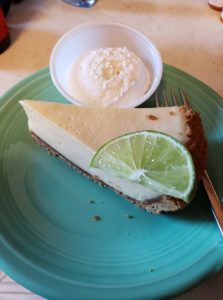
As I powered through my productive day, I promised myself a slice of key lime pie as a reward. I’d have to wait until the following day, but that didn’t matter. What mattered was checking off tasks until I reached a point where I felt I deserved a little celebration.
Whatever your goals are, whatever your project, know that you have it in you to succeed. Develop the self-discipline you need and soon you’ll be setting bigger goals with bigger rewards. Maybe even two slices of pie.
#short_code_si_icon img
{width:25px;
}
.scid-2 img
{
width:25px !important;
}
Share this post


December 19, 2018
In Memoriam
 Around the middle of December – and on awards shows throughout the year – various organizations solemnly share their list of prominent people who died in the previous twelve months. Often we forget about someone who died early in the year. We rate the list, using it to gauge just how bad a year it was. Some years the sense of loss is overwhelming. This has been one of those years, and not just for me.
My mother died in March, but I’m not alone in experiencing that kind of grief this year.
There was Peter’s father and Sandra’s mother. John’s mother and Sarah’s mother. Jackie’s father and Fred’s mother. Kathy’s cousin and mother both died within two weeks time.
My husband is fond of saying ‘we’re at that age’, and that’s not inaccurate, though there is no preferred age to handle the death of a parent. Not everyone I know who experienced such a loss is my age. After all, my daughter and Jackie’s son both lost a grandparent. Kathy’s grandchildren lost a great-grandmother.
A doctor asked me recently if I thought I needed to go to therapy to deal with my loss. I’ve been in therapy a few times and I’ve written six books about grief. I already know what the topics of conversation would be. But I told the doctor that what has helped me more than anything are those friends with whom I share this particular kind of grief.
We check in with each other via Facebook messages and texts. We mark each milestone – birthdays and holidays – that now feel empty. We share how we cope, how we grieve and at times, how we rage against the feeling that we’ve been cheated.
The ‘In Memoriam’ lists this year won’t include our parents, though all are worthy of such a public honor. They were people who went to work and raised their families. They sacrificed for those they loved, and loved unconditionally. By their example they will continue to guide us. And though it will be a difficult, sometimes lonely, holiday season, we’ll get through it. Because they would expect no less.
This is my last blog post of a year of extreme highs and lows, both personally and professionally. I look forward to 2019 and the surprises it will bring. So, I’ll be back here on New Year’s Day, with more to say about…well, you’ll see.
Until then, my wish for everyone reading this is an abundance of peace, joy and wonder during this holiday season and into the new year.
#short_code_si_icon img
{width:25px;
}
.scid-2 img
{
width:25px !important;
}
Share this post
December 7, 2018
Another World AIDS Day – Part 2
 Tuesday night I was honored to be on the program for the Alexian Brothers Housing and Health Alliance World AIDS Day event here in Chicago. About twenty people took to the stage to recite poetry, sing, play guitar or piano, tell stories. The mistress of ceremonies was a drag queen. It all felt very familiar and comforting.
Almost thirty years ago, Bonaventure House, their housing program for people with HIV/AIDS, was one of my clients. I wrote government and foundation grants for them. So when I found out they were hosting this event, I wanted to be part of it.
It was also the first time I’ve spoken in front of an audience since my mother’s graveside service in March. I wasn’t nervous: I have a master’s degree in theatre, so being onstage is old hat. But I was very focused on what I wanted to talk about and why.
My blog post last week reflected on the first World AIDS Day in 1988 and urged long-term survivors – whether they are HIV-positive or HIV-negative – to share their stories. I decided to use that idea in my speech.
I said I wasn’t nervous, which means I wasn’t shaking. But I did feel that old tingling about five minutes before I walked up on stage. That was familiar and comforting, too.
This is part of what I said. It’s something I think about almost every day, not just once a year on December 1. And whether you’re touched by the AIDS epidemic or not, I hope it’s something you’ll keep in mind, too.
Telling stories – face to face, in a blog post, a video, or in a Facebook group – is a powerful way to end the epidemic. Whether it’s the heartbreaking AIDS Memorial site on Instagram or the ACT UP Oral History Project, when you share your story, and really tell it, not gloss over the bad parts, you help others realize that they are not alone. You let them know that together you now share the responsibility of carrying on the work to end the epidemic, the work started years ago by those who knew they wouldn’t live to see this day, but fought anyway.
The ACT UP slogan made famous thirty years ago – Silence=Death – is still true today. We speak up for ourselves and those who cannot, because every day we see the tragic consequences of being silent. But it’s also true that silence doesn’t only equal physical death. It equals stigma and fear and loneliness and pain.
I’m often amazed by how little it takes to get people to talk about the epidemic. I was having lunch at a writing conference in Boston last year, sitting with a group of writers. We went around the table and shared what we were working on, and I explained my book about straight women in the AIDS community.
A man sitting directly across the table glared at me. For a moment, I thought, “oh, great, he’s going to start in about God’s punishment or something.” I could not have been more wrong.
“My best friend was on the meds,” he began softly, with a barely controlled anger. “He’d had it for a long time, but he was fine. And then he just stopped taking them and he died. And I don’t understand why.”
It was not the only time someone has told me a story like that, but it certainly took us all by surprise.
“I know,” I began, and explained the concept of moral injury, which in its most basic form is survivor guilt. I talked about Spencer Cox, one of the stalwarts of ACT UP/NY who did the same thing, isolating himself physically and emotionally from those around him. As everyone else at the table listened, he and I talked about the need to reach out, especially to long-term survivors, and keep them engaged. And I assured him, his friend’s death was not his fault. Because that’s really why he told me his story.
I’m not a therapist. I have a master’s degree in theatre and many years of fundraising experience. But you don’t need academic credentials to listen to people’s stories. You don’t need them to share your stories, either. You only need the willingness to open yourself to the possibility of healing.
So I guess what all this means to me, and what I hope it means to you, is that telling your story is not just reciting names and facts. It’s not nostalgia, an accusation leveled at many of us who talk about the early days of the epidemic. It’s coming to terms with what you’ve survived, and daring to answer ‘why’. It’s accepting that you are part of a larger community and the world beyond it, where there are people who need to hear your story.
In September of 2015, I attended the US Conference on AIDS in Washington, my first big AIDS conference in many years. If you’ve been to big conferences, you know that by the final day, your brain is pretty mushy. I sat there during the gospel brunch that ended the conference, listening to the ministers offer their invocations when one said something that snapped me out of that fog:
“Sometimes you choose your calling and sometimes your calling chooses you.” If that doesn’t describe the AIDS community, I don’t know what does.
Remember: your stories are a part of you. And they deserve to be told.
#short_code_si_icon img
{width:25px;
}
.scid-2 img
{
width:25px !important;
}
Share this post
November 30, 2018
Another World AIDS Day
 December 1, 1988
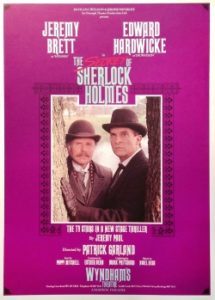
I was in London at a performance of the The Secret of Sherlock Holmes with Jeremy Brett and Edward Hardwicke. At the end of the curtain call, Brett made a brief speech. It was, he explained, the first World AIDS Day, and the ushers were about to circulate around the house with buckets, collecting donations for local AIDS service organizations. I dropped some money in the bucket and filed that idea away, not realizing I’d use it back in Chicago on the second World AIDS Day. And here we are, thirty years later.
I have a lot of friends who are long-term survivors. There was a time when long-term meant a couple of years, not decades. The fact that I have friends who have been HIV-positive since Reagan was president is a good thing. But it’s not an easy thing.
I watch them now, men and women in their 50’s, 60’s and older who expected to die long ago. The drugs that have kept them alive have done so for a dozen years or more. The toxicity and side effects are slowly revealing themselves and it takes a daily toll. Scientists and researchers are finally paying attention to their issues. These people are, in the words of one of them, “guinea pigs”.
Many have fought a variety of cancers. Osteoporosis, a side effect of the drugs, threatens quality of life. Heart attacks are happening too often. And what I have been talking about for several years – moral injury – affects them all in some way.
Moral injury overlaps post-traumatic stress in some ways, but is unique. It’s not caused by a brain injury or other physical trauma. Think of it in its most basic sense: survivor guilt.
They talk about the friends and lovers who died. Well, they talk about them now. For a long time no one talked. Ignoring their grief, pushing it away, may have been a good coping mechanism in the short term, but it did them no good. It resulted in self-imposed isolation, substance abuse, and for too many, suicide.
Storytelling has become popular, even trendy. “Tell your story so people identify with you” is the default marketing tool for businesses large and small. Storytelling in communities like military veterans and long-term HIV survivors is different than the stories told to sell perfume. It’s painful, yes, incredibly painful at times. It’s also a necessary part of healing.
To many of the people who think about HIV/AIDS at all, it is no longer a death sentence. PrEP (Pre-Exposure Prophylaxis) is a pill you can take once a day that renders the virus non-transmittable. The LGBT weekly papers are no longer filled with pages of obituaries. Once a year, on Dec. 1, news organizations dutifully cover World AIDS Day, just like they cover other remembrance holidays. On Dec. 2, HIV/AIDS is once again out of sight, out of mind.
Drug companies promote ‘living well with HIV’ and yes, that’s possible. But for long-term survivors, the insistence that living with HIV is ‘just like living with diabetes’ (that is, no big deal – unless you are diabetic and know the truth), is insulting. Their health challenges – complicated not only by the virus itself but the drugs that have kept them alive – are very real.
So on this day, this one day of the year when the AIDS community can get everyone’s attention, I ask you to think of it in a little different way. Think of the men and women around the world with HIV/AIDS who have outlived their friends and lovers. They are some of the most optimistic people I’ve ever known, despite the pain of the stories they are now willing to share. They would argue with that assessment. They would insist they’re just living their lives, and indeed they are: living their lives in memory of those they lost and in service to those who no longer fear HIV as a death sentence.
I encourage you to honor long-term survivors on World AIDS Day by checking out their stories. Following are some of the places where you can find them (including my next book). The commitment and resiliency of these men and women are examples of one of my favorite Doctor Who quotes:
“We’re all stories in the end. Make yours a good one.”
The ACT UP Oral History Project
The AIDS Memorial on Instagram
Fag Hags, Divas and Moms: The Legacy of Straight Women in the AIDS Community
#short_code_si_icon img
{width:25px;
}
.scid-2 img
{
width:25px !important;
}
Share this post
November 23, 2018
What Do Writers Dream?
Let us make our future now, and let us make our dreams tomorrow’s reality. – Malala Yousafzai
A post popped up on Facebook a couple weeks ago that got my attention. It was an event involving the writer-in-residence at the Savoy Hotel in London.
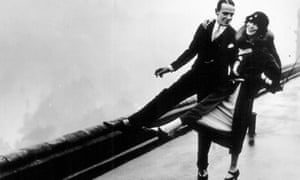
I’ve had an unnatural obsession with the Savoy since at least high school; maybe earlier. I have no idea how it started, but I think it was sparked by this 1923 photo of Fred and Adele Astaire dancing on the Savoy’s roof. It’s a photo I still love: dancing on the roof, on a foggy day in London town. Maybe it’s the joy on their faces.
On my first trip to London in 1988 I spent as much time at the Savoy as my bank account would allow: repeat visits for afternoon tea in the Thames Foyer and a perfect vodka martini in the American Bar (not on the roof). My fantasy remained intact.
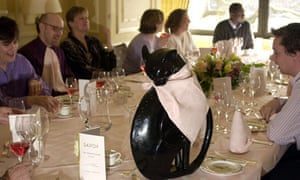 In 2014, accompanying my daughter to London for a semester study, I took her to the Savoy for tea and bought her her first legal drink in the American Bar. I even took the historical tour – yes, the hotel has a tour. It includes the suite where Monet lived and painted his view of the Thames, and the private dining room where Winston Churchill held court. We learned why the Savoy never seats parties of 13: The last time they did, in 1898, the man who scoffed at superstition was shot down on his return to Johannesburg. After first requiring a waiter to balance the table, since 1927 a 14th place is set for a statue of Kaspar, the hotel’s black cat mascot.
Earlier this year I was back. No afternoon tea this time, but my daughter (back in London for graduate school) and I had drinks in the Beaufort Bar.
So the event announcement did more than get my attention. It went to the top of my writerly goals: to be Writer-in-Residence at the Savoy. Okay, probably not a realistic goal; more of a dream. To be able to write – just write – in a place that inspires me is what’s important. The scones and martinis are bonuses. I don’t need a plaque in the lobby or other recognition; just a quiet place to myself. So I decided to ask other writers what they dream about:
“To make a positive difference.”
“My (until now) secret dream is to have my work adapted into manga and/or anime.”
“I’d love to be nominated for an Oscar for best original screenplay.”
“For my written work to be included in a project that also includes other forms of art. Think: my poetry spoken over a ballet performance, printed and framed and hung in a gallery next to a painting, etched or molded or written in calligraphy onto jewelry, clothes, etc.”
“For my inspired work, writing and other forms of expression, to awaken the hearts of those it touches, empowering them, inspiring them, transforming them and forever shining hope.”
Surprised? No one mentioned money. No one mentioned accolades or awards, other than to be nominated for one. They spoke of the desire to collaborate with other artists and inspire their readers. And all admitted they’d never shared those dreams with anyone else.
There’s nothing wrong with monetary goals. To be able to earn a good living from your writing is probably every writer’s goal. And recognition is nice – very nice – whether it’s a thank you card or a Pulitzer Prize.
But those are not the things that last. Our words will last. They’ll last because they’ve touched readers in ways we may not anticipate. Our books will outlive us.
What we’ll remember are those dreams and whether we fulfilled them. Saying them out loud is terrifying because we risk ridicule. But sharing them is exactly what we need to do, the first step to realizing those dreams (you never know who can help you). Because until we decide to make them a reality, they’ll remain beautiful, elusive dreams.
Now that I’ve admitted it, my Savoy dream is out there in the universe. And who knows? Maybe the baby steps I’ve already taken will lead me to this dream. Maybe they won’t. But I’ll be closer than I would’ve been if I’d kept my dream a secret.
What’s your dream?
#short_code_si_icon img
{width:25px;
}
.scid-2 img
{
width:25px !important;
}
Share this post
November 7, 2018
Grieving a Friend After Another Midterm Election
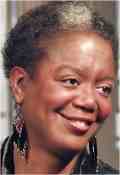 Delle Chatman
Twelve years ago today was a midterm election. The Democrats won both houses of Congress, as well as a majority of governorships and state legislatures. It was also the day my friend, Delle, died.
I knew it could happen any time. Her brother Gregory had emailed me that he was writing her obituary. She’d said her goodbyes and was surrounded by those she loved. Those who loved her comprised a much larger group, one too large to fit into her lakeside condo or even the ballroom of any downtown hotel.
I turned off my computer earlier than usual that evening, eager to watch the election returns, needing the distraction. So it was the next morning when I learned that Delle had died about the time the polls closed.
Her death was not a surprise. Recurring ovarian cancer had wreaked havoc on her body and she’d discontinued treatment a month after its most recent return over Labor Day weekend. Though it was unrealistic at best, her friends believed she could always win out.
When she announced she was ending treatment, you could hear the wailing through the emails shared in her Yahoo group. We all respected her decision, but that didn’t mean we liked it. And though it gave us all plenty of time to tell her how much we loved her, we admitted to being selfish: we didn’t want to let go.
Through the years, I’ve felt her presence, sometimes in melodramatic ways. How else do you describe a postcard she sent me from Paris that sits on my desk and for no apparent reason flops over? Or the candle that flared up and set fire to the altar covering on the ofrenda just as her mass of remembrance was about to begin? When she wants you to feel her presence, she has her ways. Even now, when I walk into the coffeehouse where we spent so many mornings solving the problems of the Church and the rest of the world, I half-expect to see her there.
I’ve missed Delle even more the past year, through my mother’s final illness and since her death. I’ve missed the comfort I received from her after my father died. I’ve missed her total faith in my ability to do something I’d never done before: write a book about people grieving the death of a friend, an idea she surely knew was inspired by her.
Some time ago, I actually felt like she was pulling away, that somehow her work with me was done. God, I hope not. The writing I’m doing now has nothing to do with her or that initial idea. But I wouldn’t be doing it if not for her. Her encouragement sent me down a path that was not only unexpected but life-changing. I would not be where I am, doing what I’m doing, planning what I’m planning, if not for Delle.
I hope she knows how grateful I am: for having known her, for having laughed and cried with her, for having the gift of her example. She wasn’t perfect, but she was unforgettable.
Today is the final day of To Absent Friends, the week-long Scottish festival of remembrance and storytelling. I think she’d like knowing that she’s included; she did not shy away from the spotlight.
I hope you have/had a Delle in your life, a friend who inspired you to be your best, even after they were gone.
Absent friends. Absent, but always with us.
#short_code_si_icon img
{width:25px;
}
.scid-2 img
{
width:25px !important;
}
Share this post
November 1, 2018
To Absent Friends
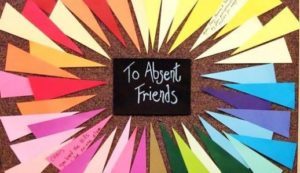 Death and grieving occupy a very different place in society in the United Kingdom.
The first hospice was founded in a suburb of London in 1967. Bernard Crettaz hosted the first “Death Café” in Neuchatel, Switzerland in 2004, but the idea took off when Jon Underwood held one in his London home. In his words, the purpose is ‘to increase awareness of death with a view to helping people make the most of their (finite) lives’. I’ve hosted several myself in the Chicago area and can attest to the power of releasing the stigma of talking about death.
I’m not sure where I first heard someone offer “to absent friends” as a toast. It might’ve been one of those 1960s WWII movies. It can refer to friends who are simply not present or those who are dead. Scotland has found a way to make a week-long festival out of this sentiment.
To Absent Friends hosts a festival held around the country from November 1-7 to preserve Scottish traditions expressing loss and remembrance. From their website:
In Mexico, they still hold a huge holiday each year – Mexican Day of the Dead – dedicated to remembering family and friends who have died. Graves are tidied and decorated, special meals are prepared, and people remember, respect and celebrate those who have died.
Can we create a Scottish version of the Mexican Day of the Dead?
Scotland has a rich heritage of storytelling, especially as winter approaches and the nights draw in. What if we revive Scottish customs of remembrance that have lain dormant for so long in Samhain and All Souls Day? Can we recreate a meaningful opportunity for storytelling and remembrance in the Scottish tradition?
The events scheduled this year run the gamut: workshops on creating memory boxes, concerts, a screening of Coco, poetry readings, discussions over breakfast, lunch, afternoon tea, and dinner, even a tribute wall at a local football (soccer for those of us in the US) game. And always, always storytelling.
The first week of November, as winter begins to make its presence known, has long been a time to honor the dead. Your culture or community or faith tradition likely has its own rituals. But until we eliminate the stigma of talking about the friends who have died, people will still grieve in silence and isolation without support.
If you’re on Twitter, To Absent Friends offers some tips on engaging this week, along with their social media handles. I’ll be sharing there, as well as on Facebook and Instagram. One of those friends in particular is the reason why I became a writer. Her remembrance will come first, as always.
It’s always a good time to remember the friends we’ve lost, don’t you think?
#short_code_si_icon img
{width:25px;
}
.scid-2 img
{
width:25px !important;
}
Share this post
October 24, 2018
Speak Your Mind, Even if Your Voice Shakes
 Writers are often told to keep politics out of their public lives: don’t post about issues or politicians (pro or con). Don’t wear buttons, put campaign signs in your windows, bumper stickers on your car. Don’t participate in marches or testify at public hearings.
That advice typically comes from traditional publishing: agents and publishers who are afraid of anything that might adversely affect sales and their personal bottom lines. It’s not necessarily bad advice.
If you know for a fact that your audience skews in a certain political direction and you are the polar opposite, you very well may lose readers by sharing your views. There’s always the chance that you will gain readers, but that’s not how the argument is framed. And besides, what do current events have to do with what you write?
You’d be surprised.
I know writers who create worlds filled with characters who strive for equality and peace. I know writers who use their historical fiction to draw parallels to our world today. I know writers of contemporary fiction who focus on critical issues: military veterans struggling with civilian life, women escaping domestic violence, parents raising children with a range of disabilities. All of those topics are political, too. They are reflected in public policy and campaign slogans. So it’s possible that these writers face criticism for their books’ positions on this important issues.
For those of us who write nonfiction, it’s almost unavoidable. Even cookbook authors talk about how we grow our food, working conditions of farm workers and appreciation of the cultures that offer us a seemingly endless variety of foods.
Several of my books have focused on topics that are subject to all kinds of debate. After Friend Grief and 9/11: The Forgotten Mourners was published, a conspiracy theory troll commented on my blog. There is nothing political about the content in my book: it’s simply about how people coped with losing friends who died in the Twin Towers. It was my decision whether or not to engage with him. I didn’t. I deleted his comments.
I knew my books about AIDS would probably draw those who, like the late Sen. Jesse Helms, believe the virus is the consequence of a deviant lifestyle. Once a man walked up to my table at a large author book fair. He looked at the cover of Friend Grief and AIDS: Thirty Years of Burying Our Friends, and made a comment. I don’t remember the exact words, but it was along those same lines. Our eyes locked and I said nothing. Absolutely nothing. And I’m proud to say he slunk away.
In case you think I’m too passive-aggressive with my responses, there have been other instances. Some of them come online, when I call out people who spread misinformation. Some of them come in person, such as the time I decided to use a man’s question – “Whatever happened to AIDS? You never hear about it anymore.” – as an opportunity for dialogue.
Writing about the HIV/AIDS community is impossible without being involved in other ways. I’m a member of ACT UP/NY. I go to conferences, readings, screenings and panel discussions. I donate money, sign petitions and march. I participate in actions (no arrests so far).
I don’t believe I could write about any of this while keeping a physical and emotional distance. Well, I could. In fact, I tried when I first started writing my blog. I thought I was educating and that meant being objective. But I became a better writer when I became fully invested in what I was writing.
There are countries where writers are jailed, exiled, even murdered for implied or overt criticism of authority: Jamal Khashoggi is just the most recent, most public example. The freedom to write – and to write what we honestly believe – is a privilege to be cherished.
So for the writers who speak their minds, knowing full well the risk they take, you have my respect and support.
For those who want to, but fear the consequences, I understand. Remember, though, that the world is almost always better off when we speak up for the things that are important to us.
The mission of PenAmerica is to unite writers and their allies to celebrate creative expression and defend the liberties that make it possible. Learn more about them here.
#short_code_si_icon img
{width:25px;
}
.scid-2 img
{
width:25px !important;
}
Share this post
October 10, 2018
The Right Writing Conference for Me
 I drove to Cincinnati recently for a conference for indie authors. IndieLab was put on the same folks who produce the annual Writer’s Digest Conference that I attend in New York every year. This one was different, in many ways.
First, obviously, it was for indie authors. At other writing conferences, anyone who self-publishes is usually looked down on or ignored. The assumption is that you’re only doing ‘that’ (self-publishing) because you’re not good enough for a traditional deal or you’re hoping to attract a ‘real’ publisher. There’s a hierarchy, both implied and spoken.
So the atmosphere was very different at IndieLab. It was a much smaller conference than the mammoth WDC weekend. The size was a terrific advantage: no long lines, no frustration that there was no time to connect with a speaker. Breaks were relaxed, allowing everyone the chance to get to know a lot of people. (A special shout-out to the IndieLab staff who cheerfully accommodated my food allergies.)
As usual, I arrived at the conference with a list of goals: questions, really, that I needed answers to as I reboot my writing business. By lunch on the first day, I’d checked off almost every item. That was a surprise, though it shouldn’t have been. The presenters and vendors were open and welcoming and eager to meet with attendees. That last question was addressed after lunch, but in a way I didn’t expect.
As I reboot my career, I’ve been developing a pretty specific blueprint. I didn’t expect that workshop to send me off in a different direction. That’s not quite true: it was a topic I was interested in exploring, and when the speaker first started I was still thinking of it in a narrow way to fit my blueprint. Gradually, I heard the information in a completely new way. It was a way that would change how I create one part of my business so that the expenses (time and money) would be greatly reduced while generating income. It was tweaking an idea I already had, but on a very limited scale. It took that speaker to convince me to think bigger.
You’ve probably spent a lot of money to go to that conference, so you want to get your money’s worth. You want to get your questions answered and you want to be inspired. All of that happened. And I wound up surprising myself.
Maybe you, too, are afraid to think too big, afraid to consider something way out of your comfort zone. That’s where conferences come in handy. They put you in a room full of people like you who want to get better at what they do. And they ask you to consider being better than you ever dreamed of being.
It’s too soon to share what it was that had such a dramatic effect on me. I have a steep learning curve if I’m going to add that to my writing business. But I know now it’s not only doable, it’s important. I may not make a fortune on it; in fact, I may not make a dime. But I’ll know that I pushed myself farther than before, made myself a better writer who can accomplish even more.
Who says you can’t teach an old dog new tricks?
#short_code_si_icon img
{width:25px;
}
.scid-2 img
{
width:25px !important;
}
Share this post
September 26, 2018
My Hopes for My Book
 Every author has hopes and dreams for their work. Some aspire to make a lot of money; others want only to see their name on the cover of the book. Some want to become international celebrities; others hope to fill their mantel with awards.
But there are other dreams as well. I would certainly like to make a lot of money from writing, though that hasn’t happened yet. My next book will be my seventh and it’s very different than the previous six. That presents its own challenges and opportunities: it’s the first book to consider the contributions of straight women in the AIDS community throughout the epidemic. My hopes are many:
That I know it’s the best book I could write.
That the people who are excited about it now will be even more excited after they read it.
That the people who demand to know “Why isn’t X in the book?” will encourage X to tell her own story.
That the stories will inspire other women to share their experiences, no matter how insignificant they may seem.
That it will fill a gap in the literature of the epidemic and women’s history.
That even people in the AIDS community will be surprised by what they read.
That everyone will learn something new.
That when they finish the book, they’ll want to learn more about the women and the epidemic.
That someone will be so deeply offended that they will ban the book from their library, school or bookstore. I don’t care if it’s because of the title or my criticism of Nancy Reagan, Mother Teresa and Elizabeth Dole. Just so it’s banned. Nothing helps sales like banning a book.
That the women in the book who are still alive will experience the recognition they so richly deserve.
Your hopes for your book will not be the same as mine. But whether you’ve just come up with an idea for a book or struggling with a plot twist or ready to publish, take a moment and make your own list. Write it down so you don’t forget. Be as specific as you want. Pull it out every now and then to help you stay on track.
I’m going to check on this list once a month, just to make sure I’m staying focused. Down the road, after the book has come out, I’ll report back on how many of these hopes were realized. I can’t wait to find out what happens.
#short_code_si_icon img
{width:25px;
}
.scid-2 img
{
width:25px !important;
}
Share this post