Victoria Noe's Blog, page 5
September 21, 2018
Why Writers Can’t Hit ‘Send’
 I wrote four drafts of my next book and shared it with a few beta readers before I sent it to my editor. I’m working with a different editor this time, so we’re getting used to working together. Nothing bad, believe me, just different. I knew there were glaring weaknesses, but I wasn’t prepared to see so much red ink when he returned the manuscript. If you think writing is hard, wait until you get to the editing phase.
It took me a solid month, 100+ hours to work through it. Editing takes more time, at least for me. I couldn’t work more than 4 hours a day on it without my brain turning to mush. That’s okay. No complaints.
This past weekend I was at the stage where most everything I was doing was tweaking. That’s a good sign, the tweaking phase. It means you’re happy with the overall book. Except I wasn’t. I started fiddling again, adding more, deleting some, rearranging stories within chapters. Did I really need to do that? That remains to be seen.
What I do know is that I was avoiding hitting send. Of course once I decided to do it, my computer went a bit on the fritz, but that’s a separate issue. I’ve worked on this book for three years. What could be so bad about hitting ‘send’?
Maybe you hesitate when you buy something online. Or when you post a comment on Facebook (I wish more people did). But this…this is different.
Hitting ‘send’ on something you wrote is giving up a little piece of yourself to be judged. I don’t know any writer who is entirely comfortable with this. They might be relieved, or just sick and tired of what they’ve been working on. If they’re anything like me, they’re sure it’s not good enough, so they delay as long as possible.
What comes after hitting ‘send’ is almost as bad as what comes before. Because now things are popping into your head: “Oh, my God, I should’ve…” Your brain is filled with all the changes you now believe you should have made, all the deletions you should have kept, all the words you struggled to find that are now obvious. It’s exhausting.
And normal. The stories and worlds we’ve created are a part of us, now and forever. We want them to be the very best they can be, whether they’re read by one person or millions. We want people to know that we are capable of capturing someone’s imagination and entertaining them. And in order to do those things, we need to share what we write.
So take a deep breath, go for a walk, switch to decaf. Remember that you’ve done your best, and that the next thing you write will be even better. Because writing is what you do. And your writing deserves an audience.
Back to work.
#short_code_si_icon img
{width:25px;
}
.scid-2 img
{
width:25px !important;
}
Share this post


September 12, 2018
You Can’t Hurry Grief
 For some reason, a song made popular by both the Supremes and Phil Collins popped into my head: “You Can’t Hurry Love”.
I remember mama said, “you can’t hurry love
No, you’ll just have to wait”
She said, “love don’t come easy
But it’s a game of give and take”
You can’t hurry love
No, you’ll just have to wait
Just trust in a good time
No matter how long it takes.
It felt pretty obvious that the same thing applies to grief.
We grieve over many things: the death of someone we loved, the loss of a job or a home, the end of a wonderful experience, the breakup of a relationship. We grieve for the obvious reason that we loved that person or that time in our life. Everything, no matter how special, comes to an end.
But that doesn’t mean we’re prepared or happy about it or even accepting. We become experts at denial and avoidance. We pretend the loss didn’t happen and we pretend we’re fine. We’re not fine. We’re the opposite of fine.
So why all the avoidance?
That’s pretty obvious, too: people don’t like to be sad. And grieving is just about the saddest thing you can experience. We try to rush through it. We encourage others to move on, to get over it. We set arbitrary time limits. All because we don’t want to be sad.
Well, hell, who wants to be sad? Who wants to cry at the drop of a hat? Not many people, that’s for sure. But people seem to accept other emotions – even anger – much more easily than sadness.
I cancelled a lunch with a friend recently because it was one of those days when I was just too sad. I was pretty sure that I’d start crying at the restaurant, which would add embarrassment to all the other emotions. But I didn’t admit it.
We rescheduled, and when there was a pause in the conversation, I told him the real reason why I cancelled. His face fell, and I realized two things immediately. First, his feelings were hurt that I thought he would only want to see me if I was in a good mood. And second, it proved that I’d been pushing other people away, too, friends who wanted to share my grief.
I hope you’re blessed, as I am, to have friends who want to grieve with you. They’re the ones who text or email you – “How about lunch tomorrow?” – when you least expect it. They’re the ones who listen patiently and are generous with hugs. One thing they will never say is “Aren’t you over that yet?” That’s because they’ve been where you are now.
So, I’ve resolved to do a few things. I’m not going to ‘hurry’ the grief for my mother. I’m going to let people join me on this journey. And I’m going to reach out whenever possible to friends who are grieving silently, putting on a happy face to prove to the world that they’re over ‘it’.
If you ever have the chance, remember that you can be that friend, too.
#short_code_si_icon img
{width:25px;
}
.scid-2 img
{
width:25px !important;
}
Share this post
August 29, 2018
Writing in the Summer – Part 2
 The Mermaid sundae from Big Gay Ice Cream
A few weeks ago I wrote about the beginning of my six-week trip to NYC. I had finally sent my manuscript to the editor and was surprised when he sent back the first chapter 48 hours later. Because Writer’s Digest Conference was starting in a few days, I was determined to power through that chapter before it started. I did, though not easily.
This was the 8th time I’ve attended the Writer’s Digest Conference here (9th if you count the one I went to in Los Angeles). The first year I knew less than nothing, but I fell in with a terrific group of writers who have remained trusted friends. Each year I set goals for the conference and choose my workshops accordingly. Every year I learn valuable information for my writing and my business.
Because of the challenges of the past 20 months – broken writing hand, surgery and rehab followed by mother’s final illness and death – my writing has taken a hit. Sales tanked (thanks in part to the dramatic loss in reviews on Amazon, due to their ever-changing definition of ‘legitimate’ reviews) and speaking engagements dried up. And all the while I was trying to write this next book.
I decided WDC would be the re-launch of my writing business. I soaked up as much information as possible about marketing and business options. It was a terrific conference, one of the best I’ve attended. By Sunday, my brain was a bit mushy. Two other things happened that day.
First, that Sunday morning, the grief for my mother rose up again. That happens, you know, when you least expect it. I was almost unable to attend the first session. But I did, and made it through to the end without dissolving into a puddle of tears.
Second, I got the rest of my manuscript back from the editor. I wasn’t expecting it so soon. Since then, I’ve been working pretty much every day to ignore the angst caused by the sea of red ink on each page. That’s not to say I’m making every change he wants. There are a few that I’m either ignoring or we’ll discuss. That has most of my attention and brain power right now.
I knew on this trip I’d have a lot of alone time. It’s hard to ignore grief when you’re alone, no matter how busy you are. I thought I was prepared for what happened that morning, and several times since. I wasn’t. And that’s okay. It’s only been five months, which sometimes feels like a minute, sometimes feels like a lifetime.
I’ve needed that alone time: both for the grief and for the focus I needed to concentrate on the edits. Other than the conference, I haven’t spent much time with friends. Finally, I accepted a couple of lunch invitations. One of them was with a man who rescued me from an unexpected mouse invasion in the apartment I’m staying at. The other was a man who’s been a friend for over five years.
I wasn’t prepared for the second lunch to be emotional. It wasn’t until 9/11 that I told my best friends that I loved them. I think a lot of people had that reaction. This time, it was a surprise to say and hear the words. I felt a bit shaken, but in a good way. That conversation, oddly enough, seemed to energize me to return to my edits the following day.
I have one week left, and if I sound annoyed that the oppressive heat and humidity in New York will leave about the same time I do, well…you’d be right. I’m probably 80% done with the edits. One chapter is in pretty bad shape. Another is getting there. The rest are fine, except when I need to go back to my research and pull out more information.
Am I pleased with it? Mostly. I don’t know if I’ll ever be 100% happy, because I’m keenly aware of how many wonderful stories didn’t make it into the book. But it’s not done yet. I’ll have a better sense of it in a couple weeks.
But for now, as I wind down this often frustrating, sometimes emotional, but ultimately productive trip, I’ll schedule my final visits to a couple places that lifted my spirits: Bosie Tea Parlor for their terrific chai scones with clotted cream and jam, and Big Gay Ice Cream, for their addictive Mermaid sundae (vanilla soft serve, graham cracker crumbs, key lime curd and whipped cream).
Then I’ll say goodbye to New York. And hopefully, I’ll be back soon.
#short_code_si_icon img
{width:25px;
}
.scid-2 img
{
width:25px !important;
}
Share this post
August 25, 2018
Writing vs. Marketing
 Ed2Go
Ed2GoI’ve been self-employed most of my adult life. I’ve worked at home with bulky word processors and fax machines, from 800 numbers to social media accounts. Writing, to me, has always been a business: not necessarily very lucrative, but a business nonetheless.
Recently I attended Writer’s Digest Conference in New York. WDC was my first writing conference in 2011 and I go back every year. Because of the constant changes in publishing, there is always a lot to learn. I take notes on my netbook during every session. If something is discussed that I need to apply to my own writing or business practices, I type it in boldface. Those are assembled into a new, intimidating to-do list after the conference.
When you write a book, at some point it’s done. You and your editor are satisfied, so you publish it to share with the world. But the business side is never done. You’re constantly marketing what you’ve already written, peaking interest in what you’re working on, publicizing events. Certain times of the year may be busier than others, but you’re never finished with marketing. And that’s what a lot of authors hate.
They want to write. Who doesn’t? They might feel that just publishing the book, making it available on Amazon or wherever, should be enough. They may have little or no budget for marketing, or they may not have a clue what to do to sell their book. But many of the ones who are resistant just don’t want to do it, whether they’re indie authors or traditionally published.
Imagine if you were in a different line of work: acting, let’s say. You’re a gifted, creative performer. You’ve mastered your craft. You’ve memorized monologues. But you don’t go on auditions. You don’t bother with head shots or resumes. You sit back and wait to be discovered like Lana Turner, as she sat drinking a soda at the Top Hat Café (no, it wasn’t Schwab’s). Not very smart, is it?
In order to be successful, that actor has to do one of two things: figure out how to market themselves, or hire someone else to do it. One costs time, the other money. Most authors know they have to make a choice, too: or more likely, do both. No actor can build a career hoping that someone notices them when they’re not acting. No restaurant or store can survive just on the patronage of the owner’s friends and family. No writer can survive that way, either.
The business side is what really discourages a lot of writers and I understand why. It can be incredibly overwhelming. That’s where conferences like Writer’s Digest, websites like Build Book Buzz and organizations like Alliance of Independent Authors come in handy. They teach writers how to build successful careers, by applying best practices to their writing businesses. They vet resources so newbie writers can avoid scams. They demystify what for many non-business types is an alternate universe.
So, if you want to achieve success (in whatever way you define that) in your writing, take a hard look at what you what to accomplish. Seek out trusted experts and make a plan, applying their expertise to your own situation.
And before you know it, you will find that other writers are seeking your advice. Because you’ve done what you thought you could not do: become a whiz at marketing your writing.
#short_code_si_icon img
{width:25px;
}
.scid-2 img
{
width:25px !important;
}
Share this post
August 9, 2018
Writing in the Summer – Part 1
 I’ve been in New York City now for almost two weeks. The first ten days were spent in a mild – or not so mild – state of panic getting my manuscript ready for the editor. I have to pace myself: I learned the hard way that post-concussive syndrome will ruin my plans if I push too hard. I have to rest my brain. If I don’t, I lose the focus I need for my work.
I varied the places where I worked: my favorite tea parlor, three different branches of the NY Public Library, the place where I’m staying. That variety gave me a little boost in energy.
By the time I hit ‘send’ last Friday, I knew I was pushing myself right up to that limit. In fact, a distraction when I was an hour away from finishing nearly derailed me. That hour’s worth of work took me three hours. I wasn’t happy, believe me. But it got done.
With that completed, I could now spend some time relaxing and recharging. I walked as much as the heat and humidity allowed, riding on air-conditioned buses when necessary (no way was I going down in the subway steam bath). I settled in to my friend’s apartment, which I’m watching while he’s out of the country. I cooked. I even participated in an ACT UP action at the Whitney Museum, my first-ever demonstration in a museum.
Imagine my surprise when my editor started sending me feedback just 48 hours later. I thought I’d have a longer reprieve before Writer’s Digest Conference starts on Friday. No rest for the wicked, right?
The good news is that I don’t have a lot to do to get ready for WDC. I choose my conferences based on my goals and I know what I need to learn. So I powered through the first chapter he sent me.
I’m using a different editor for this book, someone who’s close to the subject matter. I rely on him to make sure the book is honest and accurate and as good as it can possibly be. I’m writing about something I know a lot about, but I have to keep in mind that not everyone knows what I know. That’s one of the things he’s addressing: the need for me to fully explain background. Still, all those red and green marks on the pages gave me pause.
Oh, my God, is it really that bad?
Of course not. It just needs work. A lot of work. That’s why we have editors, to make a good book better. Writing the book is hard. This stage, the editing, is where it gets real. I know a number of indie authors who do not believe they need to spend the money on an editor. They are, I can say quite confidently, wrong.
Editing requires not just an attention to detail, but an objectivity that no one has about their own books. As good as I think some parts of my book are, I also know that I’m too close to it to know for sure. I believe in my work. But I also believe I have to be willing to make it better.
Tomorrow the conference begins, and my attention will be on learning and networking. I’ll meet up with friends and hopefully make new ones, too. By Sunday afternoon, my brain will once again be mushy. I will have a long list of leads and people to follow up with while I’m waiting for that colorfully marked up manuscript to be returned.
It’s a luxury, being able to spend weeks focusing on my writing, so I’m not wasting it. That doesn’t mean I won’t enjoy the city, wandering around the Cloisters or seeing Twelfth Night at the Delacorte. Those are things that restore my energy and creativity. We all need them.
And maybe, just maybe, the heat wave will break…
#short_code_si_icon img
{width:25px;
}
.scid-2 img
{
width:25px !important;
}
Share this post
August 1, 2018
Is Everyone Grieving or Is It Just Me?
 It started early last year, almost from New Year’s Day.
Friends on Facebook posted news of the death of a parent or a sibling or a friend. And while I didn’t usually know the person who died, I found myself affected.
“Another one?” I’d find myself thinking when I logged online. This was much more than the stereotypical ‘death comes in threes’ that we can debate another time. This was every week. I stopped counting how many friends lost a parent last year, something that spilled over into this year. Since my own mother died in March, there have been more, including one this week.
You might say, “Well, we’re at that age.” And you wouldn’t be wrong. Statistically, people my age should be prepared for their parents to die. But age alone didn’t explain the deaths, nor did it make them any easier.
One of the oddities of social media is that it can make you feel like everyone is doing the same thing at the same time. This went far beyond it, except in one respect: a lot of people I know really were grieving.
Some of them were very public in their grief. They posted photos of the person who died – multiple photos – and spoke eloquently of their loss. Sharing was part of the grieving process for them and I don’t criticize that at all. Others preferred to reach out via private messages – sometimes to a select group, sometimes to one friend at a time – to share information, ask for help with a task or just vent. Whatever feels appropriate is okay by me.
I do know that my friends who also lost a parent in the last year or so have found a measure of comfort in knowing that there are a lot of people ready and willing to help them. On those days when you can’t seem to stop crying, on those days when you are angry and resentful about happy family photos of people whose parents are still alive and active, on those days when you realize just how much your world has been upended…there are friends you may only know online who are willing to listen and comfort.
Many of them have already been there, done that. Some of them can’t imagine what it’s like to bury a beloved parent. But they’re willing to help you.
When you’re grieving you learn a lot about the people around you. Some will check in with you on a regular basis; others will completely disappear, only to show up unannounced. pretending nothing happened to you. Some will compare their own grief to yours, even if the two are completely unrelated; others will try to push you to ‘get over it’. Pay attention to the behavior of those around you. You’ll learn a lot (not all of it good).
So, I will continue to live with my own grief and try to help my friends with theirs. If I’ve learned anything in the past couple of years, it’s that there are friends out there ready to help you. You will certainly be surprised by who helps and who doesn’t. But rest assured, you will not be alone as long as you have the courage to reach out.
#short_code_si_icon img
{width:25px;
}
.scid-2 img
{
width:25px !important;
}
Share this post
July 25, 2018
Choosing the Right Writing Conference
 I’ve been slowly getting back to normal in my writing career. I’m blogging regularly, sending out my email newsletters, going to networking meetings. My next book is at the beta readers right now and goes to the editor August 1. As you can imagine, I’m busy.
I haven’t been to a writing conference since last August’s Writer’s Digest Conference. It’s my favorite, and I’m going again this year. This week I registered for a new and very different conference at the end of September, Indie Lab, also produced by F&W Media. And it gave me a chance to reflect on why I’m going.
Although they’re an investment in your career, conferences aren’t cheap. There’s the registration fee, travel, parking, meals, hotel. There are choices to be made, as to sessions and social events. You can pretty much guarantee that by the end, your brain will be mush.
But why exactly did you go? If you don’t know that ahead of time, you’re wasting your money.
I go to WDC not just because I know it’s the one time of the year that I get to spend time with certain friends (although that’s a big selling point). I go because I always learn something new. I go because I’m at a point where I can give advice and encouragement to the terrified writers in line for Pitch Slam. And I know where to get decent cheap Chinese food a couple blocks from the hotel (not to mention where to find the closest Starbucks).
A couple years ago I decided to go to one session that was for fiction writers, a character development workshop. It was one of the most valuable experiences I’ve had in eight years of going to WDC. That might sound odd from someone who writes nonfiction. But I write about people, and the tips I learned that day have helped me bring those people to life. It was an impulsive choice, the result of wanting to step out of my comfort zone. I plan to do more of that this year.
The new conference is focused on the business of being an indie author. I’m not just gearing up for the release of a book I’ve worked on for almost four years: I’m rebooting my writing career. The timing could not be better for me to get back up to speed and be inspired.
So as you consider all the fabulous writing conferences out there, first sit yourself down and ask yourself the hard question:
Why?
Why do you want to go to this particular conference, or even better, why do you need to go to this particular conference? Be as specific as you can be: what you expect to learn, who you expect to meet, how you will use your new-found knowledge.
Once you’ve answered that question, and put it in the context of your career, then you will be on your way to improvement in your writing. And someday you, too, will be pleased to direct first-time attendees to the closest Starbucks.
#short_code_si_icon img
{width:25px;
}
.scid-2 img
{
width:25px !important;
}
Share this post
July 4, 2018
A Reflection on The Great Believers
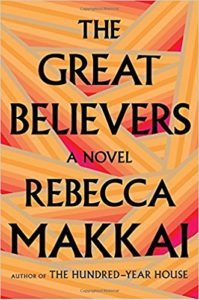 Since Rebecca Makkai doesn’t need another rave review of her new book The Great Believers, I thought it more appropriate to share my reaction to her sweeping novel that links the AIDS epidemic in 1985 Chicago to the art scene in 2015 Paris.
When I heard it was coming out, I was less than thrilled. I was almost three years into the research and writing of a nonfiction book about straight women in the AIDS community. Although her book is fiction – and overall, one of the best novels I’ve read in a very long time – I was momentarily concerned. Not concerned: panic-stricken. Another straight woman from Chicago writing about the AIDS epidemic? What are the odds? After an hour my anxiety subsided and I started reading her book.
Most people reading The Great Believers will not remember what Chicago was like in 1985, in the early days of the AIDS epidemic. But I do remember it, all too well.
There were no drugs, no effective treatment. The ‘test’ was just becoming available, and just like some of the characters, people wrestled with the logic of taking it. What would be the point? To confirm that you’re going to die rather quickly? To warn others, changing your relationship with them forever? To put yourself at risk of exposure, possibly losing your home and job? Wouldn’t it be better to live in temporarily blissful ignorance?
In today’s world of near-instant test results and the miracle of drugs that render HIV undetectable and untransmittable, it’s hard to imagine the wartime feel of the 1980’s. Test results took two weeks. Most funeral homes refused to handle the bodies of people with AIDS. Churches refused to perform services, nursing homes refused admittance, hospital personnel refused to touch their patients. Irrational fear was epidemic. If someone dropped out of sight, the natural assumption was that they were either hospitalized or dead. Because more often than not, that was the case.
Most of the characters we follow in the Chicago scenes (stretching from 1985-1990) are young gay men. We often learn their HIV status as they do, and though it’s a virus that doesn’t discriminate, it doesn’t always make sense who receives a positive test result. One character, who reappears thirty years later in Paris, managed to survive. His presence is surprising enough to make the reader (and at least one character) wonder why.
As I said, because I remember the places and events in the Chicago scenes of the book, my reaction to it is more personal than most readers. Some of the scenes triggered flashbacks that made me wince; others made me smile.
Near the end of the book, yet another memory is triggered for Fiona as she struggles to re-establish her relationship with her daughter in Paris. It’s a brief memory with only one sentence recalled. A three-word sentence that made me gasp.
No spoilers here. I won’t say what it was because it defines Fiona. It also defines me and many others – men and women – who identify as long-term survivors. The fact that Makkai – who was 7 years old in 1985 – knew this, whether it was from her research or just her obvious writing talent, is quite remarkable. If you’re a stranger to the story of the AIDS epidemic, you may regard that sentence as another one of Fiona’s excuses. But it’s not. Trust me.
It’s still with me a week later: the flashbacks, not just to that time, but to various moments in my life in those ensuing thirty years. “We’re all damaged,” a friend in ACT UP/New York told me a while back. Indeed we are. But now, thanks to The Great Believers, I can explain why.
#short_code_si_icon img
{width:25px;
}
.scid-2 img
{
width:25px !important;
}
Share this post
June 28, 2018
Remembering the Dead, One Name at a Time
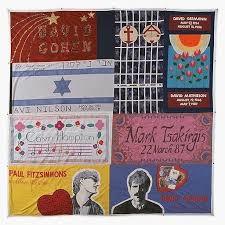 I was watching Common Threads: Stories from the Quilt the other day. The documentary was made in 1989, when the Quilt was fairly new. It was still small enough – small being a relative term – to be fully displayed on the National Mall. Now the Quilt contains over 48,000 panels, each measuring exactly 3’x6’.
I moved on to a newspaper interview with a woman who helped make her son’s panel. She remarked that every panel, every name, represented not just someone who died from AIDS, but all the people who loved them. That’s true of other memorials.
The Vietnam Veterans Memorial, also in Washington, was controversial when the design was first unveiled. A 21 year old woman, Maya Lin, daughter of Chinese immigrants, designed it (not a man, not a veteran) and many were determined to hate it from the beginning. The nicest response I remember hearing was that it was depressing instead of uplifting like other, more traditional memorials.
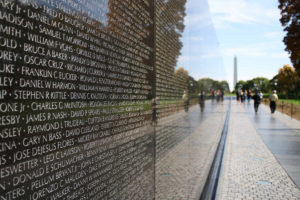 Then the memorial opened and though there were still those who demanded – and got – representational statues added to the area, most everyone else was amazed by the power of what they saw: 58,148 names, every American who died in that war, etched into a stark, black wall.
The 9/11 Memorial in New York City also lists the names of all those who died that day (as well as those who died in the World Trade Center bombing in 1993) on the footprints of the twin towers.
All three memorials – two fixed in place, one too large to display in its entirety – are largely comprised of names. All, like that mother said, are reminders of the friends and family members left behind.
It seems normal now, to build a memorial to a battle or terrorist attack or even a natural disaster with the names of those lost. It wasn’t always like that. Inspiring, towering sculptures meant to evoke determination, patriotism and optimism were what we came to expect.
The Vietnam Memorial (the “Wall”) lists the dead in chronological order. That’s it: no service branch, no location, no age, no hometown. Just the names. You have to check the kiosk or go online to find out more.
 During the years of heated debate over the 9/11 Memorial, designs listing the names of those lost were highly favored. But how to list them became a contentious discussion. The Families Association finally won: the names are listed in what is now called a “relational” way. Some sections of the Memorial make that clear by indicating why those names are together: Port Authority officers, airplane passengers and crew, FDNY ladder and truck houses. Most of the names do not. So they are listed with their coworkers in the Twin Towers. That means everyone who worked for, say, Cantor Fitzgerald is grouped together. Efforts were even made to put best friends close to each other.
The AIDS Quilt is a bit more problematic. They’ve accepted panels for thirty years now and it’s not always possible to position friends and lovers close to each other. That’s because each panel is sewn together into a group of eight to make a square that measures 12’x12’. I found out I guy I knew form college died from AIDS when I saw his panel on the cover of the first book about the Quilt. But it was years later when I found out the significance of the placement: his panel is next to his lover’s (the bottom two in the photo above).
I keep thinking about that woman’s comment, that each name represents more than just that person. It’s certainly true for me. I know people whose names are displayed on all three of these memorials: one at 9/11, two on The Wall, God only knows how many on the Quilt. And I’m not the only person who remembers them.
These memorials are their own cemeteries, a place to visit, especially for those who had no body to bury. They are a way of ensuring that these people are not forgotten.
If you have a chance to visit the memorials in Washington and New York, or catch a display of a small section of the Quilt, do it. Most of the people there will have no personal connection to the names on view. But some will. They’re the ones who crouch down in front of a panel, or run their fingers over the engraved names. They’re grieving and remembering and celebrating, all at the same time. That’s the power of these tributes, a power that will last long after anyone remembers the lives behind those names.
#short_code_si_icon img
{width:25px;
}
.scid-2 img
{
width:25px !important;
}
Share this post
June 20, 2018
Why You Have to Keep Writing in Crazy Times
 It’s hard to focus, isn’t it?
You don’t even have to be on Facebook or Twitter. Just watching the news is more than enough. No matter your political persuasion, it feels like the world is spinning out of control. The last time I felt that way was 1968. But this is different. I’ll write about that difference later, but not today. Today I’m going to tell you why your writing is still important.
There are writers who identify as ‘transformational’ or ‘inspirational’. I don’t. You probably don’t either. On a good day, you might think that what you write is mildly important. On a bad day you wonder why anyone would ever read anything you write. We all have those days, the good and the bad. That’s normal.
But lately you might be feeling like the bad days outnumber the good. You might be feeling like what you do, what you write, is worthless. There are so many problems in the world right now that need our attention. How can we ignore them to give our writing the attention it deserves? How can we be so selfish? Well, you have to and I’m going to tell you why.
We write in solitude. We write in coffee houses, at our dining room tables, in the library. We write because we have something to say, something to share. If we didn’t, we wouldn’t do it. What we don’t know, can’t predict, is the impact of what we write. On a daily basis, I wonder if what I’m doing is important. I wonder if anyone will care about what I write.
Then I think about my neurologist, who I saw not long after my mother’s funeral.
“Are you writing?” he asked.
“No, but I want to.”
“You have to, but not yet. It’s so important that you write this book. But don’t push it. You’ll know when you’re ready.”
He was right. I did know.
I think about a woman who did something amazing thirty years ago. I found her almost by accident and included her in the book I’m working on. When I contacted her for permission, her response was swift.
“Why would anyone care about it?”
“Because it’s important.”
She’s not a celebrity. Not many people know her story, or a lot of the stories in the book. But that’s why I have to tell them. That’s why what I write is important.
Her story – and the ones you write – have the power to inspire someone. It doesn’t matter if you think they’re ‘just’ stories. That woman’s story needs to be told, not just because she deserves the recognition, but because someone reading it is going to be inspired to do something, too. It might be a comparable project. It might be nothing like the one described. But it will change lives, even if just for a few minutes or hours. Quite honestly, the stories of the women in my book inspire me every day. I’m chomping at the bit to share them with my readers.
That manuscript that’s making you nuts right now will be okay. You’ll work at it and you’ll get it right. One day someone’s going to pick up the finished book. They’ll read the blurb on the back cover and think, “Hmmm.” They’ll take it home, maybe start reading it on the subway. They’ll stay up too late reading, but the time will fly by and they won’t want to stop even to go to bed.
The next day when they finish it, they will be sorry. They’ll wish there was more to read. They might not talk to anyone about it, because it needs to percolate in their minds. They know it has changed them in some way. In fact, they knew that before they finished the book.
Maybe they were surprised and delighted by what they read. Maybe they learned to put a name to their feelings and realized they were not alone. And maybe they were grateful to lose themselves in another world, one that righted itself by the final page.
Yeah, the world is pretty messed up right now. But as long as we have books to read – and writers to write them – it will be alright.
Get back to work.
#short_code_si_icon img
{width:25px;
}
.scid-2 img
{
width:25px !important;
}
Share this post