R.L. Stedman's Blog, page 8
February 17, 2017
Writers! How to Avoid Poverty And Juggle a Day Job
How to Avoid Poverty And Still Write
Some writers earn a lot of money from their books. The sad reality is that most do not.
There are some unique features to writing that make it particularly difficult to generate income. That’s because writing is a tournament marketplace.
Tournament Marketplaces
Tournament marketplaces are characterised by:
High numbers of players
Low average earnings per player
Very small number generating profits
However, profits for a tiny number of players are extremely high
These extremely high profits act as an incentive for new players to join the marketplace
Other examples of tournament markets include professional tennis players or (get this!) merchant bankers. Seriously. (I once read a whole economics paper on this. Personally, I would have thought merchant bankers did okay, but apparently not. Poor things… )
If you want to get rich, DON’T join a tournament market. Instead, be an engineer or a doctor, where both the average earnings and the profits per player are high.
Be Realistic
However, you may still have a dream of being a paid writer. Like me, you may even know in your head that the chances of making any money are incredibly low. So, if you decide to enter a tournament marketplace, do it with your eyes open.
Like any business start-up, you should assume it will take time to generate sufficient earnings. That’s why I always say to start-out writers: keep the day job.
Keep Your Day Job
A day job gives more than money – it gets you out of the house, and a sense of doing something meaningful. But managing work and writing (especially when you’ve got kids) is challenging.
[image error]
From Will Write for Chocolate by Debbi Redpath Oh
I’ve tried it all: full-time, part-time and contract based. Here’s my thoughts on each option.
Options for Day Jobs
1 Project-based work
Advantages:
If you’re self-employed, you can offset costs against your taxable income
You may have flexible hours
You can use times of paid work to save for times when you’re not working.
Disadvantages:
You don’t get paid holidays or sick leave
You can quickly get behind on income-related savings, such as superannuation payments.
You may need to take out income insurance
If you’re based at home, you may feel isolated
You’re vulnerable to marketplace changes
2 Part-time work
Advantages:
You get paid holiday, sick pay and colleagues
Superannuation schemes are maintained
You may be able to increase the hours worked if your boss has a shortage.
Your work may have skills/tools you can leverage to help your writing – like printers and reliable internet!
Disadvantages:
Salary levels of workers who traditionally look for part-time work (i.e. mothers with children) can be low
Not every workplace allows part-time work
You may be perceived as ‘less valuable’ to an organisation than your full-time colleagues.
Part-time hours can easily creep to full-time
Personally, I find it better to have a couple of writing days, and a couple of work days – this saves me having to juggle projects
3 Outsourced/Freelance
Advantages:
Very flexible.
You can, to a certain extent, set your own rates.
You can acquire work online. Platforms include: fiverr; upwork; yourVA.
Your costs are tax-deductible.
You may be able to leverage writing-related skill sets. For example: editing, marketing, copyediting.
Disadvantages:
You need to have a marketable skill set
You’ll be running a small business, so you’ll have to be comfortable with working as a business-person
You may be competing against low-wage economies. A designer based in Bangladesh has a lower cost of living than a designer in London.
Not all professions allow freelance work
It can be isolating
You may be vulnerable to platform changes or marketplace shocks
Payments may be lumpy, so cashflow can be a problem
Can take a while to gain traction
Learning to Juggle
Trying to write while working a day job can be really, really tough. A writer with a day job has to learn to cope with a messy house and saying No. Here’s a tip: If you’re a working writer, do NOT join a PTA.
Do you have any tips for fitting in writing with a day job? How have you managed the juggle?
The post Writers! How to Avoid Poverty And Juggle a Day Job appeared first on RL Stedman.


February 13, 2017
How to Make Money With Your Writing
My Failure to Make Money…And What I Learned
The World of Books is Changing
Established publishers are going into receivership, being acquired by other publishers, or just … disappearing. Indie publishers are starting up. Writers are publishing their own work. On-line digital platforms, like Amazon, Smashwords, iBooks, stock more titles than any bricks and mortar bookshop could ever do.
Readers, too, are changing. Book social media, like Goodreads and Wattpad are emerging power houses. Word of mouth has always sold books, but now there’s a new way to recommend.
In this new landscape of freely available publishing, you’d think it would be easier than ever for a writer to make money. All a writer has to do is to bang a few thousand words onto a page, format it correctly, push the ‘publish’ button and bang, thousands of eager readers leap forward and voila – a bestseller is born!
Alas, the reality is quite, quite different.
My first novel, A Necklace of Souls, was received very well critically, even winning Best First Novel at the New Zealand Post Awards. But it earned me only a teeny, tiny amount. Barely enough to pay for ten weeks of groceries. Unfortunately, I need to eat for more than ten weeks in a year!
Critical success and good craft were just not enough. If I want to write full-time I need to earn more than ten weeks of groceries. I needed to earn fifty-two weeks! So:
In 2014 ago, I set myself a challenge…
Within twelve months, I was going to try to turn a hobby into a full-time business – that earned enough to allow me to eat all year round. I was going to give myself a stretch goal of one year, and just see what happens.
…And in 2017?
Dear reader — I was spectacularly unsuccessful!
However, I learned a lot.
AND within twelve months of self-publishing my earnings were as much as my earlier year of being traditionally published.
By 2016, I was able to eat for another ten weeks.
Nah, don’t worry. I didn’t starve.
I have a day job, and a supportive husband.
[image error]
Dogbert’s Negotiating Class, from Dilbert.Com.
A Second Tilt at the Windmill?
Over the next few months I’m embarking on a new series of posts: The Business of Writing.
I’ll be talking about the publishing industry, market changes, trends and how to use these trends to set yourself up to turn a profit. Some of the things I’ll talk about will be adaptations from an earlier material, which you can find here. I’ll be discussing some of the things I learned from my failure, and how I’m going to do things differently next time.
Who knows, perhaps I might even get fifteen weeks of groceries this year!
Feel free to read along.
The post How to Make Money With Your Writing appeared first on RL Stedman.
September 18, 2016
Book Review: 4 Books I Wish I’d Written
Anyone who’s read A Necklace of Souls will know I love writing (and reading) about Girls With Swords.

I have NO��idea where this came from. As a child, no-one put a blade in my hand and whispered: “Go! Fight!” But somehow, I love stories about women who fight.
When I was growing up, back in the dark ages of black and white television and dinosaurs, it��was hard to find stories about fighting females. They were a rarity, a throwback to B-grade sixties movies.
But ��recently there’s been a plethora of stories of girls who not only fight, but who win.
I’ve put a short review of my top four of these books in this post, in ascending order.
Each of these books are really well written, fast-paced, with great characters. Each one leaves��me desperately envious. Why? Because I wish I’d written them.
Ah well, never mind. I have my own tales to tell.
Book Review
4.��Throne of Glass by Sarah J Maas
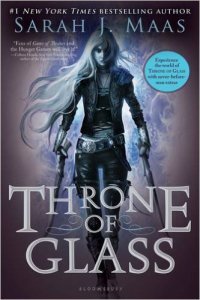
Throne of Glass starts with a bang. Celaena Sardothien, erstwhile��Royal Assassin, is serving a sentence in the salt mines, when she’s offered a choice. Fight as champion for the Crown Prince, or return to prison. The reader plunges straight into the story, and there’s no going back. Throne of Glass is the first in a series, and while its sequels, Crown of Midnight and Heir of Fire (and more recently, Empire of Storms), are exciting and fun and keep you up at night,��Throne of Glass is my favourite.
Just a warning: if you like strong male leads as well as female, and you’re not keen on instalove or love triangles, you may not like Throne of Glass. But what the hey, the fight scenes are excellent!
Maas has written another series, Court of Throne and Roses, a��Beauty and the Beast retelling��. I’ve not read this yet, but its definitely on the TBR list!
3.��The Raven Boys by Maggie Stievfater
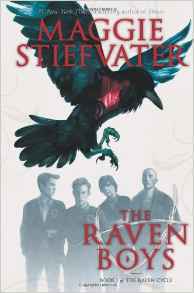
The Raven Boys, first in the��four-part series of The Raven Cycle,��is��a��fabulous read. Although it��isn’t really a Girls-with-Sword adventure, ��I’ve included it here because a) I love the characters and b) I wish I’d written it.
The Raven Cycle tells the story of three��boys and their friend, Blue, daughter of a clairvoyant. The boys are on a quest for a dead Welsh king and Blue is on a quest to stop one of them becoming dead. The problem is, she knows she’s going to fail.
The characters in this story simply leap from the pages, especially Blue’s mad clairvoyant family, and there’s a healthy mix of mysticism, magic and street racing. There’s a bit of romance, too, but it’s not overwhelming and never gets in the way of the story. This is a story that boys will enjoy just as much as girls.
2.��A Gathering��of Shadows��by VE Schwab
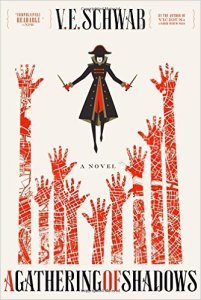
I’ve just finished this book, and I’m still reeling. First, because I read the series in the wrong frigging order. If you’re going to read this series, people, and I highly, highly recommend it, START AT THE BEGINNING.
The first in this series is called A Darker Shade of Magic. I can’t talk about it, because I haven’t read it yet, but I can talk about its sequel, A Gathering of Shadows.
A Gathering of Shadows is about a thief named��Delilah Bard, a wizard named Kell and three different Londons: Red, Grey and White. And a contest. It’s a fun, fun read, contains fantastic world-building, and deals with difficult concepts, including home, and freedom and how do we know we’re alive. This book (this series) will be loved by both males and females, which I think makes it quite unique in these days of very polarising YA reads. And, as an extra bonus, there is NO love triangle. Amazing!
1.��Graceling by Kristin Cashore
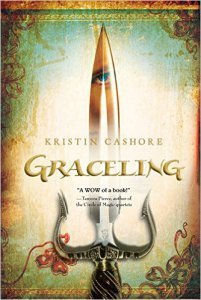
Published in 2009, Graceling quickly became a sensation. I can see why; the story is about Katsa, a girl Graced in fighting. She’s smart but��forever separate, not only because she’s use by the king as his private army, but because she has a deformity: her eyes are different colour.
All Graced have different coloured eyes, and they’re all feared because of it. Katsa, though, is feared more than most, until one day she meets a young man with different coloured eyes. Graceling is about survival and self-knowledge and courage. It’s won multiple awards and is��one of my favourite books. One of its strengths is that it’s a stand-alone story. There are others in the same world (Fire and Bitterblue) but to my mind they lack the strength and the lyricism of Graceling.
Finally, as a small digression: Kell, in A Gathering of Shadows, has eyes of two colours. That’s how you know he’s Antari, a magician. Katsa, being Graced, has different coloured eyes. Clearly, there is something to be said for having eyes of ��different colours.
A strange, and probably unrelated fact: My eyes are different colours. One is blue, and one is grey. ��I am not, as yet, a magician. Still, I live in hope.
The post Book Review: 4 Books I Wish I’d Written appeared first on RL Stedman.
September 8, 2016
Old but Still Popular: The History of Fairytales

Fairytales are really��old. Some even lead back to the bronze age! Check out��this article from��The��Guardian for more.

Back in 500BC, Aesop told stories. Remember The Wolf in Sheep’s Clothing? That’s a story from Aesop’s Fables. Most of the Fables were moral stories; a reminder on how to behave. Personally, I always found them a little boring, partly because they never have any romance, and they were pretty light on important things, like clothes and fashion.
Early��fairytales were presented as framing stories: One Thousand and One Nights. (Also known as The Arabian Nights).��Each story in the Nights is tale told by the main character, Schezerade. She’ll have her head cut off if she bores her husband. Each story is��another night of survival.
.jpg)
history of fairytales – Arabian Nights
The Arabian Nights is one of my favourite original collections, partly because it’s just so bawdy. Check out my��earlier post here��for a recount of Abu-Hassan and His Tremendous Fart.
Brothers Grimm (et al)
But the fairytales we know best are from rural mid-west Europe. This is because in the mid 1600s – 1800s�� collectors, like the Brothers Grimm and Charles Perrault, travelled back-country regions of Germany, France and Austria, collecting and curating ��legends.

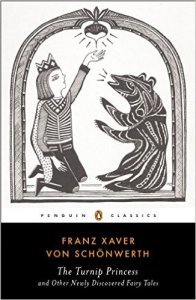
A recent source of fairytales was discovered last year: The Turnip Princess and other Newly Discovered Fairy Tales is a translation from a just-discovered box of manuscripts from a seventeenth century collector. Hold onto your hats, fairytale lovers: this new collection is (apparently) even more violent than those of Grimm.
Romantic Re-tellings
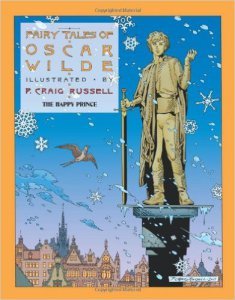
In the 1800s, there was��a rush of romantic fairytale-like stories��(probably because of Hans Christian Anderson). I’ve never been a massive fan of Anderson. A lot of his stories are so bleak! I prefer ��Oscar Wilde’s The Happy Prince.
And then came moving images. In the 1930s Disney produced AMAZING movies. Here’s a clip from the 1937 edition��of Cinderella:
The Present Day
Fairytales make great stories, and they take well to the screen. ��I’ve written a couple of posts on books, movies and so on. But I’ve not talked about Television!
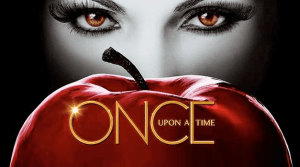
My favourite TV retelling is��Once Upon a Time��: a whole town of fairytale characters, miraculously transferred to Middle America.
I love this programme. The hair! The clothes! The make-up! And of course, the miraculously perfectly good-looking��characters.
All of which goes to show: fairytales,��born in the Bronze Age, are as current as ever. In fact, in our new days of social media, they’re even MORE relevant.
Check out this��Tale of Tinderella for a truly modern take on an ancient classic!
Fairytales definitely aren’t getting old anytime soon.
Over to you – do you have a favourite retake on a classic fairytale? Feel free to share in the comments!
The post Old but Still Popular: The History of Fairytales appeared first on RL Stedman.
September 2, 2016
Why my Favourite Fairytale Is Better Without the Prince
Although I’m partial to Ali-Baba, Snow White and Sleeping Beauty, my favourite fairytale is Cinderella.

The themes of Cinderella��appeal: the envy of the stepsister’s, Cinderella’s desire for love, ��security. The events of the story are relatable: the resourcefulness of the fairy godmother (a pumpkin, into a coach! that woman took recycling to a whole new level), the importance of footwear and the drudgery of housework.��Any story that realises that housework is deeply boring has to be a winner.
One thing, however, always bothered me about the Cinderella story. That is the prince. Unfortunately, he’s��not much of a hero.

This is��not entirely his fault����� I mean, “Charming”, what sort of a name is that? But when we reach the end of the story, and he starts trotting about with a shoe?��That’s��just weird.��It’s also��stupid. Why would anyone try and match a shoe with a foot to find the perfect mate?
Which brings me to the point of this post:��my first ever fairytale retelling was a reworking of the Cinderella story, but sans prince. Although I kept the shoes. I have a thing about amazing footwear.

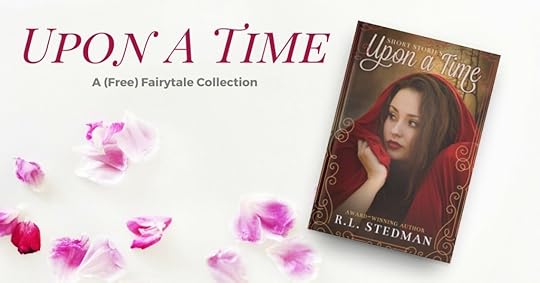
The story is called��Ten Minutes to Go, and is the first of the fairytales in my collection, Upon a Time. I’m updating this free collection next month with a new story, which is why I’ve been blogging so hard about fairytales; they’re on my mind, you see.
Anyway, to give you a taster of this collection (have I mentioned its free???!) I’ve popped��Ten Minutes to Go into this post. I hope you enjoy! And if you prefer to read it as a pdf, you can download it here.
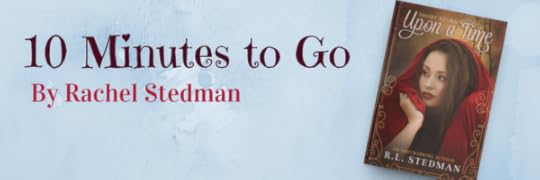
Ten Minutes to Go.
His breath stinks. I can���t wait to get out of here.
The unyielding shoes pinch my feet, and ��� ouch! ��� again, he stands on my toes. Despite their fragile appearance, the shoes are highly engineered and fortunately, they can handle the weight of his fat feet. The music stops. Thank God. How can one dance to the plucking of strings and the scraping of cat gut? I prefer something with a beat.
���Just one more waltz,��� he pleads, wiping his face with his kerchief. I glance at the clock. Just ten minutes to go.
���I���m very thirsty, sir,��� I say, fanning my face, curving my arm around its strong struts, so the dimples on my elbows show.
���My lady,��� he says, ���I will provide.��� He bows, one arm crossed over his chest. I suspect he���s trying to hide his stomach, but he���s not successful. How could you hide something so large?
���How dare you?��� A hiss from behind. It���s Seraphina, my so-called sister.
���You little slut!��� Madelina, the other ���sister���.
I smile and unfurl my fan. ���My dear sisters. How lovely to see you. And are you enjoying this glorious evening?��� I peer behind them. ���And your partners? Are they absent, perchance? Or has,��� and I close my fan with a snap, ���no-one asked you to dance?���
They step towards me, nails outstretched. As if on cue, my partner returns and my sisters are suddenly all false smiles.
���Oh thank you, your Majesty,��� I say, as he hands me a glass of champagne. He glances at my sisters, blinking at the glare from their jewel-encrusted bodices. They are far richer than I, but have no taste; like magpies, they value things only for their shine. Life can be unfair; my father left them all his fortune. How can you contest a will when you have no funds to do so?
���Allow me to introduce my sisters. This is Seraphina.��� She drops a curtsey.���� The girl is always untidy; this evening she has strawberry seeds caught in her bucked teeth, giving her a most unfortunate appearance.���� ���And Madelina.���
The warts on Madelina���s drink-reddened nose are highlighted by the candle glare. She spreads her skirts, essays a curtsey but her balance is worsened by wine and she stumbles. Reaching for support, she pulls on the King���s arm.
���Madam!��� Horrified, he steps back. His glass goes flying, spraying champagne over me.
���My Lady Ella,��� he appears distraught, and waves for a lackey. ���Shall I show these creatures out?���
My sisters gasp and for a wonderful few seconds I savour their humiliation. But business is business, after all, and the interruption is very convenient, so I smile up at him most sweetly. ���My Liege, I am sure it was an accident. If you could show me where I can freshen up?��� I glance at the clock. Three minutes. I need to get out of here.
As the rest room door closes, I heave a sigh of relief. Two minutes. I struggle out of the lace confection of a dress and throw the uncomfortable glass slippers in the trash. Flinging open the window, I inhale the cool night air with pleasure. These balls are so stuffy; mannered and poorly ventilated, full of high-class idiots speaking in drawling accents. Really, they won���t be missed at all. Unravelling the rope that���s been tucked between my shoulder blades, I throw the weighted end out towards the castle ramparts. I���d practised this so often, and like a dream, it catches first time.
Inserting the groove of my carbon fibre fan onto the rope, I climb onto the window sill. Don���t look down Ella. I fling myself out the window, holding tight to the struts of the fan. The night breeze blows my hair into my eyes as I skim across the courtyard. My skin is dark and clad as I am in black leather undergarments, it would be hard to spot me against the night. I clamber over the ramparts unremarked.
At the other side of the wall, the coach is waiting. ���Good timing,��� says a cracked voice. ���Drive on, Jerry.��� The whip cracks and we lumber away.
���The slippers?���
���I left them in the trash can, like you said.���
���Good. Your sisters are there? And the King?���
I nod, then because it���s too dark to see, add ���Yes. All three.���
���Excellent,��� she says cheerfully and brings her wand down with a thwack! Stars leap from its tip, out into the night, reaching over the ramparts and into the castle, earthing in the special glass of the slippers, that promptly
Explode.
As I say, these are very well-designed shoes. Not comfortable, but oh, so beautifully engineered.
Behind us, the chateau is enveloped in flame.
We drive off into the night.
���The Prince will be pleased that tonight went well,��� says my godmother. ���And no doubt your father���s lawyers. They always felt his will was unfair.��� She leans back against the cushions. ���I think I���ll settle down.��� She pushes back her hood and I can see her smile in the reflected light of the fire. ���Grow pumpkins or something.���
PS. Just after writing this, I found an awesome��Disney��wikipage about Prince Charming (that’s where the image above is from, too). Do check it out. I think I may have been a little harsh about the guy. Perhaps I should write another story, and this time have him as the hero…
The post Why my Favourite Fairytale Is Better Without the Prince appeared first on RL Stedman.
August 26, 2016
How to Write a Fairytale (And Why You Should Try)
I’m obsessed with fairytales.

That’s because I’m writing my own right now, so they’re filling my head:��Disney, Grimm, Arabian Nights.
I always put a twist on the original. So far I have a sleeping beast, a Charming Ball, a fairy godfather … and many more.
Right now I’m writing a take on the 12 Dancing Princesses. In my��most recent story, Hayley, aged 6,��goes to a princess party. Quite suddenly Hayley, the rest of the party, and the entire party building disappears. Or has it?��Her father, a soldier in a specialist unit, sets out to find her.
Fairy tales are surprisingly��easy to write. This post shows you why fairytales��make good stories, and how you can use their strengths to craft your own.
3 Reasons Why��Fairytales Make Fantastic Story Starting-Points:
1. ��They��have strong character archetypes:
The��hero (or heroine) is attractive: Snow White and Cinderella are beautiful; Ali-Baba is clever;��Jack the giant-killer is strong.
The bad characters are altogether evil.��Snow-white’s stepmother isn’t just vain and jealous; she’s also murderous.
2. ��They have the��classic hero’s journey plot structure:
This plot structure is like the��Ultimate Guide to Great Storywriting. It’s the plot structure used by screenwriters ��� why? Because it works. More on that below.
3. ��The themes are powerful:
The obstacles��tap into deeply held terrors. Hansel and Gretel are small children, lost in a forest. Cinderella loses her mother.
The drama is intense and often horrific. Hansel and Gretel burn an old woman��alive. The Little Mermaid walks on knife blades. Snow-white’s stepmother wants her heart.
4. Optional extras
Original folk tales (that is, the stories that fairytales came from) were frequently bawdy. In today’s world��of��political correctness we’ve lost that part of the story, but one��version of Sleeping Beauty has��the sleeping heroine��being raped by the prince. In Arabian Nights a prince marries��a virgin each day and beheads��her the next.
Fairy tales used to contain barbaric violence.��Cinderella’s step sisters chop off their toes to squeeze their foot into the glass shoe (the prince notices the fraud when their blood seeps out).

The Hero’s Journey
Here’s a short summary of the classic hero’s journey plot structure, and how this is��used in fairytales:
A likeable hero (or heroine).
The hero has a Goal: ��Cinderella wants to go to the ball. Sleeping Beauty wants to avoid a curse.
He��faces MONUMENTAL��obstacles: Jack doesn’t just fight��an ogre; he fights��an evil, man-eating, giant ogre.
He encounters��set-backs: Cinderella gets to the ball, only to have to run away at the stroke of midnight.
He has to��overcome a final, almost overwhelming obstacle: Hansel escapes from the cage, only to be caught by the evil witch.
He must overcome his/her internal demons:��Cinderella gains the courage to defy her evil stepmother and set her foot in the glass slipper
How to write a fairytale
You can start by a small change, like the setting. Put Cinderella in the present day, for example, and then all of a sudden you’ve got The Bachelor on steroids. Kiera Cass did this very successfully, in The Selection.
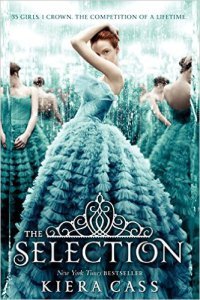
You could change the hero’s��gender (I did this once, and made Cinderella a man, and called her Cynders).
You can play with��the technology of the tale, and what it means. Marissa Meyer did this really well in her Lunar Chronicles��series. In��Beauty is a Subjective Term, my��Snow White retelling, a��mirror needed reprogramming. Because what does ‘fair’ really mean?
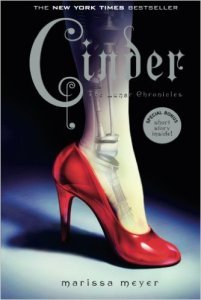
But the best way is to change��a fairytale is to consider the motivation of the character.
For example, Cinderella. In Ten Minutes to Go, Cinderella is��no longer interested in the prince; she’s interested in his��prince’s money. And so, in Ten Minutes to Go, Cinderella was��a��contract killer��with a deadline of midnight.
So if you want to write your own fairytale, first think of the story. Think about the characters. Change their names if you want to; their gender; their setting. But most importantly, consider what they want to achieve.
And really, that’s how you write any story. The fairy tale is just a scaffold that, fortunately, usually leads to��a bloody good story.
More information?
If you want to read some other examples of fairytale retellings, check out this blog post here. And if you want to read my��stories that are mentioned above,��you can download them for free here. And now, what are you waiting for? Go away and write your own!
The post How to Write a Fairytale (And Why You Should Try) appeared first on RL Stedman.
August 22, 2016
Book Review(s): 4 Unusually Good Fairytale Retellings
I’ve been reading a lot of fairytales.

This is partly because I’m writing my own collection, and��it’s always helpful to see another author’s work.
But mostly I read fairytales��because they’re just darned fun!��Even though the ending is never in doubt, still, its great to anticipate the twists. And think, wow, how did they come up with��that?
There are a��host of fairytale retellings to choose from, from Marissa Meyer’s science-fiction cyberpunk Cress to Gena Showalter’s White Rabbit��in Zombieland series.
The four��books here are some of the best of the genre that I’ve read in the last two years.
One you’ve probably heard of, but two were totally random finds on the library bookshelves, and one was��such an unexpected treat that I wanted to share it here.
Book Reviews (In No Particular Order)
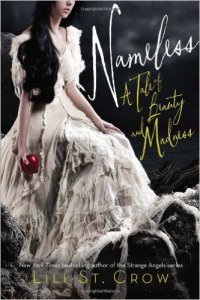
1.��Nameless: A Tale of Beauty and Madness by Lili St Crow
This little gem is a Snow White retelling. A battered child is found alone in the snow by the godfather of the Seven ��� one of the powerful, mafia-like families, that rule the magic-ridden city of New Haven. The child, Camille, does not remember her real name, nor why she has such terrible nightmares. And always there’s the smell of apples, oh and yes she has to be careful of mirrors… Nameless��is a grim-dark kind of story, set in an alternative reality, and the world-building is truly fantastic. If anything, I’d love more information about the Seven and all the other characters that dance in and out of the story with no explanation, but have strange, mysterious pasts. Like Marya, the fey croissant-making housekeeper and��the Potential, that turns adolescents into magic workers, sometimes with unexpected results.
2.��The Sleeper and the Spindle by Neil Gaiman
This beautiful book has stunning illustrations by Chris Riddell. Although the story begins as a Sleeping Beauty retelling, it quickly morphs into something much more interesting. It’s a very short read, but its the sort of story you can turn to again and again. And like most of Gaiman’s works, The Sleeper and the Spindle is��pure, beautiful, quirky escapism.
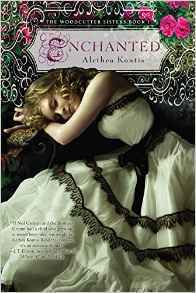
3.��Enchanted by Alethea Kontis
Enchanted suffers from an unremarkable title, but don’t let that put you off. The story is about Sunday, the seventh-born daughter of a woodcutter and a very strict Mama. Kontis��skilfully weaves Jack the Beanstalk, the Princess and the Frog, Little Red-Riding Hood and a host of other fairytales;��there’s even a nod to the original Grimm Brothers versions. This is a funny, quirky and exciting story and its well worth reading.
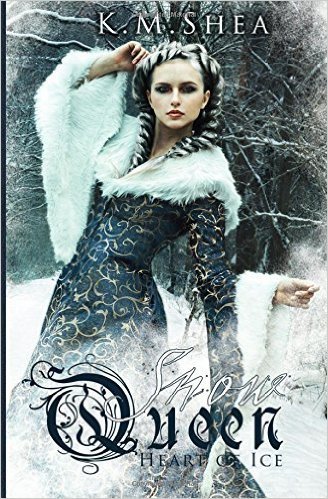
4.��The Snow Queen: Heart of Ice by KM Shae
KM Shae specialises in fairytale retellings, and they’re all great reads. Heart of Ice��is my favourite ��� even though it’s not a strict retelling ��� but I totally recommend Rumpelstiltskin too. Heart of Ice��tells the story of Princess Rakel, exiled from the palace because of her magical control over snow and ice, and how she overcomes the��distrust of her captors��to save them from an invading army.��The story is really about learning to accept who you are, and its both entertaining and fun. It’s a clean read, but not a dumb read, and its the sort of book that mothers and daughters can both enjoy. Plus, its cheap (!) and there’s more in the series to try!
The post Book Review(s): 4 Unusually Good Fairytale Retellings appeared first on RL Stedman.
August 18, 2016
Love Fairytales? Here’s 5 Enchanting Movies To Try

I love fairytales.
The Brother’s Grimm, Hans Christian Anderson, Arabian Nights — fairytales are charming, exciting, heart-breaking and funny. Fairytales come from all nations, and we call them folktales, and we think they’re all made-up because, well, they’re fantasy.
But are they really?
The reasons fairytales retain their appeal is precisely because, although they’re fiction, they contain things we can all relate to. Like Cinderella, we’ve experienced people being mean to us, saying “you’re ugly”, “you’re worthless.” And like the Little Mermaid, we’ve had a helpless crush on someone who really just…is not interested.
But in fairytales (unlike real life) also contain a happy ever after. In fairytales, good always triumphs. And, as an added bonus, for some reason fairytales seem to have beautiful dresses, handsome Princes and True Love.
And because of this, fairytales make for fabulous movies and amazing TV. Here’s my top 5.
Hope you enjoy these clips!
5 Fabulous On-Screen Fairytales.
5. EverAfter
Watch the clip to the end!
4. Shrek
Who doesn’t love this great movie? And the sequels that somehow were just as good as the first! My favourite line: ‘Some of you may die, but that is a price I am willing to pay…’
3. Enchanted
The Happy Working Song is the best! ‘Even though you’re vermin…’ I have no idea how Amy Adams managed to sing this song with a straight face.
2. Whale Rider
This is a retelling of a Maori myth, and is an absolutely stunning movie. Its based on the book Whale Rider, by Witi Ihimaera. No actual whales were harmed in the making of this movie.
1. Beauty and the Beast – the animated version
The animation in this film is amazing, but really I love the characters, especially the French candlestick and Chip the cup (what a great name!)
Bonus! – An Extra Movie
And as an added little bonus, who could forget the amazingly sublime…The Princess Bride.
Okay, so it’s not really based on any actual fairytale, but it has a Princess, a Romantic Hero and, most importantly — the Best Movie Sword Fight Ever.
The post Love Fairytales? Here’s 5 Enchanting Movies To Try appeared first on RL Stedman.
August 6, 2016
Do You Write in the Nude? And More Odd Questions

Readers love asking writers about their writing.
I totally get this. I’m a reader. Many readers have intelligent, thoughtful questions. BUT some questions are just plain bizarre.
To help write this blog post I conducted exhaustive research (okay, so I asked on social media). All of the questions set out here are actual questions, asked to actual writers.
Don’t let this list stop you talking to writers, mind. Just, thanks to this post, there are some things you no longer need to ask.

16 Odd Questions (and 1 Great One)
Left field
Writers of juvenile fiction report the following left-field questions:
What kind of car do you drive? Don’t ask me why this question was raised. I think the writer who encountered it had no idea why, either.
How do you write the words so neatly? This from Mister 8, amazed at how tidy the writing is in a printed book.
How many words in a book? (another Mister 8) Answer: In a kids chapter book – about 30,000. [Audience gasps]. But an adult’s book can have more than 100,000 words. [Cue wordless shock and awe.]
Money and Ideas
All writers report a perception that writing is easy money:
Are you rich?/ How many books have you sold? /How much money do you make? Not enough.
Will you be the next JK Rowling? NO.
There’s also a perception that, while ideas are hard to come by, putting that idea to paper is really, really easy.
I’ve got an idea for a book. How about I give you my idea, and you write the book, and we split the proceeds 50/50? No. Write your own damn book.
Where do your ideas come from? Best answer: the weird people around me.
Dodgy Questions
Romance writers definitely field the dodgiest questions.
Do you write in the nude? Rather worringly, lots of authors reported being asked this.
Do you write soft-porn? Um, no.
Do you ‘practice’ on your husband? I’m not telling.
Can I help you do your ‘research’? Sure. My next book is a murder-mystery. You offering to be the victim?
Think a Little Harder
Some questions display a total lack of originality (or even basic research):
Why did you start writing? Um, I don’t know. Because I had a story to tell.
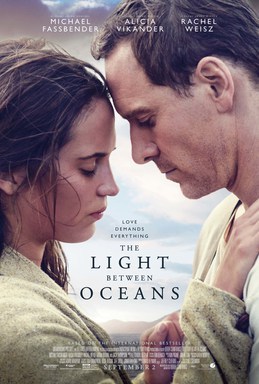
What made you write The Light Between Oceans? I get this question about twice a year. The Light Between Oceans is a lovely book, and I’m sure the movie will be amazing, but its written by ML Stedman. As far as I know, she is no relation.
What advice do you give a budding writer? How about – write stuff down?
What is your favourite book? The best answer: I can’t say. It’s like choosing between my children.
Most Annoying Question
This is the question I find the most irritating:
How do you find the time to write? I prioritize. How do you make time to make a quilt, watch TV, train for a marathon or study?
http://poetsandwriters.tumblr.com/post/140032926446/people-very-often-say-to-me-how-did-you-do-it
Great Question
Finally, there is one question I’d be more than happy to answer, but as yet no-one’s asked it of me:
What’s the best thing about writing? Writing is the MOST FUN IN THE WORLD. You get to make up an entire universe of people, and they do whatever you tell them to do. You’re the total boss! When you’re writing fiction you can literally do ANYTHING you like!
You want to know how great it feels? I’ll put it this way: Writing is even better than reading.
A massive THANK YOU to the other writers who contributed to this list.
I’m sure your readers appreciate your patience. I’m certain they appreciate your sense of humor.
The post Do You Write in the Nude? And More Odd Questions appeared first on RL Stedman.
July 23, 2016
3 Remarkable Books That Made Great Holiday Reading

The big problem with holidays is: what to read? You need something chunky enough to occupy the airport layover but fast-paced enough to keep your attention at a thousand feet. I got lucky on a recent trip and found three great books that did both.
Here they are, in order of reading (I’ve included links to the Amazon pages of these books, in case you want to try an extract for yourself).
A City of Mirrors
The Sudden Appearance of Hope
The Bridge to Lucy Dunn
About My Holiday:
If you follow me on Instagram or Facebook you’ll see I’ve just been to Australia. The trip was a fascinating mix of bizarre and sublime: from an Elvis competition to humpback whales! (I’ll probably blog later on this unlikely combination.)
Each of these books definitely added to the holiday experience, partly because of the themes they tackled, but also because when you have a good book, how can you be bored?
A City of Mirrors
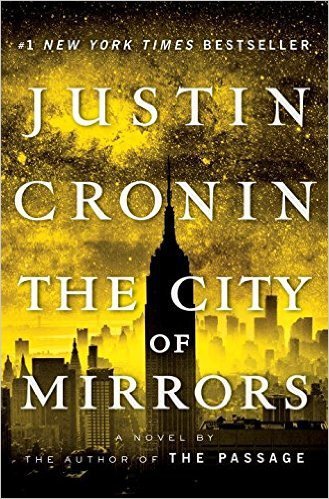
A City of Mirrors by Justin Cronin
This is the third and final novel in The Passage Series (The Passage , The Twelve ).
The Passage Series is set in a dystopian future, where a virus has transformed people into bat-like vampires; only a few true humans remain.
So far so tropish.
But what sets The Passage apart from others in the genre is the sheer quality of Cronin’s writing; his characters are really interesting and the sense of desperation that runs throughout the series draws you in and keeps you reading.
A City of Mirrors is, I think, the best in the trilogy. Mirrors follows Amy, the girl from nowhere and we learn about her ability to move through time. There’s more of Alicia too, which I always like (being partial to sword-carrying red-haired heroines!) but mostly the story follows Peter Jaxom and Sara Mitchell.
Peter and Sara believe that the virals have been vanquished. But they forgot about Zero, the oldest and the worst of the Twelve, and Zero never went away – he’s just been waiting.
What’s to like: like the other books in the series, the writing is very good; at times, it’s brilliant. The story is compelling, the characters interesting and there’s enough tension to keep you reading.
What’s annoying: There’s the largest info-dump in the world, where Zero reveals his life history in one enormously long sequence. Goes on for aaages, and most of it you can pretty much skim. Some characters could be interesting but we never really know them (like Pim, who’s deaf and dumb). Also, the print version is enormous – just on 600 pages. Stupidly, I brought the print version and ended up carrying a brick around in my suitcase. If you’re getting it for a holiday read, definitely get the e-version!
Best quote:
‘The world was real and you were in it, a brief part but still a part, and if you were lucky, and maybe even if you weren’t, the things you’d done for love would be remembered.’
The Sudden Appearance of Hope
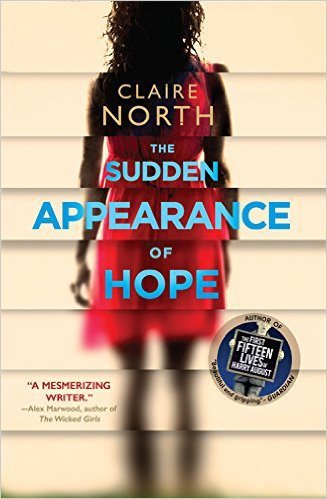
The Sudden Appearance of Hope by Claire North
I love Claire North’s writing – her other books Touch and The First Fifteen Lives of Harry August were enthralling, intriguing sci-fi/fantasy mixed with thriller action. Technically (speaking as a writer here) this is hard to achieve – when writing sci-fi you need to explain the world, but a thriller has to be fast-paced to be, well, thrilling. North manages this difficult challenge brilliantly.
You can read more about Touch and Harry August in an earlier blog post here.
Like Touch and Harry August, The Sudden Appearance of Hope features a protagonist with an unusual ability: Hope Arden is totally forgettable. No one remembers her, not her parents, her friends, or her lovers. She’s therefore an extremely successful thief. And borderline suicidal. Enter Perfection, an app promising users a perfect life, a terrorist named Byron and suddenly Hope becomes the key to a new, extremely valuable technology.
Like Mirrors, Hope is a long book, so if you’re reading it on holiday, definitely get the e-version.
What’s to like: Like North’s other works, the pacing is superb. All three of us – husband and teenage son – raced through this book! The ideas unpacked by the story are truly compelling: What is perfection? How much does software understand? What are we, if no-one remembers us? What is memory?
What’s annoying: There are a lot of bullet points and lists. Sometimes this is interesting, sometimes not so much. Hope describes the technology developed by Perfection as a threat to the species – but I never understood how. And finally, the way Hope jets around the world merrily on stolen passports really annoyed me.
It’s not the passports that strain belief (although I don’t think they’re quite as easy to steal as North makes out, but hey, it’s fiction) but the absence of jet lag. I’ve done enough long haul flights to know how crippled you feel on arrival.
Oh yes, and the part where Hope does her own physiotherapy. That whole chapter (I’m a physiotherapist by training) was really a WTF read. Totally unbelievable. My son goes ‘oh mum, it was fine’! So if you’re a physio, just skip that chapter.
Best quote:
“Truth: sometimes a murderer cannot be found. Truth: sometimes your children are taken and you are left behind. Truth: poverty is a prison. Truth: disease and age come to us all.”
The Bridge to Lucy Dunne
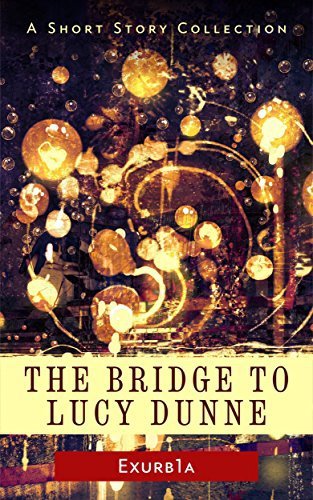
The Bridge to Lucy Dunne by Exurb1a
My son introduced me to this work. Exurb1a is a youtuber (I’ve not watched his videos but I sure want to now).
The Bridge to Lucy Dunne is a short-story collection of fantasy and speculative sci-fi. They’re easy to read and very well-written. Some are very short, others are in multiparts. Some are written like an interview transcript, others as diaries, others as a fable.
Like The Sudden Disappearance of Hope, the stories in Lucy Dunne discuss deep issues: who are we, why are we here, what is God, what is time? But also they’re entertaining and because they’re all so different you can’t really predict what’s coming next.
I think books like The Bridge to Lucy Dunne represent an exciting new wave of platform agnoistic narratives: youtube, book, gaming.
What’s to like: The shortness of the stories! Seriously, after reading two massive books it was a relief to dive into a quick read. I enjoyed the diversity of the story structures. But mostly, I enjoyed the ideas behind the stories. My favourite was VASE, about a device that removes your awareness of thought. Without conscious thought, what are we? No depression, but no rapture. And yet, does this make us more or less human?
(A digression: I was listening to this really surreal interview with Thomas Thwaites (GoatMan: How I took a Holiday from Being Human) – some concepts in VASE are real.
Listen to the interview here: Acting the Goat )
What’s annoying: Some of the stories (The Rite, The Flowers) were a little predictable. And some of the more complex issues, like VASE, might be more suited to a deeper structure, like a novella.
Best Quote:
“When cameras were invented plenty of people thought they stole the soul of anyone they took a picture of. There’s always a brief period of hysteria when a new technology comes around.”
Over to you.
Feel free to share. Any book discoveries you’d recommend? What holiday reads have you found?
The post 3 Remarkable Books That Made Great Holiday Reading appeared first on RL Stedman.