R.L. Stedman's Blog, page 9
July 23, 2016
3 Unique Books That Made Great Holiday Reading

The big problem with holidays is: what to read? You need something chunky enough to occupy the airport layover but fast-paced enough to keep your attention at a thousand feet. I got lucky on a recent��trip and found three great books that did both.
Here they are, in order of reading (I���ve included links to the Amazon pages of these books, in case you want to try an extract for yourself).
A City of Mirrors
The Sudden Appearance of Hope
The Bridge to Lucy Dunn
About My Holiday:
If you follow me on Instagram��or Facebook��you���ll see I���ve just been to Australia. The trip was a fascinating mix of bizarre and sublime: from an Elvis competition to humpback whales! (I���ll probably blog later on this unlikely combination.)
Each of these books definitely added to the holiday experience, partly because of the themes they tackled, but also��because when you have a good book, how can you be bored?
A City of Mirrors

A City of Mirrors by Justin Cronin
This is the third and final novel in The Passage Series (The Passage��, The Twelve ��).
The Passage Series is set in a dystopian future, where a virus has transformed people into bat-like vampires; only a few true humans remain.
So far so tropish.
But what sets The Passage apart from others in the genre is the sheer quality of Cronin���s writing; his characters are really interesting and the sense of desperation that runs throughout the series draws you in and keeps you reading.
A City of Mirrors is, I think, the best in the trilogy. Mirrors follows Amy, the girl from nowhere and we learn about her ability to move through time. There���s more of Alicia too, which I always like (being partial to sword-carrying red-haired heroines!) but mostly the story follows Peter Jaxom and Sara Mitchell.
Peter and Sara believe that the virals have been vanquished. But they forgot about Zero, the oldest and the worst of the Twelve, and Zero never went away – he���s just been waiting.
What���s to like: like the other books in the series, the writing is very good; at times, it���s brilliant. The story is compelling, the characters interesting and there���s enough tension to keep you reading.
What���s annoying: There���s the largest info-dump in the world, where Zero reveals his life history in one enormously long sequence. Goes on for aaages, and most of it you can pretty much skim. Some characters could be interesting but we never really know them (like Pim, who���s deaf and dumb). Also, the print version is enormous – just on 600 pages. Stupidly, I brought the print version and ended up carrying a brick around in my suitcase. If you���re getting it for a holiday read, definitely get the e-version!
Best quote:
���The world was real and you were in it, a brief part but still a part, and if you were lucky, and maybe even if you weren���t, the things you���d done for love would be remembered.���
The Sudden Appearance of Hope

The Sudden Appearance of Hope by Claire North
I love Claire North���s writing – her other books Touch and The First Fifteen Lives of Harry August were enthralling, intriguing sci-fi/fantasy mixed with thriller action. Technically (speaking as a writer here) this is hard to achieve – when writing sci-fi you need to explain the world, but a thriller has to be fast-paced to be, well, thrilling. North manages this difficult challenge brilliantly.
You can read more about Touch��and Harry August��in an earlier blog post here.
Like Touch and Harry August, The Sudden Appearance of Hope features a protagonist with an unusual ability: Hope Arden is totally forgettable. No one remembers her, not her parents, her friends, or her lovers. She���s therefore an extremely successful thief. And borderline suicidal. Enter Perfection, an app promising users a perfect life, a terrorist named Byron and suddenly Hope becomes the key to a new, extremely valuable technology.
Like Mirrors, Hope is a long book, so if you���re reading it on holiday, definitely get the e-version.
What���s to like: Like North���s other works, the pacing is superb. All three of us – husband and teenage son – raced through this book! The ideas unpacked by the story are truly compelling: What is perfection? How much does software understand? What are we, if no-one remembers us? What is memory?
What���s annoying: There are a lot of bullet points and lists. Sometimes this is interesting, sometimes not so much. Hope describes the technology developed by Perfection as a threat to the species – but I never understood how. And finally, the way Hope jets around the world merrily on stolen passports really annoyed me.
It���s not the passports that strain belief (although I don���t think they���re quite as easy to steal as North makes out, but hey, it���s fiction) but the absence of jet lag. I���ve done enough long haul flights to know how crippled you feel on arrival.
Oh yes, and the part where Hope does her own physiotherapy. That whole chapter (I���m a physiotherapist by training) was really a WTF read. Totally unbelievable. My son goes ���oh mum, it was fine���! So if you���re a physio, just skip that chapter.
Best quote:
“Truth: sometimes a murderer cannot be found. Truth: sometimes your children are taken and you are left behind. Truth: poverty is a prison. Truth: disease and age come to us all.���
The Bridge to Lucy Dunne

The Bridge to Lucy Dunne by Exurb1a
My son introduced me to this work. Exurb1a is a youtuber (I���ve not watched his videos but I sure want to now).
The Bridge to Lucy Dunne is a short-story collection of fantasy and speculative sci-fi. They���re easy to read and very well-written. Some are very short, others are in multiparts. Some are written like an interview transcript, others as diaries, ��others as��a fable.
Like The Sudden Disappearance of Hope, the stories in Lucy Dunne discuss deep issues: who are we, why are we here, what is God, what is time? But also they���re entertaining and because they���re all so different you can���t really predict what���s coming next.
I think books like The Bridge to Lucy Dunne represent an exciting new wave of platform agnoistic narratives: youtube, book, gaming.
What���s to like: The shortness of the stories! Seriously, after reading two massive books it was a relief to dive into a quick read. I enjoyed the diversity of the story structures. But mostly, I enjoyed the ideas behind the stories. My favourite was VASE, about a device that removes your awareness of thought. Without conscious thought, what are we? No depression, but no rapture. And yet, does this make us more or less human?
(A digression: I was listening to this really surreal interview with Thomas Thwaites (GoatMan: How I took a Holiday from Being Human) – some concepts in VASE are real.
Listen to the interview here:��Acting the Goat��)
What���s annoying: Some of the stories (The Rite, The Flowers) were a little predictable. And some of the more complex issues, like VASE, might be more suited to a deeper structure, like a novella.
Best Quote:
���When cameras were invented plenty of people thought they stole the soul of anyone they took a picture of. There���s always a brief period of hysteria when a new technology comes around.���
Over to you.
Feel free to share. Any book discoveries��you’d recommend? What��holiday reads have you found?
The post 3 Unique Books That Made Great Holiday Reading appeared first on RL Stedman.


July 11, 2016
Fairytales are Fun: Cinderella and A Tremendous Fart
I love fairytales. Based on folk legends, they���re retellings of the oldest stories in the world.

Paulo Coelho says there are only three stories: love between two people, love between three people and a struggle for power. Fairy tales contain all three.
My favourite tale is Cinderella. Why? Because she rescues herself. She���s told she���s ugly and she���s not to go to the ball – but she goes anyway. And she puts on the slipper and wins the Prince.
There are different versions of Cinderella. In some, the stepsisters cut off their own toes, so as to fit the shoe. In another a tree provides her ball dress. (Yep. That���s fairy tales for you.) In a Native American version the stepsisters burn her face. You can read these stories on line here.
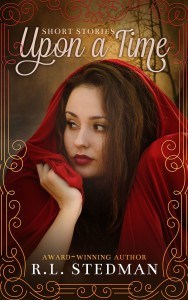
In Upon a Time, I’ve��written three versions of the Cinderella story: Cinderella as assassin, working to a tight deadline. Cynders as (male) chimney sweep. But my favourite is the Charming Brands story, where Ash is an assistant in a shoe store.
That���s the great thing about a fairy stories, you can take one part of the fable and change it up, but provided you stick to the core truth of the tale it still has meaning and readers can still relate.
Fairy stories are often funny; they���re over-the-top and rarely believable. I mean, pumpkins turning into coaches? Please. But that doesn���t matter. We don���t need to believe a tale is true to enjoy it.
Fairytales can contain themes that aren���t popular today. A prince has more rights than a commoner; men have more status than women. Fairy tales are frequently sexist – think of One Thousand and One Nights, where Scheherazade has to keep retelling stories to avoid beheading.
That���s something we often forget: fairytales have sex and blood and vengeance.��Which brings me to the purpose of this blog post. Fairytales are often bawdy.
Set out below is my retelling of a story from One Thousand and One Nights.

Image Source
(I���ve quite freely copied this story��from A Continued��Sense of Wonder night at the Dunedin Library (more about that programme here). Since the retelling was copied it from a much older work, I���ve taken the liberty of ��adding a few small embellishments.
Warning! Don���t read on if you don���t like reading about farts.
The story of Abu-Hassan and the Tremendous Fart.

Image source
Once upon a time in a great city lived a young man named Abu-Hassan. Though of humble origins, Abu-Hassan was a godly man. Now it came to pass that the King of the land took a new wife. This Queen was more beautiful than the moon and sun and greatly loved, for she was truly kind and gentle.
The King and his new wife began a journey throughout their kingdom, and they came to the city of Abu-Hassan.
Now everyone in the city wanted to see this new queen, but it was feared that the throng of people would be too much for the royal couple. The mayor decreed that they would cast lots for the privilege of attending the Royal reception, and that every right-thinking citizen might cast in their lot.
And thus it came to pass that Abu-Hassan was invited to a banquet at the mayoral palace to be held in the honour of the King and Queen.
Abu-Hassan felt very nervous, for he was a humble man and uncertain of how to act in the presence of Royalty. But his mother told him to be mindful of his duty to God and his host. He should partake of his food without complaint and offer sincere dutiful obescience to the King.
Abu-Hassan followed this wise counsel and the evening passed uneventfully. Despite his nerves, he ate heartily for the meal was rich and flavoursome.
After the meal came lengthy, florid speeches as each official tried to outdo his peers in eloquence. But finally the speeches came to an end. A slave banged a gong for silence.
���The Royal Audience will begin!��� announced the mayor.
With a flurry of anticipation, the citizens filed through to the Audience Chamber, where the King and his new, beautiful Queen were waiting to receive the guests.
The room was magnificent! Candlelight gleamed on gold walls, lapis lazuli and precious stones glistened. Musicians played; jugglers threw flaming torches; contortionists formed strange shapes. There was a long wait until the presentations began, but Abu-Hassan was not at all bored. The Queen was even more beautiful than the tales; it was a pleasure to stand in one corner and watch her.
Then, finally, came the great moment.
���Abu-Hassan!��� boomed the vizier.
Abu-Hassan came forward, made obeisance to the throne. The King appeared almost unaware of his presence, and barely glanced his way. Abu-Hassan felt concerned; perhaps he had offended his monarch. So, when bowing to the Queen, he dropped onto one knee, and made the deepest obeisance he could manage.
Unfortunately, in so doing, he had forgotten about his elaborate meal.
And as he bent forward, he let out the most tremendous, enormous fart!
The silk canopy above the throne shook. Candles blew out.
All conversation stopped. A juggler dropped his torch and a tambourine player dropped his instrument. It fell,��crashing to the floor.
The King looked first annoyed, then surprised. And the beautiful Queen, who Abu-Hassan had longed to meet? She began laughing. Quietly at first, and then louder and louder, until nearly doubled up with mirth.
After a surprised pause, the entire throne room began laughing.
And Abu-Hassan, overcome with embarrassment, backed from of the room. The laughter continued, as the rumours of the tremendous fart spread. Waves of hilarity followed as he ran from the palace.
News of the fart circulated quickly. Beggars in the gutter laughed; merchants in the marketplace could hardly contain their glee. The guards on the walls laughed so hard they nearly fell.
Abu-Hassan left the city.
***
He came at last to a far town. He worked hard, and said little about where he had come from, and why he had left. He grew older, and was respected in business. He married, had three children. He told no one about his tremendous fart.
Time passed. Abu-Hassan grew old and longed to look once more on the city of his ancestors. He said farewell to his children and grandchildren and took ship to his homeland.
Drawing near to his old home, he said to himself, “I will wander about the outskirts and listen to what people are saying. Perhaps they will not remember me, or why I left.”
And as he entered the city he heard a young man asking: ���Mother, when were you born?���
���My son,��� said his mother, ���I know exactly when I was born. It was on the eighteenth of March; the very night of Abu-Hassan���s tremendous fart.”
When Abu-Hassan heard these words than he rose up from the bench. “My fart has become a date!���
And he realised that such a fart will be always be remembered from now until eternity.
Abu-Hassan returned no more to the city of his birth. Instead he returned to his children and his grandchildren, and remained in self-imposed exile until he died.
May God���s mercy be upon him.
The post Fairytales are Fun: Cinderella and A Tremendous Fart appeared first on RL Stedman.
June 30, 2016
11 Tips To Help You Be a Better Writer
This post sets out 11 tips for success that I wish I’d discovered earlier in my writing journey – and gives you practical hints on how to follow them.

Image from Pixabay
This is a transcript of a talk I gave to the Waikato Children���s Literature Association��back in 2013.��The talk was so well received I thought I���d set it out as a blog post.
Plus, because it’s Friday, and I’m feeling generous :), I���ve remodeled the powerpoint and inserted it into the bottom of this post as a slide share (along with a pdf).
11 Tips to Help You Be a Better Writer.
11 Tips Unboxed – what they really mean
slideshare and pdf
 

11 Tips to Help You Be a Better Writer
1. Read: Join a library/have a kindle account
2. Write what you want to read.
3. Believe in your stories
4. Discipline is another word for habit
5. Formal training helps
6. Know the rules before you break them
7. Join a writer���s group
8. Record your submissions
9. Don���t give up your day job
10. Be social
11. Retain the joy
 
The Tips Unboxed – what they really mean?
1. In the Beginning was the Word.
If you���re planning to write, you must read. Reading is like a work-out for writers. If you���re doing weight-training, you need to lift weights. And if you���re writing, you need to read. It really is that simple.
So it follows that first-time writers should have easy access to cheap books. Join a library, get a kindle account, find a good second-hand bookshop, steal from a friend. Read new-releases, not-so-new and frankly ancient. They���re all useful.
2. Know the market.
Some stores need to be told, while others are frankly���boring. Or they���ve been told already. You���ll only know this by reading – a LOT.
If you can���t find a book you want to read, chances are there could be a gap that only you can fill. But you���re only going to know the gaps if you know what is out there.
3. Believe in Yourself
I started to write because I had a story to tell, and I continued because I wanted to finish it. But writing the middle of a story is hard. that���s when the little voice inside you tells you that ���you���re wrong���, ���no-one wants to read your sh*t���, ���why do you even bother?��� You need to keep believing, because books do not write themselves.
4. Continue the Journey
���A novel is a very long piece of work,��� says Salman Rushdie in a massive understatement. But it���s true; it���s a marathon, not a sprint, and you need to keep going and going and going. The easiest way to do this, I find, is to not focus on the deadline, but on the process. I am very rut-focused. Once writing each day is a habit, it���s no longer something you have to tell yourself to do. It’s just part of your day.

From PinkPot Designs
5. Learning
Writing, like cabinet-making or knitting, is a craft. While you can teach yourself to knit or make furniture, having a teacher or mentor to call on makes the process much easier. A good teacher is a sounding-board, a librarian, an editor, a reviewer all rolled into one neat little package. While an MFA isn���t necessary, having formal training does help you avoid the worst pitfalls.
6. Editing and Reviewing
While there���s not such thing as perfect, it does help to understand the craft so well that you can break it with impunity. But the thing about breaking the rules is: you have to do it well. And you���ll only do that if you know what ���right��� looks like, and if you have the necessary critical eye.
7. Learn from Others
Keeping a reading journal or a diary is all very well, but there���s nothing like bouncing ideas and angst off other writers. You can do this face to face or via social media, but believe me, it really helps. Some writer���s groups advertise in local libraries, others have twitter feeds or closed Facebook groups. Ask around, and see what works for you. One suggestion is: don���t join them all, or you won���t have time to write. Try a couple of groups first – if they���re a good group they���ll understand that you���re trying before buying – and see what is the best fit.

How to Be a Better Writer
8. Grow a Confidence Suit? Or just Harden Up?
Rejections are inevitable, and boy they hurt. But sometimes, just sometimes, you get an acceptance. One tactic I���ve used is to note all my submissions in a spreadsheet. That way you can put in large red letters ���ACCEPTED���. These red letters are a great confidence boost.
If it makes you feel better, the best writers have been rejected many, many times. Check out this great article about Marie Force, now a best-selling novelist, and the story of her rejections.
Personally, I think the difference between an okay writer and a really great one is the number of rejections – because in this industry persistence really is the key.
9. Story as Market: the Grim Statistics
The publishing industry is in a state of constant change. Actually, change is the only constant in publishing! Revenue for the Big 5 Publishers is declining, bookstores are closing, and the rise of new media – gaming, you-tube – reduces time for reading.
It���s also important to understand one thing about writing: the cashflow is terrible. Payments trickle in slowly, and generally it takes a fair number of books before one begins to make any kind of living. So unless you���re offered a substantial advance, you have to have a way of making money, and to make the same amount consistently and regularly. I strongly recommend: Do NOT give up your day job prematurely!
10. Be Social
If I had my time again, I would have started social media earlier. Why? Because social media allows you to interact directly with your readers. You���re not filtered through a bookstore or a publisher. Some writers are shy; most of us aren���t the most talkative folk (a gathering of writers is an interesting experience, with everyone watching each other for material!), many of us were born pre-internet, and most have day jobs. Keeping up with the web is time-consuming, and for some it���s frankly terrifying.
I���ve written more on social media in an earlier blog post,��but mostly I���d say: don���t be shy. The majority of people are friendly. For every negative comment there are a hundred nice ones. And there���s nothing as cool as a note on your Facebook page saying ���I loved your book!���
11. Enjoy the Ride
Having goals helps. Even if they���re not the most exciting (���I will write 500 words tonight���), goals provide a sense of control over a craft that can, at times, feel uncontrollable. They provide direction and a feeling of achievement. On the days where writing feels hard, when the muse has turned her back and you���re tired of being alone (and poor), reviewing how far you have come can be a lot more helpful than worrying about how far you have to go. So set goals. Make them achievable and realistic and celebrate that you���ve met them before you move on to the next.
However, and this is the most important piece of advice for any writer:
Retain the joy.
In the end, we write because we have to; because we must. And because, of course, we cannot imagine doing anything else.

Want more information?
Check out the��slideshare:
And here is the link to the pdf of this post, in case you want to read off-line.
What are your top tips? What things do you wish you���d known at the beginning of your writing journey?
The post 11 Tips To Help You Be a Better Writer appeared first on RL Stedman.
June 20, 2016
5 Books That Were Better as the Movie
Usually there���s no contest between the book and the movie, but this list suggests that sometimes, just sometimes, the movie might actually be better���

In order of Movie Greatness, here’s my list of 5 movies that were better than the book. Yes, really. Some are new, some are classics��and some may surprise you.
Sit back, grab some popcorn and enjoy!
5 Books and 5 Great Movies
5. The Birds

While the basis��of this short story by du Maurier��was��similar to the book – birds start attacking humans – ��unlike the movie, the book is set in the UK and (spoiler alert!) does not end happily. It���s a long short story and not particularly scary, or (I think) that riveting, unlike some of her other works, which really are page-turners.
The movie is way better – even today, when it seems pretty dated, especially this��obvious green screen – because��Hitchcock develops the tension amazingly effectively, much more so than du Maurier. After reading The Birds, I wondered why he decided to even use it for the movie, although I’m glad he did.

The movie��was an Academy Award-winning Merchant Ivory production, starring Emma Thompson, Anthony Hopkins and Helena Bonham-Carter. Like its more famous cousin, A Room with A View, Howard’s End��is an adaptation of an EM Forster novel, and deals with class and relationships in Edwardian England. Personally, I find this��production not as amazing as Room��(it doesn’t have the incredible music score) but the��great actors alone make it worth watching.
Unfortunately, the book is not as entertaining as the movie. It grinds on and on and is, frankly, dull. (Unlike A Room With a View, which is just as much fun as the movie). And when reading the book��you can���t even become distracted by the gorgeous costumes.

I loved the book; really fast-paced, page-turning with epic battle scenes. However…I liked the movie more. Why? Because of the styling. The gorgeous sets of the Capitol, the Louis XIV vibe to the costumes, the colours – so cool. Plus, the movie has Jennifer Lawrence!
2.��A Scanner Darkly

A Scanner Darkly, like Minority Report and Blade Runner, is based on stories by Philip K Dick. Unlike the other movies, Scanner sticks fairly closely to the book’s narrative about a totalitarian police state and an undercover cop. Scanner is a grim read, full psychosis, drug dealing and a bleak future-view. The book is slow going in places and, although it���s got some interesting elements – like the main character���s coat, made up of images of people – I didn’t find it the easiest read.
The movie isn���t the easiest to watch, either, and it does help if you���ve read the book. But there are three things the movie has that the book doesn���t. These are: Keanu Reeves; a tighter script; and AMAZING rendering. If you���re into weird-but-interesting movie productions, A Scanner Darkly is a must-watch.

Howl’s Moving Castle��by Diana Wynne Jones is a great read; the story of Sophie Hatter and Howl, the wizard without a heart. BUT, although the book is good, the movie by Hayao Miyasaki is gorgeous! The beautiful anime alone makes it worth watching, but Billy Crystal as Calcifer the Fire Demon is fantastic. (Apparently Diana Wynne Jones wasn���t overly impressed by the movie, but I think she was way too picky. If someone wanted to set one of my books into a landscape as wonderful as this film, I���d be delighted!)
Bonus Runner-Up:

If you like period dramas and murder mysteries, this is definitely a must-see. The book, by Agatha Christie, is a good read. Christie���s husband was an Egyptologist, and she spent a great deal of time on and about the Nile, so who better to write��about a group of affluent tourists on a Nile river boat? Confusion abounds when one is murdered. Fortunately, the world-famous detective, Hercule Poirot is among the guests.
I’m not entirely sure this movie is better than the book (which is why it’s a runner-up). But it has four things that just might make it superior:
The sets��– the movie was shot on location in Egyptian, so the scenes��in the ancient temples feels just wonderful.
The cast is��an all-star roundup of the seventies movie industry: Peter Ustinov as Poirot, Bette Davis, Mia Farrow, David Niven, Maggie Smith.
The costumes – they won an Oscar.
The movie is way less racist than the book.
This trailer is so dated its retro! Don’t you just love the music…
Note: if you enjoyed A Death on the Nile, try Murder on the Orient Express.
Conclusion
Usually there���s no contest between the book and the movie, but this list suggests that sometimes it’s possible to expand on a good story, and make it even better.
Feel free to comment! What would you recommend, and why…
The post 5 Books That Were Better as the Movie appeared first on RL Stedman.
June 13, 2016
School Visits: The Good, The Bad, The Bizarre
Sometimes I���m asked if I���ll visit a school to talk with students about the writing process. Mostly I decline. But if the school is close or I have a friend on staff I have been known to��say yes.

Here’s the highlights of two��years of conversations.
Different Age Groups:
I love talking to kids about reading, writing and their favourite books. I love how interested kids��are in the craft of book construction. Young children know how hard finding the right words is. When you���re just learning to write, you understand this very deeply. This can be something we forget as we get older.
When I���m talking to middle-graders, I tell them where an idea for a story came from. And if I���ve set a story in their school (and I have done that a couple of times), I love the looks of excitement. Their school is famous! Children understand that setting something into print makes it shareable and makes it last.
Teenagers are vastly different. Teens seem less interested in the concept of story and more interested in story-related-to-self. They want to know about practical things, and the questions come rapidly: Can I get rich doing this? How long does it take? How can I talk to a publisher? They seem disappointed when I tell them: No, Ages, and I have no frigging idea.

Top Seven Questions:
Here���s my favourite questions (to date). These are from all age groups, aged 6 – 16.
I���ve got an idea for a story. It���s about a plane crash and everyone is lost. I thought about writing a story about each person in the plane. What do you think?
Why do you call yourself RL Stedman. Aren���t you just ripping off RL Stine?
How do you keep the words in your book so neat?
How long does it take you to write a book?
Are you rich?
Did you draw your own cover?
Do you know Dav Pilkey? He���s my favourite author EVER.

Captain Underpants Collection (From Amazon)
Bizarrest School Visit:
The strangest school visit I EVER did was a talk for Library Day at Otago Girls High School. (This was my first ever school visit, too, which made it extra special).
���Will you come and speak to us,��� asked the Librarian. ���It���s our library day, and we always have a guest speaker. You only need to talk for about twenty minutes. Not long.���
I thought this meant a trip to speak the kids who were keen on writing. Twenty minutes talking about books? Surely I could manage that. ���No problem.���
How wrong could I be���
Instead of speaking to 30 keen readers, I was ushered into a very large, two-storey auditorium – and presented to the entire school (800 plus). And, get this, the entire audience was in FANCY DRESS.
Turns out Library Day at OGHS is a day of celebrating books, and you���re expected to wear a costume of your favourite character. Which probably explained the headmistress��� little-bo-peep outfit, and the sheep-dressed senior staff …

I cannot remember what I spoke about. All I remember is the crook with the bow and the wig of curly ringlets and the sheep, prancing on their hind legs. To this day I have absolutely no idea what that headmistress really looks like.
Two Questions to Ask When��Visiting a School
So, if you’re ever asked to talk to a school, I suggest you ask:
How many people am I speaking to?
Will they be in fancy dress?
The post School Visits: The Good, The Bad, The Bizarre appeared first on RL Stedman.
June 9, 2016
7 Images of Bookshelf Porn for Booklovers
Confession time: I have a thing about bookshelves.
I have��7��of them, scattered about my house. I’ve wasted��hours��organising them. I tried sorting my books by colour, by author surname, topic and height. Some systems worked better than others – the height one was a complete disaster, because half the books fell off the shelf. Now, I just try and remember where a book is located. Usually, I know.
Bookshelves are big on instagram and tumblr – just check out the #bookstagram and #bookporn hashtags. I love the way folk share pictures of their shelves;��it makes me feel a lot less weird.
If you’re a bookworm like me,��here are seven images of Bookshelf Porn for you to enjoy. None of these photos are my own (alas!), ��but I’ve put links and further information in the picture captions to the originals.

From��Bookbub��– I have a feeling this is��Shakespeare and Co, Paris. It sure looks like it, anyway. Note to self: write a post on great bookshops of the world.

From��Hooked on Houses. A ��barn totally dedicated to books and available to rent. Oh yes!

from elkaniho.com via��buzzfeed. I love the 70s vibe.��Click on the link to see more great images.

from��Home Decor Ideas��– a tree in the corner of a room.

From��Bookshelfporn on tumblr. This is a great tumblr blog.

From��Bookshelf Porn on Tumblr. A library for 5200 books!

From��Apartment Therapy. A bookshelf at the base of the bed. I like the way the shelves are optional.
Conclusion
One thing’s for sure: a bookworm can never have too many books!
Feel free to check out my��instagram feed��– although be warned, I rarely post my own #bookshelfies. Because my bookshelves are just not as pretty as the ones here.
The post 7 Images of Bookshelf Porn for Booklovers appeared first on RL Stedman.
June 8, 2016
Different, Exciting, Amazing: 5 Books I Read and Loved
Falling in love with a book feels both wonderful and awful.

Wonderful, because for a moment you’ve totally forgotten everything else. You’re lost in an imaginary world, where only the characters and their struggles exist. But it’s awful too, because a book always ends. At some point, you’ll have to close the pages and step away. Sometimes it feels as though a book has ripped your heart out – which is totally crazy, because it’s only words on a page, right?

from eatcleanmakechanges.tumblr
Here’s my top 5 books of the last 12 months.
I fell deeply in love with each of these books. Each felt different to anything else I’d read before; each was fast-paced and exciting, and dragged me into a different world. Some are part of a series and some are standalone. If you do read any of these I can promise you: you will not be bored.
The First Fifteen Lives of Harry August – Claire North
Touch – Claire North
Station Eleven – Hilary St John Mandel
Miss Peregrine’s Home for Peculiar Children – Ransom Riggs
The Dream Thieves by Maggie Stievfater (The Raven Cycle, #2)
Why I Fell in Love: Book Reviews

Everyone raves about Gone Girl, and it’s a wonderful book; exciting and suspenseful (plus, it made a great movie). But if you like suspense and seat-of-your pants reading, you must read Claire North.
Claire North is a pseudonym of Catherine Webb, a British writer who wrote her first book at the age of just fourteen. Yes, you read that correctly.
Touch is about Kepler, a being who can slide inside other people’s bodies, just by touching them. Kepler has no sex; he/she is the person he inhabits. He’s also a broker, finding bodies for other beings like him. But someone, or something, is after him, and now he’s on the run. In Touch, Kepler moves from body to body, on a quest to find a nightmare. Do you suddenly wake up, with no recollection of where you’ve been, or how you’ve got there? Have you been losing time? Perhaps Kepler’s been using you.
The First Fifteen Lives of Harry August

Harry August lives his life over and over again. Each time he dies he finds himself reborn in a restroom in 1919. He is an Ouroboran, destined to repeat his life. He is not alone; there’s a club of members who pass messages throughout time, from one Ouroboran to another. Don’t let the sci-fi premise put you off, because at its heart, Harry August is both a thriller and an intriguing tale about one man’s struggle with loneliness.

Hilary St John Mandel is a Canadian writer; this is her fourth novel. It’s a powerhouse of a story, and has one of the most complex narratives I’ve read. The story weaves back in forward through time, beginning with the death of Arthur Leander in London. Leander, playing the role of Lear, collapses on stage of a heart attack, just before the beginning of a pandemic that spreads rapidly through the world, annihilating civilisation and grounding planes. Station Eleven moves through multiple points of view: Arthur, his ex-wife, a child actor, an audience paramedic. Each character has their own story to tell. The pace is extraordinary; for such a complex novel, it’s never boring, and at sometimes so mind-blowing I couldn’t bear to put it down. This was my must-read novel of 2015, and I’ve already read it again since.
Miss Peregrine’s Home for Peculiar Children

Jacob always thought his grandfather couldn’t distinguish truth from fiction; his tales of growing up in an orphanage filled with children of peculiar gifts seemed a fantasy to obscure the truth – that his family was murdered by the Nazis in WW2. But when his grandfather is murdered, Jacob realizes that perhaps the truth is stranger than he’d thought. I’m in awe of this book. Not only because of its wonderful story, but because of the craft behind it. Riggs does a wonderful job of scenes with multiple characters (it’s really hard to do this and not get the reader confused) and his prose is both economical and powerful, a trait only the best writers display. Miss Peregrine is illustrated by the most awesomely bizarre photos. It was these photos that were the genesis of the story, and its worth getting the hard copy of the book rather than a download, simply because of these images.
Miss Peregrine’s being made into a movie, due for release shortly, and since I read this book there have been two more books in the series published. Miss Peregrine’s is one of those stories that’s so perfect in itself that it makes me reluctant to read the rest of the series, in case it can’t live up to the promise of the first!
The Dream Thieves by Maggie Stievfater (The Raven Cycle)

Oh my god, this series is fantastic! (see my earlier blog post on this book). The Dream Thieves is Book #2 in the Raven Cycle and I’ve listed The Dream Thieves here – rather than the other books in the Cycle – because The Dream Thieves a) was the first book I read in the Cycle and b) it totally blew me away.
Compared to the other 4 books listed in this post, The Dream Thieves isn’t that complex. Set in Aglionby Academy, it tells the story of the extraordinary Ronan, a psychic called Blue and their mad friends. The Dream Thieves contains a sometimes bizarre, always exciting mix of drag racing, ghosts and dead Welsh kings. If you enjoy fantasy, adventure and historical references this is a must-read.
Confession time: I haven’t read the last book in the The Raven Cycle yet! Like Miss Peregrine I’m almost scared to, because rest of the series was just so great that I don’t want to be disappointed at the end.
In Conclusion
I read a lot of books. Some of them I put on my shelf at Goodreads.com , although recently I’ve been slack and haven’t been as religious at filing them as I should. (I might update it shortly, so keep an eye out). But even though I read a LOT, I rarely fall in love. So I think these 5 books are really special.
I’m always on the lookout for a great new read. Anything you’d suggest? What books have you fallen in love with?
The post Different, Exciting, Amazing: 5 Books I Read and Loved appeared first on RL Stedman.
May 31, 2016
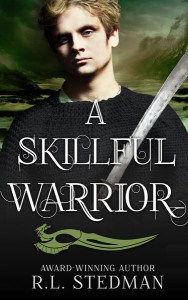
Behind the Scenes with A Skillful Warrior
Paulo Coelho���s advice to aspiring writers: don���t keep a notebook. Just live your life. The things that are important will remain, and those that are not will fall away.
I do keep a notebook, but not for recording thoughts and impressions. I keep my notebook for when I don���t have a computer with me. Sometimes this bothers me, as though I���m not a real writer.
But surprisingly, when it comes to story setting, I don���t need a notebook. I rely on memory. Take A Skillful Warrior, and its settings.

The Settings of A Skillful Warrior…
The story opens with Will, Dana, Jed and N���tombe travelling beside a river towards a moorland plateau.
Later, Will and Jed find a hotel in a fishing village just north of a town called Abervale. Nearby is a tower, like a castle, set into the sea, and accessible from the clifftop by a narrow bridge. Jed falls afoul of its owner, a woman named Ma Evans.

A little later there���s a scene where Dana meets a goat herder. He takes her to meet his family, and they share food and a lice-infested cave.
The last scenes of the book are in a maze-like network of narrow canyons. Once, long ago, people lived in hollow caves, carved from the rock. Now, all the caves are abandoned; the only sound is the wind, whistling sadly through the empty holes.

…And The Real-Life Places
The river valley of my imagination was the Conwy River, in Gwynedd, North Wales. I worked as a physiotherapist in Llandudno Hospital in the 90s. Many of my patients were small-holding sheep farmers, wiry tough little men who eeked out a living in the harsh pasture of the Upper Conwy.
I went hiking in the Conwy Vale in my weekends, and gained a first-hand insight into why my patients had such bad knees!
Where the Conwy River meets the sea lies a castle, one of my favourite castles in all Wales (and there are plenty there to choose from, thanks to Edward I��and his bottomless treasury), and the gorgeous medieval market-town of Conwy.
Back in the 90s I had no idea of writing a book, let alone a trilogy, so never really meant to cast these places as locations, but they crept into the book nonetheless.

Conwy Castle.��
Abervale and the nearby fishing village of Towyn are totally fictional, but I used drawings of old Exeter – the Exeter from before the bombing raids of WW2 – and Chester (which was not so damaged) to form the idea of the narrow streets and over-leaning tudor-style post and beam buildings of Towyn. The tower in the sea is totally made up, although Tintagel Castle, built into the clifftops of North Cornwall, and Mary Stewart���s Merlin Trilogy (see an earlier blog post) acted as a catalyst.
The goat-herder lived in the Sinai Mountains. I holidayed on the Sinai Peninsula nearly twenty years ago – diving and snorkelling, as you do – and the camel-riding, landrover driving Bedouin were a familiar sight along the coast. Later, we travelled into Petra. If you���ve ever been to Petra you���ll understand how powerful the landscape is; how evocative, and how lonely. Once you leave the beaten tourist trail you realise just how vast the place was. Once it must have been simply crowded with people. High in the cliff walls are thousands of holes – cave homes, now empty. Except for the lice that are legendary among backpackers.

Petra, Image by Pete Rojwongsuriya from Bucketlistly Photos
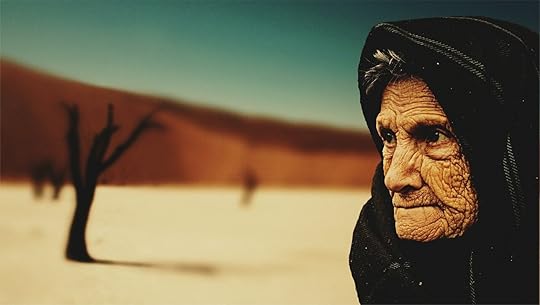
In one of these lonely caves we met with a goat-herder and his family. This wasn���t their regular home – the government had moved all the inhabitants away – but periodically they���d return, bringing their animals and their furnishings with them. They welcomed us into their cave-home, plied us with hot sweet tea and offered to be our guides for the day. Such hospitality is common among the Bedu, or so I���m told.
Bedouin Woman. All images on this page (unless otherwise credited) from Pixabay
It���s strange how tiny events,��not even important at the time, remain in the subconscious and eventually��make their way into a story.
Makes me glad I didn���t bother with a notebook.
The post Behind the Scenes with A Skillful Warrior appeared first on RL Stedman.
May 23, 2016
6 Old-But-Awesome Fantasy Series for Teen Readers
Know that awful feeling when you reach the end of a great series?��Well, don’t panic, here’s��a whole heap of old-but-awesome fantasy series to discover!
Image from Deposit Photos. Used under License.
What Should I Read Next?
Because I���ve been reading fantasy for, oh, well, way too long to count, I thought it would be fun to set out some options based on some old and new series.��(All the cover art here is from Amazon,��and I’ve added links to all the Amazon entries for these books too, in case you’re wanting to read more.)
1. Epic Fantasy Adventure
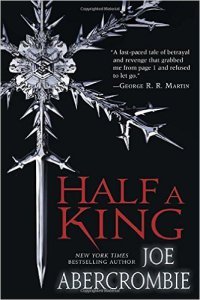
If you like:��The��Shattered Sea Series by Joe Abercrombie
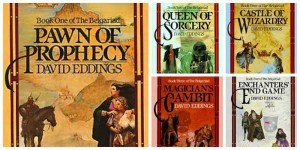
Try:��The Belgariad by David Eddings
What’s it About?
The Belgariad is a five-volume fantasy series, featuring good versus evil, wicked gods and powerful magicians. The series follows Garion, a scullery-lad from the country and his mysterious Aunt Polgara in their search for the missing Orb of Aldur.
At the beginning of the stories Garion is a young unknown, but as the reader continues through the books his exciting backstory is gradually revealed. When The Belgariad first came out, I haunted the library for weeks, just desperate for the next in the series, and had my name on all the pre-order lists.
The Belgariad��feels like real seat of the pants adventure – Garion didn���t really understand what was happening to him, so neither did I, as the reader. I still remember the amazement, the OMG moment when finally I realised what was actually happening. (I don���t want to give too much away here, so apologies if this sounds ambiguous)!
Why Is it So Amazing?
The action in The Belgariad is great – it���s a fantasy, so there���s heros and battles and sword fighting and all that good stuff – but really it���s the characters that set The Belgariad apart. Eddings developed an enormous cast of characters, and each person is so believable that you really feel you know them; they each have their own foibles and way of speaking. I still think, even now, that the Belgariad has one of the best cast of characters in any series. Sorry, JRR, I think Eddings out-did you there.
Any Other Info?
David Eddings and his wife, Leigh Eddings, went on to write a number of other series, including The Mallorean, the sequel to The Belgariad, so��if you do get hooked on this series there are��plenty of other books to go on to.
Interested? Want to find out more?
Check out this review from Will Read for Feels.
2. Legends
Enjoy��The Raven Cycle��By Maggie Stiefvater?
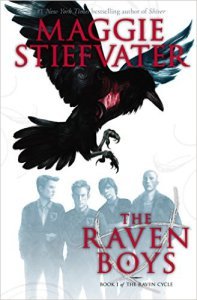
Try:��The Dark is Rising Sequence by Susan Cooper.
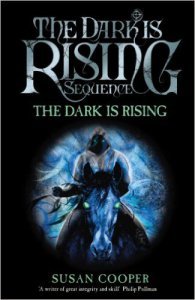
When I read that Maggie Stiefvater listed Cooper as among her favourite authors, I wasn���t surprised; if you���ve read The Dark is Rising you can certainly see the similarities. Although The Dark is Rising is��slower-paced than Stiefvater���s work and doesn���t have any cars (plus its first book, Over Sea and Under Stone, is written for a younger audience), the settings feel way more evocative.
What’s it About?
The Dark is Rising is a good versus evil story, set in Cornwall and Wales, and tells the story of Will, the last of the Old Ones, born into a mysterious order. On his eleventh birthday, Midwinter Day, Will learns why a strange man is following him, and why he has to keep his family safe. Throughout the sequence Will is aided by Merlion (Merlin) and three children: Barney, Simon and Jane. The stories are all set in Britain, moving from Cornwall to Buckinghamshire to Wales.
Why Is It So Great?
The whole��sequence is��creepy and exciting and full of references to King Arthur and the Grail. It has a strong emphasis on music. It’s rare to find books that celebrate musicality in children – I still remember the excitement when I realised I wasn���t the only musical weirdo in the world!
The Grey King, the third of the Rising sequence, is set in Wales. This book has always been my favourite of the series, so much so that I worked in Wales primarily so I could see the area she describes in her books! I ended up setting my first book, A Necklace of Souls, in Angelsea��partly because of Cooper���s The Grey King.
If you���re into celtic mythology and adventure, The Dark is Rising is an absolute must-read. It���s really aimed at children around ten to say fourteen, but older kids will still enjoy it.
3. World-Building and Magic
If you enjoy Brandon Sanderson’s Mistborn Series, try:
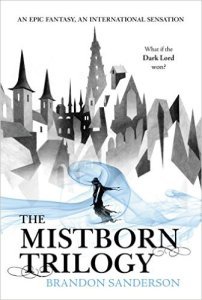
The Earthsea Cycle by Ursula Le Guin.
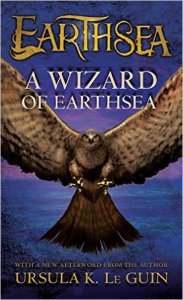
What’s it About?
First written��as a trilogy, The Earthsea Cycle is a classic fantasy series. Set in Earthsea, a world made of sea and archipelagos, the stories follow the adventures of Ged, a wizard of Earthsea, and Tenar, a priestess. In 1990 Le Guin released Tehanu, the fourth in the cycle, and more recently, a number of short-stories.
Why Is It So Great?
The Earthsea Cycle is world-building at its best; the detailed world of Ged and Tenar is immersive and exciting. Just a short warning: The Earthsea novels are slower than Sanderson���s Mistborn series – the action takes time to build – but what makes Le Guin���s novels amazing is the sheer believeability of the world. When reading Earthsea, you really feel as though you���re walking through a market or sailing across the sea. If you enjoy travelling but haven���t the budget, The Earthsea Cycle is a must-read!
Any Other Info?
The Earthsea works were��adapted into an Anime movie by Disney and Studio Ghibli. ��The movie is interesting, although don’t expect it to resemble the book!
4. Wizarding Schools
If you liked The Adventures of Harry Potter by JK Rowling��try:
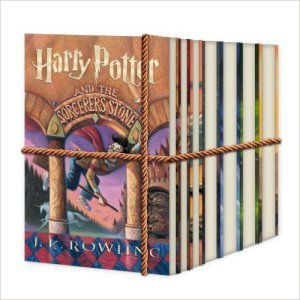
Witch Week by Diana Wynne Jones
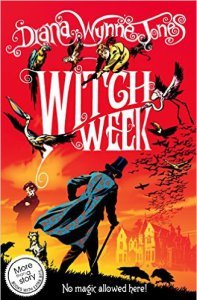
What’s It About?
Witch Week takes place over Halloween week at Larwood House, a horrible boarding school that���s home to many witch-orphans (children whose parents were burnt for witchcraft). Most of the class of 2Y are terrified that they will become witches – but some welcome the idea of magic. And others believe they are far too good to ever become a witch.
Witch Week is one of my favourite Wynne Jones novels, mostly because it���s just so funny.
���You girls,��� said Simon, ���all stink.���
The result was almost overpowering. So was the noise the girls made.
Why Is It So Great?
I first read Diana Wynne Jones��� Charmed Life when I was nine. I still have a copy, and it remains one of my favourite stories ever. Wynne Jones had the most amazing storytelling gift; she told stories of magic and multiple worlds and her extraordinary characters simply bounced from the pages.
I thought you were talking about a SERIES?
Yep. I am – Witch Week is one of the Chrestomanci novels. The Chrestomanci stories are all stand-alone novels. They’re��set in many different worlds but they��all feature Chrestomanci, a powerful enchanter with an allergy to silver and a highly developed dress sense. So if you enjoy Witch Week then good news! There���s heaps of other stories to try.
5. Romance and Adventure
If you like Kristin Cashore���s Graceling��Realm, try:
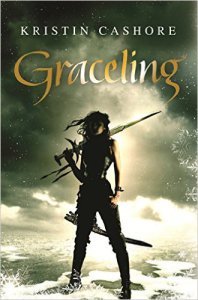
The Riddle-Master Trilogy by Patricia McKillip
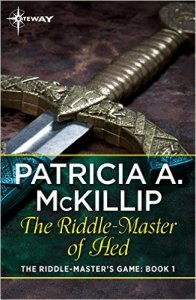
What’s it About?
The Riddle-Master stories tell the adventures of Morgon, the Prince of Hed. Born with three stars on his forehead and the ability to solve riddles, Morgon doesn���t care about destiny or matters of state; all he wants to do is study riddle-mastery. Unfortunately for Morgon, the biggest riddle he must solve is himself.The characters, Morgon and his fiancee, Raederle of An, develop in unexpected ways through the series. There���s action and backstory and plenty of magic. The story is never boring.
Why is it so great?
The Riddle-Master series is noteable not only for its world-building and strong female protagonists, but for the beauty of its writing. McKillip���s writing is always lyrical, more like poetry than prose. The Riddle-Master series has the best concluding paragraph ever:
���Raederle, her voice tranquil, began telling him about pearls and luminous fish and the singing of water deep in the sea…Peace, tremulous, unexpected, sent a taproot out of nowhere into Morgan���s heart.���
6. Magic, Myth and Historical Reality
Love Leigh Bardugo’s Grisha Series?
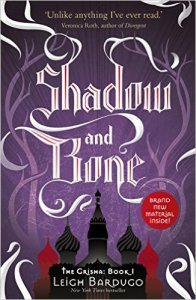
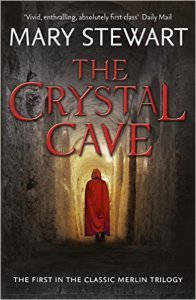
Try The Merlin Trilogy by Mary Stewart
What’s it about?
The Merlin Trilogy follows Merlin, the bastard grandson of a minor Welsh King, who has a gift for seeing things that others cannot. Set in the Britain of the fifth century, the story takes place against the ruins of the Roman empire, where the crumbling remains of towers battle with memories of the old gods and their druid priests. There���s an ever-present threat of danger running through the novels; the Norse invaders, the new Christian religion and the death of a once-great civilization. Merlin knows the darkness is coming.
���What was there to see? A young man with an injured hand, a King with his lust satisfied, a woman with her penance beginning. And for all of us, time to remember the dead.���
Why is it so great?
Who doesn’t like the idea of King Arthur and the Grail? In The Merlin Trilogy, the settings interweave��myth with magic, but they’re underpinned by historical fact. Stewart must have gone to great lengths to ensure the stories are accurate – even small details like the hypocaust systems of roman villas are so well described that the reader could almost be there.��This trilogy was the other reason I lived in Wales!
I don’t get how it’s like The Grisha Series? Isn’t that based on Russian History?
Check out Leigh Bardugo’s amazing website. You can see here how she used historical reality to shape her Grisha world. Stewart did something similar in��The Merlin Trilogy; a great deal of the work is based on the History of the Kings of Britain, a medieval work by Geoffrey of Monmouth.
Other info?
The Merlin Series was made into a TV series by the BBC (entitled Merlin of the Crystal Cave). Stewart was also a prolific writer of romantic suspense, so if you enjoy a range of genres there’s more books to read.
Conclusion
This is an epically long blog-post! Congratulations on reaching the end and thanks for your patience.
If you’re STILL short of reading material, here’s four lists on Goodreads that might be of interest:
Epic Fantasy
Mythic Fiction
Best Fantasy of the 70s
Popular Fantasy on Goodreads (Books with at least 100,000 ratings)
Feel free to share and comment! What series would you recommend? Any you wouldn’t?
And do��let me know if you’ve got any questions – you can email me through my��website here
Happy Reading!
The post 6 Old-But-Awesome Fantasy Series for Teen Readers appeared first on RL Stedman.
May 19, 2016
An Exclusive Snapshot: The Backstory to the SoulNecklace Stories
…every story has a backstory.
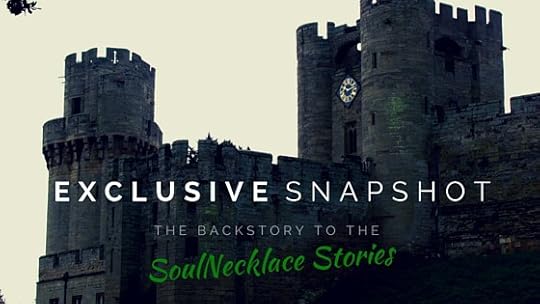
Because nothing really starts (and nothing really ends), my stories are just a snippet of a grander, larger whole.
I plan the larger whole just as I plan the snippet that constitutes the little pieces��that make up��the books.
Today I���m sharing a part of the��backstory of The SoulNecklace Stories.
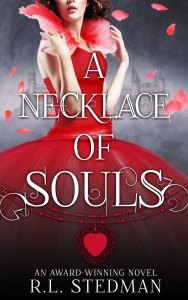
Imagine���
A castle on a hill. A small girl plays a chasing game along its ramparts. Mid-stride, the girl pauses.
���Daddy,��� she stares at the castle tower. ���Look! I see someone!���
As her father grabs her into his arms, his crown falls. ���No, Dana. There���s nobody.���
Peeping over his shoulder, the girl sees: a flash of red at the tower window, and a figure smiling. Her father is wrong. There is someone there.
���She���s waving at me,��� Dana whispers.
Her father hugs her tightly…
My story-world begins in fire and ice. First came the fire, and then the ice, and then, much later, the fire returned. This second time the fire came it changed the world, and my story-world split away from our own Earth. So my story-world, the world of The SoulNecklace Stories, is similar to our own, but is also very different.
With the second fire came the Kamaye, creatures of great evil. Seeing the world, so beautiful, so small, they wanted it for their own. The Kamaye struck a bargain with a powerful emperor: they would ensure he would never die, provided he gave them his eternal obedience.
Of course the emperor��agreed (after all, who wouldn���t want eternal life?) and so the Arm of the Eternal was born. A side note: the emperor should have asked for eternal youth, but being young when he made his choice, he did not consider the effects of age. Youth was all he knew; he took it for granted that it would remain.
Over time the emperor grew old, but did not die. And being old and full of malice and a most efficient ruler, the Arm of the Eternal gradually spread throughout the world. Eventually the entire planet came under his domain.
Except for one small island, far out to the west.
There is a castle on this island, and a tower within the castle and a woman within this tower. The woman wears a necklace, and the necklace protects the castle from the Emperor. This woman is called the Guardian.
There���s one catch.
There���s always a catch.
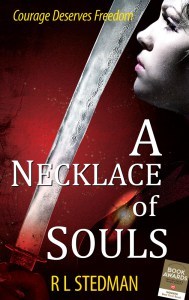
The necklace protects the land by taking her strength and magnifying it, but ���
At the base of the necklace is a ruby. The ruby lies over the wearer���s heart. Over time the ruby becomes the heart; the wearer���s ribs dissolve and her heart dissolves and they grow into the ruby, and the Guardian becomes the necklace. Unfortunately, it���s impossible to live without a heart, so when this happens the body of the Guardian dies. Another Guardian must be found.
Almost always the Guardian comes from the royal family. Almost always she is the oldest daughter of the King.
As The SoulNecklace stories begin, Dana is the daughter of the King.
At the beginning of A Necklace of Souls, Dana wakes from a dream of a necklace and an old woman, dying���

This is only part of the backstory. There is more. Because nothing really starts, and nothing ever ends.

The post An Exclusive Snapshot: The Backstory to the SoulNecklace Stories appeared first on RL Stedman.