Nick Ortner's Blog, page 54
September 22, 2014
ACE Study and Weight Loss
 I want to tell you about a fascinating research study that I came across recently…
Popular culture has long told us that weight is the result of choices we make. For decades we’ve been told that having difficulty with losing weight means we’re eating too much and exercising too little.
Problem is, that’s NOT what recent research is telling us.
Thanks to recent findings, we now know that physical health, including weight, is intricately connected with emotions. Sometimes those emotions can stem from past experiences.
In other words, it’s NEVER about what’s “wrong” with you, it’s about unresolved emotions and what your subconscious mind thinks is safe.
“Huh?”, you’re probably asking yourself right now. “What does that even mean?”
It means that if your subconscious mind wants you to hold onto the weight, that’s exactly what will happen.
Even if you eat less and exercise more, the weight either won’t come off, or won’t stay off.
Let me explain…
.
The Ace Study…
Much of this knowledge began with a huge and very important study called ACE.
It all started in 1985 in a weight loss clinic in San Diego run by Dr. Vincent Felitti, who was mystified by the 50% dropout rate amongst patients who were having great success losing weight.
Hoping to understand why this was happening, he began reviewing his patients’ medical records in more detail, and discovered something that shocked him.
His patients hadn’t gained weight slowly over time, as he’d assumed. Instead, they’d gained weight quickly over a shorter period of time. Often, that weight gain had happened soon after painful experiences had occurred in their lives.
His findings later led to the ACE study, which was conducted by the CDC with over 17,000 participants. The findings highlighted the dramatic impact adverse childhood experiences have on health, including weight, in adulthood.
.
What the Ace Study means for you and your health…
Understanding the dramatic impact of adverse childhood experiences is something that the over 3,000 women Jessica has worked with in her Weight Loss & Body Confidence 7-Week online course have also discovered in their own journeys.
While taking the course, Carol realized that it was her relationship with her mother, not her weight, that needed her attention.
For years, Carol’s job had required her to move to a different state in the U.S. every few years. Through the tapping she did during the course, Carol realized that she gained more weight every time she moved closer to her mother.
Since early childhood, her mother had been what Carol called an “energy vampire.” During some of the tapping exercises in the course, Carol realized that weight had been her “armor.” For decades, her brain and body had been using weight as a shield against her mother’s negative, controlling influence.
After tapping through her anger at her mother, Carol no longer needed weight to protect her. By creating healthier boundaries with her mother, she could protect herself.
Once Carol’s subconscious mind understood that it was safe to let go of the weight, she was able to create a new relationship with her body and with food.
Then, for the first time in her life, weight loss didn’t’ feel like a struggle. Instead, weight began coming off naturally.
The same thing happened for Bobbie, Lena, Tara, and many, many others.
Once they tapped through unresolved emotions, some of which originated in the past, weight loss felt easier than it ever had.
It’s an important reminder that weight is NEVER about what you are or aren’t doing “right.”
As Jessica wrote in her New York Times best-selling book, The Tapping Solution for Weight Loss & Body Confidence…
You are NOT a problem that needs to be solved.
And in Jessica’s course, you can use tapping and other exercises to release emotions that are keeping you stuck in a place where sustainable weight loss seems impossible.
If you’re interested in learning more about this course, which begins on September 29th, you can go here:
http://thetappingsolution.com/weight-loss/Sept-2014.html
So many of Jessica’s students have RAVED about the results they’ve gotten from this course.
Throughout the course (and beyond!), her students have also loved the opportunity to connect with a tribe of supportive, like-minded women.
As one student wrote,
“This group provides something I have been looking for for 54 years – acceptance. It is so powerful, and it helps me accept and love myself. It is safe to ask for help, and NO ONE has told me to try harder or suggested that what I bring to the table is not enough.”
(Please Note: This course is for WOMEN ONLY. Nothing personal, guys, but women’s experiences around weight is often very different from men’s.)
In addition to feeling more confident than ever before, as a result of this course, many of Jessica’s students have been able to make all kinds of positive changes in their lives, from deepening their relationships to starting new careers, and more.
As another woman expressed after completing the course,
“Thank you, Jessica, for tricking us with the title of this course. What I think you were really creating was a movement for empowering women to transform our lives, get our energies flowing, strut our stuff, make the world a better place, and fall in love with life… with the helpful side effects of losing weight and living longer, happier, healthier lives! Am I am so grateful!”
You can learn more here:
http://thetappingsolution.com/weight-loss/Sept-2014.html
Until soon, keep tapping!
Nick Ortner
The post ACE Study and Weight Loss appeared first on The Tapping Solution.
Related posts:
Sneak Peek: The Tapping Solution Weight Loss and Body Confidence Chapter 6
Weight Loss with Tapping in 2014
The Long Term Effects of Stress – A 10 Year Study Reveals the Dangers


September 15, 2014
This restaurant is highly recommended by the owner
 I was reading the other day about a restaurant with a sign outside it that read, “This restaurant is highly recommended by the owner”. It made me chuckle, of course, I love when people have a little fun with themselves and their customers, but it also made me think about the concept of “Standing Out.”
You see, while I’m sure that sign was written in jest, the truth is, the owner DOES and SHOULD recommend his restaurant! All too often, though, we are scared of making such a statement, in fear of seeming egotistical, vain, etc. And there’s no doubt there’s something to be said for that but it feels like we swerve too far into the “modest, don’t brag, push away compliments” side of the equation.
How often has someone complemented you, and you brushed them off? “Oh no, that was nothing…” or simply dropped your head and looked away.
So the question is:
Can you find the balance of being proud of your achievements, while remaining humble? (yes, both are possible!)
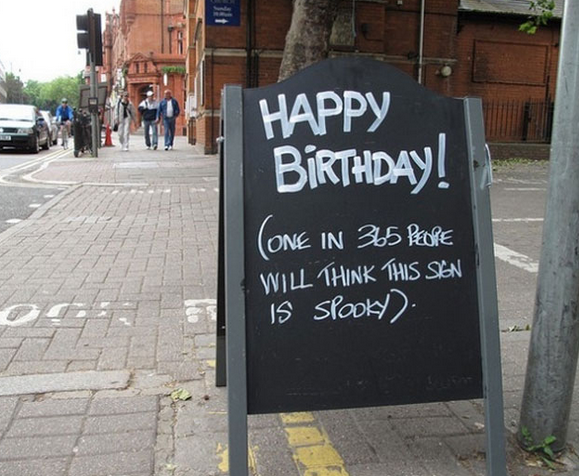
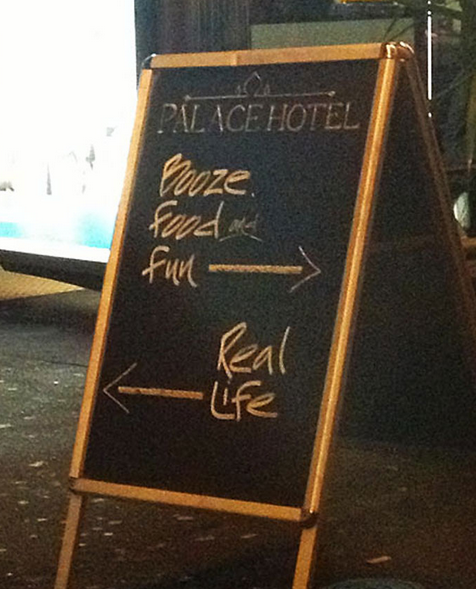
Of accepting a compliment with grace and sincerity? (And being able to give them just as freely) They’re tough, but important questions and while you consider them, check out the signs below for a few more chuckle worthy restaurant signs (and make sure to try out the simple exercise in the PS at the bottom of the page!):


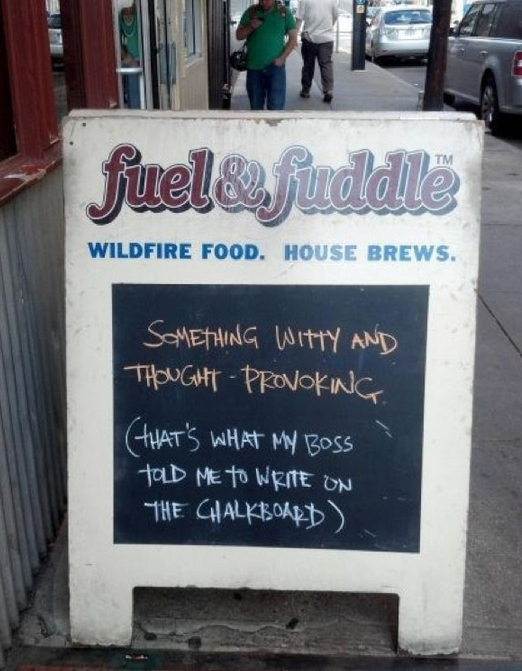

(You have to have seen the movie “Supertroopers” to get this one!)


Until next time…
Keep Tapping!
Nick Ortner
P.S. If you have trouble accepting compliments, or sharing something you’re proud of for fear of being judged, here’s a simple exercise:
Imagine you’re doing the thing that is scaring you, so imagine someone giving you a compliment and feel the feelings in your body, feel the resistance that comes up, see how you would normally act, and simply tap through the points as you do this. Over and over again, imagining what’s happening and tapping, imagining what’s happening and tapping. Watch how the picture changes, pay attention to what else comes up, what other memories, ideas, feelings, and keep tapping until you feel at peace with the situation.
What you’ll often find, if you tap thoroughly enough, is that the vision actually changes, you can SEE yourself accepting the compliment without looking down. You’ve clear the inner resistance, the future vision has changed and then in real life, it too will change!
Try it now. 
The post This restaurant is highly recommended by the owner appeared first on The Tapping Solution.
September 11, 2014
It’s time to laugh…
 When was the last time you had a really good belly laugh, the kind that’s so all-consuming, it starts to “hurt”?
I was playing with my niece and nephews the other day, and was struck by how easily they fall into that deep belly laughter that immediately changes your mood and leaves you feeling great. But as we get older and take on more responsibility – just when we could use a good laugh most – we tend to laugh less often, not more.
When it comes to health and wellness, the benefits of laughter are pretty impressive! It lowers stress, decreases blood pressure, improves memory recall, lowers anxiety, promotes bonding in relationships, decreases inflammation in the body, boosts your body’s immune response, and may even speed up your metabolism (and more!).
But we don’t really need research to know that laughter is good for us. When we laugh, we can feel how good it is for us.
Study after study show that we need laughter – especially those deep belly laughs my niece and nephews are so good at – to be our healthiest, best selves.
Read about the incredible research about laughter, see the BEST giggling in the world from my nephew Lucas, and some VERY funny videos below. :)
One study published in Women’s Health Magazine and conducted at John Hopkins Medical School looked at whether humor can sharpen your thinking. The professor, a psychologist and PhD himself, divided the 98 students in his graduate biostatistics class (I get sleepy just thinking about that class!) into two groups for an exam. Using the identical 57-item exam, he wrote humorous exam instructions for one group, and made sure the other group’s exam instructions were not funny. The group that took the test with humorous instructions scored significantly higher on the exam.
Another study at Linda Loma University found that laughter raised levels of disease-fighting immunoglobulins by 14 percent. A separate study at the University of Maryland Medical Center in Baltimore monitored subjects’ blood flow as they watched a funny movie, and found that laughter increase blood circulation as much as getting on the treadmill (although for a shorter period of time, so it’s not a reason to ditch exercise ). Several studies have also found that laughter increases resistance to physical pain.
But again, we don’t need research to know that laughter is good for us. What we DO need is more laughter!
It’s time to laugh…
Here are 3 YouTube videos and a video of my nephew giggling that I can almost guarantee will make you laugh:
Post by Alex Ortner.
A little animal humor… (watch this a couple of times, because the moment Cooper goes for the ice cream is hysterical – and just watching Cooper wait for the ice cream patiently is great)
Some kid humor… (when monsters attack….)
And here’s perhaps the best one, GUARANTEED to make you laugh. Maybe the best part about laughing is that it’s contagious! Watch this daily for improved health and vitality!
How do you feel now?
If you’ve had a good laugh, notice how your laughter temporarily “washed away” your stress, anxiety, and other negative energy.
Notice how much more relaxed your body feels after laughing.
(I’m sure you’ve noticed all of these things before, but the longer you dwell on positive experiences, the more they benefit you. Dwelling on how good it feels to laugh also helps to “wire” your brain to laugh more, a process I talked about in a recent blog post.)
When we laugh, endorphins – those “feel good” chemicals – are released, creating an immediate feeling of well-being and melting away stress, fear and anxiety.
The funny thing about laughter – haha! – is that, as we get older, we often feel we don’t have time for it. Some of those beliefs may stem from childhood. Were you ever told as a child to stop laughing because you were supposed to clean up or do something “more important”? As a culture, we sometimes see laughter as a waste of time, something that’s taking us away from doing work, cleaning the house, etc.
Over time, though, all of the pressure we put on ourselves to be more productive increases our stress. That stress slows us down, interferes with our relationships, negatively impacts health, and makes us more prone to distraction, less able to focus, and more.
Since the body is so good at flooding our systems with those “feel good” chemicals (which also make us more creative and more productive) when we laugh, the only thing we need to focus on is allowing ourselves to laugh more.
So let’s do some positive tapping on laughter:
Eyebrow: Laughing feels so good!
Side of Eye: I can laugh more and get even more done
Under Eye: It’s so good for my body
Under Nose: It’s so good for my brain
Under Mouth: It’s good for every cell in my body
Collarbone: It’s good for me to let myself laugh more
Under Arm: and be healthier and happier because of it
Top of Head: I don’t have to be so serious
Eyebrow: The more I laugh, the better I feel
Side of Eye: The more I laugh, the more I get done
Under Eye: Laughing makes me healthier and happier
Under Nose: And it feels so good!
Under Mouth: I can take short humor breaks every day
Collarbone: and find something that will make me laugh
Under Arm: and feel happier and healthier right away
Top of Head: The more I laugh, the better I feel inside and out
As you go through your day, try making a habit of taking short “humor breaks.” If you feel guilty making time to laugh or feel like you’re wasting time, do more rounds of tapping, and then watch one funny video on YouTube, or listen to or read something short that makes you laugh. Commit to taking at least one humor break per day for a week, and see how it changes your mood, productivity, health, relationships, and more.
Until then, keep tapping!
Nick Ortner
The post It’s time to laugh… appeared first on The Tapping Solution.
September 9, 2014
Setting Healthy Boundaries
 During my years teaching EFT/Tapping, helping people overcome chronic pain, insomnia, financial challenges, and more, I’ve noticed several underlying issues that most of us struggle with at some point in our journey. One of them is setting boundaries.
Boundaries are tricky because we often don’t know where our boundaries are until someone has crossed them. To add to the overwhelm, when someone does cross a boundary, we’re often taken aback.
Because of the shock we experience in the moment, it can be hard to respond in a healthy way. Instead of speaking up for ourselves or taking some kind of action to protect ourselves, we often freeze.
Why we freeze when a boundary is crossed…
Have you ever looked back on a moment when someone crossed your boundary and wondered why you didn’t say or do something to defend yourself? It’s called the freeze response, and it’s a primal protective response that happens to just about everyone.
The best way to understand the freeze response is by watching animals in the wild. When an animal, like a possum, is attacked its body goes stiff, and by all appearances it seems to be dead.
As a result, its attacker typically loses interest, and abandons pursuit. Once the attacker has left, the possum will stand up and run off to safety. (That’s where the phrase “playing possum” comes from.)
While it may look like the possum is “playing” at looking dead, the freeze response is a physical state of being frozen, unable to move or defend itself other than by freezing.
That’s why, for example, you may feel “frozen,” unable to reply or respond appropriately, if someone suddenly confronts you. That’s your body initiating a freeze response in order to protect you from another attack.
(There are many different ways people “freeze” when they’re experiencing a freeze response; that’s just one example.)
But then afterward, we feel angry and resentful.
Whether or not we experience the freeze response when someone crosses a boundary, we’re often left feeling angry and resentful. In fact, feeling resentful toward a person is a great indication that he or she has crossed your boundary.
Until we process and clear the leftover anger and resentment, it’s almost impossible to set healthy boundaries with people who have crossed them in the past. So let’s do a tapping exercise that allows you to clear those emotions and begin setting healthy boundaries with people.
A tapping process for clearing resentment and setting boundaries…
Here’s a tapping process for clearing resentment from past attempts to create boundaries and set healthy new boundaries with people now:
Think of 5 people in your life who have hurt you, or crossed your boundary in some way. Pick one to start and imagine them standing in front of you. If you could tell them anything or ask them anything about how you felt or what happened between you, what would it be? Imagine yourself doing that – what feelings come up? Anger – hurt – fear?
This is what gets in the way of setting the boundary and where tapping comes in. Tap through all of the feelings that come up, allowing yourself time to imagine their reaction and then notice the next set of feelings that rise to the surface.
Ask yourself, Where else have I felt this way? What does this feeling remind me of?
Tap on those other events as they present themselves. If nothing comes up, that’s okay as well, just continue tapping for the feelings that were coming up when you were expressing your thoughts and feelings to the person you imagined.
Check in with that image again. When you see yourself in front of that person, how does you feel now?
Continue to tap around the remaining feelings that might come up in that conversation. Imagine how they might react to your request – notice if there are feelings coming up for you. When you find them, tap on those feelings. This step could take just a few minutes, or it could take a while.
Remember, you are doing this for yourself. If it takes some time to complete the process, it’s worth it because YOU are worth it! The more time you spend working through the different scenarios, the more natural it will feel when you do ask for what you need or want.
Once you’ve gone through this process for your first imaginary person, use it for the next person on your list. Notice if the next person was easier, or if different feelings came up. You might find that the process moves quickly with some, and more slowly with others.
After a while, setting boundaries and speaking up for what you want will feel more natural. You’ll still encounter people who present a challenge, and when that happens, remember to return to this exercise.
Boundaries are one of the core foundations of emotional health and well-being, as well as good relationships. Once you get comfortable setting healthy ones, you’ll find it’s much easier to transform your relationship with yourself and others in the best possible ways.
Until next time, keep tapping!
Nick Ortner
If you had a shift or breakthrough in doing this process, large or small, share it below!
.

.
The post Setting Healthy Boundaries appeared first on The Tapping Solution.
Related posts:
Goal Setting Q&A Call Recording
August 28, 2014
Beliefs, The Brain and Your Body
 I’ve been reading up on a lot of recent mind-body research lately, and it’s exciting to see the number of studies showing that we can heal our bodies using just our minds. Beliefs, and the emotions they generate, are being linked to chronic pain, allergies, heart disease, and more recently, asthma.
The statistics around asthma are pretty shocking. According to the CDC, around 25 million Americans suffer from the disease, and that number gets bigger each year. It’s also the most common chronic disorder in childhood, impacting more than 7 million children under the age of 18.
Asthma triggers have always been thought to be things like smells – ranging from cigarette smoke to perfume – pollen, and pollution. While all of these things, and more, do contribute to asthma, an interesting new study suggests that beliefs about asthma triggers also impact the way the body responds to potential triggers.
The Power in our Minds…
In the study, published in the Journal of Psychosomatic Research, a group of participants who classified their asthma as “moderate-persistent” were divided into two groups. All were exposed to the same harmless scent. One group was told the scent would help to relieve asthma, while the other group was told the scent could make their asthma worse.
The group that expected the scent to aggravate their asthma experienced significantly more inflammation in their airways. What’s more, that inflammation was still evident 24 hours later. The group that was told the odor may help to alleviate their asthma did not experience any irritation or inflammation from the scent.
Just by believing their asthma would get triggered, the first group not only helped the body to create inflammation, but they also made themselves more vulnerable to future asthma attacks, and even more inflammation. The other group’s belief that the scent was therapeutic protected them from experiencing inflammation. Amazing!
Studies like these don’t mean that asthma is “all in your head.” It’s just the opposite. Research like this means that our beliefs, as well as the emotions they generate, contribute to very real processes in the body. In other words, your body interacts with your beliefs the way it would with a set of instructions, so if you believe a certain scent aggravates your asthma, your body will obey by creating inflammation.
Stop and really think about that for a minute… it’s pretty incredible when you consider how a single belief can kick off an entire process in the body. That process can be potentially harmful, like inflammation, or it can be protective, like boosting immunity or preventing inflammation. All of that, from a single belief!
Beliefs Create Reality…
That’s a lot of power we’re holding in our minds. When we talk about how our beliefs create reality, though, it can be tempting to start harping on what we’re doing “wrong.” We notice that we have a lot of limiting beliefs, and wonder things like, “Does my ashthma mean I haven’t done enough work on myself? Why can’t I let go of my limiting beliefs so I can be healthier and more positive?”
The reality is, we all have limiting beliefs, and we all experience negative emotions. We’re human, and that’s a good thing! Instead of criticizing ourselves, which just adds stress and continues the negative cycle, we want to stop, and start noticing our limiting beliefs. So do that, think about your own limiting beliefs, then write them down in a journal, and tap through them. Beliefs run deep, so they can take a long time to transform, but you’ll be amazed by the positive changes that happen when you do.
As a reminder of how powerful the mind is, let’s do a little tapping exercise around opening up your breath. Even if you don’t have asthma, I urge you to try it.
Start by taking a few deep breaths. Notice how your breath feels, how deeply you’re breathing, and how open or closed your chest and throat feel as you breathe. Now, let’s start tapping:
KC: Even though my breathing is tight and shallow, I deeply and completely love and accept myself.
KC: Even though my breath feels tight and shallow, like there’s only so deep I can go, I love and accept myself fully.
KC: Even though there’s all this constriction in my chest and throat when I breathe, I deeply and completely love and accept myself.
Eyebrow: All this tightness in my breath…
Side of Eye: All this tightness in my chest and throat when I breathe…
Under Eye: My breathing feels so shallow…
Under Nose: My breathing feels so tight…
Under Mouth: All this tightness in my chest when I breathe…
Collarbone: All this tightness in my throat when I breathe…
Under Arm: All this stress constricting my breath…
Top of Head: All this stress making my breathing shallow…
Eyebrow: So much tightness in my chest and throat when I breathe…
Side of Eye: So much shallowness in my breathing…
Under Eye: All this stress keeping me from taking big, deep breaths…
Under Nose: It’s safe to release this stress from my breathing now…
Under Mouth: It’s safe to relax into deeper, bigger breaths now
Collarbone: I don’t need to constrict my breath
Under Arm: I can just let it flow
Top of Head: Letting go of all this tightness and shallowness in my breathing now
Eyebrow: I can breathe more deeply now
Side of Eye: I can take fuller, bigger, more relaxing breaths now
Under Eye: It’s safe to let my body get all the air it needs
Under Nose: It’s safe to relax my breathing now
Under Mouth: It’s safe to open up my breathing now
Collarbone: Letting my breaths flow more naturally and openly
Under Arm: Relaxing and opening up my breathing now
Top of Head: Letting my body get the big, full, deep breaths it needs
You can do a few more rounds, or if you’re ready, go ahead and take a big, deep breath. Notice any changes in your breathing. Is it deeper and fuller? Does it feel more rejuvenating and/or relaxing than usual?
I’m a huge believer in the mind-body connection, but I’m still always shocked by how much deeper and fuller my breathing feels after I tap on opening it up.
Your mind is an amazing thing. Be sure to use it for what you do want, and use tapping to clear out the rest.
Until next time, keep tapping!
Nick Ortner
If you had a shift or breakthrough in doing this process, large or small, share it below!
The post Beliefs, The Brain and Your Body appeared first on The Tapping Solution.
Related posts:
To be Young Again – How Our Beliefs Affect Our Health and Vitality
Sneak Peek: The Tapping Solution Weight Loss and Body Confidence Chapter 6
How habits are wired in the brain…
August 27, 2014
Struggling to Feel Positive
 Imagine that you’re having an incredible day (or maybe you already are and don’t have to imagine )… It’s one of those days when you feel your best, and everything is going smoothly.
You come home at the end of the day feeling great, energized by all the positive things that have happened in just this one day. But then, after dinner, you open your mail, and find a bill that’s much, much higher than you ever could have imagined. Suddenly, you’re in a state of panic, full of fear and anxiety.
Within seconds, the one bad experience of your day – getting an enormous bill – has overpowered hours and hours of positive experiences.
The truth is, we’ve all had some, if not several, versions of that day. The question is, how can a single negative experience so easily overpower an entire day of positive ones?
In a culture that encourages us to be, or at least appear, positive, it’s something a lot of us don’t feel comfortable talking about, but the truth is, feeling positive doesn’t always come naturally. In fact, more often than not, it’s a LOT of work! Many of the most positive people I know are that way because they constantly work on themselves.
They use tapping, meditation, yoga – often all of those combined (and more!) – to clear the negative emotions they naturally experience. Because of the time and attention they dedicate to their emotional well-being, they’re then able to feel more positive more often.
Before we look at how to do that, it’s important to understand why it’s so much easier for us to focus on one bad experience instead of multiple positive ones.
It’s what neuropsychologist and New York Times best-selling author Rick Hanson, Ph.D. calls the brain’s “negativity bias.” In a nutshell, the “negativity bias” began as protective mechanism, a mental “habit” that helped us survive. Because this bias started so long ago, it’s become deeply ingrained in the human brain. In his book, “Hardwiring Happiness”, Hanson describes it this way:
“Our ancestors could make two kinds of mistakes: (1) thinking there was a tiger in the bushes when there wasn’t one, and (2) thinking there was no tiger in the bushes when there actually was one. The cost of the first mistake was needless anxiety, while the cost of the second one was death. Consequently, we evolved to make the first mistake a thousand times to avoid making the second mistake even once… the default setting of the brain is to overestimate threats, underestimate opportunities, and underestimate resources both for coping with threats and for fulfilling opportunities. Then we update these beliefs with information that confirms them, while ignoring or rejecting information that doesn’t. There are even regions in the amygdala specifically designed to prevent the unlearning of fear, especially from childhood experiences. As a result, we end up preoccupied by threats that are actually smaller or more manageable than we’d feared, while overlooking opportunities that are actually greater than we’d hoped for. In effect, we’ve got a brain that’s prone to ‘paper tiger paranoia’.”
Keep in mind that when we’re talking about the “negativity bias,” and how much work it takes to be positive, we’re talking about feeling positive, rather than just positive thinking. When we’re focused on positive thinking, we might think, “Ugh, it’s been raining all day, and it’s making me cranky,” but then catch ourselves being negative, and remind ourselves to be grateful for the rain. In other words, positive thinking, although valuable, is often forced. It requires effort.
We have a very different experience when we’re feeling positive. When we’re in an organically positive state of mind, without making an effort, we might immediately appreciate how beautiful the rain is, and see it as a cue to relax. In that organically positive state, positive experiences stand a much better chance of winning out against negative ones.
When we’re stuck in “paper tiger paranoia,” the brain’s negativity bias, we’re especially prone to what Hanson calls the “special power of fear.” It’s that experience we had earlier, where one minute you’re feeling great, confident about your work, relationships, etc., and the next you get a bill that’s much bigger than you ever dreamt it could be.
Suddenly your entire life, which just a moment ago seemed to be humming along nicely, now feels threatening and unsafe.
Because the “negativity bias” has become so deeply ingrained in the brain, overcoming it takes conscious attention and dedication.
Remember, though, you’re not alone. You can also stop wondering what’s wrong with you, why YOU have such a hard time being positive. We’re ALL this way! Over millions of years, the human brain has been wired to emphasize the negative. This isn’t your problem or your fault, it’s something we ALL have to work to overcome. Also keep in mind that our goal here isn’t to stop feeling negative emotions – that wouldn’t even be healthy! – but to create more balance, so we can let in more positive experiences more often.
So let’s get started by doing some tapping on overcoming our negativity bias:
KC: Even though I have all these negative thoughts and emotions, and they make it so hard to feel positive, I completely and deeply love and accept myself.
KC: Even though I have all these negative thoughts and emotions, and they make it so hard to feel positive, I completely and deeply love and accept myself.
KC: Even though I have all these negative thoughts and emotions, and they make it so hard to feel positive, I completely and deeply love and accept myself.
Eyebrow: All these negative thoughts…
Side of Eye: all these negative emotions…
Under Eye: so hard to stop them once they start.
Under Nose: But I’m not alone!
Under Mouth: It’s how my brain is wired
Collarbone: and that makes it easier to feel negative
Under Arm: and to feel fear and anxiety
Top of Head: there’s nothing wrong with me
Eyebrow: it’s how my brain is wired
Side of Eye: But I can start to change it
Under Eye: I can tell my brain that it’s ok to relax.
Under Nose: That I’m safe now
Under Mouth: There really is no tiger in the bushes
Collarbone: It’s safe to feel positive
Under Arm: It’s safe to relax and notice what is working
Top of Head: It’s safe to feel safe
Eyebrow: I can relax now
Side of Eye: My brain and body don’t need to be on high alert
Under Eye: It’s safe to relax now
Under Nose: I can handle the challenges that come my way
Under Mouth: I don’t need to panic
Collarbone: It’s safe to feel good now
Under Arm: It’s safe to relax now
Top of Head: Letting go of all this negativity now
Keep tapping on this, especially when you notice yourself being overcome by negative thoughts and emotions. It takes time to override the negativity bias, but the positive feeling you’ll get as you make progress is well worth it!
Until next time… keep tapping!
Nick Ortner
If you had a shift or breakthrough in doing this process, large or small, share it below!
The post Struggling to Feel Positive appeared first on The Tapping Solution.
Related posts:
Feel it, even it if it hurts…
Stressed about the World
Tapping Script – “I Refuse to Forgive”
August 19, 2014
To be Young Again – How Our Beliefs Affect Our Health and Vitality
 I was flipping through the channels the other day and saw that the movie “Big” was on. I started watching and ended up being mesmerized for a full hour!
It had been years since I’d seen it, and it got me thinking about our beliefs about age, and how they affect health and vitality.
As a culture, we define “young” so narrowly that we tend to stop calling ourselves young relatively early.
In recent years I’ve noticed more and more friends in their thirties and forties joke about “not being that young” any more. That’s crazy, especially at a time when life span is increasing faster than ever!
(According to The National Institute on Aging, the number of people who live to 100 years old and beyond is expected to increase 10-fold globally between 2010 and 2050!)
So what if the only obstacle to feeling young again is overcoming our limiting beliefs about age?
.
This Research Study on How Our Beliefs About Age Affect Health and Vitality is Pretty Telling…
In his latest book, You Are The Placebo, Joe Dispenza shares a research study that highlights the importance of beliefs about age. In that study, eight men in their 70s and 80s attended a 5-day retreat organized by Harvard University at a monastery in New Hampshire.
Throughout the retreat, the men were instructed to pretend that it was 22 years earlier. There were surrounded by old issues of Life Magazine and Saturday Evening Post, TV shows from the late 1950s, even the radio was playing musicians from that era, like Nat King Cole and Perry Como. The men were also asked to discuss current events from that time, like Fidel Castro’s sudden rise to power in Cuba, Eisenhower’s historic meeting with Nikita Khrushchev, home runs by Mickey Mantle, etc.
At the end of the retreat, the researchers took the same physiological measurements of the men that they’d taken at the beginning of the study: height, weight, gait, etc. Amazingly, the men had grown “taller” and their weight, hearing, eyesight, grip strength and mental cognition had all improved. During the five days of the retreat, their posture had also straightened, and their joints had become more flexible. Some of the men were even playing touch football by the end of the five days! Wow!
So imagine that just by believing you’re young, your body, energy level, and emotional state could change…
For a little inspiration, take a couple of minutes to watch one of the most playful scenes ever, the piano scene from “Big”:
.
Now, Let’s Take A Look At Your Beliefs About Age…
We’re going to do a quick exercise to explore your own beliefs about age.
First, grab a piece of paper, and then read each of these sentences to yourself OUT LOUD. As you read each one, write down how you feel emotionally and in your body. Make a note of any resistance – or positive emotions – you feel as you read each one:
I am young.
My body is young.
I can be as healthy and energetic as I used to be.
I’m not that young any more.
I’m too old to call myself young.
My body can’t do what it used to do.
I will never be young again.
I feel old.
Your experience reading those aloud should give you some clues about what you really believe about your age. Be sure to tap through any limiting beliefs you discover. (If you’re new to tapping, learn the basics here)
As we’ve seen, positive beliefs as well as limiting negative beliefs can become self-fulfilling prophecies. As just one example, I often notice how people who believe they’re “not young any more” begin to change their behavior without even realizing it. For example, they might injure themselves while playing sports, and decide the injury was a result of their age, rather than from falling down.
Because of their limiting belief that age is making their body more prone to injury, they then begin exercising less often and less vigorously. As a result of those changes in their behavior, they have less energy and their body grows even weaker. Not realizing how much less active they’ve become physically, they then blame decreases in their physical strength and vitality on age, which confirms that they’re “too old” for vigorous exercise. Their health, strength and energy levels continue to decline. And the cycle continues.
.
Let’s Tap in Some Positive Beliefs About Our Age…
The same idea applies to taking on positive beliefs about age and youth, which is what those eight men experienced during their five-day retreat, so let’s do some tapping now on overcoming limiting beliefs around age. Feel free to use your own words, if mine don’t ring true for you:
KC: Even though I have all these limiting beliefs around age, and what it looks and feels like to be young, I deeply and completely love and accept myself.
KC: Even though I have all these limiting beliefs around age, and what it looks and feels like to be young, I deeply and completely love and accept myself.
KC: Even though I have all these limiting beliefs around age, and what it looks and feels like to be young, I deeply and completely love and accept myself.
Eyebrow: All these beliefs about age…
Side of Eye: I don’t feel as young as I used to
Under Eye: I have responsibilities now, and they’ve taken a toll over the years
Under Nose: I don’t feel as young as I used to
Under Mouth: and I don’t look as young as I used to
Collarbone: It’s hard to think of myself as young again
Under Arm: All these limiting beliefs about what it looks and feels like to be young
Top of Head: They run so deep
Eyebrow: They feel so true
Side of Eye: It’s hard thinking of myself as young again
Under Eye: It’s hard to imagine I could feel as young as I used to
Under Nose: I don’t have time to play like I used to
Under Mouth: I have all these responsibilities and they’ve taken a toll over time
Collarbone: It’s too late for me to be young again
Under Arm: I can’t turn back time
Top of Head: My age is my age, and that’s all there is to it
Eyebrow: But what if it’s just a number?
Side of Eye: What if I started to play, laugh and have fun more often?
Under Eye: What if I began moving my body more often?
Under Nose: It would be fun to feel young again
Under Mouth: It would be fun to have more energy
Collarbone: Maybe I could make more time for fun
Under Arm: And for doing things that make me feel younger
Top of Head: And then feel younger physically and mentally as a result
Take a deep breath, and keep tapping on your beliefs about your age and what means it to be “young.” You can always be young again!
Until next time… keep tapping!
Nick Ortner
The post To be Young Again – How Our Beliefs Affect Our Health and Vitality appeared first on The Tapping Solution.
August 14, 2014
Thoughts on Robin Williams
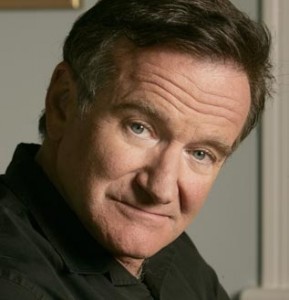 Like many of you, I was shocked and saddened by the news of Robin Williams’ tragic passing.
He was a one-of-a-kind, larger-than-life talent who gave so much to the world. To say that he will be missed is a gross understatement.
His absence is made even more heartbreaking by the fact that we lost him to depression. In spite of his amazing talent and success, he was clearly suffering.
Although he was never diagnosed with clinical depression, he did share that he would “get bummed” and feel very sad for periods of time. He also struggled with alcoholism and substance abuse for many years.
.
Far too many people are living with severe, chronic depression every day.
According to a 2012 study by the National Institute of Mental Health, major depression, which is defined as symptoms that interfere with your ability to live your life, eat, work, sleep, and enjoy life for two weeks or longer, impacts approximately 7% of the adult US population.
Traditional therapies, which include anti-depressants, psychotherapy, and more, have had some success. Still, though, the World Health Organization estimates that 350 million people worldwide are suffering from depression.
It’s a difficult disease, often made worse by cultural stigma and confusion around what it really is. In casual conversation, we often hear phrases like “how depressing” and “I’m just depressed,” and give them little thought.
On a broader cultural level, we tend to have little patience for people who truly are suffering from severe, chronic depression, wishing they would get over it and move on. Too often, people who live with severe depression end up feeling isolated and alone, with no way out. .
.
Using EFT Tapping for Depression – The Results of a Licensed Therapist…
My friend Catherine Ewing, LCSW, MDiv, MSW, a licensed therapist with whom I’ve had the honor to work here in Newtown, CT since the Sandy Hook school shooting in 2012, watched this pattern play out in her clients over many years.
As she wrote in an article on depression, published by PBS, for years she worried that her traditional training as a psychotherapist wasn’t getting to the root of her clients’ depression. (You can read her article here.)
Before using EFT in her practice, she shares, “I often felt as though I was letting my clients down. Although we made some positive changes in attitude and behavior, I sensed that we were not unearthing the real roots of their depression. Changes took place on a superficial level; healing was not happening at a level that allowed clients to experience deeply satisfying and joyful lives.” In 2006, Catherine began using EFT in her practice.
Since then, she’s been able to use tapping to help her clients release what is sometimes referred to as “cellular memory”, which is basically the result of events, traumas, memories that get stuck in the body, and then contribute to depression (and other conditions).
Because tapping allows people to access the unconscious mind, which is responsible for 93 – 97% of our thoughts, feelings, and behaviors, it’s effective at helping people overcome depression of all kinds, including depression related to events that happened in very early childhood, even before or during birth. It’s also a powerful way to release the emotional charge of traumatic events that lead to depression, and without being re-traumatized. .
.
Let’s Open Up The Discussion About Tapping and Other Alternative Therapies…
While Catherine’s success treating depression with tapping is exciting, her results are by no means unusual. A growing number of therapists are integrating tapping into their practice, and getting similar results. By bringing both the physical body and the mind into the healing process using tapping, we can let go of the physical and emotional energy that contributes to depression, that can’t be treated with more conventional therapies.
I’m not claiming that tapping would have prevented Robin Williams’ death, but I am saying that it’s time that we open up the discussion around depression to include new therapies like tapping, which is producing better results than many traditional therapies, and with zero side effects.
For many therapists like Catherine Ewing, tapping is also proving more effective than other alternatives like hypnotherapy, guided imagery, and other alternative techniques designed to access the unconscious mind. .
.
Resources for Dealing with Depression…
 If you or someone you know is suffering from depression, I urge you to forward this post on to them, and to support them in seeking help. A great starting point is the list of EFT practitioners on our website, which you can access here:
http://thetappingsolution.com/eft-practitioners/
If you’re battling something like depression, make sure to reach out to someone with experience on the topic.
Also check with your current healthcare practitioner.
And, if you or someone you love is contemplating suicide, reach out immediately here:
http://www.suicidepreventionlifeline.org/
Or call 24 hours a day, 7 days a week: 1-800-273-8255 International:
http://www.suicide.org/international-suicide-hotlines.html
We have also pulled some resources from our Tapping Insiders Club on using tapping for depression here: Depression: Learning the Signs of Depression and What Actions to Take with Carol Look:
http://www.thetappingsolution.com/depression-learning-signs-depression-actions-take-carol-look/
Using Tapping Effectively for Depression Relief with Steve Wells:
http://www.thetappingsolution.com/using-tapping-effectively-depression-relief-steve-wells/ .
.
There is Hope…
I think the most important message here is that there IS hope for treating severe depression. Many of the best-known and most common therapies haven’t provided the level of relief people are seeking, but there are new options out there, like tapping, that are allowing people to step out of the incredible darkness of depression and live rewarding and fulfilling lives.
There IS hope, and I hope you’ll join me in spreading it, and this post, far and wide so that everyone who needs support in overcoming depression can get relief before it’s too late.
Robin Williams, may you rest in peace.
You’ll be loved, always.
Nick Ortner .
.
P.S. I know I’m not alone in expressing how much I’ve always loved Robin Williams’ range. From his inspiring performances in Good Will Hunting, Dead Poets Society, and Hook, which I remember watching many times growing up, to his many hilarious roles – Mrs. Doubtfire, The Birdcage, Patch Adams, his voice performance as the genie in Aladdin (a role he apparently improvised, wow!).
The best way I can think of to honor him is by appreciating his incredible talent. On that note, I wanted to share a few of my favorite Robin Williams clips: Here’s a mix of some of his best moments:
I think Robin Williams could have used a Patch Adams in his life:
The moving park scene from Good Will Hunting
A beautiful speech from Dead Poets Society – reminding us for the need for creativity and passion in our lives
When the Genie first appears in Aladdin
Fly Free Robin! You’re Peter Pan once again…
.
What’s your favorite movie/clip/performance of Robbins Williams? Share by posting below.
.
 .
.
The post Thoughts on Robin Williams appeared first on The Tapping Solution.
August 11, 2014
Stressed about the World
 “I’m Stressed Out about the World” – Most of us would be well served to never watch the news again. The amount of negativity, fear, and plain misinformation is terrible. At the same time, burying your head in the sand and not having any idea what’s going on in the world might not be the best move either. So what to do? Is there a way to be informed, and to focus on the issues that matter, without getting so caught up that we’re affected in a negative way?
I believe there is—and that EFT can help. The reality is that if we find ourselves stressed out about the planet, politics, wars, and other issues that matter to us, we are damaging our bodies and becoming less resourceful.
Getting upset about an important environmental issue doesn’t do anything about the issue itself. Many of us have a false belief that nothing will change unless we become upset. The reality, however, is that we help effect change by positive action—not by being stressed out about the issue.
I witnessed this reality just a few weeks ago, through a close friend who cares deeply about animals. She’d become aware of a neighbor who was mistreating many dogs and a horse. She had called the proper authorities, but for certain legal reasons, they were powerless to do anything.
Together, we tapped through the emotions surrounding the situation: her anger, feelings of powerlessness (a common theme with world issues!), sadness for the animals, and so forth.
When we were done, she felt more at peace and was able to look at what was happening from a new perspective. She still continued to care, but she was no longer miserable while she was doing it. That difference, that small distinction, is massive. We’ll see specifically in the chapter on relationships how, when we change our beliefs, our state, and our approach, people around us change. The same thing is true when it comes to changing the world.
#TAPPING SCRIPT: What’s Stressing You Out Most?
Take a moment to think about what’s going on in the world that’s stressing you out. Then let’s do some tapping to relieve it.
Karate Chop: Even though I’m stressed out about [fill in the blank with your world issue], I choose to relax now.
Karate Chop: Even though I can’t stop thinking about [fill in the blank with your world issue], I deeply and completely accept myself.
Karate Chop: Even though I’m really worried about [fill in the blank with your world issue], I choose to feel safe now.
Eyebrow: I’m so stressed out about this . . .
Side of Eye: It’s not right . . .
Under Eye: All these problems in the world . . .
Under Nose: They stress me out . . .
Chin: All this worry . . .
Collarbone: All this anxiety . . .
Under Arm: About this problem . . .
Top of Head: And about the world.
Eyebrow: I need to worry about these problems . . .
Side of Eye: If I don’t worry about these problems, who will?
Under Eye: I have to worry . . .
Under Nose: All this worry . . .
Chin: All this stress . . .
Collarbone: Nothing will change unless I worry . . .
Under Arm: Nothing will change unless I stress . . .
Top of Head: All this worry . . .
Keep tapping until you find some relief, and then let’s do some positive rounds:
Eyebrow: I choose to relax . . .
Side of Eye: I choose to let go . . .
Under Eye: I can relax and still effect change . . .
Under Nose: I can let go of these negative emotions . . .
Chin: And still care . . .
Collarbone: I don’t have to be stressed out to care . . .
Under Arm: I don’t have to be stressed out to effect change . . .
Top of Head: Letting it all go.
How do you feel after that round of tapping? Please share this tapping script with someone you know who might be feeling overwhelmed with something going on in their world! – Nick
The post Stressed about the World appeared first on The Tapping Solution.
Related posts:
The Real Deal About Food, Stress, Tapping and more…
What a Year…Thank You…
The ONE most important thing I’ve learned…
July 23, 2014
How habits are wired in the brain…
Let’s talk about CHANGE. Something most of us want, in some aspects of our life or other, yet struggle so much to make it happen.
How Our Habits Literally “Wire” Together In Our Brains…
 You’ve probably heard of the statement regarding the brain that, “Neurons that fire together…wire together…”
Attributed to Donald Hebb, a neuropsychologist, it means that every experience we have, and its associated feelings, emotions, physical experiences and so forth, become embedded in our brains, and the more an action is repeated, the stronger the connection between these “neurons” or brain cells.
Thus a professional golfer who has swung a golf club tens if not hundreds of thousands of times can do it without thinking, whereas if you’ve never played golf, your first couple (or thousand!) swings might be a little…uh… “interesting”.
The same patterns apply to our daily experiences. We establish patterns and routines, some simple like brushing our teeth and others more “complex” (yet still simple in many ways!), like how we interact with people in our lives, how we react in certain situations, the emotional states we tend to live in, etc.
A Simple Exercise to Interrupt Old, Unwanted Patterns With Tapping…
 The tapping processes are designed to interrupt these old patterns, release the stagnant emotional memories, energy and brain patterns and establish new ones. Today’s exercise is designed to do the same thing!
So here’s what you’re going to do, pick a single day where you’re going to “practice” this approach. The day before, identify the things you want to do the next day, but you think… “If past experience tells me anything, it tells me I’m going to “want” to do these things, but I’ll probably put them off” for example, items on this list might include:
Exercising
Meditating
Being more focused at work
Skipping Facebook for a day
Spending more time with your kids
Working on your creative passions
Being more patient with “X”
We’re looking for the things that at the end of day, on many nights, you say to yourself… “Shoot, another day when I didn’t do… “X”!
Another day I said I was going to exercise and I didn’t! Another day I said I was going to be more patient and I wasn’t!” (And take a look at what you do every night as you review your day, you reinforce these patterns of “NOT” doing stuff! More brain neurons firing and wiring together, making the experience more likely to happen again).
Your Job Is Simple, Interrupt Old Patterns…
 OK, so you have your list (and you don’t have to be “perfect” – you can just pick one or two items), and your day begins. Your job for today, just this one day is to practice this, is to INTERRUPT old patterns, using tapping, and put new patterns in place.
Let me give you an example of how I used this the other day.
I’ve wanted to meditate in the morning more often, even for just 10 minutes, to set a clear intention for my day and start it off right. And I’ve really been wanting to change the pattern of the way I’ve been waking up, which is checking my email right away, sometimes even just minutes after waking up! Things have been so busy and there’s always so many exciting things going on that I’ve gotten into this pattern of checking emails.
So what I did last night is set the intention to change this pattern and then when I woke up this morning…here’s what happened… (And it’s likely going to happen to you, so pay attention to the details of the experience)!
I had the mental pattern in place to check emails as soon as I woke up…it had become routine…so when I felt that pull (it’s weird, if you pay close attention to it, it almost feels like a craving!), to check my email, I stopped and did just a few minutes of tapping.
Here’s An Example of How to Tap For This Exercise…
Karate Chop: Even though I want to check my email right now… I deeply and completely love and accept myself…
Karate Chop: Even though I have this old pattern of checking email… I choose to behave differently right now…
Karate Chop: Even though part of me wants to check email, it’s just what I do, it’s who I am, I choose to change this pattern and meditate now…
Eyebrow: Part of me wants to check email…
Side of the Eye: I’ve got this old pattern…
Under the Eye: That wants to keep running…
Under the Nose: This old pattern…
Under the Mouth: Of checking email…
Collarbone: And I choose to let it go now…
Under the Arm: It’s safe to make a different choice…
Top of the Head: And meditate now…
This Simple Tapping Exercise Can Change An Unwanted Pattern…
That’s it, nice and simple! You can obviously do more rounds, but sometimes just one round can be enough to take the “edge” off the old pattern and establish a new one. So play with this, use it throughout the day. Catch your brain when it’s looking to run the same patterns, and give it a different option.
And for me this morning, it worked! I sat down and meditated for ten minutes and it really helped propel me forward into a more productive and focused day. As evidence by my writing this email for you. LOL!
Try it today, and comment on your experience below!
Until next time…
Keep Tapping!
Nick Ortner
.
What did you think of the exercise? Shares your thoughts and experiences by commenting below!
.
.
The post How habits are wired in the brain… appeared first on The Tapping Solution.
Related posts:
The brink of a meltdown… (Tapping for stress)