Nick Ortner's Blog, page 2
May 2, 2025
4 Sneaky Patterns Keeping You Stuck (That Aren’t Your Fault)
Ever find yourself thinking, “Why do I keep doing this to myself? Why do I keep falling into the same old bad habits over and over again? What is wrong with me?”
After working with thousands of people, I’ve noticed something fascinating: what we call “bad habits” are actually sophisticated survival mechanisms running on autopilot. Your nervous system created these patterns to keep you “safe” – even when that safety comes at the cost of your growth, connection, and fulfillment.
The kicker? These patterns operate mostly beneath your conscious awareness. They’re not decisions you’re actively making, and they’re not personal flaws; they’re automatic responses your brain has perfected over time.
Let’s explore four fundamental patterns that might be keeping you stuck (and how to finally break free).
1. The Protector Pattern: “I can never fully relax. There’s always something to worry about”I used to think constant worrying was just “being responsible.” But what’s actually happening is that our brain’s security system—which evolved to keep us safe from saber-toothed tigers—is working overtime in a world where the “threats” are usually just everyday stressors.
It’s like having a state-of-the-art home security system that goes off when a leaf blows by the window or the neighbor’s cat walks across your yard. Valuable when there’s actual danger, but exhausting when it’s blaring all the time.
How to spot this pattern:
You find yourself worrying even when things are going wellYou have trouble being present because you’re scanning for what might go wrongYou notice physical tension that never fully releasesYou struggle with sleep as your brain refuses to go “off duty”The breakthrough insight:
This pattern is actually one of the quickest to shift because it’s so physical. When you give your nervous system clear signals of safety, it can begin to stand down from high alert. The key is consistency – each time you interrupt the worry cycle, you’re teaching your brain that constant vigilance isn’t necessary for survival.
I used this approach last week before an important meeting. Instead of letting myself get worked up in nerves, I took a few minutes to do some Tapping and remind my body and brain that I was actually safe in that moment. By sending calming signals to my amygdala, and reminding myself that no immediate danger was present, I felt my shoulders drop and my breathing deepen. The meeting went fine – and I didn’t waste unnecessary time spent in stress mode beforehand.
2. The Pleaser Pattern: “I’m afraid if I say what I really think or need, people won’t like me anymore”Let’s consider Sarah, who is an incredible graphic designer. In team meetings, she would nod along when her boss suggested design changes she knew wouldn’t work. At home, she’d spend extra hours “fixing” these misguided directions while still following them enough to keep everyone happy.
Why? Because disagreeing might make her boss think she was difficult or not a team player. And somewhere deep in her brain, being seen as agreeable felt more important than standing up for her expertise.
How to spot this pattern:
You find it nearly impossible to say no, even when you’re overwhelmedYou feel resentment that builds up but rarely gets expressed directlyYou sense that others don’t really know the “real you”You constantly bite your tongue, holding back what you really think or feelThe breakthrough insight:
The Pleaser pattern is deeply rooted in your nervous system’s need for connection and safety. What’s fascinating is that most of us create an impossible equation: “either I please others OR I’ll be rejected.” But what if both your needs and others’ needs could matter? What if you could express yourself fully and stay connected with those around you? What if authenticity actually created deeper connection and meaningful, beneficial outcomes for everyone included?
Let’s return to the example above. When Sarah finally gathered the courage to diplomatically explain why certain design choices wouldn’t achieve the marketing goals, her boss was actually impressed by her expertise rather than offended. What Sarah feared would damage her relationship with her team ended up earning her more respect. The insight that changed everything for her was realizing that speaking up skillfully was actually part of the job they valued her for.
Here’s a little secret that took me years to figure out: Perfectionism isn’t about having high standards—it’s about armor. It’s saying, “If I do everything perfectly, no one can criticize me, reject me, or see my fundamental flaws.”
How to spot this pattern:
You procrastinate (because if you can’t do it perfectly, why even start?)You find it difficult to celebrate accomplishments before moving to the next goalYou’re incredibly harsh with yourself in ways you would never be with othersYou experience physical symptoms of stress and anxiety, especially when facing evaluationThe breakthrough insight:
Perfectionism is a deeply ingrained protective pattern, but it responds remarkably well to a simple reframing: What if excellence doesn’t require perfection? What if your humanity—including your mistakes—is actually your strength, not your weakness?
I used this approach when working on this very blog post. Instead of writing and rewriting for days, I gave myself permission to share my insights even with their imperfections. It helped me finish this post faster than I otherwise would have —and ironically, I think it’s more authentic and helpful this way. The question that can change everything is this: “What if good enough is actually… good enough?”
4. The Procrastinator Pattern: “I’ll do it tomorrow when I’m more prepared/motivated/energetic.”Let me share something I’ve learned the hard way: Procrastination isn’t about laziness or poor time management. It’s an emotional regulation strategy—a way to temporarily escape the uncomfortable feelings that certain tasks trigger.
How to spot this pattern:
You start strong on projects but struggle to follow throughYou work best under last-minute pressureYou get stuck in analysis paralysis, gathering more information rather than taking actionYou feel suddenly tired when it’s time to start important tasksThe breakthrough insight:
Breaking free from procrastination begins with a simple but powerful recognition: it’s not about the task itself—it’s about the feelings the task brings up. Once you identify exactly what makes you uncomfortable (confusion about where to start, fear of failure, feeling overwhelmed), you can address those feelings directly instead of avoiding the task (Tapping is a great tool to do just that, by the way!).
Perhaps you have a task you don’t feel confident or inspired to do – like preparing your taxes or filling out a complicated form. It’s easy to avoid it and put it off forever. But if you finally just sit down and acknowledge your specific fears—”I’m confused about where to start and afraid of making a mistake”—something shifts. The emotional charge will decrease enough that you can open the form, think clearly, and problem solve. You might not finish it all at once, but you’ll be able to figure it out with a clear and open mind.
Breaking Free: The Simple Truth About Lasting ChangeWhat makes these patterns so challenging is that they operate largely outside conscious awareness. They’re not choices you’re actively making; they’re automatic responses your nervous system has perfected.
The key to creating lasting change is working with your nervous system, not against it.
Tapping (or Emotional Freedom Techniques – EFT) is particularly effective for this because it combines physical intervention (tapping on acupressure points) with focused awareness on the thought, belief, or emotion holding us back, effectively creating a “pattern interrupt” that allows your brain to form new neural pathways and move past long-ingrained blocks.
In The Tapping Solution App, we have specific guided sessions that help you address these patterns, allowing you to rewire these responses in just a few minutes per day. When you consistently give your nervous system new information, these old patterns naturally begin to shift.
Here are some sessions you might check out in the app:
The Protector Pattern: Help Me Stop OverthinkingThe Pleaser Pattern: Becoming More Lovingly Assertive Sleep ProgrammingThe Perfectionist Pattern: I Release the Pressure to Be Perfect Quick TapThe Procrastinator Pattern: Motivate Me to… CategoryWhich of these patterns resonates most with you? Share in the comments—sometimes just naming the pattern is the first step to freedom!
Until next time… Keep Tapping!
Nick Ortner
The post 4 Sneaky Patterns Keeping You Stuck (That Aren’t Your Fault) appeared first on The Tapping Solution.
Related posts: Research: Tapping Proves Effective for Reducing Breast Cancer Treatment Side Effects
 What If… Everything Works Out?
 Empowering Words of Wisdom from Jack Canfield to Help You Manifest Your Dreams


12 Red Flags that Indicate Your Inner Critic Has Taken Over (And How to Reclaim Your Power)
Ever catch yourself saying things to yourself that you’d never dream of saying to a friend?
What fascinates me after working with thousands of people is how sophisticated our inner critics have become. They don’t just show up as obvious bullying thoughts. Instead, they disguise themselves as helpful advisors, protective friends, and pragmatic realists—making them incredibly difficult to identify and challenge.
The most powerful inner critics don’t sound mean at all. They sound reasonable. They sound protective. They even sound loving. And that’s what makes them so dangerous.
The most dangerous inner critic isn’t the one that obviously bullies you. It’s the one that sounds so reasonable you don’t even recognize it as self-sabotage.
Your inner critic isn’t just an annoying voice—it’s a sophisticated survival mechanism that your nervous system developed to try to keep you safe, accepted, and secure. The problem is, it’s operating on outdated information and causing more harm than good.
Let’s explore 12 subtle yet powerful red flags that indicate your inner critic has taken over (and then I’ll show you how to reclaim your power).
1. You’re a master of disaster scenarios“What if I bomb this presentation and everyone thinks I’m incompetent?” “What if this headache is something serious?” “What if I put myself out there and get rejected?”
This one is particularly sneaky because it disguises itself as “just being prepared.” You think you’re protecting yourself by mentally rehearsing disasters.
What’s actually happening? Your brain’s threat detection system is working overtime, keeping your nervous system in a state of high alert and exhausting you mentally and physically—all while rarely providing any real, sustainable benefit.
Next time you catch yourself in a “what if” spiral, ask: “Is this helping me prepare, or just making me anxious?”
2. Your achievements have a 5-second expiration dateYou finish a project, reach a goal, or receive recognition… and within moments, your mind has already moved on to what needs improvement or what challenge comes next. The sense of accomplishment barely registers before it’s replaced by new pressure.
This masquerades as ambition and drive, but it’s actually your inner critic ensuring you never feel “enough.” It creates a treadmill where you’re constantly striving but never arriving.
Try this: The next time you accomplish something (even something small), consciously savor it for at least 30 seconds before moving on. Your brain needs time to register the win!
3. Compliments bounce off, criticism sticks like glueSomeone points out something you did well, and you immediately deflect: “Oh, it was nothing” or “I could have done better.” But when you receive even minor criticism, it echoes in your mind for days or weeks.
This seems like modesty, but it’s actually your inner critic maintaining a negative self-image by systematically filtering out positive feedback while amplifying anything negative.
The pattern is especially clear when you notice how differently you weigh positive versus negative feedback—as if they’re on completely different scales.
4. You’d be horrified if someone spoke to your friend the way you speak to yourself“You’re so stupid.” “How could you mess that up?” “No one wants to hear what you have to say.”
This one can be hard to spot because self-talk happens so automatically. The test? Would you ever say these things to someone you care about? The stark contrast between how you speak to yourself and how you’d speak to others reveals your inner critic’s double standard.
5. You need to “earn” the right to restYou notice you can only relax if you’ve “earned” it through productivity. Even then, relaxation comes with nagging thoughts that you should be doing something “more important.”
Your inner critic has convinced you that your worth is tied to your output, and rest is a luxury you must justify. The irony? This mindset makes rest less restorative because you can’t fully enjoy it without the background hum of guilt.
6. Your brain goes offline at the worst possible momentsYou’re well-prepared for a presentation, meeting, or important conversation—but when the moment comes, your mind empties like someone pulled the plug. Words and thoughts you normally access easily simply vanish.
This might seem like simple nervousness, but it’s often your inner critic creating so much pressure that your brain essentially short-circuits. The performance anxiety becomes a self-fulfilling prophecy.
7. Your success feels like an elaborate hoax (that you’re perpetrating)You’ve achieved success in your field, received recognition for your work, or developed clear expertise—yet you still feel like a fraud or imposter who’s about to be “found out.”
This often looks like humility or healthy self-doubt on the surface, but it’s actually your inner critic systematically dismissing your legitimate accomplishments and capabilities. It’s as if you’re watching your life through a fun-house mirror that distorts everything positive about you.
8. You’re trapped in perfectionism loopsYou can’t seem to complete projects because they’re never quite “good enough.” You revise, rework, and refine far beyond what’s necessary, or sometimes abandon projects entirely if they can’t meet your impossible standards.
This masquerades as quality control or high standards, but it’s actually your inner critic creating unattainable requirements. The hidden benefit? If you never finish, you never have to face potential judgment, rejection, or criticism.
9. Your brain keeps embarrassing memories on speed dialYour brain routinely pulls up memories of past mistakes, embarrassing moments, or perceived failures—often from years or even decades ago—and you find yourself reliving them with fresh shame or regret.
At first glance this appears as “learning from the past,” but it’s actually your inner critic keeping you trapped in old stories. It’s like having an unhelpful friend who constantly reminds you of your worst moments just when you’re feeling confident.
10. You procrastinate on what matters most while staying busy with what doesn’tYou find yourself putting off the work that matters most to you—writing that book, starting that business, having that important conversation—while staying incredibly busy with less significant tasks.
This looks like productivity, but it’s actually your inner critic protecting you from the vulnerability of pursuing what truly matters, where failure would feel more meaningful. After all, if you never try what really matters to you, you can never fail at it.
11. Your inner compass needs constant external calibrationYou find yourself unable to make decisions or trust your own assessment without first checking with others. Even in areas where you have experience or expertise, you doubt your own judgment until it’s validated externally.
This appears as valuing others’ input, but it’s actually your inner critic undermining your connection to your own wisdom and discernment. Over time, this pattern can lead to a profound disconnection from your own desires, preferences, and intuition.
12. You feel responsible for everyone else’s emotional stateYou find yourself constantly monitoring how others might respond to your words or actions. When someone reacts negatively, you automatically assume it’s your fault and your responsibility to fix.
This disguises itself as empathy or consideration, but it’s actually your inner critic creating an impossible standard where you’re responsible for managing everyone else’s emotional experience. The result? Exhaustion, hypervigilance, and relationships where you never feel you can just be yourself.
Breaking Free to Reclaim Your Power: What Actually Works?If several of these patterns resonate with you, you’re not alone. Most of us have internalized some version of these patterns. The good news? You don’t have to live under your inner critic’s control.
What makes these patterns so sticky is that they operate largely outside conscious awareness and are deeply wired into your nervous system. They’re not choices you’re actively making; they’re automatic responses your brain has perfected over time.
The most effective approaches to quiet the inner critic for good work directly with your nervous system to interrupt these automatic patterns and create new patterns – and thus new possibilities.
Tapping (also known as EFT) is particularly powerful for this because it combines physical intervention (tapping on acupressure points) with cognitive techniques from modern psychology, effectively creating a “pattern interrupt” that allows your brain to form new neural pathways. This helps you break those patterns of negative self-talk, and rebuild new ones of greater self-compassion and acceptance.
In our The Tapping Solution App, we have several guided sessions specifically designed to address inner critic patterns, helping you create more self-compassion and internal freedom.
These short sessions can help you start shifting these patterns in just a few minutes a day:
Turn Your Day Around: Quieting the Critical VoiceReleasing That Critical VoiceInstant Boost of Self-LoveYou Are EnoughI Am Worthy of Love, Acceptance, and Self-CareRemember: Your inner critic developed to protect you. You can honor its protective intention while creating new options that better serve who you are now and who you’re becoming.
Which of the sneaky inner critic red flags from above resonate most with you? Share in the comments—sometimes just naming the pattern is the first step to freedom!
Until next time… Keep Tapping!
Nick Ortner
The post 12 Red Flags that Indicate Your Inner Critic Has Taken Over (And How to Reclaim Your Power) appeared first on The Tapping Solution.
Related posts: Research Feature: Tapping May Actually Affect the Way Your Brain Processes Emotion
 Tapping World Summit 2023
 10 Affirmations to Help You Forgive Yourself
6 Signs You’re Carrying Other People’s Energy (And How to Let It Go)
Have you ever had a perfectly normal phone conversation with someone, hung up, and suddenly felt anxious or sad for no apparent reason? Or maybe you’ve sat next to a stressed coworker and found yourself inexplicably off afterward, even though your day was going fine?
Here’s a situation you might relate to. You’re having a great morning—productive, energized, positive—until you spend 30 minutes in a meeting with a visibly stressed colleague. Though nothing bad or negative happens in the meeting itself, you leave feeling drained, foggy-headed, and tense in your shoulders. It’s as if someone has suddenly unplugged your battery.
What happened? You weren’t tired before.You haven’t received any bad news.
The answer is both simple and profound: you have absorbed the other person’s energy and emotional state.
This phenomenon isn’t just common—it’s happening to most of us, most of the time. Many of us are walking around carrying emotional baggage that isn’t even ours. And here’s what’s fascinating—this isn’t a character flaw or weakness. It’s actually a sophisticated response that your nervous system has developed, often without your conscious awareness.
Let’s explore 6 surprising signs you might be carrying other people’s energy—and how to finally let it go.
1. Mysterious mood swings that arrive out of nowhereYou’re having a perfectly fine day—productive, balanced, maybe even cheerful—when suddenly, for no apparent reason, you feel anxious, irritable, or sad. You can’t pinpoint why your mood shifted; nothing happened to trigger these feelings.
What’s really happening:
Your nervous system has picked up and absorbed the emotional state of someone near you—a coworker silently stressing about a deadline, your partner worrying about finances but not mentioning it, or even the collective anxiety in a coffee shop full of strangers.
Think about that for a moment.
How many of your emotional shifts throughout the day aren’t actually yours? Our brains contain specialized mirror neurons that help us understand others by essentially “trying on” their emotional states. This biological mechanism helped our ancestors survive in groups—but in today’s complex world, it can leave you carrying emotional states that aren’t yours to hold.
Freedom Practice:
When a sudden mood shift occurs, pause and place one hand on your heart. Take three deep breaths and ask yourself: “Is this feeling mine or have I absorbed it from someone else?”
Creating this moment of discernment helps your system distinguish between your emotions and those you’ve picked up from others. If the feeling isn’t yours, visualize it dissolving or flowing out of your body with each exhale. Or better yet, do some Tapping to release it!
2. Unexplained physical symptoms that appear after being with certain peopleYour body suddenly develops tension headaches, digestive issues, or unusual fatigue—but only in specific environments or after spending time with certain people. There’s no medical explanation for them, and these symptoms mysteriously disappear when you’re alone or with different company.
What’s really happening:
Your body is literally manifesting someone else’s physical or emotional state. This isn’t psychosomatic—it’s your nervous system’s sophisticated capacity to mirror others’ experiences as a form of empathic understanding.
I’ve worked with countless clients who describe this phenomenon—like the woman who consistently developed migraines after visiting her high-strung mother, or the man whose back pain flared up only when meeting with a particular client. Their bodies were literally echoing someone else’s stress or pain as a form of unconscious empathy.
Freedom Practice:
When unexplained physical symptoms arise, especially after being around others, try a simple body scan: Close your eyes, take three deep breaths, and move your awareness through your body from head to toe. For any area of discomfort, gently ask: “Does this sensation belong to me?”
You’ll often intuitively know when you’ve absorbed someone else’s physical state. If the sensation isn’t yours, place your hand on that area and imagine it dissolving with each exhale.
3. Feeling surprisingly exhausted after seemingly simple social interactionsYou meet a friend for coffee—a seemingly low-key activity—but afterward feel as drained as if you’d run a marathon. Or perhaps you leave family gatherings needing days to recover, even when there was no obvious conflict or stress.
What’s really happening:
Your system is processing not just the conversation and visible social dynamics, but also the underlying emotional currents, unspoken tensions, and energetic information that others might filter out automatically. It’s like having an extra sensory channel open at all times—one that requires significant energy to process.
Many people attribute this exhaustion to being “introverted” or “sensitive,” but it’s often more specific than that. It’s your body’s way of telling you it’s carrying and processing extra emotional information that isn’t yours to hold.
Freedom Practice:
Create an intentional energy clearing ritual after social interactions. Find a quiet space and take several deep breaths, imagining that with each exhale, you’re releasing any energy that isn’t yours.
You might also try a quick round of Tapping, focusing specifically on releasing absorbed energy. We have a great meditation in The Tapping Solution App called Clearing Negative Energy Picked Up From Others that people just LOVE for this exact purpose.
4. You consistently “know” things about people they haven’t sharedYou find yourself accurately sensing when a friend is upset despite their cheerful facade. Or perhaps you “just know” when someone is holding back information, even when they appear completely normal to everyone else. This knowing comes with physical sensations or emotions that feel almost like your own.
What’s really happening:
Your nervous system is picking up on subtle micro-expressions, voice tone shifts, and even physiological changes in others that most people filter out. Your body may actually be mirroring their internal state, giving you direct, physical information about what they’re experiencing but not expressing.
Evolutionarily, this came in handy for staying safe and connected with your tribe – the more you know about what’s going on with those around you, the better able you are to stay aware of potential threats.
Many people have experienced this phenomenon at social gatherings. Have you ever been at a party where everyone was laughing and seemingly having a great time, yet you kept feeling waves of sadness from one particular person? Later, you might discover they were going through a significant life challenge they hadn’t shared with anyone there.
Freedom Practice:
When you sense something about someone that they haven’t expressed, create some mental distance between their experience and yours. Imagine placing that information in a transparent bubble—you can see it and acknowledge it, but it remains separate from your own emotional field. This creates space for compassionate awareness without absorption.
You avoid crowded places not because of social anxiety, but because something more specific happens: your emotions become amplified, confused, or overwhelming in busy environments. Malls, concerts, or busy restaurants leave you feeling emotionally scrambled in ways that take hours to settle.
What’s really happening:
You’re experiencing emotional overload from processing dozens or even hundreds of different energetic signatures simultaneously. Your nervous system is picking up fragments of emotions from everyone around you—the excitement of shoppers, the stress of employees in an office space, the impatience of diners waiting for tables—and attempting to process it all at once.
Have you ever experienced that feeling at a busy shopping center during the holidays? You walk in feeling perfectly fine, and within 20 minutes feel completely exhausted and overwhelmed with conflicting emotions—none of which match your actual mood before entering the space. That’s not just sensory overload—it’s emotional absorption in action.
Freedom Practice:
Before entering social spaces, establish an energetic boundary. Imagine yourself surrounded by a permeable shield that allows you to remain connected to others while filtering excessive emotional input. You might visualize this as a bubble of light or set an intention that you’ll remain centered in your own energy field.
Periodically take conscious breaths to reinforce this boundary, reminding yourself: “I am aware of the emotions around me, but I choose which ones to engage with.”
6. Making decisions based on other people’s unspoken needs or emotionsYou frequently change your plans, opinions, or choices based on what you sense others want—even when they haven’t expressed these desires. You might say no to an opportunity you were excited about because you somehow “know” your partner is anxious about it, or change your lunch order because you sense the server is overwhelmed, even though they appear perfectly composed.
What’s really happening:
Your system is so attuned to others’ emotional states that you unconsciously prioritize what you perceive as their needs above your own authentic desires. This isn’t just people-pleasing—it’s a deeper form of energy absorption where your own wishes become indistinguishable from what you’re picking up from others.
Freedom Practice:
Before making decisions, especially when others are involved, create a moment of internal stillness. Take a deep breath and silently ask yourself: “What do I truly want in this situation?” and “Am I responding to someone else’s unspoken needs?”
Do some Tapping to clear the energy from others and create clarity of your own. This can create space between your authentic desires and the emotional information you’re picking up from others.
Reclaiming Your Energetic SovereigntyIf several of these signs feel familiar, you’re in good company. Many sensitive, empathic people spend years carrying energy that isn’t theirs, often without realizing it.
The good news? You’re not doomed to be an emotional sponge forever! You can maintain your natural sensitivity while establishing healthier energetic boundaries.
What makes these patterns so challenging is that they operate largely below conscious awareness—they’re automatic responses your nervous system has perfected over time. The key to changing them isn’t willpower or simply “trying harder” to maintain boundaries. Real change happens when you work directly with your nervous system.
This is where Tapping comes in. I’ve found Tapping (also known as EFT) to be particularly powerful for resetting the nervous system when you’re carrying others’ energy. By tapping on specific acupressure points while focusing on releasing absorbed emotions, you send calming signals to your brain’s stress centers.
This helps you let go of what isn’t yours to carry, and over time interrupts the automatic pattern of absorption – helping your nervous system distinguish between your own emotions and those you’ve picked up from others.
In The Tapping Solution App, we’ve created several guided Tapping meditations specifically for sensitive people who tend to absorb others’ energy:
Clearing Negative Energy Picked Up from OthersBe Calm in Social Situations Sleep ProgrammingGratitude for Healthy BoundariesI Slow Down and Check In With My Needs (Quick Tap)I Release the Weight of Others’ Expectations (Quick Tap)I Give Myself Permission to Set Healthy Boundaries (Quick Tap)I Honor My Sensitive Heart (Quick Tap)And if you’re interested, go here to read more about “The Sensitive Empath” – a common emotional archetype that relates to absorbing others emotions and energy.
Remember: Your sensitivity isn’t a weakness—it’s a gift that allows you to navigate the world with compassion and insight. The goal isn’t to become less sensitive—it’s to develop the discernment to recognize when you’re carrying energy that isn’t yours, and the skills to release it with love.
Which of these six signs resonates most with you? Have you noticed yourself carrying others’ energy in ways you hadn’t recognized before? Share in the comments!
Until next time… Keep Tapping!
Nick Ortner
The post 6 Signs You’re Carrying Other People’s Energy (And How to Let It Go) appeared first on The Tapping Solution.
Related posts: How Does Tapping Work? All About EFT Tapping10 Mantras to Power You Up for a Great Day
 EFT Tapping to Lower Cortisol: Your Complete Guide to Reducing Stress with Tapping
April 3, 2025
The Pressure Cooker Archetype: Understanding Your Emotional Patterns & How to Transform Them
“I’m fine, I’m fine, I’m fine… until suddenly, I’m NOT.”

Ever found yourself biting your tongue when you’re frustrated, only to later explode over something seemingly insignificant? Or perhaps you’ve prided yourself on keeping it all together, until one day you snap at someone you love over something minor—and immediately regret it?
Welcome to the world of the Pressure Cooker – where emotions build up inside like steam, until the inevitable release valve finally bursts.
If you find yourself holding everything in, maintaining a calm exterior while pressure builds underneath, only to eventually erupt in ways that surprise even you—you’re in good company. The good news? Understanding that this pressure-release cycle isn’t a character flaw—but rather your nervous system’s well-intentioned (if exhausting) attempt to keep you safe—is the first step toward transformation.
Note: The Pressure Cooker is one of our 8 Tapping Archetypes. While this guide focuses on Pressure Cooker patterns, you might recognize yourself in multiple archetypes – we all contain multitudes! Take our quiz here to find your primary type, and explore all the archetypes below to discover which combination best reflects your unique emotional landscape:
The AvoiderThe OverthinkerThe Heavy HeartThe Self-DoubterThe High AchieverThe PerfectionistThe Sensitive EmpathHow Pressure Cooker Patterns WorkLet’s take a moment to see if any of these feel familiar (and maybe even bring a smile of recognition):
Appearing calm and collected on the outside while feeling turbulent insideSaying “it’s fine” when it definitely isn’tHolding back your thoughts and feelings to keep the peaceSuddenly snapping over something small after a series of bigger issuesExperiencing emotional “explosions” that seem to come out of nowhereFeeling regret or shame after emotional outburstsBeing told you’re “too much” when you finally express yourselfHaving eruptions of anger, tears, or frustration that feel disproportionateWhat’s happening in these moments is that your nervous system is in superhero mode—trying to contain emotional energy that’s meant to flow. Think of it as your body’s emotional pressure cooker: you keep adding ingredients (feelings, stressors, frustrations) and sealing the lid tight, but eventually, physics takes over and the pressure must release.
The Neuroscience Behind Pressure Cooker PatternsSo what’s actually happening in your brain when you’re in this holding-then-erupting cycle? It’s fascinating (and maybe a bit relieving) to know there’s real neuroscience behind these patterns.
Picture this: your magnificent brain interprets emotional expression as potentially risky. When you feel emotions rising, your limbic system signals danger, and you instinctively “seal the lid” to keep yourself safe. This suppression activates your prefrontal cortex, which works overtime trying to maintain control and contain the emotional energy.
But here’s the catch: emotions are energy meant to be in motion (“e-motion”). When continually suppressed, they create physiological pressure in your body—increasing stress hormones, muscle tension, and nervous system activation. Eventually, your brain can’t maintain the containment, and the pressure needs release. That’s when you experience what feels like an “emotional hijacking”—when the amygdala overrides your prefrontal cortex’s control, and the emotions burst forth.
The trickier part is that the more you practice this cycle of containment and explosion, the more your brain treats it as the default path—like a hiking trail that gets more defined with each person who walks it. Your brain begins to see only two options: perfect containment or complete explosion.
The Origins of Pressure Cooker PatternsEver wondered where your tendency to hold-then-explode came from? These patterns didn’t just appear overnight—they’re more like emotional survival strategies your brain developed to keep you safe.
Childhood and Early ExperiencesThink back for a moment. Perhaps you grew up in an environment where:
Expressing emotions was seen as weakness or immaturityYou needed to “keep it together” for everyone else’s sakeStrong emotions were met with disapproval or punishmentYou witnessed volatile emotional expression You were expected to be “the strong one” who didn’t show struggleFor many Pressure Cookers, these patterns began as brilliant adaptive strategies. Your wonderful brain noticed what kept you emotionally and socially safe and thought, “Let’s do more of that, please!”
Your Brain’s Protection PlanHere’s a perspective shift that might bring some relief: your pressure-release cycle isn’t a personality defect—it’s actually your brain’s way of trying to protect you. All that holding-it-together is attempting to keep you safe from:
The vulnerability of being judged for your emotionsThe potential rejection that might come from emotional expressionThe uncertainty of how others might respond to your feelingsThe fear of losing control if emotions flow freelyThink of it like an overprotective friend who means well but sometimes goes overboard. Your pressure-release pattern isn’t broken functioning—it’s protective functioning that’s working overtime without enough balance. Recognizing this intention can be the first step toward showing yourself some well-deserved compassion.
How Pressure Cooker Patterns Impact Your Daily LifeWhile your brain believes it’s being super helpful with all this emotional management, the pressure-cooker cycle can sometimes feel like living with an unpredictable volcano. Let’s look at how it might be showing up in and impacting your daily life:
Mental and Emotional ImpactMental exhaustion from constantly monitoring and containing emotionsInternal dialogue that repeatedly says “it’s fine” when it isn’tFeeling disconnected from your authentic self and real feelingsExperiencing shame or regret after emotional outburstsAnxiety about when the next “eruption” might happenNever feeling fully emotionally expressed or understoodPhysical ImpactChronic tension in jaw, shoulders, neck, or stomachHeadaches related to emotional suppressionSleep disruption from unprocessed emotional energyDigestive issues tied to contained stressShallow breathing patterns that reflect emotional containmentRacing heart rate when emotions start to surfaceRelationship ImpactOthers feeling confused by your seemingly sudden emotional shiftsDamage control needed after emotional outburstsBeing told you’re “hard to read” until you’re suddenly “too much”Never feeling fully known or understood by those close to youPatterns of distance followed by intense connectionStruggling to express needs before reaching a breaking pointIf you’re nodding along to several of these, take a deep breath—you’re in good company. These experiences are shared by many people with pressure-cooker emotional patterns.
How Tapping Transforms Pressure Cooker PatternsNow for the really good news: your brain is incredibly adaptable and can absolutely learn new ways of responding. You’re not stuck with the pressure-cooker cycle forever! This is where Tapping (also known as Emotional Freedom Techniques or EFT) comes in as your new secret weapon.
Why Tapping Works Like Magic for Pressure CookersTapping is uniquely suited to help transform pressure-cooker patterns for several fascinating reasons:
It creates a pressure-release valve – Tapping gives your emotional energy a pathway to release gradually and safely, rather than building up until explosion. Think of it as installing a healthy pressure-release system that works continuously rather than sporadically.It speaks your nervous system’s language – When you tap on specific acupressure points while acknowledging your emotions, you’re sending a direct signal to your brain’s emotional centers saying “it’s safe to feel this.” This helps deactivate the alarm system that tells you emotional expression is dangerous.
It works with both your mind AND body – Pressure-cooker patterns live in both your thoughts AND the physical tension in your body. Tapping addresses both simultaneously, releasing not just the mental containment but also the physical manifestations of holding emotions in.
It creates a middle path – Many Pressure Cookers see only two options: perfect containment or complete explosion. Tapping helps your nervous system discover the healthy middle path—where emotions can flow appropriately without building to overwhelming levels.
It reduces the underlying anxiety – Research has shown that Tapping significantly reduces cortisol (the stress hormone that keeps you in containment mode). As your baseline stress decreases, your emotional capacity increases, making both suppression and explosion less likely.
Tapping Applications for Pressure Cookers
When you’re caught in pressure-cooker patterns, Tapping can help in multiple areas of your life. Here are some of the most effective ways to apply Tapping for a Pressure Cooker’s tendencies:
1. For Real-Time Emotional ProcessingOne of the most powerful applications of Tapping for Pressure Cookers is learning to process emotions in real-time, before they build up. Tapping can help by:
Creating a daily emotional release practice that prevents buildupOffering a tool for processing feelings when they first ariseHelping you recognize early warning signs of pressure buildingBuilding confidence in expressing emotions appropriatelyInstead of letting emotions accumulate throughout the day, a short Tapping session in the morning, at lunch, and in the evening can help maintain emotional equilibrium.
2. For Relationship CommunicationPressure-cooker patterns often cause the most trouble in close relationships, where contained emotions eventually erupt in ways that can damage connection. Tapping can support healthier relationship dynamics by:
Preparing you for difficult conversations before emotions overflowHelping process relationship triggers before they build upBuilding skills for expressing needs and boundaries earlierCreating emotional safety for authentic expressionMany find that Tapping before important relationship conversations helps them communicate clearly and calmly, without either suppressing their truth or exploding with accumulated feelings.
3. For Workplace PerformanceWork environments often intensify pressure-cooker patterns, as professional settings typically reward emotional containment. Tapping can support you by:
Releasing work stress before it accumulates to unmanageable levelsHelping you process feedback or criticism without internalizing itBuilding confidence in appropriate workplace emotional expressionCreating strategies for calm assertiveness instead of eruption or suppressionA quick Tapping session during a bathroom break or between meetings can release built-up tension before it reaches critical levels.
4. For Physical Well-beingThe physical toll of constantly containing emotions can be significant. Tapping can support your physical health by:
Reducing the physical tension that accompanies emotional containmentLowering cortisol levels and other stress hormonesImproving sleep quality that’s often disrupted by unprocessed emotionsAddressing physical symptoms like headaches, jaw tension, or digestive issuesTapping directly on physical sensations (“this tightness in my chest”) often reveals and releases the emotions stored in your body.
5. For Emotional Self-RegulationPerhaps most importantly, Tapping can help you develop a new relationship with your emotions—one where they neither need to be perfectly contained nor explosively released. Tapping supports healthy emotional regulation by:
Building your window of tolerance for feeling emotionsHelping you recognize and name feelings earlier in the cycleCreating safety around emotional expressionDeveloping trust in your capacity to feel without being overwhelmedWith consistent Tapping, many Pressure Cookers discover they can allow emotions to flow naturally, in a balanced way unlike ever before.
With regular practice, Tapping becomes a versatile tool that you can apply to virtually any situation where the pressure-cooker pattern emerges. The beauty of this approach is that it adapts to your specific needs and can be used both preventatively and responsively when you notice emotional pressure building.
Your Brilliant Path ForwardLet’s take a moment to acknowledge something important: your pressure-cooker patterns developed for good reasons—they were your brain’s way of trying to keep you emotionally and socially safe. Your tendency to hold-then-release isn’t a character flaw; it’s been your protector.
As you continue this journey, try approaching yourself with the same compassion you’d offer a good friend who struggles with similar patterns. This kindness creates the perfect environment for genuine transformation to unfold.
With consistent Tapping (even just a few minutes daily), you can gradually retrain your wonderful brain to:
Process emotions as they arise, rather than storing them for laterExpress feelings appropriately before they reach critical massTrust that emotional expression is safe and beneficialMaintain emotional equilibrium throughout changing circumstancesExperience the full range of your feelings without fearYour emotional capacity is a genuine superpower when it’s working for you rather than against you. The goal isn’t to never feel intense emotions—it’s to allow them to flow naturally and appropriately, rather than building up and erupting.
Just imagine for a moment: moving through your day feeling emotionally balanced, expressing yourself authentically in relationships, navigating work challenges with steady confidence, and no longer fearing when or where the next emotional eruption might occur.
These experiences aren’t just possible—with consistent Tapping, they can become your new normal.
Your Next Steps to Emotional FreedomReady to give your pressure-cooker patterns some much-deserved relief? These Tapping sessions in The Tapping Solution App are specifically designed for Pressure Cookers and can be your perfect next step:
Release Stress – Your go-to for those moments when you notice pressure buildingMorning Clearing and Affirmation Process – Perfect for starting your day with emotional equilibrium
Releasing Anger – Especially helpful when suppressed anger is a primary pressure point
Explore Other Archetypes
While holding in until exploding might be your primary pattern, you may also identify with aspects of other archetypes! Each offers unique insights and Tapping approaches that could support your journey:
The AvoiderThe Heavy HeartThe Self-DoubterThe High AchieverThe PerfectionistThe Sensitive EmpathThe Over ThinkerBrowse through these other guides to discover additional perspectives and techniques that might complement your Tapping practice and deepen your self-understanding.
And if you haven’t taken our Tapping Archetypes Quiz yet, you can do so here!
Until next time… Keep Tapping!
Nick Ortner
The post The Pressure Cooker Archetype: Understanding Your Emotional Patterns & How to Transform Them appeared first on The Tapping Solution.
Related posts:Research Feature: Tapping May Actually Affect the Way Your Brain Processes EmotionTapping World Summit 202310 Affirmations to Help You Forgive Yourself
The Perfectionist Archetype: Understanding Your High Standards & How to Transform the Pressure
“If I can’t do it perfectly, I don’t want to do it at all.”

Ever found yourself spending hours getting something “just right” when it probably would have been fine after the first attempt? Or perhaps you’ve abandoned projects entirely because you couldn’t execute them to the impossibly high standards you set for yourself?
Welcome to the world of The Perfectionist — where your commitment to excellence can be both your greatest strength and your most challenging obstacle.
If you find yourself noticing every flaw, redoing tasks multiple times, procrastinating until you can “do it right,” or feeling anxious when things aren’t perfect, you’re in good company. The good news? Understanding that perfectionism isn’t a personality flaw—but rather your brain’s well-intentioned (if exhausting) attempt to keep you safe—is the first step toward transformation.
Note: The Perfectionist is one of our 8 Tapping Archetypes. While this guide focuses on perfectionism patterns, you might recognize yourself in multiple archetypes – we all contain multitudes! Take our quiz here to find your primary type, and explore all the archetypes below to discover which combination best reflects your unique emotional landscape:
The AvoiderThe Pressure CookerThe Heavy HeartThe Self-DoubterThe High AchieverThe OverthinkerThe Sensitive EmpathHow Perfectionism Patterns WorkLet’s take a moment to see if any of these feel familiar (and maybe even bring a knowing smile of recognition):
Spending far more time than others on tasks because you’re trying to get them just rightHaving difficulty celebrating achievements because you immediately notice what could have been betterAvoiding tasks or opportunities where you might not excel immediatelyFeeling anxious when things are outside your controlMentally rehearsing conversations or presentations to avoid mistakesBeing told you’re “too hard on yourself” by friends and familyFinding it nearly impossible to send something out that isn’t “perfect”Feeling physically tense until everything is correctly organized or completedBeing your own harshest critic, focusing on the flaws in your performance that others don’t even noticeWhat’s happening in these moments is that your brain is in protection mode—scanning for imperfections, analyzing outcomes, and trying to shield you from potential criticism or failure. Think of it as your mind’s quality control system being calibrated to detect even the smallest deviation from “perfect,” making it nearly impossible to ever feel completely satisfied with your efforts.
The Neuroscience Behind PerfectionismSo what’s actually happening in your brain when you’re caught in perfectionism? It’s fascinating (and perhaps reassuring) to know there’s real neuroscience behind these patterns.
Picture this: your amazing brain has an alarm system (called the amygdala) that’s constantly on the lookout for threats. For perfectionists, this system has learned to categorize “potential mistakes” or “imperfection” as potential dangers. When it perceives these “threats”—like the possibility of making an error or producing something less than perfect—it sounds the alarm and activates your stress response.
Meanwhile, the thoughtful, rational part of your brain (the prefrontal cortex) that normally helps you assess situations reasonably gets overwhelmed by this alarm. The result? You become hyper-focused on details, repeat tasks unnecessarily, and feel a sense of anxiety until everything meets your impossibly high standards—like trying to enjoy a meal while someone’s constantly pointing out every imperfection in the preparation.
The tricky part is that every time you respond to the perfectionism alarm, your brain strengthens these neural pathways. It’s like continuously walking the same path through a forest—eventually, it becomes the clearest, most obvious route, even if it’s taking you on an unnecessarily complicated journey.
The Origins of Perfectionism PatternsEver wondered where your perfectionism tendencies came from? These patterns likely didn’t just appear overnight—they’re more like protective mechanisms your brain developed to keep you safe.
Childhood and Early ExperiencesThink back for a moment. Perhaps you grew up in an environment where:
Praise came primarily when you excelled or achieved at high levelsMistakes were met with criticism, disapproval, or even punishmentYour worth seemed connected to your performance or achievementsYou observed important adults who were highly critical of themselves or othersYou were often compared to others (siblings, classmates, etc.)There was significant emphasis on appearance, achievement, or “looking good” to othersYou received conditional love or approval based on your performanceYou experienced instability that made controlling what you could (like your performance) feel saferFor many Perfectionists, these patterns began as brilliant coping strategies. Your wonderful brain noticed what kept you safe and thought, “Let’s do more of that, please!”
Your Brain’s Protection PlanHere’s a perspective shift that might bring some relief: your perfectionism isn’t a character flaw—it’s actually your brain’s way of trying to protect you. All that striving for perfection is attempting to keep you safe from:
Criticism and judgment from othersThe shame of making mistakesThe pain of disappointing othersThe vulnerability of being seen as “not good enough”Think of it like an overprotective friend who means well but sometimes goes overboard. Your perfectionism isn’t a broken system—it’s a protective system that’s working overtime without vacation days. Recognizing this intention can be the first step toward showing yourself some well-deserved compassion.
How Perfectionism Sneaks Into Your Daily LifeWhile your brain believes it’s being super helpful with all this quality control, perfectionism can sometimes feel like that friend who points out a tiny stain on your shirt that no one else would ever notice. Let’s look at how it might be showing up in and impacting your daily life:
Mental and Emotional ImpactConstant mental exhaustion from the pressure to be perfectAnxiety about potential mistakes or flawsProcrastination due to fear of not being able to meet your own standardsDifficulty celebrating achievements because you immediately focus on what could be improvedAll-or-nothing thinking (“If it’s not perfect, it’s a complete failure”)Comparing yourself unfavorably to others who seem to do things effortlesslySelf-criticism that far exceeds any external feedback you receiveDifficulty making decisions for fear of making the wrong choicePhysical ImpactTension in shoulders, jaw, and neckSleep disruption from replaying mistakes or planning how to perfect future tasksDigestive issues from chronic stressHeadaches from mental overexertion Physical exhaustion that doesn’t match your actual activity levelShallow breathingDifficulty relaxing or being present Burnout from pushing yourself beyond reasonable limitsRelationship ImpactDifficulty delegating tasks because “no one will do it right”Being perceived as controlling or overly critical by othersHolding back from meaningful connections for fear of being seen as imperfectProjecting your high standards onto others, creating tension in relationshipsFeeling misunderstood when others tell you “it’s good enough”Missing out on fun or spontaneity because you’re focused on getting things perfectDifficulty receiving feedback because it feels like confirmation of your fearsHolding back from trying new things with others for fear of looking foolishIf you’re nodding along to several of these, take a deep breath—you’re in good company. These experiences are shared by many people with naturally high standards and performance-oriented minds.
How Tapping Transforms Perfectionism PatternsNow for the really good news: your brain is incredibly adaptable and can absolutely learn to ease up on those impossibly high standards. You’re not stuck with perfectionism forever! This is where Tapping (also known as Emotional Freedom Techniques or EFT) comes in as your new secret weapon.
Why Tapping Works Like Magic for PerfectionistsTapping is uniquely suited to help transform perfectionism for several fascinating reasons:
It recalibrates your brain’s alarm system – When you tap on specific acupressure points while acknowledging your perfectionist tendencies, you’re helping reset your brain’s threat detection system. Research shows that Tapping significantly reduces activity in the amygdala (your brain’s fear center), helping it stop categorizing small imperfections as major threats.It addresses the emotional roots – Your perfectionism isn’t just a behavior—it’s deeply connected to emotions like fear, shame, and not feeling “enough.” Tapping helps you safely process these underlying emotions so they stop driving your perfectionist behavior.
It creates new neural pathways – Each time you tap while acknowledging your perfectionism and then affirming your inherent worth beyond your performance, you’re literally creating new neural connections. Over time, self-compassion becomes more automatic and natural—like a path through that forest that grows clearer with each use.
It works with your body, not just your mind – Many perfectionists have tried to “think” their way out of perfectionism with limited success. Tapping is different because it addresses both the thinking patterns AND the physical tension that keeps perfectionism locked in place.
It builds tolerance for “good enough” – Through regular Tapping, many perfectionists develop something they never had before: the ability to recognize when something is good enough and to feel at peace with that assessment. This newfound flexibility can be completely life-changing.
Tapping Applications for Perfectionists
When you’re caught in patterns of perfectionism, Tapping can help in multiple areas of your life. Here are some of the most effective ways to apply Tapping for a perfectionist’s mind:
1. For Work and ProductivityWork environments often trigger perfectionism most intensely. Tapping can help by:
Reducing the anxiety that drives overworking and excessive checkingHelping you recognize when tasks are complete enough to move onBuilding confidence in your competence even when things aren’t “perfect”Supporting you in delegating without micromanagingCalming the fear of judgment or criticism that fuels workplace perfectionismMany professionals find that regular Tapping not only reduces their stress levels but actually improves their performance—because they’re no longer paralyzed by perfectionism or burnt out from overworking.
2. For Creative Expression and InnovationPerfectionism can be particularly devastating to creativity, as the fear of imperfection often prevents creative expression entirely. Tapping can help by:
Reducing the inner critic’s voice that stops creative flowCreating safety for experimentation and healthy risk-takingHelping you share your work without endless revisionsSupporting you in finding joy in the creative process, not just the outcomeBuilding resilience against criticism or rejectionArtists, writers, and innovators who tap regularly often experience creative breakthroughs as their perfectionism loosens its grip, allowing their natural creativity to flow more freely.
3. For Relationships and ConnectionPerfectionism can create significant barriers to authentic connection. Tapping can support healthier relationships by:
Reducing the need to appear “perfect” to othersBuilding comfort with vulnerability and authenticityHelping you accept others’ imperfections with graceReducing the tendency to project high standards onto loved onesSupporting you in receiving love that isn’t tied to achievementMany find that as their perfectionism eases through Tapping, their relationships naturally become more relaxed, authentic, and fulfilling—often without any direct effort to change the relationships themselves.
4. For Self-Worth and IdentityAt its core, perfectionism is often connected to a sense that your worth depends on your performance. Tapping can transform this by:
Helping you internalize that you are inherently worthy, regardless of achievementReducing the shame that drives perfectionist behaviorBuilding a sense of identity beyond your accomplishmentsSupporting you in treating yourself with the same compassion you show othersHelping you recognize and celebrate progress, not just perfectionThis internal shift in how you value yourself creates ripple effects through every aspect of life, from career choices to relationships to how you spend your leisure time.
5. For Physical Well-being and RelaxationThe physical toll of perfectionism can be significant, but Tapping can help by:
Releasing the muscular tension that comes from constant strivingSupporting better sleep by quieting the perfectionistic mindReducing stress-related health issues connected to perfectionismHelping you enjoy physical activities without performance pressureBuilding your capacity to truly relax without feeling you “should” be productiveMany Perfectionists report that Tapping helps them experience a level of physical relaxation they previously couldn’t access, even with other stress-management techniques.
With consistent practice, Tapping becomes a versatile tool that you can apply to virtually any situation where perfectionism emerges. The beauty of this approach is that it adapts to your specific needs and can be used both preventatively and responsively when perfectionist patterns appear.
Your Brilliant Path ForwardLet’s take a moment to acknowledge something important: your high standards and attention to detail developed for good reasons—they were your brain’s way of trying to keep you safe and valued in a world that sometimes felt conditional in its acceptance. Your perfectionistic tendencies aren’t a flaw; they’ve been your protector.
As you continue this journey, try approaching yourself with the same compassion you’d offer a good friend. This kindness creates the perfect environment for genuine transformation to unfold.
With consistent Tapping (even just a few minutes daily), you can gradually retrain your wonderful brain to:
Recognize when “good enough” is truly good enoughFeel inherently worthy regardless of your performanceDiscern when high standards serve you versus when they limit youCelebrate progress and accomplishment instead of focusing on flawsExperience the freedom of imperfection without anxietyFind joy in the process, not just the perfect outcomeYour detail-oriented, quality-focused mind is a genuine superpower when it’s working for you rather than against you. The goal isn’t to eliminate your high standards—it’s to engage them by choice rather than compulsion, and to discover the peace that exists when you no longer need to be perfect to feel worthy.
Just imagine for a moment: completing projects without excessive revisions, trying new things without fear of looking foolish, accepting compliments without pointing out what could have been better, and feeling a genuine sense of peace with “good enough.”
These experiences aren’t just possible—with consistent Tapping, they can become your new normal.
Your Next Steps to Freedom from PerfectionismReady to give your perfectionistic mind some much-deserved relief? These Tapping sessions in The Tapping Solution App are specifically designed for Perfectionists and can be your perfect next step:
Quieting the Critical Voice – Your go-to for silencing that inner critic that demands perfectionMy Imperfections Make Me Human and Whole – Perfect for embracing the beauty of being imperfectly human
You Are Enough – Especially helpful for disconnecting your worth from your performance
Explore Other Archetypes
While perfectionism might be your primary pattern, you may also identify with aspects of other archetypes! Each Archetype offers unique insights and Tapping approaches that could support your journey:
The AvoiderThe Pressure CookerThe Heavy HeartThe Self-DoubterThe High AchieverThe Sensitive EmpathThe Over ThinkerBrowse through these other guides to discover additional perspectives and techniques that might complement your Tapping practice and deepen your self-understanding.
And if you haven’t taken our Tapping Archetypes Quiz yet, you can do so here!
Until next time… Keep Tapping!
Nick Ortner
“If I can’t do it perfectly, I don’t want to do it at all.”
Does this statement resonate with you? If you’ve recently taken our Tapping Archetypes Quiz and discovered you’re The Perfectionist, you’re about to gain powerful insights into why you operate the way you do—and more importantly, how Tapping can help you transform these patterns to live with greater ease and fulfillment.
The Perfectionist: Who You AreAs a Perfectionist, you hold yourself to extremely high standards—standards that can be nearly impossible to meet. You’re driven by an underlying fear that if you can’t do something flawlessly, it’s not worth doing at all. While this trait has likely helped you achieve remarkable results in certain areas of your life, it comes with a significant cost to your emotional wellbeing, not to mention your stress levels.
You may find yourself:
Spending excessive time on details that others might consider minorFeeling deeply uncomfortable with making mistakes or being criticizedProcrastinating on tasks because you’re afraid you can’t complete them perfectlyExperiencing burnout from constantly pushing yourself beyond reasonable limitsFeeling frustrated when others don’t meet your exacting standardsStruggling to celebrate achievements because you’re already focused on the next goalFinding it difficult to delegate tasks to othersPerfectionists often appear highly successful on the outside. You might be the colleague who consistently delivers impeccable work, the parent who maintains an immaculate home, or the friend who never misses a deadline. But beneath this polished exterior often lies exhaustion, anxiety, and a pervasive fear of failure.
The Science Behind Your PerfectionismPerfectionism isn’t simply a personality trait—it’s a nervous system response to fear of failure. Research shows that perfectionism is often rooted in early experiences where you may have learned that your worth was tied to your achievements or where mistakes were met with criticism or rejection.
When your brain associates imperfection with threat (whether emotional or social), it triggers your body’s stress response. Your nervous system goes into a state of high alert, pushing you to work harder, check more thoroughly, and eliminate any possibility of error—all in an attempt to keep you “safe” from the perceived danger of failing or being judged.
This is why perfectionism feels so compelling—it’s not just a habit; it’s your brain’s way of protecting you from what it perceives as a legitimate threat. The problem is that your nervous system doesn’t distinguish between actual physical threats and the emotional discomfort of making a mistake, so it remains chronically activated, leading to stress, anxiety, and eventual burnout.
The Origin Story: How Perfectionism DevelopsPerfectionism often begins in childhood, typically developing through:
High expectations from authority figures: Perhaps you grew up with parents, teachers, or coaches who praised only outstanding performance and showed disappointment with anything less.Conditional love or approval: You may have experienced love or acceptance that seemed to depend on your achievements rather than your inherent worth.
Early success and reinforcement: If you were labeled as “gifted,” “talented,” or “the smart one” early in life, you might have internalized the pressure to maintain that identity.
Observing perfectionist models: Growing up around adults who demonstrated perfectionist behaviors likely normalized this pattern for you.
Experience of failure or criticism: A particularly painful or public failure may have triggered a determination to never experience that again.
The irony is that perfectionism begins as a strategy to gain approval and avoid rejection, but often leads to isolation, anxiety, and a diminished ability to connect authentically with others.
The Hidden Cost of PerfectionismWhile perfectionism may have helped you achieve success in certain areas, it’s likely taking a toll in ways you may not fully recognize:
Physical health: Chronic stress from perfectionism can lead to headaches, digestive issues, compromised immunity, and disrupted sleep.Mental wellbeing: Research has linked perfectionism to anxiety, depression, eating disorders, and chronic insomnia.
Relationships: The high standards you hold for yourself often extend to others, creating tension in personal and professional relationships.
Creativity and innovation: Fear of making mistakes stifles the creative process and limits your ability to take risks or try new approaches.
Joy and satisfaction: When you’re always focused on what could be better, it’s difficult to appreciate what is already good.
Productivity: Contrary to what many perfectionists believe, the endless revising and reworking often reduces overall productivity and effectiveness.
How Tapping Can Transform Your Perfectionism
The good news is that perfectionism isn’t hardwired—it’s a learned response that can be changed. Tapping (also known as Emotional Freedom Technique or EFT) offers a powerful way to release perfectionism at its root by directly addressing the nervous system patterns that keep it in place.
Why Tapping Works for PerfectionistsPerfectionism is maintained by your nervous system’s stuck stress response. When you tap while focusing on perfectionist thoughts and feelings, you’re sending calming signals to your amygdala (your brain’s alarm system) while simultaneously confronting the underlying beliefs that drive perfectionist behavior.
This creates what researchers call a “cognitive dissonance”—your mind is focused on the perfectionist pressure, but your body is experiencing relaxation. This mismatch helps your brain update its old programming, showing your nervous system that it’s safe to let go of perfectionist standards.
Tapping Targets for The PerfectionistHere are some specific aspects of perfectionism that respond well to tapping:
Fear of judgment: Tap on the underlying fear that making mistakes will lead to rejection or criticism.Black-and-white thinking: Address the tendency to see outcomes as either “perfect” or “complete failure” with nothing in between.
Self-worth tied to achievement: Work on separating your inherent value as a person from what you accomplish.
Physical tension: Target the bodily sensations that accompany perfectionist pressure—like tightness in your chest, shoulders, or jaw.
Procrastination: Address the paralysis that comes from fearing you can’t do something perfectly.
Comparison to others: Release the habit of measuring yourself against others’ achievements.
Difficulty celebrating wins: Work on allowing yourself to acknowledge and enjoy your accomplishments before moving to the next goal.
Tapping Script for The Perfectionist
Let’s start with a simple tapping sequence to begin releasing perfectionist pressure. Find a quiet space where you can focus for a few minutes.
First, identify where you feel perfectionism in your body. Is it a tightness in your chest? A knot in your stomach? Tension in your shoulders?
Rate the intensity of your perfectionist pressure on a scale of 0-10, with 10 being the most intense.
Begin by tapping on the karate chop point while saying:
“Even though I feel I have to do everything perfectly, I deeply and completely accept myself.”
“Even though I’m afraid of making mistakes and being judged, I choose to be kind to myself.”
“Even though this perfectionism is exhausting me, I acknowledge that it’s trying to protect me, and I’m open to finding a new way.”
Now tap through these points while saying:
Eyebrow: “This pressure to be perfect”
Side of Eye: “I’m so afraid of making mistakes”
Under Eye: “What if my work isn’t good enough?”
Under Nose: “I can’t let anyone see my flaws”
Chin: “This need for everything to be perfect”
Collarbone: “It’s exhausting to maintain these standards”
Under Arm: “I never feel like I can rest or celebrate”
Top of Head: “This perfectionism is weighing me down”
Eyebrow: “What if I don’t have to be perfect to be worthy?”
Side of Eye: “Maybe good enough really is good enough”
Under Eye: “What if making mistakes is how I learn and grow?”
Under Nose: “I’m starting to see how perfectionism limits me”
Chin: “I can begin to release this pressure system”
Collarbone: “I can learn to trust myself even when things aren’t perfect”
Under Arm: “I’m allowed to be human and make mistakes”
Top of Head: “I choose to be gentle with myself as I learn a new way”
Take a deep breath and check in with your body. Notice if there’s been any shift in the intensity of your perfectionist feelings. Continue with additional rounds as needed, getting more specific about your particular perfectionist patterns.
Daily Practices for The PerfectionistBeyond formal tapping sessions, here are some daily practices that can help transform perfectionist patterns:
Set time limits for tasks: Decide in advance how much time something is worth, and when the time is up, move on. This challenges the tendency to endlessly revise and improve.Create a “good enough” definition: For each project, explicitly define what “good enough” looks like before you begin. This gives your brain a clear target that isn’t “perfect.”
Celebrate progress, not just outcomes: Take time each day to acknowledge three ways you made progress, regardless of whether you completed anything.
Practice self-compassionate language: When you notice self-criticism, take a moment to tap while speaking to yourself as you would to a beloved friend.
Experiment with “deliberate imperfection”: Regularly do something small that’s intentionally imperfect—send an email with a minor typo, leave a non-critical task undone, or wear something slightly mismatched.
Use the “future self” perspective: When caught in perfectionist thinking, tap while imagining how your 80-year-old self would view this situation. Would it really matter in the long run?
The Gift of Your Perfectionist Nature
While we’ve focused on transforming the challenging aspects of perfectionism, it’s important to acknowledge that your perfectionist nature also comes with significant gifts. When balanced and channeled appropriately, these traits can be tremendous assets:
Excellence: You have the ability to create truly outstanding work when it matters most.Attention to detail: You notice nuances and details that others miss.Reliability: People know they can count on you to follow through on commitments.Strong values: You have clear standards and principles that guide your actions.Drive and determination: When you set your mind to something, you persist until you achieve it.The goal isn’t to eliminate these strengths but to harness them consciously rather than being driven by fear. As you continue tapping, you’ll likely find that you can access these positive qualities without the accompanying stress and anxiety.
Your Perfectionism Isn’t Who You AreRemember that perfectionism is something you’ve learned—it’s not your identity. Through regular tapping, you can release the nervous system patterns that have kept this perfectionism in place, allowing you to maintain high standards when they serve you while letting go when they don’t.
As you continue on this journey, be patient with yourself. Transforming perfectionist patterns is a process that happens in layers, not all at once. Each time you tap, you’re rewiring neural pathways that have been reinforced for years—perhaps decades.
The path forward isn’t about becoming perfect at not being perfect (that would be quite the paradox!). It’s about developing a more flexible, compassionate relationship with yourself and your work—one that allows for human imperfection while still honoring your natural desire for excellence.
Next Steps for The PerfectionistIf you’d like to continue working with your perfectionist patterns, here are some recommended next steps:
Try our “Release the Pressure” Tapping Meditation in The Tapping Solution App, specifically designed to help release perfectionist pressure.Join our “From Perfect to Peace” Tapping Challenge, where you’ll receive daily tapping sessions focused on transforming perfectionism over 7 days.
Download our free Perfectionist Recovery Guide, which includes additional tapping scripts, journaling prompts, and practical exercises.
Remember, your worth isn’t determined by your performance. You are inherently valuable exactly as you are, even with flaws, mistakes, and imperfections. In fact, it’s often in our imperfections that our most beautiful human connections are formed.
We’d love to hear about your experiences with tapping for perfectionism. Share your insights and questions in the comments below, or connect with our supportive community in The Tapping Solution Facebook group.
You’re not alone in this journey. Together, we can transform perfectionism from a source of stress to a wellspring of balanced excellence
The post The Perfectionist Archetype: Understanding Your High Standards & How to Transform the Pressure appeared first on The Tapping Solution.
Related posts:12 Reasons to Use The Tapping Solution App 5 Things You Didn’t Know About Your Period – From a Women’s Health CoachTapping for Money: A Complete Guide to Financial Freedom with EFT
The Sensitive Empath Archetype: Understanding Your Emotional Sensitivity & How to Transform Overwhelm
“I can literally feel what everyone else is feeling—it’s both a gift and exhausting.”

Ever walked into a room and immediately sensed the emotional atmosphere? Or perhaps you’ve found yourself absorbing a friend’s anxiety or sadness after spending time with them, carrying their emotions as if they were your own?
Welcome to the world of The Sensitive Empath — where your extraordinary sensitivity can be both your greatest gift and your most depleting challenge.
If you find yourself absorbing others’ emotions, feeling drained after social interactions, experiencing emotional “hangovers” from being in certain environments, or struggling to distinguish your feelings from those you’ve picked up from others, you’re in good company. The good news? Understanding that your empathic nature isn’t a weakness—but rather your nervous system’s heightened receptivity—is the first step toward transformation.
Note: The Sensitive Empath is one of our 8 Tapping Archetypes. While this guide focuses on empathic patterns, you might recognize yourself in multiple archetypes – we all contain multitudes! Take our quiz here to find your primary type, and explore all the archetypes below to discover which combination best reflects your unique emotional landscape:
The AvoiderThe Pressure CookerThe Heavy HeartThe Self-DoubterThe High AchieverThe PerfectionistThe OverthinkerHow Empathic Sensitivity Patterns WorkLet’s take a moment to see if any of these feel familiar (and maybe even bring a sigh of recognition):
Walking into a room and immediately sensing the emotional “vibe”Feeling physically affected by others’ emotions or stressBeing told you’re “too sensitive” or that you “take things too personally”Needing extra time to recover after social events or crowded placesExperiencing sudden mood shifts after interacting with certain peopleFinding yourself taking on caretaking roles in most of your relationshipsFeeling overwhelmed by news, violent media, or others’ storiesBeing drawn to helping professions despite the emotional toll they takeHaving people naturally share their problems with you, even strangersExperiencing physical symptoms that mirror what others around you are feelingWhat’s happening in these moments is that your nervous system is operating with heightened receptivity—like an emotional antenna that picks up signals most people’s systems filter out. Think of it as having extraordinary emotional hearing that detects whispers others don’t notice, making you exceptionally perceptive but also vulnerable to becoming overwhelmed by the constant input.
The Neuroscience Behind Empathic SensitivitySo what’s actually happening in your brain and body when you’re absorbing others’ emotions? It’s fascinating (and perhaps validating) to know there’s real neuroscience behind these patterns.
Picture this: your remarkable brain has specialized cells called “mirror neurons” that help you understand others by internally mirroring what they might be experiencing. Everyone has these neurons, but research suggests that empathic people may have mirror neuron systems that are extraordinarily active and responsive.
Meanwhile, your body’s boundaries for emotional and energetic information may be more permeable than most. Your nervous system hasn’t developed the same filtering mechanisms that allow others to remain unaffected by the emotional states around them. The result? You experience others’ emotions with remarkable accuracy and intensity—like having a highly sensitive emotional receiver that picks up signals from everyone without an effective volume control.
The challenging part is that there’s rarely a clear distinction between emotions that originate within you and those you’ve absorbed from others. This can create confusion about what you’re actually feeling and why, leading to emotional and energetic depletion as you process not only your own emotional experiences but everyone else’s too.
The Origins of Empathic Sensitivity PatternsEver wondered where your empathic tendencies came from? These patterns didn’t just appear overnight—they’re more like innate sensitivities that were then shaped by your life experiences.
Childhood and Early ExperiencesThink back for a moment. Perhaps you grew up in an environment where:
You needed to be highly attuned to others’ moods for emotional safetyYou were the emotional translator or mediator in your familyYour natural sensitivity was either especially valued or problematically dismissedYou learned that caring for others’ emotions was your role or responsibilityYou observed suffering that awakened your deep compassionYou developed heightened awareness as a response to unpredictabilityYour emotions were invalidated, causing you to focus more on others’ feelings than your ownYou received more positive feedback for empathy and caretaking than for self-careFor many Sensitive Empaths, these patterns began with innate sensitivity that was then reinforced by life experiences. Your wonderful nervous system was already finely attuned, and then it adapted further based on what helped you navigate your early environment.
Your Nervous System’s Protection PlanHere’s a perspective shift that might bring some relief: your empathic absorption isn’t a character flaw—it’s actually your brain’s way of trying to keep you safe and connected in the social environment. All that emotional sensitivity is attempting to help you:
Navigate relationships successfully by understanding others deeplyAnticipate others’ needs before conflict or rejection can occurMaintain harmony in your environment, which feels saferConnect meaningfully with people through emotional understandingProtect yourself by sensing emotional undercurrents earlyThink of it like an early warning system that evolved to keep you emotionally secure. Your empathic nature isn’t a broken system—it’s a highly specialized perception system that’s working overtime without sufficient boundaries. Recognizing this intention can be the first step toward showing yourself some well-deserved compassion.
How Empathic Sensitivity Affects Your Daily LifeWhile your brain believes it’s helping you navigate the social world through this heightened sensitivity, empathic absorption can sometimes feel like wearing everyone else’s emotional clothing on top of your own. Let’s look at how it might be showing up in and impacting your daily life:
Mental and Emotional ImpactConfusion about which emotions are actually yours versus absorbed from othersEmotional exhaustion from processing not just your feelings, but everyone else’s tooDecision-making challenges when you’re overly influenced by others’ feelingsDifficulty prioritizing your needs when you’re constantly tuned into others’Mental overwhelm from trying to make sense of complex emotional inputCompassion fatigue from caring deeply about everyone’s strugglesDifficulty maintaining your own perspective when strongly influenced by othersAnxiety from constantly scanning environments for emotional informationPhysical ImpactFeeling physically drained after being in crowded or emotionally charged environmentsExperiencing others’ physical symptoms (headaches, tension, etc.) as your ownNeeding more sleep and recovery time than othersDeveloping a heightened stress response from constant emotional stimulationDigestive sensitivity Tension in your body Immune system challenges Difficulty maintaining energy throughout the day, especially after interactionsRelationship ImpactTaking on caretaking roles by default, often at your own expenseAttracting people who need emotional support but may not reciprocateStruggling to maintain boundaries with those whose emotions you absorbHaving others depend on your emotional insight and supportFeeling resentful when your own emotional needs aren’t recognizedAvoiding certain people or situations because of their emotional impact on youBeing vulnerable to those who might exploit your empathic natureFinding it challenging to prioritize self-care without feeling selfishIf you’re nodding along to several of these, take a deep breath—you’re in good company. These experiences are shared by many people with naturally empathic nervous systems.
How Tapping Transforms Empathic SensitivityNow for the really good news: your nervous system is incredibly adaptable and can absolutely learn to maintain your empathic gifts without the overwhelming absorption. You’re not destined to emotional exhaustion forever! This is where Tapping (also known as Emotional Freedom Techniques or EFT) comes in as your new secret weapon.
Why Tapping Works Like Magic for Sensitive EmpathsTapping is uniquely suited to help transform empathic overwhelm for several fascinating reasons:
It strengthens your energetic boundaries – When you tap on specific acupressure points while addressing empathic absorption, you’re actually helping recalibrate your body’s energetic boundaries. Many empaths report an immediate sense of having a “force field” that allows them to sense others’ emotions without absorbing them.It resets your nervous system’s filtering capacity – Research shows Tapping helps regulate the autonomic nervous system, which governs your body’s stress response. This regulation helps your system develop more effective filters for emotional input, so you can remain perceptive without becoming overwhelmed.
It helps differentiate your emotions from others’ – One of the most powerful benefits of Tapping for empaths is increased clarity about which emotions actually belong to you versus those you’ve absorbed. This discernment is lifechanging for many highly sensitive people.
It addresses the unconscious beliefs that drive over-absorption – Many empaths have underlying beliefs that they’re responsible for others’ emotional well-being or that they aren’t allowed to prioritize themselves. Tapping helps transform these core beliefs that fuel empathic depletion.
It provides immediate emotional clearing – When you’ve absorbed others’ emotions, Tapping helps you release this energy quickly rather than carrying it for hours or days. Think of it like emotional hygiene that prevents accumulation of others’ emotional states in your system.
Tapping Applications for Sensitive Empaths
When you’re living with empathic sensitivity, Tapping can help in multiple areas of your life. Here are some of the most effective ways to apply tapping for an empathic nervous system:
1. For Empathic Boundary SettingOne of the biggest challenges for Sensitive Empaths is maintaining healthy boundaries while still remaining compassionate. Tapping can help by:
Strengthening your energetic boundaries before entering potentially overwhelming environmentsHelping you recognize when you’re absorbing rather than simply perceiving others’ emotionsSupporting you in saying “no” without guilt when your emotional resources are depletedClarifying which emotional responsibilities are yours and which belong to othersBuilding comfort with prioritizing your own well-being alongside others’Many empaths find that regular Tapping before social events or challenging interactions helps them remain connected and perceptive without becoming drained or overwhelmed.
2. For Emotional Clearing and ResetSensitive Empaths often need effective ways to clear absorbed emotions rather than carrying them indefinitely. Tapping can support this by:
Providing a quick “emotional shower” after absorbing others’ feelingsHelping identify and release emotions that don’t belong to youCreating a reset for your nervous system after intense empathic experiencesProcessing and releasing emotional residue from past interactionsSupporting faster recovery after empathically charged events or environmentsMany highly sensitive people find that regular Tapping after social interactions, work days, or exposure to highly emotional content helps them maintain their well-being without building up emotional residue over time.
3. For Workplace and Career ManagementWhether you work in a helping profession or a conventional office, empathic sensitivity can create unique workplace challenges. Tapping can help by:
Supporting you in maintaining emotional balance in helping professionsReducing compassion fatigue when working with people in difficult circumstancesHelping you navigate emotionally charged workplace dynamicsBuilding resilience for empaths in leadership positionsSupporting clear decision-making that isn’t overly influenced by others’ emotionsMany professionals find that Tapping before and after emotionally demanding work helps them bring their gifts of perception and compassion without becoming depleted.
4. For Relationship DynamicsSensitive Empaths often face specific relationship challenges related to their sensitivity. Tapping can support healthier connections by:
Helping you discern between genuine intuition about relationships and fear-based projectionSupporting you in expressing your needs alongside supporting othersBuilding comfort with receiving rather than always givingHelping transform patterns of attracting energy-depleting relationshipsCreating emotional safety for authentic connection without absorptionMany empaths find that as they tap regularly, their relationships naturally become more balanced and nourishing—often without any direct effort to change the relationships themselves.
5. For Self-Care and Energy MaintenanceThe physical toll of empathic absorption can be significant, but Tapping can help by:
Replenishing your energy after empathically demanding experiencesReducing the physical manifestations of absorbed emotionsSupporting your system in maintaining its own emotional baselineHelping you prioritize self-care without guiltCreating sustainable patterns of energy management for sensitive systemsMany Sensitive Empaths report that Tapping helps them maintain physical well-being even while engaging with emotionally complex environments and relationships.
With consistent practice, Tapping becomes a versatile tool that you can apply to virtually any situation where empathic overwhelm emerges. The beauty of this approach is that it adapts to your specific needs and can be used both preventatively and responsively when emotional absorption occurs.
Your Brilliant Path ForwardLet’s take a moment to acknowledge something important: your empathic sensitivity is not a weakness—it’s actually one of your greatest strengths. In a world that often values stoicism over sensitivity and independence over interconnection, your capacity to feel deeply and understand others is a precious gift.
As you continue this journey, try approaching your sensitive heart with the same compassion you so readily offer others. This kindness creates the perfect environment for genuine transformation to unfold.
With consistent Tapping (even just a few minutes daily), you can gradually transform your relationship with your empathic gifts to:
Sense others’ emotions without absorbing and carrying themMaintain clear energetic boundaries while still remaining compassionateDistinguish your own emotions from those you’ve picked up from othersUse your empathic insights selectively rather than absorbing everythingPrioritize your well-being alongside supporting othersExperience the gifts of empathic perception without the exhaustionYour empathic nature is a genuine superpower when it’s working for you rather than depleting you. The goal isn’t to become less sensitive—it’s to develop the capacity to channel your sensitivity purposefully, and to discover the profound gifts your empathic nature makes possible when it’s in balance.
Just imagine for a moment: walking into a room and sensing the emotional atmosphere without absorbing it, connecting deeply with others without feeling drained afterward, maintaining your center even in emotionally intense situations, and using your remarkable perceptiveness as a gift rather than experiencing it as a burden.
These experiences aren’t just possible—with consistent Tapping, they can become your new normal.
Your Next Steps to Empathic BalanceReady to give your sensitive system some much-deserved support? These Tapping sessions in The Tapping Solution App are specifically designed for Sensitive Empath and can be your perfect next step:
Clearing Negative Energy Picked Up From Others – Your go-to for when you’ve absorbed others’ emotional statesI Give Myself Permission to Set Healthy Boundaries – Perfect for strengthening your energetic boundaries
Let Go and Allow – Especially helpful to let go of extra burdens you’ve been carrying and feel lighterExplore Other Archetypes
While empathic sensitivity might be your primary pattern, you may also identify with aspects of other archetypes! Each Archetype offers unique insights and Tapping approaches that could support your journey:
The AvoiderThe Pressure CookerThe Heavy HeartThe Self-DoubterThe High AchieverThe PerfectionistThe Over ThinkerBrowse through these other guides to discover additional perspectives and techniques that might complement your Tapping practice and deepen your self-understanding.
And if you haven’t taken our Tapping Archetypes Quiz yet, you can do so here!
Until next time… Keep Tapping!
Nick Ortner
The post The Sensitive Empath Archetype: Understanding Your Emotional Sensitivity & How to Transform Overwhelm appeared first on The Tapping Solution.
Related posts:Research Feature: Tapping May Actually Affect the Way Your Brain Processes EmotionTapping World Summit 202310 Affirmations to Help You Forgive Yourself
The High Achiever Archetype: Understanding Your Achievement Drive & How to Transform the Emptiness
“I’ve accomplished everything I set out to do, so why do I still feel unsatisfied?”

Ever found yourself checking off impressive goals only to immediately focus on the next achievement? Or perhaps you’ve reached a significant milestone—the promotion, the degree, the financial target—only to feel a fleeting moment of satisfaction before that familiar sense of “what’s next?” creeps in?
Welcome to the world of The High Achiever — where your remarkable drive can be both your greatest strength and your most puzzling challenge.
If you find yourself constantly chasing the next goal, feeling restless unless you’re making progress, or experiencing that perplexing sense of emptiness despite significant accomplishments, you’re in good company. The good news? Understanding that your achievement drive isn’t a character flaw—but rather your brain’s well-intentioned (if exhausting) way of seeking security and worth—is the first step toward transformation.
Note: The High Achiever is one of our 8 Tapping Archetypes. While this guide focuses on overthinking patterns, you might recognize yourself in multiple archetypes – we all contain multitudes! Take our quiz here to find your primary type, and explore all the archetypes below to discover which combination best reflects your unique emotional landscape:
The AvoiderThe Pressure CookerThe Heavy HeartThe Self-DoubterThe OverthinkerThe PerfectionistThe Sensitive EmpathHow Achievement Patterns WorkLet’s take a moment to see if any of these feel familiar (and maybe even bring a knowing nod of recognition):
Feeling an almost compulsive need to be productive, even during “downtime”Difficulty truly celebrating achievements before moving on to the next goalMeasuring your worth primarily through tangible accomplishmentsFeeling chronically busy but wondering if you’re focusing on the right thingsExperiencing guilt when you’re not being “productive”Having a lengthy résumé but a nagging sense that something is missingFeeling both energized and exhausted by your constant driveStruggling to relax without feeling like you should be doing somethingFinding that even when you reach your goals, the satisfaction is short-livedWhat’s happening in these moments is that your brain is in goal-pursuit mode—constantly scanning for the next mountain to climb, the next achievement to secure. Think of it as your mind’s GPS always recalculating to the next destination, making it nearly impossible to simply enjoy the view where you currently are.
The Neuroscience Behind Achievement DriveSo what’s actually happening in your brain when you’re caught in this achievement cycle? It’s fascinating (and perhaps validating) to know there’s real neuroscience behind these patterns.
Picture this: your incredible brain has a reward system that releases dopamine—a feel-good neurotransmitter—when you achieve goals or make progress. This system is designed to motivate beneficial behaviors. For High Achievers, this reward system has become powerfully linked to achievement, creating a cycle where you constantly seek the next dopamine hit through accomplishment.
Meanwhile, your brain’s threat-detection system (the amygdala) has learned to associate lack of achievement with danger—perhaps emotional danger like loss of status, worth, or security. The result? You feel a constant pressure to achieve, while the satisfaction from each achievement quickly fades—like a hamster wheel of accomplishment that never quite leads to lasting fulfillment.
The challenging part is that every time you respond to this drive by achieving more, your brain strengthens these neural pathways. It’s like traveling the same road so many times that it becomes the only route you can see, even when there might be more scenic paths to your destination.
The Origins of Achievement PatternsEver wondered where your intense achievement drive came from? These patterns didn’t just appear overnight—they’re more like sophisticated strategies your brain developed to keep you safe and valued.
Childhood and Early ExperiencesThink back for a moment. Perhaps you grew up in an environment where:
Praise and attention came primarily when you achieved or performed wellThere was significant emphasis on success, goals, or “being the best”You received validation through external markers like grades, awards, or recognitionYou observed important adults who were themselves highly achievement-orientedYou experienced uncertainty that made achievement feel like securityYour natural talents were channeled into competitive or high-performance activitiesYou learned that achievement was a reliable way to feel good about yourself when other aspects of life felt unpredictableFor many High Achievers, these patterns began as brilliant adaptive strategies. Your wonderful brain noticed what brought you validation, security, or positive feelings and thought, “Let’s do more of that, please!”
Your Brain’s Success StrategyHere’s a perspective shift that might bring some relief: your intense achievement drive isn’t a character flaw—it’s actually your brain’s way of trying to secure your well-being. All that striving is attempting to ensure:
Your place in the social hierarchy (and thus, safety)Your sense of worth and valueYour security in an unpredictable worldYour access to resources and opportunitiesYour protection against the fear of “not being enough”Think of it like a strategy that has worked brilliantly in some ways—look at all you’ve accomplished!—but has also created unexpected costs. Your achievement drive isn’t a broken system—it’s a successful strategy that’s now running on autopilot without considering the full picture of what creates true fulfillment. Recognizing this intention can be the first step toward showing yourself some well-deserved compassion.
How Achievement Drive Affects Your Daily LifeWhile your brain believes it’s helping you thrive through constant achievement, this drive can sometimes feel like a demanding coach who never lets you rest, even after crossing the finish line. Let’s look at how it might be showing up in and impacting your daily life:
Mental and Emotional ImpactA pervasive sense that you should be doing more, even when you’ve done plentyDifficulty being present because your mind is always planning the next achievementComparing yourself to others who seem to be achieving moreExperiencing brief satisfaction from achievements before returning to that familiar emptinessMeasuring your worth through metrics, results, and tangible outcomesFeeling anxious when you’re not making visible progressExperiencing imposter syndrome despite objective evidence of your competenceDefining yourself primarily through what you do rather than who you arePhysical ImpactPushing your body beyond its natural limits—and feeling the effectsExperiencing cycles of intense energy followed by burnoutDifficulty sleeping because your mind is still in productivity modePhysical tension from the constant internal pressure to performUsing caffeine or other substances to maintain high performanceNeglecting physical needs like rest, nutrition, or movement in service of achievementDeveloping stress-related health issues from the constant pressureFeeling physically “wired but tired”—simultaneously energized and exhaustedRelationship ImpactPrioritizing achievements over connections with othersBeing fully present in work situations but mentally checked out in personal onesFinding it difficult to relate to people who aren’t similarly achievement-drivenFeeling frustrated when others don’t match your pace or standardsHaving relationships that look good on paper but feel somehow emptyStruggling to ask for help because it might suggest you can’t do it allFinding that achievements have come at the cost of meaningful connectionsEvaluating relationships through the lens of productivity or advancementIf you’re nodding along to several of these, take a deep breath—you’re in good company. These experiences are shared by many people with naturally high drive and accomplishment-oriented minds.
How Tapping Transforms Achievement PatternsNow for the really good news: your brain is incredibly adaptable and can absolutely learn to find fulfillment beyond the next achievement. You’re not stuck on the hamster wheel forever! This is where Tapping (also known as Emotional Freedom Techniques or EFT) comes in as your new secret weapon.
Why Tapping Works Like Magic for High AchieversTapping is uniquely suited to help transform achievement patterns for several fascinating reasons:
It recalibrates your brain’s reward system – When you tap on specific acupressure points while addressing your achievement patterns, you’re helping your brain create new pathways for experiencing reward and satisfaction beyond just accomplishment. Research shows that Tapping actually helps regulate the brain’s limbic system, which is central to how we experience pleasure and motivation.It addresses the emotional drivers beneath achievement – Your achievement drive isn’t just a behavior—it’s deeply connected to emotions like fear, insecurity, and the need for validation. Tapping helps you safely process these underlying emotions so they stop fueling the compulsive need to achieve.
It works with both your mind AND body – Many High Achievers have tried to “think” their way out of their achievement patterns with limited success. Tapping is different because it addresses both the cognitive patterns AND the physical tension that keeps the achievement drive locked in place.
It creates immediate relief – While deep transformation happens over time, many High Achievers experience an immediate sense of relief and perspective after just a few minutes of Tapping—a welcome respite from the constant internal pressure to do more.
It builds new neural pathways for worth and safety – Each time you tap while acknowledging your achievements and then affirming your inherent worth beyond them, you’re literally creating new neural connections. Over time, feeling worthy without achieving becomes more natural and automatic.
Tapping Applications for High Achievers
When you’re caught in achievement patterns, Tapping can help in multiple areas of your life. Here are some of the most effective ways to apply tapping for a high-achieving mind:
1. For Finding Fulfillment Beyond AchievementOne of the biggest challenges for High Achievers is the emptiness that persists despite impressive accomplishments. Tapping can help by:
Reconnecting you with deeper sources of meaning beyond external achievementsHelping you recognize and enjoy the journey, not just the destinationBuilding your capacity to feel inherently worthy without constant provingCreating space to discover what truly matters to you, not just what looks successfulSupporting you in developing an identity beyond your achievementsMany High Achievers find that regular Tapping helps them experience a deeper sense of purpose and satisfaction that isn’t dependent on the next accomplishment.
2. For True Rest and RenewalHigh Achievers often struggle with genuine relaxation, finding that even “downtime” becomes another item on the to-do list. Tapping can support true rest by:
Calming the sense of urgency that makes relaxation feel uncomfortableReleasing the guilt that often accompanies “unproductive” timeHelping your nervous system recognize that rest is not just permissible but essentialBreaking the association between worth and productivityCreating safety in simply being, not just doingMany find that as they tap regularly, they develop a newfound capacity to actually enjoy leisure time—often discovering that this renewal actually enhances their performance when they do choose to achieve.
3. For Authentic RelationshipsAchievement patterns often impact relationships, either by pushing them to the background or turning them into another area for performance. Tapping can help by:
Creating space for connections that aren’t based on productivity or advancementSupporting vulnerability that goes beyond the polished “success identity”Reducing the need to manage others’ perceptions through achievementHelping you be fully present with loved ones instead of mentally planning your next taskBuilding comfort with connections that have no explicit “purpose” or outcomeMany High Achievers report that as they tap regularly, their relationships naturally deepen and become more authentic—often without any direct effort to change the relationships themselves.
4. For Career and Purpose AlignmentDespite impressive careers, many High Achievers question whether they’re on the right path. Tapping can help by:
Distinguishing between goals you genuinely want versus those you’re pursuing from habitReducing fear of change or recalibration in your career pathHelping you recognize when achievement has become an end in itself rather than a means to fulfillmentSupporting you in accessing your intuition about your true callingBuilding courage to pursue purpose even when it doesn’t fit the conventional success narrativeWith regular Tapping, many find they gain clarity about their authentic path—sometimes recommitting to their current direction with renewed purpose, and other times making courageous changes toward greater alignment.
5. For Physical Well-being and SustainabilityThe physical toll of constant achievement can be significant, but tapping can help by:
Breaking the pattern of pushing your body beyond its limitsSupporting sustainable performance rather than cycles of burnoutHelping you recognize and honor your body’s signals for rest and careReducing the stress hormones that chronically high achievement can generateCreating a healthier relationship with your body as more than just a vehicle for achievementMany High Achievers find that Tapping helps them develop a more sustainable approach to performance—often discovering that they can actually accomplish more of what truly matters when they honor their physical well-being.
With consistent practice, Tapping becomes a versatile tool that you can apply to virtually any situation where achievement patterns emerge. The beauty of this approach is that it adapts to your specific needs and can be used both preventatively and responsively when the achievement drive feels overwhelming.
Your Brilliant Path ForwardLet’s take a moment to acknowledge something important: your remarkable drive and capacity for achievement developed for good reasons—they were your brain’s way of trying to secure your well-being and worth in a world that often values doing over being. Your achievement orientation isn’t a flaw; it’s been your path to success.
As you continue this journey, try approaching yourself with the same compassion you’d offer a good friend. This kindness creates the perfect environment for genuine transformation to unfold.
With consistent Tapping (even just a few minutes daily), you can gradually retrain your wonderful brain to:
Find fulfillment that doesn’t depend on the next achievementFeel inherently worthy without constantly proving yourselfDiscern which goals actually matter to you versus those you pursue from habitEnjoy the journey rather than living from milestone to milestoneExperience true rest without guilt or anxietyMeasure success by fulfillment and meaning, not just metrics and outcomesYour achievement-oriented mind is a genuine superpower when it’s working for you rather than driving you relentlessly. The goal isn’t to eliminate your capacity for achievement—it’s to engage it by choice rather than compulsion, and to discover the fulfillment that exists beyond the next accomplishment.
Just imagine for a moment: feeling deeply satisfied with where you are while still enjoying progress, being able to truly rest without guilt, connecting with others without mentally checking your to-do list, and experiencing a sense of worth that doesn’t depend on what you’ve accomplished lately.
These experiences aren’t just possible—with consistent Tapping, they can become your new normal.
Your Next Steps to True FulfillmentReady to give your achievement-driven mind some much-deserved perspective? These Tapping sessions in The Tapping Solution App are specifically designed for High Achievers and can be your perfect next step:
You Are Enough – Your go-to for disconnecting your worth from your achievementsI Give Myself Credit for the Progress I’ve Made – Perfect for recognizing and truly celebrating what you’ve already accomplished
Micro Boost of Presence – Especially helpful when you need to reconnect with the present moment and focus on what’s right in front of you (rather than the next thing)Explore Other Archetypes
While High Achiever might be your primary pattern, you may also identify with aspects of other archetypes! Each Archetype offers unique insights and Tapping approaches that could support your journey:
The AvoiderThe Pressure CookerThe Heavy HeartThe Self-DoubterThe PerfectionistThe Sensitive EmpathThe Over ThinkerBrowse through these other guides to discover additional perspectives and techniques that might complement your Tapping practice and deepen your self-understanding.
And if you haven’t taken our Tapping Archetypes Quiz yet, you can do so here!
Until next time… Keep Tapping!
Nick Ortner
The post The High Achiever Archetype: Understanding Your Achievement Drive & How to Transform the Emptiness appeared first on The Tapping Solution.
Related posts:Research Feature: Tapping May Actually Affect the Way Your Brain Processes EmotionTapping World Summit 202310 Affirmations to Help You Forgive Yourself
The Avoider Archetype: Understanding Your Emotional Patterns & How to Transform Them
“My mind is like a browser with 100 tabs open all the time.”
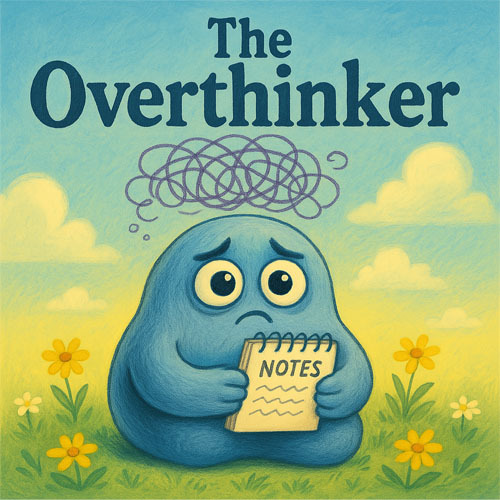
Ever found yourself at 2AM replaying a conversation from earlier that day, wondering if you said the right thing? Or perhaps you’ve spent hours analyzing a text message, trying to decode what the sender really meant?
Welcome to the world of the Overthinker – where your brilliant mind can be both your greatest asset and your most challenging companion.
If you find yourself caught in mental loops, creating detailed “what-if” scenarios, or feeling mentally exhausted from analyzing every angle of a situation, you’re in good company. The good news? Understanding that overthinking isn’t a personal flaw—but rather your brain’s well-intentioned (if exhausting) attempt to keep you safe—is the first step toward transformation.
Note: The Overthinker is one of our 8 Tapping Archetypes. While this guide focuses on overthinking patterns, you might recognize yourself in multiple archetypes – we all contain multitudes! Take our quiz here to find your primary type, and explore all the archetypes below to discover which combination best reflects your unique emotional landscape:
The AvoiderThe Pressure CookerThe Heavy HeartThe Self-DoubterThe High AchieverThe PerfectionistThe Sensitive EmpathHow Overthinking Patterns WorkLet’s take a moment to see if any of these feel familiar (and maybe even bring a smile of recognition):
Trying to fall asleep, but your brain decides it’s the perfect time to replay every conversation from the dayCrafting a text message, deleting it, rewriting it, and repeating the process several times before sendingCreating multiple scenarios for a meeting that hasn’t even happened yetAnalyzing someone’s tone of voice for hidden meaningsWhen someone says “let me think about it” and your mind jumps to negative conclusionsFeeling tension in your jaw, shoulders, or head from mental stressWhat’s happening in these moments is that your brain is in superhero mode—scanning for threats, analyzing patterns, and trying to protect you from any possible negative outcome. Think of it as your mind’s smoke detector being so sensitive it goes off for steam, cooking, and sometimes just because it’s Tuesday morning.
The Neuroscience Behind OverthinkingSo what’s actually happening in your brain when you’re stuck in an overthinking loop? It’s fascinating (and maybe a bit relieving) to know there’s real neuroscience behind these patterns.
Picture this: your amazing brain has an alarm system (called the amygdala) that’s constantly on the lookout for threats. When it perceives uncertainty or potential social dangers (like “will they judge me for what I said?”), it sounds the alarm and activates your stress response.
Meanwhile, the thoughtful, rational part of your brain (the prefrontal cortex) that normally helps you make clear decisions gets overwhelmed by this alarm. The result? Your thoughts start racing, but solutions feel just out of reach – like trying to solve a puzzle while someone’s blaring an air horn next to your ear.
The tricky part is that the more often you travel down this overthinking road, the more your brain treats it like the “obvious path” – like that shortcut through the park you take without even thinking about it anymore.
The Origins of Overthinking PatternsEver wondered where your overthinking tendencies came from? These patterns didn’t just appear overnight – they’re more like superpowers your brain developed over time to keep you safe.
Childhood and Early ExperiencesThink back for a moment. Perhaps you grew up in a world where:
Being mentally prepared helped you navigate unpredictabilityCareful thinking and attention to detail were praisedMaking mistakes led to criticism or uncomfortable consequencesBeing unprepared resulted in negative experiencesFor many of us, our overthinking patterns began as brilliant coping strategies. Your wonderful brain noticed what kept you safe and thought, “Let’s do more of that, please!”
Your Brain’s Protection PlanHere’s a perspective shift that might bring some relief: your overthinking isn’t a character flaw – it’s actually your brain’s way of trying to protect you. All that analyzing is attempting to keep you safe from:
The sting of rejection or criticismThat awful feeling when you’re unpreparedThe discomfort of making a social misstepThe pain of failure or disappointmentThink of it like an overprotective friend who means well but sometimes goes overboard.
Your overthinking isn’t broken thinking—it’s protective thinking that’s working overtime without vacation days. Recognizing this intention can be the first step toward showing yourself some well-deserved compassion.
How Overthinking Sneaks Into Your Daily LifeWhile your brain believes it’s being super helpful with all this analysis, overthinking can sometimes feel like that friend who stays way too long after the party ends. Let’s look at how it might be showing up in and impacting your daily life:
Mental and Emotional ImpactMental exhaustion despite minimal physical activitySmall concerns growing into larger worries through repeated thinkingDifficulty being present in the momentSelf-criticism about inability to stop overthinkingDecision paralysis when faced with too many optionsPhysical ImpactTension headaches Jaw clenching or teeth grinding during stressChronic tension in shoulders and neckSleep disruption from racing thoughtsDigestive issues related to stressShallow breathing patterns Relationship ImpactDifficulty listening fully because you’re preparing what to say nextBeing told you’re “overthinking it” or “reading too much into things”Finding spontaneity challenging because you prefer to plan aheadHesitating to share thoughts for fear of judgmentStruggling to be fully present in important momentsIf you’re nodding along to several of these, take a deep breath – you’re in good company. These experiences are shared by many people with active minds.
How Tapping Transforms Overthinking PatternsNow for the really good news: your brain is incredibly adaptable and can absolutely learn new ways of responding. You’re not stuck with overthinking forever! This is where Tapping (also known as Emotional Freedom Techniques or EFT) comes in as your new secret weapon.
Why Tapping Works Like Magic for OverthinkersTapping is uniquely suited to help calm an overthinking mind for several fascinating reasons:
It speaks your nervous system’s language – When you tap on specific acupressure points while acknowledging your thoughts, it’s like sending a direct message to your brain’s emotional centers saying “we’re safe now, you can relax.” Imagine pressing the reset button on a computer that’s frozen with too many open programs – that’s what Tapping does for your overthinking brain.It works with both your mind AND body – Have you ever tried to “think” your way out of overthinking? (Spoiler alert: it usually makes things worse!) Tapping is different because it addresses both your racing thoughts AND the physical tension that’s keeping those thought patterns locked in place.
It gets to the emotional roots – Many overthinking patterns are actually your mind’s clever way of avoiding uncomfortable feelings. Tapping helps you safely process those underlying emotions so they stop fueling your mental merry-go-round.
It creates new mental pathways – Each time you tap, you’re literally helping your brain build new neural highways that support calm, clear thinking instead of those circular worry loops.
It calms your body’s stress response – Research has shown that Tapping significantly reduces cortisol (that pesky stress hormone) that keeps your brain in high alert mode. As cortisol decreases, your rational thinking brain comes back online, allowing for clearer, calmer thoughts.
Tapping Applications for Overthinkers
When you’re caught in overthinking patterns, Tapping can help in multiple areas of your life. Here are some of the most effective ways to apply Tapping for an Overthinker’s mind:
1. For Decision-Making ParalysisOverthinkers often struggle with making decisions – even small ones can feel overwhelming when your mind presents countless “what ifs” and potential outcomes. Tapping can help by:
Reducing the emotional charge around decision anxietyClearing mental clutter that blocks clarityHelping you recognize when “perfect” decisions aren’t necessaryStrengthening trust in your intuition and judgmentInstead of overthinking each option, a focused Tapping session can help you reach a place of calm discernment where decisions feel more manageable.
2. For Sleep and RelaxationMany Overthinkers experience their most intense thinking sessions at bedtime. The quiet and lack of distraction create the perfect environment for your mind to review the day, plan tomorrow, or analyze past events. Tapping before bed can:
Signal to your nervous system that it’s safe to power downHelp process the day’s unresolved thoughtsCreate a mental boundary between daytime thinking and nighttime restReduce the physical tension that often accompanies mental activityJust 5-10 minutes of Tapping before sleep can transform restless nights into peaceful, restorative rest.
3. For Social Anxiety and InteractionsOverthinking often spikes during or after social interactions. You might analyze what you said, worry about how you were perceived, or mentally rehearse future conversations. Tapping can help by:
Reducing anticipatory anxiety before social eventsClearing rumination after interactionsBuilding confidence in your authentic self-expressionHelping you stay present during conversations instead of in your headWhether you tap before a social event or after to process any overthinking, you’ll likely find interactions becoming more enjoyable and less mentally taxing.
4. For Workplace PerformanceWork environments can trigger overthinking, especially in high-pressure situations like presentations, performance reviews, or challenging projects. Tapping can support you by:
Calming nervous system activation before important meetingsHelping you focus on tasks rather than worrying about outcomesProcessing perfectionism that can lead to procrastinationClearing mental blocks that prevent creative problem-solvingMany professionals find that a quick Tapping session before important work events or during breaks helps maintain mental clarity and emotional balance.
5. For Relationship DynamicsOverthinking can significantly impact your relationships, whether you’re analyzing text message tone, replaying conversations, or anticipating potential relationship problems. Tapping can help by:
Reducing the tendency to read into neutral communicationsProcessing relationship triggers before they cascade into overthinkingBuilding emotional resilience around vulnerabilityCreating space between thoughts and reactionsWhen you tap on relationship overthinking, you create room for more authentic connections based on what’s actually happening rather than what your mind fears might happen.
With consistent practice, Tapping becomes a versatile tool that you can apply to virtually any situation where overthinking emerges. The beauty of this approach is that it adapts to your specific needs and can be used both preventatively and responsively when overthinking patterns appear.
Your Brilliant Path ForwardLet’s take a moment to acknowledge something important: your overthinking patterns developed for good reasons – they were your brain’s way of trying to keep you safe in a world that sometimes feels unpredictable. Your busy mind isn’t a flaw; it’s been your protector.
As you continue this journey, try approaching yourself with the same compassion you’d offer a good friend. This kindness creates the perfect environment for genuine transformation to unfold.
With consistent Tapping (even just a few minutes daily), you can gradually retrain your wonderful brain to:
Dance more comfortably with uncertainty (without needing to analyze every possible outcome)Trust your intuition’s whispers instead of drowning them out with analysisProcess emotions directly instead of through endless mental loopsExperience the delicious peace of mental quiet more oftenBe truly present in your life’s beautiful moments rather than stuck in your headYour analytical mind is a genuine superpower when it’s working for you rather than against you. The goal isn’t to silence your brilliant thinking—it’s to engage it by choice rather than compulsion, and to discover the mental quiet that exists between thoughts.
Just imagine for a moment: falling asleep easily at night with your mind feeling peacefully quiet, making decisions with confidence, being fully present in conversations with loved ones, and feeling a genuine sense of mental peace washing over you.
These experiences aren’t just possible – with consistent Tapping, they can become your new normal.
Your Next Steps to Mental FreedomReady to give your busy mind some much-deserved relief? These Tapping sessions in The Tapping Solution App are specifically designed for Overthinkers and can be your perfect next step:
Help Me Stop Overthinking – Your go-to for those moments when your mind is spinning and you need immediate reliefQuiet My Racing Mind – Perfect for bedtime, when your thoughts won’t slow yet you’re craving deep mental relaxation
Releasing Anxiety – Especially helpful when overthinking is fueled by worry and anxiety
Explore Other Archetypes
While overthinking might be your primary pattern, you may also identify with aspects of other archetypes! Each Archetype offers unique insights and Tapping approaches that could support your journey:
The Pressure CookerThe Heavy HeartThe Self-DoubterThe High AchieverThe PerfectionistThe Sensitive EmpathThe Over ThinkerBrowse through these other guides to discover additional perspectives and techniques that might complement your Tapping practice and deepen your self-understanding.
And if you haven’t taken our Tapping Archetypes Quiz yet, you can do so here!
Until next time… Keep Tapping!
Nick Ortner
The post The Avoider Archetype: Understanding Your Emotional Patterns & How to Transform Them appeared first on The Tapping Solution.
Related posts:Research Feature: Tapping May Actually Affect the Way Your Brain Processes EmotionTapping World Summit 202310 Affirmations to Help You Forgive Yourself
The Self-Doubter Archetype: Understanding Your Decision Patterns & How to Transform Them
“I want to trust myself, but what if I make the wrong choice?”

Ever found yourself obsessively weighing all possible options before making even a small decision? Or perhaps you’ve finally made a choice only to immediately second-guess yourself, wondering if you’ve made a terrible mistake?
Welcome to the world of The Self-Doubter — where your careful, thoughtful nature can be both your greatest asset and your most challenging obstacle.
If you find yourself constantly seeking validation before moving forward, creating elaborate pros and cons lists for even small decisions, or feeling paralyzed by the fear of making the “wrong” choice, you’re in good company. The good news? Understanding that self-doubt isn’t a character flaw—but rather your brain’s well-intentioned (if exhausting) attempt to keep you safe—is the first step toward transformation.
Note: The Overthinker is one of our 8 Tapping Archetypes. While this guide focuses on self-doubting patterns, you might recognize yourself in multiple archetypes – we all contain multitudes! Take our quiz here to find your primary type, and explore all the archetypes below to discover which combination best reflects your unique emotional landscape:
The AvoiderThe Pressure CookerThe Heavy HeartThe OverthinkerThe High AchieverThe PerfectionistThe Sensitive EmpathHow Self-Doubt Patterns WorkLet’s take a moment to see if any of these feel familiar (and maybe even bring a nod of recognition):
Asking multiple people for their opinions before making a decisionResearching extensively, yet still feeling uncertainMaking a decision, then immediately questioning if it was the right oneApologizing for your choices or feeling the need to explain themSecond-guessing your instincts and insightsAvoiding decisions altogether when possibleFeeling envious of people who seem naturally confident in their choicesMentally rehearsing conversations before having themFeeling a knot in your stomach when facing important decisionsWhat’s happening in these moments is that your brain is in protection mode—trying to shield you from potential mistakes, rejection, or failure. Think of it as your mind’s security system being calibrated to detect even the smallest possibility of making a “wrong” choice, leading you to doubt even your most basic instincts.
The Neuroscience Behind Self-DoubtSo what’s actually happening in your brain when you’re caught in a cycle of self-doubt? It’s fascinating (and perhaps comforting) to know there’s real neuroscience behind these patterns.
Picture this: your amazing brain has an alarm system (called the amygdala) that’s constantly on the lookout for threats. When it perceives potential risks in making a decision—like “what if I choose wrong and face rejection?”—it sounds the alarm and activates your stress response.
Meanwhile, the thoughtful, rational part of your brain (the prefrontal cortex) that normally helps you make clear decisions gets overwhelmed by this alarm. The result? You begin to doubt your judgment, seeking reassurance and validation from others, while your inner certainty feels increasingly distant—like trying to hear a whisper while someone’s blaring an air horn next to your ear.
The tricky part is that each time you hesitate to trust yourself, your brain strengthens these neural pathways of doubt. It’s like continuously walking the same path through a meadow—eventually, it becomes the clearest, most obvious route, even if it’s not taking you where you truly want to go.
The Origins of Self-Doubt PatternsEver wondered where your self-doubt tendencies came from? These patterns didn’t just appear overnight—they’re more like protective mechanisms your brain developed to keep you safe.
Childhood and Early ExperiencesThink back for a moment. Perhaps you grew up in an environment where:
Your decisions were frequently questioned or criticizedMaking mistakes led to significant negative consequencesYou observed important adults in your life struggling with confidenceYour natural instincts or insights were dismissedPerfectionism was encouraged, making “wrong” choices seem catastrophicYou received inconsistent feedback, making it hard to trust your judgmentYou were praised primarily for achievements rather than efforts or processFor many Self-Doubters, these patterns began as brilliant coping strategies. Your wonderful brain noticed what kept you safe and thought, “Let’s do more of that, please!”
Your Brain’s Protection PlanHere’s a perspective shift that might bring some relief: your self-doubt isn’t a character flaw—it’s actually your brain’s way of trying to protect you. All that analyzing and second-guessing is attempting to keep you safe from:
The pain of making mistakesThe sting of criticism or rejectionThe discomfort of disappointing othersThe fear of responsibility if things go wrongThink of it like an overprotective friend who means well but sometimes goes overboard. Your doubting mind isn’t a broken mind—it’s a protective mind that’s working overtime without vacation days. Recognizing this intention can be the first step toward showing yourself some well-deserved compassion.
How Self-Doubt Sneaks Into Your Daily LifeWhile your brain believes it’s being super helpful with all this caution, self-doubt can sometimes feel like that friend who insists on checking the door is locked five times before leaving. Let’s look at how it might be showing up in and impacting your daily life:
Mental and Emotional ImpactMental exhaustion from constant deliberation and weighing of optionsAnxiety about making the “wrong” choice, no matter how smallFrustration at your inability to trust yourselfEnvy toward people who seem to make decisions effortlesslyFeeling stuck or unable to move forward in important areas of lifeSelf-criticism about your indecisivenessDifficulty celebrating your successes because you’re questioning if they were good enoughPhysical ImpactTension in shoulders and neck Digestive issues Sleep disruption from replaying decisions or worrying about upcoming choicesShallow breathing Frequent sighing—your body’s attempt to release the tensionFatigue from the constant mental effort of analyzing optionsThat characteristic knot in your stomach when facing important decisionsRelationship ImpactDeferring to others’ preferences instead of expressing your ownBeing perceived as indecisive or lacking confidenceSeeking excessive reassurance, which can strain relationshipsDifficulty setting clear boundaries because you doubt your right to have themApologizing unnecessarily for your decisions or opinionsReluctance to take on leadership roles even when you’re highly qualifiedStaying in unsatisfying situations too long because you doubt your judgment about leavingIf you’re nodding along to several of these, take a deep breath—you’re in good company. These experiences are shared by many people with naturally careful, thoughtful minds.
How Tapping Transforms Self-Doubt PatternsNow for the really good news: your brain is incredibly adaptable and can absolutely learn to trust itself again. You’re not stuck with self-doubt forever! This is where Tapping (also known as Emotional Freedom Techniques or EFT) comes in as your new secret weapon.
Why Tapping Works Like Magic for Self-DoubtersTapping is uniquely suited to help calm a doubting mind for several fascinating reasons:
It reconnects you with your body’s wisdom – When you tap on specific acupressure points while acknowledging your doubts, you’re creating a bridge between your overthinking mind and your body’s intuitive knowledge. Instead of getting lost in endless analysis, Tapping helps you tune into how decisions actually feel in your body—often revealing clarity that your analytical mind couldn’t find.It calms the brain’s alarm system – Research shows Tapping significantly reduces activity in the amygdala (your brain’s fear center), which is precisely what gets overactivated when you’re caught in self-doubt. As this alarm quiets down, your prefrontal cortex—responsible for clear decision-making—can come back online.
It rewires your neural pathways – Each time you tap while acknowledging your doubts and then affirming your capacity to trust yourself, you’re literally creating new neural connections. Over time, self-trust becomes more automatic and natural—like a path through that meadow that grows clearer with each use.
It addresses the emotional roots – Your self-doubt didn’t develop in a vacuum—it’s often rooted in past experiences where trusting yourself felt unsafe. Tapping helps you gently process those underlying memories and emotions, so they stop fueling your current doubt cycles.
It creates immediate relief – While deep transformation happens over time, many Self-Doubters experience an immediate sense of clarity and calm after just a few minutes of Tapping—a welcome respite from the mental merry-go-round of indecision.
Tapping Applications for Self-Doubters
When you’re caught in patterns of self-doubt, Tapping can help in multiple areas of your life. Here are some of the most effective ways to apply Tapping for a self-doubter’s mind:
1. For Decision-Making ClarityDecision-making is often where doubt shows up most powerfully, whether you’re choosing between job offers or just deciding what to have for dinner. Tapping can help by:
Calming the fear response that blocks access to your intuitionHelping you discern between genuine caution and irrational doubtReducing the emotional charge around potential outcomesCreating space to hear your own inner wisdomReleasing the pressure of making a “perfect” decisionMany Self-Doubters find that a focused Tapping session before important decisions helps them access a center of calm clarity they didn’t know they had—where the right choice suddenly becomes obvious.
2. For Career Growth and LeadershipSelf-doubt often limits career progression, not because of lack of capability, but because of hesitancy to step into larger roles or visibility. Tapping can support you by:
Building confidence to apply for promotions or new opportunitiesReducing impostor syndrome when you do advanceStrengthening your ability to speak up in meetings with convictionHelping you recognize and own your expertise and accomplishmentsSupporting you in making decisions without excessive consultationProfessionals who tap regularly often report being perceived differently at work—as more confident, decisive, and leadership-oriented—simply because they’ve quieted that inner voice of doubt.
3. For Relationships and BoundariesSelf-Doubters often struggle with relationships because they question their own needs, perceptions, and boundaries. Tapping can help by:
Reinforcing your trust in your own feelings and experiencesReducing people-pleasing tendencies born from self-doubtBuilding confidence in expressing your authentic needs and desiresHelping you recognize when others’ opinions shouldn’t override your ownSupporting you in leaving relationships that no longer serve youMany people find that as their self-trust grows through Tapping, their relationships naturally become healthier and more balanced—reflecting their newfound inner confidence.
4. For Handling Criticism and FeedbackCriticism can be especially triggering for Self-Doubters, as it seems to confirm your worst fears about your judgment. Tapping can help by:
Reducing the emotional sting of criticism so you can evaluate it clearlyHelping you discern helpful feedback from projections or unfair criticismBuilding resilience so you don’t spiral into self-doubt after feedbackSupporting your ability to stay grounded in your own worth regardless of others’ opinionsHelping you respond rather than react when criticizedWith regular Tapping, many find they can receive feedback with genuine curiosity rather than defensive doubt—a transformation that benefits both personal and professional life.
5. For Creative Expression and Taking RisksSelf-doubt often shows up intensely around creative projects and risk-taking, keeping many talented Self-Doubters playing small. Tapping can help by:
Reducing the fear of judgment that blocks creative expressionQuieting the inner critic that questions your ideasBuilding courage to try new things without certainty of outcomeHelping you bounce back from creative blocks or setbacksSupporting you in sharing your work without apologizing or downplaying itMany artists, writers, entrepreneurs, and innovators use Tapping specifically to overcome the creative doubt that would otherwise keep their gifts hidden from the world.
With consistent practice, Tapping becomes a versatile tool that you can apply to virtually any situation where self-doubt emerges. The beauty of this approach is that it adapts to your specific needs and can be used both preventatively and responsively when doubt patterns appear.
Your Brilliant Path ForwardLet’s take a moment to acknowledge something important: your cautious, thoughtful approach developed for good reasons—it was your brain’s way of trying to keep you safe in a world that sometimes felt unpredictable or critical. Your careful mind isn’t a flaw; it’s been your protector.
As you continue this journey, try approaching yourself with the same compassion you’d offer a good friend. This kindness creates the perfect environment for genuine transformation to unfold.
With consistent Tapping (even just a few minutes daily), you can gradually retrain your wonderful brain to:
Trust your instincts instead of questioning them at every turnMake decisions with confidence and peace, not anxiety and doubtDiscern when to gather more information versus when to trust what you already knowStand firmly in your choices without constant second-guessingValue your perspective as much as (or more than) others’ opinionsExperience the freedom that comes with trusting yourselfYour careful, thoughtful mind is a genuine superpower when it’s working for you rather than against you. The goal isn’t to eliminate your careful thinking—it’s to engage it by choice rather than compulsion, and to discover the clear inner guidance that exists beneath the noise of doubt.
Just imagine for a moment: making decisions with calm confidence, trusting your perceptions in relationships, pursuing opportunities without hesitation, and feeling a genuine sense of inner peace and certainty.
These experiences aren’t just possible—with consistent Tapping, they can become your new normal.
Your Next Steps to Self-TrustReady to give your doubting mind some much-deserved relief? These Tapping sessions in The Tapping Solution App are specifically designed for Self-Doubters and can be your perfect next step:
Releasing Self-Doubt – Your go-to for those moments when you’re questioning yourself and need to reconnect with your inner wisdomI Quiet My Mind and Listen to My Heart Quick Tap – Perfect for accessing your intuition when making important decisions
Help Me Trust My Decisions – Helps release self-doubt and second guessing about your decisions, so you can feel more confidence moving forward
Explore Other Archetypes
While self-doubting might be your primary pattern, you may also identify with aspects of other archetypes! Each offers unique insights and Tapping approaches that could support your journey:
The AvoiderThe Pressure CookerThe Heavy HeartThe High AchieverThe PerfectionistThe Sensitive EmpathThe Over ThinkerBrowse through these other guides to discover additional perspectives and techniques that might complement your Tapping practice and deepen your self-understanding.
And if you haven’t taken our Tapping Archetypes Quiz yet, you can do so here!
Until next time… Keep Tapping!
Nick Ortner
The post The Self-Doubter Archetype: Understanding Your Decision Patterns & How to Transform Them appeared first on The Tapping Solution.
Related posts:Research Feature: Tapping May Actually Affect the Way Your Brain Processes EmotionTapping World Summit 202310 Affirmations to Help You Forgive Yourself
The Heavy Heart Archetype: Understanding Your Emotional Depth & How to Transform Overwhelm
“I feel everything so deeply, sometimes without even knowing why.”

Ever found yourself overwhelmed by emotions that seem bigger than the situation calls for? Or perhaps you’ve experienced a heaviness in your chest, a weight on your shoulders that you can’t quite explain, even when nothing particularly difficult is happening?
Welcome to the world of The Heavy Heart — where your emotional depth and sensitivity can be both your greatest gift and your most challenging burden.
If you find yourself carrying emotions long after situations have passed, feeling unexplained sadness or heaviness, or experiencing emotional responses that seem disproportionate to events, you’re in good company. The good news? Understanding that emotional intensity isn’t a weakness—but rather your nervous system’s heightened awareness—is the first step toward transformation.
Note: The Heavy Heart is one of our 8 Tapping Archetypes. While this guide focuses on emotionally heavy patterns, you might recognize yourself in multiple archetypes – we all contain multitudes! Take our quiz here to find your primary type, and explore all the archetypes below to discover which combination best reflects your unique emotional landscape:
The AvoiderThe Pressure CookerThe OverthinkerThe Self-DoubterThe High AchieverThe PerfectionistThe Sensitive EmpathHow Emotional Depth Patterns WorkLet’s take a moment to see if any of these feel familiar (and maybe even bring a sigh of recognition):
Feeling emotions in your body as physical sensations—heaviness in your chest, tightness in your throat, or weight on your shouldersCrying easily, sometimes without understanding exactly whyExperiencing emotional “aftershocks” long after events have passedFeeling overwhelmed by emotions that others seem to process more easilyNeeding extra time to process emotional experiencesSensing that you feel things on a deeper level than many people around youEmotional experiences feeling “stuck” in your bodyHaving unexplained moments of sadness or heavinessAbsorbing the emotional tone of environments, books, movies, or news deeplyWhat’s happening in these moments is that your body and nervous system are processing emotions with extraordinary sensitivity—like a high-fidelity speaker that picks up every subtle note in a piece of music. Think of it as your emotional processing system being so attuned that it registers not just the obvious crescendos, but also the quietest, most subtle emotional undertones that many others might miss.
The Neuroscience Behind Emotional DepthSo what’s actually happening in your brain and body when you’re experiencing this emotional depth? It’s fascinating (and perhaps validating) to know there’s real neuroscience behind these patterns.
Picture this: your incredible brain and body have an emotional processing system that’s highly attuned to subtle signals. Research suggests that people with this pattern often have heightened activity in regions of the brain responsible for emotional processing and empathy. Your nervous system is literally wired to detect, absorb, and process emotional information with remarkable sensitivity.
Meanwhile, the regulatory systems that typically help modulate emotional intensity may work differently for you. The result? You experience emotions at a deeper level, hold onto them longer, and feel them more physically in your body—like listening to music with professional-grade headphones when most people are using basic earbuds.
The challenging part is that many emotions don’t get fully processed and released—instead, they get stored in your body’s tissues and nervous system, creating that characteristic heaviness that can feel so difficult to understand or explain.
The Origins of Emotional Depth PatternsEver wondered where your profound emotional sensitivity came from? These patterns didn’t just appear overnight—they’re more like features of your nervous system that developed through a combination of innate sensitivity and life experiences.
Childhood and Early ExperiencesThink back for a moment. Perhaps you grew up in an environment where:
Your sensitivity was viewed as a problem rather than a giftYou were told you were “too sensitive” or “too emotional”You learned to hide or suppress your true feelingsYou absorbed others’ emotions without understanding they weren’t yours to carryYou weren’t taught how to process and release intense emotionsYou experienced situations that overwhelmed your emotional processing capacityYou were the “emotional interpreter” in your family, sensing what others couldn’t expressFor many Heavy Hearts, these patterns began partly as innate sensitivity that was then shaped by your environment. Your wonderful nervous system was already finely tuned, and then it adapted further based on what it experienced.
Your Nervous System’s SensitivityHere’s a perspective shift that might bring some relief: your emotional depth isn’t a character flaw—it’s actually a sign of a highly responsive and intuitive nervous system. All that feeling is connected to:
Your ability to detect subtle emotional cues others might missYour natural empathy and compassionYour intuitive understanding of emotional undercurrentsYour potential for profound connection and meaningThink of it like having a sophisticated emotional antenna that picks up signals most people’s systems aren’t sensitive enough to detect. Your emotionally sensitive system isn’t broken—it’s just extraordinarily perceptive, though sometimes overwhelmed without the right support. Recognizing this inherent gift can be the first step toward showing yourself some well-deserved compassion.
How Emotional Heaviness Affects Your Daily LifeWhile your emotionally sensitive nervous system gives you access to rich emotional experiences and deep connections, it can sometimes feel like carrying a backpack full of rocks. Let’s look at how it might be showing up in and impacting your daily life:
Mental and Emotional ImpactFeeling emotionally exhausted without obvious external causesExperiencing emotional “hangovers” after intense situationsConfusion about why you feel so deeply when others seem to move on quicklyQuestioning whether something is wrong with you because of your sensitivityDifficulty distinguishing between your emotions and those you’ve absorbed from othersFinding that emotions sometimes seem to come in waves, overwhelming you unexpectedlyFeeling like you’re carrying an invisible emotional burden others can’t seeExperiencing complex emotions that are hard to name or expressPhysical ImpactHeaviness or tightness in your chest, throat, or shouldersPhysical exhaustion after emotional experiencesSleep disruption from emotional processing that continues during restShallow breathing when emotions feel overwhelmingDigestive issues connected to emotional statesUnexplained aches or tensionA literal feeling of heaviness in your body, like you’re moving through waterCrying that seems to come from a deep place in your bodyRelationship ImpactBeing told you’re “too sensitive” or that you “take things too personally”Absorbing others’ emotions and carrying them as your ownNeeding more time to process after emotional exchangesFinding that casual relationships sometimes feel drainingProtecting yourself by withdrawing when emotional overwhelm becomes too muchBeing the person others turn to because you truly understand their feelingsDifficulty maintaining boundaries because you feel others’ needs so deeplyHaving rich, meaningful connections but sometimes at the cost of your emotional energyIf you’re nodding along to several of these, take a deep breath—you’re in good company. These experiences are shared by many people with naturally sensitive emotional systems.
How Tapping Transforms Emotional HeavinessNow for the really good news: your nervous system is incredibly adaptable and can learn to process emotions without getting overwhelmed by them. You’re not stuck with emotional heaviness forever! This is where Tapping (also known as Emotional Freedom Techniques or EFT) comes in as your new secret weapon.
Why Tapping Works Like Magic for Heavy HeartsTapping is uniquely suited to help transform emotional heaviness for several fascinating reasons:
It speaks directly to your nervous system – When you tap on specific acupressure points while acknowledging your feelings, you’re communicating directly with your body’s emotional processing centers. It’s like opening relief valves that allow emotions to flow through and release, rather than getting stored in your tissues.It creates a safe container for big feelings – Many emotional processing methods can feel overwhelming for sensitive people. Tapping is different because it simultaneously calms your nervous system while processing emotions, creating a sense of safety even while facing big feelings.
It releases emotions stored in the body – Research shows that emotions can literally be stored in your body’s tissues. Tapping helps release these stored emotions at the physical level, addressing that characteristic heaviness directly.
It helps distinguish between your emotions and others’ – For many Heavy Hearts, it’s difficult to know which emotions are truly yours versus those you’ve absorbed. Tapping helps create clarity and boundaries in your emotional experience.
It builds emotional resilience over time – With regular practice, Tapping helps your nervous system develop the capacity to process emotions as they arise, rather than storing them. This means you can still access your emotional depth and sensitivity, but without the overwhelm that often accompanies it.
Tapping Applications for Heavy Hearts
When you’re carrying emotional heaviness, Tapping can help in multiple areas of your life. Here are some of the most effective ways to apply Tapping for a sensitive heart:
1. For Emotional Clarity and ProcessingOne of the biggest challenges for Heavy Hearts is sorting through complex emotional states, especially when you’re not sure why you’re feeling what you’re feeling. Tapping can help by:
Creating space to identify and name emotions that feel confusing or overwhelmingHelping you connect with the source of unexplained emotional heavinessProcessing emotional “residue” from past experiences that’s still affecting youDistinguishing your own emotions from those you may have absorbed from othersCreating clarity when emotions feel too big or complex to understandMany people with emotional sensitivity find that a regular Tapping practice helps them develop a more conscious relationship with their emotions, transforming overwhelming heaviness into manageable understanding.
2. For Physical Relief and EmbodimentFor Heavy Hearts, emotions are intensely physical experiences—they live in your body. Tapping can support your physical well-being by:
Releasing emotional tension stored in your chest, throat, shoulders, and other areasHelping you sleep better by processing emotions before bedtimeReducing the physical exhaustion that often accompanies emotional sensitivityCreating a sense of lightness in your body as emotional burdens releaseSupporting healthy breathing patterns that are often disrupted by emotional heavinessMany emotionally sensitive people report that Tapping brings immediate physical relief—a lightening of that characteristic heaviness that can be felt tangibly in the body.
3. For Relationships and BoundariesHeavy Hearts often struggle with relationships because they feel others’ emotions so deeply and have difficulty maintaining boundaries. Tapping can help by:
Clarifying where your emotional experience ends and others’ beginSupporting you in setting healthy boundaries without guiltHelping you process absorbed emotions after intense interactionsReducing emotional exhaustion from social situationsBuilding resilience so you can maintain connection without becoming overwhelmedMany people find that as they tap regularly, they’re able to enjoy deeper connections while simultaneously protecting their emotional well-being—getting the best of both worlds.
4. For Navigating Emotional TriggersWhen you have a sensitive emotional system, the world can sometimes feel like a minefield of triggers. Tapping can support you by:
Reducing the intensity of emotional triggering in challenging situationsHelping you recover more quickly when triggers do occurProcessing the deeper roots of recurring emotional triggersBuilding capacity to stay present when emotions rise up stronglyCreating a sense of safety even when facing difficult situationsWith regular Tapping, many Heavy Hearts find they can navigate situations that once felt overwhelming with a new sense of emotional stability—without losing the sensitivity that makes them who they are.
5. For Creative Expression and Meaning-MakingYour emotional depth is connected to your capacity for creativity, meaning, and purpose. Tapping can enhance these gifts by:
Clearing emotional blocks that prevent creative expressionHelping channel emotional intensity into meaningful pursuitsCreating emotional space for inspiration to emergeProcessing emotions that arise during creative workSupporting you in sharing your emotional wisdom with othersMany artists, writers, healers, and visionaries use Tapping specifically to maintain access to their emotional depth while transforming overwhelm into purposeful expression.
With consistent practice, Tapping becomes a versatile tool that you can apply to virtually any situation where emotional heaviness emerges. The beauty of this approach is that it adapts to your specific needs and can be used both preventatively and responsively when overwhelm appears.
Your Brilliant Path ForwardLet’s take a moment to acknowledge something important: your emotional sensitivity is not a weakness—it’s actually one of your greatest strengths. In a world that often values logic over feeling and speed over depth, your capacity to feel deeply creates the possibility for profound connection, meaning, and understanding.
As you continue this journey, try approaching your sensitive heart with the same compassion you’d offer a dear friend. This kindness creates the perfect environment for genuine transformation to unfold.
With consistent Tapping (even just a few minutes daily), you can gradually transform your relationship with your emotional depth to:
Feel emotions fully without being overwhelmed by themDiscern which emotions are yours and which belong to othersProcess and release emotions as they arise instead of storing themExperience the richness of your sensitivity without the heavinessTransform emotional intensity into wisdom, creativity, and compassionFind relief from that physical feeling of heaviness in your bodyYour sensitive heart is a genuine superpower when it’s working for you rather than weighing you down. The goal isn’t to become less sensitive—it’s to develop the capacity to process emotions with ease, and to discover the gifts that your emotional depth makes possible.
Just imagine for a moment: feeling emotionally present and open without becoming exhausted, sensing the emotional currents around you while maintaining your center, expressing your sensitivity in ways that serve you and others, and experiencing emotional depth as a source of wisdom rather than overwhelm.
These experiences aren’t just possible—with consistent Tapping, they can become your new normal.
Your Next Steps to Emotional FreedomReady to give your heavy heart some much-deserved relief? These Tapping sessions in The Tapping Solution App are specifically designed for emotional sensitivity and can be your perfect next step:
I Don’t Know What’s Bothering Me – Your go-to for those moments when you’re feeling emotionally heavy but can’t identify whyRelease Overwhelm – Perfect for when emotional intensity feels too much to handle
Let Go and Allow – Helpful for when you feel like you’re carrying around burdens and help yourself let some of it goExplore Other Archetypes
While overthinking might be your primary pattern, you may also identify with aspects of other archetypes! Each Archetype offers unique insights and Tapping approaches that could support your journey:
The AvoiderThe Pressure CookerThe Self-DoubterThe High AchieverThe PerfectionistThe Sensitive EmpathThe Over ThinkerBrowse through these other guides to discover additional perspectives and techniques that might complement your Tapping practice and deepen your self-understanding.
And if you haven’t taken our Tapping Archetypes Quiz yet, you can do so here!
Until next time… Keep Tapping!
Nick Ortner
The post The Heavy Heart Archetype: Understanding Your Emotional Depth & How to Transform Overwhelm appeared first on The Tapping Solution.
Related posts:Words of Wisdom and Comfort from Louise HayTapping for Self-Worth: Transform Your Self-Esteem in Minutes a Day Using EFT The Perfectionist Archetype: Understanding Your High Standards & How to Transform the Pressure