Nick Ortner's Blog, page 20
December 22, 2021
You’ve never known more than you do right now
You have more learning and experiences behind you than you have ever had before. You have never known more than you do right now.
Isn’t that a little mind-boggling to think about? Each and every day you just add learning experiences…
They just keep piling up and accumulating with each passing moment.
So the reality is that you’ve never known more than you do right here and right now.
You know more about yourself – about your patterns and learning processes.
You know more about the people you love. About your body. About your work and your passions. About the problems you are working to solve, and the topics that spark your curiosity and interest.
This moment is the most advanced, evolved version of you that has ever existed.
So trust in that.

Find peace in that.
Know that each moment you are learning and growing…and that means that you bring a new perspective, a new set of skills, and new knowledge into every moment that unfolds in front of you.
So even if you’ve faced similar roadblocks in the past and struggled with them, who says you can’t find a way through them this time?
Even if you’ve failed or made certain mistakes in the past, who says you won’t succeed this time?
Even if you didn’t know what to do in the past, who says you won’t be able to draw from your own inner wisdom to guide you this time?
Trust in yourself.
Find strength in this you. The you who exists today.You’ve got this. We’ve all got this. Let’s go out there and give this day our all!
Until next time…
Keep Tapping
Nick Ortner

The post You’ve never known more than you do right now appeared first on The Tapping Solution.
Related posts: Louise Hay Talks Tapping
 From Doubt to a Seed of Hope – Tapping Meditation
 You Are Enough – Tapping Meditation


December 9, 2021
Do You Give Yourself Permission?
This morning, I found myself wanting to do something simple – to take a moment to do something nurturing. But I noticed a part of me that felt like I wasn’t allowed to.
I had a million things on my to-do list and the clock was already ticking away…
And for some reason, it felt like I needed someone else’s approval to let me know it was okay to take that moment for myself.
Do you ever feel that way?
Do you ever find yourself waiting on another’s permission to follow your heart and do what’s best for you?
The thing is, we don’t need anyone else’s approval to act, think, or feel a certain way. We can give ourselves permission for whatever it is we choose.
To help with that process, I’m going to share with you some positive affirmations that I needed to hear today. I thought they might help you, too.

1. “I give myself permission to breathe and become present right here, right now.”
2. “I give my brain and body permission to slow down and relax.”
3. “I give myself permission to feel my feelings, as they are right now.”
4. “I give myself permission to do whatever I need to do in this moment to feel good.”
5. “I give myself permission to make time for joy, humor, fun, and rest.”
6. “I give myself permission to go at my own pace.”
7. “I give myself permission to let go of judgment and criticism about myself and others.”
8. “I give myself permission to feel powerful, free, brave, and whole.”
9. “I give myself permission to trust myself.”
10. “I give myself permission to be right where I am… and I also give myself permission to change and grow.”
Notice what it feels like to hear those statements, and then take a few deep breaths to let them land a little more deeply.
I encourage you to bring this feeling, this sense of empowerment and trust in yourself, forward with you through the rest of your day.
You’ve got this. We’ve got this. Let’s keep at it.
Until next time…
Keep Tapping
Nick Ortner
The post Do You Give Yourself Permission? appeared first on The Tapping Solution.
Related posts:Louise Hay Talks TappingFrom Doubt to a Seed of Hope – Tapping MeditationYou Are Enough – Tapping Meditation
November 19, 2021
How to Pursue Your Future Goals While Enjoying the Present Moment
What comes up for you when you hear these words from Esther Hicks?
Personally, I’m reminded that I don’t just want to feel good when I get “there” – wherever there might be. I want to feel good along the way, too! Because these moments along the way, as I pursue my dreams and goals, are the moments I’m actually living in.
So today, let’s practice allowing ourselves to feel really good right here, right now.
No matter where we are in the process, no matter how many accomplishments we’ve made, or how many milestones we see ahead, we can choose to be present now and feel good as the journey unfolds.
We don’t have to rely on some future outcome or objective to bring us happiness, fulfillment, and contentedness.
As you continue throughout your day today, consider how you might enjoy what is – right here and right now – a little bit more… all while you are moving towards your goals and dreams.
If you’d like to really anchor in these thoughts and feelings, try this Tapping Meditation on feeling gratitude for the present moment.
This is from the 21 Day Gratitude Series in our Tapping Solution App and it’s just an excellent way to remind ourselves that where we are right now, is just as important as where we want to go. 
Day 1: Gratitude for This Moment
Until next time…
Keep Tapping!
Nick Ortner
The post How to Pursue Your Future Goals While Enjoying the Present Moment appeared first on The Tapping Solution.
Related posts: Jack Canfield Shares His Wisdom
 5 Signs You’re Ignoring Your Intuition
 What I Learned From a Ceramic Frog
November 10, 2021
The Power of Sleep Programming
Struggling with a health condition? Getting distracted easily? Feeling a lack of confidence? If you are experiencing anything along those lines, then you may be feeling stuck and having trouble breaking out of old patterns.
If that sounds like you, then don’t worry. It is possible to get unstuck and create positive change!
Whether you are looking to sleep better, increase healing, boost productivity, find more confidence, or feel more optimistic, then you may want to give our Sleep Programming Tapping Meditations a try.
Sleep Programming is a powerful approach to help you bring about positive changes in your life, move towards the outcomes you want, and reach your goals.
So, let’s take a closer look at what it is, how it works, and why this technique can be so effective in helping people experience positive change.

Sleep Programming Meditations combine the power of Tapping with positive suggestions, helping you to create new patterns and program your body & mind for the better.
Depending on the topic that is targeted in the specific meditation you choose, you may want help to program your mind to support goals like improved health, increased confidence, or deeper sleep, for example.
Our Sleep Programming Tapping Meditations are designed to help you first calm down and get into a highly relaxed state using the power of Tapping. And then from that state of calm, you are led through positive suggestions and visualizations to support whatever the target objective may be for the meditation.
This approach draws on the concept of hypnosis as well as other techniques like positive affirmations, guided imagery, and visualization.
Research shows that when we bring our minds into a highly relaxed and focused state, we are better able to listen and respond to suggestions. This is commonly experienced in hypnosis, an experience that allows people to guide their subconscious to healthy habits, reframe thoughts and beliefs, gain more sense of control, and build positive expectations.[1-3]
In our Sleep Programming Meditations, you are guided into a state of relaxation, calm, and focus similar to hypnosis, but using the technique of Tapping instead. From that open state, you can help guide your mind to repattern and program towards positive outcomes.
These Tapping Meditations are powerful. Not only do they help you get into deep relaxation right before bed, but they also help to prime your brain to bring about the results in your life that you deeply want. These meditations can influence your thoughts, emotions, and behaviors, and how you experience your daily life.
Let’s take a closer look at the two main parts of a Sleep Programming Meditation: getting deeply relaxed and tuning into positive suggestions & visualizations.
Step 1: Tapping Into RelaxationSleep Programming begins with turning town the stress response and getting deeply relaxed. In the first rounds of Tapping in these meditations, you’ll be guided to tap through the points and release stress, let go of tension in your body, and quiet your thoughts.
We know that Tapping is an extremely effective tool for bringing a deep sense of calm to both the brain and body. In fact, Tapping can actually help you to turn off the stress response and even reduce levels of stress hormones like cortisol.[4] When you tap on the meridian points as part of the basic Tapping technique, it sends calming signals to the brain that lets it know it is safe to relax.
Inducing the relaxation response with Tapping in a Sleep Programming Meditation does two important things.
First, it helps your brain and body slow down and prepare for sleep. The calmer your mind is and the more relaxed your body is, the easier it will be for you to drift off to sleep. So, using Tapping right before bed can help you to fall asleep faster and sleep more deeply.
Second, triggering relaxation through Tapping helps to bring your brain into a highly relaxed, yet focused state. And from that state, the mind is better able to open up to positive changes, new ways of thinking, healing, behavior change, and more.
Step 2: Adding In Positive Statements, Affirmations, and VisualizationsAfter helping you to get relaxed and open your mind, the second phase of Sleep Programming is to introduce positive suggestions, affirmations, and visualizations in support of your goals.
It can be very advantageous to give yourself something positive to focus on before you drift off to sleep, because the brain is more receptive to positive suggestions when it is highly relaxed and focused.[1-3]
In the Tapping Solution App, we have numerous Sleep Programming Meditations on a variety of topics from increasing motivation and productivity to getting stronger, making healthy eating choices, balancing hormones, and increasing confidence at work. For each topic, the meditation will guide you through positive statements aligned with your objective. In addition, it will help you imagine yourself experiencing the effects and visualize the results you want.
Suggestions, positive statements, and visualizations have the ability to influence your mood, your thoughts, your perceptions, and ultimately your actions.[5] They are designed to help you repattern and program your mind to shift away from unhelpful patterns and move towards whatever goal you might have – whether that is deeper sleep, increased optimism, support in making healthy choices, or something else.

As mentioned earlier, Sleep Programming draws on the principles of hypnosis as well as other techniques like positive affirmations, guided imagery, and visualization. These approaches are well-documented in the scientific literature to help people create positive changes and feel better.
For example, let’s take a look at hypnosis. Researchers have seen time and time again that suggestions in a hypnotic state can actually influence brain networks, along with both our physical and mental experience.[1]
Suggestions under hypnosis can help people to reframe thinking and beliefs, build positive expectations, increase feelings of control and empowerment, and more.[1] In essence, they can help people to reprogram the brain and experience positive outcomes.
Some of the evidence-based benefits of hypnosis include helping people to:
Improve sleep quality and durationReduce stress and anxietyImprove self-confidence and self-esteemManage stress-related health conditionsReduce painRelieve depressionLose weightQuit smokingFind relief from conditions like IBS, PTSD, and chronic painCope better with chronic conditionsEnhance the effectiveness of other treatments like cognitive behavioral therapy [1,3,6-13]Research also tells us that when we combine the power of relaxation with the power of hypnotic suggestions, we can have even greater results.[6] And that is exactly what we aim to do in the Sleep Programming Tapping Meditations.
Sleep Programming Meditations also include positive affirmations. Positive affirmations are known to help people increase self-worth, restore confidence, gain perspective, and focus less on the negative. They have also been shown to increase certain areas of neural activity in the brain.[14,15]
By repeating phrases such as “I am enough,” “I am healing deeply,” or “I am capable” in a Sleep Programming Meditation, you can help to create new patterns of thinking and beliefs that are more helpful and productive for you.
Along with hypnosis-like techniques and positive affirmations, you’ll also find visualization and guided imagery in Sleep Programming Meditations. These techniques are designed to help you truly embody the positive outcomes that you are moving towards.
Guided imagery is known to be effective in bringing about many positive changes in people’s lives. Research suggests visualization can help people reduce pain, find relief from anxiety, cope with stress, improve athletic performance, and ease pre-test anxiety – to name just a few of the researched benefits.[16-19]
Researchers believe that when we experience something in our mind (as in a hypnotic state or visualization), it activates the same patterns of the brain as when we have the experience in real life.[20] This suggests that even if we are just lying in our beds with our eyes closed, listening to a meditation script, and visualizing a positive outcome, we can help to reinforce neural circuits that are aligned with our goals.
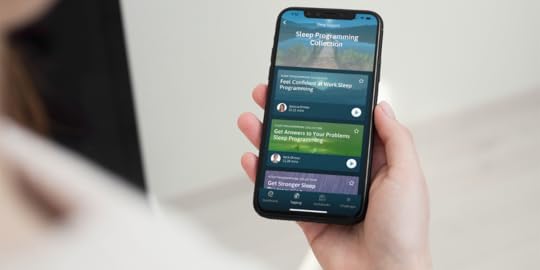
As you can see, Sleep Programming combines the best parts of a variety of different effective techniques to open up the mind and body to positive changes.
Getting deeply relaxed, preparing your body for sleep, and then programming with a specific objective in mind using positive suggestions, affirmations, and visualizations is a potent combination. And it’s that potent combination that makes Sleep Programming Tapping Meditations so special and so helpful for a wide variety of needs.
I’ve experienced the positive influence of Sleep Programming myself in my personal life, I’ve seen it be transformational for others I’ve worked with, and I’ve heard positive feedback about this technique time and time again from users in the Tapping Solution App.
So why not give it a try and see what you think?
If you are looking to use Sleep Programming specifically to get deeper or more restorative sleep, here are a few meditations you might like:
Sleep Through the Night Sleep ProgrammingWake Up Refreshed Sleep ProgrammingReduce Night-Time Wake-Ups Sleep ProgrammingIf you are looking for support in other areas of your life, such as your health, self-confidence, stress, or motivation, consider other topics in our Sleep Programming category. Here are just a few to choose from:
I Am Enough Sleep ProgrammingIncrease my Optimism Sleep ProgrammingMake Healthy Eating Choices Sleep ProgrammingGet Stronger Sleep ProgrammingBe Calm in Social Situations Sleep ProgrammingFeeling Confident at Work Sleep ProgrammingNavigate Change with Ease Sleep ProgrammingJaw Relaxation Sleep ProgrammingIncrease Motivation & Productivity Sleep ProgrammingRelease Colds and Flus Sleep ProgrammingWe’ve also created 3 Sleep Programming Challenges in the App that will help you create positive changes in your life and mindset:
5 Day Sleep Programming for Positivity
Increase My Optimism
I Am Enough
Increase Abundance & Prosperity
Increase Self-Esteem
Wake Up Happy
5 Day Sleep Programming for Productivity
Increase Motivation and Productivity
Increase Self-Discipline
Improve Brain Function
Get Answers to Your Problems
Increase Self-Confidence
7 Day Sleep Programming for Health
Sleep Through the Night
Increase Healing
Make Healthy Eating Choices
Balanced Hormones
Jaw Relaxation
Get Stronger
Wake Up Refreshed
Until next time…
Keep Tapping!
Nick Ortner
References
Sawni A, Breuner CC. Clinical Hypnosis, an Effective Mind-Body Modality for Adolescents with Behavioral and Physical Complaints. Children (Basel). 2017;4(4):19. Published 2017 Mar 24. doi:10.3390/children4040019.Smith BL. “Hypnosis today.” American Psychological Association. Apa.org. https://www.apa.org/monitor/2011/01/hypnosis“6 Surprising Health Benefits of Hypnosis.” Penn Medicine. Pennmedicine.org. https://www.pennmedicine.org/updates/blogs/health-and-wellness/2019/january/hypnosisChurch D, Yount G, Brooks AJ. The effect of emotional freedom techniques on stress biochemistry: a randomized controlled trial. J Nerv Ment Dis. 2012;200(10):891-896. doi:10.1097/NMD.0b013e31826b9fc1..Halligan PW & Oakley DA. (2014). Hypnosis and beyond: Exploring the broader domain of suggestion. Psychology of Consciousness: Theory, Research, and Practice, 2014;1(2):105–122. https://doi.org/10.1037/cns0000019.Ol... N, Elkins GR, Slonena E, Hung J, Rhodes JR. Mindful Hypnotherapy to Reduce Stress and Increase Mindfulness: A Randomized Controlled Pilot Study. Int J Clin Exp Hypn. 2020;68(2):151-166. doi:10.1080/00207144.2020.1722028.Otte JL, Carpenter JS, Roberts L, Elkins GR. Self-Hypnosis for Sleep Disturbances in Menopausal Women. J Womens Health (Larchmt). 2020;29(3):461-463. doi:10.1089/jwh.2020.8327.Hammond DC. Hypnosis in the treatment of anxiety- and stress-related disorders. Expert Rev Neurother. 2010;10(2):263-273. doi:10.1586/ern.09.140.Roberts RL, Rhodes JR, Elkins GR. Effect of Hypnosis on Anxiety: Results from a Randomized Controlled Trial with Women in Postmenopause [published online ahead of print, 2021 Aug 17]. J Clin Psychol Med Settings. 2021;10.1007/s10880-021-09810-3. doi:10.1007/s10880-021-09810-3.Jensen MP, Jamieson GA, Lutz A, et al. New directions in hypnosis research: strategies for advancing the cognitive and clinical neuroscience of hypnosis. Neurosci Conscious. 2017;3(1):nix004. doi:10.1093/nc/nix004.Jensen MP, Adachi T, Tomé-Pires C, Lee J, Osman ZJ, Miró J. Mechanisms of hypnosis: toward the development of a biopsychosocial model [published correction appears in Int J Clin Exp Hypn. 2015;63(2):247]. Int J Clin Exp Hypn. 2015;63(1):34-75. doi:10.1080/00207144.2014.961875.Ilmi J, Suharsono YY, Ingarianti TTM. Self-Hypnosis Training to Improve Self Confidence in Students for Public Speaking. Proceedings of the 3rd International Conference on Education and Training (ICET 2017). 2017. https://doi.org/10.2991/icet-17.2017.... C, Faymonville ME, Vanhaudenhuyse A, Jerusalem G, Willems S, Bragard I. Randomized controlled trial of a group intervention combining self-hypnosis and self-care: secondary results on self-esteem, emotional distress and regulation, and mindfulness in post-treatment cancer patients. Qual Life Res. 2021;30(2):425-436. doi:10.1007/s11136-020-02655-7.Critcher CR, Dunning D. Self-affirmations provide a broader perspective on self-threat. Pers Soc Psychol Bull. 2015;41(1):3-18. doi:10.1177/0146167214554956.Cascio CN, O’Donnell MB, Tinney FJ, et al. Self-affirmation activates brain systems associated with self-related processing and reward and is reinforced by future orientation. Soc Cogn Affect Neurosci. 2016;11(4):621-629. doi:10.1093/scan/nsv136.Patricolo GE, LaVoie A, Slavin B, Richards NL, Jagow D, Armstrong K. Beneficial Effects of Guided Imagery or Clinical Massage on the Status of Patients in a Progressive Care Unit. Crit Care Nurse. 2017;37(1):62-69. doi:10.4037/ccn2017282.Grammatica G. Guided Imagery as a Resource to Decrease Test Anxiety. Creat Nurs. 2018;24(4):211-214. doi:10.1891/1078-4535.24.4.211.Carpenter JJ, Hines SH, Lan VM. Guided Imagery for Pain Management in Postoperative Orthopedic Patients: An Integrative Literature Review. J Holist Nurs. 2017;35(4):342-351. doi:10.1177/0898010116675462.Giacobbi PR Jr, Stewart J, Chaffee K, Jaeschke AM, Stabler M, Kelley GA. A Scoping Review of Health Outcomes Examined in Randomized Controlled Trials Using Guided Imagery. Prog Prev Med (N Y). 2017;2(7):e0010. doi:10.1097/pp9.0000000000000010.Williamson A. What is hypnosis and how might it work?. Palliat Care. 2019;12:1178224219826581. Published 2019 Jan 31. doi:10.1177/1178224219826581.The post The Power of Sleep Programming appeared first on The Tapping Solution.
Related posts: Tapping for Restless Legs Syndrome – The Tapping Solution App
 Healing the Critical Voice
 Adventures in Happiness Podcast: “How to Succeed Without Experiencing Burnout”
November 9, 2021
How Our Compassion for Others May Reflect Our Compassion for Ourselves
If you’ve made this choice, that’s completely ok! It just means that you’re either being very honest with yourself (for which I applaud you), or you were just curious to see where this choice would take you. 
If you have difficultly showing compassion for others, it probably means you have difficultly feeling compassionate towards yourself as well.
Instead of offering that kindness, support, and understanding, we are much more likely to be hard on ourselves, criticize ourselves, and make ourselves feel bad when our life experiences have shaped us into feeling this way.
If you are trying to radiate compassion out to the world around you – to loved ones, friends, acquaintances, strangers, even people across the globe – that is awesome. Keep on trying! Everything is a process. You are doing a great job.
But it’s also important to check and make sure that you aren’t leaving something – or someone – very important out of the equation.
As Jack Kornfield says,
“If your compassion does not include yourself, it is incomplete.”Now some people might think that self-compassion isn’t very important, and maybe that it’s even detrimental. They believe that self-compassion can lead to self-pity, weakness, complacency, or selfishness.[1]
Conversely, many of us often think that being hard on ourselves and being self-critical is actually what we need and what will be most helpful.
After all, don’t we have to be hard on ourselves in order to push ourselves to be better, improve, and achieve more?
It turns out that the answer is no.
The problem with self-criticismSelf-criticism is actually likely to backfire on us, and not work out in our best interest. In fact, research shows that self-criticism is tied to depression, eating disorders, physical health issues, and much more.[2-4]
So, it turns out that self-criticism isn’t really the best option if we want to grow, improve, and become our best selves.
Self-compassion, on the other hand, IS effective and is thought to be one of the keys to becoming our best selves.
As Dr. Kristin Neff, a psychologist and expert in self-compassion says,
“Unlike self-criticism, which asks if you’re good enough, self-compassion asks, what’s good for you?”Self-compassion can help us become more resilient, take risks, learn from mistakes, and keep moving forward with passion and with strength.[5] When we do face failure or don’t reach our goals, self-compassion helps us to cope with that in a productive way, have a more helpful response, and bounce back.[6]
Research has shown us that self-compassion actually leads to more productivity, decreased stress and depression, greater well-being, and more life satisfaction. People who practice self-compassion even tend to make wiser health choices.[5,6]
Consider another great piece of wisdom from Kristin Neff. “Why is self-compassion a more effective motivator than self-criticism? Because its driving force is love, not fear.”
So, what really is self-compassion anyways?On a basic level, self-compassion means treating yourself with the same support, love, kindness, and understanding that you would offer to anyone you care about.
Dr. Kristin Neff is a pioneer in the world of self-compassion, and through her studies, she has determined that self-compassion has three key parts:
1. Being kind and understanding towards ourselves. In other words, practicing self-kindness.
2. It involves understanding that we aren’t alone, that we are a part of a shared common human experience.
3. Self-compassion involves mindfulness. This means noticing and acknowledging our feelings and experiences without judgment. [5,6]
Self-compassion allows us to wish ourselves well, offer ourselves validation, and treat ourselves with warmth, love, and respect.
It also reminds us that our suffering and our challenges are all a part of being human. Other people suffer and struggle and are challenged too. This isn’t to compare degrees of suffering or to diminish our own, but to remind us that it is all part of life. It is normal.
As Neff says, “When we’re in touch with our common humanity, we remember that feelings of inadequacy and disappointment are shared by all. This is what distinguishes self-compassion from self-pity. Whereas self-pity says, ‘poor me,’ self-compassion remembers that everyone suffers, and it offers comfort because everyone is human.”
Finally, it gives us space to acknowledge what we are going through, and to validate and honor the emotions, thoughts, and experiences we are having.
Let’s keep this in mind…So, as we move through the rest of our day and our week, let’s try to keep in mind this idea of self-compassion. And the next time you are feeling down or hard on yourself, consider Kristin Neff’s advice.
“Whenever I notice something about myself I don’t like, or whenever something goes wrong in my life, I silently repeat the following phrases: This is a moment of suffering. Suffering is part of life. May I be kind to myself in this moment. May I give myself the compassion I need.”And right here, right now, perhaps consider a small kindness you might be able to offer yourself at some point today. It might be a small act of love, writing yourself a kind letter, offering yourself a few words of affirmation, or a compassionate mantra.
But whether or not you choose to take this any further, simply listening to these words today and learning more about self-compassion is already such great work that you are doing for yourself. You are doing a wonderful job, and I’m so glad we got to share this time together today.
If you’d like to put some self-compassion into action with Tapping, consider two powerful Tapping Meditations from our App: You Are Enough and Releasing the Critical Voice.
Which speaks to you today? Go ahead and use it now!
Sending you much love!
Until next time…
Keep Tapping!
Nick Ortner
References
1. https://greatergood.berkeley.edu/article/item/the_five_myths_of_self_compassion
2. https://pubmed.ncbi.nlm.nih.gov/28886675/
3. https://guilfordjournals.com/doi/10.1521/pdps.2016.44.3.395
4. https://www.psychologytoday.com/us/blog/stress-self-and-health/201708/the-hazards-self-criticism
5. http://ccare.stanford.edu/uncategorized/the-scientific-benefits-of-self-compassion-infographic/
6. https://greatergood.berkeley.edu/article/item/the_power_of_self_compassion
The post How Our Compassion for Others May Reflect Our Compassion for Ourselves appeared first on The Tapping Solution.
Related posts:Adventures in Happiness Podcast: “How to Succeed Without Experiencing Burnout” Thank You For Another Amazing Summit!
 What a Wonderful Year! Thank You!
The Science of Self-Compassion
It’s much easier to be compassionate towards others.
But when we are the ones having a hard time, making mistakes, or facing challenges or setbacks?
It can be much more difficult to feel compassionate towards ourselves. Instead of offering that kindness, support, and understanding, we are much more likely to be hard on ourselves, criticize ourselves, and make ourselves feel bad.
If you are radiating compassion out to the world around you – to loved ones, friends, acquaintances, strangers, even people across the globe – that is awesome. (And I know it doesn’t happen all the time! And that’s OK too.) You are doing a great job.
But it’s also important to check and make sure that you aren’t leaving something – or someone – very important out of the equation.
As Jack Kornfield says,
“If your compassion does not include yourself, it is incomplete.”Now some people might think that self-compassion isn’t very important, and maybe that it’s even detrimental. They believe that self-compassion can lead to self-pity, weakness, complacency, or selfishness.[1]
Conversely, many of us often think that being hard on ourselves and being self-critical is actually what we need and what will be most helpful.
After all, don’t we have to be hard on ourselves in order to push ourselves to be better, improve, and achieve more?
It turns out that the answer is no.
The problem with self-criticismSelf-criticism is actually likely to backfire on us, and not work out in our best interest. In fact, research shows that self-criticism is tied to depression, eating disorders, physical health issues, and much more.[2-4]
So, it turns out that self-criticism isn’t really the best option if we want to grow, improve, and become our best selves.
Self-compassion, on the other hand, IS effective and is thought to be one of the keys to becoming our best selves.
As Dr. Kristin Neff, a psychologist and expert in self-compassion says,
“Unlike self-criticism, which asks if you’re good enough, self-compassion asks, what’s good for you?”Self-compassion can help us become more resilient, take risks, learn from mistakes, and keep moving forward with passion and with strength.[5] When we do face failure or don’t reach our goals, self-compassion helps us to cope with that in a productive way, have a more helpful response, and bounce back.[6]
Research has shown us that self-compassion actually leads to more productivity, decreased stress and depression, greater well-being, and more life satisfaction. People who practice self-compassion even tend to make wiser health choices.[5,6]
Consider another great piece of wisdom from Kristin Neff. “Why is self-compassion a more effective motivator than self-criticism? Because its driving force is love, not fear.”
So, what really is self-compassion anyways?On a basic level, self-compassion means treating yourself with the same support, love, kindness, and understanding that you would offer to anyone you care about.
Dr. Kristin Neff is a pioneer in the world of self-compassion, and through her studies, she has determined that self-compassion has three key parts:
1. Being kind and understanding towards ourselves. In other words, practicing self-kindness.
2. It involves understanding that we aren’t alone, that we are a part of a shared common human experience.
3. Self-compassion involves mindfulness. This means noticing and acknowledging our feelings and experiences without judgment. [5,6]
Self-compassion allows us to wish ourselves well, offer ourselves validation, and treat ourselves with warmth, love, and respect.
It also reminds us that our suffering and our challenges are all a part of being human. Other people suffer and struggle and are challenged too. This isn’t to compare degrees of suffering or to diminish our own, but to remind us that it is all part of life. It is normal.
As Neff says, “When we’re in touch with our common humanity, we remember that feelings of inadequacy and disappointment are shared by all. This is what distinguishes self-compassion from self-pity. Whereas self-pity says, ‘poor me,’ self-compassion remembers that everyone suffers, and it offers comfort because everyone is human.”
Finally, it gives us space to acknowledge what we are going through, and to validate and honor the emotions, thoughts, and experiences we are having.
Let’s keep this in mind…So, as we move through the rest of our day and our week, let’s try to keep in mind this idea of self-compassion. And the next time you are feeling down or hard on yourself, consider Kristin Neff’s advice.
“Whenever I notice something about myself I don’t like, or whenever something goes wrong in my life, I silently repeat the following phrases: This is a moment of suffering. Suffering is part of life. May I be kind to myself in this moment. May I give myself the compassion I need.”And right here, right now, perhaps consider a small kindness you might be able to offer yourself at some point today. It might be a small act of love, writing yourself a kind letter, offering yourself a few words of affirmation, or a compassionate mantra.
But whether or not you choose to take this any further, simply listening to these words today and learning more about self-compassion is already such great work that you are doing for yourself. You are doing a wonderful job, and I’m so glad we got to share this time together today.
If you’d like to put some self-compassion into action with Tapping, consider two powerful Tapping Meditations from our App: You Are Enough and Releasing the Critical Voice.
Which speaks to you today? Go ahead and use it now!
Sending you much love!
Until next time…
Keep Tapping!
Nick Ortner
References
1. https://greatergood.berkeley.edu/article/item/the_five_myths_of_self_compassion
2. https://pubmed.ncbi.nlm.nih.gov/28886675/
3. https://guilfordjournals.com/doi/10.1521/pdps.2016.44.3.395
4. https://www.psychologytoday.com/us/blog/stress-self-and-health/201708/the-hazards-self-criticism
5. http://ccare.stanford.edu/uncategorized/the-scientific-benefits-of-self-compassion-infographic/
6. https://greatergood.berkeley.edu/article/item/the_power_of_self_compassion
The post The Science of Self-Compassion appeared first on The Tapping Solution.
Related posts:Adventures in Happiness Podcast: “How to Succeed Without Experiencing Burnout”Thank You For Another Amazing Summit!What a Wonderful Year! Thank You!
November 1, 2021
Happy Halloween! (2021)
The cuteness was in full force this past Sunday here at the Ortners and I thought I’d share a few pics for those of you who have watched our family grow these past years.
And no… my wife Brenna was not dressed up as a “pregnant witch.” She’s pregnant, yes, AND dressed up as a witch. Lol! We’re delighted to be expecting our 2nd, a boy, in early January.
Here are our pics!

Jessica the Cookie Monster with her delicious cookie daughter!
.

My daughter loves finding a praying mantis that lives in our backyard and asked me to be one for Halloween… I couldn’t say no!
.

My brother Alex with his lovely (but a little scary for Halloween) family!
.
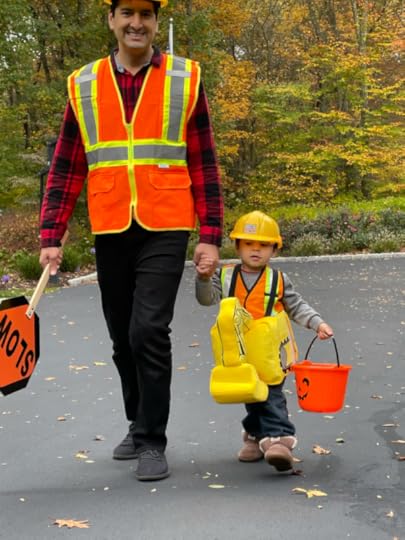
Enzo the excavator (Jessica’s son) and his helpful construction worker dad. That sign made a great costume and helpful sign as we walked the streets!
Until next time…
Keep Tapping!
Nick Ortner
Did you or your kids dress up for Halloween this year? Comment below!The post Happy Halloween! (2021) appeared first on The Tapping Solution.
Related posts:Louise Hay Talks TappingFrom Doubt to a Seed of Hope – Tapping MeditationAdventures in Happiness Podcast: “How to Succeed Without Experiencing Burnout”
October 27, 2021
Calm Anxiety and Stress in 3 Minutes with Nick Ortner and Marie Forleo
Lots of people are experiencing lots of stress these days. Is it any wonder why they’re looking for more alternative ways to relieve it?
It’s a good thing we have Tapping!
It’s quick, it’s easy to learn, and most importantly – it works.
Marie Forleo invited me onto her podcast to demonstrate a short Tapping session for relieving stress and anxiety. Give it a watch and feel free to tap along with us.
It doesn’t have to take a lot of time to achieve the results you’re looking for. Sometimes all you need is a quick boost.
In The Tapping Solution App, we have a category called Micro Boosts which features a variety of 3-4 minute Tapping Meditations designed to quickly shift your mood. Why not give one of those a try next?
Until next time…
Keep Tapping!
Nick Ortner
The post Calm Anxiety and Stress in 3 Minutes with Nick Ortner and Marie Forleo appeared first on The Tapping Solution.
Related posts: From Panic to Peace – A Tapping Meditation
 Releasing Anxiety with EFT Tapping
 Releasing Coronavirus Anxiety
Tapping on the TODAY Show with Megyn Kelly
This was Megyn Kelly’s glowing introduction to Tapping when it was featured on a special segment of the TODAY Show. WOW!
It’s always an honor to be featured on mainstream television to talk about Tapping, but what’s even more inspiring to me is the young lady who joined me on the show.
Adrienne Cerulo was a fit, active, and healthy young woman who suddenly, and without any warning, developed debilitating back pain. She tried everything she could to eliminate the pain and nothing worked… until Tapping.
Watch the whole segment below and listen to her incredible story.
Nobody likes to live in pain. But the good news is, you don’t have to.
If pain relief is something you’re longing to experience, then join us for the Pain Relief World Summit to discover how you too can be pain-free.
Until next time…
Keep Tapping!
Nick Ortner
The post Tapping on the TODAY Show with Megyn Kelly appeared first on The Tapping Solution.
Related posts: EFT Tapping for Pain Relief
 Releasing the Overwhelm and Frustration of Chronic Pain
 Finding Relief from Chronic Pain
October 12, 2021
Your Brain Before… and After Tapping
We’ve all been there… You’re all nice and snuggly in your jammies as you settle in for a good night’s sleep when suddenly…
Well, I’ll let the video speak for itself. LOL!!
LOL!
Sleep is one of those things that should be easy to do, but when you have a thousand thoughts racing around in your head, it can really put a damper on catching those ZZZZs.
In The Tapping Solution App, we have an entire category devoted to Sleep Support, allowing you to get to sleep faster, and stay asleep longer.
Go on and give Tapping a try tonight!
Until next time…
Keep Tapping!
Nick Ortner
The post Your Brain Before… and After Tapping appeared first on The Tapping Solution.
Related posts:Healing the Critical Voice Highly Recommended by the Owner: Accepting ComplimentsAdventures in Happiness Podcast: “How to Succeed Without Experiencing Burnout”