
Lynne M. Spreen's Blog, page 11
March 11, 2016
Empowered in Older Age
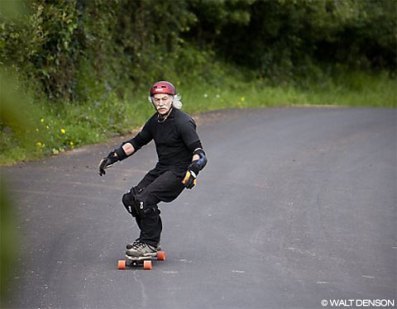
“I don’t think of myself as old.” That’s the battle cry. As long as you can say that, you’re winning, right?
But you really will be old one day. Your secret fear of age will come home to roost. Then what?
Here’s my recommendation: starting now, become unafraid of aging.
How you do that is to first recognize where that fear is coming from. It’s induced by the culture, which is heavily—no, PRIMARILY—shaped by media. And media is shaped by advertising, marketing, and selling.
Anxiety is a sales tool. It makes us want to buy things.
Anxiety (fear) sells pills, lotions, potions, insurance, guns, prisons, and political candidates. Good news doesn’t sell anything, which is why you don’t get equal media brainwashing about the positive. Like the fact that around age 50, we start getting happier. Or that our brains work better in many ways.
So now you know you’re being brainwashed, you can laugh at the stupid media portrayal of us as doddering old fools or skateboarding freaks. The majority of us are in the normal middle.
Want to know what’s crazy? If advertisers stopped trying to scare us into buying stuff, they’d still sell us billions of dollars of goods and services.
This is because, contrary to conventional “wisdom,” older people constitute an exploding market! Here’s an excerpt from Time Magazine’s article, “Your Longevity is Good for Business,” by Dan Kadlec, who asks why businesses aren’t targeting people over 50.
This is a global market nearly the size of China, and it is entirely new in the sense that people this age have never before had so much spending power, staying power and ambition.
Why are advertisers still stuck in the 1950s? My guess is that most advertisers are young, thanks to age discrimination in the workplace, and don’t understand old people. And then there’s the fact that older age is changing for the better but the culture is slow to realize it (self-fulfilling prophesy, anyone?)
“The problem is a total absence of imagination,” says Joseph Coughlin, director of the MIT AgeLab, which studies longevity. “Marketers still present these years as filled with golf, cruises and a rocking chair.”
“That model of later life may be dated, but it’s a struggle to fully understand what is replacing it. Here’s the way experts on aging describe it: People past 50 control 70% of the nation’s disposable income. If they aren’t working, they may be volunteering, starting a small business or nonprofit, or taking enrichment classes. Many remain socially active and want to look and feel great–and will spend to get that experience.”
If marketers dropped the ageist stereotyping, they could make more money. And we older people would be happier and better served.


March 4, 2016
Vietnam Vets Sacrifice Health for Horses
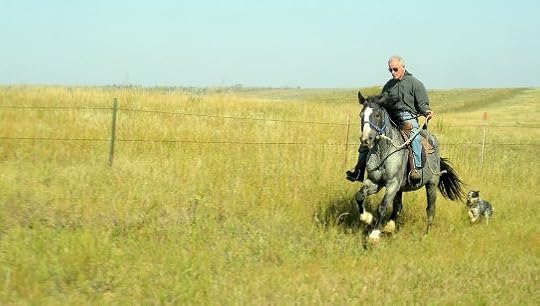 North Dakota has a special place in my heart, as you know. It’s why I based my novel there.
Mom hails from there, and she used to take us kids back to see the relatives every other summer. Dad’s buried in the Catholic cemetery in Lefor, surrounded by Mom’s family. My heart is drawn to North Dakota.
Now there’s another reason to love it.
As a kid, I was horse-crazy, but since I lived in a southern California suburb, the only horses I ever owned were stuffed animals or plastic critters. However, we still had places around town, back in those days, where I could live the fantasy. I rode horses, fed horses, snuck into barns to visit them, drew them, and dreamed of them. I still go breathless at the sight of a beautiful horse.

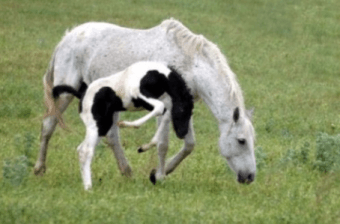
Black Fox, a Nokota horse
I recently learned of a breed of horse that lives in North Dakota. The Nokota has been genetically mapped to Sitting Bull’s herd of war ponies. A couple of brothers, Frank and Leo Kuntz, are trying to save the few that are left. That’s Frank in the picture up top.
As one time, the brothers, both Vietnam vets, had prostate cancer, but they used their medical treatment money to support the herd. For more about them, check out this seven-minute video, and if you’d like to help, click here for The Nokota Horse Conservancy. Wouldn’t it be great to help preserve these living monuments to American history?
I’ve heard it said that older people become more outwardly focused. Whereas in our earlier years we work at developing ourselves and our families, in older age our concern turns to more global interests. For example, saving the planet instead of getting a promotion. People who turn to such larger issues tend to have more peace in very old age, feeling as if they’ve made their mark and left a legacy. I think Frank and Leo Kuntz are doing this, and I celebrate them. What unselfish examples of maturity.
February 26, 2016
In Praise of Older-Age Communities
 I often hear it said that living in a neighborhood that’s restricted to ages 55+ is bad.
Bad as in:
closed-minded
short-sighted
ageist
fearful
narrow-minded
I suppose it can be, if you close yourself off and never mingle with other age groups. But as a private, introverted person this is exactly the kind of community I want to grow old in.
The other day, my mother, who also lives here, told a sick friend: “Unlock your door. I’m coming over.” And then Mom got her cane and walked down the street to sit with the friend, who was afraid to be alone but didn’t want to bother anybody. Mom and a couple of other women took turns staying with her. The next day, the friend felt better, her children returned from a vacation and checked on her, and things resolved themselves.
Community. It derives from the French, meaning “things held in common.” What we hold in common here is a short-timer’s heightened appreciation for health and life, and a retiree’s luxury of time which we can use to support and nurture other humans. Most of us engage in the life of the city and surrounds. We volunteer, attend, eat, buy, watch, applaud, raise money, show support, and shower love. I’m particularly proud of our partnership with the Marine families of 29 Palms, California, and the military veterans at March Air Reserve Base in Moreno Valley, California.
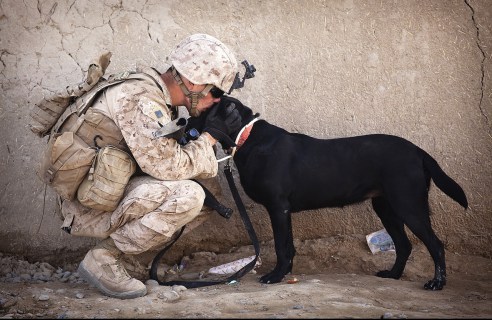
As we age, some of us have chosen to live closer together. Communal forms of housing are a big deal these days, and it’s not just for older people, but that’s who reinvented it. The pig-in-the-python swell of aging boomers is changing the culture once again.
People need each other. If I get tired of working or hiding out, I can easily get social. All I have to do is attend a meeting or go read a book on the patio at the clubhouse. Soon enough, my spirits will be lifted by a friendly wave, or warm conversation. If I go for a walk or a bike ride, or work out at the gym, I see people all around who are my age or older and enjoying the opportunity to maintain their health. They inspire me.
Not that this couldn’t happen in a more heterogeneous community, but I’ve never been happier anywhere else. If you’re so inclined, I recommend checking out the benefits of a 55+ community. Just remember to stay engaged outside the gates.

February 19, 2016
Embrace the Mystery of Aging
 Bill and I were sitting on the patio, watching the light fade, and talking about recent nightmares.
The night before, we’d both had similar, horrible dreams. Bill dreamed he was homeless, scared, and foraging for food. I dreamed my house fell off the side of a hill, crashing and rolling into splinters. In dream symbology, this probably relates to a sense of insecurity. It’s probably because our family and friends have had some setbacks lately, and we’re rattled.
Bill was facing a birthday, and admitted he’s been more aware lately of mortality. We’re the only animal that knows we’re going to die. How do you deal with that? At least we have each other to talk to, and we enjoyed the back and forth. At the conclusion, I had an idea that gave me comfort:
I wondered if, being in our sixties, we’re still transiting to a more peaceful stage.
Maybe we’re still too young to feel the calmness about death that seems to be typical of many older people. A recent Time magazine had an article with the question “Why are old people less scared of dying?” There are various theories, ranging from the practical (after decades of drama and suffering, older people choose to employ their energies on something more positive) to the physiological (the way your brain changes, like having a chill amygdala later in life). Research tell us that old people “have less anxiety and sadness and more overall satisfaction,” per Thomas Pyszczynski, professor of psychology at the University of Colorado, Colorado Springs.
“A lot of our fear of death is about losing the things we’ve built up,” says Steve Taylor, a psychologist and author (Out of Darkness). “But elderly people let go of their attachment to these things, and in the process they let go of some of their fear.”

Bill and I agreed we’re less worried about dying now that our kids are independent. Maybe that’s a factor, too, in diminishing anxiety. But I think there’s more to it.
When I look at all my mother has gone through, the deaths of so many friends and loved ones, the loss of mobility and access, the loneliness and fears, I think I’d be nuts. But she’s thriving. She has found a new gear. At 90, she’s so powerful.
We pay lip service to elder wisdom, but maybe we underestimate them. I suspect they develop new ways of knowing. New perspectives, new grace.
I said to Bill, maybe we’re in the last throes of anguish over it, and after we process this stage, we’ll reach the sanguine phase. The place of the the old people, where treasuring the now is so much more satisfying than agonizing over the future. “That would be a relief,” he said.
In other words, we’re still too young.
It gets better.
February 12, 2016
You Probably Won’t Get Dementia, Contrary to Popular Belief
Do you worry about getting dementia in later life, because it’s so prevalent? Well, here’s a shocker.
Only 2% of the American population gets dementia. You probably thought it was around 25, 30, maybe even 50%, right? Because we hear about it so often, and it’s admittedly overwhelming for the people who have it and their loved ones. But still. 2%?
And that small percentage has dropped by almost half in the past fifty years, from 3.5% in the 1970s, according to a recent article in the New England Journal of Medicine.
Now, it’s true that the numbers are up, because there are more old people hanging around. But you’re less likely to get it than people born a couple generations ago.
So if 98% of us won’t get dementia, why do we freak out every time we forget something?
We have been sold a bill of goods. We’ve been told to expect dain bramage (as my piano teacher calls it) in later life, but it seems that this isn’t a huge probability. If you were told there was a 2% chance of rain, would you cancel the picnic?
I don’t mean to minimize the reality of dementia. It’s poorly understood and frequently misdiagnosed, it can be devastating to those who have it and their loved ones, there is no cure on the horizon, and the amount of money spent on research by the federal government is laughable.
Although it was a relief to read the article, my immediate reaction was anger. In fact, I was so mad I was practically yelling, until Bill said, “So this is good news, right?” And I had to apologize and we both laughed at my attitude. But it pisses me off, because there’s a ton of evidence that the more bad stuff you believe about getting older, the more it affects your health as you age. Those negative beliefs can shorten your life by 7.5 years.
Part of the reason dementia rates are dropping is because heart health and care is improving. However, obesity is one of the factors that can increase your chances. In case we needed more reason to eat less and exercise more.
So that’s the good news, and I apologize for all the yelling.
February 5, 2016
Life Hack: 2 Minutes to Greater Confidence
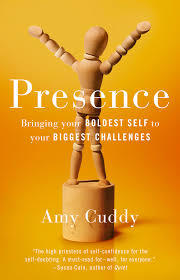
Did you know you can change your brain chemistry by sitting or standing a certain way for two minutes?
Amy Cuddy is a scientist. Her research, sparked by her own near-death car accident and resulting brain trauma, as well as the fight to recover, led her to undertake some intriguing research. She wondered if a person could move, pose, or operate their body in such a way as to prompt the release of chemicals that affect one’s emotions. Here’s what she learned, and her research has been replicated enough times by others to trust its veracity:
Certain postures can cause a measurable change in hormone levels.
In the most striking example of this, Cuddy and her team proved through before-and-after saliva tests that certain “power poses” caused test subjects to experience a 19% increase in testosterone and a 25% decrease in cortisol. “Low power” poses showed a 10% decrease in testosterone and a 17% increase in cortisol.
Why is this important?
Testosterone is the hormone that helps you feel confident and self-assured, more open to growth, success, and opportunity.
Cortisol relates to feelings of anxiety. High cortisol = greater stress.
According to Amy Cuddy
Our bodies change our minds, our minds change our behavior, and our behavior changes our lives.
I can’t possibly tell you all the good news about how posture can help or hurt you, but I absolutely recommend the book. If you buy it, know that the first five chapters are deep with science. The fun part, what to do with that information, starts in Chapter Six. This is where you can see examples of helpful or unhelpful poses.

Lagarde in power stance.
Or the short/quick version: below is Cuddy’s TED talk that went viral and started a movement. In it, she documents the value of stance and posture. She says you can change your hormone levels (and thus, your chance of success in challenging situations) by, among other simple fixes, posing like Wonder Woman for just two minutes beforehand. (Hands on hips, chin slightly elevated, feet slightly apart. As if your cape is flowing behind you.)
This video went viral and has changed the lives of thousands across the globe. Many of those anecdotes are in the book. Bottom line:
“Carrying yourself in a powerful way directs your feelings, thoughts, behaviors, and body to feel powerful and be present (and even perform better) in situations ranging from the mundane to the most challenging.”
Here is Amy Cuddy’s TED Talk. Watch it with your kids. You might need tissues at the end.
January 29, 2016
Middle-Age Goes On Forever
 With improved health and life expectancy, your middle-age could go on for decades.
Not that long ago, people were considered diminished (or heading that way) by age sixty, but with better health and longevity, our understanding of aging is changing. Now, 60-year-olds are starting over. 70-year-olds are finding another gear. 80-year-olds are sublime thinkers, levitating over earthbound drama. And then there’s my Mom, who I’ve told you about. At 91, she’s still truckin’. Well, not literally, you guys. But she’s curious and thoughtful and as active as her creaky old bones will let her.
And she’s not even that unique anymore.
If you think about youth as the first fifty years of your life, and very old age as a time of extreme diminution, there’s a lengthy middle. That period may last as long as it takes to raise kids to adulthood. Mom’s last kid left home forty years ago.
What are you going to do with all that time?
Olders (a term my friend Ashton Applewhite uses) don’t look like beautiful kids anymore, but we’re starting to get over that and appreciate our talents, gifts, strengths, and expertise.
One of those strengths is that we feel less bound by rules and convention. We played the games all these years, but now we don’t have to. As much. Or if we do, we do it because it serves our purposes. We’re so tough and awesome.
Old age is changing. Do you sense that? The fences are weathered and falling down. We can run free. Sometimes we don’t really understand how good we have it, because mortality is a bitch. But to focus on the positive, you almost have a second adulthood available to you. What are you going to do with it?
January 22, 2016
We’re Blessed, Not Old
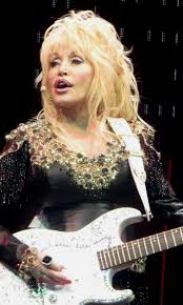
The fabulous, iconic Dolly Parton enjoyed her 70th birthday on 1/19/16
A lot of people have a problem with the word “old.” I’m trying to change that, one blog post at a time. Seems to me “old” has so many negative connotations, we don’t stop to look at the positive. Like the fact we’re still here. The physical slippage, well, that’s the price we pay for sticking around. All that sun, you know. Dry air. Chemicals.
On the other hand, you know what they say. Old beats the alternative. Consider yourself blessed.
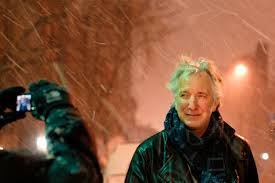
Alan Rickman, not yet 70

David Bowie, not yet 70

Glenn Frey, not yet 70

Dallas Taylor, drummer for CSNY, not yet 70
My condolences to the families and loved ones of the people we lost this month. And for the rest of us, we bow our old gray heads and count our blessings.
January 15, 2016
Hanging Out with Catherine Bybee and Giving Away Books
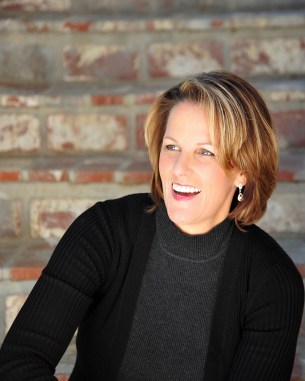
Catherine Bybee, NYTimes bestselling author
Catherine Bybee is a fabulous success now, but she grew up in poverty and hardship.
After high school, and a hopeful move to Southern California, Catherine got a job waiting tables and dreamed of becoming an actress. But starvation wasn’t that appealing, so she became an ER nurse. Did that for 20 years. While recovering from a patient-caused injury, she began writing. Now she’s a hot-shot successful writer, but I love her down-to-earth attitude.
Like when she gave a keynote address in Palm Springs recently, she told us she isn’t that sympathetic when writers moan about all the hard work they have to do. She said if you want to know what hard is, try sitting in the ER with a young mother whose baby just died. As she spoke, remembering, Catherine lost it, and so did we in the audience.
More about Catherine:
She believes that “everything is a lesson or a blessing or both.”
She believes in “being real.” She said proudly, “I will never eat government commodity cheese again.”
She’s funny, grateful, kind, determined, and humble (oh, okay, she mugs for the camera, but that’s the actress in her.)
Her writing process is “basically, to vomit on the page and fix it later.” She is a total pantser.
She believes in paying it forward. (She supports Skip1.org. You should check it out.)
Catherine has published dozens of novels. I’d give you the exact number but I forgot to ask. If you go to her Amazon page, though, it’s a lot. Her website says she writes 2,500 words a day. (I know, right??!!) And then there’s this:
Catherine Bybee is a New York Times, USA Today, Wall Street Journal, and #1 Amazon bestselling author of romance novels. She writes in the romance subgenres of contemporary, historical, paranormal, and at one time erotica. She currently writes for Montlake Romance, an Amazon Publishing Imprint, and self-publishes some works.
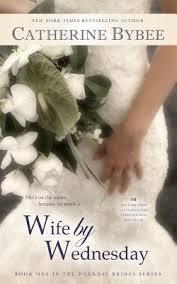
So, obviously, she’s crazy busy, but she signed a couple copies of her bestseller “Wife by Wednesday,” so I could give them to you (see end of post), and agreed to do this interview. Which kind of turned into an essay. Because did I mention she’s generous?
LMS: What made you decide to try writing? Did you do it as a hobby, or did you think you could make a living from it?
CB: Good question!
You’ll often hear writers talk about how they have to write. That the story is in their heads and they need to get it down on paper. Sounds a little crazy, but that’s what happened.
Writing wasn’t a hobby, nor did I think I’d make a living from it. I was simply trying to learn the process. It wasn’t until I sold my first book that I dreamed of replacing the income I once had as a nurse. It took a few years, but it did happen!
LMS: In this day of self-publishing and market saturation, what can you tell a savvy writer about the best way to achieve mid-level sales? (Most writers would be happy to augment their income rather than achieve superstar status. And most of us know the basics, like “write every day” and “create a platform”.)
CB: I think it is easier now than ever for an author to make mid-level sales as a writer. Keep in mind, just a few years ago writers were dependent on publishers to ever make a dime in this market. That said, I think unrealistic expectations are a real thing when savvy writers and newbies think they can just put stuff out there and make six-figures a year. Authors making money are the people who, ten years ago, were sitting down to their computers after their full-time job and plugging away hoping to make five to ten thousand dollars via traditional publishing. Today our expectations are greater. Partly because we hear so often about other writers making a real income, and some reaching that superstar status you’re talking about.
While the ability to reach readers has increased with the Kindle, social media, and self-publishing, the process of writing great books has not.
And how much marketing is an author willing to do to find new readers? You’ve heard the saying “Doing the same thing the same way and expecting different results in the definition of insanity.” I happen to think this is only partially true in this market.
If you’re writing the best book you can at that time in your life, and you keep doing it—knowing on some level it doesn’t suck (Sorry, I had to put that in there.)—then eventually you might hit your market and reach the readers that make it easier for you to leave your day job. But—and here is the but—marketing changes daily. We need to stay on top of what is new and trending, especially if you haven’t yet found your core audience that keeps you from your 9 to 5 day job. Your marketing has to shift and adapt continually.
As for ‘create a platform?’ Honey, I sure hope everyone has already done that before they publish their first book, and they diversify their platform by adding to it monthly.
Yes, write daily. Get better at what you do. Write new and different stuff, but always write from the heart and love your work. If you don’t love what you’re doing, no one else will either. And don’t write for trends. Please. Only publish the best book you have in you right now.
In short, don’t self-publish crap. You often have only one shot at a new reader.
If you don’t hook them from that first book, because you self-published a book that really wasn’t your best, you’re going to lose that reader, and they will never come back. Harsh? Yeah! But ask yourself when you gave an author a second chance of your valuable time when the first book you read from them sucked.
Don’t self-publish that book it if it isn’t the best thing you’ve ever written! Diversify your marketing monthly. Quantify your goals. Your day job may increase your salary by what? 1.5% a year? 3% if you’re lucky. Did you make 3% more than you did last year writing? Or did you make 5-10% more than last year, but it still isn’t enough?
Reality check, people. This is a job. It’s the best damn job in the world, but it is still a job that has to grow to get better and more lucrative.
My tenth book was my breakout hit. For nine novels and novellas I was plugging away hoping something would happen.
Then I wrote in a different genre and wham! There are NO shortcuts to this business. And if you have taken on the role of a publisher, than you have all of that job to do as well as that of the author. It’s a lot. I know. I’ve been there, done that, still do it with some of my work.
Happy Writing!
Lynne again: I have two signed copies of Wife by Wednesday to give away. Send your name and mailing address to me at LMSpreen@Yahoo.com, and I’ll happily mail one to each of the first two requests I receive.
January 8, 2016
Watch Your Language!
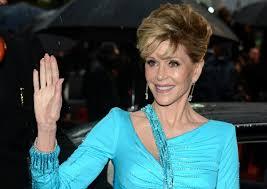 The way we talk about ourselves can be unhealthful, and we don’t even realize it. Even when we celebrate aging, we put ourselves down. Look at this statement from Jane Fonda:
“Staying involved and passionate and curious helps one remain youthful for sure…but spiritually and energetically, I feel younger than when I was 20 and 30.”
What is “youthful” about involvement, passion, and curiosity? Those are the attributes of a good life at any age. Let’s rewrite Jane’s statement.
“As I’ve aged, I’ve become ever more involved and passionate and curious…at almost 80, I feel more spiritual and energetic than ever before.”
Dear Reader, how do you feel now? Invigorating, isn’t it?
When we classify ageless qualities like passion and curiosity as “youthful,” we hurt ourselves. Among other things, negative beliefs about aging can shorten your life by 7.5 years.
 You have the power to change your reality. Here are two things you can do: one, appreciate the physical awesomeness of youth but don’t mythologize it. Envy it, fine. But don’t judge yourself by it.
Second–(jeez, we just had a 4.8 earthquake and I forgot what I was saying! Whew. Calm down, heart.) Second, be aware that positive human attributes aren’t often age-related. Here are the qualities I admire in my friends and family. Guess what ages they are? Three to ninety-two.
vibrant, vital, vigorous
mentally healthy
happy, strong, colorful
energetic, vivacious
dynamic, bold
fiery, exciting, spirited
insightful, wise, confident
You can be any of the above at any age. Learn to strip away the age-relatedness from the descriptor. You’ll feel empowered, and maybe live longer, too!
There’s good news in this article as well:
This is When Middle-Age Actually Ends
When you read it, be mindful of the derogatory way they use the word “old.” They mean well, but awareness is slow in coming. As with Fonda, it’s a habit. We need to be aware of what we do in order to change it. And here’s another reason to try:
Karma bites back: Hating on the elderly may put you at risk of Alzheimer’s
Happy New You!


