
Lynne M. Spreen's Blog, page 8
March 3, 2017
Elder Fairy Tales Offer a Guide to Maturity
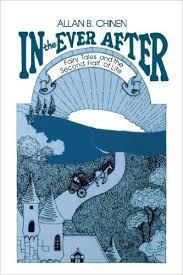 When you think of fairy tales, you think of children, and for the most part, that’s the intended audience. But did you know that some tales were written for older people?
I just read a fascinating book, “In the Ever After: Fairy Tales and the Second Half of Life,” by Allan B. Chinen. It contains fifteen elder tales which all repeat themes common to older people. According to Chinen and others, many popular fairy tales have been shortened to exclude the part about elders.
In the introduction, Chinen says, “Elder tales present a coherent psychological map of the tasks individuals must negotiate in the second half of life—warning of the difficulties and dangers, and previewing the promise and potential…Elder tales address the concerns of mature adults struggling with the psychological tasks of later life.”
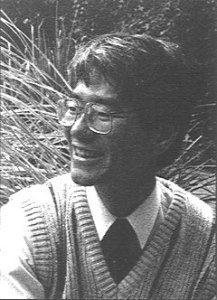 Chinen, a psychologist, follows each tale with an interpretation of the lessons as they apply to older adults. Using Erik Eriksen’s developmental stages, and citing Carl Jung and others, he demonstrates how each story’s metaphors and symbols depict the continuing development of older people.
Here’s an example: After “The Old Man Who Lost His Wen” (Japan), Chinen explains how many older people (Jung himself, for example, and Paul Gauguin) in older age decide to reject cultural norms, transcend egocentric concerns, and reach Abraham Maslow’s stage of “self-actualization.” (Gauguin was ridiculed for his paintings of the South Pacific, but he persisted, because it made him happy.)
Of course, one issue facing elders is death. In the stories, metaphor and allusion work together to show us that death is a natural part of the life cycle, not to be feared but accepted. For example, following “An Old Mother’s Sorrow” (Germany), Chinen explains how the story “…helps us understand this calm acceptance (of death)…It is a product of self-transcendence…Surveys of older adults document the truth of these fairy tale insights: fear of death subsides with maturity and there are suggestions that equanimity toward death correlates with mental health. Death simply becomes another fact of life to the mature individual.”
 In “The Dragon King of the Sea” (Korea), Chinen offers an interpretation of the theme from psychologist Robert Peck, who suggests that “…mature individuals distinguish between social roles and the inner self, and so are more able to adopt different roles and adapt to changing circumstances.” The story also may be interpreted in light of Carl Jung’s research, wherein boys suppress their feminine side and girls, their masculine, until maturity allows them, if they choose, “…to reclaim those forgotten aspects. If the individual succeeds, the outcome is psychological balance and inner wholeness.”
There are many other lessons in this book, but I’ll end this review with a quote from Chinen: “Although magical, the story of the old man with the wen is more than a fairy tale. It reflects a lofty potential of human development that can be seen in different cultures around the world—a vision of what mature adults can aspire to, and an alternative to the specter of decline.”


February 17, 2017
Are You In the Prime of Life?
How long has it been since you thought about your “prime of life”? Are you in it, past it, or still waiting? Actually, when is the prime of life?
One dictionary defines prime of life as the time of maturity when power and vigor are greatest. Power and vigor can be defined different ways.
We pretty much know what power is.

Christine Lagarde, France
As for vigor, one definition is having bodily or mental strength or force.

One demonstration of mental vigor in older age is patience. Older people can stand in line, wait, distract themselves, and bide their time better. Another aspect of mental vigor is remaining curious and open after all the living we’ve done. A third might be the emotional vigor it takes to deal with drama in a calm and rational way. None of this is a given, but lots of older people acquire it.
But we’re so used to denigrating age that we’ve gotten out of the habit of thinking of ourselves as being in the prime of life, even if we feel that way.
Robi Ludwig, 51-year-old psychotherapist and author, said in this article:
“…when midlife was first defined, it used to be called the prime of life…Culturally, we live in a place, a society that over-idealizes youth, and even though youth is great, it maligns midlife in a very unfair and inaccurate way, and we do internalize that. Listen, we are affected by our environment.”
When is the POL? My 16-year-old granddaughter is beautiful beyond words, so you could say that physically she’s in her prime, but psychologically she’s still very new. My adult kids, for all their physical and mental prowess, aren’t as worldly as older people. A fifty-year-old might be closer to what I would consider POL, considering all her experience and life-learning, but I think its the sixties.
Prime for me is about emotional depth. I think I’m in my prime, but from what I’ve heard, the 70s are pretty fantastic, too.
According to this article, we’re starting to understand that human development doesn’t stop once you reach adulthood. Here’s a long but marvelous excerpt:
Two lessons grow out of this…The first is that human development…continues across the life span. And while individual development is shaped by (external) values, roles, and expectations, these do not predetermine a person’s path through adulthood, which is a product of one’s personality, choices, opportunities, and good or bad luck.
A second and even more important lesson is that in recent years women and men have acquired much more control over their pathway through adulthood. The norms, roles, and expectations that defined the standard life course have eroded, leaving individuals freer than ever to choose the way they wish to live…
Freedom can be a burden. It is, of course, easier, in many respects, to follow a prescribed, predictable life path. But it is far better in the end to act like a true grown-up and decide for oneself what kind of life one wants to lead.
I choose to see myself as in my prime. I’m so grateful and happy, wrinkles, sagging skin and all.
How would you define Prime of Life, and do you feel that you might be in it?

January 27, 2017
The Power Pose Has Been Debunked
 Stop the presses. I am so bummed to have to tell you this, but Amy Cuddy’s Power Posing has been debunked.
I originally wrote about it a year ago. Ms. Cuddy, a Harvard professor/scientific researcher, YouTube celebrity, and best-selling author, reported that we could prepare for a challenging event by power posing for two minutes. If we stood with hands on hips, feet apart, chin lifted like Wonder Woman, or with our arms in the air in the “victory” pose, our body chemistry would temporarily change, increasing testosterone and reducing cortisol, the stress hormone.
Unfortunately, it is said that her research was flawed. The results couldn’t be replicated.
So, What Do We Do Now?
The good news is that science still matters. Besides, we still have many smart strategies to amp up our confidence before a challenging event. I’d like to share mine with you.
Born Shy, Still Introverted, Yet I Succeeded
As a little girl, I was so shy I clung to my mother’s skirt. Also, I’m a true introvert. People are surprised when they learn this. They say I’m a natural in front of audiences, or that I appear to really enjoy networking and socializing. In fact, I had to learn to do it because of my job. As I became more confident, I actually began to enjoy it.
Five Tips to Build Confidence
I’m still an introvert, shy to the core, but these five strategies help me every time I have a challenging interaction with other people, be it public speaking, a networking event, a book signing, or a big family party.
1. Visualization
Think of your subconscious as a frightened six-year-old. Without a positive script to follow, she’ll rehearse her fears over and over again before the big event, ready to sabotage you on that day. So instead, supply her with a new, optimistic script.
As soon as you accept the invitation, create a mental movie of the event. Lie down on the sofa, close your eyes, and see yourself walking into the room, smiling and happy. See yourself greeted by supportive, smiling people.
See the event, start to finish, without words – like a movie with the sound turned off. All is upbeat and happy. At the end, see yourself walk away with a cheerful wave and a grin. See people watching you leave the room, smiling and glad that you were there. Repeat this five-minute exercise every day leading up to the event. By the time you get there, it will feel as if you’ve done it before–successfully.
2. Find Your Purpose
A sense of purpose will make you feel less self-conscious. Focus on the message instead of yourself. Example: “I’m here to support my friend,” or “I’m here to educate the audience about X.” You’re doing a good deed!
3. Remember the Logistics
Visualization can alert you to the physical aspects of your upcoming event. For example, if it’s a personal appearance, don’t wear the bra whose strap always falls down, or the slim-cut slacks that seem to shrink, cutting off your breath as the hours pass. Been there, done that!
Organize your purse for quick access. Have reading glasses, tissues, pen/pencil close at hand so you don’t have to fumble.
If I’m giving a talk, I try to make sure there’ll be a wearable microphone or one that’s anchored on the podium, so my hands are free to shuffle my notes, take a sip of water, or straighten my damn bra strap.
4. Think of Conversational Gambits Ahead of Time
Before social events, my husband and I rehearse the names and backgrounds of the people who are likely to be there and we think of topics we can ask them about: “Didn’t Theresa just take over that daycare center? And her husband is Steve, the policeman, right?” “We could talk about Amy’s trip to Hawaii.” “Or John’s new grandchild. A girl, right?” It’s so helpful to have an idea of what you might say to the other person, who will likely relax and open up. Then you’re both happy.
5. Remember Your Physical Impression
Don’t use self-defeating gestures. For example, I always fidget. I’ll spin my wedding ring, or mindlessly pick at a cuticle. Neither conveys confidence. Instead, I’ve learned to clasp my hands in front of me, like putting them under arrest. Lastly, remember good posture, and breathe!
Ending on a Happy Note
Despite my disappointment in Cuddy’s research, I still believe in her guidance. As she says, “Carrying yourself in a powerful way directs your feelings, thoughts, behaviors, and body to feel powerful and be present (and even perform better).” I have long employed her strategy of “faking it until we become it.” You can become more confident, and the results can last. My friend Nanci, who first tipped me off to the debunking, told me this is called “attribution bias,” which means if we believe something helps us, it will. So, if it helps you to pose like Wonder Woman, do it!
Now, let’s learn from each other. What strategies do you use to amp up your self-confidence before a challenging event? What tips can you share with us?
This post originally appeared on a fabulous website, SixtyAndMe.com. If you’re more of a watcher than a reader, here’s Margaret Manning, the founder, telling it in her own words.
January 13, 2017
The Fallacy of the Gig Economy

They call it the “gig” economy, as in “Cool, man. I got a gig at the jazz club tonight.” But it isn’t cool, except in Kool-Aide. As in, drinking it.
Diane Mulcahy, who wrote “The Gig Economy,” is one of those who is thrilled about the rise of this kind of work. She’s a university professor and author who wrote a book about it. Her book blurb says:
Today, more than a third of Americans are working in the gig economy—mixing together short-term jobs, contract work, and freelance assignments. For those who’ve figured out the formula, life has never been better!
The formula, apparently, is knowing how to answer your email and teleconference while you’re in bed with your husband, or caring for a sick child.
Mulcahy exults about traveling the world while doing your gigs. No longer anchored to a desk, you can climb mountains or skydive while still earning a living. Fine, if that’s what floats your boat. But what about the worker who can’t or doesn’t want to be free? What about the kid who doesn’t want to build a website and worry about SEO and visibility while trolling for gigs? What if you’re not entrepreneurial?
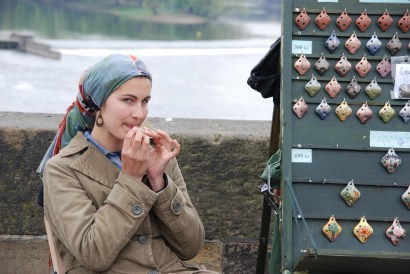
She can work from any place!
Of course, our corporate overlords love the idea. Humans become even more disposable. Concerned about your workers’ need for maternity leave or health insurance? Easy: make ’em contractors! Here’s how journalist Llewellyn King puts it:
The gig economy knows and cares nothing about health care, sick leave, Social Security payments, tax collections, vacations and working conditions.
And how are these gig economy workers supposed to retire? I don’t want to have to hustle gigs when I’m eighty.
I’m not a Luddite. I love technology. My first laptop was a DOS PC! There’s so much reason to celebrate what technology can do for us. And I’m not opposed to the idea of working without being tethered to a desk. I have done it for years (in my retirement, as a side gig). For some folks, having a virtual business means they can make a living from remote outposts.
But it can go too far. Take away the cool buzzwords and all the chortling about freedom. Recognize what we lose when humans are no longer attached to a workplace. Some of us enjoy daily contact with coworkers, and the social advantage of shared challenge and daily life.
Mulcahy says “no problem!” because now, all the independents can work at shared offices, renting space in buildings designed specifically for freelancers. Instead of going to work in an office provided by your employer, the employer can shift that responsibility to you.
YOU provide the office, brave little freelancer. You pay for the desk, the light, and the heat. Bravo, free thinker!
The people who will be getting rich will be the ones who have buildings to rent out, or the ones doing seminars and coaching us on how to maintain work/life balance. Teaching you how to schedule your time, when you not only go to work every day but have to hustle to find the work in the first place.
Sorry about the birthday party, little one. Daddy has to hustle gigs!

Gig worker on vacation.
One of the beautiful things about getting old is we’re less afraid of speaking the truth. This is my truth: I’m afraid we’re going too far in our expectations of the gig economy. I see our grandkids not just working hard in one job, but hustling hard to find jobs, month in and month out. Regardless of their nature, disposition, or dreams, they’ll have to cobble together one gig after another. Or as Llewellyn said to Mulcahy in a recent interview, “I can’t help but visualize downtown Ho Chi Minh city.”
The American economy is changing, affected by world economics. That’s not inherently bad, but let’s not go backwards in some Darwinian pursuit of efficiency and self-sufficiency.
What do you think? Is the gig economy going too far, in your opinion? Or am I reading it wrong?
January 6, 2017
Do You Need Less Sleep as You Age?
 When Mom, 91, sees her doctor, I often join the conversation in the examining room. Today, it was a good thing I did.
Mom mentioned she was sleeping less, and asked the nurse about it. The nurse hesitated, then reassured her that older people need less sleep.
Does anybody still believe this?
For a medical professional to be this ill-informed pissed me off. The nurse hesitated before answering, as if she didn’t really know, and then spewed an old trope. My mom nodded as if resigned.
I jumped in. “Actually, older people need just as much sleep as anybody else–seven to eight hours a night–but it’s harder to get as you age.”
I realized the nurse might be offended that I contradicted her, but I don’t give a crap. To me, it reflects the ubiquitous ageism in all our institutions. This mistaken belief about elders and sleep was disproven a long time ago.
And another thing: I was at least twenty years older than the nurse, and I felt empowered by my gray hair and life experience. A nice little side-benefit of aging.
Interestingly, older people sleep less because certain sleep-inducing neurons in your brain die off. Oh, I know. Great, right? Here’s the article if you want to read more.
Lately I’ve had trouble getting enough sleep because the second I wake up, usually at around 4 a.m., I can’t stop thinking about all I have to / want to do. Part of this is wonderful–it’s nice to be excited about your life. Part of it is being overextended commitment-wise. I would like to be less busy, but that’s a continuing challenge with which I grapple. Maybe one day I’ll be mature enough to say ‘no’.
Until then, I have certain strategies for getting as much sleep as possible: I exercise (could do more) and meditate (ditto); I don’t look at a computer screen or challenge my brain after 7 p.m.; and I go to bed as early as possible, since I’ll pop awake early no matter what. I suspect my long-term solution will be to have less on my plate.
How about you? Are you getting enough sleep? Have you found a good tactic for ensuring sleep?
December 9, 2016
What Will You Do With Your Journals?
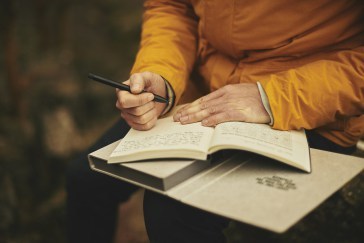 If you’re like me, you keep a journal. Actually if you’re like me, you have over 30 years of journals, stored in boxes in the garage. What do you plan to do with all that material? What if you don’t want people to see them, but you drop over dead and there they are? What if your state secrets get into the wrong hands?
I love reading my old stuff – except sometimes it backfires. I wrote about that here. Now I’m thinking that maybe I should pick a certain milestone birthday in the future and start weeding through all those years and years of scribbling (longhand, often in fountain pen) and cull the best parts for my family. Make it into one book, a personal one, of course. Print it at the local office supply store. Then get rid of everything else. Maybe spend the night in a campground with girl buddies, our RVs circling a campfire, and feed the rejected pages into the flames.
What about you? Do you have years of journals and if so, what do you plan to do with them?
PS: Apologies to those who read this post in its earlier form. I drafted, scheduled, and forgot about it. Oops! Hope it makes more sense now.

December 2, 2016
Free Book and Big News!
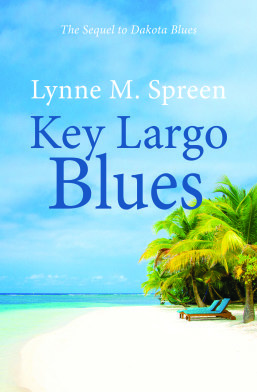
You’ve been asking for the sequel to Dakota Blues for a couple of years now, and here it is! Key Largo Blues picks up Karen Grace’s journey where DB left off: in Florida, with the CRS (“Can’t Remember S***”) Ladies.
Because so many loved Dakota Blues (check out the high ratings), and to encourage a successful launch of the sequel, I’m giving away the Kindle edition of Dakota Blues from today, Friday, December 2nd, through Sunday, December 4th. Just click on this link for your free copy.
A little backstory: Call me weird, but for as long as I can remember I’ve been interested in older adult coming-of-age novels. Consider: In a coming-of-age story, the young people struggle to figure out who they are, what they value, and what price they’ll pay to get what they want, whether it’s career or soulmate or way of life.
But then what? Thirty years later, are they sticking with that or trying something new?
How are they dealing with life’s drama? Have they evolved, or do they feel stuck? What are they willing try, or desperate to reject? And do they realize they might have thirty or forty more years to live with that decision?
At this point in their lives, they have as many years left as it took for first coming-of-age story play out. Are they going to stay the course or change?
See, I told you it’s fascinating: the second half of life, done thoughtfully. Unfortunately, I can never find enough of those books. Some of the older characters are just 20-year-olds with silver hair. That’s not what I want. I want the big questions answered, the questions about life and death and happiness.
 Many of you know that, ever since I was a little kid, I dreamed of being a writer, but I went to work and raised my son first. I couldn’t write Dakota Blues until I was 58. My second book, Middle-Aged Crazy, a collection of short stories, was published when I was 60.
Today, I’m launching my new novel, Key Largo Blues.
It’s what I call Older Adult fiction. That’s what I want to read and write about for the rest of my life. In addition to my own works, I’ve collected several dozen OA titles that I recommend. You can find them here on my Facebook author page.
I’m so excited about Key Largo Blues! People are saying it’s even better than the first book, which won an award. Even though she liked it a lot, my 91-year-old mother thinks there’s too much sex in it. (God, how embarrassing, but I promise you, the scenes are hot but classy.) KLB has been edited, revised, and polished to within an inch of its life, thanks to editors, my brilliant team of Beta Readers, and Mom.
Any help you can give me would be greatly appreciated. Ten thousand books are published each day in the US. So please, share this post, buy the book, review it, talk about it on Facebook…anything. Thank you so much. Every author knows it takes a village to get the word out.
And thank you for coming with me on this journey to discover the beauty in the second half of life. My books, my blog posts, my FB page all reflect my heartfelt belief that the best is yet to come. I wish you peace and joy in this holiday season, dear Reader.
November 18, 2016
RIP 4th Estate
 I have the trump flu. I’m mildly depressed and trying to force myself to keep moving forward every day in a positive direction.
On top of him being “elected,” — with a million fewer votes than his opponent — which shakes my faith in my countrymen (doesn’t his temperament and record of past behavior mean anything?), I now mistrust the national press.
You may say “Of course you should mistrust the media.” But dear Reader, there’s a difference between viewing media skeptically (I do) and not trusting them to know if the sun comes up in the east.
How could they be so inaccurate? How could they not do their job as the 4th Estate? All the smugly certain reports about the likely outcome of the election–one hundred percent wrong. How do I believe anything they say now? (The death of objective, smart, incisive Gwen Ifill is a sad metaphor.)
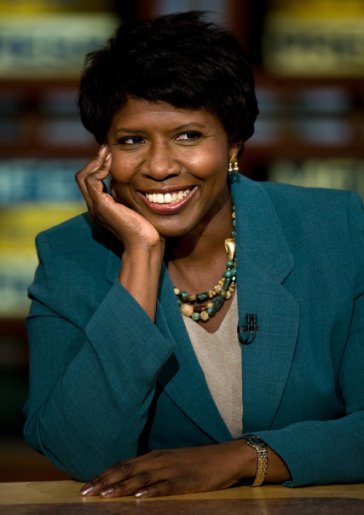
So, where does that leave us? If we can’t count on the press to serve as watchdogs on the three other branches of government, who will do the job? Who will watch and report?
I try to get my news from everywhere, to make sure I’m not being fed a partisan line of BS. So I listen to, watch, or read PBS, MSNBC, FOX, CNN, and four different newspapers. You’d think I could trust at least a little of what I read.
.
And what looked like a nice surprise — that Megyn Kelly might not be corrupt — I was wrong on that, too. She was the one person at Fox who appeared to be objective. Now, we learn that she had even more horrifying information about the president-elect, but held it back to increase sales of her new book.
.
People marching in the streets. Thank God. At least it’s one way to show the president-elect he isn’t universally loved, and that he’ll be watched.
.
The only thing I can hang my hat on is the thought that the United States of America is strong enough to withstand this. We’re a young country with a relatively new form of government. We’re being tested. I do have faith in our country–in her people and institutions–but I fear we’re in for a scary ride.
.
Do you think I’d be a bad person to spend the next four years puttering in my garden? What about you? How are you coping?
November 7, 2016
SOS America
 My fellow Americans, please watch this recent 60 Minutes video. My reaction is this: if we want to save our beloved country after this election, it’s up to us. The politicians, “authorities,” movie stars, celebrities, “leaders” cannot. BUT WE CAN, IF WE LOVE AMERICA ENOUGH.
It has to start with us. We can link arms and agree not to shout at each other, agree to listen, to accept that we’re all after the same thing: preservation of our beloved country. Please join me in vowing, on Election Tuesday and every day following, to be civil, to teach by example, to turn the other cheek, to teach patience and respect. Somebody has to save this country. It has to be us, regardless of party or belief or skin color or gender. This video will convince you. We The People are all that can pull this out of the ditch. Please help. Please share. We’re all we have left.
November 4, 2016
How Do Millennials See Feminism? Our First Guest Post from Holly Whitman
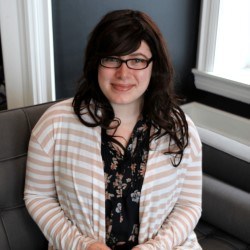
Holly Whitman, journalist
I can’t tell you how many times in school I was forced to read coming-of-age books for boys, like Lord of the Flies and The Catcher in the Rye. It’s enough to make a girl wonder – what would happen if I were the kid-king after an abandoned airplane crash? I can tell you this: Lord of the Flies would have been a much different story with me in the lead.
In the 1970s, feminism responded to a lack of female role models and stories about girls. Now, with heroines like Katniss Everdeen from The Hunger Games in our worldview, women of my generation are transforming what it means to be a feminist.
Once a word young women ran from (no doubt due to the coining of “femi-nazi” that appeared in the late 1980s), the connotations have changed. I don’t negatively perceive feminism – and neither do other millennials I know. Nobody sees it as a cause that eschews men. With celebrities such as Patrick Stewart, Tom Hiddleston and Benedict Cumberbatch sporting tees saying “This Is What A Feminist Looks Like,” millennials embrace feminism.
What Changed for Millennials?
Millennials like me cut our teeth on Tina Fey — first on “SNL,” then with her book, Bossypants, and now, most of us have memorized the film she wrote, Mean Girls. What makes this movie unique isn’t just Fey’s connection. It aims to tackle bullying, but so did The Breakfast Club – which millennials also love, but for different reasons.
Mean Girls differs from similar movies because the teenage girls in the film are front and center. They aren’t side characters, girlfriends or helpers. They are the story. And that was, at least for me, crucial – I wanted to watch something that was more reflective of my own life.
I’m drawn to TV shows and films with strong women leads, like Outlander and Once Upon A Time.
As October’s breast cancer awareness campaign winds down, many products read “Fight Like a Girl.” Being a girl is no longer synonymous with weakness. Always, the feminine hygiene brand, embraced the “strong girl” idea on a grand scale last year — at the Super Bowl, no less. Their campaign carried a powerful message about cultural bias.
Do millennials even think about the word feminism?
I don’t, at least not in daily life. The term has been transformed in part by a leather-clad Beyoncé singing “Who Runs the World? Girls!” Sure, I sing along, but so do my male friends. Feminism has been internalized by self-assured women and men who don’t spend time worrying about what to call it and who have the confidence to question everything that doesn’t live up to our standards. Equal pay, I’m looking at you.
Do Women and Men Still Have a Different View of Gender Roles?
Women of my generation, if stranded on the side of the road, know enough to get going again. We’re not calling our dad, husband or brother to come save us from changing a tire or checking the oil. Millennial women no longer assume that roles are delegated by gender. Part of that is practicality. For example, in spite of wage inequality, if a woman gets a job and her husband can’t, it just makes sense for him to be their children’s primary care giver, a vast change from the baby boomer generation.
This Isn’t Our Mother’s Feminism
Of course, my generation’s relationship with feminism is complicated. Consider Lifetime’s series, UnREAL, where two women manipulate the ladies who populate a Bachelor-like TV show. They don’t fall easily into the categories of “good” or “bad” — which most fiction throws women into. Instead, they are nuanced, like women in real life. We’re sick of being typecast, in all areas of life. Don’t assume something about me because I’m a woman.
More recently there is Amazon’s import, Fleabag. It’s hilarious and heartfelt, but it is unflinchingly honest about what sex means for single women today. Taking notes from Amy Schumer’s comedy, millennials are relating to feminism less as an identifier and more as a lifestyle. And that’s good for all of us.
Lynne here. I hope you enjoyed our first essay from Millennial Representative Holly Whitman. (I’m joking; I promised I wouldn’t expect her to be the Voice of All Youth.) I appreciate her taking the time to give us an idea of how young women see feminism, and I trust her observations; she’s an experienced writer for Yahoo Finance, The Good Men Project, Feministing, Babble, Bust, and Politicus USA.
What about you? Do you see evidence that the young people around you have accepted feminism? Let’s hear it, cultural reporters. And please check out Holly’s website and blog.


