Lynne M. Spreen's Blog, page 10
July 1, 2016
What Young Women Don’t Know about Bikini Waxing
 Attention Young Women: This is either great news or horrible news.
Bill Maher made a joke about the graphic shown above. He said nobody in America under age fifty understood the ad.
But I digress.
Here’s the great news and horrible news: it’s fairly normal to lose your pubic hair in older age. Great news if, as with leg hair, you’re tired of depilation and are happy that cleaning up in later years will be easier.
Terrible news if you didn’t realize you’re getting rid of something rich and luxurious that you will miss.
Of course, it’s kind of flattering that young women are trying to imitate the post-menopausal demographic. In every other way, they don’t want to look “old.” So maybe this is progress?
Kidding.
It doesn’t happen to everyone, but it’s common. And it doesn’t happy when you’re ancient. It happens in midlife.
In the process of aging, the body undergoes a number of changes…For women, going through the process of menopause causes pubic hair loss due to the change in hormone levels. (Livestrong.com)
Yes, I AM embarrassed to be writing about this, but here’s what I care about more than my own red face: the way women are made to feel shameful about their natural, beautiful bodies. We tend to arrive at menopause furious to realize we were far more beautiful in our youth than we ever knew, and now it’s gone.
It’s your choice what to do with yourself, but I never heard about this until I was over fifty, and maybe you haven’t either.
Now that you know, you may decide to resist any and all ridiculous arguments or pressure or influence as to what you should do with your body. If you are so inclined, let your freak flag fly. Cancel your upcoming waxing appointments. Be proud of that lustrous thick mound of hair. Because you may not have it forever.


June 17, 2016
Aging Tips from Life Reimagined
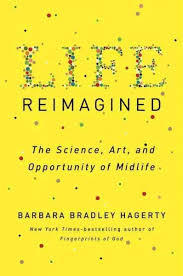 Barbara Bradley Haggerty, journalist for National Public Radio, wanted to understand the second half of life. So she researched and wrote Life Reimagined. Here are the most helpful and motivating tips from her book:
Engagement is the one most critical path to fulfillment in older age. Successful agers are “…still thinking about the world and the future. They’re keeping up with current events. They’re excited to tell you about the book they’ve read. They’re thrilled about the way the garden is coming in this year. They’re engaged.” (Robert Waldinger, researcher.)
Loneliness is a biological warning signal that “motivates you to care for yourself so you can leave a genetic legacy.” It is a sign that the “social body” is in need. Loneliness can raise blood pressure and stress hormones. It reprograms genes and attacks the immune system. It may raise your risk for diabetes and neurodegenerative disease like dementia. It may enhance risk and virility of cancer cells. So don’t let loneliness get the better of you. (John Cacioppo, professor of psychology at the University of Chicago.)
It’s better to be good than happy. The body reacts more positively (less inflammation, better immunity) when the mind is engaged in pursuit of long-term meaningfulness than short-term pleasure. (Steven Cole, professor of medicine, psychiatry, and behavioral sciences at UCLA School of Medicine.)
Hardship creates resiliency. “…the happiest, most resilient, and most mentally healthy people (have) suffered two to three stressful events in their lives.” Having experienced no stress in one’s life is almost as damaging as multiple traumas. A divorce or the death of a parent can help inoculate a person against future stressors. People learn how to cope from these experiences. “They learn their own strengths and weaknesses, and they come out stronger for the next event.” (Roxane Cohen Silver, social psychologist, University of California, Irvine.)
You can force your brain to make changes. Although the brain prefers stasis, it will choose risk over ambiguity. Thus, feeding it information about the potential change will move it closer to accepting the change. “…the more data I feed my brain about where I want to go, the more likely the brain is to come up with the way to get me there.” (Srini Pillay, professor, Harvard Business and Harvard Medical Schools.)
Finally, this quote from Haggerty nails the whole book:
“Every idea in this book runs against our natural tendency to want to relax, take it easy, reward ourselves for decades of work and child rearing. Our default mode at midlife is entropy. But…the research is unequivocal: For every fork in the road, you are almost invariably better off making the harder choice. Harder in the moment, that is, but easier over the years, as your body and mind remain strong. By resisting entropy, by pushing through the inertia that beckons us to rest a little longer, to slow down just a notch, until your life has narrowed to a pinprick—by resisting those forces, you dramatically up the odds that your life will be rich to your final breath…”
June 3, 2016
How Do You Feel about Older Adult Fiction?

I told some friends I write Older Adult fiction and the crap hit the fan. I had no idea it would touch a nerve.
Here’s the deal: I write stories about people over 40 (and older) who are grappling with the challenges and issues of the second half of life. I think this time period is interesting, moving, powerful, and just generally all-around awesome. But what do you call it?
As an author, I want people to find my books in the literary jungle that is Amazon.com. The way we do this is to label them with a tag or genre category. Yet there’s nothing official for the kind of books I’m describing. So I’ve struggled with this.
And then, the answer!
Recently a reader of this blog, Toni Kief, published her first book, and she referred to it as OA: Older Adult. This, to me, is brilliant. We already have YA (Young Adult), so this pivots off that perfectly. People know intuitively what it’s about.
But before using the term, I asked my social media networks what they thought. OMG, what a shocker. Here’s a sampling of their comments:
“In no reality would I seek out OA…”
“IMHO, older adults don’t care particularly for being labeled “Old” anything. Maybe ‘Seasoned Adult’, ‘Tested Adult’, Experienced Adult”?
“I do NOT like ‘OA’ – Older Adult – as a category name. I am sick and tired of being labeled ‘older’ or ‘elderly’…Because elder, elderly, or older do NOT have the connotations of respect they used to have.”
“Sorry – I don’t like anything with ‘old’ in it. I don’t think it will market well. Those who are reading want to hear about possibilities, not about being old.”
“I do see your point, but ‘old’ is a dreadful word in marketing, it doesn’t work!”
“When you sell, you are asking your potential buyer to self-identify…’Old’ doesn’t do it for ME, as a consumer – and I’m post-retirement.”
Not all the comments were negative. For example:
“I think the older half of the boomer generation is getting a strong dose of reality. I know of many people who are coming to grips with changes in their work life, family relations, and bodies…”
And wouldn’t you want to read about people rising above that? Finding love in older age, for example? (OA Romance! New category!)
In contrast to the more traditional coming-of-age story, with youngish adults, the second coming-of-age is about people who are already fully formed, but face some kind of new challenge (divorce or unemployment after 50; existential problems like loneliness, grief, isolation; and physical/mental changes, for example). I love showing them rising above these difficulties.
One friend said, “Fiction is a way of trying out life, of learning vicariously.” Fiction expert Lisa Cron says our evolutionary strength as homo sapiens is to crave story as a way of learning how to stay alive (“Gork ate red berries . Gork dead. DON’T eat red berries!”) Thus, at some point, I believe older peeps will want to read about their time of life, and will appreciate a term like OA to help them find it. Or maybe it’ll work like Reader Repellent. What do you think?

May 20, 2016
Why Old People Are Happier
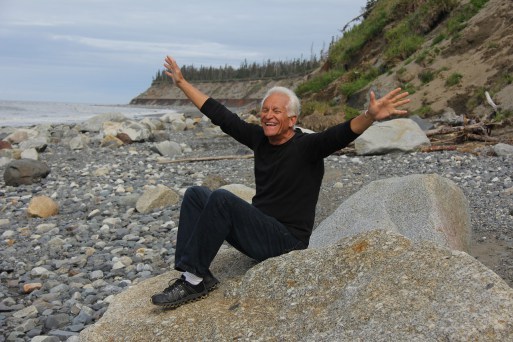 From age 50 on up, people report being happier. The question is why. I think they’ve found the answer.
I’m talking about the Happiness U-Curve, in which research has proven conclusively that most people are happy in young adulthood, become less happy in their forties, and perk up again in their fifties, beginning an upward trajectory that continues throughout the rest of their lives. This phenomenon is global, and persists even when you eliminate such factors as health, economic security, and love. Of course it’s not true of all of us.
But it’s big, people. Big. Enough that most of you will experience it.
Here are two of the most likely reasons we get happier in older age:
Having a short time-horizon centers you. When you’re young, you have all this time to make mistakes and screw around, not sure what’s meaningful and what isn’t. It’s almost like the horizon is too vast, and you have no answers. But when your horizon is nearer, it’s less stressful, oddly enough. You are newly motivated to treasure every day. Life becomes richer, more meaningful.
Your amygdala (the “fight or flight” part of your brain) become less reactive to bad news. According to MRIs, while young people’s amygdala react to everything, we mostly light up at happy stuff.
For me, there’s another reason: when I was younger, so many people were dependent on me, little kids and such. I couldn’t get sick and/or die…what would happen to them? But now everybody is grown and independent. If something happened to me, they’d be bummed, but they’d be okay. This is a load off.
What about you–why do you think people get happier as they get older?
PS Many thanks to Lisa Lehmann, who (with sponsorship from FeedBlitz) took the new headshot. She did it for me and dozens of ladies who attended the BAM conference last month. Besides being a gifted photographer, she designs jewelry. Here’s a link to her studio website.
May 5, 2016
A Beautiful Story for Mother’s Day
 When you get older, you look back at your life. Some of it causes you pain. Sometimes, you are blessed with redemption.
At twenty-five, I was divorced and raising a toddler alone. It was rough. I worked fulltime. We lived in a bad part of town — it was all I could afford. I was anxious, and frankly inadequate to the task of parenting alone.
My ex and I made our peace, and he helped where he could. (I have a picture of him building a swingset for Danny in my back yard.) My ex remarried, to a nice young woman who wanted to start a family someday. They moved into a house a few blocks away, and our son enjoyed the attention from all of us. When I enrolled in a two-week night class, they offered a 10-day sleepover so he would have less disruption. After the two weeks ended, we saw the truth. He was happier, less stressed. We agreed he should move in with them. He was four.
It killed me, but he thrived. Ann and Larry had two more children, so my son gained a brother and sister. He had a working dad and a stay-at-home mom. The family went camping and fishing. The three kids spent every other weekend with me. Although I was “Mama Lynne,” it was funny when we’d all be together, and a child would say “Mom,” and Ann and I would both answer.
We developed a style of co-parenting that still makes me proud. Ann was the one who had a hot dinner on the table in the evening, who made clothes for the kids, and helped them with schoolwork and crafts. I was the career mom. The two of us would appear together at school functions, causing the teachers to smile and shake their heads.

Ann, pregnant with Lisa, and me, holding their son, Jeff, on a desert camping trip c. 1984. Danny is off with his dad, riding an ATV.
Over the thirty-plus years since then, our two families have endured some major challenges, but now Larry, Ann, and I are senior citizens. We love each other like family. I think more people should follow our example, and do what’s best for the kids.
But there is a dark place in my soul that sometimes feels grief over not being enough. Like I failed as a mother.
One day, my son, now an adult, heard me utter some form of guilt, and he said, “Mom, if you keep telling me what a rotten childhood I had, pretty soon I’m going to believe you.”
I shut my mouth and hugged him, absolved.
April 29, 2016
The Old Lady at the Conference
 Looking out on the audience at the national conference, I wondered if my talk would resonate. Most of the audience was much younger than me, maybe too young to appreciate my message.
Before the talk, I’d gotten acquainted with the fun and interesting women at my table, but they were sharing stories about their teenagers, and my “teenager” just turned 38. My stories would be much different. My LIFE is different.
Different as in older, which in this culture is a dirty word. Plus, it was a conference for midlife bloggers, who were focused on starting, growing, and monetizing their blogs, not aging. As a successful blogger who talks about aging well, I’d been invited to speak about how we bloggers can use the power of our voice to change the future for the better. After all, we are the media now.
But I was wondering if aging was yet a big deal to them. Should I maybe have been over at the AARP conference instead?
I went on stage, and talked about being proud of ourselves, focusing on our gifts, having gratitude (see: Prince, 1958–2016), not apologizing for aging, not living in denial. Standing tall.
My talk (with Walker Thornton and Treva Scharf) was very well received, and I felt triumphant, until a couple days later when the buzz wore off and I started second-guessing myself.
Does anybody really want to think about aging–positively or otherwise?
Then I told a friend about it, a friend who is young, and she said this: we need to see you up there, reassuring us that it’s okay. Showing us how to be calm in the face of all the changes we’re facing. We need older people to talk us down, and lift us up. So don’t stop. I thanked her, and then I remembered this poem by Alice Walker.
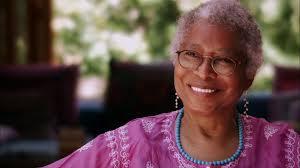
Alice Walker
Until I Was Nearly Fifty
Until I was
Nearly fifty
I rarely thought
Of age
But now
As I approach
Becoming
An elder
I find I want
To give all
That I know
To youth.
Those who sit
Skeptical
With hooded
Eyes
Wondering
If there really
Is
A path ahead
& Whether
There really
Are
Elders
Upon it
Yes. We are there
Just ahead
Of you.
The path you are on
Is full of bends
Of crooks
Potholes
Distracting noises
& Insults
Of all kinds.
The path one is on
Always is.
But there we are,
Just out of view
Looking back
Concerned
For you.
I see my dearest
Friend
At fifty-one
Her hair
Now
An even
Steel.
She blushes much
& talks
Of passion:
It cannot be
For the bourgeois
Husband
I never
Liked.
I thought life
With him
Had killed
The wild-haired girl
I knew.
But no.
There she is
There she goes.
Blushing.
Eldering.
I too talk
Stunned
Of love
Passion
Grace of mating
At last
With
My soul’s
Valiant twin.
Oh youth!
I find
I do not have it in
My heart
To let
You stumble
On this curve
With fear.
Know this:
Surprise alone
Defines this time
Of more than growth:
Of distillation
Ripeness
Enjoyment
Of being
On the vine.
–Alice Walker
April 22, 2016
Your New Pro-Aging Mantra
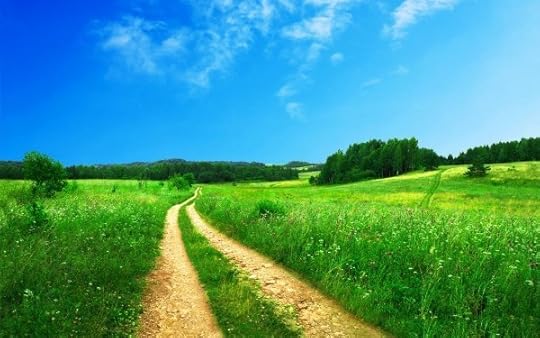
Don’t try to be young. Try to be you.
I woke up one morning and this phrase popped into my mind. It’s perfect, isn’t it?
Sometimes I think life is like junior high, where we struggle to find ourselves and fit in – or else we rebel, and that’s uncomfortable, too. The pressures to conform are intense.
But then you get older, and something happens. You feel more sure of yourself, more free to decide what you will put up with or won’t, what you will sacrifice and for whom, etc. And nobody (we can now say this with certainty and conviction) can tell us how to think. Because we have the gift of years. We know.
So find your own path, and enjoy the sound of your solitary footfalls on the warm ground. Inhale the fragrance of new growth. Turn your face to the sky, close your eyes, feel the sun. You are alive. You are blessed. You are on your own precious, one-of-a-kind path. Enjoy it.
April 19, 2016
10 Reasons to Be Happy About Getting Older
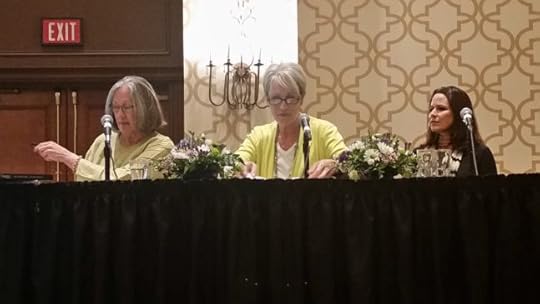
Walker, Lynne, and Treva at BAM conference in Las Vegas, 2016
For those of you at the Las Vegas Bloggers At Midlife conference who wanted a copy of my Top Ten, here you go! I had such a great time there and was proud to have been invited. Thanks to Walker Thornton and Treva Scharf for your words of wisdom and fellowship. Herewith, my top ten:
YOU HAVE GREATER IMMUNITY TO COLDS, AND FEEL LESS PAIN IN THE DENTIST’S CHAIR.
YOU HAVE A GREATER SENSE OF WELL-BEING In study after study, people become happier after age fifty.
SOCIAL REASONING IMPROVES IN OLD AGE Older people are capable of higher-order reasoning and are able to take into account multiple perspectives. This makes them better at compromise, legal decisions, counseling, and intergroup negotiations.
YOU HAVE HIGHER COGNITIVE ABILITY IN LATER YEARS According to a 40-year study, cognition peaks from age forty to seventy.
MYELIN LEVELS DON’T PEAK UNTIL APPROXIMATELY AGE SIXTY Myelin leads to better neural transmission.
PATTERN RECOGNITION The brain instantly sifts through millions of life experiences, finding answers that seem unknowable to youth.
YOU HAVE GREATER CONTROL OF YOUR EMOTIONS. Even though we feel emotions more deeply as we age, we can deal with them better.
YOU CAN GENERATE NEW BRAIN CELLS ALL YOUR LIFE by exercising, learning something new and challenging, and socializing.
YOU CAN BUILD COGNITIVE RESERVE to counter dementia.
BILATERALIZATION The older you get, the more you use both sides of your brain to make decisions and solve problems, leading to more sublime thinking.

April 15, 2016
Why Do Humans Live Past Menopause? The Grandmother Hypothesis
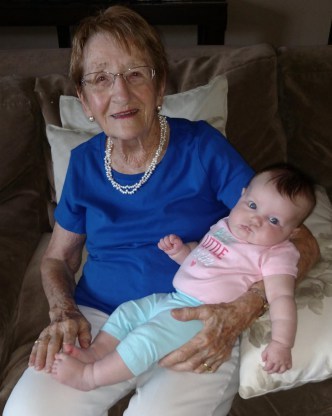
Why do humans live past menopause? Fully one-third of the human lifespan occurs after childbearing ceases. Given Mother Nature’s preference for reproduction, what could explain this?
Researchers found that, of all mammals, only humans, orca, and short-finned pilot whales go through menopause. (A killer whale undergoing menopause: now, there’s a picture!) And they wondered why. Here’s what they found:
Post-menopausal females bring such a survival advantage to the tribe or pod (protecting and helping the young mothers, finding food, and anticipating danger), that it is equivalent in value to the ability to reproduce.
So the next time you feel shitty for being post-menopausal, remember that you are essential to the survival of your species. (See the Grandmother Hypothesis).
April 9, 2016
Hello I Must Be Going!
 Just a quick post to say hello and I’ve missed you, too. I’ve been crazy busy the past few weeks so haven’t posted, but I’m okay, family is fine. Just nutso.
Mom needed some doctoring (she’s fine, no worries); I’m preparing for a couple of speeches*, and Bill and I babysat our grandkids all last week. I am telling you, older peeps, if you ever start feeling complacent about life, or as if you lack purpose, or wonder if the younger generations are deficient in any way whatsoever, please offer to babysit for an extended period of time. Then, when you go home and brush your teeth at night, and notice the mirror is splattered and needs attention and you won’t care for at least a week, or that there are no clean washcloths so you wet the corner of a towel and wash your face with that, just remind yourself that this what the kids do day in and day out. They’re such heroes.
Here’s to you, younger people! You are amazing.
If I had to go back and be young again, working fulltime in a demanding career and trying to raise a family, I’d cut myself way more slack than I did then. I wouldn’t hassle with the small stuff, to the extent possible. Because you can stretch yourself too far, and die trying.
My kids told us last night (at a victory/birthday dinner) that Grandpa and I are more attentive than them, that we dote on the grandbabies in a way that, were the parents to maintain that level, would exhaust and deplete them. I mean, they’re great parents! But I totally understand, because I’m exhausted. Also, it’s good to let the grands have some independence. They need to develop a sense of self. Were Bill and I to do it more often, we’d probably disengage a bit more, because we’d develop the courage to do so. But of course, we’d have already keeled over from Too Old to Raise Kids syndrome.
And now I must run, again! See you in a couple of weeks.
*I’ll be speaking on Monday, April 11, 2016, at the Mizell Senior Center in Palm Springs, to the WOW social group, at 10:00 a.m. I’ll be sharing inspiration and good news about aging with a positive outlook. Then on Friday, April 15, I’ll be speaking in Las Vegas at the BAM (Bloggers at Midlife) national conference about how to use your platform as bloggers to reshape the aging experience.