
Aging Tips from Life Reimagined
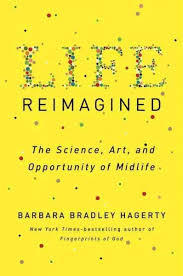 Barbara Bradley Haggerty, journalist for National Public Radio, wanted to understand the second half of life. So she researched and wrote Life Reimagined. Here are the most helpful and motivating tips from her book:
Engagement is the one most critical path to fulfillment in older age. Successful agers are “…still thinking about the world and the future. They’re keeping up with current events. They’re excited to tell you about the book they’ve read. They’re thrilled about the way the garden is coming in this year. They’re engaged.” (Robert Waldinger, researcher.)
Loneliness is a biological warning signal that “motivates you to care for yourself so you can leave a genetic legacy.” It is a sign that the “social body” is in need. Loneliness can raise blood pressure and stress hormones. It reprograms genes and attacks the immune system. It may raise your risk for diabetes and neurodegenerative disease like dementia. It may enhance risk and virility of cancer cells. So don’t let loneliness get the better of you. (John Cacioppo, professor of psychology at the University of Chicago.)
It’s better to be good than happy. The body reacts more positively (less inflammation, better immunity) when the mind is engaged in pursuit of long-term meaningfulness than short-term pleasure. (Steven Cole, professor of medicine, psychiatry, and behavioral sciences at UCLA School of Medicine.)
Hardship creates resiliency. “…the happiest, most resilient, and most mentally healthy people (have) suffered two to three stressful events in their lives.” Having experienced no stress in one’s life is almost as damaging as multiple traumas. A divorce or the death of a parent can help inoculate a person against future stressors. People learn how to cope from these experiences. “They learn their own strengths and weaknesses, and they come out stronger for the next event.” (Roxane Cohen Silver, social psychologist, University of California, Irvine.)
You can force your brain to make changes. Although the brain prefers stasis, it will choose risk over ambiguity. Thus, feeding it information about the potential change will move it closer to accepting the change. “…the more data I feed my brain about where I want to go, the more likely the brain is to come up with the way to get me there.” (Srini Pillay, professor, Harvard Business and Harvard Medical Schools.)
Finally, this quote from Haggerty nails the whole book:
“Every idea in this book runs against our natural tendency to want to relax, take it easy, reward ourselves for decades of work and child rearing. Our default mode at midlife is entropy. But…the research is unequivocal: For every fork in the road, you are almost invariably better off making the harder choice. Harder in the moment, that is, but easier over the years, as your body and mind remain strong. By resisting entropy, by pushing through the inertia that beckons us to rest a little longer, to slow down just a notch, until your life has narrowed to a pinprick—by resisting those forces, you dramatically up the odds that your life will be rich to your final breath…”


