
Jerome R. Corsi's Blog, page 9
November 22, 2025
‘Protecting babies’: Judges forced to restore North Dakota abortion ban after fight over ‘vagueness’


A North Dakota law prohibiting nearly all abortions is back on the books just over a year after it was struck down, following a state supreme court ruling Friday.
While three of the court’s five justices agreed to uphold a district court judge’s September 2024 order declaring the law “unconstitutionally void for vagueness,” North Dakota requires at least four justices to agree in order for a state law to be deemed unconstitutional, The Associated Press (AP) reported.
While the law in question had been deemed “void for vagueness” for over a year, the state has not had a facility able to perform legal abortions since 2022, Reuters reported.
All three of the justices who opted to uphold the ruling striking down the law were appointed to the bench by Republican governors. North Dakota has not had a Democratic governor since 1992.
North Dakota is now one of 13 states in which abortion is restricted at all stages of pregnancy, according to AP. All of the states voted for President Donald Trump by double-digit margins in the 2024 presidential election.
“The Supreme Court has upheld this important pro-life legislation, enacted by the people’s Legislature. The Attorney General’s office has the solemn responsibility of defending the laws of North Dakota, and today those laws have been upheld,” Republican North Dakota Attorney General Drew Wrigley said in a statement.
Former Republican North Dakota Gov. Doug Burgum signed the law prohibiting nearly all abortions in the state in April 2023. The law leaves exceptions for rape, incest, and medical emergency during the first six weeks of pregnancy.
Burgum currently serves as the Secretary of the Interior in the Trump administration. He was previously on the shortlist to become Trump’s 2024 running mate, a position which ultimately went to now-Vice President JD Vance.
Republican North Dakota state Sen. Janne Myrdal, the 2023 law’s sponsor, said in a statement on Friday’s decision she was “thrilled and grateful that two justices that are highly respected saw the truth of the matter, that this is fully constitutional for the mother and for the unborn child.”
The pro-life organization Students for Life of America also praised the court’s ruling on X, writing Saturday, “North Dakota’s State Supreme Court has allowed the state’s pro-life law to go back into effect after reversing the decision from the lower court, making abortion illegal again and protecting babies once more!”
The American Civil Liberties Union (ACLU) of North Dakota, however, called the decision “deeply painful” in a series of X posts Friday evening, which notably included the phrase “pregnant people.”
Abortion shouldn’t be a political issue. It’s a health care issue. Decisions about abortion shouldn’t be made by politicians but by pregnant people in consultation with their doctors – who should be able to treat their patients according to their best medical judgement. 2/3
— ACLU of North Dakota (@ACLUNorthDakota) November 21, 2025
“Abortion shouldn’t be a political issue. It’s a health care issue. Decisions about abortion shouldn’t be made by politicians but by pregnant people in consultation with their doctors – who should be able to treat their patients according to their best medical judgement,” the ACLU stated in part.
None of the left-leaning group’s posts at the time included the words “woman” or “mother.”
Content created by The Daily Caller News Foundation is available without charge to any eligible news publisher that can provide a large audience. For licensing opportunities of our original content, please contact licensing@dailycallernewsfoundation.org.


What is an American? And the challenge in Dearborn

The chaotic confrontation in Dearborn, Michigan, on Tuesday – when a demonstrator attempted to burn a Quran and Muslim counter-protesters surged – was more than a brief flash of drama. Along with other recent controversies in Arab-majority Dearborn, such as when the Muslim mayor told a Christian minister he “was not welcome here” and was an “Islamophobe” for objecting to renaming a local street after a Hezbollah-supporting journalist, this latest cultural skirmish yet again underscores longstanding concerns about America’s immigration regime – and, above all, the nature of American identity itself.
What, exactly, is an American? It’s a question that was increasingly on my friend Charlie Kirk’s mind in what tragically proved to be his final months. And in light of the Dearborn fracas and the recent election of Zohran Mamdani as the next mayor of America’s most iconic metropolis, it’s a question that has never been more pressing.
The narrow, legal answer is straightforward: An American is a citizen of the United States, born or naturalized. That definition undergirds equal protection, sets the parameters of the franchise, and helps define the various obligations citizens owe and the rights we enjoy.
But that technical legal definition is unedifying and wildly insufficient. A passport can inform which government recognizes us on paper. But it doesn’t tell us what holds the nation together, what binds disparate strangers into a people and what shared implicit assumptions make the American experiment workable rather than a “Groundhog Day”-style recurring melee of clashing worldviews.
Since the origins of the republic, the United States has always had a legal identity and a cultural one. The legal identity is broader, permitting more inclusivity. New arrivals on our shores can relinquish foreign allegiances, acquire American citizenship, and become part of “We the People,” much as the biblical figure Ruth left the nation of Moab thousands of years ago to join the children of Israel. As Ruth said: “Your people shall be my people and your God my God.”
But the cultural identity of the United States – the religiously imbued habits, values and expectations that enable our national creed, “E Pluribus Unum” – has never been infinitely malleable. America has always had a dominant public ethos shaped by a historical Protestant-majority culture. This culture emphasizes individual responsibility, industriousness, respect for the rule of law, the dignity of conscience and the limits of liberty rightly understood.
The two identities are connected. As President John Adams famously said: “Our Constitution was made only for a moral and religious People. It is wholly inadequate to the government of any other.” Conscience and freedom of religion must be wholly protected and secured in one’s private life, but the very nature of American citizenship and American community are shaped and guided by the inherited tradition of the Protestant majority.
It was true at the time of founding, and it’s still true today. Take it from me: I’m an observant Jew who cherishes the fact that America has always been exceptional not in spite of but in large part due to that culturally dominant Hebrew Bible/Old Testament-heavy Protestant inheritance.
The United States was never a “blank slate” society. Like any nation, it has a distinct inheritance, and it has always relied on a broad cultural consensus: Someone can bring their own private customs and traditions to America, but they are expected to assimilate into the public framework that has always made the country coherent – “out of many, one.” And that public framework is not merely a technical or legalistic one but a “thicker” one where acceptance of such notions as the proverbial “Protestant work ethic” constitute a core part of American citizenship.
The challenge in Dearborn – and elsewhere – is that too many distinct cultural communities now reject this framework. It wasn’t always this way. My own ancestors, Ashkenazi Jews who immigrated to America in the late 19th and early 20th centuries, readily understood that they had to learn the English language and acculturate themselves to the nation’s longstanding Protestant-informed public ways of life. Laws alone cannot create broad solidarity; only culture can do so.
We should also not be hesitant to say that American Muslim assimilation, specifically, is not going well at this time. A poll of American Muslims taken less than three weeks after the barbaric Oct. 7 Hamas pogrom in southern Israel found that 57.5% of American Muslims believed the atrocities were at least “somewhat justified.” Plenty of other shocking examples abound – including the aforementioned troubling antics of Dearborn Mayor Abdullah Hammoud. The truth is that values such as support for Hamas or Hezbollah are simply incompatible with Americanism – period.
So once again, then: What is an American? It is someone who holds citizenship under our law, yes – but also someone who adopts, respects and participates in the civic, religiously imbued dominant culture that founded and still sustains the republic. That culture is neither rigid nor intrinsically hostile to reasonable diversity, but it is certainly not infinitely elastic either. And it requires conscientious assimilation into a framework that alone makes ordered liberty possible.
Citizenship is a status. But being an American in its fullest sense is something much greater and more rewarding: It is partaking in a common civilization, accepting its responsibilities, and upholding the dominant inherited way of life. That doesn’t seem to be happening in Dearborn – or in far too many other places throughout the country. A free people – and a free nation – lets that trend fester at its own grave peril.
Who invited Ghislaine to Chelsea Clinton’s wedding?

Note: This column first appeared on Cashill’s substack.
Of the twelve – count ’em, 12 – New York Times articles on Chelsea Clinton’s August 2010 wedding in upstate New York, one particular article calls attention to itself. Headlined “Clinton Wedding Is Leaving Some Feeling Left Out,” reporter Ashley Parker wondered what it took “to score an invitation to the hottest, not to mention most secretive, political wedding of the summer.”
Well, whatever it took, Jeffery Epstein co-conspirator Ghislaine Maxwell had it. Maxwell secured an aisle seat on a wedding also attended by the likes of Barack Obama, Steven Speilberg, Oprah Winfrey, and Barbra Streisand. Not every one was so lucky. “Some are privately grumbling about who made the cut,” Parker reported. “And the whole affair has left donors, supporters, aides and even true A-listers wondering just how inside the inner circle they really are.”
Maxwell almost didn’t get herself to the church on time. She was actually scheduled to appear at a deposition right beforehand. Unsealed court documents from January 2024 reveal that “[a]t the eleventh hour Maxwell’s lawyer informed plaintiff’s counsel that Maxwell’s mother was very ill and that consequently Maxwell was leaving the country with no plans to return.”
The document continues, “Maxwell was photographed at Chelsea Clinton’s wedding in Rhinebeck, New York, confirming the suspicion that she was indeed still in the country and willing to say anything to avoid her deposition.”
According to the New York Times, the deposition stemmed from “a 2009 lawsuit against Mr. Epstein. Virginia Giuffre alleged that Mr. Epstein and Ms. Maxwell sexually abused her starting when she was 16.” Chelsea had to know about this lawsuit. Politico reported that Chelsea vacationed on a yacht with Maxwell in 2009. Said former Clinton deep insider Doug Band, “Ghislaine had access to yachts and nice homes. Chelsea needed that.”
The reporting about the wedding suggests that the Maxwell invitation was Chelsea’s idea and that the two were globe-trotting pals, but the evidence suggests other alternatives. For starters, Maxwell was a generation older. What is more, a spokeswoman for Chelsea “disputed the idea that the two women were ever close.”
Then, too, according to The List, Chelsea “built a public persona advocating for women’s rights. She has given numerous speeches and interviews championing these causes.” Meanwhile, Maxwell was championing her sex-trafficking beau in his quest to corrupt as many young women and underage girls as time permitted.
One would need a whole lot of yacht time and more than a few margaritas to reconcile these two causes. But then again, maybe having a publicly disgraced sexual predator for a father taught Chelsea early on how to “compartmentalize.”
As to Ghislaine’s plus-one, he was nowhere to be seen. Although Epstein had completed his absurdly light jail time a year earlier, one suspects that then Secretary of State Hillary Clinton had enough feel for optics to keep Epstein discreetly tucked away. His absence might not have disappointed her hound dog of a husband as it meant one more single woman to hit on at the wedding.
Whichever Clinton put Ghislaine on the guest list – my suspicion is Bill – these grifters kept Ms. Maxwell in their inner circle. This worried the more scrupulous Doug Band. He told Vanity Fair that he had advised Bill Clinton’s office to bar Maxwell from all Clinton-related events. “I knew in telling everyone to stop including Ghislaine that Chelsea and her father would be very angry.”
Chelsea did not take the request well. According to Band, she forced him out of the sacred circle. In one widely quoted Wikileaks email in 2016, Band called Chelsea a “spoiled brat kid.” On the Ghislaine front, she and her father prevailed. In 2013, Maxwell was honored at a Clinton Global Initiative event for her alleged work in cleaning up the oceans.
A spokesman explained away Maxwell’s attendance at an event five years after Epstein was very publicly disgraced. “This is about someone working on ocean conservation attending a charitable conference 12 years ago, along with thousands of other people, and nothing more,” the spokeman told the New York Post. “As we have consistently said, the Clintons know nothing about Jeffrey Epstein’s terrible crimes.”
Christopher Hitchens described Bill Clinton as “not just a liar but a lie; a phony construct.” That seemed to be a family trait.
Jack Cashill’s newest book, “Empire of Lies,” is now available in ebook and print versions at Amazon and Barnes & Noble.
If you don’t understand entrepreneurship, you don’t understand America

A few years ago, I was invited to speak at an event in Mobile, Alabama. Driving down from Indiana, I stopped for the night in Nashville, Tennessee, but on the way back, I decided to drive all the way from Mobile to Indianapolis. I had planned an early start, but, enjoying the company of good friends, I didn’t leave until well after noon.
That’s an 11-hour drive under the best of circumstances. Add in some traffic, the inevitable construction around Music City, and occasional stops for fuel and bathroom breaks, and I was rolling into Indy at about 2:30 in the morning.
There’s something remarkable about driving through any American city in the middle of the night, and Indianapolis is no different. Circling the city on I-465, I found myself marveling at the sheer number and variety of businesses. Most weren’t open, of course (with exceptions like Walmart and Meijer), but even those that had been closed for hours had their neon signs and parking lots brightly lit. There were hundreds of businesses. Thousands of them. In one city. Even discounting the “highway buzz” from 13 hours on the road, it was truly awe-inspiring.
It’s a scene – and a circumstance – that we Americans take for granted. But every single one of those businesses represents an investment of time and money; blood, sweat and tears that those of us who have never started a business cannot begin to understand.
And yet we all benefit from it. We just assume, without much thought, that if we need food, it will be at the grocery store. If we need clothing or shoes, there are plenty of places – bricks-and-mortar stores and online retailers – where we can find them. If we need office supplies or furniture, electronics, appliances or cars, toothpaste or toys, birthday and bar mitzvah gifts, wedding dresses or weedwhackers – they are pretty much at our fingertips. Services as well as goods – trash removal, lawn care, window washing, carpet cleaning, repairs – are provided by countless businesses. And of course, it isn’t just individuals and families who benefit from the availability of commerce; businesses, too, need other businesses: for payroll services, shipping, those neon signs I was admiring in the middle of the night, or construction for (God willing) expansion.
Even the services we think of as being provided by government depend upon private enterprise. Those highway expansions use expensive equipment designed, built and sold by businesses. The U.S. Postal Service cannot deliver without vehicles made by auto manufacturers. Law enforcement needs uniforms, firearms, vehicles, electronic equipment. The police station, the courthouse, the mayor’s office – nearly all government buildings are built by private contractors using supplies and equipment provided by private businesses. We have some of the most beautiful and well-equipped colleges and universities in the world, and both private and state schools depend upon the generosity of donors who give the funds to build the academic buildings, the dormitories, the laboratories and libraries, the sports facilities. There is probably not a single institution of higher education in this country that doesn’t have a donor’s name on a building. And if those donors themselves weren’t entrepreneurs, someone in their family’s history was.
Why does this matter? Because America was not built by “capitalism,” per se, but by entrepreneurial capitalism. America’s government, culture and economic structures are such that anyone, anywhere can start and grow a business – without social status, without connections, without needing to know someone in government, without bribes or graft or corruption. Sometimes without even speaking English.
And frankly, a lot of Americans – especially those in academia, in the media and in government – do not understand anything about entrepreneurship. You say “business” to these folks, and they think “big business”; they think of scandals like Enron, WorldCom, Bernie Madoff and FTX.
But most business in America is small business. According to the U.S. Census, there are about 30 million firms in the U.S. in any given year. Most aren’t even incorporated. And only a few thousand of those that are corporations are publicly traded. More than half of the new jobs created each year come from firms that have fewer than 20 people.
You don’t need to wonder what America would be like without a culture of entrepreneurial capitalism; you need only look at the most impoverished nations in the world. They don’t lack entrepreneurially minded citizens; everyone can figure out how to provide goods and services that others need and want. (Even during war; black markets are proof of this.) But aspiring entrepreneurs in poor and underdeveloped countries are suffocating under government structures – like Islamic fundamentalism, dictatorships, socialism and communism – that make it impossible to grow a business. Even wealthy and prosperous countries can see their robust economies destroyed by oppressive government policies. Venezuela is a good example.
That’s why the election of Muslim socialist Zohran Mamdani in New York City should set off so many alarms. Mamdani – like all his ilk – has zero with or understanding of what it takes to start a business, to make it successful, to meet the needs of larger numbers of customers, clients, patrons and patients. To socialists and communists, financial success is just proof of greed and exploitation. This is appallingly ignorant and absolutely false. But the support Mamdani enjoys – in New York and elsewhere – only shows how many Americans don’t understand entrepreneurial capitalism or its relationship to the availability of goods and services we take for granted.
Those of us who understand what has made America free and prosperous must evangelize for entrepreneurship and small business; they are as fundamental to our foundation and freedom as the Constitution and Christianity. We must demand changes in our educational system and promote forms of government, society and culture that make it possible for innovative and solution-minded people to build and grow ventures around their ideas.
The proof of the successes of America’s entrepreneurs is everywhere – even on an interstate highway in the middle of the night. If you don’t understand entrepreneurship, you don’t understand America. If enough Americans cease to understand and appreciate entrepreneurship, we will lose America.
Somebody else’s money: City of Houston workers chooses expensive gas stations

Topline: Most drivers are willing to go a mile or two out of their way to find a cheaper gas station, but the City of Houston’s employees don’t think the effort is worth it if they can pay with taxpayer funds.
An Oct. 28 audit from the city controller found $5 million spent at commercial gas stations to refill city-owned vehicles, even though the city owns its own fuel islands that can refill vehicles at a much cheaper rate. Over $3 million of the gas was purchased when a fuel island was less than three miles away.
Key facts: Commercial gas stations in Houston charge an average of $3.25 per gallon for regular fuel and $3.68 for diesel, according to the audit. Houston operates its own stations for city vehicles that cost $2.91 per gallon for regular fuel and $3.12 for diesel.
In fiscal year 2024, police and fire department employees refueled their cars using commercial gas stations 90,000 times. Over $740,000 in gas purchases were made during business hours, when the fuel islands were open.
That violates a city law stating that fuel cards cannot be used when a fuel island is less than three miles away, according to the audit. The city’s fleet management department disputed the auditor’s interpretation of the law.
Most of the refuels came during weekends or late at night, when the city-owned fuel islands were closed. While not technically against the rules, it’s still inefficient.
The audit also found a broken security feature on the city fuel cards. Employees are required to enter the odometer reading of their city vehicle before using their fuel card to make sure they are not filling their personal car with gas. But the fuel cards still work even if the odometer reading is entered incorrectly, which could “lead to inappropriate or unauthorized fuel purchases, theft, and/or fraud,” according to the audit.
Employees also spent $557,000 on premium fuel, which the audit claims violates the city code.
Search all federal, state and local salaries and vendor spending with the world’s largest government spending database at OpenTheBooks.com .
Background: The fuel card program is overseen by Houston’s Fleet Management department, which had a $24.4 million payroll in 2024, according to Open the Books’ database. There were 32 employees making six figures, including Director Gary Glasscock and his $186,000 salary.
Summary: Just as a car is judged on its miles per gallon, Houston should be focused on maximizing the value of each tax dollar.
The #WasteOfTheDay is brought to you by the forensic auditors at OpenTheBooks.com
This article was originally published by RealClearInvestigations and made available via RealClearWire.‘Derangement syndrome’: The imperial judiciary strikes back


So far, more than 100 federal court judges have ruled against the Trump administration in hundreds of lawsuits filed by states, unions, nonprofit organizations and individuals.
While some of these rulings are fairly grounded in the Constitution, federal law, and precedent, many are expressions of primal rage from judges offended by the administration, and moving at breakneck speed to stop it. According to a Politico analysis, 87 of 114 federal judges who ruled against the administration were appointed by Democrat presidents, and 27 by Republicans. Most of the lawsuits were filed in just a few districts, with repeat activist judges leading the opposition.
Lawsuits against the administration may be filed in the District of Columbia and, often, also in other districts. Initially, cases are randomly assigned. Plaintiffs focus on districts with predominately activist, progressive judges. Because related cases are usually assigned to the same judge, later plaintiffs file in districts in which related cases were assigned to friendly activists.
Conservative judges generally believe they should interpret the law and avoid ruling on political questions, while many liberals see themselves as protectors of their values. After 60 years of domination by activist liberals, the Supreme Court and conservatives on appeals courts are finally demanding that district court judges respect the Constitution. The Supreme Court is also re-evaluating precedents established by far-left justices who substituted their values for the words and intentions embodied in the Constitution.
To date, the Supreme Court has reversed or stayed about 30 lower court injunctions blocking the administration, and appeals courts have reversed or stayed another dozen. Even Justice Ketanji Brown Jackson imposed an administrative stay on a district court decision requiring the immediate resumption of SNAP (food stamp) payments.
Federal judges who oppose Trump’s agenda are openly opposing the Supreme Court. In April, D.C. Chief Federal Judge James Boasberg sought to hold administration officials in criminal contempt for violating an order the court had vacated. In May, Fifth Circuit Court of Appeals Judge James Ho criticized the court’s demand that district courts act promptly on administration requests. In a September ruling, Boston Federal Judge Allison Burroughs challenged the court for expecting lower courts to treat its emergency orders as binding legal precedent.
Ten of 12 federal judges interviewed by NBC News in September, and 47 of 65 federal judges responding to a New York Times survey in October, thought the court was mishandling its emergency docket. They described orders as “incredibly demoralizing and troubling” and “a slap in the face to the district courts.”
Deservedly so. Though the Supreme Court and appeals courts judges have rebuked district court judges for ignoring higher courts and abusing their authority, they continue to do so with rulings focused on identity politics, and a progressive lens on the woes of immigrants, minorities, women, and workers. They likely expect to be reversed on appeal, but they secure wins by causing delay and creating fodder for progressive activists to rally their supporters.
There is little that can be done about these judges. Removal requires a majority vote in the House and a two-thirds vote in the Senate. With Democrats supporting these judges, that is unrealistic.
Just a few of the dozens of examples of politicized judicial decisions:
In May, Myong Joun, a Biden appointee in Boston, enjoined layoffs at the Education Department in a decision featuring an encomium to its anti-discrimination mission. The Supreme Court stayed his injunction.
Despite this precedent, Susan Illston, a Clinton appointee in San Franciso, issued a nationwide injunction prohibiting the administration from firing union employees during or because of the government shutdown. Ignoring settled law, she bemoaned the “trauma” of workers who had been under “stress” ever since Trump’s election. Illston gambled correctly that the shutdown would end before her order could be reversed.
Boston Federal Judge Indira Talwani went further. Declaiming her fear that defunding Planned Parenthood would deprive women of access to abortions, she elided Article I of the Constitution, which requires all federal spending be approved by Congress, nullifying a duly enacted statute that suspended funding of large abortion providers for a year. By the time she is reversed, the suspension will have expired.
In June, after San Francisco Federal Judge Charles Breyer enjoined Trump from federalizing the California National Guard, a three-judge panel of the Ninth Circuit unanimously stayed his order, explaining that on military matters the president’s judgment stands unless it is dishonest. Nonetheless, Oregon Federal Judge Karin Immergut subsequently blocked deployments in Portland, substituting her assessment of the situation for the president’s.
An Obama-appointed judge recently interviewed by NBC explained, “Trump derangement syndrome is a real issue. As a result, judges are mad at what Trump is doing or the manner he is going about things; they are sometimes forgetting to stay in their lane.”
Trump sometimes exceeds his authority. Activist judges, who self-reverentially believe progressive technocrats and judges are democracy’s guardians, substitute “frequently” for “sometimes.” The Constitution and the Supreme Court disagree.
This article was originally published by RealClearPolitics and made available via RealClearWire.Don’t fall for it: Blaming datacenters for rising electricity costs

Left unchecked, early November 2025 will go down as the Rubicon when datacenters became the scapegoats for higher electricity costs. The messaging campaign has been aggressively launched and is gaining traction.
The reality, however, is fundamentally different.
Electricity prices were already on an upward tear before President Trump took office and implemented policies to accelerate the growth of datacenters. In fact, the widespread expansion of datacenters over the next decade can catalyze the substantial reduction of electricity costs while also improving grid reliability, thereby lessening service outages.
According to the Federal Reserve, nationwide electricity prices rose 31.6% from January 2021 to January 2025, compared with underlying inflation of 21.4% in the Consumer Price Index (CPI). Thus, electricity prices rose 48% more than other goods and services.
From January to September 2025, the latest period for which figures are available, the Federal Reserve reports a 5.0% increase in electricity prices, also above the CPI. While high, it is hardly a new trend. That has not stopped some from looking to pin the blame on datacenters.
In an October 21 interview with The Wall Street Journal, Jonathan Kanter, the former Assistant Attorney General for Antitrust Enforcement in the U.S. Department of Justice during the Biden Administration, warned, “Energy power is going to be an extremely important area of focus for antitrust enforcers” because “datacenters consumer power at the expense of local communities and businesses.”
On Monday, November 10, five U.S. Senators wrote to U.S. Secretary of Commerce Howard Lutnick and White House Office of Science and Technology Policy Director Michael Kratsios. The Senators bluntly attacked datacenters for electricity costs saying, “American families face soaring electricity bills caused by the Trump Administration’s sweetheart deals with Big Tech companies.”
The charge does not hold muster, based on several factors.
First, datacenters take years to build. And while more than a thousand additional datacenters will be needed to help Americans thrive with AI, there simply has not been enough time in the Trump Administration to bring new ones online, or to cause changes in power markets and prices.
The primary issues affecting most electricity consumers in 2025 are as follows.
Much of your electric bill is not for electricity. A typical electric bill involves costs for fuel (e.g., the natural gas used), transmission (the process of delivering electricity from power plants to your home), and an assortment of government taxes and fees. The latter can be 25% of a typical bill and include sales taxes, subsidies for renewable energy, and other opaque purposes. Cutting these electricity taxes is an immediate and direct way for politicians to lower electric costs.
Much of the transmission grid is old – and it is expensive to replace it. According to the U.S. Department of Energy, more than 70% of the electric grid is more than 25 years old. For decades, improvements have been put off, and the costs have risen substantially today to improve the grid.
Much more power generation is needed. With more fuel or power produced, the supply will increase and prices will fall. However, many areas, especially in the Northeast, have shut down large coal and nuclear plants while energy demand grows. In many areas, this is a significant structural issue that must be addressed.
Datacenters, in addition to the vast number of jobs and economic activity they bring to a region, can also be both the catalyst and central force in improving the delivery of electricity. They also help communities harvest the vast benefits of AI better.
As large users of electricity that will operate 24/7 for years in a community, datacenters often look to enter into multi-year power purchase agreements with utilities. This provides a stable, long-term source of investment capital that can and should facilitate the new generation coming online and the improvement of the transmission grid. Public utility commissions will assess such agreements to make sure they benefit the public, and it is local leaders who are directly accountable.
Datacenters also have the option of developing their own power sources. Communities that push datacenters towards that risk losing out on massive investments that will improve their electric grid, and defray costs to households.
Just as communities can decide whether they want datacenters, so too can the companies investing in datacenters determine where they want to locate. Many cities and states are courting companies investing in datacenters. Those who demagogue datacenters for electricity costs should take that to heart, as they could push these engines of prosperity out of their state to neighboring ones.
This article was originally published by RealClearEnergy and made available via RealClearWire.‘Kill them’: Hate-filled Mamdani allies get public funding

Topline: A nonprofit previously led by antisemitic activist Linda Sarsour received over $4.1 million of public funding from 2017 to 2024, according to public records reviewed by Open the Books.
Key facts: The Arab American Association of New York brought in from New York City and from New York State. Almost all of the state-level payments came from the Department of State, but most of the city funding has no agency name attached to it.
The largest payment was a $1 million transfer from New York City in 2023.
Sarsour led the nonprofit from 2005 to 2017, and since then has made headlines for what her critics see as support of violence against Jews. She vocally opposed the U.S.’s deportation of Rasmea Odeh, who was convicted of murdering two Israeli college students at a supermarket in Jerusalem. At the 2018 Islamic Society of North America Convention, Sarsour gave a speech arguing that Jewish people should not be “humanized.”
Open the Books also found $332,000 in federal taxpayer money and from local school districts sent to the Islamic Society of North America, where Imam Siraj Wahhaj was the vice president.
Wahhaj — who Sarsour called “a mentor and motivator and encourager of mine” — was named by the FBI as an unindicted co-conspirator in the 1993 World Trade Center bombing, though he denies any involvement.
During the ensuing trials, Wahhaj, decades-long imam at Masjid At-Taqwa, a mosque in the Bedford-Stuyvesant neighborhood of Brooklyn, testified in support of Omar Abdel-Rahman and called him a “respected scholar.” Abdel-Raham was later sentenced to life in prison for seditious conspiracy and reportedly told co-conspirators that murdering civilians was acceptable.
Wahhaj has also said that homosexuality is a “disease.” In one sermon, he encouraged followers to make gay people “uncomfortable” until they become straight and reminded listeners, “The Prophet Mohammad said the one who does it [homosexuality] and the one whom it is done to, kill them both.”
Search all federal, state and local salaries and vendor spending with the world’s largest government spending database at OpenTheBooks.com .
Background: Given Sarsour’s role as a mentor to New York City mayor-elect Zohran Mamdani, it’s fair to wonder whether the Arab American Association or Islamic Society will receive increased funding under his administration. Mamdani also has a positive relationship with Wahhaj.
The Arab American Association previously lobbied for a bill Mamdani introduced in the state assembly that would have banned New York nonprofits from “engaging in unauthorized support for Israeli settlement activity.”
Mamdani and New York Gov. Kathy Hochul did not answer inquiries from the Free Beacon asking if they will continue funding the Arab American Association.
Sarsour has also bragged that the Unity and Justice Fund PAC — funded by the Council on American-Islamic Relations (CAIR) — was Mamdani’s largest institutional donor in New York. CAIR Executive Director Nihad Awad previously said the Oct. 7 terrorist attack against Israel made him “happy.”
Summary: As the U.S. political climate becomes more and more polarized, it’s vital that taxpayers are aware when public funding supports radical views.
The #WasteOfTheDay is brought to you by the forensic auditors at OpenTheBooks.com
This article was originally published by RealClearInvestigations and made available via RealClearWire.A way forward: How proportional representation can overcome gerrymandering
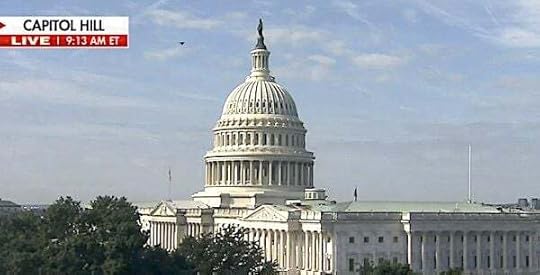 The U.S. Capitol in Washington, D.C.
As states from Texas to California debate and vote on new electoral maps, Americans are both learning about – and often disgusted by – the scale of gerrymandering in their states. The result is that many voters – from both parties – don’t feel represented in Washington, DC. Surveys show that four out of five believe elected officials do not care what people like them think. Seven in ten believe half or more of the government is corrupt. Two-thirds feel they have no voice at all. These are not just feelings of frustration, they are symptoms of a structural flaw in how we draw electoral districts, and elect our representatives.
The winner-take-all system is at the heart of the problem. In every congressional district and nearly every state legislature, a single candidate takes the entire prize. If Republicans make up a third of the electorate in Massachusetts, or Democrats a third in Oklahoma, they win nothing. Voters who consistently find themselves on the losing side are effectively disenfranchised, left without any representative who shares their views. That is not an accident but the predictable outcome of the rules we use.
The American Academy of Arts and Sciences has studied this issue carefully. Its bipartisan working group of scholars, lawyers, and advocates concluded that proportional representation offers a way forward. Instead of electing one representative per district, we could elect three, five, or more, with seats allocated in proportion to the votes received. A group with a significant minority of support would no longer be locked out altogether. They would be fairly represented, which is the foundation of any healthy democracy.
The costs of winner-take-all are plain to see. It makes gerrymandering easy and effective. It deepens polarization by forcing every conflict into a two-party death match. It muffles minority voices, whether partisan, racial, or ideological. It raises barriers for electoral competition, entrenching incumbents. It convinces millions of citizens that their votes do not matter and that staying home is rational.
We are now watching the logical endpoint of this system play out in real time. Texas and California began what is becoming a multi-state argument over redistricting, each pushing the boundaries of partisan mapmaking to squeeze out every last seat for their side. These high-stakes battles are costly, destabilizing, and ultimately futile. As long as winner-take-all remains the rule, both parties will race to weaponize the lines on the map. Proportional representation is the only true solution because it renders gerrymandering irrelevant. When seats are allocated in proportion to the votes each party gets, the maps become an incidental administrative convenience, not a way of deciding the results before a single vote is cast.
Proportional systems reduce these pathologies. They lower the stakes of any single contest and diminish the us-versus-them mentality that poisons our politics. They let more voters point to someone they helped elect, and they create room for additional parties and factions so that citizens are not stuck with a binary choice. Other democracies that use proportional systems consistently show higher turnout, more accurate representation, more competitive elections, and less polarized partisan animosity. This is not speculation but the lesson of comparative evidence.
There is historical precedent for this in the United States. Illinois elected its state legislature for more than a century with a semiproportional system that both Democrats and Republicans later praised for curbing gerrymandering and broadening representation. And even the Founding Fathers, long before proportional representation as such had been invented, often spoke of their desire to achieve more proportional outcomes in elections.
Congress inadvertently cemented this problem in 1967 when it mandated single-member districts for the House. Congress could amend that law and let states choose proportional systems for their delegations. A typical design might involve districts with three to eight seats. For example, if a party wins about a quarter of the vote in a four-seat district, it gets one seat. States also can, and should, move to reform their state legislatures along similar lines.
The Academy’s working group has also recommended expanding the House by at least 150 members. This would restore the closer connection the framers intended between constituents and their representatives, while allowing smaller states to experiment with proportional systems because fewer would have only one or two seats. The result would be more voices, more competition, and more responsive government.
No reform is a cure-all. Proportional representation will not make Congress instantly functional or erase partisanship. But it would move us away from the vicious cycle of unresponsive institutions breeding disillusion, which in turn breeds more unresponsiveness. It would begin to create a virtuous cycle, where institutions reflect the public and citizens feel their participation matters.
For conservatives it would mean protection against permanent minority status in blue states. For progressives it would mean more diversity and a closer match between voters and representatives. For independents it would mean viable alternatives to the two-party-only system. For everyone it would mean a Congress that looks a little more like America itself.
The rules of the game are not fixed in stone. Throughout American history, we have reformed and strengthened our democracy in the perpetual quest for a “more perfect Union.” If Americans truly want a government that listens, and which will not fling itself apart in perpetual dysfunction, proportional representation should be high on the agenda.
Pete Peterson is dean of Pepperdine University’s School of Public Policy, and a member of the American Academy’s Commission on the Practice of Democratic Citizenship.
This article was originally published by RealClearPolicy and made available via RealClearWire.School hires worker awaiting sentencing for stealing overtime pay in previous district

Topline: An English teacher at a public school in Maryland is still collecting a full-time salary from taxpayers while awaiting sentencing after he pleaded guilty to stealing overtime pay from a previous employer.
Dr. Lawrence E. Smith was charged with 15 felonies in 2023, but Harford County Schools ignored the allegations and hired him anyway in December 2024, according to FOX45’s Project Baltimore. He pleaded guilty to wire fraud and tax evasion on Oct. 17.
Key facts: Smith worked as a police officer at Baltimore City Public Schools for 22 years.
Once he was put in charge of monitoring overtime earnings for police officers, he became one of the school district’s top earners. Smith collected $287,271 in overtime from 2020 to 2023, according to Open the Books’ database. His $94,484 in overtime in 2021 was nearly $30,000 more than any of the district’s other 10,712 employees.
Smith was arrested in 2023 after an investigation by the Maryland Inspector General for Education found that he had lied about 3,300 of his work hours over a span of three years. He later admitted in court that he was often at home, on his boat or on vacation while claiming to be on the clock.
Inexplicably, after resigning from Baltimore, Smith was hired as a substitute teacher at Harford County in December 2024. He became a full-time eighth grade teacher in August.
The school district placed Smith on paid administrative leave shortly after his conviction in U.S. district court this October. He is still earning his full $58,000 salary, according to Project Baltimore.
In a statement to Project Baltimore, the school district said Smith was hired because he “completed all necessary background checks; at that time, Dr. Smith had not been convicted of a felony or charged with any crimes against children.”
Background: Despite having enough money to pay criminals, Harford County Schools was forced to cut 167 staff positions earlier this year to cover a budget shortfall.
Superintendent Sean Bulson made $319,000 last year, almost $100,000 more than anyone else in the district.
It’s unclear how many other employees the school has on paid leave, as such information is usually not easily accessible in Maryland.
While Open the Books has never requested paid leave data from Harford County, the Baltimore school district has consistently denied open records requests for its paid leave numbers by citing a “personnel exemption” in the Maryland Public Information Act.
Search all federal, state and local salaries and vendor spending with the world’s largest government spending database at OpenTheBooks.com .
Summary: Schools are supposed to teach children that crime doesn’t pay, but that is a hard task when their teacher is an alleged felon.
The #WasteOfTheDay is brought to you by the forensic auditors at OpenTheBooks.com
This article was originally published by RealClearInvestigations and made available via RealClearWire.Jerome R. Corsi's Blog

- Jerome R. Corsi's profile
- 74 followers

