Michael Hyatt's Blog, page 56
September 29, 2017
Can the iPad Pro Replace Your Laptop?
My 21-Day Experiment
From the day Steve Jobs first introduced the iPad in 2010, I was hooked—at least in theory. The promise of a small, ultraportable tablet was a dream come true. I saw the potential immediately. Unfortunately, it never worked out for me in practice.
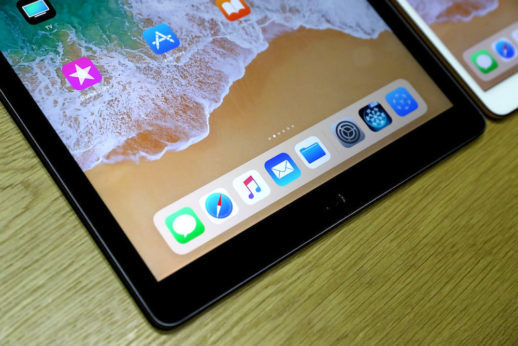
I bought every iPad ever produced (with the exception of the iPad Pro 12″), hoping Apple could finally deliver on its promise. Don’t get me wrong: these machines were amazing, especially for consuming media. Whether reading on the Kindle app, catching up on my RSS feeds, or watching videos, the iPad provided a delightful experience.
But I am a content creator. I need a machine for creating content, not just consuming it. That’s where the iPad fell short for me—until now.
Apple introduced its new iPad Pro 10.5″ at its WorldWide Developers Conference (WWDC) on June 5, 2017. I watched the demo and—like Charlie Brown hoping that Lucy would not pull the football out from under him—I ordered one.

I got the 256 GB version without built-in cellular. Within two weeks, I returned it to Apple and traded it for the cellular version. It’s a no-brainer. For a little bit more, you can have almost continuous access to the Internet without having to futz around with logging into a local network.
The specs are impressive. As you would expect, it is the fastest, thinnest iPad ever. The screen is especially impressive. It sports a 120 Hz refresh rate and is 50 percent brighter than the earlier models.
If you use the Apple Pencil, there is almost zero lag time. I literally forget I’m writing on a screen. It also provides “fast charge support.” If you are using the 29W charger (sold separately), it can cut your battery charging time to less than half.
But how does it work in real life—especially for someone who creates content for a living?
Gail and I spent three weeks in Italy this summer. Rather than lug my MacBook Pro around, I decided to take my new iPad Pro and a Smart Keyboard. This was my first time to use my iPad as my primary computer. I thought it would be an interesting experiment.
Without a doubt, it took me a few days to adjust. But here are five things I loved about using the iPad Pro as my primary computer.
1. Plenty of Computing Power
The new iPad Pro is powered by Apple’s own A10X processor. It is surprisingly fast—the equal of most laptops. This is especially noticeable when coupled with the iPad’s ProMotion display.
Scrolling and animations are buttery-smooth. You’ll also experience virtually no lag when using the Apple Pencil. It’s almost the same experience as writing on paper—a big improvement from just the last iPad model.
2. Super Light and Thin
My cellular iPad Pro weighs just 1.05 pounds. This is ridiculously light. And it fits nearly anywhere. This may not sound like much, but it is one-third the weight of my MacBook Pro with Touch Bar.
It also doesn’t require a large computer bag, because the power supply and accessories are so minimal. In fact, you might not need a separate bag at all. Nevertheless, I bought a beautiful Everki Venue Mini-Messener bag, which is just about the perfect bag ever designed. It is super low profile and the iPad Pro fits in it perfectly. It has room for all the other items I normally carry, including my Full Focus Planner™.
3. Improved Keyboard
I could never type accurately on the iPad’s software keyboard. It might be fine for typing a word here and there but didn’t work for serious content creation. I was constantly missing the keys. And, of course, there was no tactile feedback. I tried the Smart Keyboard for the iPad Pro 9.7, but it too didn’t quite work. It just felt too cramped.
However, the Smart Keyboard for the 10.5″ machine is excellent. The difference in size between the iPad 9.7″ this one may not seem like much, but it makes all the difference in the usability of the keyboard. It feels almost full-size, unlike the one for the 9.7 iPad.
By the way, I also tried the Logitech Slim Combo. On the surface, it seems vastly superior to the Smart Keyboard. It is backlit and has function keys on the top row. It also provides for multiple viewing angles. But in practice, I found it to be too bulky. It actually feels larger than my MacBook Pro.
In fact, it weighs 1.41 lbs.—50 percent more than the iPad Pro itself. The iPad Pro and the keyboard weigh in at 2.46 lbs. Not all that much, but you might as well take a MacBook (2.03 lbs.) or a MacBook Pro (3.02 lbs.).
4. Game-Changing Operating System
Without question, iOS 11 is Apple’s biggest iOS upgrade ever. I ran it for almost two months before it was released publicly, so I really got to put it through its paces. It feels much more familiar to people who, like me, work on a desktop Mac almost all day.
You can now select from up to fifteen apps on the new Dock, which is always just a swipe away. It looks—and works—just like the desktop Dock we all know and love.
You can run more than one task on screen. It’s called a Workspace. You could do this before, but it was clunky. I could never remember how to do it in iOS 10. The implementation in iOS 11 is much more intuitive. You can even add a third app via Slide Over, though, to be honest, I haven’t found much use for this.
You can Command-Tab between open apps just like on your Apple desktop or laptop. You can even Command-Tab between Workspaces. You can also select apps or workspaces with the new Multitasking Switcher, which also displays the control center.
You can manage files using the new Files app. It brings all your files together in one place, including those from Dropbox, Google Drive, and iCloud. Unfortunately, it doesn’t yet support Google Team Drives, which our company uses, but I am sure it’s only a matter of time before that happens.
5. Mobile Apps on Par with Desktop
It had been a while since I used an iPad for anything more than occasionally consuming media. I was pleasantly surprised that all my favorite desktop apps were available on iOS with power and feature parity.
Whether it’s Slack, Mail, Fantastical, FullContact, Ulysses, Workflowy, Nozbe, Day One, or even Facebook, they were a delight to use. In fact, some apps—Day One and Facebook, for example—I like better on the iPad than on the desktop.

The one noticeable exception is Evernote. The new mobile app is definitely an improvement over the old one, but it has not yet achieved feature parity with its desktop big brother. Most notably, you can’t create tables on the iPad app. This is a big frustration for me, as I make heavy use of tables. Also, it doesn’t preserve any tag hierarchy you might be using in the desktop version.
What’s the Verdict?
Was there anything I didn’t like? Well, not really. It exceeded my expectations on nearly all fronts. It’s a beautiful machine coupled with an elegant operating system.
Having said that, I don’t see myself going “iPad-only” like my friend, Michael Sliwinski. I still plan to use my iMac and MacBook Pro at home. But on the road? Absolutely.
For the work I do, there’s no real reason to lug around the extra weight and peripherals associated with a laptop.
Question: Have you ever tried to go “iPad-only”? What did you discover? You can leave a comment by clicking here.






September 27, 2017
You Are Not the Energizer Bunny
3 Ways to Get the Rest That You Need to Succeed
One of the most important lessons I have learned about productivity is this: It’s less about managing time and more about managing energy.

Why? Because time is fixed, but our energy can flex. Most people get this exactly backward. They cram their day with tasks, thinking they can get it all done. Instead, they end up working more and more hours, less and less efficiently, because they wear themselves out.
Bonkers Bankers’ Hours
Maybe you can identify. According to Gallup, the average workweek is closer to 50 hours than 40, and for some of us, it’s a lot more.
Alexandra Michel is a former banker who teaches at University of Pennsylvania Graduate School of Education. She conducted a twelve-year study of investment bankers who regularly worked between—get this—100 and 120 hours a week. There are only 168 hours in a week, so these financial workers were shorting sleep, relationships, self-care, and more.
The banks offered round-the-clock administrative help, along with meal and laundry services and other domestic assistance. Michel found that these bankers were amazingly productive for the first few years, given their solitary focus, but it didn’t last.

“Starting in year four, bankers started to experience sometimes debilitating physical and psychological breakdowns,” Michel writes. Their long list of problems included “chronic exhaustion, insomnia, back and body pain, autoimmune diseases, heart arrhythmias, addictions, and compulsions, such as eating disorders.”
And these problems bred other problems for their employers, in the form of plummeting productivity, “diminished judgment,” and lowered “ethical sensitivity.” In the banking industry, that can be a recipe for financial ruin.
Rejuvenate to Great
What the bankers—and all people who suffer from overwork—really need to get their energy back up is rejuvenation.
We are not machines. We can’t just keep going and going like the Energizer Bunny. When we work too long, we badly need to recharge or we lose energy and focus.
The good news is that energy is a renewable resource, but only if it’s managed correctly. There are at least 5 strategies for rejuvenation that I discuss in my Free to Focus™ course. One of those strategies is to get enough rest. Here are 3 ways to go about doing that.
1. Make Sleep a Priority
First of all, you’ve got to take an inventory. Do long work hours leave you fatigued? Does your body crave more sleep than you’re getting? If so, then it’s trying to tell you something which is glaringly obvious: You need more, and better, rest. You can get that rest but you’re going to have to be purposeful about it. Resolve to rest and then do what it takes to make that possible.
2. Get a Better Night’s Sleep
The easiest and best way to do that is to get a good night’s sleep. That may be difficult with work pressures and children. But you can work toward it and, in the meantime, maximize the sleep that you are getting. There are many ways to do this, including:
Turn devices off and put them away from your body.
Establish a nighttime ritual and put your mind in the right place to fall asleep quicker.
Limit late-night eating to cut down on internal disturbances.
Drink more water throughout the day so that you don’t have to make up the deficit before bed, and make several trips to the bathroom.
3. Don’t Be Afraid of Naps
If it gets into the afternoon and you feel yourself dragging, don’t be afraid to take a nap. I had a boss who figured out a way to take short naps in his chair every afternoon. He would fall asleep clutching his keys in his hands. When the keys fell, that would wake him up and signal it was time to start working again.
Talk About It
I was going to issue a warning about naps, saying that you may need to give your boss a heads up. It could be helpful to let her know that you’re not slacking, but rather recharging so that you can finish the day strong.
But it might need to be part of a larger conversation you should have about your workload. If you keep piling task on top of task and flexing to get it all in, your productivity will suffer in the long term. And your slump will help drag your organization down.
For many, the better choice may be to go ahead and have that conversation now—to get your energy and your focus back on track.
“
We can’t keep on going like the Energizer Bunny. We need to recharge or we lose energy and focus.
—MICHAEL HYATT

Question: Are you trying to do too much? What steps will you take to make sure you get the rejuvenation you need? You can leave a comment by clicking here.


September 25, 2017
Do You Have a Not-to-Do List? You Should
6 Steps to Greater Freedom
To-Do lists are so popular they need no introduction. You’re surrounded by them: at the grocery store, around the house, even in outer space!
It’s easy to see why these agendas are so popular. You list the items that need to get done on a piece of paper or a device, preferably in the order of most to least important, and then cross them off as you go, giving you a sense of real accomplishment.
It’s a simple, elegant, powerful solution as to how to organize your days. But there’s a catch.
When To-Dos To-Don’t
Often, To-Do lists give you more items than you can reasonably—or even unreasonably—get done. What then? Enter the Not-to-Do List.
I came up with this idea several years ago and keep coming back to it. Happily, several people have joined the not-to-do bandwagon.
The idea is to list all of the activities you are intentionally going to stop doing for the sake of greater productivity.
And here’s why that’s important: As you succeed at work, you attract more and more assignments. It’s like you become a task magnet.
“Give it to Lori,” colleagues will say. “She’ll do a great job!”
But people are a finite resource. You only have so much energy and so much time, no matter how good you are.
When You Really Need a Not-to-Do List
The only way for a super-productive person to continue to grow professionally without going crazy is to periodically decide what you are not going to do.
This is particularly important when you have just been promoted to a new job. That’s when you really face the pressure to perform, and it’s the most difficult to say no. But you must say no if you are going to say yes to the things that really count—both in your job and in your life.
Keep in mind that the great risk for most people in new jobs is that you will continue to do your old job.
“Now why would people do that?” you ask. “That’s crazy!”
Probably because it is familiar. And your supervisor never said you had to stop doing it. Being aware of this dynamic is half the battle.
“
The only way for a super-productive person to continue to grow professionally without going crazy is to periodically decide what you are not going to do.
—MICHAEL HYATT
How Do I Create a Not-to-Do List?
The other half of the battle is to sit down and physically create your Not-to-Do List. Here are the steps I suggest to make that a concrete reality.
Find a quiet place where you can think.
Look at your previous month’s calendar activities. Write down anything you’re not sure really fits your current job description.
Look at your upcoming appointments for the next month. Write down things that are questionable in terms of your current job description.
Go through your to-do list(s) and do the same thing. Write down the questionable activities, given your new role.
You should now have a list of Not-to-Do candidates.
Now go through the list and put an asterisk beside each item that is significant enough that you want to add it to your official Not-to-Do List and shove it off your plate.
What Next?
Once you get your list done, share it with your colleagues and your assistant, if you have one. They can help you screen out tasks that no longer belong on your To-Do list so you can focus on the things that are most important to the organization.
It’s especially important to discuss your Not-to-Do List with your boss. You’ll need her buy-in so she doesn’t keep assigning you work that you have mutually agreed is no longer what you ought to be doing.
My Old Not-to-Do List
Just to give you some idea of what to include, here is the Not-to-Do list I wrote back when I became CEO of Thomas Nelson Publishers. It prepared me well for that job and for later success as founder of Michael Hyatt & Company.
Not To-Do List
Review book proposals or manuscripts for possible publication.
Write deal memos.
Negotiate contracts with agents or authors.
Meet prospective new authors unless they have significant brand potential.
Attend publishing meetings unless the topic is vision or strategy.
Write marketing plans.
Travel by car to other cities unless they are less than one hour a way.
Check my own voice mail.
Read unfiltered e-mail.
Answer my own phone.
Respond to (or feel the need to respond to) unsolicited sales pitches or proposals of any kind.
Attend process review meetings unless there’s a compelling reason for me to be there.
Attend trade shows for more than two days.
Serve as a director on more than two outside boards.
Strike a Balance
You don’t have to be grappling with a new role to find the Not-to-Do List extremely helpful. If you want balance in your life, you want a Not-to-Do list.
“
If you want balance in your life, you want a Not-to-Do list.
—MICHAEL HYATT
Remember, the To-Do list tendency is to grow and grow. If you don’t periodically take a machete to it, your To-Do list will eventually crowd out everything. So get yourself a Not-to-Do list and swing away.
Question: What do you need to stop doing? You can leave a comment by clicking here.


September 22, 2017
Why You Get Distracted at Work
3 Things That are Sapping Your Productivity
It’s hard to maintain your focus in an office. With so many meetings to attend, drop-ins by coworkers, calls, emails, and countless other interruptions, it can seem like a miracle that anything ever gets done.
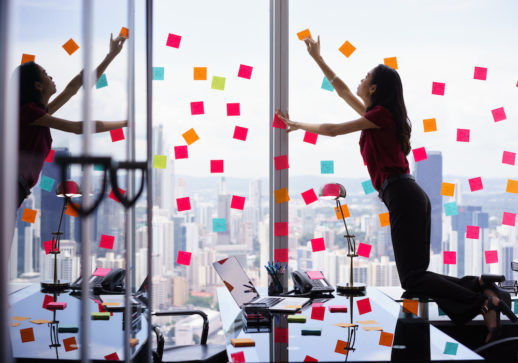
But do you know who the biggest culprit often is when it comes to sabotaging your productivity with distractions? Look in the mirror.
Interruptions or Distractions?
Interruptions are outside things that throw us off. Distractions are things we do to ourselves that derail us. Though sometimes, the two go hand-in-glove.
At first glance, that employee who sticks his head in your door to pick your brain about something is an interruption. But not so fast! Weren’t you practically begging for that disruption by reminding everyone of your open-door policy at the staff meeting?
We’ll zero in on distractions in this blog post—with the help of a great book called The Distracted Mind. But interruptions and distractions are closely related. In fact, I think if we were better at fending off distractions, we could see more clearly how to limit interruptions as well.
Out of Focus
Focus is vital to achieving many of our most important goals, but a pair of scientists at California State and UC San Francisco have found that our ability to concentrate is slipping fast.
“Shockingly, students could not focus for more than three to five minutes even when they were told to study something very important,” explain Adam Gazzaley and Larry Rosen.
Focus is harder among younger people but the truth is that most of us are deteriorating, in a way that can’t be blamed on old age. Scientists are discovering we’re all having a harder time paying attention, thinking things over, and taking decisive action.
“
Interruptions are outside things that throw us off. Distractions are things we do to ourselves to derail us.
—MICHAEL HYATT
By looking over their findings, we can begin to banish the distractions, recover our focus, and really get things done. There are three areas of concern that stand out.
1. We’re Distracted by Our Devices
Smartphones and other devices frequently interrupt us, of course. “Our devices vibrate, shake, rattle, and roll, and our attention is captured,” write Grazzaley and Rosen.
But actually, the problem goes much deeper than that. Even when we aren’t being buzzed or pinged or lit up, we have come to crave the interaction of our devices. We frequently take a break from our important tasks to check our phones, watches, and other gadgets.
This habit carries over to more than just work. When you go out to eat, look around and see how often people take a break from social interactions to stare at their screens. Which brings us to one of the big reasons we’re so crazy for screen time.
2. We’re Distracted by Social Media
Instagram, Twitter, Facebook, Pinterest. The list of apps and websites that come together to claim so much of our attention is nearly endless. I get it. They can be fun. Used in moderation, there’s probably nothing wrong with them. But that’s not what is happening.
There is a constant stream of information out there, more than we could ever process. Scientists find we are not handling it well. The vast expansion of information over the last 25 years should be helping us, but often it’s not because we get overwhelmed.
And our information-strained minds crave information that’s easy to come by over information that is hard-won. For instance, when we are trying to do something mentally challenging at work that requires unbroken concentration, our minds are constantly pushing us to check social media instead.
It’s extra tempting since much of the work we do is on computers, and that distraction is literally just one click away. And all of this checking and switching messes with our focus and encourages our most counterproductive work habit, online or off.
3. We’re Distracted by Multi-Tasking
That awful habit is multi-tasking. “[F]requent task switching is something we all do, and the more often we switch, the more detrimental it is to our real-world performance,” explain Grazzaley and Rosen.
Study after study after study show that we are not good at multi-tasking, that it slows us down, that it leads us down time-sucking rabbit trails, and that it encourages shoddy work. And in the abstract, we understand this.
When asked if it will be less efficient and more distracting to disrupt this task with another task, rather than doing one first, then the other, people get it. We say it would slow us down. We know we ought to do A first, then B. But then we go right ahead and do it anyway—likely because we’ve made distractions such an integral part of our workday.
Banish Distractions
There are things we can do to buck the trend. We can put our phones away, use apps to shut off social media during work hours, and turn our phones off at dinner time.
But a mechanical fix is just a Band-Aid. Most of us have a real problem with concentration. Until we are willing to take a hard look at how and why we are driving ourselves to distraction, it’s going to be hard to find the focus that we so badly need.
Question: Which of these distractions has negatively affected your productivity? You can leave a comment by clicking here.


September 18, 2017
The Problem with Whack-a-Mole Productivity
The Real Purpose of Workplace Efficiency Isn't What You Think It Is
When I started my career, I quickly discovered that I had more to do than I could get done in a forty-hour workweek. So, I worked more hours. I got to the office at 5:00 a.m. and usually didn’t leave until 6:00 p.m.

I often worked on Saturday mornings and Sunday evenings, too. It wasn’t unusual to put in sixty to seventy hours a week, or even more. But I still wasn’t getting enough done. So I figured I just needed to get more efficient.
I attended time-management seminars, read books on productivity, and bought a better paper planner. Yet that still wasn’t enough.
My professional life resembled a game of Whack-a-Mole. Every time I checked something off my to-do list, two more tasks popped up. I felt overwhelmed and discouraged. And I secretly began to wonder if the problem was just me.
Productivity Problems
It wasn’t until many years later that I began to sort this all out. The problem was productivity itself, or rather how I tended to look at productivity at the time.
The old productivity paradigm was all about greater efficiency. How do you get more done in the same amount of time? It was the old factory model, applied everywhere. The goal was to increase throughput, rev up the line, speed the plow.
This model may work with machines, but it doesn’t work with humans. It crushes our spirits, leading to burnout or even worse. The Japanese even have a word for it: karoshi, or “death from overworking.”
Productivity and Freedom
What I eventually discovered was that the only kind of productivity worth pursuing isn’t simply about getting more done. It’s about getting the right things done with a specific goal in mind. Ultimately, real productivity leads to greater freedom.
That’s right, the new paradigm for productivity is about more freedom. It’s about how you can get more done by working less, so you can enjoy life and invest in the people and priorities that matter most. Doesn’t that sound better?
Any productivity gains worth striving for—what I call “true productivity”—should help enable us to enjoy each of these four freedoms:
The freedom to focus—where all the important work is done (hence the name of my Free to Focus™ course).
The freedom to be present—instead of thinking about work or other things when you’re with your family.
The freedom to be spontaneous—to have room on your calendar for the fun and interesting opportunities that crop up.
The freedom to do nothing—to shrug off the unrelenting busy-ness of life and just be.
The Italians have a phrase for this last freedom: dolce far niente or “the sweetness of doing nothing.” I experienced this firsthand on my recent sabbatical to Italy.
Gail and I had three weeks, unplugged from the office. I didn’t check my email or Slack. I didn’t create a daily task list. I didn’t have any meetings to attend.
It was glorious. And it was only possible because of the freedom real productivity makes possible.
“
Ultimately, real productivity leads to greater freedom.
—MICHAEL HYATT
Question: Which of these freedoms are most appealing to you? You can leave a comment by clicking here.


September 15, 2017
Five Consequences of a Life Out of Balance
And How My Free E-book Can Help
If you are working more than 55 hours a week, you are working too much and likely out of balance. You may be able to keep this up for a season, but it is not sustainable.

In fact, if you keep working so much, something will eventually break. And the sooner you come to terms with this, the better.
When Norms are Bad
Rebecca Zucker was an investment banker at Goldman Sachs in the 1990s. Her bosses considered Zucker the “ideal worker,” because she was “a fully committed employee with no personal ‘entanglements.’”
Zucker was “single with no children, and had an almost unlimited capacity for all things related to work.” However, she reflects in Harvard Business Review, “so did my peers, whether or not they had children, partners, or aging parents. It was just the industry and firm norm.”
She eventually learned how unhealthy that was. Now, as an executive coach, she tries to help leaders find balance. It’s not easy.
One client at a tech firm in San Francisco told Zucker that she gets up at 4 a.m. to work, but it’s not enough. She still “has anxiety about the possibility of missing an email at midnight.”
“Is this normal?” the client asked Zucker, who rightly responded that even if it is normal for this company, it shouldn’t be.
What’s at Risk
I teach high achievers how to reject workaholism and find balance, but sometimes people push back and ask why they should even want balance. Won’t it just keep them from getting ahead?
I get it. I’ve been there. But let me show you the 5 very important assets you are potentially putting at risk if you don’t keep your normal workload under 55 hours a week:
Your health. Overwork and the lifestyle that goes with it, including junk food and lots of sitting, is incredibly bad for you over the long haul. How many people do you know who have died young simply because they refused to take care of themselves? You don’t want to be one of them.
Your family. If you are married, the cost of divorce is incalculable. Just ask those who have gone through one. Overwork will drive you toward that. It will also leave you little time to pay attention to your children, which can lead to crises that you’ll have to deal with later.
Your friends. When I was a workaholic, I thought I could get by with colleagues at work and people I knew at church. It wasn’t enough. Since then, I have learned that friendships are wonderful, but they take time to maintain. Overwork eats away at the margin needed for deep friendships.
Your effectiveness. You are most productive for only a limited amount of time each day and the stress of overwork narrows that time. Past a certain point, the number of hours you work has almost zero correlation with your productivity. So, you’re giving your time, and getting very little in return.
Your example. As a leader, you set the pace. If you work 70 hours a week, your people will think they have to work 70 hours a week. Most of them won’t be able to keep up. And you won’t like the consequences.
“
If you are working too much and out of balance, something will eventually break.
—MICHAEL HYATT
Work Is Not Enough
Don’t get me wrong. Hard work is a good thing. So are boundaries and balance. We ought to encourage all three, in our own lives and in others.
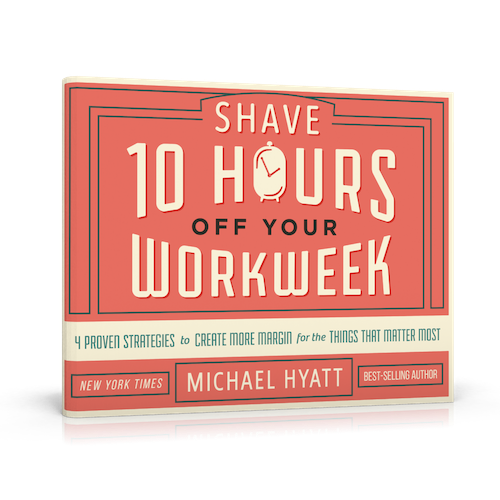
If you want to get your life back into balance, I suggest you grab a copy of my free e-book, Shave 10 Hours Off Your Workweek. It will help you get more done in less time, so you can reinvest those hours in what matters most.
Question: Is your life in balance? You can leave a comment by clicking here.


September 13, 2017
What’s Your Productivity Personality “Type”?
Take the Quiz to Discover the Pros and Cons of Your Specific Approach
Low engagement and productivity are serious problems for organizations. As I mentioned Monday, Gallup’s numbers show only a third of workers are engaged on the job.
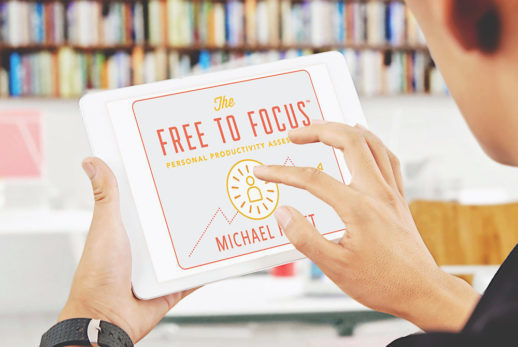
The office is actually the last place most people want to be when they need to be productive and complete a task. What about you?
Discovering the Habits You Use to Cope
How productive would you say that you are? Do you suffer from too many on-the-job distractions, lack focus, or have a hard time staying organized?
As high achievers, we often adopt habits that help us cope with excess to-dos and cramped schedules. We get along pretty well until our habits backfire. The tendencies that we created to survive our workload become hindrances to our growth.
A little while back, I created an assessment to help high achievers identify their current level of productivity. I’ve updated it to include a way to identify your “type”—the approach you take when you’re overloaded. Knowing your type—as well as how you score in different productivity areas—provides the clarity you’ll need to break through to the next level.
This assessment is completely free, and it’s only ten questions. I’m excited to report that more than 45,000 people have already used it!
Pinpointing Your Strengths and Areas for Improvement
When we get swamped—even if we love our jobs—we don’t stop long enough to ask ourselves if what we’re doing is actually working. You probably get a lot of things done. But if you feel frustrated, stuck, exhausted, or always on the go, your current system could probably use some improvements. It’s also worth knowing what is working so you can play to your strengths.
My Free to Focus Personal Productivity Assessment can help you pinpoint exactly what’s running smoothly—and what needs to be overhauled.
By taking the Free to Focus Personal Productivity Assessment, you will discover:
Your unique productivity personality “type” and what it means for you.
Nine key categories of personal productivity and where you’re currently succeeding or struggling.
The present reality about your tasks, schedule, workload, and personal margin.
How to optimize your efforts for success in specific areas.
As I mentioned, the Free to Focus Personal Productivity Assessment is free. It’s online and mobile friendly so you can take it on any device. And you can complete it in as little as ten minutes.
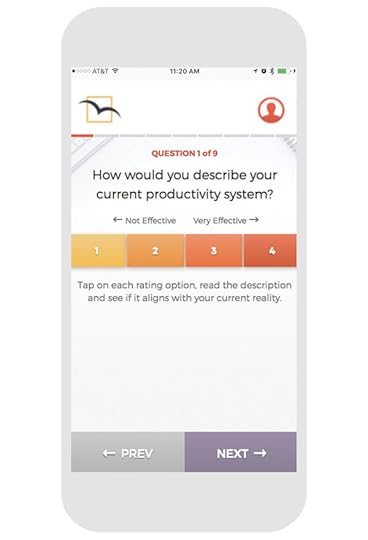
Best of all, when you’re done, you’ll get a description of your type and a productivity score-specific report. You’ll also receive actionable tips and tricks to increase your score and become more productive. Once you get clear on next steps, you’ll be able to chart your improvement by comparing your scores and achieving a new personal best.
Identifying your current location is key to getting where you want to go. The Free to Focus Personal Productivity Assessment not only shows you where you are on the map, it also points the way forward.
Click Here to Discover Your Type!



September 11, 2017
5 Reasons Why People are Unproductive at Work
What Organizations Must Learn From the Disconnect
Take a guess: What portion of the American workforce said they were “most productive” at the office during normal work hours? According to a recent FlexJobs survey, the number could be as low as 7 percent. Many more said they get some things done at the office “because it’s not an option to leave.”

Whatever the number of highly focused workers is, it’s too low. In the massive State of the American Workplace report, Gallup found that only 33 percent of workers are significantly engaged at work.
And a smaller but more troubling number of workers are “actively disengaged,” meaning they “are miserable in the workplace and destroy what the most engaged employees build.” As for the other 51 percent, Gallup found “[they] are not engaged—they’re just there.”
How does this happen? Why do so many people come into work, day after day, but rarely show up ready to put in their best effort?
On the Job Blues
There are hundreds of reasons that emerge in job satisfaction surveys and conversations with workers. But five reasons really stand out to me.
1. Workers Aren’t Inspired by Their Leaders
Ideally, workers want their jobs to be more than just a paycheck. They want to be playing a part in an organization that makes a positive difference. For them to be inspired, leaders need to articulate a vision they can embrace.
Too often, that just isn’t happening. According to Gallup, only “15 percent of workers strongly agree that the leadership of their organization makes them enthusiastic about the future.”
2. Workers Aren’t Getting the Communication They Need
Inspiration is a good thing, but so is regular communication. Too often, it’s lacking. An even small number than those inspired—only “13 percent of employees,” in fact—“strongly agree that the leadership of their organization communicates effectively with the rest of the organization.” That’s a huge disconnect and a breeding ground for job dissatisfaction.
3. Workers Face a Blizzard of Distractions
At the office, it can seem like everything from email to meetings to drop-ins to social media to ever-shrinking space-per-employee is one giant conspiracy to distract workers, throw them off their game, and convince them to accept less of themselves and their colleagues. In such an environment, of course, it’s harder to stay engaged.
4. Too Many Tasks Assigned to Workers are Drudgery
One secret to productivity is to work on tasks where your passion intersects with your proficiency. I get it. A certain amount of drudgery on most jobs is predictable.
But companies don’t pay nearly enough attention to the passion and proficiencies of their workers when assigning tasks. And when workers are focusing on tasks they consider a grind for most of their workdays, they’re not going to be as engaged or productive as they would be if they did more suitable tasks.
5. Workers Aren’t Getting the Flexibility They Crave
Too many workers get up early in the morning, fight traffic into work, try to fit in appointments on their lunch breaks, get stuck staying after hours because a meeting ran long, and then fight traffic again on the way home. The whole time they must be wondering, “Why do I have to be here? What does this have to do with me getting my job done?”
According to FlexJobs, 66 percent of workers thought they could be more productive working in a home office. Only 2 percent thought they’d be less productive.
They may be right or wrong about that. (In our experience at Michael Hyatt & Company, where everyone works virtually, they’re right. Mandatory office hours would undermine our productivity for certain.) But, right or wrong, the point is today’s workers crave flexibility, and they’re not getting it. It’s no surprise many aren’t putting in their best effort.
Silver Lining
The one bright side to the dismal workplace surveys is that if companies address these concerns consistently, their workers are far more productive.
In fact, Gallup found that at the “world’s best organizations” the overall engagement of employees was 70 percent—still room to grow but a whole lot better than 33 percent. That’s the difference effective leadership can make.
“
One secret to productivity is to work on tasks where your passion intersects with your proficiency.
—MICHAEL HYATT
Question: What steps will you take to avoid this type of disconnect on your own team? You can leave a comment by clicking here.


September 8, 2017
Don’t Want It? Get Rid of It!
3 Ways to Let Go and Find What You’ve Been Missing
I spent an afternoon last week cleaning out my closet. It was high time I did. I had shirts, pants, shoes, and hats that I had not worn in months—in some cases, years. When I thought about it after, the whole experience became a kind of a metaphor for improvement.

It occurred to me that if we want more of what we want, we have to get rid of what we don’t want. It’s the necessary but sometimes painful process called pruning.
Lighten Those Closets
I was happy to lighten the load but pruning even clothes can be hard for some people. We might think “That shirt holds sentimental value!” or “I’ll fit in those pants again, soon,” or “That jacket will come back in style, right?” So we have a hard time letting go of them.
And it’s even more difficult to get rid of habits, projects, and even in some cases relationships that are no longer doing anything good for us.
But remember that what is true in our closets is true of so much else in life: We fill up all the existing spaces pretty quick. Until we let it go of some of that “stuff,” we don’t have room for anything else.
In other words, sometimes our short-sighted attachment to what we have is what’s holding us back from growing. Thus, pruning is necessary.
Your Pruning Challenge
That it’s necessary never means it’s easy. You can see what you have, not what you don’t have, so it can seem like you’re giving up something for nothing.
This is the challenge of pruning. It requires faith—and perhaps even more fundamental, a mindset of abundance. The truth that you have to keep reminding yourself of is there’s much more where that came from.
Here are three steps for how to prune now, and thrive after:
1. Identify What Is No Longer Serving You
Some things were useful at one time but no longer serve to help you now. Other things, well, you thought they would be useful, but that never panned out. You kept them around out of habit or the hope that they would be useful one day.
Now is a good time to take stock. Ask yourself, “Is this still of any use to me?” and answer honestly. Items on the pruning block could include an old shirt, a pair of pants, smoking, or even a difficult, unprofitable client. Figure out what you need to cut back on in your business and life.
2. Get Rid of It, Even if You Don’t Have a Replacement
This is the faith part of the equation. You have to let go of the things you have now to make room for things that you trust will come later. Have a garage sale or take those things to Goodwill, make that difficult phone call, or begin the steps to kick unproductive habits.
When you want to second guess yourself, remember that you already decided that these things hold no value to you. By getting rid of them, in most cases, you’re letting other people who might find them more valuable acquire them, and everybody ends up better off.
3. Identify What You Want, and Go for It
Now, unencumbered, you have the space, the time, or the energy to devote to getting what you truly want. Be intentional, be prudent, but by all means go out and get them.
Always wanted to prospect for more clients? You have the time now that you don’t have to deal with the draining ones. Want that jacket? Now you have room for it. Have in itch to garden? Put raised beds where your never-used badminton set used to be.
“
If we want more of what we want, we have to get rid of what we don’t want.
—MICHAEL HYATT
Prune, Prune Again
When I go through the pruning process in my life, I usually end up thinking that I only wish I had done it sooner. Getting rid of the things I didn’t need has made room for so many things I truly needed.
Question: What do you need to get rid of? You can leave a comment by clicking here.
September 6, 2017
4 Ways to Stay Positive in Work and Life
A Former Pessimist Shares His Secrets to Success
We often assume that people simply are a certain way. “She’s such a bright, sunny person.” “He’s always such a gloomy Gus.” Nature gives us optimists and pessimists, and that’s all there is to it.

But according to Jon Gordon, that’s a myth, a limiting belief that may be holding you back. He says this from painful first-hand experience.
Accentuate the Positive
“I am not a naturally positive person,” is the improbable beginning of Gordon’s new book The Power of Positive Leadership.
“People think I am because of my books and talks, but the truth is I have to work hard to be positive. It doesn’t come naturally to me,” he explained.
This was intriguing to me, so I had to talk with him about the importance of leaders staying positive, and how to do that, even when we certainly don’t feel like it at times.
Rocky Marriage Blues
Gordon’s positive message has made him a popular speaker and a consultant for sports teams and Fortune 500 companies, but he didn’t start out that way.
He told me that, at one point, his wife threatened to leave him because he was so “miserable and negative.” It was an important wake-up call. “That’s what began my journey of saying ‘How can I be more positive? How can I be someone who brings out the best in others but also feels good about myself?’ So it became a life mission,” he said.
Along the way, he learned that “being positive doesn’t just make you better, it makes everyone around you better.” He also realized that positivity isn’t just a personality trait but also a skill that you can learn and improve.
From our conversation, I gleaned four strategies for how to do that.
1. Acknowledge Setbacks but Focus on the Future
Gordon told me what it was like to be in the locker room with Clemson University head football coach Dabo Swinney after his Tigers lost the national championship to Alabama in 2015. Swinney briefly acknowledged the mistakes on the field, then said, “Let me tell you something. We’re coming back.” He thanked the seniors for their leadership in getting them this far and talked about the improvements the team was going to make next year to win it all.
Gordon was impressed with Swinney: “He just lost the national championship. He wasn’t wobbling. He was focusing on the future.” And it worked. The Tigers came back to beat Alabama for the championship the next year.
2. Work Hard for That Future
Gordon talked about research which shows that positive, optimistic people “get paid more” and the reason behind that compensation, including metrics showing “they will actually succeed” more often than their more dour co-workers. “Because they believe in a better future, [researchers] believe that they actually work hard to create it. So it becomes a self-fulfilling prophecy,” he explained.
3. Stay Healthy Through Diet, Exercise, and Sleep
Physical energy is important for staying positive. You’ve got to eat enough of the right things to keep energy in the tank, and you’ve got to find a way to keep your body engaged. “Exercise to me is essential to my positivity,” Gordon said.
And so is a good night’s sleep. “You will not be at your best” without adequate sleep, he warns. Which is a problem these days, because, “Americans are getting a lot less sleep than they need.”
4. Give Thanks for Successes, Every Day
Gordon said it’s important to “celebrate your successes every day.” It’s a great idea that I’ve been practicing for years. I call these my “wins for the day,” which I try to name every night.
Concentrating on your successes at the end of one day puts you in the right mindset to wake up the next day ready for something great to happen—and the fire to help it along.
“
Concentrating on your successes at the end of one day puts you in the right mindset to wake up the next day ready for something great to happen.
—MICHAEL HYATT
Not Just for Optimists
Now, we may have a default disposition. Some of us may be more naturally upbeat than others, I will grant. But these strategies for positivity—focus on the future, work hard for that future, take cares of yourself, pay more attention to your successes—are not just for the Pollyannas among us.
If you’re having a hard time being a positive leader, why not try these things for a month? As Jon Gordon will personally attest, they just might transform your life.
Question: Which of these four strategies do you need to implement so you can stay positive? You can leave a comment by clicking here.