Michael Hyatt's Blog, page 52
November 28, 2017
Goal-Winning Strategies of 3 Top Athletes
Discover Their Personal Secrets for Achieving Peak Performance
Few of us run races at the Olympics or score touchdowns in the NFL. But we all play a metaphorical sport in our professional and personal lives. Simply put: we want to succeed and thrive. To win, we must set big goals and work toward effective and influential results.
Problems seldom arise from our goal-setting itself. Each New Year offers another prime opportunity to make resolutions and set goals. But it’s our end-of-the-year progress reports that truly count, and research suggests that the further away we get from our initial goal setting, our “motivation tends to lag.”
Toward the end of each day, quarter, or year, it’s prudent to ask ourselves if we’ve actually followed through and met our goals. It’s also wise to ask if by meeting our goals, we’ve seen some sort of positive, transformational effect in our business or life.
Three top athletes help show us the way forward.

1. Connect with a deeper purpose
Colt McCoy is currently a backup quarterback for the Washington Redskins. When I interviewed him a few years back for a book project written with his mentor, Matt Carter, Colt had been the winningest quarterback in the history of NCAA football before beginning his NFL career with the Cleveland Browns.
Colt described how throughout his whole life, he’d been hardwired to win. Yet he had mistakenly set some misguided goals. He came to this conclusion after a shoulder injury sidelined him during the BCS National Championship game, and after his mentor was diagnosed with life-threatening cancer. Colt and Matt both made a vow then and there to live with what they termed “unction”—purposeful urgency—as if every day must count for what truly matters.
“
To win, we must set big goals and work toward effective and influential results.
—MARCUS BROTHERTON

Colt was still dedicated to giving his all on the field. But he began to redefine success in the light of this “unction.” For Colt, that meant being the best husband and father he could be, truly caring about his teammates and coaches, reaching out to his community, and staying true to his faith.
“Achievement is still important to me,” Colt said. “I get up every day and work my tail off as I continue in my career. But my heart is also set on more. I’ve realized that being a great quarterback is not my only purpose in life.”
Once Colt defined what truly mattered to him, he was able to focus on those areas more and let superfluous things fall away, which led to peak performance.
2. Turn past hurts into determination
Derrick Coleman Jr. is currently the fullback for the Atlanta Falcons. When I interviewed him a few years back for his memoir he’d just made history as the first legally deaf athlete to play offense in the NFL. He’d also won a Super Bowl with the Seattle Seahawks.
That level of success came only after expending enormous grit in overcoming obstacles. As a hearing-impaired child growing up in L.A., Derrick was always mainstreamed in public schools. His parents knew that for Derrick to succeed in life, he must not receive any special treatment. Unfortunately, he was often bullied.
One day in first grade, Derrick stood in the playground as children formed a ring around him, laughing, pointing his direction. You know how kids call you “four-eyes” if you wear glasses? Derrick wore two large hearing aids, and on that day the kids chanted “four-ears” over and over again.
That was only one incident. Kids made fun of the way he talked. Kids called him other mean names. One day after school, Derrick was jumped by an older group of kids who punched him, grabbed his hearing aids out of his ears, and threw them far into the middle of a playing field.
“Those things happened. I’m done with it,” Derrick said, looking back. “I would never use what happened back then as an excuse for why I couldn’t do something later on. Whenever I was bullied, I went back to school the next day and continued on. When something bad happens to you, you can’t let your grieving period last too long. There’s just too much great stuff out there in the world waiting for you.”
Derrick never let his past hurts define the rest of his life. He used them as fuel to set the bar high, to impel him to work hard to reach those larger goals, and ultimately to achieve peak performance.
3. Work hard and commit to total victory
The late Lieutenant Lynn “Buck” Compton (1921-2012) isn’t primarily remembered as a top athlete, but he was. I was greatly honored to have met Buck—this man of such high lifelong achievement—to speak with him and interview him on many occasions.
In college, Buck was a two-sport athlete for UCLA, playing both football and baseball and excelling in both. In football, he played in the 1943 Rose Bowl. In baseball, the legendary Jackie Robinson was a teammate.
When World War II broke out, Buck’s initial assignment was the 176th infantry regiment, a Virginia National Guard outfit at Fort Benning. To his surprise, he learned that his sole purpose for being in the regiment was to be a member of their baseball team.
Buck was leery about his initial assignment. He wrote home, warning his mother not to tell anybody what he was doing. In Buck’s thinking, “There was a war on, and I was embarrassed that my only contribution playing baseball.”
Having a winning regimental baseball team was considered a prime commodity for any commanding officer. It was well known that COs would routinely block any application for transfer made by a ballplayer. The only two exceptions (where a commander was powerless to stop a transfer) were for flight training or parachute training. Flight training took about a year. If Buck chose flight training, he was afraid the war would end before a year passed and he would miss it. Jump training took only one month.
So Buck joined the paratroopers. 
Lt. Lynn “Buck” Compton
Buck became an officer with the famed Easy Company, 506th PIR, 101st Airborne, the elite group of paratroopers known as the Band of Brothers. He parachuted into Normandy on D-Day, fought valiantly in Operation-Market in Holland where he was wounded, and braved the snow and ice of the battle of Bastogne. He was awarded the Silver Star for his actions during the assault on Brecourt Manor.
After the war, Buck became a detective, an attorney, and later a judge. While an attorney, he successfully prosecuted Sirhan Sirhan for the murder of Bobby Kennedy.
Some of Buck’s earliest lessons on goals and achievement came from back in his high school days when he played two years of varsity football for Los Angeles High School. Previously, sports were something he’d always played for fun. But in high school, he encountered the famed hard-driving coach Bert La Brucherie.
Buck played offensive guard, and early in his first varsity season he missed a block during a scrimmage. Coach La Brucherie smacked Buck on the side of the helmet, chewed him out, and snarled, “Are you going to miss him again?”
“No sir,” was all Buck said. And he didn’t.
As Buck told me, “Coach Bert always pushed us to play as absolutely hard as we could. We practiced daily, at times until well after dark. Sometimes it grew hard to see the other players on the field. Coach would throw back his head and bark: ‘Look for the stripes on his socks!’ That was his form of humor, and as we got to know him, we laughed right along with him. Our respect for him grew as we understood his unswerving commitment to excellence. Nothing more than total commitment to victory would do.”
I asked Buck if he remembered those lessons later in life. “You bet I did,” he said. “His voice helped push me through a lot of hard times, including the war years. His presence became a part of me. Whatever mud or snow we were in, if our ammunition ran low or we didn’t eat for some time, Coach Bert was there. His voice ingrained its way into my head. I couldn’t shake that boom if I tried.”
Set high goals, work hard to reach those goals, and commit to total victory. That was Buck Compton’s secret to peak performance. If we can do that, connect with a deeper purpose, and turn past setbacks into determination for the future, we’ll be one huge step closer to the goal line.






How Celebration Fuels Achievement
3 Powerful Byproducts of Celebrating Your Wins
“Positivity” tops my Strengths Finder test. So I like to celebrate—often. But does celebration fuel progress? Will it produce greater results? From my experience, yes. It does so by bringing three powerful byproducts to you and your organization, all of which are vital for growth.
1. Celebration brings energy
Purposeful celebration brings an energy to your team, and that energy will directly impact the performance they deliver. It feels good to be acknowledged. And it doesn’t take much. Sometimes it’s just a pat on the back or thumbs up from the right person at the right time.
Heck, just look at our “social” behavior online. How many times have you posted a picture, video or message on any of the social platforms like Facebook, Instagram or YouTube… only to be eagerly waiting to see if anyone “likes” it?
Be honest. We’ve all done it right?
Why? Because it feels good to be recognized. It feels good to acknowledged. It feels good to know that people are paying attention to what we’re doing. And we’re much more likely to do more of the things that feel good.
“
It feels good to be recognized. And we’re MUCH more likely to do more of the things that feel good.
—STU MCLAREN
For example, years ago while at university, I played on the soccer team. During my first year, we had a really good team. But we just didn’t “gel.” Furthermore, the coaches took a very “critical” approach to the way they coached the team. Their style was to find a mistake, share it with the team, and coach around how to avoid repeating the mistake in the next game.
So after every game, no matter what happened (even if we won), we would hear about all the things that we could have done better. It sucked. By the end of their deconstruction of the game, we were completely deflated. It wasn’t fun, and by the end of the season the guys were drained. Worst of all, it showed on the field.
Fast forward two years and the coaches started using a different approach. They started playing to our strengths. They started focusing on the things we were doing right and they began reinforcing them. And the locker room after the game was a totally different place. There were a lot more high fives and laughter, and our team chemistry was at an all-time high.

I’ll tell you, as a player, it was far easier to repeat what was working than it was to avoid making mistakes (I’ll share why in a second, but there’s another point I want to share on this first).
When we won, we started doing something unique. We had a song that we’d sing after every game. It was our celebration song. As soon as the game was over, the team would go to the center of the field and one of the guys would get picked by the other players to start the countdown to the song. Then we would all break down and start singing together.
It became a moment that all the guys looked forward to. Eventually, the fans started joining in as well (at home games). It brought a whole different energy to the way the team showed up—both for practice and for the games. And despite our team “on paper” not being as skilled, we went on to win the National Championship two years in a row.
I’m not saying the celebration was the only reason, but it sure made a difference. Celebration naturally creates a positive energy, and that positive energy transforms the way your team will show up.
“
Celebration naturally creates a positive energy, and that positive energy transforms the way your team will show up.
—STU MCLAREN
2. Celebration brings clarity
Leading a team isn’t easy. When you’re in a leadership position, you shoulder a lot that people never see—risk, responsibility, just keeping the lights on. With all the weight and worry of leadership on our minds, it can be easy to view celebration as a “nice to have” vs. a “need to have.”
But there’s a big side benefit of celebration that few of us think about: Celebration brings clarity to what you want to see.
Back to my soccer example. When the coaches were constantly critical, our heads were full of what not to do. But then we also had to think about what we needed to do to play better. So we had to think about things twice. First “avoid this.” Second, “do that.” And if there were multiple mistakes, you can imagine how mentally draining this would be.
When you celebrate positive results, you immediately simplify things. It becomes “do more of this.” Period. Simple, right?
The challenge as leaders is to take the complexities of running a successful business and distill it down to its most simple form. Celebration does that because it reinforces the good. It signals to the team “this is important—do more of it.”
That clarity makes winning easy. But here’s what this means for you: You need to decide what you want to celebrate. What are the few things necessary for you to win? In business speak, what are your key performance indicators, your KPIs?
If you know what they are, great! But does your team? And are you reinforcing your KPIs by celebrating the people hitting or exceeding them? Are you celebrating in public so it gets reinforced for everyone? If not, that’s your homework. First identify your KPI’s. Then, communicate them with your team. Finally, reinforce their importance by publicly celebrating the people who are hitting them.
3. Celebration brings momentum
The first year we won the National Championship, we actually lost our first game. And it wasn’t a narrow loss. We got blown out 6-1. It was a terrible way to start the season.
Looking back, I think that’s when the coaches made the shift in their style. Somehow they knew if they went into the locker room and focused on all our mistakes, we’d be crushed. And that would be the end of the entire season.
So while we players expected a lashing, our coaches were very calm. Instead, they shifted everyone’s focus to the next game. And that might not seem like much, but it was a critical leadership moment. We knew we screwed up. We didn’t need to dwell on what went wrong. We just needed the clarity to know how to move forward.
Although we started the season with a loss, our next game we squeaked out a 1-0 win. Then the season started to take on a life of its own. We just kept staying focused on our next game. Before we knew it, one win led to another, and we had strung together eight in a row.
And remember the “singing celebration.” Soon, we had fans coming to the game because it was such a “fun” atmosphere. Everyone loves a winning team. Plus, we were all over the school press. Professors started asking about our games in class. It felt like we were mini-celebrities on campus. All of which reinforced the things we were doing right.
Soon, we had so much momentum on our side that we felt like we could actually go all the way. And we did! We finished the season 13-2-1 and won the first men’s soccer National Championship in our school’s history.
Unlike sports, there’s no win/loss column in business. That’s why as leaders, we need to celebrate what we want to see more of because celebration is a reminder of the things your team is doing well. Don’t assume they know. Make it clear for them. The more they experience “winning,” the more confidence and belief they’ll have.
Momentum is tremendously powerful. People are attracted to things that are on the rise. So in the beginning, identify your “wins” (even the little ones) and start celebrating them. Because celebration creates momentum. And momentum can carry your team further than any of you could imagine.
We experienced this last year when we launched our company. It all started with the launch of our signature program called TRIBE. That launch was our “National Championship.” It was a huge success and far surpassed our goals. It created so much momentum that in ten months we went from zero to $6 million in sales.
Furthermore, it helped us attract a tremendously talented team. That now gives us the ability to serve our audience on a whole new level. And just like with the soccer team, we now have people coming out of the woodwork to work with us—because everyone likes working with a winning team.
And we carry this same celebration philosophy through to our clients and customers with something we call “The Circle of Awesomeness”.
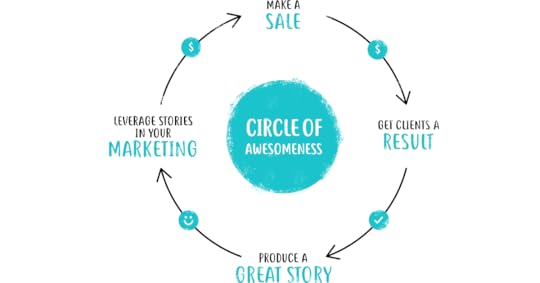
We know that our company’s future depends on our ability to help our customers get the results they’re looking for. If we do that, we have a great story to tell. And by sharing customer success stories, we know we’ll attract even more clients. So we celebrate with our customers often. And each time we do it reinforces what’s necessary for our clients to get the results they want. So more people do it—and that leads to more results. It’s self-perpetuating.
It’s easy to get caught up in the craziness of running or leading an organization. And when you’re moving fast, taking time to celebrate isn’t a top priority. But when you do, you’ll begin to experience all kinds of benefits—especially greater positive energy, clarity, and momentum, which will take you to even higher levels of achievement.


November 21, 2017
Pilgrims’ Progress: The Real Thanksgiving Story
Reconciling Gratitude and the Power of Creative Discontent
Many extended families will gather this Thanksgiving in the biggest home of the brood; take their places under that roof, around long tables; have each member specify some small thing that they are “thankful for”; and then gorge themselves on turkey, cranberry salad, and other standards. After, they might loll around in food comas in front of the television, play Yahtzee, catch up, horse around outside, or go see a movie.
It’s hard for us to understand today just how precarious the first Thanksgiving at Plymouth Plantation was. So try this: Take the above picture and subtract the roof, the table, the cranberry salad, even the turkey. Also, imagine that over the last year, half of your family had died. Now: What are you thankful for?
In late 1621, the Pilgrims were thankful that they just might make it through another winter. Their first one in the New World had been a deadly disaster. Their voyage was delayed because one of their ships sprung several leaks, likely due to sabotage. Then, instead of the moderate weather they expected in America, they were hammered by a harsh and relentless New England winter.
The ship that finally ferried them across the Atlantic, the Mayflower, returned to London far later than planned with nothing to show for the trouble. The ship was supposed to return with produce to pay back their creditors, but the new colonists had nothing to spare. The Mayflower stayed anchored throughout the winter out of necessity. The Pilgrims used it for shelter because they had precious little of that to give them a reprieve from the snow, the winds, and the cold.
“
In late 1621, the Pilgrims were thankful that they just might make it through another winter. What are you thankful for?
—JEREMY LOTT
They had some shelter almost a year later—but not much. We see this reflected in many Thanksgiving paintings in which Pilgrims eat outdoors at a long table. But the truth is they probably didn’t even have that much.
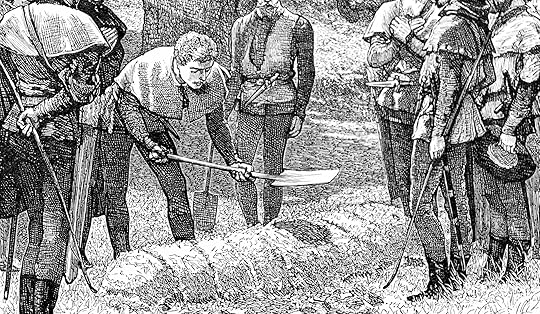
“Tables and even chairs were scarce…knives were rare…and forks were nonexistent” at Plymouth Plantation, explains Robert Tracy McKenzie in the book The First Thanksgiving. When we think of that first Thanksgiving meal, he says, “we should picture an outdoor feast in which almost everyone was sitting on the ground and eating with their hands.”
It was indeed a feast—one that featured:
fish, shellfish, and possibly eel
birds, though probably not turkeys; venison supplied by their guests, the Wampanoag Indians
maize, grown from a native stash the Pilgrims found and, well, let’s go with borrowed
plus various herbs and root vegetables
But that had to taste bittersweet to many of these new settlers. The deaths had leveled off but the toll was high: 102 people had set sail; only 51 or 52 remained that first Thanksgiving. “As many as two or three people died each day during the first two months on land,” explains the Plantation’s official website.
That attrition left many husbands wifeless, many children parentless, and was especially tough on both the very old and the very young. Only three people over 40 were left standing. Two babies had been born en route to and in this new world; one of them had already died.
I bring up this material gulf between the Pilgrims and Americans in the present not to shame us in our food comas— though really, turkey? We can do better! Bring back eel!—but rather to show how things have progressed. By the standards of history and in the eyes of most of the rest of the world, Americans are incredibly wealthy. We have shelter, heating, food, non-leaky ships, and kitchen utensils in abundance. And we have a pretty good handle on disease. Our lives are long and we have made horrific things such as infant mortality rare.
The great thing about the American experiment that the Pilgrims accidentally helped launch is that even those successes are not enough. We ought to be thankful for what we have, and the example of the Pilgrims helped to cement that in our national DNA. But another strand of that DNA, which the Pilgrims also had something to do with, tells us that we can go further, take chances, do something that will leave a mark that folks 400 years from now will still be talking about.
Gratitude and creative discontent are not mutually exclusive. These are the twin lessons I leave leaders to chew on this Thanksgiving.


The Gratitude Advantage
It’s easy to assume that the benefits of gratitude are primarily external. But the latest research reveals that thankfulness offers major payoffs on our side of the equation, too. Discover the advantages of gratitude—and specific practices to harness them—in this week’s episode.


The Surprising Power of Thank You
6 Ways to Leverage the Gratitude Advantage for Yourself
“Thank you.” These are two words that have the power to transform our health, happiness, performance, and success. Research tells us grateful people are happier and more likely to maintain good friendships. It reduces stress, improves our sleep, and floods our bodies with endorphins that energize us, instead of hormones that leave us feeling drained and depleted.
Gratitude and appreciation are also essential for a healthy work environment. In fact, the number one reason why people leave their jobs is that they don’t feel appreciated. A simple thank you and a show of appreciation can make all the difference. That’s why it’s important not only to practice gratitude yourself but also to foster a culture of gratitude with your team and organization.

Thankfully, gratitude is like a muscle. The more we do with it the stronger it gets. In this spirit here are five ways to put the power of “thank you” to work today:
1. Take a daily thank you walk
I started this practice fifteen years ago and it has changed my life. It’s simple, it’s powerful, and it’s a great way to feed yourself with positivity. How does it work? You simply take a ten-to-thirty minute walk outside, in a mall, around your office, on a treadmill, or anywhere else you can think of and think about all the things—big and small—you are grateful for.
When you combine gratitude with physical exercise you give yourself a double boost of positive energy. You flood your brain and body with positive emotions and natural antidepressants that uplift you rather than the stress hormones that drain your energy and slowly kill you.
2. Practice meal-time thank you’s
When having a meal with your friends and family or coworkers, go around the table and have each person say what they are thankful for. Encourage people to expand on why they are thankful. Not only will this help frame the meal towards a positive perspective, it’s also an opportunity for you to get to know each other better by understanding what each other values.
3. Make a gratitude visit
Martin Seligman, the father of positive psychology, suggests we write a letter expressing our gratitude to someone. Then we visit this person and read them the letter. His research shows that people who do this are measurably happier and less depressed a month later.
Yes, it might feel odd—but it works. Try it. Today schedule and make a gratitude visit to an old boss or mentor, a friend who helped you through a tough time, a family member or someone who made a difference in your life.
4. Say thank you at work
According to a John Templeton study of 2,000 Americans, we are least likely to feel or express gratitude at work. And when we’re listing what we’re grateful for, or jobs come in dead last. It doesn’t have to be like that.
When Doug Conant was CEO of Campbell Soup he wrote approximately 30,000 thank you notes to his employees and energized the company in the process. Leaders can energize and engage their teams by letting them know you are grateful for them and their work.
Organizations spend billions of dollars collectively on recognition programs. But the best and cheapest recognition program of all consists of a sincere “thank you.” And of course, don’t forget to say thank you to your clients and customers too.
5. Be positively contagious
Research shows that emotions are contagious. Sincere smiles, kind words, encouragement, praise and positive energy infect people in a positive way. On the flip side, your people are just as likely to catch your bad mood as the flu.
So each day you come to work you have a choice: You can be a germ or a big dose of Vitamin C. When you choose to be positively contagious your positive energy has a positive impact on your colleagues and ultimately your culture. Your team will remember very little of what you said, but they will remember 100 percent of how you made them feel.
“
Your team will remember very little of what you said but they will remember 100% of how you made them feel.
—JON GORDON
6. Celebrate daily success
According to research conducted at Harvard University, the last thirty minutes of every waking day is recorded and replayed that night by our subconscious minds fifteen to seventeen times. This replay occurs five times more often than any other thought at any other time. Thus it’s important to go to bed thinking positive thoughts. If you go to bed thinking and feeling like a champion you’ll wake up thinking and feeling like a champion, optimistic and ready to win.
Today, before you go to bed, celebrate your success of the day. Identify the one great thing about your day—the one great conversation, accomplishment, or win that you are most proud of. Or identify the one person you helped most today or the one thing that made you smile. Focus on your success, and look forward to creating more success tomorrow.
If you have kids, make sure you this with them to help foster the kind of gratitude that will fuel a lifetime of significance and success.


How to Maximize Your Conversations This Holiday Season
10 Questions You and Your Family Can Ask Around the Table
We are entering the holiday season, and that means a lot of great things: fun memories, good food, goofing off. But it might mean some awkward, uncomfortable conversations, too.
According to two economists from UCLA and Washington State University, “politically divided” families actually cut short their Thanksgiving dinners last year rather than wrangle over the table. “Our results suggest partisan differences cost American families 62 million person-hours of Thanksgiving time,” the pair wrote.
Hilariously, The Ellen Show recognized the same problem and created a spoof app called “The Mobile Moderator” that allows families to select their favorite cable news host to moderate family dinner conversation.
“You have five more seconds,” CNN anchor Wolf Blitzer warns one relative going on about her swollen feet. “That’s enough. Aunt Pearl, you are out of time.” Later, he interrupts a hotly disputed political question by saying, “If we could just please get back to the original question, ‘Could someone please pass the salt?’”
If you can’t see this video in your RSS reader or email, then click here.
Unfortunately, real life doesn’t come with professional moderators to keep conversations on track. That means with all the parties and get-togethers between now and the end of the year, there’s almost no way to avoid dead-end discussions, off-the-wall observations, political posturing, and random rabbit trails that can leave you feeling like you need to leave early. Or is there?
Maximizing your conversations
Over the years I’ve learned a few critical elements for hosting great conversations. The big two are intentionality and great questions. These two come together in prepared questions.
I’ve seen this pay off at our yearly company celebration trips. We include not just our team members but also their spouses. The whole group gathers together every night for dinner as well as some focused time of vision casting. That means a lot of people getting to know each other for the first time—a.k.a., a lot of opportunities for awkward conversations.
To solve the problem, one of our team members creates several question cards for each time the whole group gets together. Instead of difficult conversations, we have a blast. I’ve seen a similar strategy work in other situations as well—even with total strangers. There are a handful of reasons this approach works so well at maximizing conversations.

First, it gives you a track to run on. One of the reason that conversations can be difficult is that it sometimes takes effort to find a topic that works. Sometimes it’s impossible to get past the small talk, especially when you’re trying to avoid controversial or heavy topics. But if you work up questions in advance, it can take the pressure off. It also reduces the ramp up. Instead of false starts, you can jump right in.
Second, it levels the playing field. We all like to talk about whatever comes most easily to us, but sometimes that means discussing topics that leave others out—or even alienate them. Crafting questions in advance gives you a chance to think through topics that everyone can discuss. Instead of a few people dominating the conversation, you can draw out everyone.
Third, it draws everyone together. Along with drawing everyone out, good questions can draw everyone in. Conversation can create intimacy and connection as people see their ideas and thoughts validated. Even people who start out on the edge of a conversation can feel included and appreciated.
Fourth, it filters out the weird. If you’ve got a track to run on and everyone can join in, you can also avoid a lot of the odd and awkward moments. Instead of feeling trapped, you can feel empowered.
10 questions to get you started
What kind of questions work best? Here are ten I’ve used that can give you a head start. I find these are perfect for getting things going in the right direction. And these are especially effective around the end of the year or when getting together with people you haven’t seen in awhile.
How do you define a great holiday experience? What’s the best one you can remember?
What are you the most grateful for this past year?
What are you the most proud of this past year?
If you had one million dollars to give to charity, how would you spend it?
What are your top three strengths—and how have they benefitted others recently?
What is your favorite trait in other people?
As a child, what did you want to be when you grew up—and how does that relate to what you do now?
When you think about the coming year, what are you most excited to accomplish?
What new capability do you want to develop in the next year?
What are the two biggest lessons you learned this last year?
Notice the one thing all these questions have in common? People usually find it easy to talk about themselves. The more you let people share about themselves, the simpler the whole situation will be. And chances are good you won’t need Wolf Blitzer to moderate.
Great conversations are like anything: Success is usually not an accident—it’s planned.
“
Great conversations are like anything: Success is usually not an accident—it’s planned.
—MICHAEL HYATT


Inside the Surprising New Science of Gratitude
5 Proven Benefits of Thankfulness to Keep You Motivated all Year Long
It is easier to be thankful during Thanksgiving. The name alone inspires a sense of appreciation. Mix that general feeling with turkey, good wine, family, and friends and even the busiest, overworked American can find a reason to stop and be thankful. The challenge is maintaining a thankfulness habit throughout the year.
All too often, life gets in the way. Assignments need to be completed, employees need to be managed, and flights need to be caught. Presentations need to be given, equipment needs to be maintained, and reports need to be filed. On top of your more-than-full-time job, daily tasks affiliated with raising children, maintaining relationships, and keeping yourself sane have to somehow fit into your schedule.

It is easy to become so preoccupied with meeting goals and succeeding in life, that we forget to enjoy and appreciate the ride. A thankfulness habit is a natural remedy. Like most habits, it takes time and effort to establish. Recognizing the many benefits of thankfulness is key to prioritizing its development.
Thankfulness will not only make you happier, it will help you to achieve your very real goals. It will strengthen your relationships, help to maintain your health, and ultimately enable you to live a more productive life. You don’t have to take my word for it; the science of thankfulness is well documented. Here are five proven benefits of thankfulness to get you motivated.
1. Thankfulness combats stress
The many impacts of stress on our health are still being uncovered. We know it can be bad, but we’re not always sure just how bad. With every study, the severity and extent of this relationship deepen. Stress impacts the gut, decreases activity levels and can lead to irritable bowel syndrome. There is even evidence chronic stress can quicken cancer progression.
The good news is that thankfulness combats stress. According to Carolyn Youssef-Morgan, gratitude is the antidote to work stress. Gratitude has been linked to well being by too many studies to list. Positive reframing is one reason for the connection. When people practice gratitude they are more likely to see the good in challenging situations. They face adversity head-on. They find the silver lining. Positive reframing, and the thankfulness that helps us to achieve it, are powerful tools against stress. When you combat stress, you also avoid accompanying the health consequences.
“
Thankfulness will not only make you happier, it will help you to achieve your very real goals.
—ERIN WILDERMUTH
2. Thankfulness builds emotional resilience
Thankfulness improves mood and can even conquer more than the run-of-the-mill blues. Studies with those who suffer from depression onset by chronic disease, post-traumatic stress disorder, and spinal cord injury have found that gratitude can help people to overcome even the most traumatic adversity.
This style of resistance can be applied to more than physical trauma and psychological disorders. Mental strength helps a person to keep fighting when the odds are against them. It helps us to do what is right thing even when it is hard. Resilience helps us to win the war, even when multiple battles have been lost. Professional success cannot be won without it.
3. Thankfulness fosters connections
Sororities are all about connections, but how do they cultivate them? One way is through gratitude. A 2008 study published in Emotion found that success rates of Big Sister Week, designed to solidify relationships between members, succeeded based on gratitude. Big sisters spent the period giving surprise gifts to assigned new recruits. At the end of the period of giving, matches were revealed. Little sister gratitude ratings, which corresponded more closely to how thoughtful they considered the gifts than how much they liked them, predicted the strength of their connection to their big sister and their feelings of integration in the sorority a month later.
Strong relationships and solid connections are paramount to a happy life. They are also often the cornerstone of professional success. Networking done correctly is fulfilling, enjoyable, and personal. Success doesn’t spark to life in a vacuum.
4. Thankfulness improves sleep
If you’ve ever gone without sleep, you know how important it is. Sleep helps us navigate the world. It allows us to think without thinking, unweaving the web of our day. It keeps us sharp and focused. Anything that improves sleep, improves us. Thankfulness is one such thing.

A 2009 study found that gratitude improves sleep duration and quality, even when controlling for personality traits that might influence sleep. A 2016 study turned to biology. Gratitude was correlated with better sleep and decreased blood pressure.
5. Thankfulness rewires your brain
You may have heard the phrase “neurons that fire together wire together.” Pathways that are used are strengthened. The stronger the pathways, the easier they are to access. Scientists have identified the parts of the cortex that are activated by thankfulness. They are involved in emotional processing. They also set off like firecrackers when activated by gratitude. These are two parts of the brain you want to wire with the pathways of positive emotions.
Though the many benefits of thankfulness are worthy of a significant investment of time and energy, the actual investment necessary is surprisingly low. A simple gratitude journal, where you write down five things you’re thankful for every night before bed, can do the trick. Thankfulness may change your lifestyle, but it doesn’t require a lifestyle change. A small dedication to positive change is all the investment you need.


November 14, 2017
One Essential Trait for Positive Leadership: Receptivity
The Reason Great Leaders Are Open to Feedback
When you think about how you receive feedback, what comes to mind? Initially, you probably feel defensive. Your brain immediately goes to the most painful part about it, the aspect that makes us feel uncomfortable and makes us want to avoid it all together.
But that’s not how we grow, is it?
Brain research shows that feedback can do funny things to us if we see it as a danger or a put-down. We go into the “moving away” or “moving against” mode of fight-or-flight. The brain gets biochemically goofy. That is why you see people get so defensive and go to great lengths to fight any feedback.

But remember, fight-or-flight only comes when there is a perceived danger. If we see feedback as dangerous in our minds, we will bristle and fight it. But if we perceive feedback as an unexpected windfall, like winning the lottery, we will seek it out and be open to it, and sometimes even pay for it. That is what good character does—it hungers for feedback.
To be the best you can be, you must develop a hunger for feedback and see it as one of the best gifts you can get. It is part of being an open system and has incredible value not only to you but also to your people.
Going direct
I was conducting a leadership offsite retreat where the executive team members responsible for the agenda had asked me to try to maneuver the conversation toward a topic they all wanted to discuss but didn’t want to state explicitly on the agenda. After a lot of discussion about why I had to “maneuver” it that way instead of just intentionally designing it that way, the team confessed that their real goal was to sneak some tough feedback about the CEO onto the agenda, but in a way that would not throw him off or make him defensive.
They feared that if the agenda were openly designed to give him feedback, it would never work. They hoped I would be able to “go there if the mood was right.” I told them I understood their concerns but that I had a different plan to get the CEO into the right zone.
So at the beginning of the meeting, I explained the “physics of leadership,” and I explained why it is important for senior leaders to be an open system and model receiving feedback well in organizations. I emphasized that being open to feedback is a key indicator not only of leadership aptitude but also character. Remember, good character welcomes feedback and foolish character fights it off.
“
Good character welcomes feedback and foolish character fights it off.
—HENRY CLOUD
I don’t know whether it was these comments of the mood—or whether the team had just misread the CEO—but when the time came for “saying things that are hard to say, but necessary for the good vision,” one of the members of the executive team had the courage to wade in.
He told the CEO that there were some things that they needed from him that they were not getting, and that there were some things in his leadership style that was leaving the team and the organization with some gaps in performance. I watched and held my breath, waiting for the whole retreat to blow up before my eyes. (I love these moments, though. They can be some of the most powerful.)
The CEO listened as this tough feedback came at him in front of his whole team. And he did what the great leaders do: He received it, and he thanked them for it.
They looked stunned. But what was amazing was the discussion that followed. The CEO talked about his own passions and the strengths and weaknesses that made him lead that way. His candor broke the logjam, and the team was able to come together and offer ways to help the CEO deal with his challenges.

The power of receptivity
What made it happen was the CEO’s receptivity to hearing what his stakeholders had to say—his willingness to embrace it and make changes. And part of what made him receptive was hearing from me, an outsider, that it was more than okay—it was normal and even desirable—to hear and receive feedback.
In my latest project, Leadership University, I dedicate an entire episode on having difficult conversations, addressing conflict and how confrontation can be advantageous to your teams. It allows you to look at different elements of feedback and making it into an enriching experience that promotes growth among those you communicate with.
Looking back at that same team many years later, they still refer to that moment as “the retreat where we got honest.” It was the beginning of a shift in the entire culture, all because of the CEO’s openness to feedback.


The Best Way to Deliver Bad News
An Expert’s Guide to the Do’s and Don’ts of Tough Conversations
If anything is certain in leadership—whether you’re leading a large company, a mid-sized team, or a family of four—it’s that bad things will happen. Ultimately, you will bear the responsibility of sharing the news.
Shouldering the burden is the mark of a leader committed to gaining control of an unfavorable situation before it devolves into utter chaos. “In most cases, the person who is slated to receive bad news already knows it’s coming, but rather than facing it, he puts his head in the sand, pretending not to be seen and hoping it will go away,” says Marian Thier, an executive coach who works with senior-level executives and high-potential employees at Fortune 500 firms.
“That results in a lack of communication, isolation, and low performance—probably the very things causing the bad news in the first place,” she says. “The problems will only fester, grow and make it less possible to rectify if avoided. The closer to a problem situation, the closer bad news feedback should be.”
Unfortunately, knowing the importance of delivering bad news in a timely and effective manner doesn’t actually produce the know-how to do so. But the following tips can help.
Don’t be vague in your messaging
Delivering an unwelcome message is never easy, and it can be tempting to pad the dialogue with unnecessary praise that may obscure the key point. One specific example of this is called the “sandwich method,” in which employers are instructed to couch bad news between two compliments or other positive remarks. (For instance, “You’ve been a valuable employee for four years, but we have to let you go, even though I’m sure you’ll find another job and we’d be happy to put in a good word for you.”)
While noble in its efforts, this approach can often create confusion and make it less likely that the receiver will actually understand the gravity of the news being delivered.
“The purpose of delivering bad news is to gain a mutual and clear understanding of the situation, what has gone wrong, and any next steps,” says Thier. “Starting and ending with good news obfuscates that intention and minimizes the importance of the bad news.”
Don’t try to be overly compassionate
If not using the “sandwich method” specifically, some leaders may also find themselves over-talking in tense moments in an attempt to find the right thing to say to ease any discord between themselves and the other party. This, too, is pointless, says Jean Palmer Heck, author of Tough Talks in Tough Times.
“Nothing clears the mind faster than getting bad news,” Heck explains. “When people hear it—no matter what else they were thinking at the time—all communication processing shuts down. You can keep talking, but the other person won’t hear what you are saying.”
Not only will this excess dialogue fail to add anything of value to the conversation, but it can actually backfire and heighten any tension in the air. Heck suggests remaining quiet while giving the other person time to process the information. And it’s often a good idea to let the other person have the last word. According to Thier, “The deliverer of the bad news has the power and control of the conversation, so it might reduce tension to give some of it up to the recipient.”
Do plan what you’re going to say in advance
To avoid any inclination to ramble and make an already difficult conversation exponentially harder, preparing in advance is key. To this end, There has developed a communication model that she shares with clients faced with the task of delivering bad news. Each bulleted point frames a key discussion point and serves to keep the deliverer of bad news focused throughout the conversation:
Define the purpose of this conversation (e.g., to tell an employee that her job will end in two weeks).
Explain the behaviors/actions that lead to this decision (e.g., “You owe three reports to Finance that are now four weeks behind schedule”).
Ask for a response to any presented facts (given the particular conversation, this step may not be necessary).
Give additional facts (given the particular conversation, this step may not be necessary).
Share next steps (e.g. “HR is aware of the situation and is expecting you to make an appointment with the department immediately”).
Check for understanding (e.g. “So we are clear, please repeat what you heard and what your next steps are”).
Do prepare to follow up
In Tough Talks in Tough Times, Heck details her CHECK system for delivering bad news in both professional and personal settings. And one of the system’s core tenets is the idea that tough talks typically involve a series of conversations, as opposed to a single discussion.
“It may be understandable to consider a tough talk the demise of something, like a job or a relationship, but it should also be thought of as a new start or a new beginning,” says Heck. “Everyone involved directly or indirectly in a tough talk will move forward—that’s a given. But the time it takes to adjust and adapt to the new situation will vary with the individual personalities and the circumstances surrounding the event.” And those adjustments and adaptations often require additional leadership.
Using an example of a fired employee, Heck notes that even after the terminated individual has left the company, there may still be questions to answer and concerns to address amongst remaining staffers. “In the absence of giving employees answers to their questions, rumors will run rampant,” she explains. “Rumors take a toll on productivity and morale, but a follow-up to bad news, if handled well, can actually help in motivating a workforce to pull together and succeed.”
In short, adds Heck, “It’s essential to understand that one conversation will not take care of all the subsequent issues, reactions and problems.”


When Conflict is Brewing
3 Ways to Have that Difficult Conversation
How do you feel when there’s a difficult conversation brewing at work that you won’t be able to duck? Unless you’re a sociopath, the answer is usually “not good.”
Most of us know the ill effects of dreaded discussions. A brewing conflict will make you more distracted and irritable, which has knock-on physical effects, which makes you even more distracted and irritable. And woe to family members, friends, and coworkers who catch you off guard when you’re in that horrible headspace.
When conflict is brewing, so is the acid in your suddenly gurgly stomach. You are more prone to indigestion, gut pain, and poor bathroom outcomes. Your heart beats faster. Researchers from the University of Amsterdam found this stress produces “incident mild hypertension” with effects that can be measured for several days. Any natural tremors or nervous tics that you have get dialed up several notches.
It also hurts your sleep. Your rest is less restful, when you can get it. But mostly you toss and turn and agonize. The sleep deprivation is no small thing. Dr. Joyce Walsleben is the former director of Bellevue Hospital’s Sleep Disorder Center. “Mood and sleep use the same neurotransmitters,” she told the Atlantic. That makes it “very hard to tell if someone has sleep loss or depression.” Other nasty effects of short-term sleep deprivation include memory impairment, mood swings, dullness, fatigue, even hallucinations. Sleep time is the time when you recover from the stresses of life. Take that away and brain and body suffer a little more every day.

Many folks tackle the alertness problem by adding lots of caffeine, but it’s a poor substitute for sleep that can exacerbate those things that are already making you feel miserable—chiefly, your pulse rate, jitteriness, and digestive issues. And while caffeine can heighten your alertness for a brief time, if you try to extend that it only wears you down.
The rapper Eminem captures in a few deft words how many of us feel when a difficult conversation is almost here. The poor guy’s “palms are sweaty / knees weak / arms are heavy” and the queasiness has already produced unfortunate results “on his sweater already / mom’s spaghetti.”
Why are we so bad at this? The authors of the most popular book on this subject, Crucial Conversations, speculate that it’s because “we’re designed wrong.” “Countless generations of genetic shaping drive humans to handle crucial conversations with flying fists and fleet feet, not intelligent persuasion and gentle attentiveness,” they write.
Crucial Conversations offers up all kinds of suggestions for how to navigate these thorny conversations, many of which are worth following. But the sheer number of suggestions and strategies shows just how ingrained our fight-or-flight instincts are. Heated words have often led to heated actions. Our brains and bodies know and fear this, and the processes they use to cope take away from the control and concentration we need to reason together.
“
Heated words have often led to heated actions.
—JEREMY LOTT
With all of this in mind, I have three suggestions about how to have these difficult conversations, starting with preparation. If you are going to have a difficult conversation at work, have it with yourself first. Try to figure out the information people are going to want and the objections they are going to raise. Commit at least some of it to paper or screen, so you have something to turn to if you clam up in the heat of the moment.
Next, don’t delay. The longer you put this off, the more it grinds on you. Spend as much time as you need preparing and no more. Schedule and have the conversation with your boss, colleague, client, or subordinate as soon as possible and get it over with.
Finally, stand down, soldier. Refuse to think of a single conversation in all-or-nothing terms. You might believe you have only “one shot / one opportunity” to get it right, but that’s rarely the case. Failure happens. So do second chances.
“
Failure happens. So do second chances.
—JEREMY LOTT
One final caveat: These “difficult conversation” tips do not apply neatly to firings or layoffs. That usually takes longer. There are legal and moral issues involved with terminations and, frankly, as a leader, you ought to sweat it.
But maybe that helps put the problem of most difficult conversations in the right perspective. You are saying these hard words for a reason. If you get better at getting the issues out now, you may be able to head off some awful consequences down the line.