Michael Hyatt's Blog, page 50
December 29, 2017


December 28, 2017


December 19, 2017
How Generosity Can Supercharge Your Marriage
Research Shows Free, Abundant Giving Is the Secret to Marital Bliss
When Roger Hodgson crooned to his anonymous paramour back in 1977, “Give a little bit of your love to me,” so he might “give a little bit of my life for you,” the Supertramp frontman presumably didn’t have academic research in mind.
But Hodgson’s next beseeching couplet—“There’s so much that we need to share/So send a smile and show you care”—might have intuited a conclusion social scientists have only recently begun to transform into a testable, verifiable hypothesis: Generosity improves marriage.
Enter the work of University of Virginia Professor W. Bradford Wilcox, author of numerous books on the subject of marriage. He serves as a senior fellow at the Institute for Family Studies and is the director of the National Marriage Project, a one-stop shop for in-depth, cutting-edge research on holy matrimony. Wilcox has devoted a considerable portion of his life and career to determining what makes married people tick.
Generosity is key
In 2011, as part of the Science of Generosity Initiative at the University of Notre Dame, Wilcox headed up a survey of 1,630 married couples designed to home in on a single factor in after-the-nuptials happiness: marital generosity. In a 2013 article for the Journal of Marriage and Family, Wilcox and coauthor Jeffrey Dew define this generosity as “giving good things to [one’s spouse] freely and abundantly,” including “regularly engaging in small acts of kindness, expressing affection, expressing respect, and forgiving one’s spouse.”

The survey found generosity to be “positively related to participants’ reports of marital satisfaction and negatively related to participants’ reports of marital conflict and subjective divorce likelihood.”
“Positively related” is well and good. But as a matter of degree, how important is generosity to maintaining a good marriage? According to the National Marriage Project’s ultra-comprehensive 2011 “State of our Unions” report, if “happy marriage” were an Olympic sport, sexual intimacy would take the gold, commitment the silver, and generosity would be wearing the bronze as it selflessly cheered for the other two.
The hidden riches of marriage
On the surface, this last feature would seem to be the common currency of marriage. After all, sexual desire will ebb and flow. And the essential nature of what constitutes commitment between two evolving people will itself evolve. In its modern, love-centered iteration, virtually every marriage begins rich in love and devotion. And “expressing affection” or “respect” is hardly akin to purchasing a Rolls-Royce or amassing a down payment for a spouse’s dream home. The poorest can be as generous as the prosperous.
“
If happy marriage were an Olympic sport, sexual intimacy would take the gold, commitment the silver, and generosity would be wearing the bronze as it selflessly cheered for the other two.
—SHAWN MACOMBER

Indeed, the choice to be generous costs us nothing—save, perhaps, an acknowledgment of our vulnerability and a desire for reciprocity. “Partners in a relationship will be happiest when they give and receive equal levels of relationship maintenance behaviors from their relationship,” said Wilcox and Dew. When only one spouse reported high levels of generosity, there was less satisfaction and more conflict in the marriage as well as a higher chance of divorce.
Why generosity is hard
This could be partially why some of us become so ungenerous with the institution of marriage writ large. Ambrose Bierce once cynically defined marriage as the “state or condition of a community consisting of a master, a mistress and two slaves, making in all, two.”
Ego, pride, disappointment, and misdirected anger impose their own tax on the better angels of our nature. This makes us stingier with the intangibles sometimes than we would be with cash—even when it will redound to our benefit or improve the quality of our life or reduce suffering and angst. Paradoxically, it can sometimes be more difficult to engage in generous behavior than the more mundane duties associated with our unions.
“In marriage, we are expected to do our fair share when it comes to housework, child care and being faithful, but generosity is going above and beyond the ordinary expectations with small acts of service and making an extra effort to be affectionate,” Wilcox told the New York Times.

Wilcox believes the evidence shows it’s worth the effort. In fact, “Living that spirit of generosity in a marriage does foster a virtuous cycle that leads to both spouses on average being happier in the marriage.”
The French actress Simone Signoret would agree with that, and disagree with Bierce. She once mused, “Chains do not hold a marriage together. It is thread—hundreds of tiny threads which sew people together through the years. That is what makes a marriage last—more than passion or even sex.” Wilcox and Co. make a very convincing case that acts of generosity within a marriage can serve as those all-important threads.






4 Rules for Strategic Givers
Generosity Is a Business Strategy, and Almost Everyone Gets It Wrong
It’s likely that your company logo is sitting in the bottom of some landfill. Likely, that is, if you’re among the majority of business leaders who try to woo clients, prospects, and employees with self-promotional gifts.
You know the kind I’m talking about: food baskets, towels, T-shirts, hats, coffee mugs, and poorly made laptop bags. And for the more progressive companies out there: ear buds, cell phone projection keyboards, wine bags, flasks, and inflatable paddle boards.
I’m not accusing these well-intentioned (yet misinformed) givers of being cheap. Heck, we all have a few old company T-shirts sitting in the bottom of the drawer. But the mentality of “slap a logo on it and call it good” misses the mark by a good mile and a half.
Business leaders—why gift at all?
The journey to great gift marketing—as a business leader or company—often starts with the budget. “Is this something we can fit in? How little can we get away with? Should we do the same thing as last year?” I get it. We have to be good managers of our limited resources. But budget-driven gifting is usually treated as a to-do item. Whereas skillful gift marketing is a limitless opportunity to open doors, build (or amend) relational bridges, and retain your industry’s top talent.
“
Skillful gift marketing is a limitless opportunity to open doors, build relational bridges, and retain your industry’s top talent.
—JOHN RUHLIN
Budget-driven gifting is an unenviable task, oftentimes delegated down to some administrative assistant who won’t lose track of the calendar. Whereas masterful strategic gifting (a.k.a., being a Giftologist) can make you a darling of the media, a personal favorite of your big-fish client, or the world’s greatest boss. Yes, it’s possible—even probable—when you do this correctly.
It doesn’t matter if you’re a solopreneur, hiring your hundredth employee, or trading on the NASDAQ. Every generous, hard-earned dollar you spend on some lucky recipient should have the same (epic) purpose.
Surprise and delight
It’s not the thought that counts. It’s the thoughtful thought that counts. Take, for instance, the day I tried to impress one of the planet’s most sought-after consultants—CEO Whisperer, Cameron Herold. This is a man who has more connections than me, more money than me, and has forgotten more about business than I could ever hope to learn. But, no matter. Giftology levels the playing field.
I was an unknown, a blank-face-at-a-conference, a nobody in a sea of fanboys all jockeying to get on this man’s radar. But an original gift (see Rule No. 2 below) given at the right time (Rule No. 3) with the right intention (Rule No. 4) can change everything. Yes, I got (and kept) Cameron’s attention. Yes, he’s helped my business more than I could ever put into words. And yes, the formula is the same for you as it was for me: surprise and delight.
Look, if your gift isn’t going to absolutely blow the proverbial socks off your recipient, then spend the money someplace else.
Devil’s advocate: Quid-pro-quo gifting?
Reciprocity theory: another term for “scratch my back, and I’ll scratch yours.” If this is your purpose behind gift marketing, hear me loud and clear—you’re doing it wrong. This is not a game of bribery. This is authentic, no-strings-attached, appreciation-at-its-finest. There is nothing sinister or inauthentic about gift marketing done right.
In the game of surprise and delight, there is no such thing as excess. A true giftologist showers the recipient with such love, there can be no thought of ulterior motive. Take, for instance, the president of Dan Kennedy’s company, Nick Loise, opening a “small” gift in the mail. And while some critics may claim that “such excess comes across as gaudy and wasteful” (as one recent emailer so delicately put it), neither I nor the thousands of my students see nothing wrong with leveling the playing field in our favor.
“
A true giftologist showers the recipient with such love, there can be no thought of ulterior motive.
—JOHN RUHLIN
Relationship building (and expressing genuine care) has been, will be, and will always be a game of effort. And even if you cringe at the thought of adding gift giving to your budget, calendar, or to-do list, your efforts can be vastly improved (and your brand improved) by following a few simple rules.

Rule No. 1: Don’t break the bank
The ease of online ordering and drop-shipping has turned us all into unoriginal gifters, incapable of surprise and delight. As a rule of thumb, if you can find it on Pinterest, in a listicle post, or the top of a Google search then it’s probably a thoughtless gift. (Although I would rank this fine piece by John Rampton as a notable exception.)
The amount of money you spend doesn’t matter. It’s what you spend it on. Here are two words to guide your gifting: practical luxuries. Look at it this way. Most of your gift recipients are (more than likely) extremely high-powered. They don’t need an $80 watch because they could afford to purchase an $8000 watch.
So if you have $80 to spend, gift something useful that the recipient might never buy for themselves. Make it both practical and top-of-the-line. Spend the $80 on a custom coffee mug. Or on a pair of zebra wood headphones. Or on an engraved cheese knife—American-made, guaranteed forever, and sold by college students. If your recipient says, “I would never buy this for myself, but I absolutely love it!” then you’re on the right track.
Rule No. 2: Use the crucial ITYs
The most sophisticated gifters have systems of clue hunting (shameless self-promotion: this is one of many reasons why people hire the Ruhlin Group as their gifting concierge). Failing that, however, a good gift shouldn’t live in isolation. It can’t live in isolation. Worthy recipients today are likely to be worthy recipients tomorrow, so set yourself up for success. Not by putting your logo on everything, but by adhering your gifting to the three crucial ITYs:
Visibil-ITY gifts are things that’ll be seen by others. Conversation starters. Make your recipient look good and they will love you forever.
Continu-ITY gifts are those you can buy in a series. Today you send the leather belt, next month the leather travel bag, and so on.
Qual-ITY gifts are things that last forever. Nothing says, “you don’t really matter to me” like mediocre quality.
Rule No. 3: Don’t be an ABC gifter
“Surprise! I bought you a gift on your birthday! And on Christmas, too!” said no giftologist, ever. ABC gifters limit their strategic giving to Anniversaries, Birthdays, and Christmas. Which is fine if you’re goal is to be like everybody else. But if your goal is “surprise and delight,” you should know that ABC gifting thoroughly eliminates the “surprise” part of the equation.
Better to change your giving calendar to reflect those months, dates, and days when your recipient least expects it. “I was having the worst Tuesday and then I got your package in the mail! THANK YOU! Where did you find this thing?!” Shock and awe just isn’t the same without the shock.
Rule No. 4: Followup without attachment
Yes, you should follow-up and ask “how’d you like the gift?” No, it doesn’t make you tactless. The only way to become tactless is to make the follow-up about you. “How’d you like the gift? GREAT! Hey, I was wondering if you could do me a favor…” Nope. Giftologists play the long game.

Does that mean we have given gifts of appreciation that have gone unheralded, unrecognized, and unnoticed? No, we haven’t. And neither will you if you follow these four rules. Because in the game of strategic and intentional relationship building, there is no finish line. Only progress.
Strengthening your giftology muscles
When you make a decision that you’re going to dedicate some money and lots of heart to showering your VIPs with practical luxuries, you’ll find a whole new world of opportunity that will leave your competition dumb-founded. Doors will open. Opportunities will present themselves. Connections will be made, never to be forgotten. Clients, prospects, and employees will fall (or re-fall) in love with you all over again.
So commit to gift marketing as a long-term strategy. Surprise and delight, while following the three ITYs. And keep your hard-earned dollars (and brand reputation) out of the landfill.


The Real Economy of Gift-Giving
Don’t Let the Dismal Science Steal Christmas
Exchange and gift-giving have been a part of everyday human behavior since the dawn of mankind. So, it should be no surprise that these activities are also part of holiday celebrations—such as Christmas, Hanukkah, and Eid Al-Adha.
Many of us remember the excitement of wondering what presents Santa Claus—or, as we discovered later, our parents or grandparents—had stowed away under the tree for us. Many of us also remember the disappointment that came with receiving a gift that wasn’t what we wanted or even something we would never have chosen for ourselves.
I often recall the fantastic scene from A Christmas Story in which young Ralphie Parker is cajoled into trying on the pink rabbit suit his Aunt Clara made for him. Ralphie’s father says he “looks like a deranged Easter Bunny.” We’ve all been there or somewhere close, judging by the unworn ties hanging in our closets or the expired gift certificates gathering dust at the bottom of the sock drawer.

The economic costs of disappointing gifts don’t just include the lost value from unwanted gifts, but also the time and frustration of handling returns—on top of the original disappointment. Your friend or relative either doesn’t know you as well as they think or didn’t take the time to figure it out. Stress and hurt feelings are actual costs—they’re just hard to quantify.
Economists have a term for the negatives caused by unwanted gifts: deadweight loss, which is a loss that is not offset by gains to anyone else. In a normal transaction, all parties to the transaction are better off because they made the transaction. Otherwise, they wouldn’t make the deal in the first place.
Similarly, when shopping for ourselves, we pretty much know what we want and are able to purchase something that meets whatever need we had in mind. We receive the full benefit of the transaction because we have direct access to our own wants, needs, and desires.
When buying for someone else, though, even someone we know very well, there is a pretty strong likelihood that we won’t be able to predict the recipient’s preferences as well as she would. So we end up with significant deadweight loss each holiday season as gifts are given that aren’t fully valued by their new owners.

I can hear you thinking, “Surely, an ugly sweater and a few unwanted toys can’t add up to much?” It depends on how you do the math. Economist Joel Waldfogel, whose first paper on this subject way back in 1993 was titled “The Deadweight Loss of Christmas,” estimated that the lost value from holiday giving amounts to billions of dollars each year.
He therefore advocated we eschew presents for gifts of cold hard cash. That way, he reasoned, the recipient can get exactly what he wants and the giver can get the warm fuzzies, knowing that she got the most efficient gift possible. Sounds good, right?
Well, no.
I will never forget, mainly because my siblings will never let me, one particular Christmas. While studying economics in college, I had read about the “efficient gift-giving hypothesis” and it made perfect sense to me. As stocking stuffers that year, I “artfully” wrapped $5 bills around candy canes and placed them in my three siblings’ stockings. They were underwhelmed. And my explanation of how efficient the gift was didn’t exactly warm the cockles of their hearts. What went wrong?
Those close to you aren’t just deriving value from the gift itself. They’re receiving a bundle of values or utility (the economic term for the way we value or find usefulness in everything). So, the recipient is receiving not merely the value of the gift itself, but also the value of the warm fuzzies. She knows that someone cared enough to take the time to get to know her and tried to find a gift that would make her happy. In more than a few cases this additional utility of lovingkindness may make up for a gift that isn’t precisely what someone might have bought for herself.

“
The recipient is receiving not merely the value of the gift itself, but also the value of the warm fuzzies.
—THOMAS PEARSON
Waldfogel discusses these other utilities in his gift-giving suggestions in the last chapter of his 2009 book: Scroogenomics: Why You Shouldn’t Buy Presents for the Holidays. I’ll admit that I haven’t read the entire book, but I didn’t see any discussion of the value of the gift to the giver.
In any exchange, including gift giving, there are at least two sets of utility involved: the recipient’s and the giver’s. And, while holiday gift giving is more like a transfer than what we think of as an exchange, both utilities should be included.
Money is an approximation of value. It’s not exactly what we mean, but it’s close enough to be exceedingly useful for exchanges. However, when exchanging or gift giving with those we are close to, many more values are in play than simply the value of the gift.
This is why my cash-wrapped candy canes failed to garner loving responses from my brother and sisters. It’s also why, if we consider the utilities of both the giver and the recipient in such transfers, we can cancel out the deadweight holiday loss in many cases.

In other words, where the gift is simply a shorthand expression of love and care between family members or other loved ones, the values to both the giver and the recipient matter and should be tallied. The warm fuzzies received by both can far outweigh cost of a gift that wasn’t exactly right. On net, there can still be—and often is—a positive value to the gift transfer.
One caution: If a wrong item is both expensive and difficult to return, this can still wipe out the value of the warm fuzzies. So if you’re not exactly sure that your girlfriend wants a brand-new Bugatti Chiron (hint: she doesn’t), don’t go out making foolish gift-buying choices. Rather, for those you really know, stick with something personal and heartfelt—something that will signal the love you feel toward that person. Maybe you’ll even find something she didn’t know she wanted.
Now, for those you don’t know very well, candy-cane wrapped cash is probably okay. And if that seems too impersonal or too sticky, there are always gift cards.


What Ebenezer Scrooge Can Teach Us About Generosity
Pettiness Poisons Modern Life—Here’s What We Can Do About It
Pettiness is a word that is on the way out. Google Books shows its usage down sharply since the middle of the 1960s, and many people have a hard time getting a handle on it today. That’s a shame because it’s an important term. It may be impossible to understand much of our recent public discourse—or an enduring holiday classic—without it.
Take Charles Dickens’s A Christmas Carol. What was Ebenezer Scrooge’s main character flaw, or besetting sin? Was he greedy, miserly, envious, spiteful, misanthropic? Above all, he was petty. It’s the morally-loaded counterpart to small. You can hear its echo in petite, which is closer to the original French loan word.
In the opening scene of the story, the sole living proprietor of Scrooge and Marley doesn’t allow more than one lump of coal to warm his poor, shivering clerk’s work area. He also frequently insults and threatens to fire his employee, and holds his near-poverty over his head.
Scrooge answers his visiting nephew’s “Merry Christmas! God save you!” with what in 1843 must have been a shocking “Bah! Humbug!” (This would be “Bah! BS!” or worse in modern American English. The word means nonsense, but it’s a bit rougher.) He mocks love as a reason for his relation’s marriage. He refuses to come see his own kin for dinner. Having established—and then some!—that he despises Christmas, the man then refuses to return his nephew’s “Happy New Year.”
The big problem with being small
In all of these things and so many more, Ebenezer Scrooge was petty. I was going to write “unbelievably petty,” but if you strip away some of Dickens’s cartoonish exaggeration (“Even the blind men’s dogs” avoided him), it’s not so unbelievable. Such pettiness is on full display today. Just scroll down your social media feed, and be sure to include your own posts and comments and Twitterpations in that inventory.
If we belittle people for their station in life, like Scrooge does, we are being petty. If we plant ourselves on a molehill and make a mountain out of it, we are being petty. If we cut off contact with relatives over trifles or hoard abundant resources for no good reason or respond to others’ genuine gestures of goodwill by mocking them, we are being petty. And this is not a harmless vice.
One of Dickens’s real insights into Scrooge, and by extension us, is that any benefit we derive from pettiness is terribly short lived. By being so small toward others, we diminish ourselves in numerous ways. It crimps our personalities and our vision. Scrooge is proud and miserable and terribly shortsighted. He has his money and his pride and a razor tongue—and that’s about it. With the exception of his nephew, most of the living have given up on seeing him as anything other than something like a ravenous loan shark.
“
One of Dickens’s real insights into Scrooge, and by extension us, is that any benefit we derive from pettiness is terribly short lived.
—JEREMY LOTT
And he’s too petty to see that he ought to be getting more out of life. “There are many things from which I might have derived good, by which I have not profited,” says the nephew, sensibly. Scrooge retorts by again threatening to fire his clerk and calling his relative a lousy politician.
Even when he is visited by the ghost of his dead partner, chained down and damned by his own sins, Scrooge can’t see his own cramped, narrow error. It takes the frightening visions of the three Christmas ghosts to finally bring him back to a larger vision of his fellow man, and himself in the process.
Petty no more
Scrooge’s story may be extreme, but his experience is not alien to us. That’s one reason why Dickens’s story was such a hit. As this time of year, perhaps encouraged along by one of the many adaptations of A Christmas Carol, many of us take some to reflect on how we have behaved. We make a sort of moral inventory: What did we do right? What did we miss? What can we do better?
Let me suggest that pettiness ought to be on that list of vices that we consign to the Ghost of Christmas Past. Do you say “Yes!” or “Bah! Humbug!” to that?


Generosity Pays
We all know intuitively that generosity is right. But it turns out that generosity also provides some very tangible rewards for the giver. In this episode of the Lead to Win podcast, we uncover three benefits of generosity that span all of your most important relationships both at work and at home.


December 12, 2017
3 Emotions That Keep You Stuck
(And How to Overcome Them)
We all like feeling happy and settled. But those pleasant feelings can plateau your growth. Big goals are bound to stir up less pleasant emotions. Namely, fear, doubt, and uncertainty. In this episode, you’ll learn to see those feelings as the welcome committee to your best performance—and pick up some valuable tips to beat them.


What Setting Small Goals Is Costing You
How to Beat the Hidden Danger of Loss Aversion
Why is it so hard to hail a taxi in New York City when it’s raining? That’s when you most want a cab. It’s when available drivers can rack up fare after fare without little time wasted waiting for new business. Yet it’s also the time when cabs are the most scarce.
The problem is so bad that Uber and other ride-sharing services have invented “surge pricing” for rainy weather, and some taxi companies have followed suit. If you want to get more drivers on the road you have to pay two or three times as much money, even when demand is already at its highest.
How does that make sense?
The high cost of small goals
Why do taxi drivers have to be bribed to do their jobs at a time when their earning potential is already at its greatest? And what does that have to do with your reluctance to set challenging goals as we look forward to a new year?
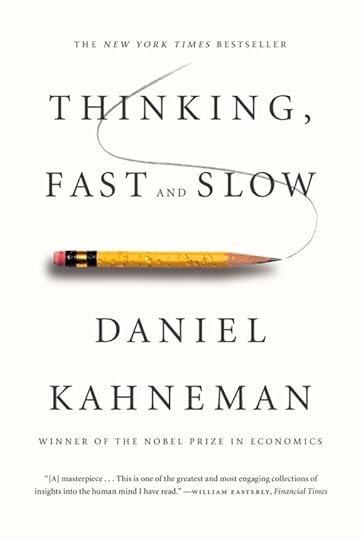 The key to the puzzle is something called loss aversion. Daniel Kahneman is a Nobel-winning psychologist. As he explains in his book Thinking Fast and Slow, “We are driven more strongly to avoid losses than to achieve gains.”
Taxi drivers can do extremely well when it rains. But it’s also less pleasant work because they’re driving in colder, wetter, and slightly more dangerous conditions. Rather than risk working in those conditions, most clock out as soon as they reach their minimum for the day. But by taking the quick win, they miss out on a chance to accumulate significant gains.
How does this dynamic apply to our goals? We all have a strong, inbuilt bias against loss. Kahneman explains that the “aversion to failure of not reaching the goal is much stronger than the desire to exceed it.” Because missing a big goal feels like a loss, we’re tempted to set small goals we can easily reach. And like the cab drivers, we’re we’re also likely to slack off once we’ve reached those small goals. This means to avoid loss, we actually accomplish less.
This faulty way of thinking even applies to the best athletes.
The million-dollar hesitation
Devin Pope and Maurice Schweitzer, economists from the University of Pennsylvania, studied top golfers, including Tiger Woods in his prime. They found that these fierce competitors would strike much more accurately to avoid going one over par than to come one under. In golf parlance, they feared the bogey more than they wanted the birdy!

How much does that loss-averse approach hurting pro golfers? “If in his best years Tiger Woods had managed to putt as well for birdies as he did for par,” says Kahneman, “his average tournament score would have improved by one stroke and his earnings by almost $1 million per season.”
When setting and pursuing goals yourself, think of this $1 million difference. And remember that the difference was all in Woods’s head. Now, how much is loss aversion costing you?
Beating loss-aversion
In my free, new webinar, Navigate Your Way to Success in 2018, I cover five blunders that shipwreck people’s goals. I see these all the time in both my personal coaching and in contemporary goal-achievement research.
Setting small, unchallenging goals is one of the five blunders I cover. I call it “sailing too close to shore.” We tend to set small goals because we’re unaware of our own inherent fear of loss. We don’t want to risk much. But there’s a direct correlation between low risk and low achievement. The greatest achievements are waiting on the other side of discomfort.
Ferdinand Magellan never would have sailed around the globe if he wasn’t willing to venture into the unknown. But without the challenge would he have sailed far at all? The research shows when we set easy-to-achieve goals, we often lose interest or motivation. Play it too safe, and we usually just stop playing.
There is a huge advantage in challenging yourself with a goal you have to stretch for. If you get out of your comfort zone and embrace some discomfort, it enables you to grow—yourself, your business, your horizons.
“
If you get out of your comfort zone and embrace some discomfort, it enables you to grow.
—MICHAEL HYATT
In Navigate Your Way to Success in 2018 I show you how to reframe your goals so you achieve more than you thought possible. (By the way, you can register for free here.) We shouldn’t ignore real downsides or attempt things that are downright delusional. But just as important, neither should we give an unreasonable fear of loss so much weight that it prevents us from taking our lives to the next level.


Leveraging Internal and External Motivation for Achievement
How to Balance Intrinsic and Extrinsic Rewards for Your Personal and Professional Goals
The end of the year is always an interesting time. In addition to all the family togetherness, delicious food, and gift exchange, one of the most prominent parts of the holiday season is setting sights on how the next year is going to be better. In essence, it’s “goal setting season.”

The harsh reality of New Year’s resolutions is that most end in failure. Last year, only about 9 percent of people actually felt they were successful in reaching their goals. So what is the secret to attaining goals (and staying there)?
Truth be told, whether the goals are personal or professional, it all comes down to motivation. There are two distinct types to consider: intrinsic and extrinsic. Intrinsic motivation relates to behavior driven by internal rewards. In other words, activities can be performed for the sake of inherent satisfaction. Extrinsic motivation is driven by external demand or tangible rewards. For example, extrinsic motivation to hit a sales quota can be rooted in commissions or bonuses.
One of the common threads in many failures is the misplacement of motivation. Or, making these types of motivations mutually exclusive. So as the new year approaches, let’s discuss how you can use these motivation types to put yourself on the right track to achieve your goals.
Professional goals
When many people hear the term “professional goals,” the common outcomes consist of things like getting a promotion, making more money, improving workplace efficiency, and so on.
While many of these outcomes seem to fall in the extrinsic motivation category, it’s important to set the foundations of these goals intrinsically. For instance, instead of only framing the prospect of better workplace efficiency in terms of increased revenue, completed projects within certain timelines, or minimized overhead costs, try to think about how you, your employees, and clients will perceive the operation once goals have been reached.
A great way to think of this concept is in relation to short-term and long-term effects. Going back to the example of improving workplace efficiency, extrinsic motivations can be viewed as a number of short-term goals with realistic milestones.
On the other hand, the intrinsic motivation to improve both internal and external perceptions should be viewed as a constant goal. Both of these motivation types will feed into each other. Employees will respect the organization, clients will be impressed by how work gets done, and in turn, the tangible factors will be accomplished.
Improving efficiency is perhaps the most common resolution for business owners and managers. In addition to the proper motivation, success in this regard all comes down to the system put in place.
Technology can come to the rescue. If you are eying a big improvement in 2018, implementing a task management system like Workzone for interdepartmental cooperation in your organization will serve to improve workplace versatility. Team leaders and managers can lay out goals, assign tasks, monitor daily progress, and keep everyone on the same page throughout the duration of a project or campaign by via a transparent dashboard system: The result is a robust organizational process that simplifies the process of breaking big projects into small, manageable jobs.
Success in the professional world starts on the inside. If you want this goal to last, there can be no cracks in the day-to-day whatsoever.
“
Success in the professional world starts on the inside. If you want this goal to last, there can be no cracks in the day-to-day whatsoever.
—PRATIK DHOLAKIYA
Personal goals
Everyone makes personal goals throughout the year. While these are easy to set, they can be very hard to stick to. Let’s take the most popular personal goal people set around the holiday season—get healthy.
As you could have probably guessed, the motivation for this one is primarily intrinsic. Even though there are certainly tangible rewards involved, the end goal is to feel better about yourself.

One of the hardest parts of this goal is commitment. It’s easy to get discouraged when you don’t see instantaneous results. Keep in mind, intrinsic motivations should be thought of as ongoing.
When it comes to getting healthy, in many cases, you cannot do it without a number of support systems. We’re lucky to live in a time with so many wellness tools at our fingertips. Apps like MyFitnessPal are designed to set individual health goals while learning all about your individual habits. You are able to track your meals, calorie intake, fitness regimes, and of course, your progress on the road to being healthier!
Another common goal is in regards to financial stability. When looking at this personal goal, much of the motivation is extrinsic. As the primary aspects of this goal, such as dollars saved, are tangible, the end motivations should be intrinsic. No one likes living paycheck-to-paycheck.
While the finer details of this task are crucial in reaching the bigger goals, the overarching drive should be to achieve financial freedom. Budgeting tools like HelloWallet are perfect for this resolution:
Your turn
When it comes to setting goals for the new year, motivations are the defining factor. Regardless of what you lay out, there will almost always be intrinsic and extrinsic motivations involved (both long term and short term). In many ways, one cannot exist without the other. As 2017 comes to a close, try making a list of both motivation types. Both will be crucial in helping you stick to your goals.