Michael Hyatt's Blog, page 46
May 8, 2018
More Manager, Less Micro
How to Step Back and Get Great Results.

“How’s it going?” The query sounds warm and innocuous enough coming from a friend or sibling. But to an early-career employee the boss just-two-minutes-ago assigned a task, it can be a stark signal that you’re probably working for a micromanager.
The greeting often conveys that you’re answering to an OCD-ish, down-to-the-minute-details kind of boss, one lacking even basic patience to let you accomplish the task with your professional training and skills. It’s a recipe for quickly souring an office relationship—and a company’s bottom line.
Tinker vs. sledgeIt’s not that the manager’s intentions are necessarily bad. With a majority of employees who or competent or better, polishing and tinkering around the edges is more effective than a sledgehammer approach.

But when employee problems arise, how far to go without harming morale is among several delicate balances managers face in confronting underlings. Push too hard and employees will question their own skills, talent, and experience that got them the job in the first place. Yet go too light and they may very well flail due to lack of clear direction and detail.
Some of the world’s most successful business executives advocate a more hands-off approach. Consider billionaire investor Warren Buffett and longtime business partner Charlie Munger, of Berkshire Hathaway. In 2014, at the company’s annual meeting, the pair articulated this low-key management vision.
Taking a step back far outweighs the risks of mistakes, the New York Times reported Buffett saying at the time: “We are very disciplined in some ways, and by ordinary business standards we’re sloppy in other ways. We will have a problem of some sort at some time.” After all, Buffett noted of Berkshire Hathaway company employees globally, “300,000 people are not all going to behave properly all the time.”
Delegating can be hardThe “If you want it done right, do it yourself,” mentality of many bosses is not necessarily unreasonable coming from time-constrained managers with years of professional experience. The problem, though, is that a direct report’s assignment isn’t their current job. These bosses likely held that type of role much earlier in their career, so they’re familiar with the work. However, the reason they’re in management is that they’ve moved beyond it.
While frustrating at times, it’s better to let the staffer work it up as best they can. Once the assignment is submitted, send back for revisions—multiple times, if necessary. Ideally, the manager articulates a vision for what the final outcome looks like but without giving blow-by-blow instructions on how to get there.
How to cast your visionEmployees under a manager’s charge are often eager to get feedback about how an assignment turned out. Particularly if they’re early in their career, say age 28 or under. For you the boss, this presents a prime opportunity to praise them for tasks done well, while explaining in detail how they can improve next time around.
This process can begin even before assignments are given. Consider having an offsite gathering with staff. It could be in a rented office space, or perhaps in an outdoor setting like a park.

Whatever the venue, use the session—no more than four hours—to convey expectations to the staff in as much detail as possible. If, say, you’re speaking to a group of young journalists about how they should report and write stories, it’s natural to provide a swath of examples.
Instructive details would include a story’s structure and focus, along with interview subjects to seek out and where to place their quotes. Also, give positive work examples for each employee in the room—including stories that broke news, were particularly well-written and insightful, or otherwise stood out from the pack.
Most importantly, once direct reports are told what’s expected, follow up with them after their assignments to see how much they adhered to instructions. This requires you to be consistent in telling staff what you want, without zig-zagging every few weeks.
What NOT to doThere are some pitfalls to avoid. When an assignment is done, do not nitpick only what the staffer did wrong. There’s nothing more demoralizing to an employee than hearing about how virtually every judgment call they made was incorrect. This leads to employees second-guessing themselves on decisions. They’re apt to clam up and shy away from exercising much independent judgment.
Most importantly, decide what’s really important about the assignment. Was it 95 percent on target? 80 percent? Or much lower?
If the assignment came in “almost there,” praise the team member for all that went well. And casually say, “Here’s one or two things to watch out for next time.” Or some variation of that.
That’s the type of approach taken at Google, according to its then-vice president of people operations, Laszlo Bock. After gathering and analyzing 10,000 manager observations including performance reviews, surveys, and nominations for top-manager awards and recognition, the tech giant cited “Eight Habits of Highly Effective Google Managers, ” Business Insider reported:
be a good coachempower your team and don’t micromanageexpress interest in employee’s success and well-beingbe productive and results-orientedbe a good communicator and listen to your teamhelp your employees with career developmenthave a clear vision and strategy for the team; andhave key technical skills, so you can help advise the teamOnce employees know they’re being approached about their work with respect—but also with consistently high expectations—they’re likely to develop a comfortable, professional relationship with you, their manager.
They may even be the ones starting conversations by asking, “How’s it going?”






May 1, 2018
A Culture of Rising to the Challenge
Never Settle for "Good" if You Want to Grow

Building an internal culture that loves a challenge is not just a good thing for businesses to do. It is actually essential if that company is going to grow. Employees that are never pushed or challenged grow bored, and surveys have reported that a stagnant work environment is the number one reason that workers look elsewhere.
Creating a positive culture has lots of benefits, both to the business and to the people that work for them. Making a change in an organization’s culture is difficult but doing so is quite necessary if an organization wants to grow and succeed. Whether your business is just starting out, or the current culture has been established for a while now, it is never too early (or too late) to make a change.
Never settle for “good”
A company that wants to improve must continually look for ways to improve current results. This is done by constantly improving the current standards and “ways of doing things” to find better alternatives.
Embracing an entirely different mindset approach may be the best way to challenge an organization towards improvement. Many businesses have found that taking an Agile approach to team projects has improved success rates by 28%, primarily because of its people over process approach to facing difficult projects head-on.
The Agile approach is a unique take on the process of working together. It even has its own vocabulary and variations within the mindset so that it can be tweaked and modified to fit every team’s needs. There is no hierarchy within an Agile team, allowing everyone to share their opinions and encourage self-management and teamwork.
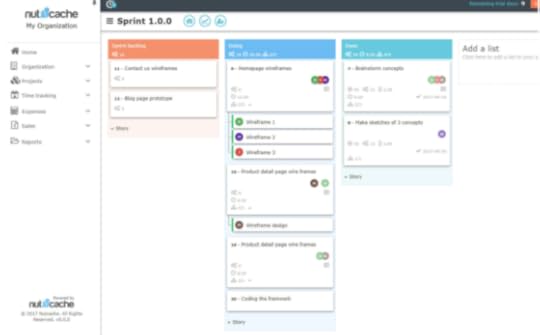
In order to support such a big change, it is wise to provide your team with the proper tools to make the transition as easy as possible. Nutcache is a project management software system that supports an Agile workflow. Teams can communicate and organize projects through the connected dashboards to define team roles and keep everyone on track to hit deadlines.
There is nothing more limiting than sticking to the status quo because that is the way that things have always been done. A truly innovative and challenge-embracing culture must seek and try out new ideas that push for growth and progress.
Setting and resetting workflows throughout the organization can help teams to find the systems that work best for them. But, it is also important that each change is implemented correctly with the systems and tools that support the new way of doing things.
Encourage industry conversations
If your team is going to challenge itself and push for innovation and growth, it is necessary that they stay knowledgeable about their business and industry. Being the first to know when big changes occur can also mean that your organization is the first to find a new solution. It is not up to company leaders alone to stay up to date with the latest changes. Everyone in the organization should do their best to stay aware of the conversations and trends that are going on related to the business.
In order to keep everyone actively engaged with industry news, setting up an alert system that tracks company mentions or industry-related content can be very helpful. Social listening tools like Talkwalker Alerts can be programmed to send out alerts whenever specific keywords (like your company name) or general information (industry-related news) is posted online. It not only monitors social media mentions, but blog posts and online articles as well.
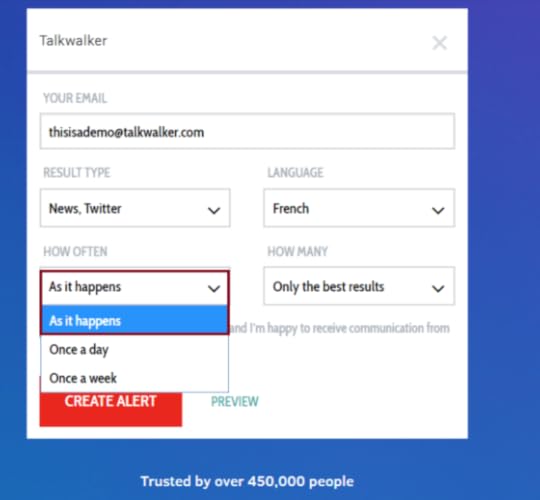
You can then go on to use Talkwalker to measure the impact that specific stories are having with various audiences so that your team is prepared to address any possible issues or questions that customers may have.
Creating a company-wide network that makes it easy to share stories and industry updates is a great starting point, such as a Slack thread or a private Facebook page. Make sure that employees are encouraged to share their opinions, ideas, and thoughts on the matter to cultivate a culture of learning that helps everyone stay on the top of their game.
Base hiring decisions on “people analytics”
Company culture is affected and changed by every single person who is a part of the organization. Therefore, hiring decisions must be made very carefully to ensure no one infects the dynamic of the internal environment.
For this reason, incorporating “people analytics” into the recruiting process is the best way to ensure that every new hire is a good one. “People analytics” is essentially a way to put a person’s soft skills, aptitudes, and even their personality traits into defined metrics to see if they qualify as an ideal fit.
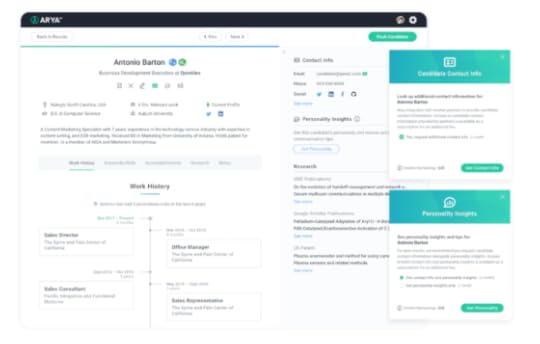
Recruiting tools powered by AI can actually “learn” what qualities a good candidate needs in order to mesh with the company culture. Data-driven recruiting systems like Arya screen applicants and use people analytics to identify skills and personality traits that signal a strong fit. The analytical reports from these systems measure each applicant’s skill levels and aptitudes against a plethora of historical data to help recruiters make more informed decisions from the get-go.
The secret to hiring top talent is to have a recruiting strategy in place that will make it easy to determine who the ideal candidate will be. So, before you go looking for new employees, ensure that your hiring team understands the qualities that are necessary for building a challenge-driven culture. Out-of-the-box thinking skills, creativity, and ambition are all qualities that may not be listed out right on a resume, but they are nevertheless important to possess if a candidate is going challenge your company in a good way.
Turn off that auto-pilot
It is impossible to grow if you are not challenged, so maintaining a culture that embraces challenges rather than avoid them is essential for innovation. As a leader, it is up to you to make this mindset an innate part of the company culture.
Coasting by on auto-pilot is simply not an option for a company that wants to succeed. It is up to leaders to create a work environment that faces challenges head-on by building a strong culture from the very beginning with great talent who will push the status quo.
From there, teams should take it upon themselves to push for innovation and improvement by testing various workflows and finding a system that works for everyone. Finally, staying informed and educated is the best way to stay prepared for future opportunities and challenges that may lie ahead.


Some People Are Your Greatest Assets
Build Your Business Around the Exceptions

Most employees are interchangeable parts in your corporate machine. Your employees may be great people. They may be smart, talented, and attractive. They may be volunteer firefighters, soccer coaches, and great parents. They may never be sick, never be late, and never fail to deliver on time. It doesn’t matter. There are thousands, if not millions, of people who can do a good job in almost every position in your organization.
It doesn’t matter how specialized or how technical the position is. Lots of people can do it well enough. There is no shortage of good employees. There is a terrible shortage of exceptional employees.

Why do you need exceptional employees?
You need as many exceptional employees as you can get because good isn’t good enough to get ahead. In a world full of people who can do a good job in the right position, you need some people who are better than good in order to beat the competition and move up to the next level.
Your competitors are putting out a quality product, just like you. Your competitors have pleasant, helpful salespeople, just like you. Your competitors are fully staffed with good people, just like you. You need an advantage. You need something exceptional.
Exceptional is the extra
Exceptional employees aren’t better people or people in specific jobs. They are people with something extra. Many people with something extra have it hidden away, or else they are putting it to use in some other area of their life. Exceptional employees are the intersection of the right person and the right job in such a way that the heretofore untapped extra—extra spirit, potential, effort, or genius—is released in their work.
“
In a world full of people who can do a good job in the right position, you need some people who are better than good in order to beat the competition and move up to the next level.
—BOB PRITCHETT

Exceptional employees are exceptional in lots of different ways: attitude, talent, creativity, initiative, genius, and versatility. There isn’t a single quality that makes someone an exceptional employee, and very often an employee who is exceptional in one way is below average in another—that can be the price of excellence.
The most exceptional employees are investing themselves in the business. It is not that they have no life outside of work and or even that they are working extra hours. It is that they are bringing to work everything they have to offer instead of simply what is necessary to do the job.
How to treat your exceptional employees
The best way to take care of and keep your exceptional employees is to be an exceptional employer. The best employees want to work for a business where they are treated with respect and dignity and where there is a great work environment.
Your exceptional employees should be getting something extra, though. Sometimes that something extra is money. More often it is flexibility and freedom: an extra benefit that is both recognition of their extraordinary value and room to exercise their special qualities.
Inside my company, we have found lots of ways to reward exceptional employees in addition to money: the coolest tools; choice of projects; flexible schedules; recognition; freedom to play. Don’t play favorites with your children. Do play favorites with your exceptional employees.
“
Don’t play favorites with your children. Do play favorites with your exceptional employees.
—BOB PRITCHETT
What about exceptional employees who are jerks?
A recurring question to the business magazine advice columnists goes something like this: “I have this super salesperson who is my consistent number one performer. The problem is that while he is always nice to clients, he is rude to everyone else in the office. I have tried talking to him to no effect. He is killing the company morale, but I can’t afford to fire him because he sells twice as much as the next salesperson.”
 Fire the jerks. Don’t move them to another department. Don’t isolate them from their coworkers. Get rid of them. You spend too many hours of your life in your business to be wasting your time with jerks. Don’t waste your good employees’ time that way, either, or you will lose them and be stuck with a business full of jerks.
If you’re concerned that someone might be damaging the culture or organization, or you are wondering if maybe it’s time to think about firing someone, then you’re already late to act. Culture is formed by your team; you shape the culture by shaping your team through hiring, firing, and leading.
Good isn’t good enough anymore
We live in a world of abundant, affordable quality. The days of getting ahead by doing a good job, building a good product, or providing a good service are over. Your business needs to be exceptional in some way, or it is doomed to drift forever on the sea of homogeneity.
Today it is almost impossible to maintain an advantage in process, materials, or design for very long. The only long-term advantages are your culture and the exceptional employees who thrive within it. These exceptional employees are your greatest assets.
This article was adapted from Bob Pritchett’s first book, Fire Someone Today, And Other Surprising Tactics for Making Your Business a Success , which has been translated into Russian and Korean.


4 Steps to Foster Creativity
How to Bring Out the Best in Your Team

Creativity is not some remote and solitary island. Each day, from the studios of legendary visual effects outfit Industrial Light & Magic to the conference rooms of ad agencies to the mission control rooms of NASA, teams of people come together to conceptualize, develop, and realize innovations in everything from movies to public policy.
Yet fostering creativity among teams takes more than just tossing some people into a room and writing vague ideas down on whiteboards. Creativity is a result of decisions that foster cultures of innovative thinking and inspirational problem-solving. People must feel safe to fail in their ambitious problem-solving. Diversity in ideas and approaches must be embraced and cultivated. Trusting relationships between team members must be promoted. Colleagues must be free to stretch beyond their silos and take on new challenges.
By taking four key steps, you can build teamwork cultures that make innovation and creativity possible.
1. Make it safe to fail

Ad agency executives know this scenario well—as does anyone who avidly watched Mad Men and the travails of the ad agency’s commercial director Sal Romano: A client asks you to, say, produce a commercial based on say, a popular film. You deliver exactly what they want (down to the well-placed lens flare at the conclusion of it), only for the pitch to be rejected by the client. Yet there is good news: Your team now has a new creative resource from which it can develop a campaign that another client loves.
This happens in every field and the lesson remains the same: Good things can often come out of failure. Sometimes, as seen in the case of Apple’s Newton handheld computer, failure can lead to new innovations that can transform companies and even open up new opportunities. In other cases, as tech guru Seth Godin points out, failure offers lessons on how to approach future projects strategically and practically that lead to success down the road.
“
Every team should take time to review a past effort and see what can be gleaned from past missteps.
—RISHAWN BIDDLE
The key to making failure work lies with you making it safe to not always succeed. This starts by viewing failure not as the end, but as the beginning to the next innovation. Every team should take time to review a past effort and see what can be gleaned from past missteps. Another key is to realize that a failure may be situational in nature. As in the case of the busted ad campaign, the problem may lie more with a client or customer not knowing what they want than the work product itself.
2. Accept creative diversity
Corporate cultures often prefer homogeneity over heterogeneous staffs. But as seen on Hollywood sound stages, on baseball diamonds and especially construction sites, teams succeed in creative activity—and in solving problems—when they bring together and embrace people with different backgrounds, skills, personalities and experiences. As David Rock and Heidi Grant of the Neuroleadership Institute have pointed out, diverse teams produce more products and are “simply smarter” than those who are not.
Embracing team diversity begins by looking closely at the strengths each of your team members bring to the table, then rallying the team together to build on them. Taking this step achieves a balance in problem-solving that doesn’t otherwise exist if people are too similar. The other key step lies in fostering a set of shared values around the work the team is doing in order to create common ground and mutual respect.
Then encourage your team to lean on each other for problem-solving. This includes requiring a colleague to first take a critical puzzle or question to their teammates for brainstorming. Such a move helps cultivate respect for each other’s ideas and specialized skills that lead to innovation.
3 Build—and keep—trust
It is hard to work creatively as a team if you don’t trust each other. If teammates think that they won’t receive constructive criticism from one another for a simple idea, then they won’t want to work with each other on bigger projects. Others may not trust each other if important deadlines aren’t met. Let’s not even get into the matter of rumor-mongering and backbiting.
This is where leadership comes in. As a leader, you must set ground rules for creative teamwork. This starts by your example, allowing open, honest, yet constructive discussions that focus on improvement, as well as reminding people to not miss deadlines that can make it harder for other teammates to complete their parts of a project. Dave Mattson, the CEO of Sandler Training, also recommends that you engage in active listening, paying attention to what others say instead of simply waiting to react. Your action teaches the rest of the team how to work with you and with each other.
“
It is hard to work creatively as a team if you don’t trust each other. Your action teaches the rest of the team how to work with you.
—RISHAWN BIDDLE
An important step lies in telling team members to essentially follow what is called the Vegas rule: What is discussed among the team stays with it. This includes encouraging colleagues to first discuss their issues with each other, then taking it to the team if they cannot be resolved on their own, then leave the dispute behind them once it is resolved.
4. Let people stretch beyond their comfort level

Job titles and descriptions never offer much insight into the wide array of talents on your team. More often than not, the best person for a particular team task may be the person with the best idea, even if they have no experience in achieving it.
This means that you must become what leadership trainer Liz Wiseman calls a multiplier, constantly looking out for hidden talent among your teammates that even they may not recognize. One way to do this: Sit down with each colleague to discuss what would they want to do as a project if they had uninterrupted time to do so. Through that exercise, you can see what your teammates can do beyond their already-established roles.
Another step lies in assigning a different team member to lead a major project after one is completed. By giving someone who hasn’t led a chance to take charge, you may uncover all kinds of hidden potential.


Elements of a Great Team Culture

All of us want to motivate our team to achieve at a higher level, but sometimes the atmosphere around us works against us. In this episode, you’ll learn how some leaders unwittingly allow a toxic culture to derail their team’s success. And you’ll discover how to create a healthy, functional work environment by incorporating three key characteristics of great culture. When we’re done, you’ll have the tools you need to create an environment where your team can thrive.


How Do You Change Organizational Culture?
6 Steps to Turn Things Around

Years ago, I was on a panel discussion led by Phil Cooke. Our topic was “How to Change Organizational Culture.” This is something every leader eventually faces. Phil began the session by stating, “culture triumphs vision.” I agree completely.
Leaders often wonder why they can’t get traction in making the changes they know are necessary. They articulate a new vision. They change a few policies. They might even replace a few key people. But nothing substantive changes.
The problem is that culture is largely invisible to those inside of it. It’s like water to a fish or air to a bird. It’s simply the environment we live in. I faced this when I came to Thomas Nelson in the late 1990s. As an outsider, I was immediately aware of the culture. There were many aspects of it I loved, but others I knew I had to change in order to improve the operating results.
The changes in my area of responsibility happened quickly—within the first eighteen months. The operating results also improved dramatically. Changes to the broader company took longer, but, as my responsibilities grew, they eventually took root as well.
Based on my experience, here are six steps you can take to change the culture of your own business, church, or ministry:
1. Become aware of the culture
Begin to notice its characteristics. Pay attention to shared values, the way people express themselves (particularly their language), and the stories they tell about their success and failures.

2. Assess your current culture
Start by creating three lists:
What should stay? Write down the aspects of your culture that you like and want to preserve. At Thomas Nelson we had a performance culture that focused on profitability. I wanted to keep that. We had to succeed financially in order to resource our mission.
What should go? Write down the aspects of your culture that must die if you are going to go forward. At Thomas Nelson, we had a “closed book” operating philosophy. The only people who knew how the company was performing were those in top management. I believed that if we practiced an “open book” philosophy and everyone knew how the company was doing, we could all work together to improve results.
What is missing? Write down aspects of the culture that seem to be missing or weak. At Thomas Nelson, individual accountability was weak. People were afraid to take personal responsibility and this created a lot of blame-shifting.
3. Envision a new culture
This is the fun part. Rather than simply complain about what is, begin to image what could be. Imagine you are working with a blank sheet of paper and anything is possible. What would the ideal culture look like? Write it down in as much detail as possible. I wrote down five pages of notes and then distilled it down to ten attributes. I then met with my leadership team, and we fine-tuned it. This became a blueprint for what we wanted to create.
“
Rather than simply complain about what is, begin to image what could be.
—MICHAEL HYATT
4. Share the vision with everyone
Culture will not change unless you cast a vision for something new. You have to articulate in a way that is compelling and specific. And you can’t just do this once. One of my mentors said to me, “Mike, you must keep casting the vision. When you start getting sick of hearing yourself talk about it, you’re only half done. Keep speaking it!”Why? Because, as Andy Stanley has noted, vision leaks (see his book, Making Vision Stick). Initially, the only existence vision has is in your words. You have to keep speaking it until it takes root and begins to grow.
5. Get alignment from your leadership team
I’m talking about more than agreement. You need alignment. This is something altogether different. You want a team that buys the vision, understands what is at stake, and is willing to take a stand to make it happen. Think of it as a conspiracy. Not in the negative sense, but in the positive. You and your team are conspiring together to make a positive change that will transform your organization.
6. Model the culture you want to create
The culture of a company is the behavior of its leaders. If you change their attitudes, their values, their beliefs, their behaviors, you will change your culture. If you don’t, you will fail. This is why you must have alignment with your leadership team. If they are not willing to change their behavior and model what you are trying to create, you must replace them. That may sound harsh, but it’s true. If you don’t, nothing will change in the organization. As Gandhi famously said, “Be the change you want to see in the world.”
And by the way, even if the people above you won’t change, you can change the culture of your department, division, or operating unit. In fact, that’s usually how it works.
“
Even if the people above you won’t change, you can change the culture of your department.
—MICHAEL HYATT
That is exactly how I did it at Thomas Nelson. I started implementing what I am sharing here five years before I became the president of the company. Frankly, I think it had a great deal to do with why I kept getting promoted.
Is it possible to change the culture of your organization? Absolutely. But like everything else in leadership, you must be intentional.


April 24, 2018
4 of Today’s Best Content Management Apps
Which One is Right for You?

Calendars are the lifeblood of business operations. They always have been and always will be. One of the most common observations of successful businesses (and individuals) is they are very highly organized and have a consistent procedure.
A 2017 study by PMI found that only 60% of projects actually meet their goals. The primary cause of these failures is a lack of clearly defined objectives and milestones to accurately measure progress. For business purposes, whether it be content creation, marketing, social media, or anything in between, a good calendar management solution is the key to making sure your operations run smoothly and nothing falls through the cracks.
Now, that being said, there are tons of solutions on the market. Each has their own unique qualities and pertinence to your business. If you are in the research stage of investing in a tool, it can quickly become overwhelming to pinpoint the perfect program. Let’s discuss four heavy-hitter solutions currently out there and how they can be used for your specific needs.
1. DivvyHQ
There is perhaps no greater risk to a good content strategy than poor organization. As your content marketing efforts begin to ramp up, there will inevitably come a time when you simply cannot keep track of all your operations on spreadsheets, email, in your head, or anything else you used in the early stages. Ultimately, it doesn’t matter how talented your staff is or how great your content may be; if the processes and workflows are full of holes, you are working on borrowed time.
DivvyHQ is specifically designed to be used by companies who produce a high volume of content each and every day. The major goal of this solution is to simplify the upfront part of the content strategy. This part of the process involves strategizing, ideation, planning, and producing. The beginning stages of content marketing are where the magic happens and brands can creatively set themselves apart from everyone else.
The calendar function of DivvyHQ is built to be used by content managers and producers who need to know what is on their plates, what has been completed, and what is in the pipeline.
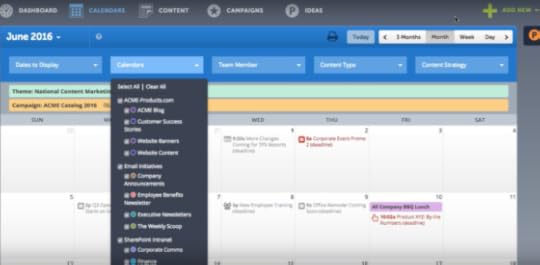
Managers can create multiple calendars to align with the departmental structure, client base, and overall content initiatives. The calendars can then be delegated to certain teams, the content channels they produce for, or the content properties they work with throughout the day-to-day.
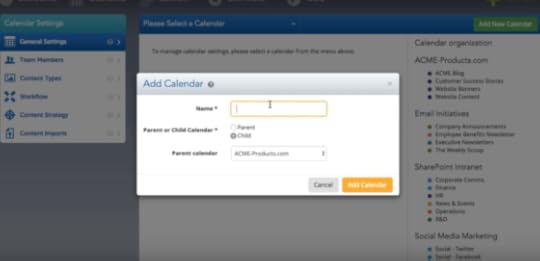
Each calendar can then be customized to fit the necessary workflow, manage content types, and any other relevant content data.
Perhaps the best aspect of DivvyHQ is how easily teams can combine their calendars and work as a single unit. For example, if there is a large promotional initiative that requires interdepartmental coordination, managers can simply create a campaign and add the necessary parties. From here, the campaign calendar will include every single detail needed from everyone involved.

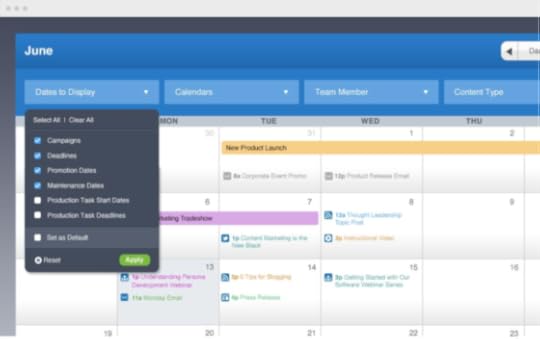
A content strategy is only as good as the system in place. If you are starting to get overwhelmed by projects, it may be time to invest in a tool that simplifies the finer details of the process.
2. Content DJ
In the realm of content marketing, there is no denying that social media has become an incredibly prominent part of the lifecycle. This is in addition to all the other tasks which include content curation, lead capture, research, analytics, all on top of managing an editorial calendar.
Even in smaller operations, juggling ALL these tasks is a challenge. For this reason, businesses and content marketing teams are wise to invest in a program that streamlines all these important components to contribute to a healthy strategy.
Enter Content DJ. This tool claims to be “the only content curation tool with a built-in editorial calendar for all marketing channels.”

The primary objective of this tool is to organize all the important ingredients of content marketing into a single system. This avoids the need to bounce around from platform to platform (or dashboard to dashboard) for everything you need. Designed with social media in mind, users can easily integrate their Facebook account, LinkedIn, Twitter, etc. all into a unified posting agenda. You can also color code the grid to differentiate the channels.
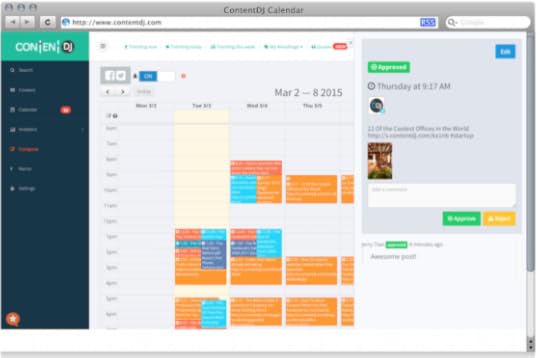
In terms of lead capturing, Content DJ allows you to merge your MailChimp account and social media marketing tools into the system to be integrated with your main dashboard. From here, each of your lead channels can be set to feed sign-ups into your email lists or social followings.
Content DJ also has a smart content recommendation engine designed to filter out the noise and serve you the most shareable content on the web. Similar to many other web monitoring programs, you can enter a keyword, brand name, or topic and see the relevant content currently getting the most engagement.
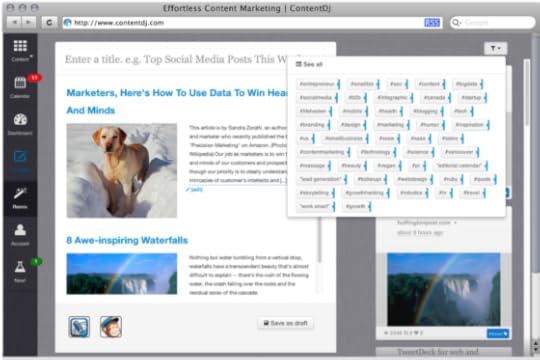
Lastly, the dashboard gives you easy access to your content analytics corresponding with your calendar. The insights tool shows you how many impressions each piece of content gets: clicks, engagement, and more.
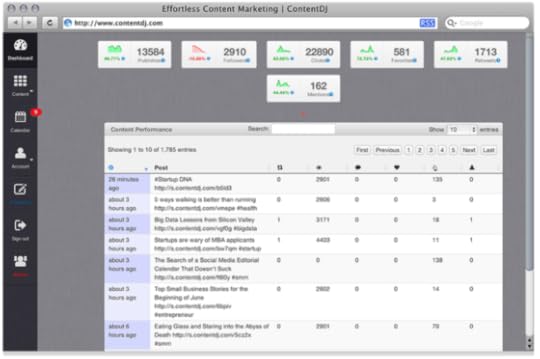
While tools like DivvyHQ specialize more on the upfront aspect of content marketing, Content DJ does a lot with the backend, which includes optimization, publishing, promoting, and analyzing, as well as simplifying the creative part of the process. For newer teams looking to improve their workflows as the business begins to hit rapid growth, Content DJ is an ideal solution.
3. CoSchedule
CoSchedule has been an established industry favorite for a number of years. The program prides itself on being the all-in-one solution for small business owners who understand the importance of content organization, all the way up to giant agencies that manage hundreds of clients.
The solution boasts a centralized system in which WordPress users can plan marketing strategies, collaborate with each other across departments, execute campaigns, and track results with robust analytics. In terms of the calendar, managers and employees have full visualization of the marketing schedule and everything involved to ensure it runs smoothly.
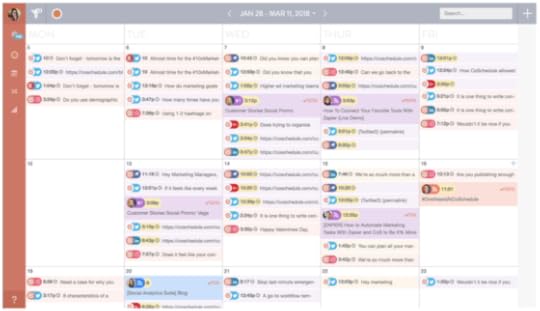
Departments can easily coordinate their schedules, solidify posting dates and times, communicate with each other, organize their content management and social media marketing efforts, track results, and much more through the intuitive dashboard.
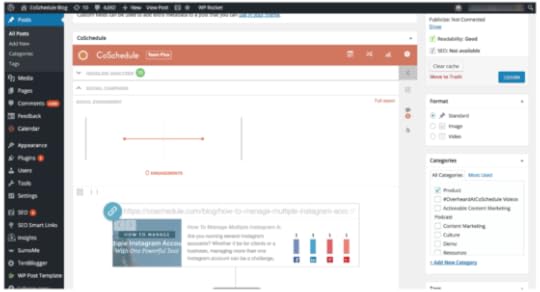
Managers are able to delegate tasks directly on the calendar grid. Furthermore, the calendar can be customized with color labels to categorize and prioritize projects throughout the organization. In turn, the navigation is made extremely easy.
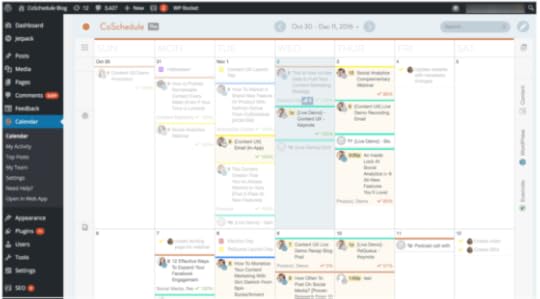
Perhaps the best part of the program is the workflow management and how easy it is to keep everyone on the same page throughout the entirety of projects. For each task, all parties involved will receive instantaneous updates on progress with a bird’s eye view of the entire campaign.
In short, there is a reason why many people consider CoSchedule to be the gold standard of calendar management solutions.
4. Kapost
Known for supporting the strategies of B2B content giants like Content Marketing Institute, Cisco, and CBS, Kapost is a platform designed to manage huge quantities of B2B content across large and diverse teams.
At this point in time, every marketer out there knows just how crowded today’s content landscape is. To make an impact in the vast digital space, a content strategy needs a tool that helps them with alignment, collaboration, and accessibility to the right data sets to stay one step ahead.
These are the components in which Kapost is built on. In large-scale operations, any slip up can potentially cost a detrimental amount of time, effort, and money. More importantly, a poor system can result in inconsistent messaging, which can easily turn customers off. Therefore, content management must be carried out in an airtight system.
Content marketing has many different facets. This may include things like blog creation for certain aspects of the buyer’s journey, email marketing, social media, in-house branded content, and much, much more. Even though a content strategy may seem very diverse on the surface, everything works as a unit contributing to a bigger system. That being said, content calendars for these types of operations can be viewed as the glue that holds the system together.
Kapost’s comprehensive calendar allows businesses to organize each and every part of their strategy and assign tasks accordingly.
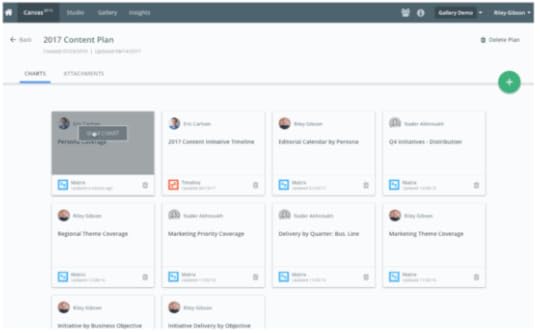
From an overview perspective, managers and team members can view the grid to see the big picture of every project and its current progress status.
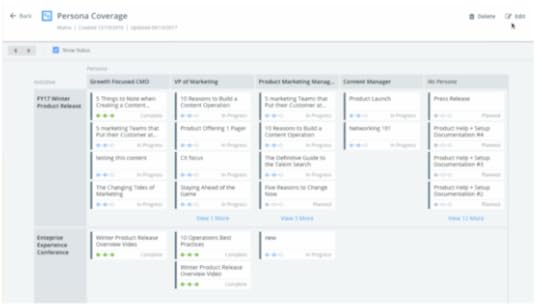
Additionally, each project can be viewed in a Gantt chart format to ensure no start dates or deadlines are missed.
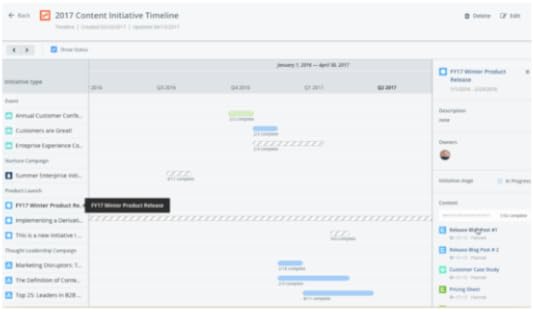
Throughout the entirety of campaigns, users can easily communicate directly through the system, exchange files, and provide updates on completion for each initiative.
The data-based nature of the program allows teams to accurately gauge the results of their efforts to identify weak spots and adjust strategies as needed.

B2B content marketing is a completely different ballgame than B2C. In most cases, you must appeal to a number of decision-makers throughout an organization; most of whom are very highly educated about the industry. Furthermore, professionals have very little patience for inconsistent and unfocused messaging. That being said, B2B content management must be executed at the very highest level to make an impact.
What you need
Investing in a calendar management solution is one of the smartest decisions a business can make, regardless of how big or small their operation is. Some business leaders make the assumption that they do not need a system in place, especially in the early stages. However, even if you are a one-person show, getting your workflows ironed out early on forms the foundation for how work gets done now, and in the future. The earlier you adopt a solution, the better off you will be in the long run.


The Ultimate Calendar Management Solution

Every leader manages a whirlwind of commitments, appointments, and deadlines. Sometimes it seems as if we’re one step behind. In this episode, we’ll show you the three basic tools that will enable you to manage your day. Plus, give practical tips on coordinating your calendar with an executive assistant.


Thank God It’s… Thursday?
Getting Over Institutional Obstacles to Focus

The best and most creative thinking and problem-solving can only take place during uninterrupted periods of time. You know it and so do your colleagues. Which is why your company wants to give everyone time one day a week—let’s say Thursday—to work alone.
Easier said than done. It is difficult to control the array of drive-bys, meetings, deadlines, and sudden projects that “must be done now” that sap energy and productivity during the work week. Creating a Focus Thursday period will require recognition of the problems, buy-in from everyone in the enterprise, force the company and staffers to become more organized, and must empower people to say no to requests that interrupt the day.
This means companies and other organizations must take four key steps companies to make Focus Thursdays a reality and provide you and your colleagues a day to really concentrate and get things done.
“
The best and most creative thinking and problem-solving can only take place during uninterrupted periods of time.
—RISHAWN BIDDLE
The workplace is the problem
Kevin Ashton, the man behind the Internet of Things, proclaims that time is “the raw material of creation.” He is right. The only way you can help yourself and your company succeed—whether you’re becoming an expert in your field, building upon your strengths, even gaining new skills—is by devoting as much time as you can without neglecting your duties to your spouse and family. This means dedicating one day a week to focused time on growth and development.
But Focus Thursdays can’t happen without recognizing this fact: Most workplaces are structured in ways that make such uninterrupted time hard to come by.
It isn’t just about those meetings with vague agendas that take up more time than they are worth. The advent of cubicles and open floor plans, originally conceived to promote collaboration and savings on real estate costs, make it easier for supervisors to make snap requests and colleagues to bother you with what used to be water cooler chatter. E-mail and instant messenger systems make it easier to tie people up with requests and questions that often can be answered by those very people.
These drive-bys—including the time needed to regain focus on important tasks—come at the cost of precious time. Workplace efficiency consultant Edward G. Brown estimates that interruptions consume 6.2 hours a day.
That’s most of the working day! This means you and your colleagues can’t be productive for the company or even grow professionally—and that the company loses as a result. By recognizing how workplaces can get in the way of work, companies can begin to address this issue.

Leading by example
Now that you recognize the problem, the solution can be implemented, right? Not necessarily. It isn’t enough to mandate Focus Thursdays. Everyone who is in must buy into eliminating the drive-bys.
Certainly, it starts in the corporate suite, with the chief executive and his core group of leaders. They themselves must set-aside one day a week dedicated to focused, uninterrupted activity. But this is already reasonably easy for them to do. After all, top executives have secretaries, chiefs of staff and others who help them avoid interruptions.
The problem lies layers below the corporate suite, especially among lower-level executives and middle managers who are constantly jockeying for advancement. As famed political scientist James Q. Wilson once observed, those working deep in the layers of a bureaucracy have different incentives than those at the top. Attempts to interpret every statement from a top executive (what I call Corporate Kremlinology) often means that statements in passing from a boss become urgent requests that really weren’t important in the first place.
One way to address this incentive problem is to change the incentives. For example, lower level managers and executives should be rewarded in some way for ensuring that Focus Thursdays are uninterrupted. This includes allowing their staffers to telecommute on that day, and therefore limit the amount of face time that anyone can capture.
Managers should also be required to use those Thursdays for their own uninterrupted time to do work—and tell their staffs, fellow managers, and their own bosses to keep the drive-bys to themselves; that’s when that calendar function in Outlook comes in handy. Finally, mandate that all scheduled meetings throughout the enterprise happen on days other than Thursday.
Organizing for focus
Getting supervisors to stop their drive-bys is one step. But you can’t take advantage of Focus Thursdays if you are not organized. Otherwise, you will struggle to decline other people’s requests and avoid needless interruptions.
An important first step in getting focused starts at the end of the previous workday. For your Focus Thursday, set up a list of the projects you will work on that next day. This includes reviewing your schedule for the next few days, thinking through how much time it will really take to complete what’s on your agenda, and picking just one project to work on that Thursday. Focus begets focus.
Another way to avoid interruptions is to set aside time during the rest of the workweek for “office hours” as done by college professors. Colleagues and others can then use that time to make requests, seek advice and discuss options. By setting a time when requests can be discussed, you force colleagues to think about how important their request really is. It also helps you gain focus for the uninterrupted time on Thursday.
A third step lies in shutting down needless communication. Reading emails, text messages, instant messages, and the endless replies that often follow from each can take up too much time on a regular workday. On a Focus Thursday, it will destroy any focus you attempt to have. Shut down Outlook and turn on do not disturb on your smartphones. If it is a real emergency, you will be reached.
The benefits of becoming organized don’t only accrue to Focus Thursdays. A better-organized workweek helps you and your colleagues avoid drive-bys during the rest of the week—and helps you relax on the weekends when you should be recharging and enjoying time with your family.

The power to say no
The most important step in making Focus Thursdays a reality (and successful to boot) is also the hardest: Empowering everyone to say no when it counts.
Saying no is hard to do because most of us are people pleasers by nature. But the workplace also makes it extra hard to say no. Thanks to shared calendars, colleagues can rudely intrude on your calendar by sending invites to meetings that even they know you don’t need to be on. There’s also the reality that saying no to a colleague or boss can be career-limiting. Work long enough and you learn quickly that, as with “suggestions,” requests are rarely voluntary.
Taking these steps to setting up Focus Thursdays will help greatly in reducing the times you and your colleagues will have to say no. Setting up office hours, for example, helps you offer an alternative time for people to make requests. But companies must empower people to decline meeting invites and other interruptions.
Allowing employees to say no to interruptions on Focus Thursdays is one important step. Mandating that Thursday is no-interruption day, to the greatest extent that is possible, is another.


The Power of Productive Thinking
Why the Right Tools Aren't Enough to Succeed

Tim Ferriss’s 4-Hour Workweek is an enormously popular book, selling more than 1.35 million copies since its 2007 release. But that doesn’t mean its message on how to “escape the 9-5, live anywhere, and join the new rich” sinks in right away.
While Daniel Ndukwu, founder and CEO of software company Kyleads, was an early reader of the book, he admits that it took him years to put many of its suggestions into practice. Why? He notes that the notion of hyper-productivity seemed too good to be true, an anomaly achievable only by a select few.
Now, in retrospect, Ndukwu acknowledges that this very thought process was a limiting belief keeping him from becoming his most productive self. “It’s been a long battle, but I’ve come to accept that you can only accomplish what you believe is possible for you,” Ndukwu says. “Otherwise, you’ll sabotage the best-laid plans.”

The productive lifestyle
For leaders of teams large and small, those plans may include the latest developments in software and technology. But Ndukwu emphasizes that implementing tools without also adopting a productive mindset is a strategy for defeat. “Becoming more productive is a lifestyle change,” he explains. “If you’re not invested in it over the long term, you’ll be fired up for a few days or weeks only to slip back into your old ways.”
Seana Turner, a professional organizer and productivity expert based in Darien, Connecticut agrees. Thoughts like, “I don’t have enough time,” “I’m not the best person to do this,” “Before I start I just need a nap/coffee/etc.,” or “I will be better able to tackle this tomorrow/next week/next month,” have an inverse effect on efforts to accomplish more.
“No voice is louder in our heads than our own,” Turner says. “Periodically, that voice may be drowned out by an urgent demand or pressing situation. However, if we believe we are not productive and repeatedly give ourselves this negative message, we will attribute our periodic success to the situation rather than to the good work we did. ‘Right’ thinking believes in the power to get things done. Obstacles are simply challenges. Excuses are simply saboteurs that can be silenced with action and focus.”
Ready to harness the power of productive thinking? Here’s a look at some specific mindset shifts that have allowed other leaders to achieve more:
Learn to trust
Calgary, Canada-based executive consultant Jeff Skipper loves the project management software Basecamp for keeping track of all of his company’s pending tasks. The problem, however, was that he was wasting a ton of time by following up on completed or canceled projects.
“I can’t keep track of everything, every day,” Skipper says. “I didn’t want to micromanage, so it was really important for me to trust my employees to be accountable for their own actions. We all see productivity as being able to do more, and sometimes, doing more means trusting other people to do their job so you can do your job. As a business owner, it’s impossible to do all the work yourself—that means not just delegating the task but trusting your people to work according to your standards.”
“
Sometimes, doing more means trusting other people to do their job so you can do your job.
—JEFF SKIPPER
Accept progress—not perfection
In many cases, people think of Productivity Gains as a single far-off destination rather than a journey when in reality it’s both. This thought process discourages people from achieving long-term goals incrementally. As we are often encouraged to celebrate the small wins en route to larger achievements, writer and composer Adam Cole suggests we take the same approach with productivity.
“Because it’s possible to do so much more in much less time, it’s easy to feel like you’re getting nowhere when you’re really killing it,” Cole says. “I absolutely have to watch myself to be sure I am both pacing myself (not doing too much in one sitting) and respecting my family by not working at the expense of paying attention to them. The idea that you have to have a finished or perfect product to consider yourself productive can actually make you less productive.”

Aim to be better
Is Cole’s suggestion to be more Okay with the bumps along the road to productivity a license to take it easy and not push to work better, faster, smarter? Absolutely not, says Dayne Shuda, founder of GhostBlogWriters.com. “You have to realize that your productivity can always be better,” he adds. “The biggest mindset change is accepting that you always have the opportunity to improve, especially with productivity.”
Shuda takes an audit of his daily activities every six months, with a focus on comparing his actions to his larger priorities and assessing whether those actions are actually moving him forward.
“I find that a variety of changes happen without me even noticing them,” Shuda says. “Things that seem urgent in the moment become regular habits that make it seem like I’m busy, but they aren’t really helping me get closer to my goals or even stay true to my priorities. Busy is a form of procrastination; it also really cuts into productivity. Maybe the biggest mindset shift for better productivity is that realization.”